
Seaplane


A seaplane is a powered fixed-wing aircraft capable of taking off and landing (alighting) on water.[1] Seaplanes are usually divided into two categories based on their technological characteristics: floatplanes and flying boats; the latter are generally far larger and can carry far more. Seaplanes that can also take off and land on airfields are in a subclass called amphibious aircraft, or amphibians. Seaplanes were sometimes called hydroplanes,[2] but currently this term applies instead to motor-powered watercraft that use the technique of hydrodynamic lift to skim the surface of water when running at speed.[1]
The use of seaplanes gradually tapered off after World War II. This was in part due to investments in airports during the war, but mainly because landplanes were less constrained by weather conditions that affected seaplanes. In the 21st century, seaplanes maintain a few niche uses, such as for aerial firefighting, air transport around archipelagos, and access to undeveloped or roadless areas, some of which have numerous lakes. In the UK, seaplane is sometimes used specifically to refer to a floatplane, rather than a flying boat.
Types
The word "seaplane" is used to describe two types of air/water vehicles: the floatplane and the flying boat.
The term "seaplane" is used by some to mean "floatplane". This is the standard British usage.[1][3] This article treats both flying boats[4] and floatplanes[5] as types of seaplane,[6] in the US fashion.
An amphibious aircraft can take off and land both on conventional runways and water. A true seaplane can only take off and land on water. There are amphibious flying boats and amphibious floatplanes, as well as some hybrid designs, e.g., floatplanes with retractable floats.
Modern (2019) production seaplanes range in size from flying-boat type light-sport aircraft amphibians, such as the Icon A5 and AirMax SeaMax, to the 100,000 lb ShinMaywa US-2 and Beriev Be-200 multi-role amphibians. Examples in between include the Dornier Seastar flying-boat type, 12-seat, utility amphibian and the Canadair CL-415 amphibious water-bomber. The Viking Air DHC-6 Twin Otter and Cessna Caravan utility aircraft have landing gear options which include amphibious floats.
Floatplane

A floatplane has slender floats, mounted under the fuselage.[7] Two floats are common, but other configurations are possible. Only the floats of a floatplane normally come into contact with water. The fuselage remains above water. Some small land aircraft can be modified to become float planes, and in general, floatplanes are small aircraft. Floatplanes are limited by their inability to handle wave heights typically greater than 12 inches (0.31 m). The floats add to the empty weight of the airplane and to the drag coefficient, resulting in reduced payload capacity, slower rate of climb, and slower cruise speed. British usage is to call floatplanes "seaplanes" rather than use the term "seaplane" to refer to both floatplanes and flying boats.[8]
Design
Floatplanes have often been derived from land-based aircraft, with fixed floats mounted under the fuselage instead of an undercarriage (featuring wheels). Floatplanes offer several advantages since the fuselage is not in contact with water, which simplifies production by not having to incorporate the compromises necessary for water tightness, general impact strength and the hydroplaning characteristics needed for the aircraft to leave the water. Attaching floats to a landplane also allows for much larger production volumes to pay for the development and production of the small number of aircraft operated from the water. Additionally, on all but the largest seaplanes, floatplane wings usually offer more clearance over obstacles, such as docks, reducing the difficulty in loading while on the water. A typical single engine flying boat is unable to bring the hull alongside a dock for loading while most floatplanes are able to do so.

การติดตั้ง ทุ่นลอยย่อมทำให้เกิดแรงต้านและน้ำหนักเพิ่มขึ้น ส่งผลให้เครื่องบินลอยน้ำบินช้าลงและควบคุมยากขึ้น รวมถึงมีอัตราการไต่ระดับที่ช้ากว่าเครื่องบินที่ติดตั้งล้อลงจอด อย่างไรก็ตามการแข่งขันทางอากาศสำหรับเครื่องบินลอยน้ำได้รับความสนใจอย่างมากในช่วงทศวรรษ 1920 และ 1930 โดยเฉพาะอย่างยิ่งในรูปแบบของถ้วยรางวัลชไนเดอร์ (Schneider Trophy ) ส่วนหนึ่งเป็นเพราะการขึ้นบินจากน้ำทำให้สามารถวิ่งขึ้นได้ไกลขึ้น ซึ่งช่วยให้สามารถปรับความเร็วสูงได้ดีกว่าเมื่อเทียบกับสนามบินในสมัยนั้น
เครื่องบินทะเลมีรูปแบบการติดตั้งทุ่นลอยพื้นฐานสองแบบ:
- การออกแบบ "ทุ่นเดี่ยว" ซึ่งติดตั้งทุ่นขนาดใหญ่เพียงอันเดียวไว้ใต้ลำตัวเครื่องบินโดยตรง โดยมีทุ่นทรงตัวขนาดเล็กกว่าอยู่ใต้ปลายปีก ในเครื่องบินอย่างเช่นNakajima A6M2-N
- การออกแบบ "เครื่องบินแบบทุ่นคู่" คือการติดตั้งทุ่นหลักสองอันเคียงข้างกันด้านนอกลำตัวเครื่องบิน เครื่องบินแบบทุ่นคู่รุ่นแรกๆ บางรุ่นมีทุ่นเสริมที่ปลายปีกเพื่อช่วยในการทรงตัว
ข้อได้เปรียบหลักของการออกแบบทุ่นเดี่ยวคือความสามารถในการลงจอดในน้ำที่ขรุขระ: ทุ่นกลางยาวติดอยู่กับลำตัวเครื่องบินโดยตรง ซึ่งเป็นส่วนที่แข็งแรงที่สุดของโครงสร้างเครื่องบิน ในขณะที่ทุ่นขนาดเล็กใต้ปีกด้านนอกช่วยให้เครื่องบินมีเสถียรภาพด้านข้าง เมื่อเปรียบเทียบกันแล้ว ทุ่นคู่จะจำกัดการควบคุม มักจะใช้ได้กับคลื่นที่มีความสูงเพียงหนึ่งฟุต (0.3 เมตร) เท่านั้น[ 9 ]อย่างไรก็ตาม การออกแบบทุ่นคู่ช่วยอำนวยความสะดวกในการจอดและขึ้นเครื่องและในกรณีของเครื่องบินทิ้งระเบิดตอร์ปิโดจะทำให้ท้องเครื่องว่างเพื่อบรรทุกตอร์ปิโด
เรือบิน
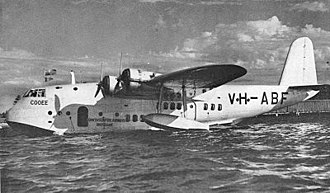

เครื่องบินทะเลเป็นเครื่องบินทะเลชนิดหนึ่งที่มีลำตัวทำให้สามารถลงจอดบนน้ำได้[ 10 ]แตกต่างจากเครื่องบินทะเล ตรงที่ มีลำตัวที่ออกแบบมาเพื่อการลอยตัวโดยเฉพาะ ในขณะที่เครื่องบินทะเลอาศัยทุ่นที่ติดตั้งบนลำตัวเพื่อช่วยในการลอยตัวแม้ว่าลำตัวของเครื่องบินทะเลจะช่วยให้ลอยตัวได้ แต่ก็อาจใช้ทุ่น ใต้ปีก หรือส่วนยื่นของลำตัวที่คล้ายปีก (เรียกว่าสปอนสัน ) เพื่อเพิ่มความเสถียรอีกด้วย
Ascending into common use during the First World War, flying boats rapidly grew in both scale and capability throughout the interwar period, during which time numerous operators found commercial success with the type. Flying boats were some of the largest aircraft of the first half of the 20th century, exceeded in size only by bombers developed during the Second World War. Their advantage lay in using water instead of expensive land-based runways, making them the basis for international airlines in the interwar period. They were also commonly used as maritime patrol aircraft and air-sea rescue, particularly during times of conflict. Flying boats, such as the PBY Catalina and Short Sunderland, played key roles in both the Atlantic and Pacific Theater of the Second World War.[11]
The popularity of flying boats gradually tailed off during the Cold War era, partially because of the difficulty in maintaining operations in inclement weather, when sea conditions may easily prevent takeoffs and landings while land-based aircraft are unaffected, in addition to investments in airports during the conflict that eased the introduction of land-based airliners that were larger and more efficient. Despite being broadly overshadowed, limited use of flying boats continued with some operators, such as in the cases of the Shin Meiwa US-1A and Martin JRM Mars. In the 21st century, flying boats maintain a few niche uses, such as dropping water on forest fires, air transport around archipelagos, and access to undeveloped areas. Many modern seaplane variants, whether float or flying boat types, are convertible amphibious aircraft, where either landing gear or flotation modes may be used to land and take off.
History

Aviation's earliest pioneers looked to bodies of water to serve as runways for take-offs and landings, a practice that began in earnest in the 1910s. Seaplanes pioneered transatlantic air routes, and were used in World War I. They continued to develop before World War II, and saw widespread use. After World War II, the proliferation of land airstrips made water landings more applicable in special circumstances. The practice continued via niche applications, like accessing otherwise remote areas, fighting forest fires, and serving as maritime patrol vessels.
Early pioneers

The quest for an aircraft that could take off or land from water began with float planes, which are not flying boats.
In 1876, Frenchman Alphonse Pénaud filed the first patent for a flying machine with a boat hull and retractable landing gear, but failed to build one. Austrian Wilhelm Kress is credited by some with attempting to build the first successful seaplane Drachenflieger, a floatplane, in 1898, although its two 30 hp Daimler engines were inadequate for take-off, and it later sank when one of its two floats collapsed.[12]
On 6 June 1905, Gabriel Voisin took off and landed on the River Seine with a towed kite glider on floats. The first of his unpowered flights was 150 yards (140 m).[13] He later built a powered floatplane in partnership with Louis Blériot, but the machine was unsuccessful. Other pioneers also attempted to attach floats to aircraft in Britain, Australia, France, and the US.
On 28 March 1910, Frenchman Henri Fabre flew the first successful powered seaplane, the Gnome Omega-powered hydravion, a trimaran floatplane.[14] Fabre's first successful take off and landing by a powered seaplane inspired other aviators, and he designed floats for several other flyers. The first hydro-aeroplane competition was held in Monaco in March 1912, featuring aircraft using floats from Fabre, Curtiss, Tellier and Farman. This led to the first scheduled seaplane passenger services, at Aix-les-Bains, using a five-seat Sanchez-Besa from 1 August 1912.[13] The French Navy ordered its first floatplane in 1912. On May 10, 1912 Glenn L. Martin flew a homemade seaplane in California, setting records for distance and time.[15]
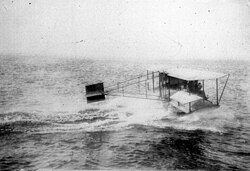
ในปี พ.ศ. 2454-2455 ฟรองซัวส์ เดนโฮต์ได้สร้างเครื่องบินทะเลลำแรกที่มีลำตัวเป็นรูปทรงเรือ โดยใช้การออกแบบต่างๆ เพื่อให้เกิดแรงยกจากน้ำขณะขึ้นบิน การบินครั้งแรกที่ประสบความสำเร็จเกิดขึ้นเมื่อวันที่ 13 เมษายน พ.ศ. 2455 [ 13 ] ตลอดปี พ.ศ. 2453 และ พ.ศ. 2454 นักบินผู้บุกเบิกชาวอเมริกันเกล็น เคอร์ติสได้พัฒนาเครื่องบินทะเลของเขาให้กลายเป็น เครื่องบินบก Curtiss Model D ที่ประสบความสำเร็จ ซึ่งใช้ทุ่นลอยกลางขนาดใหญ่ขึ้นและมีทุ่นข้างลำตัว การผสมผสานทุ่นลอยกับล้อ ทำให้เขาทำการบินสะเทินน้ำสะเทินบกครั้งแรกในเดือนกุมภาพันธ์ พ.ศ. 2454 และได้รับรางวัลCollier Trophy ครั้งแรก สำหรับความสำเร็จด้านการบินของสหรัฐอเมริกา ตั้งแต่ปี พ.ศ. 2455 การทดลองของเขากับเครื่องบินทะเลที่มีลำตัวส่งผลให้เกิดModel E และ Model F ในปี พ.ศ. 2456 ซึ่งเขาเรียกว่า "เรือบิน" [ 13 ] ในเดือนกุมภาพันธ์ พ.ศ. 2454 กองทัพเรือสหรัฐฯได้รับมอบเครื่องบินCurtiss รุ่น Eและในไม่ช้าก็ได้ทดสอบการลงจอดและขึ้นบินจากเรือโดยใช้เครื่องบิน Curtiss รุ่น D
นักบินได้ทำการทดลองเพื่อดัดแปลงเครื่องบินรุ่น Wright Model Bให้สามารถลงจอดบนน้ำได้ ภาพยนตร์เรื่องแรกที่บันทึกจากเครื่องบินนั้นมาจากเครื่องบินทะเลรุ่น Wright Model B โดยFrank Coffynในปี 1911 พี่น้อง Wright ซึ่งได้รับการยกย่องอย่างกว้างขวางในด้านการออกแบบเครื่องบินที่ก้าวล้ำนั้น พัฒนาเครื่องบินทะเลได้ช้ากว่า Wilbur เสียชีวิตในปี 1912 และบริษัทก็ติดอยู่ในคดีความ อย่างไรก็ตาม ในปี 1913 บริษัท Wright Brothers ได้พัฒนาเครื่องบินรุ่น Wright Model CH Flyer [ 16 ]ในปี 1913 บริษัท Wright ยังได้ออกเครื่องบินทะเลรุ่น Wright Model G Aerboat ซึ่งเป็นเครื่องบินทะเลที่มีห้องโดยสารปิด (เป็นครั้งแรกของบริษัท) หัวหน้าวิศวกรของรุ่นนี้คือGrover Loening [ 17 ]
In Britain, Captain Edward Wakefield and Oscar Gnosspelius began to explore the feasibility of flight from water in 1908. They decided to make use of Windermere in the Lake District, England's largest lake. In 1909, the duo attended the Blackpool Aviation Week, where Wakefield “put forward the theory of flying from water, but was ridiculed by the experts.”[18] The rejection spurred the two men into collaborating on their own individual hydro aeroplane designs. To test their floatplanes, they decided to make use of Windermere in the Lake District—England's largest lake. Gnosspelius’ first attempts to fly attracted large crowds, although the aircraft, named Gnosspelius No.1, failed to take off due to its underpowered engines.[19] The unsuccessful demonstration prompted Gnosspelius to re-design the floats that had been crafted for him by boat builders Borwick & Sons, and had incorporated features of Borwick's successful speed-boat hulls. Meanwhile, Wakefield ordered a floatplane similar to the design of the 1910 Fabre Hydravion. By November 1911, both Gnosspelius and Wakefield had aircraft capable of flight from water and awaited suitable weather conditions. Gnosspelius's flight was short-lived, as the aircraft crashed into the lake. Conversely, Wakefield's pilot took advantage of a light northerly wind, and successfully took off and flew at a height of 50 feet to Ferry Nab, where he made a wide turn and returned for a perfect landing on the lake's surface.
In Switzerland, Émile Taddéoli equipped the Dufaux 4 biplane with swimmers and successfully took off in 1912. A seaplane was used during the Balkan Wars in 1913, when a Greek "Astra Hydravion" did a reconnaissance of the Turkish fleet and dropped four bombs.[20][21]
Birth of an industry
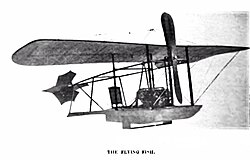
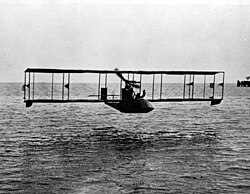

In 1913, the Daily Mail newspaper put up a £10,000 prize for the first non-stop aerial crossing of the Atlantic, which was soon "enhanced by a further sum" from the Women's Aerial League of Great Britain.
American businessman Rodman Wanamaker became determined that the prize should go to an American aircraft and commissioned the Curtiss Aeroplane and Motor Company to design and build an aircraft capable of making the flight. Curtiss's development of the Flying Fish flying boat in 1913 brought him into contact with John Cyril Porte, a retired Royal Navy Lieutenant, aircraft designer and test pilot who was to become an influential British aviation pioneer. Recognising that many of the early accidents were attributable to a poor understanding of handling while in contact with the water, the pair's efforts went into developing practical hull designs to make the transatlantic crossing possible.[22]
The two years before World War I's breakout also saw the privately produced pair of Benoist XIV biplane flying boats, designed by Thomas W. Benoist, initiate the start of the first heavier-than-air airline service anywhere in the world, and the first airline service of any kind at all in the United States.[23][24]
At the same time, the British boat-building firm J. Samuel White of Cowes on the Isle of Wight set up a new aircraft division and produced a flying boat in the United Kingdom. This was displayed at the London Air Show at Olympia in 1913.[25] In that same year, a collaboration between the S. E. Saunders boatyard of East Cowes and the Sopwith Aviation Company produced the "Bat Boat", an aircraft with a consuta laminated hull that could operate from land or on water, which today is called an amphibious aircraft.[25] The "Bat Boat" completed several landings on sea and on land and was duly awarded the Mortimer Singer Prize.[25] It was the first all-British aeroplane capable of making six return flights over five miles within five hours.
In the US, Wanamaker's commission built on Glen Curtiss's previous development and experience with the Curtiss Model F[26] for the U.S. Navy, which rapidly resulted in the America, designed under Porte's supervision following his study and rearrangement of the flight plan; the aircraft was a conventional biplane design with two-bay, unstaggered wings of unequal span with two pusher inline engines mounted side-by-side above the fuselage in the interplane gap. Wingtip pontoons were attached directly below the lower wings near their tips. The design (later developed into the Model H) resembled Curtiss's earlier flying boats but was built considerably larger so it could carry enough fuel to cover 1,100 mi (1,800 km). The three crew members were accommodated in a fully enclosed cabin.
Trials of the America began 23 June 1914 with Porte also as Chief Test Pilot; testing soon revealed serious shortcomings in the design; it was under-powered, so the engines were replaced with more powerful tractor engines. There was also a tendency for the nose of the aircraft to try to submerge as engine power increased while taxiing on water. This phenomenon had not been encountered before, since Curtiss's earlier designs had not used such powerful engines nor large fuel/cargo loads and so were relatively more buoyant. In order to counteract this effect, Curtiss fitted fins to the sides of the bow to add hydrodynamic lift, but soon replaced these with sponsons, a type of underwater pontoon mounted in pairs on either side of a hull. These sponsons (or their engineering equivalents) and the flared, notched hull would remain a prominent feature of flying-boat hull design in the decades to follow. With the problem resolved, preparations for the crossing resumed. While the craft was found to handle "heavily" on takeoff, and required rather longer take-off distances than expected, the full moon on 5 August 1914 was selected for the trans-Atlantic flight; Porte was to pilot the America with George Hallett as co-pilot and mechanic.
World War I (1914–1918)
แผนการของเคอร์ติสและพอร์ทถูกขัดจังหวะโดยการปะทุของสงครามโลกครั้งที่หนึ่ง พอร์ทเดินทางไปอังกฤษในวันที่ 4 สิงหาคม 1914 และกลับเข้าร่วมกองทัพเรือในฐานะสมาชิกของกองบินราชนาวี เขาได้รับ การแต่งตั้งเป็นผู้บัญชาการฝูงบินของสถานีการบินราชนาวีเฮนดอนและในไม่ช้าเขาก็โน้มน้าวให้กองทัพเรือเห็นถึงศักยภาพของเครื่องบินทะเล และได้รับมอบหมายให้ดูแลสถานีการบินราชนาวีที่เฟลิกซ์สโตว์ในปี 1915 พอร์ทโน้มน้าวให้กองทัพเรือยึด (และต่อมาซื้อ) เครื่องบินอเมริกาและเครื่องบินรุ่นเดียวกันจากเคอร์ติส ตามมาด้วยคำสั่งซื้อเครื่องบินที่คล้ายกันอีก 12 ลำ โดยเป็นรุ่น H-2 หนึ่งลำ และที่เหลือเป็นรุ่น H-4สี่ลำของรุ่นหลังถูกประกอบในสหราชอาณาจักรโดยซอนเดอร์ส เครื่องบินทั้งหมดนี้มีลักษณะคล้ายกับการออกแบบของอเมริกาและในความเป็นจริงแล้ว เครื่องบินทั้งหมดถูกเรียกว่าอเมริกาในกองทัพเรือ อย่างไรก็ตาม เครื่องยนต์ถูกเปลี่ยนจาก เครื่องยนต์ Curtiss ที่มีกำลังน้อย 160 แรงม้า เป็น เครื่องยนต์ Rolls-Royce Falcon ที่ มีกำลัง 250 แรงม้าชุดแรกตามมาด้วยคำสั่งซื้อเพิ่มอีก 50 ลำ (รวมเป็นเครื่องบิน Americaทั้งหมด 64 ลำในช่วงสงคราม) [ 22 ] Porte ยังได้รับอนุญาตให้ดัดแปลงและทดลองกับเครื่องบิน Curtiss อีกด้วย
ในไม่ช้าก็พบว่าเครื่องบิน Curtiss H-4 มีปัญหาหลายประการ ได้แก่ กำลังเครื่องยนต์ไม่เพียงพอ ตัวถังอ่อนแอเกินไปสำหรับการใช้งานต่อเนื่อง และมีลักษณะการควบคุมที่ไม่ดีเมื่อลอยอยู่บนน้ำหรือกำลังขึ้นบิน[ 27 ] [ 28 ] นักบินเครื่องบินทะเลคนหนึ่งชื่อ พันตรีธีโอดอร์ ดักลาส ฮอลแลม เขียนว่าเครื่องบินเหล่านี้เป็น "เครื่องจักรที่ตลก น้ำหนักไม่ถึงสองตัน มีเครื่องยนต์ตลกสองเครื่องที่ให้กำลัง 180 แรงม้าเมื่อทำงาน และการควบคุมที่ตลก คือหนักหัวเมื่อเครื่องยนต์ทำงานและหนักท้ายเมื่อร่อนลง" [ 29 ]

ที่เฟลิกซ์สโตว์ ปอร์เตได้พัฒนาการออกแบบเรือบินและพัฒนารูปแบบตัวเรือที่ใช้งานได้จริงด้วย "รอยบากเฟลิกซ์สโตว์" อันเป็นเอกลักษณ์[ 30 ] การออกแบบแรกของปอร์เตที่นำมาใช้ในเฟลิกซ์สโตว์คือ เฟลิกซ์สโตว์ ปอร์เต เบบี้ ซึ่งเป็นเรือบิน ปีกสองชั้นขนาดใหญ่ที่มีเครื่องยนต์สามเครื่องขับเคลื่อนด้วยเครื่องยนต์แบบผลักกลางหนึ่งเครื่องและเครื่องยนต์แบบดึงออกด้านนอกสองเครื่องของโรลส์-รอยซ์ อีเกิล
Porte ได้ดัดแปลงเครื่องบิน H-4 ด้วยตัวเรือแบบใหม่ที่มีคุณสมบัติทางไฮโดรไดนามิกที่ดีขึ้น ทำให้การวิ่งบนพื้น การขึ้นบิน และการลงจอดมีความสะดวกสบายมากขึ้น และตั้งชื่อว่าFelixstowe F.1
Porte's innovation of the "Felixstowe notch" enabled the craft to overcome suction from the water more quickly and break free for flight much more easily. This made operating the craft far safer and more reliable. The "notch" breakthrough would soon after evolve into a "step", with the rear section of the lower hull sharply recessed above the forward lower hull section, and that characteristic became a feature of both flying-boat hulls and seaplane floats. The resulting aircraft would be large enough to carry sufficient fuel to fly long distances and could berth alongside ships to take on more fuel.
Porte then designed a similar hull for the larger Curtiss H-12 flying boat which, while larger and more capable than the H-4s, shared failings of a weak hull and poor water handling. The combination of the new Porte-designed hull, this time fitted with two steps, with the wings of the H-12 and a new tail, and powered by two Rolls-Royce Eagle engines, was named the Felixstowe F.2 and first flew in July 1916,[31] proving greatly superior to the Curtiss on which it was based. It was used as the basis for all future designs.[32] It entered production as the Felixstowe F.2A, being used as a patrol aircraft, with about 100 being completed by the end of World War I. Another seventy were built, and these were followed by two F.2c, which were built at Felixstowe.
In February 1917, the first prototype of the Felixstowe F.3 was flown. It was larger and heavier than the F.2, giving it greater range and heavier bomb load, but poorer agility. Approximately 100 Felixstowe F.3s were produced before the end of the war.
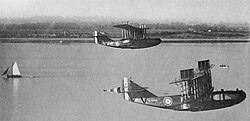
The Felixstowe F.5 was intended to combine the good qualities of the F.2 and F.3, with the prototype first flying in May 1918. The prototype showed superior qualities to its predecessors but, to ease production, the production version was modified to make extensive use of components from the F.3, which resulted in lower performance than the F.2A or F.5.
Porte's final design at the Seaplane Experimental Station was the 123-foot-span five-engined Felixstowe Fury triplane (also known as the "Porte Super-Baby" or "PSB").[33]
เครื่องบินทะเล F.2, F.3 และ F.5 ถูกกองทัพเรืออังกฤษใช้กันอย่างแพร่หลายในการลาดตระเวนชายฝั่งและค้นหาเรือดำน้ำ เยอรมัน ในปี พ.ศ. 2461 เครื่องบินเหล่านี้ถูกลากจูงบนเรือบรรทุกสินค้าไปยังท่าเรือทางตอนเหนือของเยอรมนีเพื่อขยายระยะทำการ ในวันที่ 4 มิถุนายน พ.ศ. 2461 ส่งผลให้เครื่องบิน F.2A สามลำเข้าปะทะกับเครื่องบินทะเลเยอรมันสิบลำ ยิงเครื่องบินตกสองลำที่ได้รับการยืนยันและอีกสี่ลำที่คาดว่าน่าจะตกโดยไม่มีการสูญเสีย[ 22 ]จากผลของการปฏิบัติการนี้ เครื่องบินทะเลของอังกฤษจึงถูกทาสีพรางตาเพื่อช่วยในการระบุตัวตนในการต่อสู้

บริษัทCurtiss Aeroplane and Motor Companyได้พัฒนาแบบเครื่องบินของตนเองอย่างอิสระ จนได้เป็นรุ่น Model F ขนาดเล็ก รุ่น Model K ขนาดใหญ่ (ซึ่งขายให้กับกองทัพอากาศนาวีรัสเซียหลายลำ) และรุ่น Model C สำหรับกองทัพเรือสหรัฐฯ นอกจากนี้ Curtiss ยังผลิตเครื่องบิน Felixstowe F.5 ในชื่อCurtiss F5Lโดยใช้แบบตัวลำเครื่องบิน Porte รุ่นสุดท้ายเป็นพื้นฐาน และใช้เครื่องยนต์ Libertyของ อเมริกา
ในขณะเดียวกัน แบบแผนการออกแบบเครื่องบินทะเลที่ริเริ่มโดยฟรองซัวส์ เดนโฮต์ ได้รับการพัฒนาอย่างต่อเนื่องโดย บริษัท การบินฝรั่งเศส-อังกฤษจนกลายเป็นเครื่องบินที่ใช้งานได้จริงหลากหลายรุ่น เครื่องบินทะเลขนาดเล็กกว่าเฟลิกซ์สโตว์หลายพันลำถูกใช้งานโดยกองกำลังพันธมิตรเกือบทั้งหมดในฐานะเครื่องบินลาดตระเวน ลาดตระเวนในทะเลเหนือ มหาสมุทรแอตแลนติก และทะเลเมดิเตอร์เรเนียน
ในอิตาลี มีการพัฒนาเครื่องบินทะเลหลายรุ่น เริ่มจากรุ่น L และพัฒนาต่อยอดมาเป็นรุ่น M โดยเฉพาะอย่างยิ่ง Macchi M.5นั้นมีความคล่องตัวและว่องไวเป็นอย่างมาก และสามารถต่อสู้กับเครื่องบินบนบกได้อย่างสูสี มีการผลิตทั้งหมด 244 ลำ ในช่วงปลายสงครามโลกครั้งที่ 1 เครื่องบินเหล่านี้ถูกใช้งานโดยกองบินนาวิกโยธินอิตาลี กองทัพเรือสหรัฐฯ และนาวิกโยธินสหรัฐฯ เรือโท ชาร์ลส์ แฮมแมนน์ ได้รับเหรียญกล้าหาญเหรียญแรกที่มอบให้แก่นักบินนาวิกโยธินสหรัฐฯ ในเครื่องบิน M.5
บริษัทผลิตเครื่องบินของเยอรมนีHansa-Brandenburgเริ่มสร้างเครื่องบินทะเลด้วยรุ่นHansa-Brandenburg GWในปี 1916 และประสบความสำเร็จทางทหารในระดับหนึ่งกับเครื่องบินขับไล่ลอยน้ำสองที่นั่งHansa-Brandenburg W.12 ในปีถัดมา ซึ่งเป็นเครื่องบินหลักที่นักบินขับไล่ทางทะเลฝีมือเยี่ยมของจักรวรรดิเยอรมนีอย่าง Friedrich Christiansen ใช้ ส่วน บริษัทLohner-Werke ของ ออสเตรีย-ฮังการีเริ่มสร้างเครื่องบินทะเลด้วยรุ่นLohner E ในปี 1914 และรุ่น Lohner Lในภายหลัง (1915) ซึ่งมีการลอกเลียนแบบกันอย่างแพร่หลาย
ระหว่างสงครามโลกครั้งที่หนึ่งและครั้งที่สอง
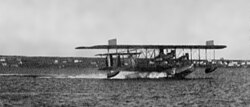
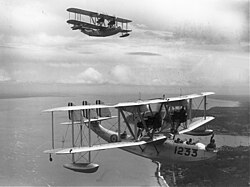
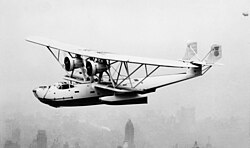
ในเดือนกันยายน ค.ศ. 1919 บริษัทSupermarine ของอังกฤษ ได้เริ่มให้บริการเครื่องบินทะเลเป็นครั้งแรกของโลก จากเมืองวูลสตันไปยังเมืองเลออาฟร์ในฝรั่งเศสแต่บริการนี้มีอายุสั้น
เครื่องบิน Curtiss NC-4เป็นเครื่องบินลำแรกที่บินข้ามมหาสมุทรแอตแลนติกในปี พ.ศ. 2462 โดยบินผ่านหมู่เกาะอะโซเรสจากจำนวน 4 ลำที่พยายาม มีเพียงลำเดียวเท่านั้นที่บินสำเร็จ[ 34 ] [ 35 ]ก่อนที่จะมีการพัฒนาเครื่องบินที่มีความน่าเชื่อถือสูง ความสามารถในการลงจอดบนน้ำถือเป็นคุณสมบัติด้านความปลอดภัยที่พึงปรารถนาสำหรับการเดินทางข้ามมหาสมุทร[ 36 ]
ในช่วงทศวรรษ 1920 กองทัพอากาศหลวง (RAF) ฝ่ายปฏิบัติการตะวันออกไกลได้ทำการบินแบบหมู่คณะระยะไกลหลายครั้งเพื่อแสดงธงชาติ โดยใช้เครื่องบินSupermarine Southampton ที่พัฒนาขึ้นใหม่ เที่ยว บินที่โดดเด่นที่สุดอาจเป็นการ เดินทางสำรวจระยะทาง 43,500 กิโลเมตร (27,000 ไมล์)ที่ดำเนินการในช่วงปี 1927 และ 1928 โดยใช้เครื่องบิน Southampton จำนวน 4 ลำจากฝ่ายปฏิบัติการตะวันออกไกลออกเดินทางจากเฟลิกซ์สโตว์ ผ่านทะเลเมดิเตอร์เรเนียนและอินเดียไปยังสิงคโปร์[ 37 ] ทั้ง RAF และ Supermarine ได้รับการยกย่องอย่างมากจากเที่ยวบินเหล่านี้ และยังพิสูจน์ได้ว่าเรือบินได้พัฒนาจนกลายเป็นวิธีการขนส่งระยะไกลที่เชื่อถือได้[ 38 ]
ในปี พ.ศ. 2466 ได้มีการเปิดตัวบริการเรือบินพาณิชย์ที่ประสบความสำเร็จครั้งแรก โดยมีเที่ยวบินไปและกลับจากหมู่เกาะแชนเนลอุตสาหกรรมการบินของอังกฤษกำลังเติบโตอย่างรวดเร็ว รัฐบาลตัดสินใจว่าการแปรรูปเป็นของรัฐเป็นสิ่งจำเป็น และสั่งให้บริษัทการบิน 5 แห่งควบรวมกิจการเพื่อก่อตั้งสายการบินอิมพีเรียลแอร์เวย์สแห่งลอนดอน (IAL) ซึ่งเป็นของรัฐ IAL กลายเป็นสายการบินแห่งชาติของอังกฤษที่ให้บริการขนส่งผู้โดยสารและไปรษณีย์ด้วยเรือบินระหว่างอังกฤษและแอฟริกาใต้โดยใช้เครื่องบินเช่นShort S.8 Calcutta [ 39 ]
ในปี ค.ศ. 1928 เครื่องบินทะเลซูเปอร์มารีนเซาแธมป์ตัน จำนวน 4 ลำของ กองทัพอากาศอังกฤษ (RAF)ฝ่ายปฏิบัติการตะวันออกไกล ได้เดินทางมาถึงเมลเบิร์นประเทศออสเตรเลียเที่ยวบินนี้ถือเป็นหลักฐานที่พิสูจน์ได้ว่าเครื่องบินทะเลได้กลายเป็นวิธีการขนส่งทางไกลที่เชื่อถือได้แล้ว

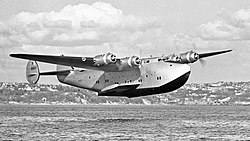
ในทศวรรษ 1930 เครื่องบินทะเลทำให้การขนส่งทางอากาศระหว่างสหรัฐอเมริกาและยุโรปเป็นไปได้อย่างสม่ำเสมอ เปิดเส้นทางการเดินทางทางอากาศใหม่ๆ ไปสู่อเมริกาใต้ แอฟริกา และเอเชีย เมืองฟอยน์ส ประเทศ ไอร์แลนด์และเมืองบอตวูด รัฐนิว ฟาวนด์แลนด์และแลบราดอร์เป็นจุดหมายปลายทางสำหรับเที่ยวบินข้ามมหาสมุทรแอตแลนติกในช่วงแรกๆ ในพื้นที่ที่ไม่มีสนามบินสำหรับเครื่องบินที่ใช้บนบก เครื่องบินทะเลสามารถแวะจอดที่สถานีเล็กๆ ริมแม่น้ำ ทะเลสาบ หรือชายฝั่งเพื่อเติมเชื้อเพลิงและเสบียงได้ เครื่องบินทะเล โบอิ้ง 314 "คลิปเปอร์" ของ แพนแอม ทำให้จุดหมายปลายทางที่แปลกใหม่ เช่น ตะวันออกไกล เป็นไปได้ และกลายเป็นสัญลักษณ์ของความโรแมนติกแห่งการบิน
ในปี 1931 การส่งจดหมายจากออสเตรเลียไปถึงอังกฤษใช้เวลาเพียง 16 วัน ซึ่งน้อยกว่าครึ่งหนึ่งของเวลาที่ใช้ในการขนส่งทางทะเล ในปีนั้น รัฐบาลทั้งสองฝั่งของโลกได้เปิดประมูลเพื่อขอรับการสนับสนุนการดำเนินงานบริการขนส่งผู้โดยสารและจดหมายใหม่ระหว่างสองฝั่งของจักรวรรดิอังกฤษและQantasกับ IAL ก็ประสบความสำเร็จในการประมูลร่วมกัน จากนั้นจึงได้ก่อตั้งบริษัทภายใต้การเป็นเจ้าของร่วมกันในชื่อ Qantas Empire Airways บริการเที่ยวบินใหม่ระหว่างRose Bay รัฐนิวเซาท์เวลส์ (ใกล้ซิดนีย์ ) และSouthampton ซึ่งใช้เวลาเพียง 10 วัน ประสบความสำเร็จอย่างมากกับผู้เขียนจดหมาย จนในไม่ช้าปริมาณจดหมายก็เกินพื้นที่จัดเก็บในเครื่องบิน
ในช่วงต้นทศวรรษ 1930 รัฐบาลอังกฤษได้แสวงหาวิธีแก้ปัญหาที่ดีกว่า โดยได้ออกข้อกำหนดสำหรับเครื่องบินขนาดใหญ่รุ่นใหม่ที่สามารถบรรทุกผู้โดยสารได้ถึง 24 คนอย่างสะดวกสบาย พร้อมพื้นที่เพียงพอสำหรับไปรษณีย์ทางอากาศหรือสินค้า ในขณะเดียวกันก็ต้องมีความเร็วในการบิน 170 ไมล์ต่อชั่วโมง และมีระยะทำการบินอย่างน้อย 700 ไมล์ นอกจาก นี้ยังระบุถึงความสามารถในการบินระยะไกลถึง 2,000 ไมล์เพื่อให้บริการ เส้นทาง แอตแลนติกเหนือ ด้วย [ 40 ]เดิมทีตั้งใจจะให้ IAL ใช้ แต่พันธมิตรอย่าง Qantas ก็เห็นด้วยกับโครงการนี้และตกลงที่จะซื้อ เครื่องบินทะเล Short S23 "C" หรือ "Empire" รุ่น ใหม่จำนวน 6 ลำ เช่นกัน เครื่องบิน Empire ที่สั่งซื้อจากผู้ผลิตการบินShort Brothersได้รับการยกย่องว่าเป็น "หนึ่งในการทดลองด้านการบินที่กล้าหาญที่สุดในโลก" ในขณะที่ผู้ที่สงสัยในยุคแรกๆ กล่าวถึงคำสั่งซื้อนี้ในแง่ลบว่าเป็น "การเสี่ยงโชค" [ 40 ] IAL ประทับใจกับจักรวรรดิมากจนสั่งซื้อเพิ่มอีก 11 ลำ เมื่อรวมกับคำสั่งซื้อเดิมสำหรับเครื่องบินทะเล 28 ลำ ทำให้เป็นการสั่งซื้อครั้งเดียวที่ใหญ่ที่สุดเท่าที่เคยมีมาสำหรับเครื่องบินพลเรือนของอังกฤษในเวลานั้น[ 41 ]
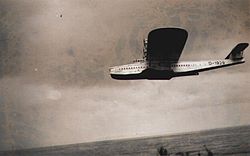

การส่งจดหมายให้เร็วที่สุดเท่าที่จะเป็นไปได้ก่อให้เกิดการแข่งขันอย่างมากและนำไปสู่การออกแบบที่สร้างสรรค์ เครื่องบินทะเล Short Empire รุ่นหนึ่งที่มีรูปร่างแปลกตาคือ " Maia และ Mercury " มันคือ เครื่องบินทะเลสี่เครื่องยนต์"Mercury" (ผู้ส่งสารมีปีก) ที่ติดตั้งอยู่บน "Maia" ซึ่งเป็นเครื่องบินทะเล Short Empire ที่ได้รับการดัดแปลงอย่างมาก[ 25 ] Maia ที่มีขนาดใหญ่กว่าจะบินขึ้น โดยบรรทุก Mercury ที่มีขนาดเล็กกว่าซึ่งมีน้ำหนักมากกว่าที่มันจะสามารถบินขึ้นได้ วิธีนี้ทำให้ Mercury สามารถบรรทุกเชื้อเพลิงได้เพียงพอสำหรับการบินข้ามมหาสมุทรแอตแลนติกโดยตรงพร้อมกับจดหมาย[ 42 ]น่าเสียดายที่วิธีนี้มีประโยชน์จำกัด และ Mercury ต้องถูกส่งกลับจากอเมริกาทางเรือ Mercury ได้สร้างสถิติระยะทางหลายรายการก่อนที่จะมีการนำการเติมเชื้อเพลิงกลางอากาศ มาใช้ [ 43 ]
เซอร์ อลัน คอบแฮมคิดค้นวิธีการเติมเชื้อเพลิงกลางอากาศในช่วงทศวรรษ 1930 เครื่องบิน Short Empire สามารถบรรทุกเชื้อเพลิงได้มากกว่าปริมาณเชื้อเพลิงที่ใช้ในการบินขึ้น[ 25 ]เครื่องบิน Short Empire ที่ให้บริการข้ามมหาสมุทรแอตแลนติกได้รับการเติมเชื้อเพลิงเหนือเมืองฟอยน์ส ด้วยปริมาณเชื้อเพลิงที่เพิ่มขึ้น พวกเขาสามารถบินข้ามมหาสมุทรแอตแลนติกได้โดยตรง เครื่องบินHandley Page HP54 Harrowถูกใช้เป็นเครื่องบินบรรทุกเชื้อเพลิง[ 25 ]
เครื่องบินทะเล Dornier Do Xของเยอรมันนั้นแตกต่างอย่างเห็นได้ชัดจากเครื่องบินทะเลที่สร้างในสหราชอาณาจักรและสหรัฐอเมริกา[ 44 ]มันมีส่วนยื่นคล้ายปีกจากลำตัว เรียกว่าสปอนสันเพื่อช่วยให้ทรงตัวบนน้ำได้โดยไม่ต้องใช้ทุ่นลอยที่ติดตั้งบนปีก คุณสมบัตินี้ได้รับการบุกเบิกโดยClaudius Dornierในช่วงสงครามโลกครั้งที่หนึ่งบนเครื่องบินทะเลขนาดยักษ์ Dornier Rs. I ของเขา และได้รับการพัฒนาให้สมบูรณ์แบบในDornier Walในปี 1924 เครื่องบิน Do X ขนาดมหึมานี้ขับเคลื่อนด้วยเครื่องยนต์ 12 เครื่อง และเคยบรรทุกผู้โดยสารได้ 170 คนเพื่อเป็นการประชาสัมพันธ์[ 25 ]มันบินไปยังอเมริกาในปี 1930–31 [ 25 ]ข้ามมหาสมุทรแอตแลนติกโดยใช้เส้นทางอ้อมเป็นเวลากว่า 9 เดือน มันเป็นเครื่องบินทะเลที่ใหญ่ที่สุดในยุคนั้น แต่มีกำลังเครื่องยนต์น้อยเกินไปและถูกจำกัดด้วยเพดานบินปฏิบัติการที่ต่ำมาก มีเพียงสามลำเท่านั้นที่ถูกสร้างขึ้น โดยติดตั้งเครื่องยนต์ที่แตกต่างกันหลายแบบเพื่อพยายามเอาชนะปัญหาการขาดแคลนกำลัง สองลำในจำนวนนี้ถูกขายให้กับอิตาลี
เครื่องบินDornier Walถือเป็น "ความสำเร็จทางการค้าที่ยิ่งใหญ่ที่สุดในประวัติศาสตร์การบินทางทะเล" [ 45 ]มีการผลิตมากกว่า 250 ลำในอิตาลี สเปน ญี่ปุ่น เนเธอร์แลนด์ และเยอรมนี สายการบินจำนวนมากใช้เครื่องบิน Dornier Wal ในบริการผู้โดยสารและไปรษณีย์ตามกำหนด[ 46 ]เครื่องบิน Wal ถูกใช้โดยนักสำรวจ สำหรับเที่ยวบินบุกเบิกหลายเที่ยวบิน และโดยกองทัพในหลายประเทศ แม้ว่าจะบินครั้งแรกในปี 1922 แต่ตั้งแต่ปี 1934 ถึง 1938 เครื่องบิน Wal ได้ให้บริการในส่วนเหนือน้ำของบริการไปรษณีย์ทางอากาศแอตแลนติกใต้ ของ Deutsche Luft Hansa [ 47 ] [ 48 ]
สงครามโลกครั้งที่สอง

คุณค่าทางทหารของเรือบินได้รับการยอมรับเป็นอย่างดี และทุกประเทศที่ติดกับทะเลต่างก็ใช้งานเรือบินในด้านการทหารเมื่อสงครามโลกครั้งที่สอง ปะทุขึ้น เรือบิน เช่น เครื่องบินทิ้งระเบิดลาดตระเวน PBM Mariner , PBY Catalina , Short SunderlandและGrumman Gooseถูกจัดซื้อเป็นจำนวนมาก Sunderland ซึ่งได้รับการพัฒนาควบคู่ไปกับเรือบินพลเรือน Empire เป็นหนึ่งในเรือบินที่มีประสิทธิภาพและใช้งานอย่างแพร่หลายที่สุดตลอดช่วงสงคราม[ 49 ] [ 50 ]ในขณะที่ Catalina เป็นหนึ่งในเครื่องบินต่อต้านเรือดำน้ำที่ผลิตมากที่สุดในสงคราม โดยมีการผลิตมากกว่า 2,661 ลำในสหรัฐอเมริกาเพียงประเทศเดียว[ 51 ] [ 52 ]
เครื่องบินทะเลถูกนำมาใช้กันอย่างแพร่หลายในการปฏิบัติภารกิจต่างๆ ตั้งแต่การลาดตระเวนต่อต้านเรือดำน้ำ ไปจนถึง การกู้ภัยทางอากาศและทางทะเลและการส่องเป้ายิงสำหรับเรือรบ พวกมันจะช่วยเหลือนักบินที่ตกและปฏิบัติการเป็นเครื่องบินลาดตระเวนในระยะทางอันกว้างใหญ่ของสมรภูมิแปซิฟิกและมหาสมุทรแอตแลนติกค้นหาเรือข้าศึกและจมเรือดำน้ำจำนวนมาก[ 42 ]ในเดือนพฤษภาคม พ.ศ. 2484 เรือรบเยอรมันบิสมาร์คถูกค้นพบโดยเครื่องบิน PBY Catalina ที่บินออกจากฐานเครื่องบินทะเล Castle Archdale , Lower Lough Erne , ไอร์แลนด์เหนือ[ 53 ] [ 54 ] [ 55 ]ฝูงบิน Catalina ตรวจพบกองเรือญี่ปุ่นที่กำลังเข้าใกล้เกาะมิดเวย์ซึ่งเป็นจุดเริ่มต้นของยุทธการมิดเวย์[ 56 ]
On 3 April 1940, a single Sunderland operating off Norway was attacked by six German Junkers Ju 88C fighters; during the engagement, it shot one down and damaged another until it retreated and drove off the rest. The Germans reputedly nicknamed the Sunderland the Fliegendes Stachelschwein ("Flying Porcupine") due to its defensive firepower.[57][58] Sunderlands in the Mediterranean theatre proved themselves on multiple high-profile occasions, flying many evacuation missions during the German seizure of Crete, each carrying as many as 82 passengers. One Sunderland flew the reconnaissance mission to observe the Italian fleet at anchor in Taranto before the famous Royal NavyFleet Air Arm's torpedo attack on 11 November 1940.[59]

The largest flying boat of the war was the Blohm & Voss BV 238, which was also the heaviest plane to fly during the Second World War and the largest aircraft built and flown by any of the Axis powers. Only the first prototype ever flew, commencing flight trials in April 1944.[60] Months later, it was strafed and partially sunk while moored on Lake Schaal, to the east of Hamburg; it never returned to flight, instead being intentionally sunk in deep water after the end of the conflict.[61]

กองทัพเรือจักรวรรดิญี่ปุ่นได้ใช้งานเครื่องบินทะเลที่มักถูกอธิบายว่าเป็นเครื่องบินทะเลที่ดีที่สุดในสงคราม นั่นคือKawanishi H8K [ 62 ] [ 63 ] [ 64 ] การออกแบบของมันมีพื้นฐานมาจากรุ่นก่อนหน้าคือKawanishi H6Kแต่เป็นเครื่องบินที่มีขนาดใหญ่กว่าและมีระยะทำการไกลกว่ามาก ซึ่งได้รับการออกแบบตามคำขอของกองทัพเรือก่อนเกิดสงคราม[ 65 ] [ 66 ]ในคืนวันที่ 4 มีนาคม พ.ศ. 2485 เครื่องบิน H8K สองลำได้ทำการโจมตีเพิร์ลฮาร์เบอร์ครั้งที่สองโดยเติมเชื้อเพลิงระหว่างทางด้วยเรือดำน้ำที่French Frigate Shoalsเพื่อให้ได้ระยะทำการที่จำเป็น ทัศนวิสัยที่ไม่ดีทำให้การโจมตีเพิร์ลฮาร์เบอร์ครั้งนี้ล้มเหลวในการสร้างความเสียหายอย่างมีนัยสำคัญ[ 67 ] [ 68 ]นอกจากนี้ยังมีการแนะนำรุ่น H8K2 ที่ได้รับการปรับปรุง ซึ่งมีอาวุธป้องกันที่หนักมาก[ 69 ]
ในเดือนพฤศจิกายน พ.ศ. 2482 IAL ได้ถูกปรับโครงสร้างใหม่เป็น 3 บริษัทแยกกัน ได้แก่British European Airways , British Overseas Airways Corporation (BOAC) และBritish South American Airways (ซึ่งควบรวมกับ BOAC ในปี พ.ศ. 2482) โดยการเปลี่ยนแปลงนี้มีผลอย่างเป็นทางการในวันที่ 1 เมษายน พ.ศ. 2483 BOAC ยังคงให้บริการเครื่องบินทะเลจากท่าเรือพูล ซึ่ง (ค่อนข้าง) ปลอดภัยกว่า ในช่วงสงคราม และกลับไปยังเซาแธมป์ตันในปี พ.ศ. 2490 [ 25 ]เมื่ออิตาลีเข้าร่วมสงครามในเดือนมิถุนายน พ.ศ. 2483 ทะเลเมดิเตอร์เรเนียนถูกปิดไม่ให้เครื่องบินของฝ่ายสัมพันธมิตรบินผ่าน และ BOAC และQantasได้ให้บริการเส้นทางเกือกม้าระหว่างเดอร์บันและซิดนีย์โดยใช้เครื่องบินทะเลShort Empire [ 70 ]
บริษัท Martin ผลิตต้นแบบXPB2M Marsโดยใช้เครื่องบินทิ้งระเบิดลาดตระเวน PBM Mariner เป็นพื้นฐาน โดยทำการทดสอบการบินระหว่างปี 1941 ถึง 1943 กองทัพเรือได้ดัดแปลง Mars ให้เป็นเครื่องบินขนส่ง โดยกำหนดชื่อเป็น XPB2M-1R เมื่อพอใจกับประสิทธิภาพ จึงได้สั่งซื้อ JRM-1 Mars ที่ดัดแปลงแล้วจำนวน 20 ลำ เครื่องบินทะเล Mars ลำแรกจากทั้งหมด 5 ลำที่ผลิตได้เข้าประจำการเพื่อขนส่งสินค้าไปยังฮาวายและหมู่เกาะแปซิฟิกเมื่อวันที่ 23 มกราคม 1944 [ 71 ]หลังจากการสิ้นสุดของสงคราม กองทัพเรือได้ตัดสินใจลดจำนวนการสั่งซื้อลง โดยซื้อเพียง 5 ลำเท่านั้น เครื่องบิน Mars ทั้ง 5 ลำผลิตเสร็จสมบูรณ์ และส่งมอบลำสุดท้ายในปี 1947 [ 72 ]
The U.S. used several 4-engine flying boats during World War II, including those that had been operating as civilian airliners. This included five Boeing B-314 Clippers, four more as the C-98s; two Martin M-130 Clippers,a Martin XPB2M-1/XPB2M-1R prototype, and one JRM-1 Mars; three Sikorsky VS-44s (JR2S-1). However, the main 4-engined flying boat of the U.S. forces was the PB2Y Coronado, of which nearly 220 were used in several versions: maritime patrol, bombing, medical/hospital transport, and for regular cargo; it also served with British forces in the Battle for the Atlantic.[73]
One of the features of flying boats that was useful for search and rescue, was the ability to land on the water and not only pull out people from the water but stay there. One of the famous cases of this was the sinking of the Indianapolis, which went down on 31 July 1945, leaving hundreds of sailors in the water. Once it was realized it was missing, it was searched for, and the first to arrive was an amphibious PBY-5A Catalina patrol plane flown by Lieutenant Commander (USN) Robert Adrian Marks. Marks and his flight crew spotted the survivors and dropped life rafts; one raft was destroyed by the drop, while others were too far away from the exhausted crew. Against standing orders not to land in the open ocean, given the unique situation and lives at risk, Marks took a vote of his crew and decided to land the aircraft in twelve-foot (3.7 m) swells. He was able to maneuver his craft to pick up 56 survivors. Space in the plane was limited, so Marks had men lashed to the wing with parachute cord. The aircraft was unflyable with so many on it but could still float. This protected many of the exhausted men from being eaten by sharks or drowning while waiting for the main rescue force to arrive. After nightfall, the destroyer escort USS Cecil J. Doyle, the first of seven rescue ships, used its searchlight as a beacon and instilled hope in those still in the water. Cecil J. Doyle and six other ships picked up the remaining survivors. After the rescue, the PBY was sunk by Cecil J. Doyle to scuttle it.[74]
Post-War
หลังสงครามโลกครั้งที่สองสิ้นสุดลง การใช้งานเครื่องบินทะเลลดลงอย่างรวดเร็วด้วยหลายสาเหตุ ความสามารถในการลงจอดบนน้ำกลายเป็นข้อได้เปรียบที่ลดลง เนื่องจากจำนวนและความยาวของรันเวย์บนบกเพิ่มขึ้นอย่างมากในช่วงสงคราม นอกจากนี้ ความสามารถในการแข่งขันเชิงพาณิชย์ของเครื่องบินทะเลก็ลดลง เนื่องจากดีไซน์ของเครื่องบินทะเลลดทอนประสิทธิภาพทางอากาศพลศาสตร์และความเร็วลง เพื่อให้สามารถขึ้นลงจอดบนน้ำได้ เครื่องบินโดยสารบนบกแบบใหม่ เช่นล็อกฮีด คอนสเตลเลชันและดักลาส DC-4ได้รับการพัฒนาขึ้น โดยมีความน่าเชื่อถือ ความเร็ว และระยะทำการที่เทียบเท่ากัน เครื่องบินบนบกแบบใหม่เหล่านี้ค่อนข้างง่ายต่อการบิน และไม่จำเป็นต้องมีโปรแกรมฝึกอบรมนักบินอย่างเข้มข้นเหมือนกับการใช้งานเครื่องบินทะเล นักบินที่มีประสบการณ์มากที่สุดคนหนึ่งของ 314 กล่าวว่า "พวกเรารู้สึกยินดีเป็นอย่างยิ่งที่ได้เปลี่ยนมาใช้ DC-4 และผมโต้แย้งทุกวันให้ยกเลิกเครื่องบินทะเลทั้งหมด เครื่องบินบนบกมีความปลอดภัยกว่ามาก ไม่มีใครในแผนกปฏิบัติการ... รู้ถึงอันตรายของการปฏิบัติงานของเครื่องบินทะเลเลย ปัญหาหลักในตอนนี้คือการขาดประสบการณ์และความสามารถระดับสูงที่จำเป็นสำหรับนักบินเครื่องบินทะเล" [ 75 ]
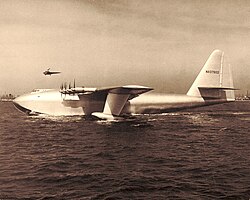
เครื่องบินฮิวส์ H-4 เฮอร์คิวลิสซึ่งอยู่ระหว่างการพัฒนาในสหรัฐอเมริกาในช่วงสงคราม มีขนาดใหญ่กว่า BV 238 แต่ก็ไม่ได้บินจนกระทั่งปี 1947 เครื่องบิน H-4 ที่มีน้ำหนัก 180 ตันนี้ ได้รับฉายาว่า "สปรูซ กูส" (Spruce Goose)ซึ่งเป็นเครื่องบินทะเลที่ใหญ่ที่สุดเท่าที่เคยบินมา ในระหว่างการพิจารณาของวุฒิสภาเกี่ยวกับการใช้เงินทุนของรัฐบาลในการก่อสร้างเครื่องบินลำนี้ ฮิวส์อ้างว่า "ลานไม้บิน" นี้เป็นการพิสูจน์ความสำเร็จของ H-4 [ 76 ] [ 77 ]การลดค่าใช้จ่ายหลังสงครามและการหายไปของภารกิจที่ตั้งใจไว้ในฐานะเครื่องบินขนส่งข้ามมหาสมุทรแอตแลนติก ทำให้ H-4 ไม่มีจุดประสงค์อีกต่อไป แม้ว่าจะไม่เคยบินอีกเลย แต่ลูกเรือเต็มเวลาจำนวน 300 คนก็ยังคงดูแลรักษา H-4 ให้อยู่ในสภาพที่พร้อมบินได้ในโรงเก็บเครื่องบินที่มีการควบคุมอุณหภูมิ จนกระทั่งฮิวส์เสียชีวิตในปี 1976 [ 78 ] [ 79 ]
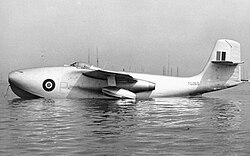
In early 1944, the British Air Ministry issued a contract for the production of a small jet-powered flying boat, the Saunders-Roe SR.A/1, that was intended for use as an air defence aircraft optimised for use in the Pacific theatre.[80] By adopting jet propulsion for the flying boat, it was possible to design it with a hull, rather than making it a floatplane, and thus eliminating the performance handicaps typically imposed upon floatplanes. It was projected to be capable of attaining speeds of up to 520 mph at 40,000 ft.[80] Due to the SR.A/1's perceived value in the war against Imperial Japan, measures taken at an early stage of development towards immediate quantity production.[81] However, due to the end of the conflict, pressure for the SR.A/1 quickly dissipated.[81]
On 16 July 1947, the SR.A/1 prototype performed its maiden flight, quickly proving its soundness in terms of its performance and handling.[82] However, officials judged that such an aircraft was unnecessary, and that the aircraft carrier had demonstrated a far more effective way to project airpower over the oceans.[83] During late 1950, shortly after the outbreak of the Korean War, interest in the SR.A/1 programme was briefly resurrected amongst British and American officials, with whom data had been shared in the project.[81] However, the flying boat fighter was found to be obsolete in comparison to increasingly capable land-based fighters, leading to a second and final cancellation.[84][85]
ระหว่างปฏิบัติการขนส่งทางอากาศเบอร์ลิน (ซึ่งกินเวลาตั้งแต่เดือนมิถุนายน พ.ศ. 2491 จนถึงเดือนสิงหาคม พ.ศ. 2492) เครื่องบิน ซันเดอร์แลนด์ 10 ลำ และเครื่องบินไฮท์ 2 ลำ ถูกใช้ในการขนส่งสินค้าจากฟิงเคนแวร์เด อร์บน แม่น้ำ เอล เบใกล้กับฮัมบูร์กไปยังเบอร์ลินที่ห่างไกล โดยลงจอดที่ทะเลสาบฮาเวลซีข้างฐานทัพอากาศกาโตว์จนกระทั่งทะเลสาบกลายเป็นน้ำแข็ง[ 86 ]เครื่องบินซันเดอร์แลนด์ถูกใช้เป็นพิเศษในการขนส่งเกลือ เนื่องจากโครงสร้างลำตัวเครื่องบินได้รับการปกป้องจากการกัดกร่อนจากน้ำทะเลอยู่แล้ว การขนส่งเกลือในเครื่องบินมาตรฐานมีความเสี่ยงต่อการกัดกร่อนโครงสร้างอย่างรวดเร็วและรุนแรงในกรณีที่เกลือหก นอกจากนี้ ยัง มีการใช้เครื่องบินทะเลของสายการบิน อควีลา 3 ลำ ในระหว่างการขนส่งทางอากาศ[ 25 ] ในปี พ.ศ. 2491 สายการบินอควีลาได้ก่อตั้งขึ้นเพื่อให้บริการไปยังจุดหมายปลายทางที่ยังไม่สามารถเข้าถึงได้ด้วยเครื่องบินที่ประจำการอยู่บนบก[ 25 ]บริษัทนี้ให้บริการ เครื่องบินทะเล รุ่น Short S.25และShort S.45จากเซาแธมป์ตันไปยังมาเดรา , ลาสปาลมาส , ลิสบอน , เจอร์ซีย์ , มายอร์กา , มา ร์เซย์ , คาปรี , เจโนวา , มงเทรอซ์และซานตา มาร์เกริตา [ 25 ] ตั้งแต่ปี 1950 ถึง 1957 อากีลายังให้บริการเที่ยวบินจากเซาแธมป์ตันไปยังเอดินบะระและกลาสโกว์อีก ด้วย [ 25 ]เครื่องบินทะเลของสายการบินอากีลายังถูกเช่าเหมาลำสำหรับการเดินทางแบบครั้งเดียว โดยปกติเพื่อส่งกำลังทหารไปยังที่ที่ไม่มีบริการเที่ยวบินตามกำหนด หรือในกรณีที่มีข้อพิจารณาทางการเมือง การเช่าเหมาลำที่ยาวที่สุดในปี 1952 คือจากเซาแธมป์ตันไปยังหมู่เกาะฟอล์คแลนด์[ 25 ]ในปี 1953 เครื่องบินทะเลถูกเช่าเหมาลำสำหรับการเดินทางส่งกำลังทหารไปยังฟรีทาวน์และลากอสและมีการเดินทางพิเศษจากคิงส์ตันอะพอนฮัลล์ไปยังเฮลซิงกิเพื่อย้ายลูกเรือของเรือลำหนึ่ง[ 25 ]สายการบินหยุดดำเนินการเมื่อวันที่ 30 กันยายน พ.ศ. 2491 [ 25 ]

เมื่อวันที่ 22 สิงหาคม พ.ศ. 2495 เครื่องบินทะเล Saunders-Roe Princessซึ่งเป็นหนึ่งในเครื่องบินทะเลที่ใหญ่ที่สุดและหรูหราที่สุดเท่าที่เคยพัฒนามา ได้ทำการบินครั้งแรก[ 87 ]แม้ว่าการทดสอบการบินของเครื่องบินทะเลที่ล้ำสมัยและทะเยอทะยานนี้จะเป็นไปอย่างราบรื่น โดยพบว่า Princess สามารถทำผลงานได้ตามที่คาดหวังไว้ แต่ก็มีเพียงต้นแบบเดียวเท่านั้นที่ได้ทำการบิน[ 88 ] [ 87 ]แม้ว่าจะได้รับใบรับรองความปลอดภัยในการบินและถือเป็นจุดสูงสุดของการพัฒนาเครื่องบินทะเลในยุคนั้น แต่ก็ไม่มีลูกค้ารายใดเต็มใจที่จะสั่งซื้อ Princess อย่างเป็นทางการ ทั้งๆ ที่มีรายงานว่าผู้ประกอบการหลายราย รวมถึงAquila AirwaysและAero Spacelinesได้พยายามซื้อเครื่องบินรุ่นนี้[ 25 ] [ 89 ] [ 90 ]
ในปี พ.ศ. 2494 BOAC ได้ทำการประเมินความต้องการที่มีอยู่ใหม่อย่างละเอียดถี่ถ้วน และพบว่าสายการบินไม่มีความต้องการเครื่องบิน Princess หรือเครื่องบินทะเลขนาดใหญ่ลำใหม่ใดๆ ในขณะนี้ สายการบินได้เลือกที่จะยุติบริการเครื่องบินทะเลที่มีอยู่เดิมไปแล้วในปีที่ผ่านมา[ 87 ]จนถึงปี พ.ศ. 2517 Ansett Australiaได้ให้บริการเครื่องบินทะเลจาก Rose Bay ไปยังเกาะ Lord Howeโดยใช้ เครื่องบิน Short Sandringham
กองทัพเรือสหรัฐฯ ยังคงใช้งานเครื่องบินทะเล (โดยเฉพาะMartin P5M Marlin ) จนถึงปลายทศวรรษ 1960 ในช่วงทศวรรษ 1950 กองทัพเรือสหรัฐฯ ได้สนับสนุนการพัฒนาเครื่องบินทิ้งระเบิดแบบใช้เครื่องยนต์เจ็ทMartin P6M Seamasterอย่างไรก็ตาม การพัฒนาถูกยืดเยื้อออกไปเนื่องจากลักษณะการควบคุมที่ไม่เอื้ออำนวยที่ความเร็วเหนือ Mach 0.8 รวมถึงการเปลี่ยนแปลงทิศทางอย่างรวดเร็ว การสั่นสะเทือน อย่างรุนแรง และการตกของปีก ซึ่งทำให้ไม่สามารถใช้งานได้จนกว่าจะมีการแก้ไขแนวโน้มเหล่านี้[ 91 ]หลังจากที่กองทัพเรือสหรัฐฯ ถอนการสนับสนุน Martin พยายามทำการตลาด SeaMaster ให้กับตลาดพลเรือนโดยเปลี่ยนชื่อเป็นSeaMistressแต่ไม่ประสบความสำเร็จ[ 92 ]
ในช่วงทศวรรษ 1950 บริษัทผู้ผลิตเครื่องบินShinMeiwa Industries ของญี่ปุ่น ได้ทำการศึกษาการออกแบบภายในเพื่อพัฒนาเครื่องบินทะเลที่มีความสามารถในการเดินเรือได้ดีกว่ารุ่นก่อนหน้า[ 93 ]ในช่วงทศวรรษต่อมา บริษัทได้พัฒนาShin Meiwa US-1Aซึ่งเป็นเครื่องบินทะเลรุ่นใหม่ เพื่อตอบสนองความต้องการของญี่ปุ่นสำหรับเครื่องบินลาดตระเวนทางทะเลที่สามารถปฏิบัติการต่อต้านเรือดำน้ำได้ รุ่นแรกที่มีชื่อว่าPS-1ตามมาด้วย รุ่น สำหรับการค้นหาและกู้ภัย (SAR) โดย เฉพาะ คือ US-1แม้ว่าในทางเทคนิคแล้วจะเป็นเครื่องบินสะเทินน้ำสะเทินบกมากกว่าเครื่องบินทะเลเนื่องจากการออกแบบที่ได้รับการดัดแปลง[ 93 ] Shin Meiwa ได้พัฒนาแนวคิดเครื่องบินทะเลเพิ่มเติมในช่วงเวลานี้ รวมถึงShin Meiwa MS (Medium Seaplane) ซึ่งเป็นเครื่องบินทะเลระยะไกลสำหรับผู้โดยสาร 300 คน พร้อมอุปกรณ์สำหรับขึ้นฝั่ง และShin Meiwa GS (Giant Seaplane) ขนาดมหึมาที่มีความจุผู้โดยสาร 1200 คน บนสามชั้น[ 94 ]

ปลายศตวรรษที่ 20
กองทัพเรือสหรัฐฯ ยังคงใช้งานเครื่องบินทะเล (โดยเฉพาะMartin P5M Marlin ) จนถึงต้นทศวรรษ 1970 กองทัพเรือยังได้ทดลองใช้ เครื่องบินทิ้งระเบิดทะเลพลังเจ็ท Martin Seamasterรวมถึงเครื่องบินสกัดกั้นความเร็วเหนือเสียงConvair F2Y Sea Dart อีกด้วย
หน่วยยามฝั่งสหรัฐฯ ใช้เครื่องบินHU-16 Albatross (เรียกกันอย่างสนิทสนมว่า 'แพะ') ต่อเนื่องมาจนถึงทศวรรษ 1980 และปลดประจำการเมื่อเครื่องบินมีชั่วโมงบินครบ 11,000 ชั่วโมง ประมาณ 20 ลำยังคงใช้งานอยู่จนถึงทศวรรษ 1970 และเที่ยวบินปฏิบัติการครั้งสุดท้ายคือในปี 1983 เครื่องบินรุ่นนี้ได้รับความนิยมอย่างมากจากหน่วยยามฝั่งเนื่องจากความสามารถเฉพาะตัวเมื่อเทียบกับเครื่องบินประเภทอื่น และได้รับการยกย่องในด้านความอเนกประสงค์ ระยะทำการ และความสามารถในการลงจอดบนน้ำ ซึ่งมีประโยชน์อย่างยิ่งสำหรับการช่วยเหลือผู้ประสบภัยทางน้ำ[ 95 ]
สายการบิน Ansett Australiaให้บริการเครื่องบินทะเลจาก Rose Bay ไปยังเกาะ Lord Howeจนถึงปี 1974 โดยใช้ เครื่องบิน รุ่น Short Sandringham
เมื่อวันที่ 18 ธันวาคม พ.ศ. 2533 นักบินทอม เคซีย์ ได้ทำการบินรอบโลกครั้งแรกด้วยเครื่องบินทะเลโดยลงจอดบนน้ำเท่านั้น โดยใช้เครื่องบินเซสนา 206ชื่อลิเบอร์ตี้ II [ 96 ]
พัฒนาการในศตวรรษที่ 21

รูปทรงของ เครื่องบินทะเล Short Empireของอังกฤษในทศวรรษ 1930 เป็นต้นแบบของรูปทรงเครื่องบินในศตวรรษที่ 20 ที่กำลังจะมาถึง อย่างไรก็ตาม ในปัจจุบัน เครื่องบินทะเลแท้ๆ ได้ถูกแทนที่ด้วยเครื่องบินทะเลหรือเครื่องบินสะเทินน้ำสะเทินบกติดล้อไป แล้วเป็นส่วนใหญ่ เครื่องบินสะเทินน้ำสะเทินบกสองเครื่องยนต์ Beriev Be-200ถูกนำมาใช้ในการดับไฟป่า นอกจากนี้ยังมีเครื่องบินสะเทินน้ำสะเทินบกแบบทดลอง/ประกอบเองอีกหลายรุ่น เช่นVolmer Sportsman , Quikkit Glass Goose , Airmax Sea Max , Aeroprakt A-24และSeawind 300C
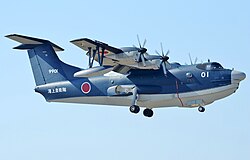
ShinMaywa US-2เป็น เครื่องบินสะเทินน้ำสะเทินบก STOL ขนาดใหญ่ ที่ออกแบบมาสำหรับงานกู้ภัยทางอากาศและทางทะเล โดยพัฒนามาจาก US-1 รุ่นก่อนหน้า เครื่องบินลำแรกถูกส่งมอบให้กับกองกำลังป้องกันตนเองทางทะเลของญี่ปุ่นในปี 2552 โดยกองกำลังดังกล่าวได้เปลี่ยนฝูงบิน US-1 เป็น US-2 [ 97 ]นอกจากนี้ยังมีการออกแบบและส่งเสริม US-2 รุ่นดับเพลิงที่มุ่งเน้นการใช้งานพลเรือนให้กับลูกค้าเป้าหมายอีกด้วย[ 98 ]
เครื่องบินCanadair CL-415ซึ่งเป็นรุ่นปรับปรุงของCanadair CL-215ยังคงมีการผลิตต่อไปในศตวรรษที่ 21 [ 99 ] [ 100 ]เครื่องบินประเภทนี้ส่วนใหญ่ใช้ในการดับไฟป่า แต่ก็มีการใช้งานในด้านอื่นๆ ด้วย เช่น เครื่องบินลาดตระเวนทางทะเล[ 101 ] [ 102 ]บริษัทDornier Seawings ของเยอรมนี ซึ่งเป็นบริษัทในเครือของบริษัท Dornier เดิม ได้ประกาศแผนการที่จะเริ่มการผลิตเรือบินคอมโพสิตSeaStar หลายครั้ง [ 103 ] [ 104 ]ในเดือนกุมภาพันธ์ 2016 Dornier ได้เปิดตัว CD2 SeaStar รุ่นปรับปรุง[ 105 ]
ในช่วงทศวรรษ 2010 บริษัทการบินแห่งประเทศจีน (AVIC) ซึ่งเป็นบริษัทของรัฐได้เริ่มโครงการพัฒนาเครื่องบินสะเทินน้ำสะเทินบกขนาดใหญ่รุ่นใหม่AVIC AG600 [ 106 ] [ 107 ]เมื่อวันที่ 24 ธันวาคม 2017 เครื่องบินลำนี้ได้ทำการบินครั้งแรกจากสนามบินจูไห่ จินหวัน[ 108 ] [ 109 ]
The ICON A5 is an amphibious aircraft in the light-sport class. The Progressive Aerodyne Searey is an amphibious aircraft in the light-sport class, available as a kit built experimental or factory built aircraft. Shortly after the dissolution of the Soviet Union two separated scientific production associations (NPO) in Samara started to make flying boats for a new developing Russian general aviation. Today NPO Aerovolga makes its La series with La-8 being its latest while NPO Chaika makes L series with L-65 being its latest in a line-up.
Uses and operation

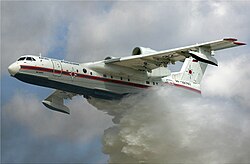
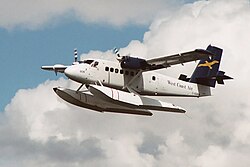
Many modern civilian aircraft have a floatplane variant, usually as utility transports to lakes and other remote areas. Most of these are offered as third-party modifications under a supplemental type certificate (STC), although there are several aircraft manufacturers that build floatplanes from scratch, and a few that continue to build flying boats. Some older flying boats remain in service for firefighting duty, as well as the Canadair CL-415 which remains in production as of 2022, and Chalk's Ocean Airways operated a fleet of Grumman Mallards in passenger service until service was suspended after a crash on December 19, 2005, which was linked to maintenance, not to design of the aircraft. Purely water-based seaplanes have largely been supplanted by amphibious aircraft. Seaplanes can only take off and land on water with little or no wave action and, like other aircraft, have trouble in extreme weather. The size of waves a given design can withstand depends on, among other factors, the aircraft's size, hull or float design, and its weight, all making for a much more unstable aircraft, limiting actual operational days. Flying boats can typically handle rougher water and are generally more stable than floatplanes while on the water.
เครื่องบินทะเลยังถูกใช้ในพื้นที่ห่างไกล เช่น ป่า ในอลาสก้าและแคนาดา โดยเฉพาะในพื้นที่ที่มี ทะเลสาบจำนวนมากซึ่งสะดวกต่อการขึ้นและลงจอด อาจมีการให้บริการแบบเช่าเหมาลำ ให้บริการตามตารางเวลา หรือดำเนินการโดยผู้อยู่อาศัยในพื้นที่เพื่อใช้ส่วนตัว มีผู้ให้บริการเครื่องบินทะเลที่ให้บริการระหว่างเกาะต่างๆ เช่น ในทะเลแคริบเบียนหรือมัลดีฟส์โดยปกติแล้วเครื่องบินเหล่านี้จะดัดแปลงมาจากเครื่องบินพาณิชย์ที่เชื่อถือได้ และติดตั้งทุ่นลอยน้ำ
การดัดแปลงเครื่องบินทะเลแบบหนึ่งที่กำลังพิจารณาในช่วงทศวรรษ 2020 คือเครื่องบินทะเลรุ่นC-130สำหรับการใช้งานทางทหารพิเศษ[ 110 ]
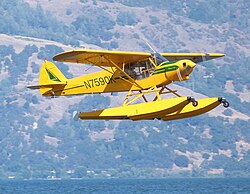
นับตั้งแต่สงครามโลกครั้งที่สองและการมาถึงของเฮลิคอปเตอร์ เรือบรรทุกเครื่องบิน ที่ทันสมัย และเครื่องบินที่ใช้บนบก เครื่องบินทะเลทางทหารก็เลิกใช้ไป สิ่งนี้ประกอบกับการมีสนามบินพลเรือนเพิ่มมากขึ้น ทำให้จำนวนเครื่องบินทะเลที่ผลิตลดลงอย่างมาก อย่างไรก็ตาม เครื่องบินพลเรือนสมัยใหม่หลายลำมีรุ่นดัดแปลงเป็นเครื่องบินทะเล โดยส่วนใหญ่เป็นการดัดแปลงจากผู้ผลิตรายอื่นภายใต้ใบรับรองประเภทเพิ่มเติม (STC) แม้ว่าจะมีผู้ผลิตเครื่องบินหลายรายที่สร้างเครื่องบินทะเลขึ้นมาเองตั้งแต่เริ่มต้นก็ตาม เครื่องบินทะเลเหล่านี้ได้พบช่องทางของตัวเองในฐานะ เครื่องบินสำหรับ พื้นที่ทุรกันดาร ประเภทหนึ่ง สำหรับการขนส่งเบา ๆ ไปยังทะเลสาบและพื้นที่ห่างไกลอื่น ๆ รวมถึงเกาะเล็ก ๆ หรือเกาะที่มีเนินเขาซึ่งไม่มีสนามบินที่เหมาะสม พวกมันอาจให้บริการ แบบ เช่าเหมาลำ (รวมถึงเที่ยวบินเพื่อความบันเทิง) ให้บริการตามตารางเวลา หรือดำเนินการโดยผู้อยู่อาศัยในพื้นที่เพื่อใช้ส่วนตัว
ดูเพิ่มเติม
Further reading
External links
- When Boats Had Wings, June 1963Archived 6 October 2012 at the Wayback Machine detail article Popular Science.
- The Flying Boats on YouTube: BBC documentary film, 1980.
- "Why Seaplanes Fly With Bullet Speed", December 1931, Popular Science article on the different design features of the floats on floatplanes
- "Will a Lake Be Your Postwar Landing Field?"Popular Science, February 1945, pp. 134–135.