
เอชเอช แอสควิธ
เอิร์ลแห่งอ็อกซ์ฟอร์ดและแอสควิธ | |||||||||||||||||||||||||||||||||||
|---|---|---|---|---|---|---|---|---|---|---|---|---|---|---|---|---|---|---|---|---|---|---|---|---|---|---|---|---|---|---|---|---|---|---|---|
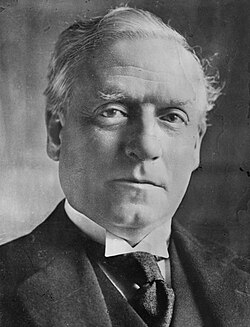 แอส ควิธประมาณทศวรรษ 1910 | |||||||||||||||||||||||||||||||||||
| นายกรัฐมนตรีแห่งสหราชอาณาจักร | |||||||||||||||||||||||||||||||||||
| ดำรงตำแหน่งตั้งแต่วันที่ 5 เมษายน 1908 ถึง5 ธันวาคม 1916 | |||||||||||||||||||||||||||||||||||
| กษัตริย์ | |||||||||||||||||||||||||||||||||||
| นำหน้าโดย | เฮนรี แคมป์เบลล์-แบนเนอร์แมน | ||||||||||||||||||||||||||||||||||
| ประสบความสำเร็จโดย | เดวิด ลอยด์ จอร์จ | ||||||||||||||||||||||||||||||||||
| |||||||||||||||||||||||||||||||||||
| |||||||||||||||||||||||||||||||||||
| สมาชิกสภาขุนนาง | |||||||||||||||||||||||||||||||||||
| ตำแหน่งขุนนางสืบทอดทางสายเลือด 10 กุมภาพันธ์ 1925 –15 กุมภาพันธ์ 1928 | |||||||||||||||||||||||||||||||||||
| นำหน้าโดย | การแต่งตั้งขุนนาง | ||||||||||||||||||||||||||||||||||
| ประสบความสำเร็จโดย | เอิร์ลแห่งอ็อกซ์ฟอร์ดและแอสควิธคนที่ 2 | ||||||||||||||||||||||||||||||||||
| สมาชิกสภาผู้แทนราษฎร | |||||||||||||||||||||||||||||||||||
| ดำรงตำแหน่งระหว่างวันที่ 12 กุมภาพันธ์ 1920 –9 ตุลาคม 1924 | |||||||||||||||||||||||||||||||||||
| นำหน้าโดย | จอห์น แมคคัลลัม | ||||||||||||||||||||||||||||||||||
| ประสบความสำเร็จโดย | เอ็ดเวิร์ด มิตเชลล์ | ||||||||||||||||||||||||||||||||||
| เขตเลือกตั้ง | เพสลีย์ | ||||||||||||||||||||||||||||||||||
| ดำรงตำแหน่งระหว่างวันที่ 27 กรกฎาคม 1886 –25 พฤศจิกายน 1918 | |||||||||||||||||||||||||||||||||||
| นำหน้าโดย | จอห์น บอยด์ คินเนียร์ | ||||||||||||||||||||||||||||||||||
| ประสบความสำเร็จโดย | อเล็กซานเดอร์ สโปรต์ | ||||||||||||||||||||||||||||||||||
| เขตเลือกตั้ง | อีสต์ไฟฟ์ | ||||||||||||||||||||||||||||||||||
| รายละเอียดส่วนบุคคล | |||||||||||||||||||||||||||||||||||
| เกิด | เฮอร์เบิร์ต เฮนรี แอสควิธ( 12 กันยายน 1852 ) 12 กันยายน 1852 มอร์ลีย์เวสต์ไรดิงแห่งยอร์กเชียร์ ประเทศอังกฤษ | ||||||||||||||||||||||||||||||||||
| เสียชีวิต | 15 กุมภาพันธ์ 1928 (1928-02-15) (อายุ 75 ปี) ซัตตัน คอร์เทนีย์ , เบิร์กเชียร์, อังกฤษ | ||||||||||||||||||||||||||||||||||
| สถานที่พักผ่อน | โบสถ์ออลเซนต์ส ซัตตัน คอร์เทนีย์ | ||||||||||||||||||||||||||||||||||
| งานสังสรรค์ | เสรีนิยม | ||||||||||||||||||||||||||||||||||
| คู่สมรส |
| ||||||||||||||||||||||||||||||||||
| เด็ก | 10 คน รวมถึงเรย์มอนด์ , เฮอร์เบิร์ต , อาร์เธอร์ , ไวโอเล็ต , ไซริล , เอ ลิซาเบธและแอนโทนี | ||||||||||||||||||||||||||||||||||
| ญาติ | ครอบครัวแอสควิธ | ||||||||||||||||||||||||||||||||||
| วิทยาลัยบอลลิออล มหาวิทยาลัยออกซ์ฟอร์ด | |||||||||||||||||||||||||||||||||||
| วิชาชีพ | ทนายความ | ||||||||||||||||||||||||||||||||||
| ลายเซ็น |  | ||||||||||||||||||||||||||||||||||
เฮอร์เบิร์ต เฮนรี แอสควิธ เอิร์ลแห่งอ็อกซ์ฟอร์ดและแอสควิธที่ 1 ( / ˈ æ s k w ɪ θ / ASS -kwith ; 12 กันยายน 1852 – 15 กุมภาพันธ์ 1928) เป็นรัฐบุรุษชาวอังกฤษที่ดำรงตำแหน่งนายกรัฐมนตรีแห่งสหราชอาณาจักรตั้งแต่ปี 1908 ถึง 1916 เขาเป็นนายกรัฐมนตรีคนสุดท้ายจากพรรคเสรีนิยมที่บัญชาการรัฐบาลเสียงข้างมาก และเป็น สมาชิกพรรคเสรีนิยมคนล่าสุดที่ดำรงตำแหน่งผู้นำฝ่ายค้าน
เขามีบทบาทสำคัญในการออกแบบและผลักดันกฎหมายเสรีนิยมที่สำคัญหลายฉบับรวมถึงการลดอำนาจของสภาขุนนางในเดือนสิงหาคม ค.ศ. 1914 แอสควิธนำสหราชอาณาจักรบริเตนใหญ่และไอร์แลนด์และจักรวรรดิอังกฤษเข้าร่วมสงครามโลกครั้งที่หนึ่งในปี ค.ศ. 1915 รัฐบาลของเขาถูกวิพากษ์วิจารณ์อย่างหนักเรื่องการขาดแคลนกระสุนและการล้มเหลวของยุทธการกัลลิโปลีเขาจัดตั้งรัฐบาลผสมกับพรรคอื่น ๆ แต่ไม่สามารถทำให้ผู้ที่วิพากษ์วิจารณ์พอใจได้ จึงถูกบังคับให้ลาออกในเดือนธันวาคม ค.ศ. 1916 และไม่เคยได้กลับมามีอำนาจอีกเลย
หลังจากศึกษาที่วิทยาลัยบอลลิออล มหาวิทยาลัยออกซ์ฟอร์ดเขาได้กลายเป็นทนายความที่ ประสบความสำเร็จ ในปี 1886 เขาเป็นผู้สมัครจากพรรคเสรีนิยมใน เขตเลือกตั้ง อีสต์ไฟฟ์ซึ่งเขาดำรงตำแหน่งนี้มานานกว่าสามสิบปี ในปี 1892 เขาได้รับการแต่งตั้งเป็นรัฐมนตรีว่าการกระทรวงมหาดไทยในคณะรัฐมนตรีชุดที่สี่ของวิลเลียม อีวาร์ต แกลดสโตนและดำรงตำแหน่งจนกระทั่งพรรคเสรีนิยมพ่ายแพ้ในการเลือกตั้งปี 1895ในช่วงทศวรรษแห่งการเป็นฝ่ายค้านที่ตามมา แอสควิธกลายเป็นบุคคลสำคัญในพรรค และเมื่อพรรคเสรีนิยมกลับมามีอำนาจอีกครั้งภายใต้การนำของเซอร์เฮนรี แคมป์เบลล์-แบนเนอร์แมนในปี 1905 แอสควิธได้รับการแต่งตั้งเป็นรัฐมนตรีว่าการกระทรวงการคลังในปี 1908 แอสควิธได้สืบทอดตำแหน่งต่อจากเขาในฐานะนายกรัฐมนตรี
พรรคเสรีนิยมมุ่งมั่นที่จะผลักดันวาระการปฏิรูปของตน อุปสรรคสำคัญคือสภาขุนนางซึ่งปฏิเสธงบประมาณประชาชนปี 1909 ในขณะเดียวกันพระราชบัญญัติแอฟริกาใต้ปี 1909ก็ผ่านการอนุมัติ แอสควิธประกาศจัดการเลือกตั้งในเดือนมกราคมปี 1910และพรรคเสรีนิยมก็ชนะการเลือกตั้ง แม้ว่าพวกเขาจะกลายเป็นรัฐบาลเสียงข้างน้อยก็ตาม หลังจากการเลือกตั้งทั่วไปอีกครั้งในเดือนธันวาคมปี 1910เขาก็ผลักดันให้มีการผ่านพระราชบัญญัติรัฐสภาปี 1911 ซึ่งอนุญาตให้ร่างกฎหมายที่ผ่านการอนุมัติจากสภาสามัญชนสามครั้งติดต่อกัน สามารถบังคับใช้ได้โดยไม่คำนึงถึงสภาขุนนาง แอสควิธประสบความสำเร็จน้อยกว่าในการจัดการกับ ปัญหาการปกครองตนเองของไอร์แลนด์วิกฤตการณ์ที่เกิดขึ้นซ้ำแล้วซ้ำเล่าทำให้เกิดการลักลอบค้าอาวุธและความรุนแรง จนเกือบจะนำไปสู่สงครามกลางเมือง
เมื่ออังกฤษประกาศสงครามกับเยอรมนีเพื่อตอบโต้การรุกรานเบลเยียมของเยอรมนีความขัดแย้งภายในประเทศที่สำคัญเกี่ยวกับไอร์แลนด์และสิทธิออกเสียงของสตรี ก็ถูกระงับไว้ ชั่วคราว แอสควิธเป็นเหมือนประธานคณะกรรมการมากกว่าผู้นำที่มีพลวัต เขาดูแลการระดมพลระดับชาติ การส่งกองกำลังรบของอังกฤษไปยังแนวรบด้านตะวันตกการสร้างกองทัพขนาดใหญ่ และการพัฒนากลยุทธ์ทางอุตสาหกรรมที่ออกแบบมาเพื่อสนับสนุนเป้าหมายสงครามของอังกฤษ สงครามยืดเยื้อและมีการเรียกร้องให้มีผู้นำที่ดีกว่า เขาถูกบังคับให้จัดตั้งรัฐบาลผสมกับพรรคอนุรักษ์นิยมและพรรคแรงงานในช่วงต้นปี 1915 เขาอ่อนแอลงเนื่องจากความลังเลใจของตนเองเกี่ยวกับกลยุทธ์ การเกณฑ์ทหาร และการเงิน[ 1 ]
เดวิด ลอยด์ จอร์จเข้ามาดำรงตำแหน่งนายกรัฐมนตรีแทนเขาในเดือนธันวาคม ปี 1916 ทั้งสองกลายเป็นศัตรูตัวฉกาจและต่อสู้แย่งชิงอำนาจในพรรคเสรีนิยมที่กำลังเสื่อมถอยอย่างรวดเร็ว บทบาทของแอสควิธในการสร้างรัฐสวัสดิการสมัยใหม่ของอังกฤษ (ค.ศ. 1906–1911) ได้รับการยกย่อง แต่จุดอ่อนของเขาในฐานะผู้นำสงครามและผู้นำพรรคหลังปี 1914 ก็ถูกนักประวัติศาสตร์เน้นย้ำเช่นกัน เขาดำรงตำแหน่งนายกรัฐมนตรีต่อเนื่องยาวนานที่สุดระหว่างปี 1827 ถึง 1979 (เมื่อมาร์กาเร็ต แทตเชอร์เริ่มดำรงตำแหน่ง 11 ปี) โดยดำรงตำแหน่งติดต่อกันนานกว่าแปดปี
ช่วงต้นชีวิต: 1852–1874
ภูมิหลังครอบครัว
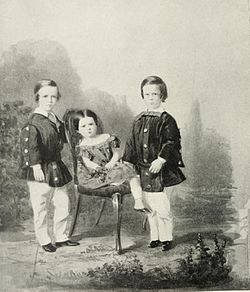
เฮอร์เบิร์ต เฮนรี แอสควิธ เกิดเมื่อวันที่ 12 กันยายน ค.ศ. 1852 ที่เมืองมอร์ลีย์ในเขตเวสต์ไรดิงแห่งยอร์กเชอร์ เป็นบุตรชายคนเล็กของโจเซฟ ดิกสัน แอสควิธ (ค.ศ. 1825–1860) และภรรยาของเขา เอมิลี นามสกุลเดิม วิลแลนส์ (ค.ศ. 1828–1888) ทั้งคู่มีบุตรสาวสามคน ซึ่งมีเพียงคนเดียวที่รอดชีวิตมาได้[ 2 ] [ 3 ] [ก]ตระกูลแอสควิธเป็นตระกูลเก่าแก่ของยอร์กเชอร์ที่มีประเพณีต่อต้าน นิกายโปรเตสแตนต์มายาวนาน [ข]เป็นเรื่องที่น่าภาคภูมิใจของครอบครัวแอสควิธ ที่บรรพบุรุษของพวกเขา โจเซฟ แอสควิธ ถูกจำคุกเนื่องจากมีส่วนร่วมในแผนการสมคบคิดฟาร์นลีย์วูดของฝ่ายสนับสนุนราวด์เฮดในปี ค.ศ. 1664 [ 4 ]
พ่อแม่ของแอสควิธมาจากครอบครัวที่เกี่ยวข้องกับการค้าขนสัตว์ในยอร์กเชอร์ ดิ๊กซัน แอสควิธได้รับมรดกบริษัทกิลรอยด์มิลล์ ซึ่งก่อตั้งโดยพ่อของเขา ส่วนวิลเลียม วิลแลนส์ พ่อของเอมิลี่ ดำเนิน ธุรกิจ ค้าขนสัตว์ ที่ประสบความสำเร็จ ในฮัดเดอร์สฟิลด์ทั้งสองครอบครัวเป็นชนชั้นกลาง นับถือศาสนาคริสต์ นิกายคองเกรเกชัน นัล และมีแนวคิดทางการเมืองหัวรุนแรงดิ๊กซันเป็นคนสุภาพ มีการศึกษา และตามคำพูดของลูกชาย เขา "ไม่เหมาะ" กับอาชีพนักธุรกิจ[ 2 ]เขาถูกอธิบายว่าเป็น "ชายผู้มีคุณธรรมสูงที่จัดชั้นเรียนพระคัมภีร์สำหรับชายหนุ่ม" [ 5 ]เอมิลี่มีสุขภาพไม่ดีอย่างต่อเนื่อง แต่มีบุคลิกที่เข้มแข็ง และเป็นผู้มีอิทธิพลในการหล่อหลอมลูกชายของเธอ[ 6 ]
วัยเด็กและการศึกษา
ในวัยหนุ่ม เขาถูกเรียกว่าเฮอร์เบิร์ต ("เบอร์ตี้" ในวัยเด็ก) ภายในครอบครัว แต่ภรรยาคนที่สองของเขาเรียกเขาว่าเฮนรีสตีเฟน คอสส์ ผู้เขียน ชีวประวัติของเขา ตั้งชื่อบทแรกของชีวประวัติว่า "จากเฮอร์เบิร์ตถึงเฮนรี" ซึ่งหมายถึงการเลื่อนฐานะทางสังคมและการละทิ้งรากเหง้าของชาวโปรเตสแตนต์นิกายโปรเตสแตนต์ในยอร์กเชอร์หลังจากการแต่งงานครั้งที่สอง อย่างไรก็ตาม ในที่สาธารณะ เขาถูกเรียกขานเพียงแค่ HH Asquith เท่านั้น "มีบุคคลสำคัญระดับชาติไม่กี่คนที่ชื่อจริงไม่เป็นที่รู้จักของสาธารณชน" ตามที่รอย เจนกินส์ผู้ เขียนชีวประวัติของเขากล่าวไว้ [ 2 ]
เฮอร์เบิร์ต แอสควิธและน้องชายได้รับการศึกษาที่บ้านโดยพ่อแม่ของพวกเขาจนกระทั่งปี 1860 เมื่อดิกสัน แอสควิธเสียชีวิตอย่างกะทันหัน วิลเลียม วิลแลนส์จึงรับหน้าที่ดูแลครอบครัว ย้ายพวกเขาไปอยู่ที่บ้านใกล้กับบ้านของเขาเอง และจัดการเรื่องการศึกษาของเด็กชาย[ 7 ]หลังจากเรียนที่วิทยาลัยฮัดเดอร์สฟิลด์ ได้หนึ่งปี พวกเขาก็ถูกส่ง ไปเรียน ประจำที่โรงเรียนฟุลเน็กซึ่งเป็น โรงเรียน ของคริสตจักรโมราเวียนใกล้เมืองลีดส์ในปี 1863 วิลเลียม วิลแลนส์เสียชีวิต และครอบครัวก็ตกอยู่ภายใต้การดูแลของจอห์น วิลแลนส์ พี่ชายของเอมิลี่ เด็กชายทั้งสองไปอาศัยอยู่กับเขาในลอนดอน เมื่อเขาย้ายกลับไปยอร์กเชอร์ในปี 1864 ด้วยเหตุผลทางธุรกิจ พวกเขายังคงอยู่ในลอนดอนและพักอาศัยอยู่กับครอบครัวต่างๆ
นักเขียนชีวประวัติ นาโอมิ เลวีน เขียนว่า ในความเป็นจริงแล้ว แอสควิธ "ถูกปฏิบัติเหมือนเด็กกำพร้า" ตลอดช่วงวัยเด็กที่เหลือของเขา[ 8 ]การจากไปของลุงของเขาทำให้ความสัมพันธ์ของแอสควิธกับยอร์กเชียร์บ้านเกิดของเขาขาดสะบั้นลงอย่างสิ้นเชิง และหลังจากนั้นเขาก็อธิบายตัวเองว่า "โดยแท้จริงแล้วเป็นชาวลอนดอน" [ 9 ]นักเขียนชีวประวัติอีกคนหนึ่งโคลิน แมทธิวเขียนว่า ภูมิหลังที่ไม่ยอมรับขนบธรรมเนียมประเพณีทางตอนเหนือของแอสควิธยังคงมีอิทธิพลต่อเขา: "มันทำให้เขามีจุดอ้างอิงต่อต้านสถาบันที่มั่นคง ซึ่งสำคัญสำหรับชายคนหนึ่งที่ชีวิตในด้านอื่นๆ เป็นการหมกมุ่นอยู่กับความเป็นเมืองใหญ่มาอย่างยาวนาน" [ 10 ]
เด็กชายทั้งสองถูกส่งไปเรียนที่โรงเรียนซิตี้ออฟลอนดอนในฐานะนักเรียนไป-กลับ ภายใต้การดูแลของอาจารย์ใหญ่ของโรงเรียนอี.เอ. แอบบอตต์นักวิชาการด้านวรรณคดีคลาสสิกผู้มีชื่อเสียง แอสควิธกลายเป็นนักเรียนที่โดดเด่น ต่อมาเขากล่าวว่าเขามีความรู้สึกเป็นหนี้บุญคุณอาจารย์ใหญ่มากกว่าใครๆ ที่ยังมีชีวิตอยู่[ 11 ]แอบบอตต์ปฏิเสธที่จะรับเครดิตสำหรับความก้าวหน้าของเด็กชาย: "ผมไม่เคยมีนักเรียนคนไหนที่เป็นหนี้บุญคุณผมน้อยกว่านี้ และเป็นหนี้บุญคุณความสามารถตามธรรมชาติของเขาเองมากกว่านี้" [ 11 ] [ 12 ]แอสควิธเก่ง ในวิชาวรรณคดี คลาสสิกและภาษาอังกฤษ ไม่ค่อยสนใจกีฬา อ่านหนังสืออย่างกระหายในห้องสมุดกิลด์ฮอลล์และหลงใหลในการพูด เขาไปเยี่ยมชมหอประชุมสาธารณะของสภาสามัญชนศึกษาเทคนิคของนักเทศน์ชื่อดัง และฝึกฝนทักษะของตนเองในชมรมโต้วาทีของโรงเรียน[ 13 ]แอบบอตต์กล่าวถึงความสมเหตุสมผลและความชัดเจนของสุนทรพจน์ของนักเรียน ซึ่งเป็นคุณสมบัติที่ทำให้แอสควิธได้รับการยกย่องตลอดชีวิตที่เหลือของเขา[ 14 ] [ 15 ]ต่อมาแอสควิธเล่าว่าตอนที่เขายังเป็นเด็กนักเรียน เขาเห็นศพของฆาตกร 5 คนถูกแขวนไว้ข้างนอกเรือนจำนิวเกต[ 16 ]
อ็อกซ์ฟอร์ด
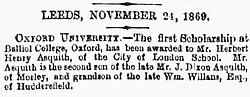
ในเดือนพฤศจิกายน ค.ศ. 1869 แอสควิธได้รับทุนการศึกษาด้านคลาสสิก ที่วิทยาลัยบอลลิออล มหาวิทยาลัยออกซ์ฟอร์ด และเข้าศึกษาในเดือนตุลาคมปีถัดมา ชื่อเสียงของวิทยาลัยซึ่งสูงอยู่แล้วก็ยิ่งเพิ่มสูงขึ้นภายใต้การนำของอาจารย์ใหญ่ที่เพิ่งได้รับเลือกตั้งใหม่เบนจามิน โจเว็ตต์เขาพยายามยกระดับมาตรฐานของวิทยาลัยให้สูงขึ้นจนนักศึกษาปริญญาตรีมีความรู้สึกร่วมกันในสิ่งที่แอสควิธเรียกในภายหลังว่า "ความรู้สึกสงบสุขของความเหนือกว่าอย่างไม่ย่อท้อ" [ 17 ]แม้ว่าแอสควิธจะชื่นชมโจเว็ตต์ แต่เขาก็ได้รับอิทธิพลจากทีเอช กรีนศาสตราจารย์ด้านปรัชญาศีลธรรมของไวท์ มากกว่า ด้านนามธรรมของปรัชญาไม่ได้ดึงดูดแอสควิธมากนัก เพราะมุมมองของเขามักจะเน้นด้านปฏิบัติ แต่ทัศนะทางการเมืองแบบเสรีนิยมก้าวหน้าของกรีนกลับดึงดูดใจเขา[ 10 ]
เส้นทางการศึกษาในมหาวิทยาลัยของแอสควิธนั้นโดดเด่น—“น่าประทับใจโดยไม่หวือหวา” ตามคำกล่าวของเจนกินส์ ความเข้าใจในการเรียนที่ง่ายดายทำให้เขามีเวลาเหลือเฟือที่จะสนองความชอบในการโต้วาที ในเดือนแรกที่มหาวิทยาลัย เขาได้กล่าวสุนทรพจน์ที่Oxford Unionนักเขียนชีวประวัติอย่างเป็นทางการของเขาเจ.เอ. สเปนเดอร์และไซริล แอสควิธ ได้แสดงความคิดเห็นว่าในช่วงเดือนแรกๆ ที่ออกซ์ฟอร์ด “เขาได้แสดงทัศนะเสรีนิยมแบบ ดั้งเดิมโดยกล่าวสนับสนุนการแยกคริสตจักรแห่งอังกฤษ ออก จากรัฐ และการไม่แทรกแซงในสงครามฝรั่งเศส-ปรัสเซีย ” [ 18 ]บางครั้งเขาก็โต้วาทีกับอัลเฟรด มิลเนอร์ เพื่อนร่วมรุ่นจาก Balliol ซึ่งถึงแม้จะเป็นเสรีนิยม แต่ก็เป็นผู้สนับสนุนจักรวรรดินิยมอังกฤษอยู่แล้ว[ 19 ]เขาได้รับเลือกเป็นเหรัญญิกของสหภาพในปี 1872 แต่พ่ายแพ้ในการลงสมัครชิงตำแหน่งประธานครั้งแรก[ 20 ]ในระหว่างการเลือกตั้งทั่วไปในเดือนมกราคมและกุมภาพันธ์ พ.ศ. 2417เขาได้กล่าวปราศรัยต่อต้านลอร์ดแรนดอล์ฟ เชอร์ชิลล์ซึ่งยังไม่เป็นนักการเมืองที่มีชื่อเสียงมากนัก ณ เมืองวูดสต็อกที่ อยู่ใกล้เคียง [ 21 ]ในที่สุดเขาก็ได้เป็นประธานสหภาพนักศึกษาในภาคเรียนตรีนิตี้ พ.ศ. 2417 ซึ่งเป็นภาคเรียนสุดท้ายของเขาในฐานะนักศึกษาระดับปริญญา ตรี [ 22 ] [ 23 ]
แอสควิธได้รับ รางวัลรองชนะเลิศ ( proxime accessit ) สำหรับรางวัลเฮิร์ตฟอร์ดในปี พ.ศ. 2415 และได้รับ รางวัลรองชนะเลือ ( proxime accessit ) สำหรับรางวัลไอร์แลนด์ในปี พ.ศ. 2416 และได้รับรางวัลไอร์แลนด์อีกครั้งในปี พ.ศ. 2417 ในครั้งนั้นเขาได้รับรางวัลใกล้เคียงมากจนกรรมการตัดสินมอบรางวัลพิเศษเป็นหนังสือให้เขา อย่างไรก็ตาม เขาได้รับทุนการศึกษาเครเวนและสำเร็จการศึกษาด้วยเกียรตินิยมอันดับหนึ่งสองสาขาในวิชา Mods และ Greats ตามที่นักเขียนชีวประวัติของเขาบรรยาย ไว้[ 24 ]หลังจากสำเร็จการศึกษา เขาได้รับเลือกให้เป็นสมาชิกของ Balliol [ 25 ]
ช่วงเริ่มต้นอาชีพ: 1874–1886
หลังจบจากอ็อกซ์ฟอร์ด
อาจเป็นเพราะจุดเริ่มต้นที่ยากลำบากของเขา ทำให้แอสควิธมักหลงใหลในความสะดวกสบายและสิ่งอำนวยความสะดวกที่เงินสามารถซื้อได้ เขาเป็นคนฟุ่มเฟือย ชอบใช้ชีวิตหรูหราเสมอ ไม่ว่าจะเป็นอาหารดี เพื่อนฝูงที่ดี การสนทนาที่ดี และผู้หญิงสวยๆ
หลังจากสำเร็จการศึกษาในปี พ.ศ. 2317 แอสควิธใช้เวลาหลายเดือนในการฝึกสอนไวเคานต์ลิมิงตันบุตรชายวัย 18 ปีและทายาทของเอิร์ลแห่งพอร์ตสมัธเขาพบว่าประสบการณ์ชีวิตในคฤหาสน์ชนบทของชนชั้นสูงนั้นน่าพึงพอใจ[ 27 ] [ 28 ]เขาไม่ค่อยชอบด้านที่เคร่งครัดของประเพณีเสรีนิยมที่ไม่ยอมรับความแตกต่าง ซึ่งมีการเคลื่อนไหวต่อต้านสุรา อย่างเข้มแข็ง เขาภูมิใจที่ได้กำจัด " ลัทธิเพียวริตันที่ฉันได้รับการเลี้ยงดูมา" [ 29 ]ความชื่นชอบในไวน์และสุราชั้นดีของเขา ซึ่งเริ่มต้นในช่วงเวลานี้ ในที่สุดก็ทำให้เขาได้รับฉายาว่า " สควิฟฟี่ " [ 30 ]
เมื่อกลับมาที่ออกซ์ฟอร์ด แอสควิธใช้เวลาปีแรกของการเป็นนักวิจัยเจ็ดปีของเขาอยู่ที่นั่น แต่เขาไม่มีความปรารถนาที่จะประกอบอาชีพเป็นอาจารย์สอนหนังสือ เส้นทางดั้งเดิมสำหรับชายหนุ่มที่มีความทะเยอทะยานทางการเมืองแต่ไม่มีเงินคือการเรียนกฎหมาย[ 28 ]ขณะที่ยังอยู่ที่ออกซ์ฟอร์ด แอสควิธได้เข้าเรียนที่ลินคอล์นส์อินน์เพื่อฝึกฝนเป็นทนายความและในปี 1875 เขาได้ฝึกงาน ภาย ใต้ชาร์ลส์ โบเวน [ 31 ] เขาได้ รับอนุญาตให้ประกอบ วิชาชีพทนายความในเดือนมิถุนายน 1876 [ 32 ]
การแต่งงานและบุตร
หลังจากนั้น เจนกินส์เรียกช่วงเวลานั้นว่า "เจ็ดปีที่ยากลำบากอย่างยิ่ง" [ 31 ]แอสควิธได้ก่อตั้งสำนักงานกฎหมายร่วมกับทนายความรุ่นน้องอีกสองคน ด้วยความที่ไม่มีการติดต่อส่วนตัวกับทนายความ เขาจึงได้รับมอบหมายงานน้อย มาก [ c ]ในบรรดางานที่เข้ามา เขาก็โต้แย้งได้อย่างมีประสิทธิภาพ แต่เขาพิถีพิถันเกินไปที่จะเรียนรู้กลเม็ดที่แยบยลกว่าของวงการกฎหมาย: "เขาไม่สามารถพูดจาคลุมเครือได้ ... และเขาก็ไม่สามารถโน้มน้าวตัวเองให้ใช้สำนวนแบบเดิมๆ ได้" [ 33 ]เขาไม่ได้ปล่อยให้การขาดแคลนเงินมาขัดขวางการแต่งงานของเขา เจ้าสาวของเขา เฮเลน เคลซอลล์ เมลแลนด์ (1854–1891) เป็นลูกสาวของเฟรเดอริก เมลแลนด์ แพทย์ในเมืองแมนเชสเตอร์ เธอและแอสควิธได้พบกันผ่านเพื่อนของแม่ของเขา[ 33 ]ทั้งสองรักกันมาหลายปีแล้ว แต่จนกระทั่งปี 1877 แอสควิธจึงได้ขอความยินยอมจากพ่อของเธอสำหรับการแต่งงานของพวกเขา แม้ว่าแอสควิธจะมีรายได้จำกัด แทบไม่มีรายได้จากบาร์และเงินช่วยเหลือเล็กน้อยจากทุนการศึกษา แต่เมลแลนด์ก็ยินยอมหลังจากสอบถามถึงศักยภาพของชายหนุ่ม เฮเลนมีรายได้ส่วนตัวหลายร้อยปอนด์ต่อปี และทั้งคู่ใช้ชีวิตอย่างสุขสบายในแฮมป์สเตดพวกเขามีลูกห้าคน:
- เรย์มอนด์ แอสควิธ (6 พฤศจิกายน 1878 – 15 กันยายน 1916) แต่งงานกับแคทเธอรีน ฮอร์เนอร์ (บุตรสาวของเซอร์จอห์น ฮอร์เนอร์ ) เมื่อวันที่ 25 กรกฎาคม 1907 ทั้งคู่มีบุตรด้วยกันสามคน
- เฮอร์เบิร์ต แอสควิธ (11 มีนาคม 1881 – 5 สิงหาคม 1947) แต่งงานกับเลดี้ ซินเทีย ชาร์เทอริส (บุตรสาวของฮิวโก ริชาร์ด ชาร์เทอริส เอิร์ลแห่งเวมิสคนที่ 11 และเอิร์ลแห่งมาร์ชคนที่ 7 ) เมื่อวันที่ 28 กรกฎาคม 1910 ทั้งคู่มีบุตรด้วยกันสามคน
- อาร์เธอร์ แอสควิธ (24 เมษายน 1883 – 25 สิงหาคม 1939) แต่งงานกับเบ็ตตี้ คอนสแตนซ์ แมนเนอร์ส (บุตรสาวของจอห์น แมนเนอร์ส-ซัตตัน บารอนแมนเนอร์สที่ 3 ) เมื่อวันที่ 30 เมษายน 1918 ทั้งคู่มีบุตรสาวสี่คน
- ไวโอเล็ต แอสควิธ (15 เมษายน 1887 – 19 กุมภาพันธ์ 1969) แต่งงานกับเซอร์มอริซ บอนแฮม คาร์เตอร์เมื่อวันที่ 30 พฤศจิกายน 1915 ทั้งคู่มีบุตรด้วยกันสี่คน
- Cyril Asquith, Baron Asquith of Bishopstone (5 กุมภาพันธ์ 1890 – 24 สิงหาคม 1954) [ 10 ]ซึ่งแต่งงานกับ Anne Pollock (ลูกสาวของ Sir Adrian Donald Wilde Pollock) เมื่อวันที่ 12 กุมภาพันธ์ 1918 พวกเขามีบุตรสี่คน
นิตยสาร The Spectatorและการเมือง
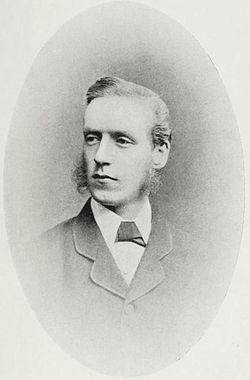
ระหว่างปี 1876 ถึง 1884 แอสควิธหารายได้เสริมด้วยการเขียนบทความลงนิตยสารThe Spectator เป็นประจำ ซึ่งในเวลานั้นนิตยสารฉบับนี้มีมุมมองทางการเมืองแบบเสรีนิยมอย่างกว้างขวาง แมทธิวแสดงความคิดเห็นว่าบทความที่แอสควิธเขียนให้กับนิตยสารนั้นให้ภาพรวมที่ดีเกี่ยวกับมุมมองทางการเมืองของเขาในวัยหนุ่ม เขาเป็นคนหัวรุนแรงอย่างแน่วแน่ แต่ก็ไม่เชื่อมั่นในมุมมองฝ่ายซ้ายสุดโต่งเช่นเดียวกับลัทธิอนุรักษ์นิยมหัวข้อที่ก่อให้เกิดการถกเถียงในหมู่เสรีนิยม ได้แก่ จักรวรรดินิยมอังกฤษ การรวมตัวของบริเตนใหญ่และไอร์แลนด์ และสิทธิในการออกเสียงเลือกตั้งของสตรี แอสควิธเป็นผู้สนับสนุนจักรวรรดิอย่างแข็งขัน แม้จะไม่ถึงขั้นคลั่งชาติ และหลังจากความระมัดระวังในตอนแรก เขาก็สนับสนุนการปกครองตนเองของไอร์แลนด์ เขาคัดค้านการให้สิทธิออกเสียงเลือกตั้งแก่สตรีตลอดช่วงเวลาส่วนใหญ่ในอาชีพทางการเมืองของเขา ตามชีวประวัติอย่างเป็นทางการโดยJA Spenderและ Cyril Asquith นั้น HH Asquith “มีความเคารพอย่างลึกซึ้งต่อความคิดและสติปัญญาของผู้หญิง ... แต่เขาถือว่าการเมืองเป็นเรื่องของผู้ชายโดยเฉพาะ และมันขัดกับความรู้สึกถึงความเหมาะสมและความเป็นสุภาพบุรุษของเขาที่จะคิดว่าพวกเธอมีส่วนร่วมในเรื่องวุ่นวายของธุรกิจของผู้ชายนี้และถูกเปิดเผยต่อสาธารณชน เขาปฏิเสธอย่างรุนแรงเสมอว่าคำถามนี้ไม่มีความสัมพันธ์กับทฤษฎีประชาธิปไตยหรือการกีดกันผู้หญิงจากสิทธิในการเลือกตั้งเป็นการสะท้อนถึงเพศของพวกเธอ” [ 34 ]นอกจากนี้ยังมีองค์ประกอบของผลประโยชน์ของพรรคด้วย: Asquith เชื่อว่าคะแนนเสียงของผู้หญิงจะส่งผลดีต่อพรรคอนุรักษ์นิยม อย่างไม่สมส่วน ในการศึกษาในปี 2001 เกี่ยวกับการขยายสิทธิในการเลือกตั้งระหว่างปี 1832 ถึง 1931 Bob Whitfield สรุปว่าการคาดเดาของ Asquith เกี่ยวกับผลกระทบทางการเลือกตั้งนั้นถูกต้อง[ 35 ]นอกจากงานของเขาสำหรับThe Spectatorแล้ว เขายังได้รับการว่าจ้างให้เป็น ผู้เขียนบทความ นำโดยThe Economistสอนในชั้นเรียนภาคค่ำ และตรวจข้อสอบอีกด้วย[ 36 ]
อาชีพทนายความของแอสควิธเริ่มเฟื่องฟูในปี พ.ศ. 2426 เมื่ออาร์.เอส. ไรท์เชิญเขาเข้าร่วมสำนักงานของเขาที่อินเนอร์เทมเปิล ไรท์เป็นที่ปรึกษาอาวุโสประจำกระทรวงการคลัง ซึ่งเป็นตำแหน่งที่มักเรียกกันว่า " ปีศาจของอัยการสูงสุด " [ 37 ]ซึ่งมีหน้าที่ให้คำปรึกษาทางกฎหมายแก่รัฐมนตรีและหน่วยงานรัฐบาล[ 37 ]หนึ่งในงานแรกๆ ของแอสควิธในการทำงานให้กับไรท์คือการเตรียมบันทึกสำหรับนายกรัฐมนตรีดับเบิลยู.อี. แกลดสโตนเกี่ยวกับสถานะของคำสาบานในรัฐสภาภายหลังคดีแบรดล อว์ ทั้งแกลดสโตนและอัยการสูงสุดเซอร์เฮนรี เจมส์ต่างประทับใจ สิ่งนี้ทำให้ชื่อเสียงของแอสควิธโด่งดังขึ้น แม้ว่าจะไม่ได้ช่วยเพิ่มรายได้ของเขามากนัก สิ่งที่ให้ผลตอบแทนมากกว่าคือการติดต่อใหม่ๆ กับทนายความที่ว่าจ้างไรท์เป็นประจำ และตอนนี้ก็เริ่มว่าจ้างแอสควิธด้วย[ 38 ]
สมาชิกสภาผู้แทนราษฎร: 1886–1908
ที่ปรึกษาของราชินี
ในเดือนมิถุนายน พ.ศ. 2429 เมื่อพรรคเสรีนิยมแตกแยกในประเด็นการปกครองตนเองของไอร์แลนด์แกลดสโตนจึงเรียกการเลือกตั้งทั่วไป [ 39 ] มีตำแหน่งว่างในนาทีสุดท้ายที่อีสต์ไฟฟ์ ซึ่ง จอห์น บอยด์ คินเนีย ร์ สมาชิกพรรคเสรีนิยมที่ดำรงตำแหน่งอยู่ถูกถอดถอนโดยสมาคมเสรีนิยมท้องถิ่นเนื่องจากลงคะแนนเสียงคัดค้านการปกครองตนเองของไอร์แลนด์ริชาร์ด ฮัลเดนเพื่อนสนิทของแอสควิธและทนายความหนุ่มที่กำลังดิ้นรน ได้ดำรงตำแหน่ง ส.ส. พรรคเสรีนิยมใน เขตเลือกตั้ง แฮดดิงตันเชียร์ ที่อยู่ใกล้เคียง ตั้งแต่เดือนธันวาคม พ.ศ. 2428เขาเสนอชื่อแอสควิธเป็นผู้แทนของคินเนียร์ และเพียงสิบวันก่อนการลงคะแนน แอสควิธก็ได้รับการเสนอชื่ออย่างเป็นทางการในการลงคะแนนเสียงของพรรคเสรีนิยมท้องถิ่น[ 40 ] พรรค อนุรักษ์นิยมไม่ได้ลงแข่งขันในที่นั่งนี้ โดยให้การสนับสนุนคินเนียร์ ซึ่งลงสมัครรับเลือกตั้งแข่งกับแอสควิธในฐานะสมาชิกสหภาพเสรีนิยม แอส ควิ ธได้รับเลือกตั้งด้วยคะแนนเสียง 2,863 เสียง ขณะที่คินเนียร์ได้รับ 2,489 เสียง[ 41 ]
พรรคเสรีนิยมพ่ายแพ้ในการเลือกตั้งปี 1886 และแอสควิธได้เข้าร่วมสภาสามัญชนในฐานะสมาชิกฝ่ายค้าน เขาต้องรอจนถึงเดือนมีนาคม 1887 จึงได้กล่าวสุนทรพจน์ครั้งแรกซึ่งคัดค้านข้อเสนอของรัฐบาลอนุรักษ์นิยมที่จะให้ความสำคัญเป็นพิเศษกับร่างกฎหมายอาชญากรรมของไอร์แลนด์[ 42 ] [ 43 ]ตั้งแต่เริ่มต้นอาชีพทางการเมือง แอสควิธสร้างความประทับใจให้กับสมาชิกรัฐสภาคนอื่นๆ ด้วยท่าทีที่มีอำนาจและความชัดเจนในการแสดงออก[ 44 ]ตลอดช่วงเวลาที่เหลือของรัฐสภาชุดนี้ ซึ่งกินเวลาจนถึงปี 1892 แอสควิธได้กล่าวสุนทรพจน์เป็นครั้งคราวแต่มีประสิทธิภาพ โดยส่วนใหญ่เกี่ยวกับเรื่องของไอร์แลนด์[ 45 ] [ 46 ]
การประกอบวิชาชีพกฎหมายของแอสควิธกำลังเฟื่องฟู และใช้เวลาส่วนใหญ่ของเขาไปกับงานนี้ ในช่วงปลายทศวรรษ 1880 แอนโทนี โฮปผู้ซึ่งต่อมาได้ละทิ้งอาชีพทนายความเพื่อมาเป็นนักเขียนนวนิยาย เป็นลูกศิษย์ของเขา แอสควิธไม่ชอบการโต้แย้งต่อหน้าคณะลูกขุนเนื่องจากความซ้ำซากจำเจและ "คำพูดที่ไร้สาระ" แต่เขาเก่งในการโต้แย้งประเด็นปลีกย่อยของกฎหมายแพ่งต่อหน้าผู้พิพากษาหรือต่อหน้าศาลอุทธรณ์[ 47 ]คดีเหล่านี้ ซึ่งโดยทั่วไปแล้วลูกความของเขาเป็นธุรกิจขนาดใหญ่ ไม่โดดเด่นนักแต่ให้ผลตอบแทนทางการเงินที่ดี[ 48 ]

แอสควิธปรากฏตัวในคดีอาญาที่มีชื่อเสียงเป็นครั้งคราว ในปี 1887 และ 1888 เขาเป็นทนายความให้แก่คันนิงแฮม เกรแฮม สมาชิกสภาผู้แทนราษฎรหัวรุนแรงจากพรรคเสรีนิยม ซึ่งถูกตั้งข้อหาทำร้ายเจ้าหน้าที่ตำรวจขณะที่พวกเขาพยายามสลายการชุมนุมในจัตุรัสทราฟัลการ์ [ 49 ] ต่อ มาเกรแฮมถูกตัดสินว่ามีความ ผิดในข้อหาที่เบากว่าคือการชุมนุมโดยไม่ชอบด้วยกฎหมาย[ 50 ]ในสิ่งที่เจนกินส์เรียกว่า "คดีที่ไม่เป็นเสรีนิยมมากนัก" แอสควิธปรากฏตัวในฐานะอัยการในการพิจารณาคดีของเฮนรี วิเซเทลลีในข้อหาตีพิมพ์ "หนังสือหมิ่นประมาทลามกอนาจาร" ซึ่งเป็นฉบับภาษาอังกฤษฉบับแรกของนวนิยายของเอมิล โซลา เรื่อง นานาปอต-บูยล์และลาแตร์ซึ่งแอสควิธอธิบายในศาลว่าเป็น "หนังสือที่ไร้ศีลธรรมที่สุดสามเล่มที่เคยตีพิมพ์" [ 51 ]
อาชีพนักกฎหมายของแอสควิธได้รับแรงผลักดันอย่างมากและไม่คาดคิดในปี 1889 เมื่อเขาได้รับการแต่งตั้งเป็นที่ปรึกษาผู้ช่วยของเซอร์ชาร์ลส์ รัสเซลล์ที่คณะกรรมการสอบสวนพาร์เนลล์ คณะกรรมการดังกล่าวจัดตั้งขึ้นภายหลังคำกล่าวอ้างที่สร้างความเสียหายในหนังสือพิมพ์เดอะไทมส์ซึ่งอ้างอิงจากจดหมายปลอม ที่ ระบุว่า ชาร์ลส์ สจวร์ต พาร์เนลล์ สมาชิกสภาผู้แทนราษฎรชาวไอริช ได้แสดงความเห็นชอบ ต่อ การสังหารหมู่ที่สวนฟีนิกซ์ ในดับลิน เมื่อเจซี แมคโดนัลด์ ผู้จัดการของเดอะไทมส์ถูกเรียกตัวมาให้การ รัสเซลล์ซึ่งรู้สึกเหนื่อยล้า ได้ทำให้แอสควิธประหลาดใจด้วยการขอให้เขาทำการซักถาม[ 52 ]ภายใต้การซักถามของแอสควิธ ปรากฏชัดว่าในการยอมรับเอกสารปลอมว่าเป็นของจริงโดยไม่ตรวจสอบใดๆ แมคโดนัลด์ได้ประพฤติตนตามคำพูดของเจนกินส์ว่า "ด้วยความเชื่อใจที่ไร้เดียงสา หากไม่ใช่เพราะความประมาทเลินเล่อทางอาญา" [ 53 ]หนังสือพิมพ์ Manchester Guardianรายงานว่าภายใต้การซักถามของ Asquith นั้น Macdonald "ดิ้นรนและบิดตัวไปมาด้วยวลีที่ยังไม่สมบูรณ์เป็นสิบๆ วลีเพื่อพยายามอธิบาย แต่ก็ไม่สามารถอธิบายให้จบได้" [ 54 ]ข้อกล่าวหาต่อ Parnell ได้รับการพิสูจน์แล้วว่าเป็นเท็จThe Timesจึงต้องขอโทษอย่างเต็มที่ และชื่อเสียงของ Asquith ก็ได้รับการรับประกัน[ 55 ] [ 56 ]ภายในหนึ่งปี เขาได้รับการเลื่อนตำแหน่งขึ้นสู่ระดับอาวุโสของเนติบัณฑิต ยสภา คือQueen's Counsel [ 57 ]
แอสควิธปรากฏตัวในคดีสำคัญสองคดีในช่วงต้นทศวรรษ 1890 เขามีบทบาทอย่างเงียบๆ แต่มีประสิทธิภาพในการ พิจารณาคดีหมิ่นประมาท Tranby Croft ที่ โด่งดัง (1891) โดยช่วยแสดงให้เห็นว่าโจทก์ไม่ได้ถูกหมิ่นประมาท เขาเป็นฝ่ายแพ้ในคดีCarlill v Carbolic Smoke Ball Co (1892) ซึ่งเป็นคดีกฎหมายสัญญาของอังกฤษที่สำคัญที่กำหนดว่าบริษัทมีหน้าที่ต้องปฏิบัติตามคำมั่นสัญญาที่โฆษณาไว้[ 58 ] [ 59 ]
พ่อหม้ายและรัฐมนตรีในคณะรัฐบาล
ในเดือนกันยายน พ.ศ. 2434 เฮเลน แอสควิธ เสียชีวิตด้วยไข้ไทฟอยด์หลังจากป่วยเพียงไม่กี่วัน ขณะที่ครอบครัวกำลังพักผ่อนอยู่ที่สกอตแลนด์[ 60 ]แอสควิธซื้อบ้านในเซอร์เรย์และจ้างพี่เลี้ยงเด็กและพนักงานในบ้านคนอื่นๆ เขาขายทรัพย์สินในแฮมป์สเตดและเช่าแฟลตบนถนนเมา ท์ ในเมย์แฟร์ซึ่งเขาอาศัยอยู่ระหว่างสัปดาห์ทำงาน[ 61 ]
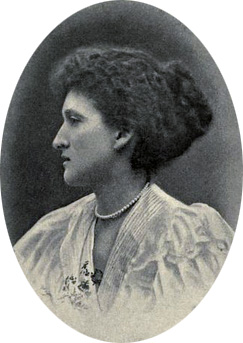
การเลือกตั้งทั่วไปในเดือนกรกฎาคม พ.ศ. 2435ทำให้แกลดสโตนและพรรคเสรีนิยมกลับมาดำรงตำแหน่งอีกครั้ง โดยได้รับการสนับสนุนเป็นระยะจาก ส.ส. พรรคชาตินิยมไอริช แอสควิธ ซึ่งขณะนั้นอายุเพียง 39 ปี และไม่เคยดำรงตำแหน่งรัฐมนตรีช่วยมาก่อน ได้รับตำแหน่งรัฐมนตรีว่าการกระทรวงมหาดไทย ซึ่งเป็นตำแหน่งสำคัญในคณะรัฐมนตรี พรรคอนุรักษ์นิยมและพรรคเสรีนิยมสหภาพนิยมมีจำนวนมากกว่าพรรคเสรีนิยมในสภาสามัญ ซึ่งเมื่อรวมกับเสียงข้างมากถาวรของพรรคสหภาพนิยมในสภาขุนนาง ทำให้รัฐบาลมีข้อจำกัดในการดำเนินมาตรการปฏิรูป แอสควิธไม่สามารถรวบรวมเสียงข้างมากสำหรับร่างกฎหมายเพื่อยุบศาสนจักรในเวลส์และอีกฉบับหนึ่งเพื่อคุ้มครองคนงานที่ได้รับบาดเจ็บจากการทำงาน แต่เขาก็สร้างชื่อเสียงในฐานะรัฐมนตรีที่มีความสามารถและยุติธรรม[ 10 ]
ในปี พ.ศ. 2436 แอสควิธตอบรับคำขอจากผู้พิพากษาใน เขต เวกฟิลด์เพื่อขอเสริมกำลังตำรวจในการประท้วงหยุดงานของคนงานเหมือง แอสควิธส่งตำรวจนครบาล 400 นาย หลังจากพลเรือน 2 คนเสียชีวิตที่เฟเธอร์สโตนเมื่อทหารเปิดฉากยิงใส่ฝูงชน แอสควิธก็ถูกประท้วงในการประชุมสาธารณะอยู่ช่วงหนึ่ง เขาตอบโต้คำเยาะเย้ยที่ว่า "ทำไมคุณถึงฆ่าคนงานเหมืองที่เฟเธอร์สโตนในปี พ.ศ. 2495?" โดยกล่าวว่า "ไม่ใช่ปี พ.ศ. 2495 แต่เป็นปี พ.ศ. 2496" [ 62 ]
เมื่อแกลดสโตนเกษียณอายุในเดือนมีนาคม พ.ศ. 2437 สมเด็จพระราชินีนาถวิกตอเรียทรงเลือกลอร์ดโรสเบอรี รัฐมนตรีว่า การกระทรวงการต่างประเทศเป็นนายกรัฐมนตรีคนใหม่ แอสควิธคิดว่าโรสเบอรีเหมาะสมกว่าผู้สมัครคนอื่นที่เป็นไปได้ คือเซอร์วิลเลียม ฮาร์คอร์ต รัฐมนตรีว่าการกระทรวงการคลัง ซึ่งเขาเห็นว่าต่อต้านจักรวรรดินิยมมากเกินไป—หนึ่งในกลุ่มที่เรียกว่า " พวกอังกฤษน้อย "—และก้าวร้าวเกินไป[ 63 ]แอสควิธยังคงดำรงตำแหน่งในกระทรวงมหาดไทยจนกระทั่งรัฐบาลล่มสลายในปี พ.ศ. 2438 [ 10 ]
แอสควิธรู้จักมาร์โกต์ เทนแนนท์มาบ้างตั้งแต่ก่อนที่ภรรยาของเขาจะเสียชีวิต และผูกพันกับเธอมากขึ้นเรื่อยๆ ในช่วงหลายปีที่เขาเป็นพ่อม่าย เมื่อวันที่ 10 พฤษภาคม 1894 พวกเขาแต่งงานกันที่โบสถ์เซนต์จอร์จ ฮาโนเวอร์สแควร์ แอสควิธกลายเป็นลูกเขยของเซอร์ชาร์ลส์ เทนแนนท์ บารอนเน็ตคนที่ 1 มาร์โกต์มีนิสัยตรงกันข้ามกับภรรยาคนแรกของแอสควิธในหลายๆ ด้าน เธอเป็นคนเปิดเผย หุนหันพลันแล่น ฟุ่มเฟือย และมีความคิดเห็นที่ชัดเจน[ 64 ]แม้ว่าเพื่อนและเพื่อนร่วมงานของแอสควิธหลายคนจะมีความกังวล แต่การแต่งงานก็พิสูจน์แล้วว่าประสบความสำเร็จ มาร์โกต์เข้ากันได้ดีกับลูกเลี้ยงของเธอ แม้บางครั้งจะมีความขัดแย้งกันบ้างก็ตาม เธอและแอสควิธมีลูกด้วยกันห้าคน โดยมีเพียงสองคนที่รอดชีวิตจากวัยทารก: [ 64 ]แอนโทนี แอสควิธ (9 พฤศจิกายน 1902 – 21 กุมภาพันธ์ 1968) และเอลิซาเบธ แอสควิธ (26 กุมภาพันธ์ 1897 – 7 เมษายน 1945) ซึ่งแต่งงานกับเจ้าชายแอนทวน บิเบสโก แห่งโรมาเนีย เมื่อวันที่ 30 เมษายน 1919
ขณะไม่อยู่ที่ทำงาน
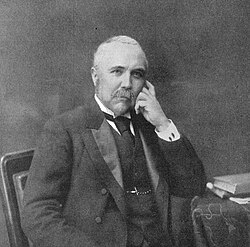
การเลือกตั้งทั่วไปในเดือนกรกฎาคม ค.ศ. 1895เป็นหายนะสำหรับพรรคเสรีนิยม และพรรคอนุรักษ์นิยมภายใต้การนำของลอร์ดซอลส์เบอรีได้รับเสียงข้างมาก 152 เสียง เมื่อไม่มีตำแหน่งในรัฐบาล แอสควิธจึงแบ่งเวลาของเขาระหว่างการเมืองและงานทนายความ[ d ]เจนกินส์แสดงความคิดเห็นว่าในช่วงเวลานี้ แอสควิธมีรายได้จำนวนมาก แม้จะไม่โดดเด่นนัก และไม่เคยมีฐานะแย่ลง และมักจะได้รับค่าตอบแทนสูงกว่าเมื่ออยู่ในตำแหน่ง[ 65 ]แมทธิวเขียนว่ารายได้ของเขาในฐานะทนายความอาวุโส (QC) ในปีต่อๆ มาอยู่ที่ประมาณ 5,000 ถึง 10,000 ปอนด์ต่อปี (ประมาณ 500,000–1,000,000 ปอนด์ในราคาปี 2015) [ 10 ] [ 66 ]ตามที่ฮัลเดนกล่าว เมื่อกลับเข้าสู่รัฐบาลในปี ค.ศ. 1905 แอสควิธต้องสละงานที่ได้รับค่าตอบแทน 10,000 ปอนด์เพื่อทำหน้าที่ให้กับเคดิฟแห่งอียิปต์[ 67 ]มาร์โกต์อ้างในภายหลัง (ในช่วงทศวรรษ 1920 เมื่อพวกเขาขาดแคลนเงิน) ว่าเขาสามารถทำเงินได้ 50,000 ปอนด์ต่อปีหากเขายังคงทำงานที่บาร์[ 68 ]
พรรคเสรีนิยมซึ่งมีผู้นำคือฮาร์คอร์ตในสภาสามัญชนและโรสเบอรีในสภาขุนนางที่เกลียดชังกัน ต้องเผชิญกับการแบ่งแยกภายในพรรคอีกครั้ง โรสเบอรีลาออกในเดือนตุลาคม พ.ศ. 2439 และฮาร์คอร์ตก็ลาออกตามในเดือนธันวาคม พ.ศ. 2441 [ 69 ] [ 70 ]แอสควิธถูกกดดันอย่างหนักให้ยอมรับการเสนอชื่อเพื่อรับตำแหน่งผู้นำพรรคเสรีนิยม แต่ตำแหน่งผู้นำฝ่ายค้าน แม้จะเป็นงานเต็มเวลา แต่ก็ไม่มีค่าตอบแทน และเขาไม่สามารถสละรายได้จากการเป็นทนายความได้ เขาและคนอื่นๆ จึงขอร้องอดีตรัฐมนตรีว่าการกระทรวงสงครามเซอร์ เฮนรี แคมป์เบลล์-แบนเนอร์แมนให้ยอมรับตำแหน่งนี้[ 71 ]
ในช่วงสงครามโบเออร์ค.ศ. 1899–1902 ความคิดเห็นของพรรคเสรีนิยมแตกแยกออกเป็นสองฝ่าย คือ ฝ่ายสนับสนุนจักรวรรดินิยม และฝ่าย "อังกฤษเล็ก" โดยแคมป์เบลล์-แบนเนอร์แมนพยายามรักษาความเป็นเอกภาพของพรรค แอสควิธไม่ค่อยเห็นด้วยกับผู้นำของเขาและสมาชิกพรรคหลายคนที่จะตำหนิรัฐบาลอนุรักษ์นิยม แม้ว่าเขาจะมองว่าสงครามเป็นสิ่งรบกวนที่ไม่จำเป็นก็ตาม[ 10 ]โจเซฟ แชมเบอร์เลนอดีตรัฐมนตรีของพรรคเสรีนิยม ซึ่งปัจจุบันเป็นพันธมิตรของพรรคอนุรักษ์นิยม ได้รณรงค์ให้มีการเก็บภาษีศุลกากรเพื่อปกป้องอุตสาหกรรมของอังกฤษจากการแข่งขันจากต่างประเทศที่มีราคาถูกกว่า การสนับสนุน นโยบาย การค้าเสรี แบบดั้งเดิมของพรรคเสรีนิยมของแอสควิธ ช่วยทำให้ข้อเสนอของแชมเบอร์เลนกลายเป็นประเด็นสำคัญในการเมืองของอังกฤษในช่วงต้นศตวรรษที่ 20 ในมุมมองของแมทธิว "ทักษะการสืบสวนของแอสควิธได้เปิดเผยข้อบกพร่องและความขัดแย้งในตัวเองของข้อโต้แย้งของแชมเบอร์เลนอย่างรวดเร็ว" [ 10 ]คำถามนี้ทำให้พรรคอนุรักษ์นิยมแตกแยก ในขณะที่พรรคเสรีนิยมรวมเป็นหนึ่งเดียวภายใต้ธงของ "ผู้สนับสนุนอาหารเสรี" ต่อต้านผู้ที่อยู่ในรัฐบาลที่เห็นด้วยกับการเก็บภาษีสินค้าจำเป็นที่นำเข้า[ 72 ]
รัฐมนตรีว่าการกระทรวงการคลัง ค.ศ. 1905–1908
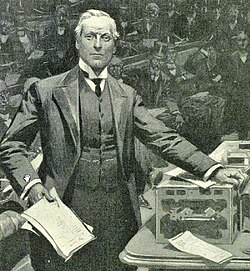
อาเธอร์ บัลฟอร์ผู้สืบทอดตำแหน่งนายกรัฐมนตรีจากพรรคอนุรักษ์นิยมของซอลส์เบอรี ลาออกในเดือนธันวาคม ค.ศ. 1905 แต่ไม่ได้ขอให้ยุบสภาและจัดการเลือกตั้งทั่วไป นักเขียนชีวประวัติของแคมป์เบลล์-แบนเนอร์แมน เอเจเอ มอร์ริส เสนอในภายหลังว่า บัลฟอร์มีแรงจูงใจในการกระทำที่ผิดปกตินี้ด้วยความหวังลมๆ แล้งๆ ว่ารัฐบาลเสียงข้างน้อยจะเปิดเผยความแตกแยกมากมายภายในพรรคเสรีนิยม[ 73 ]พระเจ้าเอ็ดเวิร์ดที่ 7 ทรงเชิญแคมป์เบลล์-แบนเนอร์แมนให้จัดตั้งรัฐบาลเสียงข้างน้อย แอสควิธและพันธมิตรทางการเมืองที่ใกล้ชิดของเขา ฮัลเดนและเซอร์เอ็ดเวิร์ด เกรย์พยายามกดดันให้เขารับตำแหน่งขุนนางเพื่อเป็นนายกรัฐมนตรีหุ่นเชิดในสภาขุนนาง ซึ่งจะทำให้ฝ่ายสนับสนุนจักรวรรดิของพรรคมีอำนาจเหนือกว่าในสภาสามัญ แคมป์เบลล์-แบนเนอร์แมนท้าทายพวกเขาและปฏิเสธที่จะเคลื่อนไหว[ 73 ] [ 74 ]แอสควิธได้รับการแต่งตั้งเป็นรัฐมนตรีว่าการกระทรวงการคลัง เขาดำรงตำแหน่งนี้เป็นเวลากว่าสองปี และได้นำเสนองบประมาณสามฉบับ[ 75 ] [ 76 ]
หนึ่งเดือนหลังจากเข้ารับตำแหน่ง แคมป์เบลล์-แบนเนอร์แมนได้จัดการเลือกตั้งทั่วไปซึ่งพรรคเสรีนิยมได้รับเสียงข้างมากอย่างถล่มทลายถึง 124 เสียง[ 77 ]อย่างไรก็ตาม งบประมาณฉบับแรกของแอสควิธในปี 1906 ถูกจำกัดด้วยแผนรายรับและรายจ่ายประจำปีที่เขาได้รับสืบทอดมาจากออสติน แชมเบอร์เลน ผู้ดำรงตำแหน่งก่อนหน้า ราย ได้เพียงอย่างเดียวที่แชมเบอร์เลนตั้งงบประมาณไว้เกินคือภาษีจากการขายเครื่องดื่มแอลกอฮอล์[ e ] [ 78 ]ด้วยงบประมาณที่สมดุลและการประเมินรายจ่ายสาธารณะในอนาคตอย่างสมจริง แอสควิธจึงสามารถวางรากฐานสำหรับการกระจายความมั่งคั่งอย่างจำกัดและสวัสดิการสำหรับคนยากจนในงบประมาณฉบับที่สองและสามของเขา ในตอนแรกเขาถูกเจ้าหน้าที่กระทรวงการคลังขัดขวางไม่ให้กำหนดอัตราภาษีเงินได้แบบแปรผันโดยมีอัตราที่สูงขึ้นสำหรับผู้ที่มีรายได้สูง เขาจึงตั้งคณะกรรมการภายใต้การนำของเซอร์ชาร์ลส์ ดิลค์ซึ่งไม่เพียงแต่แนะนำอัตราภาษีเงินได้แบบแปรผันเท่านั้น แต่ยังแนะนำภาษีพิเศษสำหรับรายได้ที่มากกว่า 5,000 ปอนด์ต่อปีด้วย นอกจากนี้ Asquith ยังได้แนะนำการแบ่งแยกรายได้ระหว่างรายได้ที่ได้มาจากการทำงานและรายได้ที่ไม่ได้มาจากการทำงาน โดยเก็บภาษีรายได้ที่ไม่ได้มาจากการทำงานในอัตราที่สูงกว่า เขาใช้รายได้ที่เพิ่มขึ้นเพื่อเป็นทุนสำหรับเงินบำนาญผู้สูงอายุ ซึ่งเป็นครั้งแรกที่รัฐบาลอังกฤษได้จัดให้มีขึ้น การลดภาษีบางประเภท เช่น ภาษีน้ำตาล มีจุดมุ่งหมายเพื่อช่วยเหลือคนยากจน[ 79 ]
แอสควิธวางแผนงบประมาณปี 1908 แต่เมื่อถึงเวลาที่เขานำเสนอต่อสภาสามัญชน เขาก็ไม่ได้ดำรงตำแหน่งนายกรัฐมนตรีอีกต่อไปแล้ว สุขภาพของแคมป์เบลล์-แบนเนอร์แมนทรุดโทรมลงมาเกือบหนึ่งปี หลังจากหัวใจวายหลายครั้ง แคมป์เบลล์-แบนเนอร์แมนจึงลาออกเมื่อวันที่ 3 เมษายน 1908 ไม่ถึงสามสัปดาห์ก่อนที่เขาจะเสียชีวิต[ 80 ]แอสควิธได้รับการยอมรับโดยทั่วไปว่าเป็นผู้สืบทอดตำแหน่งโดยธรรมชาติ[ 81 ]พระเจ้าเอ็ดเวิร์ดซึ่งกำลังพักผ่อนอยู่ที่บิอาร์ริตซ์ ทรงส่งคนไปรับแอสควิธ ซึ่งขึ้นรถไฟจากเรือไปยังฝรั่งเศสและเข้าเฝ้าในฐานะนายกรัฐมนตรีที่โรงแรมดูปาเลส์บิอาร์ริตซ์ ในวันที่ 8 เมษายน[ 82 ]
นายกรัฐมนตรีในยามสงบ: 1908–1914
การแต่งตั้งและคณะรัฐมนตรี
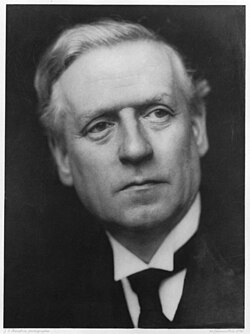
เมื่อแอสควิธกลับมาจากบิอาร์ริตซ์ การเป็นผู้นำพรรคเสรีนิยมของเขาได้รับการยืนยันจากการประชุมพรรค (ซึ่งเป็นครั้งแรกที่มีการทำเช่นนี้สำหรับนายกรัฐมนตรี) [ 10 ]เขาริเริ่มการปรับคณะรัฐมนตรี ลอยด์ จอร์จได้รับการเลื่อนตำแหน่งให้เป็นผู้แทนของแอสควิธในตำแหน่งรัฐมนตรีว่าการกระทรวงการคลังวินสตัน เชอร์ ชิลล์ สืบทอดตำแหน่งต่อจากลอยด์ จอร์จในฐานะประธานคณะกรรมการการค้าโดยเข้าสู่คณะรัฐมนตรีแม้ว่าเขาจะยังอายุน้อย (อายุ 33 ปี) และข้อเท็จจริงที่ว่าเขาเพิ่งเปลี่ยนพรรคมาเป็นพรรคเสรีนิยมเมื่อสี่ปีก่อน[ 83 ]
แอสควิธได้ลดตำแหน่งหรือปลดรัฐมนตรีหลายคนในคณะรัฐมนตรีของแคมป์เบลล์-แบนเนอร์แมน ลอร์ดทวีดเมาท์ ลอร์ดแห่งกองทัพเรือคนแรกถูกลดตำแหน่งไปเป็นลอร์ดประธานสภาซึ่ง เป็นเพียงตำแหน่งในนาม ลอร์ดเอลกินถูกปลดออกจากตำแหน่งในกระทรวงอาณานิคม และเอิร์ลแห่งพอร์ตสมัธ (ซึ่งแอสควิธเคยเป็นครูสอน) ก็ถูกปลดออกจากตำแหน่งปลัดกระทรวงกลาโหมด้วย ความกระทันหันของการปลดพวกเขาทำให้เกิดความรู้สึกไม่ดี เอลกินเขียนถึงทวีดเมาท์ว่า "ผมกล้าคิดว่าแม้แต่นายกรัฐมนตรีก็ควรจะคำนึงถึงธรรมเนียมปฏิบัติทั่วไปในหมู่สุภาพบุรุษบ้าง ... ผมรู้สึกว่าแม้แต่แม่บ้านยังได้รับการเตือนที่ดีกว่านี้" [ f ] [ 84 ]
นักประวัติศาสตร์ Cameron Hazlehurst เขียนว่า "คนรุ่นใหม่กับคนรุ่นเก่าได้รวมตัวกันเป็นทีมที่ทรงพลัง" [ 85 ]การเลือกคณะรัฐมนตรีสร้างความสมดุลให้กับกลุ่มที่แข่งขันกันในพรรค การแต่งตั้ง Lloyd George และ Churchill ทำให้กลุ่มหัวรุนแรงพอใจ ในขณะที่ กลุ่ม Whiggishสนับสนุนการแต่งตั้งReginald McKenna เป็น First Lord [ 10 ]
นายกรัฐมนตรีพักผ่อนอย่างสบาย
แอสควิ ธมี "ความสามารถในการทำงานอย่างรวดเร็ว" [ 86 ]จึงมีเวลาว่างมากพอสมควร การอ่าน[ 87 ]วรรณคดีคลาสสิก บทกวี และวรรณกรรมอังกฤษหลากหลายประเภทใช้เวลาส่วนใหญ่ของเขา เช่นเดียวกับการเขียนจดหมาย แอสควิธไม่ชอบโทรศัพท์อย่างมาก จึงเป็นนักเขียนจดหมายตัวยง[ 88 ]การเดินทาง ซึ่งมักจะไปยังบ้านพักตากอากาศที่เป็นของสมาชิกในครอบครัวของมาร์โกต์ เกิดขึ้นเกือบตลอดเวลา แอสควิธเป็น "นักเที่ยวสุดสัปดาห์ " ตัวยง [ 89 ]เขาใช้เวลาส่วนหนึ่งของฤดูร้อนในแต่ละปีในสกอตแลนด์ เพื่อเล่นกอล์ฟ จัดการเรื่องเขตเลือกตั้ง และใช้เวลาที่บาลมอรัลในฐานะรัฐมนตรีเวร[ 10 ]เขาและมาร์โกต์แบ่งเวลาอยู่ระหว่างถนนดาวนิงและเดอะวาร์ฟ [ 90 ] บ้านพักตากอากาศที่ซัตตันคอร์เทนีย์ในเบิร์กเชียร์ ซึ่งพวกเขาซื้อในปี 1912 [ 91 ]คฤหาสน์ในลอนดอนของพวกเขา เลขที่ 20 จัตุรัสคาเวนดิช [ 92 ] ถูกปล่อยให้เช่าในช่วงที่เขาดำรงตำแหน่งนายกรัฐมนตรี เขาติดเกมบริดจ์แบบสัญญา[ 93 ]
เหนือสิ่งอื่นใด แอสควิธชื่นชอบการคบหาสมาคมและการสนทนา เขาเป็นคนเข้ากับคนง่าย และยิ่งชอบ "การคบหาสมาคมกับผู้หญิงที่ฉลาดและมีเสน่ห์" มากยิ่งขึ้น[ 94 ]ตลอดชีวิตของเขา แอสควิธมีกลุ่มเพื่อนสนิทที่เป็นผู้หญิง ซึ่งมาร์โกต์เรียกว่า "ฮาเร็ม" ของเขา[ 95 ]ในปี 1912 หนึ่งในนั้นคือเวเนเทีย สแตนลีย์ซึ่งสนิทสนมกับเขามากขึ้น พวกเขาพบกันครั้งแรกในปี 1909–1910 และในปี 1912 เธอกลายเป็นผู้ติดต่อและเพื่อนคู่คิดของแอสควิธอย่างสม่ำเสมอ ระหว่างนั้นจนถึงปี 1915 เขาเขียนจดหมายถึงเธอประมาณ 560 ฉบับ ในอัตรามากถึงสี่ฉบับต่อวัน[ 96 ]แม้ว่าจะยังไม่แน่ชัดว่าพวกเขาเป็นคู่รักกันหรือไม่[ 97 ]แต่เธอก็กลายเป็นบุคคลสำคัญสำหรับเขา[ 98 ]ความเพลิดเพลินอย่างเต็มที่ของแอสควิธกับ "ความสะดวกสบายและความหรูหรา" [ 94 ]ในช่วงเวลาแห่งสันติสุข และความไม่เต็มใจที่จะปรับเปลี่ยนพฤติกรรมของเขาในระหว่างความขัดแย้ง[ 99 ]ในที่สุดก็ส่งผลให้เกิดความประทับใจว่าเขาเป็นคนที่ไม่เข้าใจสถานการณ์ คำถามเย้าแหย่ของ เฮเลน มอด โฮลต์ที่ถามในช่วงที่ความขัดแย้งรุนแรงที่สุดว่า "บอกฉันหน่อยสิ คุณแอสควิธ คุณสนใจสงครามหรือเปล่า?" [ 100 ]สื่อถึงมุมมองที่แพร่หลาย
แอสควิธชอบดื่มแอลกอฮอล์ และการดื่มของเขากลายเป็นหัวข้อของการนินทาอย่างมาก ทัศนคติที่ผ่อนคลายของเขาต่อการดื่มทำให้กลุ่มผู้สนับสนุนการงดดื่มสุราในพรรคร่วมรัฐบาลเสรีนิยมผิดหวัง[ 101 ]และผู้เขียนบางคนเสนอแนะว่ามันส่งผลต่อการตัดสินใจของเขา ตัวอย่างเช่น ในการต่อต้านการโจมตีการค้าสุราในช่วงสงครามของลอยด์ จอร์จ[ 102 ]โบนา ลอว์ผู้นำพรรคอนุรักษ์นิยมกล่าวติดตลกว่า "แอสควิธตอนเมาสามารถพูดได้ดีกว่าพวกเราตอนมีสติ" [ 103 ]ชื่อเสียงของเขาเสียหาย โดยเฉพาะอย่างยิ่งเมื่อวิกฤตการณ์ในช่วงสงครามเรียกร้องความสนใจอย่างเต็มที่จากนายกรัฐมนตรี[ 104 ]เดวิด โอเวนเขียนว่าแพทย์สั่งให้แอสควิธลดการดื่มลงหลังจากเกือบหมดสติในเดือนเมษายน 1911 แต่ไม่ชัดเจนว่าเขาทำตามนั้นจริงหรือไม่ โอเวน ซึ่งเป็นแพทย์โดยการฝึกฝน กล่าวว่า "ตามมาตรฐานการวินิจฉัยสมัยใหม่ แอสควิธกลายเป็นคนติดสุราขณะดำรงตำแหน่งนายกรัฐมนตรี" พยานมักจะกล่าวถึงน้ำหนักที่เพิ่มขึ้นและใบหน้าที่แดงและบวมของเขา[ 105 ]
นโยบายภายในประเทศ
การปฏิรูปสภาขุนนาง
แอสควิธหวังที่จะทำหน้าที่เป็นผู้ไกล่เกลี่ยระหว่างสมาชิกคณะรัฐมนตรีของเขาในขณะที่พวกเขากำลังผลักดันกฎหมายของพรรคเสรีนิยมผ่านรัฐสภา เหตุการณ์ต่างๆ รวมถึงความขัดแย้งกับสภาขุนนาง บังคับให้เขาต้องออกมาแสดงบทบาทตั้งแต่เริ่มต้นการดำรงตำแหน่งนายกรัฐมนตรีของเขา แม้ว่าพรรคเสรีนิยมจะมีเสียงข้างมากอย่างท่วมท้นในสภาสามัญ แต่พรรคอนุรักษ์นิยมก็ได้รับการสนับสนุนอย่างท่วมท้นในสภาสูง ที่ไม่ได้มาจากการ เลือกตั้ง[ 106 ]ความไม่สมดุลในสภาสูงเกิดจากการแตกแยกของพรรคเสรีนิยมเกี่ยวกับร่างกฎหมายการปกครองตนเองฉบับแรกในปี 1886 ซึ่งขุนนางเสรีนิยมหลายคนได้กลายเป็นสหภาพนิยมเสรีนิยมซึ่งในเวลานั้นเกือบจะรวมเข้ากับพรรคอนุรักษ์นิยมแล้ว เช่นเดียวกับที่เกิดขึ้นในรัฐบาลเสรีนิยมในช่วงปี 1892–1895 ร่างกฎหมายจำนวนหนึ่งถูกลงมติคัดค้านโดยสภาขุนนางที่พรรคอนุรักษ์นิยมครองเสียงข้างมากในระหว่างการดำรงตำแหน่งนายกรัฐมนตรีของแคมป์เบลล์-แบนเนอร์แมน แม้ว่าสภาขุนนางจะผ่านร่างพระราชบัญญัติข้อพิพาททางการค้า พ.ศ. 2449 ( 6 Edw. 7 . c. 47) พระราชบัญญัติค่าชดเชยแรงงาน พ.ศ. 2449 ( 6 Edw. 7 . c. 58) และ พระราชบัญญัติควบคุมเหมืองถ่านหิน พ.ศ. 2451 ( 8 Edw. 7 . c. 57) แต่พวกเขาก็ปฏิเสธร่างพระราชบัญญัติการศึกษา พ.ศ. 2449 ซึ่งเป็นมาตรการสำคัญในสายตาของผู้มีสิทธิเลือกตั้งเสรีนิยมที่ไม่ปฏิบัติตาม แบบแผน [ 107 ]แคมป์เบลล์-แบนเนอร์แมนสนับสนุนการปฏิรูปสภาขุนนางโดยกำหนดให้ร่างกฎหมายที่ผ่านการอนุมัติจากสภาสามัญชนสามครั้งโดยเว้นระยะห่างอย่างน้อยหกเดือนสามารถกลายเป็นกฎหมายได้โดยไม่ต้องได้รับความยินยอมจากสภาขุนนาง ในขณะเดียวกันก็ลดอำนาจของสภาสามัญชนโดยลดวาระสูงสุดของรัฐสภาจากเจ็ดปีเหลือห้าปี[ 108 ]แอสควิธ ในฐานะอธิการบดี ได้ดำรงตำแหน่งในคณะกรรมการคณะรัฐมนตรีที่เขียนแผนเพื่อแก้ไขปัญหาความขัดแย้งทางกฎหมายโดยการประชุมร่วมกันของสภาสามัญชนในฐานะองค์กรที่มีสมาชิกสภาขุนนาง 100 คน[ 109 ]สภาสามัญชนได้ผ่านร่างกฎหมายหลายฉบับในปี พ.ศ. 2451 ซึ่งถูกปฏิเสธหรือแก้ไขอย่างมากในสภาขุนนาง รวมถึงร่างกฎหมายเกี่ยวกับการออกใบอนุญาต ร่างกฎหมายเกี่ยวกับผู้ถือครองที่ดินรายย่อยของสกอตแลนด์ และร่างกฎหมายเกี่ยวกับการประเมินมูลค่าที่ดินของสกอตแลนด์[ 106 ]
ไม่มีร่างกฎหมายใดสำคัญพอที่จะยุบสภาและขออำนาจใหม่ในการเลือกตั้งทั่วไป[ 10 ]แอสควิธและลอยด์ จอร์จเชื่อว่าขุนนางจะยอมถอยหากได้รับข้อเสนอของพรรคเสรีนิยมที่บรรจุอยู่ในร่างกฎหมายการเงิน—สภาขุนนางไม่เคยขัดขวางร่างกฎหมายการเงินมาตั้งแต่ศตวรรษที่ 17 และหลังจากที่ขัดขวางความพยายามของแกลดสโตน (ในฐานะรัฐมนตรีว่าการกระทรวงการคลัง) ในการยกเลิกภาษีกระดาษในตอนแรก ก็ได้ยอมอ่อนข้อในปี 1861 เมื่อมีการเสนอร่างกฎหมายการเงินอีกครั้ง ดังนั้น ผู้นำพรรคเสรีนิยมจึงคาดหวังว่าหลังจากได้รับการคัดค้านอย่างมากจากขุนนางพรรคอนุรักษ์นิยม สภาขุนนางจะยอมอ่อนข้อให้กับการเปลี่ยนแปลงนโยบายที่บรรจุอยู่ในร่างกฎหมายงบประมาณ[ 110 ]
1909: งบประมาณของประชาชน
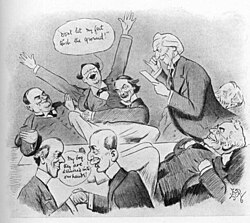
ในการกล่าวสุนทรพจน์ครั้งสำคัญในเดือนธันวาคม ค.ศ. 1908 แอสควิธประกาศว่างบประมาณที่จะมาถึงจะสะท้อนถึงวาระนโยบายของพรรคเสรีนิยม และงบประมาณของประชาชนที่ลอยด์ จอร์จ ยื่นต่อรัฐสภาในปีถัดมาได้ขยาย โครงการ สวัสดิการสังคม อย่างมาก เพื่อจ่ายเงินสำหรับโครงการเหล่านี้ จึงมีการเพิ่มภาษี ทั้ง ทางตรงและทางอ้อม อย่างมี นัย สำคัญ [ 10 ]ซึ่งรวมถึงภาษี 20 เปอร์เซ็นต์จากมูลค่าที่ดินที่เพิ่มขึ้นโดยไม่ได้มาจากการทำงาน ซึ่งต้องชำระเมื่อเจ้าของเสียชีวิตหรือเมื่อขายที่ดิน นอกจากนี้ยังมีภาษี1/2 เพนนีต่อปอนด์[ g ]สำหรับที่ดินที่ยังไม่ได้พัฒนา มี การเก็บภาษีเงินได้ แบบขั้นบันได และมีการเพิ่มภาษีนำเข้าสำหรับยาสูบ เบียร์ และสุรา[ 111 ]มีการนำภาษีน้ำมันเบนซินมาใช้แม้ว่ากระทรวงการคลังจะกังวลว่าอาจใช้ไม่ได้ผลในทางปฏิบัติ แม้ว่าแอสควิธจะจัดการประชุมคณะรัฐมนตรีถึงสิบสี่ครั้งเพื่อให้แน่ใจว่ามีความเป็นเอกภาพในหมู่รัฐมนตรีของเขา[ 10 ] แต่ ก็มีการต่อต้านจากพรรคเสรีนิยมบางส่วน Rosebery อธิบายงบประมาณว่าเป็น "การไต่สวน การปกครองแบบเผด็จการ และสังคมนิยม" [ 112 ]
งบประมาณแบ่งแยกประเทศและก่อให้เกิดการถกเถียงอย่างดุเดือดตลอดช่วงฤดูร้อนปี 1909 [ 113 ]สำนัก พิมพ์ นอร์ธคลิฟฟ์ ( เดอะไทมส์และเดลีเมล์ ) เรียกร้องให้ปฏิเสธงบประมาณเพื่อให้การปฏิรูปภาษีศุลกากร (ภาษีทางอ้อมสำหรับสินค้านำเข้า ซึ่งเชื่อกันว่าจะส่งเสริมอุตสาหกรรมและการค้าของอังกฤษภายในจักรวรรดิ) มีโอกาสเกิดขึ้น มีการประชุมสาธารณะหลายครั้ง บางส่วนจัดโดยดยุคเพื่อประท้วงงบประมาณ[ 114 ]นักการเมืองเสรีนิยมหลายคนโจมตีขุนนาง รวมถึงลอยด์ จอร์จ ในสุนทรพจน์ที่นิวคาสเซิลอะพอนไทน์ซึ่งเขากล่าวว่า "ดยุคที่พร้อมรบเต็มพิกัดมีค่าใช้จ่ายในการบำรุงรักษาเท่ากับเรือรบเดรดนอต สองลำ และดยุคก็เป็นภัยคุกคามที่ยิ่งใหญ่ไม่แพ้กันและอยู่ได้นานกว่า" [ 115 ]พระเจ้าเอ็ดเวิร์ดทรงเร่งเร้าผู้นำพรรคอนุรักษ์นิยมอย่างบัลฟอร์และลอร์ดแลนส์ดาวน์ เป็นการส่วนตัว ให้ผ่านงบประมาณ (ซึ่งไม่ใช่เรื่องผิดปกติ เนื่องจากสมเด็จพระราชินีนาถวิกตอเรียทรงช่วยไกล่เกลี่ยข้อตกลงระหว่างสองสภาเกี่ยวกับพระราชบัญญัติคริสตจักรไอริช ค.ศ. 1869และพระราชบัญญัติปฏิรูปครั้งที่สาม ค.ศ. 1884 ) [ 116 ]
ตั้งแต่เดือนกรกฎาคมเป็นต้นมา ก็เริ่มชัดเจนขึ้นเรื่อยๆ ว่าสมาชิกสภาขุนนางฝ่ายอนุรักษ์นิยมจะปฏิเสธงบประมาณ โดยส่วนหนึ่งก็เพื่อหวังจะบังคับให้มีการเลือกตั้ง[ 117 ]หากพวกเขาปฏิเสธงบประมาณ แอสควิธก็ตัดสินใจว่า เขาจะต้องขอให้พระมหากษัตริย์ยุบสภา ซึ่งจะเกิดขึ้นหลังจากผ่านไปสี่ปีจากวาระเจ็ดปี[ 10 ]เพราะนั่นหมายความว่าสภานิติบัญญัติได้ปฏิเสธการจัดสรรงบประมาณ [ h ] งบประมาณผ่านสภาสามัญชนเมื่อวันที่ 4 พฤศจิกายน 1909 แต่ถูกลงมติคัดค้านในสภาขุนนางเมื่อวันที่ 30 โดยสภาขุนนางได้ผ่านมติของลอร์ดแลนส์ดาวน์ที่ระบุว่าพวกเขามีสิทธิ์คัดค้านร่างกฎหมายการเงิน เนื่องจากขาดอาณัติในการเลือกตั้ง[ 118 ]แอสควิธสั่งพัก การประชุมรัฐสภา สามวันต่อมาเพื่อจัดการเลือกตั้งในวันที่ 15 มกราคม 1910 โดยสภาสามัญชนได้ผ่านมติก่อนเป็นอันดับแรก โดยถือว่าการลงมติของสภาขุนนางเป็นการโจมตีรัฐธรรมนูญ[ 119 ]
ปี 1910: การเลือกตั้งและภาวะชะงักงันทางรัฐธรรมนูญ
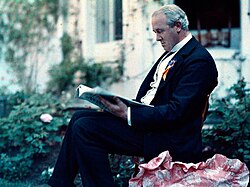
การเลือกตั้งทั่วไปใน เดือนมกราคม พ.ศ. 2453 ถูกครอบงำด้วยการพูดคุยเกี่ยวกับการถอดถอนอำนาจยับยั้งของสภาขุนนาง[ 10 ] [ 120 ]วิธีแก้ปัญหาที่เป็นไปได้คือการขู่ว่าพระเจ้าเอ็ดเวิร์ดจะทรงแต่งตั้งขุนนางเสรีนิยมที่เพิ่งได้รับการแต่งตั้งใหม่จำนวนมากเข้าสู่สภาขุนนาง ซึ่งจะลบล้างอำนาจยับยั้งของสภาขุนนาง การที่แอสควิธพูดถึงมาตรการป้องกันนั้น หลายคนตีความว่าเขาได้รับการเห็นชอบจากพระมหากษัตริย์แล้ว พวกเขาเข้าใจผิด พระมหากษัตริย์ทรงแจ้งแอสควิธว่าพระองค์จะไม่พิจารณาการแต่งตั้งขุนนางจำนวนมากจนกว่าจะมีการเลือกตั้งทั่วไปครั้งที่สอง[ 10 ]
ลอยด์ จอร์จและเชอร์ชิลล์เป็นกำลังสำคัญในการดึงดูดผู้มีสิทธิเลือกตั้งของพรรคเสรีนิยม แอสควิธซึ่งเหนื่อยล้าอย่างเห็นได้ชัด ลงพื้นที่หาเสียงเพียงสองสัปดาห์ในช่วงหาเสียง และเมื่อการเลือกตั้งเริ่มต้นขึ้น เขาเดินทางไปยังเมืองคานส์อย่างรวดเร็วจนละเลยการนัดหมายกับพระมหากษัตริย์ ซึ่งทำให้พระมหากษัตริย์ไม่พอพระทัย[ 121 ]ผลที่ตามมาคือรัฐสภาที่ไม่มี พรรคใดครองเสียงข้างมาก พรรคเสรีนิยมสูญเสียเสียงข้างมากไปอย่างมากจากปี 1906 แต่ก็ยังได้ที่นั่งมากกว่าพรรคอนุรักษ์นิยมสองที่นั่ง ด้วย การสนับสนุนจาก พรรคชาตินิยมไอริชและพรรคแรงงาน รัฐบาลจะมีเสียงสนับสนุนอย่างเพียงพอในประเด็นส่วนใหญ่ และแอสควิธกล่าวว่าเสียงข้างมากของเขานั้นเทียบได้ดีกับเสียงข้างมากที่ลอร์ดพาล์มเมอร์สตันและลอร์ดจอห์นรัสเซลล์ได้ รับ [ 122 ]

แรงกดดันเพิ่มเติมในทันทีเพื่อถอดถอนอำนาจยับยั้งของสภาขุนนางมาจาก ส.ส. ไอริช ซึ่งต้องการถอดถอนอำนาจของสภาขุนนางในการขัดขวางการนำการปกครองตนเองของไอร์แลนด์มาใช้ พวกเขาขู่ว่าจะลงคะแนนเสียงคัดค้านงบประมาณหากพวกเขาไม่ได้รับสิ่งที่ต้องการ[ 123 ] [ i ]เนื่องจากการเลือกตั้งทั่วไปอีกครั้งมีแนวโน้มที่จะเกิดขึ้นในไม่ช้า แอสควิธจึงต้องชี้แจงนโยบายเสรีนิยมเกี่ยวกับการเปลี่ยนแปลงรัฐธรรมนูญให้ประเทศทราบโดยไม่ทำให้ชาวไอริชและพรรคแรงงานไม่พอใจ ในตอนแรกสิ่งนี้พิสูจน์แล้วว่าทำได้ยาก และพระราชดำรัสของพระมหากษัตริย์ในการเปิดรัฐสภานั้นคลุมเครือเกี่ยวกับสิ่งที่ต้องทำเพื่อทำให้อำนาจยับยั้งของสภาขุนนางเป็นกลาง แอสควิธทำให้ผู้สนับสนุนของเขาท้อแท้โดยกล่าวในรัฐสภาว่าเขาไม่ได้ขอหรือได้รับคำมั่นสัญญาจากพระมหากษัตริย์ในการสร้างขุนนาง[ 10 ]คณะรัฐมนตรีพิจารณาที่จะลาออกและปล่อยให้บัลฟอร์พยายามจัดตั้งรัฐบาลอนุรักษ์นิยม[ 124 ]
งบประมาณผ่านสภาสามัญอีกครั้ง และครั้งนี้ได้รับการอนุมัติจากสภาขุนนางในเดือนเมษายนโดยไม่มีการแบ่งแยก[ 125 ]ในที่สุดคณะรัฐมนตรีก็ตัดสินใจสนับสนุนแผนตามแบบของแคมป์เบลล์-แบนเนอร์แมน ซึ่งระบุว่าร่างกฎหมายที่ผ่านสภาสามัญในการประชุมประจำปีติดต่อกันสามครั้งจะกลายเป็นกฎหมายได้แม้จะมีการคัดค้านจากสภาขุนนางก็ตาม เว้นแต่พระมหากษัตริย์จะทรงรับประกันว่าจะแต่งตั้งขุนนางเสรีนิยมให้เพียงพอเพื่อผ่านร่างกฎหมาย รัฐมนตรีจะลาออกและอนุญาตให้บัลฟอร์จัดตั้งรัฐบาล โดยปล่อยให้เรื่องนี้ถูกอภิปรายในการเลือกตั้งทั่วไปที่จะเกิดขึ้น[ 126 ]เมื่อวันที่ 14 เมษายน 1910 สภาสามัญได้ผ่านมติซึ่งจะกลายเป็นพื้นฐานของพระราชบัญญัติรัฐสภา ค.ศ. 1911 ในที่สุด ได้แก่ การยกเลิกอำนาจของสภาขุนนางในการยับยั้งร่างกฎหมายเกี่ยวกับการเงิน การลดอำนาจการขัดขวางร่างกฎหมายอื่นๆ ให้เหลือเพียงอำนาจการชะลอสองปี และการลดวาระของรัฐสภาจากเจ็ดปีเหลือห้าปี[ 127 ]ในการอภิปรายครั้งนั้น แอสควิธยังได้กล่าวเป็นนัยๆ—ส่วนหนึ่งเพื่อให้แน่ใจว่าจะได้รับการสนับสนุนจากสมาชิกสภาผู้แทนราษฎรชาวไอริช—ว่าเขาจะขอให้พระมหากษัตริย์ทรงยุติภาวะชะงักงัน “ในรัฐสภานั้น” (กล่าวคือ เขาจะขอให้มีการแต่งตั้งขุนนางจำนวนมาก ซึ่งขัดกับข้อกำหนดก่อนหน้านี้ของพระมหากษัตริย์ที่ว่าจะต้องมีการเลือกตั้งครั้งที่สอง) [ 128 ]ในเดือนเมษายน พระมหากษัตริย์ทรงได้รับคำแนะนำจากบัลฟอร์และอาร์ชบิชอปแห่งแคนเทอร์เบอรี (ซึ่งพระองค์ทรงหันไปขอคำแนะนำด้านรัฐธรรมนูญที่เป็นกลาง) ว่าพรรคเสรีนิยมไม่มีอำนาจในการเลือกตั้งเพียงพอที่จะเรียกร้องให้มีการแต่งตั้งขุนนาง[ 129 ]พระมหากษัตริย์เอ็ดเวิร์ดทรงคิดว่าข้อเสนอทั้งหมดนั้น “น่ารังเกียจอย่างยิ่ง” และทรงเห็นว่ารัฐบาล “อยู่ในมือของเรดมอนด์และพวกพ้อง” ลอร์ดครูว์ ผู้นำพรรคเสรีนิยมในสภาขุนนาง ประกาศต่อสาธารณะว่าความประสงค์ของรัฐบาลในการแต่งตั้งขุนนางควรได้รับการปฏิบัติเสมือนเป็น "คำแนะนำอย่างเป็นทางการของรัฐมนตรี" (ซึ่งตามธรรมเนียมแล้วพระมหากษัตริย์ต้องปฏิบัติตาม) แม้ว่าลอร์ดเอเชอร์จะโต้แย้งว่าพระมหากษัตริย์มีสิทธิ์ที่จะปลดรัฐบาลในกรณีฉุกเฉิน แทนที่จะปฏิบัติตาม "คำแนะนำ" ของรัฐบาลก็ตาม [ 130 ]
ไม่ว่าจะอย่างไรก็ตาม แผนการเหล่านี้ก็ถูกขัดขวางไปบ้างจากการสวรรคตของพระเจ้าเอ็ดเวิร์ดที่ 7เมื่อวันที่ 6 พฤษภาคม 1910 ในตอนแรก แอสควิธและรัฐมนตรีของเขาลังเลที่จะกดดันพระเจ้าจอร์จที่ 5 กษัตริย์องค์ใหม่ ซึ่งกำลังโศกเศร้าต่อพระบิดา ให้ให้คำมั่นสัญญาเกี่ยวกับการเปลี่ยนแปลงรัฐธรรมนูญ และยังไม่ทราบทัศนะของพระมหากษัตริย์ ด้วยความรู้สึกที่แรงกล้าในประเทศว่าพรรคการเมืองควรประนีประนอม แอสควิธและพรรคเสรีนิยมคนอื่นๆ ได้พบกับผู้นำพรรคอนุรักษ์นิยมในการประชุมหลายครั้งตลอดช่วงที่เหลือของปี 1910 การเจรจาเหล่านี้ล้มเหลวในเดือนพฤศจิกายนเนื่องจากการยืนกรานของพรรคอนุรักษ์นิยมว่าไม่ควรมีข้อจำกัดใดๆ ต่ออำนาจของสภาขุนนางในการยับยั้งการปกครองตนเองของไอร์แลนด์[ 10 ]เมื่อร่างพระราชบัญญัติรัฐสภาถูกส่งไปยังสภาขุนนาง พวกเขาได้ทำการแก้ไขที่ไม่เป็นที่ยอมรับของรัฐบาล[ 131 ]
ปี 1910–1911: การเลือกตั้งครั้งที่สองและพระราชบัญญัติรัฐสภา
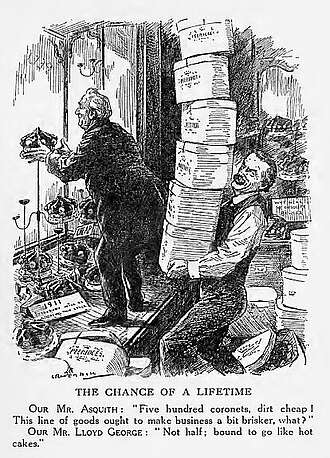
เมื่อวันที่ 11 พฤศจิกายน แอสควิธขอให้กษัตริย์จอร์จยุบสภาเพื่อจัดการเลือกตั้งทั่วไปอีกครั้งในเดือนธันวาคมและเมื่อวันที่ 14 พฤศจิกายน ได้เข้าพบกษัตริย์อีกครั้งและเรียกร้องให้กษัตริย์จอร์จรับรองว่าจะแต่งตั้งสมาชิกสภาขุนนางพรรคเสรีนิยมจำนวนเพียงพอที่จะผลักดันร่างพระราชบัญญัติรัฐสภา กษัตริย์ทรงลังเลที่จะตกลง และแอสควิธและคณะรัฐมนตรีของเขาแจ้งว่าพวกเขาจะลาออกหากพระองค์ไม่ทรงให้คำมั่นสัญญา บัลฟอร์ได้บอกกับเอ็ดเวิร์ดว่าเขาจะจัดตั้งรัฐบาลอนุรักษ์นิยมหากพรรคเสรีนิยมออกจากตำแหน่ง แต่กษัตริย์องค์ใหม่ไม่ทรงทราบเรื่องนี้ กษัตริย์ทรงยอมตามข้อเรียกร้องของแอสควิธอย่างไม่เต็มใจ โดยทรงเขียนในบันทึกประจำวันว่า "ข้าพเจ้าไม่ชอบที่จะต้องทำเช่นนี้มากนัก แต่ทรงเห็นด้วยว่านี่เป็นทางเลือกเดียวนอกเหนือจากการที่คณะรัฐมนตรีจะลาออก ซึ่งในขณะนี้จะเป็นหายนะ" [ 132 ]
แอสควิธมีบทบาทสำคัญในการรณรงค์หาเสียงเลือกตั้งระยะสั้น โดยเน้นไปที่การใช้สิทธิวีโต้ของสภาขุนนางในการกล่าวสุนทรพจน์อย่างใจเย็น ซึ่งสตีเฟน คอสส์ ผู้เขียนชีวประวัติของเขาเปรียบเทียบกับ "ความไม่รับผิดชอบอย่างบ้าคลั่ง" ของผู้รณรงค์หาเสียงรายใหญ่คนอื่นๆ[ 133 ]ในสุนทรพจน์ที่เมืองฮัลล์เขาได้กล่าวว่าจุดประสงค์ของพรรคเสรีนิยมคือการขจัดอุปสรรค ไม่ใช่การจัดตั้งสภาสูงในอุดมคติ "ผมต้องจัดการกับสิ่งต่างๆ ที่เกิดขึ้นที่นี่และตอนนี้เสมอ ประเทศชาติต้องจัดการกับสิ่งต่างๆ เหล่านี้ เราต้องการเครื่องมือ [ของการเปลี่ยนแปลงรัฐธรรมนูญ] ที่สามารถนำมาใช้ได้ทันที ซึ่งจะขจัดความติดขัด และให้โอกาสที่ยุติธรรมและเท่าเทียมกันในการออกกฎหมายที่เรามีสิทธิ์ได้รับ และซึ่งเป็นสิ่งที่เราเรียกร้องทั้งหมด" [ 134 ]

ผลการเลือกตั้งแทบไม่มีการเปลี่ยนแปลงในจำนวนสมาชิกพรรค (พรรคเสรีนิยมและพรรคอนุรักษ์นิยมมีจำนวนสมาชิกเท่ากันพอดี และในปี 1914 พรรคอนุรักษ์นิยมจะมีขนาดใหญ่ขึ้นเนื่องจากได้รับชัยชนะในการเลือกตั้งซ่อม) อย่างไรก็ตาม แอสควิธยังคงดำรงตำแหน่งนายกรัฐมนตรี โดยมีเสียงข้างมากในสภาสามัญชนในประเด็นเรื่องสภาขุนนาง ร่างพระราชบัญญัติรัฐสภาผ่านสภาสามัญชนอีกครั้งในเดือนเมษายน 1911 และได้รับการแก้ไขอย่างมากในสภาขุนนาง แอสควิธได้แนะนำพระเจ้าจอร์จว่า พระองค์จะทรงมีพระราชดำรัสเพื่อแต่งตั้งขุนนาง และพระองค์ทรงเห็นด้วย โดยทรงขอให้มีการประกาศพระราชดำรัสนี้ต่อสาธารณะ และให้สภาขุนนางได้พิจารณาการคัดค้านอีกครั้ง เมื่อมีการพิจารณาแล้ว ก็เกิดการถกเถียงกันอย่างดุเดือดภายในพรรคอนุรักษ์นิยมว่าควรยอมหรือไม่ หรือจะยังคงลงคะแนนเสียงคัดค้านต่อไปแม้ว่าจะมีจำนวนน้อยกว่าขุนนางที่ได้รับการแต่งตั้งใหม่หลายร้อยคนก็ตาม หลังจากการอภิปรายที่ยาวนาน ในวันที่ 10 สิงหาคม พ.ศ. 2454 สภาขุนนางลงมติอย่างเฉียดฉิวไม่ให้ยืนยันการแก้ไขของพวกเขา โดยมีขุนนางฝ่ายอนุรักษ์นิยมหลายคนงดออกเสียง และมีเพียงไม่กี่คนที่ลงคะแนนเสียงสนับสนุนรัฐบาล ร่างกฎหมายจึงผ่านเป็นกฎหมาย[ 135 ]
ตามที่เจนกินส์กล่าวไว้ แม้ว่าแอสควิธจะดำเนินการอย่างเชื่องช้าในช่วงวิกฤตการณ์ “โดยรวมแล้ว การค่อยๆ ปรับเปลี่ยนเหตุการณ์ของแอสควิธถือเป็นการแสดงให้เห็นถึงความกล้าหาญทางการเมืองและความมุ่งมั่นอดทนอย่างยอดเยี่ยม เมื่อเทียบกับ [พรรคอนุรักษ์นิยม] ความเป็นผู้นำของเขานั้นโดดเด่นมาก” [ 136 ]เชอร์ชิลล์เขียนถึงแอสควิธหลังจากการเลือกตั้งครั้งที่สองในปี 1910 ว่า “ความเป็นผู้นำของคุณเป็นคุณลักษณะหลักและเด่นชัดของการต่อสู้ทั้งหมด” [ 133 ]แมทธิว ในบทความของเขาเกี่ยวกับแอสควิธ พบว่า “เหตุการณ์นี้เป็นจุดสูงสุดในอาชีพนายกรัฐมนตรีของแอสควิธ ตามธรรมเนียมเสรีนิยมของอังกฤษ เขาซ่อมแซมรัฐธรรมนูญมากกว่าที่จะปรับปรุงใหม่” [ 10 ]
เรื่องสังคม ศาสนา และแรงงาน
แม้จะมีปัญหาเรื่องสภาขุนนางรบกวนอยู่ แต่แอสควิธและรัฐบาลของเขาก็ยังคงเดินหน้าออกกฎหมายปฏิรูปหลายฉบับ ตามที่แมทธิวกล่าวไว้ว่า “ไม่มีนายกรัฐมนตรีในยามสงบคนใดเป็นผู้สนับสนุนที่มีประสิทธิภาพมากไปกว่านี้แล้ว การจัดตั้งสำนักงานจัดหางาน การนำระบบประกันการว่างงานและประกันสุขภาพมาใช้ ...สะท้อนให้เห็นถึงการปฏิรูปที่รัฐบาลสามารถบรรลุผลสำเร็จได้แม้จะมีปัญหาเรื่องสภาขุนนาง แอสควิธเองไม่ได้เป็น 'เสรีนิยมใหม่' แต่เขามองเห็นความจำเป็นในการเปลี่ยนแปลงสมมติฐานเกี่ยวกับความสัมพันธ์ของบุคคลกับรัฐ และเขารู้ดีถึงความเสี่ยงทางการเมืองของพรรคเสรีนิยมจากพรรคแรงงานที่อยู่ทางปีกซ้าย” [ 10 ]ด้วยความกระตือรือร้นที่จะรักษาการสนับสนุนจากพรรคแรงงาน รัฐบาลแอสควิธจึงผ่านร่างกฎหมายที่พรรคแรงงานเรียกร้อง รวมถึงพระราชบัญญัติสหภาพแรงงาน ค.ศ. 1913 (พลิกคำพิพากษาของออสบอร์น ) และในปี ค.ศ. 1911 ที่ให้เงินเดือนแก่ ส.ส. ทำให้คนชนชั้นแรงงานมีโอกาสมากขึ้นที่จะรับใช้ในสภาสามัญชน[ 137 ]
ในปี พ.ศ. 2454 มีความกังวลเกี่ยวกับการนัดหยุดงานของคนงานเหมืองที่อาจเกิดขึ้นทันทีหลังจากการนัดหยุดงานของพนักงานรถไฟในเดือนสิงหาคม ในเดือนกุมภาพันธ์ พ.ศ. 2455 ผู้บริหารของสหพันธ์คนงานเหมืองลงมติเห็นชอบให้มีการนัดหยุดงาน แอสควิธ พร้อมด้วยลอยด์ จอร์จ บักซ์ตัน และเกรย์ ได้พบกับผู้บริหารที่กระทรวงการต่างประเทศซึ่งเขายอมรับหลักการของค่าแรงขั้นต่ำ แต่ปฏิเสธข้อเรียกร้อง 5 และ 2 [ 138 ]การนัดหยุดงานเริ่มต้นขึ้นตามที่ขู่ไว้ หลังจากความพยายามของคณะรัฐมนตรีในการประนีประนอมล้มเหลว รัฐบาลจึงหันไปใช้ กฎหมาย ฉุกเฉินในเดือนมีนาคม ร่างพระราชบัญญัติค่าแรงขั้นต่ำของคนงานเหมืองผ่านสภาสามัญชน และสภาขุนนางซึ่งยึดมั่นในนโยบายที่ไม่คัดค้านสหภาพแรงงาน ได้อนุมัติมาตรการดังกล่าว แอสควิธนำเสนอร่างพระราชบัญญัติในการอ่านครั้งที่สามด้วยอารมณ์ที่สะเทือนใจ โดยกล่าวว่า “เราได้ใช้พลังแห่งการโน้มน้าว การโต้แย้ง และการเจรจาต่อรองทั้งหมดของเราแล้ว” ร่างกฎหมายผ่านและพระราชบัญญัติค่าแรงขั้นต่ำเหมืองถ่านหินฉบับใหม่ ค.ศ. 1912ได้จัดตั้งคณะกรรมการเขตเพื่อกำหนดค่าแรงขั้นต่ำโดยมีตัวแทนสหภาพแรงงาน ในเดือนเมษายน การลงคะแนนเสียงของสหภาพแรงงานไม่ได้รับเสียงข้างมากสองในสามเพื่อดำเนินการต่อ และคนงานเหมืองจึงกลับไปทำงาน[ 139 ]
ในฐานะอธิการบดี Asquith ได้กันเงินไว้สำหรับการจ่ายเงินบำนาญชราภาพแบบ ไม่ต้องจ่ายสมทบ โดยร่างกฎหมายที่อนุญาตให้มีการจ่ายเงินบำนาญดังกล่าวผ่านการอนุมัติในปี 1908 ในช่วงที่เขาดำรงตำแหน่งนายกรัฐมนตรี แม้จะมีเสียงคัดค้านบ้างในสภาขุนนาง[ 140 ] Jenkins ตั้งข้อสังเกตว่าโครงการนี้ (ซึ่งให้เงิน 5 ชิลลิงต่อสัปดาห์แก่ผู้รับบำนาญโสดที่มีอายุ 70 ปีขึ้นไป และน้อยกว่าสองเท่าเล็กน้อยสำหรับคู่สมรส) "ในมุมมองของคนยุคปัจจุบัน ฟังดูระมัดระวังและน้อยนิด แต่ในขณะนั้นมันถูกวิพากษ์วิจารณ์อย่างรุนแรงว่าแสดงถึงความใจกว้างอย่างไม่ยั้งคิด" [ 141 ] ในปี 1913 มีการจัดตั้งคณะกรรมการขึ้นเพื่อพัฒนาโครงการปฏิรูปที่ดิน คณะกรรมการได้จัดทำรายงานที่ครอบคลุมเกี่ยวกับปัญหาที่ดินในชนบท และข้อเสนอของคณะกรรมการได้รับการยอมรับจากรัฐมนตรีของรัฐบาลเป็นส่วนใหญ่ และเป็นรากฐานของ "การรณรงค์ด้านที่ดิน" ของ Lloyd George [ 142 ]ในเดือนสิงหาคม พ.ศ. 2456 หลังจากการปิดประชุมรัฐสภาข้อเสนอสุดท้ายได้ถูกนำเสนอต่อแอสควิธในการประชุมคณะรัฐมนตรีที่บ้านของฮัลเดน แอสควิธได้อนุมัติข้อเสนอเหล่านั้นในที่สุด ซึ่งรวมถึงการกำหนดค่าแรงขั้นต่ำสำหรับแรงงานภาคเกษตร แม้ว่าก่อนหน้านี้เขาจะลังเลในเรื่องนี้ก็ตาม[ 143 ]
พระราชบัญญัติเด็ก ค.ศ. 1908ได้รวบรวมกฎหมายก่อนหน้านี้หลายฉบับเพื่อปรับปรุงสวัสดิภาพเด็กโดยได้จัดตั้งศาลเยาวชน สถานกักกัน และห้ามการนำเด็กอายุต่ำกว่า 16 ปีไปไว้ในเรือนจำผู้ใหญ่ พระราชบัญญัตินี้ยังมุ่งเสริมสร้างความรับผิดชอบของผู้ปกครองและการมีส่วนร่วมของรัฐในสวัสดิภาพเด็ก[ 144 ]รัฐบาลของแอสควิธยังได้ผ่านพระราชบัญญัติประกันสังคมแห่งชาติ ค.ศ. 1911 [ 145 ]ซึ่งได้จัดตั้งประกันสุขภาพและประกันการว่างงานสำหรับกลุ่มคนงานบางกลุ่ม[ 146 ] [ 147 ]แอสควิธได้อธิบายโครงการประกันภัยนี้ต่อพระมหากษัตริย์ว่าเป็น "การเพิ่มขึ้นของการปฏิรูปสังคมที่ใหญ่ที่สุดและเป็นประโยชน์มากที่สุดเท่าที่เคยมีมาในประเทศใดๆ" พระราชบัญญัติประกันสังคมแห่งชาติเป็น "...หัวใจสำคัญของนโยบายสังคมของรัฐบาลเสรีนิยม" [ 148 ]
รัฐบาลใหม่ของแอสควิธเข้าไปพัวพันกับข้อโต้แย้งเกี่ยวกับการประชุมศีลมหาสนิทในปี 1908 ซึ่งจัดขึ้นในลอนดอน หลังจากพระราชบัญญัติบรรเทาทุกข์โรมันคาทอลิกปี 1829คริสตจักรคาทอลิกได้กลับมาเฟื่องฟูอีกครั้งในสหราชอาณาจักร และมีการวางแผนจัดขบวนแห่ขนาดใหญ่เพื่อแสดงศีลมหาสนิทเพื่อให้ฆราวาสได้มีส่วนร่วม แม้ว่าเหตุการณ์ดังกล่าวจะถูกห้ามโดยพระราชบัญญัติปี 1829 แต่ผู้จัดงานก็อาศัยชื่อเสียงของอังกฤษในเรื่องความอดทนทางศาสนา[ 149 ]และฟรานซิส คาร์ดินัล บอร์น อาร์ชบิชอปแห่งเวสต์มินสเตอร์ได้รับอนุญาตจากตำรวจนครบาลเมื่อแผนการดังกล่าวเป็นที่รู้จักกันอย่างแพร่หลาย พระเจ้าเอ็ดเวิร์ดทรงคัดค้าน เช่นเดียวกับโปรเตสแตนต์คนอื่นๆ อีกมากมาย แอสควิธได้รับคำแนะนำที่ไม่สอดคล้องกันจากเฮอร์เบิร์ต แกลดสโตน รัฐมนตรีว่าการกระทรวงมหาดไทยของเขา และประสบความสำเร็จในการกดดันผู้จัดงานให้ยกเลิกส่วนทางศาสนาของขบวนแห่ แม้ว่ามันจะทำให้เขาต้องสูญเสียลอร์ดริปอน รัฐมนตรีคาทอลิกเพียงคนเดียวในคณะรัฐมนตรีของเขา ไป[ 150 ]
การปลดคริสตจักรเวลส์ออกจากรัฐเป็นเป้าหมายสำคัญของพรรคเสรีนิยม แต่ถึงแม้จะได้รับการสนับสนุนจาก ส.ส. เวลส์ส่วนใหญ่ ก็ยังมีการคัดค้านในสภาขุนนาง แอสควิธเป็นผู้เชี่ยวชาญด้านการปลดคริสตจักรเวลส์ออกจากรัฐตั้งแต่สมัยที่เขาอยู่ภายใต้การปกครองของแกลดสโตน แต่มีส่วนเกี่ยวข้องน้อยมากกับการผ่านร่างกฎหมายฉบับนี้ สภาขุนนางปฏิเสธร่างกฎหมายนี้ถึงสองครั้ง ในปี 1912 และ 1913 แต่หลังจากถูกบังคับให้ผ่านภายใต้พระราชบัญญัติรัฐสภาปี 1911 ก็ได้รับพระราชทานพระบรมราชานุญาตเป็นพระราชบัญญัติคริสตจักรเวลส์ปี 1914ในเดือนกันยายนปี 1914 โดยมีบทบัญญัติที่ถูกระงับโดยพระราชบัญญัติระงับปี 1914จนกว่าสงครามจะสิ้นสุด[ 10 ] [ 151 ]
สิทธิออกเสียงสำหรับผู้หญิง

แอสควิธคัดค้านการให้สิทธิออกเสียงแก่ผู้หญิงมาตั้งแต่ปี 1882 และเขายังคงเป็นที่รู้จักกันดีในฐานะผู้ต่อต้านตลอดช่วงเวลาที่เขาดำรงตำแหน่งนายกรัฐมนตรี[ 152 ]เขามีมุมมองที่เป็นกลางต่อประเด็นสิทธิออกเสียงของผู้หญิง โดยเชื่อว่าควรพิจารณาจากว่าการขยายสิทธิออกเสียงจะช่วยปรับปรุงระบบการปกครองหรือไม่ มากกว่าที่จะมองว่าเป็นประเด็นเรื่องสิทธิ เขาไม่เข้าใจ—เจนกินส์อธิบายว่าเป็นเพราะจินตนาการที่ล้มเหลว—ว่าทำไมจึงเกิดอารมณ์ความรู้สึกขึ้นทั้งสองฝ่ายในประเด็นนี้ เขาบอกกับสภาสามัญชนในปี 1913 ขณะที่บ่นเกี่ยวกับ "ภาษาที่เกินจริง" ของทั้งสองฝ่ายว่า "บางครั้งผมก็อดคิดไม่ได้ เมื่อได้ฟังข้อโต้แย้งของผู้สนับสนุนสิทธิออกเสียงของผู้หญิงว่าไม่มีอะไรจะพูดสนับสนุนมันได้ และบางครั้งผมก็อดคิดไม่ได้ เมื่อได้ฟังข้อโต้แย้งของผู้คัดค้านสิทธิออกเสียงของผู้หญิงว่าไม่มีอะไรจะพูดคัดค้านมันได้" [ 153 ]
ในปี ค.ศ. 1906 สตรีเรียกร้องสิทธิเลือกตั้งแอนนี่ เคนนีย์ , อเดเลด ไนท์และเจน สบาร์ โบโรห์ ถูกจับกุมเมื่อพวกเธอพยายามเข้าพบแอสควิธ[ 154 ] [ 155 ]พวกเธอได้รับข้อเสนอให้จำคุก 6 สัปดาห์หรือยุติการรณรงค์เป็นเวลา 1 ปี ซึ่งพวกเธอทั้งหมดเลือกที่จะจำคุก[ 154 ]แอสควิธตกเป็นเป้าหมายของกลุ่มสตรีเรียกร้องสิทธิเลือกตั้งหัวรุนแรง เนื่องจากพวกเธอหมดหวังที่จะได้รับสิทธิเลือกตั้งด้วยวิธีการสันติ เขาตกเป็นเป้าหมายของกลยุทธ์ของพวกเธอหลายครั้ง: ถูกเข้าหา (สร้างความรำคาญให้กับเขา) ขณะเดินทางมาถึงบ้านเลขที่ 10 ถนนดาวนิง (โดยโอลิฟ ฟาร์กัส และแคทเธอรีน คอร์เบ็ตต์ซึ่งเขาเรียกว่า 'ผู้หญิงโง่') [ 156 ]ถูกเผชิญหน้าในงานเลี้ยงตอนเย็น ถูกลวนลามในสนามกอล์ฟ และถูกซุ่มโจมตีขณะขับรถไปสเตอร์ลิงเพื่ออุทิศอนุสรณ์สถานให้กับแคมป์เบลล์-แบนเนอร์แมน ในครั้งสุดท้าย หมวกทรงสูงของเขาพิสูจน์แล้วว่าสามารถป้องกันแส้ที่ผู้หญิงเหล่านั้นใช้ได้อย่างเพียงพอ เหตุการณ์เหล่านี้ไม่ได้ทำให้เขาสะเทือนใจ เนื่องจากเขาไม่เชื่อว่าสิ่งเหล่านี้เป็นการแสดงออกที่แท้จริงของความคิดเห็นสาธารณะ[ 157 ]
ด้วยเสียงสนับสนุนสิทธิออกเสียงของสตรี ที่เพิ่มมากขึ้นในคณะรัฐมนตรี ซึ่งรวมถึงลอยด์ จอร์จและเชอร์ชิลล์ แอสควิ ธจึงถูกกดดันให้พิจารณาร่างกฎหมายของสมาชิกเอกชนเพื่อให้สตรีมีสิทธิออกเสียง สมาชิกสภาผู้แทนราษฎรพรรคเสรีนิยมส่วนใหญ่ก็เห็นด้วยเช่นกัน[ 158 ]เจนกินส์ถือว่าเขาเป็นหนึ่งในสองอุปสรรคสำคัญก่อนสงครามที่ขัดขวางไม่ให้สตรีได้รับสิทธิออกเสียง อีกอุปสรรคหนึ่งคือความแข็งกร้าวของกลุ่มเรียกร้องสิทธิออกเสียงของสตรีเอง ในปี 1912 แอสควิธยอมตกลงอย่างไม่เต็มใจที่จะอนุญาตให้มีการลงคะแนนเสียงอย่างอิสระในการแก้ไขร่างกฎหมายปฏิรูปที่กำลังรอการพิจารณา ซึ่งจะอนุญาตให้สตรีมีสิทธิออกเสียงในเงื่อนไขเดียวกับผู้ชาย สิ่งนี้จะทำให้ผู้สนับสนุนสิทธิออกเสียงของสตรีจากพรรคเสรีนิยมและกลุ่มเรียกร้องสิทธิออกเสียงของสตรีจำนวนมากพอใจ แต่ประธานสภาในเดือนมกราคม 1913 ตัดสินว่าการแก้ไขดังกล่าวเปลี่ยนลักษณะของร่างกฎหมาย ซึ่งจะต้องถูกถอนออก แอสควิธแสดงความไม่พอใจต่อประธานสภาอย่างมาก แต่ในใจเขากลับโล่งใจ[ 159 ]
แอสควิธหันมาสนับสนุนสิทธิออกเสียงของสตรีอย่างล่าช้าในปี พ.ศ. 2460 [ 160 ]ซึ่งในเวลานั้นเขาพ้นจากตำแหน่งแล้ว ในที่สุดสตรีที่มีอายุมากกว่า 30 ปีก็ได้รับสิทธิออกเสียงจากรัฐบาลของลอยด์ จอร์จ ภายใต้พระราชบัญญัติการเป็นตัวแทนของประชาชน พ.ศ. 2461การปฏิรูปสภาขุนนางของแอสควิธช่วยปูทางให้ร่างกฎหมายผ่านได้ง่ายขึ้น[ 161 ]
การปกครองตนเองของไอร์แลนด์

ในฐานะพรรคเสียงข้างน้อยหลังการเลือกตั้งปี 1910 พรรคเสรีนิยมต้องพึ่งพาคะแนนเสียงของชาวไอริช ซึ่งอยู่ภายใต้การควบคุมของจอห์น เรดมอนด์เพื่อให้ได้รับการสนับสนุนจากชาวไอริชสำหรับงบประมาณและร่างกฎหมายรัฐสภา แอสควิธให้สัญญากับเรดมอนด์ว่าการปกครองตนเองของไอร์แลนด์จะเป็นสิ่งสำคัญสูงสุด[ 162 ]ซึ่งพิสูจน์แล้วว่าซับซ้อนและใช้เวลานานกว่าที่คาดไว้มาก[ 163 ]การสนับสนุนการปกครองตนเองของไอร์แลนด์เป็นหลักการของพรรคเสรีนิยมมาตั้งแต่ปี 1886 แต่แอสควิธไม่ได้กระตือรือร้นมากนัก โดยกล่าวในปี 1903 (ขณะอยู่ในฝ่ายค้าน) ว่าพรรคไม่ควรเข้ารับตำแหน่งหากรัฐบาลนั้นต้องพึ่งพาการสนับสนุนจากพรรคชาตินิยมไอริช เพื่อความอยู่ รอด[ 164 ]อย่างไรก็ตาม หลังปี 1910 คะแนนเสียงของพรรคชาตินิยมไอริชมีความสำคัญอย่างยิ่งต่อการอยู่ในอำนาจ การคงไอร์แลนด์ไว้ในสหภาพเป็นเจตนารมณ์ที่ประกาศไว้ของทุกฝ่าย และพรรคชาตินิยมซึ่งเป็นส่วนหนึ่งของเสียงข้างมากที่ทำให้แอสควิธดำรงตำแหน่งต่อไป มีสิทธิ์ที่จะแสวงหาการออกกฎหมายตามแผนการปกครองตนเอง และคาดหวังการสนับสนุนจากพรรคเสรีนิยมและพรรคแรงงาน[ 10 ]พรรคอนุรักษ์นิยมซึ่งได้รับการสนับสนุนอย่างเหนียวแน่นจากกลุ่มออเรนจ์แมนโปรเตสแตนต์แห่งอัลสเตอร์ คัดค้านการปกครองตนเองอย่างรุนแรง ความปรารถนาที่จะรักษาสิทธิในการยับยั้งของสภาขุนนางในร่างกฎหมายดังกล่าวเป็นช่องว่างที่ไม่สามารถเชื่อมต่อกันได้ระหว่างพรรคการเมืองในการเจรจารัฐธรรมนูญก่อนการเลือกตั้งครั้งที่สองในปี 1910 [ 165 ]
คณะกรรมการคณะรัฐมนตรี (ไม่รวมแอสควิธ) ที่วางแผนร่างกฎหมายการปกครองตนเองฉบับที่สาม ในปี 1911 คัดค้านสถานะพิเศษใดๆ สำหรับอัลสเตอร์ที่เป็นโปรเตสแตนต์ภายในไอร์แลนด์ซึ่งส่วนใหญ่เป็นคาทอลิก ต่อมาแอสควิธ (ในปี 1913) ได้เขียนจดหมายถึงเชอร์ชิลล์ โดยระบุว่านายกรัฐมนตรีเชื่อและกล่าวมาโดยตลอดว่าราคาของการปกครองตนเองควรเป็นสถานะพิเศษสำหรับอัลสเตอร์ ถึงกระนั้น ร่างกฎหมายที่เสนอในเดือนเมษายน 1912 ก็ไม่มีข้อกำหนดดังกล่าว และมีจุดประสงค์เพื่อใช้กับไอร์แลนด์ทั้งหมด[ 10 ]ทั้งการแบ่งแยกดินแดนหรือสถานะพิเศษสำหรับอัลสเตอร์ไม่น่าจะทำให้ทั้งสองฝ่ายพึงพอใจ[ 163 ]การปกครองตนเองที่เสนอโดยร่างกฎหมายนั้นมีข้อจำกัดมาก แต่กลุ่มชาตินิยมไอริชซึ่งคาดหวังว่าการปกครองตนเองจะเกิดขึ้นโดยขั้นตอนทางรัฐสภาทีละน้อย สนับสนุนร่างกฎหมายนี้ พรรคอนุรักษ์นิยมและกลุ่มสหภาพนิยมไอริชคัดค้าน กลุ่มสหภาพนิยมเริ่มเตรียมการเพื่อให้ได้สิ่งที่ต้องการโดยใช้กำลังหากจำเป็น ซึ่งกระตุ้นให้กลุ่มชาตินิยมเลียนแบบ แม้จะเป็นกลุ่มน้อย แต่โดยทั่วไปแล้วกลุ่มสหภาพนิยมไอริชได้รับการสนับสนุนทางการเงินและมีการจัดระเบียบที่ดีกว่า[ 166 ]
นับตั้งแต่พระราชบัญญัติรัฐสภา ค.ศ. 1911 พรรคยูเนียนิสต์ไม่สามารถขัดขวางการปกครองตนเองในสภาขุนนางได้อีกต่อไป แต่สามารถชะลอการอนุมัติของพระมหา กษัตริย์ ได้เพียงสองปีเท่านั้น แอสควิธตัดสินใจเลื่อนการประนีประนอมใดๆ ให้กับพรรคยูเนียนิสต์ออกไปจนกว่าร่างกฎหมายจะผ่านสภาสามัญชนเป็นครั้งที่สาม ซึ่งเขาเชื่อว่าพรรคยูเนียนิสต์จะต้องการการประนีประนอมอย่างมาก[ 167 ]เจนกินส์สรุปว่าหากแอสควิธพยายามทำข้อตกลงก่อนหน้านี้ เขาคงไม่ประสบความสำเร็จ เนื่องจากฝ่ายตรงข้ามหลายคนต้องการต่อสู้และหาโอกาสที่จะโค่นล้มรัฐบาลของเขา[ 168 ]เซอร์เอ็ดเวิร์ด คาร์สันส.ส. มหาวิทยาลัยดับลินและผู้นำพรรคยูเนียนิสต์ไอริชในรัฐสภา ขู่ว่าจะก่อการจลาจลหากมีการออกกฎหมายปกครองตนเอง[ 169 ]โบนาร์ ลอว์ ผู้นำพรรค อนุรักษ์นิยมคนใหม่รณรงค์ในรัฐสภาและในไอร์แลนด์เหนือ เตือนชาวอัลสเตอร์ให้ระวัง "การปกครองแบบโรม" ซึ่งก็คือการครอบงำโดยชนกลุ่มคาทอลิกส่วนใหญ่ของเกาะ[ 170 ]หลายคนที่คัดค้านการปกครองตนเองรู้สึกว่าพรรคเสรีนิยมได้ละเมิดรัฐธรรมนูญ โดยการผลักดันการเปลี่ยนแปลงรัฐธรรมนูญครั้งใหญ่โดยปราศจากอาณัติการเลือกตั้งที่ชัดเจน โดยที่สภาขุนนาง ซึ่งเดิมเป็น "ผู้พิทักษ์รัฐธรรมนูญ" ไม่ได้รับการปฏิรูปตามที่สัญญาไว้ในคำนำของพระราชบัญญัติรัฐสภา ค.ศ. 1911 และด้วยเหตุนี้จึงถือว่าเป็นการกระทำที่ชอบธรรม ซึ่งในสถานการณ์อื่น ๆ อาจถือเป็นการทรยศ[ 171 ]
ความเร่าร้อนที่เกิดจากปัญหาไอร์แลนด์นั้นขัดแย้งกับท่าทีเยือกเย็นของแอสควิธ และเขาเขียนเกี่ยวกับการแบ่งเขตเคาน์ตีไทโรน ที่อาจเกิดขึ้น ซึ่งมีประชากรผสม โดยถือว่ามันเป็น "ทางตันที่มีผลกระทบที่ไม่อาจบรรยายได้ ในเรื่องที่ในสายตาของชาวอังกฤษดูเล็กน้อยอย่างไม่น่าเชื่อ และในสายตาของชาวไอริชดูใหญ่โตมหาศาล" [ 172 ]ในปี 1912 แอสควิธกล่าวว่า "ไอร์แลนด์เป็นชาติ ไม่ใช่สองชาติ แต่เป็นชาติเดียว มีเพียงไม่กี่กรณีในประวัติศาสตร์ ... ของความเป็นชาติที่ทั้งชัดเจน ยั่งยืน และผสมผสานกันได้มากเท่ากับชาวไอริช" [ 173 ]ขณะที่สภาสามัญชนอภิปรายร่างกฎหมายการปกครองตนเองในช่วงปลายปี 1912 และต้นปี 1913 กลุ่มสหภาพนิยมในไอร์แลนด์เหนือได้ระดมพล โดยมีการพูดถึงคาร์สันที่จะประกาศจัดตั้งรัฐบาลชั่วคราวและกองกำลังอาสาสมัครอัลสเตอร์ (UVF) ที่สร้างขึ้นรอบๆออเรนจ์ลอดจ์แต่ในคณะรัฐมนตรี มีเพียงเชอร์ชิลล์เท่านั้นที่มองเรื่องนี้ด้วยความวิตกกังวล[ 174 ]กองกำลังเหล่านี้ยืนกรานในความจงรักภักดีต่อราชบัลลังก์อังกฤษ แต่มีอาวุธที่ลักลอบนำเข้าจากเยอรมันมากขึ้นเรื่อยๆ และเตรียมพร้อมที่จะต่อสู้กับกองทัพอังกฤษ แต่ผู้นำฝ่ายสหภาพนิยมมั่นใจว่ากองทัพจะไม่ให้ความช่วยเหลือในการบังคับใช้การปกครองตนเองในอัลสเตอร์[ 172 ]ขณะที่ร่างกฎหมายการปกครองตนเองรอการผ่านสภาสามัญชนเป็นครั้งที่สามเหตุการณ์ที่คูร์ราห์เกิดขึ้นในเดือนเมษายน พ.ศ. 2457 ด้วยการส่งกำลังทหารไปยังอัลสเตอร์ที่ใกล้จะเกิดขึ้น และถ้อยคำข่มขู่จากเชอร์ชิลล์และรัฐมนตรีว่าการกระทรวงสงครามจอห์น ซีลีย์นายทหารประมาณหกสิบคน นำโดยพลจัตวาฮิวเบิร์ต กอฟประกาศว่าพวกเขาขอถูกไล่ออกจากราชการดีกว่าที่จะเชื่อฟัง[ 10 ]เมื่อความไม่สงบแพร่กระจายไปยังนายทหารในอังกฤษ คณะรัฐมนตรีจึงดำเนินการเพื่อปลอบประโลมนายทหารด้วยแถลงการณ์ที่เขียนโดยแอสควิธ ย้ำถึงหน้าที่ของนายทหารที่จะต้องเชื่อฟังคำสั่งที่ถูกต้องตามกฎหมาย แต่กล่าวอ้างว่าเหตุการณ์ดังกล่าวเป็นความเข้าใจผิด จากนั้น Seely ได้เพิ่มคำรับรองที่ไม่ได้รับอนุญาต ซึ่งลงนามรับรองโดยเซอร์จอห์น เฟรนช์ (หัวหน้ากองทัพมืออาชีพ) ว่ารัฐบาลไม่มีเจตนาที่จะใช้กำลังต่ออัลสเตอร์ Asquith ปฏิเสธการเพิ่มเติมดังกล่าว และเรียกร้องให้ Seely และ French ลาออก โดยรับตำแหน่งในกระทรวงกลาโหมด้วยตนเอง[ 175 ]และรับผิดชอบเพิ่มเติมนี้ไปจนกว่าจะเริ่มการสู้รบกับเยอรมนี[ 176 ]
ภายในหนึ่งเดือนหลังจากที่แอสควิธเริ่มดำรงตำแหน่งรัฐมนตรีว่าการกระทรวงกลาโหม กลุ่ม UVF ได้ขนส่งอาวุธและกระสุนจำนวนมากขึ้นฝั่งที่ลาร์นแต่คณะรัฐมนตรีไม่เห็นว่าการจับกุมผู้นำของพวกเขาเป็นเรื่องที่เหมาะสม ในวันที่ 12 พฤษภาคม แอสควิธประกาศว่าเขาจะผลักดันให้ร่างกฎหมายปกครองตนเองผ่านสภาสามัญชนเป็นครั้งที่สาม (สำเร็จในวันที่ 25 พฤษภาคม) แต่จะมีร่างกฎหมายแก้ไขเพิ่มเติมเพื่อกำหนดสิทธิพิเศษสำหรับอัลสเตอร์ อย่างไรก็ตาม สภาขุนนางได้แก้ไขร่างกฎหมายแก้ไขเพิ่มเติมในแบบที่แอสควิธยอมรับไม่ได้ และเนื่องจากไม่มีวิธีใดที่จะใช้พระราชบัญญัติรัฐสภาปี 1911 กับร่างกฎหมายแก้ไขเพิ่มเติม แอสควิธจึงตกลงที่จะพบกับผู้นำคนอื่นๆ ในการประชุมพรรคการเมืองทั้งหมดในวันที่ 21 กรกฎาคม ที่พระราชวังบัคกิงแฮม โดยมีพระมหากษัตริย์เป็นประธาน เมื่อไม่สามารถหาทางออกได้ แอสควิธและคณะรัฐมนตรีจึงวางแผนที่จะให้สัมปทานเพิ่มเติมแก่ฝ่ายสหภาพนิยม แต่สิ่งนี้ไม่ได้เกิดขึ้นเนื่องจากวิกฤตการณ์ในทวีปยุโรปได้ปะทุขึ้นเป็นสงคราม[ 10 ]ในเดือนกันยายน พ.ศ. 2457 หลังจากเกิดความขัดแย้ง แอสควิธได้ประกาศว่าร่างกฎหมายการปกครองตนเองจะถูกบันทึกไว้ในกฎหมาย (ในชื่อพระราชบัญญัติรัฐบาลไอร์แลนด์ พ.ศ. 2457 ) แต่จะยังไม่มีผลบังคับใช้จนกว่าจะสิ้นสุดสงคราม (ดูพระราชบัญญัติระงับ พ.ศ. 2457 ) ในระหว่างนี้ จะมีการพิจารณาร่างกฎหมายที่ให้สถานะพิเศษแก่อัลสเตอร์ วิธีแก้ปัญหานี้ไม่เป็นที่พอใจของทั้งสองฝ่าย[ 177 ]
นโยบายต่างประเทศและนโยบายป้องกันประเทศ

ในฐานะนายกรัฐมนตรี แอสควิธนำพรรคเสรีนิยมที่แตกแยกอย่างหนัก โดยเฉพาะอย่างยิ่งในประเด็นความสัมพันธ์ระหว่างประเทศและการใช้จ่ายด้านการป้องกันประเทศ[ 10 ]ภายใต้การปกครองของบัลฟอร์ อังกฤษและฝรั่งเศสได้ตกลงกันในสนธิสัญญาเอ็นเตนต์ คอร์เดียล [ 178 ] ในปี 1906 เมื่อพรรคเสรีนิยมเข้ารับตำแหน่ง มีวิกฤตการณ์ระหว่างฝรั่งเศสและเยอรมนีเกี่ยวกับโมร็อกโก และฝรั่งเศสขอความช่วยเหลือจากอังกฤษในกรณีที่เกิดความขัดแย้ง เกรย์ รัฐมนตรีต่างประเทศ ปฏิเสธข้อตกลงอย่างเป็นทางการใดๆ แต่แสดงความคิดเห็นส่วนตัวว่าในกรณีเกิดสงคราม อังกฤษจะให้ความช่วยเหลือฝรั่งเศส จากนั้นฝรั่งเศสจึงขอให้มีการเจรจาทางทหารเพื่อประสานงานในกรณีดังกล่าว เกรย์เห็นด้วย และการเจรจาเหล่านี้ดำเนินต่อไปในหลายปีต่อมาโดยที่คณะรัฐมนตรีไม่ทราบ แอสควิธน่าจะไม่ทราบเรื่องนี้จนกระทั่งปี 1911 เมื่อเขาทราบเรื่องนี้ แอสควิธกังวลว่าฝรั่งเศสจะถือว่าอังกฤษให้ความช่วยเหลือในกรณีเกิดสงครามโดยอัตโนมัติ แต่เกรย์โน้มน้าวให้เขาเชื่อว่าการเจรจาต้องดำเนินต่อไป[ 179 ]
More public was the naval arms race between Britain and Germany. The Moroccan crisis had been settled at the Algeciras Conference, and Campbell-Bannerman's cabinet approved reduced naval estimates. Tenser relationships with Germany, and that nation moving ahead with its own dreadnoughts, led Reginald McKenna, when Asquith appointed him First Lord of the Admiralty in 1908, to propose the laying down of eight more British ones in the following three years. This prompted conflict in the Cabinet between those who supported this programme, such as McKenna, and the "economists" who promoted economy in naval estimates, led by Lloyd George and Churchill.[180] There was much public sentiment for building as many ships as possible to maintain British naval superiority. Asquith mediated among his colleagues and secured a compromise whereby four ships would be laid down at once, and four more if there proved to be a need.[181] The armaments matter was put to the side during the domestic crises over the 1909 budget and then the Parliament Act, though the building of warships continued at an accelerated rate.[182]
The Agadir Crisis of 1911 was again between France and Germany over Moroccan interests, but Asquith's government signalled its friendliness towards France in Lloyd George's Mansion House speech on 21 July.[183] Late that year, the Lord President of the Council, Viscount Morley, brought the question of the communications with the French to the attention of the Cabinet. The Cabinet agreed (at Asquith's instigation) that no talks could be held that committed Britain to war, and required cabinet approval for co-ordinated military actions. Nevertheless, by 1912, the French had requested additional naval co-ordination and late in the year, the various understandings were committed to writing in an exchange of letters between Grey and French Ambassador Paul Cambon.[184] The relationship with France disquieted some Liberal backbenchers and Asquith felt obliged to assure them that nothing had been secretly agreed that would commit Britain to war. This quieted Asquith's foreign policy critics until another naval estimates dispute erupted early in 1914.[185]
July Crisis and outbreak of the First World War

การลอบสังหารอาร์ชดยุคฟรานซ์ เฟอร์ดินานด์แห่งออสเตรียในซาราเยโวเมื่อวันที่ 28 มิถุนายน พ.ศ. 2457 เป็นจุดเริ่มต้นของความพยายามทางการทูตที่ไม่ประสบความสำเร็จเป็นเวลาหนึ่งเดือนเพื่อหลีกเลี่ยงสงคราม[ 186 ]ความพยายามเหล่านี้สิ้นสุดลงด้วยข้อเสนอของเกรย์สำหรับการประชุมสี่ชาติ ได้แก่ อังกฤษ เยอรมนี ฝรั่งเศส และอิตาลี หลังจากที่ออสเตรียยื่นคำขาดต่อเซอร์เบียในเย็นวันที่ 23 กรกฎาคม ความคิดริเริ่มของเกรย์ถูกเยอรมนีปฏิเสธว่า "ไม่สามารถปฏิบัติได้" [ 187 ]ในช่วงเวลานี้ จอร์จ คาสซาร์ พิจารณาว่า "ประเทศส่วนใหญ่ต่อต้านการแทรกแซง" [ 188 ]คณะรัฐมนตรีของแอสควิธส่วนใหญ่ก็มีแนวโน้มเช่นเดียวกัน ลอยด์ จอร์จ บอกกับนักข่าวเมื่อวันที่ 27 กรกฎาคมว่า "ไม่มีทางที่เราจะเข้าร่วมในสงครามใดๆ ในเบื้องต้น เขาไม่รู้จักรัฐมนตรีคนใดที่จะเห็นด้วยกับเรื่องนี้" [ 187 ]และเขียนไว้ในบันทึกความทรงจำเกี่ยวกับสงคราม ของเขา ว่า ก่อนที่เยอรมนีจะยื่นคำขาดต่อเบลเยียมในวันที่ 3 สิงหาคม “คณะรัฐมนตรีแตกแยกกันอย่างสิ้นหวัง—หนึ่งในสามเต็มๆ หรืออาจจะครึ่งหนึ่ง คัดค้านการเข้าร่วมสงครามของเรา หลังจากที่เยอรมนียื่นคำขาดต่อเบลเยียม คณะรัฐมนตรีก็แทบจะเห็นพ้องเป็นเอกฉันท์” [ 189 ]แอสควิธเอง แม้จะตระหนักถึงหายนะที่กำลังจะเกิดขึ้นมากขึ้น แต่ก็ยังไม่แน่ใจถึงความจำเป็นที่อังกฤษจะต้องเข้าไปเกี่ยวข้อง ในวันที่ 24 กรกฎาคม เขาเขียนถึงเวเนเซียว่า “เราอยู่ห่างจาก อา ร์มาเกดดอน ที่แท้จริงในระยะที่วัดได้ หรือจินตนาการได้ โชคดีที่ดูเหมือนจะไม่มีเหตุผลใดที่เราควรจะเป็นมากกว่าผู้เฝ้าดู” [ 190 ]
ระหว่างที่สถานการณ์ทวีความรุนแรงขึ้นเรื่อยๆ แอสควิธ “ใช้ประสบการณ์และอำนาจทั้งหมดของเขาเพื่อเปิดทางเลือกไว้” [ 191 ]และปฏิเสธอย่างเด็ดขาดที่จะให้รัฐบาลของเขามีส่วนร่วม โดยกล่าวว่า “สิ่งที่เลวร้ายที่สุดที่เราทำได้คือการประกาศให้โลกรู้ในขณะนี้ว่าเราจะไม่เข้าไปแทรกแซงไม่ว่าในกรณีใดๆ ” [ 192 ]แต่เขายอมรับความมุ่งมั่นที่ชัดเจนของเกรย์ต่อความเป็นเอกภาพของอังกฤษและฝรั่งเศส และหลังจากที่รัสเซียระดมพลเมื่อวันที่ 30 กรกฎาคม[ 193 ]และคำขาดของจักรพรรดิวิลเฮล์มที่ 2 ต่อ ซาร์นิโคลัสที่ 2เมื่อวันที่ 1 สิงหาคม เขาก็ยอมรับถึงความหลีกเลี่ยงไม่ได้ของสงคราม[ 194 ]จากจุดนี้ เขาจึงมุ่งมั่นที่จะเข้าร่วมสงคราม แม้ว่าคณะรัฐมนตรีจะยังคงคัดค้านอยู่ก็ตาม ดังที่เขากล่าวว่า “มีกลุ่มที่แข็งแกร่งซึ่งได้รับการสนับสนุนจากล. จอร์จ มอร์ลีย์ และฮาร์คอร์ต ที่ต่อต้านการแทรกแซงทุกรูปแบบ เกรย์จะไม่มีวันยินยอม และผมจะไม่แยกตัวออกจากเขา” [ 195 ]นอกจากนี้ ในวันที่ 2 สิงหาคม เขาได้รับการยืนยันการสนับสนุนจากพรรคอนุรักษ์นิยมจากโบนา ลอว์[ 196 ]ในการประชุมคณะรัฐมนตรีพิเศษ 2 ครั้งที่จัดขึ้นในวันอาทิตย์นั้น เกรย์ได้แจ้งให้สมาชิกทราบเกี่ยวกับการเจรจาทางเรือระหว่างอังกฤษและฝรั่งเศสในปี 1912 และแอสควิธได้บรรลุข้อตกลงในการระดมกองเรือ[ 197 ]
ในวันจันทร์ที่ 3 สิงหาคม รัฐบาลเบลเยียมปฏิเสธข้อเรียกร้องของเยอรมนีเรื่องทางผ่านอย่างเสรีในประเทศ และในช่วงบ่าย “ด้วยความจริงจังและวาทศิลป์ที่คาดไม่ถึง” [ 196 ]เกรย์กล่าวในสภาสามัญชนและเรียกร้องให้สหราชอาณาจักรดำเนินการ “ต่อต้านการขยายอำนาจอย่างไม่มีขอบเขตของอำนาจใดๆ” [ 198 ]บาซิล ลิดเดลล์ ฮาร์ตพิจารณาว่าสุนทรพจน์นี้แสดงให้เห็นถึง “ความแข็งกร้าว (ของ) ความคิดเห็นของอังกฤษถึงขั้นต้องเข้าแทรกแซง” [ 199 ]ในวันถัดมา แอสควิธได้เข้าพบพระมหากษัตริย์ และมีการยื่นคำขาดต่อเยอรมนีเรียกร้องให้ถอนตัวออกจากดินแดนเบลเยียม โดยมีกำหนดเส้นตายเที่ยงคืนตามเวลาเบอร์ลิน หรือ 23.00 น. ( GMT ) มาร์ก็อต แอสควิธ บรรยายถึงช่วงเวลาแห่งการสิ้นสุดอย่างไม่ถูกต้องนักด้วยถ้อยคำดังนี้: “(ฉันไปหา) เฮนรี่ในห้องประชุมคณะรัฐมนตรีลอร์ดครูว์และเกรย์อยู่ที่นั่นแล้ว และเรานั่งสูบบุหรี่กันอย่างเงียบๆ ... นาฬิกาบนหิ้งตีบอกเวลาเป็นชั่วโมง และเมื่อเสียงตีบอกเวลาเที่ยงคืนดังขึ้นครั้งสุดท้าย ทุกอย่างก็เงียบสงัดราวกับรุ่งอรุณ เราอยู่ในภาวะสงคราม” [ 200 ]
ปีแรกของสงคราม: สิงหาคม 1914 – พฤษภาคม 1915
รัฐบาลในช่วงสงครามของแอสควิธ
การประกาศสงครามเมื่อวันที่ 4 สิงหาคม พ.ศ. 2457 ทำให้แอสควิธเป็นหัวหน้าพรรคเสรีนิยมที่เกือบจะรวมเป็นหนึ่งเดียว หลังจากโน้มน้าวให้เซอร์จอห์น ไซมอนและลอร์ดบิวแชมป์อยู่ต่อ[ 201 ]แอสควิธก็ประสบกับการลาออกเพียงสองคนจากคณะรัฐมนตรีของเขา คือจอห์น มอร์ลีย์และจอห์น เบิร์นส์ [ 202 ] ด้วยพรรคการเมืองอื่น ๆ ที่สัญญาว่าจะให้ความร่วมมือ รัฐบาลของแอสควิธจึงประกาศสงครามในนามของชาติที่รวมเป็นหนึ่งเดียว แอสควิธนำ "ประเทศเข้าสู่สงครามโดยปราศจากความวุ่นวายภายในประเทศหรือความแตกแยกทางการเมือง" [ 203 ]
ในช่วงหลายเดือนแรกของสงคราม ความนิยมของแอสควิธกลับมาเฟื่องฟูอีกครั้ง ความขมขื่นจากการต่อสู้ก่อนหน้านี้ลดลงชั่วคราว และประเทศชาติก็มองไปที่แอสควิธ ผู้ซึ่ง "มั่นคง แข็งแกร่ง พึ่งพาตนเองได้ และไม่หวั่นไหว" [ 204 ]เพื่อนำพวกเขาไปสู่ชัยชนะ แต่ความแข็งแกร่งในยามสงบของแอสควิธกลับไม่พร้อมสำหรับสิ่งที่อาจกลายเป็นสงครามเบ็ดเสร็จ ครั้งแรก และก่อนที่สงครามจะสิ้นสุดลง เขาจะต้องพ้นจากตำแหน่งไปตลอดกาล และพรรคของเขาจะไม่สามารถจัดตั้งรัฐบาลเสียงข้างมากได้อีกเลย[ 205 ]
นอกเหนือจากการแทนที่มอร์ลีย์และเบิร์นส์แล้ว[ 206 ]แอสควิธยังได้ทำการเปลี่ยนแปลงที่สำคัญอีกประการหนึ่งในคณะรัฐมนตรีของเขา เขาสละตำแหน่งรัฐมนตรีว่าการกระทรวงสงครามและแต่งตั้งลอร์ดคิทเชเนอร์แห่งคาร์ทูม ซึ่งเป็นบุคคลที่ไม่ฝักใฝ่ฝ่ายใดแต่มีแนวโน้มไปทางอนุรักษ์นิยม[ 207 ]คิทเชเนอร์เป็นบุคคลที่มีชื่อเสียงระดับชาติ และการมีส่วนร่วมของเขาช่วยเสริมสร้างชื่อเสียงของรัฐบาล[ 208 ]ว่าจะทำให้รัฐบาลมีประสิทธิภาพมากขึ้นหรือไม่นั้นยังไม่แน่ชัด[ 100 ]โดยรวมแล้ว รัฐบาลนี้เป็นรัฐบาลที่มีความสามารถสูง โดยลอยด์ จอร์จยังคงดำรงตำแหน่งรัฐมนตรีว่าการกระทรวงการคลัง[ 209 ]เกรย์ดำรงตำแหน่งรัฐมนตรีต่างประเทศ[ 210 ]และเชอร์ชิลล์ดำรงตำแหน่งรัฐมนตรีว่าการกระทรวงทหารเรือ[ 207 ]
การรุกรานเบลเยียมโดยกองกำลังเยอรมัน ซึ่งเป็นจุดเริ่มต้นของการแทรกแซงของอังกฤษ ทำให้กองทัพของไกเซอร์พยายามโจมตีฝรั่งเศสอย่างรวดเร็วผ่านเบลเยียม ขณะที่ตรึงกำลังทหารรัสเซียไว้ที่แนวรบด้านตะวันออก[ 211 ]เพื่อสนับสนุนฝรั่งเศส คณะรัฐมนตรีของแอสควิธจึงอนุมัติให้ส่งกองกำลังรบของอังกฤษไป[ 212 ]ยุทธการชายแดนที่เกิดขึ้นในช่วงปลายฤดูร้อนและต้นฤดูใบไม้ร่วงปี 1914 ทำให้การรุกคืบของเยอรมันหยุดชะงักลงในยุทธการแม่น้ำมาร์นครั้งแรกซึ่งเป็นการวางรูปแบบสงครามสนามเพลาะแบบค่อยเป็นค่อยไปบนแนวรบด้านตะวันตกที่ดำเนินต่อไปจนถึงปี 1918 [ 213 ]ภาวะชะงักงันนี้ทำให้เกิดความไม่พอใจต่อรัฐบาลและต่อแอสควิธเป็นการส่วนตัวมากขึ้น เนื่องจากประชาชนโดยทั่วไปและบรรดาเจ้าพ่อสื่อโดยเฉพาะอย่างยิ่ง ต่างตำหนิเขาว่าขาดความกระตือรือร้นในการทำสงคราม[ 214 ]นอกจากนี้ยังก่อให้เกิดความแตกแยกภายในคณะรัฐมนตรีระหว่าง "ฝ่ายตะวันตก" ซึ่งรวมถึงแอสควิธ ผู้ซึ่งสนับสนุนนายพลที่เชื่อว่ากุญแจสู่ชัยชนะอยู่ที่การลงทุนกำลังพลและยุทโธปกรณ์ในฝรั่งเศสและเบลเยียมมากขึ้นเรื่อยๆ[ 215 ]และ "ฝ่ายตะวันออก" ซึ่งนำโดยเชอร์ชิลล์และลอยด์ จอร์จ ผู้ซึ่งเชื่อว่าแนวรบด้านตะวันตกอยู่ในภาวะหยุดนิ่งที่ไม่สามารถย้อนกลับได้ และแสวงหาชัยชนะผ่านการปฏิบัติการในตะวันออก[ 216 ]สุดท้ายนี้ ยังเน้นให้เห็นถึงความแตกแยกระหว่างนักการเมืองและเจ้าของหนังสือพิมพ์ที่คิดว่ายุทธศาสตร์และการปฏิบัติการทางทหารควรถูกกำหนดโดยนายพล และผู้ที่คิดว่านักการเมืองควรเป็นผู้ตัดสินใจในเรื่องเหล่านั้น[ 217 ]แอสควิธกล่าวในบันทึกความทรงจำของเขาว่า "เมื่อรัฐมนตรีในประเทศได้ตัดสินใจเกี่ยวกับวัตถุประสงค์ในการปกครองแล้ว การดำเนินการควรปล่อยให้เป็นไปตามดุลพินิจที่ไม่ถูกจำกัดของผู้บัญชาการในพื้นที่เสมอ" [ 218 ]มุมมองที่แตกต่างของลอยด์ จอร์จ แสดงออกในจดหมายฉบับหนึ่งเมื่อต้นปี 1916 โดยเขาถามว่า "ผมมีสิทธิ์ที่จะแสดงความคิดเห็นที่เป็นอิสระเกี่ยวกับสงครามหรือไม่ หรือผมต้องเป็นเพียงผู้สนับสนุนความคิดเห็นที่แสดงออกโดยที่ปรึกษาทางทหารของผม?" [ 219 ]ความคิดเห็นที่แตกต่างกันเหล่านี้อยู่เบื้องหลังวิกฤตการณ์ครั้งใหญ่สองครั้งที่จะนำไปสู่การล่มสลายของรัฐบาลเสรีนิยม ชุดสุดท้ายภายใน 14 เดือน และการเกิดขึ้นของรัฐบาลผสมชุดแรกในวันที่ 25 พฤษภาคม 1915 ได้แก่ การรบที่ดาร์ดานelles และวิกฤตการณ์กระสุนปืนใหญ่[ 220 ]
การรณรงค์ดาร์ดานelles
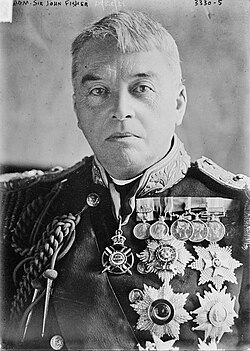
การรบที่ดาร์ดานellesเป็นความพยายามของเชอร์ชิลล์และผู้ที่สนับสนุนยุทธศาสตร์ทางตะวันออกเพื่อยุติภาวะชะงักงันในแนวรบด้านตะวันตก แผนดังกล่าวคาดการณ์ถึงการยกพลขึ้นบกของอังกฤษและฝรั่งเศสบนคาบสมุทรแกลลิโปลีของตุรกี และการรุกคืบอย่างรวดเร็วไปยังคอนสแตนติโนเปิล ซึ่งจะทำให้ตุรกีถอนตัวออกจากความขัดแย้ง แผนนี้ถูกปฏิเสธโดยพลเรือเอกจอห์น ฟิชเชอร์ผู้บัญชาการกองทัพเรือและคิทเชเนอร์[ 221 ]เนื่องจากไม่สามารถให้การนำที่เด็ดขาดได้ แอสควิธจึงพยายามไกล่เกลี่ยระหว่างทั้งสองคนนี้และเชอร์ชิลล์ ซึ่งนำไปสู่การผัดวันประกันพรุ่งและความล่าช้า ความพยายามทางเรือนั้นพ่ายแพ้อย่างยับเยิน กองทัพพันธมิตรได้สร้างหัวสะพานบนคาบสมุทรแกลลิโปลี แต่ความล่าช้าในการส่งกำลังเสริมที่เพียงพอทำให้ตุรกีสามารถรวมกลุ่มกันใหม่ได้ นำไปสู่ภาวะชะงักงันที่เจนกินส์อธิบายว่า "ไม่เคลื่อนไหวเหมือนกับที่เกิดขึ้นในแนวรบด้านตะวันตก" [ 222 ]ฝ่ายสัมพันธมิตรประสบปัญหาจากการทะเลาะวิวาทภายในระดับสูง อุปกรณ์ที่ด้อยคุณภาพ การนำที่ไร้ประสิทธิภาพ และการขาดการวางแผน ในขณะที่ต้องเผชิญหน้ากับหน่วยที่ดีที่สุดของกองทัพออตโตมัน ฝ่ายสัมพันธมิตรส่งกำลังพล 492,000 นาย พวกเขาสูญเสียกำลังพล 132,000 นายในความพ่ายแพ้ที่น่าอับอาย โดยมีอัตราการสูญเสียที่สูงมากในออสเตรเลียและนิวซีแลนด์ ซึ่งเปลี่ยนแปลงดินแดนเหล่านั้นไปอย่างถาวร ในบริเตนใหญ่ มันคือความหายนะทางการเมืองของเชอร์ชิลล์และสร้างความเสียหายอย่างร้ายแรงให้กับแอสควิธ[ 223 ]
วิกฤตการณ์เชลล์ เดือนพฤษภาคม ค.ศ. 1915
การเปิดฉากปี 1915 ทำให้เกิดความแตกแยกมากขึ้นระหว่างลอยด์ จอร์จและคิทเชเนอร์เกี่ยวกับการจัดหาอาวุธยุทโธปกรณ์ให้กับกองทัพ ลอยด์ จอร์จคิดว่าแผนกอาวุธยุทโธปกรณ์ภายใต้การควบคุมของเขาเป็นสิ่งจำเป็นในการประสานงาน "ศักยภาพด้านวิศวกรรมทั้งหมดของประเทศ" [ 224 ]คิทเชเนอร์สนับสนุนให้คงการจัดการปัจจุบันไว้ โดยจัดหาอาวุธยุทโธปกรณ์ผ่านสัญญาระหว่างกระทรวงกลาโหมและผู้ผลิตอาวุธของประเทศ เช่นเดียวกับที่เกิดขึ้นบ่อยครั้ง แอสควิธพยายามหาทางประนีประนอมผ่านคณะกรรมการ โดยจัดตั้งกลุ่มขึ้นเพื่อ "พิจารณาประเด็นที่ยุ่งยากมากเกี่ยวกับการวางสัญญาสำหรับอาวุธยุทโธปกรณ์ให้ถูกต้อง" [ 225 ]สิ่งนี้ไม่ได้ช่วยลดเสียงวิพากษ์วิจารณ์จากสื่อลงเลย[ 226 ]และในวันที่ 20 เมษายน แอสควิธพยายามท้าทายผู้ที่วิพากษ์วิจารณ์เขาในการกล่าวสุนทรพจน์ครั้งสำคัญที่นิวคาสเซิล โดยกล่าวว่า "ผมเห็นแถลงการณ์เมื่อวันก่อนที่ระบุว่าการปฏิบัติการของกองทัพของเรากำลังถูกบั่นทอนลงเนื่องจากเราล้มเหลวในการจัดหาอาวุธยุทธ์ที่จำเป็น แถลงการณ์นั้นไม่มีความจริงแม้แต่คำเดียว" [ 227 ]
การตอบสนองของสื่อนั้นรุนแรงมาก: วันที่ 14 พฤษภาคม 1915 หนังสือพิมพ์The Times ได้ตีพิมพ์ จดหมายจากผู้สื่อข่าวCharles à Court Repingtonซึ่งระบุว่าความล้มเหลวของอังกฤษในการรบที่ Aubers Ridge เกิดจากการขาดแคลนกระสุนระเบิดแรงสูง จึงเกิดวิกฤตการณ์เต็มรูปแบบขึ้น นั่นคือวิกฤตการณ์กระสุนปืนใหญ่ภรรยาของนายกรัฐมนตรีระบุได้อย่างถูกต้องว่าคู่ต่อสู้หลักของสามีคือเจ้าพ่อสื่อและเจ้าของThe Timesลอร์ดนอร์ธคลิฟฟ์ : "ฉันค่อนข้างแน่ใจว่านอร์ธคลิฟฟ์อยู่เบื้องหลังเรื่องทั้งหมดนี้" [ 228 ]แต่ล้มเหลวที่จะตระหนักถึงการมีส่วนร่วมอย่างลับๆ ของเซอร์จอห์น เฟรนช์ผู้ซึ่งรั่วไหลรายละเอียดการขาดแคลนกระสุนปืนใหญ่ให้กับ Repington [ 229 ]นอร์ธคลิฟฟ์อ้างว่า "ปัญหาทั้งหมดเกี่ยวกับการจัดหายุทโธปกรณ์สงครามเป็นเรื่องที่คณะรัฐมนตรีไม่ควรถูกตำหนิมากเกินไป" [ 230 ]การโจมตีรัฐบาลและความเฉื่อยชาส่วนตัวของแอสควิธมาจากทั้งฝ่ายซ้ายและฝ่ายขวาซีพี สก็อตต์บรรณาธิการของเดอะแมนเชสเตอร์การ์เดียนเขียนว่า "รัฐบาลล้มเหลวอย่างน่ากลัวและเสื่อมเสียชื่อเสียงในเรื่องอาวุธยุทโธปกรณ์" [ 231 ]
กิจกรรมอื่นๆ
ความล้มเหลวทั้งทางตะวันออกและตะวันตกได้ก่อให้เกิดเหตุการณ์มากมายที่ถาโถมเข้าใส่รัฐบาลเสรีนิยมของแอสควิธ[ 232 ]ความล้มเหลวทางยุทธศาสตร์ประกอบกับความผิดหวังส่วนตัวอย่างรุนแรง เมื่อวันที่ 12 พฤษภาคม 1915 เวเนเทีย สแตนลีย์ ประกาศหมั้นกับเอ็ดวิน มอนทากู แอสควิธตอบกลับทันทีและสั้นๆ ว่า "อย่างที่คุณรู้ดี นี่ทำให้ฉันเสียใจมาก ฉันทนไม่ได้ที่จะมาพบคุณ ฉันทำได้เพียงภาวนาขอให้พระเจ้าอวยพรคุณและช่วยเหลือฉัน" [ 233 ]ความสำคัญของเวเนเทียที่มีต่อเขาแสดงให้เห็นได้จากข้อความในจดหมายที่เขียนในช่วงกลางปี 1914 ว่า "อยู่ใกล้ชิดฉันนะที่รักในช่วงเวลาวิกฤตที่สุดในชีวิตของฉัน ฉันรู้ว่าคุณจะไม่ทำให้ฉันผิดหวัง" [ 234 ]การหมั้นของเธอ "เป็นการกลับมาที่ทรยศหักหลังหลังจากความสุขทั้งหมดที่คุณมอบให้ฉัน" ทำให้เขาเสียใจอย่างมาก[ 235 ]แม้ว่าการสูญเสียครั้งนี้จะมีความสำคัญต่อตัวบุคคล แต่ผลกระทบทางการเมืองที่มีต่อแอสควิธนั้นอาจกล่าวเกินจริงไปได้[ 236 ]นักประวัติศาสตร์ สตีเฟน คอสส์ ตั้งข้อสังเกตว่า แอสควิธ "สามารถแบ่งแยกชีวิตสาธารณะและชีวิตส่วนตัวของเขาออกเป็นส่วนๆ ได้เสมอ (และ) ในไม่ช้าก็พบผู้ที่ไว้ใจได้คนใหม่ๆ ซึ่งเขาเขียนจดหมายถึงด้วยความถี่ ความกระตือรือร้น และความไม่ระมัดระวังไม่น้อยไปกว่ากัน" [ 237 ]
ความสูญเสียส่วนตัวนี้ตามมาด้วยการลาออกของพลเรือเอกฟิชเชอร์ในวันที่ 15 พฤษภาคม หลังจากความขัดแย้งกับเชอร์ชิลล์อย่างต่อเนื่องและด้วยความผิดหวังกับพัฒนาการที่น่าผิดหวังในกัลลิโปลี[ 238 ]ฟิชเชอร์ในวัย 74 ปี มีพฤติกรรมที่ผิดปกติมากขึ้นเรื่อยๆ และในจดหมายที่ส่งถึงลอยด์ จอร์จบ่อยครั้ง เขาได้ระบายความคับข้องใจที่มีต่อรัฐมนตรีว่าการกระทรวงทหารเรือว่า “ฟิชเชอร์เขียนจดหมายถึงผมทุกๆ วันหรือสองวันเพื่อแจ้งให้ผมทราบว่าสถานการณ์เป็นอย่างไร เขาประสบปัญหาอย่างมากกับหัวหน้าของเขา ซึ่งมักจะต้องการทำอะไรที่ยิ่งใหญ่และโดดเด่นอยู่เสมอ” [ 239 ]เหตุการณ์ที่ไม่พึงประสงค์ ความเป็นปรปักษ์ของสื่อ การต่อต้านจากพรรคอนุรักษ์นิยม และความเศร้าโศกส่วนตัวได้โจมตีแอสควิธ และตำแหน่งของเขาก็อ่อนแอลงไปอีกเนื่องจากเพื่อนร่วมงานจากพรรคเสรีนิยม คาสซาร์พิจารณาว่าลอยด์ จอร์จแสดงให้เห็นถึงการขาดความจงรักภักดีอย่างชัดเจน[ 240 ]และคอสส์เขียนถึงข่าวลือในยุคนั้นว่าเชอร์ชิลล์ "กำลังเล่นเกมวางแผนแบบเดิมๆ ของเขาอยู่" และรายงานข้อกล่าวอ้างที่ว่าเชอร์ชิลล์ "เป็นผู้จุดประกาย" จดหมายเรปิงตันอย่างไม่ต้องสงสัย โดยร่วมมือกับเซอร์จอห์น เฟรนช์[ 241 ]ด้วยความขาดความสามัคคีภายใน และถูกโจมตีจากภายนอก แอสควิธจึงตัดสินใจว่ารัฐบาลของเขาไม่สามารถดำเนินต่อไปได้ และเขาเขียนถึงพระมหากษัตริย์ว่า "ข้าพเจ้าได้ข้อสรุปอย่างเด็ดขาดแล้วว่า [รัฐบาล] จะต้องได้รับการจัดตั้งขึ้นใหม่บนพื้นฐานที่กว้างขวางและไม่ขึ้นกับพรรคการเมือง" [ 242 ]
พันธมิตรชุดแรก: พฤษภาคม 1915 – ธันวาคม 1916

การก่อตั้งรัฐบาลผสมชุดแรกทำให้แอสควิธแสดงให้เห็นถึงความเฉียบแหลมทางการเมืองที่ดูเหมือนจะหายไปจากเขา[ 243 ]แต่มันก็มีราคาที่ต้องจ่าย ซึ่งเกี่ยวข้องกับการเสียสละเพื่อนร่วมงานทางการเมืองเก่าแก่สองคน ได้แก่ เชอร์ชิลล์ ผู้ซึ่งถูกตำหนิในความล้มเหลวที่ดาร์ดานelles และฮัลเดน ผู้ซึ่งถูกกล่าวหาอย่างผิดๆ ในสื่อว่ามีแนวคิดสนับสนุนเยอรมนี[ 242 ]พรรคอนุรักษ์นิยมภายใต้กฎหมายโบนาได้กำหนดให้การปลดเหล่านี้เป็นเงื่อนไขในการเข้าร่วมรัฐบาล และในการปลดฮัลเดน ผู้ซึ่ง "ไม่ได้สร้างความยากลำบากใดๆ" [ 244 ]แอสควิธได้กระทำ "ความผิดพลาดที่ไม่ปกติที่สุดในอาชีพการงานทั้งหมดของเขา" [ 245 ]ในจดหมายถึงเกรย์ แอสควิธเขียนถึงฮัลเดนว่า "เขาเป็นเพื่อนส่วนตัวและทางการเมืองที่เก่าแก่ที่สุดที่ผมมีในโลก และกับเขา คุณและผมได้ยืนเคียงข้างกันมาเกือบ 30 ปีแล้ว" [ 246 ]แต่เขาไม่สามารถแสดงความรู้สึกเหล่านี้โดยตรงต่อฮัลเดนได้ ซึ่งฮัลเดนรู้สึกเสียใจมาก แอสควิธจัดการการจัดสรรตำแหน่งได้สำเร็จมากกว่า โดยแต่งตั้งลอว์ให้ดำรงตำแหน่งรัฐมนตรีอาณานิคมซึ่งเป็นตำแหน่งที่ค่อนข้างเล็กน้อย[ 247 ]รับผิดชอบด้านอาวุธยุทโธปกรณ์จากคิทเชเนอร์และมอบตำแหน่งรัฐมนตรีใหม่ให้แก่ลอยด์ จอร์จ และแต่งตั้งบัลฟอร์ให้ดำรงตำแหน่งรัฐมนตรีว่าการกระทรวงทหารเรือ แทนที่เชอร์ชิลล์ ซึ่งถูกลดตำแหน่งไปเป็นตำแหน่งรัฐมนตรีคลังแห่งดัชชีแห่งแลงคาสเตอร์ ซึ่งเป็นตำแหน่งที่ไม่มี ภาระหน้าที่ใดๆ โดยรวมแล้ว พรรคเสรีนิยมครองที่นั่งในคณะรัฐมนตรี 12 ที่นั่ง รวมถึงตำแหน่งสำคัญส่วนใหญ่ ในขณะที่พรรคอนุรักษ์นิยมครอง 8 ที่นั่ง[ 248 ] แม้จะมีผลลัพธ์เช่นนี้ แต่พรรคเสรีนิยมหลายคนก็รู้สึกผิดหวัง ชาร์ลส์ ฮอบเฮาส์ที่ถูกปลดเขียนว่า "การแตกสลายของพรรคเสรีนิยมเสร็จสมบูรณ์แล้ว ลอยด์ จอร์จและเพื่อนๆ พรรคอนุรักษ์นิยมของเขาจะกำจัดแอสควิธในไม่ช้า" [ 249 ]จากมุมมองของพรรคและส่วนตัว การก่อตั้งพันธมิตรครั้งแรกถือเป็น "ชัยชนะที่โดดเด่นสำหรับ (แอสควิธ) หากไม่ใช่เพื่อฝ่ายพันธมิตร" [ 243 ]แต่การที่แอสควิธเพิกเฉยต่อกฎหมายก็มีส่วนทำให้ตัวเขาเองและพรรคของเขาล่มสลายในภายหลัง[ 250 ]
การจัดระเบียบสงครามใหม่
หลังจากสร้างรัฐบาลขึ้นใหม่ แอสควิธพยายามปรับโครงสร้างกลไกการทำสงครามของเขา องค์ประกอบที่สำคัญที่สุดคือการจัดตั้งกระทรวงยุทธภัณฑ์ [ 251 ]ตามมาด้วยการจัดระเบียบสภาสงครามใหม่ให้เป็นคณะกรรมการดาร์ดานelles โดยมีมอริซ แฮงกีย์เป็นเลขานุการและมีอำนาจหน้าที่พิจารณาประเด็นทั้งหมดเกี่ยวกับยุทธศาสตร์สงคราม[ 252 ]
พระราชบัญญัติยุทธภัณฑ์สงครามปี 1915ทำให้บริษัทเอกชนที่จัดหายุทธภัณฑ์ให้แก่กองทัพอยู่ภายใต้การควบคุมอย่างเข้มงวดของรัฐมนตรีว่าการกระทรวงยุทธภัณฑ์ลอยด์ จอร์จ นโยบายดังกล่าว ตามที่เจ.อาร์. แมริออตต์กล่าวไว้ คือ:
ไม่อนุญาตให้ผลประโยชน์ส่วนตัวใดๆ มาขัดขวางการให้บริการหรือเป็นอันตรายต่อความปลอดภัยของรัฐ ข้อบังคับของสหภาพแรงงานต้องถูกระงับ กำไรของนายจ้างต้องถูกจำกัด คนงานที่มีทักษะต้องต่อสู้ หากไม่ใช่ในสนามรบ ก็ต้องต่อสู้ในโรงงาน ต้องประหยัดแรงงานโดยการลดจำนวนแรงงานและจ้างผู้หญิง โรงงานเอกชนต้องอยู่ภายใต้การควบคุมของรัฐ และต้องจัดตั้งโรงงานแห่งชาติขึ้นใหม่ ผลลัพธ์พิสูจน์ให้เห็นถึงความชอบธรรมของนโยบายใหม่ ผลผลิตมีมากมายมหาศาล และในที่สุดสินค้าก็ถูกส่งมอบ[ 253 ]
อย่างไรก็ตาม การวิพากษ์วิจารณ์รูปแบบการเป็นผู้นำของแอสควิธยังคงดำเนินต่อไปเอิร์ลแห่งครอว์ฟอร์ดซึ่งเข้าร่วมรัฐบาลในฐานะรัฐมนตรีว่าการกระทรวงเกษตร ได้บรรยายการประชุมคณะรัฐมนตรีครั้งแรกของเขาไว้ดังนี้: "เป็นการประชุมครั้งใหญ่ ใหญ่มากจนเป็นไปไม่ได้เลยที่มากกว่าหนึ่งหรือสองคนจะแสดงความคิดเห็นในแต่ละรายละเอียด [...] แอสควิธง่วงนอน มือสั่นและแก้มย้อย เขาควบคุมการอภิปรายได้น้อยมาก ดูเหมือนจะเบื่อหน่าย แต่ก็อารมณ์ดีตลอด" ลอยด์ จอร์จ ไม่ค่อยอดทนนักจอร์จ ริดเดลล์บันทึกไว้ในไดอารี่ของเขาว่า "(เขา) บอกว่านายกรัฐมนตรีควรเป็นผู้นำไม่ใช่ผู้ตาม และ (แอสควิธ) ไม่เคยขยับเขยื้อนจนกว่าจะถูกบังคับ และเมื่อนั้นก็มักจะสายเกินไปแล้ว" [ 254 ]และวิกฤตการณ์ ตลอดจนคำวิพากษ์วิจารณ์ ยังคงโจมตีนายกรัฐมนตรีอย่างต่อเนื่อง "ซึ่งเต็มไปด้วยความขุ่นเคืองทั้งภายในพรรคและระหว่างพรรค" [ 255 ]
การเกณฑ์ทหาร

ความต้องการกำลังคนอย่างไม่รู้จักพอสำหรับแนวรบด้านตะวันตกนั้นได้รับการคาดการณ์ไว้ตั้งแต่เนิ่นๆ ระบบอาสาสมัครได้รับการนำมาใช้เมื่อสงครามปะทุขึ้น และแอสควิธไม่เต็มใจที่จะเปลี่ยนแปลงระบบนี้ด้วยเหตุผลทางการเมือง เนื่องจากพรรคเสรีนิยมจำนวนมาก และพันธมิตรพรรคชาตินิยมไอริชและพรรคแรงงานเกือบทั้งหมด ต่างคัดค้านการเกณฑ์ทหาร อย่าง รุนแรง[ 256 ]จำนวนอาสาสมัครลดลง[ 257 ]ซึ่งไม่เพียงพอต่อความต้องการกำลังพลเพิ่มเติมสำหรับกัลลิโปลี และโดยเฉพาะอย่างยิ่งสำหรับแนวรบด้านตะวันตก[ 258 ]สิ่งนี้ทำให้ระบบอาสาสมัครไม่สามารถดำรงอยู่ได้อีกต่อไป ไวโอเล็ต ลูกสาวของแอสควิธ เขียนไว้ในเดือนมีนาคม พ.ศ. 2458 ว่า "ผู้ชายทุกคนที่มีแขนขาและความสามารถโดยเฉลี่ยค่อยๆ ถูกดูดออกไปสู่สงคราม" [ 259 ]ในเดือนกรกฎาคม พ.ศ. 2458 พระราชบัญญัติการลงทะเบียนแห่งชาติได้รับการประกาศใช้ ซึ่งกำหนดให้ชายทุกคนที่มีอายุระหว่าง 18 ถึง 65 ปีต้องลงทะเบียน[ 260 ]หลายคนมองว่านี่เป็นจุดเริ่มต้นของการเกณฑ์ทหาร แต่การแต่งตั้งลอร์ดเดอร์บีเป็นอธิบดีกรมการเกณฑ์ทหารกลับเป็นการพยายามฟื้นฟูระบบสมัครใจ ซึ่งก็คือโครงการเดอร์บี [ 261 ] ขั้นตอนที่ค่อยเป็นค่อยไปของแอสควิธในการเกณฑ์ทหารยังคงสร้างความไม่พอใจให้กับฝ่ายตรงข้ามของเขา ตัวอย่างเช่น เซอร์เฮนรี วิลสันเขียนถึงลีโอ อเมอรีว่า "ผลลัพธ์ของการอภิปรายเหล่านี้จะเป็นอย่างไร? การ 'รอดู' จะชนะหรือไม่ หรือส่วนหนึ่งของคณะรัฐมนตรีที่จริงจังและซื่อสัตย์จะสามารถบังคับให้แอสควิธผู้ชั่วร้ายลงมือทำได้หรือไม่?" [ 262 ]การรักษาสมดุลของนายกรัฐมนตรี ทั้งในรัฐสภาและในพรรคของเขาเอง ไม่ได้รับความช่วยเหลือจากการรณรงค์ต่อต้านการเกณฑ์ทหารอย่างรุนแรงที่ดำเนินการโดยภรรยาของเขา มาร์โกต์ แอสควิธ อธิบายตัวเองว่า "ต่อต้านอย่างรุนแรง" [ 263 ]และได้ดำเนินกิจกรรมโน้มน้าวใจบ่อยครั้งของเธอ โดยผ่านทางจดหมายและการสนทนา ซึ่งส่งผลกระทบเพียงเล็กน้อย นอกจากการ "สร้างความเสียหายอย่างใหญ่หลวง" ต่อชื่อเสียงและตำแหน่งของแอสควิธ[ 264 ]
เมื่อถึงสิ้นปี พ.ศ. 2458 เป็นที่ชัดเจนว่าการเกณฑ์ทหารเป็นสิ่งจำเป็น และแอสควิธได้เสนอพระราชบัญญัติการเกณฑ์ทหารต่อสภาสามัญชนเมื่อวันที่ 5 มกราคม พ.ศ. 2459 [ 265 ]พระราชบัญญัตินี้ได้กำหนดให้มีการเกณฑ์ทหารสำหรับชายโสด และได้ขยายไปถึงชายที่แต่งงานแล้วในภายหลังในปีเดียวกัน การต่อต้านหลักของแอสควิธมาจากภายในพรรคของเขาเอง โดยเฉพาะอย่างยิ่งจากเซอร์จอห์น ไซมอน ซึ่งได้ลาออก แอสควิธได้อธิบายจุดยืนของไซมอนในจดหมายถึงซิลเวีย เฮนลีย์ในลักษณะนี้ว่า "ผมรู้สึกเหมือนกับว่าถูกลูกชายของตัวเองตบหน้าต่อหน้าสาธารณชน" [ 266 ]หลายปีต่อมา ไซมอนยอมรับความผิดพลาดของเขาโดยกล่าวว่า "ผมตระหนักมานานแล้วว่าการต่อต้านของผมเป็นความผิดพลาด" [ 267 ]ความสำเร็จของแอสควิธในการนำร่างกฎหมายผ่านโดยไม่ทำให้รัฐบาลแตกแยกนั้นถือว่ามาก ดังที่ภรรยาของเขากล่าวไว้ว่า "ความอดทนและทักษะของเฮนรีในการรักษาพรรคแรงงานไว้ท่ามกลางการเปลี่ยนแปลงอันน่าทึ่งในอังกฤษนั้นทำให้ทุกคนตกตะลึง" [ 268 ]แต่การต่อสู้ที่ยาวนาน "ทำลายชื่อเสียงของเขาเองและความสามัคคีของพรรค" [ 269 ]
ไอร์แลนด์
ในวันจันทร์อีสเตอร์ปี 1916 กลุ่มอาสาสมัครชาวไอริชและสมาชิกของกองทัพพลเมืองไอริชได้ยึดอาคารและสถานที่สำคัญหลายแห่งในดับลินและที่อื่นๆ มีการต่อสู้อย่างหนักในสัปดาห์ถัดมาก่อนที่อาสาสมัครจะถูกบังคับให้ยอมจำนน[ 270 ]แอสควิธและรัฐบาลมัวแต่ยุ่งอยู่กับการเกณฑ์ทหาร จึงไม่ทันได้ตระหนักถึงอันตรายที่กำลังเกิดขึ้น[ 271 ]ซึ่งยิ่งทวีความรุนแรงขึ้นเมื่อหลังจากการพิจารณาคดีอย่างเร่งรีบในศาลทหาร ผู้นำชาวไอริชจำนวนหนึ่งถูกประหารชีวิต ในวันที่ 11 พฤษภาคม แอสควิธเดินทางข้ามไปยังดับลิน และหลังจากตรวจสอบเป็นเวลาหนึ่งสัปดาห์ ก็ตัดสินใจว่าระบบการปกครองของเกาะนั้นพังทลายอย่างแก้ไขไม่ได้แล้ว[ 272 ]เขาจึงหันไปหาลอยด์ จอร์จเพื่อหาทางออก ลอยด์ จอร์จได้ไกล่เกลี่ยข้อตกลงที่จะทำให้มี การนำ ระบบการปกครองตนเองมาใช้เมื่อสิ้นสุดสงคราม โดยไม่รวมอัลสเตอร์[ 273 ]อย่างไรก็ตาม ทั้งเขาและแอสควิธไม่ได้ตระหนักถึงขอบเขตของการต่อต้านจากพรรคอนุรักษ์นิยม แผนดังกล่าวถูกโจมตีอย่างหนักในสภาขุนนาง และถูกยกเลิกในเวลาต่อมา[ 274 ]เหตุการณ์นี้ไม่เพียงแต่ทำลายชื่อเสียงของลอยด์ จอร์จเท่านั้น แต่ยังรวมถึงชื่อเสียงของแอสควิธด้วย วอลเตอร์ ลองกล่าวถึงแอสควิธว่า "ขาดความเด็ดขาดอย่างมาก" [ 275 ]นอกจากนี้ยังทำให้ความแตกแยกระหว่างแอสควิธและลอยด์ จอร์จกว้างขึ้น และกระตุ้นให้ลอยด์ จอร์จวางแผนการปรับโครงสร้างรัฐบาล ลอยด์ จอร์จกล่าวว่า "คุณเอไม่ค่อยได้รับเสียงเชียร์ในปัจจุบันนี้" [ 276 ]
ความคืบหน้าของสงคราม

ความล้มเหลวอย่างต่อเนื่องของฝ่ายสัมพันธมิตรและการสูญเสียอย่างหนักในยุทธการลูสระหว่างเดือนกันยายนและตุลาคม พ.ศ. 2458 ทำให้ความเชื่อมั่นที่เหลืออยู่ในผู้บัญชาการอังกฤษเซอร์จอห์น เฟรนช์และการตัดสินใจของลอร์ดคิทเชเนอร์ หมดสิ้นไป [ 277 ]แอสควิธหันไปใช้กลยุทธ์ที่เขาชื่นชอบ และโน้มน้าวให้คิทเชเนอร์ไปเยี่ยมชมสนามรบกัลลิโปลีด้วยความหวังว่าจะโน้มน้าวให้เขาอยู่ในทะเลเมดิเตอร์เรเนียนในฐานะผู้บัญชาการสูงสุด[ 278 ]และเข้ารับตำแหน่งรักษาการกระทรวงสงครามด้วยตนเองเป็นการชั่วคราว[ 279 ]จากนั้นเขาก็แทนที่เฟรนช์ด้วยเซอร์ดักลาส เฮก ในบันทึกประจำวันของเขาเมื่อวันที่ 10 ธันวาคม พ.ศ. 2458 เขาได้บันทึกไว้ว่า "เวลาประมาณ 19.00 น. ฉันได้รับจดหมายจากนายกรัฐมนตรีที่ระบุว่า 'ลับ' และบรรจุอยู่ใน ซอง สามซอง เนื้อหาในจดหมายระบุว่า 'เซอร์ เจ. เฟรนช์ ได้ยื่นใบลาออกต่อฉัน ... ภายใต้เงื่อนไขการอนุมัติของพระมหากษัตริย์ ฉันมีความยินดีที่จะเสนอให้คุณเป็นผู้สืบทอดตำแหน่งต่อจากเขา' " [ 280 ]แอสควิธยังได้แต่งตั้งเซอร์ วิลเลียม โรเบิร์ตสันเป็นหัวหน้าเสนาธิการทหารสูงสุดแห่งจักรวรรดิโดยมีอำนาจเพิ่มมากขึ้น รายงานโดยตรงต่อคณะรัฐมนตรี และมีสิทธิแต่เพียงผู้เดียวในการให้คำแนะนำทางทหารแก่คณะรัฐมนตรี โดยลดบทบาทของรัฐมนตรีว่าการกระทรวงสงครามให้เหลือเพียงหน้าที่ในการเกณฑ์และจัดหาเสบียงให้กับกองทัพ[ 281 ]สุดท้าย เขาได้จัดตั้งคณะกรรมการดาร์ดาเนลส์ขนาดเล็กขึ้นใหม่ โดยเปลี่ยนชื่อเป็นคณะกรรมการสงคราม[ 282 ]โดยมีตัวเขาเอง บัลฟอร์ ลอว์ ลอยด์ จอร์จ และเรจินัลด์ แมคเคนนา เป็นสมาชิก[ 283 ]แม้ว่าในไม่ช้าคณะกรรมการนี้จะเพิ่มจำนวนขึ้น แต่ก็ยังคงประสบความล้มเหลวเช่นเดียวกับคณะกรรมการชุดก่อน คือ "มีขนาดใหญ่เกินไปและขาดอำนาจบริหาร" [ 284 ]สิ่งเหล่านี้ไม่ได้ช่วยให้การรบที่ดาร์ดาเนลส์ประสบความสำเร็จ และการตัดสินใจถอนกำลังเกิดขึ้นในเดือนธันวาคม[ 285 ]ส่งผลให้เชอร์ชิลล์ลาออกจากตำแหน่งดัชชีแห่งแลงคาสเตอร์[ 286 ]ซึ่งเขาเขียนว่า "ผมไม่สามารถยอมรับตำแหน่งที่มีความรับผิดชอบทั่วไปในนโยบายสงครามได้ หากปราศจากการมีส่วนร่วมอย่างมีประสิทธิภาพในการชี้นำและควบคุม" [ 283 ]ความพ่ายแพ้เพิ่มเติมเกิดขึ้นในคาบสมุทรบอลข่าน: ฝ่ายมหาอำนาจกลางเข้ายึดครองเซอร์เบีย บังคับให้กองกำลังพันธมิตรที่พยายามเข้าแทรกแซงถอยกลับไปยังซาโลนิกา[ 287 ]
ต้นปี 1916 กองทัพเยอรมันเริ่มรุกที่แวร์ดันซึ่งเป็น "การรบที่ยืดเยื้อที่สุดในประวัติศาสตร์" [ 288 ]ในช่วงปลายเดือนพฤษภาคม การสู้รบทางเรือครั้งสำคัญเพียงครั้งเดียวระหว่างอังกฤษและเยอรมนีในสงครามเกิดขึ้นในยุทธนาวีจัตแลนด์แม้จะเป็นความสำเร็จทางยุทธศาสตร์[ 289 ] แต่ การสูญเสียเรือจำนวนมากของฝ่ายสัมพันธมิตรก็ทำให้เกิดความผิดหวังตั้งแต่เนิ่นๆ[ 290 ]ลอร์ดนิวตันนายคลังทั่วไปและโฆษกรัฐสภาของกระทรวงกลาโหมในช่วงที่คิทเชเนอร์ไม่อยู่ ได้บันทึกไว้ในไดอารี่ของเขาว่า "ข่าวที่น่าตกใจเกี่ยวกับการสู้รบทางเรือนอกชายฝั่งจัตแลนด์ ขณะที่ฟังรายชื่อเรือที่สูญเสียไป ผมคิดว่ามันเป็นภัยพิบัติที่เลวร้ายที่สุดที่เราเคยประสบมา" [ 291 ]ความสิ้นหวังนี้ทวีคูณขึ้นสำหรับประเทศชาติ หากไม่ใช่สำหรับเพื่อนร่วมงานของเขา เมื่อลอร์ดคิทเชเนอร์เสียชีวิตจากการจมของเรือHMS Hampshireในวันที่ 5 มิถุนายน[ 292 ]
ในตอนแรก Asquith พิจารณาที่จะรับตำแหน่งกระทรวงกลาโหมที่ว่างอยู่ด้วยตนเอง แต่ต่อมาได้เสนอให้ Law ซึ่งปฏิเสธและเลือก Lloyd George แทน[ 293 ]นี่เป็นสัญญาณสำคัญของความสามัคคีในการกระทำที่เพิ่มขึ้นระหว่างคนทั้งสอง และทำให้ Margot Asquith รู้สึกกังวลใจ: "ฉันมองว่านี่เป็นความผิดพลาดทางการเมืองครั้งใหญ่ที่สุดในชีวิตของ Henry ... เราออกไปแล้ว เหลือเพียงแค่รอเวลาเท่านั้นที่เราจะต้องออกจาก Downing Street" [ 294 ] [ 295 ]
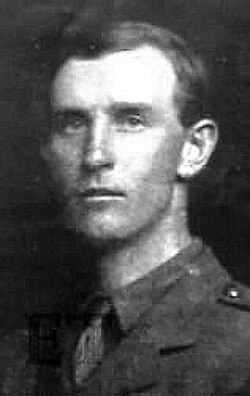
แอสควิธได้ดำเนินการต่อโดยตกลงที่จะจัดตั้งคณะกรรมการสอบสวนเกี่ยวกับการดำเนินการในดาร์ดานelles และการรณรงค์ในเมโสโปเตเมียซึ่งกองกำลังพันธมิตรถูกบังคับให้ยอมจำนนที่คุต[ 296 ] เซอร์มอริซ แฮงกีย์เลขานุการคณะกรรมการสงคราม พิจารณาว่า "พันธมิตรไม่เคยฟื้นตัว ในช่วงห้าเดือนสุดท้าย หน้าที่ของกองบัญชาการสูงสุดดำเนินการภายใต้เงาของการสอบสวนเหล่านี้" [ 297 ]แต่ความผิดพลาดเหล่านี้ถูกบดบังด้วยความคืบหน้าที่จำกัดและการสูญเสียอย่างมหาศาลของการรบที่ซอมม์ซึ่งเริ่มต้นในวันที่ 1 กรกฎาคม 1916 และจากนั้นด้วยความสูญเสียส่วนตัวที่ร้ายแรงอีกครั้ง การเสียชีวิตของเรย์มอนด์ บุตรชายของแอสควิธ ในวันที่ 15 กันยายน ในการรบที่ฟลอร์ส-คูร์เซเลตต์ [ 298 ] ความสัมพันธ์ของแอสควิธกับลูกชายคนโตของเขาไม่ได้ราบรื่นนัก เรย์มอนด์เขียนจดหมายถึงภรรยาของเขาในช่วงต้นปี 1916 ว่า "ถ้ามาร์โกต์พูดจาเหลวไหลกับคุณอีกเกี่ยวกับความโหดร้ายของลูกเลี้ยงของเธอ คุณสามารถห้ามเธอได้โดยบอกเธอว่าในช่วง 10 เดือนที่ผมถูกเนรเทศมาอยู่ที่นี่ นายกรัฐมนตรีไม่เคยเขียนจดหมายถึงผมเลยแม้แต่บรรทัดเดียว" [ 299 ]แต่การเสียชีวิตของเรย์มอนด์นั้นสร้างความสะเทือนใจอย่างมาก ไวโอเล็ตเขียนไว้ดังนี้ว่า "...การเห็นพ่อต้องทนทุกข์ทรมานเช่นนี้ทำให้ใจสลาย" [ 300 ]และแอสควิธใช้เวลาส่วนใหญ่ในอีกหลายเดือนต่อมา "เก็บตัวและเข้าถึงยาก" [ 301 ]สงครามไม่ได้นำมาซึ่งการหยุดพัก เชอร์ชิลล์กล่าวว่า "ความล้มเหลวในการทำลายแนวรบของเยอรมันในซอมม์ การฟื้นตัวของอำนาจเยอรมันในภาคตะวันออก [เช่น ความพ่ายแพ้ของการรุกของบรูซิโลฟ ] การล่มสลายของโรมาเนียและการเริ่มต้นของสงครามเรือดำน้ำครั้งใหม่ ได้เสริมสร้างและกระตุ้นกองกำลังทั้งหมดที่ยืนกรานที่จะใช้กำลังมากขึ้นในการดำเนินกิจการ" [ 302 ]
ฤดูใบไม้ร่วง: พฤศจิกายน–ธันวาคม 1916
เหตุการณ์ที่นำไปสู่การล่มสลายของพันธมิตรชุดแรกได้รับการบันทึกไว้อย่างละเอียดถี่ถ้วนโดยผู้มีส่วนร่วมหลักเกือบทั้งหมด[ 303 ] (แม้ว่าแอสควิธเองจะเป็นข้อยกเว้นที่น่าสังเกต) และได้รับการศึกษาโดยนักประวัติศาสตร์ในช่วง 100 ปีที่ผ่านมา[ 304 ]แม้ว่าบันทึกและการศึกษาหลายฉบับจะแตกต่างกันในรายละเอียด และนำเสนอภาพรวมที่ค่อนข้างสับสน แต่โครงร่างก็ชัดเจน ดังที่RJQ Adamsเขียนไว้ว่า "นายกรัฐมนตรีต้องพึ่งพาเสียงข้างมากในรัฐสภา ความเชื่อมั่นของเสียงข้างมากที่มีต่อความเป็นผู้นำของแอสควิธสั่นคลอน และการปรากฏตัวของทางเลือกอื่นที่สมเหตุสมผลได้ทำลายเขา" [ 305 ] [ 306 ] [ 307 ]
การถกเถียงเรื่องไนจีเรียและบันทึกของลอร์ดแลนส์ดาวน์

จุดเริ่มต้นของวิกฤตครั้งสุดท้ายคือประเด็นที่ไม่น่าจะเป็นไปได้เกี่ยวกับการขายทรัพย์สินของเยอรมันที่ยึดได้ในไนจีเรีย[ 308 ] ในฐานะรัฐมนตรีอาณานิคม ผู้นำพรรคอนุรักษ์นิยม โบนา ลอว์ เป็นผู้นำการอภิปรายและถูกโจมตีอย่างรุนแรงโดยเซอร์เอ็ดเวิร์ด คาร์สัน ประเด็นนี้เป็นเรื่องเล็กน้อย[ 309 ]แต่ข้อเท็จจริงที่ว่าลอว์ถูกโจมตีโดยสมาชิกคนสำคัญของพรรคตนเอง และไม่ได้รับการสนับสนุนจากลอยด์ จอร์จ (ซึ่งไม่อยู่ในสภาเพียงเพื่อไปรับประทานอาหารเย็นกับคาร์สันในภายหลัง) นั้นไม่ใช่เรื่องเล็กน้อย[ 310 ]
มาร์ก็อต แอสควิธ สัมผัสได้ถึงอันตรายที่กำลังจะมาถึงในทันที: "ตั้งแต่คืนนั้นเป็นต้นมา เป็นที่ชัดเจนว่านอร์ธคลิฟฟ์, รอเธอร์เมียร์, โบนาห์, คาร์สัน, ลอยด์ จอร์จ (และชายคนหนึ่งชื่อแม็กซ์ ไอท์ เคน ) จะเข้ามาบริหารรัฐบาล ฉันรู้ว่ามันคือจุดจบ" [ 311 ]เกรย์ก็มองการณ์ไกลในทำนองเดียวกันและเขียนว่า "ลอยด์ จอร์จตั้งใจที่จะทำลายรัฐบาล" [ 312 ]ลอว์มองว่าการถกเถียงนี้เป็นภัยคุกคามต่อตำแหน่งทางการเมืองของเขาเอง[ 313 ]รวมถึงเป็นอีกตัวอย่างหนึ่งของการขาดการควบคุมของรัฐบาล[ 314 ]
The situation was further inflamed by the publication of a memorandum on future prospects in the war by Lord Lansdowne.[315] Circulated on 13 November, it considered, and did not dismiss, the possibility of a negotiated settlement with the Central Powers. Asquith's critics immediately assumed that the memorandum represented his own views and that Lansdowne was being used as a stalking horse,[316]Lord Crewe going so far as to suggest that the Lansdowne Memorandum was the "veritable causa causans[j] of the final break-up".[317]
Triumvirate gathers
On 20 November 1916 Lloyd George, Carson and Law met at the Hyde Park Hotel.[318] The meeting was organised by Max Aitken, who was to play central roles both in the forthcoming crisis and in its subsequent historiography.[319] Max Aitken was a Canadian adventurer, millionaire, and close friend of Law.[320] His book on the fall of the First Coalition, Politicians and the War 1914–1916, although always partial and sometimes inaccurate, gives a detailed insider's view of the events leading up to Asquith's political demise.[321] The trio agreed on the necessity of overhauling the government and further agreed on the mechanism for doing so; the establishment of a small War Council, chaired by Lloyd George, with no more than five members and with full executive authority for the conduct of the war.[322]
Asquith was to be retained as prime minister, and given honorific oversight of the War Council, but day-to-day operations would be directed by Lloyd George.[318] This scheme, although often reworked, remained the basis of all proposals to reform the government until Asquith's fall on 6 December. Until almost the end, both Law[323] and Lloyd George[324] wished to retain Asquith as premier, but Aitken,[321] Carson[325] and Lord Northcliffe emphatically did not.[326]
Power without responsibility
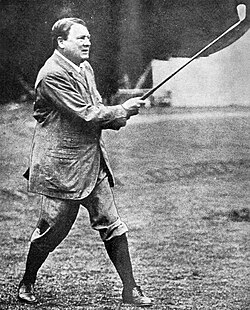
Lord Northcliffe's role was critical, as was the use Lloyd George made of him, and of the press in general. Northcliffe's involvement also highlights the limitations of both Aitken's and Lloyd George's accounts of Asquith's fall. Both minimised Northcliffe's part in the events. In his War Memoirs, Lloyd George stated emphatically "Lord Northcliffe was never, at any stage, brought into our consultations."[327] Aitken supported this by saying, "Lord Northcliffe was not in active co-operation with Lloyd George."[328]
But these claims are contradicted by others. In their biography of Northcliffe, Reginald Pound and Geoffrey Harmsworth record Northcliffe's brother Rothermere writing contemporaneously, "Alfred has been actively at work with Ll.G. with a view to bringing about a change."[329] Riddell wrote in his diary for 27 May 1916: "LG never mentions directly that he sees Northcliffe but I am sure they are in daily contact."[330] Margot Asquith was also certain of Northcliffe's role, and of Lloyd George's involvement, although she obscured both of their names when writing in her diary: "I only hope the man responsible for giving information to Lord N- will be heavily punished: God may forgive him; I never can."[331]
The claims are also contradicted by events. Northcliffe met with Lloyd George on each of the three days just prior to Lloyd George's resignation, on 1, 2, and 3 December,[332] including two meetings on 1 December, both before and after Lloyd George put his revised proposals for the War Council to Asquith.[333] It seems improbable that ongoing events were not discussed and that the two men confined their conversations to negotiating article circulation rights for Lloyd George once he had resigned, as Pound and Harmsworth weakly suggest.[334]
The attempts made by others to use Northcliffe and the wider press also merit consideration. In this regard, some senior military officers were extremely active. Robertson, for example, wrote to Northcliffe in October 1916, "The Boche gives me no trouble compared with what I meet in London. So any help you can give me will be of Imperial value."[335] Lastly, the actions of Northcliffe's newspapers must be considered—in particular The Times editorial on 4 December which led Asquith to reject Lloyd George's final War Council proposals.[336] Thompson, Northcliffe's most recent biographer, concludes, "From the evidence, it appears that Northcliffe and his newspapers should be given more credit than they have generally received for the demise of the Asquith government in December 1916."[337]
To-ing and fro-ing
Law met again with Carson and Lloyd George on 25 November and, with Aitken's help, drafted a memorandum for Asquith's signature.[338] This would see a "Civilian General Staff", with Lloyd George as chairman and Asquith as president, attending irregularly but with the right of referral to Cabinet as desired.[338] This Law presented to Asquith, who committed to reply on Monday the following week.[339]
His reply was an outright rejection; the proposal was impossible "without fatally impairing the confidence of colleagues, and undermining my own authority."[339] Law took Asquith's response to Carson and Lloyd George at Law's office in the Colonial Office. All were uncertain of the next steps.[340] Law decided it would be appropriate to meet with his senior Conservative colleagues, something he had not previously done.[341] He saw Austen Chamberlain, Lord Curzon and Lord Robert Cecil on Thursday 30 November. All were united in opposition to Lloyd George's War Council plans, with Chamberlain writing, "(we) were unanimously of opinion (sic) that (the plans) were open to grave objection and made certain alternative proposals."[342]
Lloyd George had also been reflecting on the substance of the scheme and, on Friday 1 December, he met with Asquith to put forward an alternative. This would see a War Council of three, the two Service ministers and a third without portfolio. One of the three, presumably Lloyd George although this was not explicit, would be chairman. Asquith, as prime minister, would retain "supreme control."[343]
Asquith's reply the same day did not constitute an outright rejection, but he did demand that he retain the chairmanship of the council.[344] As such, it was unacceptable to Lloyd George and he wrote to Law the next day (Saturday 2 December), "I enclose copy of P.M.'s letter. The life of the country depends on resolute action by you now."[345]
Last four days: Sunday 3 December to Wednesday 6 December
In a four-day crisis Asquith was unaware how fast he was losing support. Lloyd George now had growing Unionist support, the backing of Labour and (thanks to the efforts of Christopher Addison) a majority of Liberal MPs. Asquith fell and Lloyd George answered the loud demands for a much more decisive government. He energetically set up a new small war cabinet, a cabinet secretariat under Hankey, and a secretariat of private advisors in the 'Garden Suburb' to move towards prime ministerial control.[346]
Sunday 3 December
Sunday 3 December saw the Conservative leadership meet at Law's house, Pembroke Lodge.[347] They gathered against a backdrop of ever-growing press involvement, in part fomented by Max Aitken.[348] That morning's Reynold's News, owned and edited by Lloyd George's close associate Henry Dalziel, had published an article setting out Lloyd George's demands to Asquith and claiming that he intended to resign and take his case to the country if they were not met.[349] At Law's house, the Conservatives present drew up a resolution which they demanded Law present to Asquith.[350]
This document, subsequently the source of much debate, stated that "the Government cannot continue as it is; the Prime Minister (should) tender the resignation of the Government" and, if Asquith was unwilling to do that, the Conservative members of the Government would "tender (their) resignations."[351] The meaning of this resolution is unclear, and even those who contributed to it took away differing interpretations.[352]
Chamberlain felt that it left open the options of either Asquith or Lloyd George as premier, dependent on who could gain greater support. Curzon, in a letter of that day to Lansdowne, stated that no one at the Pembroke Lodge meeting felt that the war could be won under Asquith's continued leadership, and that the issue for the Liberal politicians to resolve was whether Asquith remained in a Lloyd George administration in a subordinate role, or left the government altogether.[353] Max Aitken's claim that the resolution's purpose was to ensure that "Lloyd George should go"[354] is not supported by most of the contemporary accounts,[355] or by the assessments of most subsequent historians.
As one example, Gilmour, Curzon's biographer, writes that the Unionist ministers "did not, as Beaverbrook alleged, decide to resign themselves in order to strengthen the Prime Minister's hand against Lloyd George..(their intentions) were completely different."[356] Similarly, Adams, Law's latest biographer, describes Aitken's interpretation of the resolution as "convincingly overturned".[357]John Ramsden is equally clear: "the Unionist ministers acted to strengthen Lloyd George's hand, from a conviction that only greater power for Lloyd George could put enough drive into the war effort."[358]
Law then took the resolution to Asquith, who had, unusually, broken his weekend at Walmer Castle to return to Downing Street.[359] At their meeting Law sought to convey the content of his colleagues' earlier discussion but failed to produce the resolution itself.[360] That it was never actually shown to Asquith is incontrovertible, and Asquith confirmed this in his writings.[361] Law's motives in not handing it over are more controversial. Law himself maintained he simply forgot.[362] Jenkins charges him with bad faith, or neglect of duty.[363] Adams suggests that Law's motives were more complex (the resolution also contained a clause condemning the involvement of the press, prompted by the Reynold's News story of that morning)[364] and that, in continuing to seek an accommodation between Asquith and Lloyd George, Law felt it prudent not to share the actual text.[365]
The outcome of the interview between Law and Asquith was clear, even if Law had not been.[366] Asquith immediately decided that an accommodation with Lloyd George, and a substantial reconstruction to placate the Unionist ministers, were required.[367] He summoned Lloyd George and together they agreed a compromise that was, in fact, little different from Lloyd George's 1 December proposals.[368] The only substantial amendment was that Asquith would have daily oversight of the War Council's work and a right of veto.[368]John Grigg saw this compromise as "very favourable to Asquith".[369] Cassar is less certain: "The new formula left him in a much weaker position[, his] authority merely on paper for he was unlikely to exercise his veto lest it bring on the collective resignation of the War Council."[370] Nevertheless, Asquith, Lloyd George, and Law who had rejoined them at 5.00 pm, all felt a basis for a compromise had been reached, and they agreed that Asquith would issue a bulletin that evening announcing the reconstruction of the Government.[370] Crewe, who joined Asquith at Montagu's house at 10.00 p.m., recorded: "accommodation with Mr. Lloyd George would ultimately be achieved, without sacrifice of (Asquith's) position as chief of the War Committee; a large measure of reconstruction would satisfy the Unionist Ministers."[371]
Despite Lloyd George's denials of collaboration, the diary for 3 December by Northcliffe's factotum Tom Clarke, records that: "The Chief returned to town and at 7.00 o'clock he was at the War Office with Lloyd George."[372] Meanwhile, Duff Cooper was invited to dinner at Montagu's Queen Anne's Gate house, he afterwards played bridge with Asquith, Venetia Montagu and Churchill's sister-in-law "Goonie", recording in his diary : "..the P.M. more drunk than I have ever seen him, (..) so drunk that one felt uncomfortable ... an extraordinary scene."[373]
Monday 4 December
The bulletin was published on the morning of Monday 4 December. It was accompanied by an avalanche of press criticism, all of it intensely hostile to Asquith.[374] The worst was a leader in Northcliffe's Times.[375] This had full details of the compromise reached the day before, including the names of those suggested as members of the War Council. More damagingly still, it ridiculed Asquith, claiming he had conspired in his own humiliation and would henceforth be "Prime Minister in name only."[374] Lloyd George's involvement is uncertain; he denied any,[376] but Asquith was certain he was the source.[377] The author was certainly the editor, Geoffrey Dawson, with some assistance from Carson. But it seems likely that Carson's source was Lloyd George.[332]
The leak prompted an immediate reaction from Asquith: "Unless the impression is at once corrected that I am being relegated to the position of an irresponsible spectator of the War, I cannot possibly go on."[376] Lloyd George's reply was prompt and conciliatory: "I cannot restrain nor I fear influence Northcliffe. I fully accept in letter and in spirit your summary of the suggested arrangement—subject of course to personnel."[378] But Asquith's mind was already turning to rejection of the Sunday compromise and outright confrontation with Lloyd George.[379]
It is unclear exactly whom Asquith spoke with on 4 December. Beaverbrook and Crewe state he met Chamberlain, Curzon and Cecil.[380][381] Cassar follows these opinions, to a degree.[382] But Chamberlain himself was adamant that he and his colleagues met Asquith only once during the crisis and that was on the following day, Tuesday 5 December. Chamberlain wrote at the time, "On Tuesday afternoon the Prime Minister sent for Curzon, Bob Cecil and myself. This is the first and only time the three of us met Asquith during those fateful days."[383] His recollection is supported by details of their meetings with Law and other colleagues,[383] in the afternoon, and then in the evening of the 4th,[384] and by most modern historians, e.g. Gilmour[385] and Adams.[386] Crawford records how little he and his senior Unionist colleagues were involved in the key discussions, and by implication, how much better informed were the press lords, writing in his diary: "We were all in such doubt as to what had actually occurred, and we sent out for an evening paper to see if there was any news!"[387] Asquith certainly did meet his senior Liberal colleagues on the evening of 4 December; they were unanimously opposed to compromise with Lloyd George and supported Asquith's growing determination to fight.[379] His way forward had been cleared by his tendering the resignation of his government to the King earlier in the day.[382] Asquith also saw Law, who confirmed that he would resign if Asquith failed to implement the War Council agreement as discussed only the day before.[388] In the evening, and having declined two requests for meetings, Asquith threw down the gauntlet to Lloyd George by rejecting the War Council proposal.[389]
Tuesday 5 December
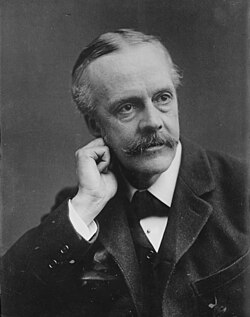
Lloyd George accepted the challenge by return of post, writing: "As all delay is fatal in war, I place my office without further parley at your disposal."[389] Asquith had anticipated this response, but was surprised by a letter from Arthur Balfour, who until that point had been removed from the crisis by illness.[390] On its face, this letter merely offered confirmation that Balfour believed that Lloyd George's scheme for a smaller War Council deserved a chance and that he had no wish to remain at the Admiralty if Lloyd George wished him out. Jenkins argues that Asquith should have recognised it as a shift of allegiance.[390] Asquith discussed the crisis with Lord Crewe and they agreed an early meeting with the Unionist ministers was essential. Without their support, "it would be impossible for Asquith to continue."[391]
Asquith's meeting with Chamberlain, Curzon and Cecil at 3.00 p.m. only highlighted the weakness of his position.[366] They unanimously declined to serve in a Government that did not include Law and Lloyd George,[392] as a Government so constituted offered no "prospect of stability". Their reply to Asquith's follow-up question as to whether they would serve under Lloyd George caused him even more concern. The "Three Cs" stated they would serve under Lloyd George if he could create the stable Government they considered essential for the effective prosecution of the war.[393]
The end was near, and a further letter from Balfour declining to reconsider his earlier decision brought it about. The Home Secretary, Herbert Samuel, recorded in a contemporaneous note: "We were all strongly of opinion, from which [Asquith] did not dissent, that there was no alternative [to resignation]. We could not carry on without LlG and the Unionists and ought not to give the appearance of wishing to do so."[394]
At 7.00 pm, having been prime minister for eight years and 241 days, Asquith went to Buckingham Palace and tendered his resignation.[395] Describing the event to a friend sometime later, Asquith wrote, "When I fully realised what a position had been created, I saw that I could not go on without dishonour or impotence, or both."[396] That evening, he dined at Downing Street with family and friends, his daughter-in-law Cynthia describing the scene: "I sat next to the P.M.—he was too darling—rubicund, serene, puffing a guinea cigar and talking of going to Honolulu."[397] Cynthia believed that he would be back "in the saddle" within a fortnight with his position strengthened.[398]
Later that evening Law, who had been to the Palace to receive the King's commission, arrived to enquire whether Asquith would serve under him. Lord Crewe described Asquith's reply as "altogether discouraging, if not definitely in the negative."[395][k]
Wednesday 6 December
I am personally very sorry for poor old Squiff. He has had a hard time and even when 'exhilarated' seems to have had more capacity and brain power than any of the others. However, I expect more action and less talk is needed now
Wednesday saw an afternoon conference at Buckingham Palace, hosted by the King and chaired by Balfour.[401] There is some doubt as to the originator of the idea,[401] although Adams considers that it was Law.[402] This is supported by a handwritten note of Aitken's, reproduced in A. J. P. Taylor's life of that politician, which reads: "6th Wed. Meeting at BL house with G. (Lloyd George) and C. (Carson)—Decide on Palace Conference."[403] Conversely, Crewe suggests that the suggestion came jointly from Lord Derby and Edwin Montagu.[404]
However the meeting came about, it did not bring the compromise the King sought. Within two hours of its break-up, Asquith, after consulting his Liberal colleagues,[405] except for Lloyd George, declined to serve under Law,[402] who accordingly declined the King's commission.[406] At 7.00 pm. Lloyd George was invited to form a Government. In just over twenty four hours he had done so, forming a small War Cabinet instead of the mooted War Council, and at 7.30 pm on Thursday 7 December he kissed hands as prime minister.[407]
Lloyd George's achievement in creating a government was considerable, given that almost all of the senior Liberals sided with Asquith.[408] Balfour's acceptance of the Foreign Office made it possible.[409] Others placed a greater responsibility on Asquith as the author of his own downfall, for example Churchill: "A fierce, resolute Asquith, fighting with all his powers would have conquered easily. But the whole trouble arose from the fact that there was no fierce resolute Asquith to win this war or any other."[410]
Wartime Opposition Leader: 1916–1918
The Asquiths finally vacated 10 Downing Street on 9 December. Asquith, not normally given to displays of emotion, confided to his wife that he felt he had been stabbed.[398] He likened himself (10 December) to the Biblical character Job, although he also commented that Aristide Briand's government was also under strain in France.[411] Lord Newton wrote in his diary of meeting Asquith at dinner a few days after the fall, "It became painfully evident that he was suffering from an incipient nervous breakdown and before leaving the poor man completely collapsed."[412] Asquith was particularly appalled at Balfour's behaviour,[413] especially as he had argued against Lloyd George to retain Balfour at the Admiralty.[414] Writing years later, Margot's spleen was still evident: "between you and me, this is what hurt my husband more than anything else. That Lloyd George (a Welshman!) should betray him, he dimly did understand, but that Arthur should join his enemy and help to ruin him, he never understood."[414]
Asquith's fall was met with rejoicing in much of the British and Allied press and sterling rallied against the German mark on the New York markets. Press attacks on Asquith continued and indeed increased after the publication of the Dardanelles Report.[415]
Like Sir Robert Peel after 1846, Asquith after 1916 still controlled the party machinery and resented those who had ousted him, but showed no real interest in reuniting his party. Asquith did not put any pressure on Liberals to eschew joining the coalition government; in fact, though, few Liberals did join it. Most Liberal parliamentarians remained intensely loyal to him, and felt that he alone should not be left to face the criticism. On 8 December a gathering of Liberal MPs gave Asquith a vote of confidence as Leader of the Liberal Party, followed unanimously a few days later by the executive of the National Liberal Federation. There was much hostility to Lloyd George at these gatherings.[416]
Within Parliament, Asquith pursued a course of quiet support, retaining a "heavy, continuing responsibility for the decision of August 4, 1914."[417]A. G. Gardiner in The Daily News (9 December) stated explicitly that Lloyd George's government should not have to live under the constant barrage of criticism that Asquith's coalition had endured.[418] In a "gracious" reply to Lloyd George's first speech in the House of Commons as prime minister on 19 December 1916, Asquith made clear that he did not see his role "in any sense to be the leader of what is called an opposition".[419] From around the spring of 1917 Asquith's reluctance to criticise the government at all began to exasperate some of his press supporters.[418]
Outside of the Commons, Margot and he returned to 20 Cavendish Square and he divided his life between there, The Wharf and visiting. Money, in the absence of his premier's salary, became more of a concern.[420] In March 1917 he was informally offered the Lord Chancellorship, with the highest salary in government, but he declined.[160] Personal sadness continued in December 1917 when Asquith's third son Arthur, known in the family as "Oc", was badly wounded fighting in France; his leg was amputated in January 1918. Asquith's daughter-in-law recorded in her diary, "The Old Boy (Asquith) sent me fifteen pounds and also, in a letter, told me the sad news of poor, dear Oc having been badly wounded again."[421]
Maurice Debate
On 7 May 1918 a letter from a serving officer, Major-General Sir Frederick Maurice, appeared in four London newspapers, accusing Lloyd George and Law of having misled the House of Commons in debates the previous month as to the manpower strength of the army in France.[160] Asquith, who received a letter from Maurice on 6 May,[422] and had also been in contact with the sacked Robertson,[423] with whom Maurice discussed the letter, called for a Select Committee of the House to investigate the charges.[424]
In response to a private notice question, Law had offered a judicial inquiry, with Asquith free to choose the judges, but Asquith declined this offer on the evening of 7 May, thinking it contrary to the dignity of Parliament.[425] Prior to the debate, Asquith received a surprising communication (8 May) from H. A. Gwynne, the editor of The Morning Post, and previously a fervent opponent. "The effect of the Maurice letter, and your motion, must be the dissolution of the present government (and) your accession to power."[426] At this point "Asquith hated Lloyd George with a passion" but he did not want the premiership for himself.[427]
Asquith's opening speech on the Select Committee motion was lengthy and lacked punch. William Bridgeman recorded, "He did not make much of a case, and did not even condemn Maurice's breach of the King's Regulations, for which he got a very heavy blow from L.G.".[428] Lloyd George's one-and-a-quarter-hour-long reply was "a stunning solo display by the greatest rhetorician of his age"[429] in which he threatened the House with the inevitable political consequence of a vote for Asquith's motion. "... if this motion is carried, he [Asquith] will again be responsible for the conduct of the War. Make no mistake!"[430]
John Ramsden summed up the opinion in the House of Commons: "Lloyd George's lies were (preferred to) Asquith's half-measures."[431] The motion was defeated by 293 votes to 106, more an "utter rejection of Asquith, than (a) wholehearted endorsement of Lloyd George",[432] and the latter's position in Parliament was not seriously threatened for the remainder of the War.
End of the war
Asquith was left politically discredited by the Maurice Debate and by the clear turn of the war in the Allies' favour from the summer of 1918. He devoted far more effort to his Romanes Lecture "Some Aspects of the Victorian Age" at Oxford in June 1918 than to any political speech. However, Lady Ottoline Morrell thought it "a dull address".[433] A letter of July 1918 describes a typical couple of days. "Nothing much is happening here. I dined with the usual crowd at Mrs. Astor's last night. The Duke of Connaught lunches here on Friday: don't you wish you were coming!"[434]
The beginning of the end of the war began where it had begun, with the last German offensive on the Western Front, the Second Battle of the Marne.[435] "The tide of German success was stemmed and the ebb began under pressure of the great Allied counter-stroke."[435] In response to the Allied offensives, "the governments of the Central Powers were everywhere in collapse".[436]
Decline and eclipse: 1918–1926
Coupon election
Even before the Armistice, Lloyd George had been considering the political landscape and, on 2 November 1918, wrote to Law proposing an immediate election with a formal endorsement—for which Asquith coined the name "Coupon", with overtones of wartime food rationing—for Coalition candidates.[437] News of his plans soon reached Asquith, causing considerable concern. On 6 November he wrote to Hilda Henderson, "I suppose that tomorrow we shall be told the final decision about this accursed election."[438] A Liberal delegation met Lloyd George in the week of 6 November to propose Liberal reunification but was swiftly rebuffed.[439][438]
Asquith joined in the celebrations of the Armistice, speaking in the Commons, attending the service of thanksgiving at St Margaret's, Westminster and afterwards lunching with King George.[440] Asquith had a friendly meeting with Lloyd George a few days after the Armistice (the exact date is unclear), which Lloyd George began by saying "I understand you don't wish to join the government."[441] Asquith was instead keen to go to the Peace Conference, where he considered his expertise at finance and international law would have been an asset.[442] As he refused to accept public subordination, Lloyd George, despite lobbying from the King and Churchill, refused to invite him.[443][441]
Asquith led the Liberal Party into the election, but with a singular lack of enthusiasm, writing on 25 November: "I doubt whether there is much interest. The whole thing is a wicked fraud."[443] The Liberal leaders expected to lose the 1918 election badly, as they had lost the "Khaki Election" in 1900, but did not foresee the sheer scale of the defeat.[444] Asquith hoped for 100 Liberal MPs to be returned.[445] He began by attacking the Conservatives, but was eventually driven to attack the "blank cheque" which the government was demanding.[444]
Asquith was one of five people given a free pass by the Coalition but the East Fife Unionist Association defied national instructions and put up a candidate, Alexander Sprot, against him.[444] Sprot was refused a Coalition "coupon".[446] Asquith assumed his own seat would be safe and spent only two and half days there, speaking only to closed meetings; in one speech there on 11 December he conceded that he did not want to "displace" the current government. He scoffed at press rumours that he was being barracked by a gang of discharged soldiers.[444] Postwar reconstruction, the desire for harsh peace terms, and Asquith's desire to attend the peace talks, were campaign issues, with posters asking: "Asquith nearly lost you the War. Are you going to let him spoil the Peace?"[447] James Scott, his chairman at East Fife, wrote of "a swarm of women going from door to door indulging in a slander for which they had not a shadow of proof. This was used for such a purpose as to influence the female vote very much against you."[l][448]
At the poll on 14 December, Lloyd George's coalition won a landslide, with Asquith and every other former Liberal Cabinet minister losing his seat.[449] Margot later recorded having telephoned Liberal headquarters for the results: "Give me the East Fife figures: Asquith 6994—Sprott [sic] 8996." She said she had exclaimed "Asquith beat? ... Thank God!"[450]Augustine Birrell also wrote to him "You are surely better off out of it for the time, than watching Ll.G. lead apes to Hell".[451] But for Asquith personally, "the blow was crippling, a personal humiliation which destroyed his hope of exercising any influence on the peace settlement."[446]
1919: out of Parliament
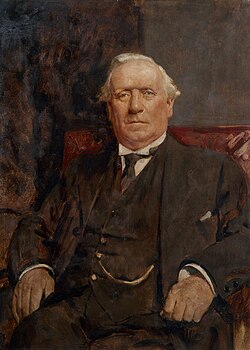
Asquith remained leader of the Liberal Party, despite McKenna vainly urging him, almost immediately after the election, to offer his resignation to the National Liberal Federation and help with building an alliance with Labour.[447] At first Asquith was extremely unpopular, and there is no evidence that he was invited to address any Liberal Association anywhere in the country for the first six months of 1919.[452] He continued to be calumnied in the press and Parliament over the supposed presence of Germans in Downing Street during the war.[453]
Although accounts differ as to the exact numbers, around 29 uncouponed Liberals had been elected, only three with any junior ministerial experience, not all of them opponents of the coalition. There was widespread discontent at Asquith's leadership, and Sir T. A. Bramsdon, who said that he had been elected at Portsmouth only by promising not to support Asquith, protested openly at his remaining leader from outside the Commons. At first Lloyd George extended the government whip to all Liberal MPs. On 3 February 23 non-coalition Liberals formed themselves into a "Free Liberal" group (soon known as the "Wee Frees" after a Scottish religious sect of that name); they accepted Asquith's appointment of Sir Donald Maclean as chairman in his absence but insisted that G.R. Thorne, whom Asquith had appointed Chief Whip, should hold that job jointly with J.M. Hogge, of whom Asquith and Maclean had a low opinion. After a brief attempt to set up a joint committee with the Coalition Liberal MPs to explore reunion, the "Wee Frees" resigned the government whip on 4 April, although some Liberal MPs still remained of uncertain allegiance.[454] The Liberals won by-elections in March and April 1919, but thereafter Labour performed better than the Liberals in by-elections.[455]
In April 1919 Asquith gave a weak speech to Liberal candidates, his first public speech since the election. In Newcastle (15 May) he gave a slightly stronger speech, encouraged by his audience to "Hit Out!"[456] Asquith was also disappointed by the "terms and spirit" of the Treaty of Versailles in May, but did not oppose it very strongly in public.[453] On 31 July 1919, after a lunch in honour of the former Supreme Allied Commander Ferdinand Foch, Asquith wrote "he talked a lot of nonsense about Germany sinking never to rise again."[448]
In August 1919 Asquith was asked to preside over a Royal Commission into the Universities of Oxford and Cambridge, although the report when it came was, in line with Asquith's own academic views, somewhat conservative.[452] The commission began hearings in January 1920; many dons would have preferred Haldane as chair.[456] Asquith's public rehabilitation continued with the receipt in late 1919 of the 1914 Star, the British War Medal and the Victory Medal, honours which the War Office, under Churchill, had originally intended only to be awarded to Lloyd George, until the King insisted Asquith receive them also.[452]
Maclean and others urged Asquith to stand in the Spen Valley by-election in December 1919, but it is unclear whether he ever considered the idea. This was just as well, as it had become clear that Labour were going to fight the seat hard and they defeated Sir John Simon when Lloyd George insisted on splitting the Liberal vote by running a Coalition Liberal candidate.[453]
Paisley
A Parliamentary seat was essential if Asquith was again to play any serious part in future events. By the autumn of 1919 J.M. Hogge was openly critical of Asquith's leadership, and by January 1920 it was rumoured that he had given Asquith an ultimatum that unless he returned to Parliament in a by-election the Independent Liberal MPs would repudiate him as their leader (had he lost a by-election, his position would have been untenable anyway, as he well knew).[457]
In January 1920, an opportunity arose at Paisley, in Scotland like his previous seat, after the death of the Liberal MP.[458] The Liberals had held the seat by only 106 votes in 1918. Asquith's adoption was not a foregone conclusion: the local Association was split between pro- and anti-coalition factions, and he was selected by a vote of 20:17 by the executive and then 92:75 of the wider members. He was formally adopted on 21 January 1920 and soon united the local Liberal Association behind him.[455][459] Asquith was lukewarm at the thought of returning to Scotland, and regarded his gamble with trepidation, although he grew more confident as the campaign progressed.[460] Travelling with Margot, his daughter Violet and a small staff, Asquith directed most of his campaign not against Labour, who were already in second place, but against the Coalition, calling for a less harsh line on German reparations and the Irish War of Independence.[461] Some "thought fit to compare [the campaign] with Gladstone'sMidlothian campaign,[462] although Asquith himself was more circumspect.[463]
The result was stupendous, with Asquith defeating his Labour opponent by a majority of over 2000 votes, with the Coalition candidate a very poor third.[464] Violet was ecstatic: "every star in the political skies favoured Father when we left Paisley, he became there what he has never before been in his life, the 'popular' candidate, the darling of the crowd."[465] The poll was up by 8,000 from 1918.[464] Asquith's surprise victory was helped by the support of the press baron Lord Rothermere.[466]
He was seen off by tumultuous crowds at Glasgow, and greeted by further crowds at Euston the next morning, and along the road on his first return to Parliament. However, he received only a chilly greeting inside the Chamber, and no personal congratulations from Coalition politicians, except from Lord Cave, who was later to defeat him for the Chancellorship of Oxford University in 1925.[467]
Leader of the Opposition: 1920–1921
Paisley was a false dawn, for the Liberals and for Asquith personally. Jenkins wrote that "The post-war Liberal day never achieved more than a grey and short-lived light. By 1924, it was dusk again. By 1926, for Asquith, it was political night."[468] Maurice Cowling characterised Asquith at this time as "a dignified wreck, neither effective in the House of Commons nor attractive as a public reputation, (who) drank too much and (who) had lost touch with the movement of events and the spirit of the time."[469]
Money, or its lack, also became an increasing concern. Margot's extravagance was legendary[470] and Asquith was no longer earning either the legal fees or the prime ministerial salary they had enjoyed in earlier years. Additionally, there were on-going difficulties with Margot's inheritance.[470] In 1920, as an economy measure, 20 Cavendish Square was sold[471] to Viscountess Cowdray[472] and Asquith and Margot moved to 44, Bedford Square.[471]
Criticism of Asquith's weak leadership continued. Lloyd George's mistress Frances Stevenson wrote (18 March) that he was "finished ... no fight left in him"; the press baron Lord Rothermere, who had supported him at Paisley, wrote on 1 April of his "obvious incapacity for the position he is expected to fill".[473] In fact Asquith spoke in the House of Commons far more frequently than he had ever previously done when not a minister. He also spoke frequently around the country, in June 1921 topping the Liberal Chief Whip's list of the most active speakers.[474] The issue was the quality of his contributions. Asquith still maintained friendly relations with Lloyd George, although Margot made no secret of her enmity for him.[475]
Until the Paisley by-election Asquith had accepted that the next government must be some kind of Liberal-Labour coalition, but Labour had distanced themselves because of his policies on the mines, the Russo-Polish War, education, the prewar secret treaties and the suppression of the Easter Rebellion.[476] The success of Anti-Waste League candidates at by-elections made leading Liberals feel that there was a strong anti-Coalition vote which might be tapped by a wider-based and more credible opposition.[477] By late June 1921 Asquith's leadership was still under strong attack from within the Wee Free group, although Frances Stevenson's claim in her diary that most of them now wanted Lloyd George as their leader is not corroborated by the report in The Times.[478] Lord Robert Cecil, a moderate and pro-League of Nations Conservative, had been having talks with Edward Grey about a possible coalition, and Asquith and leading Liberals Crewe, Runciman and Maclean had a meeting with them on 5 July 1921, and two subsequent ones. Cecil wanted a genuine coalition rather than a de facto Liberal government, with Grey rather than Asquith as prime minister, but the Liberals did not, and little came of the plans.[479][476]
Asquith did fiercely oppose "the hellish policy of reprisals" in Ireland, impressing the young Oswald Mosley.[478] J.M. Hogge even urged Sir Donald Maclean (31 August) to "knock Asquith into the middle of next week" and seize back the chairmanship of the Liberal MPs.[475] Late in 1921 the National Liberal Federation adopted an industrial programme without Asquith's agreement.[480] On 24 October 1921 Asquith commented "if one tries to strike a bold true note half one's friends shiver and cower, and implore one not to get in front of the band".[475]
Leader of the Opposition: 1922
In January 1922 C.P. Scott of the Manchester Guardian told Asquith that he supported a centre-left grouping, but only if moderate Labour was included—in reality Labour leaders were unable to deliver the support of their local members for such a realignment.[481] Asquith achieved more success with a major speech at Westminster Central Hall in January 1922, in reply to a speech by Lloyd George a few days earlier. Asquith had with some difficulty been persuaded to make the maximum possible reference to his renewed alliance with Grey, but Haldane had refused to join the platform. Five days later Churchill replied with a pro-Coalition speech in which he accused Asquith and other Liberals of having "stood carefully aside" during the war, causing deep offence.[482][m]
By the summer of 1922 Asquith's interest in politics was at a very low ebb.[484] He was observed to be very heavily drunk and was helped up the stairs by Lloyd George at a party of Sir Philip Sassoon's on 16 July 1922. His reputation was further damaged by his portrayal in Aldous Huxley's novel Crome Yellow and by the publication of the first volume of Margot's memoirs, which sold well in the UK and the United States, but were thought an undignified way for a former prime minister to make money.[485] On 13 September 1922 Sir Donald Maclean told Harold Laski that Asquith was devoted to bridge and small talk and did not do enough real work.[480] Asquith was increasingly attracted by the thought of making money from writing, with Churchill doing very well from his The World Crisis and Lloyd George rumoured to be being paid handsomely for his memoirs (which in the event did not appear until the mid-1930s).[486] Asquith's books The Genesis of the War finally appeared in September 1923 and Studies and Sketches in 1924.[487] His second son Herbert recorded, "A large part of my father's later years was occupied with authorship and it was during this period that he wrote most of his longer books."[488]
Asquith played no part in Lloyd George's fall from power in October 1922, which happened because the rank-and-file majority of his Conservative coalition partners, led by Stanley Baldwin and Lloyd George's former colleague Law, deserted him.[489] Law formed a purely Conservative government, and the following month, at the 1922 general election, Asquith ceased to be Leader of the Opposition as more Labour MPs were elected than the two Liberal factions combined. 138 Labour members outnumbered the combined Liberal number of 117, with 60 Asquith supporters and 57 "National Liberals" (adherents to Lloyd George).[490] Asquith had thought Paisley would be safe but was only narrowly returned with a 316 majority (50.5 per cent of the votes cast in a two-candidate battle with Labour), despite a rise in the Liberal vote. He put this down to the 5,000 unemployed at Paisley after the slump of 1920–1921. He wrote that he "gloated" over the senior Coalition Liberals—Churchill, Hamar Greenwood, Freddie Guest and Edwin Montagu—who lost their seats.[491][492]
Liberal reunion
In March 1923 a petition for reunion among Liberal backbenchers received 73 signatures, backed by the Lloyd Georgeite Daily Chronicle and the Asquithian Liberal Magazine. But reunion was opposed by senior Asquithian Liberals like Sir John Simon, Viscount Gladstone and Charles Masterman, and as late as 30 June by journalists such as H. W. Massingham and Gardiner of The Nation.[493] Viscount Gladstone felt that "it was generally recognised that Asquith was no longer effective as an active leader" but that Lloyd George must not succeed him.[493] By July Asquith was superficially friendly to Lloyd George and consulted him, but he did not include him in the Shadow Cabinet.[n][493] Asquith wanted Lloyd George to make the first move but although the latter put out feelers to senior Asquith supporters he insisted that he was "neither a suppliant nor a penitent".[474] M.S.R. Kinnear writes that Asquith felt that with Lloyd George's faction declining in strength he had everything to gain by waiting, while too quick an approach would antagonise the Labour leaders who hated Lloyd George and whose support he might need for a future Lib-Lab coalition. Kinnear also argues that Asquith's "gloating" over the defeat of Coalition Liberals in 1922 is evidence that "the most important factor influencing Asquith against quick reunion was his personal dislike of Lloyd George and his desire for vengeance."[494]
The political situation was transformed when Baldwin, now prime minister, came out in favour of Protection at Plymouth on 22 October 1923.[474] Coming out for Free Trade himself, Lloyd George was obliged, at least formally, to submit to Asquith's leadership.[495] Parliament was dissolved. Asquith and Lloyd George reached agreement on 13 November, followed by a Free Trade manifesto, followed by a more general one. Lloyd George, accompanied by his daughter Megan, came to Paisley to speak in Asquith's support on 24 November.[496]
Asquith fought an energetic national campaign on free trade in 1923, with echoes of 1903.[497] He spoke at Nottingham and Manchester, but did not privately expect more than 200 Liberals to be elected—although he hoped to overtake Labour and become Leader of the Opposition once again—and hoped for Baldwin to win by a tiny majority.[496]
The poll at Paisley was split by an independent extreme socialist and a Conservative.[474][496] Asquith won with 33.4 per cent of the vote.[492] Nationally, the outcome of the election in December 1923 was a hung Parliament (258 Conservatives, 191 Labour, 158 Liberals); the Liberals had gained seats but were still in third place.[474] A quarter of the seats were held by majority less than 1,000. In general, Asquith Liberals did better than Lloyd George Liberals, which Gladstone and Maclean saw as a reason to prevent close co-operation between the factions.[496]
Putting Labour in power
There was no question of the Liberals supporting a continuation of the Conservative government, not least as it was feared that an alliance of the two "bourgeois" parties would antagonise Labour. Asquith commented that "If a Labour Government is ever to be tried in this country, as it will be sooner or later, it could hardly be tried under safer conditions". Asquith's decision to support a minority Labour Government was seconded by Lloyd George and approved by a party meeting on 18 December.[498]
Baldwin's view was similar, as he rejected Sir Robert Horne's scheme for a Conservative-Liberal pact. Roy Douglas called the decision to put in Ramsay MacDonald "the most disastrous single action ever performed by a Liberal towards his party." Other historians such as Trevor Wilson and Koss reject this view, arguing that Asquith had little choice.[499]
Asquith was never in doubt as to the correctness of his approach, although a deluge of correspondence urged him to save the country from Socialism.[500] He wrote on 28 December "I have been intreated during these weeks, cajoled, wheedled, almost caressed, tortured, threatened, brow-beaten and all but blackmailed to step in as the saviour of society."[501][498]
The Liberals thus supported Britain's first ever (minority) Labour Government under Ramsay MacDonald. The Liberal Party voted for the Labour amendment to the Address, causing Baldwin to resign (Asquith believed that Baldwin could have ignored the vote and carried on attempting to govern without a majority). He thought the new Labour Government "a beggarly array" although he remarked that the Foreign Office staff were glad to see the back of "the Archduke Curzon".[500] Asquith believed that MacDonald would soon be discredited both in the eyes of the country and of his own more extreme supporters, and the Liberal revival would continue.[502]
Labour government and the Campbell Case
Asquith's decision only hastened his party's destruction, the Conservative Austen Chamberlain writing to his colleague Sir Samuel Hoare, "We have got (unexpectedly and by our own blunders and Asquith's greater folly) a second chance. Have we got the wit to take it?"[503]
Relations with Labour soon became very tense, with Liberal MPs increasingly angered at having to support a Labour Government which treated them with such open hostility. Many Liberals were also angered at MacDonald's pursuit of a trade agreement with the Soviet Union, although Asquith rather less so.[504] The intervention of a Labour candidate at a by-election in Oxford in June handed the seat to the Conservatives.[505]
As Asquith brought MacDonald in so, later in the same year, he had significant responsibility for forcing him out over the Campbell Case and the Russian Treaty.[506] The Conservatives proposed a vote of censure against the Government for withdrawing their prosecution for sedition against the Daily Worker, and Asquith moved an amendment calling for a select committee (the same tactic he had employed over the Marconi scandal and the Maurice Debate).[504] Asquith's contribution to the debate showed an increasingly rare return to Parliamentary form. "Almost every one of his delightful sentences filled the Chamber with laughter."[507] Asquith's motion was passed by 364–198.[504] As in the Maurice Debate, his sense of political tactics was, in Jenkins' view, overcome by his sense of Parliamentary propriety. He could not bring himself to withdraw the amendment, but could not support the government either.[508]
1924 election
Instead of resigning MacDonald requested, and was granted, a General Election.[504] The 1924 election was intended by MacDonald to cripple the Liberals, and it did.[505] Lloyd George refused to hand over money from his fund until he had more say over the Liberal whips office, Liberal Party Headquarters at Arlington Street and an election there was a chance of winning.[508][505]
Meetings at Paisley were tumultuous and Asquith was barracked by hecklers singing "The Red Flag".[509] Asquith was widely expected to lose his seat and did so by 2,228.[510] He received 46.5 per cent of the vote in his final parliamentary election, a straight fight against Labour.[492] Violet wrote, "Father was absolutely controlled. He just said to me, 'I'm out by 2,000'."[511]
It was a political, as well as a personal, disaster. Baldwin won a landslide victory, with over "400 Conservatives returned and only 40 Liberals",[512] far behind Labour which entrenched its position as the "chief party of Opposition."[513] Labour's vote actually increased somewhat (partly as a result of their fielding more candidates than before). The Liberal vote collapsed, much of it coalescing to the Conservatives as a result of the scare around the forged Zinoviev Letter.[504]
The Liberal grandees, who hated Lloyd George, did not press Asquith to retire. Sir Robert Hudson and Maclean called on him (31 October) and insisted he firmly keep the chair at the next meeting and nominate the new Chief Whip himself.[510]
Elevation
The 1924 election was Asquith's last Parliamentary campaign, and there was no realistic chance of a return to the Commons. He told Charles Masterman "I'd sooner go to hell than to Wales," the only part of the country where Liberal support remained strong. The King offered him a peerage (4 November 1924).[514][515] Asquith felt he was not rich enough to accept, and would have preferred to die a commoner like William Pitt the Younger or Gladstone. He accepted in January 1925 after a holiday in Egypt with his son Arthur. He deliberately chose the title "Earl of Oxford", saying it had a splendid history as the title chosen by Robert Harley, a Tory statesman of Queen Anne's reign.[516] He was thought by some to have delusions of grandeur, Lady Salisbury writing to him that the title was "like a suburban villa calling itself Versailles."[517] Asquith found the controversy amusing but the College of Heralds insisted that he add "and Asquith" to the final title, after protests from Harley's family. In practice he was known as "Lord Oxford".[518] He never enjoyed the Lords, and thought the quality of debates there poor.[519]
In 1924 the Liberal Party had only been able to put up 343 candidates due to lack of money. At one point the Liberal Shadow Cabinet suggested obtaining the opinion of a Chancery Lawyer as to whether the Liberal Party was entitled under trust law to Lloyd George's money, which he had obtained from the sale of honours.[520] On 29 January 1925, at a two-day London convention, Asquith launched a Million Fund Appeal in an unsuccessful attempt to raise Liberal Party funds independent of Lloyd George.[521][522]
Oxford University chancellor election
I have had a noble offer from Lady Breadalbane who proposes to give me her late husband's Garter robes as a present. I shall jump at this, as it will save me a lot of money.
One more disappointment remained. In 1925 he stood for the Chancellorship of Oxford University, vacant on the death of Lord Curzon. He was eminently suited and was described by Lord Birkenhead, one of his many Conservative supporters, as "the greatest living Oxonian."[524]
Asquith suspected he might lose because of country clergy's hostility to Welsh Disestablishment, blaming "Zadok the Priest and Abiathar the Priest—with their half-literate followers in the rural parsonages". The election was also seen as a settling of party scores and a mockery of his title. He lost to the Conservative candidate, Lord Cave, by 987 votes to 441 on 20 March. He claimed to be "more disappointed than surprised", but his friend Desmond MacCarthy wrote that it affected him "more than any disappointment, save one, in his life after he ceased to be Prime Minister."[525][526]
On 17 March 1925 Asquith was appointed to the Judicial Committee of the Privy Council,[527] and in May 1925 he accepted the Order of the Garter from Baldwin, who was known to be a personal admirer of his.[515][528]
Resignation
Difficulties continued with Lloyd George, who had been chairman of the Liberal MPs since 1924,[529] over the party leadership and over party funds.[530] In the autumn of 1925 Hobhouse, Runciman and the industrialist Sir Alfred Mond protested to Asquith at Lloyd George organising his own campaign for reform of land ownership. Asquith was "not enthusiastic" but Lloyd George ignored him and arranged for Asquith to be sent reports and calculations ("Lord Oxford likes sums" he wrote). At a meeting on 25 November 1925 Grey, Maclean, Simon, Gladstone and Runciman urged Asquith to have a showdown with Lloyd George over money. Asquith wanted to think it over, and at the December 1925 Federation executive he left the meeting before the topic came up. To the horror of his followers Asquith reached an agreement in principle with Lloyd George over land reform on 2 December, then together they presented plans to the National Liberal Federation on 26 February 1926. But, wrote Maclean, "in private Asquith's language about Lloyd George was lurid."[531][522]
In January 1926 Mond withdrew his financial support from the Liberal Party.[531][522] The loss of wealthy donors and the failure of the Million Fund Appeal further weakened Asquith's position, and there is some evidence that his frequent requests for money irritated donors like Sir Robert Perks who had given a good deal to the Party over the years, and that outside his inner circle of devotees he was bad at keeping on good terms with potential donors.[532]
This was followed by a near final breach with Lloyd George over the General Strike. The Liberal Shadow Cabinet unequivocally backed Baldwin's handling of the strike on 3 May. Asquith viewed the strike as "criminal folly"[533] and condemned it in the House of Lords, whilst in the Commons Sir John Simon declared it to be illegal. But whereas Asquith and Grey both contributed to the British Gazette, Churchill's pro-government newssheet, Lloyd George, who had not previously expressed a contrary opinion at Shadow Cabinet, wrote an article for the American press more sympathetic to the strikers, and did not attend the Shadow Cabinet on 10 May, sending his apologies on "policy grounds". Asquith at first assumed him to be trying to ingratiate himself with the churches and Labour, but then (20 May) sent him a public letter rebuking him for not attending the meeting to discuss his opinions with colleagues in private.[534][535]
In private, both sides were incandescent; one of Asquith's colleagues describing him as "far more indignant at L.G. than I have ever seen",[536] whilst Lloyd George expressed his private feelings in a letter to Frances Stevenson on 24 May "(Asquith) is a silly old man drunk with hidden conceit. When he listens to those poor creatures he has a weakness for gathering around him he generally makes a fool of himself. They are really 'beat'. Dirty dogs—and bitches."[537]
Lloyd George's letter of 10 May had not been published, making it appear that Asquith had fired the first shot, and Lloyd George sent a moderate public reply, on 25 May. Asquith then wrote another public letter (1 June) stating that he regarded Lloyd George's behaviour as tantamount to resignation, the same as if a Cabinet Minister had refused to abide by the principle of collective responsibility. Twelve leading Liberals (including Grey, Lord Buckmaster, Simon, Maclean and Runciman) wrote in Asquith's support to The Times (1 June). However, Lloyd George had more support amongst the wider party than amongst the grandees. The executive of the National Liberal Federation, despite backing Asquith by 16:8, had already urged a reconciliation in late May, and the London Liberal Candidates' Association (3 June) and the Liberal MPs (8 June) did the same. Asquith had planned to launch a fightback at the National Liberal Federation in Weston-Super-Mare, due on 17 June, but on the eve of the conference he suffered a stroke (12 June) which put him out of action for three months.[534][535]
Margot is said to have later claimed that her husband regretted the breach and had acted after several rich donors had threatened to quit.[538] Asquith finally resigned the Liberal leadership on 15 October 1926.[539]
Final years: 1926–1928

Asquith filled his retirement with reading, writing, a little golf,[540] travelling and meeting with friends.[539] Since 1918 he had developed an interest in modern painting and sculpture.[539]
His health remained reasonable, almost to the end, though financial concerns increasingly beset him.[541] A perhaps surprising contributor to an endowment fund established to support Asquith in 1927 was Lord Beaverbrook (the former Max Aitken), who contributed £1,000.[542] Violet was highly embarrassed by her step-mother's attempts to enlist the aid of Aitken, Lord Reading and others of her husband's friends and acquaintances. "It is monstrous that other people (should) be made to foot Margot's bridge bills. How she has dragged his name through the mud!"[543]
Asquith suffered a second stroke in January 1927,[544] disabling his left leg for a while and leaving him a wheelchair-user for the spring and early summer of 1927.[545] Asquith's last visit was to see the widowed Venetia Montagu in Norfolk.[546] On his return to The Wharf, in autumn 1927, he was unable to get out of his car without help and "he was never again able to go upstairs to his own room."[547] He suffered a third stroke at the end of 1927.[548] His last months were difficult, and he became increasingly confused, his daughter Violet writing, "To watch Father's glorious mind breaking up and sinking—like a great ship—is a pain beyond all my imagining."[543]
Death
Asquith died, aged 75, at The Wharf on the morning of 15 February 1928.[541] "He was buried, at his own wish, with great simplicity,"[549] in the churchyard of All Saints' at Sutton Courtenay, his gravestone recording his name, title, and the dates of his birth and death. A blue plaque records his long residence at 20 Cavendish Square[550] and a memorial tablet was subsequently erected in Westminster Abbey.[551] Viscount Grey, with Haldane Asquith's oldest political friend, wrote, "I have felt (his) death very much: it is true that his work was done but we were very close together for so many years. I saw the beginning of his Parliamentary life; and to witness the close is the end of a long chapter of my own."[552]
Asquith's will was proved on 9 June 1928, with his estate amounting to £9345 9s. 2d. (roughly equivalent to £507,581 in 2025).[553][554]
Descendants

Asquith had five children by his first wife, Helen, and two surviving children (three others died at birth or in infancy) by his second wife, Margot.[555]
His eldest son, Raymond, after an academic career that outstripped his father's,[556] was killed at the Somme in 1916.[556] His second son, Herbert (1881–1947), became a writer and poet and married Cynthia Charteris.[557] His later life was marred by alcoholism.[558] His third son, Arthur (1883–1939), became a soldier and businessman.[556] His only daughter by his first wife, Violet, later Violet Bonham Carter (1887–1969), became a well-regarded writer and a life peeress as Baroness Asquith of Yarnbury.[559] She married Asquith's Personal Private Secretary Maurice Bonham Carter in 1915. His fourth son, Cyril (1890–1954), was born on the day Asquith became a QC[560] and later became a Law Lord.[556]
His two children by Margot were Elizabeth, later Princess Antoine Bibesco (1897–1945), a writer, who also struggled with alcohol,[561] and Anthony Asquith (1902–1968),[562] known as "Puffin", a filmmaker, whose life was also severely affected by alcoholism.[561]
Among his living descendants are his great-granddaughter, the actress Helena Bonham Carter (born 1966),[563] and two great-grandsons, Dominic Asquith, a former British High Commissioner to India,[564] and Raymond Asquith, 3rd Earl of Oxford and Asquith, who inherited Asquith's earldom.[565] Another leading British actress, Anna Chancellor (born 1965), is Asquith's great-great-granddaughter on her mother's side.[566]
Assessment

According to Matthew, "Asquith's decision for war with Germany was the most important taken by a British prime minister in the twentieth century, and was more important than any prime ministerial decision of the nineteenth century. It not only dictated the involvement of the United Kingdom in war but affected much of the pattern of imperial, foreign, and economic history for the rest of the century."[10] Matthew deemed the decision Asquith's, in that without prime ministerial support, it was not likely Britain would have entered the war.[10] Given the deep divisions in the Liberal Party, Pearce and Goodlad said "it was a measure of [Asquith's] skill that he took Britain into the war with only two relatively minor Cabinet ministers ... choosing to resign".[567]
Asquith's reputation will always be heavily influenced by his downfall at the height of the First World War. In 1970 Basil Liddell Hart summed up opinion as to the reasons for his fall: "Lloyd George [came to] power as the spokesman for a widespread demand for a more vigorous as well as a more efficient prosecution of the war."[568] Asquith's collegiate approach;[569] his tendency to "wait and see";[570] his stance as the chairman of the cabinet,[571] rather than leader of a government—"content to preside without directing";[572] his "contempt for the press, regard[ing] journalists as ignorant, spiteful and unpatriotic";[573] and his weakness for alcohol—"I had occasion to speak to the P.M. twice yesterday and on both occasions I was nearly gassed by the alcoholic fumes he discharged";[574] all contributed to a prevailing sense that Asquith was unable to rise to "the necessities of total warfare."[575] Grigg concludes, "In certain vital respects, he was not qualified to run the war. A great head of government in peacetime, by the end of 1916 he was in a general state of decline, his obvious defects as a war leader [exposed]."[576]
Cassar, reflecting on Asquith's work to bring a united country to war, and his efforts in the year thereafter, goes towards a reassessment: "His achievements are sufficiently impressive to earn him a place as one of the outstanding figures of the Great War".[577] His contemporary opponent Lord Birkenhead paid tribute to his bringing Britain united into the War, "A statesman who rendered great service to his country at a time when no other living Englishman could have done what he did."[578] The Coalition Whip, William Bridgeman, provided an alternative Conservative view, comparing Lloyd George to Asquith at the time of the latter's fall: "[H]owever unpopular or mistrusted [Lloyd George] was in the House, he carried much more weight in the Country than Asquith, who was almost everywhere looked on as a lazy and dilatory man."[579]Gary Sheffield and John Bourne provide a recent historical reassessment: "Asquith's governments arguably took all the key decisions of the War: the decision to intervene, to send the BEF; to raise a mass volunteer army; to start and end the Gallipoli Campaign; the creation of a Coalition government; the mobilisation of industry; the introduction of conscription."[580] The weight of opinion continues to agree with Asquith's own candid assessment, in a letter written in the midst of war in July 1916: "I am [as usual] encompassed by a cloud of worries, anxieties, problems and the rest. 'The time is out of joint' and sometimes I am tempted to say with Hamlet 'O cursed spite, that ever I was born to set it right.' Perhaps I wasn't."[581]
Asquith's fall also saw the end of the "Liberal Party as one of the great parties of state."[582] According to Koss, Asquith's memory, "has lingered over the successive crises that continued to afflict his party. Each glimmer of a Liberal revival has enhanced his historical stature, if only as the victim or agent of the Liberal decline."[583] After 1922 the Liberals did not hold office again, except as junior partners in coalition governments in 1931–1932, in 1940–1945,[o] and (as today's Liberal Democrats) in 2010–2015. Leonard considers that responsibility for this must also be carried, in part, by Asquith, "this gifted, fastidious, proud yet ultimately indecisive man must bear his share of the blame."[582]

Koss concludes that, in a "long, eventful and complex career, [that] does not admit easily of a summing up, Asquith's failings were no less manifest than his achievements."[584]Michael and Eleanor Brock maintain that "his peacetime record of legislative achievement should not be overshadowed by his wartime inadequacy."[585] Of those achievements, his colleague Lord Buckmaster wrote, "The dull senses and heavy lidded eyes of the public prevent them from seeing now all that you have accomplished, but history will record it and the accomplishment is vast."[586] Among his greatest domestic accomplishments, reform of the House of Lords is at the zenith. Yet Asquith's premiership was also marked by many difficulties, leading McKenna to write in his memoirs, "friends began to wonder whether the highest statesmanship consisted of overcoming one crisis by creating another".[587] Hazlehurst, writing in 1970, felt there was still much to be gleaned from a critical review of Asquith's peacetime premiership, "certainly, the record of a prime minister under whom the nation goes to the brink of civil war [over Ireland] must be subjected to the severest scrutiny."[587]
Perhaps Asquith's greatest personal attainment was his parliamentary dominance. From his earliest days in the House, "he spoke with the authority of a leader and not as a backbencher."[588] As Campbell-Bannerman's "sledgehammer", his "debating power was unequalled."[589] Lord Curzon extolled his skill in parliamentary dialectic: "Whenever I have heard him on a first-rate occasion, there rises in my mind the image of some great military parade. The words, the arguments, the points, follow each other with the steady tramp of regiments across the field; each unit is in its place, the whole marching in rhythmical order; the sunshine glints on the bayonets and ever, and anon, is heard the roll of the drums."[590]
Jenkins considered Asquith as foremost amongst the great social reforming premiers of the twentieth century. His Government's social and political reforms were unprecedented and far-sighted, "paving the way for the welfare state legislation of the Attlee government in 1945–1951 as well as Blair's constitutional reforms after 1997."[582] According to Roy Hattersley, a changed Britain entered the war in 1914, "the political, social and cultural revolution had already happened. Modern Britain was born in the opening years of the twentieth century."[591] Asquith also worked strenuously to secure a settlement of the Irish question and, although unsuccessful, his work contributed to the 1922 settlement.[592] Lastly, as a "great head of a Cabinet",[593] Asquith directed and developed the talents of an extraordinary array of parliamentarians, for an extraordinarily long period.[569] Hazlehurst contends that this "ability to keep so gifted and divergently-inclined a group in harness (was) one of his major achievements."[85]
Overall, the Brocks argue that "on the basis of his achievements 1908 to 1914 he must rank among the greatest British statesmen of any era."[585] His oldest political and personal friend, Haldane, wrote to Asquith on the latter's final resignation: "My Dear A., a time has come in both of our lives when the bulk of work has been done. That work does not pass away. It is not by overt signs that its enduring character is to be judged. It is by the changes made in the spirit of things into which the work has entered."[594]
Arms
 |
|
See also
Notes
- ↑Some sources mention only two daughters. See Bates, p. 9. The brother and sister who survived into adulthood were William Willans and Emily Evelyn. See Margot Asquith 1962, p. 263.
- ↑The surname, a variant of Askwith, a village in North Yorkshire, derives from Old Norse ask-viðr – "ash-wood". See Ekwall, p. 16.
- ↑The English legal profession is split into two branches. At that time, any member of the public needing legal representation in the High Court or Court of Appeal had to engage a solicitor – who would in turn "instruct" or "brief" a barrister – who had the sole right to appear before the higher courts, but was not permitted to take work direct from the public without a solicitor as intermediary. A barrister without good contacts with solicitors would therefore go short of work. The distinctions between the two branches of the profession have been relaxed to some extent since Asquith's time, but to a considerable degree barristers remain dependent on solicitors for work. See Terrill, p. 58.
- ↑He was the first former cabinet minister to resume practice at the bar after leaving government office. All cabinet ministers were, and are, appointed as lifetime members of the Privy Council, and there had been an uncodified feeling before 1895 that it was inappropriate for a Privy Councillor to appear as an advocate in court, submitting to the rulings of judges who, for the most part, ranked below him in the official order of precedence. See Jenkins, pp. 90–91.
- ↑Jenkins, with a reference to Asquith's own reputation in that sphere, comments that Asquith did his personal best to reverse the downward trend in alcohol sales.
- ↑Notice before one's employment is terminated
- ↑That is, half a penny in a pound at a time (until 1971) when the pound sterling was made up of 240 pence, thus the tax was 1⁄480 of the land's value, annually.
- ↑Asquith had to apologise to the King's adviser Lord Knollys for a Churchill speech calling for a Dissolution and rebuked Churchill at a Cabinet Meeting (21 July 1909) telling him to keep out of "matters of high policy", as the monarch's permission was needed to dissolve Parliament prematurely. See Magnus 1964, p. 527
- ↑ Irish nationalists, unlike Liberals, favoured tariff reform, and opposed the planned increase in whisky duty, but an attempt by Lloyd George to win their support by cancelling it was abandoned as the Cabinet felt that this was recasting the Budget too much, and because it would also have annoyed nonconformist voters. See Magnus 1964, pp. 548, 553
- ↑ Definition: The real, effective cause of damage
- ↑That evening, Aitken and Churchill were dining with F. E. Smith at the latter's Grosvenor Gardens home. The dinner ended acrimoniously, as Aitken records: "'Smith,' said Winston with great emphasis, 'This man knows I am not to be in the Government.' He picked up his coat and hat and dashed into the street ... a curious end to the day." Churchill was detested by the Conservatives for his defection to the Liberals in 1904, for his role as an active, partisan Liberal thereafter, and for his role in the disastrous Dardanelles campaign; despite his energy and ability Lloyd George was not able to bring him back into the government until the summer of 1917.[399]
- ↑The exact nature of the slander is not specified. The Asquiths had been the subject of rumour about their supposed pro-German sympathies, and Noel Pemberton Billing had put it about that they had been amongst public figures seduced by German agents with sexual favours, lesbian ones in Margot's case.
- ↑Churchill's wife remonstrated with him that Asquith had seen his sons killed and maimed. Churchill replied that Asquith had left him to be a scapegoat over the Dardanelles, had refused to appoint him Commander-in-Chief in East Africa or to give him the brigade command on the Western Front which he had promised him at the end of 1915, or to appoint him to the vacancy for Minister of Munitions in the summer of 1916.[482] Asquith re-established friendly relations with Churchill after they were sat together at the wedding of the Duke of York and Elizabeth Bowes-Lyon, writing of him as Chancellor of the Exchequer in 1925 that he was "a Chimborazo or Everest among the sandhills of the Baldwin Cabinet".[483]
- ↑Koss observes that this was not without recent precedent, as Campbell-Bannerman had sometimes excluded Asquith and the other Liberal Imperialists at the time of the Boer War.
- ↑The Liberal Nationals, a breakaway faction led by Asquith's former protégé Sir John Simon were in coalition throughout the 1931–1945 period and eventually merged with the Conservatives.
Sources
- Adams, R. J. Q. (1997). "Andrew Bonar Law and the fall of the Asquith Coalition: The December 1916 cabinet crisis". Canadian Journal of History. 32 (2): 185–200. doi:10.3138/cjh.32.2.185.
- Adams, R. J. Q. (1999). Bonar Law. London: John Murray. ISBN 978-0-7195-5422-3.
- Adelman, Paul (1995). The Decline of the Liberal Party, 1910–1931. London: Longman. ISBN 978-0-582-27733-5.
- Alderson, J. P. (1905). Mr. Asquith. London: Methuen. OCLC 1107438.
- Bates, Stephen (2006). Asquith. London: Haus. ISBN 978-1-904950-57-8.
- Lord Beaverbrook (1960). Politicians and the war, 1914–1916. London: Collins. OCLC 400531.
- Lord Birkenhead (1924). Contemporary Personalities. London: Cassell & Co. OCLC 1308320.
- Bonham Carter, Violet (1999). Pottle, Mark (ed.). Champion Redoubtable: The Diaries and Letters of Violet Bonham Carter 1914–1945. London: Weidenfeld & Nicolson. ISBN 978-0-7538-0546-6.
- Bridgeman, William (1988). Williamson, Philip (ed.). The Modernisation of Conservative Politics: The Diaries and Letters of William Bridgeman, 1904–1935. London: The Historians' Press. ISBN 978-0-9508900-4-3.
- Campbell, John (1983). F. E. Smith, First Earl of Birkenhead. London: Jonathan Cape. ISBN 978-0-224-01596-7.
- Cartwright, Anthony C. (2016). The British Pharmacopoeia, 1864 to 2014: Medicines, International Standards and the State. Routledge. ISBN 978-1472420329.
- Cassar, George (1994). Asquith as War Leader. London: Hutchinson. ISBN 978-1-85285-117-0.
- Chamberlain, Austen (1935). Down The Years. London: Cassell & Co. OCLC 1674665.
- Chisholm, Anne; Michael, Davie (1992). Beaverbrook: A Life. London: Hutchinson. ISBN 978-0-394-56879-9.
- Churchill, Winston (1938). The World Crisis 1911–1918 Volume 2. London: Odhams Press. OCLC 4739262.
- Clifford, Colin (2002). The Asquiths. London: John Murray. ISBN 978-0-7195-5457-5.
- Cooper, Duff (2005). Norwich, John Julius (ed.). The Duff Cooper Diaries. London: Weidenfeld & Nicolson. ISBN 978-0-297-84843-1.
- Cowling, Maurice (1971). The Impact of Labour 1920–1924. London: Cambridge University Press. ISBN 978-0-521-07969-3. OCLC 126150.
- de Courcy, Anne (2014). Margot at War: Love and Betrayal in Downing Street, 1912–1916. London: Weidenfeld & Nicolson. ISBN 978-0-297-86983-2. OCLC 909289608.
- Douglas, Roy (2005). The Liberals: The History of the Liberal and Liberal Democrat Parties. London and New York: Hambledon and London. ISBN 978-1-85285-353-2.
- Dutton, David (1985). Austen Chamberlain: Gentleman in Politics. Bolton: Ross Anderson Publications. ISBN 978-0-86360-030-2.
editions:wYXZBk7a4uQC.
- Egremont, Max (1998). Balfour – A Life of Arthur James Balfour. London: Phoenix. ISBN 978-0-7538-0146-8.
- Ekwall, Eilert (1960). Concise Oxford Dictionary of English Place-names. Oxford: Oxford University Press.ISBN 978-0-19-869103-7.
- Fry, Michael (September 1988). "Political Change in Britain, August 1914 to December 1916: Lloyd George Replaces Asquith: The Issues Underlying the Drama". The Historical Journal. 31 (3). Cambridge University Press: 609–627. doi:10.1017/S0018246X00023517. JSTOR 2639759. S2CID 153441235.
- Gilbert, Martin (1971). Winston S. Churchill Volume III 1914–1916. London: Heinemann. ISBN 9780395131534. OCLC 1158303.
- Friedlaender, Heinrich E.; Oser, Jacob (1953). Economic History of Modern Europe. New York: Prentice Hall Inc.
- Gilbert, Martin (1972). Winston S. Churchill Companion Volume III Part 2 May 1915 – December 1916. London: Heinemann. OCLC 870699758.
- Gilbert, Martin (1995). First World War. London: Harper Collins. ISBN 978-0-00-637666-8.
- Gilmour, David (1994). Curzon: Imperial Statesman. London: Macmillan. ISBN 978-0-374-53024-2.
- Grey, Sir Edward (1925). Twenty-Five Years: 1892–1916 Volume II. London: Hodder & Stoughton. OCLC 5794156.
- Grigg, John (1985). Lloyd George: From Peace to War 1912–1916. London: Methuen. ISBN 978-0-413-46660-0.
- Grigg, John (2002). Lloyd George: War Leader 1916–1918. London: Allen Lane. ISBN 978-0-7139-9343-1.
- Haig, Douglas (2006). Sheffield, Gary; Bourne, John (eds.). Douglas Haig: War Diaries and Letters 1914–1918. London: Phoenix. ISBN 978-0-7538-2075-9.
- Haldane, Richard Burdon (1929). An Autobiography. London: Hodder and Stoughton. OCLC 400640.
Richard Burdon Haldane An Autobiography.
- Hastings, Max (2013). Catastrophe: Europe Goes To War 1914. London: William Collins. ISBN 978-0-00-751974-3.
- Hattersley, Roy (2005). The Edwardians. New York: St. Martin's Press. ISBN 978-0-312-34012-4.
- Hazlehurst, Cameron (1970). "Asquith as Prime Minister, 1908–1916". English Historical Review. pp. 502–531. JSTOR 563193.
- Hobhouse, Charles (1977). David, Edward (ed.). Inside Asquith's Cabinet: From the Diaries of Charles Hobhouse. London: John Murray. ISBN 978-0-7195-3387-7.
- Heffer, Simon (1998). Power and Place: the Political Consequences of King Edward VII. Weidenfeld & Nicolson. ISBN 978-0-297-84220-0.
- Huddleston, John (1989). The Search for a Just Society. George Ronald. ISBN 978-0853982883.
- Jenkins, Roy (1964). Asquith (first ed.). London: Collins. OCLC 243906913.; online
- Koss, Stephen (1985). Asquith. London: Hamish Hamilton. ISBN 978-0-231-06155-1.
- Lee, Arthur (1974). Clark, Alan (ed.). A Good Innings: The Private Papers of Viscount Lee of Fareham. London: John Murray. ISBN 978-0-7195-2850-7. OCLC 1090793.
- Leonard, Dick (2005). A Century of Premiers: Salisbury to Blair. Basingstoke: Palgrave Macmillan. ISBN 978-1-4039-3990-6.
- Levine, Naomi (1991). Politics, Religion and Love: the story of H. H. Asquith, Venetia Stanley and Edwin Montagu. New York: New York University Press. ISBN 978-0-8147-5057-5.
- Liddell Hart, Basil (1970). History of the First World War. London: Macmillan. ISBN 978-0-304-93653-3.
- Lindsay, David (1984). Vincent, John (ed.). The Crawford Papers: The journals of David Lindsay, twenty-seventh Earl of Crawford and tenth Earl of Balcarres 1871–1940 during the years 1892 to 1940. Manchester: Manchester University Press. ISBN 978-0-7190-0948-8.
- Lloyd George, David (1933). War Memoirs: Volume I. London: Ivor Nicholson and Watson. OCLC 422190936.
- Lloyd George, David (1933). War Memoirs: Volume II. London: Ivor Nicholson and Watson. OCLC 422190936.
- McEwen, John M. (November 1972). "The Liberal Party and the Irish Question during the First World War". Journal of British Studies. 12 (1): 109–131. doi:10.1086/385636. JSTOR 175330. S2CID 145766753.
- McEwen, J. M. (Fall 1978). "The Struggle For Mastery in Britain: Lloyd George Versus Asquith, December 1916". Journal of British Studies. 18 (1): 131–156. doi:10.1086/385732. S2CID 144378217.
- McEwen, J. M. “The Press and the Fall of Asquith.” Historical Journal 21#4 (1978), pp. 863–83. online
- McGill, Barry. “Asquith’s Predicament, 1914-1918.” Journal of Modern History 39#3 (1967), pp. 283–303. online
- Magnus, Philip (1964). King Edward The Seventh. London: John Murray.ISBN 978-0-14-002658-0.
- Marquand, David (1997). Ramsay MacDonald. London: Richard Cohen Books. ISBN 978-1-86066-113-6.
- Marriott, J. A. R. Modern England, 1885–1945 (1948) pp 275–390 on Asquith as prime minister. online
- Middlemas, Keith; Barnes, John (1969). Baldwin. London: Weidenfeld & Nicolson. ISBN 9780297178590. OCLC 60633.
baldwin middlemas barnes.
- Mulligan, William (2010). The Origins of the First World War. Cambridge, England: Cambridge University Press. ISBN 978-0-521-88633-8.
- Lord Newton (1941). Retrospection. London: John Murray. OCLC 1741622.
- Pearce, Robert; Goodlad, Graham (2013). British Prime Ministers from Balfour to Brown. London: Routledge. ISBN 978-0-415-66983-2.
- Pope-Hennessy, James (1955). Lord Crewe 1858–1945: The Likeness of a Liberal. London: Constable & Co. OCLC 917741.
- Popplewell, Oliver (2014). The Prime Minister and His Mistress. Raleigh, US: Lulu Press. ISBN 978-1-4834-1429-4.
- Pound, Reginald; Harmsworth, Geoffrey (1959). Northcliffe. London: Cassell. OCLC 655815144.
northcliffe pound and harmsworth.
- Ramsden, John (1978). A History of the Conservative Party – The Age of Balfour and Baldwin: 1902–1940. London: Longman. ISBN 978-0-582-50714-2.
- Lord Riddell (1984). McEwen, John M. (ed.). The Riddell Diaries: 1908–1923. London: The Athlone Press. ISBN 978-0-485-11300-6.
- Rintala, Marvin (Spring 1993). "Taking the Pledge: H. H. Asquith and Drink". Biography. 16 (2): 103–135. doi:10.1353/bio.2010.0351. JSTOR 23539576. S2CID 154967226.
- Rose, Kenneth (1985). Curzon: A Most Superior Person. London: Macmillan. ISBN 978-0-333-39060-3.
- Spender, J. A.; Asquith, Cyril (1932). Life of Herbert Henry Asquith, Lord Oxford and Asquith. London: Hutchinson. OCLC 767392. vol 2 from 1912 online
- Taylor, A. J. P. (1972). Beaverbrook. London: Hamish Hamilton. ISBN 9789070006525. OCLC 607732694.
- Terrill, Richard (2013). World Criminal Justice Systems: A Comparative Survey. Waltham, US: Anderson. ISBN 978-1-4557-2589-2.
- Thompson, J. Lee (2000). Northcliffe – Press Baron in Politics, 1865–1922. London: John Murray. ISBN 978-0-7195-5725-5.
- Toye, Richard (2007). Lloyd George and Churchill – Rivals for Greatness. London: Macmillan. ISBN 978-1-4050-4896-5.
- Trevelyan, G. M. (1940). Grey of Fallodon. London: Longmans, Green and Co. OCLC 669134853.
- Tyack, Geoffrey; Bradley, Simon; Pevsner, Nikolaus (2010). Berkshire. The Buildings of England. Yale University Press. ISBN 978-0-300-12662-4.
- Weston, Corinne Comstock (1968). "The Liberal Leadership and the Lords' Veto, 1907–1910". The Historical Journal. 11 (3): 508–537. doi:10.1017/S0018246X00001679. JSTOR 2638166. S2CID 159632264.
- Whitfield, Bob (2001). The Extension of the Franchise, 1832–1931. Oxford: Heinemann. ISBN 978-0-435-32717-0.
- Wilson, John (1973). CB: A Life of Sir Henry Campbell-Bannerman. London: Constable and Company. ISBN 978-0-09-458950-6.
CB A life of Sir Henry Campbell-Bannerman.
- Woodward, David R. (1998). Field Marshal Sir William Robertson: Chief of the Imperial General Staff in the Great War. Westport: Praeger. ISBN 978-0-275-95422-2.
- Young, Kenneth (1963). Arthur James Balfour. London: G. Bell & Sons. OCLC 1627683.
Primary sources
- Asquith, H. H. (1918). Occasional Addresses 1893–1916. London: Macmillan and Co. OCLC 4086237.
- Asquith, H. H. (1926). Fifty Years of Parliament Volume 1. London: Cassell & Co. OCLC 15982.
- Asquith, H. H. (1926). Fifty Years of Parliament, Volume 2. London: Cassell & Co. OCLC 15982.
- Amery, Leo (1980). Barnes, John; Nicholson, David (eds.). The Leo Amery Diaries Volume 1 1896–1929. London: Hutchinson. ISBN 978-0-09-131910-6.
- Asquith, Cynthia (1987). Asquith, Michael; Asquith, Simon (eds.). The Diaries of Lady Cynthia Asquith 1915–18. London: Century Hutchinson. ISBN 978-0-7126-1787-1. OCLC 17727845.
- Asquith, H. H. (1923). The Genesis of the War. London: Cassell & Co. OCLC 750479258.
- Asquith, H. H. (1928). Memories and Reflections Volume 1. London: Cassell & Co. OCLC 499252263.
- Asquith, H. H. (1928). Memories and Reflections Volume 2. London: Cassell & Co. OCLC 499252263.
- Asquith, H. H. (1933). Letters of the Earl of Oxford and Asquith to a Friend, First Series. London: Geoffrey Bles. OCLC 624755.
- Asquith, H. H. (1934). Letters of the Earl of Oxford and Asquith to a Friend, Second Series. London: Geoffrey Bles. OCLC 624755.
- Asquith, H. H. (1985). Brock, Michael; Brock, Eleanor (eds.). H.H. Asquith: Letters to Venetia Stanley. Oxford: Oxford University Press. ISBN 978-0-19-212200-1. OCLC 8345827.
- Asquith, Margot (1962). The Autobiography of Margot Asquith. London: Eyre & Spottiswoode. OCLC 3023145.
- Asquith, Margot (2014). Brock, Michael; Brock, Eleanor (eds.). Margot Asquith's Great War Diary – 1914–1916. Oxford: Oxford University Press. ISBN 978-0-19-822977-3.
- Asquith, Herbert (1938). Moments of Memory: Recollections and Impressions. London: Hutchinson & Co. OCLC 1447379.
- Asquith, Raymond (1980). Jolliffe, John (ed.). Raymond Asquith: Life and Letters. London: Century. ISBN 978-0-7126-1491-7.
- Viscount Samuel (1945). Memoirs by the Rt. Hon. Viscount Samuel P.C., G.C.B., G.B.E. London: The Cresset Press. OCLC 575921.
- Scott, C. P. (1970). Wilson, Trevor (ed.). The Political Diaries of C. P. Scott 1911–1928. London: Collins. ISBN 978-0-8014-0569-3.
- Simon, John (1952). Retrospect: The Memoirs of the Rt. Hon. Viscount Simon. London: Hutchinson. OCLC 652361601.
Further reading
- Asquith, H H, Dr Johnson and Fanny Burney, paper read to the Johnson Club and privately published by Sir Charles Russell, 1923.
- Adams, Ralph JQ. "Asquith's choice: the May Coalition and the coming of conscription, 1915–1916." Journal of British Studies 25.3 (1986): 243–263.
- Ball, Stuart, "Asquith's Decline and the General Election of 1918", Scottish Historical Review, vol. 61, no. 171 (1982): 44–61.
- Buckle, George Earle (1922). . Encyclopædia Britannica (12th ed.).
- Chisholm, Hugh (1911). . Encyclopædia Britannica. Vol. 2 (11th ed.). pp. 769–770.
- Dangerfield, George (1935). The Strange Death of Liberal England.
- Eccleshall, Robert; Walker, Graham (1998). Eccleshall, Robert; Walker, Graham (eds.). Biographical Dictionary of British Prime Ministers. pp. 244–251.
- Ensor, Robert (1936). England 1870–1914. Clarendon Press. OCLC 400389.online
- Hay, James Roy. Origins of the Liberal Welfare Reforms, 1906–14 (1975) 78pp online
- Jenkins, Roy, Asquith (Collins, 1964)
- Jenkins, Roy (1998). The Chancellors. London: Macmillan. ISBN 978-0-333-73057-7.
- Jeffery, Keith (2006). Field Marshal Sir Henry Wilson: A Political Soldier. Oxford University Press. ISBN 978-0-19-820358-2.
- Koss, Stephen E. "The Destruction of Britain's Last Liberal Government" Journal of Modern History 40#2 (1968), pp. 257–277 online
- Koss, Stephen, Asquith (Allen Lane, 1976)
- Koss, Stephen, "Asquith versus Lloyd George: the last phase and beyond", in Alan Sked & Chris Cook (eds), Crisis and Controversy: Essays in Honour of A.J.P. Taylor (Macmillan, 1976): 66–89
- Little, John Gordon. "H.H. Asquith and Britain's Manpower Problem, 1914–1915." History 82.267 (1997): 397–409.
- Martin, Ged. "Asquith, the Maurice Debate and the Historians." Australian Journal of Politics & History 31.3 (1985): 435–444.
- Pugh, Martin D. (December 1974). "Asquith, Bonar Law and the First Coalition". The Historical Journal. 17 (4). Cambridge University Press: 813–836. doi:10.1017/S0018246X00007925. JSTOR 2638558. S2CID 159640792.
- Quinault, Roland. "Asquith's Liberalism". History 77.249 (1992): 33–49.
- Quinault, Roland. "Asquith: A Prime Minister at War". History Today (2014) 64#5 pp 40–46.
- Wilson, Trevor. The Downfall of the Liberal Party, 1914–1935 (1966) excerpt
External links


- Hansard 1803–2005: contributions in Parliament by the Earl of Oxford
- Bodleian Library catalogue record (finding aid) of H.H. Asquith's private papers
- Bodleian Library catalogue record (finding aid) of Margot Asquith's private papers
- Bodleian Library catalogue record (finding aid) of Lady Violet Bonham Carter's private papers
- Catalogue record of items related to Asquith and Women's Suffrage held at The Women's Library at the Library of the London School of Economics
- Tregidga, Garry: Asquith, Herbert Henry, in: 1914–1918-online. International Encyclopedia of the First World War.
- Asquith biography from BBC History
- Asquith entry in Encyclopædia Britannica
- Blue plaque to Asquith on his house in Sutton Courtenay, Oxfordshire Blue Plaques Scheme
- Portraits of Herbert Henry Asquith, 1st Earl of Oxford and Asquith at the National Portrait Gallery, London
- "Archival material relating to H. H. Asquith". UK National Archives.
- Works by or about H. H. Asquith at the Internet Archive
- Works by H. H. Asquith at LibriVox (public domain audiobooks)

- Newspaper clippings about H. H. Asquith in the 20th Century Press Archives of the ZBW