
อ่าน 6 นาที
ดามารู
ดา มารุ ( สันสกฤต : डमरु , IAST : ḍamaru ; ทิเบต : ཌ་མ་རུ་ หรือ རྔ་ཆུང) เป็น กลอง สองหน้าขนาดเล็ก ที่ใช้ใน ศาสนาฮินดู และ พุทธศาสนาทิเบต ในศาสนาฮินดู...
ดามารู
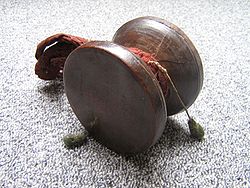 ดามารูของทิเบต | |
| การจำแนกประเภทฮอร์นบอสเทล-แซคส์ | 212.241 ( เมมบราโนโฟน กลองวิ แรทเทิล รูปทรงนาฬิกาทรายแต่ละอัน(ภายใต้การจำแนกประเภท Hornbostel Sachs ที่แก้ไขแล้ว) [ 1 ] [ 2 ] ) |
|---|---|
ดามารุ ( สันสกฤต : डमरु , IAST : ḍamaru ; ทิเบต : ཌ་མ་རུ་ หรือ རྔ་ཆུང) เป็นกลอง สองหน้าขนาดเล็ก ที่ใช้ในศาสนาฮินดูและพุทธศาสนาทิเบตในศาสนาฮินดู ดามารุเป็นที่รู้จักในฐานะเครื่องดนตรีของพระศิวะเทพเจ้า ในศาสนาฮินดู ซึ่งเกี่ยวข้องกับประเพณีตันตระกล่าวกันว่าพระศิวะทรงสร้างดามารุขึ้นเพื่อสร้างเสียงทางจิตวิญญาณซึ่งใช้ในการสร้างและควบคุมจักรวาล ทั้งหมด [ 3 ]ในพุทธศาสนาทิเบตดามารุถูกใช้เป็นเครื่องดนตรีในการฝึกสมาธิ[ 4 ]
คำอธิบาย
ดามารุโดยทั่วไปทำจากไม้หรือโลหะ โดยมีหนังหุ้มที่ปลายทั้งสองข้าง ส่วนตัวเรโซเนเตอร์ทำจากทองเหลือง ความสูงของดามารุมีตั้งแต่ไม่กี่นิ้วไปจนถึงมากกว่าหนึ่งฟุตเล็กน้อย ผู้เล่นเล่นด้วยมือเดียว ตัวตีมักจะเป็นลูกปัดที่ผูกติดกับปลายเชือกหนังที่พันรอบเอวของดามารุ หรืออาจใช้ปมในหนัง หรือวัสดุถักโครเชต์ก็เป็นที่นิยมเช่นกัน เมื่อผู้เล่นโบกกลองโดยใช้การบิดข้อมือ ตัวตีก็จะกระทบกับหนังกลอง
ในศาสนาฮินดู

ดามารุเป็นเครื่องดนตรีที่พบได้ทั่วไปในอนุทวีปอินเดียมีความเกี่ยวข้องกับพระศิวะ เทพเจ้าในศาสนาฮินดู เชื่อกันว่าภาษาสันสกฤตได้รับการถ่ายทอดผ่านเสียงกลองดามารุ (ดู เสียงได้ ในศิวะสูตร ) และการแสดงระบำตันดาวะอันเป็นสัญลักษณ์แห่งจักรวาลดามารุถูกใช้โดยนักดนตรีเร่ร่อนทุกประเภท เนื่องจากมีขนาดเล็กพกพาสะดวก
เหรียญ Damaru แห่ง Kosambi

ในยุคหลังราชวงศ์เมารยะ สังคมชนเผ่าที่โคสัมบี (ปัจจุบันคือเขต Prayagraj ) ได้ผลิตเหรียญทองแดงหล่อทั้งแบบมีและไม่มีรอยตอก เหรียญของพวกเขามีลักษณะคล้ายกลองดามารุ เหรียญทั้งหมดนี้ได้รับการระบุว่าเป็นของโคสัมบี พิพิธภัณฑ์หลายแห่งในอินเดีย เช่น พิพิธภัณฑ์แห่งชาติ มีเหรียญเหล่านี้อยู่ในคอลเลกชัน[ 5 ]
ในพุทธศาสนาทิเบต
| ส่วนหนึ่งของชุดบทความเกี่ยวกับ |
| พุทธศาสนาวัชรยาน |
|---|
 |
ในประเพณีพุทธศาสนาทิเบต ดามารุเป็นส่วนหนึ่งของชุดเครื่องมือศักดิ์สิทธิ์และเครื่องดนตรีที่รับมาจากการปฏิบัติตันตระของอินเดียโบราณ สิ่งเหล่านี้มาถึงเทือกเขาหิมาลัยตั้งแต่ศตวรรษที่ 8 ถึง 12 และคงอยู่ในทิเบตในขณะที่การปฏิบัติวัชรยานเจริญรุ่งเรืองที่นั่น แม้ว่าจะหายไปในอนุทวีปอินเดียก็ตาม[ 6 ]
กะโหลกดามารุ
The skull (thöpa) damaru is made from a male and female skull bone or calvarium, cut well above the area of the ear, and joined at their apex. Inside, male and female mantras are appropriately inscribed in gold. The skins are traditionally cured by burying them with copper and other mineral salts, and special herbal formulas for about two weeks. These are then stretched and applied to the two sides, giving the skins their familiar blue or green mottled appearance. A collar of simple brocade, or copper or silver, has a hand-hold, and is the site of attachment of the beaters, whose knit cover represents two eyeballs. The skulls are also carefully chosen for their attributes and source. After the Tibetan diaspora in 1960, they began to be manufactured in India and Nepal, with a continued degradation of quality. Today, India is no longer a source, and their creation and export from Nepal are banned, because of the acquiring of human bone through illegal practices. One still does find occasionally those with painted skins and without the proper mantras or other characteristics.
The symbolism and energetic properties of the drums is extensive. These human skull damaru or chang te'u are used in a wide range of Vajrayana ritual, as a standard right hand accompaniment to the bell, held in the left hand. Usually used together as an accent or punctuation during various tantric practices, the drum can also keep time during entire passages. For the solo practitioner, it is an essential tool, while in larger assemblies, only the presiding Rinpoches and chant masters use them, in concert with the long horns (radung), short horns (gyaling), large cymbals (silnyen and rolmo) and large temple drums (lag-na).
Chöd drum
The Chöd drum (or chöda) is a specialized form of damaru. It is generally larger in circumference and has a more round shape than its smaller counterpart. The Chöd drum is used in the tantric practice of Chöd.

With no known antecedent, the chod is traditionally made of acacia wood (seng deng), though a variety of woods are acceptable, as long as the tree is not toxic and does not possess thorns or other negative attributes. Made as a one-piece, double-sided (two-headed) bell shape, size varies from 8 inches to 12 inches in diameter. Usually featuring only a thin veneer of varnish, so that the grain of the wood shows, they come from the common red (marpo), black (nakpo) or rare yellow (serpo) type of acacia, and are very occasionally painted with skulls, the eight charnel grounds, or other symbols. The waist or belt is traditionally made of leather, though often brocades are used. A set of mantras are traditionally painted on the interior of the drum prior to its skinning.
The pitch of the drum varies, and the tone may vary depending on conditions of dampness, temperature and so on. Played slowly, and methodically, the droning of the damaru accompanies the haunting melodies and chants of the chod ritual, as of which are accompaniments for the inner meditations and visualizations that are at the heart of this spiritual practice.
The above applies to the ideal manufacture of the damaru, and as still described in the definitive modern work, the "Mindroling Handbook of Vajrayana Implements". Those manufactured in India and Nepal are made of indeterminate and cheap woods, with painted skins, often no interior mantras, and altogether deviating from the many other essentials, as prescribed in technical literature such as the Mindroling Handbook. Such copies are now widespread and in use by Eastern monastics and Western students.
Chöpen
Damaru of all kinds are traditionally paired with a long sash or tail called a chöpen. The chöpen is attached to the end of the drum's handle so that it waves about while the drum is being played. They are most commonly made of brocade or silk using the colors of the tantric elements. On smaller damaru, the chöpen is usually found without adornment, but on chöd damaru, the tail will often feature several items which have been sewn onto the fabric. These adornments commonly include but are not limited to: a polished silver mirror or melong, a set of small bells, strips of tiger and/or leopard skin, one/more precious stones (i.e. dzi bead), and an unspecified amount of small brass trinkets.
See also
- Dhadd – Musical instrument
- Dhyāngro – Musical instrument
- Kangling – Musical instrument
- Na – Musical instrument
- Udukai – Musical instrument
อ่านเพิ่มเติม
- เบ็ค, จีแอล (2012). พิธีกรรมทางเสียง: พิธีกรรมและดนตรีในประเพณีฮินดู . สำนักพิมพ์มหาวิทยาลัยเซาท์แคโรไลนา. ISBN 978-1-61117-108-2.
- Blades, J. (1992). เครื่องดนตรีประเภทเคาะและประวัติความเป็นมา . Bold Strummer. ISBN 978-0-933224-61-2.
- ครอส, ทีอี (1982). เครื่องดนตรีของพม่า อินเดีย เนปาล ไทย และทิเบตพิพิธภัณฑ์ศาลดนตรี มหาวิทยาลัยเซาท์ดาโคตา
- Crossley-Holland, P. (1976). "ดนตรีพิธีกรรมของทิเบต". วารสารทิเบต . 1 ( 3– 4): 45– 54. JSTOR 43299823 .
- ไชเดกเกอร์ ดา (1988) ดนตรีพิธีกรรมทิเบต: แบบสำรวจทั่วไปที่มีการอ้างอิงพิเศษเกี่ยวกับประเพณี Mindroling สถาบันทิเบตไอเอสบีเอ็น 978-3-7206-0016-3.
- เวด, บีซี (1979). ดนตรีในอินเดีย: ประเพณีคลาสสิก . เพรนติส-ฮอลล์. ISBN 978-0-13-607028-3.
ลิงก์ภายนอก

- กลอง Damaru บน Ancientworlds.com
สรุปเนื้อหา
ข้อมูลสำคัญจากบทความ
ข้อมูลสำคัญเกี่ยวกับ ดามารู
ดา มารุ ( สันสกฤต : डमरु , IAST : ḍamaru ; ทิเบต : ཌ་མ་རུ་ หรือ རྔ་ཆུང) เป็น กลอง สองหน้าขนาดเล็ก ที่ใช้ใน ศาสนาฮินดู และ พุทธศาสนาทิเบต ในศาสนาฮินดู...
คำอธิบาย
ดามารุโดยทั่วไปทำจากไม้หรือโลหะ โดยมี หนัง หุ้มที่ปลายทั้งสองข้าง ส่วนตัวเรโซเนเตอร์ทำจากทองเหลือง ความสูงของดามารุมีตั้งแต่ไม่กี่นิ้วไปจนถึงมากกว่าหนึ่งฟุตเล็กน้อย ผู้เล่นเล่นด้วยมือเดียว ตัวตีมักจะเป็นลูกปัดที่ผูกติดกับปลายเชือกหนังที่พันรอบเอวของดามารุ...
ในศาสนาฮินดู
ดามารุเป็นเครื่องดนตรีที่พบได้ทั่วไปใน อนุทวีปอินเดีย มีความเกี่ยวข้องกับพระศิวะ เทพเจ้าในศาสนาฮินดู เชื่อกันว่าภาษาสันสกฤตได้รับการถ่ายทอดผ่านเสียงกลองดามารุ (ดู เสียงได้ ในศิวะสูตร ) และการแสดงระบำตันดาวะอันเป็นสัญลักษณ์แห่งจักรวาล ดามา...
เหรียญ Damaru แห่ง Kosambi
ในยุคหลังราชวงศ์เมารยะ สังคมชนเผ่าที่ โคสัมบี (ปัจจุบัน คือเขต Prayagraj ) ได้ผลิตเหรียญทองแดงหล่อทั้งแบบมีและไม่มีรอยตอก เหรียญของพวกเขามีลักษณะคล้ายกลองดามารุ เหรียญทั้งหมดนี้ได้รับการระบุว่าเป็นของโคสัมบี พิพิธภัณฑ์หลายแห่งในอินเดีย เช่น พิพิธภัณฑ์แห่งชาติ...