
Relic
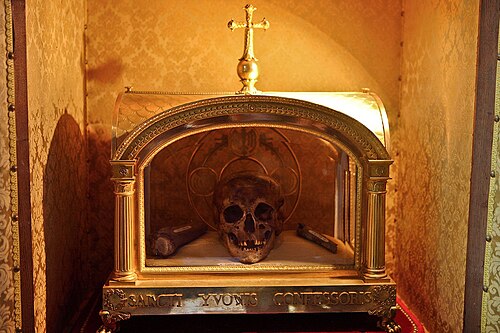

In religion, a relic is an object or article of religious significance from the past.[1] It usually consists of the physical remains or personal effects of a saint or other person preserved for the purpose of veneration as a tangible memorial. Relics are an important aspect of some forms of Buddhism, Christianity, Islam, Shamanism, and many other religions. Relic derives from the Latinreliquiae, meaning "remains", and a form of the Latin verb relinquere, to "leave behind, or abandon". A reliquary is a shrine that houses one or more religious relics.
In classical antiquity
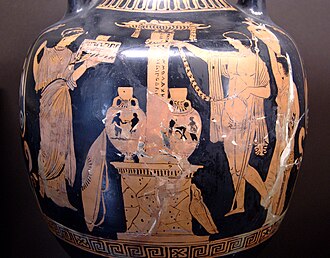
In ancient Greece, a city or sanctuary might claim to possess, without necessarily displaying, the remains of a venerated hero as a part of a hero cult. Other venerable objects associated with the hero were more likely to be on display in sanctuaries, such as spears, shields, or other weaponry; chariots, ships or figureheads; furniture such as chairs or tripods; and clothing. The sanctuary of the Leucippides at Sparta claimed to display the egg of Leda.[2]
The bones were not regarded as holding a particular power derived from the hero, with some exceptions, such as the divine shoulder of Pelops held at Olympia. Miracles and healing were not regularly attributed to them;[2] rather, their presence was meant to serve a tutelary function, as the tomb of Oedipus was said to protect Athens.[3]
The bones of Orestes and Theseus were supposed to have been stolen or removed from their original resting place and reburied.[4] On the advice of the Delphic Oracle, the Spartans searched for the bones of Orestes and brought them home, without which they had been told they could not expect victory in their war against the neighboring Tegeans.[5]Plutarch says that the Athenians were likewise instructed by the oracle to locate and steal the relics of Theseus from the Dolopians.[6]
The body of the legendary Eurystheus was also supposed to protect Athens from enemy attack,[7] and in Thebes, that of the prophet Amphiaraus, whose cult was oracular and healing.[8] Plutarch narrates transferrals similar to that of Theseus for the bodies of the historical Demetrius I of Macedon and Phocion the Good.[9] The bones or ashes of Aesculapius at Epidaurus, and of Perdiccas I at Macedon, were treated with the deepest veneration.
As with the relics of Theseus, the bones are sometimes described in literary sources as gigantic, an indication of the hero's "larger than life" status. On the basis of their reported size, it has been conjectured that such bones were those of prehistoric creatures, the startling discovery of which may have prompted the sanctifying of the site.[2]
The head of the poet-prophet Orpheus was supposed to have been transported to Lesbos, where it was enshrined and visited as an oracle.[10] The 2nd-century geographer Pausanias reported that the bones of Orpheus were kept in a stone vase displayed on a pillar near Dion, his place of death and a major religious center. These too were regarded as having oracular power, which might be accessed through dreaming in a ritual of incubation. The accidental exposure of the bones brought a disaster upon the town of Libretha, whence the people of Dion had transferred the relics to their own keeping.[11]
According to the Chronicon Paschale, the bones of the Persian Zoroaster were venerated,[12] but the tradition of Zoroastrianism and its scriptures offer no support of this.
Christianity
History
One of the earliest sources that purports to show the efficacy of relics is found in 2 Kings 13:20–21:
And Elisha died, and they buried him. Now the bands of the Moabites used to invade the land at the coming in of the year. And it came to pass, as they were burying a man, that, behold, they spied a band; and they cast the man into the sepulchre of Elisha; and as soon as the man touched the bones of Elisha, he revived, and stood up on his feet.[13]
Also cited is the veneration of relics from the martyr and bishop Saint Polycarp of Smyrna recorded in the Martyrdom of Polycarp, written sometime from 150 to 160 AD.[14] With regard to relics that are objects, an often cited passage is Acts 19:11–12, which says that Paul the Apostle's handkerchiefs were imbued by God with healing power. In the gospel accounts of Jesus healing the bleeding woman and again in the Gospel of Mark 6:56, those who touched Jesus's garment were healed.
การปฏิบัติในการเคารพพระธาตุดูเหมือนจะเป็นสิ่งที่นักเขียนอย่างออกัสติน , นักบุญแอ มโบรส , เกรกอรีแห่งนิสซา , นักบุญคริ สโตสตอมและนักบุญเกรกอรี นาเซียนเซนถือเป็นเรื่องปกติ โดม เบอร์นาร์โด ซิกนิตติ OSB เขียนว่า “[ซากศพของผู้ตายบางคนได้รับการดูแลและเคารพเป็นพิเศษ นี่เป็นเพราะซากศพของผู้ตายมีความเกี่ยวข้องกับความศักดิ์สิทธิ์ของวิญญาณของพวกเขาซึ่งรอคอยการรวมตัวกับร่างกายของพวกเขาในการฟื้นคืนชีพ ” [ 15 ]โทมัส อควินัส (เสียชีวิต ค.ศ. 1274) ชี้ให้เห็นว่าเป็นเรื่องธรรมชาติที่ผู้คนควรหวงแหนสิ่งที่เกี่ยวข้องกับผู้ตาย เช่นเดียวกับของใช้ส่วนตัวของญาติ[ 16 ]ในการสัมภาษณ์กับCatholic News Serviceบาทหลวง มาริโอ คอนเต บรรณาธิการบริหารของนิตยสาร Messenger of St. Anthony ในเมืองปาดัวประเทศอิตาลีกล่าวว่า "พระธาตุของนักบุญช่วยให้ผู้คนเอาชนะสิ่งที่เป็นนามธรรมและเชื่อมโยงกับสิ่งศักดิ์สิทธิ์ ... นักบุญไม่ได้ทำการอัศจรรย์ มีเพียงพระเจ้าเท่านั้นที่ทำการอัศจรรย์ แต่นักบุญเป็นผู้ไกล่เกลี่ย" [ 17 ]
ในคริสตจักรยุคแรก การรบกวนซากศพของผู้พลีชีพและนักบุญอื่นๆ ไม่ได้เป็นที่ปฏิบัติกัน พวกเขาได้รับอนุญาตให้อยู่ในสถานที่พักผ่อนที่มักไม่สามารถระบุตัวตนได้ เช่น ในสุสานและสุสานใต้ดินของกรุงโรมสถานที่เหล่านี้มักอยู่นอกกำแพงเมือง แต่ เริ่มมีการสร้างสถานที่ฝังศพของ ผู้พลีชีพขึ้นเหนือสถานที่ฝังศพ เนื่องจากเชื่อกันว่าการฝังศพใกล้กับซากศพของนักบุญเป็นประโยชน์ต่อจิตวิญญาณ จึงมีการสร้าง "หอพิธีศพ" ขนาดใหญ่หลายแห่งขึ้นเหนือสถานที่ฝังศพของผู้พลีชีพ รวมถึงมหาวิหารเซนต์ปีเตอร์เก่าในตอนแรกสิ่งเหล่านี้ไม่ใช่โบสถ์ทั่วไป แต่เป็น "สุสานที่มีหลังคาคลุม" ซึ่งเต็มไปด้วยหลุมฝังศพ ซึ่งมีการจัดพิธีศพและพิธีรำลึก อาจเชื่อกันว่าเมื่อวิญญาณของผู้พลีชีพขึ้นสู่สวรรค์ในวันฟื้นคืนชีพ พวกเขาจะไปกับผู้ที่ถูกฝังอยู่ใกล้ๆ ซึ่งจะได้รับความโปรดปรานจากพระเจ้า[ 18 ]
Some early Christians attributed healing powers to the dust from graves of saints, including Gregory of Tours. The cult of Martin of Tours was very popular in MerovingianGaul, and centered at a great church built just outside the walls of Tours. When Saint Martin died on November 8, 397, at a village halfway between Tours and Poitiers, the inhabitants of these cities were ready to fight for his body, which the people of Tours managed to secure by stealth. Tours became the chief point of Christian pilgrimage in Gaul, a place for the healing of the sick.[19]
Gregory of Tours travelled to the shrine when he had contracted a serious illness. Later, as bishop of Tours, Gregory wrote extensively about miracles attributed to the intercession of St Martin.[20]Nestorian Christianity utilized the hanānā–a mixture made with the dust of Thomas the Apostle's tomb–for healing. Within the Assyrian Church of the East, it is consumed by a couple getting married in the Mystery of Crowning.[21][22]
The Second Council of Nicaea in 787 drew on the teaching of St. John Damascene[23] that homage or respect is not really paid to an inanimate object, but to the holy person, the veneration of a holy person is itself honour paid to God.[16] The Council decreed that every altar should contain a relic, making it clear that this was already the norm, as it remains to the present day in Catholic and Orthodox churches. The veneration of the relics of the saints reflects a belief that the saints in heaven intercede for those on earth. A number of cures and miracles have been attributed to relics, not because of their own power, but because of the holiness of the saint they represent.[24]
Many tales of miracles and other marvels were attributed to relics beginning in the early centuries of the church. These became popular during the Middle Ages. They were collected in books of hagiography such as the Golden Legend or the works of Caesarius of Heisterbach. These miracle tales made relics much sought-after during the period. By the Late Middle Ages, the collecting of, and dealing in, relics had reached enormous proportions, and had spread from the church to royalty, and then to the nobility and merchant classes.
The Council of Trent of 1563 enjoined bishops to instruct their flocks that "the holy bodies of holy martyrs ... are to be venerated by the faithful, for through these [bodies] many benefits are bestowed by God on men". The Council further insisted that "in the invocation of saints, the veneration of relics and the sacred use of images, every superstition shall be removed and all filthy lucre abolished."[18] There are also many relics associated with Jesus.

In his introduction to Gregory's History of the Franks, Ernest Brehaut analyzed the Romano-Christian concepts that gave relics such a powerful draw. He distinguished Gregory's constant usage of sanctus and virtus, the first with its familiar meaning of "sacred" or "holy", and the second as "the mystic potency emanating from the person or thing that is sacred... In a practical way the second word [virtus] ... describes the uncanny, mysterious power emanating from the supernatural and affecting the natural... These points of contact and yielding are the miracles we continually hear of."[19]
Relics and pilgrimage
Rome became a major destination for Christian pilgrims as it was easier to access for European pilgrims than the Holy Land. Constantine the Great erected great basilicas over the tombs of Saints Peter and Paul. A distinction of these sites was the presence of holy relics. Over the course of the Middle Ages, other religious structures acquired relics and became destinations for pilgrimage. In the eleventh and twelfth centuries, substantial numbers of pilgrims flocked to Santiago de Compostela in Spain, in which the supposed relics of the apostle James, son of Zebedee, discovered c. 830, are housed.[25] Santiago de Compostela remains a significant pilgrimage site, with around 200,000 pilgrims, both secular and Christian, completing the numerous pilgrimage routes to the cathedral in 2012 alone.[26][27]
By venerating relics through visitation, gifts, and providing services, medieval Christians believed that they would acquire the protection and intercession of the sanctified dead.[14] Relics of local saints drew visitors to sites like Saint Frideswide's in Oxford, and San Nicola Peregrino in Trani.[25] Instead of having to travel to be near to a venerated saint, relics of the saint could be venerated locally.
Believers would make pilgrimages to places believed to have been sanctified by the physical presence of Christ or prominent saints, such as the site of the Holy Sepulchre in Jerusalem.
Economic effect
As holy relics attracted pilgrims and these religious tourists needed to be housed, fed, and provided with souvenirs, relics became a source of income not only for the destinations that held them, but for the abbeys, churches, and towns en route. Relics were prized as they were portable.[28] They could be possessed, inventoried, bequeathed, stolen, counterfeited, and smuggled.[29] They could add value to an established site or confer significance on a new location.[30] Offerings made at a site of pilgrimage were an important source of revenue for the community who received them on behalf of the saint.[31]
ตามที่แพทริค เกียรี กล่าวไว้ ว่า “[สำหรับชุมชนที่โชคดีพอที่จะมีซากศพของนักบุญอยู่ในโบสถ์ ผลประโยชน์ในแง่ของรายได้และสถานะนั้นมหาศาล และการแข่งขันเพื่อแย่งชิงพระธาตุและการส่งเสริมคุณธรรมของนักบุญท้องถิ่นเหนือกว่านักบุญของชุมชนใกล้เคียงนั้นก็ดุเดือด” [ 32 ]นักบวชท้องถิ่นส่งเสริมนักบุญอุปถัมภ์ของตนเองเพื่อพยายามรักษาส่วนแบ่งการตลาดของตนเอง บางครั้งยามต้องคอยดูแลนักบวชชายและหญิงที่ป่วยหนักเพื่อป้องกันการหั่นศพโดยไม่ได้รับอนุญาตทันทีที่พวกเขาเสียชีวิต[ 23 ]เกียรียังแนะนำว่าอันตรายจากการที่ใครบางคนฆ่านักบวชผู้สูงอายุเพื่อแย่งชิงพระธาตุของเขานั้นเป็นข้อกังวลที่ถูกต้อง[ 32 ]
พระธาตุถูกนำมาใช้เพื่อรักษาผู้ป่วย เพื่อขอพรให้พ้นจากความอดอยากหรือโรคระบาด เพื่อสาบานตน และเพื่อกดดันฝ่ายที่กำลังทำสงครามให้สงบศึกต่อหน้าสิ่งศักดิ์สิทธิ์ ศาลต่างๆ เก็บรักษาพระธาตุมาตั้งแต่สมัยราชวงศ์เมโรวิงเกียน[ 30 ]เซนต์แองจิลเบิร์ตได้รวบรวม พระ ธาตุที่น่าประทับใจที่สุดชุดหนึ่งในคริสต์ศาสนา ให้กับ ชาร์เลมาญ[ 28 ] ตลาดซื้อขายพระธาตุได้พัฒนาขึ้น และพระธาตุได้เข้าสู่การค้าขายตามเส้นทางการค้าเดียวกับสินค้าอื่นๆ ที่เคลื่อนย้ายได้ แมทธิว บราวน์ เปรียบเทียบ ดีคอนชาวอิตาลีในศตวรรษที่ 9 ชื่อเดอุสโดนา ซึ่งสามารถเข้าถึงสุสานใต้ดินของโรมันได้ ว่าเดินทางข้ามเทือกเขาแอลป์ไปเยี่ยมชมงานแสดงสินค้าของอารามในยุโรปเหนือ เหมือนกับพ่อค้างานศิลปะในปัจจุบัน[ 33 ]
แคนเทอร์เบอรีเป็นจุดหมายปลายทางยอดนิยมสำหรับผู้แสวงบุญชาวอังกฤษที่เดินทางมาเพื่อเป็นพยานถึงพระธาตุอันทรงอานุภาพของนักบุญโทมัส เบ็คเก็ต อาร์ คบิชอปแห่งแคนเทอร์เบอรีผู้ถูกลอบสังหารโดยอัศวินของพระเจ้าเฮนรีที่ 2ในปี ค.ศ. 1170 [ 25 ]หลังจากการเสียชีวิตของเบ็คเก็ต ผู้สืบทอดตำแหน่งและคณะสงฆ์แห่งแคนเทอร์เบอรีได้ใช้พระธาตุของเขาเพื่อส่งเสริมลัทธิบูชานักบุญผู้พลีชีพที่ยังไม่ได้รับการประกาศเป็นนักบุญอย่างเป็นทางการ แรงจูงใจดังกล่าวรวมถึงการยืนยันความเป็นอิสระของศาสนจักรต่อผู้ปกครอง ความปรารถนาที่จะมีนักบุญชาวอังกฤษ (โดยเฉพาะชาวอังกฤษเชื้อสายนอร์มัน ) ที่มีชื่อเสียงในยุโรป และความปรารถนาที่จะส่งเสริมแคนเทอร์เบอรีให้เป็นจุดหมายปลายทางสำหรับการแสวงบุญ ในช่วงปีแรกๆ หลังจากการเสียชีวิตของเบ็คเก็ต เงินบริจาคที่ศาลเจ้าคิดเป็นร้อยละ 28 ของรายได้ทั้งหมดของมหาวิหาร[ 34 ]
ของปลอม
เนื่องจากไม่มีวิธีการประเมินความแท้จริงที่แท้จริง นักสะสมวัตถุมงคลจึงตกเป็นเหยื่อของผู้ไร้ศีลธรรม และบางคนก็จ่ายราคาสูงมาก การปลอมแปลงแพร่หลายตั้งแต่แรกเริ่มออกัสตินประณามพวกหลอกลวงที่เดินเตร่ไปมาโดยปลอมตัวเป็นพระภิกษุ เพื่อหากำไรจากการขายวัตถุมงคลปลอม[ 35 ]ในAdmonitio Generalis ของเขา ในปี 789 ชาร์เลมาญสั่งว่า "ไม่ควรเคารพชื่อปลอมของมรณสักขีและอนุสรณ์สถานอันไม่แน่นอนของนักบุญ" [ 14 ]สภาลาเตรานครั้งที่สี่ (1215) ของคริสตจักรคาทอลิกประณามการละเมิด เช่น วัตถุมงคลปลอมและการอ้างสิทธิ์เกินจริง[ 16 ]
ชิ้นส่วนของไม้กางเขนแท้เป็นหนึ่งในวัตถุมงคลที่ผู้คนต้องการมากที่สุด โบสถ์หลายแห่งอ้างว่าครอบครองชิ้นส่วนของไม้กางเขนแท้มากเสียจนจอห์น คาลวินกล่าวอย่างมีชื่อเสียงว่ามีชิ้นส่วนของไม้กางเขนแท้มากพอที่จะสร้างเรือได้[ 36 ]ในช่วงกลางศตวรรษที่ 16 จำนวนวัตถุมงคลในโบสถ์คริสเตียนมีจำนวนมหาศาล และแทบไม่มีความเป็นไปได้ที่จะแยกแยะของแท้จากของปลอม เนื่องจากทั้งสองอย่างอยู่ในวิหารมานานหลายศตวรรษและเป็นวัตถุบูชา ในปี 1543 จอห์น คาลวินเขียนเกี่ยวกับวัตถุมงคลปลอมในตำราว่าด้วยวัตถุมงคล ของเขา ซึ่งเขาได้อธิบายสถานการณ์ของวัตถุมงคลในโบสถ์คาทอลิก คาลวินกล่าวว่านักบุญมีร่างกายสองหรือสามหรือมากกว่านั้นพร้อมแขนขา และแม้กระทั่งแขนขาและศีรษะเพิ่มเติมอีกเล็กน้อย[ 37 ] [ 38 ]
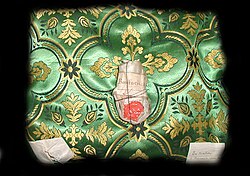
เนื่องจากการมีอยู่ของพระธาตุปลอม คริสตจักรจึงเริ่มควบคุมการใช้พระธาตุกฎหมายศาสนจักรกำหนดให้ต้องมีการรับรองพระธาตุหากจะมีการเคารพสักการะ ต่อสาธารณะ พระธาตุ เหล่านั้นต้องถูกปิดผนึกไว้ในหีบพระธาตุและมีใบรับรองการรับรองที่ลงนามและประทับตราโดยบุคคลในสมณกระทรวงนักบุญ [ 39 ]หรือโดยบิชอปท้องถิ่นที่นักบุญนั้นอาศัยอยู่ หากไม่มีการรับรองดังกล่าว พระธาตุจะไม่สามารถนำมาใช้เพื่อการเคารพสักการะต่อสาธารณะได้[ 40 ] สมณกระทรวงนักบุญ ซึ่งเป็นส่วนหนึ่งของสำนักวาติกันมีอำนาจในการตรวจสอบพระธาตุในกรณีที่เอกสารสูญหายหรือขาดหายไป เอกสารและหีบพระธาตุของพระธาตุที่ได้รับการรับรองมักจะประทับตราขี้ผึ้ง[ 39 ]
การแบ่งประเภทและข้อห้ามในศาสนาคาทอลิก


In Catholic theology, sacred relics must not be worshipped, because only God is worshipped and adored. Instead, the veneration given to them was "dulia". Saint Jerome declared, "We do not worship, we do not adore, for fear that we should bow down to the creature rather than to the Creator, but we venerate the relics of the martyrs in order the better to adore Him whose martyrs they are."[41]
Until 2017, the Catholic Church divided relics into three classes:
- First-class relics: items directly associated with the events of Christ's life (the Manger, True Cross, etc.) or the physical remains of a saint (a bone, a hair, skull,[42] a limb, blood, etc.). Traditionally, a martyr's relics are often more prized than the relics of other saints. Parts of the saint that were significant to their life are also more prized; King St. Stephen of Hungary's right forearm is especially important due to his status as a ruler. A famous theologian's head may be his most important relic; the head of St. Thomas Aquinas was removed by the monks at the Cistercian abbey at Fossanova where he died. If a saint travelled often, then the bones of his feet may be prized. Catholic teaching prohibits relics to be divided up into small, unrecognizable parts if they are to be used in liturgy (i.e., as in an altar; see rubrics listed in Rite of Dedication of a Church and an Altar).
- Second-class relics: items that the saint owned or frequently used, for example, a crucifix, rosary, book, etc. Again, an item more important in the saint's life is thus a more important relic. Sometimes a second-class relic is a part of an item that the saint wore (a shirt, a glove, etc.) and is known as ex indumentis ("from the clothing").
- พระธาตุชั้นที่สาม:วัตถุใดๆ ที่เคยสัมผัสกับพระธาตุชั้นที่หนึ่งหรือชั้นที่สอง[ 43 ]พระธาตุชั้นที่สามส่วนใหญ่เป็นผ้าชิ้นเล็กๆ แม้ว่าในสหัสวรรษแรกน้ำมันจะเป็นที่นิยมก็ตาม แอมพูลลามอนซาบรรจุน้ำมันที่เก็บรวบรวมจากตะเกียงที่จุดอยู่หน้าสถานที่สำคัญๆ ในชีวิตของพระคริสต์ และหีบเก็บพระธาตุบางหีบมีรูสำหรับเทน้ำมันเข้าและออก หลายคนเรียกผ้าที่สัมผัสกับกระดูกของนักบุญว่า " ex brandea " แต่ex brandeaนั้นหมายถึงเฉพาะชิ้นส่วนของเสื้อผ้าที่สัมผัสกับร่างกายหรือหลุมฝังศพของอัครสาวกเท่านั้น เป็นคำที่ใช้เฉพาะในกรณีดังกล่าว ไม่ใช่คำพ้องความหมายของพระธาตุชั้นที่สาม
ในปี พ.ศ. 2560 สมณกระทรวงเพื่อการประกาศเป็นนักบุญได้ยกเลิกพระธาตุระดับที่สาม และนำระบบการจำแนกประเภทพระธาตุแบบสองระดับมาใช้ ได้แก่ พระธาตุสำคัญ (insigni) และพระธาตุไม่สำคัญ (non insigni) ประเภทแรกประกอบด้วยร่างกายหรือส่วนสำคัญของร่างกาย รวมถึงสิ่งของทั้งหมดในโกศบรรจุเถ้ากระดูกที่เก็บรักษาไว้หลังการเผา ประเภทที่สองประกอบด้วยชิ้นส่วนเล็กๆ ของร่างกาย รวมถึงสิ่งของที่นักบุญและผู้ได้รับพรเคยใช้[ 44 ]
การขายหรือการจำหน่าย "พระธาตุศักดิ์สิทธิ์" (หมายถึงพระธาตุชั้นที่หนึ่งและชั้นที่สอง) โดยวิธีอื่นใดโดยไม่ได้รับอนุญาตจากสำนักวาติกันถือเป็นสิ่งต้องห้ามอย่างเคร่งครัดตามมาตรา 1190 แห่งประมวลกฎหมายศาสนจักร พ.ศ. 2526 [ 45 ] อย่างไรก็ตามคริสตจักรคาทอลิกอนุญาตให้ขายพระธาตุชั้นที่สามได้[ 46 ]ห้ามวางพระธาตุไว้บนแท่นบูชาเพื่อการเคารพสักการะของสาธารณชน เนื่องจากแท่นบูชาสงวนไว้สำหรับการแสดงศีลมหาสนิท (ขนมปังศักดิ์สิทธิ์หรือโพรสโฟราและไวน์ศักดิ์สิทธิ์หลังจากการเสกในศีลมหาสนิท) [ 47 ]
 โซ่ตรวนของนักบุญปีเตอร์ซึ่งเก็บรักษาไว้ในมหาวิหารซานเปียโตรอินวินโคลีกรุงโรม เป็นพระธาตุชั้นสอง
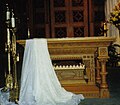 แท่นบูชาหลักของมหาวิหารเซนต์ราฟาเอล เมืองดูบูก รัฐไอโอวาบรรจุอัฐิของ นักบุญ เซสเซียนัสเด็กชายผู้พลีชีพในช่วงการเบียดเบียนของจักรพรรดิไดโอเคลเชียน
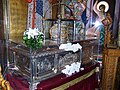 พระธาตุของนักบุญเดเมตริอุสในมหาวิหารแห่งเท ส ซาโลนิกาประเทศกรีซ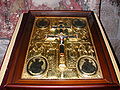
 พระธาตุของสมเด็จพระสันตะปาปาจอห์น ปอลที่ 2ซึ่งได้รับการประกาศเป็นนักบุญในปี 2014 ประดิษฐานอยู่ในมหาวิหารคาทอลิกแห่งพระแม่มารีผู้บริสุทธิ์ในฮ่องกง
ลัทธิอีแวนเจลิคัล-ลูเธอรานิสม์
หลังจากการปฏิรูปศาสนา เขตปกครองทางศาสนาทั้งหมดในภูมิภาคนอร์ดิก-บอลติกตกเป็นของคริสตจักรโปรเตสแตนต์-ลูเธอรัน[ 48 ] [ 49 ]ในบรรดาคริสตจักรโปรเตสแตนต์-ลูเธอรันที่เก็บรักษาพระธาตุ พระธาตุเหล่านั้นถือว่าไม่มีอำนาจในตัวของมันเอง แต่เป็นมรดกของนักบุญที่ได้รับการยกย่องในคริสตจักรโปรเตสแตนต์-ลูเธอรัน (ดูปฏิทินนักบุญ (ลูเธอรัน) ) ในคริสตจักรโปรเตสแตนต์-ลูเธอรันแห่งสวีเดนวันฉลองนักบุญเอริกตรงกับวันที่ 18 พฤษภาคม พิธีมิสซาที่มหาวิหารอุปซาลาสิ้นสุดลงด้วยการที่ผู้ร่วมพิธีเคลื่อนไปยังโบสถ์เล็กด้านข้างเพื่อสักการะพระธาตุของท่าน[ 50 ]
คริสตจักรชั้นสูงนิกายอีแวนเจลิคัล-ลูเธอรันSocietas Sanctae Birgittaeเฉลิมฉลองวันฉลองนักบุญบริจิตแห่งสวีเดนในวันที่ 23 กรกฎาคม พระธาตุของนักบุญบริจิตที่อารามวาดสเตนาได้รับการเคารพจากชาวอีแวนเจลิคัล-ลูเธอรันที่สังกัดคริสตจักรแห่งสวีเดน รวมถึงชาวโรมันคาทอลิกด้วย[ 51 ]
 หีบเก็บพระธาตุของนักบุญเอริก ณมหาวิหารอุปซาลาอีแวนเจลิคัล-ลูเธอรัน
 โลงศพของนักบุญบริจิตแห่งสวีเดน ณอารามวาดสเตนาได้รับการเคารบูบูชาจากทั้งนิกายโปรเตสแตนต์-ลูเธอรันและนิกายโรมันคาทอลิก
ศาสนาออร์โธดอกซ์ตะวันออก
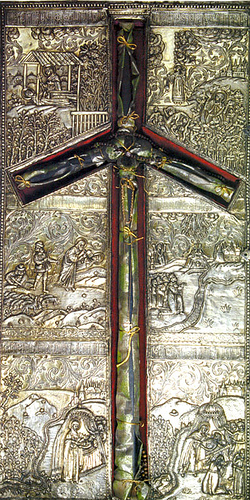

ความสำคัญของพระธาตุในโลกไบแซนไทน์สามารถเห็นได้จากการเคารพบูชาชิ้นส่วนของไม้กางเขนแท้ งาน เคลือบฟันไบแซนไทน์ชิ้นเอกหลายชิ้นเป็นสเตาโรเทเคสหรือพระธาตุที่มีชิ้นส่วนของไม้กางเขนแท้ พระธาตุสำคัญอื่นๆ ได้แก่เข็มขัดที่พระแม่มารีทรงสวมและชิ้นส่วนของร่างกายหรือเสื้อผ้าของนักบุญ อย่างไรก็ตาม พระธาตุเหล่านี้ (เรียกว่าพระธาตุสัมผัสหรือพระธาตุรอง) [ 52 ]มีจำนวนน้อยและไม่ได้ทำให้ผู้เชื่อส่วนใหญ่สามารถเข้าถึงความศักดิ์สิทธิ์ได้ง่าย การเติบโตของการผลิตและความนิยมของพระธาตุสัมผัสที่สามารถทำซ้ำได้ในศตวรรษที่ 5 และ 6 เป็นเครื่องยืนยันถึงความต้องการการเข้าถึงพระเจ้าอย่างกว้างขวางมากขึ้น
These contact relics usually involved the placing of readily available objects, such as pieces of cloth, clay tablets, or water then bottled for believers, in contact with a relic. Alternatively, such objects could be dipped into water which had been in contact with the relic (such as the bone of a saint). These relics, a firmly embedded part of veneration by this period, increased the availability of access to the divine but were not infinitely reproducible (an original relic was required), and still usually required believers to undertake pilgrimage or have contact with somebody who had.
The earliest recorded removal, or translation of saintly remains was that of Saint Babylas at Antioch in 354, but, partly perhaps because Constantinople lacked the many saintly graves of Rome, they soon became common in the Eastern Empire, though still prohibited in the West. The Eastern capital was therefore able to acquire the remains of Saints Timothy, Andrew and Luke, and the division of bodies also began, the 5th century theologian Theodoretus declaring that "Grace remains entire with every part."[53] In the West, a decree of Theodosius only allowed the moving of a whole sarcophagus with its contents, but the upheavals of the barbarian invasions relaxed the rules, as remains needed to be relocated to safer places.[54]
The veneration of relics continues to be of importance in the Eastern Orthodox Church. As a natural outgrowth of the concept in Orthodox theology of theosis, the physical bodies of the saints are considered to be transformed by divine grace—indeed, all Orthodox Christians are considered to be sanctified by living the mystical life of the Church, and especially by receiving the Sacred Mysteries (Sacraments). In the Orthodox service books, the remains of the departed faithful are referred to as "relics", and are treated with honour and respect. For this reason, the bodies of Orthodox Christians are traditionally not embalmed.
The veneration of the relics of the saints is of great importance in Orthodoxy, and very often churches will display the relics of saints prominently. In a number of monasteries, particularly those on the semi-autonomous Mount Athos in Greece, all of the relics the monastery possesses are displayed and venerated each evening at Compline. As with the veneration of icons, the veneration (Greek; δουλια, dulia) of relics in the Orthodox Church is clearly distinguished from adoration (λατρεια, latria); i.e., that worship which is due to God alone. Thus Orthodox teaching warns the faithful against idolatry and at the same time remains true to scriptural teaching (vis. 2 Kings 13:20–21) as understood by Orthodox Sacred Tradition.
The examination of the relics is an important step in the glorification (canonization) of new saints. Sometimes, one of the interpreted signs of sanctification is the belief that relics of a saint exhibit some special conditions. It has often been claimed that some saints are incorrupt, meaning that their remains do not decay under conditions when they normally should (natural mummification is not the same as incorruption). It is claimed that sometimes after the flesh decays, the bones themselves will manifest signs of sanctity, such as being honey-coloured or giving off a sweet aroma. There are some claims that relics exude myrrh. The absence of such manifestations, however, does not necessarily deter the belief that a person is a Saint.
Relics play a major role in the consecration of a church. The consecrating bishop will place the relics on a diskos (paten) in a church near the church that is to be consecrated, they will then be taken in a cross procession to the new church, carried three times around the new structure and then placed in the Holy Table (altar) as part of the consecration service.
พระธาตุของนักบุญ (ตามธรรมเนียมแล้ว มักจะเป็นพระธาตุของมรณสักขี) จะถูกเย็บเข้าไปในผ้าแอนติเมนเซียนซึ่งบิชอปจะมอบให้แก่บาทหลวงเพื่อเป็นการมอบอำนาจให้(เช่น อนุญาตให้ประกอบพิธีกรรมศักดิ์สิทธิ์) ผ้าแอนติเมนเซียนจะถูกเก็บไว้บนโต๊ะศักดิ์สิทธิ์ (แท่นบูชา) และห้ามประกอบพิธีกรรมศักดิ์สิทธิ์ (ศีลมหาสนิท) หากไม่มีผ้าแอนติเมนเซียน ในบางครั้ง ในกรณีของแท่นบูชาถาวร พระธาตุจะถูกฝังไว้ในโต๊ะแท่นบูชาและปิดผนึกด้วยส่วนผสมพิเศษที่เรียกว่าขี้ผึ้งมาสติก[ 55 ]
ความจำเป็นในการจัดหาพระธาตุสำหรับแอนติเมนชั่นในโบสถ์ใหม่มักทำให้ต้องมีการแบ่งพระธาตุอย่างต่อเนื่อง เรื่องราวของกระบวนการนี้สามารถพบได้ในตำราของนิโคไล โรมัน สกี นักประวัติศาสตร์คริสตจักรรัสเซียก่อนการปฏิวัติ ตามที่โรมันสกีกล่าวไว้ สภาสังคายนาศักดิ์สิทธิ์ของคริสตจักรออร์โธดอกซ์รัสเซียได้ดำเนินการสำนักงานพิเศษซึ่งตั้งอยู่ในโบสถ์ฟิลิปอัครสาวกในเครมลินมอสโกซึ่งเป็นที่เก็บกระดูกของนักบุญจำนวนมากที่ได้รับการรับรองจากผู้นำคริสตจักร และชิ้นส่วนของกระดูกเหล่านั้นจะถูกแยกออกจากกันด้วยค้อนและสิ่วอย่างตั้งใจเพื่อส่งไปยังสังฆมณฑลที่ต้องการนำไปใส่ในแอนติเมนชั่นใหม่[ 56 ]
ในงานศิลปะ
โบสถ์หลายแห่งถูกสร้างขึ้นตามเส้นทางแสวงบุญ โบสถ์จำนวนมากในยุโรปถูกสร้างขึ้นหรือสร้างใหม่โดยเฉพาะเพื่อประดิษฐานพระธาตุ (เช่น โบสถ์ซานมาร์โกในเวนิส ) และเพื่อต้อนรับและสร้างความประทับใจแก่ผู้แสวงบุญจำนวนมากที่มาขอความช่วยเหลือ โบสถ์แบบโรมาเนสก์มีการสร้างทางเดินด้านหลังแท่นบูชาเพื่อให้สามารถสร้างโบสถ์เล็กๆ หลายแห่งที่ออกแบบมาเพื่อประดิษฐานพระธาตุ จากภายนอก กลุ่มห้องเล็กๆ เหล่านี้จะปรากฏให้เห็นเป็นกลุ่มหลังคาโค้งที่บอบบางที่ปลายด้านหนึ่งของโบสถ์ ซึ่งเป็นลักษณะเด่นของโบสถ์โรมาเนสก์หลายแห่ง โบสถ์แบบโกธิกมีระเบียงสูงที่เว้าเข้าไปด้านในซึ่งเป็นพื้นที่สำหรับประดิษฐานรูปปั้นและจัดแสดงพระธาตุ
ฮันส์ เบลติง นักประวัติศาสตร์และนักปรัชญาศิลปะ สังเกตว่าในภาพวาดสมัยกลาง ภาพต่างๆ อธิบายถึงวัตถุมงคลและทำหน้าที่เป็นเครื่องยืนยันถึงความแท้จริงของวัตถุมงคลนั้น ในหนังสือLikeness and Presenceเบลติงได้โต้แย้งว่าลัทธิบูชาวัตถุมงคลช่วยกระตุ้นให้การวาดภาพในยุโรปสมัยกลางเฟื่องฟู[ 23 ]
หีบเก็บพระธาตุ
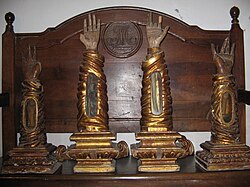
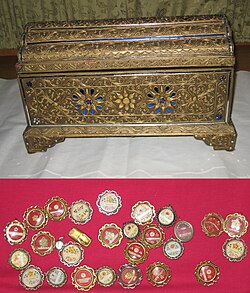
Reliquaries are containers used to protect and display relics. While frequently taking the form of caskets, they have many other forms, including simulations of the relic encased within (e.g., a gilded depiction of an arm for a relic consisting of arm bones). Since the relics themselves were considered valuable, they were enshrined in containers crafted of or covered with gold, silver, gems, and enamel.[57]
Ivory was widely used in the Middle Ages for reliquaries, its pure white color an indication of the holy status of its contents.[58] These objects constituted a major form of artistic production across Europe and Byzantium throughout the Middle Ages.
List of claimed relics


- Relics of the True Cross of Jesus are claimed by many churches around the world. The same applies to Holy Nails, Holy Sponges, Holy Lances, Holy Thorns and other Instruments of the Passion. Famous examples are the Holy Nail in the Iron Crown of Lombardy in Monza Cathedral, the Holy Lance that was part of the Crown Jewels of the Holy Roman Empire in the Hofburg Palace in Vienna, and the Holy Thorn Reliquary in the British Museum in London.
- The Seamless robe of Jesus is kept in a purpose-built chapel in Trier Cathedral.
- The Sandals of Jesus Christ were donated to Prüm Abbey, Germany, by popes Zachary and Stephen II in the 8th century.
- The Marienschrein in Aachen Cathedral contains four important relics: the nappy and loin cloth of Jesus, the dress of Mary and the decapitation cloth of John the Baptist. The Karlsschrein in the same church contains the remains of Charlemagne, who was locally venerated as a saint.
- The Girdle of Mary is kept in the Basilica of Our Lady in Maastricht, Netherlands.
- The Shrine of the Three Kings in Cologne Cathedral contains the remnants of the biblical Magi.
- St Peter's Basilica in the Vatican contains Saint Peter's relics.
- St Paul's relics are allegedly contained in the Basilica of Saint Paul Outside the Wall, in Rome.[59]
- St James' relics are reputedly held at the Cathedral of Santiago de Compostela, Spain.
- St Luke the Evangelist's body is held at the Abbey of Santa Giustina in Padua, Italy; his head, in the St. Vitus Cathedral in Prague; and a rib, at his tomb in Thebes, Greece.
- St Mark the Evangelist's relics are held at St Mark's Basilica in Venice.
- St Matthew the Evangelist's relics are purported to be in the Cathedral of Salerno, Italy.
- St John the Evangelist's tomb is purported to be in the Basilica of St. John at Ephesus in Turkey. The opening of his tomb during Constantine the Great's reign yielded no bones, giving rise to the belief that his body was assumed into heaven.[60]
- John the Baptist's skull, or parts of it, are venerated at the Amiens Cathedral in France, at the Church of San Silvestre in Capite in Rome and at the Munich Residenz Palace. His other relics were discovered in a Bulgarian monastery in 2010.[61]
- St Andrew's relics are contained in the Basilica of St Andrew in Patras, Greece.
- Reliquary arms of Saint Thomas the Apostle can be found in churches around the globe. Most contain only a fragment of the arm that allegedly touched Christ's side wound after the Resurrection.
- Saint Thomas Aquinas' relics are contained in the Church of the Jacobins, Toulouse, France.
- Saint Francis of Assisi's relics are enshrined in the Basilica of Saint Francis in Assisi, Italy.
- Saint Catherine of Siena's head is stored in San Domenico church, Siena, with her body in Santa Maria sopra Minerva Church in Rome.
- Saint George's arm is kept in Lod.[62]
- Saint Servatius' relics are largely kept in a gilded chest and bust in the Basilica of Saint Servatius in Maastricht, Netherlands. Some of his relics are in Tongeren, Belgium, and Quedlinburg, Germany.
- Saint Lambert's skull is contained in a reliquary bust in Liège Cathedral, Belgium.
- Saint Hubert's remains were enshrined in the Abbey of Saint-Hubert, Belgium.
- Saint Willibrord's remains are in Echternach, Luxemburg.
- Nun Maria Droste zu Vischering's (known as Mary of the Divine Heart) relics are exposed in the Church of the Sacred Heart of Jesus in Ermesinde, Portugal.
- The shin of Pope Saint Clement I is kept in the Church of the Conception of Santa Cruz de Tenerife, Spain.[63]
Feast days
In the Extraordinary Form of the Catholic Church, the Feast of the Holy Relics is celebrated on 5 November, within the Octave of All Saints Day.[64] In the Melkite Greek Catholic Church, the Second Sunday of Great Lent is the Sunday of the Holy Relics and Saint Gregory Palamas.[65]
Hinduism
In Hinduism, relics are less common than in other religions since the physical remains of most saints are cremated. The veneration of corporal relics may have originated with the śramaṇa movement or the appearance of Buddhism, and burial practices became more common after the Muslim invasions.[66] One prominent example is the preserved body of Swami Ramanuja in a separate shrine inside Srirangam Temple.
Islam

The veneration of the relics of saints became an incredibly important part of devotional piety in both Sunni and Shia Islam throughout the classical and medieval periods, with "the ubiquity of relics and ritual practices associated with them" becoming a mainstay of "the devotional life of the Muslims ... [all over the world but particularly in] the Near East and North Africa."[67] With the latter-day influence of the reformist movements of Salafism and Wahhabism, there is, according to some scholars, an erroneous perception which persists both among some modern Muslims and Western observers opining that "the Islamic experience['s relationship with relic-veneration] is marginal, because of the perceived absence of relics in Islam."[67] It is, however, evident that "the historical reality of relics in Islam" was very different, and that the classical Islamic thinkers posed various reasons for why the veneration of the relics of prophets and saints was permissible.[68]
Relics of the prophets
In Istanbul
While various relics are preserved by different Muslim communities, the most important are those known as The Sacred Trusts, more than 600 pieces treasured in the Privy Chamber of the Topkapı Palace Museum in Istanbul.
Muslims believe that these treasures include:
- Hair from Prophet Muhammad's beard and footprint
- Sword of Ali
- Sword of David
- Turban of Joseph
- Staff of Moses
- Pot of Abraham
- Forearm and hand of Yahya (John the Baptist)
Most of the trusts can be seen in the museum, but the most important of them can only be seen during the month of Ramadan. The Qur'an has been recited next to these relics uninterruptedly since they were brought to the Topkapı Palace, but Muslims do not worship these relics.
Sacred Cloak of the Prophet
เสื้อคลุม ( เคอร์กา ) ที่เชื่อกันว่าเป็นของท่านศาสดามูฮัมหมัดถูกเก็บรักษาไว้ในมัสยิดกลางในเมืองกันดาฮาร์ประเทศอัฟกานิสถานตามประวัติศาสตร์ท้องถิ่น เสื้อคลุมนี้ถูกมอบให้แก่อะห์มัด ชาห์โดยมูเรด เบกเอมีร์แห่งบูคาราเสื้อคลุมศักดิ์สิทธิ์นี้ถูกเก็บไว้ในที่ล็อกกุญแจ และนำออกมาเฉพาะในยามวิกฤตเท่านั้น ในปี 1996 มุลลาห์ โอมาร์ผู้นำของกลุ่มตาลีบัน อัฟกานิสถาน ได้นำเสื้อคลุมนี้ออกมาแสดงต่อหน้าฝูงชนของอุเลมา (นักวิชาการศาสนา) และได้รับการประกาศให้เป็นอะมีร์-อุล โมมินีน ("ผู้บัญชาการแห่งผู้ศรัทธา") ก่อนหน้านี้ ครั้งสุดท้ายที่เสื้อคลุมนี้ถูกนำออกมาคือเมื่อเมืองประสบกับการระบาดของอหิวาตกโรคในช่วงทศวรรษ 1930 [ 69 ]
โบราณวัตถุทางวัฒนธรรม
คำว่า "โบราณวัตถุ"ยังใช้เรียกสิ่งของที่หลงเหลืออยู่หลังกาลเวลา โดยเฉพาะอย่างยิ่งวัตถุหรือประเพณีที่วัฒนธรรมดั้งเดิมได้สูญหายไปแล้ว แต่ยังรวมถึงวัตถุที่ได้รับการยกย่องในด้านคุณค่าทางประวัติศาสตร์หรืออนุสรณ์ (เช่น ของที่ระลึกหรือมรดกตกทอด) ด้วย
"โบราณวัตถุ" เป็นคำแปลที่ใช้กันทั่วไปของคำว่าเหวินหวู่ (文物) ซึ่งเป็นคำภาษาจีนทั่วไปที่มักหมายถึง " ของเก่า " แต่สามารถขยายความหมายไปถึงสิ่งใดๆ ก็ได้ รวมถึงวัตถุและอนุสาวรีย์ที่มีคุณค่าทางประวัติศาสตร์และวัฒนธรรม อย่างไรก็ตาม การใช้คำนี้มีปัญหาอยู่บ้าง เนื่องจากคำว่าเหวินหวู่มีความคล้ายคลึงกับคำว่า "โบราณวัตถุ" ในภาษาอังกฤษน้อยมาก ในกรณีส่วนใหญ่ คำว่า "สิ่งประดิษฐ์" "แหล่งโบราณคดี" "อนุสาวรีย์" หรือ "โบราณคดี" จะเป็นคำแปลที่ดีกว่า
ในนิยาย
- The RelicโดยEça de Queiroz , Dedalus Ltd, สหราชอาณาจักร 1994 ISBN 0-946626-94-4
- หนังสือแปลเรื่อง "บาทหลวงทอร์ตูโร"โดยเบรนแดน คอนเนลล์สำนักพิมพ์ไพรม์บุ๊คส์ ปี 2005 ISBN 0-8095-0043-4
ดูเพิ่มเติม
- นักบุญในสุสานใต้ดิน
- ศาลเจ้าฮาซรัตบัล
- วันอาทิตย์แห่งการหวนรำลึก
- พระธาตุที่เกี่ยวข้องกับพระพุทธเจ้า
- สิ่งของศักดิ์สิทธิ์ที่เกี่ยวข้องกับพระเยซู
- ศาลเจ้าสามกษัตริย์
- การแปล (โบราณวัตถุ)
Further reading
- Cruz, Joan Carroll (2015). Relics: What They Are and Why They Matter. Charlotte NC: TAN Books. ISBN 9780895558596.
- Brown, Peter; Cult of the Saints: Its Rise and Function in Latin Christianity; University of Chicago Press; 1982
- Vauchez, Andre; Sainthood in the Later Middle Ages; Cambridge University Press; 1997
- Mayr, Markus; Geld, Macht und Reliquien; Studienverlag, Innsbruck, 2000
- Mayr, Markus (Hg); Von goldenen Gebeinen; Studienverlag, Innsbruck, 2001
- Fiore, Davide; Human variation of a relic (original title: Variazione Umana di una reliquia); StreetLib, Italy; 2017
External links


- The First-class Relics of St. Maximilian KolbeArchived 2016-01-21 at the Wayback Machine
- Relics in the Church of St Charles Borromeo, Wrocław, PolandArchived 2016-05-21 at the Wayback Machine
- World tour of the relics of St. Therese of LisieuxArchived 2009-04-11 at the Wayback Machine
- Keeping Relics in PerspectiveArchived 2016-03-06 at the Wayback Machine
- A Place for Relics
- Relics and Reliquaries Collection, University of Dayton Special CollectionsArchived 2015-01-22 at the Wayback Machine
- บทนำโดย Earnest Brehaut (จากการแปลของเขาในปี 1916) หน้า ix–xxv เก็บถาวรเมื่อ 2014-08-14 ที่Wayback Machineใน: Medieval Sourcebook, Gregory of Tours (539–594), ประวัติศาสตร์ของชาวแฟรงก์ , เล่ม I–X เก็บถาวรเมื่อ 2014-08-14 ที่Wayback Machine (เกี่ยวกับความหมายของ sanctusและvirtusในศตวรรษที่ 6 )
- เฮด, โทมัส. "ลัทธิบูชานักบุญและพระธาตุของพวกเขา", หนังสืออ้างอิงออนไลน์สำหรับการศึกษาในยุคกลาง (ORB), วิทยาลัยสเตเทนไอส์แลนด์, มหาวิทยาลัยซิตี้แห่งนิวยอร์ก
- สมิธ, จูดิธ เอ็มเอช, "ศาสนาคริสต์แบบพกพา: โบราณวัตถุในยุคกลางตะวันตก (ค.ศ. 700–1200)", การบรรยายประวัติศาสตร์ที่ราลี ปี 2010 เก็บถาวรเมื่อ 3 มีนาคม 2016 ที่Wayback Machine
- บัตเตอร์ฟิลด์, แอนดรูว์. "สิ่งที่เหลืออยู่", นิวรีพับลิก , 28 กรกฎาคม 2011 เก็บถาวรเมื่อ 17 ตุลาคม 2015 ที่เวย์แบ็กแมชชีน
- สมบัติแห่งสวรรค์: นักบุญ พระธาตุ และความศรัทธาในยุคกลางของยุโรป — นิทรรศการร่วมของพิพิธภัณฑ์บริติช พิพิธภัณฑ์ศิลปะคลีฟแลนด์ และพิพิธภัณฑ์ศิลปะวอลเตอร์ส บัลติมอร์ ( เก็บถาวรเมื่อ 11 มิถุนายน 2014 ที่ Wayback Machine)