แหล่งข้อมูลหลักของเชกสเปียร์สำหรับ3 Henry VIคือThe Union of the Two Noble and Illustre Families of Lancaster and York (1548) ของEdward Hallเช่นเดียวกับประวัติศาสตร์พงศาวดารส่วนใหญ่ของเขา เชกสเปียร์ยังได้ศึกษาChronicles of England, Scotland and Ireland (1577; ฉบับพิมพ์ครั้งที่ 2 ปี 1587) ของRaphael Holinshed ด้วย Holinshed นำข้อมูลเกี่ยวกับสงครามดอกกุหลาบมาจาก Hall เป็นจำนวนมาก ถึงขนาดที่คัดลอกข้อความจาก Hall มาโดยตรงหลายส่วน อย่างไรก็ตาม มีความแตกต่างระหว่าง Hall และ Holinshed มากพอที่จะยืนยันได้ว่าเชกสเปียร์ได้ศึกษาจากทั้งสองแหล่ง[ 2 ] [ 3 ]
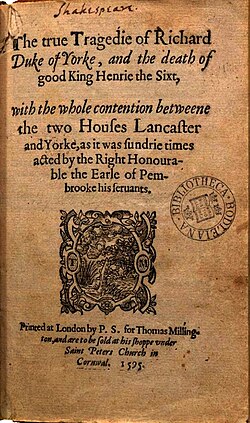
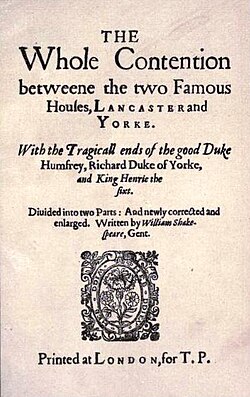
บทละครเรื่องTrue Tragedy ฉบับ พิมพ์ขนาดอ็อกตาโวในปี 1595 ถูกพิมพ์ซ้ำในขนาดควอโตในปี 1600 โดยวิลเลียม ไวท์ สำหรับสำนักพิมพ์มิลลิงตัน และถูกพิมพ์ซ้ำในขนาดโฟลิโอในปี 1619 เป็นส่วนหนึ่งของFalse Folioของวิ ลเลียม แจ็กการ์ด ซึ่งพิมพ์ให้กับโท มัส พาเวียร์บทละครนี้ถูกพิมพ์รวมกับบทละครเรื่อง2 Henry VIซึ่งพิมพ์ในขนาดควอโตในปี 1594 ภายใต้ชื่อเรื่องThe First part of the Contention betwixt the two famous Houses of Yorke and Lancaster, with the death of the good Duke Humphrey: And the banishment and death of the Duke of Suffolke, and the Tragicall end of the proud Cardinal of Winchester, with the notable Rebellion of Jack Cade: and the Duke of Yorke's first claim unto the Crowne (ต่อไปนี้จะเรียกว่าThe Contention )) ใน False Folio บทละครทั้งสองเรื่องถูกจัดกลุ่มไว้ภายใต้ชื่อทั่วไปว่าThe Whole Contention between the Two Famous Houses, Lancaster and Yorke พร้อมด้วยจุดจบอันน่าเศร้าของดยุคฮัมฟรีย์ผู้ประเสริฐ ริชาร์ด ดยุคแห่งยอร์ก และพระเจ้าเฮนรีที่หก นอกจากนี้ ยังมีการพิมพ์เรื่องราว ของเพริเคิลส์ เจ้าชายแห่งไทร์ ควบคู่ไปกับ"การโต้แย้งทั้งหมด"ด้วย
บทละครที่รู้จักกันในปัจจุบันในชื่อ3 Henry VIนั้น ไม่ได้ตีพิมพ์จนกระทั่งปี 1623 ในหนังสือรวมบทละครฉบับ แรก (First Folio)ภายใต้ชื่อ " The third Part of Henry the Sixt, with the death of the Duke of Yorke "
ตลอดหลายปีที่ผ่านมา นักวิจารณ์ได้ถกเถียงถึงความเชื่อมโยงระหว่างTrue Tragedyและ3 Henry VIโดยมีทฤษฎีหลักสี่ทฤษฎีที่เกิดขึ้น:
True Tragedyคือเวอร์ชันที่สร้างขึ้นใหม่ของการแสดงละครเรื่อง Henry VI ของเชกสเปียร์ หรือที่เรียกว่า"bad octavo"ซึ่งเป็นความพยายามของนักแสดงที่จะสร้างบทละครต้นฉบับขึ้นใหม่จากความทรงจำและนำไปขาย ทฤษฎีนี้เริ่มต้นโดยซามูเอล จอห์นสันในปี 1765 และได้รับการปรับปรุงโดยปีเตอร์ อเล็กซานเดอร์ในปี 1928
ทฤษฎี โศกนาฏกรรมที่แท้จริง (True Tragedy)เป็นร่างบทละครฉบับแรกของเชกสเปียร์ที่ตีพิมพ์ในหนังสือรวมบทละครฉบับแรก (First Folio) ปี 1623 ในชื่อ"ภาคที่สามของเฮนรี่ที่หก" (The Third Part of Henry the Sixt) ทฤษฎีนี้ริเริ่มโดยเอ็ดมอนด์ มาโลน ในปี 1790 ในฐานะทางเลือกแทนทฤษฎีการสร้างอนุสรณ์สถานขึ้นใหม่ของจอห์นสัน และได้รับการสนับสนุนในปัจจุบันโดยนักวิจารณ์เช่น สตีเวน เออร์โควิทซ์
หน้าปกของหนังสือThe Most Lamentable Romaine Tragedie of Titus Andronicus ฉบับพิมพ์ควาร์โต ปี 1594
อย่างไรก็ตาม สิ่งที่สำคัญยิ่งกว่าความแตกต่างในรายละเอียดของการแต่งงานที่เสนอมา คือความแตกต่างระหว่างชื่อทั้งสอง คือ บอนฟิลด์ในTrue Tragedyและบอนวิลล์ใน3 Henry VIบอนฟิลด์ไม่เคยถูกกล่าวถึงในพงศาวดาร และไม่มีบุคคลในประวัติศาสตร์ที่รู้จักชื่อนั้น ในทางกลับกัน บอนวิลล์ถูกกล่าวถึงหลายครั้งโดยทั้งฮอลล์และโฮลินเชด และเป็นบุคคลในประวัติศาสตร์ที่เป็นที่รู้จัก อย่างไรก็ตาม มีตัวละครรองชื่อบอนฟิลด์ในบทละครของโรเบิร์ต กรีนเรื่องGeorge a Greene, the Pinner of Wakefield (1587–1590) ซึ่งเขาเป็นสมาชิกของกลุ่มผู้ต่อต้านพระเจ้าเอ็ดเวิร์ดที่ 3 อย่างแข็งขันGeorge a Greeneตีพิมพ์ในรูปแบบควอโตในปี 1599 และหน้าปกระบุว่าแสดงโดยSussex's Men ในปี ค.ศ. 1594 คณะละคร Sussex's Men ได้แสดงละครเรื่องTitus Andronicusซึ่งตามหน้าปกของฉบับพิมพ์ควาร์โตปี ค.ศ. 1594 ระบุว่า คณะละครStrange's Men (หรือ Derby's Men) และPembroke's Men ก็ได้แสดงเช่นกัน ยิ่งไปกว่านั้น ตามหน้าปกของฉบับพิมพ์อ็อกตาโวปี ค.ศ. 1595 ของละครเรื่องTrue Tragedyระบุว่า คณะละคร Pembroke's Men เป็นผู้แสดง ดังนั้น คณะละคร Pembroke's Men จึงแสดงทั้งTrue TragedyและTitus Andronicusในขณะที่คณะละคร Sussex's Men แสดงทั้งGeorge a GreeneและTitus Andronicusจึงสร้างความเชื่อมโยงระหว่างTrue TragedyและGeorge a Greeneและอาจบ่งชี้ว่า คณะละคร Sussex's Men หรือคณะละคร Pembroke's Men อาจแสดง True Tragedy หรือทั้งสอง คณะหรืออาจแสดงทั้งสองคณะก็ได้ เมื่อพิจารณาร่วมกันแล้ว ชื่อของ Bonfield "ในบทละครสองเรื่องที่ไม่มีความเกี่ยวข้องทางประวัติศาสตร์กัน แต่แสดงโดยคณะละครที่ใช้บทและนักแสดงร่วมกัน บ่งชี้ว่าชื่อนี้เป็นการเพิ่มเติมโดยนักแสดงที่ไม่ใช่ผู้ประพันธ์" [ 27 ]ข้อเท็จจริงที่ว่าข้อความที่ถูกรายงานมักใช้เนื้อหาจากบทละครอื่น ๆ ถือเป็นข้อสนับสนุนเพิ่มเติมว่าอาจเป็นเช่นนั้น ตัวอย่างเช่นThe Contentionใช้เนื้อหาจากThe Tragical History of Doctor FaustusของChristopher Marlowe ( ประมาณ ค.ศ. 1592 ), Edward II (ประมาณค.ศ. 1593 ) และแม้แต่บทพูดจาก3 Henry VIว่า "If our King Henry had shook hands with death" (1.4.103)
หากยอมรับว่าเชกสเปียร์ตัดสินใจอย่างมีสติที่จะใช้ผลงานของโฮลินเชดบ่อยขึ้นในระหว่างการแก้ไขบทละครเรื่องทรูทราเกดี ( True Tragedy ) ก็ต้องถามว่าทำไมเขาถึงทำเช่นนั้นทรูทราเกดีสั้นกว่า3 เฮนรีที่ 6 (3 Henry VI ) ประมาณหนึ่งพันบรรทัด และในขณะที่ความแตกต่างหลายอย่างเป็นเพียงการเปลี่ยนแปลงด้านสุนทรียศาสตร์และสำนวนภาษาที่แตกต่างกัน (ซึ่งส่วนใหญ่เกิดจากการรายงานที่ไม่ถูกต้อง) ความแตกต่างที่สำคัญอย่างหนึ่งระหว่างสองเรื่องนี้ที่ปรากฏอยู่ตลอดคือวิธีการจัดการกับความรุนแรง โดยรวมแล้ว3 เฮนรีที่ 6มีความระมัดระวังมากกว่าในการพรรณนาถึงสงคราม ในขณะที่ ทรูทรา เกดีมีการต่อสู้บนเวทีที่ชัดเจนและต่อเนื่องกว่า รวมถึงขบวนแห่และการเฉลิมฉลองของราชวงศ์หลังการต่อสู้มากกว่า ยิ่งกว่า3 เฮนรีที่ 6ท รู ทราเกดีสอดคล้องกับตำนานทิวดอร์ที่ว่าสงครามดอกกุหลาบเป็นบทลงโทษของพระเจ้าสำหรับผู้คนที่หลงทางจากเส้นทางที่พระองค์ทรงกำหนดไว้ และเป็นวิธีการของพระองค์ในการชำระล้างประเทศจากความชั่วร้ายและเปิดทางให้ราชวงศ์ทิวดอร์ ผู้ทรงคุณธรรม สถาปนาสันติภาพ ตามธรรมเนียมแล้ว นี่เป็นวิธีการตีความชุดหนังสือแปดเล่มทั้งหมดที่พบได้ทั่วไป โดยได้รับการสนับสนุนและขยายความโดยนักวิจารณ์ที่หลากหลาย เช่นAugust Wilhelm Schlegel [ 35 ] Hermann Ulrici [ 36 ] Georg Gottfried Gervinus [ 37 ] Irving Ribner [ 18 ] MM Reese [ 38 ] Robert Rentoul Reed [ 39 ] และที่โด่งดังที่สุดคือ EMW Tillyard ซึ่งวลี Tudor myth มักเกี่ยวข้องกับเขามากที่สุดในปัจจุบัน
อย่างไรก็ตาม นักวิจารณ์บางคน เช่น Henry Ansgar Kelly, AP Rossiter, AL French, David Frey, JP Brockbank, David Riggs, Michael Hattaway, Michael Taylor, Randall Martin และ Ronald Knowles โต้แย้งว่านี่เป็นเหตุผลหลักที่เชกสเปียร์เลือกใช้ Holinshed แทน Hall เนื่องจากทัศนคติของ Holinshed ต่อความรุนแรงนั้นไม่ยกย่องเท่าของ Hall ความกระตือรือร้นรักชาติของเขาน้อยกว่า และทัศนคติของเขาต่อการสังหารหมู่นั้นคลุมเครือกว่า กล่าวคือ เชกสเปียร์เริ่มไม่ชื่นชอบมุมมองทางประวัติศาสตร์ของราชวงศ์ทิวดอร์ และได้ปรับเปลี่ยนบทละครของเขาตามนั้น[ 40 ]ดังที่ Paola Pugliatti กล่าวไว้ว่า "การดัดแปลงแหล่งข้อมูลและการประดิษฐ์ขึ้นใหม่อาจถูกตีความว่าเป็นท่าทีวิพากษ์วิจารณ์อย่างชัดเจน เนื่องจากแสดงให้เห็นถึงความจำเป็นในการตั้งคำถามต่อประเพณีการเขียนประวัติศาสตร์อย่างเป็นทางการ" [ 41 ]
อย่างไรก็ตาม ในฉากที่คล้ายคลึงกันในละครเรื่อง 3 Henry VI ริชาร์ดได้รายงานการเสียชีวิตของ โทมัส เนวิลล์น้องชายอีกคนหนึ่งของวอร์วิกซึ่งไม่เคยปรากฏตัวเป็นตัวละครในละครเรื่อง Henry VI เรื่องใดเลย
เห็นได้ชัดว่า ความไม่สอดคล้องกันของตัวละครเช่นนี้สามารถสร้างปัญหาให้กับการผลิตละครได้ ตัวอย่างเช่น ในองก์ที่ 1 ฉากที่ 1 ของการดัดแปลงเชกสเปียร์ของ BBC ปี 1981 [ 44 ]มอนแทกูไม่ได้ปรากฏตัวในบทบาทของซอลส์เบอรีหรือจอห์น เนวิลล์ ดังนั้น สองบรรทัดแรกของเขา "Good brother, as thou lov'st and honor'st arms,/Let's fight it out and not stand cavilling thus" (บรรทัดที่ 117–118) จึงถูกมอบให้กับแคลเรนซ์และเปลี่ยนเป็น "Set it on your head good father/If thou lov'st and honor'st arms,/Let's fight it out and not stand cavilling thus." บรรทัดที่สองของมอนแทกู "And I unto the sea from when I came" (บรรทัดที่ 210) หายไปทั้งหมด ในฐานะตัวละคร มอนแทกิวถูกแนะนำในองก์ที่ 1 ฉากที่ 2 โดยรับบทโดยไมเคิล เบิร์น (เช่นเดียวกับการแสดงที่เหลือ) อย่างไรก็ตาม บทพูดแรกของเขาในฉากนี้ "แต่ข้ามีเหตุผลที่หนักแน่นและชัดเจน" (บรรทัดที่ 3) ถูกเปลี่ยนเป็นของแคลเรนซ์ ต่อมา เมื่อยอร์กกำลังสั่งการลูกน้อง คำสั่งของเขาต่อมอนแทกิว "พี่ชาย เจ้าจงไปลอนดอนเดี๋ยวนี้" (บรรทัดที่ 36) ถูกเปลี่ยนเป็น "ลูกพี่ลูกน้อง เจ้าจงไปลอนดอนเดี๋ยวนี้" และการย้ำคำสั่งของยอร์กที่ว่า "พี่ชายของข้า มอนแทกิว จะส่งคนไปลอนดอน" (บรรทัดที่ 54) ถูกเปลี่ยนเป็น "เจ้าจะไปลอนดอนหรือ ลูกพี่ลูกน้องของข้า มอนแทกิว" นอกจากนี้ บทพูดของมอนแทกิวที่ว่า "พี่ชาย ข้าไป ข้าจะชนะพวกเขา อย่ากลัวเลย" (บรรทัดที่ 60) ถูกเปลี่ยนเป็น "ลูกพี่ลูกน้อง ข้าไป ข้าจะชนะพวกเขา อย่ากลัวเลย" ทั้งหมดนี้มีจุดประสงค์เพื่อสร้างตัวละครเดียวที่เป็นลูกพี่ลูกน้องของยอร์กและพี่ชายของวอร์วิก (เช่น จอห์น เนวิลล์)
อย่างไรก็ตาม ในบรรดาตัวละครทั้งหมดที่สนับสนุนการแก้แค้น คลิฟฟอร์ดเป็นตัวละครที่มีความกระตือรือร้นมากที่สุด ความหมกมุ่นของเขาในการแก้แค้นให้กับการตายของพ่อเริ่มขึ้นก่อนที่ละครจะเริ่มต้นเสียอีก ในฉากก่อนสุดท้ายของ2 Henry VI
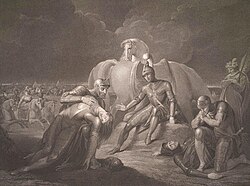
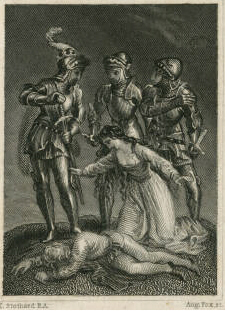
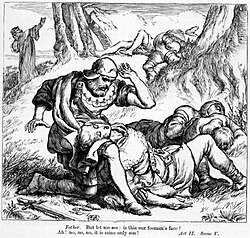
ภาพประกอบของ HC Selous depicting โศกนาฏกรรมระหว่างพ่อและลูกในองก์ที่ 2 ฉากที่ 5 จากหนังสือ The Plays of William Shakespeare: The Historical Playsเรียบเรียงโดย Charles Cowden Clarke และ Mary Cowden Clarke (1830)
ในปี 2012 ละครไตรภาคนี้ถูกนำมาแสดงที่ โรงละคร เชกสเปียร์โกลบซึ่งเป็นส่วนหนึ่งของเทศกาลโกลบทูโกลบโดยแต่ละเรื่องแสดงโดยคณะละคร จากบอล ข่าน ที่แตกต่างกัน และนำเสนอในรูปแบบบทวิจารณ์เกี่ยวกับประวัติศาสตร์ความรุนแรงในภูมิภาคนั้น3 Henry VIถูกนำมาแสดงโดยคณะละครมาซิโดเนีย National Theatre Bitola กำกับโดย John Blondell และนำแสดงโดย Petar Gorko รับบทเป็น Henry, Gabriela Petrusevska รับบทเป็น Margaret, Nikolche Projchevski รับบทเป็น Edward และ Martin Mirchevski รับบทเป็น Richard [ 61 ]ในปี 2013 Nick Bagnall ได้กำกับละครไตรภาคนี้อีกครั้งที่โรงละครโกลบ ละครทั้งสามเรื่องถูกนำมาแสดงทุกวัน เริ่มตั้งแต่เที่ยงวัน ภายใต้ชื่อรวมว่าHenry VI: Three Plays 3 Henry VIถูกนำมาแสดงภายใต้ชื่อHenry VI: The True Tragedy of the Duke of Yorkละครแต่ละเรื่องถูกตัดต่อให้เหลือเพียงสองชั่วโมง และละครไตรภาคทั้งหมดถูกนำมาแสดงโดยมีนักแสดงเพียงสิบสี่คน ในวันสำคัญหลายวัน มีการแสดงละคร ณ สถานที่จริงที่เหตุการณ์ดั้งเดิมบางส่วนเกิดขึ้น และถ่ายทอดสดไปยังโรงละคร มีการจัด "การแสดงในสนามรบ" ที่Towton ( ยุทธการที่ TowtonจากHenry VI 3 ), Tewkesbury ( ยุทธการที่ TewkesburyจากHenry VI 3 ), มหาวิหาร St Albans ( ยุทธการที่ St Albans ครั้งแรกจากHenry VI 2และยุทธการที่ St Albans ครั้งที่สองจากHenry VI 3 ) และMonken Hadley Common ( ยุทธการที่ BarnetจากHenry VI 3 ) การแสดงนำโดย Graham Butler รับบทเป็น Henry, Mary Doherty รับบทเป็น Margaret, Patrick Mylesรับบทเป็น Edward และ Simon Harrison รับบทเป็น Richard [ 62 ] [ 63 ] [ 64 ]
หลักฐานสำหรับการดัดแปลงครั้งแรกของ3 Henry VIพบได้ในช่วงการฟื้นฟูราชวงศ์เมื่อปี ค.ศ. 1681 จอห์น โครว์นได้สร้างบทละครสองส่วนชื่อHenry the Sixth, The First Part and The Misery of Civil War [ 68 ] Henryประกอบด้วยองก์ที่ 1–3 ของ2 Henry VIโดยเน้นที่การตายของกลอสเตอร์ ส่วนMiseryดัดแปลงมาจากสององก์สุดท้ายของ2 Henry VIและส่วนใหญ่ของ3 Henry VIโครว์นซึ่งเป็นผู้ภักดีต่อกษัตริย์ อย่างมาก เขียนบทละครนี้ในช่วงเวลาของแผนการสมคบคิดของ พวกคาทอลิก เขาใช้การดัดแปลงของเขาเพื่อเตือนถึงอันตรายของการปล่อยให้อังกฤษตกอยู่ในสงครามกลางเมืองอีกครั้ง ซึ่งจะเป็นเช่นนั้นหาก พรรค วิกขึ้นมามีอำนาจ การเปลี่ยนแปลงในบทละครรวมถึงฉากใหม่ แม้จะเป็นฉากเงียบ ก่อนการรบที่เวกฟิลด์ ซึ่งยอร์กโอบกอดรัตแลนด์ก่อนออกไปรบ การขยายเรื่องราวการเกี้ยวพาราสีระหว่างเอ็ดเวิร์ดและเลดี้เกรย์ และการเพิ่มโครงเรื่องย่อยสองเรื่อง เรื่องหนึ่งเกี่ยวกับนางสนมของเอ็ดเวิร์ดที่เขาฆ่าโดยบังเอิญในสงคราม (เป็นการอ้างอิงถึงPhilasterของFrancis BeaumontและJohn Fletcher ) อีกเรื่องหนึ่งเกี่ยวกับการที่วอร์วิกพยายามล่อลวงเลดี้เกรย์หลังจากสามีของเธอเสียชีวิตในยุทธการเซนต์อัลบันส์ครั้งที่สอง (เรื่องนี้ถูกนำมาใช้เป็นเหตุผลว่าทำไมวอร์วิกจึงหันมาต่อต้านเอ็ดเวิร์ด) [ 69 ]สิ่งที่ควรสังเกตอีกอย่างคือ บทบาทของมาร์กาเร็ตใน3 Henry VIถูกตัดออกไปเกือบทั้งหมด เหลือเพียงสองฉาก คือ การตายของยอร์กและการตายของเจ้าชายเอ็ดเวิร์ด[ 70 ]
บทละคร เรื่อง 3 Henry VIยังถูกนำไปใช้บางส่วนในบทละครเรื่อง The Tragical History of King Richard the Third, containing the Distresses and Death of King Henry the Sixth (1699) ของColley Cibberซึ่งเป็นหนึ่งในบทละครดัดแปลงจากบทละครของเชกสเปียร์ที่ประสบความสำเร็จมากที่สุดตลอดกาล บทละครเรื่องนี้ประกอบด้วยบทละครของเชกสเปียร์ครึ่งหนึ่งและบทละครที่แต่งขึ้นใหม่ครึ่งหนึ่ง บทละครเรื่อง 3 Henry VIถูกใช้เป็นแหล่งที่มาขององก์ที่ 1 ซึ่งนำเสนอการคร่ำครวญของเฮนรี่เกี่ยวกับภาระหน้าที่ของกษัตริย์ (2.5) การรบที่ทิวส์เบอรี (องก์ที่ 5 – แม้ว่าคำพูดของมาร์กาเร็ตในองก์ที่ 5 ฉากที่ 1 จะถูกแทนที่ด้วยคำพูด "once more unto the breach" ของเฮนรี่ที่ 5 จากบทละครเรื่องHenry Vและพูดโดยวอร์วิค) และการที่ริชาร์ดสังหารเฮนรี่ในหอคอย (5.6) บทพูดคนเดียวของริชาร์ดในองก์ที่ 2 ของTragical Historyก็อิงจากบทพูดคนเดียวของเขาในองก์ที่ 3 ฉากที่ 2 ของ3 Henry VIเช่น กัน
ธีโอฟิลัส ซิบเบอร์บุตรชายของคอลลีย์ได้เขียนบทดัดแปลงของตนเองในชื่อKing Henry VI: A Tragedyในปี 1723 โดยใช้องก์ที่ 5 จาก2 Henry VIและองก์ที่ 1 และ 2 จาก3 Henry VIบทละครเรื่องนี้แสดงที่โรงละครดรูรีเลนโดยคอลลีย์รับบทเป็นวินเชสเตอร์ เช่นเดียวกับที่โครว์นเคยทำ ซิบเบอร์ได้สร้างฉากใหม่เกี่ยวกับรัตแลนด์ หลังจากที่ยอร์กเสียชีวิต เขาและรัตแลนด์ถูกวางเคียงข้างกันในสนามรบ
ในปี ค.ศ. 1817 เอ็ดมันด์ คีนปรากฏตัวในละคร เรื่อง Richard Duke of York; or the Contention of York and Lancasterของเจ.เอช. เมอริเวล ซึ่งใช้เนื้อหาจากบทละครเรื่อง Henry VIทั้งสามภาคแต่ตัดส่วนที่ไม่เกี่ยวข้องกับยอร์กออกไปทั้งหมด ละครจบลงด้วยการตายของเขา ซึ่งเกิดขึ้นในองก์ที่ 1 ฉากที่ 4 ของบทละครเรื่อง3 Henry VIเนื้อหาจากบทละครเรื่อง 3 Henry VIประกอบด้วยฉากเปิดเรื่องไม่กี่ฉากที่ยอร์กแย่งชิงบัลลังก์จากเฮนรี เตรียมพร้อมสำหรับการรบ และการรบจริง
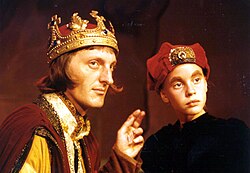
The production which is usually credited with establishing the reputation of the play in the modern theatre is John Barton and Peter Hall's 1963/1964 RSC production of the tetralogy, adapted into a three-part series, under the general title The Wars of the Roses, at the Royal Shakespeare Theatre. The first play (entitled simply Henry VI) featured a much shortened version of 1 Henry VI and half of 2 Henry VI (up to the death of Cardinal Beaufort). The second play (entitled Edward IV) featured the second half of 2 Henry VI and a shortened version of 3 Henry VI, which was then followed by a shortened version of Richard III as the third play. In all, 1,450 lines written by Barton were added to 6,000 lines of original Shakespearean material, with a total of 12,350 lines removed.[71] The production starred David Warner as Henry, Peggy Ashcroft as Margaret, Roy Dotrice as Edward and Ian Holm as Richard. Barton and Hall were both especially concerned that the plays reflect the contemporary political environment, with the civil chaos and breakdown of society depicted in the plays mirrored in the contemporary milieu, by events such as the building of the Berlin Wall in 1961, the Cuban Missile Crisis in 1962 and the assassination of John F. Kennedy in 1963. Hall allowed these events to reflect themselves in the production, arguing that "we live among war, race riots, revolutions, assassinations, and the imminent threat of extinction. The theatre is, therefore, examining fundamentals in staging the Henry VI plays."[72] They were also influenced by politically focused literary theory of the time; both had attended the 1956 London visit of Bertolt Brecht's Berliner Ensemble, both were subscribers to Antonin Artaud's theory of "Theatre of Cruelty", and Hall had read an English translation of Jan Kott's influential Shakespeare Our Contemporary in 1964 prior to its publication in Britain. Both Barton and Hall were also supporters of E.M.W. Tillyard's 1944 book Shakespeare's History Plays, which was still a hugely influential text in Shakespearian scholarship, especially in terms of its argument that Shakespeare in the tetralogy was advancing the Tudor myth.[73]
Another major adaptation was staged in 1986 by the English Shakespeare Company, under the direction of Michael Bogdanov. This touring production opened at the Old Vic, and subsequently toured for two years, performing at, amongst other places, the Panasonic Globe Theatre in Tokyo, Japan (as the inaugural play of the arena), the Festival dei Due Mondi in Spoleto, Italy and at the Adelaide Festival in Adelaide, Australia. Following the structure established by Barton and Hall, Bogdanov combined 1 Henry VI and the first half of 2 Henry VI into one play, and the second half of 2 Henry VI and 3 Henry VI into another, using the same titles as Barton (Henry VI and The Rise of Edward IV). Also like Barton and Hall, Bogdanov concentrated on political issues, although he made them far more overt than had his predecessors. For example, played by June Watson, Margaret was closely modelled after the British Prime Minister at the time, Margaret Thatcher, even to the point of having similar clothes and hair. Likewise, Paul Brennan's Henry was modelled after the King Edward VIII, prior to his abdication.[74] Bogdanov also employed frequent anachronisms and contemporary visual registers, in an effort to show the relevance of the politics in the fifteenth century to the contemporary period. The production was noted for its pessimism as regards contemporary British politics, with some critics feeling the political resonances were too heavy handed.[75] However, the series was a huge box office success. Alongside Watson and Brennan, the play starred Philip Bowen as Edward and Andrew Jarvis as Richard.
Another adaptation of the tetralogy by the Royal Shakespeare Company followed in 1988, performed at the Barbican. Adapted by Charles Wood and directed by Adrian Noble, the Barton/Hall structure was again followed, reducing the trilogy to two plays by dividing 2 Henry VI in the middle. The resulting trilogy was entitled The Plantagenets, with the individual plays entitled Henry VI, The Rise of Edward IV and Richard III, His Death. Starring Ralph Fiennes as Henry, Penny Downie as Margaret, Ken Bones as Edward and Anton Lesser as Richard, the production was extremely successful with both audiences and critics. This play ended with the line "Now is the winter of our discontent;" the opening line from Richard III.
Michael Bogdanov and the English Shakespeare Company presented a different adaptation at the Swansea Grand Theatre in 1991, using the same cast as on the touring production. All eight plays from the history cycle were presented over a seven night period, with each play receiving one performance only, and with only twenty-eight actors portraying the nearly five hundred roles. Whilst the other five plays in the cycle were unadapted, the Henry VI plays were combined into two, using the Barton/Hall structure, with the first was named The House of Lancaster and the second, The House of York.
In 2000, Edward Hall presented the trilogy as a two-part series at the Watermill Theatre in Newbury. Hall followed the Jackson/Seale structure, combining 1 Henry VI and 2 Henry VI into one play which all but eliminated 1 Henry VI and following this with an edited version of 3 Henry VI. This production was noted for how it handled the violence of the play. The set was designed to look like an abattoir, but rather than attempt to present the violence realistically (as most productions do), Hall went in the other direction; presenting the violence symbolically. Whenever a character was decapitated or killed, a red cabbage was sliced up whilst the actor mimed the death beside it.
In 2001, Tom Markus directed an adaptation of the tetralogy at the Colorado Shakespeare Festival. Condensing all fours plays into one, Markus named the play Queen Margaret, doing much the same with the character of Margaret as Merivale had done with York. Margaret was played by Gloria Biegler, Henry by Richard Haratine, Edward by John Jurcheck and Richard by Chip Persons.
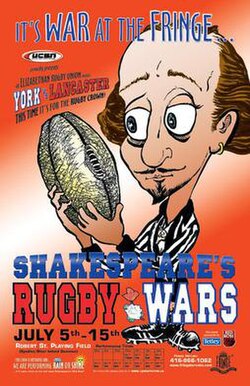
Poster from the 2001 Shakespeare's Rugby Wars
Another unusual 2001 adaptation of the tetralogy was entitled Shakespeare's Rugby Wars. Written by Matt Toner and Chris Coculuzzi, and directed by Coculuzzi, the play was acted by the Upstart Crow Theatre Group and staged outdoors at the Robert Street Playing Field as part of the Toronto Fringe Festival. Presented as if it were a live rugby match between York and Lancaster, the 'play' featured commentary from Falstaff (Stephen Flett), which was broadcast live for the audience. The 'match' itself was refereed by 'Bill Shakespeare' (played by Coculuzzi), and the actors (whose characters names all appeared on their jerseys) had microphones attached and would recite dialogue from all four plays at key moments.[76]
In 2002, Leon Rubin presented the tetralogy as a trilogy at the Stratford Shakespeare Festival in Ontario. Using the Barton/Hall method of combining 1 Henry VI with the first half of 2 Henry VI, and the second half of 2 Henry VI with 3 Henry VI, the plays were renamed Henry VI: Revenge in France and Henry VI: Revolt in England. Michael Thierry played Henry, Seana McKenna played Margaret, Rami Posner played Edward and Thom Marriott played Richard.
Also in 2002, Edward Hall and the Propeller Company presented a one-play all-male cast modern dress adaptation of the trilogy at the Watermill Theatre. Under the title Rose Rage, Hall used a cast of only thirteen actors to portray the nearly one hundred and fifty speaking roles in the four-hour production, thus necessitating doubling and tripling of parts. Although a new adaptation, this production followed the Jackson/Seale method of eliminating almost all of 1 Henry VI. The original cast included Jonathan McGuinness as Henry, Robert Hands as Margaret, Tim Treloar as Edward and Richard Clothier as Richard. After a successful run at the Haymarket, the play moved to the Chicago Shakespeare Theater. The American cast included Carman Lacivita as Henry, Scott Parkinson as Margaret, Fletcher McTaggart as Edward and Bruce A. Young as Richard.[77]
Outside England, a major European adaptation of the tetralogy took place in 1864 in Weimar under the direction of Franz von Dingelstedt, who, seven years previously had staged the play unedited. Dingelstedt turned the trilogy into a two-parter under the general name Die weisse rose. The first play was called Haus Lancaster, the second Haus York. This adaptation was unique insofar as both plays were created by combining material from all three Henry VI plays. Following this structure, Alfred von Walzogen also produced a two-part play in 1875, under the general title Edward IV. Another European adaptation was in 1965 at the Teatro Piccolo in Milan. Directed by Giorgio Strehler it went under the title Il gioco del potenti (The Play of the Mighty). Using Barton and Hall's structure, Strehler also added several characters, including a Chorus, who used monologues from Richard II, both parts of Henry IV, Henry V, Macbeth and Timon of Athens, and two gravediggers called Bevis and Holland (after the names of two of Cade's rebels in the Folio text of 2 Henry VI), who commented (with dialogue written by Strehler himself) on each of the major characters as they set about burying them.[78] A major German adaptation was Peter Palitzsch's two-part adaptation of the trilogy as Der krieg der rosen in 1967 at the Stuttgart State Theatre. Condensing the three plays into two, Heinrich VI and Eduard IV, Palitzsch's adaptation concluded with the opening monologue from Richard III.[79]
Film
Although 3 Henry VI itself has never been adapted directly for the cinema, extracts from it have been used in many of the cinematic adaptations of Richard III.
The first such adaptation was 1911 twenty-two-minute silent version of Richard III, directed by and starring F.R. Benson. Filmed as part of a series intended by Benson to promote the Shakespeare Memorial Theatre at Stratford, the piece was pure filmed theatre, with each scene shot on-stage in a single take by an unmoving camera. Each single shot scene is prefaced by a scene-setting intertitle and a brief quotation from the text. Of thirteen scenes in total, the first two are taken from 3 Henry VI; the murder of Prince Edward and the banishment of Queen Margaret (Act 5, Scene 5) and Richard's murder of Henry in the Tower (Act 5, Scene 6).[80] Similarly, the 1912 American adaptation, directed by James Keane and André Calmettes, and starring Frederick Warde as Richard, opened with the same two scenes; the murder of Prince Edward and the murder of Henry VI.
The play was also used in one of the earliest sound films; the 1929 John G. Adolfi movie The Show of Shows; a revue-style production featuring extracts from numerous plays, musicals and novels. Richard's soliloquy from Act 3, Scene 2 was used in the film, recited by John Barrymore (although Barrymore incorrectly attributes the speech to 1 Henry VI), who delivers the speech after the opening dialogue of 3 Henry VI concerning Somerset's head. Barrymore had recently starred in a hugely successful five-hour production of Richard III on Broadway, and this speech had been singled out by critics as the best in the entire production. As such, when offered the chance to perform on film, Barrymore chose to reproduce it. Film critics proved just as impressed with the speech as had theatrical critics, and it was generally regarded as the finest moment of the film.[81]
Extracts from the play were also used in Laurence Olivier's 1955 filmic adaptation of Richard III, starring Olivier himself as Richard, Cedric Hardwicke as Edward, John Gielgud as George and Mary Kerridge as Queen Elizabeth. The film begins with the coronation of Edward IV, which happens between 3.1 and 3.2 of 3 Henry VI, and then moves into a shortened version of Act 5, Scene 7; the final scene from 3 Henry VI. The opening lines of the film are Edward's "Once more we sit in England's royal throne,/Repurchased with the blood of enemies./Come hither Bess, and let me kiss my boy./Young Ned, for thee, thine uncles and myself/Have in our armours watched the winter's night,/Went all afoot in summer's scalding heat,/That thou mightst repossess the crown in peace/And of our labours thou shalt reap the gain" (this is a truncated version of ll. 1–20). Apart from the omission of some lines, the most noticeable departure from the text of 5.7 is the inclusion of two characters who do not appear in the play; the Duke of Buckingham (played by Ralph Richardson) and Jane Shore (played by Pamela Brown). Buckingham is a major character throughout Richard III, where he is Richard's closest ally for a time. Jane Shore is mentioned several times in Richard III, and although she never features as a character, she is often included in productions of the play. After the conclusion of Act 5, Scene 7 from 3 Henry VI, the film then moves on to the opening soliloquy from Act 1, Scene 1 of Richard III. However, after twenty-three lines, it then moves back to 3 Henry VI, quoting from Richard's soliloquy in Act 3, Scene 2;
Why, love forswore me in my mother's womb, And for I should not deal in her soft laws, She did corrupt frail nature with some bribe To shrink mine arm up like a withered shrub, To make an envious mountain on my back Where sits deformity to mock my body, To shape my legs of an unequal size, To disproportion me in every part Like to a chaos, or an unlicked bear-whelp That carries no impression like the dam.
(ll.153–162)
At this point, the film returns to lines twenty-four to twenty-eight of Richard III, before again returning to Act 3, Scene 2 of 3 Henry VI;
Then since this earth affords no joy to me But to command, to check, to o'erbear such As are of better person than myself, I'll make my heaven to dream upon the crown, And, whiles I live, t'account this world but hell, Until my misshaped trunk that bears this head Be round impaled with a glorious crown. And yet I know not how to get the crown, For many lives stand between me and home, And I, like one lost in a thorny wood, That rents the thorns and is rent with the thorns, Seeking a way and straying from the way, Not knowing how to find the open air, But toiling desperately to find it out, Torment myself to catch the English crown, And from that torment I will free myself, Or hew my way out with a bloody axe. Why, I can smile, and murder while I smile, And cry, 'content' to that which grieves my heart, And wet my cheeks with artificial tears, And frame my face to all occasions. I'll drown more sailors than the mermaid shall, I'll slay more gazers than the basilisk; I'll play the orator as well as Nestor, Deceive more slyly than Ulysses could, And, like a Sinon, take another Troy. I can add colours to the chameleon, Change shapes with Proteus for advantages, And set the murd'rous Machiavel to school Can I do this, and cannot get a crown? Tut! were it further off, I'll pluck it down.
(ll.165–195)
The film then moves into Act 1, Scene 2 of Richard III. At the conclusion of Act 1, Scene 2, it then returns to 3 Henry VI a final time, to Richard's soliloquy after murdering Henry in Act 5, Scene 6;
Clarence beware, thou keep'st me from the light, But I will sort a pitchy day for thee, For I will buzz abroad such prophecies That Edward shall be fearful of his life, And then to purge his fear, I'll be thy death.
(ll. 84–88)
Richard Loncraine's 1995 filmic adaptation of Richard Eyre's 1990 stage production of Richard III features considerably less material from 3 Henry VI than had Olivier's film. Starring Ian McKellen as Richard (reprising his role from the stage production), John Wood as Edward, Nigel Hawthorne as George and Annette Bening as Queen Elizabeth, the film begins prior to the Battle of Tewkesbury, with Henry VI (portrayed by Edward Jewesbury) still in power. The opening scene depicts Henry and his son Edward (played by Christopher Bowen) preparing for the forthcoming battle. However, a surprise attack is launched on their headquarters by Richard, and both are killed. This scene is without dialogue. The last line of 3 Henry VI is also used in the film; Edward's "For here I hope begins our lasting joy" appears as a subtitle after the coronation of Edward and is altered to read "And now, they hope, begins their lasting joy", with "they" referring to the House of York. The film then moves on to the coronation of Edward IV (again without dialogue), before Richard delivers the opening speech of Richard III as an after-dinner toast to the new king. Like Olivier's film, Loncraine includes several characters in the coronation scene who are not present in the text of 3 Henry VI; Buckingham (played by Jim Broadbent), Richmond (played by Dominic West) and Elizabeth Plantagenet (played by Kate Steavenson-Payne). Richmond will later go on to be Henry VII, and Elizabeth (King Edward's daughter) will become his queen. As with Jane Shore, Elizabeth is mentioned several times in Richard III, although she never appears in the text. Loncraine's film also used a line from 3 Henry VI in its poster campaign – "I can smile and murder whiles I smile" (3.2.182), although "whiles" was changed to "while." This line is also included in the film – after Richard concludes his opening speech to Edward, he enters the men's room and continues in soliloquy form to line twenty-seven of Richard III before then referring back to the earlier play "Why, I can smile and murder while I smile/And wet my cheeks with artificial tears/And frame my face to all occasions" (ll. 182–185). The film then moves on to the arrest of George.
Television
The first television adaptation of the play was in 1960 when the BBC produced a serial entitled An Age of Kings. The show comprised fifteen sixty- and seventy-five-minute episodes which adapted all eight of Shakespeare's sequential history plays. Directed by Michael Hayes and produced by Peter Dews, with a script by Eric Crozier, the production featured Terry Scully as Henry, Mary Morris as Margaret, Julian Glover as Edward and Paul Daneman as Richard. The twelfth episode, "The Morning's War" covers Acts 1, 2 and Act 3, Scenes 1 and 2, concluding with Richard's soliloquy wherein he vows to attain the crown. The thirteenth episode, "The Sun in Splendour", presents everything from Act 3, Scene 3 onwards, beginning with Margaret's visit to Louis XI in France. With each episode running one hour, a great deal of text was necessarily removed, but aside from truncation, only minor alterations were made to the original. For example, in "The Morning's War", the character of Edmund, Earl of Rutland is played by an adult actor, whereas in the text, he is a child and Margaret is present during the murder of Rutland, and we see her wipe his blood on the handkerschief which she later gives to York. Additionally, Richard fights and kills Clifford during the Battle of Towton. In the text, they fight, but Clifford flees and is mortally wounded off-stage when hit by an arrow. In "The Sun in Splendour", Edward is rescued from his imprisonment by Richard and Lord Stafford, whereas in the play, he is rescued by Richard, Lord Hastings and William Stanley. Also, the end of the episode differs slightly from the end of the play. After Edward expresses his wish that all conflict has ceased, a large celebration ensues. As the credits role, Richard and George stand to one side, and George almost slips into a barrel of wine, only to be saved by Richard. As George walks away, Richard thinks to himself and then smiles deviously at the camera.[82][83][84]
In 1965, BBC 1 broadcast all three plays from John Barton and Peter Hall's The Wars of the Roses trilogy (Henry VI, The Rise of Edward IV and Richard III) with David Warner as Henry and Peggy Ashcroft as Margaret. Directed for television by Robin Midgley and Michael Hayes, the plays were presented as more than simply filmed theatre, with the core idea being "to recreate theatre production in televisual terms – not merely to observe it, but to get to the heart of it."[85] Filming was done on the RSC stage, but not during actual performances, thus allowing cameras to get close to the actors, and cameramen with hand-held cameras to shoot battle scenes. Additionally, camera platforms were created around the theatre. In all, twelve cameras were used, allowing the final product to be edited more like a film than a piece of static filmed theatre. Filming was done following the 1964 run of the plays at Stratford-upon-Avon, and took place over an eight-week period, with fifty-two BBC staff working alongside eighty-four RSC staff to bring the project to fruition.[86] In 1966, the production was repeated on BBC 1 where it was re-edited into eleven episodes of fifty minutes each. The fifth episode, "The Fearful King" covered 2 Henry VI Act 5 (beginning with Henry pardoning Jack Cade's followers) and 3 Henry VI Act 1 and Act 2, Scene 1, concluding with Warwick rallying Edward, Richard and George after their father's death. The sixth episode, "The Kingmaker", presented Act 2, Scene 2 up to Act 3, Scene 3, concluding with Warwick's avowal to remove Edward from the throne and restore Henry. The seventh episode, "Edward of York", presented Act 3, Scene 4 to Act 5, Scene 5 (concluding with the death of Prince Edward). The eight episode, "The Prophetess", presented the rest of 3 Henry VI (beginning with Richard's murder of Henry) as well as Richard III Act 1, Scenes 1, 2 and 3 (concluding with Richard sending two murderers to kill George).[87]
Another television version of the play was produced by the BBC in 1982 for their BBC Television Shakespeare series, although the episode didn't air until 1983. Directed by Jane Howell, the play was presented as the third part of the tetralogy (all four adaptations directed by Howell) with linked casting; Henry was played by Peter Benson, Margaret by Julia Foster, Edward by Brian Protheroe and Richard by Ron Cook. Howell's presentation of the complete first historical tetralogy was one of the most lauded achievements of the entire BBC series, and prompted Stanley Wells to argue that the productions were "probably purer than any version given in the theatre since Shakespeare's time."[88] Michael Mannheim was similarly impressed, calling the tetralogy "a fascinating, fast paced and surprisingly tight-knit study in political and national deterioration."[89]
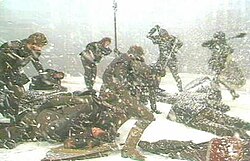
The Battle of Tewkesbury from Act 5, Scene 4, in the 1982 BBC Shakespeare adaptation; note the similarity in the costumes of the two sets of combatants – it is virtually impossible to tell the Yorkists from the Lancastrians
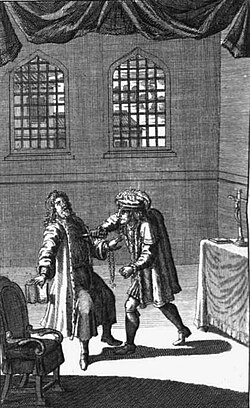
Inspired by the notion that the political intrigues behind the Wars of the Roses often seemed like playground squabbles, Howell and production designer Oliver Bayldon staged the four plays in a single set resembling a children's adventure playground. However, little attempt was made at realism. For example, Bayldon did not disguise the parquet flooring ("it stops the set from literally representing [...] it reminds us we are in a modern television studio"[90]), and in all four productions, the title of the play is displayed within the set itself (on banners in 1 Henry VI and 2 Henry VI (where it is visible throughout the entire first scene), on a shroud in 3 Henry VI, and written on a chalkboard by Richard himself in Richard III). Many critics felt these set design choices lent the production an air of Brechtian verfremdungseffekt.[91][92] Stanley Wells wrote of the set that it was intended to invite the viewer to "accept the play's artificiality of language and action,"[88] Michael Hattaway describes it as "anti-illusionist,"[93] Susan Willis argues that the set allows the productions "to reach theatrically toward the modern world"[94] and Ronald Knowles writes "a major aspect of the set was the subliminal suggestion of childlike anarchy, role-playing, rivalry, game and vandalism, as if all culture were precariously balanced on the shaky foundations of atavistic aggression and power-mad possession."[95] As the four plays progressed, the set decayed and became more and more dilapidated as social order became more fractious.[96] In the same vein, the costumes became more and more monotone as the plays went on – The First Part of Henry the Sixt features brightly coloured costumes which clearly distinguish the various combatants from one another, but by The Tragedy of Richard III, everyone fights in similarly coloured dark costumes, with little to differentiate one army from another.[97] The scene where Richard kills Henry has three biblical references carefully worked out by Howell; as Richard drags Henry away, his arms spread out into a crucified position; on the table at which he sat are seen bread and wine, and in the background, an iron crossbar is faintly illuminated against the black stone wall.[98] Graham Holderness saw Howell's non-naturalistic production as something of a reaction to the BBC's adaptation of the Henriad in seasons one and two, which had been directed by David Giles in the traditional and straightforward manner favoured by then series producer Cedric Messina; "where Messina saw the history plays conventionally as orthodox Tudor historiography, and [David Giles] employed dramatic techniques which allow that ideology a free and unhampered passage to the spectator, Jane Howell takes a more complex view of the first tetralogy as, simultaneously, a serious attempt at historical interpretation, and as a drama with a peculiarly modern relevance and contemporary application. The plays, to this director, are not a dramatisation of the Elizabethan World Picture but a sustained interrogation of residual and emergent ideologies in a changing society [...] This awareness of the multiplicity of potential meanings in the play required a decisive and scrupulous avoidance of television or theatrical naturalism: methods of production should operate to open the plays out, rather than close them into the immediately recognisable familiarity of conventional Shakespearean production."[99][100]
Although Howell's The Third Part of Henry the Sixt was based on the folio text rather than the octavo, it departed from that text in a number of places. For example, it opens differently from the play, with the first twenty-four lines absent. Instead it begins with Edward, Richard, Clarence, Warwick and Norfolk hacking down the door of parliament and Warwick proclaiming "This is the palace of the fearful king" (1.1.25). The opening scene also differs from the play insofar as Clarence is present from the start whereas in the play he is only introduced in Act 2, Scene 2 (Clarence was introduced, along with Edward and Richard, in the final scene of the preceding adaptation). As well as the opening twenty-four lines, numerous other lines were cut from almost every scene. Some of the more notable omissions include, in Act 1, Scene 1, York's "Stay by me my lords,/And soldiers stay and lodge by me this night" (ll.31–32) is absent, as are all references to Margaret chairing a session of parliament (ll.35–42). Also absent from this scene is some of the dialogue between Warwick and Northumberland as they threaten one another (ll.153–160) and Margaret's references to the pains of child birth, and Henry's shameful behaviour in disinheriting his son (ll.221–226). Absent from Act 1, Scene 3 is Rutland's appeal to Clifford's paternal instincts; "Thou hast one son: for his sake pity me,/Lest in revenge thereof, sith God is just,/He be as miserably slain as I" (ll.41–43). In Act 2, Scene 1, all references to Clarence's entry into the conflict (l.143; ll.145–147) are absent, as he had already been introduced as a combatant at the end of 2 Henry VI. In Act 2, Scene 2, two lines are missing from Henry's rebuke of Clifford's accusation that he has been unnatural by disinheriting the Prince; "And happy always was it for that son/Whose father for his hoarding went to hell" (ll.47–48). During the ensuing debate between the Yorkists and the Lancastrians, Richard's "Northumberland, I hold thee reverentially" (l.109) is absent. In Act 2, Scene 3, Clarence's plans to rouse the army are absent "And call them pillars that will stand to us,/And if we thrive, promise them such rewards/As victors wear at the Olympian games" (ll.51–53). In Act 3, Scene 3, Oxford and Prince Edward's speculations as to the contents of the newly arrived letters is absent (ll.167–170), as is Warwick's reference to Salisbury's death and the incident with his niece, "Did I forget that by the House of York/My father came untimely to his death?/Did I let pass th'abuse done to my niece" (ll.186–188). All references to Lord Bourbon are also absent from this scene (ll.253–255). In Act 4, Scene 4, the first twelve lines are absent (where Elizabeth reports to Rivers that Edward has been captured).
However, there were also some additions to the text, most noticeably some lines from True Tragedy. In Act 1, Scene 1, for example, four lines are added at the beginning of Henry's declaration that he would rather see civil war than yield the throne. Between lines 124 and 125, Henry states "Ah Plantagenet, why seekest thou to depose me?/Are we not both Plantagenets by birth?/And from two brothers lineally descent?/Suppose by right and equity thou be king...". Also in Act 1, Scene 1, a line is inserted between lines 174 and 175. When York asks Henry if he agrees to the truce, Henry replies "Convey the soldiers hence, and then I will." In Act 2, Scene 6, a line is inserted between lines 7 and 8; "The common people swarm like summerflies." Most significant however is Act 5, Scene 1, where the entirety of Clarence's return to the Lancastrians is taken from True Tragedy, which completely replaces the depiction of the scene in 3 Henry VI. Others changes include the transferral of lines to characters other than those who speak them in the Folio text, particularly in relation to Clarence, who is given numerous lines in the early part of the play. For example, in Act 2, Scene 1, it is Clarence who says Edward's "I wonder how our princely father scaped,/Or whether he be scaped away or no/From Clifford and Northumberland's pursuit" (ll.1–3). Clarence also speaks Richard's "Three glorious suns, each one a perfect sun,/Not separated with the racking clouds/But severed in a pale clear-shining sky" (ll.26–28); Edward's "Sweet Duke of York, our prop to lean upon/Now thou art gone, we have no staff, no stay" (ll.68–69); and Richard's "Great lord of Warwick, if we should recount/Our baleful news, and at each word's deliverance/Stab poniards in our flesh till all were told,/The words would add more anguish than the wounds" (ll.96–100). Also worth noting is that Elizabeth's son, the Marquess of Dorset, is introduced just after the marriage of Elizabeth and Edward (Act 4, Scene 1). In the text, Dorset doesn't appear until Richard III.
A notable stylistic technique used in the adaptation is the multiple addresses direct to camera. For example, Henry's "I know not what to say, my title's weak" (1.1.135), "All will revolt from me, and turn to him" (1.1.152), "And I with grief and sorrow to the court" (1.1.211), and "Revenged may she be on that hateful Duke,/Whose haughty spirit, wing'd with desire,/Will cost my crown, and like an empty eagle/Tire on the flesh of me and my son" (1.1.267–270); Exeter's "And I, I hope, shall reconcile them all" (1.1.274); the entirety of York's soliloquy in Act 1, Scene 4; Warwick's pause to get his breath during the Battle of Barnet (2.3.1–5); all of Act 2, Scene 5 (including dialogue from Henry, the father and the son) up to the entry of Prince Edward at line 125; all of Henry's monologue in Act 3, Scene 1, prior to his arrest (ll.13–54); Richard's entire soliloquy in Act 3, Scene 2 (ll.124–195); Margaret's "Ay, now begins a second storm to rise,/For this is he that moves both wind and tide" (3.3.47–48); Warwick's soliloquy at the end of the Act 3, Scene 3 (ll.257–268); Richard's "I hear, yet say not much, but think the more" (4.1.85) and "Not I, my thoughts aim at a further matter:/I stay not for love of Edward but the crown" (141.124–125); Warwick's "O unbid spite, is sportful Edward come" (5.1.18); the entirety of Richard's soliloquy in Act 5, Scene 6, after killing Henry (ll.61–93) and Richard's "To say the truth, so Judas kissed his master/And cried 'All hail', whenas he meant all harm" (5.7.33–34).
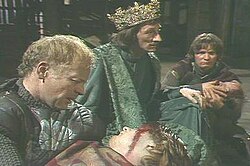
The play also featured in ITV's Will Shakespeare, a 1978 six-part (heavily fictionalised) biopic of Shakespeare (Tim Curry), written by John Mortimer. Episode one, "Dead Shepherd", focuses on Shakespeare's apprenticeship to Christopher Marlowe (Ian McShane), during which time he writes the Henry VI trilogy. Specifically focused upon is Act 2, Scene 5; the scene of the son killing his father and the father killing his son.
In other languages
In 1964, Austrian channel ORF 2 presented an adaptation of the trilogy by Leopold Lindtberg under the title Heinrich VI. The cast list from this production has been lost.[101] In 1969, German channel ZDF presented a filmed version of the first part of Peter Palitzsch's 1967 two-part adaptation of the trilogy in Stuttgart, Heinrich VI: Der Kreig der Rosen 1. The second part, Eduard IV: Der Kreig der Rosen 2, was screened in 1971.[102][103]
Radio
In 1923, extracts from all three Henry VI plays were broadcast on BBC Radio, performed by the Cardiff Station Repertory Company as the third episode of a series of programs showcasing Shakespeare's plays, entitled Shakespeare Night.[104] In 1947, BBC Third Programme aired a one-hundred-and-fifty-minute adaptation of the trilogy as part of their Shakespeare's Historical Plays series, a six-part adaptation of the eight sequential history plays, with linked casting. Adapted by Maurice Roy Ridley, King Henry VI starred John Byron as Henry, Gladys Young as Margaret, Francis de Wolff as York and Stephen Murray as Richard. In 1952, Third Programme aired an adaptation of the tetralogy by Peter Watts and John Dover Wilson under the general name The Wars of the Roses. The tetralogy was adapted into a trilogy but in an unusual way. 1 Henry VI was simply removed, so the trilogy contained only 2 Henry VI, 3 Henry VI and Richard III. The reason for this was explained by Dover Wilson, who argued that 1 Henry VI is "patchwork in which Shakespeare collaborated with inferior dramatists."[105] The adaptation starred Valentine Dyall as Henry, Sonia Dresdel as Margaret, John Glen as Edward and Donald Wolfit as Richard. In 1971, BBC Radio 3 presented a two-part adaptation of the trilogy by Raymond Raikes. Part 1 contained an abridged 1 Henry VI and an abridged version of the first three acts of 2 Henry VI. Part 2 presented Acts 4 and 5 of 2 Henry VI and an abridged 3 Henry VI. Nigel Lambert played Henry, Barbara Jefford played Margaret and Ian McKellen played both York and Richard. In 1977, BBC Radio 4 presented a 26-part serialisation of the eight sequential history plays under the general title Vivat Rex (long live the King). Adapted by Martin Jenkins as part of the celebration of the Silver Jubilee of Elizabeth II, 3 Henry VI comprised episodes 19 ("Warwick the Kingmaker") and 20 ("The Tower"). James Laurenson played Henry, Peggy Ashcroft played Margaret, Ian Ogilvy played Edward and Richard Burton narrated.
In America, in 1936, a heavily edited adaptation of the trilogy was broadcast as part of NBC Blue's Radio Guild series. Comprising three sixty-minute episodes aired a week apart, the adaptation was written by Vernon Radcliffe and starred Henry Herbert as Henry and Janet Nolan as Margaret. In 1954, CBC Radio presented an adaptation of the trilogy by Andrew Allen, who combined 1 Henry VI, 2 Henry VI and 3 Henry VI into a one hundred and sixty-minute episode. There is no known cast information for this production.
In 1985, German radio channel Sender Freies Berlin broadcast a heavily edited seventy-six-minute two-part adaptation of the octology adapted by Rolf Schneider, under the title Shakespeare's Rosenkriege.
ละครเรื่องนี้เริ่มต้นต่อจากเรื่อง 2 Henry VI โดย กองทัพฝ่ายยอร์ก ผู้ชนะ (ดยุคแห่งยอร์ก, เอ็ดเวิร์ด, ริชาร์ด, วอร์วิก, มอนทากิว [เช่น ซอลส์เบอรี] และนอร์ฟอล์ก) ไล่ตามเฮนรีและมาร์กาเร็ตจากสนามรบหลัง ยุทธการ ที่เซนต์อัลบันส์ครั้งแรก (1455) เมื่อมาถึง...
แหล่งที่มา
แหล่งข้อมูลหลักของเชกสเปียร์สำหรับ 3 Henry VI คือ The Union of the Two Noble and Illustre Families of Lancaster and York (1548) ของ Edward Hall เช่นเดียวกับประวัติศาสตร์พงศาวดารส่วนใหญ่ของเขา เชกสเปียร์ยังได้ศึกษา Chronicles of England, Scotland and Ireland...









 Henry VI, Part 3 public domain audiobook at LibriVox