
โบ (ปาราชาห์)
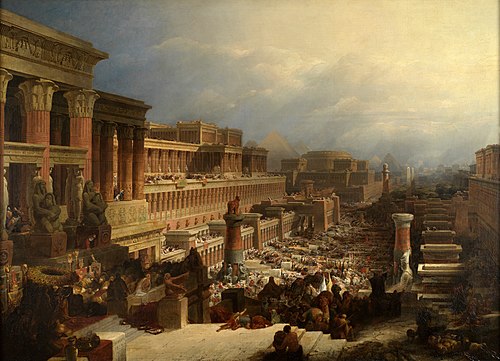
โบ ( בָּא —ในภาษาฮีบรูรูปแบบคำสั่งของ "ไป" หรือ "มา" และคำสำคัญคำแรกในพาราชาห์ในอพยพ 10:1) เป็นส่วนโตราห์รายสัปดาห์ ที่สิบห้า ( פָּרָשָׁה , parashah ) ในรอบปี ของ ชาวยิวในการอ่านโตราห์และคำที่สามในหนังสืออพยพ พาราชาห์ประกอบขึ้นเป็นอพยพ 10:1–13:16 ปาราชาห์เล่าถึงภัยพิบัติสามประการสุดท้ายในอียิปต์และปั สกา ครั้งแรก
ปาราชาห์ประกอบด้วยอักษรฮีบรู 6,149 ตัว คำ ฮีบรู 1,655 คำ ข้อ 106 ข้อ และ 207 บรรทัดในม้วนคัมภีร์โทราห์ [ 1 ] ชาวยิวอ่านปาราชาห์นี้ในวันสะบาโต ที่สิบห้า หลังจากซิมชาตโทราห์ซึ่งโดยทั่วไปจะอยู่ในเดือนมกราคมหรือต้นเดือนกุมภาพันธ์[ 2 ]เนื่องจากปาราชาห์นี้บรรยายถึงเทศกาลปัสคาครั้งแรก ชาวยิวจึงอ่านส่วนหนึ่งของปาราชาห์ คือ อพยพ 12:21–51 เป็นการอ่านโทราห์ครั้งแรกสำหรับวันแรกของเทศกาลปัสคา และอีกส่วนหนึ่ง คือ อพยพ 13:1–16 เป็นการอ่านโทราห์ครั้งแรกสำหรับวันกลาง ( โชล ฮาโมเอ็ด ) วันแรกแห่งเทศกาลปัสคา นอกจากนี้ ชาวยิวยังอ่านอีกส่วนหนึ่งของปาราชาห์ คือ อพยพ 12:1–20 ซึ่งบรรยายถึงกฎของเทศกาลปัสคา ในฐานะ การอ่าน มาฟติร์โทราห์สำหรับวันสะบาโตพิเศษชับบัต ฮาโชเดช ซึ่งตรงกับวันแรก ( รอช โชเดช ) ของเดือนนิสานเดือนที่ชาวยิวเฉลิมฉลองเทศกาลปัสคา
บทอ่าน
ในการอ่านพระคัมภีร์โทราห์ในวันสะบาโตตามประเพณี บทหนึ่งๆ (parashah) จะถูกแบ่งออกเป็นเจ็ดส่วน หรือעליות , aliyotในพระคัมภีร์ฮีบรูฉบับมาโซเรติก ( ทานาค ) บทโบ (Parashat Bo) แบ่งออกเป็นเจ็ดส่วน "ส่วนเปิด" ( פתוחה , petuchah ) (โดยประมาณเทียบเท่ากับย่อหน้า มักย่อด้วยอักษรฮีบรูפ ( peh )) และบทโบยังมีส่วนย่อยอีกเจ็ดส่วน เรียกว่าส่วน "ส่วนปิด" ( סתומה , setumah ) (ย่อด้วยอักษรฮีบรูס ( samekh )) ซึ่งอยู่ภายในส่วนเปิดเหล่านั้น ส่วนเปิดส่วนแรกประกอบด้วยส่วนแรกและส่วนหนึ่งของส่วนที่สอง ส่วนเปิดส่วนที่สองครอบคลุมส่วนที่เหลือของส่วนที่สองและส่วนหนึ่งของส่วนที่สาม ส่วนเปิดส่วนที่สามครอบคลุมส่วนที่เหลือของส่วนที่สามและทั้งหมดของส่วนที่สี่ ส่วนเปิดส่วนที่สี่ครอบคลุมส่วนที่ห้าและส่วนหนึ่งของส่วนที่หก การแบ่งส่วนเปิดที่ห้าและหกแบ่งการอ่านที่หกออกเป็นส่วนย่อย การแบ่งส่วนเปิดที่เจ็ดแบ่งการอ่านที่เจ็ดออกเป็นส่วนย่อย การแบ่งส่วนปิดแยกการอ่านที่หนึ่งและที่สอง แยกการอ่านที่สองและที่สาม และแยกการอ่านที่สามและที่สี่ การแบ่งส่วนปิดเพิ่มเติมจะแบ่งการอ่านที่สี่และที่หกออกเป็นส่วนย่อย และสรุปการอ่านที่เจ็ด[ 3 ]
บทอ่านแรก—อพยพ 10:1–11

ในบทอ่านแรก หลังจากภัยพิบัติเจ็ดประการพระเจ้ายังคงลงโทษอียิปต์ด้วยภัยพิบัติอีกโมเสสและอาโรนเตือนฟาโรห์ให้ปล่อยชาวอิสราเอลไป มิฉะนั้นตั๊กแตน ( אַרְבֶּה , arbeh ) จะปกคลุมแผ่นดิน[ 4 ]ข้าราชบริพารของฟาโรห์กดดันฟาโรห์ให้ปล่อยพวกเขาไป ฟาโรห์จึงนำโมเสสและอาโรนกลับมาและถามพวกเขาว่า “ใครจะได้ไป?” [ 5 ]โมเสสยืนยันว่าทั้งคนหนุ่มและคนแก่ ลูกชายและลูกสาว ฝูงแกะและฝูงวัวจะไป แต่ฟาโรห์ปฏิเสธคำขอของโมเสสและขับไล่โมเสสและอาโรนออกไปจากพระองค์[ 6 ]บทอ่านแรกและส่วนที่ปิดท้ายจบลงตรงนี้[ 7 ]

บทอ่านที่สอง—อพยพ 10:12–23
ในการอ่านครั้งที่สอง โมเสสถือไม้เท้าของเขาเหนือแผ่นดิน และพระเจ้าทรงบันดาลให้ลมตะวันออกพัดพาฝูงตั๊กแตนเข้ามาในแผ่นดิน[ 8 ]ฟาโรห์ทรงเรียกโมเสสและอาโรนมา ขออภัยโทษ และขอให้พวกเขาวิงวอนต่อพระเจ้าเพื่อขับไล่ฝูงตั๊กแตนออกไป[ 9 ]โมเสสจึงทำเช่นนั้น และพระเจ้าทรงบันดาลให้ลมตะวันตกพัดพาฝูงตั๊กแตนไปยังทะเลแดง[ 10 ] แต่พระเจ้าทรงทำให้ใจของฟาโรห์แข็งกระด้าง และพระองค์ไม่ทรงอนุญาตให้ชาวอิสราเอลไป[ 11 ]ส่วนที่เปิดเผยส่วนแรกจบลงตรงนี้[ 12 ]
ในการอ่านต่อไป พระเจ้าทรงสั่งโมเสสให้ยกแขนขึ้นไปบนฟ้าเพื่อนำความมืด ( חֹשֶׁךְ , choshech ) ลงมายังแผ่นดิน และโมเสสก็ทำตามนั้น แต่ชาวอิสราเอลกลับได้รับแสงสว่าง[ 13 ]การอ่านครั้งที่สองและส่วนที่ปิดท้ายจบลงตรงนี้[ 14 ]
บทอ่านที่สาม—อพยพ 10:24–11:3
ในการอ่านครั้งที่สาม ฟาโรห์ทรงเรียกโมเสสมาและสั่งให้เขาไป โดยทิ้งฝูงแกะและฝูงวัวของชาวอิสราเอลไว้เบื้องหลัง แต่โมเสสยืนกรานว่าไม่ควรทิ้งปศุสัตว์ของชาวอิสราเอลไว้เลย โดยกล่าวว่า “เราจะไม่รู้ว่าเราจะนมัสการพระเจ้าด้วยอะไร จนกว่าเราจะไปถึงที่นั่น” [ 15 ]แต่พระเจ้าทรงทำให้ใจของฟาโรห์แข็งกระด้าง และพระองค์ทรงขับไล่โมเสสออกไป โดยตรัสว่า “ทันทีที่เจ้ามองหน้าเรา เจ้าจะต้องตาย” [ 16 ]ส่วนที่สองที่เปิดอยู่จบลงตรงนี้พร้อมกับตอนจบของบทที่ 10 [ 17 ]
ในการอ่านต่อจากบทที่ 11 พระเจ้าตรัสกับโมเสสว่าพระเจ้าจะทรงนำภัยพิบัติมาอีกครั้งหนึ่ง แล้วฟาโรห์จะปล่อยชาวอิสราเอลไป[ 18 ]พระเจ้าตรัสกับโมเสสให้บอกชาวอิสราเอลให้ขอเงินและทองจากเพื่อนบ้าน และพระเจ้าทรงดลบันดาลให้ชาวอียิปต์โปรดปรานชาวอิสราเอลและโมเสส[ 19 ]การอ่านครั้งที่สามและส่วนที่ปิดท้ายจบลงตรงนี้[ 20 ]
บทอ่านที่สี่—อพยพ 11:4–12:20
ในการอ่านครั้งที่สี่ โมเสสเตือนฟาโรห์ว่าพระเจ้าจะฆ่าบุตรหัวปีทุกคนในอียิปต์[ 21 ]และโมเสสก็จากฟาโรห์ไปด้วยความโกรธจัด[ 22 ]ส่วนที่ปิดท้ายจบลงตรงนี้[ 23 ]

ในการอ่านต่อไป พระเจ้าตรัสกับโมเสสและอาโรนให้ถือว่าเดือนนั้นเป็นเดือนแรกของปี[ 24 ]และพระเจ้าตรัสกับพวกเขาให้สั่งสอนชาวอิสราเอลเกี่ยวกับกฎเกณฑ์ของพิธีปัสคา ลูกแกะปัสคา และการงดเว้นจากขนมปังที่มีเชื้อ[ 25 ] การอ่าน ครั้งที่สี่และส่วนที่เปิดที่สามจบลงตรงนี้[ 26 ]
บทอ่านที่ห้า—อพยพ 12:21–28
ในบทอ่านที่ห้าสั้นๆ โมเสสได้สั่งผู้อาวุโสของอิสราเอลให้ฆ่าลูกแกะปัสคาของพวกเขา ทาเลือดลูกแกะที่ประตูบ้าน และอยู่แต่ในบ้านจนถึงเช้า[ 27 ]เพราะพระเจ้าจะทรงลงโทษชาวอียิปต์ แต่เมื่อพระเจ้าทรงเห็นเลือดที่วงกบประตู พระเจ้าจะทรงผ่านเลยบ้านนั้นไป และจะไม่ทรงอนุญาตให้ผู้ทำลายล้างเข้ามาในบ้านนั้น[ 28 ]ชาวอิสราเอลต้องประกอบพิธีปัสคาตลอดไป และเมื่อลูกหลานของพวกเขาถามว่าพิธีนี้หมายความว่าอย่างไร พวกเขาต้องบอกว่าเป็นการระลึกถึงช่วงเวลาที่พระเจ้าทรงผ่านเลยบ้านของชาวอิสราเอลไปเมื่อพระเจ้าทรงลงโทษชาวอียิปต์ และประชาชนก็ก้มลงกราบและนมัสการ[ 29 ]และชาวอิสราเอลก็ทำตามที่พระเจ้าทรงบัญชาโมเสสและอาโรน[ 30 ]บทอ่านที่ห้าและส่วนที่ปิดท้ายจบลงตรงนี้[ 31 ]
บทอ่านที่หก—อพยพ 12:29–51
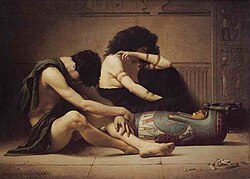
ในการอ่านครั้งที่หก ในช่วงกลางดึก พระเจ้าทรงลงโทษบุตรหัวปีทั้งหมดในอียิปต์[ 32 ]ฟาโรห์ทรงลุกขึ้นในเวลากลางคืนเมื่อได้ยินเสียงร้องดังในอียิปต์ ทรงเรียกโมเสสและอาโรนมา และทรงสั่งให้พวกเขานำชาวอิสราเอลไป[ 33 ] ดังนั้นชาวอิสราเอลจึงนำแป้งที่ยังไม่ขึ้นฟูไปขอเงิน ทองและเสื้อผ้าจากชาวอียิปต์ [ 34 ]ส่วนที่สี่จบลงตรงนี้[ 35 ]
ในการอ่านต่อไป ชาวอิสราเอลและฝูงชนผสมได้เดินทางจากราเมเสสไปยังสุคคต [ 36 ] พวกเขาอบขนมปังไร้เชื้อ ( מַצָּה , matzah ) เพราะพวกเขาไม่สามารถรอได้ก่อนที่จะออกจากอียิปต์[ 37 ]ชาวอิสราเอลอาศัยอยู่ในอียิปต์เป็นเวลา 430 ปี และออกจากแผ่นดินหลังจากคืนที่เฝ้ารอพระเจ้า[ 38 ]ส่วนที่ห้าจบลงตรงนี้[ 39 ]
ในการอ่านต่อไป พระเจ้าได้บอกโมเสสและอาโรนถึงกฎเกณฑ์ของผู้ที่จะถือเทศกาลปัสคา[ 40 ]ส่วนที่ปิดท้ายจบลงตรงนี้[ 41 ]
การอ่านจบลงด้วยการแจ้งว่าในวันเดียวกันนั้น พระเจ้าทรงไถ่ชาวอิสราเอลออกจากอียิปต์[ 42 ]การอ่านครั้งที่หกและส่วนที่เปิดครั้งที่หกจบลงตรงนี้พร้อมกับตอนจบของบทที่ 12 [ 41 ]
บทอ่านที่เจ็ด—อพยพ 13:1–16

ในการอ่านครั้งที่เจ็ด ในบทที่ 13 พระเจ้าทรงสั่งโมเสสให้บอกชาวอิสราเอลให้ถวายบุตรหัวปีของมนุษย์และสัตว์ทุกตัวแด่พระเจ้า และโมเสสก็ได้ทำเช่นนั้น[ 43 ]โมเสสบอกให้ประชาชนระลึกถึงวันและเดือนที่พระเจ้าทรงนำพวกเขาออกจากอียิปต์ และให้ถือพิธีเพื่อระลึกถึงการปลดปล่อยของพวกเขาในเดือนเดียวกัน โดยรับประทานเฉพาะขนมปังไร้เชื้อ ( מַצָּה , matzah ) [ 44 ]และพวกเขาจะต้องบอกลูกหลานของพวกเขาให้ถือไว้เป็นเครื่องหมายบนมือของพวกเขาและเป็นเครื่องระลึกระหว่างดวงตาของพวกเขา และให้ถือปฏิบัติกฎนี้ตามฤดูกาลในแต่ละปี[ 45 ]ส่วนที่เจ็ดที่เปิดอยู่จบลงตรงนี้[ 46 ]
ในการอ่านต่อไป พระเจ้าได้ทรงสั่งสอนโมเสสเกี่ยวกับกฎของบุตรหัวปี[ 47 ]
ใน การอ่าน มัฟติร์ ( מפטיר ) ที่จบบทนี้[ 48 ]พระเจ้าทรงสั่งว่า หากลูกหลานของพวกเขาถามเกี่ยวกับการถวายบุตรหัวปี ชาวอิสราเอลจะต้องบอกลูกหลานของพวกเขาว่าพระเจ้าทรงสังหารบุตรหัวปีของอียิปต์ ดังนั้นชาวอิสราเอลจึงต้องถวายสัตว์แรกเกิดทั้งหมดแด่พระเจ้าและไถ่บุตรชายแรกเกิดของพวกเขา[ 49 ]และสิ่งนี้จะเป็นเครื่องหมายบนมือของพวกเขา และเป็นเครื่องประดับระหว่างดวงตาของพวกเขา เพราะพระเจ้าทรงนำพวกเขาออกจากอียิปต์ด้วยพระหัตถ์อันทรงฤทธิ์[ 50 ]การอ่านครั้งที่เจ็ด ส่วนที่ปิดท้าย และบทนี้จบลงตรงนี้[ 51 ]
การอ่านตามวัฏจักรสามปี
ชาวยิวที่อ่านโตราห์ตามวัฏจักรการอ่านโตราห์สามปีจะอ่านปาราชาห์ตามตารางเวลาต่อไปนี้: [ 52 ]
| ปีที่ 1 | ปีที่ 2 | ปีที่ 3 | |
|---|---|---|---|
| ปี 2023, 2026, 2029 ... | 2024, 2027, 2030... | 2025, 2028, 2031 ... | |
| การอ่าน | 10:1–11:3 | 11:4–12:28 | 12:29–13:16 |
| 1 | 10:1–3 | 11:4–10 | 12:29–32 |
| 2 | 10:4–6 | 12:1–10 | 12:33–36 |
| 3 | 10:7–11 | 12:11–13 | 12:37–42 |
| 4 | 10:12–15 | 12:14–16 | 12:43–51 |
| 5 | 10:16–23 | 12:17–20 | 13:1–4 |
| 6 | 10:24–29 | 12:21–24 | 13:5–10 |
| 7 | 11:1–3 | 12:25–28 | 13:11–16 |
| มัฟตีร์ | 11:1–3 | 12:25–28 | 13:14–16 |
ในแบบอย่างโบราณ
เนื้อหาในปาราชาห์นี้มีความคล้ายคลึงกับแหล่งข้อมูลโบราณเหล่านี้:

อพยพ บทที่ 10
ภัยพิบัติจากตั๊กแตนในอพยพ 10:1–20 พบความคล้ายคลึงกันในข้อความโบราณหลายฉบับ ซึ่งมักเกี่ยวข้องกับการกระทำของเทพเจ้านิทานสุเมเรียน โบราณเรื่อง การโต้เถียงระหว่างจอบกับไถเล่าถึงการกระทำของมือของเทพเจ้าเอนลิลและฝูงตั๊กแตน[ 53 ]ในทำนองเดียวกัน บทกวี อูการิติกเกี่ยวกับเทพธิดาอานัตราว 1450–1200 ปีก่อนคริสตกาล เล่าถึงวิธีที่อานัตต่อสู้และทิ้งศพไว้เหมือนตั๊กแตน[ 54 ]ใน จดหมาย ของชาวอียิปต์สมัยราชอาณาจักรใหม่นักเขียนคนหนึ่งตำหนิอีกคนหนึ่งที่ละทิ้งงานเขียนเพื่อไปทำงานเกษตรกรรม ซึ่ง "หนูชุกชุมในทุ่งนา ตั๊กแตนลงมา วัวควายกินพืชผล" [ 55 ]คำพยากรณ์ ของ ชาวอัคคาเดียน ทำนายว่าตั๊กแตนจะขึ้นมาและกัดกินแผ่นดิน[ 56 ]สนธิสัญญาที่ทำขึ้นระหว่างอัสซูร์-นิรารีที่ 5แห่งอัสซีเรียและมาติอิลูแห่งอาร์ปาด ประเทศซีเรีย ใน ปี 754 ก่อน คริสต์ศักราช ระบุว่า หากมาติอิลูละเมิดสนธิสัญญา “ขอให้ตั๊กแตนปรากฏตัวและกัดกินแผ่นดินของเขา” [ 57 ]ในทำนองเดียวกัน สนธิสัญญาที่ทำขึ้นระหว่างคทกและอาร์ปาดเมื่อราวปี 750 ก่อนคริสต์ศักราช ระบุว่า “หากมาติเอลทรยศต่อบาร์กายาห์และต่อบุตรชายและลูกหลานของเขา... ขอให้ฮาดัดเทความชั่วร้ายทั้งหมดลงบนแผ่นดินและในสวรรค์ และความทุกข์ยากทั้งหมด และขอให้เขาเทลูกเห็บ ลง บนอาร์ปาด ตั๊กแตนจะกัดกินเป็นเวลาเจ็ดปี หนอนจะกัดกินเป็นเวลาเจ็ดปีภัยพิบัติจะมาเยือนแผ่นดินของมันเป็นเวลาเจ็ดปี และจะไม่มีหญ้างอกขึ้นมา ดังนั้นจึงไม่มีสิ่งใดสีเขียวให้เห็นและพืชพรรณจะไม่ปรากฏขึ้น” [ 58 ]และ สนธิสัญญา ข้าราชบริพารของเอซาร์ฮัดดอนผู้ปกครองจักรวรรดิอัสซีเรียใหม่ 681–669 ปีก่อนคริสตกาล ได้ขู่ข้าราชบริพารที่ละเมิดสนธิสัญญาด้วยคำขู่เหล่านี้: "ขอให้อาดัด ได้รับผลกรรม"ขอให้ผู้ตรวจคลองแห่งสวรรค์และโลก จงทำลายพืชพรรณในแผ่นดินของท่าน ขอให้เขาหลีกเลี่ยงทุ่งหญ้าของท่าน และขอให้ฝนตกหนักทำลายล้างแผ่นดินของท่าน ขอให้ตั๊กแตนซึ่งลดผลผลิตของแผ่นดิน จงกัดกินพืชผลของท่าน ขออย่าให้มีเสียงหินบดหรือเตาอบในบ้านของท่าน ขอให้ข้าวบาร์เลย์ที่ต้องบดหายไปจากท่าน เพื่อให้มันบดกระดูกของท่าน (กระดูกของ) ลูกชายและลูกสาวของท่านแทนข้าวบาร์เลย์ และแม้แต่ข้อแรกของนิ้วมือของท่านก็ไม่อาจจุ่มลงในแป้งได้ ขอให้...กินแป้งจากรางของท่าน... ขอให้พวกเขา (เทพเจ้า) ปล่อยให้เหา หนอนผีเสื้อ และศัตรูพืชอื่นๆ ในไร่นากัดกินแผ่นดินและเขตของคุณราวกับตั๊กแตน” [ 59 ]คำอวยพรของชาวอัสซีเรียกล่าวว่า: “ตั๊กแตนร้ายที่ทำลายข้าว ตั๊กแตนชั่วร้ายที่ทำให้สวนผลไม้แห้งเหี่ยว ซึ่งจะขัดขวางการถวายเครื่องบูชาเป็นประจำของเทพเจ้าและเทพธิดา—เอนลิลฟังคุณตูตูเชื่อฟังคุณ—ขอให้มัน (ตั๊กแตน) นับว่าไร้ค่า!” [ 60 ]
อพยพ บทที่ 12
คำสั่งให้ทาเลือดที่วงกบประตูและเสาประตูทั้งสองในอพยพ 12:22 คล้ายคลึงกับ พิธีกรรมของ ชาวบาบิโลนนัมบูร์บีซึ่งมีการทาเลือดที่ประตูและรูกุญแจเพื่อที่ว่า "ความชั่วร้าย [โรคระบาด] จะไม่เข้ามาในบ้าน" [ 61 ]
อพยพ บทที่ 13
อพยพ 3:8 และ 17, 13:5 และ 33:3, เลวีนิติ 20:24, กันดารวิถี 13:27 และ 14:8 และ เฉลยธรรมบัญญัติ 6:3, 11:9, 26:9 และ 15, 27:3 และ 31:20 บรรยายถึงดินแดนอิสราเอลว่าเป็นดินแดนที่อุดมสมบูรณ์ “ด้วยน้ำนมและน้ำผึ้ง” ในทำนองเดียวกัน นิทานของชาวอียิปต์ยุคกลาง (ต้นสหัสวรรษที่สองก่อนคริสต์ศักราช) เรื่องซีนูเฮ บรรยายถึงดินแดนอิสราเอลว่า “เป็นดินแดนที่ดีชื่อยาอา มีมะเดื่อและองุ่น มีเหล้าองุ่นมากกว่าน้ำ มีน้ำผึ้งมากมาย มีน้ำมันอุดมสมบูรณ์ มีผลไม้ทุกชนิดบนต้นไม้ มีข้าวบาร์เลย์และข้าวเอมเมอร์ และมีวัวควายทุกชนิดมากมายนับไม่ถ้วน” [ 62 ]
ในการตีความภายในพระคัมภีร์
ปาราชาห์มีเนื้อหาที่คล้ายคลึงกันหรือมีการกล่าวถึงในแหล่งข้อมูลในพระคัมภีร์เหล่านี้: [ 63 ]
อพยพ บทที่ 7-12
คำอธิบายเกี่ยวกับภัยพิบัติทั้ง 10 ประการ แสดงให้เห็นถึงรูปแบบและลำดับขั้นดังต่อไปนี้:
| วงจร | ตัวเลข | โรคระบาด | บทกวี | มีอยู่ไหม คำเตือน? | เตือนเรื่องเวลา | การแนะนำ | นักแสดงชาย | ร็อด? | ชาวอิสราเอล มีเกราะป้องกัน? | ฟาโรห์ทรงทำเช่นนั้นหรือ? ยอมรับ? | ใครที่แข็งแกร่ง หัวใจของฟาโรห์? |
|---|---|---|---|---|---|---|---|---|---|---|---|
| อันดับแรก | 1 | เลือด | อพยพ 7:14–25 | ใช่ | ในตอนเช้า | לָךָ אָל- פַּרְעָה ไปหาฟาโรห์ | แอรอน | ใช่ | เลขที่ | เลขที่ | ประโยคกรรมวาจก |
| 2 | กบ | อพยพ 7:26–8:11 (8:1–15 ในฉบับคิงเจมส์ ) | ใช่ | ไม่ทราบ | בָּא אָל- פַּרְעָה เข้าไปหาฟาโรห์ | แอรอน | ใช่ | เลขที่ | ใช่ | ประโยคกรรมวาจก | |
| 3 | แมลงหวี่หรือเหา | อพยพ 8:12–15 (8:16–19 ในฉบับคิงเจมส์) | เลขที่ | ไม่มี | ไม่มี | แอรอน | ใช่ | เลขที่ | เลขที่ | ประโยคกรรมวาจก | |
| ที่สอง | 4 | แมลงวันหรือ สัตว์ป่า | อพยพ 8:16–28 (8:20–32 ในฉบับคิงเจมส์) | ใช่ | เช้าตรู่ | וְהָתָּיַצָּב לָפָנָי פַרְעָה ยืนอยู่ต่อหน้าฟาโรห์ | พระเจ้า | เลขที่ | ใช่ | ใช่ | ฟาโรห์ |
| 5 | ปศุสัตว์ | อพยพ 9:1–7 | ใช่ | ไม่ทราบ | בָּא אָל- פַּרְעָה เข้าไปหาฟาโรห์ | พระเจ้า | เลขที่ | ใช่ | เลขที่ | ฟาโรห์ | |
| 6 | ฝี | อพยพ 9:8–12 | เลขที่ | ไม่มี | ไม่มี | โมเสส | เลขที่ | เลขที่ | เลขที่ | พระเจ้า | |
| ที่สาม | 7 | ลูกเห็บ | อพยพ 9:13–35 | ใช่ | เช้าตรู่ | וְהָתָּיַצָּב לָפָנָי פַרְעָה ยืนอยู่ต่อหน้าฟาโรห์ | โมเสส | เลขที่ | ใช่ | ใช่ | ประโยคกรรมวาจก |
| 8 | ตั๊กแตน | อพยพ 10:1–20 | ใช่ | ไม่ทราบ | בָּא אָל- פַּרְעָה เข้าไปหาฟาโรห์ | โมเสส | ใช่ | เลขที่ | ใช่ | พระเจ้า | |
| 9 | ความมืด | อพยพ 10:21–29 | เลขที่ | ไม่มี | ไม่มี | โมเสส | ใช่ | ใช่ | ใช่ | พระเจ้า | |
| 10 | ลูกคนแรก | อพยพ 11:1–10; 12:29–32 | ใช่ | ไม่ทราบ | ไม่มี | พระเจ้า | เลขที่ | ใช่ | ใช่ | พระเจ้า |
สดุดี 78:44–51 และ 105:23–38 ต่างกล่าวถึงภัยพิบัติเจ็ดประการที่แตกต่างกัน สดุดี 78:44–51 กล่าวถึงภัยพิบัติ (1) เลือด (2) แมลงวัน (3) กบ (4) ตั๊กแตน (5) ลูกเห็บ (6) สัตว์เลี้ยง และ (7) บุตรหัวปี แต่ไม่ได้กล่าวถึงภัยพิบัติจากเหา โรคฝี หรือความมืด สดุดี 105:23–38 กล่าวถึงภัยพิบัติ (1) ความมืด (2) เลือด (3) กบ (4) แมลงวันและเหา (5) ลูกเห็บ (6) ตั๊กแตน และ (7) บุตรหัวปี แต่ไม่ได้กล่าวถึงภัยพิบัติจากสัตว์เลี้ยงหรือโรคฝี
พระธรรมอพยพ บทที่ 12-13
เทศกาลปัสคา
พระธรรมอพยพ บทที่ 12 ข้อ 3-28, 43-50 และ 13 ข้อ 6-10 กล่าวถึงเทศกาลปัสคา ในพระคัมภีร์ฮิบรูเรียกเทศกาลปัสคาว่า:
- "ปัสกา" ( เปซาค , פָּסַע ); [ 64 ]
- "งานฉลองขนมปังไร้เชื้อ" ( Chag haMatzot , שַג הַמַּצּוָת ); [ 65 ]และ
- "การประชุมอันศักดิ์สิทธิ์" หรือ "การประชุมอันศักดิ์สิทธิ์" ( มิคราห์ โคเดช , מִקְרָא-קָדָּשׁ ) [ 66 ]
บางคนอธิบายชื่อเรียกสองแบบของ "เทศกาลปัสคา" และ "เทศกาลขนมปังไร้เชื้อ" ว่าหมายถึงเทศกาลสองเทศกาลที่แยกจากกันซึ่งชาวอิสราเอลได้รวมเข้าด้วยกันในช่วงเวลาระหว่างการอพยพและเมื่อข้อความในพระคัมภีร์ได้รับการกำหนดขึ้น[ 67 ]อพยพ 34:18–20 และเฉลยธรรมบัญญัติ 15:19–16:8 บ่งชี้ว่าการถวายบุตรหัวปีก็เกี่ยวข้องกับเทศกาลนี้ด้วย

บางคนเชื่อว่า "เทศกาลขนมปังไร้เชื้อ" เป็นเทศกาลทางการเกษตรที่ชาวอิสราเอลเฉลิมฉลองการเริ่มต้นการเก็บเกี่ยวธัญพืช โมเสสอาจนึกถึงเทศกาลนี้เมื่อในอพยพ 5:1 และ 10:9 เขาขอร้องฟาโรห์ให้ชาวอิสราเอลไปฉลองเทศกาลในถิ่นทุรกันดาร[ 68 ]
ในทางกลับกัน "เทศกาลปัสคา" เกี่ยวข้องกับการถวายลูกแกะเพื่อแสดงความขอบคุณ ซึ่งเรียกอีกอย่างว่า "ปัสคา" "ลูกแกะปัสคา" หรือ "เครื่องบูชาปัสคา" [ 69 ]
พระธรรมอพยพ 12:5–6, พระธรรมเลวีนิติ 23:5, และพระธรรมกันดารวิถี 9:3 และ 5, และ 28:16 ระบุว่า “เทศกาลปัสคา” จะจัดขึ้นในเย็นวันที่สิบสี่ของเดือนอาวีฟ (นิสานในปฏิทินฮีบรูหลังจากการถูกจับเป็นเชลยในบาบิโลน ) พระธรรมโยชูวา 5:10, พระธรรมเอเสเคียล 45:21, พระธรรมเอซรา 6:19, และพระธรรม 2 พงศาวดาร 35:1 ยืนยันธรรมเนียมปฏิบัตินั้น พระธรรมอพยพ 12:18–19, 23:15, และ 34:18, พระธรรมเลวีนิติ 23:6, และพระธรรมเอเสเคียล 45:21 ระบุว่า “เทศกาลขนมปังไร้เชื้อ” จะจัดขึ้นเป็นเวลาเจ็ดวัน และพระธรรมเลวีนิติ 23:6 และพระธรรมเอเสเคียล 45:21 ระบุว่าให้เริ่มในวันที่สิบห้าของเดือน บางคนเชื่อว่าความใกล้เคียงกันของวันที่ของเทศกาลทั้งสองนำไปสู่ความสับสนและการรวมเข้าด้วยกัน[ 68 ]
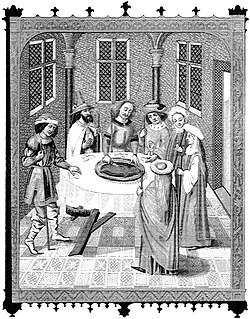
อพยพ 12:23 และ 27 เชื่อมโยงคำว่า "ปัสคา" ( Pesach , פֶּסַח ) กับการกระทำของพระเจ้าที่ทรง "ผ่านพ้น" ( pasach , פָסַח ) บ้านของชาวอิสราเอลในภัยพิบัติของบุตรหัวปี ในพระคัมภีร์โทราห์ ปัสคาและเทศกาลขนมปังไร้เชื้อที่รวมกันจึงเป็นการระลึกถึงการปลดปล่อยชาวอิสราเอลจากอียิปต์[ 70 ]
เบนจามิน ซอมเมอร์เห็นว่าในอพยพ 12:9 และเฉลยธรรมบัญญัติ 16:7 เป็นกรณีที่ผู้เขียนพระคัมภีร์คนหนึ่งตีความข้อความในพระคัมภีร์อีกข้อความหนึ่งอย่างชัดเจน ทั้งสองข้อความมีข้อกำหนดเกี่ยวกับการถวายบูชาปัสคาแต่ข้อกำหนดนั้นแตกต่างกัน เฉลยธรรมบัญญัติ 16:7 สั่งให้ชาวอิสราเอลต้มเครื่องบูชาปัสคา ซอมเมอร์แย้งว่าอพยพ 12:9 ขัดแย้งกับเฉลยธรรมบัญญัติ 16:7 ในประเด็นนี้ โดยเตือน (ในคำแปลของซอมเมอร์) ว่า "อย่ากินดิบหรือต้มในน้ำ แต่จงกินแบบย่างบนไฟ" ซอมเมอร์ไม่รู้สึกประหลาดใจกับความขัดแย้งดังกล่าวในวรรณกรรมยิวโบราณนี้ โดยแย้งว่ามีสองกลุ่มในยุคพระคัมภีร์ที่เห็นพ้องต้องกันว่าการถวายบูชาปัสคาเป็นสิ่งสำคัญ แต่ไม่เห็นด้วยในรายละเอียดที่แน่นอน[ 71 ]
คัมภีร์ฮีบรูมักกล่าวถึงการเฉลิมฉลองเทศกาลปัสคาของชาวอิสราเอลในจุดเปลี่ยนสำคัญทางประวัติศาสตร์ของพวกเขา กันดารวิถี 9:1-5 รายงานถึงคำสั่งของพระเจ้าที่ทรงให้ชาวอิสราเอลเฉลิมฉลองเทศกาลปัสคาในถิ่นทุรกันดารซีนายในวันครบรอบการปลดปล่อยพวกเขาจากอียิปต์ โยชูวา 5:10-11 รายงานว่าเมื่อเข้าสู่ดินแดนแห่งพันธสัญญาชาวอิสราเอลได้เฉลิมฉลองเทศกาลปัสคาบนที่ราบเยริโคและรับประทานขนมปังไร้เชื้อและข้าวโพดคั่ว ซึ่งเป็นผลผลิตจากแผ่นดินในวันรุ่งขึ้น 2 พงศ์กษัตริย์ 23:21-23 รายงานว่ากษัตริย์โยสิยาห์ทรงบัญชาให้ชาวอิสราเอลเฉลิมฉลองเทศกาลปัสคาในเยรูซาเล็มซึ่งเป็นส่วนหนึ่งของการปฏิรูปของโยสิยาห์ แต่ก็ยังกล่าวถึงว่าชาวอิสราเอลไม่ได้เฉลิมฉลองเทศกาลปัสคาเช่นนี้มาตั้งแต่สมัยผู้พิพากษาในพระคัมภีร์หรือตลอดสมัยของกษัตริย์อิสราเอลหรือกษัตริย์ยูดาห์ซึ่งทำให้เกิดข้อสงสัยเกี่ยวกับการเฉลิมฉลองในสมัยของกษัตริย์ดาวิดและ กษัตริย์ โซโลมอนด้วย อย่างไรก็ตาม 2 พงศาวดาร 8:12–13 ซึ่งแสดงความเคารพมากกว่า รายงานว่าโซโลมอนถวายเครื่องบูชาในเทศกาลต่างๆ รวมทั้งเทศกาลขนมปังไร้เชื้อ และ 2 พงศาวดาร 30:1–27 รายงานว่ากษัตริย์เฮเซคียาห์ทรงจัดพิธีปัสคาครั้งที่สองขึ้นใหม่ เนื่องจากจำนวนปุโรหิตและประชาชนไม่เพียงพอที่จะทำเช่นนั้นก่อนหน้านั้น และเอซรา 6:19–22 รายงานว่าชาวอิสราเอลที่กลับมาจากบาบิโลนได้ฉลองเทศกาลปัสคา รับประทานลูกแกะปัสคา และรักษาเทศกาลขนมปังไร้เชื้อเจ็ดวันด้วยความยินดี
ในการตีความยุคแรกที่ไม่ใช่ของแรบไบ
ปาราชาห์มีความคล้ายคลึงหรือมีการกล่าวถึงในแหล่งข้อมูลที่ไม่ใช่แรบไบในยุคแรกเหล่านี้: [ 72 ]
อพยพ บทที่ 12
หนังสือจูบิลีสอนว่าชาวอิสราเอลถูกห้ามไม่ให้หักกระดูกใดๆ ของลูกแกะปัสคา เพื่อไม่ให้กระดูกของลูกหลานอิสราเอลแตกหัก[ 73 ]
ฟิโลเขียนว่า พระเจ้าทรงบัญชาให้ชาวอิสราเอลถวายขนมปังไร้เชื้อและผักขมพร้อมกับเครื่องบูชาในเทศกาลปัสคา เพราะขนมปังไร้เชื้อหมายถึงความเร่งรีบและความรวดเร็ว ในขณะที่ผักขมหมายถึงชีวิตที่ขมขื่นและยากลำบากที่ชาวอิสราเอลต้องทนทุกข์ทรมานในฐานะทาส ฟิโลยังสอนอีกว่าความหมายที่ลึกซึ้งกว่านั้นคือ อาหารที่มีเชื้อและหมักจะฟูขึ้น ในขณะที่อาหารไร้เชื้อจะคงอยู่ต่ำ และแต่ละสภาวะเหล่านี้เป็นสัญลักษณ์ของจิตวิญญาณประเภทต่างๆ การมีเชื้อเป็นสัญลักษณ์ของจิตวิญญาณที่เย่อหยิ่งและเต็มไปด้วยความโอหัง ในขณะที่อาหารไร้เชื้อเป็นสัญลักษณ์ของจิตวิญญาณที่ไม่เปลี่ยนแปลงและรอบคอบ เลือกทางสายกลางมากกว่าทางสุดโต่ง ผักขมแสดงถึงการเปลี่ยนแปลงทางจิตใจจากความหลงใหลไปสู่ความสงบ และจากความชั่วร้ายไปสู่คุณธรรม เพราะฟิโลสอนว่า ผู้ที่สำนึกผิดโดยธรรมชาติและอย่างแท้จริงจะรู้สึกขมขื่นต่อวิถีชีวิตเดิมของตน คร่ำครวญถึงเวลาที่พวกเขาได้มอบให้แก่ความปรารถนาอันเย้ายวนและหลอกลวง ถูกความปรารถนาหลอกลวงเมื่อพวกเขาควรจะฟื้นฟูตนเองและก้าวหน้าในการพิจารณาไตร่ตรองถึงปัญญาเพื่อเป้าหมายของชีวิตที่มีความสุขและเป็นอมตะ ดังนั้น ผู้ที่ปรารถนาการสำนึกผิดจึงกินขนมปังไร้เชื้อกับสมุนไพรขม พวกเขากินความขมขื่นต่อชีวิตเก่าที่ทนไม่ได้ของตนก่อน แล้วจึงกินสิ่งที่ตรงกันข้ามกับความเย่อหยิ่งโอ้อวดในการพิจารณาไตร่ตรองถึงความอ่อนน้อมถ่อมตน เพราะฟิโลสรุปว่า ความทรงจำเกี่ยวกับบาปในอดีตทำให้เกิดความกลัว และการยับยั้งบาปผ่านการระลึกถึงจะนำมาซึ่งประโยชน์แก่จิตใจ[ 74 ]
ในการตีความแบบรับบีคลาสสิก

ปาราชาห์ได้รับการกล่าวถึงใน แหล่ง ข้อมูลของรับบี เหล่านี้ จากยุคของมิชนาห์และทัลมุด : [ 75 ]
อพยพ บทที่ 10
เมื่ออ่านพระธรรมอพยพ 12:1, 43 และ 50 มิดราชสอนว่าใน 18 ข้อ พระคัมภีร์กล่าวถึงโมเสสและอาโรน (เครื่องมือแห่งการปลดปล่อยของอิสราเอล) ว่ามีความเท่าเทียมกัน (โดยรายงานว่าพระเจ้าตรัสกับพวกเขาทั้งสองเหมือนกัน) [ 76 ]และด้วยเหตุนี้จึงมีคำอวยพร 18 ครั้งในอามิดาห์[ 77 ]
มิดราชสอนว่าในอพยพ 10:1 พระเจ้าเริ่มต้นด้วยคำว่า "มา ( בֹּא , bo )" แทนที่จะเป็น "ไป ( לֶך , lech )" เพื่อสอนว่าพระสิริของพระเจ้าเต็มแผ่นดินโลก รวมทั้งอียิปต์ของฟาโรห์ด้วย[ 78 ]
รับบีโยฮานันถามว่า พระวจนะของพระเจ้าในพระธรรมอ Exodus 10:1 ที่ว่า “เพราะเราได้ทำให้ใจของเขาแข็งกระด้าง” นั้น ไม่ได้เป็นข้ออ้างให้พวกนอกรีตใช้โต้แย้งว่าฟาโรห์ไม่มีทางกลับใจได้หรือ รับบีซีเมโอนเบนลาคิช (เรชลาคิช) ตอบว่า ควรปิดปากพวกนอกรีตเสีย เพราะดังที่สุภาษิต 3:34 สอนไว้ว่า “ถ้าเป็นเรื่องของคนเยาะเย้ย พระองค์ก็จะเยาะเย้ยเขา” เมื่อพระเจ้าทรงเตือนผู้คนครั้งแล้วครั้งเล่า หรือแม้แต่ครั้งที่สาม และพวกเขายังไม่กลับใจ พระเจ้าก็จะปิดใจพวกเขาไม่ให้กลับใจ เพื่อที่พระเจ้าจะได้ลงโทษพวกเขาสำหรับบาปของพวกเขา เช่นเดียวกับฟาโรห์ผู้ชั่วร้าย เนื่องจากพระเจ้าทรงส่งคำเตือนไปถึงเขาถึงห้าครั้ง (ในภัยพิบัติห้าครั้งแรก) และเขาก็ไม่สนใจ พระเจ้าจึงตรัสกับฟาโรห์ว่าเขาได้ดื้อรั้นและทำให้ใจของเขาแข็งกระด้าง ดังนั้นพระเจ้าจะทรงเพิ่มมลทินให้แก่ฟาโรห์ มิดราชสอนว่าสำนวน "ฉันแข็งกระด้าง" ( הִכְבַּדְתִּי , hichbad'ti ) หมายความว่าพระเจ้าทรงทำให้หัวใจของฟาโรห์แข็งกระด้างเหมือนตับ ( כָּבֵד , kaveid ) ซึ่งจะแข็งตัว (และไม่ดูดซับ) หากต้มเป็นครั้งที่สอง ดังนั้นหัวใจของฟาโรห์จึงแข็งกระด้างเหมือนตับ และเขาไม่รับฟังพระวจนะของพระเจ้า[ 79 ]
ในทำนองเดียวกัน ราบีฟิเนฮัส ปุโรหิต บุตรชายของราบีฮามา ได้ตีความการที่พระเจ้าทรงทำให้พระทัยของฟาโรห์แข็งกระด้างโดยอ้างอิงจากโยบ 36:13 ว่า “แต่ผู้ที่มีใจอธรรมนั้นเก็บความโกรธไว้ พวกเขาไม่ร้องขอความช่วยเหลือเมื่อพระองค์ทรงลงโทษพวกเขา” ราบีฟิเนฮัสสอนว่า หากผู้ที่ใจอธรรมซึ่งพระเจ้าทรงรอคอยการกลับใจของพวกเขาไม่ทำเช่นนั้น ต่อมาแม้ว่าพวกเขาจะคิดถึงการกลับใจแล้ว พระเจ้าก็จะทรงเบี่ยงเบนหัวใจของพวกเขาจากการกลับใจ ราบีฟิเนฮัสตีความถ้อยคำในโยบ 36:13 ว่า “และผู้ที่มีใจอธรรม” ว่าหมายถึงว่า ผู้ที่เริ่มต้นด้วยการมีใจอธรรมนั้น ในที่สุดก็จะนำความโกรธของพระเจ้ามาสู่ตนเอง และรับบีฟิเนฮัสตีความคำพูดในโยบ 36:13 ว่า “พวกเขาไม่ร้องขอความช่วยเหลือเมื่อพระองค์ทรงผูกมัดพวกเขา” เพื่อสอนว่าแม้คนไร้ศาสนาจะปรารถนาที่จะกลับมาหาพระเจ้าและอธิษฐานต่อพระเจ้าในภายหลัง แต่พวกเขาก็ไม่สามารถทำได้อีกต่อไป เพราะพระเจ้าทรงผูกมัดพวกเขาและปิดกั้นทางของพวกเขา ดังนั้นหลังจากภัยพิบัติหลายครั้ง ฟาโรห์ปรารถนาที่จะอธิษฐานต่อพระเจ้า แต่พระเจ้าตรัสกับโมเสสในอพยพ 8:16 ว่า “ก่อนที่เขาจะออกไป [เพื่ออธิษฐานต่อพระเจ้า] จงยืนอยู่ต่อหน้าฟาโรห์” [ 80 ]
เมื่ออ่านถ้อยคำในพระธรรมอพยพ 10:1 ที่ว่า “และใจของบรรดาข้าราชบริพารของพระองค์” มิดราชสอนว่าเมื่อใจของฟาโรห์อ่อนลง ใจของบรรดาข้าราชบริพารของพระองค์ก็แข็งกระด้าง และเมื่อใจของบรรดาข้าราชบริพารอ่อนลง ฟาโรห์ก็แข็งกระด้าง เมื่อทั้งสองฝ่ายอ่อนลง พระเจ้าก็ทรงทำให้ใจของพวกเขาแข็งกระด้าง ดังที่พระธรรมอพยพ 10:1 กล่าวไว้ พระเจ้าทรงปิดใจของพวกเขาไม่ให้กลับใจเพื่อลงโทษพวกเขาสำหรับความดื้อรั้นก่อนหน้านี้[ 81 ]
เมื่ออ่านคำว่า "เครื่องหมายของข้าพเจ้า ( אֹתֹתַי , ototai ) ท่ามกลางพวกเขา" ในพระธรรมอ Exodus 10:1 อาจารย์ยูดาห์ เบน ซิมอน สอนว่าพระเจ้าทรงจารึกตัวอักษรของภัยพิบัติไว้บนร่างกายของพวกเขา ในทำนองเดียวกัน มิดราชสอนว่าพระเจ้าทรงจารึกตัวย่อของภัยพิบัติไว้บนไม้เท้าของโมเสส เพื่อที่เขาจะได้รู้ว่าภัยพิบัติใดจะมาถึงต่อไป[ 82 ]

มีการสอนในบารายตาว่ารับบียูดาห์เจ้าชาย (หรือบางคนกล่าวว่ารับบีเมียร์ ) เคยกล่าวว่าพระเจ้าตอบแทนบุคคลหนึ่งตามสัดส่วน[ 83 ]ดังนั้น มิดราชสอนว่าพระเจ้าทรงส่งภัยพิบัติมาลงโทษฟาโรห์ตามสัดส่วน พระเจ้าทรงเปลี่ยนน้ำของชาวอียิปต์ให้เป็นเลือดเพราะชาวอียิปต์ขัดขวางไม่ให้ชาวอิสราเอลใช้การอาบน้ำตามพิธีกรรม ( มิควาห์ ) เพื่อป้องกันไม่ให้สตรีชาวอิสราเอลมีความสัมพันธ์ทางเพศกับสามีของตน พระเจ้าทรงนำกบมาเพราะชาวอียิปต์สั่งให้ชาวอิสราเอลนำสัตว์เลื้อยคลานและสัตว์เลื้อยคลาน (ซึ่งเป็นสิ่งน่ารังเกียจสำหรับชาวอิสราเอล) มาให้ พระเจ้าทรงส่งเหามาเพราะชาวอียิปต์บังคับให้ชาวอิสราเอลทำความสะอาดถนนและตลาดที่สกปรก พระเจ้าทรงส่งฝูงสัตว์ป่ามาเพราะชาวอียิปต์เรียกร้องให้ชาวอิสราเอลจับหมี สิงโต และเสือดาวเพื่อแยกชายชาวอิสราเอลออกจากภรรยาของพวกเขา พระเจ้าทรงนำโรคระบาดมาสู่ปศุสัตว์ของชาวอียิปต์ เพราะพวกเขาบังคับให้ชาวอิสราเอลรับใช้เป็นคนเลี้ยงแกะเพื่อกันไม่ให้ชายชาวอิสราเอลเข้าใกล้ภรรยาของตน พระเจ้าทรงส่งฝีมาเพราะชาวอียิปต์เรียกร้องให้ชาวอิสราเอลอุ่นสิ่งของให้พวกเขา พระเจ้าทรงส่งลูกเห็บมาทำลายพืชผลของชาวอียิปต์เพราะชาวอียิปต์ส่งชาวอิสราเอลเข้าไปในทุ่งนาเพื่อไถและหว่าน พระเจ้าทรงนำตั๊กแตนมาทำลายธัญพืชของชาวอียิปต์เพราะชาวอียิปต์บังคับให้ชาวอิสราเอลปลูกข้าวสาลีและข้าวบาร์เลย์ให้พวกเขา พระเจ้าทรงนำความมืดมาเพราะในหมู่ชาวอิสราเอลมีผู้กระทำผิดซึ่งได้รับการอุปถัมภ์จากชาวอียิปต์และใช้ชีวิตอย่างมั่งคั่งและมีเกียรติในอียิปต์และไม่ต้องการออกจากอียิปต์ ดังนั้นพระเจ้าจึงทรงนำความมืดมาเพื่อให้พระเจ้าสามารถฆ่าผู้กระทำผิดเหล่านี้โดยที่ชาวอียิปต์ไม่เห็น[ 84 ]
มิดราชสอนว่าพระเจ้าทรงนำตั๊กแตนมาโจมตีชาวอียิปต์ในอพยพ 10:1–20 เพราะชาวอียิปต์บังคับให้ชาวอิสราเอลหว่านข้าว สาลี และข้าวบาร์เลย์ให้พวกเขา ดังนั้นพระเจ้าจึงทรงนำตั๊กแตนมาทำลายสิ่งที่ชาวอิสราเอลหว่านไว้ให้พวกเขา[ 85 ]

มิดราชสอนว่าพระเจ้าทรงกำหนดเวลา "พรุ่งนี้" สำหรับภัยพิบัติตั๊กแตนในอพยพ 10:4 เพื่อให้ชาวอียิปต์รู้สึกสำนึกผิดและสำนึกบาป (ซึ่งแสดงให้เห็นว่าชาวอียิปต์ยังคงไม่ถูกห้ามจากการสำนึกบาป) [ 85 ]
มิดราชอ่านถ้อยคำในอพยพ 10:6 ว่า "และเขาหันหลังกลับและออกไปจากฟาโรห์" เพื่อสอนว่าโมเสสเห็นเหล่าเสนาบดีของฟาโรห์หันมาพูดคุยกัน ราวกับว่ามีแนวโน้มที่จะเชื่อคำพูดของโมเสส ดังนั้นโมเสสจึงหันหลังกลับและออกไปเพื่อให้พวกเขาได้พูดคุยกันถึงวิธีการกลับใจ[ 86 ]
เมื่ออ่านในอพยพ 10:7 ว่า “บรรดาข้าราชบริพารของฟาโรห์ทูลพระองค์ว่า ‘นานเท่าใดที่ชายผู้นี้จะเป็นกับดักสำหรับเรา?’” ปราชญ์จึงนับข้าราชบริพารของฟาโรห์อยู่ในกลุ่มตัวอย่าง 6 คนที่ให้คำแนะนำที่ดี ร่วมกับข้าราชบริพารของนาอามาน ข้าราชบริพารของกษัตริย์ ซาอูลข้าราชบริพารของกษัตริย์แห่งอารามและข้าราชบริพารของกษัตริย์อาหัสเวรัส[ 87 ]
จากการอ่านคำถามของฟาโรห์ในอพยพ 10:8 ที่ว่า “ใครคือผู้ที่จะไป?” มิดราชสอนว่าฟาโรห์ถามเช่นนี้เพราะพระองค์ทรงเห็นในดวงดาวว่าในบรรดาผู้ที่จะออกจากอียิปต์ มีเพียงสองคนเท่านั้น คือ โยชูวาและคาเลบที่จะเข้าไปในดินแดนอิสราเอลฟาโรห์ทรงหมายถึงคนทั้งสองนี้เมื่อพระองค์ถามว่า “ใครคือพวกเขา?” [ 88 ]

มิดราชตีความคำพูดของฟาโรห์ที่ตรัสกับโมเสสในอพยพ 10:10 ว่า “เห็นความชั่วร้ายอยู่ตรงหน้าท่าน” เพื่อแสดงให้เห็นว่าฟาโรห์สรุปว่าผู้ที่ขอให้คนหนุ่มและคนแก่ไปนั้นย่อมมีจุดประสงค์เดียวคือการหนี ฟาโรห์จึงรับรู้ว่าโมเสสต้องการทำชั่วและหนี ด้วยเหตุนี้ ฟาโรห์จึงกล่าวว่าเขาจะไม่ฟังโมเสสในเรื่องใดๆ อีกต่อไป และในคำกล่าวในอพยพ 10:11 ว่า “พวกเขาถูกขับไล่ออกไปจากพระพักตร์ของฟาโรห์” [ 89 ]
อาจารย์เอลีเอเซอร์สอนว่าฟาโรห์เยาะเย้ยชาวอิสราเอลเมื่อตรัสกับโมเสสในอพยพ 10:11 ว่า “เพราะนั่นคือสิ่งที่เจ้าปรารถนา” อาจารย์เอลีเอเซอร์สอนว่าการเยาะเย้ยก่อให้เกิดผลร้าย เพราะพระเจ้าไม่ได้เปลี่ยนแปลงวิถีแห่งธรรมชาติในภัยพิบัติใดๆ จนกระทั่งฟาโรห์เยาะเย้ยชาวอิสราเอล ฟาโรห์เยาะเย้ยชาวอิสราเอลโดยตรัสกับโมเสสว่า “เจ้าบอกข้าว่า ‘ชาย หญิง และเด็กจะต้องไป’ แต่จริงๆ แล้วเจ้าต้องการเพียงชายเท่านั้น” และเนื่องจากฟาโรห์เยาะเย้ยชาวอิสราเอล พระเจ้าจึงเปลี่ยนแปลงวิถีแห่งธรรมชาติและเปลี่ยนแสงสว่างให้กลายเป็นความมืดมิดเหนือฟาโรห์[ 90 ]
มิดราชตีความคำพูดของฟาโรห์ที่กล่าวกับโมเสสในอพยพ 10:16 ว่า "ข้าพเจ้าได้ทำบาปต่อพระเจ้าของท่าน" ว่าหมายถึงการที่ฟาโรห์ไม่ยอมปล่อยชาวอิสราเอลไป (ตามที่พระเจ้าทรงบัญชาฟาโรห์ผ่านทางโมเสส) และคำพูดของฟาโรห์ที่กล่าวกับโมเสสว่า "ข้าพเจ้าได้ทำบาป...ต่อท่าน" ว่าหมายถึงการที่ฟาโรห์ขับไล่โมเสสออกไปจากพระองค์ รวมทั้งความตั้งใจของฟาโรห์ที่จะสาปแช่งโมเสสเมื่อฟาโรห์กล่าวในอพยพ 10:10 ว่า "ขอพระเจ้าทรงอยู่กับท่าน" ดังนั้น ฟาโรห์จึงขอการให้อภัยในอพยพ 10:17 โดยขอให้โมเสสว่า "ฉะนั้นขอทรงอภัยบาปของข้าพเจ้าในครั้งนี้ด้วยเถิด" [ 85 ]

เมคิลตาของรับบีอิชมาเอลเรียกลมตะวันออกที่พระเจ้าทรงนำภัยพิบัติตั๊กแตนมาในอพยพ 10:13 ว่า "ลมที่ทรงพลังที่สุด" เมคิลตาของรับบีอิชมาเอลสอนว่าพระเจ้าทรงใช้ลมตะวันออกเพื่อลงโทษคนรุ่นที่น้ำท่วมโลกผู้คนในหอคอยบาเบลผู้คนใน เมือง โซดอมชาวอียิปต์ในอพยพ 10:13 เผ่าของยูดาห์และเบนจามิน [ 91 ] สิบเผ่า[ 92 ] เมืองไทร์[ 93 ]อาณาจักรที่ไร้ศีลธรรม[ 94 ] และคนชั่วในเกฮินนอม[ 95 ]
เมื่ออ่านข้อความในพระธรรมอ Exodus 10:19 ที่ว่า “ไม่มีตั๊กแตนเหลืออยู่แม้แต่ตัวเดียวในเขตแดนของอียิปต์” ท่านรับบีโยฮานันจึงสอนว่า เมื่อตั๊กแตนมาครั้งแรก ชาวอียิปต์ก็ดีใจและรวบรวมพวกมันใส่ถังจนเต็ม จากนั้นพระเจ้าก็ทรงพิโรธที่ชาวอียิปต์ดีใจกับภัยพิบัติที่พระเจ้าทรงนำมาลงโทษพวกเขา และทันที (ดังที่รายงานไว้ในพระธรรมอ Exodus 10:19) “พระเจ้าทรงบันดาลให้ลมตะวันตกพัดแรงมาก ซึ่งพัดพาตั๊กแตนไป” และมิดราชตีความข้อความในพระธรรมอ Exodus 10:19 ที่ว่า “ไม่มีตั๊กแตนเหลืออยู่แม้แต่ตัวเดียวในเขตแดนของอียิปต์” ว่าลมได้พัดพาแม้แต่ตั๊กแตนที่ชาวอียิปต์ดองไว้ในหม้อและถังของพวกเขาไป[ 96 ]
มิดราชสอนว่าพระเจ้าทรงนำความมืดมาสู่ชาวอิสราเอลในอพยพ 10:21–23 เพราะชาวอิสราเอลบางคนที่ละเมิดกฎมีผู้อุปถัมภ์ชาวอียิปต์ ใช้ชีวิตอย่างมั่งคั่งและมีเกียรติ และไม่เต็มใจที่จะออกจากอียิปต์ พระเจ้าทรงให้เหตุผลว่าการนำโรคระบาดมาและสังหารผู้ที่ละเมิดกฎเหล่านี้ต่อหน้าสาธารณชนจะทำให้ชาวอียิปต์สรุปว่าโรคระบาดลงโทษทั้งชาวอียิปต์และชาวอิสราเอล และดังนั้นจึงไม่ได้มาจากพระเจ้า ดังนั้นพระเจ้าจึงทรงนำความมืดมาสู่ชาวอียิปต์เป็นเวลาสามวัน เพื่อให้ชาวอิสราเอลสามารถฝังศพผู้ที่ละเมิดกฎโดยที่ชาวอียิปต์ไม่เห็นพวกเขาทำเช่นนั้น[ 97 ]

เมื่ออ่านคำว่า "แม้แต่ความมืดที่สัมผัสได้" ในพระธรรมอ Exodus 10:22 ปราชญ์จึงคาดเดาว่ามันมีความหนาเท่า เหรียญ เดนาร์เพราะ "แม้แต่ความมืดที่สัมผัสได้" หมายความถึงความมืดที่มีเนื้อแท้[ 98 ]
รับบีอับดิมิแห่งไฮฟาตีความคำว่า "ความมืดมิดหนาทึบ" ในพระธรรมอพยพ 10:22 ว่าหมายถึงความมืดมิดนั้นทวีคูณและทวีคูณยิ่งขึ้นไปอีก[ 97 ]
เหล่ารับบีสอนว่ามีช่วงเวลาแห่งความมืดมิดเจ็ดวัน ในสามวันแรก ผู้ใดปรารถนาจะลุกขึ้นจากที่นั่งก็สามารถทำได้ และผู้ใดปรารถนาจะนั่งลงก็สามารถทำได้ เกี่ยวกับช่วงเวลานี้ พระธรรมอพยพ 10:22–23 กล่าวว่า “และมีความมืดมิดปกคลุมทั่วแผ่นดินอียิปต์เป็นเวลาสามวัน และพวกเขาไม่เห็นกันและกัน” ในสามวันสุดท้าย ผู้ใดนั่งอยู่ก็ลุกขึ้นยืนไม่ได้ ผู้ใดยืนอยู่ก็นั่งลงไม่ได้ และผู้ใดนอนอยู่ก็ลุกขึ้นยืนไม่ได้ เกี่ยวกับช่วงเวลานี้ พระธรรมอพยพ 10:23 กล่าวว่า “ไม่มีใครลุกขึ้นจากที่ของตนเป็นเวลาสามวัน” [ 97 ]
ในช่วงสามวันที่มืดมิดสนิท พระเจ้าทรงประทานความโปรดปรานแก่ชาวอิสราเอลในสายตาของชาวอียิปต์ ดังนั้นชาวอียิปต์จึงให้ชาวอิสราเอลยืมทุกสิ่งทุกอย่าง ชาวอิสราเอลจะเข้าไปในบ้านของชาวอียิปต์ และหากชาวอิสราเอลเห็นภาชนะหรือเสื้อผ้าที่ทำจากทองคำและเงิน และเมื่อชาวอิสราเอลขอยืม ชาวอียิปต์ตอบว่าชาวอียิปต์ไม่มีอะไรให้ยืม ชาวอิสราเอลก็จะบอกว่าสิ่งของเหล่านั้นอยู่ที่ไหน ชาวอียิปต์ก็จะคิดว่าหากชาวอิสราเอลตั้งใจจะหลอกลวงชาวอียิปต์ พวกเขาก็สามารถเอาสิ่งของเหล่านั้นไปได้ง่ายๆ ในช่วงที่มืดมิด และชาวอียิปต์ก็จะไม่ทันสังเกต แต่เนื่องจากชาวอิสราเอลไม่ได้เอาสิ่งของเหล่านั้นไป ชาวอียิปต์จึงคิดว่าชาวอิสราเอลจะไม่เก็บรักษาสิ่งของเหล่านั้นไว้ ดังนั้นชาวอียิปต์จึงให้ชาวอิสราเอลยืมสิ่งของของตน เพื่อให้เป็นไปตามที่ปฐมกาล 15:14 ได้พยากรณ์ไว้ว่า “ภายหลังพวกเขาจะออกมาพร้อมกับทรัพย์สมบัติมากมาย” [ 97 ]

มิดราชตั้งข้อสังเกตว่า อพยพ 10:23 กล่าวว่า “แต่ชาวอิสราเอลทั้งปวงมีแสงสว่างในที่อยู่อาศัยของพวกเขา” ไม่ใช่ “ในดินแดนโกเชน ” และสรุปว่าแสงสว่างติดตามชาวอิสราเอลไปทุกที่ที่พวกเขาไป และส่องสว่างสิ่งที่อยู่ภายในถัง กล่อง และหีบสมบัติ เกี่ยวกับเรื่องนี้ สดุดี 119:105 กล่าวว่า “พระวจนะของพระองค์เป็นตะเกียงสำหรับเท้าของข้าพระองค์” [ 97 ]
มิดราชสอนว่าความมืดหกวันเกิดขึ้นในอียิปต์ ส่วนความมืดวันที่เจ็ดนั้นเป็นความมืดของทะเล ดังที่พระธรรมอพยพ 14:20 กล่าวว่า “ที่นี่มีเมฆและความมืด แต่ที่นั่นมีแสงสว่างในเวลากลางคืน” ดังนั้นพระเจ้าจึงส่งเมฆและความมืดมาปกคลุมชาวอียิปต์ด้วยความมืด แต่ทรงประทานแสงสว่างแก่ชาวอิสราเอล ดังที่พระเจ้าทรงทำเพื่อพวกเขาในอียิปต์ ดังนั้นสดุดี 27:1 จึงกล่าวว่า “พระเจ้าทรงเป็นแสงสว่างและความรอดของข้าพเจ้า” และมิดราชสอนว่าในยุคของพระเมสสิยาห์พระเจ้าจะทรงนำความมืดมาสู่คนบาป แต่ทรงนำแสงสว่างมาสู่อิสราเอล ดังที่อิสยาห์ 60:2 กล่าวว่า “เพราะดูเถิด ความมืดจะปกคลุมแผ่นดินโลก และความมืดมิดอย่างยิ่งจะปกคลุมชนชาติทั้งหลาย แต่พระเจ้าจะทรงส่องแสงมายังเจ้า” [ 97 ]

มิดราชตั้งข้อสังเกตว่า อพยพ 7:13 รายงานว่า “ใจของฟาโรห์แข็งกระด้าง” โดยปราศจากการกระทำของพระเจ้า และเป็นเช่นนั้นสำหรับภัยพิบัติห้าประการแรก เนื่องจากภัยพิบัติห้าประการแรกไม่ได้ทำให้ฟาโรห์ยอมปล่อยชาวอิสราเอล พระเจ้าจึงทรงกำหนดว่านับจากนั้นเป็นต้นไป แม้ว่าฟาโรห์จะตกลงปล่อยชาวอิสราเอล พระเจ้าก็จะไม่ทรงยอมรับ ดังนั้นตั้งแต่ภัยพิบัติที่หกเป็นต้นไป ดังที่อพยพ 10:27 รายงานว่า “พระเจ้าทรงทำให้ใจของฟาโรห์แข็งกระด้าง” [ 99 ]
อพยพ บทที่ 11
มีคัมภีร์มิดราชเล่าว่า ทันทีหลังจากที่ฟาโรห์สนทนากับโมเสสในพระธรรมอ Exodus 10:28-29 ซึ่งฟาโรห์ตรัสกับโมเสสว่า “จงระวังอย่ามาพบหน้าเราอีก” และโมเสสตอบว่า “ข้าพเจ้าจะไม่เห็นหน้าท่านอีก”—แต่ก่อนที่โมเสสจะออกจากที่ประทับของฟาโรห์—พระเจ้าทรงคิดว่าพระองค์ยังต้องแจ้งให้ฟาโรห์ทราบถึงภัยพิบัติอีกอย่างหนึ่ง ดังนั้นพระเจ้าจึงรีบเข้าไปในวังของฟาโรห์เพื่อโมเสส เพื่อไม่ให้โมเสสดูเหมือนโกหกที่กล่าวว่าเขาจะไม่เห็นหน้าฟาโรห์อีก คัมภีร์มิดราชสอนว่านี่เป็นเพียงครั้งเดียวที่พระเจ้าทรงสนทนากับโมเสสในวังของฟาโรห์ ดังนั้นพระเจ้าจึงรีบเข้าไปในวังของฟาโรห์และตรัสกับโมเสส ดังที่พระธรรมอ Exodus 11:1 รายงานว่า “เราจะนำภัยพิบัติอีกอย่างหนึ่งมาสู่ฟาโรห์” เมื่อโมเสสได้ยินเช่นนั้น เขาก็ยินดี โมเสสจึงประกาศดังที่บันทึกไว้ในอพยพ 11:4 ว่า “พระเจ้าตรัสว่า ‘ประมาณเที่ยงคืนเราจะออกไปกลางอียิปต์’” โมเสสบอกฟาโรห์ว่าฟาโรห์พูดถูกที่โมเสสจะไม่เห็นหน้าฟาโรห์อีกต่อไป เพราะโมเสสจะไม่ไปหาฟาโรห์ แต่ฟาโรห์จะมาหาโมเสส และไม่เพียงแต่ฟาโรห์เท่านั้นที่จะมา แต่หัวหน้ากองทัพ ผู้ว่าราชการ และข้าราชบริพารทั้งหมดของฟาโรห์จะมาวิงวอนและกราบไหว้โมเสสเพื่อให้ชาวอิสราเอลออกจากอียิปต์ ดังที่บันทึกไว้ในอพยพ 11:8 ว่าโมเสสกล่าวว่า “และบรรดาข้าราชบริพารของท่านเหล่านี้จะลงมาหาข้าพเจ้า” โมเสสไม่ต้องการจะกล่าวว่าฟาโรห์จะกราบไหว้โมเสสด้วยความเคารพในราชวงศ์[ 100 ]

เกมาราได้สรุปจากถ้อยคำที่ว่า “ประมาณเที่ยงคืนเราจะออกไปกลางเมืองอียิปต์” ในอพยพ 11:4 ว่าแม้แต่โมเสสเองก็ไม่รู้แน่ชัดว่าเที่ยงคืนจะมาถึงเมื่อใด เกมาราให้เหตุผลว่า อพยพ 11:4 ไม่สามารถพูดว่า “ประมาณเที่ยงคืน” ได้ เพราะพระเจ้าตรัสกับโมเสสว่า “ประมาณเที่ยงคืน” เพราะพระเจ้าไม่สามารถสงสัยได้ว่าเที่ยงคืนจะมาถึงเมื่อใด ดังนั้น เกมาราจึงสรุปว่าพระเจ้าตรัสกับโมเสสว่า “ตอนเที่ยงคืน” แล้วโมเสสจึงบอกฟาโรห์ว่า “ประมาณเที่ยงคืน” เพราะโมเสสไม่แน่ใจเกี่ยวกับเวลาเที่ยงคืนที่แน่นอน[ 101 ]แต่รับบีเซราแย้งว่าโมเสสรู้เวลาเที่ยงคืนที่แน่นอนอย่างแน่นอน แต่พูดว่า “ประมาณเที่ยงคืน” เพราะเขาคิดว่าโหรของฟาโรห์อาจทำผิดพลาดเกี่ยวกับเวลาเที่ยงคืนที่แน่นอน แล้วกล่าวหาโมเสสว่าเป็นคนโกหก และRav Ashiโต้แย้งว่าใน Exodus 11:4 โมเสสพูดตอนเที่ยงคืนของคืนวันที่สิบสามของนิสาน ซึ่งต่อมากลายเป็นวันที่สิบสี่ของนิสาน ดังนั้นโมเสสจึงกล่าวว่า: "พระเจ้าตรัสว่า: 'พรุ่งนี้ในเวลาเหมือนเที่ยงคืนของคืนนี้ เราจะออกไปท่ามกลางอียิปต์'" [ 102 ]
รับบีโยฮานันสอนว่าบทเพลงสดุดี 2:12 กล่าวถึงโมเสสเมื่อกล่าวว่า “เสียงของเต่า ( tor ) ได้ยินในแผ่นดินของเรา” โดยอ่านข้อความนี้ว่าหมายถึง “เสียงของนักสำรวจที่ดี ( tayyar ) ได้ยินในแผ่นดินของเรา” รับบีโยฮานันสอนว่า บทเพลงสดุดี 2:12 จึงกล่าวถึงโมเสสในช่วงเวลาที่อพยพ 11:4 รายงานว่า “และโมเสสกล่าวว่า ‘พระเจ้าตรัสว่า “ประมาณเที่ยงคืนเราจะออกไปกลางอียิปต์ . . . .”’” [ 103 ]
เกมาราแนะนำว่าเนื่องจากหลักการที่ว่าการบรรลุผลของความฝันนั้นขึ้นอยู่กับการตีความ[ 104 ]ผู้ที่ฝันถึงสุนัขควรตื่นแต่เช้าและกล่าวถ้อยคำที่เป็นมงคลจากพระธรรมอพยพ 11:7 ว่า "แต่สุนัขจะไม่เลียลิ้นต่อลูกหลานอิสราเอล" ก่อนที่จะนึกถึงถ้อยคำที่เป็นอัปมงคลจากพระธรรมอิสยาห์ 56:11 (เกี่ยวกับชนชั้นสูงที่ฉ้อฉลของอิสราเอล) ว่า "แท้จริงแล้ว สุนัขนั้นโลภ" เพื่อให้ความฝันนั้นมีความหมายที่เป็นมงคลมากขึ้นและทำให้การบรรลุผลนั้นเป็นมงคลมากขึ้น[ 105 ]

รับบี จันไน สอนว่าควรแสดงความเคารพต่อผู้ปกครองเสมอ โดยยึดแบบอย่างของโมเสส ซึ่งในพระธรรมอพยพ 11:8 ได้กล่าวกับฟาโรห์ว่า “บรรดาข้าราชบริพารของท่านทั้งหลายจะ…กราบลงต่อหน้าเรา” แต่ด้วยความเคารพต่อราชวงศ์ โมเสสจึงไม่ได้กล่าวว่าฟาโรห์เองจะแสวงหาความโปรดปรานจากโมเสส ดังที่รายงานไว้ในพระธรรมอพยพ 12:30–32 [ 106 ]ในทำนองเดียวกัน มิดราชตีความคำสั่งของพระเจ้าแก่โมเสสและอาโรนในพระธรรมอพยพ 6:13 ว่า “และแก่ฟาโรห์ กษัตริย์แห่งอียิปต์” เพื่อสื่อว่าพระเจ้าตรัสกับโมเสสและอาโรนว่า แม้ว่าพระเจ้าควรจะลงโทษฟาโรห์ แต่พระเจ้าต้องการให้โมเสสและอาโรนแสดงความเคารพต่อฟาโรห์ตามฐานะกษัตริย์ของพระองค์ และโมเสสก็ทำเช่นนั้น ดังที่พระธรรมอพยพ 11:8 รายงานว่าโมเสสบอกฟาโรห์ว่าพระเจ้าตรัสว่า “และบรรดาข้าราชบริพารของท่านทั้งหลายจะกราบลงต่อหน้าเรา” โมเสสไม่ได้กล่าวว่าฟาโรห์จะเสด็จลงมา เพียงแต่กล่าวว่าข้าราชบริพารของฟาโรห์จะเสด็จลงมาเท่านั้น แต่โมเสสอาจกล่าวได้ว่าฟาโรห์เองจะเสด็จลงมา เพราะในพระธรรมอพยพ 12:30 รายงานว่า "ฟาโรห์เสด็จขึ้นในเวลาเที่ยงคืน" แต่โมเสสไม่ได้เอ่ยถึงฟาโรห์โดยเฉพาะเพื่อเป็นการแสดงความเคารพต่อพระองค์[ 107 ]
รับบีโจชัวเบนคาร์ฮาห์สอนว่าผลกระทบที่ยั่งยืนเกิดขึ้นจาก "ความโกรธอย่างรุนแรง" ทุกครั้งในโตราห์ เกมาราตั้งคำถามว่าหลักการนี้เป็นจริงในกรณีของอพยพ 11:8 หรือไม่ ซึ่งรายงานว่าโมเสส "ออกไปจากฟาโรห์ด้วยความโกรธจัด" แต่ไม่ได้รายงานว่าโมเสสพูดอะไรกับฟาโรห์เพราะความโกรธของเขา ในการตอบสนอง เกมารารายงานว่าเรชลาคิชสอนว่าโมเสสตบหน้าฟาโรห์ก่อนที่เขาจะออกจากที่ประทับของฟาโรห์[ 108 ]
อพยพ บทที่ 12
มิชนาห์รายงานว่าในวันสะบาโตที่สี่ของเดือนอาดาร์ ( ชับบัต ฮาโชเดช ) ชุมชนจะอ่านพระธรรมอพยพ 12:1–20 [ 109 ]
เกมาราอ่านอพยพ 12:2 ว่า "เดือนนี้จะเป็นเดือนเริ่มต้นสำหรับเจ้า" เพื่อสอนว่าเมื่อมีการสังเกตจันทร์เสี้ยวใหม่ เดือนนั้นจะต้องได้รับการชำระให้บริสุทธิ์โดยไม่ชักช้า[ 110 ]
มิชนาห์สอนว่าวันที่หนึ่งของเดือนนิสานเป็นวันปีใหม่สำหรับกษัตริย์และเทศกาลต่างๆ[ 111 ]และโทเซฟตาและบารายตาสรุปจากอพยพ 12:2 ว่า "เดือนนี้จะเป็นเดือนเริ่มต้นสำหรับพวกเจ้า มันจะเป็นเดือนแรกของปีสำหรับพวกเจ้า" ว่าเดือนนิสานเป็นวันปีใหม่สำหรับเดือนต่างๆ และพวกเขาเริ่มนับเดือนจากเดือนนิสาน[ 112 ]

ปิร์ก เดอ-รับบี เอลีเอเซอร์สอนว่า เมื่อพระเจ้าทรงสร้างดวงอาทิตย์และดวงจันทร์ ปฏิทินฮิบรูทั้งหมด—ปี เดือน วัน คืน ฤดูกาล และการแทรก ปี —นั้นมีอยู่แล้วต่อหน้าพระเจ้า และพระเจ้าทรงแทรกปีและมอบการคำนวณให้แก่อาดัมในสวนเอเดนดังที่อ่านได้ในปฐมกาล 5:1 ว่า "นี่คือการคำนวณสำหรับชั่วอายุคนของอาดัม" อาดัมได้ส่งต่อธรรมเนียมนี้ให้แก่เอโนคผู้ซึ่งได้รับการริเริ่มในหลักการของการแทรกปี ดังที่ปฐมกาล 5:22 กล่าวว่า "และเอโนคดำเนินชีวิตกับพระเจ้า" เอโนคได้ส่งต่อหลักการของการแทรกปีให้แก่โนอาห์ผู้ซึ่งถ่ายทอดธรรมเนียมนี้ให้แก่เชมผู้ซึ่งถ่ายทอดให้แก่อับราฮัม ผู้ซึ่งถ่ายทอด ให้แก่อิสอัค ผู้ซึ่งถ่ายทอดให้แก่ยาโคบ ผู้ ซึ่งถ่ายทอดให้แก่โยเซฟและพี่น้องของเขา เมื่อโยเซฟและพี่น้องของเขาเสียชีวิต ชาวอิสราเอลก็หยุดการแทรกปี ดังที่รายงานในอพยพ 1:6 ว่า "และโยเซฟก็ตาย และพี่น้องของเขาทั้งหมด และคนชั่วอายุคนนั้นก็ตาย" พระเจ้าทรงเปิดเผยหลักการของปฏิทินฮีบรูแก่โมเสสและอาโรนในอียิปต์ ดังที่พระธรรมอพยพ 12:1-2 รายงานว่า “และองค์พระผู้เป็นเจ้าตรัสกับโมเสสและอาโรนในแผ่นดินอียิปต์ว่า ‘เดือนนี้จะเป็นเดือนแรกของเดือนทั้งหลายสำหรับเจ้า’” ปิร์ก เดอ-รับบี เอลีเอเซอร์ สรุปจากคำว่า “ตรัส” ในพระธรรมอพยพ 12:1 ว่าพระเจ้าตรัสกับโมเสสและอาโรนว่า ก่อนหน้านั้น หลักการของการแทรกเดือนเป็นของพระเจ้า แต่นับจากนั้นเป็นต้นไป เป็นสิทธิของพวกเขาที่จะแทรกปี ดังนั้นชาวอิสราเอลจึงแทรกปีและจะทำเช่นนั้นต่อไปจนกว่าเอลียาห์จะกลับมาเพื่อประกาศยุคแห่งพระเมสสิยาห์[ 113 ]
รับบีอัสซี (หรือบางคนกล่าวว่ารับบีฮาวีวี) แห่งโฮซนาห์ สรุปจากถ้อยคำที่ว่า "และเหตุการณ์นั้นเกิดขึ้นในเดือนแรกของปีที่สอง ในวันที่หนึ่งของเดือน" ในพระธรรมอพยพ 40:17 ว่าพลับพลาถูกสร้างขึ้นในวันที่หนึ่งของเดือนนิสาน โดยอ้างอิงจากเรื่องนี้ นักปราชญ์ชาวทานนาท่าน หนึ่ง สอนว่า วันที่หนึ่งของเดือนนิสานได้รับเกียรติพิเศษสิบประการ เนื่องจากมีเหตุการณ์สำคัญสิบประการเกิดขึ้นในวันนั้น วันแรกของเดือนนิสานคือ: (1) วันแรกของการสร้างโลก (ตามที่รายงานในปฐมกาล 1:1–5), (2) วันแรกของการถวายของเจ้าชาย (ตามที่รายงานในกันดารวิถี 7:10–17), (3) วันแรกที่ปุโรหิตถวายเครื่องบูชา (ตามที่รายงานในเลวีนิติ 9:1–21), (4) วันแรกของการถวายบูชาสาธารณะ, (5) วันแรกของการลงมาของไฟจากสวรรค์ (ตามที่รายงานในเลวีนิติ 9:24), (6) วันแรกที่ปุโรหิตรับประทานอาหารศักดิ์สิทธิ์ในสถานที่ศักดิ์สิทธิ์, (7) วันแรกของการประทับของพระเชคินาห์ในอิสราเอล (ตามที่บอกเป็นนัยในอพยพ 25:8), (8) วันแรกของการอวยพรของปุโรหิตแห่งอิสราเอล (ตามที่รายงานในเลวีนิติ 9:22 โดยใช้คำอวยพรที่กำหนดไว้ในกันดารวิถี 6:22–27), (9) วันแรกของการห้ามสถานที่สูง (ตามที่ระบุไว้ในเลวีนิติ) 17:3–4) และ (10) เดือนแรกของปี (ตามที่ระบุไว้ในอพยพ 12:2) [ 114 ]
มิดราชทันฮูมาอธิบายว่า ก่อนที่ชาวอิสราเอลจะสร้างพลับพลา พระเจ้าตรัสกับโมเสสจากพุ่มไม้ที่ลุกไหม้ดังที่พระธรรมอ Exodus 3:4 กล่าวว่า “พระเจ้าทรงเรียกเขาจากพุ่มไม้” หลังจากนั้น พระเจ้าตรัสกับโมเสสในมีเดียนดังที่พระธรรมอ Exodus 4:19 กล่าวว่า “พระเจ้าตรัสกับโมเสสในมีเดียน” หลังจากนั้น พระเจ้าตรัสกับโมเสสในอียิปต์ ดังที่พระธรรมอ Exodus 12:1 กล่าวว่า “พระเจ้าตรัสกับโมเสสและอาโรนในแผ่นดินอียิปต์” หลังจากนั้น พระเจ้าตรัสกับโมเสสที่ภูเขาซีนาย ดังที่พระธรรมกันดารวิถี 1:1 กล่าวว่า “พระเจ้าตรัสกับโมเสสในถิ่นทุรกันดารซีนาย” เมื่อชาวอิสราเอลสร้างพลับพลาแล้ว พระเจ้าตรัสว่า “ความสุภาพอ่อนน้อมนั้นงดงาม” ดังที่พระธรรมมิคาห์ 6:8 กล่าวว่า “และจงดำเนินชีวิตอย่างถ่อมตนกับพระเจ้าของท่าน” และพระเจ้าก็เริ่มตรัสกับโมเสสในเต็นท์แห่งการประชุม[ 115 ]
เกมาราอ้างถึงอพยพ 12:2 สำหรับข้อเสนอที่ว่าควรเริ่มศึกษาบทบัญญัติของเทศกาลปัสกา 2 สัปดาห์ก่อนเทศกาล เกมารารายงานว่าบารายตาคนหนึ่งสอนว่าควรเริ่มศึกษาบทบัญญัติของเทศกาลปัสกา 30 วันก่อนเทศกาลปัสกา อย่างไรก็ตาม รัปบัน ชิมอน เบน กัมลิเอล สอนว่าควรเริ่มศึกษาบทบัญญัติเหล่านั้น 2 สัปดาห์ก่อนเทศกาล เกมารารายงานว่าเหตุผลหนึ่งสำหรับจุดยืนของรัปบัน ชิมอน เบน กัมลิเอล อาจมาจากรายงานในอพยพ 12:2 ที่โมเสสยืนอยู่ในวันที่หนึ่งของเดือนนิสานและสั่งสอนเกี่ยวกับการประกอบพิธีปัสกาครั้งแรกเมื่อพระเจ้าตรัสว่า "เดือนนี้จะเป็นเดือนเริ่มต้นสำหรับเจ้า เป็นเดือนแรกของปี" และในข้อถัดไป พระเจ้าก็เริ่มสั่งสอนเกี่ยวกับเทศกาลปัสกาครั้งแรก[ 116 ]

บทBeitzahใน Mishnah, Tosefta, Talmud แห่งเยรูซาเล็มและ Talmud แห่งบาบิโลน ตีความกฎหมายทั่วไปของเทศกาล ต่างๆ ใน Exodus 12:3–27, 43–49; 13:6–10; 23:16; 34:18–23; Leviticus 16; 23:4–43; Numbers 9:1–14; 28:16–30:1; และ Deuteronomy 16:1–17; 31:10–13 [ 117 ]

คัมภีร์Pesachimใน Mishnah, Tosefta, Talmud แห่งเยรูซาเล็ม และ Talmud แห่งบาบิโลน ตีความกฎหมายของเทศกาลปัสคาใน Exodus 12:3–27, 43–49; 13:6–10; 23:15; 34:25; Leviticus 23:4–8; Numbers 9:1–14; 28:16–25; และ Deuteronomy 16:1–8 [ 118 ]และในที่อื่น ๆ Mishnah สอนว่าเจตนาที่จะกินเครื่องบูชาปัสคาแบบดิบ (ละเมิดบัญญัติของ Exodus 12:9) หรือการหักกระดูกของเครื่องบูชา (ละเมิดบัญญัติของ Exodus 12:46) ไม่ได้ทำให้เครื่องบูชานั้นเป็นโมฆะ[ 119 ]มิชนาห์ในบท Challah สอนว่าใครก็ตามที่กินขนมปังไร้เชื้อ ( מַצָּה , matzah ) ปริมาณเท่ากับมะกอกหนึ่งลูกในเทศกาลปัสคาถือว่าได้ปฏิบัติตามข้อผูกพันของอพยพ 12:18 แล้ว และตีความอพยพ 12:15 ว่าใครก็ตามที่กินขนมปังมีเชื้อ ( חָמֵץ , chametz ) ปริมาณเท่ากับมะกอกหนึ่งลูกในเทศกาลปัสคาอาจถูกตัดขาดจากชาวอิสราเอล[ 120 ]ในทำนองเดียวกัน มิชนาห์ในบท Beitzah รายงานว่าตระกูล Shammaiถือว่าการมีเชื้อหมักปริมาณเท่ากับมะกอกหนึ่งลูกหรือขนมปังมีเชื้อปริมาณเท่ากับอินทผลัมหนึ่งผล (ซึ่งมากกว่าปริมาณมะกอกหนึ่งลูก) ในบ้านทำให้บุคคลนั้นต้องรับผิดชอบ แต่ตระกูล Hillelถือว่าการมีเชื้อหมักปริมาณเท่ากับมะกอกหนึ่งลูกหรือขนมปังมีเชื้อหมักปริมาณเท่ากับอินทผลัมหนึ่งผลทำให้บุคคลนั้นต้องรับผิดชอบ[ 121 ]เกมาราตั้งข้อสังเกตว่าคำสั่งในอพยพ 12:18 ให้กินขนมปังไร้เชื้อในคืนแรกของเทศกาลปัสคาใช้ได้กับผู้หญิง (เช่นเดียวกับคำสั่งในเฉลยธรรมบัญญัติ 31:12 ที่ให้ชาวอิสราเอลทั้งหมดมารวมตัวกัน) แม้ว่าโดยทั่วไปแล้ว[ 122 ]ผู้หญิงจะได้รับการยกเว้นจากบัญญัติเชิงบวกที่มีกำหนดเวลา เกมาราอ้างถึงข้อยกเว้นเหล่านี้เพื่อสนับสนุน คำยืนยัน ของรับบีโยฮานันว่าเราไม่สามารถสรุปจากกฎทั่วไปได้ เพราะมักจะมีข้อยกเว้น[ 123 ]
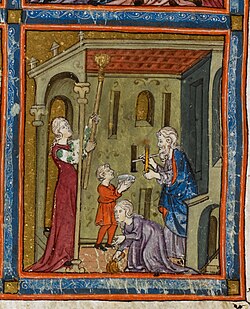
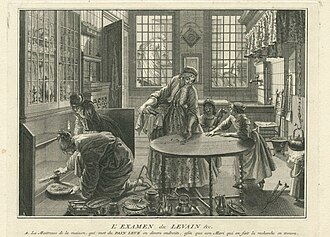
มิชนาห์สอนว่าในเย็นวันที่ 14 ของเดือนนิสาน ชาวยิวจะค้นหาอาหารที่มีส่วนผสมของยีสต์ในบ้านโดยใช้แสงเทียน สถานที่ใดก็ตามที่ไม่ได้นำอาหารที่มีส่วนผสมของยีสต์เข้าไป ก็ไม่จำเป็นต้องตรวจสอบ ปราชญ์สอนว่าจำเป็นต้องตรวจสอบสองแถวในห้องเก็บไวน์ เพราะเป็นสถานที่ที่นำอาหารที่มีส่วนผสมของยีสต์เข้าไป สำนักชัมไมสอนว่าจำเป็นต้องตรวจสอบสองแถวหน้าสุดของห้องเก็บไวน์ทั้งหมด แต่สำนักฮิลเลลสอนว่าจำเป็นต้องตรวจสอบเพียงสองแถวนอกสุดที่อยู่ด้านบนสุดเท่านั้น[ 124 ]พวกเขาไม่กังวลว่าตัววีเซลอาจลากขนมปังที่มีส่วนผสมของยีสต์จากบ้านหนึ่งไปอีกบ้านหนึ่ง หรือจากที่หนึ่งไปอีกที่หนึ่ง เพราะถ้าเป็นเช่นนั้น พวกเขาจะต้องกังวลว่าตัววีเซลจะลากขนมปังที่มีส่วนผสมของยีสต์จากลานบ้านหนึ่งไปอีกลานบ้านหนึ่ง และจากเมืองหนึ่งไปอีกเมืองหนึ่ง และเรื่องนี้ก็จะไม่มีวันจบสิ้น[ 125 ]รบี ยูดาห์สอนว่าพวกเขาค้นหาอาหารที่มีส่วนผสมของยีสต์ในเย็นวันที่ 14 และในเช้าวันที่ 14 และในเวลาที่พวกเขาทำลายอาหารที่มีส่วนผสมของยีสต์ (ในชั่วโมงที่หก—ระหว่าง 11 โมงเช้าถึงเที่ยง) แต่ปราชญ์กล่าวว่า หากพวกเขาไม่ค้นหาในเย็นวันที่ 14 พวกเขาจำเป็นต้องค้นหาในวันที่ 14 หากพวกเขาไม่ค้นหาในเช้าวันที่ 14 พวกเขาจำเป็นต้องค้นหาในเวลาที่พวกเขาทำลายอาหารที่มีส่วนผสมของยีสต์ หากพวกเขาไม่ค้นหาในเวลานั้น พวกเขาจำเป็นต้องค้นหาหลังจากนั้น และสิ่งที่พวกเขาเหลือไว้สำหรับมื้อเช้าสุดท้ายก่อนเทศกาล พวกเขาจำเป็นต้องเก็บไว้ในที่ซ่อน เพื่อที่พวกเขาไม่จำเป็นต้องค้นหา[ 126 ]รบี เมียร์ สอนว่าพวกเขาสามารถรับประทานอาหารที่มีส่วนผสมของยีสต์ได้จนถึงชั่วโมงที่ห้าของเช้า และจำเป็นต้องเผามันในตอนต้นของชั่วโมงที่หก รับบีจูดาห์สอนว่าพวกเขาสามารถกินได้จนถึงชั่วโมงที่สี่ของเช้า ต้องเก็บไว้ในช่วงชั่วโมงที่ห้า และต้องเผาเมื่อเริ่มต้นชั่วโมงที่หก[ 127 ]รับบีจูดาห์ยังเล่าอีกว่า พวกเขาเคยวางขนมปังที่ไม่เหมาะสมสองก้อนของเครื่องบูชาขอบคุณไว้บนหลังคาระเบียงพระวิหาร และตราบใดที่ขนมปังยังอยู่ที่นั่น ผู้คนทั้งหมดก็จะกินอาหารที่มีส่วนผสมของยีสต์ เมื่อพวกเขาเอาขนมปังออกไปหนึ่งก้อน ผู้คนก็จะเก็บอาหารที่มีส่วนผสมของยีสต์ไว้โดยไม่กินหรือเผา และเมื่อพวกเขาเอาขนมปังออกไปทั้งสองก้อน ผู้คนก็จะเริ่มเผาอาหารที่มีส่วนผสมของยีสต์ รับบัน กามาลิเอลสอนว่าขนมปังที่ใส่ยีสต์ ( חולין , chullin ) ที่ไม่ได้เสกไว้ สามารถรับประทานได้จนถึงชั่วโมงที่สี่ของเช้า และขนมปังที่ใส่ยีสต์ซึ่งเป็นเครื่องบูชา ( תְּרוּמָה , terumah ) สามารถรับประทานได้จนถึงชั่วโมงที่ห้า และพวกเขาจะเผามันเมื่อเริ่มชั่วโมงที่หก[ 128 ]มิชนาห์สอนว่าตลอดช่วงเวลาที่อนุญาตให้กินอาหารที่มีส่วนผสมของยีสต์นั้น อนุญาตให้นำไปเลี้ยงวัว สัตว์ และนก ขายให้แก่คนต่างชาติ และใช้ประโยชน์อื่นๆ จากอาหารนั้นได้ เมื่อหมดระยะเวลาแล้ว การใช้ประโยชน์จากอาหารนั้นเป็นสิ่งต้องห้าม และแม้แต่การนำไปจุดเตาอบหรือเตาหุงต้มก็ไม่ได้รับอนุญาต อาจารย์ยูดาห์สอนว่าไม่มีวิธีทำลายอาหารที่มีส่วนผสมของยีสต์ ยกเว้นการเผา แต่ปราชญ์ทั้งหลายยืนยันว่าสามารถบดให้เป็นชิ้นเล็กๆ แล้วโยนไปในอากาศหรือโยนลงทะเลก็ได้[ 129 ]
มิชนาห์ระบุว่าการกินขนมปังไร้เชื้อในเทศกาลปัสคาเป็นหนึ่งใน 36 การละเมิดที่อาจทำให้บุคคลต้องถูกขับออกจากศาสนา ( כָּרֵת , karet ) [ 130 ]
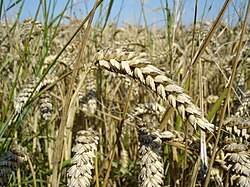
คัมภีร์มิชนาห์สอนว่า ธัญพืชที่สามารถใช้เพื่อปฏิบัติตามพันธะ (ตามพระธรรมอพยพ 12:18) ในการรับประทานขนมปังไร้เชื้อ ( มัตซาห์ ) ในเทศกาลปัสคา ได้แก่ ข้าวสาลี ข้าวบาร์เลย์ ข้าวสเปลต์ข้าวไรย์และข้าวโอ๊ตและคัมภีร์มิชนาห์ยังสอนอีกว่า พวกเขาสามารถปฏิบัติตามพันธะได้แม้กระทั่งด้วยขนมปังไร้เชื้อที่ทำจากผลผลิตทางการเกษตรซึ่งไม่แน่ใจว่าได้มีการแยกส่วนสิบ ( เดไม ) ไว้หรือ ไม่ด้วยส่วนสิบแรกที่ได้มีการแยกเครื่องบูชาที่ถวายไว้แล้ว และด้วยส่วนสิบที่สองหรือวัสดุที่ได้รับการชำระให้บริสุทธิ์แล้ว และปุโรหิตสามารถปฏิบัติตามพันธะของตนได้ด้วยขนมปังไร้เชื้อที่ทำจากส่วนของแป้งที่มอบให้แก่ปุโรหิต ( ชาลลาห์ ) และเครื่องบูชาที่ถวาย ( เทรูมาห์) แต่ไม่อาจชำระภาระผูกพันด้วยขนมปังไร้เชื้อที่ทำจากธัญพืชที่ผสมหรือไม่ได้แยก ( tevel ) หรือด้วยสิบส่วนแรกที่ถวายโดยไม่ได้แยก หรือด้วยสิบส่วนที่สองหรือวัสดุศักดิ์สิทธิ์ที่ยังไม่ได้ไถ่ถอน สำหรับขนมปังไร้เชื้อที่ถวายขอบคุณและเวเฟอร์ที่นาซีไรต์ ( נָזִיר , nazir ) นำมานั้น ปราชญ์ได้แยกแยะไว้ดังนี้: หากทำไว้สำหรับตนเอง ก็ไม่อาจชำระภาระผูกพันด้วยสิ่งเหล่านั้นได้ แต่หากทำไว้เพื่อขายในตลาดให้แก่ผู้ที่ต้องการผลิตภัณฑ์ดังกล่าว ก็สามารถชำระภาระผูกพันด้วยสิ่งเหล่านั้นได้[ 131 ]
มิชนาห์รายงานว่า หากวันที่ 14 นิสานตรงกับวันสะบาโต รบีเมียร์สอนว่าต้องทำลายเชื้อแป้งก่อนวันสะบาโต (ยกเว้นเชื้อแป้งที่จำเป็นสำหรับการเริ่มต้นวันสะบาโตเอง) แต่ปราชญ์ยืนยันว่าควรทำลายเชื้อแป้งในเวลาปกติ (ในเช้าวันที่ 14) รบีเอเลอาซาร์ บาร์ ซาโดก สอนว่าต้องทำลายเนื้อสัตว์ที่ถวายแล้วก่อนวันสะบาโต (เพราะหากเหลือไว้ก็ไม่มีใครกินได้) และอาหารที่ไม่ได้ถวายในเวลาปกติ (เพราะสามารถหาคนกินได้ง่าย) [ 132 ]มิชนาห์สอนว่า ผู้ที่กำลังเดินทางไปปฏิบัติหน้าที่ทางศาสนาแล้วนึกถึงเชื้อแป้งที่บ้าน หากพวกเขาสามารถกลับไปทำลายมันได้ แล้วจึงกลับไปปฏิบัติหน้าที่ทางศาสนาต่อ ก็ต้องกลับไปทำลายมัน แต่ถ้าทำไม่ได้ ก็ต้องยกเลิกในใจ ในทำนองเดียวกัน ผู้ที่กำลังเดินทางไปช่วยเหลือผู้คนจากเหตุฉุกเฉินก็ต้องยกเลิกในใจเช่นกัน แต่ผู้ที่กำลังเดินทางไปกำหนดสถานีวันสะบาโตเพื่อกำหนดขอบเขตการเดินทางในวันสะบาโตจะต้องกลับมาทันทีเพื่อทำลายเชื้อแป้ง[ 133 ]ในทำนองเดียวกัน ผู้ที่ออกจากเยรูซาเล็มและนึกขึ้นได้ว่าได้นำเนื้อศักดิ์สิทธิ์ติดตัวไปด้วย หากพวกเขาผ่านภูเขาสโคปัสพวกเขาก็จะเผาเนื้อนั้น ณ ที่ที่พวกเขาอยู่ แต่ถ้าพวกเขาไม่ได้เดินทางไปไกลขนาดนั้น พวกเขาก็จะกลับไปเผาเนื้อนั้นหน้าพระวิหารพร้อมกับไม้ที่จัดเตรียมไว้สำหรับใช้ในแท่นบูชา จากนั้นมิชนาห์ก็อภิปรายถึงปริมาณที่พวกเขาต้องนำกลับมา ราบีเมียร์กล่าวว่าสำหรับทั้งเชื้อแป้งและเนื้อศักดิ์สิทธิ์ พวกเขาต้องนำกลับมาในปริมาณเท่ากับไข่หนึ่งฟอง ราบียูดาห์กล่าวว่าเมื่อมีปริมาณเท่ากับมะกอกหนึ่งลูก แต่ปราชญ์ตัดสินว่าสำหรับเนื้อศักดิ์สิทธิ์ พวกเขาต้องนำกลับมาในปริมาณเท่ากับมะกอกหนึ่งลูก ในขณะที่สำหรับเชื้อแป้ง พวกเขาต้องนำกลับมาในปริมาณเท่ากับไข่หนึ่งฟอง[ 134 ]
มิชนาห์สอนว่า ในสถานที่ที่ผู้อยู่อาศัยทำงานเป็นประจำในคืนก่อนวันปัสคาจนถึงเที่ยงวัน บุคคลหนึ่งสามารถทำเช่นนั้นได้ ในขณะที่ในสถานที่ที่ผู้อยู่อาศัยไม่ทำงานเป็นประจำ บุคคลหนึ่งไม่สามารถทำได้ ผู้ที่เดินทางจากสถานที่ที่พวกเขาทำงานไปยังสถานที่ที่พวกเขาไม่ทำงาน หรือจากสถานที่ที่พวกเขาไม่ทำงานไปยังสถานที่ที่พวกเขาทำงาน จะต้องปฏิบัติตามข้อกำหนดของทั้งสองสถานที่ มิชนาห์สอนว่า บุคคลไม่ควรเบี่ยงเบนจากธรรมเนียมปฏิบัติที่กำหนดไว้ของสถานที่นั้นๆ เนื่องจากความขัดแย้งที่การกระทำดังกล่าวอาจนำไปสู่[ 135 ]
รับบีฮานินา หัวหน้าผู้ช่วยของเหล่าปุโรหิต สอนว่า ตลอดทุกยุคสมัยของเหล่าปุโรหิต พวกเขาไม่เคยละเว้นจากการเผาเนื้อสัตว์บูชายัญ ( เทรูมาห์ ) ที่แปดเปื้อนด้วยแหล่งแปดเปื้อนรอง พร้อมกับเนื้อสัตว์บูชายัญที่แปดเปื้อนด้วยแหล่งแปดเปื้อนหลัก แม้ว่าการกระทำเช่นนั้นจะยิ่งเพิ่มความแปดเปื้อนเข้าไปอีก รับบีอากิวาเสริมว่า ตลอดทุกยุคสมัยของเหล่าปุโรหิต พวกเขาไม่เคยละเว้นจากการจุดน้ำมันที่แปดเปื้อนเพราะสัมผัสกับบุคคลที่อาบน้ำชำระล้างในวันนั้น แต่ยังต้องรอจนถึงค่ำจึงจะบริสุทธิ์อย่างสมบูรณ์ ( เทวุลยอม ) ในตะเกียงที่แปดเปื้อนเพราะสัมผัสกับศพ แม้ว่าการกระทำเช่นนั้นจะยิ่งเพิ่มความแปดเปื้อนเข้าไปอีก[ 136 ]จากคำสอนเหล่านั้น รบีเมียร์จึงโต้แย้งว่าในเทศกาลปัสคา ปุโรหิตสามารถเผาเนื้อบูชาที่บริสุทธิ์แต่มีส่วนผสมของเชื้อยีสต์ ( chamets ) พร้อมกับเนื้อบูชาที่ไม่บริสุทธิ์ได้ รบีโฮเซตอบว่ากรณีเช่นนั้นไม่เหมือนกัน แม้แต่รบีเอลีเอเซอร์และรบีโจชัวก็ยอมรับว่าแต่ละอย่างต้องเผาแยกกัน อย่างไรก็ตาม พวกเขาไม่เห็นด้วยเกี่ยวกับเนื้อบูชาที่มีสถานะความบริสุทธิ์ที่น่าสงสัยและเนื้อบูชาที่ไม่บริสุทธิ์ โดยที่รบีเอลีเอเซอร์สอนว่าแต่ละอย่างต้องเผาแยกกัน ในขณะที่รบีโจชัวสอนว่าทั้งสองอย่างสามารถเผารวมกันได้[ 137 ]
ปราชญ์รายงานว่าในยูดาห์ พวกเขาจะทำงานในคืนก่อนวันปัสกาจนถึงเที่ยง ในขณะที่ในกาลิลี พวกเขาจะไม่ทำงานเลยในวันนั้น ในช่วงเย็นของวันที่สิบสี่ของนิสาน ในสถานที่ต่างๆ เช่น กาลิลี สำนักชัมไมห้ามการทำงาน แต่สำนักฮิลเลลอนุญาตให้ทำงานได้จนถึงรุ่งเช้า[ 138 ]รับบีเมียร์สอนว่าในวันที่สิบสี่ สามารถทำงานที่เริ่มไว้ก่อนวันที่สิบสี่ให้เสร็จได้ แต่ไม่สามารถเริ่มงานใหม่ในวันที่สิบสี่ได้ แม้ว่าจะสามารถทำงานให้เสร็จในวันนั้นได้ก็ตาม ปราชญ์สอนว่าช่างตัดเย็บ ช่างตัดผม และคนซักรีด สามารถทำงานในคืนก่อนวันปัสกาจนถึงเที่ยง และรับบีโฮเซเบนยูดาห์สอนว่าแม้แต่ช่างทำสายรองเท้าก็สามารถทำเช่นนั้นได้[ 139 ]มิชนาห์สอนว่าสามารถนำไก่ใส่ในเล้าฟักไข่ในวันที่สิบสี่ได้ สามารถนำแม่ไก่ที่หนีไปกลับเข้าที่เดิมได้ และสามารถนำแม่ไก่ตัวอื่นมาแทนที่แม่ไก่ที่ตายไปได้ ในวันที่สิบสี่ สามารถกวาดมูลสัตว์ออกจากใต้ฝ่าเท้าของสัตว์เลี้ยงได้ แต่เฉพาะเพื่อนำไปไว้ข้างคอกในช่วงเทศกาลเท่านั้น สามารถขนภาชนะและสิ่งของอื่นๆ ไปและกลับจากบ้านของช่างฝีมือได้ แม้ว่าจะไม่จำเป็นต้องใช้ในช่วงเทศกาลก็ตาม[ 140 ]มิชนาห์สอนว่าชายชาวเยริโคจะต่อกิ่งต้นปาล์มตลอดทั้งวันของวันที่สิบสี่ และปราชญ์ก็ไม่ได้คัดค้าน[ 141 ]
มิชนาห์รายงานว่าโดยปกติแล้วปุโรหิตจะฆ่าสัตว์บูชาประจำวันครึ่งชั่วโมงหลังจากชั่วโมงที่แปดและถวายบูชาในอีกหนึ่งชั่วโมงต่อมา แต่ในวันก่อนวันปัสกา ปุโรหิตจะฆ่าสัตว์บูชาประจำวันครึ่งชั่วโมงหลังจากชั่วโมงที่เจ็ดและถวายบูชาในอีกหนึ่งชั่วโมงต่อมา ไม่ว่าวันก่อนวันปัสกาจะตรงกับวันธรรมดาหรือวันสะบาโตก็ตาม แต่ถ้าวันก่อนวันปัสกาตรงกับวันศุกร์ ปุโรหิตจะฆ่าสัตว์บูชาประจำวันครึ่งชั่วโมงหลังจากชั่วโมงที่หกและถวายบูชาในอีกหนึ่งชั่วโมงต่อมา แล้วจึงถวายบูชาปัสกาหลังจากนั้น[ 142 ]
มิชนาห์สอนว่าเครื่องบูชาปัสคาจะไม่สมบูรณ์หากถูกฆ่าโดยไม่มีเจตนาเฉพาะเจาะจง หรือหากเลือดของมันถูกรับหรือนำมาที่แท่นบูชาหรือพรมโดยไม่มีเจตนาเฉพาะเจาะจง หรือหากมีการกระทำบูชาใดๆ ที่ทำไปโดยไม่มีเจตนาเฉพาะเจาะจง การกระทำบูชาที่ทำไปโดยไม่มีเจตนาเฉพาะเจาะจงสำหรับเครื่องบูชาปัสคาคือการกระทำที่ทำไปโดยมีเจตนาให้เป็นเครื่องบูชาแห่งสันติภาพ ( shelamim ) [ 143 ]มิชนาห์สอนว่าเครื่องบูชาปัสคาจะไม่สมบูรณ์หากถูกฆ่าเพื่อคนที่ไม่เหมาะสมที่จะกิน เช่น ชายที่ไม่ได้เข้าสุหนัตหรือคนที่อยู่ในสภาพไม่บริสุทธิ์ แต่หากเชือดเพื่อคนที่กินได้และคนที่กินไม่ได้ หรือเพื่อคนที่ถูกกำหนดไว้และคนที่ไม่ได้ถูกกำหนดไว้ หรือเพื่อชายที่เข้าสุหนัตและชายที่ไม่ได้เข้าสุหนัต หรือเพื่อคนที่อยู่ในสภาพไม่บริสุทธิ์และคนที่อยู่ในสภาพบริสุทธิ์ ก็ถือว่าไม่เหมาะสม หากเชือดก่อนเที่ยงวัน ดังที่เลวีนิติ 23:5 กล่าวว่า “ระหว่างเย็น” ก็ถือว่าเหมาะสม หากเชือดก่อนเครื่องบูชาประจำวันในตอนบ่าย แต่เฉพาะในกรณีที่มีคนกวนเลือดจนกระทั่งเลือดของเครื่องบูชาประจำวันถูกพรมแล้ว และหากเลือดนั้นถูกพรมแล้ว เครื่องบูชาปัสคาก็ยังเหมาะสมอยู่[ 144 ]
มิชนาห์สอนว่าผู้ใดฝ่าฝืนบัญญัติเชิงลบหากฆ่าสัตว์บูชาปัสคาในขณะที่ครอบครองผลิตภัณฑ์ธัญพืชที่มีเชื้อ ( chamets ) รับบียูดาห์สอนว่าสิ่งนี้ยังใช้กับเครื่องบูชาประจำวันด้วย รับบีซีเมโอนสอนว่าหากผู้ใดฆ่าสัตว์บูชาปัสคาในวันที่สิบสี่ด้วยเจตนาเฉพาะเจาะจง ผู้ใดมีความผิด แต่หากฆ่าโดยไม่มีเจตนาเฉพาะเจาะจง ผู้ใดได้รับการยกเว้น อย่างไรก็ตาม สำหรับเครื่องบูชาอื่นๆ ทั้งหมด ไม่ว่าจะมีเจตนาเฉพาะเจาะจงหรือไม่ก็ตาม ผู้ใดได้รับการยกเว้น หากผู้ใดฆ่าสัตว์บูชาปัสคาในเทศกาลปัสคาเองด้วยเจตนาเฉพาะเจาะจง ผู้ใดได้รับการยกเว้น หากไม่มีเจตนาเฉพาะเจาะจง ผู้ใดมีความผิด สำหรับเครื่องบูชาอื่นๆ ทั้งหมด ผู้ใดมีความผิดหากฆ่าในระหว่างเทศกาลด้วยเจตนาเฉพาะเจาะจงหรือไม่ก็ตาม ยกเว้นเครื่องบูชาที่นำมาเพื่อชดใช้บาป ( chatat ) ที่ฆ่าโดยไม่มีเจตนาเฉพาะเจาะจง[ 145 ]
มิชนาห์รายงานว่าพวกเขาฆ่าสัตว์บูชาปัสคาเป็นสามกลุ่ม ได้แก่ กลุ่มชุมนุม กลุ่มชุมชน และกลุ่มชาวอิสราเอล ดังที่อพยพ 12:6 กล่าวว่า “ชุมนุมชนทั้งหมดของชุมชนชาวอิสราเอลจะฆ่าสัตว์บูชานั้น” กลุ่มแรกเข้าไปจนเต็มลานพระวิหาร แล้วจึงปิดประตูลานพระวิหาร จากนั้นพวกเขาก็เป่าแตรเทคียาห์ (เสียงยาวต่อเนื่อง) เทรูอาห์ (เสียงยาวสั้นๆ) และเทคียาห์ ปุโรหิตจะยืนเรียงแถวเป็นคู่ ถือถ้วยเงินและถ้วยทอง แถวหนึ่งเป็นเงินทั้งหมด และอีกแถวหนึ่งเป็นทองทั้งหมด ไม่มีถ้วยใดที่มีก้นแบน เพื่อที่ปุโรหิตจะไม่สามารถวางลงและปล่อยให้เลือดแข็งตัวได้[ 146 ]
ชาวอิสราเอลทั่วไปจะฆ่าสัตว์บูชาปัสคา และปุโรหิตจะรับเลือดและส่งต่อให้ปุโรหิตคนอื่น ซึ่งจะส่งต่อให้ปุโรหิตคนอื่นต่อไปเรื่อยๆ จนกระทั่งปุโรหิตที่อยู่ใกล้แท่นบูชาที่สุดจะพรมเลือดที่ฐานของแท่นบูชา ปุโรหิตผู้นั้นจะส่งถ้วยเปล่าคืนให้ปุโรหิตที่อยู่ข้างๆ ซึ่งจะส่งต่อให้ปุโรหิตคนอื่นต่อไปเรื่อยๆ โดยที่ปุโรหิตแต่ละคนจะรับถ้วยที่เต็มและส่งถ้วยเปล่าคืน[ 147 ]
เมื่อกลุ่มแรกออกไป กลุ่มที่สองก็เข้ามา เมื่อกลุ่มที่สองออกไป กลุ่มที่สามก็เข้ามา แต่ละกลุ่มดำเนินไปในลักษณะเดียวกัน แต่ละกลุ่มจะสวดฮัลเลล (สดุดี 113–118) หากสวดจบแล้วก็จะสวดซ้ำ แต่ตลอดระยะเวลาที่พวกเขาอยู่ พวกเขาไม่เคยสวดซ้ำเป็นครั้งที่สามเลย ท่านรับบียูดาห์เล่าว่าตลอดระยะเวลาที่กลุ่มที่สามอยู่ พวกเขาไม่เคยสวดถึงสดุดี 116:1 ที่ว่า "ข้าพเจ้าปรารถนาให้พระเจ้าทรงสดับฟัง ( ahavti ki yishma Adonai )" เพราะกลุ่มนั้นมีขนาดเล็ก[ 148 ]
มิชนาห์สอนว่าในที่ที่ผู้อยู่อาศัยมักจะกินเนื้อย่างในคืนเทศกาลปัสคา ก็สามารถกินได้ แต่ในที่ที่ผู้อยู่อาศัยมักจะไม่กิน ก็ห้ามกิน[ 149 ]
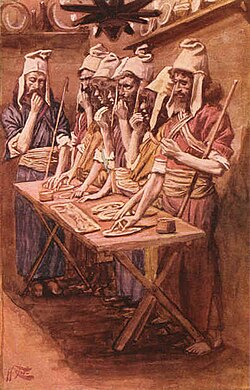
บทที่ 10 ของมิชนาห์เปซาคิมสอนขั้นตอนสำหรับพิธีเซเดอร์ปัสคาในคืนก่อนวันปัสคา ไม่มีใครควรรับประทานอาหารตั้งแต่ก่อน การถวาย มินฮา ห์ (ประมาณ 15.00 น.) จนถึงพลบค่ำ ในคืนนั้น แม้แต่คนยากจนที่สุดในอิสราเอลก็ไม่ควรรับประทานอาหารจนกว่าพวกเขาจะนอนพักผ่อนอย่างสบายเหมือนคนมีอิสระ ทุกคนต้องดื่มไวน์ไม่น้อยกว่าสี่แก้ว แม้ว่าองค์กรการกุศลสาธารณะจะต้องจัดหาให้ก็ตาม[ 150 ]
แต่ห้ามรับประทานขนมปังไร้เชื้อ ( มַצָּה , matzah ) ในวันก่อนวันเซเดอร์ รับบีเลวีกล่าวว่า ผู้ที่รับประทานขนมปังไร้เชื้อในวันก่อนวันปัสคาเปรียบเสมือนผู้ที่ร่วมประเวณีกับคู่หมั้นของตนก่อนที่จะแต่งงานกันอย่างเป็นทางการ[ 151 ]ราวาเคยดื่มไวน์ตลอดทั้งวันก่อนวันเซเดอร์เพื่อกระตุ้นความอยากอาหารให้รับประทานขนมปังไร้เชื้อมากขึ้นในตอนเย็น[ 152 ]

เกมาราสอนว่าจำเป็นต้องเอนกายลงเมื่อรับประทานขนมปังไร้เชื้อ ( มַצָּה , matzah ) และเมื่อดื่มไวน์ แต่ไม่จำเป็นต้องเอนกายลงเมื่อรับประทานสมุนไพรขม[ 153 ]
บารายตาสอนว่าไวน์แต่ละถ้วยทั้งสี่ถ้วยจะต้องมีไวน์อย่างน้อยหนึ่งเรวิอิส (ปริมาตรเท่ากับไข่ไก่หนึ่งฟองครึ่ง หรือประมาณ 4 ถึง 5 ออนซ์) และราฟนาคมาน บาร์ ยิตซัคสอนว่าต้องดื่มไวน์ส่วนใหญ่ในแต่ละถ้วย[ 154 ]
โทเซฟตาได้สอนว่า เป็นหน้าที่ทางศาสนาที่จะต้องนำความสุขมาสู่ลูก ๆ และผู้ที่อยู่ในความอุปการะในช่วงเทศกาลปัสคา โทเซฟตาสอนว่าควรนำความสุขมาให้พวกเขาด้วยไวน์ ดังที่สดุดี 104:15 กล่าวว่า “ไวน์...ทำให้จิตใจของมนุษย์ชื่นบาน” รับบี ยูดาห์ สอนว่าควรให้สิ่งที่เหมาะสมแก่ผู้หญิงเพื่อนำความสุขมาให้ และให้สิ่งที่เหมาะสมแก่เด็ก ๆ เพื่อนำความสุขมาให้[ 155 ]ในทำนองเดียวกัน ในทัลมุดบาบิโลน เหล่ารับบีสอนว่าชาวยิวมีหน้าที่ต้องทำให้ลูก ๆ และครอบครัวของตนชื่นบานในเทศกาล เพราะเฉลยธรรมบัญญัติ 16:14 กล่าวว่า “และเจ้าจงชื่นบานในเทศกาลของเจ้า เจ้าและบุตรชายและบุตรหญิงของเจ้า” เกมาราได้สอนว่าควรทำให้พวกเขาชื่นบานด้วยไวน์ รับบี ยูดาห์ สอนว่าผู้ชายชื่นบานด้วยสิ่งที่เหมาะสมสำหรับพวกเขา และผู้หญิงชื่นบานด้วยสิ่งที่เหมาะสมสำหรับพวกเขา เกมาราอธิบายว่าสิ่งที่เหมาะสมสำหรับผู้ชายคือไวน์ และท่านรับบีโยเซฟสอนว่าในบาบิโลน พวกเขาทำให้ผู้หญิงมีความสุขด้วยเสื้อผ้าสีสันสดใส ในขณะที่ในดินแดนอิสราเอล พวกเขาทำให้ผู้หญิงมีความสุขด้วยเสื้อผ้าลินินที่รีดเรียบ ท่านรับบียูดาห์เบนบาธีราสอนว่าในสมัยที่พระวิหารอยู่ในเยรูซาเล็มชาวยิวไม่สามารถมีความสุขได้หากปราศจากเนื้อสัตว์ (จากการถวาย) ดังที่พระธรรมเฉลยธรรมบัญญัติ 27:7 กล่าวว่า “และเจ้าจงถวายเครื่องบูชาสันติสุข และจงกินที่นั่น และเจ้าจงมีความสุขต่อหน้าพระเจ้าของเจ้า” แต่ในเมื่อพระวิหารไม่มีอยู่แล้ว ชาวยิวจึงไม่สามารถมีความสุขได้หากปราศจากเหล้าองุ่น ดังที่พระธรรมสดุดี 104:15 กล่าวว่า “และเหล้าองุ่นทำให้ใจของมนุษย์ชื่นบาน” [ 156 ]

มิชนาห์กล่าวต่อไปว่าพวกเขาผสมไวน์ถ้วยแรกสำหรับผู้นำของเซเดอร์ สำนักชัมไมสอนว่าผู้นำจะกล่าวคำอวยพรสำหรับวันนั้นก่อน แล้วจึงกล่าวคำอวยพรเหนือไวน์ ในขณะที่สำนักฮิลเลลกำหนดว่าผู้นำจะกล่าวคำอวยพรเหนือไวน์ก่อน แล้วจึงกล่าวคำอวยพรสำหรับวันนั้น[ 157 ]
จากนั้นพวกเขาก็นำอาหารมาวางไว้ต่อหน้าผู้นำ ผู้นำจุ่มและรับประทานผักกาดหอม (ซึ่งเรียกว่าkarpas ) ก่อนที่จะรับประทานขนมปัง พวกเขาวางขนมปังไร้เชื้อ ( מַצָּה , matzah ) ผักกาดหอม ( hazeret ) charosetและอาหารปรุงสุกสองอย่าง ไว้ต่อหน้าผู้นำ charosetไม่ใช่สิ่งจำเป็น แม้ว่ารับบีเอเลอาซาร์บุตรของรับบีซาโดกจะกล่าวว่ามันเป็นสิ่งจำเป็นก็ตาม ในสมัยที่พระวิหารอยู่ในกรุงเยรูซาเล็ม พวกเขาจะนำร่างของลูกแกะปัสคามาวางไว้ต่อหน้าผู้นำ[ 158 ]
มิชนาห์ได้ระบุรายชื่อผักหลายชนิดที่สามารถตอบสนองความต้องการสมุนไพรขม ( มารอร์ ) ได้ ซึ่งแปลเป็นภาษาอังกฤษว่าผักกาดหอม ชิกอรี พริกไทยดำ เอนไดฟ์ และแดนดิไลออน[ 159 ]

พวกเขารินไวน์ถ้วยที่สองให้ผู้นำ จากนั้นเด็กคนหนึ่งก็ถามคำถาม ถ้าเด็กคนนั้นไม่ฉลาด ผู้ปกครองก็จะสั่งให้เด็กถามว่าทำไมคืนนี้จึงแตกต่างจากคืนอื่นๆ คืนอื่นๆ พวกเขากินขนมปังที่มีเชื้อและไม่มีเชื้อ แต่คืนนี้พวกเขากินเฉพาะขนมปังไม่มีเชื้อ ( ม��ַצָּה , matzah ) คืนอื่นๆ พวกเขากินสมุนไพรทุกชนิด แต่คืนนี้พวกเขากินเฉพาะสมุนไพรขม (ฉบับแรกๆ ของมิชนาห์และบางฉบับของเยรูซาเล็มทัลมุดไม่ได้รวมรายการนี้ไว้[ 160 ] ) คืนอื่นๆ พวกเขากินเนื้อย่าง ตุ๋น หรือต้ม แต่คืนนี้พวกเขากินเฉพาะเนื้อย่าง คืนอื่นๆ พวกเขาจุ่มครั้งเดียว แต่คืนนี้พวกเขาจุ่มสองครั้ง (ในขณะที่ทัลมุดแห่งเยรูซาเล็มยังคงรักษาการอ่านนี้ไว้ ทัลมุดบาบิโลนบางฉบับได้แก้ไขข้อความนี้ให้เป็น "ในคืนอื่นๆ เราไม่จำเป็นต้องอาบน้ำแม้แต่ครั้งเดียว..." [ 161 ] ) และผู้ปกครองได้สั่งสอนตามสติปัญญาของเด็ก ผู้ปกครองเริ่มตอบคำถามโดยเล่าถึงจุดเริ่มต้นที่ต่ำต้อยของผู้คน และจบลงด้วยการสรรเสริญผู้คน ผู้ปกครองเล่าถึงความเชื่อในเฉลยธรรมบัญญัติ 26:5–8 ว่า "บิดาของข้าพเจ้าเป็นชาวอาราเมียนผู้เร่ร่อน..." [ 162 ]
| เยรูซาเล็มทัลมุด | ทัลมุดบาบิโลน | ฮักกาดัตฉบับร่วมสมัย | |
|---|---|---|---|
| 1 | การจุ่ม | มัตซาห์ | มัตซาห์ |
| 2 | มัตซาห์ | มารอร์ | มารอร์ |
| 3 | เนื้อย่าง | เนื้อย่าง | การจุ่ม |
| 4 | การจุ่ม | เอนกาย |
เหล่ารับบีสอนในบารายตาว่า ถ้าเด็กฉลาดพอที่จะถามคำถามทั้งสี่ข้อ เด็กจะเป็นคนถาม ถ้าเด็กไม่ฉลาดพอ ภรรยาจะเป็นคนถาม ถ้าภรรยาไม่ถามคำถาม ผู้นำของเซเดอร์จะเป็นคนถาม และแม้แต่นักวิชาการสองคนที่รู้กฎของเทศกาลปัสคา ก็ต้องถามกันและกัน (ถ้าไม่มีใครอื่นสามารถถามได้) [ 164 ]
มิชนาห์กล่าวว่าคำตอบหนึ่งสำหรับคำถามที่ว่าทำไมคืนนี้จึงแตกต่างจากคืนอื่นๆ คือ ในคืนอื่นๆ เราจุ่มเพียงครั้งเดียว แต่ในคืนนี้เราจุ่มสองครั้ง[ 165 ]ในทัลมุดบาบิโลน ราวาคัดค้านคำกล่าวนี้ โดยตั้งคำถามว่าในทุกวันอื่นๆ มีข้อกำหนดให้จุ่มเพียงครั้งเดียวหรือไม่ ราวาจึงกล่าวว่ามิชนาห์สอนว่าในคืนอื่นๆ เราไม่จำเป็นต้องจุ่มแม้แต่ครั้งเดียว แต่ในคืนนี้เราจำเป็นต้องจุ่มสองครั้งราฟ ซาฟราคัดค้านคำอธิบายนี้ โดยตั้งคำถามว่าเราสามารถอนุมานสิ่งนี้จากสิ่งที่เราทำเพียงเพื่อกระตุ้นความอยากรู้อยากเห็นของเด็กๆ ได้หรือไม่ ราฟ ซาฟราจึงกล่าวว่ามิชนาห์สอนว่าโดยปกติแล้วเราจะไม่จุ่มแม้แต่ครั้งเดียว แต่ในคืนนี้เราจุ่มสองครั้ง[ 164 ]
มิชนาห์สอนว่าพ่อแม่เริ่มต้นคำตอบด้วยความอัปยศและจบด้วยความรุ่งโรจน์[ 165 ]เกมาราถามว่ามิชนาห์หมายถึงอะไรโดยคำว่า "ด้วยความอัปยศ" ในทัลมุดบาบิโลน ราฟ ( อับบา อาริกา ) สอนว่าความอัปยศคือบรรพบุรุษของเราในตอนแรกบูชารูปเคารพ ในขณะที่ซามูเอลแห่งเนฮาร์เดียสอนว่าความอัปยศคือเราเป็นทาส[ 164 ]ในทัลมุดเยรูซาเล็ม ราฟสอนว่าต้องเริ่มต้นด้วยคำพูดของโยชูวาในโยชูวา 24:2–3 (อธิบายว่าเทราห์บูชารูปเคารพ) "บรรพบุรุษของท่านอาศัยอยู่ไกลออกไปจากแม่น้ำในสมัยโบราณ คือเทราห์ บิดาของอับราฮัม และบิดาของนาโฮร์และพวกเขารับใช้เทพเจ้าอื่น" (ดังนั้นชาวยิวจึงปฏิบัติตามแบบอย่างของโยชูวา โดยสืบย้อนต้นกำเนิดที่ต่ำต้อยของพวกเขาไปยังภูมิหลังที่บูชารูปเคารพของบรรพบุรุษของพวกเขา) [ 166 ]
แรบไบอากิวาจะแจกข้าวโพดคั่วและถั่วให้เด็กๆ ในคืนก่อนวันปัสคา เพื่อไม่ให้พวกเขาง่วงนอนและถามคำถามสี่ข้อแรบไบเอลีเอเซอร์สอนว่าขนมปังไร้เชื้อ ( มַצָּה , matzah ) นั้นรับประทานอย่างเร่งรีบในคืนวันปัสคา เพื่อเด็กๆ เพื่อไม่ให้พวกเขาง่วงนอน แรบไบอากิวาไม่เคยพูดในบ้านศึกษาว่าถึงเวลาหยุดศึกษาแล้ว ยกเว้นในคืนก่อนวันปัสคาและคืนก่อน วันแห่งการล้างบาป ในคืนก่อนวัน ปัสคาเป็นเพราะเด็กๆ เพื่อไม่ให้พวกเขาง่วงนอน และในคืนก่อนวันแห่งการล้างบาปก็เพื่อให้พวกเขาเลี้ยงลูกๆ ก่อนการถือศีลอด[ 167 ]

คัมภีร์เมคิลตาของรับบีอิชมาเอลสอนว่ามีเด็กอยู่สี่ประเภท (ดังที่ปรากฏในพระคัมภีร์สี่ครั้งที่กล่าวถึงการบอกกล่าวแก่เด็กในพระธรรมอ Exodus 12:26; 13:8; 13:14; และ Deuteronomy 6:20) ได้แก่ เด็กฉลาด เด็กซื่อ เด็กชั่ว และเด็กประเภทที่ไม่รู้ว่าจะถามอย่างไร เด็กฉลาดจะถามตามถ้อยคำในพระธรรม Deuteronomy 6:20 ว่า “คำพยาน พระบัญญัติ และกฎเกณฑ์ต่างๆ ที่พระเยโฮวาห์พระเจ้าของเราทรงบัญชาแก่ท่านนั้นหมายความว่าอย่างไร?” คัมภีร์เมคิลตาสอนว่าเราควรอธิบายกฎเกณฑ์ทั้งหมดของเทศกาลปัสคาแก่เด็กประเภทนี้ ส่วนเด็กซื่อจะถามตามถ้อยคำในพระธรรมอ Exodus 13:14 ว่า “นี่คืออะไร?” คัมภีร์เมคิลตาสอนว่าเราควรตอบอย่างง่ายๆ ด้วยถ้อยคำในพระธรรมอ Exodus 13:14 ว่า “ด้วยกำลังพระหัตถ์ของพระเยโฮวาห์ พระองค์ทรงนำเราออกมาจากอียิปต์ จากบ้านแห่งการเป็นทาส” เด็กที่ชั่วร้ายถามตามคำพูดในพระธรรมอ Exodus 12:26 ว่า “ ท่านหมายความว่าอย่างไรกับการรับใช้นี้?” เมคิลตาสอนว่าเนื่องจากเด็กที่ชั่วร้ายจะยกเว้นตัวเอง เราจึงควรยกเว้นเด็กคนนี้ในการตอบและกล่าวตามคำพูดในพระธรรมอ Exodus 13:8 ว่า “เป็นเพราะสิ่งที่พระเจ้าทรงทำเพื่อข้าพเจ้าเมื่อข้าพเจ้าออกมาจากอียิปต์”—เพื่อข้าพเจ้าแต่ไม่ใช่เพื่อท่าน ถ้าท่านอยู่ที่นั่น ท่านก็จะไม่ได้รับความรอด ส่วนเด็กที่ไม่รู้วิธีถาม เมคิลตาสอนว่าเราควรริเริ่มเอง ดังที่พระธรรมอ Exodus 13:8 กล่าวไว้ (โดยไม่ได้รายงานว่าเด็กถาม) ว่า “ท่านจงบอกลูกของท่านในวันนั้น” [ 168 ]
รับบัน กามาลิเอลกล่าวว่า ในวันปัสกา จำเป็นต้องกล่าวถึงสามสิ่งเพื่อปฏิบัติหน้าที่ให้ครบถ้วน ได้แก่ เครื่องบูชาปัสกา ขนมปังไร้เชื้อ ( มัตซาห์)และผักขม ( มารอร์ ) เครื่องบูชาปัสกาถูกถวายเพราะพระเจ้าทรงผ่านพ้นบ้านเรือนของชาวอิสราเอลในอียิปต์ พวกเขากินขนมปังไร้เชื้อเพราะชาวอิสราเอลได้รับการไถ่จากอียิปต์ และพวกเขากินผักขมเพราะชาวอียิปต์ทำให้ชีวิตของชาวอิสราเอลในอียิปต์ขมขื่น ในทุกชั่วอายุคน ทุกคนมีหน้าที่ต้องถือว่าตนเองได้ออกจากอียิปต์ด้วยตนเอง เพราะพระธรรมอพยพ 13:8 กล่าวว่า “ในวันนั้นเจ้าจงบอกแก่ลูกหลานของเจ้าว่า ‘เพราะสิ่งที่พระเจ้าทรงกระทำเพื่อข้าพเจ้าเมื่อข้าพเจ้าออกมาจากอียิปต์’” ดังนั้น จึงเป็นหน้าที่ของทุกคนที่ต้องขอบคุณและสรรเสริญพระเจ้าที่ทรงกระทำปาฏิหาริย์เหล่านั้นแก่ชาวอิสราเอลและลูกหลานของพวกเขา พระเจ้าทรงปลดปล่อยพวกเขาจากความเป็นทาสสู่อิสรภาพ จากความเศร้าโศกสู่ความสุข จากการโศกเศร้าสู่การเฉลิมฉลอง จากความมืดสู่แสงสว่าง และจากการเป็นทาสสู่การไถ่บาป ดังนั้นพวกเขาจึงควรกล่าวว่า ฮาเลลูยา! [ 169 ]

ในมิชนาห์ ตระกูลชัมไมและตระกูลฮิลเลลมีความเห็นไม่ตรงกันเกี่ยวกับขอบเขตของการท่องบทสดุดีฮัลเลลบทสดุดี 113–118 ตระกูลชัมไมยืนยันว่าควรท่องไปจนถึงคำว่า "ดุจมารดาผู้เปี่ยมสุขของบุตร" ในบทสดุดี 113:9 ในขณะที่ตระกูลฮิลเลลกล่าวว่าควรท่องไปจนถึงคำว่า "หินเหล็กไฟกลายเป็นน้ำพุ" ในบทสดุดี 114:8 [ 170 ]โทเซฟตาและทัลมุดแห่งเยรูซาเล็มรายงานว่าตระกูลชัมไมโต้แย้งกับตระกูลฮิลเลลว่า เนื่องจากอาหารปัสกาครั้งแรกในอียิปต์เกิดขึ้นก่อนการอพยพ จึงไม่เหมาะสมที่จะกล่าวขอบคุณสำหรับการอพยพในพิธีปัสกา ตระกูลฮิลเลลโต้แย้งกับตระกูลชัมไมว่า เนื่องจากชาวอิสราเอลออกจากอียิปต์ในเวลาเที่ยงวันเท่านั้น (ซึ่งคัมภีร์ทัลมุดแห่งเยรูซาเลมอ้างถึงอพยพ 12:51 ซึ่งอ่านว่า "และเหตุการณ์นั้นเกิดขึ้นในกลางวัน") จึงยังคงไม่เหมาะสมที่จะกล่าวถึงการอพยพในเช้าวันรุ่งขึ้นหลังจากพิธีเซเดอร์[ 171 ]คัมภีร์ทัลมุดแห่งเยรูซาเลมรายงานว่า ตระกูลฮิลเลลสรุปว่า เมื่อเริ่มปฏิบัติหน้าที่ทางศาสนาแล้ว ก็ควรทำให้เสร็จสิ้น และรับบีอบูนา บาร์ เซโฮราห์ตั้งคำถามถึงข้อโต้แย้งของตระกูลชัมไม เนื่องจากได้มีการกล่าวถึงการอพยพจากอียิปต์ไปแล้วในคำอวยพรการชำระให้บริสุทธิ์ที่กล่าวเหนือถ้วยในตอนเริ่มต้นของพิธีเซเดอร์[ 172 ]
มิชนาห์สอนว่าควรจบด้วยคำอวยพรแห่งการไถ่บาป รับบีทาร์ฟอนเคยกล่าวว่า (คำอวยพรนั้นรวมถึง) "ผู้ทรงไถ่เราและไถ่บรรพบุรุษของเราจากอียิปต์" แต่บางคนไม่ได้จบด้วยคำอวยพร รับบีอากิวากล่าวว่า (มีการเพิ่มเติมในเวอร์ชันของรับบีทาร์ฟอนดังนี้) "ขอพระเจ้าของเราและพระเจ้าของบรรพบุรุษของเราทรงโปรดให้เราได้มีฤดูกาลและเทศกาลอื่นๆ ด้วยความสงบสุข ชื่นชมยินดีในการสร้างเมืองของพระองค์ขึ้นใหม่และยินดีในการรับใช้พระองค์ และที่นั่นเราจะกินเครื่องบูชาและเครื่องถวายปัสกา..." (และกล่าวต่อไป) จนถึง "ขอพระองค์ทรงได้รับพระพร โอพระเจ้า ผู้ทรงไถ่อิสราเอล" [ 170 ]
มิชนาห์กล่าวต่อไปว่า พวกเขารินไวน์แก้วที่สาม ผู้นำจึงกล่าวคำอธิษฐานก่อนรับประทานอาหารเหนือแก้วที่สี่ ผู้นำกล่าวจบฮัลเลลและกล่าวคำอธิษฐานก่อนร้องเพลง ระหว่างแก้วที่หนึ่ง สอง และสาม สามารถดื่มได้หากต้องการ แต่ระหว่างแก้วที่สามและสี่ ห้ามดื่ม[ 173 ]
ห้ามปิดท้ายมื้ออาหารปัสคาด้วยของหวาน[ 174 ]หากบางคนในกลุ่มหลับไป พวกเขาสามารถกินได้เมื่อตื่นขึ้น แต่ถ้าทุกคนหลับไป พวกเขาไม่ได้รับอนุญาตให้กิน[ 175 ]ท่านรับบีโฮเซกล่าวว่า หากพวกเขานอนหลับไม่สนิท พวกเขาสามารถกินได้ แต่ถ้าพวกเขาหลับสนิท พวกเขาไม่ได้รับอนุญาตให้กิน[ 176 ]
ครั้งหนึ่ง รับบันกามาลิเอลได้เอนกายลงในงานเลี้ยงปัสคาที่บ้านของโบเอทัสเบนเซโนในเมืองลุดและพวกเขาได้อภิปรายกฎของเทศกาลปัสคาตลอดทั้งคืนจนกระทั่งไก่ขัน จากนั้นพวกเขาก็ยกโต๊ะขึ้น ยืดตัว และไปยังบ้านแห่งการศึกษา[ 177 ]
คัมภีร์มิชนาห์ได้กล่าวถึงความแตกต่างระหว่างเทศกาลปัสกาครั้งแรกในพระธรรมอ Exodus 12:3–27, 43–49; 13:6–10; 23:15; 34:25; Leviticus 23:4–8; Numbers 9:1–14; 28:16–25; และ Deuteronomy 16:1–8 กับเทศกาลปัสกาครั้งที่สองในพระธรรม Numbers 9:9–13 คัมภีร์มิชนาห์สอนว่าข้อห้ามในพระธรรมอ Exodus 12:19 ที่ว่า “เจ็ดวันอย่าให้มีเชื้อแป้งอยู่ในบ้านของท่าน” และในพระธรรมอ Exodus 13:7 ที่ว่า “อย่าให้มีเชื้อแป้งอยู่ในอาณาเขตของท่าน” นั้นใช้กับเทศกาลปัสกาครั้งแรก ในขณะที่เทศกาลปัสกาครั้งที่สองนั้น สามารถมีทั้งขนมปังที่มีเชื้อแป้งและไม่มีเชื้อแป้งในบ้านได้ และมิชนาห์สอนว่าสำหรับเทศกาลปัสกาครั้งแรก จำเป็นต้องสวดฮัลเลล (สดุดี 113–118) เมื่อรับประทานลูกแกะปัสกา ในขณะที่เทศกาลปัสกาครั้งที่สองไม่จำเป็นต้องสวดฮัลเลลเมื่อรับประทานลูกแกะปัสกา แต่ทั้งเทศกาลปัสกาครั้งแรกและครั้งที่สองจำเป็นต้องสวดฮัลเลลเมื่อถวายลูกแกะปัสกา และลูกแกะปัสกาทั้งสองครั้งนั้นรับประทานแบบย่างกับขนมปังไร้เชื้อ ( มַצָּה , matzah ) และผักขม และทั้งเทศกาลปัสกาครั้งแรกและครั้งที่สองมีความสำคัญเหนือกว่าวันสะบาโต[ 178 ]

มิดราชตีความถ้อยคำในพระธรรมอพยพ 8:22 ที่ว่า “ดูเถิด ถ้าเราถวายสิ่งที่น่ารังเกียจของชาวอียิปต์ต่อหน้าต่อตาพวกเขา พวกเขาจะไม่เอาหินขว้างเราหรือ?” ว่าชาวอียิปต์มองลูกแกะเป็นเทพเจ้า ดังนั้น เมื่อพระเจ้าตรัสกับโมเสสให้ฆ่าลูกแกะปัสคา (ดังที่ปรากฏในอพยพ 12:21) โมเสสจึงถามพระเจ้าว่าเขาจะทำได้อย่างไร ในเมื่อลูกแกะเป็นเหมือนเทพเจ้าของชาวอียิปต์ พระเจ้าทรงตอบว่าชาวอิสราเอลจะไม่ออกจากอียิปต์จนกว่าพวกเขาจะฆ่าเทพเจ้าของชาวอียิปต์ต่อหน้าต่อตาชาวอียิปต์ เพื่อที่พระเจ้าจะได้สอนพวกเขาว่าเทพเจ้าของพวกเขานั้นไม่มีอะไรเลย และพระเจ้าก็ทรงทำเช่นนั้น ในคืนเดียวกันกับที่พระเจ้าทรงฆ่าบุตรหัวปีของชาวอียิปต์ ชาวอิสราเอลก็ฆ่าลูกแกะปัสคาของพวกเขาและกินเนื้อแกะเหล่านั้น เมื่อชาวอียิปต์เห็นบุตรหัวปีของพวกเขาถูกฆ่าและเทพเจ้าของพวกเขาถูกสังหาร พวกเขาก็ทำอะไรไม่ได้ ดังที่กันดารวิถี 33:4 รายงานว่า “ขณะที่ชาวอียิปต์กำลังฝังศพผู้ที่พระเจ้าทรงลงโทษในหมู่พวกเขา คือบุตรหัวปีทั้งหมดของพวกเขา พระเจ้าทรงลงโทษเทพเจ้าของพวกเขาด้วย” [ 179 ]

มิดราชกล่าวว่าพระเจ้าทรงบัญชาให้ชาวอิสราเอลปฏิบัติตามบัญญัติบางประการโดยใช้วัสดุที่คล้ายคลึงกันจากต้นไม้: พระเจ้าทรงบัญชาให้ชาวอิสราเอลโยนไม้ซีดาร์และหญ้าหิสสพลงในส่วนผสมของวัวแดงในกันดารวิถี 19:6 และใช้หญ้าหิสสพพรมน้ำชำระล้างที่ได้ในกันดารวิถี 19:18; พระเจ้าทรงบัญชาให้ชาวอิสราเอลใช้ไม้ซีดาร์และหญ้าหิสสพเพื่อชำระล้างผู้ที่เป็นโรคผิวหนังในเลวีนิติ 14:4–6; และในอียิปต์ พระเจ้าทรงบัญชาให้ชาวอิสราเอลใช้ช่อหญ้าหิสสพตีวงกบประตูและเสาข้างสองต้นด้วยเลือดในอพยพ 12:22 [ 180 ]
มิดราชตั้งข้อสังเกตว่าหลายสิ่งหลายอย่างดูเหมือนต่ำต้อย แต่พระเจ้าทรงบัญชาให้ปฏิบัติตามบัญญัติมากมาย ตัวอย่างเช่น ต้นหิสสพดูเหมือนไม่มีค่าอะไรในสายตาของมนุษย์ แต่พลังของมันยิ่งใหญ่ในสายตาของพระเจ้า พระองค์ทรงยกให้มันอยู่ในระดับเดียวกับต้นซีดาร์ในการชำระล้างคนโรคเรื้อนในเลวีนิติ 14:4–6 และการเผาโคแดงในกันดารวิถี 19:6, 18 และทรงใช้มันในการอพยพออกจากอียิปต์ในอพยพ 12:22 [ 181 ]
มิดราชสอนว่าถ้อยคำในบทเพลงสดุดี 2:13 ที่ว่า “ต้นมะเดื่อออกผลเขียว” หมายถึงคนบาปของอิสราเอลที่ตายในความมืดสามวัน ดังที่อพยพ 10:22–23 กล่าวไว้ว่า “และมีความมืดมิดหนาทึบ...พวกเขาไม่เห็นกันและกัน” [ 182 ]
มิชนาห์ได้อธิบายหญ้าหิสสพที่เหมาะสมสำหรับการใช้ในพิธีกรรมว่าเป็นช่อที่มีก้านสามก้านและแต่ละก้านมีดอกตูมสามดอก รับบียูดาห์กล่าวว่ามีก้านสามก้านและแต่ละก้านมีดอกตูมสามดอก[ 183 ]
เมื่ออ่านพระธรรมอพยพ 21:6 เกี่ยวกับคนรับใช้ชาวฮีบรูที่เลือกที่จะไม่เป็นอิสระ และเจ้านายของเขาพาเขาไปที่เสาประตูและเจาะหูของเขาด้วยเหล็กแหลม ท่านรับบีซีเมโอน บาร์ รับบี อธิบายว่าพระเจ้าทรงเลือกเสาประตูจากส่วนอื่นๆ ของบ้าน เพราะเสาประตูเป็นพยานในอียิปต์เมื่อพระเจ้าทรงผ่านเหนือวงกบประตูและเสาประตู (ตามที่รายงานไว้ในพระธรรมอพยพ 12) และทรงประกาศ (ด้วยถ้อยคำในพระธรรมเลวีนิติ 25:55) ว่า "เพราะสำหรับเราแล้ว ชนชาติอิสราเอลเป็นผู้รับใช้ พวกเขาเป็นผู้รับใช้ของเรา" และไม่ใช่ผู้รับใช้ของผู้รับใช้ ดังนั้นพระเจ้าจึงทรงนำพวกเขาออกจากความเป็นทาสไปสู่อิสรภาพ แต่คนรับใช้คนนี้กลับได้เจ้านายมาเป็นของตนเอง[ 184 ]
ราฟ โยเซฟตีความถ้อยคำในอพยพ 12:22 ที่ว่า “และพวกเจ้าทั้งหลายอย่าออกไปจากประตูบ้านของตนจนกว่าจะถึงเช้า” เพื่อสอนว่าเมื่อพระเจ้าทรงอนุญาตให้ผู้ทำลายล้างเข้ามาแล้ว พระองค์จะไม่ทรงแยกแยะระหว่างคนชอบธรรมและคนชั่ว ยิ่งไปกว่านั้น พระองค์ยังทรงเริ่มต้นด้วยคนชอบธรรมก่อน ดังที่เอเสเคียล 21:8 กล่าวว่า “และเราจะตัดคนชอบธรรมและคนชั่วออกไปจากเจ้า” (โดยกล่าวถึงคนชอบธรรมก่อน) ราฟ โยเซฟร้องไห้เมื่อได้ยินเช่นนี้ แต่อาบายปลอบโยนเขาโดยกล่าวว่านี่เป็นประโยชน์แก่พวกเขา ดังที่อิสยาห์ 57:1 กล่าวว่า “เพื่อคนชอบธรรมจะถูกนำออกไปจากความชั่วร้ายที่จะมาถึง” [ 185 ]
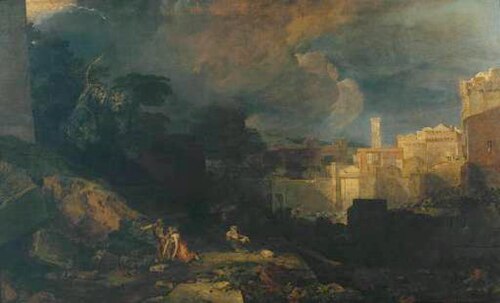
เมื่ออ่านพระธรรมอพยพ 12:23 “เพราะองค์พระผู้เป็นเจ้าจะเสด็จผ่านไปเพื่อทำลายชาวอียิปต์” มิดราชได้สังเกตว่าบางคนกล่าวว่าพระเจ้าทรงกระทำการผ่านทางทูตสวรรค์ (“ผู้ทำลาย” הַמַּשְׁחִית , ha-mashchit ) ในขณะที่คนอื่นๆ กล่าวว่าพระเจ้าทรงกระทำการด้วยพระองค์เอง[ 186 ]
มิดราชตีความจากอพยพ 12:23 ว่า “และองค์พระผู้เป็นเจ้าจะเสด็จผ่านประตู” ว่าในเวลานั้นพระเจ้าทรงอยู่ที่ประตู มิดราชจึงตั้งคำถามว่าทำไมอพยพ 12:23 จึงกล่าวว่า “และเมื่อพระองค์ทรงเห็นเลือดบนวงกบประตู” มิดราชอธิบายว่านี่เป็นไปตามธรรมเนียมปฏิบัติ เช่นเดียวกับที่คนขายเนื้อใช้สีแดงทำเครื่องหมายแกะที่จะถูกฆ่าเพื่อแยกแยะออกจากแกะที่คนขายเนื้อต้องการเก็บไว้ ดังนั้นมิดราชจึงกล่าวว่าพระเจ้าทรงยืนอยู่ที่ประตูและทรงขับไล่ผู้ทำลายล้างออกไปเพื่อไม่ให้เขาทำร้ายชาวอิสราเอล[ 187 ]
เมคิลตาของรับบีอิชมาเอลตีความคำว่า "บุตรหัวปีของฟาโรห์ผู้ประทับบนบัลลังก์" ในอพยพ 12:29 ว่าฟาโรห์เองก็เป็นบุตรหัวปีเช่นกัน และเมคิลตาของรับบีอิชมาเอลสอนว่าพระเจ้าทรงรักษาพระองค์ไว้ในฐานะบุตรหัวปีเพียงคนเดียวของอียิปต์ที่รอดพ้นจากโรคระบาด[ 188 ]
เมคิลตาของรับบีอิชมาเอลถามว่าเชลยเหล่านั้นทำบาปอะไรไว้ พระเจ้าจึงลงโทษบุตรหัวปีของพวกเขา ดังที่รายงานไว้ในอพยพ 12:29 เมคิลตาของรับบีอิชมาเอลอธิบายว่าพระเจ้าลงโทษพวกเขาเพื่อไม่ให้พวกเขาพูดว่าพระเจ้าของพวกเขานำการลงโทษนี้มาสู่ชาวอียิปต์แต่ไม่ลงโทษพวกเขา หรืออีกทางหนึ่ง เมคิลตาของรับบีอิชมาเอลกล่าวว่าพระเจ้าลงโทษพวกเขาเพราะเชลยเหล่านั้นเคยยินดีกับพระราชกฤษฎีกาทุกฉบับที่ฟาโรห์ออกต่อต้านชาวอิสราเอล และเมคิลตาของรับบีอิชมาเอลสอนว่าคนรับใช้ชาวอียิปต์ก็ทำเช่นนั้นเช่นกัน จึงอธิบายได้ว่าทำไมพระเจ้าจึงตรัสในอพยพ 11:5 ว่าพระเจ้าจะลงโทษบุตรหัวปีของหญิงรับใช้ที่อยู่หลังโรงสี[ 188 ]

เมื่ออ่านรายงานจากอพยพ 12:30 ที่ว่า “ไม่มีบ้านใดที่ไม่มีคนตาย” ราบีนาธานจึงถามว่าไม่มีบ้านใดที่ไม่มีบุตรคนแรกเลยหรือ เมคิลตาของราบีอิชมาเอลอธิบายว่า เมื่อบุตรคนแรกของชาวอียิปต์เสียชีวิต บิดามารดาจะตั้งรูปปั้นของบุตรคนแรกไว้ในบ้าน เมคิลตาของราบีอิชมาเอลยังสอนต่อไปอีกว่า ในคืนที่เกิดภัยพิบัติของบุตรคนแรก พระเจ้าทรงบดขยี้ บดละเอียด และกระจายรูปปั้นเหล่านั้นไปด้วย และบิดามารดาก็โศกเศร้าอีกครั้งราวกับว่าพวกเขาเพิ่งฝังบุตรคนแรกของตน[ 188 ]
Mekhilta ของ Rabbi Ishmael ตีความคำว่า "และพระองค์ทรงเรียกโมเสสและอาโรน" ในพระธรรมอพยพ 12:31 ว่าฟาโรห์เสด็จไปทั่วแผ่นดินอียิปต์เพื่อถามทุกคนว่าโมเสสและอาโรนอาศัยอยู่ที่ไหน[ 188 ]

เมคิลตาของรับบีอิชมาเอลอธิบายว่าชาวอียิปต์กล่าวว่า “พวกเราทุกคนเป็นคนตาย” ในอพยพ 12:33 เพราะในหลายครอบครัว บุตรชายหลายคนเสียชีวิต ชายชาวอียิปต์คิดว่าชายที่มีบุตรชายสี่หรือห้าคนจะเสียเพียงบุตรชายคนโตเท่านั้น ตามคำเตือนของโมเสสในอพยพ 11:5 ที่ว่า “ บุตรหัวปีในแผ่นดินอียิปต์จะตาย” แต่พวกเขาไม่รู้ เมคิลตาของรับบีอิชมาเอลกล่าวว่า บุตรชายทั้งหมดของพวกเขาเป็นบุตรชายหัวปีของชายโสดต่าง ๆ ที่ภรรยาของพวกเขาล่วงประเวณีด้วย พระเจ้าทรงเปิดเผยการล่วงประเวณีของหญิงเหล่านั้น และบุตรชายทั้งหมดก็ตาย เมคิลตาของรับบีอิชมาเอลสอนว่า ถ้าพระเจ้าทรงเปิดเผยความชั่วร้ายซึ่งมีความสำคัญน้อยกว่า พระเจ้าจะทรงให้รางวัลแก่ความดีซึ่งมีความสำคัญมากกว่ามากเพียงใด[ 188 ]
รับบีอัมมีอ่านข้อความจากอพยพ 12:36 ว่า “และพวกเขายอมให้ชาวอิสราเอลได้สิ่งที่พวกเขาขอ” เพื่อสอนว่าชาวอียิปต์ยอมให้ชาวอิสราเอลได้ทรัพย์สินของพวกเขาไปโดยขัดกับความประสงค์ของพวกเขา บางคนกล่าวว่าเป็นการขัดกับความประสงค์ของชาวอียิปต์ ในขณะที่บางคนกล่าวว่าเป็นการขัดกับความประสงค์ของชาวอิสราเอล ผู้ที่กล่าวว่าเป็นการขัดกับความประสงค์ของชาวอียิปต์อ้างถึงสดุดี 68:13 ว่า “และนางผู้รอคอยอยู่ที่บ้านก็แบ่งปันของที่ยึดมาได้” ผู้ที่กล่าวว่าเป็นการขัดกับความประสงค์ของชาวอิสราเอลกล่าวว่าเป็นเพราะภาระในการแบกรับทรัพย์สินของชาวอียิปต์ รับบีอัมมีอ่านข้อความจากอพยพ 12:36 ว่า “และพวกเขายึดครองอียิปต์” เพื่อสอนว่าพวกเขาทำให้อียิปต์เป็นเหมือนกับดักนกที่ไม่มีเมล็ดพืช (เป็นเหยื่อล่อ) เรชลาคิชกล่าวว่าพวกเขาทำให้อียิปต์เป็นเหมือนบ่อที่ไม่มีปลา[ 189 ]
ราฟ ยูดาห์ ในนามของซามูเอลแห่งเนฮาร์เดีย สรุปจากปฐมกาล 47:14 ว่าโยเซฟได้รวบรวมและนำทองคำและเงินทั้งหมดในโลกมายังอียิปต์ เกมาราตั้งข้อสังเกตว่า ปฐมกาล 47:14 กล่าวว่า “และโยเซฟได้รวบรวมเงินทั้งหมดที่พบในแผ่นดินอียิปต์และในแผ่นดินคานาอัน” ดังนั้นจึงกล่าวถึงความมั่งคั่งของอียิปต์และคานาอันเท่านั้น เกมาราพบหลักฐานสนับสนุนข้อเสนอที่ว่าโยเซฟได้รวบรวมความมั่งคั่งจากประเทศอื่นๆ จากปฐมกาล 41:57 ซึ่งกล่าวว่า “และทุกประเทศได้มายังอียิปต์เพื่อซื้อข้าวจากโยเซฟ” เกมาราได้สรุปจากคำว่า “และพวกเขาได้ปล้นชาวอียิปต์” ในอพยพ 12:36 ว่าเมื่อชาวอิสราเอลออกจากอียิปต์ พวกเขาก็นำความมั่งคั่งนั้นไปด้วย จากนั้นเกมาราสอนว่าความมั่งคั่งอยู่ในอิสราเอลจนถึงสมัยของกษัตริย์เรโหโบอัมเมื่อกษัตริย์ชิชักแห่งอียิปต์ยึดไปจากเรโหโบอัม ดังที่ 1 พงศ์กษัตริย์ 14:25–26 รายงานว่า “และในปีที่ห้าแห่งรัชกาลของกษัตริย์เรโหโบอัม กษัตริย์ชิชักแห่งอียิปต์ได้ยกทัพมาโจมตีเยรูซาเล็ม และได้ยึดทรัพย์สมบัติของพระวิหารของพระเจ้าและทรัพย์สมบัติของพระราชวังไป” [ 190 ]

ในทำนองเดียวกัน เมื่ออ่านพระวจนะของพระเจ้าในอพยพ 25:2 ที่ว่า “จงรับของถวายเพื่อเราจากทุกคนที่ใจปรารถนา” เมคิลตาของรับบีซีเมโอนจึงสรุปได้ว่าชาวอิสราเอลแต่ละคนร่ำรวยจากการปล้นชาวอียิปต์—ดังที่รายงานไว้ในอพยพ 12:36—จนชาวอิสราเอลแต่ละคนมีทรัพย์สินเพียงพอที่จะสร้างพลับพลาแห่งการประชุม พร้อมด้วยภาชนะทั้งหมด ตะขอทองคำทั้งหมด แผ่นไม้ คานไม้ เสา และฐานรอง[ 191 ]

บารายตาสอนว่าในสมัยของอเล็กซานเดอร์มหาราชชาวอียิปต์ได้เรียกชาวอิสราเอลมาเข้าเฝ้าอเล็กซานเดอร์ และเรียกร้องทองคำและเงินที่ชาวอิสราเอลยืมมาจากชาวอียิปต์ตามที่ระบุไว้ในอพยพ 12:36 ปราชญ์ได้อนุญาตให้เกบิยาห์ บุตรของเปซีซาเป็นทนายความของอิสราเอล เกบิยาห์ถามชาวอียิปต์ว่ามีหลักฐานอะไรสนับสนุนข้อเรียกร้องของพวกเขา และชาวอียิปต์ตอบว่าพระคัมภีร์โทราห์เป็นหลักฐาน จากนั้นเกบิยาห์กล่าวว่าเขาจะนำหลักฐานจากพระคัมภีร์โทราห์มาปกป้องอิสราเอลด้วย เขาอ้างถึงอพยพ 12:40 และเรียกร้องค่าจ้างที่ค้างจ่ายจากชาวอียิปต์สำหรับแรงงานของชาวอิสราเอล 600,000 คนที่ชาวอียิปต์บังคับให้ทำงานให้พวกเขาเป็นเวลา 430 ปี อเล็กซานเดอร์หันไปหาชาวอียิปต์เพื่อขอคำตอบที่เหมาะสม ชาวอียิปต์ขอเวลาสามวัน แต่ไม่สามารถหาคำตอบที่น่าพอใจได้ และพวกเขาก็หนีไป[ 192 ]
Rabbi Eliezer interpreted the words "the children of Israel journeyed from Rameses to sukkot" in Exodus 12:37 to mean that the Israelites went to a place where they put up booths, sukkot. Other Sages said that Succot was simply the name of a place, as in Numbers 33:6. Rabbi Akiva taught that Succot in Exodus 12:37 means the clouds of glory, as in Isaiah 4:5.[193]
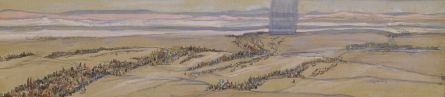
A midrash taught that the Israelites were counted on ten occasions: (1) when they went down to Egypt (Deuteronomy 10:22); (2) when they went up out of Egypt (Exodus 12:37); (3) at the first census in Numbers (Numbers 1:1–46); (4) at the second census in Numbers (Numbers 26:1–65); (5) once for the banners; (6) once in the time of Joshua for the division of the Land of Israel; (7) once by Saul (1 Samuel 11:8); (8) a second time by Saul (1 Samuel 15:4); (9) once by David (2 Samuel 24:9); and once in the time of Ezra (Ezra 2:64).[194]

A midrash explained that Moses numbered the Israelites like a shepherd to whom an owner entrusted a flock by number. When the shepherd came to the end of the shepherd's time, on returning them, the shepherd had to count them again. When Israel left Egypt, God entrusted the Israelites to Moses by number, as Numbers 1:1 reports, "And the Lord spoke to Moses in the wilderness of Sinai . . . 'Take the sum of all the congregation of the children of Israel.'" And Exodus 12:37 records that "the children of Israel journeyed from Rameses to Succoth, about 600,000 men on foot," demonstrating that Moses took responsibility for the Israelites in Egypt by number. When, therefore, Moses was about to depart from the world in the plain of Moab, he returned them to God by number after having them counted in the census reported at Numbers 26:1–51.[195]
The Mekhilta of Rabbi Ishmael interpreted the account of unleavened cakes of dough in Exodus 12:39 to teach that the Israelites had kneaded the dough but did not have sufficient time to let it leaven before they were redeemed.[196]
A baraita taught that King Ptolemy brought together 72 elders and placed them in 72 separate rooms, without telling them why he had brought them together, and asked each of them to translate the Torah. God then prompted each of the elders to conceive the same idea and not to follow the Masoretic Text in their translation in several cases, including Exodus 12:40, "And the abode of the children of Israel which they stayed in Egypt and in other lands was 400 years." The translation of the 72 elders inserted the words "and in other lands," because, according to the Biblical record, the Israelites were in Egypt at most 210 years.[197]
A baraita taught that when Moses broke the stone tablets in Exodus 32:19, it was one of three actions that Moses took based on his own understanding with which God then agreed. The Gemara explained that Moses reasoned that if the Passover lamb, which was just one of the 613 commandments, was prohibited by Exodus 12:43 to aliens, then certainly the whole Torah should be prohibited to the Israelites, who had acted as apostates with the Golden Calf. The Gemara deduced God's approval from God's mention of Moses' breaking the tablets in Exodus 34:1. Resh Lakish interpreted this to mean that God gave Moses strength because he broke the tablets.[198]
Reading the prohibition of non-Jews eating the Passover sacrifice in Exodus 12:43 and 48, the Gemara told the tale of a certain Syrian non-Jew who used to eat of the Passover sacrifices in Jerusalem, boasting that Exodus 12:43 says, "There shall no alien eat thereof," and Exodus 12:48 says, "No uncircumcised person shall eat thereof," yet he ate of the very best. Rabbi Judah ben Bathyra asked him whether he had ever eaten of the fat tail, and the Syrian replied that he had not. So Rabbi Judah ben Bathyra told the Syrian that the next time he went to Jerusalem for Passover, he should ask them to give him the fat tail. So when the Syrian went up, he asked them for the fat-tail. They answered him that the fat-tail belongs to God (and is burnt on the altar) and asked him who told him to ask for it. The Syrian told them that Rabbi Judah ben Bathyra had done so. Their suspicions aroused, they investigated who the Syrian was, discovered that he was not a Jew, and killed him. Then they sent a message to Rabbi Judah ben Bathyra saying that he was in Nisibis (in northern Mesopotamia), yet his net was spread in Jerusalem.[199]
A midrash asked how to reconcile the command of Exodus 12:43, "And the Lord said to Moses and Aaron: 'This is the ordinance of the Passover: No alien shall eat thereof," with the admonition of Isaiah 56:3, "Neither let the alien who has joined himself to the Lord speak, saying: 'The Lord will surely separate me from his people.'" (Isaiah enjoins us to treat the convert the same as a native Israelite.) The midrash quoted Job 31:32, in which Job said, "The stranger did not lodge in the street" (that is, none were denied hospitality), to show that God disqualifies no one, but receives all; the city gates were open all the time and anyone could enter them. The midrash equated Job 31:32, "The stranger did not lodge in the street," with the words of Exodus 20:10, Deuteronomy 5:14, and Deuteronomy 31:12, "And your stranger who is within your gates," which imply that strangers were integrated into the community. Thus, these verses reflect the Divine example of accepting all. Rabbi Berekiah explained that in Job 31:32, Job said, "The stranger did not lodge in the street," because strangers will one day be ministering priests in the Temple, as Isaiah 14:1 says: "And the stranger shall join himself with them, and they shall cleave (וְנִסְפְּחוּ, venispechu) to the house of Jacob," and the word "cleave" (וְנִסְפְּחוּ, venispechu) always refers to priesthood, as 1 Samuel 2:36 says, "Put me (סְפָחֵנִי, sefacheini), I pray you, into one of the priests' offices." The midrash taught that strangers will one day partake of the showbread, because their daughters will be married into the priesthood. The midrash reported another interpretation of Isaiah 56:3, "Neither let the alien, who has joined himself to the Lord, speak, saying: 'The Lord will surely separate me from his people'": In this interpretation, God addressed converts to Judaism, assuring them that they are not barred from Passover celebrations, noting that converts might have misgivings, because God disqualified aliens from the Passover celebration by commanding in Exodus 12:43, "No alien shall eat thereof." The midrash taught that God admonished converts to mark how kindly God treated the Gibeonites, even though they deceived the Israelites into swearing to preserve them in Joshua 9:3–15. The midrash taught that if God allowed them satisfaction for their wrongs in 2 Samuel 21:8–9, how much more would God receive favorably and promote the proselytes who come to serve God out of sheer love. Hence Isaiah 56:3, says: "Neither let the alien, who has joined himself to the Lord, speak, saying: 'The Lord will surely separate me from his people.'" And converts can certainly celebrate the Paschal offering.[200]
Noting that Exodus 12:43, "This is the ordinance (חֻקַּת, chukat) of the Passover," uses the same term as Numbers 19:2, "This is the statute (חֻקַּת, chukat) of the Law," a midrash found the statute of the Passover and the statute of the Red Heifer like one another. The midrash taught that Psalm 119:80, "Let my heart be undivided in your statutes," refers to this similarity, and asked which statute is greater than the other. The midrash likened this to the case of two ladies who were walking side by side together apparently on an equal footing; who then is the greater? She whom her friend accompanies to her house and so is really being followed by the friend. The midrash concluded that the law of the Red Cow is the greater, for those who eat the Passover need the Red Cow's purifying ashes, as Numbers 19:17 says, "And for the unclean they shall take of the ashes of the burning of the purification from sin."[201]
The Mekhilta of Rabbi Ishmael asked why Exodus 12:49 directed that there be one law for both the native and the stranger who sojourns among us when Exodus 12:48 had just enjoined that the stranger be treated as one who is born in the land. The Mekhilta of Rabbi Ishmael concluded that Exodus 12:49 comes to declare that the convert is equal to the born Jew with respect to all the Torah's commandments.[202]
The Pirke de-Rabbi Eliezer read Exodus 12:51 to say, "And it came to pass at the essential part of the day, that the Lord did bring the children of Israel out of the land of Egypt by their hosts." The Pirke de-Rabbi Eliezer taught that God thought that if God brought the Israelites out by night, the Egyptians would say that God acted like a thief. Therefore, God decided to bring the Israelites out when the sun was at its zenith at midday.[203]
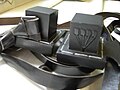
Exodus chapter 13
The Mishnah taught that the absence of one of the four portions of scripture in the Tefillin—Exodus 13:1–10 and 11–16 and Deuteronomy 6:4–8 and 11:13–21—invalidates the others, and indeed even one imperfect letter can invalidate the whole.[204]
Tractate Bekhorot in the Mishnah, Tosefta, and Talmud interpreted the laws of the firstborn in Exodus 13:1–2, 12–13; 22:28–29; and 34:19–20; and Numbers 3:13 and 8:17.[205] Elsewhere, the Mishnah drew from Exodus 13:13 that money in exchange for a firstborn donkey could be given to any Kohen;[206] that if a person weaves the hair of a firstborn donkey into a sack, the sack must be burned;[207] that they did not redeem with the firstborn of a donkey an animal that falls within both wild and domestic categories (a koy);[208] and that one was prohibited to derive benefit in any quantity at all from an unredeemed firstborn donkey.[209] And elsewhere, the Mishnah taught that before the Israelites constructed the Tabernacle, the firstborns performed sacrificial services, but after the Israelites constructed the Tabernacle, the priests (כֹּהֲנִים, Kohanim) performed the services.[210]

The Gemara reported a number of Rabbis' reports of how the Land of Israel did indeed flow with "milk and honey," as described in Exodus 3:8 and 17, 13:5, and 33:3, Leviticus 20:24, Numbers 13:27 and 14:8, and Deuteronomy 6:3, 11:9, 26:9 and 15, 27:3, and 31:20. Once when Rami bar Ezekiel visited Bnei Brak, he saw goats grazing under fig trees while honey was flowing from the figs, and milk dripped from the goats mingling with the fig honey, causing him to remark that it was indeed a land flowing with milk and honey. Rabbi Jacob ben Dostai said that it is about three miles from Lod to Ono, and once he rose up early in the morning and waded all that way up to his ankles in fig honey. Resh Lakish said that he saw the flow of the milk and honey of Sepphoris extend over an area of sixteen miles by sixteen miles. Rabbah bar Bar Hana said that he saw the flow of the milk and honey in all the Land of Israel and the total area was equal to an area of twenty-two parasangs by six parasangs.[211]
Rabban Gamaliel taught that in every generation, all are duty bound to regard it as if they personally had gone forth from Egypt, as Exodus 13:8 says, "And you shall tell your son in that day saying, it is because of that which the Lord did for me when I came forth out of Egypt."[212]
Reading Exodus 13:13, "And every firstborn of a donkey you shall redeem with a lamb," and Exodus 34:20, "and the firstborn of a donkey you shall redeem with a lamb," the Mishnah noted that the Torah states this law twice, and deduced that one is therefore not obligated under this law unless both the animal that gives birth is a donkey and the animal born is a donkey. The Mishnah thus concluded that a cow that gave birth to a calf like a donkey and a donkey that gave birth to a foal like a horse are exempt from their offspring being considered a firstborn.[213]
In medieval Jewish interpretation
The parashah is discussed in these medieval Jewish sources:[214]
Exodus chapter 10
Reading God's command to Moses in Exodus 10:1, "Go in to Pharaoh; for I have hardened his heart, and the heart of his servants," and similar statements in Exodus 4:21; 7:3, 9:12 10:20, 27; 11:10; and 14:4, 8, and 17, Maimonides concluded that it is possible for a person to commit such a great sin, or so many sins, that God decrees that the punishment for these willing and knowing acts is the removal of the privilege of repentance (teshuvah). The offender would thus be prevented from doing repentance and would not have the power to return from the offense, and the offender would die and be lost because of the offense. Maimonides read this to be what God said in Isaiah 6:10, "Make the heart of this people fat, and make their ears heavy, and their eyes weak, lest they see with their eyes and hear with their ears, and their hearts will understand, do repentance and be healed." Similarly, 2 Chronicles 36:16 reports, "They ridiculed the messengers of God, disdained His words and insulted His prophets until the anger of God rose upon the people, without possibility of healing." Maimonides interpreted these verses to teach that they sinned willingly and to such an egregious extent that they deserved to have repentance withheld from them. Because Pharaoh sinned on his own at the beginning, harming the Jews who lived in his land, as Exodus 1:10 reports him scheming, "Let us deal craftily with them," God issued the judgment that repentance would be withheld from Pharaoh until he received his punishment. Therefore, God said in Exodus 14:4, "I will harden the heart of Pharaoh." Maimonides explained that God sent Moses to tell Pharaoh to send out the Jews and do repentance, when God had already told Moses that Pharaoh would refuse, because God sought to inform humanity that when God withholds repentance from a sinner, the sinner will not be able to repent. Maimonides made clear that God did not decree that Pharaoh harm the Jewish people; rather, Pharaoh sinned willfully on his own, and he thus deserved to have the privilege of repentance withheld from him.[215]
According to Hezekiah ben Manoah (Hizkuni), Pharaoh's courtiers in Exodus 10:7 "questioned Pharaoh's judgment by asking him if he wanted to wait until the whole of Egypt was ruined? They implied that if Egypt were to be ruined, in the end Pharaoh would have no option but to give in to the Israelites' demands. Why not give in while Egypt was still a functioning nation?"[216]
Reading Exodus 10:9, "Moses said: 'We will go with our young and with our old,'" the Lekach Tov taught that Moses told Pharaoh that just as all had been in Pharaoh's service, so would all be in God's service.[217]
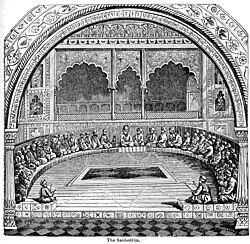
Exodus chapter 12
Maimonides taught that the prerogative to sanctify the New Moon at its sighting and to set a leap year to reconcile the calendar applied to the Sanhedrin in the Land of Israel. Maimonides taught that this was derived from the command given Moses and Aaron in Exodus 12:2, "This month shall be for you the first of months," which Maimonides reported the Oral Tradition interpreted to mean that this testimony was entrusted to Moses and Aaron and those sages who arose after them who functioned in their position. When the Sanhedrin ended in the Land of Israel, Jews established the monthly calendar and instituted leap years solely according to the fixed calendar that is followed now.[218] So the sighting of the moon is no longer of any consequence.[219]
According to Maimonides, Passover is kept seven days, because a week is the intermediate unit of time between a day and a month. Passover teaches people to remember the miracles that God performed in Egypt, encouraging people to thank God repeatedly and to lead a modest and humble life. Jews therefore eat unleavened bread and bitter herbs on Passover in memory of what happened to the Israelites. And they eat unleavened bread for a week because if the eating were only for one day, Jews might not notice it.[220]
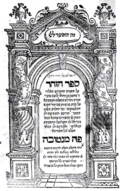
The Zohar taught that on the night of the Exodus, there were three slayings in Egypt. First, the firstborn killed whomever they could lay hands on. Then, God executed judgment at midnight. And lastly, Pharaoh, on seeing the havoc wrought upon his own household, arose, as Exodus 12:30 says, "He rose up at midnight," and with bitterness and fury he killed the princes and nobles who had advised him to persecute Israel, just as a dog, if hit with a stone, goes and bites another dog.[221]
Reading Exodus 12:34, "And the people took their dough before it was leavened," the Zohar taught that "leaven" and "unleaven" symbolize the evil inclination (יֵצֶר רַע, yeitzer ra) and the good inclination in people. The Zohar taught that one who fervently and joyously relates the story of the Exodus on Passover, telling the story with a high heart, shall be found worthy to rejoice in the Divine Presence (Shekhinah) in the World To Come. The Zohar taught that the joy of Israel causes God to be glad, so that God calls together all the family above and to hear the praises that God's children bring to God. Then all the angels and supernal beings gather around and observe Israel singing and rejoicing because of God's Redemption and the supernal beings also break into jubilation because God possesses on earth a people so holy, whose joy in God's Redemption is so great and so powerful. And the Zohar taught that the rejoicing on Earth below increases the power of God and God's hosts in the regions above, just as an earthly king gains strength from the praises of his subjects and the renown of his glory being spread through the world.[222]
Reading Numbers 1:1–2 "The Lord spoke . . . in the Sinai Desert . . . on the first of the month . . . 'Take a census,'" Rashi taught that God counted the Israelites often because they were dear to God. When they left Egypt, God counted them in Exodus 12:37; when many fell because of the sin of the Golden Calf, God counted them in Exodus 32:28 to know the number who survived; when God came to cause the Divine Presence to rest among them, God counted them. On the first of Nisan, the Tabernacle was erected, and on the first of Iyar, God counted them.[223]
The Zohar taught that the "mixed multitude" (עֵרֶב רַב, erev rav) mentioned in Exodus 12:38 consisted entirely of Egyptian sorcerers and magicians, who sought to oppose God's works, as Exodus 7:11 reports, "And the magicians of Egypt, they also did in like manner with their enchantments." When they beheld the signs and the wonders that Moses performed, they came to Moses to be converted. God advised Moses not to accept them, but Moses argued that now that they had seen God's power, they desired to accept the Israelites' Faith, and if they saw God's power every day, they would learn that there is no God like God. So Moses accepted them. Exodus 12:38 called them a "mixed multitude" because they consisted of all the grades of Egyptian magicians, at their head being Jannes and Jambres. During the day, these wizards practiced their enchantments, and after sunset, they made observations of the heavens until the middle of the ninth hour, which was called the "great evening" (עֵרֶב רַב, erev rav, which means both "great multitude" and "great evening"). The lesser magicians then made observation after that until midnight. The Egyptians, who had great faith in the chief wizards, thus called them the "great evening" (עֵרֶב רַב, erev rav).[224]
Exodus chapter 13
Noting the universal application of the laws of tefillin in Exodus 13:9, 16, Maimonides taught that God designed the wearing of tefillin as a more enduring form of worship than the practice of sacrifices, which Maimonides taught were a transitional step to wean the Israelites off of the worship of the times and move them toward prayer as the primary means of worship. Maimonides noted that in nature, God created animals that develop gradually. For example, when a mammal is born, it is extremely tender, and cannot eat dry food, so God provided breasts that yield milk to feed the young animal, until it can eat dry food. Similarly, Maimonides taught, God instituted many laws as temporary measures, as it would have been impossible for the Israelites suddenly to discontinue everything to which they had become accustomed. So God sent Moses to make the Israelites (in the words of Exodus 19:6) "a kingdom of priests and a holy nation." But the general custom of worship in those days was sacrificing animals in temples that contained idols. So God did not command the Israelites to give up those manners of service, but allowed them to continue. God changed the service of idol worship to the service of the Sanctuary (Exodus 25:8), to erect the altar to God's name (Exodus 20:21), to offer sacrifices to God (Leviticus 1:2), to bow down to God, and to burn incense before God. God forbad doing any of these things to any other being and selected priests for the service in the temple in Exodus 28:41. By this Divine plan, God blotted out the traces of idolatry, and established the great principle of the Existence and Unity of God. But the sacrificial service, Maimonides taught, was not the primary object of God's commandments about sacrifice; rather, supplications, prayers, and similar kinds of worship are nearer to the primary object. Thus, God limited sacrifice to only one temple (see Deuteronomy 12:26) and the priesthood to only the members of a particular family. These restrictions, Maimonides taught, served to limit sacrificial worship, and kept it within such bounds that God did not feel it necessary to abolish sacrificial service altogether. But in the Divine plan, prayer and supplication can be offered everywhere and by every person, as can be the wearing of tzitzit (Numbers 15:38) and tefillin (Exodus 13:9, 16) and similar kinds of service.[225]
Maimonides explained the laws governing the redemption of a firstborn son (pidyon haben) in Exodus 13:13–16.[226] Maimonides taught that it is a positive commandment for every Jewish man to redeem his son who is the firstborn of a Jewish mother, as Exodus 34:19 says, "All first issues of the womb are mine," and Numbers 18:15 says, "And you shall surely redeem a firstborn man."[227] Maimonides taught that a mother is not obligated to redeem her son. If a father fails to redeem his son, when the son comes of age, he is obligated to redeem himself.[228] If it is necessary for a man to redeem both himself and his son, he should redeem himself first and then his son. If he only has enough money for one redemption, he should redeem himself.[229] A person who redeems his son recites the blessing: "Blessed are You . . . who sanctified us with His commandments and commanded us concerning the redemption of a son." Afterwards, he recites the shehecheyanu blessing and then gives the redemption money to the Cohen. If a man redeems himself, he should recite the blessing: "Blessed . . . who commanded us to redeem the firstborn" and he should recite the shehecheyanu blessing.[230] The father may pay the redemption in silver or in movable property that has financial worth like that of silver coins.[231] If the Cohen desires to return the redemption to the father, he may. The father should not, however, give it to the Cohen with the intent that he return it. The father must give it to the Cohen with the resolution that he is giving him a present without any reservations.[232] Cohens and Levites are exempt from the redemption of their firstborn, as they served as the redemption of the Israelites' firstborn in the desert.[233] One born to a woman of a priestly or Levite family is exempt, for the matter is dependent on the mother, as indicated by Exodus 13:2 and Numbers 3:12.[234] A baby born by Caesarian section and any subsequent birth are exempt: the first because it did not emerge from the womb, and the second, because it was preceded by another birth.[235] The obligation for redemption takes effect when the baby completes 30 days of life, as Numbers 18:16 says, "And those to be redeemed should be redeemed from the age of a month."[236]
In modern interpretation
The parashah is discussed in these modern sources:
Exodus chapter 10
Greta Hort argued that the plagues concentrated within a period of about 12 months, based on the report of Exodus 7:7 that Moses was 80 years old when he first spoke with pharaoh and the report of Deuteronomy 34:7 that Moses was 120 years old when he died, after spending 40 years in the wilderness.[237]
John J. Collins reported that some scholars have suggested that the plague stories contain a reminiscence of a mid-fourteenth century BCE epidemic referred to as "the Asiatic illness."[238]
Collins argued that the plague stories show that Exodus is not only the story of the liberation of Israel, but also of the defeat and humiliation of the Egyptians, and thus involved "less than edifying" nationalistic, ethnic vengeance.[239]
Everett Fox noted that "glory" (כְּבוֹד, kevod) and "stubbornness" (כָּבֵד לֵב, kaved lev) are leading words throughout the book of Exodus that give it a sense of unity.[240] Similarly, William Propp identified the root kvd—connoting heaviness, glory, wealth, and firmness—as a recurring theme in Exodus: Moses suffered from a heavy mouth in Exodus 4:10 and heavy arms in Exodus 17:12; Pharaoh had firmness of heart in Exodus 7:14; 8:11, 28; 9:7, 34; and 10:1; Pharaoh made Israel's labor heavy in Exodus 5:9; God in response sent heavy plagues in Exodus 8:20; 9:3, 18, 24; and 10:14, so that God might be glorified over Pharaoh in Exodus 14:4, 17, and 18; and the book culminates with the descent of God's fiery Glory, described as a "heavy cloud," first upon Sinai and later upon the Tabernacle in Exodus 19:16; 24:16–17; 29:43; 33:18, 22; and 40:34–38.[241]

Harold Fisch argued that the command of Exodus 10:2 and 13:8 to hand on from one generation to another the Exodus story provided the prototype for the ghost's admonition to Prince Hamlet, "Remember me", in Hamlet 1.5/98 of William Shakespeare's play Hamlet.[242]
Gunther Plaut reported that scholars generally agree that the term "Hebrew" (עִברִי, Ivri), as in Exodus 10:3, came from the name of a group called Habiru or Apiru, people who had lost their status in the community from which they came, and who were not necessarily related except by common fate.[243] Plaut wrote that the Habiru were a class of people who lived in the Fertile Crescent during the 19th to 14th centuries B.C.E. who may originally have come from Arabia, became prominent in Mesopotamia, and later spread to Egypt. The Habiru followed distinct occupations, particularly mercenaries and administrators. Although at first they were nomads or seminomads, they later settled. They were usually considered foreigners, maintaining their group identity. The term Habiru referred not so much to an ethnic or linguistic group as to a social or political group. Plaut reported that the words Habiru and "Hebrew" (עִברִי, Ivri) appear to share a common linguistic root. Plaut concluded that Israelites in Egypt likely occupied positions like, or because of familial ties were identified with, the Habiru. When non-Israelites repeatedly applied the term to the Israelites, the Israelites themselves began to use the name Habiru, which they pronounced Ivri. Plaut considered it possible that for some time the term Ivri was used only when the Israelites spoke of themselves to outsiders and when outsiders referred to them. Thus Genesis 14:13 calls Abram Ivri vis-a-vis an outsider, and Jonah says, "I am an Ivri," when asked his identity by non-Israelite sailors in Jonah 1:9, but otherwise Israelites referred to themselves by their tribes (for example, Judah or Ephraim) or by their common ancestor, Israel.[244]
Shlomo Ephraim Luntschitz (The Kli Yakar) noted that in Exodus 10:6, Moses told Pharaoh that the locusts would invade, "your houses . . . , and the houses of all your servants, and the houses of all the Egyptians," in that order. Arguing that the Pharaoh's palace was surely the most insulated, the Kli Yakar taught that the order of the locust invasion was another miracle, so that the punishment would come in the order that the sin was committed, first with Pharaoh (who was most guilty), then with his servants, and then the rest of the people.[245]
Moritz Markus Kalisch read Exodus 10:7 to indicate that Pharaoh's servants, whom Kalisch identified with Pharaoh's magicians, had become convinced of God's unlimited power.[246]
Samson Raphael Hirsch read Exodus 10:7 to indicate that Pharaoh's servants viewed the cycle of partial plagues and respites as a "trap!"[247]
Nahum Sarna noted that Aaron, not Moses, brought on the early signs and plagues. Sarna explained that Moses thus tacitly asserted his equal status with Pharaoh. Moses came to negotiate with Pharaoh as the representative of the people of Israel. Just as Pharaoh had his magicians, Moses had his assistant, Aaron. Sarna noted that in the narratives of the Ten Plagues, Aaron acted only as long as the Egyptian magicians appeared present. After their ingenuity failed them and they faded from the story, Moses acted personally to bring about the remaining plagues.[248]
Exodus chapter 12
Propp identified the protecting paschal blood of Exodus 12:7 as a symbolic wound.[249]
Julius Wellhausen conceived of early Israelite religion as linked to nature's annual cycle and believed that Scripture only later connected the festivals to historical events like the Exodus from Egypt. James Kugel reported that modern scholars generally agreed that Passover reflects two originally separate holidays arising out of the annual harvest cycle. One Festival involved the sacrificing and eating of an animal from the flock, the pesa sacrifice, which arose among shepherds who sacrificed in the light of the full moon of the month that marked the vernal equinox and the end of winter (as directed in Exodus 12:6) to bring Divine favor for a safe and prosperous summer for the rest of the flock. The shepherds slaughtered the animal at home, as the rite also stipulated that some of the animal's blood be daubed on the doorposts and lintel of the house (as directed in Exodus 12:7) to ward off evil. The rite prescribed that no bone be broken (as directed in Exodus 12:46) so as not to bring evil on the flock from which the sacrifice came. Scholars suggest that the name pesa derived from the verb that means "hop" (as in 1 Kings 18:21 and 26) and theorize that the holiday may originally have involved some sort of ritual "hopping." A second Festival—the Festival of Unleavened Bread—involved farmers eating unleavened barley bread for seven days when the winter's barley crop had reached maturity and was ready for harvest. Farmers observed this Festival with a trip to a local sanctuary (as in Exodus 23:17 and 34:23). Modern scholars believe that the absence of yeast in the bread indicated purity (as in Leviticus 2:11). The listing of Festivals in Exodus 23:14–17 and 34:18–23 appear to provide evidence for the independent existence of the Festival of Unleavened Bread. Modern scholars suggest that the farmers' Festival of Unleavened Bread and the shepherds' Passover later merged into a single festival, Passover moved from the home to the Temple, and the combined festival was explicitly connected to the Exodus (as in Deuteronomy 16:1–4).[250]
Collins reported that the Egyptians built the city of Pi-Ramesse, mentioned in Exodus 12:37, on the site of the old Hyksos capital of Avari and reoccupied it in the time of Ramesses II (1304–1237 BCE), and as a consequence, most scholars have favored a date around 1250 BCE for the Exodus. Collins argued that all we can really say is that the biblical Exodus account was written some time after the building of Pi-Ramesse and Per-Atum, and possibly that the author knew of a tradition associating Semitic laborers with those cities.[251]
Israel Finkelstein and Neil Asher Silberman argued that the place Sukkot mentioned in Exodus 12:37 and Numbers 33:5 is probably the Hebrew form of the Egyptian Tjkw, a name referring to a place or an area in the eastern Nile Delta that appears in Egyptian texts from the time of the Nineteenth Dynasty of Egypt, the dynasty of Ramesses II. Finkelstein and Silberman reported that a late thirteenth century BCE Egyptian papyrus recorded that the commanders of the forts along the delta's eastern border closely monitored the movements of foreigners there, saying: "We have completed the entry of the tribes of the Edomite Shasu (that is, Bedouin) through the fortress of Merneptah-Content-with-Truth, which is in Tjkw, to the pools of Pr-Itm which (are) in Tjkw for the sustenance of their flocks." And Finkelstein and Silberman reported that the abundant Egyptian sources describing the time of the New Kingdom of Egypt in general and the thirteenth century in particular make no reference to the Israelites. Finkelstein and Silberman concluded that based on the evidence at the specific sites where Numbers 33 says that the Israelites camped for extended periods during their wandering in the desert (and where some archaeological indication—if present—would almost certainly be found), a mass Exodus did not happen at the time and in the manner described in the Bible.[252]
Plaut noted that while some might read the report of Genesis 15:13 that the time of Israel's servitude would be 400 years to conflict with the report of Exodus 12:40 that the descent into Egypt would last 430 years, the two accounts were left standing side by side, because ancient readers might have considered both traditions to have come down to them and therefore requiring treatment with reverence.[253]
Plaut identified two addenda to the Passover story—one dealing with the eating of the paschal sacrifice in Exodus 12:43–51 and a second relating the Exodus to the first-born in Exodus 13:1–16. Plaut observed that both addenda speak from a context of settled conditions, rather than wilderness wandering. Plaut concluded that the two sections read like postscripts or summations appended to the main story at a later time.[254]
Exodus chapter 13
Reading the consecration of the firstborn in Exodus 13:1–2, Umberto Cassuto suggested that the obligation to transfer to God all that first opened the womb meant originally, in the tradition of the ancient East, to offer as a sacrifice, but the Torah when it accepted the custom of the neighboring peoples, introduced innovations and imbued the obligation with new significance. Thus the Torah continued the custom of offering firstborn on the altar only for clean domestic animals; for unclean animals, the Torah substituted redemption by a clean animal or the breaking of its neck; and for human firstborn, the Torah substituted only redemption. And the Torah substituted the new reason of the deliverance from Egyptian bondage.[255]
Sarna wrote that in many ancient cultures, the miracle of new life was considered a divine gift and nature endowed the first fruits of the soil and animal and human fertility with intrinsic holiness. Sarna argued that the instruction to Moses in Exodus 13:1–2 to consecrate the firstborn may have been a polemic against such pagan notions. The Torah dissociated the firstborns' status from the ancient ideas, teaching that firstborns belonged to God solely because of Divine decree at the time of the Exodus. Noting that Numbers 3:12 and 8:16–18 report that the Levites supplanted the firstborn in priestly functions, Sarna inferred that in Exodus 13:1–2, God instructed Moses to install the firstborn to fulfill priestly duties.[256]
Nathan MacDonald reported some dispute over the exact meaning of the description of the Land of Israel as a "land flowing with milk and honey," as in Exodus 3:8 and 17, 13:5, and 33:3, Leviticus 20:24, Numbers 13:27 and 14:8, and Deuteronomy 6:3, 11:9, 26:9 and 15, 27:3, and 31:20. MacDonald wrote that the term for milk (חָלָב, chalav) could easily be the word for "fat" (חֵלֶב, chelev), and the word for honey (דְבָשׁ, devash) could indicate not bees' honey but a sweet syrup made from fruit. The expression evoked a general sense of the bounty of the land and suggested an ecological richness exhibited in a number of ways, not just with milk and honey. MacDonald noted that the expression was always used to describe a land that the people of Israel had not yet experienced, and thus characterized it as always a future expectation.[257]
Ephraim Speiser wrote that the word "Torah" (תּוֹרָה) is based on a verbal stem signifying "to teach, guide," and the like, and the derived noun can carry a variety of meanings. Speiser argued that when the noun is applied to God in Exodus 13:9, its connotation is broadened to embrace a cherished way of life, but cannot be mistaken for the title of the Pentateuch as a whole.[258]
Jacob Milgrom taught that the verbs used in the laws of the redemption of a firstborn son (pidyon haben) in Exodus 13:13–16 and Numbers 3:45–47 and 18:15–16, "natan, kiddesh, he'evir to the Lord," as well as the use of padah, "ransom," indicate that the firstborn son was considered God's property. Milgrom surmised that this may reflect an ancient rule where the firstborn was expected to care for the burial and worship of his deceased parents. Thus, the Bible may preserve the memory of the firstborn bearing a sacred status, and the replacement of the firstborn by the Levites in Numbers 3:11–13, 40–51; and 8:14–18 may reflect the establishment of a professional priestly class. Milgrom dismissed as without support the theory that the firstborn was originally offered as a sacrifice.[259]
In April 2014, the Committee on Jewish Law and Standards of Conservative Judaism ruled that women are now equally responsible for observing commandments as men have been. Under this ruling, Jewish mothers are thus equally responsible for the covenantal naming of their daughters and redemption of their first-born sons and daughters (as called for in Exodus 13:2 and 13–15) as fathers are.[260]
Terence Fretheim argued that Exodus 13:15–16 give a special twist to the issue of the firstborn, teaching that Israel was to be attentive to its firstborn because of the suffering of the Egyptian firstborn. Fretheim noted that Exodus 13:15–16 does not mention the redeemed Israelite children of Passover night but the sacrificed Egyptian firstborn, followed by "Therefore." Fretheim thus argued that the firstborn belong to God not only because Israelite children were saved but also because Egyptian children were killed. Fretheim argued that Exodus 13:15–16 thus reminds Israel at what cost Israel's firstborn were redeemed. Fretheim nonetheless considered it doubtful that child sacrifice was in view.[261]
Commandments
According to Sefer ha-Chinuch, there are 9 positive and 11 negative commandments in the parashah:[262]
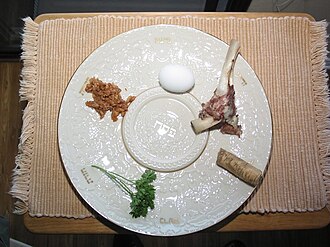
- To slaughter the Passover lamb at the specified time[264]
- To eat the Passover lamb with unleavened bread (מַצָּה, matzah) and bitter herbs (maror) on the night of the fourteenth of Nisan[265]
- Not to eat the Passover meat raw or boiled[266]
- Not to leave any meat from the Passover lamb over until morning[267]
- To destroy all leavened bread on the 14th of Nisan[268]
- To eat unleavened bread (מַצָּה, matzah) on the first night of Passover[269]
- Not to find chametz in your domain seven days[270]
- Not to eat mixtures containing chametz all seven days of Passover[271]
- An apostate must not eat from the Passover lamb.[272]
- A permanent or temporary hired worker must not eat from it.[273]
- Not to take the paschal meat from the confines of the group[274]
- Not to break any bones of the Passover lamb[274]
- An uncircumcised male must not eat from it.[275]
- To set aside the firstborn animals[276]
- Not to eat chametz all seven days of Passover[277]
- Not to see chametz in your domain seven days[278]
- To relatethe Exodus from Egypt on the first night of Passover[279]
- To redeem the firstborn donkey by giving a lamb to a Kohen[280]
- To break the neck of the donkey if the owner does not intend to redeem it[280]
In the liturgy
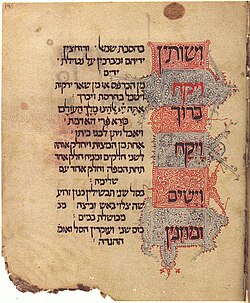
Reading the Passover Haggadah, in the magid section of the Seder, many Jews remove drops of wine from their cups for each of the ten plagues in Exodus 7:14–12:29 to show their joy is lessened due to the suffering of the Egyptians.[281]
Also in the magid section, the Haggadah quotes Exodus 12:12 to elucidate the report in Deuteronomy 26:8 that "the Lord brought us forth out of Egypt with a mighty hand." The Haggadah cites Exodus 12:12 for the proposition that God took the Israelites out of Egypt not through an angel, not through a seraph, not through an agent, but on God's own.[282]
Also in the magid section, the Haggadah quotes Exodus 12:26 to provide the question of the wicked son and quotes Exodus 13:8 to answer him. And shortly thereafter, the Haggadah quotes Exodus 13:14 to answer the simple child and quotes Exodus 13:8 again to answer the child who does not know how to ask.[283]
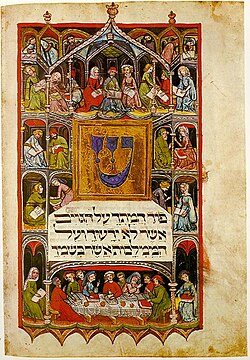
Also in the magid section, the Haggadah quotes Exodus 12:27 to answer the question: For what purpose did the Israelites eat the Passover offering at the time of the Temple in Jerusalem? The Haggadah quotes Exodus 12:27 for the proposition that the Israelites did so because God passed over the Israelites' houses in Egypt.[284]
In the concluding nirtzah section, the Haggadah quotes the words "it is the Passover sacrifice" from Exodus 12:27 eight times as the refrain of a poem by Eleazar Kallir.[285] Also in the nirtzah section, the Haggadah quotes the words "it was the middle of the night" from Exodus 12:29 eight times as the refrain of a poem by Yannai.[286]
Rabbinic tradition interpreted Psalm 113 as the Psalm that the Israelites recited in Egypt on the night that God smote all the firstborn in the land of Egypt in Exodus 12:29, and thus Jews recite Psalm 113 as the first Psalm of Hallel on Festivals[287] and during the Passover Seder.[288]
Also in the nirtzah section, in a reference to the Israelites' despoiling of the Egyptians in Exodus 12:36, the Haggadah recounts how the Egyptians could not find their wealth when they arose at night.[289]
In the magid section, the Haggadah quotes Exodus 12:39–40 to answer the question: For what purpose do Jews eat unleavened bread (מַצָּה, matzah)? The Haggadah quotes Exodus 12:39–40 for the proposition that Jews do so because there was not sufficient time for the Israelites' dough to become leavened before God redeemed them.[290]
In the magid section, the Haggadah responds to a question that "one could think" that Exodus 13:5–6 raises—that the obligation to tell the Exodus story begins on the first of the month—and clarifies that the obligation begins when Jews have their maztah and maror in front of them.[291]
Also in the magid section, the Haggadah quotes Exodus 13:8—emphasizing the word "for me" (li)—for the proposition that in every generation, Jews have a duty to regard themselves as though they personally had gone out of Egypt.[292]
Many Jews recite Exodus 13:1–10 and 13:11–16, two of the four texts contained in the tefillin, either immediately after putting on the tefillin or before removing them, as Jews interpret Exodus 13:9 to make reference to tefillin when it says, "and it shall be for a sign to you upon your hand, and for a memorial between your eyes," and Exodus 13:16 to make reference to tefillin when it says, "and it shall be for a sign upon your hand, and for frontlets between your eyes."[293]
Much of the language of the leshem yihud prayer before putting on tefillin is drawn from Ramban's commentary on Exodus 13:11.[294]
Haftarah

The haftarah for the parashah is Jeremiah 46:13–28.
Connection to the Parashah
Both the parashah and the haftarah describe God's judgment against Egypt. The parashah reports that God told Moses to go (bo) to Pharaoh;[295] the haftarah reports God's word that Nebuchadrezzar would come (la-vo) to Pharaoh.[296] Both the parashah and the haftarah report a plague of locusts—literal in the parashah, figurative in the haftarah.[297] Both the parashah and the haftarah report God's punishment of Egypt's gods.[298] And both the parashah and the haftarah report God's ultimate deliverance of the Israelites from their captivity.[299]
Further reading
The parashah has parallels or is discussed in these sources:
Biblical
- Genesis 7:12–23 (God's destruction employing the flood); 15:14 (leaving Egypt with wealth); 19:23–29 (God's destruction of Sodom and Gomorrah).
- Exodus 1:22 (command to kill sons); 4:21 (hardening Pharaoh's heart); 7:3 (hardening Pharaoh's heart); 9:12 (hardening Pharaoh's heart); 14:4 (hardening Pharaoh's heart); 14:8 (hardening Pharaoh's heart); 22:28–29 (firstborn); 23:15 (Passover); 34:25 (Passover).
- Leviticus 14:4–6, 49–52 (hyssop); 23:4–8 (Passover).
- Numbers 3:11–13 (firstborn); 9:1–14 (Passover); 18:15–18 (firstborn); 19:6, 18 (hyssop); 28:16–25 (Passover).
- Deuteronomy 2:30 (hardening of heart); 15:7 (hardening of heart); 15:13–14 (parting gifts for freed slaves); 15:19–23 (firstborn); 16:1–8 (Passover).
- Joshua 2:18–21 (destruction of all but those with a red mark on their dwelling); 11:20 (hardening of heart).
- Jeremiah 31:8 (firstborn).
- Ezekiel 9:4–6 (slaying those without the mark).
- Joel 2:2 (darkness).
- Psalm 51:9 ("Purge me with hyssop"); 78:44–51 (plagues); 105:23–38 (plagues); 119:62 (midnight).
- Job 34:20 (midnight).
Early nonrabbinic
- The Passover Letter. Elephantine, 419–418 BCE. In, e.g., The Context of Scripture, Volume III: Archival Documents from the Biblical World, pages 116–17. Edited by William W. Hallo. New York: Brill, 2002.
- Ezekiel the Tragedian. Exagōgē. Greece, 2nd century BCE. Translated by R.G. Robertson. In The Old Testament Pseudepigrapha: Volume 2: Expansions of the "Old Testament" and Legends, Wisdom and Philosophical Literature, Prayers, Psalms, and Odes, Fragments of Lost Judeo-Hellenistic works. Edited by James H. Charlesworth, pages 814–17. New York: Anchor Bible, 1985.
- Jubileeschapter 49 Land of Israel, 2nd century BCE. In, e.g., The Book of Jubilees or the Little Genesis. Translated by Robert H. Charles. London: Black, 1902. In, e.g., The Book of Jubilees: Translation of Early Jewish and Palestinian Texts, pages 216–19. Lexington, Kentucky: Forgotten Books, 2007. (Passover).
- Wisdom of Solomonchapters 17–18. Alexandria, Egypt, 2nd–1st century BCE.
- 1 Corinthians 5:6–8. Circa 53–54. (Passover).
- Romans 9:14–18. 1st century. (hardening Pharaoh's heart).
- Hebrews 9:19 (hyssop); 11:28 (Passover). Late 1st century.
- Mark 14:12–26. Circa 70 CE. (Passover).
- Matthew 26:17–30. Circa 70–100 CE. (Passover).
- Josephus. The Wars of the Jews, 5:9:4. Circa 75 CE. In, e.g., The Works of Josephus: Complete and Unabridged, New Updated Edition. Translated by William Whiston, 716. Peabody, Massachusetts: Hendrickson Publishers, 1987.
- 1 Peter 1:19 Circa 81 CE. (Passover).
- Luke 2:41; 22:14–20. Circa 80–150 CE. (Passover).
- Josephus, Antiquities of the Jews2:14:4–2:15:1. Circa 93–94. In, e.g., The Works of Josephus: Complete and Unabridged, New Updated Edition. Translated by William Whiston, pages 73–74. Peabody, Massachusetts: Hendrickson Publishers, 1987.
- Revelation 17:17. Late 1st century. (changing hearts to God's purpose).
- John 19:29 (hyssop); 19:36. Circa 90–110. ("Not one of his bones will be broken").
- Justin Martyr. Dialogue with Trypho, chapters 40, 46. Circa 155–167. In, e.g., Justin Martyr. Dialogue with Trypho. Translated by Thomas B. Falls, edited by Michael Slusser. Washington, D.C.: Catholic University of America Press, revised edition, 2002. (Passover).
- Melito of Sardis. On Pascha. Circa 180. In, e.g., On Pascha and Fragments. Edited by Stewart George Hall. Oxford: Clarendon Press, 1979. (Passover).
Classical rabbinic
- Mishnah: Challah 1:2, 4:9; Orlah 3:3; Bikkurim 2:9; Pesachim 1:1–10:9; Beitzah 1:1–5:7; Rosh Hashanah 1:1; Megillah 3:4; Avodah Zarah 5:9; Zevahim 3:6; Menachot 3:7; Bekhorot 1:1–6:12, 8:1; Keritot 1:1; Parah 11:9. 3rd century. In, e.g., The Mishnah: A New Translation. Translated by Jacob Neusner, pages 148, 157, 165, 171, 229–51, 291–99, 320–21, 672, 705, 739, 787–800, 803, 836. New Haven: Yale University Press, 1988.
- Tosefta: Terumot 10:7; Challah 2:9; Pisha (Pesachim) 1:1–10:13; Sukkah 2:1; Yom Tov (Beitzah) 1:4–5; Rosh Hashanah 1:1–3; Megillah 3:4; Sotah 4:5; Makkot 4:1; Zevachim 1:1; Menachot 8:28; Bekhorot 1:1–7:15. (Land of Israel, circa 250 CE). In, e.g., The Tosefta: Translated from the Hebrew, with a New Introduction. Translated by Jacob Neusner, volume 1, pages 198, 339, 471–522, 572, 585–86, 605, 645, 846; volume 2, pages 1208–09, 1308, 1445, 1469–94. Peabody, Massachusetts: Hendrickson Publishers, 2002.
- Jerusalem Talmud: Berakhot 9a, 21b, 37a, 61a; Challah 49a; Orlah 35a; Shabbat 17a, 18b, 30a, 61a–b; Eruvin 24b, 63b; Pesachim 1a–86a; Shekalim 1b; Yoma 2a; Beitzah 1a–49b; Rosh Hashanah 1b, 6a, 11a, 17b–18a; Taanit 26a; Megillah 14b, 17b, 21a–b, 29b; Chagigah 13b; Yevamot 42a–43a; Nazir 22a; Gittin 20b; Kiddushin 19b, 22a; Sanhedrin 11b, 13a, 31a–b, 51b, 69a; Horayot 10a. Tiberias, Land of Israel, circa 400 C.E. In, e.g., Talmud Yerushalmi. Edited by Chaim Malinowitz, Yisroel Simcha Schorr, and Mordechai Marcus, volumes 1–2, 11–14, 16–19, 20–21, 23–27, 30, 34, 38, 40, 44–45, 49. Brooklyn: Mesorah Publications, 2005–2020. And in, e.g., The Jerusalem Talmud: A Translation and Commentary. Edited by Jacob Neusner and translated by Jacob Neusner, Tzvee Zahavy, B. Barry Levy, and Edward Goldman. Peabody, Massachusetts: Hendrickson Publishers, 2009
- Mekhilta of Rabbi Ishmael, Tractate Pisha, chapters 1:1–18:2. Land of Israel, late 4th century. In, e.g., Mekhilta de-Rabbi Ishmael. Translated by Jacob Z. Lauterbach, volume 1, pages 1–114. Philadelphia: Jewish Publication Society, 1933, reissued 2004.
- Mekhilta of Rabbi Simeon, Tractate Pisha, chapters 3–19. Land of Israel, 5th century. In, e.g., Mekhilta de-Rabbi Shimon bar Yohai. Translated by W. David Nelson, pages 10–79. Philadelphia: Jewish Publication Society, 2006.

- Babylonian Talmud: Berakhot 3b–4a, 9a–b, 10b, 37a, 38b, 55b–56b; Shabbat 24b–25a, 28b, 60b, 87a–b, 108a, 114b, 133a, 147b; Eruvin 23a, 27a, 96a; Pesachim 2a–121b; Yoma 36a, 49b, 51a, 79b; Sukkah 11b, 13a, 27a, 29a, 33a, 42b; Beitzah 2a–40b, Rosh Hashanah 2a, 4a–b, 7a, 8b, 11b, 20a, 22a, 25b; Taanit 7a; Megillah 5a, 6b, 7b, 21a, 29a, 30a, 31a; Chagigah 7b, 10b, 16b–17a; Yevamot 5b, 40a, 46a, 48a, 62a, 70a–71a, 72a, 74a; Ketubot 7a, 102a, 111b; Nedarim 25a, 36a; Nazir 7a, 23a; Gittin 10a, 25a, 38a; Kiddushin 6b, 29a, 34a, 35a, 37a–b, 41b–42a, 57b, 72b, 76a; Bava Kamma 13a, 37b, 41a, 50b, 54a–b, 60a, 63a, 64a, 76b, 78a, 110b; Bava Metzia 6b, 42a, 115b; Bava Batra 97b, 118b; Sanhedrin 4b, 12b, 18a, 36a, 42a, 48b, 63a, 91a, 100a; Makkot 4b, 8b, 11a, 13a–b, 15a, 16a, 17a–b, 21b–22a; Shevuot 3b; Avodah Zarah 24a, 27a, 74a; Zevachim 7a–b, 9a, 10b–12a, 23a, 25b, 36a, 37b, 57b, 91a, 102a, 106b, 116a; Menachot 28a, 29a–b, 34a–b, 36b–37a, 42b, 47b, 49b, 53a, 66a, 67a, 82b, 83b, 98a; Chullin 11a, 17b, 68a, 69b–70a, 74b, 78b, 82b, 91a, 115a, 120a, 129a, 133b–34a, 136b, 141b; Bekhorot 2a–61a; Arakhin 8b, 13b, 18a–b, 19b, 24b; Temurah 4b, 5b, 18b, 30b; Keritot 2a, 4a, 28a; Meilah 13a. Sasanian Empire, 6th century. In, e.g., Talmud Bavli. Edited by Yisroel Simcha Schorr, Chaim Malinowitz, and Mordechai Marcus, 72 volumes. Brooklyn: Mesorah Publications, 2006.
- Song of Songs Rabbah. 6th–7th century. In, e.g., Midrash Rabbah: Song of Songs. Translated by Maurice Simon, volume 9, pages 2, 45, 47, 80–81, 100, 117–18, 121–23, 138–39, 163, 165, 219, 238, 283. London: Soncino Press, 1939.
Medieval
- Saadia Gaon. The Book of Beliefs and Opinions. Baghdad, Babylonia, 933. Translated by Samuel Rosenblatt, pages 119, 199, 254, 272, 299, 424. New Haven: Yale University Press, 1948.
- Exodus Rabbah 13:1–19:8. 10th century. In, e.g., Midrash Rabbah: Exodus. Translated by S. M. Lehrman. London: Soncino Press, 1939.
- Rashi. Commentary. Exodus 10–13. Troyes, France, late 11th century. In, e.g., Rashi. The Torah: With Rashi's Commentary Translated, Annotated, and Elucidated. Translated and annotated by Yisrael Isser Zvi Herczeg, volume 2, pages 91–141. Brooklyn: Mesorah Publications, 1994.
- Rashbam. Commentary on the Torah. Troyes, early 12th century. In, e.g., Rashbam's Commentary on Exodus: An Annotated Translation. Edited and translated by Martin I. Lockshin, pages 93–132. Atlanta: Scholars Press, 1997.
- Judah Halevi. Kuzari. 2:80; 3:35. Toledo, Spain, 1130–1140. In, e.g., Jehuda Halevi. Kuzari: An Argument for the Faith of Israel. Introduction by Henry Slonimsky, pages 132, 166. New York: Schocken, 1964.
- Abraham ibn Ezra. Commentary on the Torah. France, 1153. In, e.g., Ibn Ezra's Commentary on the Pentateuch: Exodus (Shemot). Translated and annotated by H. Norman Strickman and Arthur M. Silver, volume 2, pages 183–266. New York: Menorah Publishing Company, 1996.

- Maimonides. Mishneh Torah: Hilchot Teshuvah, chapter 3, paragraph 3. Egypt. Circa 1170–1180. In, e.g., Mishneh Torah: Hilchot Teshuvah: The Laws of Repentance. Translated by Eliyahu Touger, pages 140–48. New York: Moznaim Publishing, 1990.
- Maimonides. Mishneh Torah: Hilchot Shekalim (The Laws of Shekalim) and Hilchot Kiddush HaChodesh (The Laws of Sanctification of the New Moon), chapter 5. In, e.g., Mishneh Torah: Hilchot Shekalim: The Laws of Shekalim: and Hilchot Kiddush HaChodesh: The Laws of Sanctification of the New Moon. Translated by Eliyahu Touger, volume 14, pages 102–13. New York: Moznaim Publishing, 1993.
- Maimonides. The Eight Chapters on Ethics, chapter 8. Egypt. Late 12th century. In, e.g., The Eight Chapters of Maimonides on Ethics (Shemonah Perakim): A Psychological and Ethical Treatise. Edited, annotated, and translated, with an introduction by Joseph I. Gorfinkle, pages 95–96. New York: Columbia University Press, 1912. Reprinted by Forgotten Books, 2012.
- Maimonides. The Guide for the Perplexed. Cairo, Egypt, 1190. In, e.g., Moses Maimonides. The Guide for the Perplexed. Translated by Michael Friedländer, pages 27, 30, 32, 36, 55–56, 214, 325, 340, 346, 359, 361, 370. New York: Dover Publications, 1956.

- Hezekiah ben Manoah. Hizkuni. France, circa 1240. In, e.g., Chizkiyahu ben Manoach. Chizkuni: Torah Commentary. Translated and annotated by Eliyahu Munk, volume 2, pages 400–41. Jerusalem: Ktav Publishers, 2013.
- Nachmanides. Commentary on the Torah. Jerusalem, circa 1270. In, e.g., Ramban (Nachmanides): Commentary on the Torah. Translated by Charles B. Chavel, volume 2, pages 100–75. New York: Shilo Publishing House, 1973.
- Zohar, part 2, pages 32b–44a. Spain, late 13th century. In, e.g., The Zohar: Pritzker Edition. Translation and commentary by Daniel C. Matt, volume 4, pages 136–200. Stanford: Stanford University Press, 2007.
- Bahya ben Asher. Commentary on the Torah. Spain, early 14th century. In, e.g., Midrash Rabbeinu Bachya: Torah Commentary by Rabbi Bachya ben Asher. Translated and annotated by Eliyahu Munk, volume 3, pages 855–921. Jerusalem: Lambda Publishers, 2003.
- Jacob ben Asher (Baal Ha-Turim). Commentary on the Torah. Early 14th century. In, e.g., Baal Haturim Chumash: Shemos/Exodus. Translated by Eliyahu Touger, edited and annotated by Avie Gold, volume 2, pages 609–51. Brooklyn: Mesorah Publications, 2000.
- Nissim of Gerona (The Ran). Derashos HaRan (Discourses of the Ran), discourse 3. Barcelona, Catalonia, 14th century. In, e.g., Yehuda Meir Keilson. Derashos HaRan: Discourses of the Ran, Rabbeinu Nissim ben Reuven of Gerona, Translated, Annotated, and Elucidated. Volume 1, pages 199–275. Brooklyn: Mesorah Publications, 2019.
- Isaac ben Moses Arama. Akedat Yizhak (The Binding of Isaac). Late 15th century. In, e.g., Yitzchak Arama. Akeydat Yitzchak: Commentary of Rabbi Yitzchak Arama on the Torah. Translated and condensed by Eliyahu Munk, volume 1, pages 345–67. New York, Lambda Publishers, 2001.
Modern
- Isaac Abravanel. Commentary on the Torah. Italy, between 1492 and 1509. In, e.g., Abarbanel: Selected Commentaries on the Torah: Volume 2: Shemos/Exodus. Translated and annotated by Israel Lazar, pages 134–72. Brooklyn: CreateSpace, 2015.
- Abraham Saba. Ẓeror ha-Mor (Bundle of Myrrh). Fez, Morocco, circa 1500. In, e.g., Tzror Hamor: Torah Commentary by Rabbi Avraham Sabba. Translated and annotated by Eliyahu Munk, volume 3, pages 921–67. Jerusalem, Lambda Publishers, 2008.
- Obadiah ben Jacob Sforno. Commentary on the Torah. Venice, 1567. In, e.g., Sforno: Commentary on the Torah. Translation and explanatory notes by Raphael Pelcovitz, pages 328–45. Brooklyn: Mesorah Publications, 1997.
- Moshe Alshich. Commentary on the Torah. Safed, circa 1593. In, e.g., Moshe Alshich. Midrash of Rabbi Moshe Alshich on the Torah. Translated and annotated by Eliyahu Munk, volume 2, pages 401–29. New York, Lambda Publishers, 2000.

- Shlomo Ephraim Luntschitz. Kli Yakar. Lublin, 1602. In, e.g., Kli Yakar: Shemos. Translated by Elihu Levine, volume 1, pages 131–94. Southfield, Michigan: Targum Press/Feldheim Publishers, 2002.
- Menasseh ben Israel. El Conciliador (The Conciliator). Amsterdam, 1632. In The Conciliator of R. Manasseh Ben Israel: A Reconcilement of the Apparent Contradictions in Holy Scripture: To Which Are Added Explanatory Notes, and Biographical Notices of the Quoted Authorities. Translated by Elias Hiam Lindo, pages 124–36. London, 1842. Reprinted by, e.g., Nabu Press, 2010.
- Avraham Yehoshua Heschel. Commentaries on the Torah. Cracow, Poland, mid 17th century. Compiled as Chanukat HaTorah. Edited by Chanoch Henoch Erzohn. Piotrkow, Poland, 1900. In Avraham Yehoshua Heschel. Chanukas HaTorah: Mystical Insights of Rav Avraham Yehoshua Heschel on Chumash. Translated by Avraham Peretz Friedman, pages 132–41. Southfield, Michigan: Targum Press/Feldheim Publishers, 2004.

- Yaakov Culi. Me'am Lo'ez. Constantinople, 1732. In Yaakov Culi. The Torah Anthology: Me'am Lo'ez. Translated by Aryeh Kaplan, volume 5, pages 1–150. Jerusalem: Moznaim Publishing, 1979.
- Thomas Hobbes. Leviathan, 3:38. England, 1651. Reprint edited by C. B. Macpherson, page 487. Harmondsworth, England: Penguin Classics, 1982.
- Shabbethai Bass. Sifsei Chachamim. Amsterdam, 1680. In, e.g., Sefer Shemos: From the Five Books of the Torah: Volume 1: Shemos–Yitro: Chumash: Targum Okelos: Rashi: Sifsei Chachamim: Yalkut: Haftaros, translated by Avrohom Y. Davis, pages 119–85. Lakewood Township, New Jersey: Metsudah Publications, 2009.
- Chaim ibn Attar. Ohr ha-Chaim. Venice, 1742. In Chayim ben Attar. Or Hachayim: Commentary on the Torah. Translated by Eliyahu Munk, volume 2, pages 533–73. Brooklyn: Lambda Publishers, 1999.
- Nachman of Breslov. Teachings. Bratslav, Ukraine, before 1811. In Rebbe Nachman's Torah: Breslov Insights into the Weekly Torah Reading: Exodus-Leviticus. Compiled by Chaim Kramer, edited by Y. Hall, pages 64–95. Jerusalem: Breslov Research Institute, 2011.
- Samson Raphael Hirsch. The Pentateuch: Exodus. Translated by Isaac Levy, volume 2, pages 107–74. Gateshead: Judaica Press, 2nd edition 1999. Originally published as Der Pentateuch uebersetzt und erklaert. Frankfurt, 1867–1878.

- Samuel David Luzzatto (Shadal). Commentary on the Torah.Padua, 1871. In, e.g., Samuel David Luzzatto. Torah Commentary. Translated and annotated by Eliyahu Munk, volume 2, pages 594–633. New York: Lambda Publishers, 2012.
- Malbim. The Torah and the Commandments. Warsaw, 1874–80. In, e.g., Malbim: Rabbenu Meir Leibush ben Yechiel Michel. Commentary on the Torah. Translated by Zvi Faier, volume 4, pages 254–84; volume 5, pages 1–386. Israel: M.P. Press/Hillel Press, 1984.

- Yehudah Aryeh Leib Alter. Sefat Emet. Góra Kalwaria (Ger), Poland, before 1906. Excerpted in The Language of Truth: The Torah Commentary of Sefat Emet. Translated and interpreted by Arthur Green, pages 93–97. Philadelphia: Jewish Publication Society, 1998. Reprinted 2012.
- Hermann Cohen. Religion of Reason: Out of the Sources of Judaism. Translated with an introduction by Simon Kaplan; introductory essays by Leo Strauss, pages 121, 328. New York: Ungar, 1972. Reprinted Atlanta: Scholars Press, 1995. Originally published as Religion der Vernunft aus den Quellen des Judentums. Leipzig: Gustav Fock, 1919.
- Alexander Alan Steinbach. Sabbath Queen: Fifty-four Bible Talks to the Young Based on Each Portion of the Pentateuch, pages 45–48. New York: Behrman's Jewish Book House, 1936.
- Benno Jacob. The Second Book of the Bible: Exodus. London, 1940. Translated by Walter Jacob, pages 280–376. Hoboken, New Jersey: KTAV Publishing House, 1992.
- A. M. Klein. Concerning Four Strange Sons. Circa 1937. Haggadah. 1940. In The Collected Poems of A.M. Klein, pages 78–79, 143–46. Toronto: McGraw-Hill Ryerson, 1974.
- Thomas Mann. Joseph and His Brothers. Translated by John E. Woods, pages 79, 384–86, 715, 788. New York: Alfred A. Knopf, 2005. Originally published as Joseph und seine Brüder. Stockholm: Bermann-Fischer Verlag, 1943.
- Umberto Cassuto. A Commentary on the Book of Exodus. Jerusalem, 1951. Translated by Israel Abrahams, pages 122–54. Jerusalem: The Magnes Press, The Hebrew University, 1967.
- Ziony Zevit. "The Priestly Redaction and Interpretation of the Plague Narrative in Exodus."The Jewish Quarterly Review, new series, volume 66, number 4 (April 1976): pages 193–211.
- Robert R. Wilson, "The Hardening of Pharaoh's Heart." Catholic Biblical Quarterly, volume 41 (number 1) (1979): pages 18–36.
- Elie Munk. The Call of the Torah: An Anthology of Interpretation and Commentary on the Five Books of Moses. Translated by E.S. Mazer, volume 2, pages 112–61. Brooklyn: Mesorah Publications, 1995. Originally published as La Voix de la Thora. Paris: Fondation Samuel et Odette Levy, 1981.
- Judith R. Baskin. Pharaoh's Counsellors: Job, Jethro, and Balaam in Rabbinic and Patristic Tradition. Brown Judaic Studies, 1983.
- Dan Jacobson. "A Plague of Darkness." In Gates to the New City: A Treasury of Modern Jewish Tales. Edited by Howard Schwartz, pages 157–60. New York: Avon, 1983. Reissue edition Jason Aronson, 1991.
- Baruch M. Bokser. Origins of the Seder: The Passover Rite and Early Rabbinic Judaism. Oakland: University of California Press, 1984; reprinted New York: Jewish Theological Seminary Press, 2002.
- Mayer Rabinowitz. "A Pesah Guide." New York: Rabbinical Assembly, 1984. OH 453.1984.
- Pinchas H. Peli. Torah Today: A Renewed Encounter with Scripture, pages 63–66. Washington, D.C.: B'nai B'rith Books, 1987.
- Ziony Zevit. "Three Ways to Look at the Ten Plagues: Were they natural disasters, a demonstration of the impotence of the Egyptian gods or an undoing of Creation?Bible Review, volume 6, number 3 (1990).
- Harvey J. Fields. A Torah Commentary for Our Times: Volume II: Exodus and Leviticus, pages 25–31. New York: UAHC Press, 1991.
- Nahum M. Sarna. The JPS Torah Commentary: Exodus: The Traditional Hebrew Text with the New JPS Translation, pages 48–68, 270–73. Philadelphia: Jewish Publication Society, 1991.
- Nehama Leibowitz. New Studies in Shemot (Exodus), volume 1, pages 178–230. Jerusalem: Haomanim Press, 1993. Reprinted as New Studies in the Weekly Parasha. Lambda Publishers, 2010.
- Gerald Skolnik. "Should There Be a Special Ceremony in Recognition of a First-Born Female Child?" New York: Rabbinical Assembly, 1993. YD 305:1.1993. In Responsa: 1991–2000: The Committee on Jewish Law and Standards of the Conservative Movement. Edited by Kassel Abelson and David J. Fine, pages 163–65. New York: Rabbinical Assembly, 2002.
- Aaron Wildavsky. Assimilation versus Separation: Joseph the Administrator and the Politics of Religion in Biblical Israel, page 14. New Brunswick, New Jersey: Transaction Publishers, 1993.
- Joseph B. Soloveitchik. Festival of Freedom: Essays on Pesah and the Haggadah. Before 1994. Reprinted Ktav Publishing, 2006.
- Walter Brueggemann. "The Book of Exodus." In The New Interpreter's Bible. Edited by Leander E. Keck, volume 1, pages 760–987. Nashville: Abingdon Press, 1994.
- Shimon Finkelman, Moshe Dov Stein, Moshe Lieber, Nosson Scherman. Pesach-Passover: Its Observance, Laws and Significance / A Presentation Based on Talmudic and Traditional Sources. Brooklyn: Mesorah Publications, 1994.
- Judith S. Antonelli. "Firstborn Daughters." In In the Image of God: A Feminist Commentary on the Torah, pages 154–66. Northvale, New Jersey: Jason Aronson, 1995.
- W. Gunther Plaut. The Haftarah Commentary, pages 140–48. New York: UAHC Press, 1996.

- Sorel Goldberg Loeb and Barbara Binder Kadden. Teaching Torah: A Treasury of Insights and Activities, pages 100–06. Denver: A.R.E. Publishing, 1997.
- Barack Obama. Dreams from My Father, page 294. New York: Three Rivers Press, 1995, 2004. (Moses and Pharaoh).
- Jacob Milgrom. "The Alien in Your Midst: Every Nation Has Its Ger: The Permanent Resident. The Torah Commands Us, First, Not To Oppress the Ger, and Then To Befriend and Love Him." Bible Review, volume 11 (numbers 6) (Dec. 1995).
- Ellen Frankel. The Five Books of Miriam: A Woman's Commentary on the Torah, pages 105–08. New York: G. P. Putnam's Sons, 1996.
- Robert Goodman. "Pesach" and "Rosh Chodesh." In Teaching Jewish Holidays: History, Values, and Activities, pages 153–72, 241–47. Denver: A.R.E. Publishing, 1997.
- William H.C. Propp. Exodus 1–18, volume 2, pages 290–461. New York: Anchor Bible, 1998.
- Exodus to Deuteronomy: A Feminist Companion to the Bible (Second Series). Edited by Athalya Brenner, pages 31, 72, 95–96. Sheffield: Sheffield Academic Press, 2000.
- Avivah Gottlieb Zornberg. The Particulars of Rapture: Reflections on Exodus, pages 132–98. New York: Doubleday, 2001.
- Lainie Blum Cogan and Judy Weiss. Teaching Haftarah: Background, Insights, and Strategies, pages 422–27. Denver: A.R.E. Publishing, 2002.
- Michael Fishbane. The JPS Bible Commentary: Haftarot, pages 93–97. Philadelphia: Jewish Publication Society, 2002.
- Robert Alter. The Five Books of Moses: A Translation with Commentary, pages 365–88. New York: W.W. Norton & Co., 2004.
- Martin Sicker. A Passover Seder Companion and Analytic Introduction to the Haggadah. New York: iUniverse, 2004.
- Jeffrey H. Tigay. "Exodus." In The Jewish Study Bible. Edited by Adele Berlin and Marc Zvi Brettler, pages 122–33. New York: Oxford University Press, 2004.
- Professors on the Parashah: Studies on the Weekly Torah Reading Edited by Leib Moscovitz, pages 100–04. Jerusalem: Urim Publications, 2005.
- W. Gunther Plaut. The Torah: A Modern Commentary: Revised Edition. Revised edition edited by David E.S. Stern, pages 405–29. New York: Union for Reform Judaism, 2006.
- Diane Ackerman. The Zookeeper's Wife: A War Story, pages 181–82, 211. New York: W.W. Norton, 2007. (Passover in the Warsaw Ghetto).
- Suzanne A. Brody. "Pidyon HaBen." In Dancing in the White Spaces: The Yearly Torah Cycle and More Poems, page 77. Shelbyville, Kentucky: Wasteland Press, 2007.
- James L. Kugel. How To Read the Bible: A Guide to Scripture, Then and Now, pages 217–32, 278, 299, 318–24, 669. New York: Free Press, 2007.
- Kenton L. Sparks. "'Enūma Elish' and Priestly Mimesis: Elite Emulation in Nascent Judaism."Journal of Biblical Literature, volume 126 (2007): 635–37. ("Priestly Mimesis in the Exodus Story").
- Shmuel Goldin. Unlocking the Torah Text: An In-Depth Journey into the Weekly Parsha: Shmot, pages 67–97. Jerusalem: Gefen Publishing House, 2008.
- The Torah: A Women's Commentary. Edited by Tamara Cohn Eskenazi and Andrea L. Weiss, pages 355–78. New York: URJ Press, 2008.
- Thomas B. Dozeman. Commentary on Exodus, pages 238–98. Grand Rapids, Michigan: William B. Eerdmans Publishing Company, 2009.
- Reuven Hammer. Entering Torah: Prefaces to the Weekly Torah Portion, pages 89–93. New York: Gefen Publishing House, 2009.
- Rebecca G.S. Idestrom. "Echoes of the Book of Exodus in Ezekiel."Journal for the Study of the Old Testament, volume 33 (number 4) (June 2009): pages 489–510. (Motifs from Exodus found in Ezekiel, including the call narrative, divine encounters, captivity, signs, plagues, judgment, redemption, tabernacle/temple, are considered.).
- Jason Gary Klein. "The Ritual of Storytelling: Parashat Bo (Exodus 10:1–13:16)." In Torah Queeries: Weekly Commentaries on the Hebrew Bible. Edited by Gregg Drinkwater, Joshua Lesser, and David Shneer; foreword by Judith Plaskow, pages 85–88. New York: New York University Press, 2009.
- Bruce Wells. "Exodus." In Zondervan Illustrated Bible Backgrounds Commentary. Edited by John H. Walton, volume 1, pages 198–211. Grand Rapids, Michigan: Zondervan, 2009.

- Idan Dershowitz. "A Land Flowing with Fat and Honey."Vetus Testamentum, volume 60 (number 2) (2010): pages 172–76.
- Jonathan Sacks. Covenant & Conversation: A Weekly Reading of the Jewish Bible: Exodus: The Book of Redemption, pages 69–94. Jerusalem: Maggid Books, 2010.
- Katherine Low. "Implications Surrounding Girding the Loins in Light of Gender, Body, and Power."Journal for the Study of the Old Testament, volume 36 (number 1) (September 2011): pages 3–30. (Exodus 12:11).
- Jeffrey Stackert. "Why Does the Plague of Darkness Last for Three Days? Source Ascription and Literary Motif in Exodus 10:21–23, 27."Vetus Testamentum, volume 61 (number 4) (2011): pages 657–76.

- William G. Dever. The Lives of Ordinary People in Ancient Israel: When Archaeology and the Bible Intersect, page 188. Grand Rapids, Michigan: William B. Eerdmans Publishing Company, 2012.
- Shmuel Herzfeld. "Do Not Leave Your Doorway until the Morning." In Fifty-Four Pick Up: Fifteen-Minute Inspirational Torah Lessons, pages 86–92. Jerusalem: Gefen Publishing House, 2012.
- Torah MiEtzion: New Readings in Tanach: Shemot. Edited by Ezra Bick and Yaakov Beasley, pages 109–55. Jerusalem: Maggid Books, 2012.
- Jonathan Sacks. Lessons in Leadership: A Weekly Reading of the Jewish Bible, pages 73–77. New Milford, Connecticut: Maggid Books, 2015.
- David Fohrman. The Exodus You Almost Passed Over. Aleph Beta Press, 2016.
- Jean-Pierre Isbouts. Archaeology of the Bible: The Greatest Discoveries from Genesis to the Roman Era, pages 105–07. Washington, D.C.: National Geographic, 2016.
- "The Hittites: Between Tradition and History." Biblical Archaeology Review, volume 42 (number 2) (March/April 2016): pages 28–40, 68.
- Jonathan Sacks. Essays on Ethics: A Weekly Reading of the Jewish Bible, pages 91–95. New Milford, Connecticut: Maggid Books, 2016.
- Shai Held. The Heart of Torah, Volume 1: Essays on the Weekly Torah Portion: Genesis and Exodus, pages 144–54. Philadelphia: Jewish Publication Society, 2017.
- James L. Kugel. The Great Shift: Encountering God in Biblical Times, page 408. Boston: Houghton Mifflin Harcourt, 2017.
- Steven Levy and Sarah Levy. The JPS Rashi Discussion Torah Commentary, pages 47–49. Philadelphia: Jewish Publication Society, 2017.
- Pekka Pitkänen. "Ancient Israelite Population Economy: Ger, Toshav, Nakhri and Karat as Settler Colonial Categories."Journal for the Study of the Old Testament, volume 42 (number 2) (December 2017): pages 139–53.

- Bill Dauster. "Pharaoh's Administration Offers a Cautionary Tale for Today."Washington Jewish Week. January 11, 2018, page 19.
- David L. Abramson. "Do you really believe in bashert?"Washington Jewish Week. January 18, 2018, page 31.
- Biblical Archaeology Society Staff. "Exodus in the Bible and the Egyptian Plagues: Can we make sense of the Biblical plagues?"Bible History Daily, March 31, 2020.
- Leon R. Kass. Founding God's Nation: Reading Exodus, pages 139–92. New Haven: Yale University Press, 2021.
External links
Texts
- Masoretic text and 1917 JPS translation
- Hear the parashah chanted
- Hear the parashah read in Hebrew
Commentaries
- Academy for Jewish Religion, California
- Academy for Jewish Religion, New York
- Aish.com
- American Jewish University—Ziegler School of Rabbinic Studies
- Chabad.org
- Hadar Institute
- Jewish Theological Seminary
- MyJewishLearning.com
- Orthodox Union
- Pardes from Jerusalem
- Reconstructing Judaism
- Union for Reform Judaism
- United Synagogue of Conservative Judaism
- Yeshiva University