
Analgesic
| Analgesic | |
|---|---|
| Drug class | |
 Opium poppies such as this one provide ingredients for the class of analgesics called opiates. Also visible is the plant's latex, from which numerous opiate compounds have been isolated. | |
| Class identifiers | |
| Use | Pain |
| ATC code | N02A |
| Clinical data | |
| Drugs.com | Drug Classes |
| Consumer Reports | Best Buy Drugs |
| WebMD | MedicineNet |
| Legal status | |
| In Wikidata | |
An analgesic drug, also called simply an analgesic, antalgic, pain reliever, or painkiller, is any member of the group of drugs used for pain management. Analgesics are conceptually distinct from anesthetics, which temporarily reduce, and in some instances eliminate, sensation, although analgesia and anesthesia are neurophysiologically overlapping and thus various drugs have both analgesic and anesthetic effects.
Analgesic choice is also determined by the type of pain: For neuropathic pain, recent research has suggested that classes of drugs that are not normally considered analgesics, such as tricyclic antidepressants and anticonvulsants may be considered as an alternative.[1]
Various analgesics, such as many NSAIDs, are available over the counter in most countries, whereas various others are prescription drugs owing to the substantial risks and high chances of overdose, misuse, and addiction in the absence of medical supervision.
Etymology
The word analgesic derives from Greekan- (ἀν-, "without"), álgos (ἄλγος, "pain"),[2] and -ikos (-ικος, forming adjectives). Such drugs were usually known as "anodynes" before the 20th century.[3][4]
Classification
Analgesics are typically classified based on their mechanism of action.[5]
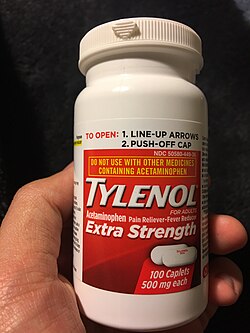
Paracetamol (acetaminophen)
พาราเซตามอล หรือที่รู้จักกันในชื่ออะเซตามิโน เฟนหรือ APAP เป็นยาที่ใช้รักษาอาการปวดและไข้[ 6 ]โดยทั่วไปใช้สำหรับอาการปวดเล็กน้อยถึงปานกลาง[ 6 ]เมื่อใช้ร่วมกับยาแก้ปวดกลุ่มโอปิออยด์ปัจจุบันพาราเซตามอลถูกนำมาใช้สำหรับอาการปวดที่รุนแรงกว่า เช่นอาการปวดจากโรคมะเร็งและหลังการผ่าตัด[ 7 ]โดยทั่วไปใช้โดยการรับประทานหรือเหน็บทางทวารหนักแต่ก็มีให้ใช้ทางหลอดเลือดดำด้วย[ 6 ] [ 8 ]ผลของยาจะคงอยู่ประมาณสองถึงสี่ชั่วโมง[ 8 ]พาราเซตามอลจัดเป็นยาแก้ปวดชนิดอ่อน[ 8 ]และโดยทั่วไปปลอดภัยเมื่อใช้ในขนาดที่แนะนำ[ 9 ]
ยาต้านการอักเสบที่ไม่ใช่สเตียรอยด์ (NSAIDs)
ยาต้านการอักเสบที่ไม่ใช่สเตียรอยด์ (โดยทั่วไปย่อว่า NSAIDs) เป็นกลุ่ม ยา ที่รวมยาที่ช่วยลดอาการปวด[ 10 ]และลดไข้และในขนาดที่สูงขึ้นจะช่วยลดการอักเสบ[ 11 ]ยาที่โดดเด่นที่สุดในกลุ่มนี้ ได้แก่แอสไพรินไอบูโพรเฟน แนพรอกเซนและไดโคลเฟแนคซึ่งทั้งหมดมีจำหน่ายโดยไม่ต้องมีใบสั่ง ยา ในประเทศส่วนใหญ่[ 12 ]
สารยับยั้ง COX-2
ยาเหล่านี้ได้มาจาก NSAIDs เอนไซม์ ไซโคลออกซิเจเนสที่ถูกยับยั้งโดย NSAIDs ถูกค้นพบว่ามีอย่างน้อยสองเวอร์ชันที่แตกต่างกัน ได้แก่ COX1 และ COX2 การวิจัยชี้ให้เห็นว่าผลข้างเคียงส่วนใหญ่ของ NSAIDs เกิดจากการปิดกั้นเอนไซม์ COX1 ( แบบคงที่ ) ในขณะที่ผลการบรรเทาปวดเกิดจากเอนไซม์ COX2 ( แบบเหนี่ยวนำ ) ดังนั้น สารยับยั้ง COX2 จึงถูกพัฒนาขึ้นมาเพื่อยับยั้งเฉพาะเอนไซม์ COX2 เท่านั้น (NSAIDs แบบดั้งเดิมจะปิดกั้นทั้งสองเวอร์ชันโดยทั่วไป) ยาเหล่านี้ (เช่นrofecoxib , celecoxibและetoricoxib ) มีประสิทธิภาพในการบรรเทาปวดเท่าเทียมกับ NSAIDs แต่ทำให้เกิดเลือดออกในทางเดินอาหารน้อยลงโดยเฉพาะ[ 13 ]
หลังจากมีการนำสารยับยั้ง COX-2 มาใช้กันอย่างแพร่หลาย พบว่ายาในกลุ่มนี้ส่วนใหญ่เพิ่มความเสี่ยงต่อเหตุการณ์เกี่ยวกับหลอดเลือดหัวใจโดยเฉลี่ย 40% ซึ่งนำไปสู่การถอน rofecoxib และ valdecoxib ออกจากตลาด และมีการออกคำเตือนเกี่ยวกับยาอื่นๆ Etoricoxib ดูเหมือนจะค่อนข้างปลอดภัย โดยมีความเสี่ยงต่อ เหตุการณ์ ลิ่มเลือดอุดตันคล้ายกับ diclofenac ซึ่งเป็น NSAID ที่ไม่ใช่ coxib [ 13 ]
โอปิออยด์
มอร์ฟีน ซึ่งเป็น โอปิออยด์ต้นแบบและโอปิออยด์อื่นๆ (เช่นโคเดอีนออกซิโคโดน ไฮโดรโคโดนไดไฮโดรมอร์ฟีนเพทิดีน ) ล้วนมีอิทธิพลคล้ายคลึงกันต่อระบบตัวรับโอ ปิออยด์ ในสมอง บูเพรนอร์ฟี นเป็นตัวกระตุ้นบางส่วนของตัวรับ μ-โอปิออยด์ และทรามาดอลเป็นตัวยับยั้งการดูดซึมกลับของเซโรโทนินและนอร์เอพิเนฟริน (SNRI) ที่มีคุณสมบัติเป็นตัวกระตุ้นตัวรับ μ-โอปิออยด์ที่อ่อนแอ[ 14 ]ทรามาดอลมีโครงสร้างใกล้เคียงกับเวนลาแฟกซีนมากกว่าโคเดอีนและให้ผลระงับปวดโดยไม่เพียงแต่ให้ผล "คล้ายโอปิออยด์" (ผ่านการกระตุ้นตัวรับมิวอย่างอ่อน ) แต่ยังทำหน้าที่เป็น ตัวปล่อยเซโรโทนินที่อ่อนแอแต่ออกฤทธิ์เร็วและเป็น ตัวยับยั้งการดูดซึมกลับของ นอร์เอพิเนฟรินด้วย[ 15 ] [ 16 ] [ 17 ] [ 18 ] Tapentadolซึ่งมีโครงสร้างบางส่วนคล้ายกับ tramadol เชื่อว่าเป็นยาใหม่ที่ออกฤทธิ์ผ่านสอง (และอาจเป็นสาม) กลไกการออกฤทธิ์ที่แตกต่างกันในลักษณะของทั้งโอปิออยด์แบบดั้งเดิมและ SNRI ผลกระทบของเซโรโทนินและนอร์เอพิเนฟรินต่อความเจ็บปวด แม้ว่าจะยังไม่เข้าใจอย่างสมบูรณ์ แต่ก็มีการเชื่อมโยงเชิงสาเหตุที่ได้รับการพิสูจน์แล้ว และยาในกลุ่ม SNRI มักใช้ร่วมกับโอปิออยด์ (โดยเฉพาะ tapentadol และ tramadol) ซึ่งให้ผลในการบรรเทาความเจ็บปวดได้ดียิ่งขึ้น
การให้ยาโอปิออยด์ทุกชนิดอาจถูกจำกัดด้วยความเป็นพิษของโอปิออยด์ (อาการสับสน ภาวะกดการหายใจกล้ามเนื้อกระตุกและรูม่านตาหดเล็ก) อาการชัก ( ทรามาดอล ) แต่โดยทั่วไปแล้วผู้ที่ทนต่อโอปิออยด์จะมีขีดจำกัดขนาดยาที่สูงกว่าผู้ป่วยที่ไม่ทนต่อ โอปิออยด์ [ 19 ] แม้ว่าโอปิออยด์จะเป็นยาแก้ปวดที่มีประสิทธิภาพมาก แต่ก็อาจมีผลข้างเคียงที่ไม่พึงประสงค์ ผู้ป่วยที่เริ่มใช้มอร์ฟีนอาจมีอาการคลื่นไส้และอาเจียน (โดยทั่วไปจะบรรเทาได้ด้วยยาแก้อาเจียน ระยะสั้น เช่นฟีเนอร์แกน ) อาการคันอาจต้องเปลี่ยนไปใช้โอปิออยด์ชนิดอื่นอาการท้องผูกเกิดขึ้นในผู้ป่วยเกือบทุกรายที่ใช้โอปิออยด์ และ โดยทั่วไปจะมีการสั่งจ่าย ยาระบาย ( แลคตูโลสแมคโครโกลหรือโคแดนทราเมอร์) ร่วมด้วย[ 20 ]
เมื่อใช้ได้อย่างเหมาะสม ยาแก้ปวดกลุ่มโอปิออยด์และยาแก้ปวดส่วนกลางอื่นๆ นั้นปลอดภัยและมีประสิทธิภาพ อย่างไรก็ตาม อาจมีความเสี่ยง เช่น การเสพติดและการที่ร่างกายเกิดการดื้อยา (ภาวะดื้อยา) ภาวะดื้อยาหมายความว่าการใช้ยาบ่อยๆ อาจทำให้ประสิทธิภาพของยาลดลง หากทำได้โดยไม่เป็นอันตราย อาจจำเป็นต้องเพิ่มขนาดยาเพื่อรักษาประสิทธิภาพของยาไว้เพื่อป้องกันภาวะดื้อยา ซึ่งอาจเป็นเรื่องที่น่ากังวลเป็นพิเศษสำหรับผู้ป่วยที่มีอาการปวดเรื้อรังและต้องใช้ยาแก้ปวดเป็นเวลานาน ภาวะดื้อยาโอปิออยด์มักได้รับการแก้ไขด้วยการบำบัดแบบหมุนเวียนยาโอปิออยด์โดยผู้ป่วยจะสลับใช้ยาโอปิออยด์ที่ไม่เกิดการดื้อยาข้ามกลุ่มตั้งแต่สองชนิดขึ้นไปเป็นประจำ เพื่อป้องกันการใช้ยาเกินขนาดที่ปลอดภัยในความพยายามที่จะให้ได้ผลในการบรรเทาปวดที่เพียงพอ
ไม่ควรสับสนระหว่างภาวะทนต่อโอปิออยด์กับภาวะไวต่อความเจ็บปวดที่เกิดจากโอ ปิออยด์ อาการของทั้งสองภาวะนี้อาจดูคล้ายกันมาก แต่กลไกการออกฤทธิ์นั้นแตกต่างกัน ภาวะไวต่อความเจ็บปวดที่เกิดจากโอปิออยด์คือเมื่อการได้รับโอปิออยด์ทำให้ความรู้สึกเจ็บปวดเพิ่มขึ้น ( ภาวะไวต่อความเจ็บปวด ) และอาจทำให้สิ่งเร้าที่ไม่เจ็บปวดกลายเป็นเจ็บปวดได้ ( ภาวะไวต่อสิ่งเร้าที่ ไม่เจ็บปวด ) [ 21 ]
แอลกอฮอล์
แอลกอฮอล์มีผลกระทบทางชีวภาพ จิตใจ และสังคม ซึ่งส่งผลต่อผลที่ตามมาจากการใช้แอลกอฮอล์เพื่อบรรเทาอาการปวด[ 22 ]การดื่มแอลกอฮอล์ในปริมาณที่พอเหมาะสามารถลดอาการปวดบางประเภทได้ในบางสถานการณ์[ 22 ]
The majority of its analgesic effects come from antagonizing NMDA receptors, similarly to ketamine, thus decreasing the activity of the primary excitatory (signal boosting) neurotransmitter, glutamate. It also functions as an analgesic to a lesser degree by increasing the activity of the primary inhibitory (signal reducing) neurotransmitter, GABA.[23]
Attempting to use alcohol to treat pain has also been observed to lead to negative outcomes including excessive drinking and alcohol use disorder.[22]
Cannabis
Medical cannabis, or medical marijuana, refers to cannabis or its cannabinoids used to treat disease or improve symptoms.[24][25] There is evidence suggesting that cannabis can be used to treat chronic pain and muscle spasms, with some trials indicating improved relief of neuropathic pain over opioids.[26][27][28]
Combinations
Analgesics are frequently used in combination, such as the paracetamol and codeine preparations found in many non-prescription pain relievers. They can also be found in combination with vasoconstrictor drugs such as pseudoephedrine for sinus-related preparations, or with antihistamine drugs for people with allergies.
While the use of paracetamol, aspirin, ibuprofen, naproxen, and other NSAIDS concurrently with weak to mid-range opiates (up to about the hydrocodone level) has been said to show beneficial synergistic effects by combating pain at multiple sites of action,[29][30] several combination analgesic products have been shown to have few efficacy benefits when compared to similar doses of their individual components. Moreover, these combination analgesics can often result in significant adverse events, including accidental overdoses, most often due to confusion that arises from the multiple (and often non-acting) components of these combinations.[31]
Alternative medicine
There is some evidence that some treatments using alternative medicine can relieve some types of pain more effectively than placebo.[32] The available research concludes that more research would be necessary to better understand the use of alternative medicine.[32]
Other drugs
เนโฟแพมซึ่งเป็นสารยับยั้งการดูดซึมโมโนอะมีนและตัวปรับช่องแคลเซียมและโซเดียม ยังได้รับการอนุมัติให้ใช้ในการรักษาอาการปวดระดับปานกลางถึงรุนแรงในบางประเทศอีกด้วย[ 33 ]
ฟลูเพอร์ทีน เป็น สารเปิดช่องK + ที่ออกฤทธิ์ในส่วนกลางที่มี คุณสมบัติเป็นตัวต้าน NMDA ที่อ่อนแอ [ 34 ]มีการใช้ในยุโรปเพื่อบรรเทาอาการปวดระดับปานกลางถึงรุนแรง รวมถึง คุณสมบัติในการรักษา ไมเกรนและคลายกล้ามเนื้อ ไม่มี คุณสมบัติ ต้านโคลีน อย่างมีนัยสำคัญ และเชื่อว่าไม่มีฤทธิ์ต่อตัวรับโดปามีน เซโรโทนิน หรือฮิสตามีน ไม่ก่อให้เกิดการเสพติด และโดยทั่วไปจะไม่เกิดภาวะดื้อยา[ 35 ]อย่างไรก็ตาม อาจเกิดภาวะดื้อยาได้ในบางกรณี[ 36 ]
Ziconotideซึ่งเป็นตัวบล็อกช่องแคลเซียมแบบ N-type ที่ควบคุมด้วยแรงดันไฟฟ้า ที่มีประสิทธิภาพสูง จะถูกฉีดเข้าช่องไขสันหลังเพื่อบรรเทาอาการปวดอย่างรุนแรง ซึ่งมักเกี่ยวข้องกับโรคมะเร็ง[ 37 ]
สารเสริมฤทธิ์
ยาบางชนิดที่ถูกนำมาใช้เพื่อวัตถุประสงค์อื่นนอกเหนือจากยาแก้ปวดก็ถูกนำมาใช้ในการจัดการความเจ็บปวดเช่นกัน ทั้งยาแก้ซึมเศร้ารุ่นแรก (เช่นอะมิทริปไทลีน ) และยา แก้ซึมเศร้ารุ่นใหม่(เช่นดูล็อกเซทีน ) ถูกนำมาใช้ร่วมกับยา NSAIDs และยาโอปิออยด์สำหรับอาการปวดที่เกี่ยวข้องกับความเสียหายของเส้นประสาทและปัญหาที่คล้ายคลึงกัน[ 38 ]สารอื่นๆ บางชนิดช่วยเสริมฤทธิ์ของยาแก้ปวดโดยตรง เช่น การใช้ไฮดรอกซีซีนโพรเมทา ซีน คา ริโซโปรด อลหรือไตรเพลนนามีนเพื่อเพิ่มความสามารถในการระงับปวดของยาแก้ปวดโอปิออยด์ในปริมาณที่กำหนด[ 39 ] [ 40 ]
ยา แก้ปวดเสริม หรือที่เรียกว่ายาแก้ปวดชนิดใหม่ ได้แก่ออร์เฟ นาไดรน์ เม็กซิเลที นพรีแก บาลิน กาบา เพนติ นไซโคลเบนซาพรีน ไฮออสซีน (สโคโปลาไมน์ ) และยาอื่นๆ ที่มีคุณสมบัติต้านอาการชัก ต้านโคลีน และ/หรือต้านอาการเกร็ง รวมถึงยาอื่นๆ อีกมากมายที่มีฤทธิ์ต่อระบบประสาทส่วนกลาง ยาเหล่านี้ใช้ร่วมกับยาแก้ปวดเพื่อปรับและ/หรือเปลี่ยนแปลงการออกฤทธิ์ของโอปิออยด์เมื่อใช้บรรเทาอาการปวด โดยเฉพาะอย่างยิ่งอาการปวดจากเส้นประสาท
Dextromethorphan has been noted to slow the development of and reverse tolerance to opioids, as well as to exert additional analgesia by acting upon NMDA receptors, as does ketamine.[41] Some analgesics such as methadone and ketobemidone and perhaps piritramide have intrinsic NMDA action.[42]
The anticonvulsantcarbamazepine is used to treat neuropathic pain. Similarly, the gabapentinoidsgabapentin and pregabalin are prescribed for neuropathic pain, and phenibut is available without prescription. Gabapentinoids work as αδ-subunit blockers of voltage-gated calcium channels, and tend to have other mechanisms of action as well. Gabapentinoids are all anticonvulsants, which are most commonly used for neuropathic pain, as their mechanism of action tends to inhibit pain sensation originating from the nervous system.[43]
Other uses
Topical analgesia is generally recommended to avoid systemic side-effects. Painful joints, for example, may be treated with an ibuprofen- or diclofenac-containing gel (The labeling for topical diclofenac has been updated to warn about drug-induced hepatotoxicity.[44]); capsaicin also is used topically. Lidocaine, an anesthetic, and steroids may be injected into joints for longer-term pain relief. Lidocaine is also used for painful mouth sores and to numb areas for dental work and minor medical procedures. In February 2007 the FDA notified consumers and healthcare professionals of the potential hazards of topical anesthetics entering the bloodstream when applied in large doses to the skin without medical supervision. These topical anesthetics contain anesthetic drugs such as lidocaine, tetracaine, benzocaine, and prilocaine in a cream, ointment, or gel.[45]
Uses
Topical nonsteroidal anti-inflammatory drugs provide pain relief in common conditions such as muscle sprains and overuse injuries. Since the side effects are also lesser, topical preparations could be preferred over oral medications in these conditions.[46]
List of drugs with comparison
| Generic name (INN) | Physicochemistry[47] | Mechanism of action[48] | Routes of administration[48][49][50] | Pharmacokinetics[47] | Indications[48][49][50] | Major safety concerns[48][49][50] |
|---|---|---|---|---|---|---|
| Nonsteroidal anti-inflammatory drugs | ||||||
| Unselective agents | ||||||
| Aceclofenac | Comes in betadex salt and free acid forms; practically insoluble in water, soluble in many organic solvents; degrades on contact with light; phenylacetic acid derivative. | As per diclofenac. | Oral (PO.) | Protein binding > 99%; half-life = 4 hours; metabolised to diclofenac (minor); excretion = urine (67%). | As per diclofenac. | As per diclofenac. |
| Acemetacin | Comes in free form; practically insoluble in water, soluble in certain organic solvents; degrades upon contact with light. Chemically related to indometacin | As per diclofenac. | PO. | Slightly metabolised to indometacin. | Rheumatoid arthritis, osteoarthritis and lower back pain. | As per diclofenac. |
| Amfenac | No available data. | As per diclofenac. | PO. | No data. | Pain and inflammation. | As diclofenac. |
| Aminophenazone | Related to phenylbutazone. | As per diclofenac. | PO. | Not available. | Musculoskeletal and joint disorders. | Agranulocytosis and cancer. |
| Ampiroxicam | Related to piroxicam. | As per diclofenac. | PO. | No data. | Rheumatoid arthritis and osteoarthritis. | Photosensitivity and other AEs typical of NSAIDs. |
| Amtolmetin guacil | Prodrug to tolmetin. | As per diclofenac. | PO. | No data. | As per diclofenac. | As per diclofenac. |
| Aspirin | Comes in free form, aluminium and lysine salt forms; fairly insoluble in water (1 in 300); highly soluble (1 in 5) in alcohol; degrades on contact with air. Salicylate. | Irreversibly inhibits COX-1 and COX-2; hence inhibiting prostaglandin synthesis. | PO, IM, IV, rectal | Bioavailability = 80–100%; protein binding = 25–95% (inversely dependent on plasma concentration); half-life = 2–3 hours, 15–30 hours (higher doses); excretion = 80–100%.[51] | Blood thinning; mild-to-moderate pain; fever; rheumatic fever; migraine; rheumatoid arthritis; Kawasaki's disease | GI bleeds; ulcers; Reye syndrome; nephrotoxicity; blood dyscrasias (rarely); Stevens–Johnson syndrome (uncommon/rare) |
| Azapropazone | Comes in free form; fairly insoluble in water and chloroform, soluble in ethanol; phenylbutazone. | As per diclofenac. | PO, rectal. | No data available. | Rheumatoid arthritis; gout; ankylosing spondylitis. | As per diclofenac. |
| Bendazac | Comes in free acid and lysine salt forms. Chemically related to indometacin. | As per acetametacin. | Topical, ophthalmologic. | N/A | โรคผิวหนัง (เช่นโรคผิวหนังอักเสบจากการสัมผัส ) และต้อกระจก | มีรายงานเกี่ยวกับความเป็นพิษต่อตับ |
| เบโนริเลต | แอสไพริน-พาราเซตามอลเอสเทอร์ แทบไม่ละลายในน้ำ ละลายได้เล็กน้อยในเอทานอลและเมทานอล ละลายได้ในอะซิโตนและคลอโรฟอร์ม | เช่นเดียวกับยาแอสไพรินและพาราเซตามอล | PO. | ไม่พร้อมให้บริการ | โรคข้อเสื่อม; โรคข้ออักเสบรูมาตอยด์; โรคปวดกล้ามเนื้อและเนื้อเยื่ออ่อน; อาการปวดเล็กน้อยถึงปานกลางและมีไข้ | เช่นเดียวกับยาแอสไพรินและพาราเซตามอล |
| เบนซิดามีน | อยู่ในรูปกรดอิสระ ละลายน้ำได้ดี | ตามหลักการของไดโคลฟีแนค | มีให้ใช้หลายรูปแบบ ได้แก่ ทาภายนอก รับประทาน ทางทวารหนัก สเปรย์ และทางช่องคลอด | ไม่มีข้อมูลให้บริการ | โรคเกี่ยวกับระบบกระดูกและกล้ามเนื้อ; โรคเกี่ยวกับเนื้อเยื่ออ่อน; อาการเจ็บคอ | ตามหลักการของไดโคลฟีแนค |
| บรอมเฟแนค | มีจำหน่ายในรูปกรดอิสระ; อนุพันธ์ของกรดฟีนิลอะซิติก | สารยับยั้ง COX-1/COX-2 แบบย้อนกลับได้ | จักษุวิทยา | ไม่มีข้อมูล | อาการปวดและอักเสบหลังผ่าตัด | แผลที่กระจกตา |
| บูเฟซาแมค | อยู่ในรูปกรดอิสระ แทบไม่ละลายในน้ำ ละลายได้ในตัวทำละลายอินทรีย์บางชนิด และสลายตัวเมื่อสัมผัสกับแสง | การยับยั้ง COX-1/COX-2 แบบย้อนกลับได้ | ใช้ทาภายนอก | ไม่มีข้อมูล | โรคผิวหนัง | โรคผิวหนัง เช่น โรคผิวหนังอักเสบจากการสัมผัส |
| คาร์บาซาเลต | อยู่ในรูปเกลือแคลเซียม ละลายน้ำได้ค่อนข้างดี | ถูกเผาผลาญเป็นแอสไพรินและยูเรีย เช่นเดียวกับแอสไพริน | รับประทานทางปาก | ไม่มีข้อมูล | ใช้สำหรับรักษาโรคลิ่มเลือดอุดตัน | ตามหลักการของไดโคลฟีแนค |
| โคลนิกซิน | มีจำหน่ายในรูปแบบกรดอิสระและเกลือไลซีน | การยับยั้ง COX-1/COX-2 แบบย้อนกลับได้ | รับประทาน, ฉีดเข้ากล้ามเนื้อ, ฉีดเข้าเส้นเลือดดำ, ทางทวารหนัก | ไม่มีข้อมูล | ความเจ็บปวด. | ตามหลักการของไดโคลฟีแนค |
| เดกซิบูโพรเฟน | ไอโซเมอร์ D ของไอบูโพรเฟน อนุพันธ์ของกรดโพรพิโอนิก | ตามหลักการของไดโคลฟีแนค | PO. | การดูดซึมเข้าสู่ร่างกาย = ?; การจับกับโปรตีน = 99%; การเผาผลาญ = ตับผ่านกระบวนการคาร์บอกซิเลชันและไฮดรอกซิเลชัน; ครึ่งชีวิต = 1.8–3.5 ชั่วโมง; การขับถ่าย = ปัสสาวะ (90%) [ 52 ] | โรคข้อเสื่อม; อาการปวดเล็กน้อยถึงปานกลางและอาการปวดประจำเดือน[ 53 ] | ตามหลักการของไดโคลฟีแนค |
| ไดโคลฟีแนค | มีอยู่ในรูปเกลือโซเดียม โพแทสเซียม และไดเอทิลอะมีน (ใช้ทาภายนอกในรูปเจล) ละลายน้ำได้น้อย แต่ละลายได้ดีในเอทานอล ไม่เสถียรเมื่อสัมผัสกับแสงและอากาศ เป็นอนุพันธ์ของกรดอินโดลอะซิติก | สารยับยั้ง COX-1/COX-2 แบบย้อนกลับได้ | รับประทานและทาภายนอก | การดูดซึมเข้าสู่ร่างกาย = 50–60%; การจับกับโปรตีน = 99–99.8%; การเผาผลาญในตับ; ครึ่งชีวิต = 1.2–2 ชั่วโมง; การขับออก = ปัสสาวะ (50–70%), อุจจาระ (30–35%) | โรคข้ออักเสบรูมาตอยด์ ; โรค ข้อเสื่อม ; อาการปวดอักเสบ (เช่น ปวดประจำเดือน); อาการปวด/อักเสบเฉพาะที่ (ในรูปแบบเจล); โรคผิวหนังอักเสบจากแสงแดด ; ประจำเดือนมามากเกินไป | เช่นเดียวกับแอสไพริน ยกเว้นในกรณีที่ไม่มีกลุ่มอาการเรย์ และมีการเพิ่มเติมดังต่อไปนี้: กล้ามเนื้อหัวใจตายเฉียบพลันโรคหลอดเลือดสมองและความดันโลหิตสูงมีแนวโน้มที่จะก่อให้เกิดผลข้างเคียงเหล่านี้มากกว่ายาต้านการอักเสบที่ไม่ใช่สเตียรอยด์ชนิดอื่นที่ไม่เลือกเป้าหมาย[ 54 ] |
| ไดเอทิลามีนซาลิไซเลต | ละลายได้ดีในน้ำ สลายตัวเมื่อสัมผัสกับแสงและเหล็ก | ตามหลักการของไดโคลฟีแนค | ใช้ทาภายนอก | ไม่มีข้อมูล | อาการปวดข้อและระบบกล้ามเนื้อและกระดูก | ตามที่ bufexamac ระบุไว้ |
| ไดฟลูนิซาล | มีจำหน่ายในรูปกรดอิสระและ เกลือ อาร์จินีนแทบไม่ละลายในน้ำ ละลายได้ในเอทานอล และเสื่อมสภาพเมื่อสัมผัสกับแสง | ตามหลักการของไดโคลฟีแนค | รับประทาน, ฉีดเข้ากล้ามเนื้อ, ฉีดเข้าเส้นเลือดดำ | การดูดซึมเข้าสู่ร่างกาย = 80–100%; การจับกับโปรตีน > 99%; ปริมาตรการกระจายตัว = 0.11 ลิตร/กก.; การเผาผลาญในตับ; ครึ่งชีวิต = 8–12 ชั่วโมง; การขับถ่าย = ปัสสาวะ (90%), อุจจาระ (<5%) [ 47 ] [ 55 ] | อาการปวด; โรคข้อเสื่อม; โรคข้ออักเสบรูมาตอยด์ | ตามหลักการของไดโคลฟีแนค |
| เอพิริโซล | มีให้เลือกแบบอิสระ | ตามหลักการของไดโคลฟีแนค | PO. | ไม่มีให้บริการ | โรคข้ออักเสบรูมาตอยด์ | ตามหลักการของไดโคลฟีแนค |
| เอเทนซาไมด์ | มีอยู่ในรูปทรงอิสระ คือ ซาลิไซเลต | ตามหลักการของไดโคลฟีแนค | PO. | ไม่มีให้บริการ | อาการปวดกล้ามเนื้อและกระดูก; มีไข้ | ตามหลักการของไดโคลฟีแนค |
| เอโตเฟนาเมต | ของเหลว แทบไม่ละลายในน้ำ แต่สามารถผสมเข้ากับเอทิลอะซิเตทและเมทานอลได้ | ตามหลักการของไดโคลฟีแนค | ใช้ทาภายนอก | ไม่มีให้บริการ | ความผิดปกติของระบบกระดูก กระดูก ข้อต่อ และเนื้อเยื่ออ่อน | ตามที่ bufexamac ระบุไว้ |
| เฟลบินัค | มีจำหน่ายในรูปสารอิสระและ เกลือ ไดไอโซโพรพานอลามีน แทบไม่ละลายในน้ำและเอทานอล แต่ละลายได้ในเมทานอล | ตามหลักการของไดโคลฟีแนค | ใช้ทาภายนอก | ไม่มีข้อมูล | อาการปวดกล้ามเนื้อและกระดูก และการบาดเจ็บของเนื้อเยื่ออ่อน | ตามที่ bufexamac ระบุไว้ |
| เฟนบูเฟน | อยู่ในรูปกรดอิสระ ละลายได้ค่อนข้างน้อยในตัวทำละลายส่วนใหญ่ (รวมถึงน้ำ) เป็นอนุพันธ์ของกรดโพรพิโอนิก | ตามหลักการของไดโคลฟีแนค | PO. | การจับกับโปรตีน > 99%; ครึ่งชีวิต = 10–17 ชั่วโมง | ตามหลักการของไดโคลฟีแนค | ตามหลักการของไดโคลฟีแนค |
| เฟโนโปรเฟน | อยู่ในรูปเกลือแคลเซียม ละลายได้น้อยในน้ำและคลอโรฟอร์ม แต่ละลายได้ดีในแอลกอฮอล์ และไวต่อการเสื่อมสภาพเมื่อสัมผัสกับอากาศ เป็นอนุพันธ์ของกรดโพรพิโอนิก | ตามหลักการของไดโคลฟีแนค | PO. | การดูดซึมเข้าสู่ร่างกาย = ?; การจับกับโปรตีน = 99%; การเผาผลาญในตับ; การขับถ่าย = ปัสสาวะ, อุจจาระ[ 56 ] | อาการปวด; โรคข้ออักเสบรูมาตอยด์และโรคข้อเสื่อม | ตามหลักการของไดโคลฟีแนค |
| เฟนเทียแซค | มีจำหน่ายในรูปแบบอิสระและเกลือแคลเซียม รวมถึงอนุพันธ์ของกรดอะซิติก | ตามหลักการของไดโคลฟีแนค | PO. | ไม่มีข้อมูล | ตามหลักการของไดโคลฟีแนค | ตามหลักการของไดโคลฟีแนค |
| เฟปราดินอล | มีจำหน่ายในรูปแบบกรดอิสระและเกลือไฮโดรคลอไรด์ | ตามหลักการของไดโคลฟีแนค | ใช้ทาภายนอก | ไม่มีข้อมูล | การอักเสบเฉพาะที่ | ตามที่ bufexamac ระบุไว้ |
| เฟปราโซน | มีจำหน่ายในรูปแบบกรดอิสระและเกลือไพเพอราซีน ฟีนิลบิวทาโซน | ตามหลักการของไดโคลฟีแนค | รับประทาน, เหน็บทางทวารหนัก, ใช้ทาเฉพาะที่ | ไม่มีให้บริการ | ตามหลักการของไดโคลฟีแนค | ตามข้อกำหนดของบูเฟกซาแมค (ใช้ทา) และไดโคลเฟแนค (รับประทาน/เหน็บทางทวารหนัก) |
| ฟลอคตาเฟนีน | มีจำหน่ายในรูปกรดอิสระ; อนุพันธ์ของกรดแอนทรานิลลิก | ตามหลักการของไดโคลฟีแนค | รับประทานทางปาก | ตับย่อยสลายสารนี้อย่างกว้างขวาง มีครึ่งชีวิต 8 ชั่วโมง ขับออกทางปัสสาวะและน้ำดี | บรรเทาอาการปวดในระยะสั้น | ตามหลักการของไดโคลฟีแนค |
| กรดฟลูเฟนามิก | มีจำหน่ายในรูปแบบกรดอิสระและรูปแบบเกลืออะลูมิเนียม คือ กรดแอนทรานิลลิก | ตามหลักการของไดโคลฟีแนค | ใช้ทาภายนอก | ไม่มีข้อมูล | การอักเสบและอาการปวดของเนื้อเยื่ออ่อน | ตามที่ bufexamac ระบุไว้ |
| ฟลูร์บิโปรเฟน | มีทั้งในรูปเกลือโซเดียมและกรดอิสระ ละลายน้ำได้น้อยแต่ละลายได้ในเอทานอล ไวต่อการเสื่อมสภาพเมื่อสัมผัสกับอากาศ เป็นอนุพันธ์ของกรดโพรพิโอนิก | ตามหลักการของไดโคลฟีแนค | รับประทาน, ฉีดเข้ากล้ามเนื้อ, ฉีดเข้าเส้นเลือดดำ, ทางจักษุวิทยา | การดูดซึมเข้าสู่ร่างกาย = 96% (รับประทาน); การจับกับโปรตีน > 99%; ปริมาตรการกระจายตัว = 0.12 ลิตร/กก.; การขับถ่าย = ปัสสาวะ (70%) [ 57 ] | จักษุวิทยา: โรคกระจกตาอักเสบจากภูมิแพ้ตามฤดูกาล ; อาการบวมของดวงตาหลังผ่าตัด; โรคกระจกตาอักเสบจากเชื้อเริม, การผ่าตัดแก้ไขสายตาด้วยเลเซอร์เอ็กไซเมอร์; โรคเหงือกอักเสบที่ตา การใช้ในระบบ: โรคข้ออักเสบรูมาตอยด์ ; โรคข้อเสื่อม[ 57 ] | ตามคำแนะนำของแพทย์เกี่ยวกับยา bromfenac (สำหรับใช้กับดวงตา) และ diclofenac (รับประทาน/ฉีดเข้ากล้ามเนื้อ/ฉีดเข้าเส้นเลือด) |
| กลูคาเมทาซิน | อนุพันธ์ของอินโดเมทาซิน | ตามหลักการของไดโคลฟีแนค | PO. | ไม่มีให้บริการ | ความผิดปกติของระบบกระดูกและกล้ามเนื้อ ข้อต่อ รอบข้อต่อ และเนื้อเยื่ออ่อน | ตามหลักการของไดโคลฟีแนค |
| ไอบูโพรเฟน | มีอยู่ในรูปเกลือไลซีน เกลือโพแทสเซียม และกรดอิสระ แทบไม่ละลายในน้ำ แต่ละลายได้ในเอทานอล อะซิโตนเมทานอล ไดคลอโรมีเทนและคลอโรฟอร์มสลายตัวเมื่อสัมผัสกับอากาศ เป็นอนุพันธ์ของกรดโพรพิโอนิก | ตามหลักการของไดโคลฟีแนค | รับประทาน, ฉีดเข้าเส้นเลือด, ทาเฉพาะที่ | การดูดซึมเข้าสู่ร่างกาย = 80–100%; การจับกับโปรตีน = 90–99%; การเผาผลาญในตับ ส่วนใหญ่ผ่าน การออกซิเดชันที่เกิดจาก CYP2C9และCYP2C19 ; การขับถ่าย = ปัสสาวะ (50–60%), อุจจาระ[ 58 ] | อาการปวด; ไข้; โรคอักเสบ; โรคข้ออักเสบรูมาตอยด์ ; โรคข้อเสื่อม ; ประจำเดือนมามาก; ภาวะหลอดเลือดแดงดักทัสเปิดค้าง[ 49 ] [ 59 ] [ 60 ] | เช่นเดียวกับยาไดโคลฟีแนค แต่มีความเสี่ยงต่อภาวะกล้ามเนื้อหัวใจตายเฉียบพลัน โรคหลอดเลือดสมอง และความดันโลหิตสูงน้อยกว่า |
| อิมิดาโซลซาลิไซเลต | มีจำหน่ายในรูปแบบอิสระ คือ สารซาลิไซเลต | ตามหลักการของไดโคลฟีแนค | รับประทาน, ทางทวารหนัก, ทาเฉพาะที่ | ไม่มีให้บริการ | อาการปวดกล้ามเนื้อและปวดข้อรูมาติก | ตามข้อกำหนดของบูเฟกซาแมค (ใช้ทา) และไดโคลเฟแนค (รับประทาน/เหน็บทางทวารหนัก) |
| อินโดเมทาซิน | มีจำหน่ายในรูปกรดอิสระและเกลือโซเดียม แทบไม่ละลายในน้ำและตัวทำละลายส่วนใหญ่ ไวต่อการเสื่อมสภาพจากแสง เป็นอนุพันธ์ของกรดอะซิติก | ตามหลักการของไดโคลฟีแนค | รับประทาน, ฉีดเข้าเส้นเลือดดำ, ทางทวารหนัก | การดูดซึมเข้าสู่ร่างกาย = 100% (รับประทาน); การจับกับโปรตีน = 90%; การเผาผลาญในตับ; การขับถ่าย = ปัสสาวะ (60%), อุจจาระ (33%) [ 61 ] | โรคข้ออักเสบรูมาตอยด์ ; โรคข้อเสื่อม ; โรคเกาต์ ; โรคกระดูกสันหลังอักเสบ ; อาการปวดประจำเดือน; ภาวะหลอดเลือดแดงดักทัสอาร์เทอริโอซัสเปิดค้าง[ 49 ] | ตามหลักการของไดโคลฟีแนค |
| ไอโซนิกซิน | มีให้เลือกแบบอิสระ | ตามหลักการของไดโคลฟีแนค | รับประทาน, ทางทวารหนัก และทาเฉพาะที่ | ไม่มีให้บริการ | ความผิดปกติของระบบกระดูกและกล้ามเนื้อ รวมถึงข้อต่อ | ตามข้อกำหนดของบูเฟกซาแมค (ใช้ทา) และไดโคลเฟแนค (รับประทาน/เหน็บทางทวารหนัก) |
| เคบูโซน | มีจำหน่ายในรูปแบบสารอิสระและเกลือโซเดียม เป็นอนุพันธ์ของฟีนิลบิวทาโซน | ตามหลักการของไดโคลฟีแนค | IM, PO. | ไม่มีให้บริการ | ตามหลักการของไดโคลฟีแนค | ตามหลักการของไดโคลฟีแนค |
| คีโตโปรเฟน | มีอยู่ในรูปกรดอิสระ เกลือไลซีน เกลือโซเดียม และเกลือไฮโดรคลอไรด์ โดยไอโซเมอร์เดกซ์จะอยู่ใน รูปเกลือ ทรอมเมทามอลแทบไม่ละลายในน้ำ แต่ละลายได้ดีในตัวทำละลายอื่นๆ ส่วนใหญ่ เป็นอนุพันธ์ของกรดโพรพิโอนิก | ตามหลักการของไดโคลฟีแนค | PO, ทางทวารหนัก, ทา, ทรานส์เดอร์มอล, ทางหลอดเลือดดำ, ทางกล้ามเนื้อ[ 62 ] [ 63 ] | การดูดซึมเข้าสู่ร่างกาย > 92% (รับประทาน), 70–90% (ทางทวารหนัก); การจับกับโปรตีน > 99%; ปริมาตรการกระจายตัว = 0.1–0.2 ลิตร/กก.; การเผาผลาญในตับ; ครึ่งชีวิต = 1.5–2 ชั่วโมง (รับประทาน), 2.2 ชั่วโมง (ทางทวารหนัก), 2 ชั่วโมง (ฉีดเข้าเส้นเลือดดำ) [ 64 ] [ 65 ] | โรคข้ออักเสบรูมาตอยด์โรคข้อเสื่อมและการบาดเจ็บจากการเล่นกีฬาที่ไม่รุนแรง (การใช้เฉพาะที่) [ 49 ] [ 66 ] | ตามหลักการของไดโคลฟีแนค |
| เคโทโรแลค | อยู่ใน รูปเกลือ ทรอมเมทามอลละลายน้ำได้ดีมาก สลายตัวเมื่อโดนแสง เป็นอนุพันธ์ของกรดอะซิติก | ตามหลักการของไดโคลฟีแนค | รับประทาน, ฉีดเข้ากล้ามเนื้อ, ฉีดเข้าเส้นเลือดดำ, ยาพ่นจมูก, โทรเมทามีน และยาหยอดตา | การดูดซึมของสูตร IM = 100%; การจับกับโปรตีน = 99%; การเผาผลาญในตับส่วนใหญ่ผ่านการจับคู่กรดกลูโคโรนิกและการไฮดรอกซิเลชัน p; ครึ่งชีวิต = 5–6 ชั่วโมง; การขับถ่าย = ปัสสาวะ (91.4%), อุจจาระ (6.1%) [ 67 ] | อาการปวดหลังผ่าตัดเล็กน้อยถึงปานกลาง; ไมเกรนเฉียบพลัน; การอักเสบของดวงตาเนื่องจากการผ่าตัดต้อกระจกหรือเยื่อบุตา อักเสบจากภูมิแพ้ตามฤดูกาล ; การป้องกันภาวะบวมน้ำที่จอประสาทตาแบบเฉียบพลันหลังการผ่าตัดต้อกระจก[ 68 ] [ 69 ] [ 70 ] [ 71 ] [ 72 ] [ 73 ] [ 74 ] | ตามหลักการของไดโคลฟีแนค |
| ลอร์น็อกซิแคม | ใช้ในรูปเกลือไฮโดรคลอไรด์; อนุพันธ์ของออกซิแคม | ตามหลักการของไดโคลฟีแนค | PO. | การจับกับโปรตีน = 99%; ปริมาตรการกระจายตัว = 0.2 ลิตร/กก.; ครึ่งชีวิต = 3–5 ชั่วโมง; การขับถ่าย = อุจจาระ (51%), ปัสสาวะ (42%) [ 75 ] [ 76 ] | อาการปวดเฉียบพลันและเรื้อรัง | ตามหลักการของไดโคลฟีแนค |
| ล็อกโซโพรเฟน | อยู่ในรูปเกลือโซเดียม เป็นอนุพันธ์ของกรดโพรพิโอนิก | ตามหลักการของไดโคลฟีแนค | ใช้ทาภายนอก | ไม่มีข้อมูล | การอักเสบและความเจ็บปวดเฉพาะที่ | ตามหลักการของไดโคลฟีแนค |
| แมกนีเซียมซาลิไซเลต | อยู่ในรูปอิสระ ละลายได้ในน้ำและเอทานอล จัดเป็นสารซาลิไซเลต | ตามหลักการของไดโคลฟีแนค | PO. | ไม่มีให้บริการ | ตามหลักการของไดโคลฟีแนค | ตามหลักการของไดโคลฟีแนค |
| กรดเมโคลฟีนามิก | มีจำหน่ายในรูปกรดอิสระและเกลือโซเดียม โดยเกลือโซเดียมเป็นรูปแบบที่ใช้ในทางการแพทย์สำหรับมนุษย์ กรดอิสระแทบไม่ละลายในน้ำ ส่วนเกลือโซเดียมละลายในน้ำได้ดี และไวต่อการเสื่อมสภาพจากอากาศและแสง | ตามหลักการของไดโคลฟีแนค | PO. | การจับกับโปรตีน > 99%; ครึ่งชีวิต = 2–4 ชั่วโมง; ถูกเผาผลาญในตับผ่านกระบวนการออกซิเดชัน ไฮดรอกซิเลชัน ดีฮาโลจีเนชัน และการเชื่อมต่อกับกรดกลูคูโรนิก; การขับถ่าย = ปัสสาวะ อุจจาระ (20–30%) [ 47 ] | โรคข้อเสื่อม; โรคข้ออักเสบรูมาตอยด์; อาการปวดเล็กน้อยถึงปานกลาง; ปวดประจำเดือน; ประจำเดือนมามากเกินไป | ตามหลักการของไดโคลฟีแนค |
| กรดเมเฟนามิก | อยู่ในรูปกรดอิสระ แทบไม่ละลายในน้ำ ละลายได้ค่อนข้างน้อยในตัวทำละลายอินทรีย์ สลายตัวเมื่อสัมผัสกับอากาศและแสง เป็นอนุพันธ์ของกรดแอนทรานิลลิก | ตามหลักการของไดโคลฟีแนค | PO. | การจับกับโปรตีนอย่างกว้างขวาง การเผาผลาญในตับส่วนใหญ่ผ่านCYP2C9ครึ่งชีวิต = 2 ชั่วโมง การขับถ่าย = ปัสสาวะ (66%) อุจจาระ (20–25%) [ 77 ] | อาการปวดอักเสบและประจำเดือนมามาก[ 49 ] | ตามหลักการของไดโคลฟีแนค |
| โมเฟโซแลค | มีให้เลือกแบบอิสระ | ตามหลักการของไดโคลฟีแนค | PO. | ไม่มีให้บริการ | อาการปวดกล้ามเนื้อและข้อต่อ | ตามหลักการของไดโคลฟีแนค |
| มอร์นิฟลูเมต | มีจำหน่ายในรูปแบบกรดอิสระ; อนุพันธ์ของกรดนิฟลูมิก | ตามหลักการของไดโคลฟีแนค | PO, ทางทวารหนัก | ไม่มีให้บริการ | ภาวะอักเสบ | ตามหลักการของไดโคลฟีแนค |
| นาบูเมโทน | อยู่ในรูปกรดอิสระ แทบไม่ละลายในน้ำ ละลายได้ดีในอะซิโตน และเสื่อมสภาพเมื่อสัมผัสกับอากาศและแสง | ตามหลักการของไดโคลฟีแนค | PO. | การจับกับโปรตีน = 99%; เมตาบอไลซ์ในตับ; ครึ่งชีวิต = 24 ชั่วโมง; การขับออก = ปัสสาวะ (80%), อุจจาระ (9%) [ 78 ] | โรคข้อเสื่อม; โรคข้ออักเสบรูมาตอยด์ | ตามหลักการของไดโคลฟีแนค |
| นาโปรเซน | มีจำหน่ายในรูปกรดอิสระและโซเดียม ในรูปอิสระแทบไม่ละลายในน้ำ แต่ละลายได้ดีในน้ำ (ในรูปเกลือโซเดียม) และละลายได้พอสมควรในตัวทำละลายอินทรีย์ส่วนใหญ่ สลายตัวเมื่อสัมผัสกับอากาศและแสง เป็นอนุพันธ์ของกรดโพรพิโอนิก | ตามหลักการของไดโคลฟีแนค | PO. | การดูดซึมเข้าสู่ร่างกาย = ?; การจับกับโปรตีน > 99.5%; ปริมาตรการกระจายตัว = 10% ของน้ำหนักตัว; ครึ่งชีวิต = 12–15 ชั่วโมง; การขับถ่าย = ปัสสาวะ (95%), อุจจาระ (<3%) [ 79 ] | โรคข้ออักเสบรูมาตอยด์; โรคข้อเสื่อม; โรคกระดูกสันหลังอักเสบ; โรคข้ออักเสบไม่ทราบสาเหตุในเด็ก ; อาการปวดจากการอักเสบ; ประจำเดือนมามากผิดปกติ | ตามข้อมูลของไดโคลฟีแนค มีแนวโน้มที่จะทำให้เกิดภาวะลิ่มเลือดอุดตันน้อยกว่าเมื่อเทียบกับยาต้านการอักเสบที่ไม่ใช่สเตียรอยด์ชนิดอื่นที่ไม่เลือกเป้าหมาย[ 54 ] |
| เนปาเฟแนค | มีจำหน่ายในรูปแบบอิสระ; เกี่ยวข้องกับยาแอมเฟแนค | ตามหลักการของไดโคลฟีแนค | จักษุวิทยา | ไม่พร้อมให้บริการ | อาการอักเสบและปวดหลังการผ่าตัดต้อกระจก | ตามที่ระบุไว้ในยาโบรเมเฟแนค |
| กรดนิฟลูมิค | มีจำหน่ายในรูปกรดอิสระ ไกลซินาไมด์ และเอทิลเอสเทอร์ แทบไม่ละลายในน้ำ แต่ละลายได้ในเอทานอล อะซิโตน และเมทานอล เป็นอนุพันธ์ของกรดนิโคตินิก | ตามหลักการของไดโคลฟีแนค | รับประทานทางทวารหนัก (เอทิลเอสเทอร์, มอร์นิฟลูเมต ) | ไม่พร้อมให้บริการ | โรคอักเสบของระบบกระดูก กระดูก ข้อต่อ และช่องปาก | ตามหลักการของไดโคลฟีแนค |
| ออกซาโปรซิน | มีจำหน่ายในรูปโพแทสเซียมและกรดอิสระ สลายตัวเมื่อสัมผัสกับแสง เป็นอนุพันธ์ของกรดโพรพิโอนิก | ตามหลักการของไดโคลฟีแนค | PO. | การดูดซึมเข้าสู่ร่างกาย = ?; การจับกับโปรตีน > 99.5%; ปริมาตรการกระจายตัว = 0.15–0.25 ลิตร/กก.; ครึ่งชีวิต = 50–60 ชั่วโมง; การขับถ่าย = ปัสสาวะ (65), อุจจาระ (35%) [ 80 ] [ 81 ] | โรคข้อเสื่อม; โรคข้ออักเสบรูมาตอยด์ | ตามหลักการของไดโคลฟีแนค |
| ออกซิเฟนบูตาโซน | มีจำหน่ายในรูปแบบฟรีฟอร์ม ฟีนิลบูตาโซน | ตามหลักการของไดโคลฟีแนค | PO, จักษุวิทยา | ไม่พร้อมให้บริการ | ทางจักษุวิทยา: โรคเยื่อหุ้มตาอักเสบทางระบบ (ปัจจุบันไม่ค่อยได้ใช้แล้วเนื่องจากผลข้างเคียง): โรคกระดูกสันหลังอักเสบเรื้อรัง; โรคข้ออักเสบรูมาตอยด์; โรคข้อเสื่อม | ตามที่ระบุไว้ในบรอมเฟแนค สำหรับการใช้ทางระบบ อาจเกิดผลข้างเคียงต่อระบบเลือด เช่น โรคโลหิตจางชนิดอะพลาสติก โรคเม็ดเลือดขาวต่ำ โรคเม็ดเลือดขาวนิวโทรฟิลต่ำ เป็นต้น |
| ฟีนาโซน | ไม่มีข้อมูล | ตามหลักการของไดโคลฟีแนค | PO, โสตศัลยกรรม | การจับกับโปรตีน < 10%; ครึ่งชีวิต = 12 ชั่วโมง; ถูกเผาผลาญในตับ; การขับออก = ปัสสาวะ (หลัก), อุจจาระ | โรคหูชั้น กลางอักเสบเฉียบพลัน | ความเป็นพิษต่อไตและความเป็นพิษต่อระบบเลือด รวมถึงอาการไม่พึงประสงค์อื่นๆ ที่พบได้ทั่วไปในยากลุ่ม NSAIDs |
| ฟีนิลบูตาโซน | มีลักษณะเป็นสารอิสระ แทบไม่ละลายในน้ำ ละลายได้ดีในตัวทำละลายอินทรีย์ส่วนใหญ่ และจะเสื่อมสภาพเมื่อสัมผัสกับแสงและอากาศ | ตามหลักการของไดโคลฟีแนค | รับประทาน, ทางทวารหนัก, ทาเฉพาะที่ | ไม่มีข้อมูลให้บริการ | โรคกระดูกสันหลังอักเสบเรื้อรัง; โรคเกาต์เฉียบพลัน; โรคข้อเสื่อม; โรคข้ออักเสบรูมาตอยด์ | ความเป็นพิษต่อระบบเลือด (รวมถึงภาวะเม็ดเลือดขาวต่ำมาก ภาวะโลหิตจางชนิดอะพลาสติก) และอาการไม่พึงประสงค์ทั่วไปของยาต้านการอักเสบที่ไม่ใช่สเตียรอยด์ (NSAIDs) |
| ไพค์โทโปรเฟน | มีให้เลือกแบบอิสระ | ตามหลักการของไดโคลฟีแนค | ใช้ทาภายนอก | ไม่มีข้อมูล | ความผิดปกติของระบบกระดูกและกล้ามเนื้อ ข้อต่อ รอบข้อต่อ และเนื้อเยื่ออ่อน | เช่นเดียวกับยาแก้อักเสบชนิดทาภายนอกอื่นๆ |
| ไพรอกซิแคม | มีจำหน่ายในรูปกรดอิสระและเกลือเบตาเด็กซ์ แทบไม่ละลายในน้ำ ละลายได้เล็กน้อยในเอทานอล เสื่อมสภาพเมื่อสัมผัสกับอากาศและแสง เป็นอนุพันธ์ของกรดอีโนลิก | ตามหลักการของไดโคลฟีแนค | PO, ยาใช้ภายนอก | การจับกับโปรตีน = 99%; ถูกเผาผลาญอย่างกว้างขวางในตับ; ครึ่งชีวิต = 36–45 ชั่วโมง; การขับออก = ปัสสาวะ, อุจจาระ[ 82 ] [ 83 ] | โรคข้ออักเสบรูมาตอยด์ โรคข้อเสื่อม โรคกระดูกสันหลังอักเสบ และการบาดเจ็บจากการเล่นกีฬา (ใช้เฉพาะที่) [ 49 ] | ตามหลักการของไดโคลฟีแนค |
| โปรกลูเมตาซิน | มีจำหน่ายในรูปเกลือมาเลเอต ซึ่งเป็นอนุพันธ์ของอินโดเมทาซิน | ตามหลักการของไดโคลฟีแนค | รับประทาน, ทางทวารหนัก, ทาเฉพาะที่ | ไม่มีให้บริการ | ความผิดปกติของระบบกระดูกและกล้ามเนื้อ รวมถึงข้อต่อ | ตามหลักการของไดโคลฟีแนค |
| โปรควาโซน | มีให้เลือกแบบอิสระ | ตามหลักการของไดโคลฟีแนค | PO, ทางทวารหนัก | ไม่มีให้บริการ | ตามหลักการของไดโคลฟีแนค | ตามหลักการของไดโคลฟีแนค |
| ปราโนโปรเฟน | ไม่มีข้อมูล | ตามหลักการของไดโคลฟีแนค | PO, จักษุวิทยา | ไม่มีให้บริการ | อาการปวด อักเสบ และมีไข้ | ตามหลักการของไดโคลฟีแนค |
| กรดซาลามิดาเซติก | มีจำหน่ายในรูปเกลือโซเดียมและไดเอทิลามีน; ซาลิไซเลต | ตามหลักการของไดโคลฟีแนค | PO. | ไม่พร้อมให้บริการ | ความผิดปกติของระบบกระดูกและกล้ามเนื้อ | ตามหลักการของไดโคลฟีแนค |
| ซาลิไซลาไมด์ | ละลายได้น้อยในน้ำและคลอโรฟอร์ม ละลายได้ในตัวทำละลายอินทรีย์อื่นๆ ส่วนใหญ่ จัดเป็นสารซาลิไซเลต | ตามหลักการของไดโคลฟีแนค | PO, ยาใช้ภายนอก | ไม่มีข้อมูล | โรคเกี่ยวกับกล้ามเนื้อและโรคข้ออักเสบ | ตามหลักการของไดโคลฟีแนค |
| ซาโลล | ไม่มีข้อมูล | ตามหลักการของไดโคลฟีแนค | PO, ยาใช้ภายนอก | ไม่มีข้อมูล | การติดเชื้อในระบบทางเดินปัสสาวะส่วนล่าง | ตามหลักการของไดโคลฟีแนค |
| ซัลซาเลต | สลายตัวเมื่อสัมผัสกับอากาศ; อนุพันธ์ของซาลิไซเลต | ตามหลักการของไดโคลฟีแนค | PO. | การเผาผลาญในตับ; ครึ่งชีวิต = 7–8 ชั่วโมง; การขับออก = ปัสสาวะ[ 84 ] | โรคข้ออักเสบรูมาตอยด์, โรคข้อเสื่อม | ตามหลักการของไดโคลฟีแนค |
| โซเดียมซาลิไซเลต | ละลายได้ดีในน้ำ สลายตัวเมื่อสัมผัสกับอากาศและแสง มีส่วนประกอบของซาลิไซเลต | ตามหลักการของไดโคลฟีแนค | รับประทาน, ฉีดเข้าเส้นเลือด, ทาเฉพาะที่ | ไม่มีข้อมูล | อาการปวด มีไข้ และโรคเกี่ยวกับไขข้อ | ปัญหาเกี่ยวกับหัวใจ; นอกเหนือจากนั้น ให้ปฏิบัติตามคำแนะนำของแพทย์เกี่ยวกับไดโคลฟีแนค |
| ซูลินแดค | มีจำหน่ายในรูปกรดอิสระและเกลือโซเดียม แทบไม่ละลายในน้ำและเฮกเซน ละลายได้น้อยมากในตัวทำละลายอินทรีย์ส่วนใหญ่ สลายตัวเมื่อสัมผัสกับแสง เป็นอนุพันธ์ของกรดอะซิติก | ตามหลักการของไดโคลฟีแนค | PO, ทางทวารหนัก | การดูดซึมเข้าสู่ร่างกาย = 90%; การจับกับโปรตีน = 93% (ซูลินแดค), 98% (เมตาโบไลต์ที่ออกฤทธิ์); การเผาผลาญในตับ; การขับถ่าย = ปัสสาวะ (50%), อุจจาระ (25%) [ 85 ] | โรคข้ออักเสบรูมาตอยด์; โรคข้อเสื่อม; โรคเกาต์; โรคกระดูกสันหลังอักเสบ; อาการปวดอักเสบ[ 49 ] | ตามหลักการของไดโคลฟีแนค |
| ซูซิบูโซน | แทบไม่ละลายในน้ำ ละลายได้ในเอทานอลและอะซิโตน; ฟีนิลบิวทาโซน | ตามหลักการของไดโคลฟีแนค | PO, ยาใช้ภายนอก | ไม่มีข้อมูล | ความผิดปกติของระบบกระดูกและกล้ามเนื้อ รวมถึงข้อต่อ | ตามหลักการของฟีนิลบูตาโซน |
| เทนอกซิแคม | มีลักษณะเป็นกรดอิสระ แทบไม่ละลายในน้ำ ละลายได้ค่อนข้างน้อยในตัวทำละลายอินทรีย์ และจะเสื่อมสภาพเมื่อสัมผัสกับแสง | ตามหลักการของไดโคลฟีแนค | PO, ทางทวารหนัก | การดูดซึมเข้าสู่ร่างกาย = 100% (ทางปาก), 80% (ทางทวารหนัก); การจับกับโปรตีน = 99%; ปริมาตรการกระจายตัว = 0.15 ลิตร/กก.; ครึ่งชีวิต = 60–75 ชั่วโมง; การขับถ่าย = ปัสสาวะ (67%), อุจจาระ (33%) [ 86 ] | โรคข้อเสื่อม; โรคข้ออักเสบรูมาตอยด์; การบาดเจ็บของเนื้อเยื่ออ่อน | ตามหลักการของไดโคลฟีแนค |
| เตตริดามีน | ไม่มีข้อมูล | ตามหลักการของไดโคลฟีแนค | ช่องคลอด | ไม่มีข้อมูล | ช่องคลอดอักเสบ | ตามหลักการของไดโคลฟีแนค |
| กรดไทอาโพรเฟนิก | อยู่ในรูปกรดอิสระ แทบไม่ละลายในน้ำ แต่ละลายได้ดีในตัวทำละลายอินทรีย์ส่วนใหญ่ เป็นอนุพันธ์ของกรดโพรพิโอนิก สลายตัวเมื่อสัมผัสกับแสง อนุพันธ์ของกรดโพรพิโอนิก | ตามหลักการของไดโคลฟีแนค | PO. | การจับกับโปรตีน > 99%; ปริมาตรการกระจายตัว = 0.1–0.2 ลิตร/กก.; การเผาผลาญในตับ; ครึ่งชีวิต = 2–4 ชั่วโมง[ 87 ] | โรคกระดูกสันหลังอักเสบ; โรคข้อเสื่อม; โรคข้ออักเสบรูมาตอยด์; โรคพังผืด; โรคข้ออักเสบหุ้มข้อ; โรคเนื้อเยื่ออ่อน | ตามหลักการของไดโคลฟีแนค |
| ไทอาราไมด์ | ไม่มีข้อมูล | ตามหลักการของไดโคลฟีแนค | PO. | ไม่มีข้อมูล | อาการปวด; การอักเสบ | ตามหลักการของไดโคลฟีแนค |
| ทิโนริดีน | ไม่มีข้อมูล | ตามหลักการของไดโคลฟีแนค | ไม่มีข้อมูล | ไม่มีข้อมูล | อาการปวด; การอักเสบ | ตามหลักการของไดโคลฟีแนค |
| กรดโทลเฟนามิก | อยู่ในรูปกรดอิสระ แทบไม่ละลายในน้ำ สลายตัวเมื่อสัมผัสกับแสง มีชื่อวิทยาศาสตร์ว่า กรดแอนทรานิลลิก | ตามหลักการของไดโคลฟีแนค | PO. | การจับกับโปรตีน = 99%; ครึ่งชีวิต = 2 ชั่วโมง; ถูกเผาผลาญในตับ; การขับออก = ปัสสาวะ (90%), อุจจาระ | ไมเกรน; โรคข้อเสื่อม; โรคข้ออักเสบรูมาตอยด์; ปวดประจำเดือน | ตามหลักการของไดโคลฟีแนค |
| โทลเมติน | อยู่ในรูปเกลือโซเดียม ละลายได้ดีในน้ำ ละลายได้เล็กน้อยในเอทานอล และละลายได้ดีในเมทานอล เป็นอนุพันธ์ของกรดอะซิติก | ตามหลักการของไดโคลฟีแนค | PO. | การจับกับโปรตีน > 99%; ปริมาตรการกระจายตัว = 7–10 ลิตร; ครึ่งชีวิต = 1 ชั่วโมง; การขับออก = ปัสสาวะ (90%) [ 88 ] | โรคข้อเสื่อม; โรคข้ออักเสบรูมาตอยด์ | ตามหลักการของไดโคลฟีแนค |
| ยูเฟนาเมต | ไม่มีข้อมูล | ไม่มีข้อมูล | ใช้ทาภายนอก | ไม่มีข้อมูล | โรคผิวหนังอักเสบ | เช่นเดียวกับยาแก้อักเสบชนิดทาภายนอกอื่นๆ |
| สารยับยั้ง COX-2 แบบเลือกเฉพาะ | ||||||
| เซเลโคซิบบ์ | อยู่ในรูปอิสระ แทบไม่ละลายในน้ำ ละลายได้พอสมควรในตัวทำละลายอินทรีย์ สลายตัวเมื่อสัมผัสกับแสงและความชื้น จัดเป็นซัลโฟนาไมด์ | สารยับยั้ง COX-2 แบบเลือกเฉพาะ | PO. | การจับกับโปรตีน = 97%; การเผาผลาญในตับ ส่วนใหญ่ผ่านCYP2C9 ; อุจจาระ (57%), ปัสสาวะ (27%) [ 89 ] | โรคข้ออักเสบรูมาตอยด์; โรคข้อเสื่อม; โรคกระดูกสันหลังอักเสบ; อาการปวดเนื่องจากภาวะปวดประจำเดือนหรือการบาดเจ็บ | เช่นเดียวกับยาต้านการอักเสบที่ไม่ใช่สเตียรอยด์ (NSAIDs) ชนิดที่ไม่เลือกเป้าหมาย มีแนวโน้มที่จะทำให้เกิดภาวะลิ่มเลือดอุดตันได้มากกว่ายาส่วนใหญ่ ยกเว้นไดโคลฟีแนค |
| เอโทโดแลค | อยู่ในรูปอิสระ แทบไม่ละลายในน้ำ ละลายได้ดีในอะซิโตนและแอลกอฮอล์ปราศจากน้ำ เป็นอนุพันธ์ของกรดอะซิติก | ตามคำแนะนำของเซเลโคซิบบ์ | PO. | การดูดซึมเข้าสู่ร่างกาย = ?; การจับกับโปรตีน > 99%; ปริมาตรการกระจายตัว = 0.41 ลิตร/กก.; ครึ่งชีวิต = 6–7 ชั่วโมง; การขับออก = ปัสสาวะ (73%) [ 90 ] [ 91 ] [ 92 ] | โรคข้ออักเสบรูมาตอยด์ รวมถึงโรคข้ออักเสบรูมาตอยด์ในเด็กและวัยรุ่น; โรคข้อเสื่อม; อาการปวดเฉียบพลัน | ตามหลักการของไดโคลฟีแนค |
| เอโตริโคซิบบ์ | มีในรูปแบบอิสระ คือซัลโฟนาไมด์ | ตามคำแนะนำของเซเลโคซิบบ์ | PO. | การดูดซึมเข้าสู่ร่างกาย = 100%; การจับกับโปรตีน = 91.4%; ปริมาตรการกระจายตัว = 120 ลิตร; ครึ่งชีวิต = 22 ชั่วโมง; การเผาผลาญในตับ; การขับถ่าย = ปัสสาวะ (70%), อุจจาระ (20%) [ 93 ] | อาการปวดเฉียบพลัน; โรคเกาต์; โรคข้อเสื่อม | ตามหลักการของไดโคลฟีแนค |
| ลูมิราโคซิบบ์ † | มีจำหน่ายในรูปแบบอิสระ คือ อนุพันธ์ของกรดอะซิติก | ตามคำแนะนำของเซเลโคซิบบ์ | PO. | การดูดซึมเข้าสู่ร่างกาย = 74%; การจับกับโปรตีน > 98%; การเผาผลาญในตับอย่างกว้างขวาง ส่วนใหญ่ผ่านCYP2C9 ; ครึ่งชีวิต = 3–6 ชั่วโมง; การขับถ่าย = ปัสสาวะ (50%), อุจจาระ (50%) [ 94 ] | โรคข้อเสื่อม | เช่นเดียวกับข้างต้น แต่ยังมีผลข้างเคียงต่อตับด้วย |
| เมลอกซิแคม | อยู่ในรูปอิสระ ละลายน้ำได้ค่อนข้างน้อยและละลายได้ในตัวทำละลายอินทรีย์ส่วนใหญ่ เป็นอนุพันธ์ของออกซิแคม | ตามคำแนะนำของเซเลโคซิบบ์ | PO, ทางทวารหนัก | การดูดซึมเข้าสู่ร่างกาย = 89%; การจับกับโปรตีน > 99%; ปริมาตรการกระจายตัว = 0.1–0.2 ลิตร/กก.; ครึ่งชีวิต = 22–24 ชั่วโมง; การเผาผลาญในตับอย่างกว้างขวาง; การขับถ่าย = ปัสสาวะ (45%), อุจจาระ (47%) [ 95 ] | โรคข้อเสื่อม; โรคข้ออักเสบรูมาตอยด์ | ตามหลักการของไดโคลฟีแนค |
| นิเมซูลิด | มีจำหน่ายในรูปแบบอิสระและแบบเบตาเด็กซ์ แทบไม่ละลายในน้ำและเอทานอล แต่ละลายได้ในอะซิโตน | ตามคำแนะนำของเซเลโคซิบบ์ | รับประทาน, ทางทวารหนัก, ทาเฉพาะที่ | ไม่พร้อมให้บริการ | อาการปวดเฉียบพลัน; ปวดประจำเดือน; อาการเคล็ดขัดยอก (ทาเฉพาะที่); เอ็นอักเสบ | ตามหลักการของไดโคลฟีแนค |
| พาเรโคซิบบ์ | มีจำหน่ายในรูปเกลือโซเดียม หรือซัลโฟนาไมด์ | ตามคำแนะนำของเซเลโคซิบบ์ | IM, IV. | การจับกับพลาสมา = 98%; ปริมาตรการกระจายตัว = 55 ลิตร; การเผาผลาญในตับ ส่วนใหญ่ผ่านCYP2C9 , CYP3A4 ; ครึ่งชีวิต = 8 ชั่วโมง; การขับออก = ปัสสาวะ (70%) [ 96 ] | อาการปวดหลังผ่าตัด | ตามหลักการของไดโคลฟีแนค |
| โรเฟค็อกซิบ † | มีจำหน่ายในรูปแบบอิสระ คือ ซัลโฟนาไมด์ | ตามคำแนะนำของเซเลโคซิบบ์ | PO. | การดูดซึมเข้าสู่ร่างกาย = 93%; การจับกับโปรตีน = 87%; การเผาผลาญในตับ; ครึ่งชีวิต = 17 ชั่วโมง[ 97 ] [ 98 ] | อาการปวดเฉียบพลัน; โรคข้อเสื่อม; โรคข้ออักเสบรูมาตอยด์ | ตามหลักการของไดโคลฟีแนค |
| วาลเดโคซิบบ์ † | มีจำหน่ายในรูปแบบอิสระ คือ ซัลโฟนาไมด์ | ตามคำแนะนำของเซเลโคซิบบ์ | PO. | การดูดซึมเข้าสู่ร่างกาย = 83%; การจับกับโปรตีน = 98%; การเผาผลาญในตับ ส่วนใหญ่ผ่านCYP3A4และCYP2C9 ; ครึ่งชีวิต = 8.11 ชั่วโมง; การขับออก = ปัสสาวะ (90%) [ 99 ] | อาการปวดจากภาวะปวดประจำเดือน ; โรคข้ออักเสบรูมาตอยด์; โรคข้อเสื่อม | ดังที่กล่าวมาข้างต้น และยังอาจเกิดปฏิกิริยาทางผิวหนังที่ร้ายแรงถึงขั้นเสียชีวิตได้ (เช่นโรคเนื้อเยื่อผิวหนังตายจากสารพิษ ) |
| โอปิออยด์ | ||||||
| ผู้ที่มีโครงกระดูกมอร์ฟีน | ||||||
| บูเพรนอร์ฟิน | มีทั้งในรูปสารอิสระและเกลือไฮโดรคลอไรด์ ละลายน้ำได้น้อย แต่ละลายได้ในเอทานอล เมทานอล และอะซิโตน และจะเสื่อมสภาพเมื่อสัมผัสกับแสง | ออกฤทธิ์เป็นตัวกระตุ้นบางส่วนที่ตัวรับโอปิออยด์ชนิดมิว; ออกฤทธิ์เป็นตัวกระตุ้นที่ตัวรับโอปิออยด์ชนิดเดลต้า; และออกฤทธิ์เป็นตัวยับยั้งที่ตัวรับโอปิออยด์ชนิดแคปปา | ใต้ลิ้น, ผ่านผิวหนัง, เข้ากล้ามเนื้อ, เข้าเส้นเลือดดำ, ทางจมูก, เข้าช่องไขสันหลัง, ใต้ผิวหนัง | การดูดซึมเข้าสู่ร่างกาย = 79% (ใต้ลิ้น); การจับกับโปรตีน = 96%; ปริมาตรการกระจายตัว = 97–187 ลิตร/กก.; ครึ่งชีวิต = 20–36 ชั่วโมง; การขับถ่าย = ปัสสาวะ, อุจจาระ[ 100 ] | การติดยาโอปิออยด์, อาการปวดระดับปานกลางถึงรุนแรง | เช่นเดียวกับโคเดอีน ผลกระทบต่อระบบทางเดินหายใจนั้นมีขีดจำกัดสูงสุด |
| โคเดอีน | มีอยู่ในรูปอิสระ เกลือไฮโดรคลอไรด์ เกลือซัลเฟต และเกลือฟอสเฟต ละลายได้ในน้ำเดือด (รูปอิสระ) ละลายได้ดีในเอทานอล (รูปอิสระ) ละลายได้/ละลายได้ดีในน้ำ (รูปเกลือ) ไวต่อการเสื่อมสภาพจากแสง เป็นอนุพันธ์เมทอกซีของมอร์ฟีน | ถูกเผาผลาญเป็นมอร์ฟีน ซึ่งจะไปกระตุ้นตัวรับโอปิออยด์ | รับประทาน, ฉีดเข้ากล้ามเนื้อ, ฉีดเข้าเส้นเลือดดำ | การเผาผลาญในตับอย่างกว้างขวาง ส่วนใหญ่ผ่านCYP2D6ไปเป็นมอร์ฟีนครึ่งชีวิต = 3–4 ชั่วโมง การขับออก = ปัสสาวะ (86%) [ 101 ] | อาการปวดเล็กน้อยถึงปานกลาง มักใช้ร่วมกับยาพาราเซตามอลหรือไอบูโพรเฟน | อาการท้องผูก, การเสพติด, อาการง่วงซึม, อาการคัน, คลื่นไส้, อาเจียน และภาวะกดการหายใจ |
| ไดอะมอร์ฟีน | อยู่ในรูปเกลือไฮโดรคลอไรด์ ละลายได้ดีในน้ำ ละลายได้ในแอลกอฮอล์ สลายตัวเมื่อสัมผัสกับแสง เป็นอนุพันธ์ไดอะเซทิลของมอร์ฟีน | สารนี้จะถูกไฮโดรไลซ์อย่างรวดเร็วเป็น 6-อะเซทิลมอร์ฟีน จากนั้นจึงเปลี่ยนเป็นมอร์ฟีนหลังจากผ่านเข้าสู่สมอง ซึ่งจะไปกระตุ้นตัวรับโอปิออยด์ในระบบประสาทส่วนกลาง | ฉีดเข้ากล้ามเนื้อ, ฉีดเข้าช่องไขสันหลัง, ฉีดเข้าจมูก, รับประทาน, ฉีดเข้าเส้นเลือดดำ, ฉีดเข้าใต้ผิวหนัง | ถูกเมตาบอไลซ์อย่างกว้างขวางไปเป็นมอร์ฟีน โดยมี 6-อะเซทิลมอร์ฟีนเป็นสารตัวกลางที่เป็นไปได้ ขับออกทางปัสสาวะเป็นส่วนใหญ่ | อาการปวดอย่างรุนแรง (รวมถึงอาการปวดขณะคลอด); อาการไอเนื่องจากมะเร็งปอดระยะสุดท้าย; อาการเจ็บหน้าอก; ภาวะหัวใจห้องซ้ายล้มเหลว | เช่นเดียวกับโคเดอีน มีโอกาสถูกนำไปใช้ในทางที่ผิดสูงกว่ายาแก้ปวดกลุ่มโอปิออยด์ชนิดอื่น เนื่องจากสามารถซึมผ่านแนวกั้นเลือด-สมองได้อย่างรวดเร็ว |
| ไดไฮโดรโคดีน | มีอยู่ในรูปของฟรีเบส ไฮโดรคลอไรด์ ฟอสเฟต โพลิสไทเร็กซ์ ไทโอไซยาเนต ทาร์เทรต ไบทาร์เทรต และเกลือไฮโดรเจนทาร์เทรต ละลายได้ดีในน้ำ ละลายได้น้อยมากในตัวทำละลายอินทรีย์ (เกลือไฮโดรเจนทาร์เทรต) และเสื่อมสภาพเมื่อสัมผัสกับอากาศและแสง | สารกระตุ้นตัวรับโอปิออยด์ | ฉีดเข้ากล้ามเนื้อ, ฉีดเข้าเส้นเลือดดำ, รับประทาน, ฉีดใต้ผิวหนัง | การดูดซึมเข้าสู่ร่างกาย = 20%; มีการเผาผลาญในตับอย่างกว้างขวาง โดยส่วนหนึ่งผ่าน เอนไซม์ CYP2D6ไปเป็นไดไฮโดรมอร์ฟีนและCYP3A4ไปเป็นนอร์ไดไฮโดรโคดีน ; ครึ่งชีวิต = 3.5 –5 ชั่วโมง; ขับออกทางปัสสาวะ | อาการปวดระดับปานกลางถึงรุนแรง มักใช้ร่วมกับยาพาราเซตามอลและ/หรือแอสไพริน | เช่นเดียวกับโคเดอีน |
| เอทิลมอร์ฟีน | มีจำหน่ายในรูปของฟรีเบส ไฮโดรคลอไรด์ แคมโฟเรต และเกลือแคมซิเลต ละลายได้ในน้ำและแอลกอฮอล์ และจะสลายตัวเมื่อสัมผัสกับแสง | สารที่จับกับตัวรับโอปิออยด์ | PO. | ไม่มีข้อมูล | ยาแก้ไอ | เช่นเดียวกับโคเดอีน |
| ไฮโดรโคโดน | อยู่ในรูปเกลือไฮโดรคลอไรด์/ทาร์เทรต ละลายได้ดีในน้ำ แทบไม่ละลายในตัวทำละลายอินทรีย์ส่วนใหญ่ และเสื่อมสภาพเมื่อสัมผัสกับแสง/อากาศ | สารที่จับกับตัวรับโอปิออยด์ | PO. | การจับกับโปรตีน = 19%; ถูกเผาผลาญอย่างกว้างขวางในตับ ส่วนใหญ่ผ่านCYP3A4แต่ผ่านCYP2D6ในระดับที่น้อยกว่าเป็นไฮโดรมอร์โฟน ; ครึ่งชีวิต = 8 ชั่วโมง; การขับออก = ปัสสาวะ[ 102 ] | อาการปวดเรื้อรัง | เช่นเดียวกับโคเดอีน |
| ไฮโดรมอร์โฟน | อยู่ในรูปเกลือไฮโดรคลอไรด์ ละลายได้ดีในน้ำ ละลายได้น้อยในตัวทำละลายอินทรีย์ และจะเสื่อมสภาพเมื่อสัมผัสกับแสงหรืออุณหภูมิที่สูงเกิน 15 ถึง 35 องศาเซลเซียส (59 ถึง 95 องศาฟาเรนไฮต์) | สารกระตุ้นตัวรับโอปิออยด์ | ฉีดเข้ากล้ามเนื้อ, ฉีดเข้าเส้นเลือดดำ, รับประทาน, ฉีดใต้ผิวหนัง | การดูดซึมเข้าสู่ร่างกาย = 50–62% (รับประทาน); การจับกับโปรตีน = 8–19%; ถูกเผาผลาญอย่างกว้างขวางในตับ; ครึ่งชีวิต = 2–3 ชั่วโมง; การขับออก = ปัสสาวะ[ 103 ] | ปวดปานกลางถึงรุนแรง; ไอ | เช่นเดียวกับโคเดอีน |
| มอร์ฟีน | มีจำหน่ายในรูปของสารตั้งต้นอิสระ เกลือไฮโดรคลอไรด์ เกลือซัลเฟต และเกลือทาร์เทรต ละลายได้ในน้ำ และสลายตัวเมื่อโดนแสง | ตัวเอกของตัวรับฝิ่น (μ, δ, κ) | IM, ฉีดเข้าช่องไขสันหลัง, PO, IV, SC, ทางทวารหนัก | การจับกับโปรตีน = 35%; มีการเผาผลาญในตับอย่างกว้างขวาง และมีการเผาผลาญบางส่วนในลำไส้หลังจากรับประทานทางปาก; ครึ่งชีวิต = 2 ชั่วโมง; ขับออกทางปัสสาวะ (90%) | อาการปวดระดับปานกลางถึงรุนแรง | เช่นเดียวกับโคเดอีน |
| นิโคมอร์ฟีน | อนุพันธ์เอสเทอร์ของกรด ไดนิโคตินิกของมอร์ฟีน | เช่นเดียวกับมอร์ฟีน | ฉีดเข้ากล้ามเนื้อ, ฉีดเข้าเส้นเลือดดำ, รับประทาน, ทางทวารหนัก, ใต้ผิวหนัง | ไม่มีข้อมูลให้บริการ | อาการปวดระดับปานกลางถึงรุนแรง | เช่นเดียวกับโคเดอีน |
| ออกซิโคโดน | มีจำหน่ายในรูปของฟรีเบส ไฮโดรคลอไรด์ และ เกลือ เทเรฟทาเลต ละลายได้ดีในน้ำและแทบไม่ละลายในตัวทำละลายอินทรีย์ สลายตัวเมื่อสัมผัสกับอากาศ | สารกระตุ้นตัวรับโอปิออยด์ | PO. | การดูดซึมเข้าสู่ร่างกาย = 60–87%; การจับกับโปรตีน = 45%; ปริมาตรการกระจายตัว = 2.6 ลิตร/กก.; ถูกเมตาบอไลซ์อย่างกว้างขวางในตับผ่านCYP3A4และในระดับที่น้อยกว่าผ่านCYP2D6ไปเป็นออกซิโมร์โฟน ; ครึ่งชีวิต = 2–4 ชั่วโมง; การขับออก = ปัสสาวะ (83%) [ 104 ] | อาการปวดระดับปานกลางถึงรุนแรง | เช่นเดียวกับโคเดอีน |
| ออกซิมอร์โฟน | อยู่ในรูปเกลือไฮโดรคลอไรด์ ละลายน้ำได้ค่อนข้างดี (1 ใน 4) แทบไม่ละลายในตัวทำละลายอินทรีย์ส่วนใหญ่ และจะเสื่อมสภาพเมื่อสัมผัสกับอากาศ แสง และอุณหภูมิที่สูงเกิน 15 ถึง 30 องศาเซลเซียส | เช่นเดียวกับมอร์ฟีน | PO, IM, SC. | การดูดซึมเข้าสู่ร่างกาย = 10% (รับประทาน); การจับกับโปรตีน = 10–12%; ปริมาตรการกระจายตัว = 1.94–4.22 ลิตร/กก.; การเผาผลาญในตับ; ครึ่งชีวิต = 7–9 ชั่วโมง, 9–11 ชั่วโมง (XR); การขับถ่าย = ปัสสาวะ, อุจจาระ[ 105 ] | การระงับปวด/ดมยาสลบหลังผ่าตัด; อาการปวดระดับปานกลางถึงรุนแรง | เช่นเดียวกับโคเดอีน |
| มอร์ฟินานส์ | ||||||
| บูทอร์ฟานอล | อยู่ในรูปเกลือทาร์เทรต ละลายน้ำได้น้อย ไม่ละลายในตัวทำละลายอินทรีย์ส่วนใหญ่ สลายตัวเมื่อสัมผัสกับอากาศและที่อุณหภูมินอกช่วง 15 ถึง 30 องศาเซลเซียส | สารกระตุ้นตัวรับโอปิออยด์ชนิดแคปปา; สารกระตุ้นตัวรับโอปิออยด์ชนิดมิวแบบบางส่วน | ฉีดเข้ากล้ามเนื้อ, ฉีดเข้าเส้นเลือดดำ, พ่นจมูก | การดูดซึมเข้าสู่ร่างกาย = 60–70% (ทางจมูก); การจับกับโปรตีน = 80%; ปริมาตรการกระจายตัว = 487 ลิตร; การเผาผลาญในตับ ส่วนใหญ่ผ่านกระบวนการไฮดรอกซิเลชัน; การขับถ่าย = ปัสสาวะ (ส่วนใหญ่); ครึ่งชีวิต = 4.6 ชั่วโมง[ 106 ] | อาการปวดระดับปานกลางถึงรุนแรง รวมถึงอาการปวดขณะคลอดบุตร | เช่นเดียวกับข้างต้น แต่มีแนวโน้มที่จะทำให้เกิดภาพหลอนและอาการหลงผิดมากขึ้น ภาวะกดการหายใจอาจมีขีดจำกัดสูงสุด |
| เลวอร์ฟานอล | อยู่ในรูปเกลือทาร์เทรต ละลายน้ำได้ค่อนข้างน้อย (1 ใน 50) และละลายได้ค่อนข้างน้อยในเอทานอล คลอโรฟอร์ม และอีเทอร์ ไม่เสถียรที่อุณหภูมิสูงกว่า 15 และ 30 องศาเซลเซียส เป็นอนุพันธ์ของฟีนานเทรน | มิวโอปิออยด์; ตัว ต้าน NMDA; SNRI [ 107 ] | รับประทาน, ฉีดเข้ากล้ามเนื้อ, ฉีดเข้าเส้นเลือดดำ, ฉีดใต้ผิวหนัง | การจับกับโปรตีน = 40%; การเผาผลาญผ่านครั้งแรกอย่างกว้างขวาง; ครึ่งชีวิต = 12–16 ชั่วโมง, 30 ชั่วโมง (การให้ยาซ้ำ) [ 107 ] [ 108 ] | อาการปวดเฉียบพลัน/เรื้อรัง | เช่นเดียวกับโคเดอีน |
| นัลบูฟีน | โดยส่วนใหญ่จะอยู่ในรูปของเกลือไฮโดรคลอไรด์ | ออกฤทธิ์เต็มที่ที่ ตัวรับโอ ปิออยด์แคปปาออกฤทธิ์บางส่วน/ยับยั้งที่ตัวรับโอปิออยด์มิว[ 47 ] | ฉีดเข้ากล้ามเนื้อ, ฉีดเข้าเส้นเลือดดำ, ฉีดใต้ผิวหนัง | การจับกับโปรตีน = ไม่สำคัญ; การเผาผลาญในตับ; ครึ่งชีวิต = 5 ชั่วโมง; การขับถ่าย = ปัสสาวะ, อุจจาระ[ 109 ] [ 110 ] | อาการปวด; ยาเสริมระงับความรู้สึก; อาการคันที่เกิดจากยาโอปิออยด์ | เช่นเดียวกับโคเดอีน การกดการหายใจอาจมีขีดจำกัดสูงสุด |
| เบนโซมอร์แฟนส์ | ||||||
| เดโซซีน | ไม่มีข้อมูลให้บริการ | สารออกฤทธิ์ผสมระหว่างตัวกระตุ้นและตัวยับยั้งโอปิออยด์ | IM, IV. | ปริมาตรการกระจายตัว = 9–12 ลิตร/กก.; ครึ่งชีวิต = 2.2–2.7 ชั่วโมง | อาการปวดระดับปานกลางถึงรุนแรง | เช่นเดียวกับโคเดอีน |
| เอปทาโซซีน | อยู่ในรูปเกลือไฮโดรโบรไมด์ | เช่นเดียวกับมอร์ฟีน | IM, SC. | ไม่มีข้อมูล | อาการปวดระดับปานกลางถึงรุนแรง | เช่นเดียวกับโคเดอีน |
| เพนทาโซซีน | มีจำหน่ายในรูปเกลืออิสระ ไฮโดรคลอไรด์ และแลคเตท ละลายน้ำได้ค่อนข้างน้อย (1:30 หรือน้อยกว่า) ละลายได้ดีกว่าในเอทานอลและคลอโรฟอร์ม และจะเสื่อมสภาพเมื่อสัมผัสกับอากาศและแสง | สารกระตุ้นตัวรับโอปิออยด์ชนิดแคปปา; สารต้าน/สารกระตุ้นตัวรับโอปิออยด์ชนิดมิว | ฉีดเข้ากล้ามเนื้อ, ฉีดเข้าเส้นเลือดดำ, ฉีดใต้ผิวหนัง | การดูดซึมเข้าสู่ร่างกาย = 60–70%; การจับกับโปรตีน = 60%; การเผาผลาญในตับ; ครึ่งชีวิต = 2–3 ชั่วโมง; การขับถ่าย = ปัสสาวะ (หลัก), อุจจาระ[ 111 ] [ 112 ] | อาการปวดระดับปานกลางถึงรุนแรง | เช่นเดียวกับโคเดอีน ผลกระทบต่อระบบทางเดินหายใจมีขีดจำกัดสูงสุด |
| ฟีนิลไพเพอริดีน | ||||||
| อะนิเลอริดีน | มีอยู่ในรูปอิสระ ไฮโดรคลอไรด์ และฟอสเฟต ละลายน้ำได้น้อย แต่ละลายได้ในเอทานอล อีเทอร์ และคลอโรฟอร์ม และจะสลายตัวเมื่อสัมผัสกับอากาศและแสง | สารกระตุ้นตัวรับมิวโอปิออยด์ | IM, IV. | ไม่มีข้อมูล | อาการปวดระดับปานกลางถึงรุนแรง | เช่นเดียวกับโคเดอีน |
| คีโตเบมิโดน | อยู่ในรูปเกลือไฮโดรคลอไรด์ ละลายได้ดีในน้ำ ละลายได้ในเอทานอล และละลายได้ค่อนข้างน้อยในไดคลอโรมีเทน | สารโอปิออยด์ชนิดมิว; สารต้านตัวรับ NMDA | รับประทาน, ฉีดเข้ากล้ามเนื้อ, ฉีดเข้าเส้นเลือดดำ, ทางทวารหนัก | การดูดซึมเข้าสู่ร่างกาย = 34% (รับประทาน), 44% (เหน็บทวารหนัก); ครึ่งชีวิต = 2–3.5 ชั่วโมง[ 113 ] | อาการปวดระดับปานกลางถึงรุนแรง | เช่นเดียวกับยาแก้ปวดกลุ่มโอปิออยด์ชนิดอื่นๆ |
| เพทิดีน | อยู่ในรูปไฮโดรคลอไรด์ ละลายได้ดีมากในน้ำ ละลายได้น้อยในอีเทอร์ ละลายได้ในเอทานอล และจะเสื่อมสภาพเมื่อสัมผัสกับอากาศและแสง | สารกระตุ้นตัวรับมิวโอปิออยด์ที่มีผลต่อระบบเซโรโทนินบางส่วน | ฉีดเข้ากล้ามเนื้อ, ฉีดเข้าเส้นเลือดดำ, รับประทาน, ฉีดใต้ผิวหนัง | การดูดซึมเข้าสู่ร่างกาย = 50–60%; การจับกับโปรตีน = 65–75%; การเผาผลาญในตับ; ครึ่งชีวิต = 2.5–4 ชั่วโมง; การขับออก = ปัสสาวะ (เป็นหลัก) [ 114 ] [ 115 ] [ 116 ] [ 117 ] [ 118 ] | อาการปวดระดับปานกลางถึงรุนแรง | เช่นเดียวกับยาแก้ปวดกลุ่มโอปิออยด์ชนิดอื่นๆ ผลข้างเคียงที่อาจเกิดขึ้น ได้แก่ อาการชัก วิตกกังวล อารมณ์แปรปรวน และภาวะเซโรโทนินซินโดรม |
| โอปิออยด์แบบโซ่เปิด | ||||||
| เดกซ์โทรโมราไมด์ | มีทั้งในรูปเกลือทาร์เทรตและรูปอิสระ ละลายได้ในน้ำ (ในรูปเกลือทาร์เทรต) | มิว โอปิออยด์ | ฉีดเข้ากล้ามเนื้อ, ฉีดเข้าเส้นเลือดดำ, รับประทาน, ทางทวารหนัก | ไม่มีข้อมูลให้บริการ | ปวดอย่างรุนแรง | เช่นเดียวกับยาแก้ปวดกลุ่มโอปิออยด์ชนิดอื่นๆ |
| เดกซ์โทรโพรพอกซีฟีน | มีจำหน่ายในรูปแบบอิสระ ไฮโดรคลอไรด์ และเกลือแนปซิเลต ละลายได้ดีมากในน้ำ (HCl) แทบไม่ละลายในน้ำ (แนปซิเลต) และเสื่อมสภาพเมื่อสัมผัสกับแสงและอากาศ | มิว โอปิออยด์ | PO. | การจับกับโปรตีน = 80%; การเผาผลาญในตับ; ครึ่งชีวิต = 6–12 ชั่วโมง, 30–36 ชั่วโมง (เมตาโบไลต์ที่ออกฤทธิ์) | อาการปวดเล็กน้อยถึงปานกลาง | เช่นเดียวกับยาแก้ปวดกลุ่มโอปิออยด์ชนิดอื่นๆ รวมถึงการเปลี่ยนแปลงของคลื่นไฟฟ้าหัวใจ (ECG) ด้วย |
| ดิพิพาโนน | อยู่ในรูปเกลือไฮโดรคลอไรด์ แทบไม่ละลายในน้ำและอีเทอร์ แต่ละลายได้ในอะซิโตนและเอทานอล | มิว โอปิออยด์ | PO มักใช้ร่วมกับไซคลิซีน | ครึ่งชีวิต = 20 ชั่วโมง[ 119 ] | อาการปวดระดับปานกลางถึงรุนแรง | มีฤทธิ์ทำให้ง่วงซึมน้อยกว่ามอร์ฟีน แต่คุณสมบัติอื่นๆ เหมือนกับมอร์ฟีน |
| เลวาเซทิลเมทาดอล † | อยู่ในรูปเกลือไฮโดรคลอไรด์ | เช่นเดียวกับข้างต้น บวกกับสารต้านตัวรับนิโคตินิกอะเซทิลโคลีน | PO. | การจับกับโปรตีน = 80%; ครึ่งชีวิต = 2.6 วัน | การติดยาโอปิออยด์ | เช่นเดียวกับยาแก้ปวดกลุ่มโอปิออยด์ชนิดอื่นๆ รวมถึงภาวะหัวใจเต้นผิดจังหวะชนิดเวนทริคูลาร์ |
| เลโวเมทาโดน | อยู่ในรูปเกลือไฮโดรคลอไรด์ ละลายได้ในน้ำและแอลกอฮอล์ และจะสลายตัวเมื่อสัมผัสกับแสง | สารโอปิออยด์ชนิดมิว; สารต้านตัวรับ NMDA | PO. | ไม่มีข้อมูล | เช่นเดียวกับเมทาโดน | เช่นเดียวกับเมทาโดน |
| เมปทาซินอล | อยู่ในรูปเกลือไฮโดรคลอไรด์ ละลายได้ในน้ำ เอทานอล และเมทานอล ละลายได้น้อยในอะซิโตน และไม่เสถียรที่อุณหภูมิสูงกว่า 25 องศาเซลเซียส | เป็นสารออกฤทธิ์ผสมระหว่างตัวกระตุ้นและตัวยับยั้งโอปิออยด์ เป็นตัวกระตุ้นบางส่วนที่ตัวรับมิว-1 และมีฤทธิ์ต่อระบบโคลินเนอร์จิก | ฉีดเข้ากล้ามเนื้อ, ฉีดเข้าเส้นเลือดดำ, รับประทาน | การดูดซึมเข้าสู่ร่างกาย = 8.69% (รับประทาน); การจับกับโปรตีน = 27.1%; ครึ่งชีวิต = 2 ชั่วโมง; การขับออก = ปัสสาวะ[ 120 ] | อาการปวดระดับปานกลางถึงรุนแรง; การระงับปวดหลังผ่าตัด; อาการปวดไต | ตามหลักการของเพนทาโซซีน |
| เมทาโดน | อยู่ในรูปเกลือไฮโดรคลอไรด์ ละลายได้ในน้ำและเอทานอล สลายตัวเมื่อสัมผัสกับอากาศและแสง และเมื่ออยู่นอกช่วงอุณหภูมิ 15 ถึง 30 องศาเซลเซียส | สารโอปิออยด์ชนิดมิว; สารต้านตัวรับ NMDA | ฉีดเข้ากล้ามเนื้อ, ฉีดเข้าเส้นเลือดดำ, รับประทาน, ฉีดใต้ผิวหนัง | การดูดซึมเข้าสู่ร่างกาย = 36–100% (ค่าเฉลี่ย: 70–80%); การจับกับโปรตีน = 81–97% (ค่าเฉลี่ย: 87%); ปริมาตรการกระจายตัว = 1.9-8 ลิตร/กก. (ค่าเฉลี่ย: 4 ลิตร/กก.); การเผาผลาญในตับ ส่วนใหญ่ผ่านCYP3A4 , CYP2B6และในระดับที่น้อยกว่า: CYP2C9 , CYP2C19 , CYP2D6และCYP2C8 ; ครึ่งชีวิต = 5–130 ชั่วโมง (ค่าเฉลี่ย: 20–35 ชั่วโมง); การขับถ่าย = ปัสสาวะ (20–50%), อุจจาระ[ 121 ] | การติดยาโอปิออยด์; อาการปวดเรื้อรัง | เช่นเดียวกับยาแก้ปวดกลุ่มโอปิออยด์ชนิดอื่นๆ ผลข้างเคียงคือช่วง QT ยาวขึ้น |
| ไพริทราไมด์ | มีจำหน่ายในรูปแบบเกลืออิสระหรือเกลือทาร์เทรต | มิว โอปิออยด์ | ฉีดเข้ากล้ามเนื้อ, ฉีดเข้าเส้นเลือดดำ, ฉีดใต้ผิวหนัง | ไม่มีข้อมูลให้บริการ | ปวดอย่างรุนแรง | เช่นเดียวกับยาแก้ปวดกลุ่มโอปิออยด์ชนิดอื่นๆ |
| ทาเพนทาดอล | มีจำหน่ายทั้งในรูปเกลืออิสระและเกลือไฮโดรคลอไรด์ | สารยับยั้งการดูดซึมกลับของมิวโอปิออยด์และนอร์เอพิเนฟริน | PO. | การดูดซึมเข้าสู่ร่างกาย = 32%; การจับกับโปรตีน = 20%; การเผาผลาญในตับ ส่วนใหญ่ผ่านCYP2C9 , CYP2C19 , CYP2D6 ; การขับออก = ปัสสาวะ (70%), อุจจาระ; ครึ่งชีวิต = 4 ชั่วโมง | อาการปวดระดับปานกลางถึงรุนแรง | เช่นเดียวกับยาแก้ปวดกลุ่มโอปิออยด์ชนิดอื่นๆ ยานี้มีโอกาสน้อยที่จะทำให้เกิดอาการคลื่นไส้ อาเจียน และท้องผูก |
| ทิลิดีน | อยู่ในรูปเกลือไฮโดรคลอไรด์ ละลายได้ในน้ำ เอทานอล และไดคลอโรมีเทน สลายตัวเมื่อสัมผัสกับแสง | นอร์ทิลิดีน (Nortilidine ) เป็นเมตาโบไลต์ของมิวโอปิออยด์ | PO. | ไม่มีข้อมูล | อาการปวดระดับปานกลางถึงรุนแรง | เช่นเดียวกับยาแก้ปวดกลุ่มโอปิออยด์ชนิดอื่นๆ |
| ทรามาดอล | อยู่ในรูปเกลือไฮโดรคลอไรด์ ละลายได้ดีในน้ำและเมทานอล ไม่ละลายในอะซิโตน สลายตัวที่อุณหภูมิต่ำกว่า 15 องศาเซลเซียสและ 30 องศาเซลเซียส และเมื่อสัมผัสกับแสง | ยากลุ่มมิวโอปิออยด์ (ส่วนใหญ่ผ่านทางเมตาโบไลต์ที่ออกฤทธิ์ คือโอ-เดสเมทิลแทรมมาดอล ) และSNRI | ฉีดเข้ากล้ามเนื้อ, ฉีดเข้าเส้นเลือดดำ, รับประทาน, ทางทวารหนัก | การดูดซึมเข้าสู่ร่างกาย = 70–75% (รับประทาน), 100% (ฉีดเข้ากล้ามเนื้อ); การจับกับโปรตีน = 20%; การเผาผลาญในตับ ผ่านCYP3A4และCYP2D6 ; ครึ่งชีวิต = 6 ชั่วโมง; การขับออก = ปัสสาวะ, อุจจาระ | อาการปวดระดับปานกลางถึงรุนแรง | เช่นเดียวกับยาแก้ปวดกลุ่มโอปิออยด์ชนิดอื่น แต่มีฤทธิ์กดการหายใจและท้องผูกน้อยกว่า มีรายงานอาการไม่พึงประสงค์ทางจิตเวช และอาจเกิดภาวะเซโรโทนินซินโดรมได้หากใช้ร่วมกับยาที่มีฤทธิ์ต่อระบบเซโรโทนินชนิดอื่น |
| อะนิลิโดพิเพอริดีนส์ | ||||||
| อัลเฟนทานิล | อยู่ในรูปเกลือไฮโดรคลอไรด์ ละลายได้ดีในเอทานอล น้ำ และเมทานอล สลายตัวเมื่อสัมผัสกับอากาศและแสง | มิว โอปิออยด์ | ฉีดยาเข้าช่องไขสันหลัง (Epidural), ฉีดเข้ากล้ามเนื้อ (IM), ฉีดเข้าเส้นเลือดดำ (IV), ฉีดเข้า | การจับกับโปรตีน = 90%; ปริมาตรการกระจายตัว = น้อย; ครึ่งชีวิต = 1–2 ชั่วโมง; การเผาผลาญในตับ ส่วนใหญ่ผ่านCYP3A4 ; การขับออก = ปัสสาวะ | การวางยาสลบเพื่อทำหัตถการ | เช่นเดียวกับยาแก้ปวดกลุ่มโอปิออยด์ชนิดอื่นๆ มีฤทธิ์ทำให้ง่วงซึมมาก |
| เฟนทานิล | มีจำหน่ายในรูปแบบอิสระ เกลือไฮโดรคลอไรด์ และเกลือซิเตรต แทบไม่ละลายในน้ำ (รูปแบบอิสระ) ละลายในน้ำ (รูปแบบเกลือซิเตรต) ละลายได้ดีในเอทานอลและเมทานอล เสื่อมสภาพเมื่ออยู่นอกช่วงอุณหภูมิ 15 °C ถึง 30 °C และเมื่อสัมผัสกับแสง | มิว โอปิออยด์ | ช่องปาก, ผิวหนัง, กล้ามเนื้อ, หลอดเลือดดำ, ไขสันหลัง, จมูก, ใต้ผิวหนัง, ใต้ลิ้น | การดูดซึมเข้าสู่ร่างกาย = 50% (ทางช่องปาก), 89% (ทางจมูก); การจับกับโปรตีน = 80%; การเผาผลาญในตับ ส่วนใหญ่ผ่านCYP3A4 ; ครึ่งชีวิต = 219 นาที; การขับถ่าย = ปัสสาวะ (หลัก), อุจจาระ | อาการปวดระดับปานกลางถึงรุนแรง (รวมถึงอาการปวดขณะคลอด); ใช้ร่วมกับยาชา | เช่นเดียวกับยาแก้ปวดกลุ่มโอปิออยด์ชนิดอื่นๆ ยานี้ทำให้เกิดอาการคลื่นไส้ อาเจียน ท้องผูก และคันน้อยกว่า และมีฤทธิ์ทำให้ง่วงซึมมากกว่า |
| เรมิเฟนทานิล | มีจำหน่ายในรูปเกลือไฮโดรคลอไรด์ | มิว โอปิออยด์ | 4. | การจับกับโปรตีน = 70%; ถูกไฮโดรไลซ์โดยเอสเตอเรสในเลือดและเนื้อเยื่อ; ครึ่งชีวิต = 20 นาที; ขับออกทางปัสสาวะ (95%) | การคงสภาพการดมยาสลบ | เช่นเดียวกับยาเฟนทานิล |
| ซูเฟนทานิล | มีจำหน่ายในรูปแบบสารอิสระและเกลือซิเตรต ละลายได้ในน้ำ เอทานอล และเมทานอล เสื่อมสภาพเมื่อสัมผัสกับแสงและอุณหภูมิที่สูงกว่า 15°C และ 30°C | มิว โอปิออยด์ | การให้ยาเข้าช่องไขสันหลัง (Epidural), การให้ยาทางหลอดเลือดดำ (IV), การให้ยาเข้าช่องน้ำไขสันหลัง (Intrathecal), การให้ยาผ่านผิวหนัง (Transdermal) | การจับกับโปรตีน = 90%; ครึ่งชีวิต = 2.5 ชั่วโมง; การขับออกทางปัสสาวะ (80%) | ใช้ร่วมกับการดมยาสลบและบรรเทาอาการปวดระดับปานกลางถึงรุนแรง | เช่นเดียวกับยาเฟนทานิล |
| ยาแก้ปวดชนิดอื่นๆ | ||||||
| อะเซทานิไลด์ | ไม่มีข้อมูล | สารตั้งต้นของยาพาราเซตามอล | PO. | ไม่มีข้อมูล | ปวด; มีไข้ | มะเร็ง; ผลข้างเคียงของยาพาราเซตามอล |
| อะมิทริปไทลีน | มีทั้งในรูปอิสระ รูปเกลือไฮโดรคลอไรด์ และรูปเกลือเอมโบเนต แทบไม่ละลายในน้ำ (เกลือเอมโบเนต) ละลายได้ดีในน้ำ (ไฮโดรคลอไรด์) และจะเสื่อมสภาพเมื่อสัมผัสกับแสง | SNRI. | PO. | การเผาผลาญในตับ ผ่านเอนไซม์CYP2C19และCYP3A4 ; สารออกฤทธิ์คือ นอร์ทริปไทลีน; ครึ่งชีวิต = 9–27 ชั่วโมง; การขับออกทางปัสสาวะ (18%) และอุจจาระ | อาการปวดจากเส้นประสาท; ปัสสาวะรดที่นอนในเวลากลางคืน; โรคซึมเศร้าขั้นรุนแรง; การป้องกันไมเกรน; ภาวะกลั้นปัสสาวะไม่อยู่ | อาการง่วงซึม, ผลข้างเคียงจากฤทธิ์ต้านโคลิน, น้ำหนักเพิ่มขึ้น, ความดันโลหิตต่ำ เมื่อเปลี่ยนท่า, หัวใจเต้นเร็วผิดปกติ, ความผิดปกติทางเพศ, อาการสั่น, เวียนศีรษะ, เหงื่อออก, กระสับกระส่าย, นอนไม่หลับ, วิตกกังวล, สับสน |
| โดรนาบินอล | มาในรูปแบบอิสระ สลายตัวเมื่อสัมผัสกับแสง | สารกระตุ้นตัวรับแคนนาบินอยด์บางส่วน | PO. | การดูดซึมเข้าสู่ร่างกาย = 10–20%; การจับกับโปรตีน = 90–99%; ปริมาตรการกระจายตัว = 10 ลิตร/กก.; การเผาผลาญในตับ; ครึ่งชีวิต = 25–36 ชั่วโมง, 44–59 ชั่วโมง (เมตาโบไลต์); การขับถ่าย = อุจจาระ (50%), ปัสสาวะ (15%) [ 122 ] | อาการคลื่นไส้และอาเจียนที่เกิดจากเคมีบำบัดที่ไม่ตอบสนองต่อการรักษา; เบื่ออาหาร; อาการปวดเส้นประสาท | อาการวิงเวียนศีรษะ, ความรู้สึกเคลิบเคลิ้ม, ความหวาดระแวง, ง่วงซึม, ความคิดผิดปกติ, ปวดท้อง, คลื่นไส้, อาเจียน, ภาวะซึมเศร้า, ภาพหลอน, ความดันโลหิตต่ำ, ความยากลำบากเป็นพิเศษ, อารมณ์แปรปรวน, ตัวสั่น, หน้าแดง ฯลฯ |
| ดูล็อกเซทีน | อยู่ในรูปเกลือไฮโดรคลอไรด์ ละลายได้เล็กน้อยในน้ำ ละลายได้ดีในเมทานอล และเสื่อมสภาพเมื่อสัมผัสกับแสง | SNRI. | PO. | การจับกับโปรตีน > 90%; ปริมาตรการกระจายตัว = 3.4 ลิตร/กก.; การเผาผลาญในตับ ผ่านCYP2D6 , CYP1A2 ; ครึ่งชีวิต = 12 ชั่วโมง; การขับถ่าย = ปัสสาวะ (70%), อุจจาระ (20%) [ 123 ] | โรคซึมเศร้าขั้นรุนแรง; โรควิตกกังวลทั่วไป; อาการปวดเส้นประสาท | ผลข้างเคียงจากฤทธิ์ต้านโคลีน, ผลข้างเคียงต่อระบบทางเดินอาหาร, หาว, เหงื่อออก, เวียนศีรษะ, อ่อนเพลีย, ความผิดปกติทางเพศ, ง่วงนอน, นอนไม่หลับ, ปวดศีรษะ, ตัวสั่น, เบื่ออาหาร |
| ฟลูเพอร์ไทน์ | อยู่ในรูปเกลือมาเลเอต มีโครงสร้างทางเคมีคล้ายกับเรติกาบิน | ตัวเปิดช่องโพแทสเซียม (Kv7) [ 124 ] | PO, ทางทวารหนัก | การดูดซึมเข้าสู่ร่างกาย = 90% (รับประทาน), 72.5% (เหน็บทางทวารหนัก); การจับกับโปรตีน = 80%; ปริมาตรการกระจายตัว = 154 ลิตร; การเผาผลาญในตับ; ครึ่งชีวิต = 6.5 ชั่วโมง; การขับออก = ปัสสาวะ (72%) | อาการปวด; โรค ไฟโบรไมอัลเจีย ; โรคครอยซ์เฟลด์-จาคอบ | ง่วงนอน เวียนศีรษะ แสบร้อนกลางอก ปากแห้ง อ่อนเพลีย และคลื่นไส้[ 125 ] |
| กาบาเพนติน | มีทั้งในรูปสารอิสระและเกลือเอนาคาร์บิล ละลายได้น้อยในเอทานอลและไดคลอโรมีเทน แต่ละลายได้ดีในน้ำ | จับกับซับยูนิต α2δ-1 ของช่องไอออนแคลเซียมแบบควบคุมด้วยแรงดันไฟฟ้าในไขสันหลัง อาจปรับเปลี่ยนตัวรับ NMDA และโปรตีนไคเนส C ได้เช่นกัน | PO. | ครึ่งชีวิต = 5–7 ชั่วโมง | อาการปวดจากเส้นประสาท; โรคลมชัก | อาการอ่อนเพลีย ง่วงซึม เวียนศีรษะ เดินเซ ตัวสั่น มองเห็นภาพซ้อน ตาเหล่ ตาขี้เกียจ ความจำเสื่อม ความคิดผิดปกติ ความดันโลหิตสูง หลอดเลือดขยายตัว บวมที่ปลายแขนขา ปากแห้ง น้ำหนักเพิ่ม และผื่นขึ้น |
| มิลนาซิแพรน | ไม่มีข้อมูล | SNRI. | PO. | การดูดซึมเข้าสู่ร่างกาย = 85–90%; การจับกับโปรตีน = 13%; ปริมาตรการกระจายตัว = 400 ลิตร; การเผาผลาญในตับ; ครึ่งชีวิต = 6–8 ชั่วโมง (ไอโซเมอร์ L), 8–10 ชั่วโมง (ไอโซเมอร์ D); การขับออก = ปัสสาวะ (55%) [ 126 ] | โรคไฟโบรไมอัลเจีย | เช่นเดียวกับยาดูล็อกเซทีนที่ใช้รักษาความดันโลหิตสูง |
| นาบิซิมอลส์ | ประกอบด้วยสารแคนนาบิไดออลและโดรนาบินอลในปริมาณที่ใกล้เคียงกัน | ตามที่ระบุไว้ในโดรนาบินอล | สเปรย์พ่นช่องปาก | ไม่มีให้บริการ | อาการปวดจากเส้นประสาทและภาวะกล้ามเนื้อหดเกร็งเป็นส่วนหนึ่งของโรค MS | ตามที่ระบุไว้ในโดรนาบินอล |
| เนโฟแพม | อยู่ในรูปเกลือไฮโดรคลอไรด์ มีโครงสร้างทางเคมีคล้ายกับออร์เฟนาไดรน์ | ไม่ทราบชนิด; สารยับยั้งการดูดซึมกลับของเซโรโทนิน-นอร์เอพิเนฟริน-โดปามีน | PO, IM. | การจับกับโปรตีน = 73%; ครึ่งชีวิต = 4 ชั่วโมง; การขับออก = ปัสสาวะ, อุจจาระ (8%) | ยาแก้ปวด โดยเฉพาะหลังผ่าตัด; อาการสะอึก | มีฤทธิ์ต้านมัสคารินิกและมีฤทธิ์กระตุ้นระบบประสาทซิมพาเทติก[ 127 ] |
| พาราเซตามอล | มีลักษณะเป็นสารอิสระ แทบไม่ละลายในน้ำ ละลายได้ดีในเอทานอล และจะเสื่อมสภาพเมื่อสัมผัสกับความชื้น อากาศ และแสง | ออกฤทธิ์หลายอย่าง; ยับยั้งการสังเคราะห์โปรสตาแกลนดินในระบบประสาทส่วนกลาง โดยสารเมตาโบไลต์ที่ออกฤทธิ์คือAM404ซึ่งเป็นสารยับยั้งการดูดซึมอนันดาไมด์ กลับคืน | รับประทาน, ฉีดเข้าเส้นเลือดดำ, ฉีดเข้ากล้ามเนื้อ, ทางทวารหนัก | การจับกับโปรตีน = 10–25%; ปริมาตรการกระจายตัว = 1 ลิตร/กก.; การเผาผลาญในตับ; ครึ่งชีวิต = 1–3 ชั่วโมง; การขับถ่าย = ปัสสาวะ[ 128 ] | บรรเทาอาการปวดและลดไข้ | ความเป็นพิษต่อตับ; ปฏิกิริยาภูมิแพ้ (พบได้น้อย) รวมถึงกลุ่มอาการสตีเวนส์-จอห์นสัน ; ความดันโลหิตต่ำ (พบได้น้อย; ทางหลอดเลือดดำ) |
| ฟีนาเซติน | ไม่มีข้อมูล | สารตั้งต้นของยาพาราเซตามอล | PO. | ไม่มีข้อมูล | บรรเทาอาการปวดและลดไข้ | ผลข้างเคียงต่อระบบเลือด ไต มะเร็ง และยาพาราเซตามอล |
| เพรกาบาลิน | มีให้เลือกแบบอิสระ | ตามคำแนะนำของแพทย์เกี่ยวกับกาบาเพนติน | PO. | การดูดซึมเข้าสู่ร่างกาย = 90%; ครึ่งชีวิต = 6.3 ชั่วโมง; การเผาผลาญในตับ; การขับออก = ปัสสาวะ (90%) [ 129 ] | อาการปวดจากเส้นประสาท; ความวิตกกังวล; โรคลมชัก | ตามคำแนะนำของแพทย์เกี่ยวกับกาบาเพนติน |
| โพรพาเซตามอล | ละลายน้ำได้ดี แต่จะเสื่อมสภาพเมื่อสัมผัสกับความชื้น | สารตั้งต้นของยาพาราเซตามอล | IM, IV. | ไม่มีข้อมูลให้บริการ | บรรเทาอาการปวดและลดไข้ | ตามคำแนะนำของแพทย์เกี่ยวกับยาพาราเซตามอล |
| ไซโคโนไทด์ | เปปไทด์ | ยาปิดกั้นช่องแคลเซียมชนิด N | ฉีดเข้าช่องไขสันหลัง | การจับกับโปรตีน = 50%; ครึ่งชีวิต = 2.9–6.5 ชั่วโมง; การขับออก = ปัสสาวะ (<1%) [ 130 ] | อาการปวดเรื้อรัง | ความเป็นพิษต่อระบบประสาทส่วนกลาง (การเดินผิดปกติ การมองเห็นผิดปกติ ปัญหาความจำ ฯลฯ) ผลกระทบต่อระบบทางเดินอาหาร[ 130 ] |
| โดยที่ † หมายถึงผลิตภัณฑ์ที่เลิกจำหน่ายแล้ว | ||||||
วิจัย
ยาแก้ปวดชนิดใหม่และที่อยู่ระหว่างการวิจัยบางชนิด ได้แก่ตัวบล็อกช่องโซเดียมแบบควบคุมด้วยแรงดันไฟฟ้า ที่เลือกเฉพาะชนิดย่อย เช่นฟูนาไพด์และแร็กซาทริจีนรวมถึงตัวแทนแบบหลายโหมด เช่นราลฟินาไมด์[ 131 ]