
ภาพวาดตะวันตก


ประวัติศาสตร์ของการวาดภาพตะวันตกแสดงให้เห็นถึงประเพณีที่ต่อเนื่อง แม้ว่าจะขาดช่วงไปบ้าง ตั้งแต่สมัยโบราณจนถึงปัจจุบัน[ 1 ]จนถึงกลางศตวรรษที่ 19 การวาดภาพส่วนใหญ่เกี่ยวข้องกับ รูปแบบ การแสดงภาพและการผลิตแบบดั้งเดิม หลังจากนั้น รูปแบบ ที่ทันสมัย นามธรรมและแนวคิดก็ได้รับความนิยม มากขึ้น [ 2 ]
เดิมทีภาพวาดตะวันตกได้รับการอุปถัมภ์จากจักรวรรดิ เอกชน เทศบาล และศาสนา ต่อมาจึงได้รับความนิยมจากชนชั้น สูง และชนชั้นกลาง ตั้งแต่ยุคกลางจนถึงยุคเรเนสซองส์จิตรกรทำงานให้กับศาสนจักรและชนชั้นสูงที่ร่ำรวย[ 3 ]ตั้งแต่ ยุค บาโรค เป็นต้นมา ศิลปินได้รับงานจ้างส่วนตัวจากชนชั้นกลางที่มีการศึกษาและมั่งคั่งมากขึ้น[ 4 ]แนวคิดเรื่อง " ศิลปะเพื่อศิลปะ " [ 5 ]เริ่มปรากฏให้เห็นในผลงานของ จิตรกร โรแมนติกเช่น ฟรานซิสโก เดอ โกยาจอห์น คอนสเตเบิลและเจ.เอ็ม.ดับบลิว. เทอร์เนอร์ [ 6 ] ในช่วงศตวรรษที่ 19 หอศิลป์ เชิงพาณิชย์ ได้ก่อตั้งขึ้นและยังคงให้การสนับสนุนในศตวรรษที่ 20 [ 7 ] [ 8 ]
การวาดภาพแบบตะวันตกถึงจุดสูงสุดในยุโรปในช่วงยุคเรเนสซองส์ ควบคู่ไปกับการพัฒนาการวาดภาพ การใช้ทัศนียภาพสถาปัตยกรรมที่ทะเยียทะยาน พรมทอกระจกสี ประติมากรรมและช่วงเวลาก่อนและหลังการประดิษฐ์แท่นพิมพ์[ 9 ]สืบเนื่องจากการค้นพบที่ลึกซึ้งและความซับซ้อนของนวัตกรรมในยุคเรเนสซองส์ มรดกอันล้ำค่าของการวาดภาพแบบตะวันตกจึงสืบเนื่องมาจาก ยุค บาโรคจนถึงศิลปะร่วมสมัย[ 10 ]
ยุคก่อนประวัติศาสตร์
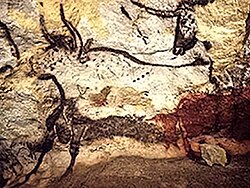
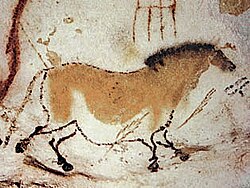 ลาสโกซ์, ม้า
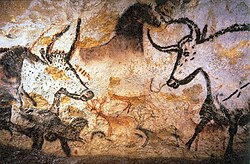 ลาสโกซ์ กระทิงและม้า
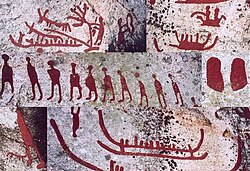 ภาพสลักหินจากสวีเดนยุคสำริดนอร์ดิก (ลงสี)
ประวัติศาสตร์ของการวาดภาพย้อนกลับไปถึงสิ่งประดิษฐ์จากศิลปินยุคก่อนประวัติศาสตร์ และครอบคลุมทุกวัฒนธรรม ภาพวาดที่เก่าแก่ที่สุดเท่าที่ทราบคือที่ถ้ำโชเวต์ (Grotte Chauvet)ในประเทศฝรั่งเศส ซึ่งนักประวัติศาสตร์บางคนอ้างว่ามีอายุประมาณ 32,000 ปี ภาพเหล่านั้นถูกแกะสลักและระบายสีโดยใช้ดินแดงและสีดำ และมักแสดงภาพม้า แรด สิงโต ควาย แมมมอธ หรือมนุษย์กำลังล่าสัตว์
ภาพเขียนในถ้ำยุคก่อนประวัติศาสตร์ของยุโรปมีธีมร่วมกันกับภาพเขียนยุคก่อนประวัติศาสตร์อื่นๆ ที่พบทั่วโลก ซึ่งบ่งบอกถึงจุดประสงค์ที่เป็นสากลและความคล้ายคลึงกันของแรงบันดาลใจที่อาจเป็นแรงผลักดันให้ศิลปินสร้างสรรค์ภาพเหล่านั้น มีการคาดเดาต่างๆ นานาเกี่ยวกับความหมายของภาพเขียนเหล่านี้สำหรับศิลปินผู้สร้าง มนุษย์ยุคก่อนประวัติศาสตร์อาจวาดภาพสัตว์เพื่อ "จับ" จิตวิญญาณของพวกมันเพื่อที่จะล่าได้ง่ายขึ้น หรือภาพเขียนอาจแสดงถึง วิสัยทัศน์ แบบอนิมิสติกและการเคารพธรรมชาติ โดยรอบ หรืออาจเป็นผลมาจากความต้องการพื้นฐานในการแสดงออกที่ติดตัวมาแต่กำเนิดของมนุษย์ หรืออาจเป็นการบันทึกประสบการณ์ชีวิตของศิลปินและเรื่องราวที่เกี่ยวข้องจากสมาชิกในกลุ่มของพวกเขา
กรีซและโรม
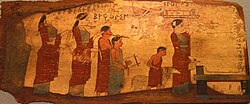 ภาพเขียน บนแผ่นไม้พิตซาหนึ่งในภาพเขียนบนแผ่นไม้ไม่กี่ชิ้นที่ยังคงหลงเหลืออยู่จากยุคกรีกโบราณประมาณ 540–530 ปีก่อนคริสตกาล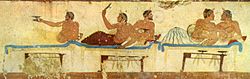
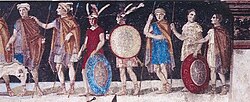 ภาพจิตรกรรมฝาผนังรูปทหารจากโบสถ์อากิออส อะทานาซิออส เมืองเทสซาโลนิกิมาซิโดเนียโบราณศตวรรษที่ 4 ก่อนคริสต์ศักราช
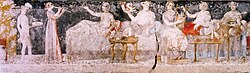 รายละเอียดภาพจิตรกรรมฝาผนังงานเลี้ยงจากสุสานของนักบุญอาทานาซิออส เมืองเทสซาโลนิกิประเทศกรีซ ศตวรรษที่ 4 ก่อนคริสต์ศักราช
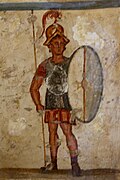 ภาพจิตรกรรมฝาผนัง depicting ทหาร มาซิโดเนียโบราณ ( thorakitai ) สวมเกราะโซ่และถือ โล่ thureosศตวรรษที่ 3 ก่อนคริสต์ศักราช
 ภาพวาดโรมันแสดงภาพเฮอร์คิวลีสและเทเลฟัส
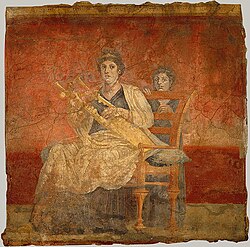 ศิลปะโรมัน ภาพจิตรกรรมฝาผนัง วิลลา บอสโกเรอาเลประมาณ ค.ศ. 40 ปีก่อนคริสตกาล
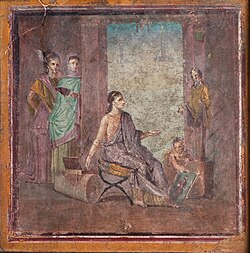 ศิลปะโรมัน เมืองปอมเปอี
 ศิลปะโรมัน เมืองปอมเปอี
 ภาพเขียนเฟรสโก depictingฉาก งานเลี้ยง เมือง เฮอร์คิวเลเนียมประเทศอิตาลี ประมาณ 50 ปีก่อนคริสตกาล
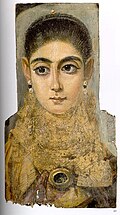 ศิลปะโรมันภาพเหมือนมัมมี่ฟาюмจากอียิปต์สมัยโรมันประมาณ ค.ศ. 120–130
 งานศิลปะโรมันจากราชวงศ์เวทติเมืองปอมเปอี ศตวรรษที่ 1 หลังคริสต์ศักราช
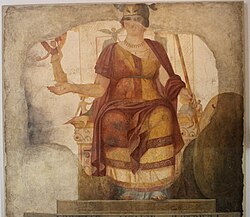 ภาพจิตรกรรมฝาผนังโรมัน depicting เทพีวีนัส ประทับนั่ง หรือที่รู้จักกันในชื่อ "Dea Barberini" ศตวรรษที่ 4 หลังคริสต์ศักราช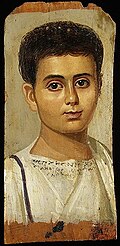

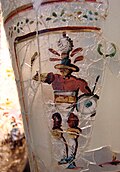 กระจกโรมันที่มีรูปนักรบกลาดิเอเตอร์ วาด ไว้ พบที่เบแกรมอัฟกานิสถาน(ครั้งหนึ่งเคยเป็นส่วนหนึ่งของอาณาจักรกรีก-แบคเทรียต่อมาอยู่ภายใต้จักรวรรดิคูชาน ) ค.ศ. 52–125 [ 11 ]
 ภาพจิตรกรรมฝาผนัง จากธรรมศาลาดูรา ยูโรปอส ในซีเรียสมัยโรมันแสดง ภาพ ดาวิดได้รับการเจิมจากซามูเอล คริสต์ศตวรรษที่ 3
อารยธรรมยุคสำริดในทะเลอีเจียน
จิตรกรรมมิโนอันเป็นศิลปะที่ผลิตโดยอารยธรรมมิโนอันแห่งทะเลอีเจียนในยุคสำริด ตั้งแต่ประมาณ 3000 ถึง 1100 ปีก่อนคริสตกาล แม้ว่าผลงานที่หลงเหลืออยู่มากมายและดีที่สุดจะมาจากประมาณ 2300 ถึง 1400 ปีก่อนคริสตกาลก็ตาม มันเป็นส่วนหนึ่งของกลุ่มศิลปะอีเจียน ที่กว้างกว่า และในยุคต่อมาก็มีอิทธิพลเหนือศิลปะไซคลา ดิกอยู่ช่วงหนึ่ง เนื่องจากไม้และสิ่งทอได้ผุพังไปแล้ว ตัวอย่างศิลปะมิโนอันที่ได้รับการอนุรักษ์ไว้ดีที่สุด (และให้ความรู้มากที่สุด) ที่เหลืออยู่คือเครื่องปั้นดินเผาสถาปัตยกรรมพระราชวัง (พร้อมภาพจิตรกรรมฝาผนังซึ่งรวมถึง "ภูมิทัศน์บริสุทธิ์ที่เก่าแก่ที่สุดในทุกที่") [ 12 ]ประติมากรรมขนาดเล็กในวัสดุต่างๆ เครื่องประดับ ภาชนะโลหะ และ ตราประทับ ที่แกะสลักอย่างประณีต
วัฒนธรรมมิโน อันได้รับอิทธิพลจากวัฒนธรรมเพื่อนบ้านอย่างอียิปต์โบราณและตะวันออกใกล้โบราณซึ่งได้สร้างสรรค์ศิลปะในเมืองที่ซับซ้อนมานานกว่า แต่ลักษณะของเมืองการค้าขนาดเล็กแต่มั่งคั่งของชาวมิโนอันนั้นแตกต่างออกไปมาก โดยมีหลักฐานเพียงเล็กน้อยเกี่ยวกับศาสนาที่มีวิหารขนาดใหญ่ กษัตริย์ หรือสงคราม และ "พลังแห่งจินตนาการและความสดใหม่แบบเด็กๆ ของวัฒนธรรมที่ยังเยาว์วัย" [ 13 ] แง่ มุมทั้งหมดเหล่านี้ของวัฒนธรรมมิโนอันยังคงเป็นปริศนาอยู่บ้างซินแคลร์ ฮูดอธิบายถึง "คุณสมบัติที่สำคัญของศิลปะมิโนอันที่ดีที่สุด คือความสามารถในการสร้างบรรยากาศของการเคลื่อนไหวและชีวิตชีวา แม้ว่าจะปฏิบัติตามแบบแผนที่เป็นทางการอย่างเคร่งครัดก็ตาม" [ 14 ]
แหล่งรวบรวมงานศิลปะมิโนอันที่ใหญ่ที่สุดและดีที่สุดอยู่ในพิพิธภัณฑ์โบราณคดีเฮราคลิออน ("AMH") ใกล้กับคนอสซอสบนชายฝั่งทางเหนือของเกาะครีตนักโบราณคดีใช้ ศิลปะมิโนอันและเศษซาก ทางวัฒนธรรม อื่นๆ โดยเฉพาะลำดับของรูปแบบเครื่องปั้นดินเผา เพื่อกำหนด สามช่วงหลักของวัฒนธรรมมิโนอัน (EM, MM, LM) และช่วงย่อยต่างๆ มากมาย การกำหนดช่วงเวลาให้กับสิ่งเหล่านี้ยังคงเป็นที่ถกเถียงกันมาก แม้ว่าจะอยู่ในช่วงที่แคบลงแล้วก็ตาม[ 15 ]
ความสัมพันธ์ของศิลปะมิโนอันกับศิลปะของวัฒนธรรมร่วมสมัยอื่นๆ และศิลปะกรีกโบราณ ในยุคหลัง ได้รับการถกเถียงกันอย่างมาก เห็นได้ชัดว่าศิลปะมิโนอัน มีอิทธิพลเหนือศิลปะไมซีเนียน และศิลปะไซคลาดิกในช่วงเวลาเดียวกัน[ 16 ]แม้หลังจากที่ชาวไมซีเนียนเข้ายึดครองเกาะครีตแล้ว แต่มีเพียงบางแง่มุมของประเพณีเท่านั้นที่รอดพ้นจากยุคมืดของกรีกหลังจากการล่มสลายของ กรีกไมซีเนียน[ 17 ]
ยุคโบราณคลาสสิก
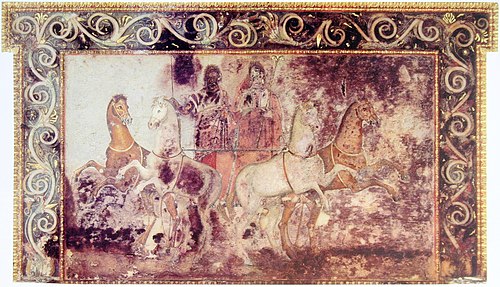
ประมาณ 1100 ปีก่อนคริสตกาล ชนเผ่าจากทางเหนือของกรีซได้เข้ายึดครองกรีซ และศิลปะของกรีซก็เปลี่ยนแปลงไปในทิศทางใหม่ วัฒนธรรมของกรีกโบราณนั้นโดดเด่นด้วยผลงานอันยอดเยี่ยมในด้านทัศนศิลป์ การวาดภาพบน เครื่องปั้นดินเผา และเครื่องเซรามิกของกรีกโบราณนั้น ให้ข้อมูลเชิงลึกเกี่ยวกับวิถีชีวิตของสังคมในกรีกโบราณได้เป็นอย่างดี ตัวอย่างงานจิตรกรรมบน แจกันแบบภาพดำและภาพแดงที่สวยงามมากมายยังคงมีให้เห็นอยู่ในปัจจุบัน
จิตรกรชาวกรีกที่มีชื่อเสียงซึ่งทำงานบนแผ่นไม้และได้รับการกล่าวถึงในตำรา ได้แก่อะเปลเลส , ซูซิสและพาร์ราซิอุสอย่างไรก็ตาม ยกเว้นแผ่นไม้ปิตซาแล้ว ไม่มีตัวอย่างภาพวาดบนแผ่นไม้ของกรีกโบราณหลงเหลืออยู่ มีเพียงคำบรรยายเป็นลายลักษณ์อักษรจากคนร่วมสมัยหรือชาวโรมันในยุคหลังเท่านั้น ซูซิสมีชีวิตอยู่ในศตวรรษที่ 5 ก่อนคริสต์ศักราช และกล่าวกันว่าเป็นคนแรกที่ใช้เทคนิคสฟูมาโตตามคำกล่าวของพลินีผู้เฒ่าความสมจริงของภาพวาดของเขานั้นมากเสียจนนกพยายามจะกินองุ่นที่วาดไว้ อะเปลเลสได้รับการยกย่องว่าเป็นจิตรกรที่ยิ่งใหญ่ที่สุดในสมัยโบราณและมีชื่อเสียงในด้านเทคนิคการวาดภาพที่สมบูรณ์แบบ สีสันสดใส และการปั้นแต่ง รูปทรง
ศิลปะโรมันได้รับอิทธิพลจากกรีก และอาจถือได้ว่าเป็นลูกหลานของจิตรกรรมกรีกโบราณ อย่างไรก็ตาม จิตรกรรมโรมันก็มีลักษณะเฉพาะที่สำคัญหลายประการ จิตรกรรมโรมันที่ยังหลงเหลืออยู่ ได้แก่ ภาพเขียนฝาผนังและเฟรสโกซึ่งส่วนใหญ่มาจากวิลลาในแคมปาเนียทางตอนใต้ของอิตาลี ณ สถานที่ต่างๆ เช่นปอมเปอีและเฮอร์คิวเลเนียมจิตรกรรมเหล่านี้สามารถจัดกลุ่มได้เป็น 4 "รูปแบบ" หรือช่วงเวลาหลัก[ 18 ]และอาจมีตัวอย่างแรกๆ ของภาพลวงตา มุมมองเทียม และภูมิทัศน์บริสุทธิ์[ 19 ]
ภาพเหมือนที่วาดด้วยสีซึ่งหลงเหลืออยู่จากโลกโบราณเกือบทั้งหมดคือ ภาพเหมือนครึ่งตัวจำนวนมากที่อยู่บนโลงศพ ซึ่งพบในสุสานอัล-ฟาญุม ของอียิปต์ แม้ว่าภาพเหล่านี้จะไม่ใช่ภาพที่ดีที่สุดในยุคนั้นหรือมีคุณภาพสูงสุด แต่ก็มีความน่าประทับใจในตัวเอง และให้แนวคิดเกี่ยวกับคุณภาพของงานศิลปะโบราณที่ดีที่สุด นอกจากนี้ยังมีภาพวาดขนาด เล็กจำนวนน้อยมาก จากหนังสือภาพประกอบในยุคปลายสมัยโบราณที่ยังคงหลงเหลืออยู่ และมีสำเนาของหนังสือเหล่านั้นจำนวนมากจากยุคกลางตอนต้น
ยุคกลาง
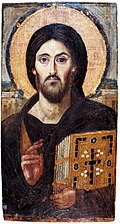 ภาพไอคอนไบแซนไทน์ศตวรรษที่ 6
 ไบแซนไทน์ ศตวรรษที่ 6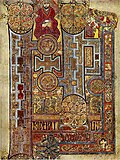
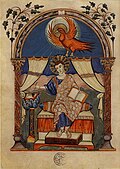
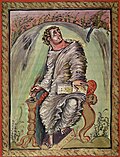 นักบุญ มาร์คแห่งราชวงศ์คาโรลิง
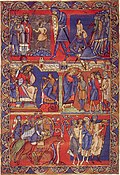 ภาพจาก หนังสือ"The Morgan Leaf"จากคัมภีร์ไบเบิลฉบับ วินเชสเตอร์ ค.ศ. 1160–75 เรื่องราวจากชีวิตของดาวิด
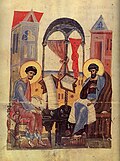 พระวรสารยา โรสลาฟล์ประมาณปี ค.ศ. 1220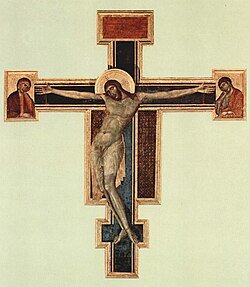
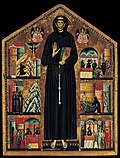 โบนาเวนตูรา เบอร์ลินกีเอรี นักบุญฟรานซิสแห่งอัสซีซี 1235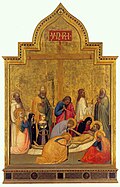
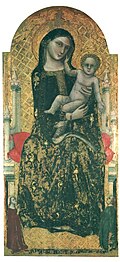

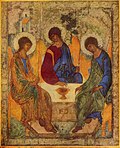

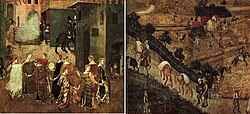

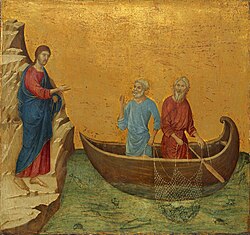

การเกิดขึ้นของศาสนาคริสต์ได้มอบจิตวิญญาณและจุดมุ่งหมายที่แตกต่างให้กับรูปแบบการวาดภาพ ศิลปะ ไบแซนไทน์เมื่อรูปแบบของมันได้รับการวางรากฐานในศตวรรษที่ 6 แล้ว ก็ให้ความสำคัญอย่างมากกับการรักษาภาพสัญลักษณ์และรูปแบบดั้งเดิม และค่อยๆ พัฒนาไปตลอดพันปีของจักรวรรดิไบแซนไทน์และประเพณี การวาด ภาพไอคอน ของกรีกและรัสเซีย ออร์โธดอกซ์ การวาดภาพแบบไบแซนไทน์ให้ความรู้สึกศักดิ์สิทธิ์ และไอคอนต่างๆ ถูกมองว่าเป็นตัวแทนของการเปิดเผยจากพระเจ้า มีภาพเฟรสโก จำนวนมาก แต่มีจำนวนน้อยกว่าภาพโมเสก ที่หลงเหลืออยู่ ศิลปะไบแซนไทน์ถูกเปรียบเทียบกับศิลปะนามธรรมร่วมสมัย ในแง่ของ ความเรียบแบนและการวาดภาพบุคคลและภูมิทัศน์ที่มีรูปแบบเฉพาะตัวสูง บางช่วงของศิลปะไบแซนไทน์ โดยเฉพาะอย่างยิ่งศิลปะที่เรียกว่าศิลปะมาซิโดเนียในช่วงประมาณศตวรรษที่ 10 มีความยืดหยุ่นมากกว่าในวิธีการ ภาพเฟรสโกของยุคฟื้นฟูศิลปวิทยาพาเลโอโลเจียนในช่วงต้นศตวรรษที่ 14 ยังคงหลงเหลืออยู่ในโบสถ์โชราในอิสตันบูล

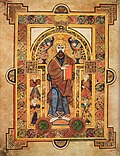
ในยุโรปคาทอลิกยุคหลังสมัยโบราณ รูปแบบศิลปะที่โดดเด่นรูปแบบแรกที่ปรากฏขึ้นซึ่งรวมถึงการวาดภาพคือศิลปะเกาะอังกฤษ ซึ่งตัวอย่างที่หลงเหลืออยู่มีเพียงภาพขนาดเล็กในต้นฉบับประดับประดาเช่นหนังสือแห่งเคลล์ส [ 20 ] สิ่งเหล่านี้มีชื่อเสียงที่สุดจากการตกแต่งแบบนามธรรม แม้ว่าจะมีการวาดภาพบุคคล และบางครั้งก็มีฉากต่างๆ ด้วย โดยเฉพาะอย่างยิ่งใน ภาพเหมือนของ นักประกาศข่าวประเสริฐศิลปะ ของราชวงศ์ คาโรลิงและ ออตโตเนียนก็ยังคงหลงเหลืออยู่ส่วนใหญ่ในต้นฉบับ แม้ว่าจะมีภาพเขียนฝาผนังบางส่วนหลงเหลืออยู่ และมีเอกสารบันทึกไว้มากขึ้น ศิลปะในยุคนี้ผสมผสานอิทธิพลของเกาะอังกฤษและ "คนป่าเถื่อน" เข้ากับอิทธิพลของไบแซนไทน์อย่างแข็งแกร่ง และความปรารถนาที่จะฟื้นฟูความยิ่งใหญ่และความสง่างามแบบคลาสสิก
ผนังของโบสถ์แบบโรมาเนสก์และโกธิก ได้รับการตกแต่งด้วย ภาพเขียนเฟรสโกและประติมากรรม และภาพเขียนฝาผนัง ที่หลงเหลืออยู่เพียงไม่กี่ชิ้นนั้น มีความทรงพลังอย่างมาก โดยผสมผสานพลังแห่งการตกแต่งของศิลปะเกาะอังกฤษเข้ากับความยิ่งใหญ่แบบใหม่ในการนำเสนอรูปทรงต่างๆ ภาพวาดขนาดเล็กในต้นฉบับเขียนด้วยลายมือที่ประดับประดาด้วยภาพนั้นหลงเหลืออยู่มากมายจากยุคนั้น แสดงให้เห็นถึงลักษณะเดียวกัน ซึ่งยังคงต่อเนื่องมาจนถึงยุคโกธิก
การวาดภาพบนแผ่นไม้เริ่มแพร่หลายมากขึ้นใน ช่วง ยุคโรมาเนสก์ภายใต้อิทธิพลอย่างมากของภาพไอคอนไบแซนไทน์ ในช่วงกลางศตวรรษที่ 13 ศิลปะยุคกลางและการวาดภาพแบบโกธิกเริ่มมีความสมจริงมากขึ้น โดยเริ่มมีความสนใจในการแสดงภาพปริมาตรและทัศนียภาพในอิตาลี โดย เริ่มจาก ชิมาบูเอและศิษย์ของเขาจิออตโต นับ จากจิออตโตเป็นต้นมา การจัดองค์ประกอบภาพโดยจิตรกรชั้นนำก็มีความอิสระและสร้างสรรค์มากขึ้น พวกเขาได้รับการยกย่องว่าเป็นปรมาจารย์ด้านการวาดภาพยุคกลางที่ยิ่งใหญ่สองคนในวัฒนธรรมตะวันตก ชิมาบูเอ ภายใต้ขนบศิลปะไบแซนไทน์ ใช้แนวทางที่สมจริงและดราม่ามากขึ้นในงานศิลปะของเขา ส่วนศิษย์ของเขา จิออตโต ได้นำนวัตกรรมเหล่านี้ไปสู่ระดับที่สูงขึ้น ซึ่งวางรากฐานให้กับขนบการวาดภาพตะวันตก ศิลปินทั้งสองเป็นผู้บุกเบิกในการก้าวไปสู่ความเป็นธรรมชาติ
โบสถ์ต่างๆ ถูกสร้างขึ้นโดยมีหน้าต่างมากขึ้นเรื่อยๆ และการใช้กระจกสีสันสดใสกลายเป็นส่วนสำคัญของการตกแต่ง ตัวอย่างที่มีชื่อเสียงที่สุดอย่างหนึ่งพบได้ในมหาวิหารนอเทรอดามแห่งปารีสในศตวรรษที่ 14 สังคมตะวันตกมีความมั่งคั่งและมีการศึกษามากขึ้น และจิตรกรก็พบผู้อุปถัมภ์ใหม่ๆ ในหมู่ขุนนางและแม้แต่ชนชั้นกลาง ต้นฉบับที่ประดับประดาด้วยภาพวาดมีลักษณะใหม่ และสตรีในราชสำนักที่รูปร่างเพรียวบางและแต่งกายทันสมัยก็ปรากฏอยู่ในภาพทิวทัศน์ สไตล์นี้ในไม่ช้าก็เป็นที่รู้จักในชื่อ สไตล์ โกธิกสากลและมีอิทธิพลอย่างมากตั้งแต่ปี 1375 ถึง 1425 โดย ภาพวาดบนแผงสี เทมเพราและแท่นบูชาได้รับความสำคัญมากขึ้น
ยุคสมัยใหม่ตอนต้น
ยุคเรเนสซองส์และยุคแมนเนอริสม์
 แยน ฟาน ไอค์ , 1434
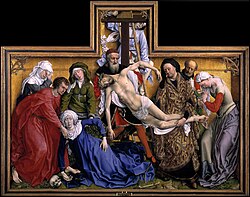 โรเจียร์ ฟาน เดอร์ ไวเดน , ค. 1435
 ฮิวโก้ ฟาน เดอร์ โกส์ประมาณปี ค.ศ. 1470
 ดีริก บูทส์ , 1464–1467
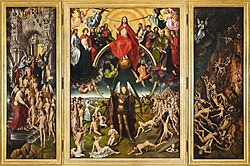 ฮันส์ เมมลิงประมาณ ค.ศ. 1466–1473
 เปตรุส คริสตัส ประมาณปี ค.ศ. 1470
 ฮีโรนีมัส บอชประมาณ ค.ศ. 1480–1505
 เปาโล อูเชลโลประมาณปี ค.ศ. 1470
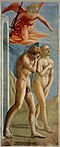 มาซัคชิโอ , 1426–1427
 ฟิลิปโป ลิปปี , 1440–1445
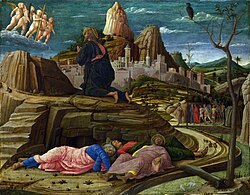 อันเดรีย มันเตญญาประมาณ ค.ศ. 1458–1460
 ปิเอโร เดลลา ฟรานเชสกา , 1463–1465
 ซานโดร บอตติเชลลี , 1483–1485
 เลโอนาร์โด ดา วินชี , 1503–1506
 ราฟาเอล , 1505–1506
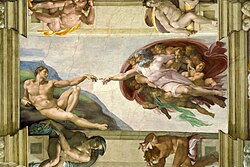 มิเกลันเจโลประมาณปี ค.ศ. 1511
 ลูคัส ครานัค ผู้อาวุโส , ค. 1530
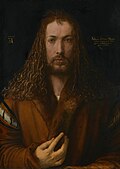 อัลเบรชต์ ดือเรอร์ , ค.ศ. 1500
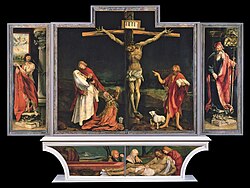 มัทธีอัส กรูเนวาลด์ , 1512–1516
 โจวันนี เบลลินีประมาณปี 1480
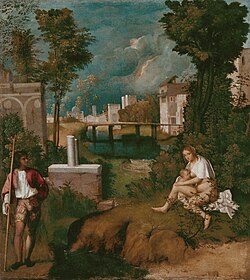 จอร์โจเนประมาณปี ค.ศ. 1505
 ปอนตอร์โม , 1526–1528
 บรอนซิโน , 1540–1545
 ปีเตอร์ บรูเกล , 1565
 ฮันส์ โฮลไบน์ เดอะ ยังเกอร์ , 1527
 จาโคโป ทินโตเรตโต , 1582
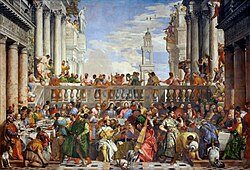 เปาโล เวโรเนเซ , 1562–1563
 โยอาคิม วเทวาเอล , 1595
 เอล เกรโก , 1596–1600

ยุคเรเนสซองส์ (ภาษาฝรั่งเศสแปลว่า 'การเกิดใหม่') เป็นขบวนการทางวัฒนธรรมที่กินเวลาราวศตวรรษที่ 14 ถึงกลางศตวรรษที่ 17 โดยมีแรงขับเคลื่อนจากมนุษยนิยมในยุคเรเนสซองส์และการศึกษาแหล่งข้อมูลคลาสสิก ในด้านจิตรกรรม ในช่วงทศวรรษ 1420 และ 1430 จิตรกรชั้นนำในอิตาลีและเนเธอร์แลนด์ได้พัฒนารูปแบบการวาดภาพใหม่ ๆ ซึ่งทำให้ภาพวาดดูสมจริงมากขึ้นกว่าผลงานของจิตรกรที่มีชื่อเสียงอยู่แล้ว ซึ่งรูปแบบของจิตรกรเหล่านี้เรียกว่า ศิลปะโกธิคสากลหรือในบางกรณีเรียกว่า ศิลปะก่อนเรเนสซองส์ (ส่วนใหญ่ในอิตาลี) ช่วงเวลานี้ซึ่งกินเวลาจนถึงประมาณปี 1495 เป็นที่รู้จักกันในชื่อ ยุคเรเนสซอง ส์ตอนต้น
ในพื้นที่ฟลานเดอร์สของเนเธอร์แลนด์ หลังจากพัฒนาการประดับประดาต้นฉบับโดยเฉพาะอย่างยิ่งโดยพี่น้องลิมบูร์กซึ่งเสียชีวิตในปี 1416 ศิลปินต่างหลงใหลในสิ่งที่จับต้องได้ในโลกที่มองเห็นได้ และเริ่มวาดภาพวัตถุในลักษณะที่เป็นธรรมชาติอย่างยิ่ง[ 21 ]การนำสีน้ำมัน มาใช้ ซึ่งการใช้ครั้งแรกบนภาพเขียนบนแผ่นไม้ได้รับการกล่าวอ้างตามประเพณี แต่ผิดพลาด ว่าเป็นผลงานของแยน ฟาน ไอค์ทำให้เกิดความสมจริง แบบใหม่ ในการวาดภาพธรรมชาติ สื่อสีน้ำมันมีอยู่แล้วในงานของเมลคิออร์ โบรเดอร์แลม (ซึ่งเสียชีวิตในปี 1409) แต่โรเบิร์ต แคมปิน (ก่อนหน้านี้รู้จักกันในชื่อปรมาจารย์แห่งเฟลมัลล์ ) และฟาน ไอค์ ได้นำการใช้สีน้ำมันไปสู่ระดับใหม่และนำมาใช้เพื่อแสดงถึงความเป็นธรรมชาติที่พวกเขามุ่งหวัง ด้วยสื่อใหม่นี้ จิตรกรในยุคนี้จึงสามารถสร้างสีสันที่เข้มข้นขึ้นด้วยโทนสีที่ลึกและเข้มข้นยิ่งขึ้น ภาพลวงตาของแสงเรืองรองที่มีผิวสัมผัสคล้ายเครื่องเคลือบดินเผาเป็นลักษณะเฉพาะของภาพวาดเนเธอร์แลนด์ยุคต้นและเป็นความแตกต่างที่สำคัญกับพื้นผิวด้านของ สี เทมเพราที่ใช้ในอิตาลี[ 21 ]

แตกต่างจากชาวอิตาลีซึ่งผลงานได้รับอิทธิพลอย่างมากจากศิลปะของโรมันโบราณ ชาวเหนือยังคงรักษาร่องรอยทางสไตล์ของประติมากรรมและต้นฉบับประดับประดาในยุคกลางไว้ (โดยเฉพาะอย่างยิ่งความเป็นธรรมชาติ) จิตรกรชาวเนเธอร์แลนด์คนสำคัญอีกคนในยุคนี้คือโรเจียร์ ฟาน เดอร์ เวย์เดนศิษย์ของแคมปิน ซึ่งผลงานของเขาเน้นอารมณ์และความดราม่าของมนุษย์ ดังเช่นภาพการลงจากไม้กางเขนซึ่งเป็นหนึ่งในผลงานที่มีชื่อเสียงที่สุดในศตวรรษที่ 15 และเป็นภาพวาดการตรึงกางเขนของพระคริสต์ที่มีอิทธิพลมากที่สุดของชาวเนเธอร์แลนด์ ศิลปินคนสำคัญอื่นๆ ได้แก่ฮูโก ฟาน เดอร์ โกส์ (ซึ่งผลงานของเขามีอิทธิพลอย่างมากในอิตาลี) เดียริก บูทส์ (ซึ่งเป็นหนึ่งในจิตรกรทางเหนือคนแรกๆ ที่แสดงให้เห็นถึงการใช้จุดรวมสายตาจุดเดียว) [ 21 ]เปตรุส คริสตัสฮั น ส์ เมมลิงและเจอราร์ด ดาวิดโดยรวมแล้ว ความก้าวหน้าในการวาดภาพในยุโรปเหนือของเทือกเขาแอลป์เรียกว่า ยุค ฟื้นฟูศิลปวิทยา การทางเหนือ
ในงานจิตรกรรมยุคเรเนสซองส์ของอิตาลีศิลปะในสมัยโบราณคลาสสิกได้เป็นแรงบันดาลใจให้เกิดรูปแบบการวาดภาพที่เน้นความสมบูรณ์แบบมาซัคชิโอได้รับการยกย่องว่าเป็นผู้สร้างความก้าวหน้าในด้านทัศนียภาพเชิงเส้น การแสดงปริมาตรในภาพบุคคล และการถ่ายทอดอารมณ์บนใบหน้าของตัวละครในช่วงทศวรรษ 1420 ต่อมา ศิลปินอย่างเช่นเปาโล อูเชลโล , ฟราอังเจ ลิโก , ปิ เอโร เดล ลา ฟรานเชสกา , อันเดรีย มันเตญญา , ฟิลิปโป ลิปปี และซานโดร บอตติเชลลีใน ยุค เรเนสซองส์ตอนต้นซึ่งกินเวลาประมาณปี 1495 และต่อมาเลโอนาร์โด ดา วินชี , มิเกลันเจโล บัวนาร์โรติและราฟาเอลในช่วงเรเนสซองส์ตอนปลายตั้งแต่ประมาณปี 1495 ถึง 1520 ได้ยกระดับการวาดภาพไปอีกขั้นด้วยการใช้ทัศนียภาพการศึกษาเกี่ยวกับกายวิภาคและสัดส่วนของมนุษย์และการพัฒนาเทคนิคการวาดและการระบายสีที่ประณีตอย่างที่ไม่เคยมีมาก่อน รูปแบบศิลปะเรเนสซองส์ตอนปลายที่ดูเป็นธรรมชาติมากขึ้นจึงเกิดขึ้นในเวนิสจิตรกรในสำนักเวนิสเช่นโจวันนี เบลลินี , จอร์โจเน , ติเชียนและเวโรเนเซให้ความสำคัญกับความงดงามของสีสันและความเป็นเอกภาพขององค์ประกอบต่างๆ มากกว่าความแม่นยำในการวาดภาพ ซึ่งสามารถทำได้ด้วยวิธีการวาดภาพที่เป็นธรรมชาติมากกว่า
จิตรกรชาวเฟลมิช ดัตช์ และเยอรมันในยุคเรเนสซองส์ตอนเหนือเช่นอัลเบรชต์ ดือเรอร์ลูคัส ครานาคมัทธิอัส กรุนเนอวัลด์และฮันส์ โฮลไบน์ เดอะ ยังเกอร์มีแนวทางที่แตกต่างจากจิตรกรชาวอิตาลี โดยเน้นความสมจริงและไม่เน้นอุดมคติมากนัก จิตรกรทางเหนือบางคน เริ่มตั้งแต่ดือเรอร์ในช่วงทศวรรษ 1490 ได้เดินทางไปอิตาลีเพื่อชมผลงานของยุคเรเนสซองส์ตอนเหนือของอิตาลี และได้นำเอาลักษณะของศิลปะอิตาลีมาผสมผสานในผลงานของตนเองในระดับที่แตกต่างกันไป หนึ่งชั่วอายุคนต่อมา การวาดภาพแนวชีวิตประจำวันในฐานะหัวข้อหลักของผลงานขนาดใหญ่เริ่มต้นขึ้นโดยปีเตอร์ แอร์ทเซนและปีเตอร์ บรูเกลจิตรกรยุคเรเนสซองส์ตอนเหนือรุ่นต่อมาที่เดินทางไปโรมและรับเอาแนวทางที่เน้นอุดมคติของยุคเรเนสซองส์อิตาลีมาใช้ กลายเป็นที่รู้จักในชื่อกลุ่มโรมัน นิส ต์
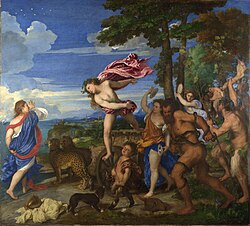
จิตรกรรมยุคเรเนสซองส์สะท้อนให้เห็น ถึงการปฏิวัติทางความคิดและวิทยาศาสตร์ ( ดาราศาสตร์ภูมิศาสตร์) ที่เกิดขึ้นในยุคนั้นการปฏิรูปศาสนาและการประดิษฐ์แท่นพิมพ์การพิมพ์ภาพมีความสำคัญมากขึ้นเรื่อยๆ และเป็นที่นิยมในหมู่นักวาดภาพหลายคน ดือเรอร์ ซึ่งได้รับการยกย่องว่าเป็นหนึ่งในช่างพิมพ์ภาพที่ยิ่งใหญ่ที่สุด กล่าวว่าจิตรกรไม่ใช่เพียงช่างฝีมือแต่เป็นนักคิดด้วยเช่นกัน ด้วยการพัฒนาการวาดภาพบนขาตั้งในยุคเรเนสซองส์ จิตรกรรมจึงได้รับความเป็นอิสระจากสถาปัตยกรรม การวาดภาพบนขาตั้ง—ภาพที่เคลื่อนย้ายได้ซึ่งสามารถแขวนบนผนังได้ง่าย—กลายเป็นทางเลือกยอดนิยมแทนการวาดภาพที่ติดอยู่กับเฟอร์นิเจอร์ ผนัง หรือโครงสร้างอื่นๆ หลังจากหลายศตวรรษที่ภาพทางศาสนาครองวงการ จิตรกรรมตะวันตกก็ค่อยๆ กลับคืนสู่หัวข้อทางโลก ศิลปินได้รวมภาพของโลกที่อยู่รอบตัวพวกเขา หรือผลผลิตจากจินตนาการของตนเองไว้ในภาพวาด ผู้ที่มีฐานะสามารถจ่ายได้ก็สามารถเป็นผู้อุปถัมภ์และสั่งวาดภาพเหมือนของตนเองหรือครอบครัวได้
The High Renaissance in Italy gave rise to a stylized art known as Mannerism after 1520, although some painters, such as Titian and Paolo Veronese, continued painting in a High Renaissance style late into the century. In place of the balanced compositions and rational approach to perspective that characterized art at the dawn of the 16th century, the Mannerists sought instability, artifice, and doubt. The calm Virgins of Raphael and serene expressions of Leonardo's subjects are replaced by the troubled expressions of Pontormo and the emotional intensity of El Greco. Restless and unstable compositions, often extreme or disjunctive effects of perspective, and stylized poses are characteristic of Italian Mannerists such as Tintoretto, Pontormo, and Bronzino, and appeared later in the work of Northern Mannerists such as Hendrick Goltzius, Bartholomeus Spranger, and Joachim Wtewael.
Baroque and Rococo
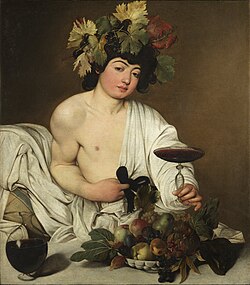 Caravaggio, 1595–1597
 Artemisia Gentileschi, 1614–1620
 Peter Paul Rubens, 1632–1635
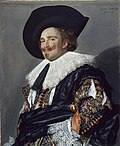 Frans Hals, 1624
 Judith Leyster, 1630
 Rembrandt van Rijn, 1642
 Pieter de Hooch, 1658
 Johannes Vermeer, c. 1660
 Jan Steen, c. 1665
 Jacob van Ruisdael, 1670
 Willem Claesz. Heda, 1631
 Diego Velázquez, 1656–1657
 Jusepe de Ribera, 1620–1624
 Nicolas Poussin, c. 1637–1638
 Georges de La Tour, 1640s
 Guido Reni, 1625
 Salvator Rosa, c. 1645
 Bartolomé Esteban Murillo, c. 1650–1655
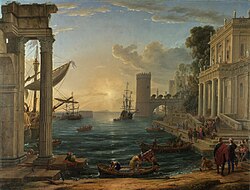 Claude Lorrain, 1648
 Anthony van Dyck, 1635–1636
 Canaletto, 1723
 Giovanni Battista Tiepolo, c. 1752–1753
 Antoine Watteau, c. 1720
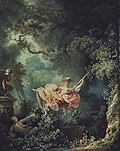 Jean-Honoré Fragonard, c. 1767–1768
 François Boucher, 1751
 Élisabeth-Louise Vigée-Le Brun, after 1782
 Maurice Quentin de La Tour, c. 1761
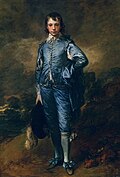 Thomas Gainsborough, c. 1770
 Joshua Reynolds, 1769
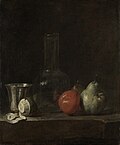 Jean-Baptiste-Siméon Chardin, c. 1728
 William Hogarth, c. 1757
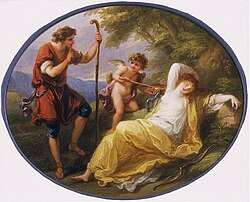 Angelica Kauffman, c. 1780
จิตรกรรมบาโรกมีความเกี่ยวข้องกับขบวนการทางวัฒนธรรมบาโรก ซึ่งเป็นขบวนการที่มักถูกระบุว่าเกี่ยวข้องกับระบอบสมบูรณาญาสิทธิราชย์และการปฏิรูปศาสนาคาทอลิกหรือการฟื้นฟูศาสนาคาทอลิก[ 22 ] [ 23 ]อย่างไรก็ตาม การมีอยู่ของจิตรกรรมบาโรกที่สำคัญในรัฐที่ไม่ใช่ระบอบสมบูรณาญาสิทธิราชย์และรัฐโปรเตสแตนต์ยังเน้นย้ำถึงความนิยมของรูปแบบนี้ เนื่องจากรูปแบบดังกล่าวแพร่กระจายไปทั่วยุโรปตะวันตก[ 24 ]
จิตรกรรมบาโรกมีลักษณะเด่นคือ ความดราม่าที่ยิ่งใหญ่ สีสันที่เข้มข้นและลึกซึ้ง และแสงเงาที่จัดจ้าน โดยมีจุดประสงค์เพื่อปลุกเร้าอารมณ์และความปรารถนา แทนที่จะเป็นความสงบและเหตุผลที่ได้รับการยกย่องในยุคเรเนสซองส์ จิตรกรบาโรกยุคแรกๆ ได้แก่ พี่น้องตระกูลคาราชีอันนิบาลและอากอสติโนในช่วงปลายศตวรรษที่ 16 และคาราวัจโจในช่วงทศวรรษสุดท้ายของศตวรรษเดียวกัน คาราวัจโจได้รับการยอมรับว่าเป็นหนึ่งในจิตรกรบาโรกที่ยิ่งใหญ่ที่สุดและเป็นทายาทของ จิตรกรรม มนุษยนิยมในยุคเรเนส ซองส์ตอนปลาย วิธีการวาดภาพบุคคล อย่างสมจริงของเขาซึ่งวาดจากชีวิตจริงและเน้นแสงอย่างดราม่าตัดกับฉากหลังสีเข้ม ทำให้คนร่วมสมัยตกตะลึงและเปิดบทใหม่ในประวัติศาสตร์ของจิตรกรรม บาโรกเป็นรูปแบบจิตรกรรมที่โดดเด่นเริ่มตั้งแต่ประมาณปี 1600 และต่อเนื่องไปตลอดศตวรรษที่ 17 ในบรรดาจิตรกรผู้ยิ่งใหญ่ที่สุดของยุคบาโรค ได้แก่รูเบนส์ , เวลาสเกซ , เรมแบรนด์ , ฟรานส์ ฮาลส์ , โยฮันเนส แวร์เมียร์ , เลอ แนง , จูเซเป เด ริเบรา , ปูแซง , ตู ร์ และโคลด ลอร์แร็งซึ่งเน้นการวาดภาพทิวทัศน์ ปูแซง โคลด และลอร์แร็ง ซึ่งทั้งหมดเป็นชาวฝรั่งเศส ได้นำเอาสไตล์บาโรคแบบ "คลาสสิก" มาใช้ โดยเน้นอารมณ์น้อยลง และให้ความสำคัญกับโครงร่างของตัวละครในภาพมากกว่าสีสัน จิตรกรเหล่านี้ส่วนใหญ่เดินทางไปอิตาลีเพื่อฝึกฝน และนำสไตล์บาโรคกลับไปยังบ้านเกิดของตน แม้ว่าในบางกรณีพวกเขาจะอยู่ในอิตาลีเป็นเวลานานในอาชีพการงาน (โคลดและปูแซง) ในอิตาลี สไตล์บาโรคเป็นตัวอย่างที่ชัดเจนของภาพวาดทางศาสนาและเทพนิยายในแบบแกรนด์แมนเนอร์โดยศิลปินเช่นตระกูลการ์รัชชี , กุยโด เรนีและลูกา จิออร์ดาโน ภาพจิตรกรรมฝาผนังบนเพดานโบสถ์ที่สร้างภาพลวงตาโดยPietro da Cortonaดูเหมือนจะเปิดออกสู่ท้องฟ้า

ศิลปะ บาโรกแบบที่เงียบสงบกว่ามากเกิดขึ้นในสาธารณรัฐดัตช์ซึ่งภาพเขียนบนผืนผ้าใบที่แสดงถึงชีวิตประจำวันได้รับความนิยมในหมู่นักสะสมชนชั้นกลาง และจิตรกรหลายคนกลายเป็นผู้เชี่ยวชาญด้านภาพชีวิตประจำวัน บางคนเชี่ยวชาญด้านทิวทัศน์ ทะเล หรือภาพนิ่ง เวอร์เมียร์ เจอราร์ด แตร์ บอร์ชและปีเตอร์ เดอ ฮูชนำความประณีตทางเทคนิคอย่างมากมาสู่การวาดภาพฉากในบ้าน เช่นเดียวกับวิลเลม คลาเอสซ์ เฮดา ที่นำความประณีตมาสู่ภาพนิ่ง ในทางตรงกันข้าม เรมแบรนด์เก่งกาจในการวาดภาพทุกประเภท และพัฒนา รูปแบบ การวาดภาพที่เป็น เอกลักษณ์เฉพาะตัว ซึ่งแสงเงาและพื้นหลังสีเข้มที่ได้รับอิทธิพลจากคาราวัจโจและกลุ่ม คาราวัจโจแห่ง อูเทรคต์นั้นสูญเสียคุณภาพที่ดูโอเวอร์ไป ศิลปะบาโรกของดัตช์มักถูกเรียกว่าศิลปะยุคทองของดัตช์
ในช่วงศตวรรษที่ 18 ศิลปะโรโกโกพัฒนาต่อยอดมาจากศิลปะบาโรคในรูปแบบที่เบาลง มักมีความสนุกสนานและเร้าอารมณ์ โดยใช้สีพาสเทลอ่อนๆ ศิลปะโรโกโกพัฒนาขึ้นครั้งแรกในศิลปะการตกแต่งและการออกแบบภายในในฝรั่งเศส การขึ้นครองราชย์ของ พระเจ้าหลุยส์ที่ 15นำมาซึ่งการเปลี่ยนแปลงในศิลปินในราชสำนักและกระแสศิลปะโดยทั่วไป ทศวรรษที่ 1730 เป็นช่วงที่ศิลปะโรโกโกพัฒนาถึงจุดสูงสุดในฝรั่งเศส โดยมีผลงานของอองตวน วัตโตและฟรองซัวส์ บูเชร์ เป็น ตัวอย่าง ศิลปะโรโกโกยังคงรักษารสนิยมของศิลปะบาโรคในด้านรูปแบบที่ซับซ้อนและลวดลายที่ประณีต แต่ในขณะนั้น ศิลปะโรโกโกได้เริ่มผสมผสานลักษณะที่หลากหลาย รวมถึงรสนิยมในการออกแบบแบบตะวันออกและองค์ประกอบที่ไม่สมมาตร
รูปแบบศิลปะโรโกโกแพร่หลายไปพร้อมกับศิลปินชาวฝรั่งเศสและสิ่งพิมพ์แกะสลัก ได้รับการยอมรับอย่างรวดเร็วในดินแดนคาทอลิกของเยอรมนีโบฮีเมียและออสเตรีย ซึ่งได้ผสมผสานเข้ากับประเพณีศิลปะบาโรกของเยอรมันที่มีชีวิตชีวา ศิลปะโรโกโกแบบเยอรมันถูกนำไปใช้อย่างกระตือรือร้นในโบสถ์และพระราชวัง โดยเฉพาะในภาคใต้ ในขณะที่ศิลปะโรโกโกแบบเฟรเดอริเชียนพัฒนาขึ้นในราชอาณาจักรปรัสเซีย
จิตรกรชาวฝรั่งเศสชื่อดังอย่างWatteau , BoucherและFragonardเป็นตัวแทนของสไตล์นี้ เช่นเดียวกับGiovanni Battista TiepoloและJean-Baptiste-Siméon Chardinซึ่งได้รับการยกย่องจากบางคนว่าเป็นจิตรกรชาวฝรั่งเศสที่ดีที่สุดในศตวรรษที่ 18 – ยุคต่อต้านโรโกโกการวาดภาพเหมือนเป็นองค์ประกอบสำคัญของการวาดภาพในทุกประเทศ โดยเฉพาะอย่างยิ่งในอังกฤษ ซึ่งผู้นำคือWilliam Hogarthในสไตล์เรียลลิสม์ที่ตรงไปตรงมา และFrancis Hayman , Angelica Kauffman (ซึ่งเป็นชาวสวิส), Thomas GainsboroughและJoshua Reynoldsในสไตล์ที่ดูดีขึ้นซึ่งได้รับอิทธิพลจากAnthony van Dyckในฝรั่งเศสในช่วงยุคโรโกโกJean-Baptiste Greuze (จิตรกรคนโปรดของDenis Diderot ) [ 25 ]โดดเด่นในด้านการวาดภาพเหมือนและภาพประวัติศาสตร์และMaurice Quentin de La TourและÉlisabeth Vigée-Lebrun เป็น จิตรกรวาดภาพเหมือนที่มีความสามารถสูงLa Tour เชี่ยวชาญด้าน การวาดภาพ สีพาสเทลซึ่งกลายเป็นสื่อที่ได้รับความนิยมในช่วงเวลานี้
วิลเลียม โฮการ์ธช่วยพัฒนาพื้นฐานทางทฤษฎีสำหรับความงามแบบโรโกโก แม้ว่าจะไม่ได้อ้างอิงถึงขบวนการนี้โดยเจตนา แต่เขาได้โต้แย้งในการวิเคราะห์ความงาม (1753) ว่าเส้นโค้งและเส้นโค้งรูปตัว S ที่โดดเด่นในศิลปะโรโกโกเป็นพื้นฐานของความสง่างามและความงามในศิลปะหรือธรรมชาติ (ซึ่งแตกต่างจากเส้นตรงหรือวงกลมในศิลปะคลาสสิก ) จุดเริ่มต้นของการสิ้นสุดของศิลปะโรโกโกเกิดขึ้นในช่วงต้นทศวรรษ 1760 เมื่อบุคคลอย่างวอลแตร์และฌาคส์-ฟรองซัวส์ บลองเดลเริ่มแสดงความคิดเห็นวิพากษ์วิจารณ์ถึงความผิวเผินและความเสื่อมโทรมของศิลปะ บลองเดลประณาม "การผสมผสานที่ไร้สาระของเปลือกหอย มังกร ต้นกก ต้นปาล์ม และพืช" ในการตกแต่งภายในร่วมสมัย[ 26 ]
ใน ปีค.ศ. 1785 ศิลปะแบบโรโกโกได้เสื่อมความนิยมลงในฝรั่งเศส และถูกแทนที่ด้วยความมีระเบียบและความจริงจังของ ศิลปิน นีโอคลาสสิกเช่นฌาคส์-หลุยส์ ดาวิดซึ่งภาพเขียนประวัติศาสตร์อันยิ่งใหญ่ของเขาที่ depicting ทั้งเหตุการณ์ทางประวัติศาสตร์และเหตุการณ์ร่วมสมัย สะท้อนถึงอุดมการณ์ของการปฏิวัติฝรั่งเศส
ศตวรรษที่ 19
 ฌาคส์-หลุยส์ ดาวิด , 1787
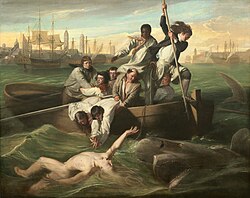 จอห์น ซิงเกิลตัน คอปเลย์ , 1778
 อองตวน-ฌอง โกรส์ , 1804
 จอห์น คอนสเตเบิล , 1802
 ฌอง-โอกุสต์-โดมินิก อิงเกรส์ , 1808
 ฟรานซิสโก โกยา , 1814
 เธโอโดร์ เฌริโกต์ , 1819
 แคสเปอร์ เดวิด ฟรีดริชประมาณปี 1822
 คาร์ล บรูลลอฟ , 1827
 เออแฌน เดลาครัวซ์ , 1830
 เจ.เอ็ม.ดับบลิว. เทอร์เนอร์ , 1838
 อีวาน ไอวาซอฟสกี , 1850
 กุสตาฟ กูร์เบต์ , 1849–1850
 อัลเบิร์ต เบียร์สตัดต์ , 1866
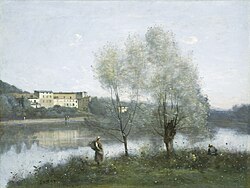 คามิลล์ โคโรต์ประมาณปี 1867
 คามิลล์ ปิสซาร์โร 1872
 โคลด โมเนต์ , 1872
 ปิแอร์-ออกุสต์ เรอนัวร์ , 1876
 เอ็ดการ์ เดอกาส์ , 1876
 เอ็ดวาร์ด มาเนต์ , 1882
 แมรี คาสแซตต์ , 1893–1894
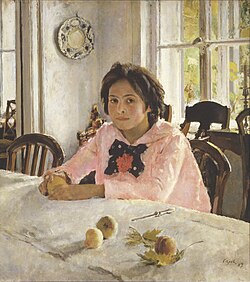 วาเลนติน เซรอฟ , 1887
 วินเซนต์ แวน โกห์ , 1888
 อาร์โนลด์ บ็อคลิน , 1883
 อิลยา เรปิน , 1891
 พอล โกแกง , 1897–1898
 จอร์จ-ปิแอร์ ซูรัต , 1884–1886
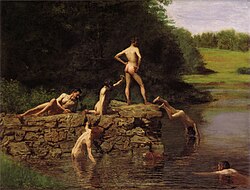 โทมัส อีคินส์ , 1884–1885
 อัลเบิร์ต พิงค์แฮม ไรเดอร์ , 1890
 วินสโลว์ โฮเมอร์ , 1899
 เฟอร์ดินานด์ โฮดเลอร์ , 1906
 พอล เซซานน์ , 1906
หลังจากยุคโรโกโกในช่วงปลายศตวรรษที่ 18 สถาปัตยกรรมและจิตรกรรมก็ได้เกิดลัทธินีโอคลาสสิก ที่เคร่งครัดขึ้น ซึ่งเป็นตัวแทนที่ดีที่สุดโดยศิลปินอย่างดาวิดและอิงเกรส ผู้สืบทอดของเขา ผลงานของอิงเกรสมีทั้งความเย้ายวน แต่ขาดความ espontaneidad (ความเป็นธรรมชาติ) ซึ่งเป็นลักษณะเด่นของลัทธิโรแมนติซิสม์
ในช่วงกลางศตวรรษที่ 19 จิตรกรเริ่มเป็นอิสระจากข้อเรียกร้องของผู้อุปถัมภ์ที่ให้วาดภาพเฉพาะฉากจากศาสนา เทพนิยาย ภาพเหมือน หรือประวัติศาสตร์ ศิลปะกลายเป็นวิธีการแสดงออกส่วนบุคคลอย่างแท้จริงในผลงานของจิตรกรอย่างฟรานซิสโก เดอ โกยาจอห์น คอนสเตเบิลและเจ.เอ็ม.ดับบลิว.เทอร์เนอร์ จิตรกรยุคโรแมนติกได้เปลี่ยนการวาดภาพทิวทัศน์ ให้กลายเป็นประเภทศิลปะหลัก ซึ่งก่อนหน้านั้นถือเป็นประเภทศิลปะรอง หรือเป็นเพียงฉากหลังตกแต่งสำหรับภาพบุคคล จิตรกรสำคัญในยุคนี้ ได้แก่เออแฌน เดลาครัว ซ์ เธโอโดร์ เฌริโก เจ.เอ็ม.ดับบลิว. เทอร์เนอร์ คาสปาร์ ดาวิด ฟรีดริชและจอห์น คอนสเตเบิล ผลงานในช่วงปลายของฟรานซิสโก โกยา แสดงให้เห็นถึงความสนใจแบบโรแมนติกในสิ่งที่ไร้เหตุผล ผลงานของอาร์โนลด์ บ็อกลินปลุกเร้าความลึกลับ ผลงานของกลุ่มพรีราฟาเอลไลต์ในอังกฤษผสมผสานความทุ่มเทอย่างขยันขันแข็งต่อธรรมชาติเข้ากับความโหยหาวัฒนธรรมยุคกลาง และภาพวาดของเจมส์ แอ็บบอตต์ แมคนีล วิสเลอร์ ศิลปินจาก ขบวนการ สุนทรียศาสตร์ปลุกเร้าความซับซ้อนความเสื่อมโทรมและปรัชญาของ "ศิลปะเพื่อศิลปะ" ในสหรัฐอเมริกา ประเพณีโรแมนติกของการวาดภาพทิวทัศน์เป็นที่รู้จักกันในชื่อโรงเรียนฮัดสันริเวอร์ [ 27 ]ผู้บุกเบิก ได้แก่โทมัส โคลเฟรเดอริก เอ็ดวิน เชิร์ ช อัลเบิร์ต เบียร์สตัดต์ โท มัส โมแรนและจอห์น เฟรเดอริก เคนเซตต์ลัทธิลูมินิสม์เป็นขบวนการในการวาดภาพทิวทัศน์ของอเมริกาที่เกี่ยวข้องกับโรงเรียนฮัดสันริเวอร์

กุสตาฟ กูร์เบต์เป็นแรงผลักดันสำคัญในการหันมาสู่ลัทธิสัจนิยมในช่วงกลางศตวรรษภาพวาดที่ไม่เน้นอุดมคติของคนธรรมดาของเขาทำให้ผู้ชมที่คุ้นเคยกับเนื้อหาแบบดั้งเดิมและการตกแต่งที่เรียบร้อยของศิลปะเชิงวิชาการ รู้สึกไม่พอใจ แต่กลับเป็นแรงบันดาลใจให้กับศิลปินรุ่นใหม่จำนวนมาก ฌอง-ฟรองซัวส์ มิลเลต์ จิตรกรชั้นนำ ของ โรงเรียนบาร์บิซง ก็วาดภาพทิวทัศน์และฉากชีวิตชาวนาเช่นกัน คามิลล์ โคโรต์ก็มีความเกี่ยวข้องกับโรงเรียนบาร์บิซงอย่างหลวมๆเขาวาดภาพทั้งในแนวโรแมนติกและ แนว สัจนิยมผลงานของเขาเป็นต้นแบบของลัทธิอิมเพรสชันนิสม์เช่นเดียวกับภาพวาดของโยฮัน ยองคินด์และเออแฌน บูแดง (ซึ่งเป็นหนึ่งในจิตรกรภูมิทัศน์ชาวฝรั่งเศสคนแรกๆ ที่วาดภาพกลางแจ้ง) บูแดงมีอิทธิพลสำคัญต่อโคลด โมเนต์ ในวัยหนุ่ม โดยเขาได้แนะนำให้โมเนต์รู้จัก การวาดภาพกลางแจ้งในปี 1857
ในช่วงปลายศตวรรษที่ 19 จิตรกรกลุ่มอิมเพรสชันนิสต์ เช่นเอ็ดวาร์ด มาเนต์, โคลด โมเนต์ , ปิแอร์-ออกุสต์ เรอนัวร์ , กามิลล์ ปิสซาร์ โร , อัลเฟ รด ซิสลีย์, แบร์ธ มอริโซต์ , แมรี คาสแซตต์และเอ็ดการ์ เดอกาส์ต่างทำงานในแนวทางที่ตรงไปตรงมามากกว่าที่เคยแสดงต่อสาธารณชนมาก่อน พวกเขาละทิ้งการเปรียบเทียบและการเล่าเรื่อง เพื่อหันมาแสดงออกถึงปฏิกิริยาเฉพาะบุคคลต่อโลกสมัยใหม่ บางครั้งภาพวาดเหล่านี้แทบไม่มีการศึกษาหรือเตรียมการล่วงหน้าเลย อาศัยความชำนาญในการวาดเส้นและโทนสีที่สดใส โมเนต์ ปิสซาร์โร และซิสลีย์ ใช้ทิวทัศน์เป็นลวดลายหลัก โดยความไม่แน่นอนของแสงและสภาพอากาศมีบทบาทสำคัญในผลงานของพวกเขา ตามแนวทางปฏิบัติที่ได้รับความนิยมมากขึ้นในช่วงกลางศตวรรษ พวกเขามักจะออกไปวาดภาพกลางแจ้งในชนบทด้วยกัน แต่ไม่ใช่เพื่อจุดประสงค์ดั้งเดิมของการร่างภาพเพื่อนำไปพัฒนาเป็นผลงานที่เสร็จสมบูรณ์อย่างพิถีพิถันในสตูดิโอ[ 28 ]โดยการวาดภาพด้วยแสงแดดโดยตรงจากธรรมชาติ และใช้สีสังเคราะห์สดใสที่มีให้เลือกตั้งแต่ต้นศตวรรษ พวกเขาได้พัฒนารูปแบบการวาดภาพที่สว่างและสดใสยิ่งขึ้น
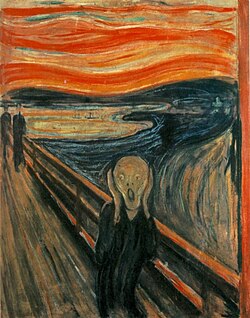
มาเนต์, เดอกาส์, เรอนัวร์, โมริโซต์ และแคสแซตต์ ต่างมุ่งเน้นไปที่ภาพบุคคลเป็นหลัก ทั้งมาเนต์และเดอกาส์ตีความหลักการวาดภาพบุคคลแบบคลาสสิกใหม่ในบริบทร่วมสมัย ในกรณีของมาเนต์ การตีความใหม่นี้กลับได้รับการต่อต้านจากสาธารณชน เรอนัวร์, โมริโซต์ และแคสแซตต์ หันมาหาแรงบันดาลใจจากชีวิตในบ้าน โดยเรอนัวร์เน้นไปที่ภาพเปลือยของผู้หญิง ในขณะที่ซิสลีย์ยึดมั่นในหลักการดั้งเดิมของการรับรู้ภูมิทัศน์แบบอิมเพรสชันนิสต์อย่างใกล้ชิดที่สุด โมเนต์กลับแสวงหาความท้าทายในสภาพแวดล้อมที่มีสีสันและเปลี่ยนแปลงได้มากขึ้นเรื่อยๆ ซึ่ง culminate ในชุดผลงานดอกบัว อันยิ่งใหญ่ ที่วาดขึ้นในกิเวอร์นี
ศิลปินกลุ่มโพสต์อิมเพรสชันนิสต์เช่นพอล เซซานน์และวินเซนต์ แวน โกห์ , พอล โกแกงและจอร์จ-ปิแอร์ เซอราต์ ซึ่งมีอายุอ่อนกว่าเล็กน้อย ได้นำพาศิลปะไปสู่จุดเริ่มต้นของศิลปะสมัยใหม่สำหรับโกแกง อิมเพรสชันนิสต์ได้หลีกทางให้กับสัญลักษณ์นิยมส่วนตัว เซอราต์ได้เปลี่ยนสีที่แตกกระจายของอิมเพรสชันนิสต์ให้กลายเป็นการศึกษาเชิงวิทยาศาสตร์ทางแสง โดยมีโครงสร้างเป็นองค์ประกอบคล้ายภาพเขียนฝาผนัง เทคนิคการวาดภาพที่เขาพัฒนาขึ้น เรียกว่าดิวิชันนิสม์ดึงดูดผู้ติดตามจำนวนมาก เช่นพอล ซิกแนคและในช่วงปลายทศวรรษ 1880 ปิสซาร์โรได้นำวิธีการบางอย่างของเขามาใช้ วิธีการลงสีที่วุ่นวายของแวน โกห์ ควบคู่กับการใช้สีที่ก้องกังวาน ได้ทำนายถึงลัทธิเอ็กซ์เพรส ชันนิสม์ และลัทธิโฟวิสม์และเซซานน์ ผู้ปรารถนาที่จะรวมองค์ประกอบแบบคลาสสิกเข้ากับการสร้างสรรค์นามธรรมที่ปฏิวัติวงการของรูปทรงธรรมชาติ จะถูกมองว่าเป็นผู้บุกเบิกศิลปะในศตวรรษที่ 20
อิทธิพลของศิลปะอิมเพรสชันนิสม์แผ่ขยายไปทั่วโลก รวมถึงในสหรัฐอเมริกา ซึ่งกลายเป็นส่วนสำคัญของงานจิตรกรรมของศิลปินอิมเพรสชันนิสต์ชาวอเมริกันเช่นไชลด์ ฮัสซัม , จอห์น เฮนรี ทวาชต์แมนและธีโอดอร์ โรบินสันนอกจากนี้ยังส่งอิทธิพลต่อจิตรกรที่ไม่ใช่อิมเพรสชันนิสม์โดยตรง เช่น จอห์น ซิงเกอร์ ซาร์เจนท์ จิตรกรภาพเหมือนและภาพทิวทัศน์ ในขณะเดียวกัน ในอเมริกาช่วงต้นศตวรรษที่ 20 ก็มีศิลปะเรียลลิสม์แบบดั้งเดิมและค่อนข้างแยกตัวออกมา ซึ่งปรากฏอย่างชัดเจนในงานภาพเหมือนของโทมัส อีคินส์กลุ่มแอชแคนและภาพทิวทัศน์และภาพทะเลของวินสโลว์ โฮเมอร์ ซึ่งภาพวาดทั้งหมดของพวกเขานั้นให้ความสำคัญอย่างมากกับความแข็งแกร่งของรูปทรงธรรมชาติ ภาพทิวทัศน์ในจินตนาการ ซึ่งเป็นแรงบันดาลใจที่ขึ้นอยู่กับความคลุมเครือของภาพกลางคืน ได้รับการสนับสนุนจากอัลเบิร์ต พิงค์แฮม ไรเดอร์และราล์ฟ อัลเบิร์ต เบลคล็อก
ในช่วงปลายศตวรรษที่ 19 ยังมีกลุ่มจิตรกรสัญลักษณ์นิยม หลายกลุ่มที่ค่อนข้างแตกต่างกัน ซึ่งผลงานของพวกเขาสร้างความประทับใจให้กับศิลปินรุ่นใหม่ในศตวรรษที่ 20 โดยเฉพาะอย่างยิ่งกลุ่มฟอวิสต์และเซอร์เรียลลิสต์ในบรรดาศิลปินเหล่านั้น ได้แก่กุสตาฟ โมโร , โอดิลอน เรดอน , ปิแอร์ ปูวิส เดอ ชาแวน ส์ , อองรี ฟองแตง -ลาตูร์ , อาร์โนลด์ เบอคลิน, เฟอร์ดินาน ด์ โฮดเลอร์ , เอ็ดเวิร์ด มุนช์ , เฟลิ เซียง รอปส์ , แยน ทูรอปและกุสตาฟ คลิมต์รวมถึงจิตรกรสัญลักษณ์นิยมชาวรัสเซียเช่นมิคาอิล วรูเบล
Symbolist painters mined mythology and dream imagery for a visual language of the soul, seeking evocative paintings that brought to mind a static world of silence. The symbols used in Symbolism are not the familiar emblems of mainstream iconography but intensely personal, private, obscure and ambiguous references. More a philosophy than an actual style of art, the Symbolist painters influenced the contemporary Art Nouveau movement and Les Nabis. In their exploration of dreamlike subjects, symbolist painters are found across centuries and cultures, as they are still today; Bernard Delvaille has described René Magritte's surrealism as "Symbolism plus Freud".[29]
20th century
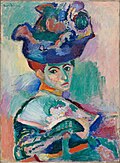 Henri Matisse, 1905, Fauvism
![อองรี รุสโซ, ปี 1905, ที่มาของคำว่า Fauvism] และภาพ "Wild Beast" ต้นฉบับ](https://img.hmn.in.th/wikipedia/commons/thumb/2/25/Rousseau-Hungry-Lion.jpg/250px-Rousseau-Hungry-Lion.jpg) Henri Rousseau, 1905, the reason for the term Fauvism] and the original "Wild Beast"
Henri Rousseau, 1905, the reason for the term Fauvism] and the original "Wild Beast"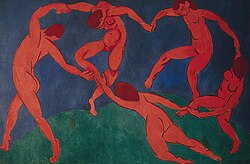 Henri Matisse, 1909, late Fauvism
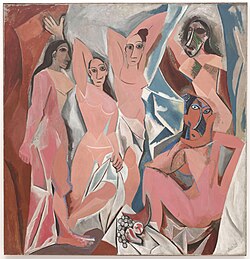 Pablo Picasso, 1907, early Cubism
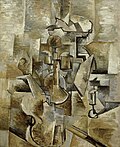 Georges Braque, 1910, Analytic Cubism
 Juan Gris, 1912, Cubism
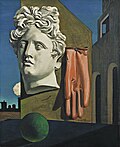 Giorgio de Chirico, 1914, pre-Surrealism
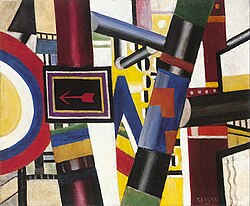
มรดกของจิตรกรอย่างแวนโกห์เซซานน์โกแกงและเซอราต์มีความสำคัญต่อการพัฒนาศิลปะสมัยใหม่ ในช่วงต้นศตวรรษที่ 20 อองรี มาติส และศิลปินรุ่นใหม่อีกหลายคน รวมถึง จอร์จ บรากศิลปินก่อนยุคคิวบิสม์อองเดร เดอแร็งราอูล ดูฟีและมอริซ เดอ วลามิงค์ได้ปฏิวัติวงการศิลปะในปารีสด้วยภาพทิวทัศน์และภาพบุคคลที่ "ดุเดือด" หลากสีสัน และแสดงออกถึงอารมณ์ ซึ่งนักวิจารณ์เรียกว่าลัทธิโฟวิสม์ ภาพ The Danceเวอร์ชันที่สองของอองรี มาติสถือเป็นจุดสำคัญในอาชีพการงานของเขาและในการพัฒนาการวาดภาพสมัยใหม่[ 30 ]มันสะท้อนให้เห็นถึงความหลงใหลในศิลปะดั้งเดิม ของมาติส สีโทนอบอุ่นที่เข้มข้นตัดกับพื้นหลังสีฟ้าอมเขียวเย็นๆ และการเรียงลำดับจังหวะของภาพเปลือยที่กำลังเต้นรำ สื่อถึงความรู้สึกของการปลดปล่อยทางอารมณ์และความสุขนิยมปาโบล ปิกัสโซ สร้างสรรค์ภาพเขียน แบบคิวบิสม์ชิ้นแรกๆโดยอิงจากแนวคิดของเซซานน์ที่ว่า การวาดภาพธรรมชาติทั้งหมดสามารถลดทอนลงเหลือเพียงสามรูปทรง คือลูกบาศก์ทรงกลมและทรงกรวยด้วยภาพเขียนLes Demoiselles d'Avignon (1907) ปิกัสโซได้สร้างภาพเขียนรูปแบบใหม่และแหวกแนว โดยแสดงภาพซ่องโสเภณีที่มีหญิงขายบริการห้าคน ซึ่งถูกวาดอย่างดุดัน ชวนให้นึกถึงหน้ากากชนเผ่าแอฟริกันและสิ่งประดิษฐ์แบบคิวบิสม์ของเขาเองคิวบิสม์ได้รับการพัฒนาร่วมกันระหว่างปี 1908 ถึง 1912 โดยปาโบล ปิกัสโซ และจอร์จ บรากซึ่งภาพเขียน Violin and Candlestick, Paris (1910) ของบรากนั้นแสดงอยู่ในที่นี้ การแสดงออกอย่างชัดเจนครั้งแรกของคิวบิสม์นั้นเกิดขึ้นโดยบราก ปิกัสโซ ฌอง เมทซิ งเกอร์อัลเบิร์ต ไกลซ์เฟอร์นันด์ เลเจอร์ อองรี เลอ ฟอคอนนิเยร์และโรเบิร์ต เดลาเนย์ ต่อมา ฮวน กริส มาร์เซล ดูชองป์อเล็กซานเดอร์อาร์คิเปนโก โจเซฟซากีและคนอื่นๆ ก็เข้าร่วมด้วย[ 31 ]คิวบิสม์สังเคราะห์ซึ่งปฏิบัติโดยบรากและปิกัสโซ มีลักษณะเด่นคือการนำเสนอพื้นผิว พื้นผิวองค์ประกอบคอลลาจปาปิเยร์ คอลเลและเนื้อหาที่ผสมผสานหลากหลายรูปแบบ[ 31 ]
งานแสดงศิลปะ Salon d'Automneในปี 1905 ทำให้ผลงานของHenri Matisseและลัทธิ Fauvism เป็นที่รู้จักและได้รับความสนใจ กลุ่มนี้ได้รับชื่อนี้หลังจากที่นักวิจารณ์Louis Vauxcellesบรรยายผลงานของพวกเขาด้วยวลี " Donatello chez les fauves" ("Donatello ท่ามกลางสัตว์ป่า") [ 32 ]โดยเปรียบเทียบภาพวาดกับ ประติมากรรมแบบ เรเนซองส์ที่จัดแสดงอยู่ในห้องเดียวกัน[ 33 ]ฉากป่าThe Hungry Lion Throws Itself on the AntelopeโดยHenri Rousseau (ซึ่งไม่ใช่ศิลปินลัทธิ Fauve) แขวนอยู่ใกล้กับผลงานของ Matisse และอาจเป็นแรงบันดาลใจให้เกิดคำเสียดสีที่ใช้ในสื่อ[ 34 ]ความคิดเห็นของ Vauxcelles ถูกตีพิมพ์เมื่อวันที่ 17 ตุลาคม 1905 ในหนังสือพิมพ์รายวันGil Blasและกลายเป็นที่รู้จักกันอย่างแพร่หลาย[ 33 ] [ 35 ]
ในช่วงสองทศวรรษแรกของศตวรรษที่ 20 และหลังจากลัทธิคิวบิสม์ ก็ได้เกิดขบวนการทางศิลปะที่สำคัญอื่นๆ ขึ้นอีกหลายขบวนการ ได้แก่ลัทธิฟิว เจอร์ริสม์ ( บัลลา)ศิลปะนามธรรม (คันดินสกี) ลัทธิเดอร์ บลาว ไรเตอร์ (คันดินสกีและฟรานซ์ มาร์ค) ลัทธิเบาเฮาส์ ( คันดินสกี และคลี ) ลัทธิออ ร์ฟิสม์ ( เดลาเนย์และคุปกา ) ลัทธิซิงโคร มิสม์ ( รัสเซลล์ ) ลัทธิเดอ สไตล์ ( แวน ดอสเบิร์กและมอนเดรียน) ลัทธิสุพรีมาติสม์ (มาเลวิช) ลัทธิคอนสตรัคติวิสม์ (แทตลิน) ลัทธิดาดา (ดูชองป์ ปิกาเบียและอาร์ป) และลัทธิเซอร์เรียลลิสม์ (เดอ คิริโก อองเดร เบรอตง มิโร มากริตต์ ดาลี และเอิร์นสต์)จิตรกรรมสมัยใหม่มีอิทธิพลต่อศิลปะแขนงต่างๆตั้งแต่สถาปัตยกรรมและการออกแบบสมัยใหม่ไปจนถึงภาพยนตร์แนวหน้าละครเวทีและการเต้นรำสมัยใหม่และกลายเป็นห้องทดลองสำหรับการแสดงออกถึงประสบการณ์ทางสายตา ตั้งแต่การถ่ายภาพและบทกวีรูปธรรมไปจนถึงศิลปะการโฆษณาและแฟชั่น
โฟวิสม์, แดร์ เบลาเออ ไรเตอร์, ดี บรึคเคอ
 วาซิลี คันดินสกี , เดอร์ เบลาเออ ไรเตอร์ , 1903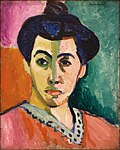
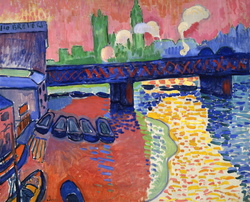 อังเดร เดอเรน , โฟวิสม์ , 1906
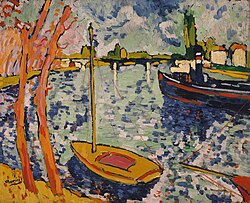 มอริซ เดอ วลามินค์ , Fauvism , 1906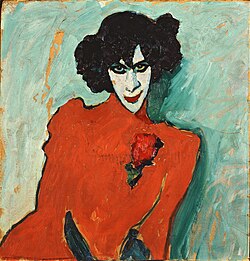
ลัทธิฟอวิสม์เป็นกลุ่มศิลปินในช่วงต้นศตวรรษที่ 20 ที่เน้น คุณภาพ ของการวาดภาพและการใช้สีสันที่สดใสอย่างสร้างสรรค์มากกว่าคุณค่าของการแสดงภาพ ผู้นำของขบวนการนี้คืออองรี มาติสส์และอองเดร เดอแร็งซึ่งเป็นคู่แข่งที่เป็นมิตรกัน และต่างก็มีผู้ติดตามของตนเอง ในที่สุดมาติสส์ก็กลายเป็นหยางของปิกัสโซซึ่ง เป็น หยินในศตวรรษที่ 20 จิตรกรลัทธิฟอวิสม์ ได้แก่อัลเบิร์ต มาร์เกต์ , ชาร์ลส์ กามัวน์ , มอริซ เดอ วลามิ งค์ , ราอูล ดูฟี , โอธ อน ฟรีส ซ์ , คีส์ ฟาน ดองเกน จิตรกรชาวดัตช์ และจอร์ จ บรากหุ้นส่วนของปิกัสโซในลัทธิคิวบิสม์เป็นต้น[ 36 ]
ลัทธิฟอวิสม์ไม่มีทฤษฎีที่เป็นรูปธรรม และมีอายุสั้น เริ่มต้นในปี 1905 และสิ้นสุดในปี 1907 มีการจัดนิทรรศการเพียงสามครั้งเท่านั้น มาติสส์ถูกมองว่าเป็นผู้นำของขบวนการ เนื่องจากอายุที่มากกว่าและชื่อเสียงที่เขาสร้างไว้ก่อนหน้านี้ในวงการศิลปะเชิงวิชาการ ภาพเหมือนของมาดามมาติสส์ในปี 1905 ชื่อ " แถบสีเขียว " สร้างความฮือฮาในปารีสเมื่อจัดแสดงครั้งแรก เขาบอกว่าเขาต้องการสร้างงานศิลปะเพื่อความสุข และอาจกล่าวได้ว่าการใช้สีสันสดใสของเขาพยายามรักษาความสงบขององค์ประกอบ ในปี 1906 ตามคำแนะนำของอัมบรัวส์ โวลลาร์ด ตัวแทนจำหน่ายของเขา อองเดร เดอแร็ง เดินทางไปลอนดอนและสร้างสรรค์ภาพวาดชุดหนึ่ง รวมถึงภาพสะพานชาริงครอส ลอนดอนใน สไตล์ ฟอวิสม์ซึ่งเป็นการล้อเลียนชุดภาพวาดที่มีชื่อเสียงของโคลด โมเนต์ จิตรกรอิมเพรสชันนิสต์
ในปี พ.ศ. 2450 ลัทธิฟอวิสม์ไม่ได้เป็นขบวนการใหม่ที่น่าตกใจอีกต่อไป และอัปโปลิแนร์กล่าวถึงมาติสในบทความที่ตีพิมพ์ในLa Falangeว่า "เราไม่ได้อยู่ที่นี่เพื่อพบกับการกระทำที่ฟุ่มเฟือยหรือสุดโต่ง ศิลปะของมาติสมีความสมเหตุสมผลอย่างยิ่ง" [ 37 ]
Die Brückeเป็นกลุ่ม ศิลปิน ลัทธิเอ็กซ์เพรสชันนิสม์ ชาวเยอรมัน ที่ก่อตั้งขึ้นในเมืองเดรสเดนในปี ค.ศ. 1905 สมาชิกผู้ก่อตั้ง ได้แก่Fritz Bleyl , Erich Heckel , Ernst Ludwig KirchnerและKarl Schmidt-Rottluffสมาชิกในภายหลัง ได้แก่Max PechsteinและOtto Muellerกลุ่มสำคัญนี้มีผลกระทบอย่างมากต่อวิวัฒนาการของศิลปะสมัยใหม่ในศตวรรษที่ 20 และสร้างรูปแบบของลัทธิเอ็กซ์เพรสชันนิ ส ม์[ 38 ]
Der Blaue Reiterเป็นขบวนการศิลปะเยอรมันที่ดำรงอยู่ตั้งแต่ปี 1911 ถึง 1914 ซึ่งเป็นรากฐานของลัทธิ เอ็กซ์เพรสชัน นิสม์ วาสซิลี คันดินสกี , ฟรานซ์ มาร์ค , ออกัสต์ แมคเคอ , อเล็กเซย์ ฟอน จาวเลนสกีซึ่งภาพวาดที่แสดงออกถึงจิตวิญญาณของนักเต้นชาวรัสเซียชื่อ Portrait of Alexander Sakharoff (1909) ปรากฏให้เห็นที่นี่มาริแอนน์ ฟอน เวเรฟกิน , ไลโอเนล ไฟนิงเกอร์และคนอื่นๆ ได้ก่อตั้งกลุ่ม Der Blaue Reiter ขึ้นเพื่อตอบสนองต่อการที่ภาพวาดLast Judgement ของคันดินสกีถูกปฏิเสธ จากนิทรรศการ Der Blaue Reiter ขาดแถลงการณ์ทางศิลปะที่เป็นศูนย์กลาง แต่มีศูนย์กลางอยู่ที่คันดินสกีและมาร์ค ศิลปินกาเบรียล มุนเตอร์และพอล คลีก็มีส่วนร่วมด้วย ชื่อของขบวนการนี้มาจากภาพวาดในปี 1903 ของคันดินสกีสำหรับคันดินสกีสีน้ำเงินเป็นสีแห่งจิตวิญญาณ ยิ่งสีน้ำเงินเข้มมากเท่าไหร่ ก็ยิ่งปลุกเร้าความปรารถนาของมนุษย์ต่อความเป็นนิรันดร์มากขึ้นเท่านั้น[ 39 ]
ลัทธิเอ็กซ์เพรสชันนิสม์, ลัทธิสัญลักษณ์นิยม, ลัทธิโมเดิร์นแบบอเมริกัน, บาวเฮาส์
 กุสตาฟ คลิมท์ , ลัทธิการแสดงออก , ค.ศ. 1907–1908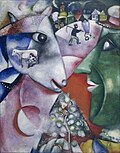
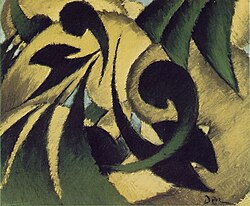


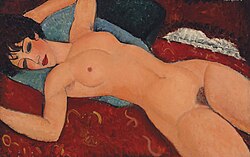


 สจวร์ต เดวิส , ลัทธิโมเดิร์นอเมริกัน , 1921
 แพทริค เฮนรี บรูซ , ศิลปะสมัยใหม่ของอเมริกา , 1929–1930
ลัทธิเอ็กซ์เพรสชันนิสม์และลัทธิสัญลักษณ์นิยมเป็นหมวดหมู่กว้างๆ ที่ครอบคลุมขบวนการทางศิลปะหลายขบวนการที่เกี่ยวข้องกันในงานจิตรกรรมศตวรรษที่ 20 ซึ่งครอบงำ ศิลปะ แนวหน้า ส่วนใหญ่ในยุโรปตะวันตก ยุโรปตะวันออก และยุโรป เหนืองานศิลปะแบบเอ็กซ์เพรสชันนิสม์ส่วนใหญ่ถูกวาดขึ้นระหว่างสงครามโลกครั้งที่ 1 และสงครามโลกครั้งที่ 2 โดยส่วนใหญ่อยู่ในฝรั่งเศส เยอรมนี นอร์เวย์ รัสเซีย เบลเยียม และออสเตรียลัทธิฟอ วิสม์ กลุ่ม ได บรุคเคอและ กลุ่ม แดร์ บลาว ไรเตอร์เป็นสามกลุ่มจิตรกรเอ็กซ์เพรสชันนิสม์และสัญลักษณ์นิยมที่มีชื่อเสียงที่สุด ภาพวาด "ฉันและหมู่บ้าน"ของมาร์ค ชากาลบอกเล่าเรื่องราวอัตชีวประวัติที่สำรวจความสัมพันธ์ระหว่างศิลปินกับต้นกำเนิดของเขา โดยใช้คำศัพท์ทางศิลปะของลัทธิสัญลักษณ์นิยมกุสตาฟ คลิมต์ , เอากอน ชีเลอ , เอ็ดเวิร์ด มุนช์ , เอมิล โนลเด , ไชม์ ซูติน , เจมส์ เอนเซอร์ , ออสการ์ โคโคชกา , เอิร์นสต์ ลุดวิก เคิร์ชเนอร์ , แม็กซ์ เบ็คแมนน์ , ฟรานซ์ มาร์ค , จอร์จ รูโอต์ , อาเมเดโอ โมดิกลิอานีและศิลปินชาวอเมริกันที่อาศัยอยู่ต่างประเทศ เช่นมาร์สเดน ฮาร์ทลีย์และสจวร์ต เดวิสถือเป็นจิตรกรแนวเอ็กซ์เพรสชันนิสม์ที่มีอิทธิพล แม้ว่าอัลแบร์โต จาโคเมตติจะถูกมองว่าเป็นประติมากรแนวเซอร์เรียลลิสม์เป็นหลัก แต่เขาก็สร้างสรรค์ภาพวาดแนวเอ็กซ์เพรสชันนิสม์ที่ทรงพลังเช่นกัน
จิตรกรชาวอเมริกันในช่วงระหว่างสงครามโลกครั้งที่ 1 และสงครามโลกครั้งที่ 2 มักจะเดินทางไปยุโรปเพื่อแสวงหาชื่อเสียงศิลปินสมัยใหม่ เช่น Marsden Hartley, Patrick Henry Bruce , Gerald Murphyและ Stuart Davis สร้างชื่อเสียงในต่างประเทศ ในขณะที่ Patrick Henry Bruce [ 40 ]สร้าง ภาพวาดที่เกี่ยวข้องกับ ลัทธิคิว บิสม์ ในยุโรป ทั้ง Stuart Davis และ Gerald Murphy ได้สร้างภาพวาดที่เป็นแรงบันดาลใจในช่วงแรกๆ ของศิลปะป๊อปอาร์ต ของอเมริกา [ 41 ] [ 42 ] [ 43 ]และ Marsden Hartley ได้ทดลองกับลัทธิเอ็กซ์เพรสชันนิสม์ ในช่วงทศวรรษ 1920 ช่างภาพAlfred Stieglitzได้จัดแสดง ผลงาน ของ Georgia O'Keeffe , Arthur Dove , Alfred Henry Maurer , Charles Demuth , John Marinและศิลปินอื่นๆ รวมถึงปรมาจารย์ชาวยุโรปอย่าง Henri Matisse, Auguste Rodin, Henri Rousseau, Paul Cézanne และ Picasso ที่แกลเลอรี่291 ของเขา ใน นิวยอร์กซิตี้ [ 44 ]ในยุโรป ปรมาจารย์อย่าง Henri Matisse และPierre Bonnardยังคงพัฒนารูปแบบการเล่าเรื่องของพวกเขาต่อไปโดยไม่ขึ้นกับขบวนการใดๆ
ผู้บุกเบิกศิลปะนามธรรม

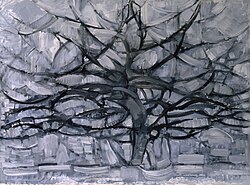 Piet Mondrian , 1911, ต้นDe Stijl
 วาสซิลี คันดินสกี , ปี 1913, จุดกำเนิดของศิลปะนามธรรม
Wassily Kandinsky is generally considered one of the first important painters of modernabstract art. As an early modernist, he theorized as did contemporary occultists and theosophists, that pure visual abstraction had corollary vibrations with sound and music. They posited that pure abstraction could express pure spirituality. His earliest abstractions were generally titled as the example in the Composition VII, making connection to the work of the composers of music. Kandinsky included many of his theories about abstract art in his book Concerning the Spiritual in Art. Other major pioneers of early abstraction include Swedish painter Hilma af Klint, Russian painter Kazimir Malevich, and Swiss painter Paul Klee. Robert Delaunay was a French artist who is associated with Orphism, (reminiscent of a link between pure abstraction and cubism). His key contributions to abstract painting refer to his bold use of color and his experimentation of both depth and tone.
Dada and Surrealism
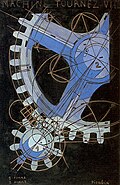 Francis Picabia, 1916, Dada
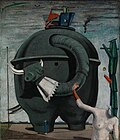 Max Ernst, 1921), Surrealism
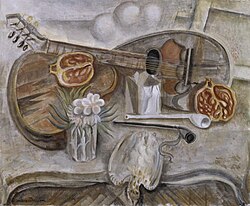 André Masson, 1922, early Surrealism
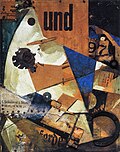 Kurt Schwitters, 1919, painted collage, Dada
 Hannah Höch, collage, 1919, Dada
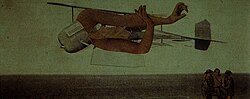 Max Ernst, 1920, early Surrealism
 Joan Miró, Horse, Pipe and Red Flower, 1920, early Surrealism
Marcel Duchamp came to international prominence in the wake of the New York City Armory Show in 1913 where his Nude Descending a Staircase, No. 2 became a cause célèbre. He subsequently created The Bride Stripped Bare by Her Bachelors, Even, Large Glass. The Large Glass pushed the art of painting to radical new limits being part painting, part collage, part construction. Duchamp (who was soon to renounce artmaking for chess) became closely associated with the Dada movement that began in neutral Zürich, Switzerland, during World War I and peaked from 1916 to 1920. The movement primarily involved visual arts, literature (poetry, art manifestoes, art theory), theatre, and graphic design to advance its antiwar politic and rejection of the prevailing standards in art through anti-art cultural works. Other artists associated with the Dada movement include Francis Picabia, Man Ray, Kurt Schwitters, Hannah Höch, Tristan Tzara, Hans Richter, Jean Arp, and Sophie Taeuber-Arp. Duchamp and several Dadaists are also associated with Surrealism, the movement that dominated European painting in the 1920s and 1930s.

In 1924 André Breton published the Surrealist Manifesto. The Surrealist movement in painting became synonymous with the avant-garde and featured artists whose works varied from the abstract to the super-realist. With works on paper like Machine Turn Quickly, Francis Picabia continued his involvement in the Dada movement through 1919 in Zürich and Paris, before breaking away from it after developing an interest in Surrealist art. Yves Tanguy, René Magritte and Salvador Dalí are particularly known for their realistic depictions of dream imagery and fantastic manifestations of the imagination. During the 1920s André Masson's work was decisive in helping the young artist Joan Miró find his roots in Surrealist painting. Miró's The Tilled Field (1923–1924) verges on abstraction while suggesting a complex of objects and figures and arrangements of sexually active characters; it was Miró's first Surrealist masterpiece.[45] Joan Miró, Jean Arp, André Masson, and Max Ernst were very influential, especially in the United States during the 1940s.
Max Ernst, whose 1920 painting Murdering Airplane is seen here, studied philosophy and psychology in Bonn and was interested in the alternative realities experienced by the insane. His paintings may have been inspired by the psychoanalystSigmund Freud's study of the delusions of a paranoiac, Daniel Paul Schreber. Freud identified Schreber's fantasy of becoming a woman as a castration complex. The central image of two pairs of legs refers to Schreber's hermaphroditic desires. Ernst's inscription on the back of the painting reads: The picture is curious because of its symmetry. The two sexes balance one another.[46]
Throughout the 1930s, Surrealism continued to become more visible to the public at large. A Surrealist group developed in Britain and, according to Breton, their 1936 London International Surrealist Exhibition was a high-water mark of the period and became the model for international exhibitions. Surrealist groups in Japan, and especially in Latin America, the Caribbean and in Mexico produced innovative and original works. Other prominent surrealist artists include Giorgio de Chirico, Méret Oppenheim, Toyen, Grégoire Michonze, Roberto Matta, Kay Sage, Leonora Carrington, Dorothea Tanning, and Leonor Fini.
Neue Sachlichkeit, Social realism, regionalism, American Scene painting, Symbolism
 George Grosz, 1920, Neue Sachlichkeit
 Thomas Hart Benton, 1920, Regionalism
 George Bellows, 1924, American realism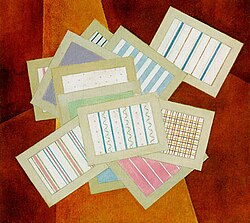
 Charles Demuth, 1931, Precisionism

 Diego Rivera, Recreation of Man at the Crossroads (renamed Man, Controller of the Universe), originally created in 1934
During the 1920s and the 1930s and the Great Depression, the European art scene was characterized by Surrealism, late Cubism, the Bauhaus, De Stijl, Dada, Neue Sachlichkeit, and Expressionism; and was occupied by masterful modernist color painters like Henri Matisse and Pierre Bonnard.

In Germany Neue Sachlichkeit ("New Objectivity") emerged as Max Beckmann, Otto Dix, George Grosz and others politicized their paintings. The work of these artists grew out of expressionism, and was a response to the political tensions of the Weimar Republic, and was often sharply satirical.
During the 1930s radical leftist politics characterized many of the artists connected to Surrealism, including Pablo Picasso.[47] On 26 April 1937, during the Spanish Civil War, the Basque town of Gernika was the scene of the "Bombing of Gernika" by the Condor Legion of Nazi Germany's Luftwaffe. The Germans were attacking to support the efforts of Francisco Franco to overthrow the Basque Government and the Spanish Republican government. Pablo Picasso painted his mural sized Guernica to commemorate the horrors of the bombing.
Guernica is an immense black-and-white, 3.5-metre (11 ft) tall and 7.8-metre (23 ft) wide mural painted in oil. The mural presents a scene of death, violence, brutality, suffering, and helplessness without portraying their immediate causes. The choice to paint in black and white invokes the immediacy of a newspaper photograph.[48] The painting was first exhibited in Paris in 1937, then Scandinavia and London, and in 1939 at Picasso's request the painting was sent to the United States in an extended loan (for safekeeping) at MoMA. Finally in accord with Picasso's wish to give the painting to the people of Spain as a gift, it was sent to Spain in 1981.
From the Great Depression of the 1930s through the years of World War II, American art was characterized by Social Realism and American Scene Painting. Regionalism movements that contained both political and social commentary dominated the art world in the USA. Artists such as Ben Shahn, Thomas Hart Benton, Grant Wood, George Tooker, John Steuart Curry, Reginald Marsh, and others became prominent.
American Gothic is a painting by Grant Wood from 1930. Portraying a pitchfork-holding farmer and a younger woman in front of a house of Carpenter Gothic style, it is one of the most familiar images in 20th-century American art. Art critics assumed it was satirical in intent; it was thought to be part of the trend towards increasingly critical depictions of rural America exemplified by Sherwood Anderson's 1919 Winesburg, Ohio, Sinclair Lewis' 1920 Main Street, and Carl Van Vechten's The Tattooed Countess in literature.[49] However, with the onset of the Great Depression, the painting came to be seen as a depiction of steadfast American pioneer spirit.
A renaissance of the arts in Latin America included the Uruguayan painter Joaquín Torres García, the Mexican painter Rufino Tamayo, artists of the Mexican muralist movement such as Diego Rivera, David Siqueiros, José Orozco, Pedro Nel Gómez and Santiago Martinez Delgado, and the Symbolist painter Frida Kahlo. The muralists conveyed historic and political messages. Diego Rivera is perhaps best known by the public world for his 1933 mural, Man at the Crossroads, in the lobby of the RCA Building at Rockefeller Center. When his patron Nelson Rockefeller discovered that the mural included a portrait of Lenin and other communist imagery, he fired Rivera, and the unfinished work was eventually destroyed by Rockefeller's staff.
Frida Kahlo's works relate to Surrealism and to the Magic Realism movement in literature. Her works are often characterized by their stark portrayals of pain. Of her 143 paintings 55 are self-portraits, which frequently incorporate symbolic portrayals of her physical and psychological wounds.[50]
Abstract expressionism
The 1940s in New York City heralded the triumph of American abstract expressionism, a movement that combined lessons learned from European Modernists via great teachers in America like Hans Hofmann and John D. Graham. American artists benefited from the presence of Piet Mondrian, Fernand Léger, Max Ernst and the André Breton group, Pierre Matisse's gallery, and Peggy Guggenheim's gallery The Art of This Century, as well as other factors.
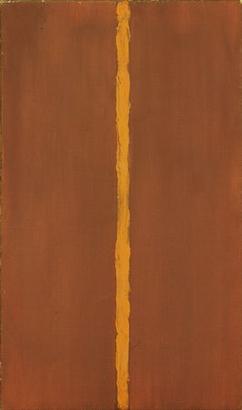
Post-Second World War American painting called Abstract expressionism included artists like Jackson Pollock, Willem de Kooning, Arshile Gorky, Mark Rothko, Hans Hofmann, Clyfford Still, Franz Kline, Adolph Gottlieb, Barnett Newman, Mark Tobey, James Brooks, Philip Guston, Robert Motherwell, Conrad Marca-Relli, Jack Tworkov, Esteban Vicente, William Baziotes, Richard Pousette-Dart, Ad Reinhardt, Hedda Sterne, Jimmy Ernst, Bradley Walker Tomlin, and Theodoros Stamos, among others. American Abstract expressionism got its name in 1946 from the art critic Robert Coates.[51][52] Abstract expressionism, Action painting, and Color Field painting are synonymous with the New York School.[53]
Technically Surrealism was an important predecessor for Abstract expressionism with its emphasis on spontaneous, automatic or subconscious creation. Jackson Pollock's dripping paint onto a canvas laid on the floor is a technique that has its roots in the work of André Masson. Another important early manifestation of what came to be abstract expressionism is the work of American Northwest artist Mark Tobey, especially his "white writing" canvases, which, though generally not large in scale, anticipate the "all over" look of Pollock's drip paintings.
Additionally, Abstract expressionism has an image of being rebellious, anarchic, highly idiosyncratic and, some feel, rather nihilistic. In practice, the term is applied to any number of artists working (mostly) in New York who had quite different styles, and even applied to work which is not especially abstract nor expressionist. Pollock's energetic "action paintings", with their "busy" feel, are different both technically and aesthetically, to the violent and grotesque Women series of Willem de Kooning. Woman V is one of a series of six paintings made by de Kooning between 1950 and 1953 that depict a three-quarter-length female figure. He began the first of these paintings, Woman I, in June 1950, repeatedly changing and painting out the image until January or February 1952, when the painting was abandoned unfinished. The art historian Meyer Schapiro saw the painting in de Kooning's studio and encouraged the artist to persist. De Kooning's response was to begin three other paintings on the same theme; Woman II, Woman III, and Woman IV. During the summer of 1952, spent at East Hampton, de Kooning further explored the theme through drawings and pastels. He finished work on Woman I by November 1952, and probably the other three women pictures were concluded at much the same time.[54] The Woman series are decidedly figurative paintings. Another important artist is Franz Kline, as demonstrated by his painting High Street (1950), who was labelled an action painter because of his seemingly spontaneous and intense style, focusing less, or not at all, on figures or imagery, but on the actual brush strokes and use of canvas.
Clyfford Still, Barnett Newman, Adolph Gottlieb, and the serenely shimmering blocks of color in Mark Rothko's work (which is not what would usually be called expressionist and which Rothko denied was abstract), are classified as abstract expressionists, albeit from what Clement Greenberg termed the Color field direction of abstract expressionism. Both Hans Hofmann and Robert Motherwell can be described as practitioners of action painting and Color field painting.
During the 1950s Color Field painting initially referred to a particular type of abstract expressionism, especially the work of Mark Rothko, Clyfford Still, Barnett Newman, Robert Motherwell and Adolph Gottlieb. It essentially involved abstract paintings with large, flat expanses of color that expressed the sensual, and visual feelings and properties of large areas of nuanced surface. Art critic Clement Greenberg perceived Color Field painting as related to but different from Action painting. The overall expanse and gestalt of the work of the early color field painters speaks of an almost religious experience, awestruck in the face of an expanding universe of sensuality, color and surface. During the early-to-mid-1960s Color Field painting came to refer to the styles of artists like Jules Olitski, Kenneth Noland, and Helen Frankenthaler, whose works were related to second-generation abstract expressionism, and to younger artists like Larry Zox, and Frank Stella – all moving in a new direction.
Realism, Landscape, Seascape, Figuration, Still-Life, Cityscape
- George Bellows, 1924, American realism
During the 1930s through the 1960s as abstract painting in America and Europe evolved into movements such as abstract expressionism, Color Field painting, Post-painterly Abstraction, Op art, hard-edge painting, Minimal art, shaped canvas painting, and Lyrical Abstraction. Other artists reacted as a response to the tendency toward abstraction allowing imagery to continue through various new contexts like the Bay Area Figurative Movement in the 1950s and new forms of expressionism from the 1940s through the 1960s. Throughout the 20th century many painters practiced Realism and used expressive imagery in landscape and figurative painting with contemporary subjects. They include artists as varied as Milton Avery, John D. Graham, Fairfield Porter, Edward Hopper, Andrew Wyeth, Balthus, Francis Bacon, Frank Auerbach, Lucian Freud, Leon Kossoff, Philip Pearlstein, Willem de Kooning, Arshile Gorky, Grace Hartigan, Robert De Niro, Sr., and Elaine de Kooning.
In Italy during this time, Giorgio Morandi was the foremost still-life painter, exploring a wide variety of approaches to depicting everyday bottles and kitchen implements.[55]

Arshile Gorky's portrait of Willem de Kooning is an example of the evolution of abstract expressionism from the context of figure painting, cubism and surrealism. Along with his friends de Kooning and John D. Graham Gorky created bio-morphically shaped and abstracted figurative compositions that by the 1940s evolved into totally abstract paintings. Gorky's work seems to be a careful analysis of memory, emotion and shape, using line and color to express feeling and nature.[56][57]
Study after Velázquez's Portrait of Pope Innocent X, 1953 is a painting by the Irish-born artist Francis Bacon and is an example of Post World War II European Expressionism. The work shows a distorted version of the Portrait of Innocent X painted by the Spanish artist Diego Velázquez in 1650. The work is one of a series of variants of the Velázquez painting which Bacon executed throughout the 1950s and early 1960s, over a total of forty-five works.[58] When asked why he was compelled to revisit the subject so often, Bacon replied that he had nothing against the Popes, that he merely "wanted an excuse to use these colours, and you can't give ordinary clothes that purple colour without getting into a sort of false fauve manner."[59] The Pope in this version seethes with anger and aggression, and the dark colors give the image a grotesque and nightmarish appearance.[60] The pleated curtains of the backdrop are rendered transparent, and seem to fall through the Pope's face.[61]
The figurative work of Francis Bacon, Frida Kahlo, Edward Hopper, Lucian Freud, Andrew Wyeth and others served as a kind of alternative to abstract expressionism. Nighthawks (1942) is a realist painting by Edward Hopper that portrays people sitting in a downtown diner late at night. It is not only Hopper's most famous painting, but one of the most recognizable in American art. The urban street is empty outside the diner, and inside none of the three patrons is apparently looking or talking to the others but instead is lost in their own thoughts. This portrayal of modern urban life as empty or lonely is a common theme throughout Hopper's work. One of the most well-known images in 20th-century American art is Wyeth's tempera painting, Christina's World, in the collection of the Museum of Modern Art in New York City. It depicts a woman lying on the ground in a treeless, mostly tawny field, looking up at and crawling towards a gray house on the horizon; a barn and various other small outbuildings are adjacent to the house.[62]
After World War II the term School of Paris often referred to Tachisme, the European equivalent of American Abstract expressionism and those artists are also related to Cobra. Important proponents being Jean Dubuffet, Pierre Soulages, Nicolas de Staël, Hans Hartung, Serge Poliakoff, and Georges Mathieu, among several others. During the early 1950s Dubuffet (who was always a figurative artist) and de Staël abandoned abstraction, and returned to imagery via figuration and landscape. De Staël's return to representation (seascapes, footballers, jazz musicians, seagulls) during the early 1950s can be seen as an influential precedent for the American Bay Area Figurative Movement, as many of those abstract painters like Richard Diebenkorn, David Park, Elmer Bischoff, Wayne Thiebaud, Nathan Oliveira, Joan Brown and others made a similar move; returning to imagery during the mid-1950s. Much of de Staël's late work – in particular his abstract landscapes of the mid-1950s – predicts Color Field painting and Lyrical Abstraction of the 1960s and 1970s. Milton Avery as well through his use of color and his interest in seascape and landscape paintings connected with the Color field aspect of Abstract expressionism as manifested by Adolph Gottlieb and Mark Rothko as well as the lessons American painters took from the work of Henri Matisse.[63][64]
Pop art
Pop art in America was to a large degree initially inspired by the works of Jasper Johns, Larry Rivers, and Robert Rauschenberg, although the paintings of Gerald Murphy, Stuart Davis and Charles Demuth during the 1920s and 1930s foreshadow the style and subject matter of Pop art.
In New York City during the mid-1950s, Rauschenberg and Johns created works of art that at first seemed to be continuations of Abstract expressionist painting. Actually their works, and the work of Larry Rivers, were radical departures from abstract expressionism especially in the use of banal and literal imagery and the inclusion of mundane materials into their work. Johns' use of various images and objects like chairs, numbers, targets, beer cans and the American Flag; Rivers' paintings of subjects drawn from popular culture such as George Washington crossing the Delaware, and his inclusions of images from advertisements like the camel from Camel cigarettes; and Rauschenberg's surprising constructions using inclusions of objects and pictures taken from popular culture, hardware stores, junkyards, the city streets, and taxidermy, gave rise to a radical new movement in American art. Eventually by 1963 the movement came to be known worldwide as Pop art.
Pop art is exemplified by the artists Andy Warhol, Claes Oldenburg, Wayne Thiebaud, James Rosenquist, Jim Dine, Tom Wesselmann and Roy Lichtenstein among others. Lichtenstein used oil and Magna paint in works such as Drowning Girl (1963; Museum of Modern Art, New York), which was appropriated from the lead story in DC Comics' Secret Hearts #83.[65]) Thick outlines, bold colors and Ben-Day dots reproduce the appearance of commercial printing. Lichtenstein would say of his own work: Abstract Expressionists "put things down on the canvas and responded to what they had done, to the color positions and sizes. My style looks completely different, but the nature of putting down lines pretty much is the same; mine just don't come out looking calligraphic, like Pollock's or Kline's."[66] Pop art merges popular and mass culture with fine art, while injecting humor, irony, and recognizable imagery and content into the mix. In October 1962 the Sidney Janis Gallery mounted The New Realists, the first major Pop art group exhibition in an uptown art gallery in New York City. The show sent shockwaves through the New York School and reverberated worldwide. Campbell's Soup Cans (sometimes referred to as 32 Campbell's Soup Cans) is the title of an Andy Warhol work of art that was produced in 1962. It consists of thirty-two canvases of equal size, each consisting of a painting of a Campbell's Soup can—one of each canned soup variety the company offered at the time. The individual paintings were produced with a semi-mechanised silkscreen process, using a non-painterly style. They helped usher in Pop art as a major art movement that relied on themes from popular culture.
Earlier in England in 1956 the term Pop Art was used by Lawrence Alloway for paintings that celebrated consumerism of the post World War II era. This movement rejected Abstract expressionism and its focus on the hermeneutic and psychological interior, in favor of art which depicted material consumer culture, advertising, and iconography of the mass production age.[67] The early works of English artist David Hockney, such as A Bigger Splash, and the works of Richard Hamilton, Peter Blake, and Eduardo Paolozzi, are considered seminal examples in the movement. In New York's East Village10th Street galleries artists were formulating an American version of Pop art. Claes Oldenburg had his storefront, and the Green Gallery on 57th Street began to show Tom Wesselmann and James Rosenquist. There is a connection between the radical works of Duchamp, and Man Ray, the rebellious Dadaists – with a sense of humor; and Pop Artists like Alex Katz, Claes Oldenburg, Andy Warhol, Roy Lichtenstein and the others.
Art Brut, New Realism, Bay Area Figurative Movement, Neo-Dada, Photorealism
During the 1950s and 1960s as abstract painting in America and Europe evolved into movements such as Color Field painting, Post painterly abstraction, Op art, hard-edge painting, Minimal art, shaped canvas painting, Lyrical Abstraction, and the continuation of Abstract expressionism. Other artists reacted as a response to the tendency toward abstraction with Art brut,[68] as seen in Court les rues, 1962, by Jean Dubuffet, Fluxus, Neo-Dada, New Realism, Photorealism, allowing imagery to re-emerge through various new contexts like Pop art, the Bay Area Figurative Movement (a prime example is Diebenkorn's Cityscape I,(Landscape No. 1) (1963), and later in the 1970s Neo-expressionism. The Bay Area Figurative Movement of whom David Park, Elmer Bischoff, Nathan Oliveira and Richard Diebenkorn whose painting Cityscape 1 (1963) is a typical example, were influential members flourished during the 1950s and 1960s in California. Younger painters practiced the use of imagery in new and radical ways. Yves Klein, Arman, Martial Raysse, Christo, Niki de Saint Phalle, David Hockney, Alex Katz, Malcolm Morley, Ralph Goings, Audrey Flack, Richard Estes, Chuck Close, Susan Rothenberg, Eric Fischl, and Vija Celmins were a few who became prominent between the 1960s and the 1980s. Fairfield Porter was largely self-taught, and produced representational work in the midst of the Abstract Expressionist movement. His subjects were primarily landscapes, domestic interiors and portraits of family, friends and fellow artists.
Also during the 1960s and 1970s, there was a reaction against painting. Critics like Douglas Crimp viewed the work of artists like Ad Reinhardt, and declared the "death of painting". Artists began to practice new ways of making art. New movements gained prominence some of which are: Fluxus, Happening, Video art, Installation artMail art, the situationists, Conceptual art, Postminimalism, Earth art, arte povera, performance art and body art among others.[69][70]
Neo-Dada is also a movement that started in the 1950s and 1960s and was related to Abstract expressionism only with imagery. This trend, in which manufactured items are combined with artist materials, is exemplified by the work of Jasper Johns and Robert Rauschenberg. Rauschenberg's "combines" in the 1950s were forerunners of Pop Art and Installation art, and made use of the assemblage of large physical objects, including stuffed animals, birds and commercial photography. Rauschenberg, Johns, Larry Rivers, John Chamberlain, Claes Oldenburg, George Segal, Jim Dine, and Edward Kienholz among others created new conventions of art-making; they made acceptable in serious contemporary art circles the radical inclusion of unlikely materials as parts of their works of art.[71][72]
Geometric abstraction, Op Art, Hard-Edge, Color field, Minimal Art, New Realism
 Yves Klein, 1962, New Realism
During the 1960s and 1970s abstract painting continued to develop in America through varied styles. Geometric abstraction, Op art, hard-edge painting, Color Field painting and minimal painting, were some interrelated directions for advanced abstract painting as well as some other new movements. Morris Louis was an important pioneer in advanced Colorfield painting, his work can serve as a bridge between Abstract expressionism, Colorfield painting, and Minimal Art. Two influential teachers, Josef Albers and Hans Hofmann, introduced a new generation of American artists to their advanced theories of color and space. Albers is best remembered for his work as a Geometric abstractionist painter and theorist. Most famous of all are the hundreds of paintings and prints that make up the series Homage to the Square. In this rigorous series, begun in 1949, Albers explored chromatic interactions with flat colored squares arranged concentrically on the canvas. Albers' theories on art and education were formative for the next generation of artists. His own paintings form the foundation of both hard-edge painting and Op art.
Josef Albers, Hans Hofmann, Ilya Bolotowsky, Burgoyne Diller, Victor Vasarely, Bridget Riley, Richard Anuszkiewicz, Frank Stella, Morris Louis, Kenneth Noland,[73]Ellsworth Kelly, John McLaughlin, Barnett Newman, Larry Poons, Ronald Davis, John Hoyland, Larry Zox, Al Held, Mino Argento[74] are artists closely associated with Geometric abstraction, Op art, Color Field painting, and in the case of Hofmann and Newman Abstract expressionism as well. Agnes Martin, Robert Mangold, Brice Marden, Jo Baer, Robert Ryman, Richard Tuttle, Neil Williams, David Novros, Paul Mogenson, are examples of artists associated with Minimalism and (exceptions of Martin, Baer and Marden) the use of the shaped canvas also during the period beginning in the early 1960s. Many Geometric abstract artists, minimalists, and Hard-edge painters elected to use the edges of the image to define the shape of the painting rather than accepting the rectangular format. In fact, the use of the shaped canvas is primarily associated with paintings of the 1960s and 1970s that are coolly abstract, formalistic, geometrical, objective, rationalistic, clean-lined, brashly sharp-edged, or minimalist in character. The Bykert Gallery, and the Park Place Gallery were important showcases for Minimalism and shaped canvas painting in New York City during the 1960s.
Shaped canvas, Washington Color School, Abstract Illusionism, Lyrical Abstraction
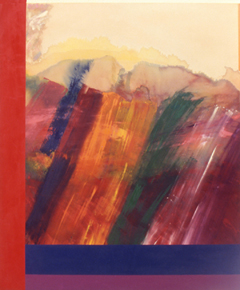
Color Field painting pointed toward a new direction in American painting, away from abstract expressionism. Related to Post-painterly abstraction, Suprematism, Abstract Expressionism, Hard-edge painting and Lyrical Abstraction,[75] Color Field painting sought to rid art of superfluous rhetoric. Artists like Clyfford Still, Mark Rothko, Hans Hofmann, Morris Louis, Jules Olitski, Kenneth Noland, Helen Frankenthaler, Larry Zox, and others painted with a highly articulated and psychological use of color. In general these artists eliminated recognizable imagery. Certain artists made references to past or present art, but in general color field painting presents abstraction as an end in itself. In pursuing this direction of modern art, artists wanted to present each painting as one cohesive, monolithic image. Gene Davis along with Kenneth Noland, Morris Louis and several others was a member of the Washington Color School painters who began to create Color Field paintings in Washington, D.C. during the 1950s and 1960s, Black, Grey, Beat is a large vertical stripe painting and typical of Gene Davis's work. Frank Stella, Kenneth Noland, Ellsworth Kelly, Barnett Newman, Ronald Davis, Neil Williams, Robert Mangold, Charles Hinman, Richard Tuttle, David Novros, and Al Loving are examples of artists associated with the use of the shaped canvas during the period beginning in the early 1960s.
From 1960 Frank Stella produced paintings in aluminum and copper paint and his first works using shaped canvases (canvases in a shape other than the traditional rectangle or square), often being in L, N, U or T-shapes. These later developed into more elaborate designs, in the Irregular Polygon series (1967), for example. Later he began his Protractor Series (1971) of paintings, in which arcs, sometimes overlapping, within square borders are arranged side by side to produce full and half circles painted in rings of concentric color. Harran II, 1967, is an example of the Protractor Series.
The Andre Emmerich Gallery, the Leo Castelli Gallery, the Richard Feigen Gallery, and the Park Place Gallery were important showcases for Color Field painting, shaped canvas painting and Lyrical Abstraction in New York City during the 1960s. There is a connection with post-painterly abstraction, which reacted against abstract expressionisms' mysticism, hyper-subjectivity, and emphasis on making the act of painting itself dramatically visible – as well as the solemn acceptance of the flat rectangle as an almost ritual prerequisite for serious painting. During the 1960s Color Field painting and Minimal art were often closely associated with each other. In actuality by the early 1970s both movements became decidedly diverse.
Lyrical Abstraction (the term being coined by Larry Aldrich, the founder of the Aldrich Contemporary Art Museum, Ridgefield Connecticut), encompassed what Aldrich said he saw in the studios of many artists at that time.[76] It is also the name of an exhibition that originated in the Aldrich Museum and traveled to the Whitney Museum of American Art and other museums throughout the United States between 1969 and 1971.[77] Lyrical Abstraction is a type of freewheeling abstract painting that emerged in the mid-1960s when abstract painters returned to various forms of painterly, pictorial, expressionism with a predominate focus on process, gestalt and repetitive compositional strategies in general.[78][79] In contrast to Action Painting, where emphasis is on brushstrokes and high compositional drama, in Lyrical Abstraction—as exemplified by the 1971 Ronnie Landfield painting Garden of Delight—there is a sense of compositional randomness, relaxed compositional drama and an emphasis on process, repetition, and an all over sensibility. Lyrical Abstraction in the late 1960s is characterized by the paintings of Dan Christensen, Ronnie Landfield, Peter Young and others, and along with the Fluxus movement and Postminimalism (a term first coined by Robert Pincus-Witten in the pages of Artforum in 1969)[80] sought to expand the boundaries of abstract painting and Minimalism by focusing on process, new materials and new ways of expression. Postminimalism often incorporating industrial materials, raw materials, fabrications, found objects, installation, serial repetition, and often with references to Dada and Surrealism is best exemplified in the sculptures of Eva Hesse.[80] Lyrical Abstraction, Conceptual Art, Postminimalism, Earth Art, Video, Performance art, Installation art, along with the continuation of Fluxus, Abstract Expressionism, Color Field painting, Hard-edge painting, Minimal Art, Op art, Pop art, Photorealism and New Realism extended the boundaries of Contemporary Art in the mid-1960s through the 1970s.[81]
Abstract Illusionism, Monochrome, Minimalism, Postminimalism
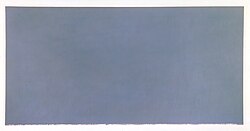
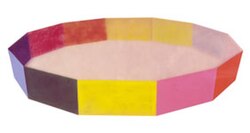
One of the first artists specifically associated with Minimalism was Frank Stella, whose early "stripe" paintings were highlighted in the 1959 show, "16 Americans", organized by Dorothy Miller at the Museum of Modern Art in New York. The widths of the stripes in Stella's stripe paintings were not entirely subjective, but were determined by the dimensions of the lumber used to construct the supportive chassis upon which the canvas was stretched. In the show catalog, Carl Andre noted, "Art excludes the unnecessary. Frank Stella has found it necessary to paint stripes. There is nothing else in his painting." These reductive works were in sharp contrast to the energy-filled and apparently emotionally charged paintings of Willem de Kooning or Franz Kline and leaned more toward less gestural coloristic field paintings of Barnett Newman and Mark Rothko.
Artists such as Larry Poons—whose work related to Op Art with his emphasis on dots, ovals and after-images bouncing across color fields—Kenneth Noland, Ralph Humphrey, Robert Motherwell and Robert Ryman had also begun to explore stripes, monochromatic and Hard-edge formats from the late 1950s through the 1960s.[82]
Because of a tendency in Minimalism to exclude the pictorial, illusionistic and fictive in favor of the literal—as demonstrated by Robert Mangold, who understood the concept of the shape of the canvas and its relationship to objecthood—there was a movement away from painterly and toward sculptural concerns. Donald Judd had started as a painter, and ended as a creator of objects. His seminal essay, "Specific Objects" (published in Arts Yearbook 8, 1965), was a touchstone of theory for the formation of Minimalist aesthetics. In this essay, Judd found a starting point for a new territory for American art, and a simultaneous rejection of residual inherited European artistic values. He pointed to evidence of this development in the works of an array of artists active in New York at the time, including Jasper Johns, Dan Flavin and Lee Bontecou. Of "preliminary" importance for Judd was the work of George Earl Ortman, who had concretized and distilled painting's forms into blunt, tough, philosophically charged geometries. These Specific Objects inhabited a space not then comfortably classifiable as either painting or sculpture. That the categorical identity of such objects was itself in question, and that they avoided easy association with well-worn and over-familiar conventions, was a part of their value for Judd.
In a much more general sense, one might find European roots of Minimalism in the geometric abstractions painters in the Bauhaus, in the works of Piet Mondrian and other artists associated with the movement DeStijl, in Russian Constructivists and in the work of the Romanian sculptor Constantin Brâncuși. American painters such as Brice Marden and Cy Twombly show a clear European influence in their pure abstraction, minimalist painting of the 1960s. Ronald Davis polyurethane works from the late 1960s pay homage to the Broken Glass of Marcel Duchamp. This movement was heavily criticised by high modernist formalist art critics and historians. Some anxious critics thought Minimalist art represented a misunderstanding of the modern dialectic of painting and sculpture as defined by critic Clement Greenberg, arguably the dominant American critic of painting in the period leading up to the 1960s. The most notable critique of Minimalism was produced by Michael Fried, a Greenbergian critic, who objected to the work on the basis of its "theatricality". In Art and Objecthood (published in Artforum in June 1967) he declared that the Minimalist work of art, particularly Minimalist sculpture, was based on an engagement with the physicality of the spectator. He argued that work like Robert Morris's transformed the act of viewing into a type of spectacle, in which the artifice of the act observation and the viewer's participation in the work were unveiled. Fried saw this displacement of the viewer's experience from an aesthetic engagement within, to an event outside of the artwork as a failure of Minimal art.
Ad Reinhardt, actually an artist of the Abstract Expressionist generation, but one whose reductive all-black paintings seemed to anticipate minimalism, had this to say about the value of a reductive approach to art: "The more stuff in it, the busier the work of art, the worse it is. More is less. Less is more. The eye is a menace to clear sight. The laying bare of oneself is obscene. Art begins with the getting rid of nature."[83]
During the 1960s and 1970s artists as powerful and influential as Adolph Gottlieb, Phillip Guston, Lee Krasner, Richard Diebenkorn, Elmer Bischoff, Agnes Martin, Sam Francis, Gene Davis, Joan Mitchell, Friedel Dzubas, and younger artists like Sam Gilliam, Sean Scully, Pat Steir, Elizabeth Murray, Walter Darby Bannard, Dan Christensen, Joan Snyder, Richard Tuttle, Ross Bleckner, Archie Rand, Susan Crile, and dozens of others produced vital and influential paintings.
Still other important innovations in abstract painting took place during the 1960s and the 1970s characterized by Monochrome painting and Hard-edge painting inspired by Ad Reinhardt, Barnett Newman, Milton Resnick, and Ellsworth Kelly. Artists as diversified as Al Held, Larry Zox, Frank Stella, Larry Poons, Brice Marden and others explored the power of simplification. The convergence of Color Field painting, Minimal art, Hard-edge painting, Lyrical Abstraction, and Postminimalism blurred the distinction between movements that became more apparent in the 1980s and 1990s. The Neo-expressionism movement is related to earlier developments in Abstract expressionism, Neo-Dada, Lyrical Abstraction and Postminimal painting.
Neo-expressionism
In the late 1960s the abstract expressionist painter Philip Guston helped to lead a transition from abstract expressionism to Neo-expressionism in painting, abandoning the so-called "pure abstraction" of abstract expressionism in favor of more cartoonish renderings of various personal symbols and objects. These works were inspirational to a new generation of painters interested in a revival of expressive imagery.[84] His painting Painting, Smoking, Eating is an example of Guston's return to representation.
In the late 1970s and early 1980s, there was also a return to painting that occurred almost simultaneously in Italy, Germany, France and Britain. These movements were called Transavantguardia, Neue Wilde, Figuration Libre,[85]Neo-expressionism, the school of London, and in the late 80s the Stuckists respectively. These painting were characterized by large formats, free expressive mark making, figuration, myth and imagination. All work in this genre came to be labeled neo-expressionism.
Neo-expressionism was a style of modern painting that became popular in the late 1970s and dominated the art market until the mid-1980s. It developed in Europe as a reaction against the conceptual and minimalistic art of the 1960s and 1970s. Neo-expressionists returned to portraying recognizable objects, such as the human body (although sometimes in a virtually abstract manner) in a rough and violently emotional way using vivid colors and banal color harmonies. The veteran painters Philip Guston, Frank Auerbach, Leon Kossoff, Gerhard Richter, A. R. Penck and Georg Baselitz, along with the slightly younger artists Damien Hirst, Anselm Kiefer, the Americans Eric Fischl, Susan Rothenberg, David Salle, Jean-Michel Basquiat, Julian Schnabel, and Keith Haring, the Italians Francesco Clemente, Mimmo Paladino, Sandro Chia, and Enzo Cucchi, and many others became known for working in this intense expressionist vein of painting. Critical reaction was divided. Some critics regarded it as driven by profit motivations by large commercial galleries.[84]
Anselm Kiefer is a leading figure in European Neo-expressionism.[86] By the 1980s, Kiefer's themes widened from a focus on Germany's role in civilization to the fate of art and culture in general. His work became more sculptural and involves not only national identity and collective memory, but also occult symbolism, theology and mysticism.[87] The theme of all the work is the trauma experienced by entire societies, and the continual rebirth and renewal in life.
Painting still holds a respected position in contemporary art. Art is an open field no longer divided by the objective versus non-objective dichotomy. Artists can achieve critical success whether their images are representational or abstract. What has currency is content, exploring the boundaries of the medium, and a refusal to recapitulate the works of the past as an end goal.[88][89][90]
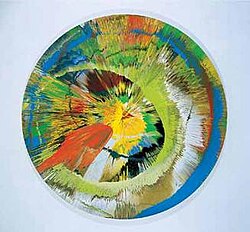
Contemporary painting
Throughout the 20th century and into the 21st century, with the advent of Modern and Postmodern art forms, distinctions between what is generally regarded as the fine arts and the low arts have started to fade,[91] as contemporary high art continues to challenge these concepts by mixing with popular culture.[92]
Mainstream painting has been rejected by artists of the postmodern era in favor of artistic pluralism.[93] According to art critic Arthur Danto there is an anything goes attitude that prevails; an "everything going on", and consequently "nothing going on" syndrome; this creates an aesthetic traffic jam with no firm and clear direction and with every lane on the artistic superhighway filled to capacity.[94]
See also
Sources
- Clement Greenberg, Art and Culture, Beacon Press, 1961
- Hendrickson, Janis (1988). Roy Lichtenstein. Cologne, Germany: Benedikt Taschen. ISBN 3-8228-0281-6.
- The Triumph of Modernism: The Art World, 1985–2005, Hilton Kramer, 2006, ISBN 0-15-666370-8
- Pictures of Nothing: Abstract Art since Pollock (A.W. Mellon Lectures in the Fine Arts), Kirk Varnedoe, 2003
- O'Connor, Francis V. Jackson Pollock Exhibition Catalogue, (New York, Museum of Modern Art, [1967]) OCLC 165852
- Lyrical Abstraction, Exhibition Catalogue, Whitney Museum of American Art, NYC, 1971.
- David Piper, The Illustrated Library of Art, Portland House, New York, 1986, ISBN 0-517-62336-6
- Agee, William C.; Rose, Barbara, 1979, Patrick Henry Bruce: American Modernist (exhibition catalogue), Houston: Museum of Fine Arts
On the effects of Gutenberg's printing
- Elizabeth L. Eisenstein, The Printing Press as an Agent of Change, Cambridge University Press, September 1980, Paperback, 832 pages, ISBN 0-521-29955-1
- More recent, abridged version: Elizabeth L. Eisenstein, The Printing Revolution in Early Modern Europe, Cambridge University Press, 2Rev ed, 12 September 2005, Paperback, ISBN 0-521-60774-4
- มาร์แชลล์ แมคลูฮาน , กาแล็กซีของกูเตนเบิร์ก: การสร้างมนุษย์แห่งการพิมพ์ (1962) สำนักพิมพ์มหาวิทยาลัยโทรอนโต (ฉบับพิมพ์ครั้งแรก); พิมพ์ซ้ำโดย Routledge & Kegan Paul ISBN 0-7100-1818-5.
- Briggs & Burke, ประวัติศาสตร์สังคมของสื่อ: การปฏิวัติการพิมพ์ในบริบท (2002)
ลิงก์ภายนอก
- ประวัติศาสตร์การวาดภาพ
- ประวัติศาสตร์ศิลปะ: จากยุคหินเก่าถึงศิลปะร่วมสมัย
- โรเบิร์ต ฮิวจ์ส จาก Artchive
- MNstate.edu เก็บถาวรเมื่อวันที่ 28 พฤษภาคม 2010 ที่Wayback Machine , Kandinskyเกี่ยวกับจิตวิญญาณในงานศิลปะ เข้าถึงทางออนไลน์เมื่อวันที่ 28 พฤษภาคม 2007