
อ่าน 185 นาที
ระบบทาสในกรุงโรมโบราณ
ระบบทาส มีบทบาทสำคัญใน สังคม และ เศรษฐกิจ ของ กรุงโรมโบราณ ทาสที่ไม่มีทักษะหรือมีทักษะต่ำทำงานในไร่นา เหมือง และโรงสี...
ระบบทาสในกรุงโรมโบราณ

| ส่วนหนึ่งของชุดบทความเกี่ยวกับ |
| การใช้แรงงานบังคับและการเป็นทาส |
|---|
ระบบทาสมีบทบาทสำคัญในสังคมและเศรษฐกิจของกรุงโรมโบราณทาสที่ไม่มีทักษะหรือมีทักษะต่ำทำงานในไร่นา เหมือง และโรงสี โดยมีโอกาสก้าวหน้าน้อยมากและโอกาสที่จะได้รับอิสรภาพก็มีน้อยเช่นกัน ส่วนทาสที่มีทักษะและได้รับการศึกษา—รวมถึงช่างฝีมือ พ่อครัว พนักงานในบ้านและผู้ติดตามส่วนตัวนักแสดงผู้จัดการธุรกิจ นักบัญชีและนายธนาคาร นักการศึกษาในทุกระดับ เลขานุการและบรรณารักษ์ ข้าราชการ และแพทย์—อยู่ในระดับที่ได้รับสิทธิพิเศษมากกว่าในระบบทาส และสามารถหวังที่จะได้รับอิสรภาพผ่านเส้นทางที่กำหนดไว้อย่างชัดเจนหลายเส้นทางพร้อมการคุ้มครองภายใต้กฎหมาย ความเป็นไปได้ของการปลดปล่อยและการเป็นพลเมืองในภายหลังเป็นลักษณะเด่นของระบบทาสของโรม ส่งผลให้มีจำนวนผู้ได้รับการปลดปล่อยจำนวนมากและมีอิทธิพลในสังคมโรมัน
ในทุกระดับของการจ้างงาน คนทำงานอิสระ อดีตทาส และทาสส่วนใหญ่ทำงานประเภทเดียวกัน ชนชั้นสูงของโรมันที่มีความมั่งคั่งจากการเป็นเจ้าของทรัพย์สินมองเห็นความแตกต่างเพียงเล็กน้อยระหว่างการเป็นทาสและการพึ่งพาการหารายได้จากการใช้แรงงาน ทาสเองก็ถือเป็นทรัพย์สินภายใต้กฎหมายโรมันและไม่มีสิทธิในฐานะบุคคลตามกฎหมาย ต่างจากพลเมืองโรมันพวกเขาสามารถถูกลงโทษทางร่างกาย ถูกแสวงประโยชน์ทางเพศ ถูกทรมาน และถูกประหารชีวิตโดยไม่ผ่านกระบวนการยุติธรรม การลงโทษที่โหดร้ายที่สุดสงวนไว้สำหรับทาส ความเพียงพอของอาหาร ที่พัก เสื้อผ้า และการดูแลสุขภาพของพวกเขานั้นขึ้นอยู่กับประโยชน์ที่เจ้าของมองเห็น ซึ่งแรงกระตุ้นของเจ้าของอาจโหดร้ายหรือมีเมตตาตามสถานการณ์
บางคนเกิดมาเป็นทาสตั้งแต่ยังเป็นลูกของแม่ที่เป็นทาส บางคนก็กลายเป็นทาสในภายหลัง เชลยศึกก็ถือว่าเป็นทาสตามกฎหมาย และการขยายอำนาจทางทหารของโรมันในช่วงยุคสาธารณรัฐก็เป็นแหล่งทาสที่สำคัญ ตั้งแต่ศตวรรษที่ 2 ก่อนคริสต์ศักราชจนถึงปลายยุคโบราณการลักพาตัวและการปล้นสะดมทำให้ผู้คนที่มีชาติกำเนิดอิสระทั่วทะเลเมดิเตอร์เรเนียนตกอยู่ในความเสี่ยงต่อการเป็นทาสอย่างผิดกฎหมาย โดยเฉพาะเด็กจากครอบครัวยากจน แม้ว่าจะมีกฎหมายห้ามการเป็น ทาสเนื่องจาก หนี้สิน ออกมา ตั้งแต่ช่วงต้นประวัติศาสตร์ของโรม แต่บางคนก็ขายตัวเองเป็นทาสตามสัญญาเพื่อหนีความยากจน การค้าทาสซึ่งเก็บภาษีและควบคุมอย่างหลวมๆ เฟื่องฟูไปทั่วทุกหนแห่งของจักรวรรดิโรมันและข้ามพรมแดน
ในสมัยโบราณ การเป็นทาสถูกมองว่าเป็นผลทางการเมืองจากการที่กลุ่มหนึ่งครอบงำอีกกลุ่มหนึ่ง และผู้คนจากทุกเชื้อชาติ ชาติพันธุ์ หรือถิ่นกำเนิด อาจตกเป็นทาสได้ รวมถึงชาวโรมันที่เกิดมาเป็นอิสระ การเป็นทาสมีอยู่ทั่วไปในทุกชุมชนของจักรวรรดิโรมัน รวมถึงในหมู่ชาวยิวและชาวคริสต์ แม้แต่ครัวเรือนที่มีฐานะปานกลางก็อาจมีทาสสองหรือสามคน
ยุคแห่งการก่อกบฏของทาสสิ้นสุดลงด้วยความพ่ายแพ้ของสปาร์ตาคัสในปี 71 ก่อนคริสต์ศักราช การลุกฮือของทาสลดน้อยลงในยุคจักรวรรดิเมื่อการหลบหนีของแต่ละบุคคลกลายเป็นรูปแบบการต่อต้านที่ยั่งยืนกว่า การไล่ล่าทาสที่หลบหนีเป็นรูปแบบการรักษาความสงบเรียบร้อยที่เข้มข้นที่สุดในจักรวรรดิโรมัน
การอภิปรายด้านศีลธรรมเกี่ยวกับทาสนั้นมุ่งเน้นไปที่การปฏิบัติต่อทาส และมุมมองของผู้ต่อต้านการเป็นทาสแทบจะไม่มีอยู่เลย จารึกที่ทาสและผู้ที่ได้รับการปลดปล่อยสร้างขึ้น รวมถึงศิลปะและการตกแต่งบ้านของพวกเขา ให้ภาพสะท้อนว่าพวกเขาเห็นตัวเองอย่างไร นักเขียนและนักปรัชญาบางคนในยุคโรมันเป็นอดีตทาสหรือเป็นบุตรของทาสที่ได้รับการปลดปล่อย นักวิชาการบางคนพยายามที่จะจินตนาการถึงประสบการณ์ชีวิตของทาสในโลกโรมันอย่างลึกซึ้งยิ่งขึ้นผ่านการเปรียบเทียบกับการค้าทาสข้ามมหาสมุทรแอตแลนติกแต่ภาพลักษณ์ของทาสโรมัน "ทั่วไป" นั้นไม่ปรากฏชัดเจนจากงานที่หลากหลายที่ทาสและผู้ที่ได้รับการปลดปล่อยทำ และความแตกต่างที่ซับซ้อนระหว่างสถานะทางสังคมและกฎหมายของ พวกเขา
ต้นกำเนิด
- คำศัพท์และวันที่ที่ใช้ในบทความนี้[ข]
- ราชวงศ์ 753–509 ปีก่อนคริสตกาล (กึ่งราชวงศ์)
- สาธารณรัฐ 509–27 ปีก่อนคริสตกาล
- ยุคสาธารณรัฐตอนต้น 509–280/260 ปีก่อนคริสตกาล
- สมัยสาธารณรัฐกลาง คริสต์ศตวรรษที่ 280–146 ก่อนคริสต์ศักราช
ยุคคลาสสิก ศตวรรษที่ 2 ก่อนคริสต์ศักราช – ศตวรรษที่ 2 หลังคริสต์ศักราช[ c ]
- ปลายยุคสาธารณรัฐ ค.ศ. 146–44 ก่อนคริสต์ศักราช
จักรวรรดิ 27 ปีก่อนคริสต์ศักราช–ค.ศ. 313 [ d ]
- สมัยการปกครองของจักรพรรดิ 27 ปีก่อนคริสต์ศักราช – ค.ศ. 284
- ยุคออกัสตัส 27 ปีก่อนคริสต์ศักราช – ค.ศ. 14
- สันติภาพโรมัน (Pax Romana)ศตวรรษที่ 1-2 หลังคริสต์ศักราช
- วิกฤตการณ์แห่งศตวรรษที่สาม
การเผยแพร่ศาสนาคริสต์เริ่มต้นในปี ค.ศ. 313 [ e ]
ปลายยุคโบราณค.ศ. 313 ถึงกลางศตวรรษที่ 7
- รัชสมัยของพระเจ้าคอนสแตนตินที่ 1ค.ศ. 306–337
- จักรวรรดิไบแซนไทน์ยุคต้น 330–636 [ f ]
- รัชสมัยของธีโอโดซิอุสค.ศ. 379–395
- รัชสมัยของจักรพรรดิจัสติเนียน ค.ศ. 527–565
ตั้งแต่ยุคประวัติศาสตร์แรกสุด ของโรม ทาสในบ้านเป็นส่วนหนึ่งของfamiliaซึ่งเป็นกลุ่มผู้พึ่งพาอาศัยในครัวเรือน—คำนี้โดยเฉพาะ หรือบางครั้งก็จำกัดอยู่เฉพาะการอ้างถึงทาสโดยรวม[ 3 ]พลินี (คริสต์ศตวรรษที่ 1) คิดถึงช่วงเวลาที่ "คนโบราณ" ใช้ชีวิตอย่างใกล้ชิดในครัวเรือนโดยไม่ต้องมี "ทาสจำนวนมาก"—แต่ก็ยังจินตนาการถึงชีวิตในบ้านที่เรียบง่ายกว่านี้โดยอาศัยทาสเป็นเครื่องค้ำจุน[ 4 ]
สมาชิกทุกคนในครอบครัวอยู่ภายใต้การปกครองของหัวหน้าครอบครัว หรือ "บิดา" หรือหัวหน้าครัวเรือน และโดยเฉพาะอย่างยิ่งเจ้าของที่ดิน ตามที่เซเนกา ได้กล่าวไว้ ชาวโรมันยุคแรกๆ ได้บัญญัติ คำว่า paterfamilias ขึ้นมา เพื่อใช้เป็นคำสุภาพแทนความสัมพันธ์ระหว่างนายกับทาส[ 5 ]คำว่า "นาย" คือdominusซึ่งหมายถึงผู้ที่ควบคุมอาณาเขตของdomus (ครัวเรือน) [ 6 ] dominiumคือคำที่ใช้เรียกอำนาจควบคุมทาส[ 7 ]หัวหน้าครอบครัวมีอำนาจเหนือชีวิตและความตาย(vitae necisque potestas)เหนือผู้ที่อยู่ในอุปการะของครัวเรือน[ 8 ]รวมถึงบุตรชายและบุตรสาว ตลอดจนทาส[ 9 ]นักประวัติศาสตร์ชาวกรีกไดโอนิเซียสแห่งฮาลิคาร์นัส (คริสต์ศตวรรษที่ 1) ยืนยันว่าสิทธินี้มีมาตั้งแต่สมัยในตำนานของโรมูลัส[ 10 ]
ตรงกันข้ามกับนครรัฐกรีกโรมมีประชากรหลากหลายเชื้อชาติและรวมอดีตทาสเข้าเป็นพลเมือง ไดโอนิเซียสพบว่าเป็นเรื่องน่าทึ่งที่เมื่อชาวโรมันปลดปล่อยทาส พวกเขายังให้สัญชาติโรมันแก่ทาสเหล่านั้นด้วย[ 11 ] ตำนานการก่อตั้งโรมพยายามอธิบายทั้งความหลากหลายนี้[ 12 ]และบทบาทของคนที่ได้รับการปลดปล่อยในสังคมโรมัน[ 13 ]การก่อตั้งในตำนานโดยโรมูลัสเริ่มต้นด้วยการที่เขาสร้างสถานที่ลี้ภัยซึ่งตามที่ลิวีนักประวัติศาสตร์ในยุคออกัสตัส กล่าว ไว้ ดึงดูด "อดีตทาส คนเร่ร่อน และผู้หลบหนีส่วนใหญ่ที่กำลังมองหาการเริ่มต้นใหม่" ในฐานะพลเมืองของเมืองใหม่ ซึ่งลิวีถือว่าเป็นแหล่งที่มาของความแข็งแกร่งของโรม[ 14 ] [ 15 ]เซอร์วิอุส ทุลลิอุสกษัตริย์องค์ที่หกแห่งโรมซึ่งเป็นเพียงตำนานกล่าวกันว่าเป็นบุตรชายของหญิงทาส[ 16 ] และบทบาททางวัฒนธรรมของการเป็นทาสฝังอยู่ใน เทศกาลทางศาสนาและวิหารบางแห่งที่ชาวโรมันเชื่อมโยงกับรัชสมัยของพระองค์
พัฒนาการทางกฎหมายและศาสนาบางประการที่เกี่ยวข้องกับการเป็นทาสสามารถสังเกตได้แม้ในสถาบันแรกเริ่มของโรมกฎหมายสิบสองตาราง ซึ่งเป็นประมวลกฎหมายโรมัน ฉบับแรกสุดซึ่งตามธรรมเนียมแล้วมีอายุราว 451/450 ปีก่อนคริสตกาล ไม่มีกฎหมายที่นิยามการเป็นทาส ซึ่งการมีอยู่ของการเป็นทาสนั้นถือเป็นเรื่องปกติอยู่แล้ว แต่มีการกล่าวถึงการปลดปล่อย[ 17 ]และสถานะของคนอิสระ ซึ่งเรียกว่าcives Romani liberti "คนอิสระที่เป็นพลเมืองโรมัน" ซึ่งบ่งชี้ว่าตั้งแต่ศตวรรษที่ 5 ก่อนคริสตกาล อดีตทาสเป็นกลุ่มประชากรสำคัญที่กฎหมายจำเป็นต้องจัดการ โดยมีเส้นทางทางกฎหมายสู่อิสรภาพและโอกาสในการมีส่วนร่วมในระบบกฎหมายและการเมือง[ 18 ]
นักกฎหมายโรมัน ไกอุส อธิบายว่าการเป็นทาสคือ "สถานะที่ได้รับการยอมรับโดยius gentiumซึ่งบุคคลหนึ่งอยู่ภายใต้การปกครองของบุคคลอื่นโดยขัดต่อธรรมชาติ" ( Institutiones 1.3.2, ค.ศ. 161) [ 19 ]อุลเปียน (คริสต์ศตวรรษที่ 2) ก็มองว่าการเป็นทาสเป็นแง่มุมหนึ่งของius gentium ซึ่งเป็น กฎหมายระหว่างประเทศตามธรรมเนียมปฏิบัติที่ใช้ร่วมกันในหมู่ประชาชนทั้งหมด ( gentes ) ในการแบ่งกฎหมายออกเป็นสามส่วนของอุลเปียน "กฎหมายของชาติ" ไม่ถือว่าเป็นทั้งกฎหมายธรรมชาติซึ่งเชื่อว่ามีอยู่ในธรรมชาติและควบคุมสัตว์เช่นเดียวกับมนุษย์ หรือกฎหมายแพ่งซึ่งเป็นประมวลกฎหมายเฉพาะของชนชาติหรือประเทศใดประเทศหนึ่ง[ 20 ]มนุษย์ทุกคนเกิดมาเป็นอิสระ ( liberi ) ภายใต้กฎหมายธรรมชาติ แต่เนื่องจากการเป็นทาสถือเป็นแนวปฏิบัติสากล แต่ละประเทศจึงพัฒนากฎหมายแพ่งของตนเองที่เกี่ยวข้องกับทาส[ 20 ] ในสงครามโบราณ ผู้ชนะมีสิทธิภายใต้ius gentiumที่จะจับประชากรที่พ่ายแพ้มาเป็นทาส อย่างไรก็ตาม หากมีการตกลงกันได้ผ่านการเจรจาทางการทูตหรือการยอมจำนนอย่างเป็นทางการตามธรรมเนียม แล้วประชาชนจะได้รับการยกเว้น จากความรุนแรงและการเป็นทาสius gentiumไม่ใช่ประมวลกฎหมาย [ 21 ]และผลบังคับใช้ใดๆ ก็ตามขึ้นอยู่กับ "การปฏิบัติตามมาตรฐานการประพฤติปฏิบัติระหว่างประเทศอย่างมีเหตุผล" [ 22 ]
แม้ว่าสงครามครั้งแรกๆ ของโรมจะเป็นสงครามป้องกันตนเอง[ 23 ]แต่ชัยชนะของโรมันก็ยังคงส่งผลให้ผู้แพ้ตกเป็นทาสภายใต้สถานการณ์เหล่านี้ ดังที่บันทึกไว้เมื่อสิ้นสุดสงครามกับเมืองเวอี ของ ชาวเอตรัสกันในปี 396 ก่อนคริสต์ศักราช[ 24 ]สงครามป้องกันตนเองยังทำให้สูญเสียกำลังคนสำหรับการเกษตร ทำให้ความต้องการแรงงานเพิ่มขึ้น ซึ่งความต้องการนี้สามารถตอบสนองได้ด้วยเชลยศึก[ 25 ]ตั้งแต่ศตวรรษที่ 6 ถึงศตวรรษที่ 3 ก่อนคริสต์ศักราช โรมค่อยๆ กลายเป็น "สังคมทาส" [ 26 ] โดย สงครามปุนิกสองครั้งแรก(265–201 ก่อนคริสต์ศักราช) ทำให้จำนวนทาสเพิ่มขึ้นอย่างมากที่สุด[ 27 ]
การเป็นทาสโดยมีโอกาสได้รับการปลดปล่อยกลายเป็นสิ่งที่ฝังรากลึกในสังคมโรมัน จนกระทั่งในศตวรรษที่ 2 หลังคริสต์ศักราช พลเมืองอิสระส่วนใหญ่ในเมืองโรมน่าจะมีทาส "อยู่ในบรรพบุรุษของพวกเขา" [ 28 ]
การจับพลเมืองโรมันไปเป็นทาส

ในสมัยโรมันยุคต้น กฎหมายสิบสองตารางอนุญาตให้ มีการเป็นทาสเนื่องจาก หนี้สินภายใต้เงื่อนไขที่โหดร้าย และทำให้ชาวโรมันที่เกิดมาเป็นอิสระต้องตกเป็นทาสอันเป็นผลมาจากความโชคร้ายทางการเงินกฎหมายในช่วงปลายศตวรรษที่ 4 ก่อน คริสต์ศักราช ได้ยุติการที่เจ้าหนี้จะบังคับให้ลูกหนี้ที่ผิดนัดชำระหนี้เป็นทาสในฐานะการกระทำส่วนตัว แม้ว่าลูกหนี้จะยังคงถูกบังคับโดยคำพิพากษาทางกฎหมายให้ทำงานเพื่อชำระหนี้ได้ก็ตาม[ 29 ]มิฉะนั้น วิธีเดียวในการบังคับให้พลเมืองที่เกิดมาเป็นอิสระเป็นทาสที่ชาวโรมันในยุคสาธารณรัฐยอมรับว่าถูกต้องตามกฎหมายคือการพ่ายแพ้ทางทหารและการจับกุมภายใต้ius gentium
ฮันนิบาลผู้นำชาวคาร์เธจได้จับเชลยศึกชาวโรมันจำนวนมากมาเป็นทาสในช่วงสงครามปุนิกครั้งที่สองหลังจากการพ่ายแพ้ของโรมันในยุทธการที่ทะเลสาบตราซิเมเน (217 ปีก่อนคริสต์ศักราช) สนธิสัญญามีเงื่อนไขเกี่ยวกับการไถ่ตัวเชลยศึกวุฒิสภาโรมันปฏิเสธที่จะทำเช่นนั้น และ ในที่สุด ผู้บัญชาการของพวกเขาก็ต้องจ่ายค่าไถ่ด้วยตนเอง หลังจากยุทธการคันนาเอ อันหายนะ ในปีต่อมา ฮันนิบาลได้กำหนดเงื่อนไขการไถ่ตัวเชลยอีกครั้ง แต่หลังจากอภิปรายแล้ว วุฒิสภาก็ลงมติไม่จ่ายอีกครั้ง โดยเลือกที่จะส่งข้อความว่าทหารควรต่อสู้จนกว่าจะได้รับชัยชนะหรือตาย ฮันนิบาลจึงขายเชลยศึกเหล่านี้ให้กับชาวกรีก และพวกเขายังคงเป็นทาสจนกระทั่งสงครามมาซิโดเนียครั้งที่สอง [ 30 ]เมื่อฟลามินินัสช่วยชาย 1,200 คนที่รอดชีวิตจากการเป็นทาสประมาณยี่สิบปีหลังจากคันนาเอ สงครามที่ทำให้จำนวนทาสที่ถูกนำเข้ามาในสังคมโรมันเพิ่มขึ้นอย่างมากในเวลาเดียวกันนั้น ทำให้พลเมืองโรมันจำนวนมากตกเป็นทาสอย่างที่ไม่เคยมีมาก่อน[ 31 ]
ในช่วงปลายสมัยสาธารณรัฐและในช่วงสมัยจักรวรรดิ ทหาร พลเมือง และทาสหลายพันคนในโรมันตะวันออกถูกจับเป็นเชลยและตกเป็นทาสโดยชาวพาร์เธียหรือต่อมาภายในจักรวรรดิซาสาเนียน [ 32 ] ชาวพาร์เธียจับกุมผู้รอดชีวิต 10,000 คนหลังจากการพ่ายแพ้ของมาร์คัส ครัสซัสในยุทธการคาร์เรในปี 53 ก่อนคริสต์ศักราช และนำพวกเขาเดินเท้าเป็นระยะทาง 1,500 ไมล์ไปยังมาร์เกียนาในแบคเทรียซึ่งชะตากรรมของพวกเขายังไม่เป็นที่ทราบแน่ชัด[ g ]ในขณะที่ความคิดที่จะนำธงประจำกองทัพโรมันที่สูญหายไปในยุทธการคาร์เรกลับคืนมาได้กระตุ้นความคิดทางการทหารมานานหลายทศวรรษ “ความกังวลอย่างเป็นทางการเกี่ยวกับการปลดปล่อยเชลยศึกโรมันนั้นน้อยกว่ามาก” [ 34 ]ประมาณสามสิบปีหลังจากการรบ กวีสมัยออกัสตัสอย่าง ฮอ เรซจินตนาการว่าพวกเขาแต่งงานกับหญิง “ป่าเถื่อน” และรับใช้กองทัพพาร์เธีย ซึ่งเสื่อมเสียเกียรติเกินกว่าจะกลับคืนสู่กรุงโรมได้[ 35 ] [ h ]

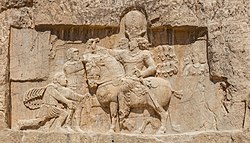
วาเลเรียนกลายเป็นจักรพรรดิองค์แรกที่ถูกจับเป็นเชลยหลังจากพ่ายแพ้ต่อชาปูร์ที่ 1ในยุทธการที่เอเดสซาในปี ค.ศ. 260 ตามแหล่งข้อมูลของคริสเตียนที่เป็นปฏิปักษ์ จักรพรรดิผู้ชราถูกปฏิบัติราวกับเป็นทาสและถูกดูหมิ่นเหยียดหยามอย่างน่าสยดสยอง[ 38 ]ภาพสลักและจารึกที่ตั้งอยู่ในสถานที่ศักดิ์สิทธิ์ ของ ศาสนา โซโรแอ สเตอร์ที่นาคช์-เอ รอสตัมทางตะวันตกเฉียงใต้ของอิหร่าน เฉลิมฉลองชัยชนะของชาปูร์ที่ 1 และผู้สืบทอดตำแหน่งของเขาเหนือชาวโรมัน โดยมีจักรพรรดิอยู่ภายใต้การปกครองและทหารโรมันจ่ายบรรณาการ[ 32 ]จารึกของชาปูร์บันทึกไว้ว่าทหารโรมันที่เขาจับเป็นทาสมาจากทุกหนทุกแห่งของจักรวรรดิ[ 39 ]
ชาวโรมันที่ตกเป็นทาสในสงครามภายใต้สถานการณ์เช่นนี้จะสูญเสียสิทธิพลเมืองในบ้านเกิด สิทธิในการเป็นเจ้าของทรัพย์สินของเขาจะถูกริบ การแต่งงานของเขาจะถูกยกเลิก และหากเขาเป็นหัวหน้าครอบครัว อำนาจทางกฎหมาย(potestas)เหนือผู้ที่อยู่ในความอุปการะของเขาจะถูกระงับ หากเขาได้รับการปล่อยตัวจากการเป็นทาส สถานะพลเมืองของเขาอาจได้รับการฟื้นฟูพร้อมกับทรัพย์สินและpotestas ของเขา อย่างไรก็ตาม การแต่งงานของเขาจะไม่ได้รับการต่ออายุโดยอัตโนมัติ จะต้องมีการจัดทำข้อตกลงยินยอมอีกครั้งโดยทั้งสองฝ่าย[ 40 ] [ 41 ]การสูญเสียความเป็นพลเมืองเป็นผลสืบเนื่องมาจากการยอมจำนนต่อรัฐอธิปไตยของศัตรู ประชาชนที่เกิดมาอย่างอิสระที่ถูกโจรหรือโจรสลัดลักพาตัวไปจะถือว่าถูกจับกุมอย่างผิดกฎหมาย ดังนั้นพวกเขาจึงสามารถได้รับการไถ่ตัว หรือการขายพวกเขาเป็นทาสจะถือเป็นโมฆะ โดยไม่กระทบต่อสถานะพลเมืองของพวกเขา ความแตกต่างระหว่างผลที่ตามมาของสถานะจากสงคราม(bellum)และจากการปล้น( latrocinium )อาจสะท้อนให้เห็นในความแตกต่างที่คล้ายคลึงกันของชาวยิวระหว่าง "เชลยของอาณาจักร" และ "เชลยของการปล้น" ซึ่งจะเป็นตัวอย่างที่หาได้ยากของกฎหมายโรมันที่มีอิทธิพลต่อภาษาและการกำหนดกฎหมายของรับบี[ 42 ]
กระบวนการทางกฎหมายที่พัฒนาขึ้นในตอนแรกเพื่อการรวมเชลยศึกกลับคืนสู่สังคม[ 43 ]คือpostliminium ซึ่งเป็นการกลับมาหลังจากผ่านพ้นเขตอำนาจศาลโรมันแล้วข้ามกลับข้าม "ธรณีประตู" (limen)ของตนเอง[ 44 ]ไม่ใช่เชลยศึกทุกคนที่มีสิทธิ์ได้รับการรวมกลับคืนสู่สังคม เงื่อนไขของสนธิสัญญาอาจอนุญาตให้อีกฝ่ายหนึ่งกักขังเชลย[ 45 ]ไว้เป็นservi hostiumหรือ "ทาสของศัตรู" [ 46 ]อาจมีการจ่ายค่าไถ่เพื่อไถ่ตัวเชลยเป็นรายบุคคลหรือเป็นกลุ่ม เชลยที่ถูกไถ่ตัวโดยบุคคลภายนอกครอบครัวจะต้องชำระเงินคืนก่อนจึงจะได้รับสิทธิ์เต็มที่ และถึงแม้เขาจะเป็นบุคคลที่เกิดมาเป็นอิสระ สถานะของเขาก็ยังไม่ชัดเจนจนกว่าจะมีการยกเลิกภาระผูกพัน[ 47 ]
ในสมัยจักรพรรดิฮาเดรียนได้ มีการกำหนดขั้นตอนการสอบสวนขึ้น เพื่อพิจารณาว่าทหารที่กลับมานั้นถูกจับกุมหรือยอมจำนนโดยสมัครใจหรือไม่ ผู้ทรยศ ผู้หนีทัพ และผู้ที่มีโอกาสหลบหนีแต่ไม่ได้พยายามหลบหนี จะไม่มีสิทธิ์ได้รับ การคืน สัญชาติหลังการเกณฑ์ ทหาร [ 48 ]
เนื่องจาก กฎหมาย postliminiumยังใช้กับการยึดทรัพย์สินเคลื่อนที่ของศัตรูด้วย[ 49 ]จึงเป็นวิธีการที่ทาสสนับสนุนทางทหารที่ถูกศัตรูยึดไปจะถูกนำกลับคืนสู่การครอบครองและฟื้นฟูสถานะทาสเดิมภายใต้เจ้าของชาวโรมัน[ 50 ]
ทาสในกฎหมายและสังคมโรมัน

โดยพื้นฐานแล้ว ทาสในกฎหมายโรมันโบราณคือผู้ที่ขาดlibertasซึ่งเสรีภาพถูกนิยามว่า "การปราศจากความเป็นทาส" [ 51 ] [ i ]ซิเซโร (ศตวรรษที่ 1 ก่อนคริสต์ศักราช) ยืนยันว่าเสรีภาพ "ไม่ได้อยู่ที่การมีนายที่ยุติธรรม(dominus)แต่เป็นการไม่มีนาย" [ 53 ]คำภาษาละตินทั่วไปสำหรับ "ทาส" คือservus [ j ]แต่ในกฎหมายโรมันทาสในฐานะทรัพย์สินเรียกว่าmancipium [ 54 ] ซึ่งเป็น คำที่เป็นกลางทางไวยากรณ์ [ 55 ]หมายถึงสิ่งที่ "ถือไว้ในมือ" manus ซึ่งเป็นคำอุปมาสำหรับการครอบครอง ดังนั้นจึง หมาย ถึง การควบคุมและการอยู่ใต้บังคับบัญชา[ 56 ]ทาสทางการเกษตร ที่ดินทำกินบางส่วนในคาบสมุทรอิตาลี และสัตว์เลี้ยงในฟาร์ม ล้วนเป็นres mancipiซึ่งเป็นประเภทของทรัพย์สินที่จัดตั้งขึ้นในเศรษฐกิจชนบทของกรุงโรมในยุคแรก โดยต้องมีกระบวนการทางกฎหมายอย่างเป็นทางการ( mancipatio )สำหรับการโอนกรรมสิทธิ์[ 57 ]สิทธิพิเศษในการค้าขายres mancipiเป็นลักษณะสำคัญของการเป็นพลเมืองโรมันในยุคสาธารณรัฐ ผู้อยู่อาศัยอิสระที่ไม่ใช่พลเมือง( peregrini )ไม่สามารถซื้อและขายทรัพย์สินประเภทนี้ได้หากไม่ได้รับสิทธิ์ทางการค้าพิเศษ[ k ]
พลเมืองโรมันผู้ได้รับเสรีภาพอย่างเต็มที่คือเจ้าของทรัพย์สิน หัวหน้าครอบครัว ( paterfamilias)ซึ่งมีสิทธิตามกฎหมายในการควบคุมทรัพย์สินหัวหน้าครอบครัวใช้อำนาจของตนภายในdomusซึ่งเป็น "บ้าน" ของครอบครัวขยายในฐานะนาย(dominus) [ 59 ] ระบบปิตาธิปไตยได้รับการยอมรับในกฎหมายโรมันในฐานะรูปแบบการปกครองระดับครัวเรือน[ l ]หัวหน้าครัวเรือนมีสิทธิจัดการผู้ที่อยู่ในความอุปการะและบริหารความยุติธรรมเฉพาะกิจแก่พวกเขาโดยมีการกำกับดูแลจากรัฐน้อยที่สุด ในกรุงโรมยุคแรก หัวหน้าครอบครัวมีสิทธิที่จะขาย ลงโทษ หรือฆ่าทั้งลูกๆ ของตน ( liberiซึ่งเป็น "ผู้เป็นอิสระ" ในครัวเรือน) และทาสของครอบครัวอำนาจแห่งชีวิตและความตายนี้ ซึ่งแสดงออกมาในรูปของvitae necisque potestasนั้น ถูกใช้กับสมาชิกทุกคนในครัวเรือนขยาย ยกเว้นภรรยาของเขา[ m ] — หญิงชาวโรมันที่เป็นอิสระสามารถเป็นเจ้าของทรัพย์สินของตนเองได้ในฐานะdominaและทาสของหญิงที่แต่งงานแล้วสามารถทำหน้าที่แทนเธอได้อย่างอิสระจากสามีของเธอ[ 62 ]แม้จะมีความสมมาตรเชิงโครงสร้าง แต่ซิเซโรได้กล่าวอย่างตรงไปตรงมาถึงความแตกต่างระหว่างการปกครองของบิดาที่มีต่อลูกๆ และทาสของเขาว่า นายสามารถคาดหวังให้ลูกๆ เชื่อฟังเขาได้อย่างง่ายดาย แต่จะต้อง "บังคับและทำลายทาสของเขา" [ 63 ]
แม้ว่าทาสจะได้รับการยอมรับว่าเป็นมนุษย์ ( homines , เอกพจน์homo ) แต่พวกเขาก็ขาดสถานะบุคคลตามกฎหมาย (ภาษาละตินpersona) [ 64 ]เนื่องจากขาดสถานะทางกฎหมายในฐานะบุคคล ทาสจึงไม่สามารถทำสัญญาทางกฎหมายในนามของตนเองได้ ในทางปฏิบัติ เขาจึงยังคงเป็นผู้เยาว์ตลอดไป ทาสไม่สามารถถูกฟ้องร้องหรือเป็นโจทก์ในคดีความได้[ 64 ]คำให้การของทาสไม่สามารถยอมรับได้ในศาล[ 65 ]เว้นแต่ทาสจะถูกทรมาน ซึ่งเป็นแนวปฏิบัติที่อิงตามความเชื่อที่ว่าทาสที่อยู่ในตำแหน่งที่รู้เห็นกิจการของเจ้านายของตนควรมีความจงรักภักดีอย่างมีคุณธรรมเกินกว่าที่จะเปิดเผยหลักฐานที่สร้างความเสียหายเว้นแต่จะถูกบังคับ[ 66 ]แม้ว่าชาวโรมันจะทราบดีว่าคำให้การที่ได้มาภายใต้การทรมานนั้นไม่น่าเชื่อถือ[ 67 ]ทาสไม่ได้รับอนุญาตให้เป็นพยานต่อต้านเจ้านายของตนเว้นแต่ข้อกล่าวหาจะเป็นการทรยศ ( crimen maiestatis )เมื่อทาสก่ออาชญากรรม การลงโทษที่ได้รับมักจะรุนแรงกว่ามากเมื่อเทียบกับอาชญากรรมเดียวกันที่กระทำโดยคนอิสระ[ 64 ]บุคลิกภาพค่อยๆ กลายเป็น "คำพ้องความหมายกับธรรมชาติที่แท้จริงของบุคคล" ในโลกโรมัน ตามมุมมองของมาร์เซล มอสส์แต่ " servus non habet personam ('ทาสไม่มีบุคลิกภาพ') เขาไม่มีบุคลิกภาพ เขาไม่ได้เป็นเจ้าของร่างกายของเขา เขาไม่มีบรรพบุรุษ ไม่มีชื่อ ไม่มีฐานะไม่มีทรัพย์สินเป็นของตนเอง" [ 68 ]
เนื่องมาจากกฎหมายที่เพิ่มมากขึ้น ในยุคจักรวรรดิ นายทาสอาจต้องรับโทษฐานฆ่าทาสโดยไม่มีเหตุอันควร และอาจถูกบังคับให้ขายทาสเนื่องจากการทารุณกรรม[ 64 ]คลอเดียสออกพระราชกฤษฎีกาว่า หากทาสถูกนายทาสทอดทิ้ง ทาสนั้นก็จะเป็นอิสระเนโรให้สิทธิแก่ทาสในการร้องเรียนนายทาสในศาล และในสมัยของอันโตนินัส ปิอุสนายทาสที่ฆ่าทาสโดยไม่มีเหตุอันควรอาจถูกดำเนินคดีในข้อหาฆาตกรรม[ 69 ]ตั้งแต่กลางถึงปลายศตวรรษที่ 2 ทาสมีสิทธิมากขึ้นในการร้องเรียนเกี่ยวกับการปฏิบัติที่โหดร้ายหรือไม่ยุติธรรมจากเจ้าของ[ 70 ]แต่เนื่องจากแม้ในสมัยโบราณตอนปลาย ทาสก็ยังไม่สามารถฟ้องร้อง ไม่สามารถให้การเป็นพยานได้หากไม่ถูกทรมานก่อน และอาจถูกลงโทษด้วยการเผาทั้งเป็นหากให้การเป็นพยานต่อต้านนายทาส จึงไม่ชัดเจนว่าความผิดเหล่านี้จะถูกนำขึ้นสู่ศาลและดำเนินคดีได้อย่างไร หลักฐานที่แสดงว่ามีการดำเนินคดีนั้นมีน้อยมาก[ 71 ]
เนื่องจากจักรวรรดิโรมันกำลังกลายเป็นคริสเตียนคอนสแตนตินที่ 2 (จักรพรรดิ ค.ศ. 337–340) จึงห้ามชาวยิวเป็นเจ้าของทาสที่เป็นคริสเตียน เปลี่ยนทาสของตนให้เป็นชาวยิว หรือขลิบทาสของตน กฎหมายในช่วงปลายยุคโบราณที่ขัดขวางการอยู่ภายใต้การปกครองของชาวยิวแสดงให้เห็นว่ากฎหมายเหล่านี้มีจุดมุ่งหมายเพื่อปกป้องเอกลักษณ์ของคริสเตียน[ 72 ]เนื่องจากครัวเรือนคริสเตียนยังคงมีทาสที่เป็นคริสเตียนอยู่[ 73 ]
การแต่งงานและครอบครัว
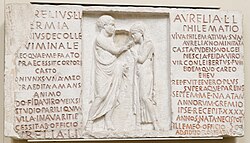
ในกฎหมายโรมัน ทาสไม่มีความสัมพันธ์ทางเครือญาติ —ไม่มีเชื้อสายบรรพบุรุษหรือเชื้อสายบิดา และไม่มีญาติทางสายรอง [ 75 ] การขาดสถานะบุคคลตามกฎหมายหมายความว่าทาสไม่สามารถเข้าสู่รูปแบบการแต่งงานที่ได้รับการยอมรับภายใต้กฎหมายโรมันและทาสชายไม่ถือว่าเป็นบิดาตามกฎหมายเพราะเขาไม่สามารถใช้อำนาจปกครองแบบปิตาธิปไตยได้[ 76 ] [ 77 ] [ 78 ]อย่างไรก็ตาม ทาสที่เกิดในครอบครัวและทาสที่ "ก้าวหน้า" [ 79 ]ซึ่งดำรงตำแหน่งที่มีสิทธิพิเศษ อาจสร้างความสัมพันธ์แบบต่างเพศกับคู่ครองที่ตั้งใจจะให้ยั่งยืนหรือถาวร ซึ่งอาจเลี้ยงดูบุตรได้[ 80 ]ความสัมพันธ์ดังกล่าว ไม่ว่าจะจัดเตรียมไว้[ 81 ]หรือได้รับการอนุมัติและยอมรับโดยเจ้าของทาส[ 82 ]เรียกว่าcontubernium แม้จะไม่ใช่การแต่งงานอย่างเป็นทางการ แต่ก็มีผลทางกฎหมายที่นักกฎหมายโรมันได้กล่าวถึงในกฎหมายคดี และแสดงถึงเจตนาที่จะแต่งงานหากทั้งสองฝ่ายได้รับอิสรภาพ[ n ] โดยปกติแล้ว contubernium คือการอยู่ร่วมกันระหว่างทาสสองคนในครัวเรือนเดียวกัน[ 84 ]และcontuberniaจะถูกบันทึกไว้พร้อมกับการเกิดการตาย และการได้รับอิสรภาพในครัวเรือนขนาดใหญ่ที่เกี่ยวข้องกับวงศ์ตระกูล[ 85 ]บางครั้งมีเพียงฝ่ายเดียว(contubernalis)ที่ได้รับสถานะอิสระก่อนที่อีกฝ่ายจะเสียชีวิต ดังที่จารึกไว้ในหลุมศพ[ 86 ]การรวมตัวกันแบบกึ่งสมรสเหล่านี้พบได้ทั่วไปในหมู่ทาสของจักรวรรดิ[ 87 ]
นายทาสมีสิทธิตามกฎหมายที่จะแยกหรือขายสมาชิกในครอบครัว และบางครั้งก็มีการสันนิษฐานว่าพวกเขากระทำเช่นนั้นโดยพลการ[ 88 ]แต่เนื่องจากชาวโรมันให้คุณค่ากับทาสที่เลี้ยงดูในบ้าน( vernae ) ใน การขยายครอบครัว ของพวกเขา [ 89 ]จึงมีหลักฐานเพิ่มเติมว่าการก่อตั้งหน่วยครอบครัว แม้ว่าจะไม่ได้รับการยอมรับว่าเป็นเช่นนั้นเพื่อวัตถุประสงค์ของกฎหมายและการสืบทอดมรดก แต่ก็ได้รับการสนับสนุนภายในครัวเรือนในเมืองขนาดใหญ่และในที่ดินในชนบท[ 90 ]นักกฎหมายโรมันที่พิจารณาการกระทำที่อาจทำให้ครอบครัวทาสแตกแยกโดยทั่วไปมักสนับสนุนให้พวกเขารวมกัน และการคุ้มครองพวกเขาปรากฏหลายครั้งในสารบบกฎหมายโรมันที่รู้จักกันในชื่อDigest [ 91 ] นายทาสที่ยกที่ดินในชนบทของตนให้แก่ทายาทมักจะรวมถึงแรงงานทาสด้วย บางครั้งมีข้อกำหนดที่ชัดเจนว่าครอบครัวทาส—พ่อและแม่ ลูก และหลาน—จะต้องอยู่ด้วยกัน[ 92 ]
ในบรรดากฎหมายที่ออกโดยออกัสตัสเกี่ยวกับการแต่งงานและศีลธรรมทางเพศ มีกฎหมายฉบับหนึ่งที่อนุญาตให้หญิงที่ได้รับการปลดปล่อยเป็นอิสระและชายที่เกิดมาเป็นอิสระซึ่งมีฐานะต่ำกว่าวุฒิสภาสามารถแต่งงานกันได้อย่างถูกต้องตามกฎหมาย และรับรองทายาทของพวกเขาได้[ 93 ]นายสามารถปลดปล่อยทาสเพื่อจุดประสงค์ในการแต่งงานกับเธอ โดยกลายเป็นทั้งผู้อุปถัมภ์และสามีของเธอ[ 94 ]สตรีชาวโรมัน รวมถึงหญิงที่ได้รับการปลดปล่อยเป็นอิสระ สามารถเป็นเจ้าของทรัพย์สินและเริ่มต้นการหย่าร้างได้ซึ่งต้องอาศัยความตั้งใจของคู่สมรสเพียงฝ่ายเดียว แต่เมื่อการแต่งงานเป็นเงื่อนไขของข้อตกลงการปลดปล่อยหญิงที่ได้รับการปลดปล่อยเป็นอิสระ เธอจะไม่มีสิทธิเหล่านี้[ 95 ]หากเธอต้องการหย่ากับผู้อุปถัมภ์ของเธอและแต่งงานกับคนอื่น เธอต้องได้รับความยินยอมจากเขา[ 96 ]แสดงหลักฐานว่าเขาไม่มีความสามารถทางจิตที่จะมีความตั้งใจ[ 97 ]หรือแสดงให้เห็นว่าเขาได้ละเมิดข้อผูกพันของพวกเขาโดยวางแผนที่จะแต่งงานกับคนอื่นหรือมีภรรยาน้อย[ 98 ]
เพคูเลียม
เนื่องจากทาสโรมันเองก็ถือเป็นทรัพย์สิน(res)ตามกฎหมายแล้ว ทาสโรมันไม่สามารถเป็นเจ้าของทรัพย์สินได้ อย่างไรก็ตาม พวกเขาสามารถถือครองและจัดการทรัพย์สินได้ ซึ่งพวกเขาสามารถใช้ได้ราวกับว่าเป็นของตนเอง แม้ว่าในที่สุดแล้วทรัพย์สินนั้นจะเป็นของนายของพวกเขา[ 99 ]กองทุนหรือทรัพย์สินที่จัดสรรไว้สำหรับทาสเรียกว่าpeculiumอิซิโดร์แห่งเซบียามองย้อนกลับไปในช่วงต้นศตวรรษที่ 7 ได้ให้คำจำกัดความนี้ว่า " peculiumในความหมายที่แท้จริงคือสิ่งที่เป็นของเด็กหรือทาส เพราะpeculiumคือสิ่งที่บิดาหรือนายอนุญาตให้บุตรหรือทาสของตนจัดการราวกับเป็นของตนเอง" [ 100 ]
การปฏิบัติที่อนุญาตให้ทาสมีที่ดินส่วนตัว ( peculium)น่าจะมีต้นกำเนิดมาจากที่ดินเกษตรกรรมที่จัดสรรที่ดินผืนเล็กๆ ไว้ให้ครอบครัวทาสได้ปลูกอาหารเอง คำว่าpeculiumชี้ให้เห็นถึงการเพิ่มปศุสัตว์ ( pecus ) ผลผลิตส่วนเกินสามารถนำไปขายในตลาดได้ เช่นเดียวกับการปฏิบัติอื่นๆ ที่ส่งเสริมบทบาทของทาสในการพัฒนาทักษะของตนเองที่ดินส่วนตัว ในรูปแบบแรกเริ่มนี้ ทำหน้าที่เป็นหลักจริยธรรมของการพึ่งพาตนเอง และอาจกระตุ้นให้ทาสมีประสิทธิภาพมากขึ้น ซึ่งท้ายที่สุดแล้วจะเป็นประโยชน์ต่อเจ้าของทาส นำไปสู่โอกาสที่ซับซ้อนมากขึ้นในการพัฒนาธุรกิจและการจัดการความมั่งคั่งสำหรับทาสเมื่อเวลาผ่านไป[ 101 ]

ทาสในครัวเรือนที่ร่ำรวยหรือที่ดินในชนบทอาจได้รับเงินส่วนตัวจำนวนเล็กน้อยเป็นค่าเบี้ยเลี้ยง[ 103 ]ภาระผูกพันของนายในการจัดหาปัจจัยยังชีพให้แก่ทาสนั้นไม่นับรวมเป็นส่วนหนึ่งของเงินส่วนตัวตามดุลยพินิจนี้การเติบโตของเงินส่วนตัวมาจากการออมของทาสเอง รวมถึงกำไรที่กันไว้จากสิ่งที่ค้างชำระแก่นายอันเป็นผลมาจากการขายหรือธุรกรรมทางธุรกิจที่ดำเนินการโดยทาส และสิ่งใดก็ตามที่บุคคลที่สามมอบให้แก่ทาสเพื่อ "การบริการอันทรงคุณค่า" [ 104 ]รายได้ของทาสเองอาจเป็นแหล่งที่มาดั้งเดิมของเงินส่วนตัวมากกว่าการให้โดยนาย[ 105 ]และในจารึกบางครั้งทาสและผู้ที่ได้รับการปลดปล่อยอ้างว่าพวกเขาได้จ่ายเงินสำหรับการอุทิศ "ด้วยเงินของตนเอง" [ 106 ]เงินส่วนตัวในรูปแบบของทรัพย์สินอาจรวมถึงทาสอื่น ๆ ที่มอบให้แก่ผู้ถือเงินส่วนตัว[ 107 ]ในความหมายนี้ จารึกมักจะบันทึกไว้ว่าทาส "เป็นของ" ทาสอีกคนหนึ่ง [ 108 ] ทรัพย์สินอื่น ๆ ไม่สามารถเป็นของบุคคลที่อยู่ในอุปการะของครัวเรือนได้ ซึ่งหมายถึงบุคคลที่อยู่ภายใต้อำนาจของหัวหน้าครอบครัว —รวมถึงไม่เพียงแต่ทาสเท่านั้น แต่ยังรวมถึงบุตรชายที่บรรลุนิติภาวะแล้วแต่ยังถือว่าเป็นผู้เยาว์ตามกฎหมายจนกว่าบิดาจะเสียชีวิต ทรัพย์สินทั้งหมดเป็นของหัวหน้าครัวเรือน ยกเว้นทรัพย์สินที่ภรรยาเป็นเจ้าของโดยอิสระ[ 109 ] ซึ่งทาสของภรรยาอาจดำเนินงานด้วย ลักษณะเฉพาะของตนเองจากภรรยา[ 110 ]
การหลีกเลี่ยงทางกฎหมายของpeculiumทำให้ทั้งบุตรชายที่เป็นผู้ใหญ่และทาสที่มีความสามารถสามารถจัดการทรัพย์สิน สร้างผลกำไร และเจรจาสัญญาได้[ 111 ]ข้อความทางกฎหมายไม่ได้ยอมรับความแตกต่างพื้นฐานระหว่างทาสและบุตรชายที่ทำหน้าที่เป็นตัวแทนทางธุรกิจ( institor )อย่างไรก็ตาม ข้อจำกัดทางกฎหมายเกี่ยวกับการให้กู้ยืมแก่บุตรชายที่ยังไม่ได้รับการปลดปล่อย ซึ่งนำมาใช้ในช่วงกลางศตวรรษที่ 1 หลังคริสต์ศักราช ทำให้พวกเขามีประโยชน์น้อยกว่าทาสในบทบาทนี้[ 112 ]
ทาสที่มีทักษะและโอกาสในการหารายได้อาจหวังที่จะเก็บเงินได้มากพอที่จะซื้ออิสรภาพของตน[ 113 ] [ 114 ]มีความเสี่ยงที่ทาสที่ยังคงถูกกดขี่อยู่นั้น นายทาสอาจผิดสัญญาและเรียกรายได้คืน แต่หนึ่งในมาตรการคุ้มครองทาสที่ขยายวงกว้างขึ้นในยุคจักรวรรดิคือ ข้อตกลงการปลดปล่อยทาสระหว่างทาสกับนายทาสสามารถบังคับใช้ได้[ 115 ]แม้ว่าจะมีทาสเพียงไม่กี่คนเท่านั้นที่ควบคุมเงินจำนวนมาก[ 116 ]แต่ทาสที่บริหารจัดการทรัพย์สินส่วนตัวมีโอกาสได้รับอิสรภาพมากกว่ามาก ด้วยความเฉลียวฉลาดทางธุรกิจนี้ ทาสที่ได้รับการปลดปล่อยบางคนจึงสะสมทรัพย์สินมหาศาล[ 115 ]
การปลดปล่อย

ทาสได้รับการปลดปล่อยจากการควบคุมของนายทาสผ่านการกระทำทางกฎหมายที่เรียกว่าmanumissio (" การปลดปล่อยทาส ") ซึ่งหมายถึง "การปลดปล่อยจากมือ" [ 117 ] (de manu missio) [ 118 ] การกระทำที่เทียบเท่ากันสำหรับการปลดปล่อยเด็กที่ยังไม่บรรลุนิติภาวะจากอำนาจทางกฎหมาย ( potestas ) ของบิดา คือemancipatioซึ่งเป็นที่มาของคำภาษาอังกฤษว่า " emancipation " ทั้ง manumission และ emancipation จะเกี่ยวข้องกับการโอน ทรัพย์สิน (กองทุนหรือทรัพย์สิน) บางส่วนหรือทั้งหมดที่ทาสหรือเด็กที่ยังไม่บรรลุนิติภาวะได้จัดการไว้ หักด้วยค่าใช้จ่ายในการซื้ออิสรภาพของทาสเอง[ 119 ]การที่กระบวนการทั้งสองขนานกันในการยกเลิกการควบคุมของหัวหน้าครอบครัวนั้นแสดงให้เห็นได้จากข้อสมมติทางกฎหมายที่ ทำให้เกิด การขาย (mancipatio) ขึ้น กล่าว คือ ในทางเทคนิคแล้ว มันคือการขาย( mancipatio ) บุตรชายผู้เยาว์สามครั้งในคราวเดียว โดยอิงตามบทบัญญัติโบราณของกฎหมายสิบสองตารางที่ระบุว่า บุตรชายที่ ถูก ขายสามครั้งจะได้รับการปลดปล่อยจาก อำนาจของบิดา[ 120 ] [ 121 ] [ o ]
ทาสในราชสำนักของจักรพรรดิ ( familia Caesaris ) มักได้รับการปลดปล่อยเมื่ออายุ 30 ถึง 35 ปี ซึ่งเป็นอายุที่ไม่ควรนำมาเป็นมาตรฐานสำหรับทาสคนอื่นๆ[ 122 ]ภายในfamilia Caesarisหญิงสาวในวัยเจริญพันธุ์ดูเหมือนจะมีโอกาสได้รับการปลดปล่อยมากที่สุด[ 123 ]ทำให้เธอสามารถแต่งงานและมีบุตรที่ถูกต้องตามกฎหมายและเป็นอิสระได้[ 124 ]แม้ว่าโดยทั่วไปแล้วผู้หญิงอาจจะไม่คาดหวังว่าจะได้รับการปลดปล่อยจนกว่าจะพ้นวัยเจริญพันธุ์ไปแล้ว[ 125 ] [หน้า]ทาสที่มีทรัพย์สินส่วนตัว มาก พออาจซื้ออิสรภาพให้กับเพื่อนทาส เพื่อนร่วมห้องขัง หรือหุ้นส่วนทางธุรกิจได้[ 127 ]ทั้งอายุและระยะเวลาการรับใช้ไม่ได้เป็นเหตุผลโดยอัตโนมัติสำหรับการปลดปล่อย[ 128 ] "ความเอื้อเฟื้อเผื่อแผ่ของเจ้านายไม่ได้เป็นแรงผลักดันเบื้องหลังการปฏิบัติต่อทาสของชาวโรมัน" [ 129 ]
นักวิชาการมีความเห็นแตกต่างกันเกี่ยวกับอัตราการปลดปล่อย[ 130 ]แรงงานใช้แรงงานที่ถูกปฏิบัติเสมือนทรัพย์สินมีโอกาสน้อยที่สุดที่จะได้รับการปลดปล่อย ในขณะที่ทาสในเมืองที่มีทักษะหรือได้รับการศึกษาสูงมีโอกาสมากที่สุด ความหวังมักจะมากกว่าความเป็นจริงเสมอ แม้ว่ามันอาจจะกระตุ้นให้ทาสบางคนทำงานหนักขึ้นและปฏิบัติตามอุดมคติของ "คนรับใช้ที่ซื่อสัตย์" การเสนออิสรภาพเป็นรางวัล เจ้าของทาสสามารถจัดการกับปัญหาทางศีลธรรมของการเป็นทาสได้โดยการวางภาระของความดีความชอบไว้บนทาส—ทาส "ที่ดี" สมควรได้รับอิสรภาพ และคนอื่นๆ ไม่สมควรได้รับ[ 131 ]การปลดปล่อยหลังจากช่วงเวลาของการรับใช้อาจเป็นผลลัพธ์ที่เจรจาต่อรองกันของความเป็นทาสตามสัญญาแม้ว่าพลเมืองที่สมัครใจเข้าสู่การเป็นทาสที่ไม่เป็นอิสระจะถูกห้ามไม่ให้ได้รับการคืนสิทธิ์อย่างเต็มที่[ 132 ] [ 133 ] [ 134 ]
การปลดปล่อยทาสที่มีผลผูกพันทางกฎหมายมีอยู่ 3 ประเภท ได้แก่ การใช้ไม้เรียว การสำรวจสำมะโนประชากร และตามเงื่อนไขในพินัยกรรมของ เจ้าของ [ 135 ]ทั้งสามประเภทได้รับการรับรองโดยรัฐ[ 136 ]พิธีสาธารณะของmanumissio vindicta ("ด้วยไม้เรียว") เป็นการพิจารณาคดีสมมติ[ 137 ] [ q ]ที่ต้องดำเนินการต่อหน้าผู้พิพากษาที่มีอำนาจปกครองพลเมืองโรมันประกาศให้ทาสเป็นอิสระ เจ้าของไม่คัดค้าน พลเมืองแตะต้องทาสด้วยไม้เท้าและกล่าวสูตร และผู้พิพากษายืนยัน[ 138 ]เจ้าของอาจปลดปล่อยทาสได้โดยเพียงแค่ให้บันทึกชื่อทาสลงในทะเบียนพลเมืองอย่างเป็นทางการในระหว่างการสำรวจสำมะโนประชากร[ 139 ]โดยหลักการแล้วผู้ตรวจการมีอำนาจฝ่ายเดียวในการปลดปล่อยทาสใดๆ ให้รับใช้ผลประโยชน์ของรัฐในฐานะพลเมือง[ 140 ]ทาสอาจได้รับการปลดปล่อยในพินัยกรรมของเจ้าของ ( manumissio testamento ) บางครั้งโดยมีเงื่อนไขของการรับใช้หรือการชำระเงินก่อนหรือหลังได้รับอิสรภาพ[ 141 ]ทาสที่ได้รับรางวัลการปลดปล่อยในพินัยกรรมบางครั้งยังได้รับมรดกซึ่งอาจรวมถึงการโอนกรรมสิทธิ์ของcontubernalis (คู่ครองที่ไม่เป็นทางการ) ให้แก่เขาหรือเธอ[ 142 ]ทายาทอาจเลือกที่จะทำให้การปลดปล่อยตามพินัยกรรมซับซ้อนขึ้น เนื่องจากเงื่อนไขทั่วไปคือทาสต้องซื้ออิสรภาพของตนจากทายาท และทาสที่ยังคงปฏิบัติตามเงื่อนไขของอิสรภาพของตนอาจถูกขาย หากไม่มีทายาทที่ถูกต้อง นายทาสอาจไม่เพียงแต่ปลดปล่อยทาส แต่ยังทำให้เขาเป็นทายาทด้วย[ 143 ]การปลดปล่อยอย่างเป็นทางการไม่สามารถเพิกถอนได้โดยผู้มีอุปการคุณ และเนโรได้ตัดสินว่ารัฐไม่มีความสนใจที่จะทำเช่นนั้น[ 144 ]
อิสรภาพอาจได้รับอย่างไม่เป็นทางการ เช่นโดยทางจดหมายที่ระบุเจตนานี้ หรือ โดยระหว่าง เพื่อนฝูงโดยเจ้าของประกาศอิสรภาพของทาสต่อหน้าพยาน ในช่วงสาธารณรัฐ การปลดปล่อยทาสอย่างไม่เป็นทางการไม่ได้ให้สถานะพลเมือง[ 145 ]แต่จักรพรรดิออกัสตัสได้ดำเนินการเพื่อชี้แจงสถานะของผู้ที่ได้รับอิสรภาพดังกล่าว[ 146 ]กฎหมาย ได้สร้างสถานะ " ภาษาละตินจูเนียน" ให้แก่ทาสที่ได้รับอิสรภาพอย่างไม่เป็นทางการเหล่านี้ ซึ่งเป็นเหมือน "บ้านกึ่งกลางระหว่างความเป็นทาสและอิสรภาพ" ที่ไม่มอบสิทธิ์ในการทำพินัยกรรม[ 145 ]
ในปี 2 ก่อนคริสต์ศักราช กฎหมายLex Fufia Caniniaจำกัดจำนวนทาสที่สามารถปลดปล่อยได้ตามพินัยกรรมของนายทาส โดยให้เป็นไปตามสัดส่วนของขนาดทรัพย์สิน[ 147 ]หกปีต่อมากฎหมายอีกฉบับหนึ่งห้ามการปลดปล่อยทาสที่มีอายุน้อยกว่าสามสิบปี โดยมีข้อยกเว้นบางประการ[ 148 ]ทาสในครัวเรือนของจักรพรรดิเองเป็นกลุ่มที่มีโอกาสได้รับการปลดปล่อยมากที่สุด และข้อกำหนดทางกฎหมายตามปกติไม่สามารถนำมาใช้ได้[ 149 ]
ในช่วงต้นศตวรรษที่ 4 เมื่อจักรวรรดิเริ่มนับถือศาสนาคริสต์ ทาสสามารถได้รับการปลดปล่อยโดยพิธีกรรมในโบสถ์ ซึ่งดำเนินการโดยบิชอปหรือนักบวชที่ได้รับการแต่งตั้งคอนสแตนตินที่ 1ได้ประกาศใช้พระราชกฤษฎีกาอนุญาตให้มี การปลดปล่อยทาสภายในโบสถ์ (manumissio in ecclesia)ในปี ค.ศ. 316 และ 323 แม้ว่ากฎหมายนี้จะไม่ได้มีผลบังคับใช้ในแอฟริกาจนกระทั่งปี ค.ศ. 401 โบสถ์ได้รับอนุญาตให้ปลดปล่อยทาสในหมู่สมาชิก และนักบวชสามารถปลดปล่อยทาสของตนเองได้โดยการประกาศง่ายๆ โดยไม่ต้องยื่นเอกสารหรือมีพยาน[ 150 ] กฎหมายเช่นNovella 142 ของจัสติเนียนในศตวรรษที่ 6 ให้อำนาจแก่บิชอปในการปลดปล่อยทาส[ 151 ]
คนปลดปล่อย
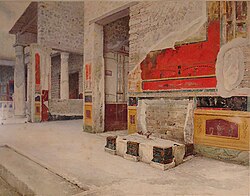
ทาสชายที่ได้รับการปลดปล่อยอย่างถูกต้องตามกฎหมายโดยพลเมืองโรมันไม่เพียงแต่ได้รับอิสรภาพจากการเป็นเจ้าของเท่านั้น แต่ยังได้รับอิสรภาพทางการเมือง ( libertas ) รวมถึงสิทธิในการออกเสียงเลือกตั้งด้วย[ 152 ]ทาสที่ได้รับอิสรภาพจึงเป็นlibertus ("บุคคลที่ได้รับการปลดปล่อย" เพศหญิงliberta ) ในความสัมพันธ์กับอดีตนายของเขา ซึ่งต่อมากลายเป็นผู้อุปถัมภ์ ( patronus ) ของเขา ผู้ได้รับการปลดปล่อยและผู้อุปถัมภ์มีภาระผูกพันซึ่งกันและกันภายในเครือข่ายอุปถัมภ์ แบบดั้งเดิม และผู้ได้รับการปลดปล่อยยังสามารถ "สร้างเครือข่าย" กับผู้อุปถัมภ์คนอื่นๆ ได้อีกด้วย[ 153 ]พระราชกฤษฎีกาในปี 118 ก่อนคริสต์ศักราชระบุว่า ผู้ได้รับการปลดปล่อยมีความรับผิดชอบทางกฎหมายเฉพาะต่อบริการหรือโครงการ(operae)ที่ได้ระบุไว้เป็นเงื่อนไขหรือสาบานไว้ล่วงหน้าเท่านั้น ไม่สามารถเรียกร้องเงินได้ และผู้ได้รับการปลดปล่อยบางคนได้รับการยกเว้นจากoperae อย่างเป็นทางการใด ๆ[ 154 ]กฎหมายLex Aelia Sentia ของ ค.ศ. 4 อนุญาตให้ผู้มีอุปการคุณฟ้องร้องทาสที่ได้รับการปลดปล่อยของตนต่อศาลได้ หาก ทาสนั้นไม่ปฏิบัติตามข้อตกลงการปลดปล่อยทาสที่ระบุไว้ แต่บทลงโทษที่เป็นไปได้—ซึ่งมีความรุนแรงแตกต่างกันไป ตั้งแต่การตักเตือนและปรับเงิน ไปจนถึงการตัดสินให้ทำงานหนัก—ไม่เคยรวมถึงการกลับไปเป็นทาสอีกเลย[ 155 ]
ในฐานะชนชั้นทางสังคม ทาสที่ได้รับการปลดปล่อยเรียกว่าลิเบอร์ตินีแม้ว่านักเขียนรุ่นหลังจะใช้คำว่าลิเบอร์ตัสและลิเบอร์ตินัสสลับกันไปมาก็ตาม[ 156 ] [ 157 ]ลิเบอร์ตินีไม่มีสิทธิ์ดำรงตำแหน่งผู้พิพากษาหรือนักบวชของรัฐในนครโรม และไม่สามารถบรรลุตำแหน่งวุฒิสมาชิกได้[ 158 ]แต่พวกเขาสามารถดำรงตำแหน่งในระดับย่านและท้องถิ่น ซึ่งทำให้พวกเขามีสิทธิ์สวมโทกาปราเอเท็กซ์ตาซึ่งโดยปกติสงวนไว้สำหรับผู้ที่มีตำแหน่งสูงกว่า สำหรับพิธีการและพิธีศพของพวกเขา[ 159 ]ในเมือง( มูนิซิเปีย )ของจังหวัดและต่อมาในเมืองที่มีสถานะเป็นโคโลเนียจารึกบ่งชี้ว่าอดีตทาสสามารถได้รับการเลือกตั้งให้ดำรงตำแหน่งทั้งหมดที่ต่ำกว่าตำแหน่งปราเอเตอร์ซึ่งเป็นข้อเท็จจริงที่ถูกบดบังด้วยวรรณกรรมชั้นสูงและอุปสรรคทางกฎหมายที่เห็นได้ชัด[ 160 ]อุลเปียนยังถือว่าหากทาสที่หลบหนีสามารถได้รับการเลือกตั้งเป็นผู้พิพากษา การกระทำตามกฎหมายของเขาจะยังคงมีผลใช้ได้หากสถานะที่แท้จริงของเขาถูกเปิดเผย เนื่องจากชาวโรมันได้เลือกที่จะมอบอำนาจให้แก่เขา[ 161 ]ข้อจำกัดต่างๆ ถูกกำหนดไว้เฉพาะกับอดีตทาสเองเท่านั้น และไม่ใช้กับบุตรชายของพวกเขา[ 162 ]

ในช่วงต้นยุคจักรวรรดิ คนที่ได้รับการปลดปล่อยบางคนมีอำนาจมาก ผู้ที่เป็นส่วนหนึ่งของราชสำนักจักรพรรดิ(familia Caesaris)สามารถกลายเป็นข้าราชการสำคัญในระบบราชการของรัฐบาลได้ บางคนขึ้นสู่ตำแหน่งที่มีอิทธิพลมาก เช่นนาร์ซิสซัส อดีตทาสของจักรพรรดิคลอเดียสอิทธิพลของพวกเขาเติบโตขึ้นมากภายใต้จักรพรรดิจูลิโอ-คลอเดียนจนฮาเดรียนต้องจำกัดการมีส่วนร่วมของพวกเขาโดยกฎหมาย[ 163 ]
ตัวอย่างที่พบได้ทั่วไปในเรื่องราวความสำเร็จของคนปลดปล่อยคือธุรกิจขายเสื้อคลุมของลูเซียส อาร์เลนัส เดเมตริอุส ผู้เป็นทาสจากซิลิเซีย และลูเซียส อาร์เลนัส อาร์เทมิดอรัส จากปาฟลาโกเนียซึ่งนามสกุลเดียวกันของพวกเขาบ่งชี้ว่าการเป็นหุ้นส่วนกันเพื่อสร้างธุรกิจที่มั่นคงและทำกำไรได้นั้นเริ่มต้นขึ้นในระหว่างที่พวกเขายังเป็นทาส[ 164 ]คนปลดปล่อยบางคนร่ำรวยมาก พี่น้องที่เป็นเจ้าของบ้านเวทติซึ่งเป็นหนึ่งในบ้านที่ใหญ่ที่สุดและงดงามที่สุดในปอมเปอีเชื่อกันว่าเป็นคนปลดปล่อย[ 165 ]การสร้างสุสานและอนุสาวรีย์ที่น่าประทับใจสำหรับตนเองและครอบครัวเป็นอีกวิธีหนึ่งที่คนปลดปล่อยแสดงให้เห็นถึงความสำเร็จของพวกเขา[ 166 ]แม้จะมีทรัพย์สินและอิทธิพล แต่พวกเขาก็อาจยังถูกชนชั้นสูงแบบดั้งเดิมดูถูกว่าเป็นพวก คนรวย ใหม่ที่ หยาบคาย ในหนังสือซาไทริคอนตัวละครทริมัลคิโอเป็นภาพล้อเลียนของคนปลดปล่อยเช่นนั้น[ 167 ]
เดดิติซี
แม้ว่าโดยทั่วไปแล้วทาสที่ได้รับการปลดปล่อยสามารถกลายเป็นพลเมืองได้ แต่ผู้ที่ถูกจัดประเภทเป็นdediticiiจะไม่มีสิทธิใดๆ แม้ว่าจะได้รับการปลดปล่อยแล้วก็ตามนักกฎหมาย Gaiusเรียกสถานะของdediticius ว่า "อิสรภาพที่เลวร้ายที่สุด" [ 168 ]ทาสที่เจ้านายปฏิบัติต่อพวกเขาเหมือนอาชญากร — โดยการล่าม โซ่ สักหรือตีตราทรมานพวกเขาเพื่อให้สารภาพความผิด จำคุกพวกเขา หรือส่งพวกเขาไปโรงเรียนฝึกนักรบกลาดิเอเตอร์ ( ludus ) โดยไม่สมัครใจ หรือตัดสินให้พวกเขาต่อสู้กับนักรบกลาดิเอเตอร์หรือสัตว์ป่า —หากได้รับการปลดปล่อยจะถูกนับว่าเป็นภัยคุกคามต่อสังคมร่วมกับศัตรูที่พ่ายแพ้ในสงคราม[ 169 ]โดยไม่คำนึงว่าการลงโทษของเจ้านายของพวกเขาจะสมเหตุสมผลหรือไม่ หากพวกเขาเข้ามาใกล้กรุงโรมในระยะ 100 ไมล์[ r ]พวกเขาก็จะตกเป็นทาสอีกครั้ง[ 170 ] Dediticiiถูกยกเว้นจากการมอบสิทธิพลเมืองโรมันแก่ประชาชนอิสระทุกคนในจักรวรรดิที่Caracalla มอบให้ ในปี ค.ศ. 212 [ 171 ]
สาเหตุของการเป็นทาส

“ทาสนั้นเกิดมาหรือถูกทำให้เป็น” (servi aut nascuntur aut fiunt) : [ 172 ]ในโลกโรมันโบราณ ผู้คนอาจตกเป็นทาสอันเป็นผลมาจากสงคราม การปล้นสะดม การลักพาตัว หรือการทอดทิ้งเด็ก—ความกลัวที่จะตกเป็นทาส ซึ่งแสดงออกบ่อยครั้งในวรรณกรรมโรมัน ไม่ใช่เพียงแค่การพูดเกินจริง[ 173 ]ทาสจำนวนมากเป็นvernaeซึ่งเกิดจากหญิงทาสภายในบ้าน ( domus ) หรือในฟาร์มหรือที่ดินเกษตรกรรมของครอบครัว ( villa ) นักวิชาการบางคนเสนอว่า การที่คนเกิดมาเป็นอิสระขายตัวเองเป็นทาสนั้นเกิดขึ้นบ่อยกว่าที่แหล่งข้อมูลทางวรรณกรรมเพียงอย่างเดียวจะบ่งชี้[ 174 ]สัดส่วนสัมพัทธ์ของสาเหตุเหล่านี้ของการตกเป็นทาสในประชากรทาสนั้นยากที่จะระบุและยังคงเป็นหัวข้อของการถกเถียงทางวิชาการ[ 175 ]
เชลยศึก
ในช่วงยุคสาธารณรัฐ (509–27 ปีก่อนคริสตกาล) สงครามถือเป็นแหล่งที่มาของทาสที่สำคัญที่สุด[ 176 ] [ 177 ]และแน่นอนว่าเป็นสาเหตุของการเพิ่มขึ้นอย่างเห็นได้ชัดของจำนวนทาสที่ชาวโรมันครอบครองในช่วงสาธารณรัฐตอนกลางและตอนปลาย[ 178 ]การรบครั้งใหญ่อาจส่งผลให้มีเชลยศึกจำนวนหลายร้อยถึงหลายหมื่นคน[ 179 ] [ 180 ]ทาสที่ถูกจับมาใหม่จะถูกซื้อขายกันเป็นจำนวนมากโดยพ่อค้าที่ติดตามกองทัพโรมัน[ 181 ]ครั้งหนึ่งในสงครามกอล หลังจากที่ จูเลียส ซีซาร์ปิดล้อมเมืองที่มีกำแพงล้อมรอบของ ชาวอาดั วตู ซี เขาได้ขายประชากรทั้งหมดจำนวน 53,000 คน ให้กับพ่อค้าทาสในทันที[ 182 ]
สงครามยังคงก่อให้เกิดทาสให้กับโรมตลอดช่วงยุคจักรวรรดิ[ 183 ]แม้ว่าเชลยศึกอาจมีความสำคัญน้อยลงในฐานะแหล่งที่มาในช่วงต้นศตวรรษที่ 1 หลังคริสต์ศักราช หลังจากที่การรณรงค์ครั้งใหญ่ของออกัสตัสจักรพรรดิองค์แรก สิ้นสุดลงในช่วงปลายชีวิตของพระองค์[ 184 ]สงครามขนาดเล็กและไม่ต่อเนื่องที่เรียกว่าPax Romanaในศตวรรษที่ 1 และ 2 ยังคงก่อให้เกิดทาส "ในจำนวนที่ไม่น้อยเลย" [ 185 ]

ตัวอย่างหนึ่งของผลกระทบต่อชุมชนหนึ่งคือ ในช่วงเวลานี้มีการค้าทาสจำนวนมากที่สุดจากแคว้นยูเดียอันเป็นผลมาจากสงครามระหว่างชาวยิวกับโรมัน (ค.ศ. 66–135) [ 186 ]โจเซฟัสนักประวัติศาสตร์ชาวยิวรายงานว่าการกบฏครั้งใหญ่ของชาวยิวในปี ค.ศ. 66–70 เพียงอย่างเดียวส่งผลให้มีผู้คนตกเป็นทาสถึง 97,000 คน[ 187 ]จักรพรรดิเวสปาเซียน ในอนาคต ขายเชลยศึก 30,400 คนจากทาริเคียให้เป็นทาสหลังจากประหารชีวิตผู้ที่แก่หรืออ่อนแอ อีก 6,000 เชลยหนุ่มถูกส่งไปทำงานในคลองคอรินท์ [ 188 ] เมื่อไททัสบุตรชายและผู้สืบทอดตำแหน่งในอนาคตของเวสปาเซียนยึดเมืองยาฟาได้ เขาได้ฆ่าผู้ชายทั้งหมดและขายผู้หญิงและเด็ก 2,130 คนให้เป็นทาส[ 189 ]สิ่งที่ดูเหมือนจะเป็นกรณีพิเศษของอุปทานล้นตลาดทาสของโรมันเกิดขึ้นในปี ค.ศ. 137 หลังจากที่การกบฏของบาร์โคคบาถูกปราบปราม และมีทาสมากกว่า 100,000 คนถูกนำออกสู่ตลาด ทาสชาวยิวในช่วงเวลาหนึ่งสามารถซื้อได้ที่เฮบรอนหรือกาซาในราคาเดียวกับม้า[ 190 ]
ความต้องการทาสอาจเป็นสาเหตุของการกระทำที่ขยายอำนาจบางอย่างที่ดูเหมือนจะไม่มีแรงจูงใจทางการเมืองอื่นใด เช่นบริเตนมอเรตาเนียและดาเซียอาจเป็นดินแดนที่น่าปรารถนาในการพิชิตเพื่อเป็นแหล่งแรงงานเป็นหลัก เช่นเดียวกับการรณรงค์ของโรมันข้ามพรมแดนของจังหวัด ใน แอฟริกา[ 185 ]
Captiviในวัฒนธรรมโรมัน
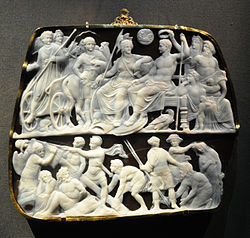
วารสารฉบับ นี้ เสนอที่มาของคำที่เชื่อมโยงคำว่าservusกับเชลยศึกในฐานะทางเลือกแทนการฆ่าผู้พ่ายแพ้: "ทาส(servi)ถูกเรียกเช่นนั้นเพราะผู้บัญชาการขายเชลยศึกและทำให้การช่วยชีวิต(servare)แทนที่จะฆ่าเป็นเรื่องปกติ" [ 191 ] ตำนาน หนึ่งของโรมูลัสกล่าวว่าเขาเริ่มต้นการปฏิบัติในการรวมเชลยศึกเข้าสู่สังคมโรมันโดยการเป็นทาสแทนที่จะสังหารพวกเขา จูเลียส ซีซาร์ปิดฉากการรณรงค์ต่อต้านชาวกอลเวเนติโดยการประหารวุฒิสภาของพวกเขา แต่ขายผู้รอดชีวิตsub corona "ใต้พวงมาลัย" [ 192 ]ของที่ยึดได้จากสงคราม รวมถึงดินแดนที่ถูกพิชิต มักจะถูกประมูลsub hasta "ใต้หอก" ซึ่งเป็นสัญลักษณ์ของอำนาจอธิปไตยของโรมัน[ 193 ]และ "ขายใต้หอก" จึงมีความหมายว่า "ประมูลขาย" แต่เชลยศึกถูกกล่าวว่าขายภายใต้ "ใต้พวงมาลัย" [ 194 ]เพราะในสมัยก่อนพวกเขาจะถูกสวมพวงมาลัย[ s ]เหมือนเหยื่อบูชายัญ[ 196 ] ( hostiaซึ่งOvidเชื่อมโยงกับhostis "ศัตรู" [ 197 ] )
วัฒนธรรมโรมันได้สร้างสรรค์งานศิลปะเพื่อตอบสนองต่อการปรากฏตัวของเชลยศึกตั้งแต่สมัยสงครามปุนิก เมื่อนักเขียนบทละครตลกพลอตุส ได้เขียนเรื่องCaptivi ("เชลยศึก" ประมาณ 200 ปีก่อนคริสตกาล) [ 198 ]สมมติฐานทางวัฒนธรรมที่ว่าการเป็นทาสเป็นผลตามธรรมชาติของการพ่ายแพ้ในสงครามสะท้อนให้เห็นในงานศิลปะของจักรวรรดิที่แสดงภาพเชลยศึกอย่างแพร่หลาย ซึ่งภาพนี้ไม่ได้ปรากฏเฉพาะในบริบทสาธารณะที่ใช้เพื่อจุดประสงค์ในการโฆษณาชวนเชื่อและการเฉลิมฉลองชัยชนะเท่านั้น แต่ยังปรากฏบนวัตถุที่ดูเหมือนจะมีไว้สำหรับใช้ในครัวเรือนและการจัดแสดงส่วนตัว เช่น รูปปั้น โคมไฟเครื่องปั้นดินเผาอาร์เรตินและอัญมณี[ 199 ]
การโจรสลัดและการลักพาตัว
การโจรสลัดมีประวัติศาสตร์อันยาวนานในการค้ามนุษย์[ 200 ]เป้าหมายหลักของการลักพาตัวไม่ใช่การเป็นทาส แต่เป็นการเพิ่มผลกำไรสูงสุด[ 201 ]เนื่องจากญาติของผู้ถูกจับกุมคาดว่าจะต้องจ่ายค่าไถ่[ 202 ]คนที่ห่วงใยเรื่องการได้ตัวผู้ถูกจับกุมกลับคืนมามีแรงจูงใจที่จะจ่ายมากกว่าคนแปลกหน้าหากผู้ถูกจับกุมถูกประมูลเป็นทาส เนื่องจากราคาจะถูกกำหนดโดยคุณสมบัติเฉพาะตัวของผู้ถูกจับกุม แต่บางครั้งก็ไม่สามารถจ่ายค่าไถ่ได้ หากทาสถูกลักพาตัว เจ้าของอาจตัดสินใจหรือไม่ตัดสินใจว่าจำนวนค่าไถ่นั้นคุ้มค่า หากมีคนหลายคนจากเมืองเดียวกันถูกลักพาตัวไปพร้อมกัน และไม่สามารถจ่ายค่าไถ่ได้เป็นการส่วนตัว เมืองต้นทางอาจพยายามจ่ายค่าไถ่จากงบประมาณสาธารณะ แต่ความพยายามเหล่านี้ก็อาจไม่เพียงพอเช่นกัน[ 203 ]ผู้ถูกจับกุมอาจหันไปกู้ยืมเงินค่าไถ่จากผู้ให้กู้ที่แสวงหาผลกำไร ซึ่งในทางปฏิบัติแล้วทำให้ตนเองตกอยู่ในภาวะเป็นหนี้ต่อพวกเขา การขายเหยื่อที่ถูกลักพาตัวในตลาดเปิดถือเป็นทางเลือกสุดท้ายแต่ก็ไม่ใช่เรื่องแปลก[ 201 ]
ไม่มีนักเดินทางคนใดปลอดภัย จูเลียส ซีซาร์เองก็ถูกโจรสลัดซิลิเซีย จับตัวไป ตั้งแต่ยังหนุ่ม เมื่อโจรสลัดรู้ว่าเขามีค่าตัวสูง พวกเขาจึงเรียกค่าไถ่เขาที่ยี่สิบเหรียญเมื่อเรื่องราวนี้ถูกเล่าขาน ซีซาร์ยืนกรานให้พวกเขาเพิ่มค่าไถ่เป็นห้าสิบเหรียญ เขาถูกคุมขังเป็นเวลาสามสิบแปดวันในขณะที่พวกเขารอค่าไถ่[ 204 ]เมื่อได้รับการปล่อยตัว เขาได้กลับมาและลงโทษผู้จับกุมเขาด้วยวิธีการประหารชีวิตตามธรรมเนียมที่สงวนไว้สำหรับทาส นั่นคือการตรึงกางเขน[ 205 ]
ภายในชุมชนชาวยิวเหล่ารับบีมักจะสนับสนุนการซื้อตัวชาวยิวที่ถูกจับเป็นทาสกลับคืนมาแต่แนะนำว่า "ไม่ควรไถ่ตัวเชลยในราคาที่สูงเกินจริง เพื่อความเป็นระเบียบเรียบร้อยของโลก" เพราะค่าไถ่ที่สูงเกินจริงจะ "กระตุ้นให้ชาวโรมันจับชาวยิวมาเป็นทาสมากยิ่งขึ้น" [ 206 ]ในคริสตจักรยุคแรก การไถ่ตัวเชลยถือเป็นงานการกุศล(caritas)และหลังจากที่จักรวรรดิอยู่ภายใต้การปกครองของคริสเตียน คริสตจักรต่างๆ ได้ใช้ "เงินจำนวนมหาศาล" เพื่อซื้อตัวนักโทษคริสเตียนกลับคืนมา[ 207 ]
การปล้นสะดมทางทะเลอย่างเป็นระบบเพื่อจุดประสงค์ในการค้ามนุษย์แพร่หลายมากที่สุดในศตวรรษที่ 2 ก่อนคริสต์ศักราช เมื่อเมืองไซด์ในแพมฟิเลีย (ในประเทศตุรกีในปัจจุบัน) เป็นศูนย์กลางของการค้า[ 208 ]ปอมเปย์ได้รับการยกย่องว่ากำจัดโจรสลัดจากทะเลเมดิเตอร์เรเนียนได้ในปี 67 ก่อนคริสต์ศักราช[ 209 ]แต่มีการดำเนินการต่อต้าน โจรสลัด อิลลีเรียนในปี 31 ก่อนคริสต์ศักราชหลังจากการรบที่แอคติอุม [ 210 ] และการปล้นสะดมทางทะเลยังคงเป็นปัญหาที่ต้องได้รับการแก้ไขในรัชสมัยของออกัสตัสและไทเบเรียส แม้ว่าการปล้นสะดมทางทะเลขนาดใหญ่จะถูกควบคุมได้มากหรือน้อยในช่วงสันติภาพโรมันแต่การลักพาตัวโดยโจรสลัดยังคงมีส่วนทำให้โรมันมีทาสเพิ่มขึ้นในช่วงปลายยุคจักรวรรดิ แม้ว่าอาจจะไม่ใช่แหล่งทาสใหม่ที่สำคัญนัก[ 211 ]ในช่วงต้นศตวรรษที่ 5 หลังคริสต์ศักราชออกัสตินแห่งฮิปโปยังคงคร่ำครวญถึงการลักพาตัวในวงกว้างในแอฟริกาเหนือ[ 212 ]แพทริเซียส มิชชันนารีชาวคริสต์จากบริเตนโรมันถูกโจรสลัดลักพาตัวไปราว ค.ศ. 400 และถูกนำตัวไปเป็นทาสที่ไอร์แลนด์ที่นั่นเขายังคงทำงานต่อไปจนในที่สุดก็ได้รับการยกย่องให้เป็น นักบุญ แพทริก[ 213 ]
เวอร์เน่

ตามกฎหมายทั่วไปของประเทศ( ius gentium )บุตรของมารดาที่ถูกกดขี่เป็นทาสตามกฎหมายนั้นเกิดมาเป็นทาส[ 214 ]คำภาษาละตินสำหรับทาสที่เกิดภายในครอบครัวของครัวเรือน ( domus ) หรือที่ดินเกษตรกรรม ( villa ) คือvernaพหูพจน์คือ vernae
มีภาระผูกพันทางสังคมที่เข้มแข็งกว่าในการดูแลทาส ที่ ถูกเลี้ยงดูในบ้าน ซึ่งบางครั้งจารึกบนหลุมศพของพวกเขาก็ระบุว่าเป็นเช่นนั้น และบางครั้งพวกเขาก็อาจเป็นบุตรทางสายเลือดของชายอิสระในครัวเรือน[ 215 ] [ 216 ]การกล่าวถึงทาสที่ ถูกเลี้ยงดูในบ้านบ่อยครั้ง ในแหล่งข้อมูลทางวรรณกรรมบ่งชี้ว่าทาสที่ถูกเลี้ยงดูในบ้านไม่เพียงแต่เป็นที่ต้องการมากกว่าทาสที่ได้มาจากตลาดค้าทาสเท่านั้น แต่ยังได้รับการปฏิบัติเป็นพิเศษอีกด้วยทาสที่ถูกเลี้ยงดูในบ้านมีแนวโน้มที่จะได้รับอนุญาตให้อยู่ร่วมกันเป็นคู่ ( contubernium ) และเลี้ยงดูบุตรของตนเอง[ 217 ]เด็กทาสที่ถูกเลี้ยงดูในบ้านอาจได้รับการเลี้ยงดูควบคู่ไปกับบุตรของเจ้าของที่มีอายุเท่ากัน แม้กระทั่งใช้แม่นมคนเดียวกัน[ 218 ]พวกเขามีโอกาสทางการศึกษามากกว่า และอาจได้รับการศึกษาร่วมกับบุตรที่เกิดมาเป็นอิสระในครัวเรือน[ 219 ]ทาสที่มีความรู้ความสามารถหลายคนเป็นทาสที่ถูกเลี้ยงดูในบ้าน[ 220 ]จารึกอุทิศที่ลงวันที่ ค.ศ. 198 ระบุรายชื่อของอดีตทาส 24 คนที่เป็นครู( paedagogi )โดย 6 คนถูกระบุว่าเป็นvernae [ 221 ]การใช้vernaในจารึกหลุมศพของอดีตทาสบ่งชี้ว่าอดีตทาสอาจภาคภูมิใจในชาติกำเนิดของตนในครอบครัว ( familia ) [ 222 ]
แต่การเกิดมาเป็นvernaอาจมีด้านมืดได้ ขึ้นอยู่กับว่าเด็กเกิดและเติบโตใน "บ้าน" ประเภทใดVernaeที่เกิดจากคนงานซ่องโสเภณีที่เป็นทาสถูกโฆษณาในลักษณะนั้นด้วยภาพเขียนบนผนังจากปอมเปอีบางครั้งก็มีการระบุราคาหรือบริการทางเพศที่พวกเธอให้บริการ จากvernaeที่ได้รับการบันทึกไว้ในจารึกที่ปอมเปอี 71% เกี่ยวข้องกับการค้าประเวณีและการเลี้ยงดูในซ่องโสเภณีดูเหมือนจะถูกมองว่าเป็นจุดขาย[ 223 ]
นักวิชาการบางคนคิดว่าทาสส่วนใหญ่ในช่วงยุคจักรวรรดิเป็นทาสที่เกิดมาเพื่อการค้าหรือการสืบพันธุ์ในครัวเรือนเป็นแหล่งที่มาของทาสที่สำคัญที่สุดเพียงแหล่งเดียว การประมาณการในปัจจุบันขึ้นอยู่กับการตีความข้อมูลที่ไม่แน่นอน ซึ่งรวมถึงจำนวนทาสโดยรวมด้วย[ 224 ]
ศิษย์เก่า

เด็กที่ถูกนำเข้ามาในบ้านเพื่อรับการอุปการะโดยไม่มีการรับเลี้ยง บุตรบุญธรรมอย่างเป็นทางการ เรียกว่าอลัม นิ (พหูพจน์; เพศหญิงคือ อลัมเน ) ซึ่งหมายถึง "ผู้ที่ได้รับการเลี้ยงดู" [ 225 ] [ t ]แม้ว่าจะได้รับการดูแลด้วยความรักอลัมนิมักมีสถานะทางกฎหมายที่ไม่ชัดเจน คำว่า อ ลัมนิใช้สำหรับเด็กที่ได้รับการอุปการะหลายกลุ่ม รวมถึงเด็กกำพร้า "ญาติยากจน" และเด็กฝึกงาน ซึ่งส่วนใหญ่มักมีหลักฐานยืนยันในช่วงอายุ 9 ถึง 14 ปี โดยเฉพาะในพื้นที่เมืองที่เจริญรุ่งเรือง[ 227 ]ในบรรดาอลัมนิ ที่มีหลักฐานยืนยัน ประมาณหนึ่งในสี่สามารถระบุได้อย่างแน่นอนว่าเป็นทาส[ 228 ]สถานะของอลัมนิในฐานะทาสในครัวเรือนดูเหมือนจะคล้ายกับสถานะของเวอร์เนในแง่ของสิทธิพิเศษ[ 229 ]เด็กที่ถูกเลือกเพื่อการเลี้ยงดูจะไม่ถูกนำไปค้ำประกันเงินกู้หรือถูกยึดโดยเจ้าหนี้[ 230 ]
ศิษย์เก่ามักจะกลายเป็นสมาชิกที่ได้รับความไว้วางใจของครอบครัวและผู้ที่มีสถานะเป็นทาสดูเหมือนจะมีโอกาสได้รับการปลดปล่อยที่ดี[ 231 ]บางครั้งมีการระบุไว้อย่างชัดเจนในพินัยกรรม ตัวอย่างเช่น มีการมอบทรัสต์ให้กับศิษย์ เก่าหนุ่มที่ได้รับการปลดปล่อยคนหนึ่ง ซึ่งเพื่อนของผู้อุปถัมภ์จะเป็นผู้ดูแลจนกว่าเขาจะอายุครบ 25 ปี[ 230 ]จำนวนศิษย์เก่าและโรงเรียนที่เกี่ยวข้องกับศิลปะและงานฝีมือแสดงให้เห็นว่าพรสวรรค์เป็นวิธีที่เด็กด้อยโอกาสอาจได้รับการสังเกตและได้รับโอกาส[ 232 ]
การใช้แรงงานเด็ก
ในครอบครัวที่ต้องทำงาน ไม่ว่าจะเป็นอิสระหรือเป็นทาส เด็กๆ สามารถเริ่มเรียนรู้ทักษะการทำงานได้ตั้งแต่อายุ 5 ขวบ เมื่อพวกเขามีความสามารถทางพัฒนาการที่จะทำงานเล็กๆ น้อยๆ ได้[ 233 ]ช่วงเปลี่ยนผ่านจากวัยเด็กตอนต้น(infantia)ไปสู่วัยเด็กที่สามารถทำหน้าที่ได้(pueritia)เกิดขึ้นในหมู่ชาวโรมันตั้งแต่อายุ 5 ถึง 7 ขวบ โดยชนชั้นสูงจะมีช่วงinfantiaและpueritia ที่ยาวนานและได้รับการปกป้องมากกว่า เช่นเดียวกับในวัฒนธรรมส่วนใหญ่[ 234 ]โดยทั่วไป อายุ 10 ขวบเป็นอายุที่เด็กทาสถูกมองว่ามีประโยชน์มากพอที่จะถูกซื้อขายได้[ 235 ]ในหมู่คนทำงานที่มีฐานะ เด็กทาสอาจเป็นการลงทุน ตัวอย่างจากตำรากฎหมายคือช่างโลหะที่ซื้อเด็กทาส สอนงานฝีมือให้เขา แล้วขายเขาในราคาสองเท่าของราคาเดิมที่จ่ายไป[ 236 ] สัญญา การฝึกงานมีอยู่สำหรับเด็กอิสระและเด็กทาส โดยมีเงื่อนไขที่แตกต่างกันเล็กน้อยระหว่างทั้งสอง[ 237 ]
การฝึกอบรมงานฝีมือมักเริ่มต้นเมื่ออายุ 12 ถึง 14 ปี และกินเวลาหกเดือนถึงหกปี ขึ้นอยู่กับอาชีพ[ 238 ]งานที่เด็กทาสฝึกงาน ได้แก่ การผลิตสิ่งทอ งานโลหะ เช่นการทำตะปูและ งาน ช่างทองแดงการ ทำ กระจกการเขียนชวเลขและทักษะเลขานุการอื่นๆการบัญชีดนตรีและศิลปะ การทำ ขนมการจัดสวนไม้ประดับและเทคนิคการก่อสร้าง [ 239 ] การกล่าวถึงโดยบังเอิญในวรรณกรรมชี้ให้เห็นว่าโปรแกรมการฝึกอบรมเป็นไปอย่างเป็นระบบ: เด็กชายเรียนรู้ที่จะเป็นช่างตัดผมโดยใช้มีดโกนที่ทื่อโดยเจตนา[ 240 ]
ในครัวเรือนที่ร่ำรวยและมีบทบาททางสังคมในยุคจักรวรรดิเด็ก ก่อน วัยเจริญพันธุ์(impuberes)จะได้รับการฝึกฝนให้รับใช้ด้านอาหาร เนื่องจากเชื่อกันว่าความบริสุทธิ์ทางเพศของพวกเขาจะนำมาซึ่งประโยชน์ด้านสุขอนามัย[ 241 ] capsarius คือเด็กรับใช้ที่ไปโรงเรียนกับลูกๆ ของเจ้านาย คอยแบกสิ่งของและเข้าเรียนกับพวกเขา[ 242 ]ครัวเรือนขนาดใหญ่อาจฝึกอบรมพนักงานของตนเอง บางแห่งถึงกับเปิดโรงเรียนภายในบ้าน หรือส่งทาสอายุ 12 ถึง 18 ปีไปยังpaedagogiaซึ่งเป็นโรงเรียนอาชีวศึกษาที่ดำเนินการโดยจักรวรรดิเพื่อมอบทักษะและความประณีต[ 243 ]ทาสวัยรุ่นอายุเพียง 13 ปีอาจได้รับการว่าจ้างอย่างมีประสิทธิภาพในด้านบัญชีและงานสำนักงานอื่นๆ เช่นเดียวกับการทำหน้าที่เป็นผู้ประกาศ ผู้ส่งสาร และผู้ส่งสาร[ 244 ]
คณะแสดงศิลปะประกอบด้วยผู้คนที่เป็นอิสระและทาส ซึ่งอาจเดินทางไปแสดงโดยอิสระหรือได้รับการสนับสนุนจากครัวเรือน และเด็กๆ ก็เป็นหนึ่งในนักแสดงที่ได้รับความนิยมอย่างมาก นักแสดงที่อายุน้อยที่สุดบางคนเป็นนักยิมนาสติกนักกายกรรมหรือนักยิมนาสติกศิลปะนอกจากนี้ยังพบเด็กทาสที่เป็นนักเต้นและนักร้อง เพื่อเตรียมตัวเป็นมืออาชีพสำหรับละครเพลงยอดนิยม[ 245 ]
โดยทั่วไปในฟาร์ม เด็ก ๆ จะเริ่มช่วยงานที่เหมาะสมกับวัยตั้งแต่ยังเล็กมาก แหล่งข้อมูลโบราณที่กล่าวถึงเด็กเล็กที่เกิดมาเป็นทาสในชนบทระบุว่าพวกเขาให้อาหารและดูแลไก่หรือสัตว์ปีกอื่น ๆ[ 246 ]เก็บกิ่งไม้ เรียนรู้วิธีการกำจัดวัชพืช เก็บแอปเปิล[ 247 ]และดูแลลาของฟาร์ม[ 248 ]เด็กเล็กไม่จำเป็นต้องทำงานตลอดทั้งวัน[ 249 ]เด็กโตอาจดูแลฝูงสัตว์เล็ก ๆ ที่ถูกต้อนออกไปในตอนเช้าและนำกลับมาก่อนค่ำ[ 250 ]
การทำเหมือง ในยุคสมัยใหม่ใช้แรงงานเด็กจนถึงต้นศตวรรษที่ 20 และมีหลักฐานบางอย่างที่แสดงว่าเด็กทำงานในเหมืองแร่โรมันโบราณบาง ประเภท คนงานเหมืองที่ได้รับการบันทึกไว้ในเหมืองที่ส่วนใหญ่พึ่งพาคนงานอิสระน่าจะเป็นส่วนหนึ่งของครอบครัวคนงานเหมือง แม้ว่าแผ่นขี้ผึ้งจากเหมืองในAlburnus Maiorจะบันทึกการซื้อเด็กสองคน อายุ 6 และ 10 (หรือ 15) ปี[ u ]ดูเหมือนว่าเด็ก ๆ จะถูกจ้างงานโดยเฉพาะในเหมืองทองคำโดยคลานเข้าไปในส่วนที่แคบที่สุดของปล่องเพื่อเก็บแร่ที่หลวม[ 252 ]ซึ่งจะถูกส่งต่อออกไปข้างนอกในตะกร้าด้วยมือต่อมือ[ 253 ]
โบราณคดีกระดูกสามารถระบุได้ว่าวัยรุ่นและเด็กทำงานเคียงข้างผู้ใหญ่ แต่ไม่สามารถระบุได้ว่าพวกเขาเป็นอิสระหรือเป็นทาส[ 254 ]การแยกแยะเด็กออกจากทาสอาจทำได้ยากทั้งในแหล่งข้อมูลทางวาจา เนื่องจากคำว่าpuerอาจหมายถึง "เด็กชาย" หรือ "ทาสชาย" ( paisในภาษากรีก) และในงานศิลปะ เนื่องจากทาสมักถูกวาดให้มีขนาดเล็กกว่าเมื่อเทียบกับคนอิสระเพื่อแสดงสถานะที่ต่ำกว่า และเด็กที่โตกว่าทารกและเด็กเล็กมักดูเหมือนผู้ใหญ่ตัวเล็กในงานศิลปะ[ 255 ]เนื่องจากตามกฎหมายโรมัน บิดามีสิทธิที่จะว่าจ้างผู้ที่อยู่ในอุปการะทั้งหมดในครัวเรือนให้ทำงาน ดังนั้นในหมู่คนงานที่ยังเป็นผู้เยาว์จึงมักไม่มีความแตกต่างในทางปฏิบัติระหว่างคนอิสระและทาสมากนัก[ 256 ]

การทอดทิ้งเด็ก
มุมมองของนักวิชาการแตกต่างกันออกไปเกี่ยวกับขอบเขตที่การทอดทิ้งเด็กในรูปแบบต่างๆ เป็นแหล่งสำคัญของทาสที่มีศักยภาพ[ 257 ]เด็กของพลเมืองยากจนที่ถูกทิ้งให้เป็นเด็กกำพร้ามีความเสี่ยงที่จะตกเป็นทาส และอย่างน้อยเด็กบางคนที่ถูกนำเข้ามาในครัวเรือนเพื่อรับเลี้ยงเป็น ศิษย์ เก่าก็มีสถานะทางกฎหมายเป็นทาส พ่อค้าอาจรับเลี้ยงเด็กที่ถูกทอดทิ้งเป็นศิษย์เก่าและฝึกงานให้เขา ซึ่งเป็นการจัดการที่ไม่กีดกันความรักใคร่และอาจส่งผลให้มีการส่งต่อธุรกิจโดยคาดหวังว่าจะได้รับการดูแลในวัยชรา[ 258 ]วิธีหนึ่งที่คริสเตียนยุคแรกขยายชุมชนของพวกเขาคือการรับเด็กที่ถูกทอดทิ้งและเด็กกำพร้าเข้ามา และ " โบสถ์ในบ้าน " อาจเป็นที่หลบภัยที่ปลอดภัยซึ่งเด็กที่เกิดมาเป็นทาสและเด็กอิสระทุกสถานะมาปะปนกัน[ 259 ]
อย่างไรก็ตาม ผู้ค้าทาสจะคอยจับเด็กที่ถูกละเลยซึ่งโตพอที่จะออกไปข้างนอกได้ด้วยตัวเอง โดยล่อลวงพวกเขาด้วย "ขนมหวาน เค้ก และของเล่น" [ 260 ]เด็กที่เป็นทาสที่ได้มาด้วยวิธีนี้ตกอยู่ในอันตรายอย่างยิ่งที่จะถูกเลี้ยงดูให้เป็นโสเภณีหรือนักสู้กลาดิเอเตอร์ หรือแม้กระทั่งถูกทำให้พิการเพื่อให้น่าสงสารยิ่งขึ้นในฐานะขอทาน[ 261 ]
การสัมผัสของทารก

การทอดทิ้งเด็ก ไม่ว่าจะเกิดจากความตายของครอบครัวหรือโดยเจตนา ถือเป็นการแยกแยะออกจากการทิ้งทารก(expositio)ซึ่งชาวโรมันดูเหมือนจะปฏิบัติกันอย่างแพร่หลาย และฝังอยู่ในตำนานการก่อตั้งของฝาแฝดโรมูลัสและเรมัสที่ถูกทิ้งไว้ให้ดูดนมจากหมาป่าตัวเมีย ครอบครัวที่ไม่สามารถเลี้ยงดูเด็กได้อาจทิ้งทารกที่ไม่ต้องการ—โดยปกติแล้วมักจินตนาการว่าเป็นการทิ้งทารกไว้กลางแจ้งซึ่งมีแนวโน้มที่จะทำให้ทารกเสียชีวิต ดังนั้นจึงเป็นวิธีการฆ่าทารก[ 262 ]ความพิการแต่กำเนิดที่ร้ายแรงถือเป็นเหตุผลในการทิ้งทารกแม้แต่ในหมู่ชนชั้นสูง[ 263 ]มุมมองหนึ่งคือ ทารกที่แข็งแรงที่รอดชีวิตจากการทิ้งทารกมักถูกจับเป็นทาสและเป็นแหล่งสำคัญของทาสด้วยซ้ำ[ 264 ]
ทารกที่มีสุขภาพดีแต่ถูกเปิดเผยตัวตนอาจถูกรับเลี้ยงหรือรับเป็นบุตรบุญธรรมโดยครอบครัว แต่แม้แต่การปฏิบัติเช่นนี้ก็อาจถือว่าเด็กเป็นการลงทุน: หากครอบครัวผู้ให้กำเนิดต้องการรับบุตรคืนในภายหลัง พวกเขามีสิทธิ์ที่จะทำเช่นนั้น แต่ต้องชดเชยค่าใช้จ่ายในการเลี้ยงดู[ 265 ]ผู้ค้ามนุษย์ยังสามารถรับทารกที่รอดชีวิตและเลี้ยงดูพวกเขาด้วยการฝึกฝนให้เป็นทาส[ 266 ]แต่เนื่องจากเด็กอายุต่ำกว่าห้าขวบไม่น่าจะให้แรงงานที่มีคุณค่ามากนัก[ 267 ]จึงไม่ชัดเจนว่าการลงทุนแรงงานของผู้ใหญ่ห้าปีในการเลี้ยงดูจะคุ้มค่าหรือไม่[ 268 ]
การเปิดเผยทารกในฐานะแหล่งที่มาของทาสยังสันนิษฐานถึงสถานที่ที่คาดการณ์ได้ซึ่งพ่อค้าสามารถคาดหวัง "การเก็บเกี่ยว" ได้อย่างสม่ำเสมอ การเกิดที่ประสบความสำเร็จจะกระจุกตัวอยู่ในสภาพแวดล้อมในเมือง และสถานที่ที่เหมาะสมสำหรับการฝากทารกคือวัดและสถานที่ทางศาสนาอื่นๆ เช่น เสาน้ำนม ( Columna Lactaria ) ซึ่งเป็นแลนด์มาร์ค "เสาน้ำนม" ที่ไม่ค่อยมีใครรู้จัก[ 269 ]นักเสียดสีJuvenalเขียนถึงเด็กสมมติที่ถูกรับมาจากก้นบ่อสู่พระอุระของเทพีฟอร์ทูน่าผู้ซึ่งหัวเราะเยาะขณะที่ส่งพวกเขาไปยังบ้านหลังใหญ่ของตระกูลขุนนางเพื่อเลี้ยงดูอย่างเงียบๆ เหมือนลูกของตนเอง[ 270 ]ครัวเรือนขนาดใหญ่มีแม่นมและผู้ดูแลเด็กอื่นๆ ที่จะแบ่งหน้าที่เลี้ยงดูเด็กที่รับมาเลี้ยง( ศิษย์เก่า )และทารกทั้งหมดในครัวเรือน ไม่ว่าจะเป็นอิสระหรือทาส[ 271 ]
พ่อแม่บางคนอาจตกลงที่จะส่งมอบทารกแรกเกิดโดยตรงเพื่อแลกกับเงินในลักษณะของการเป็นแม่อุ้มบุญแบบย้อนหลัง[ 272 ]คอนสแตนตินจักรพรรดิคริสเตียนองค์แรก ได้ทำให้การซื้อขายทารกแรกเกิดในช่วงชั่วโมงแรกของชีวิตเป็นไปอย่างเป็นทางการ[ 273 ]เมื่อทารกแรกเกิดยังคงมี เลือดไหลออกมาก่อน การอาบน้ำครั้งแรก ในช่วงเวลาที่อัตราการเสียชีวิตของทารกอาจสูงถึง 40 เปอร์เซ็นต์[ 274 ]ทารกแรกเกิดในช่วงสัปดาห์แรกของชีวิตถูกมองว่าอยู่ในสภาวะกึ่งกลางที่อันตรายระหว่างการดำรงอยู่ทางชีววิทยาและการเกิดทางสังคม[ 275 ]และการอาบน้ำครั้งแรกเป็นหนึ่งในพิธีกรรมมากมายที่บ่งบอกถึงการเปลี่ยนแปลงนี้และให้การสนับสนุนแก่แม่และเด็ก[ 276 ]กฎหมายคอนสแตนตินถูกมองว่าเป็นความพยายามที่จะหยุดยั้งการปฏิบัติการทิ้งทารกเป็นการฆ่าทารก[ 277 ]หรือเป็น "นโยบายประกันภัยในนามของเจ้าของทาสแต่ละราย" [ 278 ]ที่ออกแบบมาเพื่อปกป้องทรัพย์สินของผู้ที่ซื้อทารกโดยไม่รู้ตัวหรือไม่รู้ตัว ซึ่งต่อมามีการอ้างหรือแสดงให้เห็นว่าทารกนั้นเกิดมาเป็นอิสระ[ 279 ]ในช่วงเวลาทางประวัติศาสตร์การทิ้ง ทารก อาจกลายเป็นเรื่องสมมติทางกฎหมายที่พ่อแม่มอบทารกแรกเกิดในช่วงสัปดาห์แรกของชีวิต ก่อนที่ทารกจะได้รับการยอมรับตามพิธีกรรมและจดทะเบียนอย่างถูกต้องตามกฎหมายว่าเป็นส่วนหนึ่งของครอบครัวที่ให้กำเนิด และโอนอำนาจเหนือทารกไปยังครอบครัวใหม่ตั้งแต่เริ่มต้นชีวิต[ 269 ]
การขายโดยผู้ปกครอง
สิทธิโบราณของpatria potestasให้สิทธิ์แก่บิดาในการจัดการกับผู้ที่อยู่ในอุปการะของตนตามที่เห็นสมควร พวกเขาสามารถขายลูกของตนได้เช่นเดียวกับที่ขายทาส แม้ว่าในทางปฏิบัติ บิดาที่ขายลูกของตนมักจะยากจนเกินกว่าที่จะเป็นเจ้าของทาสได้ บิดาสละอำนาจ(potestas)เหนือบุตร ซึ่งตกอยู่ภายใต้การครอบครอง(mancipium)ของนาย[ 280 ]กฎหมายสิบสองตาราง (ศตวรรษที่ 5 ก่อนคริสต์ศักราช) จำกัดจำนวนครั้งที่บิดาสามารถขายบุตรของตนได้: บุตรสาวเพียงครั้งเดียว แต่บุตรชายได้มากถึงสามครั้ง การขายแบบต่อเนื่องเฉพาะบุตรชายนี้ชี้ให้เห็นถึงnexumซึ่งเป็นภาระผูกพันชั่วคราวอันเป็นผลมาจากหนี้สิน ซึ่งถูกยกเลิกอย่างเป็นทางการในช่วงปลายศตวรรษที่ 4 ก่อนคริสต์ศักราช[ 281 ]กลอุบายหลีกเลี่ยงสถานะผู้เกิดมาเป็นอิสระซึ่งยังคงดำเนินต่อไปจนถึงปลายยุคโบราณคือการให้เช่าแรงงานของเด็กผู้เยาว์จนถึงอายุ 20 หรือ 25 ปี เพื่อให้ผู้ถือสัญญาเช่าไม่ได้เป็นเจ้าของเด็กในฐานะทรัพย์สิน แต่มีสิทธิ์ใช้งานเต็มเวลาผ่านการโอนอำนาจตาม กฎหมาย [ 282 ]
ดังนั้นกฎหมายโรมันจึงต้องเผชิญกับความตึงเครียดระหว่างความศักดิ์สิทธิ์ของการเกิดอย่างอิสระ ( patria potestas)และความเป็นจริง[ 281 ]ที่พ่อแม่อาจถูกผลักดันด้วยความยากจนหรือหนี้สินให้ขายลูกของตน[ 283 ] Potestasหมายความว่าไม่มีบทลงโทษทางกฎหมายสำหรับพ่อแม่ในฐานะผู้ขาย[ 281 ]สัญญาซื้อขายนั้นถือเป็นโมฆะทางเทคนิคเสมอเนื่องจากสถานะอิสระของเด็กที่ถูกซื้อขาย ซึ่งหากผู้ซื้อไม่ทราบ เขาก็มีสิทธิ์ได้รับเงินคืน[ 281 ]แม้ว่าการขายจะไม่ได้ทำสัญญาไว้เป็นการชั่วคราว พ่อแม่ที่กลับมามีฐานะดีขึ้นก็สามารถคืนสถานะอิสระให้แก่ลูกของตนได้โดยจ่ายราคาขายเดิมบวก 20 เปอร์เซ็นต์เพื่อครอบคลุมค่าใช้จ่ายในการดูแลระหว่างการถูกกดขี่[ 283 ]
พ่อแม่ส่วนใหญ่คงจะขายลูกของตนก็ต่อเมื่อถูกบีบบังคับอย่างรุนแรงเท่านั้น[ 283 ]ในช่วงกลางทศวรรษที่ 80 ก่อนคริสต์ศักราช พ่อแม่ในมณฑลเอเชียกล่าวว่าพวกเขาถูกบังคับให้ขายลูกเพื่อจ่ายภาษีจำนวนมากที่ซัลลา เรียกเก็บ ในฐานะผู้ว่าการ[ 284 ]ในช่วงปลายยุคโบราณ การขายลูกของครอบครัวถูกมองในวาทกรรมของคริสเตียนว่าเป็นอาการของความเสื่อมทางศีลธรรมที่เกิดจากการเก็บภาษี เจ้าหนี้เงินกู้ รัฐบาล และการค้าประเวณี[ 285 ]แหล่งข้อมูลโบราณที่ให้ข้อคิดทางศีลธรรมจากมุมมองของชนชั้นสูงเกี่ยวกับพ่อแม่ที่ขายลูก อาจบิดเบือนสัญญาการฝึกงานและการใช้แรงงานซึ่งจำเป็นสำหรับครอบครัวที่หารายได้ โดยเฉพาะอย่างยิ่งเนื่องจากสัญญาเหล่านี้จำนวนมากถูกจัดเตรียมโดยแม่[ 286 ]
การเผยแพร่ศาสนาคริสต์ในจักรวรรดิช่วงหลังได้เปลี่ยนลำดับความสำคัญภายในความขัดแย้งโดยธรรมชาติของกรอบกฎหมายนี้คอนสแตนตินจักรพรรดิคริสเตียนองค์แรก พยายามบรรเทาความหิวโหยซึ่งเป็นเงื่อนไขหนึ่งที่นำไปสู่การขายเด็กโดยสั่งให้ผู้พิพากษาท้องถิ่นแจกจ่ายธัญพืชฟรีให้กับครอบครัวยากจน[ 287 ]ต่อมาได้ยกเลิก "อำนาจแห่งชีวิตและความตาย" ที่หัวหน้าครอบครัวเคยมี[ 288 ]
การเป็นทาสหนี้สิน
เน็กซัม (Nexum)คือ สัญญา การเป็นทาสหนี้สินในยุคต้นของสาธารณรัฐโรมันในระบบกฎหมายของโรมันมันเป็นรูปแบบหนึ่งของ แมนซิพาติโอ ( mancipatio ) แม้ว่าเงื่อนไขของสัญญาจะแตกต่างกันไป แต่โดยพื้นฐานแล้ว ชายอิสระจะให้คำมั่นสัญญาว่าจะเป็นทาส ( nexus ) เพื่อเป็นหลักประกันเงินกู้ เขายังอาจมอบลูกชายของตนเป็นหลักประกันด้วย แม้ว่าผู้เป็นทาสอาจต้องเผชิญกับความอัปยศอดสูและการถูกทารุณกรรมบ้าง แต่ในฐานะพลเมืองภายใต้กฎหมายเขาควรได้รับการยกเว้นจากการลงโทษทางร่างกายเน็กซัมถูกยกเลิกโดยกฎหมายLex Poetelia Papiriaในปี 326 ก่อนคริสต์ศักราช
นักประวัติศาสตร์โรมันอธิบายการยกเลิกเน็กซัมด้วยเรื่องเล่าดั้งเดิมที่มีรายละเอียดแตกต่างกันไป โดยทั่วไปแล้วเน็กซัมซึ่งเป็นชายหนุ่มรูปงามและน่าเคารพถูกคุกคามทางเพศโดยผู้ถือหนี้ เรื่องเล่าเตือนใจนี้เน้นให้เห็นถึงความไม่ลงรอยกันของการบังคับให้พลเมืองอิสระคนหนึ่งตกอยู่ภายใต้การใช้ประโยชน์ของอีกคนหนึ่ง และการตอบสนองทางกฎหมายมีจุดมุ่งหมายเพื่อสร้างสิทธิเสรีภาพ ( libertas ) ของพลเมือง ซึ่งแตกต่างจากทาสหรือผู้ถูกขับไล่ออกจากสังคม ( infamis ) [ 289 ]
แม้ว่าเน็กซัมจะถูกยกเลิกไปแล้วในฐานะวิธีการค้ำประกันเงินกู้ แต่การเป็นทาสหนี้รูปแบบหนึ่งก็อาจยังคงเกิดขึ้นได้หลังจากที่ลูกหนี้ผิดนัดชำระหนี้[ 290 ]การจับคนอิสระมาเป็นทาสด้วยเหตุผลนี้ หรือการนำเด็กไปค้ำประกันหนี้ของพ่อแม่ยังคงเป็นสิ่งผิดกฎหมาย และบทลงโทษทางกฎหมายจะตกอยู่กับเจ้าหนี้ ไม่ใช่ลูกหนี้[ 291 ]
การขายด้วยตนเอง
เสรีภาพของพลเมืองโรมันเป็นหลักการที่ "ไม่อาจละเมิดได้" ของกฎหมายโรมัน ดังนั้นในทางทฤษฎี การที่บุคคลที่เกิดมาเป็นอิสระขายตัวเองจึงถือว่าผิดกฎหมาย[ 292 ]ในทางปฏิบัติ การเป็นทาสด้วยตนเองอาจถูกมองข้ามไปได้ เว้นแต่ว่าฝ่ายใดฝ่ายหนึ่งจะโต้แย้งเงื่อนไขของสัญญา[ 293 ] "การขายตัวเอง" ไม่ค่อยได้รับการกล่าวถึงในวรรณกรรมโรมัน อาจเป็นเพราะเป็นเรื่องน่าอับอายและผิดกฎหมาย[ 294 ]หลักฐานที่มีอยู่อย่างจำกัดส่วนใหญ่พบได้ในแหล่งข้อมูลทางกฎหมายของจักรวรรดิ ซึ่งระบุว่า "การขายตัวเอง" เป็นหนทางสู่การเป็นทาสที่ได้รับการยอมรับเช่นเดียวกับการถูกจับในสงครามหรือการเกิดมาจากแม่ที่เป็นทาส[ 295 ]
การขายตัวเองมักปรากฏเป็นหลักฐานเมื่อถูกท้าทายในศาลในข้อหาฉ้อโกงกรณีฉ้อโกงสามารถเกิดขึ้นได้หากผู้ขายหรือผู้ซื้อรู้ว่าบุคคลที่ถูกกดขี่เป็นทาสนั้นเกิดมาเป็นอิสระ ( ingenuus ) ในขณะที่การขายเกิดขึ้น ในขณะที่ตัวบุคคลที่ถูกค้ามนุษย์เองไม่รู้ การฉ้อโกงยังสามารถถูกกล่าวหาได้หากบุคคลที่ถูกขายมีอายุต่ำกว่า 20 ปี การโต้แย้งทางกฎหมายทำให้ชัดเจนว่าการปกป้องการลงทุนของผู้ซื้อเป็นสิ่งสำคัญอันดับแรก แต่หากพิสูจน์ได้ว่ามีสถานการณ์ใดสถานการณ์หนึ่งเกิดขึ้น เสรีภาพของบุคคลที่ถูกกดขี่เป็นทาสก็สามารถเรียกคืนได้[ 296 ]
เนื่องจากเป็นการยากที่จะพิสูจน์ว่าใครรู้เรื่องอะไรเมื่อไหร่ หลักฐานที่ชัดเจนที่สุดสำหรับการเป็นทาสโดยสมัครใจคือว่าบุคคลที่เคยเป็นอิสระได้ยินยอมโดยการรับส่วนแบ่งจากผลกำไรจากการขายหรือไม่ บุคคลที่สละสิทธิ์ความเป็นพลเมืองโรมันโดยรู้ตัวถือว่าไม่คู่ควรที่จะถือครองสิทธิ์นั้น และการเป็นทาสถาวรจึงถือเป็นผลที่เหมาะสม[ 297 ]การขายตัวเองของทหารโรมันถือเป็นการหนีทัพ[ 298 ]และการประหารชีวิตเป็นบทลงโทษ[ 299 ]ชาวโรมันที่ถูกจับเป็นทาสในฐานะเชลยศึกก็ถือว่าไม่มีสิทธิ์ได้รับการคืนสัญชาติเช่นกัน หากพวกเขาสละเสรีภาพโดยไม่ได้ต่อสู้อย่างหนักพอที่จะรักษามันไว้ (ดูการเป็นทาสของพลเมืองโรมันข้างต้น) เมื่อสาธารณรัฐโรมันเสื่อมถอยลง วาทศิลป์ทางการเมืองก็กระตุ้นให้พลเมืองต่อต้านความอัปยศอดสูของการตกเป็น "ทาส" ภายใต้การปกครองของคนคนเดียว[ 300 ]
อย่างไรก็ตาม กรณีการขายตัวเองที่ไปถึงระดับการอุทธรณ์ ของจักรวรรดิ มักส่งผลให้สัญญาเป็นโมฆะ[ 297 ]แม้ว่าบุคคลที่ถูกกดขี่เป็นทาสจะยินยอมก็ตาม เนื่องจากสัญญาส่วนตัวไม่สามารถลบล้างผลประโยชน์ของรัฐในการควบคุมความเป็นพลเมืองซึ่งมีภาระผูกพันด้านภาษีได้[ 301 ]
ระบบเศรษฐกิจทาส
ในช่วงการขยายอำนาจจักรวรรดิโรมัน ความมั่งคั่งที่เพิ่มขึ้นในหมู่ชนชั้นสูงของโรมันและการเติบโตอย่างมากของระบบทาสได้เปลี่ยนแปลงเศรษฐกิจ[ 302 ]ทาสจำนวนมากถูกนำไปยังอิตาลีและถูกซื้อโดยเจ้าของที่ดินผู้มั่งคั่งเพื่อทำงานในที่ดินของพวกเขา การลงทุนในที่ดินและการผลิตทางการเกษตรก่อให้เกิดความมั่งคั่งมหาศาล ในมุมมองของKeith Hopkinsการพิชิตทางทหารของโรมและการนำความมั่งคั่งและทาสจำนวนมหาศาลเข้ามาในอิตาลีในเวลาต่อมา มีผลกระทบที่เทียบได้กับนวัตกรรมทางเทคโนโลยีที่แพร่หลายและรวดเร็ว[ 303 ]
นักวิชาการมีความเห็นแตกต่างกันเกี่ยวกับวิธีการกำหนดรายละเอียดของการเป็นทาสในสมัยโรมันในฐานะสถาบันให้อยู่ในกรอบของทฤษฎีตลาดแรงงานในระบบเศรษฐกิจโดยรวม[ 304 ] [ 305 ] [ 306 ]ปีเตอร์ เทมิน นักประวัติศาสตร์เศรษฐกิจได้โต้แย้งว่า "โรมมีตลาดแรงงานที่ทำงานได้และแรงงานที่เป็นหนึ่งเดียว" ซึ่งการเป็นทาสมีบทบาทสำคัญ[ 307 ]เนื่องจากทั้งแรงงานอิสระและแรงงานทาสบางส่วนสามารถได้รับค่าจ้าง และค่าจ้างนั้นผันผวนตามการขาดแคลนแรงงาน[ 308 ]เงื่อนไขของการเคลื่อนย้ายที่จำเป็นสำหรับพลวัตของตลาดจึงได้รับการตอบสนองโดยจำนวนแรงงานอิสระที่ต้องการค่าจ้างและทาสที่มีทักษะซึ่งมีแรงจูงใจในการหารายได้[ 309 ]
การค้าทาส
สิ่งที่ ปาปิเนียนนักกฎหมายชาวโรมันเรียกว่า "การค้าทาสประจำวัน" [ 310 ]เกี่ยวข้องกับทุกส่วนของจักรวรรดิโรมันและเกิดขึ้นข้ามพรมแดนด้วย การค้าทาสได้รับการควบคุมโดยกฎหมายเพียงเล็กน้อย[ 311 ]ดูเหมือนว่าตลาดทาสจะมีอยู่ในเมืองส่วนใหญ่ของจักรวรรดิ แต่นอกกรุงโรม ศูนย์กลางที่ใหญ่ที่สุดคือเอเฟซัส [ 312 ] ศูนย์กลางสำคัญของการค้าทาสของจักรวรรดิอยู่ในอิตาลีทะเล อีเจียน ตอนเหนือเอเชีย ไมเนอร์ และซีเรียมอเรตาเนียและอเล็กซานเดรียก็มีความสำคัญเช่นกัน[ 313 ]
ตลาดที่ใหญ่ที่สุดในคาบสมุทรอิตาลี ตามที่คาดไว้ คือเมืองโรม[ 313 ]ซึ่งพ่อค้าทาสที่ฉาวโฉ่ที่สุดได้ตั้งร้านค้าอยู่ข้างวิหารคาสเตอร์ที่ฟอรัมโรมัน [ 314 ] ปูเตโอลีอาจเป็นตลาดที่คึกคักเป็นอันดับสอง[ 315 ]การค้าขายยังเกิดขึ้นที่บรุนดิเซียม [ 316 ]คาปัว [ 313 ] และปอมเปอี[ 317 ] ทาสถูกนำเข้าจากทั่วเทือกเขาแอลป์ไปยังอากิเลีย[ 318 ]
การขึ้นและลงของเดลอสเป็นตัวอย่างของความผันผวนและการหยุดชะงักของการค้าทาส ในทะเลเมดิเตอร์เรเนียน ตะวันออก การควบคุมดูแลโดยอาณาจักรปโตเลมีและโรดส์ได้ช่วยยับยั้งการลักพาตัวของโจรสลัดและการค้าทาสที่ผิดกฎหมาย จนกระทั่งโรม ด้วยความสำเร็จที่ไม่คาดคิดในการเอาชนะคาร์เธจได้ขยายการค้าและครอบงำไปทางตะวันออก[ 319 ] [ v ]ท่าเรือโรดส์ที่ก่อตั้งมานาน ซึ่งเป็นที่รู้จักในฐานะรัฐที่มี "กฎหมายและความสงบเรียบร้อย" มีอุปสรรคทางกฎหมายและข้อบังคับต่อการแสวงหาประโยชน์จาก "ผู้ประกอบการ" ชาวอิตาลีกลุ่มใหม่[ 321 ]ซึ่งได้รับการต้อนรับที่เปิดกว้างมากขึ้นในเดลอสเมื่อพวกเขาตั้งร้านค้าในช่วงปลายศตวรรษที่ 3 ก่อนคริสต์ศักราช[ 322 ]เพื่อสร้างความเสียเปรียบให้กับโรดส์ และในที่สุดก็ทำลายเศรษฐกิจของ โรดส์ [ 323 ]ในปี 166 ก่อนคริสต์ศักราช ชาวโรมันประกาศให้เดลอสเป็นท่าเรือเสรี ซึ่งหมายความว่าพ่อค้าที่นั่นจะไม่ต้องจ่ายภาษีศุลกากร 2 เปอร์เซ็นต์อีกต่อไป[ 324 ]การค้าทาสแบบโจรสลัดได้หลั่งไหลเข้ามาในเดลอส "โดยไม่มีการสอบถามใดๆ" เกี่ยวกับแหล่งที่มาและสถานะของเชลย[ 325 ]แม้ว่าตัวเลขของนักภูมิศาสตร์สตรโบที่ระบุว่ามีการค้าทาสวันละ 10,000 คนจะเป็นเพียงการกล่าวเกินจริงมากกว่าสถิติ[ 326 ]แต่ทาสก็กลายเป็นสินค้าอันดับหนึ่งของชาวเดลอส[ 327 ]การดำเนินงานทางการเกษตรเชิงพาณิชย์ขนาดใหญ่ในซิซิลี( latifundia ) น่าจะได้รับทาสชาวซีเรียและ ซิซิลีจำนวนมากที่ค้าขายมาจากเดลอสซึ่งต่อมาได้เป็นผู้นำในการก่อกบฏของทาสที่กินเวลานานหลายปีในปี 135 และ 104 ก่อนคริสต์ศักราช[ 328 ]
แต่เมื่อชาวโรมันสร้างศูนย์การค้าที่มีทำเลดีกว่าและทันสมัยกว่าในตะวันออก เดลอสก็สูญเสียสิทธิพิเศษในฐานะท่าเรือเสรีและถูกปล้นสะดมในปี 88 และ 69 ก่อนคริสต์ศักราชในช่วงสงครามมิธริเดติกซึ่งเดลอสก็ไม่สามารถฟื้นตัวได้อีกเลย[ 329 ]เมืองอื่นๆ เช่นมิทิลีนอาจเข้ามาทดแทน[ 330 ]ระบบเศรษฐกิจทาสของเดลอสเฟื่องฟูเกินควร[ 331 ]และการที่ชาวโรมันเมินเฉยทำให้ปัญหาการโจรสลัดทวีความรุนแรงขึ้น ซึ่งจะสร้างความเดือดร้อนให้กับพวกเขาไปอีกหลายศตวรรษ[ 332 ]
แหล่งที่มาหลักของทาสจากทางตะวันออก ได้แก่ลิเดีย , คาเรีย , ฟริเกีย , กาลาเทียและคัปปาโดเกียซึ่งเอเฟซัสเป็นศูนย์กลางการค้า[ 333 ] เชื่อกันว่า อีสอปนักเขียนนิทานชาวฟริเกีย ถูกขายที่เอเฟซัส[ 334 ]เปอร์กามัมน่าจะมีการค้าทาสที่ "สม่ำเสมอและหนักหน่วง" [ 334 ]เช่นเดียวกับเมืองอัคโมเนีย ที่เจริญรุ่งเรือง ในฟริเกีย[ 335 ]สตราโบ (คริสต์ศตวรรษที่ 1) บรรยายถึงอะพาเมียในฟริเกียว่าอยู่ในอันดับสองของการค้า รองจากเอเฟซัสในภูมิภาค โดยสังเกตว่ามันเป็น "คลังสินค้าทั่วไปสำหรับผู้ที่มาจากอิตาลีและกรีซ" ซึ่งเป็นศูนย์กลางการนำเข้าจากทางตะวันตก โดยทาสเป็นสินค้าส่งออกที่สำคัญที่สุด[ 334 ]ตลาดน่าจะมีอยู่ในซีเรียและยูเดีย ด้วยเช่นกัน แม้ว่าหลักฐานโดยตรงจะมีน้อย[ 336 ]
ในทะเลอีเจียนตอนเหนือ อนุสรณ์สถานขนาดใหญ่ที่สร้างขึ้นเพื่อรำลึกถึงพ่อค้าทาสในเมืองแอมฟิโพลิส บ่งชี้ว่าสถานที่แห่งนี้อาจเป็นสถานที่ที่มีการค้าทาสชาวเธรเชียน[ 313 ]ไบแซนเทียมเป็นตลาดสำหรับการค้าทาสในทะเลดำ [ 337 ]และทาสที่มาจากบิธีเนียปอนตุส ส คิเธี ยและปาฟลาโกเนียจะถูกค้าขายในเมืองต่างๆ ของโปรปอนติส[ 338 ] [ 339 ]

กองเหรียญโรมันที่ย้อนไปถึงช่วงทศวรรษที่ 60 ก่อนคริสต์ศักราช พบได้ในปริมาณมากผิดปกติในดากิอา ( ประเทศโรมาเนียในปัจจุบัน) และถูกตีความว่าเป็นหลักฐานว่าความสำเร็จของปอมเปย์ในการปราบปรามโจรสลัดทำให้การค้าทาสในลุ่มแม่น้ำดานูบตอนล่างเพิ่มขึ้นเพื่อตอบสนองความต้องการ กองเหรียญเหล่านี้ลดลงในช่วงทศวรรษที่ 50 ก่อนคริสต์ศักราช เมื่อการรณรงค์ของจูเลียส ซีซาร์ในกอลส่งผลให้มีทาสจำนวนมากถูกนำเข้าสู่ตลาด และกลับมาเพิ่มขึ้นอีกครั้งในช่วงทศวรรษที่ 40 และ 30 ก่อนคริสต์ศักราช [ 341 ] โบราณคดีจนถึงศตวรรษที่ 21 ยังคงผลิตหลักฐานการค้าทาสในบางส่วนของจักรวรรดิที่ก่อน หน้านี้ไม่ค่อยมีหลักฐาน เช่นลอนดอนในสมัยโรมัน [ 342 ]
มีการค้าทาสจากนอกเขตแดนโรมันในหลายจุด ดังที่กล่าวไว้ในแหล่ง ข้อมูลทางวรรณกรรม เช่น สตราโบและทาซิตัสและได้รับการยืนยันจากหลักฐานจารึกที่ระบุว่าทาสอยู่ในรายการสินค้าที่ต้องเสียภาษี [ 343 ]ความพร้อมของชาวเธรเชียนที่จะแลกเปลี่ยนทาสกับสินค้าจำเป็นอย่างเกลือกลายเป็นที่เลื่องลือในหมู่ชาวกรีก[ 344 ]ไดโอโดรัส ซิคุลัสกล่าวว่าในแคว้นกอลก่อนการพิชิต พ่อค้าไวน์สามารถแลกเปลี่ยนแอมโฟรากับทาสได้ ซิเซโรกล่าวถึงพ่อค้าทาสจากแคว้นกอลในปี 83 ก่อนคริสต์ศักราช[ 345 ]การค้าทาสข้ามทะเลทรายซาฮาราตามเส้นทางคาราวานโบราณของชาวการามันเตียนจะนำทาสมายังโรมพร้อมกับสินค้าและวัตถุดิบอื่นๆ แต่ทาสจากแอฟริกาใต้ทะเลทรายซาฮาราดูเหมือนจะถูกมองว่าเป็นสินค้าฟุ่มเฟือยที่แปลกใหม่และมีจำนวนค่อนข้างน้อย[ 346 ]วอลเตอร์ ไชเดลสันนิษฐานว่า "ทาส" ถูกค้าขายข้ามพรมแดนจากไอร์แลนด์ สก็อตแลนด์ เยอรมนีตะวันออก รัสเซียตอนใต้ คอเคซัส คาบสมุทรอาหรับและดินแดนที่เคยเรียกว่า " ซูดาน " จักรวรรดิพาร์เธียน่าจะบริโภคสินค้าส่วนใหญ่ที่ส่งมาจากทางตะวันออก[ 347 ]
การประมูลและการขาย

วิลเลียม วี. แฮร์ริสได้ระบุสถานที่ตลาดค้าทาสไว้ 4 แห่ง ดังนี้:
- การซื้อขายขนาดเล็กระหว่างเจ้าของด้วยกัน ซึ่งอาจเป็นการซื้อขายทาสเพียงคนเดียว
- "ตลาดฉวยโอกาส" เช่น พ่อค้าทาสที่ติดตามกองทัพและค้าทาสจำนวนมาก
- งานแสดงสินค้าและตลาดในเมืองเล็กๆ ซึ่งทาสจะเป็นหนึ่งในสินค้าหลากหลายชนิดที่ถูกแลกเปลี่ยนกัน
- ตลาดค้าทาสในเมืองใหญ่ ซึ่งมีการจัดประมูลเป็นประจำ[ 348 ]
ทาสที่ซื้อขายกันในตลาดเรียกว่าempticii (“ทาสที่ซื้อมา”) ซึ่งแตกต่างจากทาสที่เลี้ยงดูในบ้านที่เกิดภายในครอบครัวทาส empticiiมักถูกซื้อในราคาถูกเพื่อทำงานบ้านหรือใช้แรงงาน แต่บางคนถูกมองว่าเป็นสินค้าฟุ่มเฟือยและมีราคาสูง หากพวกเขามีทักษะเฉพาะทางที่เป็นที่ต้องการหรือมีคุณสมบัติพิเศษ เช่น ความงาม[ 178 ] ทาสส่วนใหญ่ที่ซื้อขายกันในตลาดมีอายุอยู่ในช่วงวัยรุ่นและวัยยี่สิบต้นๆ[ 349 ]ในพระราชกฤษฎีกาของไดโอเคลเชียนเกี่ยวกับการควบคุมราคา (ค.ศ. 301) ราคาสูงสุดของทาสที่มีทักษะอายุ 16–40 ปีถูกกำหนดไว้ที่สองเท่าของทาสที่ไม่มีทักษะ ซึ่งเทียบเท่ากับข้าวสาลี 3 ตันสำหรับผู้ชายและ 2.5 ตันสำหรับผู้หญิง[ 350 ]ราคาจริงจะแตกต่างกันไปตามเวลาและสถานที่[ 351 ] หลักฐานเกี่ยวกับราคาจริง นั้นหายากและส่วนใหญ่ทราบจากเอกสารปาปิรัสที่เก็บรักษาไว้ในอียิปต์สมัยโรมัน [ 349 ]ซึ่งการปฏิบัติเรื่องทาสอาจไม่ใช่เรื่องปกติของอิตาลีหรือจักรวรรดิโดยรวม

ตั้งแต่กลางศตวรรษที่ 1 ก่อนคริสต์ศักราช พระราชกฤษฎีกาของเอดีลซึ่งมีอำนาจเหนือธุรกรรมในตลาด[ 352 ]มีส่วนหนึ่งที่มุ่งปกป้องผู้ซื้อทาสโดยกำหนดให้ต้องเปิดเผยโรคหรือข้อบกพร่องใด ๆ ในขณะขาย[ 353 ]ข้อมูลเกี่ยวกับทาสจะถูกเขียนลงบนแผ่นจารึก(titulus)ที่แขวนไว้ที่คอ[ 354 ]หรือประกาศโดยผู้ประมูล[ 355 ]ทาสที่ถูกประมูลอาจถูกวางไว้บนแท่นเพื่อให้ดู[ w ]ผู้ซื้อที่สนใจสามารถสัมผัสทาส ให้ทาสเคลื่อนไหวหรือกระโดด หรือขอให้ทาสถอดเสื้อผ้าเพื่อให้แน่ใจว่าผู้ค้าไม่ได้ปกปิดข้อบกพร่องทางร่างกาย[ 358 ]การสวมหมวกแบบเฉพาะ(pilleus)บ่งบอกถึงทาสที่ไม่มีการรับประกัน[ 349 ] [ 359 ]เท้าที่ทาด้วยชอล์กขาวเป็นสัญลักษณ์ของชาวต่างชาติที่เพิ่งมาถึงอิตาลี[ 360 ]
ภาพวาดที่หาได้ยากของการประมูล บนอนุสรณ์สถานงานศพจากช่วงเวลาเดียวกับพระราชกฤษฎีกา แสดงให้เห็นทาสชายสวมผ้าคาดเอวและอาจมีโซ่ตรวน ยืนอยู่บนแท่นหรือโครงสร้างคล้ายฐาน[ 361 ]ทางด้านซ้ายคือผู้ประมูล(praeco) [ 362 ]บุคคลที่สวมชุดโทกาและกำลังทำท่าทางอยู่ทางด้านขวาอาจเป็นผู้ซื้อที่กำลังถามคำถาม[ 363 ]อนุสรณ์สถานนี้สร้างขึ้นโดยครอบครัว ของอดีตทาสที่เรียก ว่า Publilii ซึ่งอาจกำลังแสดงประวัติศาสตร์ของตนเอง หรือเช่นเดียวกับคนอิสระจำนวนมาก แสดงความภาคภูมิใจในการดำเนินธุรกิจของตนเองอย่างประสบความสำเร็จและซื่อสัตย์[ 364 ]
หากมีการปกปิดข้อบกพร่องโดยฉ้อฉล นโยบายการคืนสินค้าภายในหกเดือนกำหนดให้ผู้ขายต้องรับทาสคืนและคืนเงิน หรือคืนเงินบางส่วนในช่วงระยะเวลารับประกัน เพิ่มเติม สิบสองเดือน[ 365 ] [ 366 ]นักกฎหมายโรมันวิเคราะห์อย่างละเอียดถี่ถ้วนว่าอะไรอาจถือเป็นข้อบกพร่อง—ตัวอย่างเช่น ฟันที่หายไปไม่ถือเป็นข้อบกพร่อง เนื่องจากทารกที่แข็งแรงสมบูรณ์ก็ไม่มีฟันเช่นกัน[ 367 ]ทาสที่ถูกขายในราคาเดียวเป็นหน่วยที่ใช้งานได้ เช่น คณะละคร สามารถส่งคืนเป็นกลุ่มได้หากพบว่าคนใดคนหนึ่งมีข้อบกพร่อง[ 368 ]
แม้ว่าทาสจะเป็นทรัพย์สิน(res)แต่ในฐานะมนุษย์ พวกเขาไม่ควรถูกพิจารณาว่าเป็นสินค้า(merces)ดังนั้นผู้ที่ขายพวกเขาจึงไม่ใช่พ่อค้าหรือผู้ค้า(mercatores)แต่เป็นผู้ขาย(venalicarii) [ 369 ]
ผู้ค้าทาส

คำภาษาละตินสำหรับผู้ค้าทาสคือvenaliciusหรือvenalicarius (จากvenalisซึ่งหมายถึง "สิ่งที่สามารถซื้อได้" โดยเฉพาะอย่างยิ่งในฐานะคำนาม หมายถึงมนุษย์ที่ขายได้) [ 370 ]หรือmangoซึ่งเป็นพหูพจน์mangones [ 371 ] ซึ่ง เป็นคำที่มีต้นกำเนิดมาจากภาษากรีก[ 372 ]ที่มีความหมายว่า "พ่อค้าเร่" [ 373 ]ในภาษากรีกมีความหมายตรงตัวกว่าคือsomatemporosซึ่งหมายถึงผู้ค้าขายร่างกาย[ 374 ]ผู้ค้าทาสมีชื่อเสียงในด้านความไม่ซื่อสัตย์และการหลอกลวง แต่การตัดสินทางศีลธรรมส่วนใหญ่มักเกี่ยวกับการฉ้อโกงลูกค้ามากกว่าสวัสดิภาพของทาส[ 375 ]ในขณะที่ชนชั้นวุฒิสภาดูหมิ่นการค้าโดยทั่วไปว่าเป็นเรื่องสกปรก[ 376 ]แต่วาทศิลป์ที่ประณามผู้ค้าทาสโดยเฉพาะนั้นพบได้ทั่วไปในวรรณกรรมละติน[ 375 ]แม้ว่าทาสจะมีบทบาทสำคัญในละครตลกของพลอตุสแต่ไม่มีตัวละครหลักใดเป็นพ่อค้าทาส[ 377 ]
พ่อค้าทาสมืออาชีพเป็นบุคคลลึกลับ เนื่องจากสถานะทางสังคมและอัตลักษณ์ของพวกเขาไม่ได้รับการบันทึกไว้อย่างดีในแหล่งข้อมูลโบราณ[ 375 ]ดูเหมือนว่าพวกเขาจะจัดตั้งองค์กรการค้า( สมาคม )ที่ล็อบบี้เพื่อออกกฎหมาย และอาจเพื่อวัตถุประสงค์ในการระดมทุนเพื่อการลงทุนด้วย[ 378 ]ส่วนใหญ่ของผู้ที่รู้จักชื่อเป็นพลเมืองโรมัน[ 378 ]ในจำนวนนี้ ส่วนใหญ่เป็นคนที่ได้รับการปลดปล่อย[ 379 ]มีเพียงพ่อค้าทาสไม่กี่คนเท่านั้นที่ได้รับการกล่าวถึงอย่างโดดเด่นในวรรณกรรม โทรานิอุส ฟลักคัส ถือเป็นเพื่อนร่วมโต๊ะอาหารที่มีไหวพริบและเข้าสังคมกับจักรพรรดิออกัสตัสในอนาคต[ 380 ]มาร์ค แอนโทนีพึ่งพาโทรานิอุสในการจัดหาทาสหญิง และถึงกับให้อภัยเขาเมื่อรู้ว่าเด็กชายฝาแฝดที่เขาซื้อมานั้นไม่ใช่ญาติกัน โดยมะม่วงได้โน้มน้าวให้คณะ ผู้ปกครองสามคนเชื่อ ว่ารูปลักษณ์ที่เหมือนกันของพวกเขานั้นจึงน่าทึ่งยิ่งกว่า[ 381 ]
พ่อค้าทาสบางคนพอใจกับอาชีพของตนมากจนถึงขั้นระบุตนเองว่าเป็นพ่อค้าทาส ในจารึกหลุมศพ [ 382 ] บางคนเป็นที่รู้จักจากจารึกที่ยกย่องพวกเขาในฐานะผู้มีคุณูปการ ซึ่งบ่งชี้ว่าพวกเขามั่งคั่งและมีชื่อเสียงในท้องถิ่น [ 379 ]เทพผู้พิทักษ์ตลาดทาส (Genius venalicii) ซึ่งไม่ค่อยมีคนรู้จัก ได้รับการยกย่องจากพ่อค้าทาสในจารึกสี่แห่ง หนึ่งในนั้นอุทิศให้กับเทพองค์นี้ร่วมกับเทพีซีเรีย ( Dea Syria)ซึ่งอาจสะท้อนถึงการค้าทาสชาวซีเรียอย่างหนักจนก่อให้เกิดย่านชาวซีเรียในเมืองโรม[ 383 ]การบูชาเทพ ต่างๆ เป็นเรื่องปกติในศาสนาโรมันโบราณ เทพผู้ พิทักษ์ตลาดทาส (Genius venalicii ) ทำให้การค้าทาสเป็นเรื่องปกติเหมือนกับตลาดอื่นๆ ที่แสวงหาความมั่งคั่ง[ 384 ]
ทาสยังถูกขายอย่างแพร่หลายโดยผู้คนที่หาเลี้ยงชีพด้วยอาชีพอื่นเป็นหลัก และโดยพ่อค้าที่ค้าขายสินค้าอื่นเป็นหลัก[ 385 ]ในช่วงปลายยุคโบราณ ชาวกาลาเทียที่เดินทางไปมาซึ่งได้รับการคุ้มครองจากผู้อุปถัมภ์ที่มีอำนาจกลายเป็นผู้มีบทบาทสำคัญในการค้าทาสในแอฟริกาเหนือ[ 378 ]แม้ว่าเจ้าของชนชั้นสูงโดยทั่วไปจะได้รับทาสผ่านตัวกลาง[ 386 ]แต่บางคนอาจมีส่วนเกี่ยวข้องโดยตรงมากกว่าที่แหล่งข้อมูลทางวรรณกรรมยอมรับ เมื่อจักรพรรดิเวสปาเซียน ในอนาคต กลับมาจากการเป็นข้าหลวงในแอฟริกาโดยล้มละลาย เชื่อกันว่าพระองค์ได้ฟื้นฟูฐานะโดยการค้าทาส โดยอาจเชี่ยวชาญในการค้าขันทีเป็นสินค้าฟุ่มเฟือย[ 376 ]
ภาษีและอากร
ในสมัยสาธารณรัฐ รายได้ประจำเพียงอย่างเดียวที่รัฐเก็บได้จากการถือครองทาสคือภาษีที่เรียกเก็บจากการปลดปล่อยทาส เริ่มตั้งแต่ปี 357 ก่อนคริสต์ศักราช โดยคิดเป็นร้อยละ 5 ของมูลค่าที่ประเมินไว้ของทาส[ 387 ]ในปี 183 ก่อนคริสต์ศักราช คาโตผู้เฒ่าในฐานะผู้ตรวจการ ได้กำหนดภาษีฟุ่มเฟือยสำหรับทาสที่มีราคา 10,000 แอส ส์ขึ้นไป โดยคำนวณในอัตรา 3 เดนาริอุสต่อ 1,000 แอสส์ (โดยเดนาริอุสในขณะนั้นเท่ากับ 16 แอสส์ ) จากมูลค่าที่ประเมินไว้สิบเท่าของราคาซื้อ[ 388 ]ในปี 40 ก่อนคริสต์ศักราช คณะผู้ปกครอง สามคน พยายามที่จะเรียกเก็บภาษีจากการเป็นเจ้าของทาส ซึ่งถูกระงับโดย "การต่อต้านอย่างรุนแรง" [ 387 ]
ในปี ค.ศ. 7 จักรพรรดิออกัสตัสทรงกำหนดภาษีครั้งแรกสำหรับพลเมืองโรมันในฐานะผู้ซื้อทาส[ 389 ]ในอัตรา 2 เปอร์เซ็นต์ ซึ่งคาดว่าจะสร้างรายได้ประมาณ 5 ล้านเซสเตอร์เซส ต่อปี ซึ่งตัวเลขนี้อาจบ่งชี้ถึงยอดขายประมาณ 250,000 ราย[ 312 ]เมื่อเปรียบเทียบกันแล้ว ภาษีขายทาสในอียิปต์สมัยราชวงศ์ปโตเลมีอยู่ที่ 20 เปอร์เซ็นต์[ 389 ]ภาษีขายทาสถูกเพิ่มขึ้นในสมัยของจักรพรรดินีโรเป็น 4 เปอร์เซ็นต์[ 390 ]ด้วยความพยายามที่ผิดพลาดในการผลักภาระไปให้ผู้ขาย ซึ่งส่งผลให้ราคาสูงขึ้นเท่านั้น[ 391 ]
ภาษีศุลกากรสำหรับทาสที่นำเข้าหรือส่งออกจากอิตาลีจะถูกเรียกเก็บที่ด่านศุลกากร ท่าเรือ เช่นเดียวกับทั่วทั้งจักรวรรดิ[ 389 ]ตัวอย่างเช่น ในปี ค.ศ. 137 ภาษีศุลกากรในปาลมีราสำหรับทาสวัยรุ่นอยู่ที่ 2 ถึง 3 เปอร์เซ็นต์ของมูลค่า[ 349 ]ที่ซาราอีในนูมิเดีย ของโรมัน ภาษีสำหรับทาสนั้นเท่ากับภาษีสำหรับม้าหรือล่อ[ 392 ]กฎหมายของเจ้าหน้าที่ตรวจสอบยกเว้นหัวหน้าครอบครัวจากการจ่ายภาษีท่าเรือที่ซิซิลีสำหรับทาสที่นำเข้ามาในอิตาลีเพื่อการจ้างงานโดยตรงในหลากหลายบทบาท ซึ่งแสดงให้เห็นว่าชาวโรมันเห็นความแตกต่างระหว่างการได้มาซึ่งทาสที่จะรวมเข้ากับชีวิตในครัวเรือนและทาสที่ซื้อขายเพื่อผลกำไร[ 393 ]
ประเภทของงาน
ทาสทำงานในหลากหลายอาชีพ ซึ่งสามารถแบ่งออกได้คร่าวๆ เป็น 5 ประเภท ได้แก่ งานบ้านหรือบริการในครัวเรือน งานฝีมือและบริการในเมือง เกษตรกรรม บริการของจักรวรรดิหรือบริการสาธารณะและแรงงานใช้แรงงาน เช่น การทำเหมือง[ 394 ]ทั้งแรงงานอิสระและแรงงานทาสถูกจ้างงานเกือบทุกรูปแบบ แม้ว่าสัดส่วนของแรงงานอิสระต่อทาสอาจแตกต่างกันไปตามงานและช่วงเวลาต่างๆ ข้อความทางกฎหมายระบุว่าทักษะของทาสจะต้องได้รับการปกป้องจากการนำไปใช้ในทางที่ผิด ตัวอย่างที่ยกมาได้แก่ การไม่ใช้นักแสดงบนเวทีเป็นผู้ดูแลห้องอาบน้ำ การไม่บังคับนักกีฬาอาชีพให้ทำความสะอาดห้องน้ำ และการไม่ส่งบรรณารักษ์ (ผู้เขียนหรือผู้คัด ลอกต้นฉบับ) ไปยังชนบทเพื่อแบกตะกร้าปูนขาว[ 395 ]ไม่ว่าสถานะของคนงานจะเป็นอย่างไร การทำงานรับใช้ผู้อื่นถือเป็นรูปแบบหนึ่งของการยอมจำนนในโลกโบราณ[ 396 ]และชาวโรมันในชนชั้นปกครองถือว่าการรับค่าจ้างเทียบเท่ากับการเป็นทาส[ 397 ]
ทาสในครัวเรือน

จารึกบนหลุมศพบันทึกงานอย่างน้อย 55 อย่างที่ทาสในครัวเรือนอาจทำได้[ 394 ]รวมถึงช่างตัดผม พ่อบ้าน พ่อครัว ช่างทำผม สาวใช้ ( ancilla ) คนซักผ้า แม่นมหรือผู้ดูแลเด็กครู เลขานุการ ช่างเย็บผ้า นักบัญชี และแพทย์[ 303 ] สำหรับครัวเรือนขนาดใหญ่ คำอธิบายงาน บ่งชี้ถึงความเชี่ยวชาญเฉพาะด้านที่สูง สาวใช้อาจได้รับมอบหมายให้ดูแล จัดเก็บ และเตรียมตู้เสื้อผ้าของนายหญิง หรือโดยเฉพาะกระจกหรือเครื่องประดับ[ 398 ] ครัวเรือนที่ร่ำรวยซึ่งมีผู้เชี่ยวชาญที่อาจไม่จำเป็นต้องทำงานเต็มเวลาตลอดทั้งปี เช่น ช่างทองหรือช่างทาสีเฟอร์นิเจอร์ อาจให้เช่าพวกเขาแก่เพื่อนและผู้ร่วมงานที่ต้องการ หรือให้ใบอนุญาตแก่พวกเขาในการดำเนินกิจการร้านค้าของตนเองเป็นส่วนหนึ่งของทรัพย์สินส่วนตัว[ 399 ]ครัวเรือนที่ "ยากจน" คือครัวเรือนที่ทาสเพียงไม่กี่คนทำทุกอย่างโดยไม่มีความเชี่ยวชาญเฉพาะด้าน[ 400 ]
ในอียิปต์สมัยโรมันปาปิรัสได้เก็บรักษา สัญญา การฝึกงานที่เขียนเป็นภาษากรีก ซึ่งระบุถึงการฝึกอบรมที่คนงานอาจต้องการเพื่อให้มีความชำนาญ โดยปกติแล้วจะใช้เวลาหนึ่งปีเต็ม ช่างเสริมสวย(ornatrix)ต้องฝึกงานเป็นเวลาสามปี ในคดีความของโรมันคดีหนึ่ง ศาลตัดสินว่าทาสที่เรียนเพียงสองเดือนไม่สามารถถือว่าเป็นornatrixได้ตามกฎหมาย[ 401 ]
ในยุคจักรวรรดิ ครัวเรือนชนชั้นสูงขนาดใหญ่ ( โดมุสในเมือง หรือวิลลาในชนบท) อาจได้รับการสนับสนุนจากพนักงานหลายร้อยคน[ 394 ]หรืออย่างน้อยที่สุดตามการประมาณการของนักวิชาการ อาจมีทาสเฉลี่ย 100 คนต่อโดมุสในช่วงเวลาของออกัสตัส อาจมีทาสครึ่งหนึ่งในเมืองโรมรับใช้ในบ้านของสมาชิกวุฒิสภาและขุนนางผู้มั่งคั่ง[ 402 ]สภาพความเป็นอยู่ของฟามิเลีย เออร์บานา—ทาสที่ผูกพันกับโดมุส —บางครั้งดีกว่าคนยากจนในเมืองโรมหลายคน[ 403 ]แม้แต่ในบ้านที่โอ่อ่าที่สุด พวกเขาก็ยังต้องอาศัยอยู่ “อัดแน่นอยู่ในห้องใต้ดินและซอกหลืบแปลกๆ” [ 404 ]ถึงกระนั้น ทาสในครัวเรือนก็อาจมีมาตรฐานการครองชีพที่สูงที่สุดในบรรดาทาสโรมัน รองจากทาสที่รัฐเป็นเจ้าของในฝ่ายบริหาร ซึ่งไม่ขึ้นอยู่กับความต้องการของนายคนเดียว[ 365 ]
งานฝีมือและบริการในเมือง

ในบรรดาทาสในเมืองโรมที่ไม่ได้ผูกพันกับโดมุสส่วนใหญ่ประกอบอาชีพค้าขายและอุตสาหกรรมการผลิต อาชีพต่างๆ ได้แก่ช่างฟอกผ้าช่างแกะสลัก ช่างทำรองเท้า ช่างทำขนมปัง และคนขับล่อโดมุส ของโรมัน เองไม่ควรถูกมองว่าเป็นบ้าน "ส่วนตัว" ในความหมายสมัยใหม่ เนื่องจากมักมีการดำเนินธุรกิจและการค้าขายที่นั่นด้วย—ห้องชั้นล่างที่หันหน้าออกสู่ถนนอาจเป็นร้านค้าที่ใช้หรือให้เช่าเป็นพื้นที่เชิงพาณิชย์[ 405 ]งานที่ทำหรือสินค้าที่ผลิตและจำหน่ายโดยแรงงานทาสจากหน้าร้านเหล่านี้ทำให้ความแตกต่างระหว่างแรงงานในครัวเรือนและแรงงานในเมืองทั่วไปมีความซับซ้อนมากขึ้น
ตลอดช่วงปลายศตวรรษที่ 2 ก่อนคริสต์ศักราช แรงงานฝีมือทั่วอิตาลี เช่น การออกแบบและการผลิตเครื่องปั้นดินเผา ยังคงมีแรงงานอิสระเป็นส่วนใหญ่ โดยที่บริษัทหรือสมาคม( collegia ) ของพวกเขา อาจมีทาสอยู่บ้าง[ 406 ]ในยุคจักรวรรดิ แรงงานในพื้นที่เหล่านี้มากถึง 90 เปอร์เซ็นต์อาจเป็นทาสหรืออดีตทาส[ 407 ]
โปรแกรมการฝึกอบรมและการฝึกงานได้รับการบันทึกไว้อย่างดีแม้จะสั้นก็ตาม ทาสที่มีความสามารถเป็นที่สังเกตเห็นอาจได้รับการฝึกฝนตั้งแต่อายุยังน้อยในงานฝีมือที่ต้องใช้ศิลปะหรือความเชี่ยวชาญในระดับสูง ตัวอย่างเช่น จารึกไว้อาลัยการเสียชีวิตก่อนวัยอันควรของเด็กชายผู้มีความสามารถ อายุเพียง 12 ปี ซึ่งกำลังฝึกงานเป็นช่างทองอยู่แล้ว[ 408 ]เด็กหญิงอาจได้รับการฝึกงานโดยเฉพาะในอุตสาหกรรมสิ่งทอ สัญญาระบุระยะเวลาการฝึกงานที่แตกต่างกัน สัญญา 4 ปีฉบับหนึ่งจากอียิปต์สมัยโรมันที่ให้เด็กหญิงที่ยังไม่บรรลุนิติภาวะฝึกงานกับช่างทอผ้าผู้เชี่ยวชาญแสดงให้เห็นว่าเงื่อนไขต่างๆ อาจมีความละเอียดเพียงใด เจ้าของต้องเลี้ยงดูและจัดหาเสื้อผ้าให้เด็กหญิง ซึ่งจะได้รับค่าจ้างเพิ่มขึ้นเป็นระยะจากช่างทอผ้าเมื่อทักษะของเธอเพิ่มขึ้น พร้อมกับวันหยุด 18 วันต่อปี วันลาป่วยจะถูกนับรวมในระยะเวลาการทำงานของเธอ และช่างทอผ้าต้องรับผิดชอบภาษี[ 409 ]แง่มุมตามสัญญาของผลประโยชน์และภาระผูกพันดูเหมือน "ทันสมัยอย่างชัดเจน" [ 410 ]และบ่งชี้ว่าทาสที่อยู่ในเส้นทางทักษะอาจมีโอกาส อำนาจต่อรอง และความมั่นคงทางสังคมที่ค่อนข้างเทียบเท่าหรือเหนือกว่าคนงานอิสระแต่มีทักษะต่ำที่ดำรงชีพในระดับพอเพียง ความสำเร็จที่ได้รับการยืนยันอย่างกว้างขวางของคนอิสระอาจเป็นแรงจูงใจหนึ่งที่เป็นไปได้สำหรับการขายตนเองตามสัญญาเนื่องจากเจ้าของที่มีเส้นสายดีอาจสามารถจัดหาการฝึกอบรมให้กับทาสและเข้าถึงตลาดได้ในภายหลังในฐานะผู้อุปถัมภ์ของคนอิสระคนใหม่[ 411 ]

ในเมืองโรม คนทำงานและทาสของพวกเขาอาศัยอยู่ในอินซูเลซึ่งเป็นอาคารหลายชั้นที่มีร้านค้าอยู่ชั้นล่างและอพาร์ตเมนต์อยู่ด้านบน[ 407 ]อพาร์ตเมนต์ส่วนใหญ่ในโรมไม่มีห้องครัวที่เหมาะสมและอาจมีเพียงเตาถ่าน[ 412 ] ดังนั้นอาหาร จึงถูกปรุงและขายอย่างแพร่หลายโดยแรงงานอิสระและทาสในผับและบาร์ โรงแรม และแผงขายอาหาร( tabernae , cauponae, popinae , thermopolia ) [ 413 ] แต่ ร้านอาหาร แบบซื้อกลับบ้านและรับประทานในร้านมีไว้สำหรับชนชั้นล่าง อาหารชั้นเลิศมีให้บริการในบ้านของคนร่ำรวยโดยมีพนักงานครัว ที่เป็นทาส ประกอบด้วยหัวหน้าเชฟ(archimagirus)รองเชฟ(vicarius supra cocos)และผู้ช่วย(coci) [ 414 ] โคลูเมลลาประณามความฟุ่มเฟือยของเวิร์กช็อปการทำอาหารที่ผลิตเชฟและพนักงานเสิร์ฟมืออาชีพในขณะที่ไม่มีโรงเรียนเกษตรกรรม[ 415 ]เซเนกาพูดถึงการฝึกอบรมเฉพาะทางที่จำเป็นสำหรับการแกะสลักสัตว์ปีก และ จู เวนัลผู้มักจะโกรธเคืองก็ตำหนิช่างแกะสลัก(cultellus)ที่ฝึกฝนการเคลื่อนไหวคล้ายการเต้นรำและการใช้มีดเพื่อให้ตรงตามมาตรฐานที่เข้มงวดของครูของเขา[ 416 ]
ในโลกโรมันสถาปนิก มักจะ เป็นชายที่เกิดมาเป็นอิสระที่ถูกจ้างงานหรือเป็นทาสที่ได้รับการปลดปล่อย แต่ก็มีชื่อของสถาปนิกที่เป็นทาสที่มีชื่อเสียงบางคนเป็นที่รู้จัก เช่น คอรัมบัส ทาสของบัลบัส เพื่อนของซีซาร์[ 417 ] และ ไทคิคัส ซึ่ง เป็นทาสของจักรพรรดิโดมิเทียน[ 418 ]
เกษตรกรรม

ทาสในฟาร์ม ( familia rustica ) อาจมีสภาพความเป็นอยู่ที่ดีกว่าทาสในเมืองที่ทำงานด้านการค้าและอุตสาหกรรม นักเขียนด้านการเกษตรของโรมันคาดว่าแรงงานในฟาร์มส่วนใหญ่จะเป็นทาส[ 394 ]ซึ่งถือว่าเป็นตัวแทนที่พูดได้[ 419 ]ของสัตว์ที่พวกเขาดูแลคาโตแนะนำเจ้าของฟาร์มให้กำจัดทาสที่แก่และป่วยเหมือนกับที่พวกเขากำจัดวัวที่อ่อนล้า[ 420 ]และโคลูเมลลาพบว่าการให้ทาสอาศัยอยู่ข้างๆ วัวหรือแกะที่พวกเขาดูแลนั้นสะดวก[ 421 ]กฎหมายโรมันระบุไว้อย่างชัดเจนว่าทาสในฟาร์มนั้นเทียบเท่ากับสัตว์สี่ขาที่เลี้ยงเป็นฝูง[ 422 ]พวกเขามีโอกาสน้อยกว่ามากที่จะได้รับการปลดปล่อยเมื่อเทียบกับทาสในเมืองที่มีทักษะหรือทาสในครัวเรือน[ 423 ]
ฟาร์มขนาดใหญ่ที่จ้างทาสเพื่อปลูกและเก็บเกี่ยวพบได้ทั้งในจักรวรรดิทางตะวันออกและในยุโรป และมีการกล่าวถึงในพระวรสาร ของ คริสเตียน[ 424 ]
อัตราส่วนของทาสชายต่อทาสหญิงในฟาร์มมีแนวโน้มที่จะไม่สมดุลยิ่งกว่าในครัวเรือน (อาจสูงถึง 80 เปอร์เซ็นต์) ผู้หญิงจำนวนน้อยจะปั่นและทอผ้าขนสัตว์ ทำเสื้อผ้า และทำงานในครัว[ 425 ]ทาสในฟาร์มได้รับการจัดการโดยวิลิคัสซึ่งมักจะเป็นทาสเอง[ 394 ]ทาสชายที่พิสูจน์ความภักดีและความสามารถในการจัดการผู้อื่นอาจได้รับอนุญาตให้สร้างความสัมพันธ์ระยะยาวกับทาสหญิงด้วยกัน(คอนเซอร์วา)และมีบุตรด้วยกัน เป็นที่พึงปรารถนาอย่างยิ่งสำหรับวิลิคัสที่จะมีการแต่งงานแบบกึ่งๆ( คอนทูเบอร์เนียม ) [ 426 ]วิลิกาที่ดูแลการเตรียมอาหารและการผลิตสิ่งทอสำหรับที่ดิน[ 427 ] ดำรงตำแหน่งด้วยความสามารถของตนเอง และนานๆ ครั้งเท่านั้น ที่จะเป็นผู้หญิงที่อาศัยอยู่กับวิลิคัสในฐานะภรรยาของเขา[ 428 ]
ตั้งแต่สมัยสาธารณรัฐกลางเป็นต้นมา ทาสที่ควบคุมไม่ได้อาจถูกลงโทษด้วยการกักขังไว้ในเออร์กัสตูลัมซึ่งเป็นค่ายแรงงานสำหรับผู้ที่ถูกล่ามโซ่ไว้โคลูเมลลาบอกว่าทุกฟาร์มจำเป็นต้องมีค่ายแรงงานแบบนี้[ x ]
การทำงานหนัก


ในยุคสาธารณรัฐ การลงโทษที่ทาสหวาดกลัวคือการใช้แรงงานหนักโดยถูกล่ามโซ่ในโรงสีและโรงอบขนมปัง(pistrina)หรือฟาร์มแรงงาน( ergastula ) [ 430 ] ตัวอย่างแรกของการลงโทษด้วยการใช้แรงงานหนักคือ เชลยศึกจากสงครามกับฮันนิบาลถูกล่ามโซ่และส่งไปทำงานในเหมืองหินหลังจากที่พวกเขาก่อกบฏในปี 198 ก่อนคริสต์ศักราช[ 431 ]
การลงโทษจำคุกสำหรับพลเมืองไม่ได้เป็นส่วนหนึ่งของระบบยุติธรรมทางอาญาของโรมัน คุกมีไว้สำหรับกักขังนักโทษชั่วคราวเท่านั้น ในทางกลับกัน ในยุคจักรวรรดิ ผู้ที่ถูกตัดสินว่ามีความผิดจะถูกลงโทษให้ใช้แรงงานหนักและถูกส่งไปยังค่ายกักกัน ซึ่งพวกเขาจะถูกบังคับให้ทำงานในเหมืองแร่เหมืองหิน หรือโรงสี[ 432 ] Damnati in metallum (“ผู้ที่ถูกตัดสินให้ไปทำงานในเหมือง” หรือmetallici ) สูญเสียอิสรภาพในฐานะพลเมือง ( libertas ) สูญเสียทรัพย์สิน ( bona ) ให้แก่รัฐ และกลายเป็นservi poenaeทาสตามบทลงโทษทางกฎหมาย สถานะของพวกเขาภายใต้กฎหมายแตกต่างจากทาสคนอื่นๆ พวกเขาไม่สามารถซื้ออิสรภาพ ขาย หรือได้รับการปล่อยตัว พวกเขาถูกคาดหวังว่าจะต้องใช้ชีวิตและมักจะเสียชีวิตในเหมือง[ 433 ]ในช่วงปลายจักรวรรดิ ความถาวรของสถานะของพวกเขาถูกระบุโดยการสักที่หน้าผาก[ 434 ]
นักโทษจำนวนหลายหมื่นคนถูกตัดสินให้ตกเป็นทาสในสภาพที่โหดร้ายอย่างยิ่งในเหมืองและเหมืองหิน[ 394 ]ชาวคริสต์รู้สึกว่าชุมชนของพวกเขามีความเสี่ยงเป็นพิเศษต่อการลงโทษนี้[ 435 ]การตัดสินลงโทษพลเมืองอิสระของจักรวรรดิให้ตกเป็นทาสนั้นเป็นหนึ่งในการลงโทษที่ลดทอนสถานะความเป็นพลเมืองของชนชั้นล่าง—พวกฮูมิลิโอเรสที่ไม่ได้ดำรงตำแหน่งในระดับเดคูเรียนหรือสูงกว่า และเป็นประชากรส่วนใหญ่—ในแบบที่ไม่อาจยอมรับได้ในสมัยสาธารณรัฐ[ 436 ]ทาสอาจลงเอยด้วยการทำงานในเหมืองเพื่อเป็นการลงโทษ และแม้แต่ในเหมืองก็ยังต้องได้รับการลงโทษที่รุนแรงกว่านักโทษที่เคยเป็นอิสระ[ 437 ]ผู้หญิงอาจถูกตัดสินให้ทำงานหนักกว่าในเหมือง[ 438 ]บางจังหวัดไม่มีเหมือง ดังนั้นผู้ที่ถูกตัดสินว่าเป็นเมทาลิกิอาจต้องถูกขนส่งเป็นระยะทางไกลเพื่อรับโทษ[ 439 ]
แรงงานนักโทษมีบทบาทในงานสาธารณะในเทศบาลต่างๆ เช่น การขุดหินก่อสร้างและหินเนื้อดี เช่น หินอะลาบาสเตอร์และหินพอร์ฟิรีการทำเหมืองโลหะและแร่ธาตุ (เช่นปูนขาวซึ่งใช้ในคอนกรีตโรมันและกำมะถัน ) และอาจรวมถึงโรงงานผลิตเกลือด้วยในศตวรรษที่ 3 และ 4 นักโทษเริ่มถูกตัดสินให้ทำงานหนักในกรุงโรม ซึ่งเป็นการลงโทษที่เดิมสงวนไว้สำหรับทาส และถูกส่งไปยังโรงงานของรัฐแห่งใหม่ที่ผลิตเสื้อผ้าสำหรับกองทัพและราชสำนัก[ 440 ]ความแปลกใหม่ของจักรวรรดิในการตัดสินลงโทษคนอิสระให้ทำงานหนักอาจชดเชยการลดลงของจำนวนเชลยศึกที่จะนำมาทำเป็นทาส แม้ว่าแหล่งข้อมูลโบราณจะไม่ได้กล่าวถึงผลกระทบทางเศรษฐกิจโดยตรง ซึ่งเป็นเรื่องรองจากการแสดงให้เห็นถึง "ความสามารถในการบังคับของรัฐ" — ความโหดร้ายคือประเด็นสำคัญ[ y ]
ไม่ใช่ว่าแรงงานเหมืองแร่ทั้งหมดจะเป็นแรงงานที่ไม่เป็นอิสระ ดังเช่นที่ระบุไว้ในสัญญาจ้างงานที่ลงวันที่ ค.ศ. 164 พนักงานตกลงที่จะทำงานอย่าง "แข็งแรงและกระฉับกระเฉง" ในเหมืองทองคำโดยได้รับค่าจ้าง 70 เดนารี และมีระยะเวลาการทำงานตั้งแต่เดือนพฤษภาคมถึงพฤศจิกายน หากเขาเลือกที่จะลาออกก่อนเวลานั้น จะถูกหัก 5 เซสเตอร์เซสต่อวันที่ไม่ได้ทำงาน[ 442 ]ไม่มีหลักฐานว่ามีการใช้แรงงานนักโทษในเขตเหมืองแร่หลักในลูซิเทเนียเหมืองทองคำของจักรวรรดิในดาเซียหรือเหมืองหินของจักรวรรดิในฟรีเจียซึ่งโดยปกติแล้วจะใช้แรงงานผสมผสานระหว่างแรงงานอิสระและแรงงานทาส[ 443 ]การบริหารและการจัดการเหมืองแร่มักจะดำเนินการโดยทาสของจักรวรรดิและคนอิสระของตระกูลซีซาริส[ 444 ]
ตรงกันข้ามกับภาพลักษณ์ที่นิยมในปัจจุบันกองทัพเรือโรมันไม่ได้ใช้ทาสพายเรือยกเว้นในช่วงสงครามเมื่อขาดแคลนฝีพายอิสระ[ 445 ]แม้ว่าพ่อค้าอาจใช้ฝีพายที่เป็นทาสในการขนส่งสินค้าเป็นประจำ แต่การปฏิบัติดังกล่าวก็ไม่มีหลักฐานยืนยันที่ชัดเจน[ 446 ]
ทาสสาธารณะและทาสจักรวรรดิ

Servus publicus populi Romaniคือทาสที่ไม่ได้เป็นของบุคคลใดบุคคลหนึ่ง แต่เป็นของประชาชนชาวโรมันทาสสาธารณะในกรุงโรมทำงานในวิหารและอาคารสาธารณะอื่นๆ และโดยเฉพาะอย่างยิ่งเกี่ยวข้องกับคลังสาธารณะ( aerarium ) [ 447 ]ส่วนใหญ่ทำหน้าที่ทั่วไปและพื้นฐาน เช่น เป็นคนรับใช้ให้กับคณะพระสันตะปาปาผู้พิพากษาและเจ้าหน้าที่อื่นๆ พวกเขามักถูกจ้างเป็นผู้ส่งสาร พวกเขาอาจได้รับมอบหมายให้เก็บภาษี เก็บเอกสาร ประปา ดับเพลิง และงานสาธารณะอื่นๆ[ 448 ] งานที่ไม่น่าพึงใจนักก็ตกเป็นของทาสสาธารณะเช่นกัน เช่น การประหารชีวิต [ 449 ]ทาสสาธารณะที่มีคุณสมบัติเหมาะสมบางคนทำงานในสำนักงานที่มีทักษะ เช่น การบัญชีและงานเลขานุการ: "ดูเหมือนว่าธุรกิจส่วนใหญ่ของกรุงโรมจะดำเนินการผ่านทาส" [ 448 ]พวกเขามักได้รับมอบหมายให้ทำหน้าที่บริหาร ได้รับอนุญาตให้หารายได้เพื่อใช้ส่วนตัว[ 450 ]และได้รับเงินเดือนประจำปีจากกระทรวงการคลัง[ 451 ]
เนื่องจากพวกเขามีโอกาสพิสูจน์คุณค่าของตน ทาสสาธารณะจึงสามารถสร้างชื่อเสียงและอิทธิพลได้ และโอกาสที่จะได้รับการปลดปล่อยก็สูงขึ้น ในสมัยสาธารณรัฐทาสสาธารณะสามารถได้รับการปลดปล่อยโดยคำประกาศของผู้พิพากษา โดยต้องได้รับอนุญาตจากวุฒิสภา ก่อน ในสมัย จักรวรรดิ อิสรภาพจะได้รับจากจักรพรรดิทาสสาธารณะได้รับตำแหน่งของตนเองและตำแหน่งนั้นจะไม่ตกทอดไปยังบุตรชาย[ 448 ]ทาสสาธารณะมีสิทธิในการทำพินัยกรรมซึ่งแม้แต่คนที่ได้รับการปลดปล่อยอย่างไม่เป็นทางการก็ไม่มีสิทธิ์: servus publicusสามารถเขียนพินัยกรรมและยกมรดกได้มากถึงครึ่งหนึ่งของทรัพย์สินของตน และยังสามารถรับมรดกได้อีกด้วย[ 452 ]
เนื่องจากผู้หญิงไม่ได้ทำงานในรัฐบาล ผู้หญิงจึงไม่ได้เป็นทาสสาธารณะในความหมายพิเศษของservus publicusแม้ว่าพวกเธออาจตกเป็นของรัฐชั่วคราวในฐานะเชลยหรือทรัพย์สินที่ถูกยึด[ 453 ]และในฐานะคู่ครองเสมือนสมรสของทาสสาธารณะ พวกเธอจะได้รับสิทธิพิเศษบางอย่างร่วมกับเขา[ 454 ]

คำว่า "ทาสจักรพรรดิ" มีความหมายกว้างกว่า และไม่เพียงแต่รวมถึงทาสที่เป็นของจักรพรรดิและรับใช้ในระบบราชการของจักรพรรดิเท่านั้น แต่ยังรวมถึง familia Caesaris โดยทั่วไปด้วยซึ่งก็คือทาสที่ทำงานในครัวเรือนของจักรพรรดิ รวมถึงทาสในคณะทำงานของพระมเหสีของพระองค์ด้วย ดังนั้น ผู้หญิงจึงเป็นส่วนหนึ่งของfamilia Caesaris [ 394 ]ทาสสาธารณะและทาสจักรพรรดิเป็นกลุ่มที่มีแนวโน้มมากที่สุดที่จะมีcontuberniumซึ่งเป็นการรวมตัวกันอย่างไม่เป็นทางการที่ได้รับการยอมรับ ซึ่งอาจกลายเป็นการแต่งงานตามกฎหมายได้หากทั้งสองฝ่ายได้รับการปลดปล่อย[ 456 ]
เนื่องจากทาสสาธารณะส่วนใหญ่ทำหน้าที่ช่วยเหลือ การทำงานของวุฒิสภาในการ ปกครองสถาบันนี้จึงเสื่อมถอยลงในยุคจักรวรรดิ[ 457 ]เมื่อทาสของจักรพรรดิเองเข้ามารับบทบาทการบริหารแทน ทาสของจักรพรรดิจำนวนมากช่วยขับเคลื่อนงานสาธารณะขนาดใหญ่ของจักรวรรดิโรมัน ตัวอย่างเช่นฟรอนตินัส (คริสต์ศตวรรษที่ 1) กล่าวว่าบุคลากรสำหรับ ท่อส่งน้ำของเมืองโรมเพียงอย่างเดียวมีจำนวนถึง 700 คน[ 458 ]
ทาสเทศบาลเป็นกรรมสิทธิ์ของเทศบาลและทำหน้าที่คล้ายกับทาสสาธารณะของรัฐโรมัน ทาสสาธารณะของเทศบาลสามารถได้รับการปลดปล่อยโดยสภาเทศบาล[ 459 ]ทาสของจักรวรรดิและเทศบาลได้รับการบันทึกไว้ดีกว่าทาสส่วนใหญ่ เนื่องจากสถานะที่สูงกว่าของพวกเขาทำให้พวกเขาระบุตนเองว่าเป็นทาสในจารึก[ 460 ]
ผู้จัดการธุรกิจและตัวแทน
ทาสที่เจ้านายมอบ "การบริหารอิสระ" (libera administratio) ให้แก่เขา สามารถเดินทางและดำเนินธุรกิจได้อย่างอิสระ[ 115 ]บทบาทการจัดการทั่วไปอย่างหนึ่งคือinstitor ซึ่งเป็นผู้ที่ดำเนินธุรกิจที่ยังคงเป็นกรรมสิทธิ์ของเจ้านายอย่างเต็มที่ [ 461 ] institor (แปลอย่างคร่าวๆว่า " ตัวแทน " ) [ 462 ]ซึ่งอาจเป็นทาสของเจ้าของธุรกิจ ทาสของบุคคลอื่น คนที่ได้รับการปลดปล่อย หรือบุคคลที่เกิดมาเป็นอิสระ เช่น ลูกชายของเขา สามารถดำเนินธุรกิจสาขาในต่างจังหวัดในนามของเจ้าของธุรกิจที่อาศัยอยู่ในอิตาลี หรือในอิตาลีในนามของเจ้าของในต่างจังหวัด[ 463 ]ตำแหน่งการจัดการอื่นๆ ที่ทาสดำรงอยู่เป็นประจำ ได้แก่actorซึ่งเป็นคำทั่วไปสำหรับผู้จัดการหรือตัวแทน[ 464 ] vilicusซึ่งเดิมเป็นผู้ดูแลในที่ดินเกษตรกรรม แต่ต่อมาในสภาพแวดล้อมในเมืองหมายถึงผู้ควบคุมดูแลทั่วไป และdispensatorซึ่งเป็นผู้ดูแลบัญชีที่จัดการการเบิกจ่ายในครัวเรือนและโดยทั่วไปทำหน้าที่เป็นผู้ดูแลทรัพย์สิน[ 465 ]เนื่องจากกฎหมายสัญญา ของโรมัน อนุญาตให้เฉพาะตัวแทนโดยตรง เท่านั้น ทาสจึงถูกวางไว้ในบทบาทเหล่านี้ด้วยเหตุผลที่ว่าพวกเขาขาดความเป็นบุคคลที่เป็นอิสระและตามกฎหมายสามารถทำหน้าที่ได้เพียงเป็นเครื่องมือของนายของตนเท่านั้น ไม่ใช่ในฐานะตัวแทนของบุคคลที่สาม[ 466 ] โดยเฉพาะอย่างยิ่ง Dispensatoresสามารถคาดหวังได้ว่าจะร่ำรวยและได้รับการปลดปล่อย ภรรยาของพวกเขา[ z ]มักจะเป็นอิสระ[ 468 ]แม้ว่าตำแหน่งทางการเงินที่ทำกำไรได้มากที่สุดเหล่านี้มักจะอยู่ในมือของทาสชาย แต่จารึกยังบันทึกถึงผู้หญิงในบทบาทของdispensatrix ด้วย [ 469 ]
เจ้าของที่กันเงินหรือทรัพย์สินไว้เป็นของส่วนตน เพื่อให้ทาสจัดการนั้น ในทางปฏิบัติแล้ว ได้สร้างบริษัทที่มีความรับผิดจำกัด[ 470 ]แต่การที่ทาสทำหน้าที่ดำเนินธุรกิจอาจก่อให้เกิดปัญหาทางกฎหมายที่ซับซ้อน พร้อมด้วยอันตรายสำหรับทาสและผลกระทบที่อาจเกิดขึ้นกับนาย[ 471 ]ตัวอย่างเช่น หากทาสถูกกล่าวหาว่าฉ้อโกง หรือมีการฟ้องร้องในศาลแพ่ง นายจะต้องเผชิญกับภาวะกลืนไม่เข้าคายไม่ออก: เขาอาจยอมรับความเป็นเจ้าของและปกป้องทาส ทำให้ตนเองต้องรับผิดชอบในการจ่ายค่าเสียหายหากแพ้คดี หรือเขาอาจปฏิเสธที่จะปกป้องทาส[ 472 ]และสละสิทธิ์เรียกร้องความเป็นเจ้าของและการอุปถัมภ์ในอนาคตทั้งหมด[ 473 ]ดังนั้น ทาสจึงตกอยู่ในความเสี่ยงต่อการคำนวณของนายเกี่ยวกับข้อได้เปรียบหรือข้อเสียของการปกป้องหรือไม่ปกป้องเขา[ 472 ]
สถานการณ์นี้ไม่ใช่เพียงแค่สมมติฐานเท่านั้น กฎหมายท้องถิ่นบางฉบับในจังหวัดต่างๆ ดูเหมือนจะมุ่งเป้าไปที่การจัดการกับความเฉพาะเจาะจงทางกฎหมายของเสรีภาพที่ชาวโรมันมอบให้แก่ทาสในระดับปฏิบัติการนี้ ตัวอย่างเช่น เมืองหนึ่งในคาริอาได้ระบุไว้ว่า หากทาสชาวโรมันละเมิดกฎระเบียบการธนาคารในท้องถิ่น เจ้าของสามารถจ่ายค่าปรับหรือลงโทษทาสได้ โดยการลงโทษนั้นระบุไว้ว่าเป็นการเฆี่ยน 50 ครั้งและจำคุก 6 เดือน[ 472 ]หากทาสต้องเป็นพยานในคดีที่เกี่ยวข้องกับกฎหมายสัญญาเพื่อปกป้องนายของตนหรือการกระทำของตนเอง ก็ไม่มีข้อบ่งชี้ว่าเขาได้รับการยกเว้นจากกฎหมายที่ว่าคำให้การของเขาจะได้รับการยอมรับได้ก็ต่อเมื่อถูกทรมานเท่านั้น ดังนั้นทาสจึงมีแรงจูงใจอย่างมากที่จะต้องปฏิบัติตามมาตรฐานที่เข้มงวดที่สุดในการดำเนินธุรกิจ[ 474 ]
ทาสอาจได้รับความโปรดปรานมากกว่าแรงงานอิสระที่ได้รับค่าจ้างในบางสาขาอาชีพ เช่นการธนาคารและการบัญชี บางครั้ง ที่ดินอาจได้รับการจัดการโดยทาส ในขณะที่คนอิสระทำหน้าที่ใช้แรงงาน[ 475 ]ครัวเรือนที่เป็นฉากของเรื่องเล่าในพระวรสาร ของคริสเตียน ยังแสดงให้เห็นว่าทาสที่มีสิทธิพิเศษทำหน้าที่เป็นผู้จัดการและตัวแทนของที่ดิน เก็บค่าเช่าและผลผลิตจากชาวนาผู้เช่า หรือลงทุนเงินและดำเนินธุรกิจในนามของนายของตน[ 476 ]รวมถึงทำหน้าที่เป็นoikonomoi (ผู้จัดการครัวเรือนหรือ "นักเศรษฐศาสตร์") ที่รับผิดชอบในการจัดสรรและแจกจ่ายอาหารและเงินทุนให้กับสมาชิกคนอื่นๆ ในครอบครัว[ 477 ]
นักสู้กลาดิเอเตอร์ นักแสดง และโสเภณี
Gladiators, entertainers such as actors and dancers, and prostitutes were among those persons in Rome who existed in the social limbo of infamia or disrepute, regardless of whether they were enslaved or technically free. Like slaves, they could not bring a case in court nor have someone represent them; like freedmen, they were not eligible to hold public office.[478] In a legal sense, infamia was an official loss of standing for a freeborn person as a result of misconduct, and could be imposed by a censor or praetor as a legal penalty.[479] Those who displayed themselves to entertain others had surrendered the right of citizens not to subject their body to use: "They lived by providing sex, violence, and laughter for the pleasure of the public."[480]
Those deemed infames had few legal protections even if they were Roman citizens who were not subject to being traded as slaves.[481] They were liable to corporal punishment of the kinds usually reserved for slaves.[482] Their daily life probably differed little from that of a slave within the same area of employment, though they had control of their income and more freedom to make decisions about their living arrangements. Their lack of legal standing arose from the kind of work they did—perceived as a morally suspect manipulation of and simultaneous surrender to others' desires for pleasure—not the fact that they worked alongside slaves, since that would be true of nearly all forms of labor in Rome. Lenones (pimps) and lanistae (trainers or managers of gladiators) shared the disreputable status of their workers.[483]

Actors were moreover subversive because the theater was a place for free speech. Actors were known to mock politicians from the stage, and there was established law from the 4th century BC and into the late Republic that they could be subjected to physical punishment as slaves were.[484] The comic playwright known in English as Terence was a slave who was manumitted because of his literary abilities.[485]
In the Late Republic, about half the gladiators who fought in Roman arenas were slaves, though the most skilled were often free volunteers.[486] Freeborn gladiators erased the distinction between citizen and slave by taking an oath to subject their bodies to physical abuse, including being branded and beaten, both marks of slavery.[487] Enslaved gladiators who enjoyed success in the arena were occasionally rewarded with manumission but remained in a state of infamia.
Prostitutes in the city of Rome had to be registered with the aediles,[488] and prostitution was legal throughout the Roman Empire in all periods before Christian hegemony.[489] Prostitutes who worked in brothels (lupanaria) were more likely to be slaves than were streetwalkers, who might start selling sex under economic duress and be self-employed. A few freedwomen who were former prostitutes amassed enough wealth to become public benefactors, but most enslaved brothel workers are likely to have received little or no payment for their own use.[490] Male prostitutes also existed.
Selling a slave against his will to a training camp for gladiators was a punishment.[491] and the emperor Hadrian banned the sale of slaves to pimps or gladiator managers "without cause", indicating that prostitution and violence in the arena were considered beyond the pale of standard servitude.[492] Legislation under Christian emperors likewise forbade masters to employ slaves as stage actors against their will or to prevent actors from retiring from the theater.[493] Sexual slavery was forbidden by the Church, and Christianization was a factor in curtailing or altogether ending traditional spectacles and games (ludi) such as gladiator matches and public theatrical performances.[494]
Serfdom
By the 3rd century AD, the Roman Empire faced a labor shortage. Large Roman landowners increasingly relied on Roman freemen, acting as tenant farmers, instead of slaves to provide labor.[495] The status of these tenant farmers (coloni) steadily eroded. Because the tax system implemented by Diocletian assessed taxes based on both land and the inhabitants of that land, it became administratively inconvenient for peasants to leave the land where they were counted in the census.[495] In 332 AD Constantine issued legislation that greatly restricted the rights of the coloni and tied them to the land.
As a result, from the 3rd century onward, differentiating a slave, a worker hired under contract, and a peasant tied to the land became at best academic, as socio-legal status devolved into a bifurcation of honestiores and humiliores: the tiny percentage of the populace who had access to power and wealth, having attained honors to the rank of decurion or higher; and those of humbler free status who were increasingly subjected to forms of control reserved for slaves in the Republican era. By the 5th century, the legal status that had distinguished free citizen from slave had all but vanished; what remained was the honestiores who held legally defined privilege, and the humiliores subject to exploitation.[496] Some see these laws as the beginning of medieval serfdom in Europe.
Demography
Demographic studies of antiquity are plagued by incomplete data requiring extrapolation and conjecture. Conclusions should be understood as relative, and scholars who employ demographic models typically issue caveats. For example:
For Italy of the period from the mid-sixties to 30 BC it has been assumed that 100,000 new slaves were needed annually, and that for the empire as a whole from 50 BC to AD 150 in excess of 500,000 new slaves were required each year, on the hypothesis that the slave population was ten million in a total imperial population of 50 million. None of these figures is capable of proof. [italic added][497]
Estimates for the proportion of slaves in the population of the Roman Empire therefore vary. Since 3/4 of slaves in Italy were born into it the number imported was far lower than the higher estimates according to Walter Scheidel of Stanford University in a paper he wrote:"Human Mobility in Roman Italy, II: The Slave Population"in The Journal of Roman Studies, Volume 95 (2005).
The percentage of the population of Italy who were slaves by the end of the 1st century BC is estimated at about 20% to 30% of Italy's population, upwards of one to two million slaves.[498][499][500][aa] One study estimated that for the empire as a whole during the period 260–425 AD, the slave population was just under five million, representing 10–15% of the total population of 50–60 million inhabitants. An estimated 49% of all slaves were owned by the elite, who made up less than 1.5% of the empire's population. About half of all slaves worked in the countryside where they were a small percentage of the population except on some large agricultural, especially imperial, estates; the remainder of the other half were a significant percentage—25% or more—in towns and cities as domestics and workers in commercial enterprises and manufacturers.[ab]
According to Christer Bruun, the transportation of enslaved people between provinces was "possibly the most common form of migration in the Roman world." This phenomenon is best exemplified by the displacement of the Jewish population of Judaea following waves of mass enslavement during the Jewish–Roman wars.[503]
Slaves (especially foreigners) had higher mortality rates and lower birth rates than natives and were sometimes even subjected to mass expulsions.[504] The average recorded age at death for the slaves of the city of Rome was extraordinarily low: seventeen and a half years (17.2 for males; 17.9 for females).[505] By comparison, average life expectancy at birth for the population as a whole was in the mid-twenties.[506]
| Region | Citizens(per cent) | Noncitizenresidents(per cent) | Slaves(per cent) |
|---|---|---|---|
| Rome | 55 | 15 | 30 |
| Italy | 70 | 5 | 25 |
| Spain and Gaul | 10 | 70 | 20 |
| Other Western Provinces | 3 | 80 | 17 |
| Greece and Asia Minor | 3 | 70 | 27 |
| North African Provinces | 2 | 70 | 28 |
| Other Eastern Provinces | 1 | 80 | 19 |
Race and ethnicity
Roman slavery was not based on race,[508][ac] particularly not race as characterized by skin color,[510] with the caveat that modern definitions of "race" may not align with ancient expressions of the concept. Slaves were drawn from all over Europe and the Mediterranean, including but not limited to Gaul, Hispania, North Africa, Syria, Germany, Britannia, the Balkans, and Greece.[504][511]
However, Greek and Roman ethnographers did attribute a set of characteristics to peoples based on their understanding, or misunderstanding, of cultural customs that differed from their own, and on where a people lived, believing that climate and environmental factors affected temperament.[512] Place of origin (natio) was one of the pieces of information that had to be disclosed at time of sale. Slaves from certain "nations" were thought to perform better at tasks that might be of value to the prospective buyer.[513] The Roman scholar Varro stated that "in buying human beings as slaves, we pay a higher price for one that is better by nationality."[514] The association of job and natio could be quite specific; Bithynians were touted as litter-bearers.[515][516] and desired as a status symbol.[517][518]
Ethnic stereotypes among the Romans included the belief that Asiatic Greeks, Jews, and Syrians were by nature more susceptible to living as slaves.[519][520] Asia Minor was such an important source of slaves that the typical slave was stereotyped as a Cappadocian or Phrygian.[185] In practice, Jews were "both slaves and slaveholders. They were the slaves of Jews and non-Jews and owned both Jewish and non-Jewish slaves" throughout the Classical period.[521][ad] Historian of Christianity Dale Martin has noted, "The relevant factors for slave structures and the existence of slavery itself were geographical and socio-economic and had little if anything to do with ethnicity or religion."[523]
Quality of life
The "gross power differential" inherent in slavery is not peculiar to Rome, but as a universal characteristic of the institution, it defines Roman practice as it does that of other slave cultures: "slaves stood powerless before their masters' or mistresses' whims and presumably remained in a perpetual state of unease, not necessarily able to anticipate when the next act of cruelty or degradation would come yet certain it would."[524] Many—if not most—slaves could expect to be subjected to relentless labor; corporal punishment or physical abuse in varying degrees of severity; sexual exploitation; or the caprices of owners in selling or threatening to sell them.[525]Cato the Elder was a particularly harsh "slave-driver" whose exploitation was "unmitigated by any consideration of the needs of the slave as a human being.[491]
The enslaved who were traded on the open market might find themselves transported great distances across the empire: the epitaph of a slave woman in Roman Spain records her home as having been in Northern Italy;[526] a Cretan woman was traded between two Romans in Dacia;[527] a ten-year-old girl named Abaskantis, taken from Galatia, was sold to a buyer from Alexandria, Egypt, a destination about 1,500 miles from her home.[528] The conditions experienced by the hundreds of thousands traded in Roman antiquity have been described as "personal degradation and humiliation, cultural disorientation, material deprivation, severance of familial bonds, emotional and psychological trauma".[529]

At the same time, despite this "natal alienation", slaves could not have been completely deprived by their masters of agency in carrying out everyday actions; even if the ongoing negotiation of power was grossly asymmetrical, as human beings slaves would have sought emotional connections and ways to improve their conditions in the moment.[531] No single picture of the "typical" Roman slave's life emerges from the widely ranging conditions of work performed by slaves and the complex distinctions of legal status that affected the terms of their service, their prospects of manumission, and the degree to which they enjoyed rights if freed.[129] The stratification of free Roman society manifests also in slave society, from penal slaves (servi poenae) at the bottom to the sometimes wealthy and influential slaves of the imperial house (servi caesaris) at the top, with an in-between range of slaves whose skills and knowledge gave them social value not defined by law.[532]
Literary sources were mostly written by or for slaveholders, and inscriptions set up by slaves and freedmen preserve only glimpses of how they saw themselves.[533] Elite literature indicates that how a Roman treated a slave was viewed as evidence of the master's character. Although the judicial torture of slaves was standard practice, a zeal for torture, particularly of a slave known to be loyal and truthful, was considered contemptible.[534] Masters were expected to be neither gratuitously cruel and wrathful nor overly affectionate and attached to a slave. The type of the saeva domina (cruel slave mistress) emerges from Roman literature as the woman who flies into a rage at her handmaids' minor faults, stabbing them with pins or biting them and then punishing them with a beating.[535] But Cicero was concerned that his grief over the death of Sositheus, a companionable young slave who had served him as a reader (anagnostes), might appear to others as excessive.[536]
Plutarch writes approvingly that Cato bought slaves for their robust utility and never paid extra for mere good looks; but he finds fault with Cato for using his slaves like "beasts of burden" and then selling them off when they started to age "instead of feeding them when they were useless"—the implication being that a "good" master would provide care.[537][538]Aulus Gellius in turn records an anecdote about Plutarch that exemplifies what slaveholders meant by restraint and moderate behavior. Plutarch owned a slave who had a philosophical education, despite or because of which he had developed a rebellious character. When Plutarch "for some offense or other" ordered him stripped and whipped, instead of screaming the slave began to shout that to act in anger in such a way was shameful for someone with philosophical pretensions. Plutarch simply replied, with utter composure, that he wasn't angry; they could continue their discussion along with the lashes.[539] In one of the Moral Epistles often cited for its humane considerations of the slave as a human being, Seneca expressed the prevailing utilitarian view[540] that a slave who was treated well would perform a better job than a poorly treated one.
Healthcare
Mentions in ancient literature of medical care for slaves are infrequent. The medical writer Rufus of Ephesus has one title among his works that stands out as not self-evidently medical: On the Purchase of Slaves, which presumably gave advice to the trade on assessing slave fitness and possibly their care,[334] since health defects could invalidate a sale.[541] Ongoing care would have depended on the utility of keeping workers healthy to maximize productivity, and at times on the owner's humane impulses or attachment to a particular slave. Pliny the Younger indicates that slaves did receive care from medici (medical attendants or physicians), but he observes that while "slaves and free persons differ not at all when they are in ill health, the free receive gentler and more merciful treatment[542]
Pliny himself had sent his slave Zosimus, for whom he expresses his affection and esteem at length, to Egypt to seek therapy for a lung disease that had him coughing up blood. Zosimus was restored to health and at some point was manumitted, but the symptoms later returned. Pliny then wrote to ask if he could send Zosimus for rehab in the more healthful climate of a friend's country estate in a part of Gaul that is today the south of France.[543]
Individual acts of compassion by slaveholders stand apart as exceptions. The practice of abandoning sick slaves on Rome's Tiber Island, where a temple to the healing god Aesculapius was located, led to such homelessness and contagion that the emperor Claudius decreed any slave who survived abandonment could not be reclaimed by his owner and was automatically free. Law was also enacted under Claudius that criminalized the killing of a sick or disabled slave as murder even by his owner.[544]
While Roman law had no provision for medical malpractice, a physician who harmed or killed a slave through incompetence could be sued by the owner for property damage.[545]

Physicians
Medicine was held in higher regard in Greece as a technē (art or skill) than it was in Rome. The best Greek medical schools did not admit slaves, and some city-states restricted slaves to practicing medicine only on fellow slaves. Though denied advanced theoretical study, slaves were part of a two-tier system to deliver care to the lower classes, and could receive often extensive training as physicians' assistants, becoming well versed in practical medicine.[546][547]
At Rome, medicine was considered an unsuitable occupation for the upper classes because it requires tending to the needs of another's body.[ae] Elite households were attended by Greek physicians, either one of great prestige enticed to Rome with privileges and an offer of citizenship,[549] or a staff of freedmen or enslaved medici[550][551] During the reign of Augustus, the celebrated Publius Decimus Eros Merula of Assisi was an enslaved clinical physician, surgeon, and eye specialist who eventually bought his freedom for 50,000 sesterces and left a fortune of 800,000.[552][553][554] There were also free itinerant doctors who could be hired to provide care to households that lacked the means or desire to have a full-time medical attendant. Some slaves might assist with healthcare as nurses, midwives, medics, or orderlies[555] During the Imperial era, the desire of freedmen to acquire medical training was such that it was exploited by scam medical schools.[556]
The physician Galen, who came to Rome from Pergamum, developed his surgical techniques attending to the injuries of enslaved gladiators, and recorded a case study of one gladiator who had suffered a grievous wound to the abdomen but made a complete recovery after a high-risk omentectomy.[557] From the perspective of the physician, the diversity of the city of Rome and its slave population made it an "exceptional field of observation".[558]
Cicero and Tiro
Among Cicero's collected letters are those he wrote to one of his administrative slaves, the well-educated Tiro. Cicero remarked that he wrote to Tiro "for the sake of keeping to [his] established practice"[559] and occasionally revealed personal care and concern for his slave, whose education he had taken into his own hands.[560] He sought Tiro's opinions and seems to have expected him to speak with exceptional freedom,[561] though in collecting Cicero's papers for publication, Tiro did not publish his own replies along with those of other correspondents.[562] While these letters suggest a personal connection between master and slave, each letter contains a direct command, suggesting that Cicero relied on familiarity to ensure performance and loyalty from Tiro.[563]
Tiro was either a verna or alumnus,[564] part of the household from birth or childhood, and as Cicero's trusted secretary, he would have been afforded better living and working conditions than most slaves. He was freed before his master's death and was successful enough to retire on his own country estate, where he died at the age of 99.[565][566][567]
Names

As a freedman, Cicero's slave Tiro became Marcus Tullius Tiro, adopting Cicero's family name. The use of a single male name in an inscription or legal document is usually taken to indicate that the person was a slave.[568] By the Late Republic, the nomenclature of freeborn Roman men had become normalized as the tria nomina: praenomen, first name; gentilicium, the name of the family or clan (gens); and cognomen, a distinguishing last name that originally was earned by an individual but then might be passed down, added to, or replaced.[af] When a slave was manumitted, he was renamed as free by the use of the tria nomina, most often appending his single name to the praenomen and gentilic name of his former master, now his patron.[569] The use of a cognomen as a distinguishing third name became widespread among freedmen before it was standard for the upper class.[570]
For example, the silversmith Publius Curtilius Agatho (d. early 1st century AD), known from his funerary monument, would have been called by his Greek name Agatho ("the Good") as a slave. Upon manumission he appended his patron's Latin names, Publius Curtilius, to create his full citizen name.[571] Naturalized citizens followed this same convention, which might result in a tria nomina construction with two Latin names and a strikingly non-Latin cognomen.[ag]
Throughout the Republican era, slaves in the city of Rome might bear a name that was also in use by free Italians or was common as a Roman praenomen, such as Marcus, or diminutives of the name (Marcio, Marcellus).[573]Salvius, for example, was a very common name for slaves that was also in wide use as a free praenomen in Rome and throughout Italy during this time, morphing into names for freedpersons such as Salvianus, Salvillus (feminineSalvilla), and possibly Salvitto.[574]

Ancient Roman scholars thought that in earliest times slaves had been given the first name of their master suffixed with -por, perhaps to be taken as a form of puer, "boy".[575] Male slaves were often addressed as puer regardless of age;[576] a slave was one who was never emancipated into adulthood and thus never allowed to become fully a man (vir). Names such as Marcipor, sometimes contracted to Marpor, are attested,[577]Marcipor is also the name of a Menippean satire by Varro but rather than being suffixed to the master's name, the -por may have marked someone as a slave when his name was also in common use for free men.[578]
In the Late Republic and Early Empire, more differentiation between slave and free names seems to have been desired.[579] In Cicero's day, Greek names were the trend.[580] Fanciful Greek names such as Hermes, Narcissus, and Eros were popular among the Romans but had not been used among free Greeks for either themselves or their slaves.[577] Several of Cicero's slaves are known by name, mainly from the extensive collection of his letters; those with Greek names include the readers (anagnostes) Sositheus and Dionysius; Pollex, a footman; and Acastus.[581] The slaves and freedmen Cicero mentions by name are most often his secretaries and literary assistants; he rarely refers by name to slaves whose duties were humbler.[ah]

Slave names at times may reflect ethnic origin; in the early Republic, Oscan names such as Paccius and Papus occur.[580] But the distribution of slave names as recorded by inscriptions and papyri are cautions against assuming a slave's ethnicity based on the linguistic origin of their name.[583] The first-century BC scholar Varro noted that some slaves had geographical names, such as Iona from Ionia, and was likely right to think these names indicated places where they were traded and not their ethnic origin, which by law had to be stated separately in sales documents.[584]
Among the mismatched appellations found in surviving documents are the Greek names Hermes for a German, Paramone for a Jewish woman whose child was named Jacob, Argoutis for a Gaul, and Aphrodisia for a Sarmatian woman.[585] In late antiquity, Christians might bear Greek names expressing a willing servility as a religious value, such as Theodoulos, "God's slave" (theos, "god"; doulos, "slave").[586][aj] German slaves memorialized in the family tomb of the Statilii in Rome mostly have Latin names such as Felix, Castus, Clemens, Urbanus, and Strenuus; two are named Nothus and Pothus, Latinized forms of Greek names.[583] Greek names became so common for slaves that they began to be regarded as inherently servile; this taint may be why home-reared vernae, who generally had enhanced opportunities, are statistically more likely to have received a Latin name that would help them "pass" if they were manumitted.[ak]
Gladiators are sometimes memorialized by what appear to be "stage names", such as Pardus ("the Leopard") or Smaragdus ("Emerald").[587] A slave who took a path other than citizen integration might also adopt a new name. The "Salvius" who was the first leader of the Sicilian slave revolt in 104 BC restyled himself as Tryphon.[588]
In Latin epitaphs, a slave commemorating his deceased master sometimes refers to him by praenomen with the pronoun noster, for example "our Marcus". In speaking of himself to a person of higher status, a slave might identify by his role in relation to his master's first name; Cicero records a conversation in which a slave owned by Mark Antony is asked "Who are you?" (Quis tu?) and replies "The tabellarius [courier] from Marcus" (a Marco tabellarius).[589] A standard phrase in sales contracts refers to the slave "named so-and-so, or by whatever name he/she is called"[583]—the slave's name was subject to the master's whim.
Clothing

Certain items of clothing or adornment were restricted by law to freeborn people entitled to wear them as markers of high status; "slave clothing" (vestis servilis) was clothing of lesser quality that lacked distinguishing features[590]—slaves did not wear clothing meant to identify them as such.[591] The clothing of slaves was determined primarily by the kind of work they did and secondarily by the wealth of the household they belonged to.[592] Most working slaves would have been given clothing that looked like that of free people who did similar work; Diocletian's edict on price controls (301 AD) lists clothes for "common people or slaves" as a single category.[593] In a crowd, slaves would not have been immediately legible as unfree,[594] as the everyday attire of most people was a tunic. Men wore a shorter tunic, while the tunics of women covered the legs.[595]
In depictions of domestic scenes, tunics of handmaids (ancillae) are sometimes shorter, reaching to mid-calf, while the mistress's tunic falls to her feet.[596] In a mosaic from Sidi Ghrib, the handmaids wear ankle boots,[597] and ancillary hairstyles are simpler than those of the centrally depicted mistress.[598] Female slaves tucked in the loose fabric of their tunics under the bust and shaped the sleeves with belting to give themselves more freedom of movement for their tasks.[599] An ancilla in one of the comedies of Plautus is mocked "for dressing above her station" and wearing bronze rings.[600]
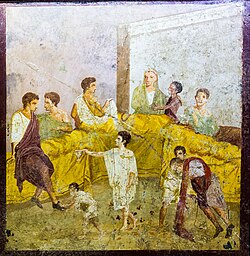
Domestic slaves who would be visible to the family and their guests were given garments that met their owners' standards for pleasing appearance and quality.[592] Presentability was desired for slaves who served as personal attendants. Slaves wore few accessories but were themselves an extension of their masters' accessories. Because Roman clothing lacked structured pockets, the slaves who always accompanied the well-to-do on excursions carried anything needed.[602] They might hold parasols or wield fans to shield the privileged from the heat.[603] They went with them to the public baths to watch over their valuable clothing, since theft was common in the dressing areas. At dinner parties, guests took off their outdoor shoes and put on light house shoes (soleas), so a rich attendee would bring a slave to wrangle their footwear.[604]
Clothing for laborers was meant to be economical, durable, and practical. A relief from Roman Germany shows mine workers wearing a tunic and an apron of leather "feathers" (pteruges).[605] Columella recommended weather-resistant clothing of leather, patchwork, and "thick shoulder capes" for farm workers.[606] A male farm slave working for the stern and frugal Cato could expect to be issued a tunic and a cloak (sagum) every other year, and would have to turn in the old outfit so it could be recycled for patchwork.[607] The fragility of textiles makes them rare in the archaeological record, but a store of regularly cut pieces measuring about 10 by 15 centimeters from Roman Egypt, found at the Mons Claudianus quarry, is evidence of organized patchworking.[593]
One of the causes of the Sicilian slave rebellion of 135 BC, which broke out among rural workers, was the master's refusal to accept responsibility for providing clothing. When the enslaved herdsmen came asking, the master, Damophilos, told them to get their own clothes, so they did—by banding together to raid small farms and waylay travelers. When violence escalated to full-scale insurrection, Damophilos was among the first to be killed.[608]
At one point, the Roman senate debated whether to require slaves to wear a sort of uniform to distinguish them as such, but eventually decided that was a bad idea: it would make the enslaved more conscious of having a group identity, and they would see how strong their numbers were.[609]
Resistance and control
Open rebellion and mass violence arose among the large population of the enslaved only sporadically across the millennium of ancient Roman history.[610] A more persistent form of resistance was escape; as Moses Finley remarked, "Fugitive slaves are almost an obsession in the sources."[611] Runaway slaves were considered criminals and were harshly punished.
Resistance might occur on a daily basis at a low-grade, even comic level. Cato, without suspecting that this might be deliberate mischief, was concerned that his taking of the auspices at home, which required ritual silence, would be vitiated by the farting of his napping slaves.[612]Plutarch tells the story of how one Pupius Piso, having ordered his slave not to speak unless spoken to, waited in embarrassment and in vain for the guest of honor to arrive at his dinner party. The slave had received the guest's regrets, but the master didn't ask him to speak, so he didn't.[613]
A master might even seek to extend his control over a slave beyond his own death; although wills were a common way to manumit slaves, they sometimes included clauses that expressly prohibited the freeing of certain slaves perceived as unworthy.[614]
Rebellions
The earliest slave uprisings occurred during, and in the immediate aftermath of, the Second Punic War, when many slaves held by the Romans would have been soldiers captured from the armies of Hannibal, and when at times as many as half the Roman male population of fighting age would have been away serving in the military.[615] The Augustan historian Livy is the main but not always a clear source for these uprisings.[615]
The first recorded rebellion comes in 217 BC, when an informer reported that twenty-five slaves were conspiring on the Campus Martius; they were punished in the earliest securely attested instance of crucifixion among the Romans.[616][617] In 198 BC, Carthaginian captives rebelled at Setia, which they may have held briefly before being met with force and fleeing, though two thousand were captured and executed. They next made an attempt on Praeneste but were again defeated, resulting in the execution of another five hundred.[618] This uprising prompted more policing of the streets and the building of places of confinement.[619] Two years later, it took a full legion to quell an uprising in Etruria, after which the leaders were flogged and crucified.[620]
The last rebellion of this period broke out in 185 BC in Apulia among herdsman, who were also to play a leading role in the first two Servile Wars. The Apulian shepherds were accused of banditry (latrocinium), and 7,000 were condemned to death; some escaped.[621]
The Greek historian Diodorus Siculus (1st century BC) chronicled the three major slave rebellions of the Roman Republic known as the Servile Wars, the first two of which originated in Rome's first province, Sicily.[622] Diodorus gives the total number of slaves participating in the first rebellion as 200,000 (elsewhere, the figure is given as 60,000–70,000), and 40,000 in the second.[am] While these large round numbers in ancient sources seem inflated, their significance here lies in indicating the scope of rebellion.[626]
First Servile War (135–132 BC)
The First Servile War began as a protest by enslaved herdsmen against deprivation and mistreatment, localized on the "ranch" (latifundium)[627] of Damophilos in Enna, but soon spread to include slaves in the thousands.[628] They attained a major strategic objective in controlling both Enna and Agrigentum, two towns key to holding Sicily that Rome and Carthage had fought over repeatedly during the first two Punic Wars.[629] To assure a food supply, they refrained from laying waste to the farms around their strongholds and did not target small farmers.[630] They were militarily capable of mounting direct confrontations with Roman troops, which were brought to bear speedily.[631]
The leader, Eunus, maintained communal cohesion and motivation on the model of the Hellenistic kings, even restyling himself by name as Antiochus and minting coins.[632] Slave families formed a community at the stronghold of Tauromenium.[633] The rebel slaves were able to sustain their movement within the difficult Sicilian environment[634] for four years—eight or more, in some accounts[635]—before Roman forces managed a decisive defeat, primarily by besieging and starving out Tauromenium.
Second Servile War (104–100 BC)
The Second Servile War had its roots in the piratical kidnapping that subjected freeborn people to random seizure and enslavement mostly in the eastern Mediterranean.[636] People who had been enslaved illegally in this way had a right to reclaim their freedom under the recently passed Lex de Plagiariis, a law concerning piracy and the slave trade associated with it.[636] The praetor assigned to Sicily, Licinius Nerva, had been holding hearings and releasing the enslaved in numbers great enough to offend the privilege of the slaveholding landowners, who pressured him to desist—whereupon the slaves revolted.[637] The rebellion started in two households and soon encompassed 22,000 slaves.[638]
Their leader, whose slave name was Salvius, adopted the name Tryphon, perhaps in honor of Diodotus Tryphon to rally the many enslaved Cilicians among the rebels.[639] He organized the slaves into cavalry and infantry units, besieged Morgantina and—along with the slave general Athenion[an]—had a string of early successes against Roman troops as the number of rebels grew to "immense proportions".[638] Unlike the first rebellion, however, they were unable to hold towns or maintain supply lines, and seem to have lacked the long-term strategic objectives of Eunus; the less focused, at times incompetent Roman response enabled them to prolong the rebellion.[641]
Eunus and Salvius each had held a privileged place in his household when enslaved; both Eunus and Athenion are noted as having been born into freedom. These experiences may have enhanced their ability to lead through articulating a vision of life beyond slavery.[642]
Third Servile War (73–71 BC)

The so-called Third Servile War was briefer; the cause, "to break the bonds of their own grievous oppression".[644] But its leader, Spartacus, arguably the most famous slave from all antiquity and idealized by Marxist historians and creative artists, has captured the popular imagination over the centuries to such an extent that an understanding of the rebellion beyond his tactical victories is hard to retrieve from the various ideologies it has served.[644]
The rebellion broke out on a relatively trivial scale, only seventy-four gladiators from a training school in Capua. The two best-known leaders are the Thracian fighter Spartacus, who in some accounts is said to have served formerly in the Roman auxiliary troops, and the Gaul Crixus. They entrenched themselves at Vesuvius and quickly dispatched the forces of three successive praetors as the insurgency grew to 70,000 men "with alarming speed", both slaves and free herdsmen joining up,[645] ultimately reaching a force of 120,000.[644]
Spartacus's plan seems to have been to head to northern Italy, where the men could disperse and head to their countries of origin, free; but the Gauls were keen on plundering first and spent weeks ravaging southern Italy, giving the Romans a more urgent reason and time to make up for their "tardy and ineffective" initial response.[646][647] Crixus and his Gauls were soon dealt with, but Spartacus got as far as north as Cisalpine Gaul before turning back for a possible assault on Rome, about which he then changed his mind. After more rebel military successes without clear objectives, the senate gave Marcus Crassus special command of the consular forces, and the tide of the war turned.[648]
Spartacus headed south, hoping to cross to Sicily and "resuscitate the embers" of the slave rebellion three decades earlier; instead, the pirates who had accepted payment for transport set sail without him.[649] After some weeks of increasingly successful fighting, Crassus obtained a victory in which Spartacus was said to have died, though his body was not identified; 5,000 fugitives fled north and ran into troops led by Pompey, who "annihilated" them; and Crassus concluded his victory by crucifying 6,000 captured rebels along the Appian Way.[650]
Later uprisings
The last slave rebellion of the Republic was put down at Thurii in southern Italy by Gaius Octavius, the father of the future emperor Augustus. In 60 BC, Octavius received a commission from the senate to hunt down fugitives who were alleged (emphasis on "alleged") to be the remnants of Spartacus's men and slaves who had been drawn into the Catilinarian conspiracy.[651]
Though they failed, the Servile Wars left Romans with a deep-seated fear of slave uprisings[652] that resulted in stricter laws regulating the keeping of slaves and harsher measures and punishments to keep enslaved people under control.[653] In AD 10, the senate decreed that if a master was killed by one or a group of his slaves, all the slaves "under the same roof" were to be tortured and executed.[654] In the early Imperial period, the slave uprisings against Lucius Pedanius Secundus, who was killed by one of his household slaves (all 400 were executed), and Larcius Maceo, a praetor who was murdered in his private bath, occasioned panic among slaveholders but failed to catch fire as the Sicilian rebellions had.[626][654] None of the sporadic attempts at rebellion over the next centuries encompassed nearly as much territory as that led by Spartacus.
Fugitive slave-catching
Fugitive slaves were considered criminals, whose crime was theft of the owner's property—themselves.[611] From the perspective of owners, runaway slaves not only caused economic harm but stoked fears of a return to the social upheavals of the Servile Wars.[655] The harboring of fugitive slaves was against the law, and professional slave-catchers (fugitivarii) were hired to hunt down runaways. Advertisements were posted with precise descriptions of escaped slaves, and offered rewards.[656]
Slave-catching was an unusually intensive police activity in that it involved coordination among all four forms of policing in the Roman Empire, which otherwise operated more or less independently: civilian or private security forces; the imperial guard; troops under the command of provincial governors, or municipal public slaves used as a quasi-police force; and the Roman army.[657] Augustus himself boasted in his official record of achievements of having 30,000 fugitive slaves rounded up and returned for punishment to their owners.[653]
Although the Apostle Paul expresses sympathy for runaway slaves, and some Christians seem to have taken in runaways, fugitives were still a concern as the Empire was Christianized. The Synod of Gangra in the mid-4th century placed any Christian who encouraged slaves to escape under anathema.[658]
The fugitive in Roman culture
In a society where slavery was not based on race, a slave who escaped could hope to blend in and go unnoticed among the free.[659] Certain temples in Greece had long offered asylum to slaves who ran away, and in the Imperial era, a fugitive could claim asylum at the foot of the emperor's statue.[660]

A fugitive slave is the protagonist of a tale that became familiar from the fables of Aesop, who according to tradition was himself traded as a slave. The earliest written version of Androclus and the lion is narrated by Aulus Gellius (2nd century AD). Androclus is serving in the household of the Roman proconsul for the province of Africa, who had him beaten unjustly every day. Driven to escape, he seeks solitude in the wilderness, resigned to death by starvation, which would at least bring him peace. When he comes upon a lion nursing its wounded paw, he removes the thorn causing pain, thereby becoming a medicus for the beast. The two live as companions in the wild for three years, with the lion providing food.
One day when the lion is out on the hunt, Androclus goes walking and is captured by soldiers, taken back to Rome, and condemned to the beasts in the arena. But as it turns out, the lion he had befriended has also been captured, and instead of attacking him fawns over him affectionately. Caligula himself is among the spectators, and the emperor pardons both Androclus and the lion, who are thereafter spotted strolling freely about the city as companions. Gellius sketches the story within the specific framework of a Roman slave's experience: desperation, escape, capture and punishment, and the fantasy of mercy and freedom.[662]
The experiences of captives, slaves, and fugitives were on constant display in Roman culture.[183] The Captivi ("Captives") of Plautus is a comedy, but with "a plot featuring kidnapping, enslavement, chaining, direct discussions of flight, and torturous punishments … that were extreme enough to serve as an example to other slaves".[663]
Punishments
As the Romans increased the numbers of slaves they held, their fear of them grew, as did the severity of discipline.[664] Cato the Elder whipped the household slaves for even small mistakes and kept his enslaved agricultural workers in chains during the winter.[665] In the Satyricon, the immensely specialized household staff of the fictional freedman Trimalchio includes a pair of torturers who stand by with whips.[666] The physician Galen observed slaves being kicked, beaten with fists, and having their teeth knocked out or their eyes gouged out, witnessing the impromptu blinding of one slave by means of a reed pen. Galen himself had been taught not to strike a slave with his hand but always to use a reed whip or strap.[667] The future emperor Commodus at age 12 is supposed to have ordered one of his bath attendants to be thrown into the furnace, though this order may not have been carried out.[668]
In his treatise De Ira ("On Anger"), Seneca offers a lurid anecdote[669] on the proportionality of punishment, famously retold, referenced,[670][671] and analyzed.[672] At a dinner party hosted by Vedius Pollio with Augustus in attendance, a young slave broke a crystal cup. Vedius flew into a rage and ordered him seized and thrown into the lamprey pond to be fed upon.[ao] The boy wriggled away and threw himself at Augustus's feet, begging to be killed rather than eaten alive—apparently aware that the lamprey "clamps its mouth on the victim and bores a dentated tongue into the flesh to ingest blood".[673] Taken aback by the sheer novelty of this cruel punishment, Augustus ordered the boy set free, the rest of the crystal smashed, and the lamprey pond backfilled. Vedius, who became a "stock villain" in Latin literature, fell so out of favor for this and other more political reasons that Augustus eventually razed his entire villa.[674] Seneca bookends his moral criticism of Vedius in De Clementia ("On Mercy"), comparing the torture pond to a snake pit and saying that Vedius was universally despised for his excessive cruelty.[675]
Such acts of casual sadism[676] are perhaps to be distinguished from the head of household's ancient right to pass sentence on a dependent for perceived wrongdoing, but the slaveholder's right to punish a slave was only weakly limited by law.[615] The censors were a countervailing moral authority (regimen morum) if the paterfamilias exceeded community standards of cruelty, but the office was often left vacant or manipulated toward other ideological ends, and there is little or no evidence that the censors would rebuke others of their class for the abuse of slaves.[677] Unless the excessive cruelty had been blatantly public, there was no process for bringing it to the attention of the authorities—the slave boy targeted by Vedius was saved extrajudicially by the chance presence of an emperor willing to be offended,[678] the only person with the authority to stop what was allowed by law.[679]
When slaves did commit an actual crime, the penalties prescribed by law were far more severe than for free persons. For instance, the regular penalty for counterfeiting was deportation and confiscation of property, but a slave was put to death.[680] The liberty of a Roman citizen, by contrast, was defined by freedom from physical coercion and by the judicial right of appeal after receiving a capital sentence.[681] This definition holds into the early Imperial era as a common understanding: in the Acts of the Apostles, when Paul asserts his rights as a Roman citizen to a centurion after having been bound and threatened with flogging, the tribune who has seized him acknowledges the error by backing off.[682]
In the later Imperial era, the status of "convict" versus "slave" often becomes a distinction without a practical difference,[683] as free people of lower social status were increasingly subjected to more severe legal penalties once reserved for slaves.[684]
Chaining

Chaining was a legal penalty imposed with some specificity; chains weighing ten pounds were ordered for the enslaved captives who rebelled in 198 BC.[685] Archaeological evidence of fetters, manacles, and shackles has been found mainly in the northern provinces and only infrequently in Italian villa settings.[686]
In the Republican period, a large agricultural estate would have an ergastulum (plural ergastula), a place of work confinement, built partially underground, where slaves were often kept in chains for disobedience, acts of resistance, or committing crimes. Slaves sent to the ergastulum might be sold for exploitation in gladiatorial games.[687] However, despite the assumptions of some scholars and modern images of chained slaves at hard labor, there is no evidence that agricultural slaves routinely worked in chain gangs.[688] Roman writers on agriculture regarded slaves who were controllable only through chaining as an inferior form of farm labor and deprecated their use on the commercial latifundia under absentee ownership.[689]
A slave who had been put in chains as punishment was labeled thereafter as a servus vinctus. As a category of property value, the "chained slave" had to be identified as such if sold, and would bring a lower price on the market. As a category of legal status, after the Augustan law that created a class of slaves to be counted permanently among the dediticii who were technically free but held no rights, the servus vinctus was barred from obtaining citizenship even if manumitted.[690]
Tattooing and branding

Fugitive slaves might be marked by letters tattooed on their forehead, called stigmata in Greek and Latin sources,[692] a practice most attested as a consequence of condemnation to hard labor.[693] The tattooing of slaves had been expressly banned in Hellenistic Egypt except as part of a criminal sentence, when a forehead tattoo came with a beating.[694] The Romans picked up slave tattooing from the Greeks, who in turn had acquired it from the Persians.[695]Attic comedy frequently mentions slave stigmata, and the most notable passage in Latin literature comes in the Satyricon when Encolpius and Giton fake tattooing as an absurd form of disguise.[696] Tattooing slaves with text to mark them as previous fugitives is most abundantly attested among the Greeks, and there is "no direct evidence for what was inscribed on runaways' foreheads in Rome",[697] though criminals generally were labeled with the name of their crime.[698] Literature alludes to the practice, as when the epigrammatist Martial satirizes a luxuriously attired freedman at the theater who keeps his inscribed forehead under wraps, and Libanius mentions a slave growing out bangs to cover his stigmata.[699]
In inscriptions from the Temple of Asclepius at Epidaurus, Greek slaves who had been tattooed ask the god to remove their markings, and in some cases thank him for doing so.[700] Less miraculous means might also be sought, as various sources record medical procedures for removing stigmata, mostly herbal applications for which complete success was not guaranteed.[701][702]
The evidence for Roman branding of slaves is less certain.[703][704] The methodical tortures to which slaves were subjected juridically included the application of hot metal plates or rods,[705] which would leave marks that could be seen as brands,[706] since the branding of herd animals is known in the Roman world.[707] The scars left by whipping were also "read" as inscribing slaves.[708]
Slaves who played visible or public roles on behalf of a household, and female slaves in general, were not disfigured with markings.[709] That stigmatized slaves were those who had been marked as irredeemably criminal is indicated by their inclusion among the dediticii, those who held no citizen rights even if manumitted.[710]
Collaring

What appears to be a distinctly Roman practice is the riveting of a "humiliating" metal slave collar around the former fugitive's neck.[711] Because of the role the hope of manumission played in motivating the industry of slaves, the Romans may have preferred removable collars to permanent disfigurement,[697] or for keeping open the possibility of resale.[712]
Some forty-five examples of Roman slave collars have been documented, most found in Rome and central Italy, with three from cities in Roman North Africa. All date from the Christian era of the 4th and 5th centuries,[ap] and some have the Christian chi-rho symbol or a palm frond.[714] Some were found still on the necks of human skeletons or with remains, suggesting that the collars might be worn for life and not just as a temporary ID tag; others seem to have been removed, lost, or discarded.[715] In circumference, they are about the same size as Roman neck shackles (see relief under "Enslavement of war captives"), tight enough to keep them from slipping over the head but not so tight as to restrict breathing.[716]
Fugitive slave collars have been found in urban environments rather than settings for hard labor.[717] One tag from Bulla Regia in Africa identifies the fugitive wearing it as a meretrix, a wage-earning prostitute.[718] The tags are typically inscribed with the owner's name, status, and occupation, and the "address" to which the slave should be returned.[aq] The most common instructional text is tene me ("hold me") with either ne fugiam ("so I don't run away") or quia fugi ("because I've run away").[720] The tag on the most intact example, the so-called Zoninus collar, reads: "I have escaped, catch me; when you return me to my master Zoninus, you'll receive a gold coin."[721]
Crucifixion

Crucifixion was the capital punishment meted out specifically to slaves, traitors, and bandits.[725][726][727][728] Crucifixion is rarely mentioned among the Greeks.[729] and the Romans said that they had learned the technique from the Carthaginians during the Punic Wars.[730][731] The earliest crucifixion among the Romans definitively described as such dates to 217 BC and was inflicted on rebellious slaves;[616] Hannibal had crucified an Italian serving as his guide only a few weeks before, and several previous crucifixions by the Carthaginians were known to the Greeks and Romans.[732] The few mentions of what might be construed as Roman crucifixion before that time are more likely to have been archaic punishments such as being bound to a stake and flogged, or being suspended from a tree (perhaps an arbor infelix[733]) or furca and beaten to death.[734]Curse tablets urging the hated person to commit suicide by hanging use language that overlaps with some details of crucifixion.[735]
From its early use at a time when citizens were infrequently sentenced to death, crucifixion became the servile supplicium, reserved for slaves during the Republican era, and the worst punishment that could be inflicted on a slave.[736] Crucifying Roman citizens is one of Cicero's most vehement accusations in the prosecution of Verres as a corrupt governor of Sicily.[737]
An inscription from the late 1st century BC documents a law at Puteoli that made the services of an executioner available to private citizens who had decided to crucify a slave.[738] The law specifies that the patibulum, generally taken as another term for the cross (crux), will be carried to the site of execution, probably by the slave to be executed,[ar] who will also be scourged before affixed to it.[740] Advertisements for gladiatorial games sometimes promoted crucifixions as part of the spectacle, presumably as a prelude to beast-baiting or burning at the stake, since it was a notoriously slow and "static" way to die.[741]
Although crucifixion under the Christian emperors abated, the Christian apologistLactantius (d. ca. 325) still thought that runaway slaves should be whipped, chained, and even crucified.[742]
Suicide

Reports of mass suicide or suicide by an individual to avoid enslavement or submission as a result of war are not rare in the Roman world.[744] In one incident, a group of captive Germanic women told Caracalla that they would rather be executed than enslaved. When he ordered them sold anyway, they committed suicide en masse, some of them first killing their children.[745]
Such an act could be considered honorable or rational in antiquity, and a slave might commit suicide for the same reasons a free person would, such as an agonizing health condition, religious fanaticism, or mental health crisis.[746] But suicide among the enslaved might also be the ultimate way to resist and escape the master's control or abuse. One of Cato's slaves was so distraught after doing something he thought his master would disapprove of that he killed himself.[747] An inscription from Moguntiacum records the killing of a freedman by one of his slaves, who then committed suicide by drowning himself in a river.[748]
Roman law recognized that slaves might be driven to suicidal despair. A suicide attempt was one of the pieces of information about a slave that had to be disclosed on a bill of sale, indicating that such attempts occurred often enough to be of concern. However, the law did not always regard slaves as criminally fugitive if they ran away in despair and attempted suicide. The jurist Paulus wrote, "A slave acts to commit suicide when he seeks death out of wickedness or evil ways or because of some crime that he has committed, but not when he is able no longer to bear his bodily pain."[749]
Slavery and Roman religion
Slaves in classical Roman religion

Religious practices attest to the presence of slaves in Roman society from the earliest period.[750] The Matralia was a women's festival held June 11 in connection with the goddess Mater Matuta,[751] whose temple was among Rome's oldest.[752] According to tradition, it was established in the sixth century BC by the slave-born king Servius Tullius.[753] The observance featured the ceremonial beating of a slave girl by free women, who brought her into the temple and then drove her from it. Slave women were otherwise forbidden from participation.[754] It has been conjectured that this scapegoat ritual reflected the wives' anxiety about the introduction of slave girls into the household as sexual usurpers.[755]
Another slaves' holiday (servorum dies festus) was held August 13[756] in honor of Servius Tullius himself. Like the Saturnalia, the holiday involved a role reversal: the matron of the household washed the heads of her slaves, as well as her own.[757][758] Following the Matronalia on March 1, matrons gave slaves of their household a feast, a custom that also evokes Saturnalian role reversal. Each matron feasted her own slaves in her capacity as domina or slave mistress. Both Solinus and Macrobius see the feast as a way to manipulate obedience, indicating that physical compulsion was not the only technique for domination; social theory suggests that the communal meal also promotes household cohesion and norms by articulating the hierarchy through its temporary subversion.[759][as]
The temple of Feronia at Terracina in Latium was the site of special ceremonies pertaining to manumission. The goddess was identified with Libertas, the personification of liberty,[760] and was a tutelary goddess of freedmen (dea libertorum). A stone at her temple was inscribed "let deserving slaves sit down so that they may stand up free."[761]
Saturnalia
The Roman festival most famously celebrated by slaves was the Saturnalia, a December observance of role reversals during which time slaves enjoyed a rich banquet, gambling, free speech and other forms of license not normally available to them. To mark their temporary freedom, they wore the pilleus, the cap of freedom, as did free citizens, who normally went about bareheaded.[762][763] Some ancient sources suggest that master and slave dined together,[764][765] while others indicate that the slaves feasted first, or that the masters actually served the food. The practice may have varied over time.[766] Saturnalian license also permitted slaves to enjoy a pretense of disrespect for their masters, and exempted them from punishment. The Augustan poet Horace calls their freedom of speech "December liberty" (libertas Decembri).[767][768]
Festival of Handmaids
Slave women were honored at the Ancillarum Feriae on July 7.[769][at] The holiday is explained as commemorating the service rendered to Rome by a group of ancillae (female slaves or "handmaids") during the war with the Fidenates in the late 4th century BC.[770][771] Weakened by the Gallic sack of Rome in 390 BC, the Romans next had suffered a stinging defeat by the Fidenates, who demanded that they hand over their wives and virgin daughters as hostages to secure a peace. A handmaid named either Philotis or Tutula came up with a plan to deceive the enemy: the ancillae would put on the apparel of the free women, spend one night in the enemy camp, and send a signal to the Romans about the most advantageous time to launch a counterattack.[751][772] Although the historicity of the underlying tale may be doubtful, it indicates that the Romans thought they had already had a significant slave population before the Punic Wars.[773]

Temple slaves
Among the public slaves (servi publici) were those who served Rome's traditional religious practices. The cult of Hercules at the Ara Maxima was transferred to the keeping of public slaves in 312 BC when the patrician families originally charged with its maintenance died out.[au]
The calator was a public slave who assisted the flamens, the senior priests of the state, and carried out their day-to-day business.[775] An epitaph records the career of a calator of the augurs who rose to the position after serving as a dispensator (keeper of accounts) for a senator; he had been manumitted before he died at the age of 32.[776] The popa, depicted in sacrificial processions as carrying a mallet or axe with which to strike the sacrificial animal, is said in sources from late antiquity to have been a public slave.[777]
In the East, especially during the first century BC, large numbers of "holy" slaves (Greek hierodouloi) served in temples such as those of Ma in Comana, Cappadocia, where 6,000 male and female slaves served, and of the Great Mother at Pessinus in Galatia.[av] The notion that hierodouloi in the Roman era engaged in sacred prostitution is mostly a modern fantasy arising from the presence of prostitutes at temples and festivals, either as members of the participating community or peripherally plying their trade where potential customers would congregate.[779] Temple slaves were not traded as chattel,[336] and the Romans, given their instinct for religion as a source of social order, tended not to capitalize on them as such. Strabo states that the chief priest of the Temple of Ma at Comana did not have the right to sell hierodouloi; however, as the sites of such temples are often associated with trading centers, they might have played some role in facilitating the slave trade.[780]
Mithraic cult

The Mithraic mysteries were open to slaves and freedmen, and at some cult sites most or all votive offerings are made by slaves, sometimes for the sake of their masters' wellbeing.[781] The slave Vitalis is known from three inscriptions involving the cult of Mithras at Apulum (Alba Iulia in present-day Romania). The best preserved is the dedication of an altar to Sol Invictus for the wellbeing of a free man, possibly his master or a fellow Mithraic initiate.[782] Vitalis was an arcarius, a treasurer probably in the administration of imperial customs (portorium); his position gave him the opportunity to earn the wealth required for setting up stone monuments.[783]
Numerous Mithraic inscriptions from the reaches of the empire record the names of both privately held slaves and imperial slaves, and even one Pylades in Roman Gaul who was the slave of an imperial slave.[784] Mithraic cult, which valued submission to authority and promotion through a hierarchy, was in harmony with the structure of Roman society, and thus the participation of slaves posed no threat to social order.[785]
Early Christian church
Christianity gave slaves an equal place within the religion, allowing them to participate in the liturgy. According to tradition, Pope Clement I (term c. 92–99), Pope Pius I (158–167), and Pope Callixtus I (c. 217–222) were former slaves.[786]
Commemoration
Epitaphs are one of the most common forms of Roman writing to survive, arising from the intersection of two salient activities of Roman culture: the care of the dead and what Ramsay MacMullen called the "epigraphic habit".[787] One of the ways that Roman epitaphs differ from those of the Greeks is that the name of the commemorator is typically given along with that of the deceased.[788] Commemorations are found both for slaves and by slaves.

Simple epitaphs for domestic slaves might be set up in the communal tomb of their household. This inclusion perpetuated the domus by enlarging the number of survivors and descendants who might carry out tomb maintenance and the many ritual observances for the dead on the Roman religious calendar.[789]
The commemoration of slaves often included their job—cook, jeweler, hairdresser—or an emblem of their work such as tools.[790][791] The funerary relief of the freed silversmith Publius Curtilius Agatho (see under "Names" above) shows him in the process of working a cup that lies incomplete by his left hand. He holds a hammer in his right hand, and a punch or graver in his left. Despite these realistic details of his craft, Agatho is depicted wearing a toga—which Getty Museum curator Kenneth Lapatin has compared to going to work in a tuxedo—that expresses his pride in his citizen status,[792] just as the choice of marble as the medium rather than the more common limestone gives evidence of his level of success.[793]

Although not required on tombstones,[794] the deceased's status at times can be identified by Latin abbreviations such as SER for a slave; VERN or VER specifically for vernae, slaves born into a familia (see funerary bust above); or LIB for a freedperson. This legal status is usually absent for gladiators, who were social outcasts regardless of having been freeborn, manumitted, or enslaved at the time of death; instead they were identified by their fighting specialty such as retiarius or murmillo or less often as a freeborn man, LIBER, a status which was not typically asserted.[795] Gladiators who had become celebrities might also be remembered by fans (amatores) in popular media—images of gladiators, sometimes labeled by name, appeared widely on everyday items such as oil lamps and vessels.
Epitaphs represent only slaves who were more highly favored or esteemed within their household or who belonged to communities or social organizations (such as collegia) that offered care of the dead. With the permission of their master, slaves could join burial societies along with free people of modest means and freed slaves who pooled their resources to ensure decent entombment and commemoration.[796] Most slaves did not have the opportunity to develop a personal relationship with a free person or participate in social networking and were disposed of in mass graves along with "free" people who were destitute.[797] The Augustan poet Horace, himself the son of a freedman, wrote of "a fellow slave contracted to transport the castaway corpses to narrow rooms on a cheap chest; here lay the common grave of the wretched masses."[798]
Although slaves were denied the right to make contracts or conduct other legal matters in their own name, it was possible for a master to allow his slave to make less formal arrangements that functioned like a will.[799]
Slavery and Roman morality

Slavery as an institution was practiced within every community of the Greco-Roman world, including Jewish and Christian communities <refnec>who at times struggled to reconcile the practice within their beliefs</refnec>. Some Jewish sects, such as the Essenes and Therapeutae, did articulate anti-slavery principles—which is one of the things that "made them look like fringe utopians" for their time.[800] Both literary and juristic texts in Latin invoke humanitas as a principle in relations with slaves, a virtue that broadly encompasses the quality of living as a fully realized human being,[801] and Pliny asserts that a master whose treatment of slaves is based only on economic considerations is not fully human.[802]
The apparent ease of manumission, along with some Roman laws and practices that mitigated slavery, has led some scholars to view Roman slavery as a more benign institution, or at least a more open system, than the race-based Atlantic slave trade.[803] The majority of slaves suffered in grinding toil but are mostly silent and undifferentiated in ancient sources, while the freedmen and imperial slaves who enjoyed social mobility are represented because of their success: "the ideology of slaveowning had been successfully transmitted to those who had once been its victims."[804]
The Roman concept of the virtues and what it meant to be moral was not founded on the value of an individual life and preserving it, regardless of the social status of that life.[805] In early Rome as the Twelve Tables were being formulated, murder was regarded as a pollution of the community that had to be expiated.[806] Killing an individual was sanctioned when doing so removed a threat from the community, as in war and for capital punishment; homicide was not a statutory offense under Roman law until 80 BC.[807] "'Life', taken as individual existence, is not significant", Jörg Rüpke has observed of Roman morality. "It is important only instrumentally."[808]
The value of the life of a slave differed from that of a conquering general in the nature of this instrumentality: the murder of a slave—a "speaking tool" (instrumentum vocale), in the words of Varro[809]—under law was property loss to the owner.[808] And yet in the Satyricon, Petronius has Trimalchio assert that "slaves too are men. The milk they have drunk is just the same even if an evil fate has oppressed them."[810] When the jurists argue for resolution of legal issues in favor of slaves, they draw on a Roman vocabulary of moral duty (pietas), decency (pudor), respect (reverentia), traditional morals (mores maiorum), and the need for kindliness (benignitas) to prevent duritia, a hardening of the heart.[811] The many, sometimes inadvertent acknowledgments of the slave's humanity in Roman literature and law; the individual expressions of esteem or affection toward a slave by an owner; and pleas for the humanitarian treatment of slaves particularly among Stoics all produce a dissonance.[812] within a moral framework largely dependent on utilitarianism[813] or at best "enlightened self-interest".[491]
In his book Ideas of Slavery from Aristotle to Augustine, Peter Garnsey outlines six moral views that express various and inconsistent "anxieties and tensions" inherent in slavery throughout Classical antiquity in Greek, Roman, Jewish, and Christian thought:[814]
- 1. Slavery is natural, a normative view most notoriously expressed by Aristotle.
- 2. Slavery can be justified for its utility— culturally, the most "numerous and authoritative" of the views expressed.[815]
- 3. Slavery is an evil and should be condemned as an institution—"few and isolated" voices[815] not to be construed as an abolitionist movement.[816]
- 4. The institution of slavery can be abused, and these abuses, such as the wrongful enslavement of free people, can be criticized and corrected.[817]
- 5. Slaves are human beings worthy of humane regard.
- 6. There is an obligation to improve the conditions under which slaves live.
Stoic philosophy
The Stoic affirmation of universal human dignity extended to slaves and women.[818] Cicero, who had some Stoic inclinations, did not think that slaves were by nature inferior.[819] Because human dignity was inherent, it could not be affected by external circumstances such as enslavement or poverty. The individual's dignity could be damaged, however, by a lack of self-governance. Anger and cruelty damaged the person who felt them, and therefore a slave owner ought to exercise clementia, mildness or mercy, toward those who were slaves by law. But since emotion-based compassion was likewise a response to external conditions, it was not grounds for political action—true freedom was wisdom, and true slavery the lack thereof. By denying that material and institutional conditions for human flourishing mattered, Stoics had no impulse toward abolition and were limited to seeing the institution of slavery as, in the words of Martha Nussbaum, "no big deal".[820] From a philosophical perspective, what mattered was the conduct of the individual owner, not the reform of legal institutions.[821]
One of the major Roman-era Stoic philosophers, Epictetus, spent his youth as a slave.[822]
Epicurean philosophy
The Epicureans admitted enslaved people to their philosophical circles and, like the Stoics, rejected the Aristotelian view that some people were destined by nature to be slaves. In Epicurean terms, slavery was an eventum, an accident that might befall a person, not a coniunctum, something inseparable from a person's nature.[823] But Epicureans never advocated for abolition, and again like the Stoics and other philosophical schools, they spoke of slavery most often as a metaphor, specifically the moral state of "enslavement" to custom or other psychological ills.[824]
The Epicurean poet and philosopher Philodemus (1st century BC) wrote a treatise On Anger in which he admonishes masters not to impede their moral progress by directing violence or inhumane or indecent acts against slaves; he attributes violent rebellion among slaves to the injustices perpetrated by their masters. In the treatise On Property Management, Philodemus proposes that slaves should receive moral instruction, recognizing them as capable of learning and of acting as moral agents.[825] A good property manager should show mildness of character, sensitivity, philanthropy, and decency towards slaves and all subordinates,[826] whereas the wealth-obsessed manager will not refrain from exploiting slave labor in the mines.[827] It is not shameful, however, to earn income from property, and that includes slaves if they are employing their skills or arts in ways that are appropriate to them and do not require "excessive toil" from anyone.[828]
Early Christian attitudes toward slavery
Roman Christians preached that slaves were human beings and not things (res),[829] but while slaves were regarded as human beings with souls that needed to be saved, Jesus of Nazareth said nothing toward abolishing slavery, nor were religionists of the faith admonished against owning slaves in the first two centuries of Christianity's existence.[830] The parables of Jesus that refer in English translations to "servants" are in fact about slaves (Greek douloi),[831] and the "faithful parabolic slave" is rewarded with greater responsibilities, not manumission.[832]
There is little evidence that Christian theologians of the Roman Imperial era problematized slavery as morally indefensible. Certain senior Christian leaders (such as Gregory of Nyssa and John Chrysostom) called for good treatment for slaves and condemned slavery, while others supported it. That Christians might be susceptible to accusations of hypocrisy from outside the faith was anticipated in Christian apologetics, such as Lactantius's defense that both slave and free were inherently equal before God.[833]Salvian, a Christian monk writing polemic for Christian slaveowners in Gaul around AD 440, wrote that kindly treatment could be a more effective way of obtaining obedience than physical punishment, but he still regarded slaves as 'wicked and worthy of our contempt', and he never imagined a social system without slavery.[834]Saint Augustine, who came from an aristocratic background and likely grew up in a home where slave labor was utilized, described slavery as being against God's intention and resulting from sin.[835]
Sexual ethics and attitudes
Because slaves were regarded as property under Roman law, the slaveholder had license to use them for sex or to hire them out to service other people.[836] While sexual attitudes differed substantially among the Jewish community, up to the 2nd century AD it was still assumed that male slaveholders would have sexual access to female slaves within their own household, an assumption not subjected to Christian criticism in the New Testament,[837] though the use of prostitutes was prohibited.[838]Salvian (5th century AD) condemned the immorality of his audience in regarding their female slaves as natural outlets for their sexual appetites, exactly as "pagan" masters had done in the time of Martial.[834]
Traditional Roman morality had some moderating influence, and upper-class slaveholders who exploited their familia for sex were criticized if this use became known as indiscreet or excessive. Social censure was not so much indignation at the owner's abuse of the slave as disdain for his lack of self-mastery.[839] It reflected poorly on an upper-class male to resort sexually to a female slave of his household, but a right to consent or refuse did not exist for her.[840][841] The treatment of slaves and their own conduct within the elite domus contributed to the perception of the household's respectability. The materfamilias in particular was judged by her female slaves' sexual behavior, which was expected to be moral or at least discreet;[842] as domina, she had the right to exercise control over sexual access to female slaves who were her property.[aw] This decorum may have helped alleviate the sexual exploitation of ancillae within the household,[842] along with men having easy, even ubiquitous access outside the home to legal, inexpensive, and often highly specialized services from professional sex workers.[844]
"Not one single surviving legal text refers in any way whatever to sexual abuse of slave children", states legal historian Alan Watson, presumably because no special protections were afforded by law to child slaves.[845] Some household staff, such as cup-bearers for dinner parties, generally boys, were chosen at a young age for their grace and good looks, qualities that were cultivated, sometimes through formal training, to convey sexual allure and potential use by guests.[846]
A slave's own expressions of sexuality were closely controlled. An estate owner usually restricted the heterosexual activities of his male slaves to females he also owned; any children born from these unions added to his wealth.[847] Because home-reared slaves were valued, female slaves on an estate were encouraged to have children with approved male partners. There is little or no evidence that estate owners bought women for the purpose of "breeding", since the useful proportion of male to female slaves was constrained by the fewer number of tasks for which women were employed.[848]

Despite the controls and restrictions placed on a slave's sexuality, Roman art and literature often perversely portray slaves as lascivious, voyeuristic, and sexually knowing, indicating a deep ambivalence about master-slave relations.[850] Roman art connoisseurs did not shy away from displaying explicit sexuality in their collections at home,[851] but when figures identifiable as slaves appear in erotic paintings within a domestic scenario, they are either hovering in the background or performing routine peripheral tasks, not engaging in sex.[852]
However, most prostitutes were slaves[853] or freedwomen. Sexual services were cheap enough that urban male slaves, unlike their rural counterparts, could frequent brothels to seek gratification, just as upper-class men did, making the lupanar one of the most egalitarian facilities among men in Roman society.[854] Like slavery, prostitution was a legal way to use a human body other than one's own—and in both cases a use that a free person was to resist absolutely in the name of liberty.[855]
The dynamics of Roman phallocentric sex were such that an adult male was free to enjoy same-sex relations without compromising his perceived virility as long as he took the active (penetrating) role. But as any freeborn man or boy taking the passive role was at risk of losing prestige and status, men often had to limit their passive male sexual partners, whatever the desired age, to prostitutes or slaves. The Imperial poet Martial describes a specialized market to meet this demand, located at the Julian Saepta in the Campus Martius.[856]Seneca expressed Stoic indignation that a male slave should be groomed effeminately and used sexually, because a slave's human dignity should not be debased.[857][858]Eunuchs castrated under the age of ten were rare and as expensive as a skilled artisan.[859] The trade in eunuch slaves during the reign of Hadrian prompted legislation prohibiting the castration of a slave against his will "for lust or gain".[860]
The contract when a female slave was sold might include a ne serva prostituaturcovenant that prohibited exploiting her as a prostitute. This covenant, probably rarely used, seems to have been chiefly intended to protect the honor of the seller by preventing a female slave formerly attached to his household from being forced into prostitution. From the second half of the second century onward, however, jurists such as Papinian also began to recognize the interest of the enslaved woman sold under such a covenant in avoiding that injury—a rare exception, since slaves were otherwise usually treated as having no honor of their own.[861] The restriction remained in force for the term of enslavement and throughout subsequent sales, and if it was violated, the illegally prostituted slave was granted freedom, regardless of whether the buyer had known the covenant was originally attached.[862]
While no law prohibited an owner from exploiting his own slaves sexually, no one was entitled to compel slaves owned by others to have sex without the owner's consent. Doing so could be treated as a form of theft, since owners retained full rights over their slaves, including control of their sexuality.[847] If a free man did force himself on someone else's slave for sex, he could not be charged with rape because the slave lacked legal personhood. But an owner who wanted to press charges against a man who raped someone in his familia might do so under the Lex Aquilia, a law that allowed him to seek property damages.[863][864]
In Latin and Imperial Greek literature
Slaves appear widely in genres of Roman literature written mostly by or for the elite, including history, letters, drama, satire, and prose narrative. These expressions may have served to navigate master-slave relationships in terms of slaves' behavior and punishment. Literary examples often focus on extreme cases, such as the crucifixion of hundreds of slaves for the murder of their master, and while such instances are exceptional, the underlying problems must have concerned the authors and audiences.[865]
Lost works thought to have been written by slaves or former slaves include a history of the Sicilian slave rebellions by Caecilius of Calacte and a biographical collection by Hermippos of Berytus on slaves celebrated for their learning.[866]
Roman comedy


Slaves are depicted ubiquitously in the Roman comedies of Plautus and Terence. In Roman comedy, servi or slaves make up the majority of the stock characters, and generally fall into two basic categories: loyal slaves and tricksters. Loyal slaves often help their master in their plan to woo or obtain a lover—the most popular driver of plot in Roman comedy. Slaves are often dim, timid, and worried about what punishments may befall them.
Trickster slaves are more numerous and often use their masters' unfortunate situation to create a "topsy-turvy" world in which they are the masters and their masters are subservient to them. The master will often ask the slave for a favor and the slave only complies once the master has made it clear that the slave is in charge, beseeching him and calling him lord, sometimes even a god.[867] These slaves are threatened with numerous punishments for their treachery, but always escape the fulfillment of these threats through their wit.[867]
Plautus' plays represent slavery "as a complex institution that raised perplexing problems in human relationships involving masters and slaves".[868]
Terence added a new element to how slaves were portrayed in his plays, due to his personal background as a former slave. In the work Andria, slaves are central to the plot. Many times throughout the play, slaves are allowed to engage in activity, such as the inner and personal lives of their owners, that would not normally be seen with slaves in every day society. This is a form of satire by Terence due to the unrealistic nature of events that occurs between slaves and citizens in his plays.[869]
See also
- Slavery in ancient Greece
- Slavery in antiquity
- History of slavery
- Slavery in the Eastern Roman Empire
- Victimarius
Notes
- ^Aliza Steinberg notes the decorated tunics (tunicae manicatae) of the two free men being served.[1]
- ^This timeline is a framework for understanding periods of Roman history as they are referred to in this article. It is not meant as definitional.
- ^A core period of Roman history producing the most abundant extant literary sources.
- ^This article treats the Christianization of the Roman Empire as a turning point that affects legislative, moral, social, and cultural concerns.
- ^The Edict of Milan is here taken as the beginning of the Christianization of the Roman state and the eventual suppression of religious pluralism in the Roman Empire.
- ^Isidore of Seville is the latest primary source regarded as "ancient" by the scholarship on which this article is based.
- ^In 36 BC, during a failed attempt to recover the standards lost, Mark Antony is supposed to have been guided by a survivor of Carrhae who had served under Parthians: Velleius Paterculus 2.82; Florus 2.20.4; Plutarch, Antony 41.1. in the 1940s, American sinologistHomer H. Dubs stirred up both scholarly imagination and scholarly indignation in a series of articles and finally a book arguing that enslaved Roman survivors of Carrhae were traded, or escaped and settled, as far as China.[33]
- ^Some captives from Carrhae and from two later attempts to avenge the defeat may have been restored in 20 BC when Augustus negotiated the return of the standards.[36]
- ^W. W. Buckland, whose early 20th-century book on Roman law pertaining to slavery remains an essential reference,[52] gave up on "the hopeless task of defining liberty" (The Roman Law of Slavery, p. 437).
- ^Other words used to refer to the slave include homo (human being of any gender), famulus (referring to the slave's role within the familia), ancilla (a female slave; serva was less common), and puer (boy).
- ^In her essay "The Concept of Commercium in the Roman Republic," Saskia T. Roselaar notes that "farmland" may have been defined more narrowly as land designated as ager Romanus.[58]
- ^Saller in Patriarchy, Property and Death in the Roman Family: "Rome has provided the paradigm of patriarchy in western thought", based on "the paterfamilias with his unlimited legal powers over members of his familia. … The Roman family was unquestionably patriarchal, in the sense that it was defined with reference to the father, who was endowed with a special authority in the household … a striking potestas encompassing extensive coercive and proprietary rights."[60] Saller asserts throughout that this is a reductively legalistic view that in no way encompasses the full range of emotional and moral relations within the family.
- ^The phrase vitae necisque potestas is not used to express a husband's power over his wife, though summary execution of a wife was considered justifiable under some circumstances, such as adultery or drunkenness, that varied by historical period. In early Rome, marriage contracted in manu put wives in a subordinate position; from the time of Augustus, a married woman remained under her own father's power, granting a female Roman citizen an unusual degree of independence from her husband relative to many other ancient societies. In the event of divorce, wealth the wife brought into the marriage remained attached to her, along with profits generated.[61]
- ^A few scholars, who assert otherwise, overlook juristic discussions of family law in which contubernium is cited as extralegal or ad hoc marriage even though not matrimony by law.[83]
- ^See also "Parental sale".
- ^Generally, fertility also is a motive for the purchase of female slaves; according to one survey of the evidence, more than 30 percent of women traded were of prime childbearing age (20 to 25).[126]
- ^The view of manumissio vindicta as a fictitious trial concerning rei vindicatio was promulgated by Mommsen; some scholars see it as a more straightforward procedure.
- ^A perimeter of banishment is found in an unusual case of AD 9, when the Germans under Arminius captured Romans after the Battle of Teutoburg Forest. Mistrusting the loyalty of the army of the Rhine, which would have preferred Germanicus as emperor, Tiberius only reluctantly permitted these prisoners of war to be ransomed, with the provision that they were banned from Italy. Vasile Lica, "Clades Variana and Postliminium", Historia 50:4 (2001), pp. 598 and 601, especially n. 31, notes that the soldiers should have been eligible for full postliminium restoration of their citizenship status (see "Enslavement of Roman citizens" above) but "politics was more important than the lex [law]."
- ^In contrast to those wearing a cap (the pilleati) indicating that the seller offered no warranty on the slaves.[195]
- ^Most Roman adoptions were of an adult son to carry on the family line when there were no heirs. Adoption was a complex legal process involving inheritance rights and concomitant duties to the house and family gods, and not a usual way to bring a young child into a family to nurture.[226]
- ^The age of the second child is less legible[251]
- ^The policing action of Rhodes has also been seen as a "naval protection racket" that allowed it to exercise control over shipping in the name of suppressing "piracy"[320]
- ^The stand has sometimes been described as revolving, based on a mention in the poetry of Statius (1st century AD).[356][357]
- ^In "The Later Roman Colonate and Freedom", Miroslava Mirković notes that, in other contexts, the ergastulum seems to be a penal workhouse not necessarily for agricultural labor, as when Livy (2.2.6) contrasts a debtor who is led non in servitium sed in ergastulum, "not into slavery but into the workhouse".[429]
- ^Eusebius, writing of those who were subjected to mutilations that reduced their capacity to work and were then sent to the copper mines "not so much for service as for the sake of ill treatment and hardship" (Historia Ecclesiastica 8.12.10).[441]
- ^Since slaves could not enter into a marriage contract, "wife" usually refers to a contubernalis, a spouse in a sort of common-law marriage or a marriage conducted according to rites not recognized within Roman law. If a dispensator wished to retain the advantages of his position, he might arrange to have his contubernalis manumitted instead of himself so that any children they had would be born as free citizens.[467]
- ^Jason Paul Wickham, in The Enslavement of War Captives by the Romans to 146 BC, notes the difficulty in estimating the size of the slave population and the supply needed to maintain and grow the population.[501]
- ^No contemporary or systematic census of slave numbers is known; in the Empire, under-reporting of male slave numbers would have reduced the tax liabilities attached to their ownership.[502]
- ^In Africa in Europe: Antiquity into the Age of Global Expansion, Stefan Goodwin explains that "Roman slavery was a nonracist and fluid system."[509]
- ^A similar conclusion is expressed by Dale B. Martin,[522]
- ^Noting Cicero's tactful if condescending dismissal that "professions such as medicine, architecture, and teaching of the liberal arts which either involve higher learning or are utilitarian to no small degree are honorable for those whose social status they are suited" (De officiis 1.42.151)—that status not being senatorial.[548]
- ^Because of the cultural importance of carrying on family lineage, Roman names are of limited variety, so that members of the same gens are often readily confused with one another in the historical sources.
- ^For example, Gaius Julius Vercondaridubnus was an AeduanGaul who held the first high priesthood in the imperial cult at the Sanctuary of the Three Gauls in the first century BC; his cognomen is distinctively Celtic, and his praenomen and gens name may indicate that Julius Caesar himself granted his family's citizenship,[572]
- ^The status of some servants he names is not clear from context; they could be either slaves or freedmen still working for him.[581]
- ^Pliny the Elder describes the "fillet-bearer" (diadumenos) statue type as a molliter iuvenis, a young man depicted with grace and softness (Natural History 34.55.
- ^See also "Temple slaves".
- ^So argued by Bruun, "Greek or Latin? The owner's choice of names for vernae in Rome." Bruun also argues that naming your own children might have been one of the perks of being a verna.
- ^The scene may suggest a sequential narrative—changing into party shoes, drinking, the aftermath upon departure—rather than the simultaneous actions of two different guests.[601]
- ^Some scholars question whether Sicilian grain production or ranching was extensive enough at this time to sustain such large-scale slaveholding, or the extent to which the rebellions might also have attracted poorer or disadvantaged free persons.[623][624][625]
- ^Athenion's name is inscribed on several sling bullets found at multiple sites in Sicily.[640]
- ^Fishkeeping was a hobby dear to some upperclass Romans, both for pleasure and as a source of fresh delicacies for the table. Lampreys (muraenae) were eaten, but some scholars have wondered whether Vedius may rather have kept moray eels for this purpose.
- ^Some collars have been lost after being documented in the early modern era.[713]
- ^The owners range in rank from a linen manufacturer to a consul.[719]
- ^The text of the inscription is not entirely clear on this point, but references in Plautus make the slave as the bearer of the cross the more likely reading.[739] The patibulum may be only the crossbar that distinguishes a cross from the stake.
- ^On social theory, Dolansky cites C. Grignon, "Commensality and Social Morphology: An Essay of Typology", in Food, Drink, and Identity, ed.P. Scholliers (Oxford 2001), pp. 23–33, and Seneca, Epistle 47.14.
- ^The calendar of Polemius Silvius is the only one to record the holiday.
- ^These were the Potitia and the Pinariagentes[774]
- ^Also temples of a local Zeus in Morimene, Cappadocia; of the Men of Pharnaces at Cabeira; and of Anaitis at Zela (modern-day Zile, Turkey).[778]
- ^Gaca's argument is not primarily based on property rights but on the idea that rape would be an imposition of the military sphere on the domus.[843]
Further reading
- Fitzgerald, William. 2000. Slavery and the Roman Literary Imagination. Cambridge, UK: Cambridge Univ. Press.
- Hunt, Peter. 2018. Ancient Greek and Roman Slavery. Chichester, UK: Wiley Blackwell.
- Garrido, Jacobo Rodríguez (2023). Emperadores y esclavos (in Spanish). Presses universitaires de Franche-Comté. ISBN 978-2-84867-961-7.
- Sayın, Baha Yigit (2020). Roma'da Köle ve Hukuku (in Turkish). XII Levha Yayınevi. ISBN 978-625-7899-42-0.
- Yavetz, Zvi (January 1, 1988). Slaves and Slavery in Ancient Rome. Transaction Publishers. ISBN 978-1-4128-3413-1.
External links
