
อ่าน 129 นาที
Conservatism
ลัทธิอนุรักษ์นิยม เป็น ปรัชญา และ อุดมการณ์ ทาง วัฒนธรรม สังคมและ การเมือง ที่มุ่งส่งเสริมและรักษาไว้ซึ่ง สถาบัน ขนบธรรมเนียมและ ค่านิยม แบบ ดั้งเดิม [ 1 ] [ 2 ] [ 3 ] หลักการ...
Conservatism
| Part of a series on |
| Conservatism |
|---|
 |
|


ลัทธิอนุรักษ์นิยมเป็น ปรัชญา และอุดมการณ์ทางวัฒนธรรมสังคมและการเมืองที่มุ่งส่งเสริมและรักษาไว้ซึ่งสถาบันขนบธรรมเนียมและค่านิยมแบบดั้งเดิม[ 1 ] [ 2 ] [ 3 ] หลักการสำคัญของลัทธิอนุรักษ์นิยมอาจแตกต่างกันไปตามวัฒนธรรมและอารยธรรมที่ปรากฏ[ 4 ]ในวัฒนธรรมตะวันตกขึ้นอยู่กับประเทศและช่วงเวลาที่เฉพาะเจาะจง ผู้ที่ยึดมั่นในลัทธิอนุรักษ์นิยมจะพยายามส่งเสริมและรักษาสถาบันต่างๆ ไว้ เช่นครอบครัวนิวเคลียร์ศาสนาที่เป็นระบบกองทัพรัฐชาติสิทธิในทรัพย์สินหลักนิติธรรมชนชั้นสูงและระบอบกษัตริย์[ 5 ] [ 6 ]
เอ็ดมันด์ เบิร์ก รัฐบุรุษชาวอังกฤษ- ไอริช ในศตวรรษที่ 18 ผู้ต่อต้านการปฏิวัติฝรั่งเศสแต่สนับสนุนการปฏิวัติอเมริกาได้รับการยกย่องว่าเป็นหนึ่งในผู้บุกเบิกความคิดอนุรักษ์นิยมในช่วงทศวรรษ 1790 ร่วมกับโจเซฟ เดอ เมสตร์รัฐบุรุษ ชาวซาวอย [ 7 ]การใช้คำนี้ในบริบททางการเมืองอย่างเป็นทางการครั้งแรกเกิดขึ้นในปี 1818 โดยฟรองซัวส์-เรเน เดอ ชาโตบริอองด์ในช่วงการฟื้นฟูราชวงศ์บูร์บงที่มุ่งจะยกเลิกนโยบายของการปฏิวัติฝรั่งเศสและสร้างระเบียบทางสังคม[ 8 ]
ลัทธิอนุรักษ์นิยมมีความหลากหลายอย่างมากเนื่องจากได้ปรับตัวให้เข้ากับประเพณีและวัฒนธรรมของชาติที่มีอยู่[ 9 ]ดังนั้น ผู้ที่ยึดมั่นในลัทธิอนุรักษ์นิยมจากส่วนต่างๆ ของโลก ซึ่งแต่ละฝ่ายยึดมั่นในประเพณีของตน อาจมีความเห็นไม่ตรงกันในประเด็นต่างๆ มากมาย[ 10 ] ลัทธิอนุรักษ์นิยมเป็น หนึ่ง ในสามอุดมการณ์หลักร่วมกับลัทธิเสรีนิยมและลัทธิสังคมนิยม[ 11 ]และเป็นอุดมการณ์ที่โดดเด่นในหลายประเทศทั่วโลก รวมถึงฮังการีอินเดียอิหร่านอิสราเอล[ 12 ] อิตาลีญี่ปุ่นโปแลนด์และรัสเซียในอดีต คำนี้มีความเกี่ยวข้องกับการเมืองฝ่ายขวาและถูกนำมาใช้เพื่ออธิบายมุมมองที่หลากหลาย ลัทธิอนุรักษ์นิยมอาจเป็นได้ทั้งเสรีนิยมหรือเผด็จการ[ 13 ] ประชานิยมหรือชนชั้นนำ[ 14 ]ก้าวหน้าหรือต่อต้านการเปลี่ยนแปลง[ 15 ]ปานกลางหรือสุดโต่ง[ 16 ]
ความเชื่อและหลักการ
นักวิชาการได้พยายามกำหนดนิยามของลัทธิอนุรักษ์นิยมว่าเป็นชุดของความเชื่อหรือหลักการ นักรัฐศาสตร์แอนดรูว์ เฮย์วูดโต้แย้งว่าความเชื่อหลักห้าประการของลัทธิอนุรักษ์นิยม ได้แก่ ประเพณี ความไม่สมบูรณ์ของมนุษย์ สังคมอินทรีย์ อำนาจ/ลำดับชั้น และทรัพย์สิน[ 17 ]นักประวัติศาสตร์รัสเซลล์ เคิร์กได้พัฒนากฎเกณฑ์ห้าประการของลัทธิอนุรักษ์นิยมในหนังสือ The Conservative Mind (1953):
- ความเชื่อในระเบียบอันเหนือธรรมชาติ ซึ่งเคิร์กได้อธิบายไว้หลายแบบว่ามีพื้นฐานมาจากประเพณีการเปิดเผยจากพระเจ้าหรือกฎธรรมชาติ
- ความชื่นชอบใน "ความหลากหลายและความลึกลับ" ของการดำรงอยู่ของมนุษย์
- ความเชื่อที่ว่าสังคมต้องการระเบียบและชนชั้นที่เน้นความแตกต่างตามธรรมชาติ
- ความเชื่อที่ว่าทรัพย์สินและเสรีภาพมีความเชื่อมโยงกันอย่างใกล้ชิด
- ความเชื่อในขนบธรรมเนียมประเพณีและข้อกำหนด รวมถึงการยอมรับว่านวัตกรรมจะต้องเชื่อมโยงกับประเพณีและขนบธรรมเนียมที่มีอยู่ ซึ่งหมายถึงการเคารพคุณค่าทางการเมืองของความรอบคอบ[ 18 ]
นักรัฐศาสตร์บางคน เช่นSamuel P. Huntingtonได้กล่าวเสริมว่า แม้ว่าลัทธิอนุรักษ์นิยมจะมีค่านิยมหลักที่สืบเนื่องมาจากคำสอนของEdmund Burkeแต่ก็เป็นอุดมการณ์ตามสถานการณ์ ซึ่งมุ่งที่จะอนุรักษ์ประเพณีทางสังคมที่หลากหลาย[ 19 ]ภายใต้นิยามนี้ ผู้ที่ยึดมั่นในลัทธิอนุรักษ์นิยมถูกมองว่ากำลังปกป้องสถาบันที่จัดตั้งขึ้นในยุคสมัยของตน[ 20 ]ตามคำกล่าวของQuintin Hoggประธานพรรคอนุรักษ์นิยม ของอังกฤษ ในปี 1959: "ลัทธิอนุรักษ์นิยมไม่ใช่ปรัชญามากนัก แต่เป็นทัศนคติ เป็นพลังที่คงที่ ทำหน้าที่เหนือกาลเวลาในการพัฒนาสังคมเสรี และสอดคล้องกับความต้องการที่ลึกซึ้งและถาวรของธรรมชาติของมนุษย์เอง" [ 21 ]ลัทธิอนุรักษ์นิยมมักถูกใช้เป็นคำทั่วไปเพื่ออธิบาย "มุมมองฝ่ายขวาที่ครอบครองสเปกตรัมทางการเมืองระหว่างเสรีนิยม [แบบคลาสสิก] และลัทธิฟาสซิสต์ " [ 1 ]
โนเอล โอซัลลิแวน นักรัฐศาสตร์เรียกแนวคิดอนุรักษ์นิยมว่า "ปรัชญาแห่งความไม่สมบูรณ์ของมนุษย์" ซึ่งสะท้อนให้เห็นถึงมุมมองเชิงลบต่อธรรมชาติของมนุษย์และความสิ้นหวังต่อศักยภาพในการปรับปรุงให้ดีขึ้นผ่านแผนการแบบ 'ยูโทเปีย' ในหมู่ผู้ที่ยึด มั่นในแนวคิดนี้ [ 22 ]โทมัส ฮอบส์นักปรัชญาการเมืองผู้เป็น "บิดาทางปัญญาของฝ่ายขวาแบบสัจนิยม" โต้แย้งว่าสภาวะธรรมชาติของมนุษย์นั้น "แย่ น่ารังเกียจ โหดร้าย และสั้น" ซึ่งต้องอาศัยอำนาจส่วนกลางและอำนาจอธิปไตย ของกษัตริย์ เพื่อรับประกันกฎหมายและความสงบเรียบร้อย [ 23 ] เอ็ดมันด์ เบิร์กนักปรัชญาการเมืองผู้ซึ่งมักถูกเรียกว่าบิดาแห่งอนุรักษ์นิยมสมัยใหม่ เชื่อว่ามนุษย์นั้นเต็มไปด้วยบาปดั้งเดิมและสังคมจึงต้องการสถาบันดั้งเดิม เช่นโบสถ์ที่จัดตั้งขึ้นและชนชั้นสูง ที่มีที่ดิน เพื่อให้สามารถดำเนินไปได้[ 24 ]
ธรรมเนียม
แม้จะไม่มีคำจำกัดความที่เป็นสากล แต่ก็มีแนวคิดบางอย่างที่พบได้ทั่วไปในความคิดแบบอนุรักษ์นิยม ดังที่นักปรัชญาไมเคิล โอคีชอตต์ กล่าวไว้ว่า :
การเป็นอนุรักษ์นิยม […] คือการเลือกสิ่งที่คุ้นเคยมากกว่าสิ่งที่ไม่รู้จัก เลือกสิ่งที่เคยลองแล้วมากกว่าสิ่งที่ยังไม่เคยลอง เลือกข้อเท็จจริงมากกว่าความลึกลับ เลือกสิ่งที่เป็นจริงมากกว่าสิ่งที่เป็นไปได้ เลือกสิ่งที่จำกัดมากกว่าสิ่งที่ไร้ขอบเขต เลือกสิ่งใกล้มากกว่าสิ่งไกล เลือกสิ่งที่เพียงพอมากกว่าสิ่งที่เกินพอ เลือกสิ่งที่สะดวกมากกว่าสิ่งที่สมบูรณ์แบบ เลือกเสียงหัวเราะในปัจจุบันมากกว่าความสุขในอุดมคติ[ 25 ]
ประเพณีดังกล่าวอาจสะท้อนถึงความเชื่อมั่นในวิธีการจัดระเบียบทางสังคมที่ผ่านการทดสอบมาเป็นเวลานาน โดยมอบ 'สิทธิ์ออกเสียงให้กับผู้ตาย' [ 26 ] ประเพณีอาจฝังรากลึกอยู่ในความรู้สึกถึงอัตลักษณ์ [ 26 ]
ลำดับชั้น
ตรงกันข้ามกับนิยามอนุรักษ์นิยมตามประเพณี นักทฤษฎีการเมืองฝ่ายซ้ายบางคน เช่นCorey Robinนิยามอนุรักษ์นิยมโดยหลักแล้วในแง่ของการปกป้อง ความไม่เท่าเทียมกัน ทางสังคมและเศรษฐกิจ โดย ทั่วไป[ 27 ]จากมุมมองนี้ อนุรักษ์นิยมจึงไม่ใช่ความพยายามที่จะรักษาสถาบันเก่าๆ ไว้ แต่เป็น "การใคร่ครวญและการตีความเชิงทฤษฎีของประสบการณ์ที่รู้สึกได้ของการมีอำนาจ การเห็นอำนาจถูกคุกคาม และการพยายามที่จะเอาอำนาจกลับคืนมา" [ 28 ]ในอีกโอกาสหนึ่ง Robin โต้แย้งถึงความสัมพันธ์ที่ซับซ้อนมากขึ้น:
ลัทธิอนุรักษ์นิยมคือการปกป้องลำดับชั้นที่จัดตั้งขึ้น แต่ก็ยังหวาดกลัวลำดับชั้นที่จัดตั้งขึ้นเหล่านั้นด้วย ลัทธิอนุรักษ์นิยมมองว่าความมั่นใจในอำนาจของพวกเขาเป็นแหล่งที่มาของการทุจริต ความเสื่อมโทรม และความตกต่ำ ระบอบการปกครองต้องการสิ่งกระตุ้นบางอย่าง เม็ดทรายในหอยนางรม เพื่อกระตุ้นพลังที่ซ่อนเร้น เพื่อใช้งานกล้ามเนื้อที่ฝ่อลีบ เพื่อสร้างไข่มุก[ 29 ]
ในหนังสือ Conservatism: A Rediscovery (2022) นักปรัชญาการเมืองYoram Hazonyโต้แย้งว่า ในชุมชนอนุรักษ์นิยมแบบดั้งเดิม สมาชิกมีความสำคัญและอิทธิพลในระดับที่พวกเขาได้รับการยกย่องภายในลำดับชั้นทางสังคม ซึ่งรวมถึงปัจจัยต่างๆ เช่น อายุ ประสบการณ์ และปัญญา[ 30 ]ผู้ที่ยึดมั่นในลัทธิอนุรักษ์นิยมมักยกย่องลำดับชั้น ดังที่แสดงให้เห็นในคำคมของนักปรัชญาอนุรักษ์นิยมNicolás Gómez Dávilaว่า "ลำดับชั้นเป็นสิ่งศักดิ์สิทธิ์ ในนรกทุกคนเท่าเทียมกัน" [ 31 ]คำว่าลำดับชั้นมีรากศัพท์มาจากศาสนาและแปลว่า 'การปกครองของมหาปุโรหิต' [ 32 ]
อำนาจ
อำนาจเป็นหลักการสำคัญของลัทธิอนุรักษ์นิยม[ 33 ] [ 34 ] [ 35 ]โดยเฉพาะอย่างยิ่ง ผู้ที่ยึดมั่นในลัทธิอนุรักษ์นิยมมักเชื่อในอำนาจแบบดั้งเดิมตามที่นักสังคมวิทยาMax Weber กล่าวไว้ อำนาจในรูปแบบนี้ "ตั้งอยู่บนความเชื่อที่ได้รับการยอมรับในความศักดิ์สิทธิ์ของประเพณีอันเก่าแก่และความชอบธรรมของผู้ที่ใช้อำนาจภายใต้ประเพณีเหล่านั้น" [ 36 ] [ 37 ]นักปรัชญาAlexandre Kojèveแยกแยะอำนาจแบบดั้งเดิมออกเป็นสองรูปแบบที่แตกต่างกัน:
- อำนาจของบิดา—ซึ่งแสดงโดยบิดาที่แท้จริง ตลอดจนบิดาในเชิงแนวคิด เช่น นักบวชและกษัตริย์
- อำนาจของนายใหญ่—ซึ่งแสดงโดยขุนนางและผู้บัญชาการทหาร[ 38 ]
นักสังคมวิทยาRobert Nisbetยอมรับว่าการเสื่อมถอยของอำนาจแบบดั้งเดิมในโลกสมัยใหม่นั้นส่วนหนึ่งเชื่อมโยงกับการถอยร่นของสถาบันเก่าๆ เช่นสมาคมองค์กรโบสถ์และครอบครัวซึ่งเป็นสถาบันที่เคยทำหน้าที่เป็นตัวกลางระหว่างรัฐกับปัจเจกชน[ 39 ] [ 40 ] นักปรัชญาHannah Arendt โต้แย้งว่าโลกสมัยใหม่กำลังเผชิญกับวิกฤตการณ์ทางด้านการดำรงอยู่ด้วย " การล่มสลายอย่างรุนแรงของอำนาจแบบดั้งเดิมทั้งหมด" ซึ่งจำเป็นต่อความต่อเนื่องของอารยธรรมที่ก่อตั้งขึ้น[ 41 ] [ 42 ]
ภูมิหลังทางประวัติศาสตร์
เอ็ดมันด์ เบิร์กรัฐบุรุษชาวอังกฤษ- ไอริช ได้รับการยกย่องอย่างกว้างขวางว่าเป็นผู้ก่อตั้งปรัชญาอนุรักษ์นิยมสมัยใหม่[ 43 ] [ 44 ]เขาทำหน้าที่เป็นเลขานุการส่วนตัวของมาร์ควิสแห่งร็อกกิงแฮมและเป็นผู้เผยแพร่เอกสารอย่างเป็นทางการให้กับสาขาร็อกกิงแฮมของพรรควิก [ 45 ] ร่วมกับพรรคทอรี พวกเขาเป็นกลุ่มอนุรักษ์นิยมในสหราชอาณาจักรช่วงปลายศตวรรษที่ 18 [ 46 ]

มุมมองของเบิร์กเป็นการผสมผสานระหว่างแนวคิดอนุรักษ์นิยมและสาธารณรัฐนิยม เขาสนับสนุนการปฏิวัติอเมริกาในปี 1775–1783 แต่รังเกียจความรุนแรงของการปฏิวัติฝรั่งเศสในปี 1789–1799 เขายอมรับอุดมคติแบบอนุรักษ์นิยมของทรัพย์สินส่วนตัวและเศรษฐศาสตร์ของอดัม สมิธแต่เขาคิดว่าระบบทุนนิยมควรอยู่ภายใต้จริยธรรมทางสังคมแบบอนุรักษ์นิยม และชนชั้นธุรกิจควรอยู่ภายใต้ชนชั้นสูง[ 47 ]เขายืนยันในมาตรฐานแห่งเกียรติยศที่ได้มาจากประเพณีชนชั้นสูงในยุคกลาง และมองว่าชนชั้นสูงเป็นผู้นำโดยธรรมชาติของประเทศ[ 48 ]นั่นหมายถึงการจำกัดอำนาจของพระมหากษัตริย์ เนื่องจากเขาพบว่าสถาบันรัฐสภามีความรู้ความเข้าใจมากกว่าคณะกรรมการที่ได้รับการแต่งตั้งจากฝ่ายบริหาร เขาสนับสนุนคริสตจักรที่จัดตั้งขึ้น แต่ก็ยอมให้มีการยอมรับความแตกต่างทางศาสนาใน ระดับหนึ่ง [ 49 ]ในที่สุดเบิร์กก็ให้เหตุผลถึงระเบียบสังคมบนพื้นฐานของประเพณี: ประเพณีเป็นตัวแทนของภูมิปัญญาของเผ่าพันธุ์ และเขาให้คุณค่ากับชุมชนและความกลมกลืนทางสังคมมากกว่าการปฏิรูปสังคม[ 50 ]
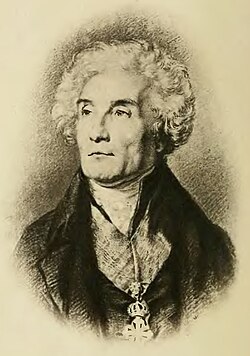
ลัทธิอนุรักษ์นิยมอีกรูปแบบหนึ่งพัฒนาขึ้นในฝรั่งเศสควบคู่ไปกับลัทธิอนุรักษ์นิยมในบริเตน โดยได้รับอิทธิพลจาก งานของนักปรัชญา ต่อต้านยุค เรือง ปัญญา เช่นโจเซฟ เดอ เมสตร์และหลุยส์ เดอ โบนาลด์ [ 51 ] นักอนุรักษ์นิยมในทวีปยุโรปหลายคนไม่สนับสนุนการแยกศาสนาออกจากรัฐโดยส่วนใหญ่สนับสนุนความร่วมมือระหว่างรัฐกับคริสตจักรคาทอลิกเช่นเดียวกับที่เคยมีในฝรั่งเศสก่อนการปฏิวัติ นักอนุรักษ์นิยมยังเป็นกลุ่มแรกๆ ที่ยอมรับลัทธิชาตินิยมซึ่งก่อนหน้านี้เกี่ยวข้องกับลัทธิเสรีนิยมและการปฏิวัติในฝรั่งเศส[ 52 ] นักอนุรักษ์ นิยมชาวฝรั่งเศสยุคแรกอีกคนหนึ่ง ฟรองซัวส์-เรเน เดอ ชาโตบริอองด์สนับสนุนการต่อต้านความทันสมัยแบบโรแมนติก โดยเปรียบเทียบความว่างเปล่าของมันกับ 'หัวใจที่เต็มเปี่ยม' ของศรัทธาและความจงรักภักดีแบบดั้งเดิม[ 53 ]ในส่วนอื่นๆ ของทวีป นักคิดชาวเยอรมันจัสตุส เมอเซอร์และฟรีดริช ฟอน เกนซ์วิพากษ์วิจารณ์ปฏิญญาสิทธิมนุษยชนและพลเมืองที่มาจากการปฏิวัติ นอกจากนี้ ยังมี นักอุดมคติชาวเยอรมันเช่นอดัม มุลเลอร์และเกออร์ก วิลเฮล์ม ฟรีดริช เฮเกลที่แสดงออกถึงการต่อต้าน โดยเฮ เก ลเป็นแรงบันดาลใจให้กับผู้ติดตามทั้งฝ่ายซ้ายและฝ่ายขวา[ 54 ]
ทั้งเบิร์กและไมสตร์ต่างวิพากษ์วิจารณ์ประชาธิปไตยโดยทั่วไป แม้ว่าเหตุผลของพวกเขาจะแตกต่างกัน ไมสตร์มองโลกในแง่ร้ายเกี่ยวกับความสามารถของมนุษย์ในการปฏิบัติตามกฎ ในขณะที่เบิร์กสงสัยในความสามารถโดยกำเนิดของมนุษย์ในการสร้างกฎ สำหรับไมสตร์ กฎมีต้นกำเนิดจากพระเจ้า ในขณะที่เบิร์กเชื่อว่ากฎเกิดขึ้นจากประเพณี การขาดประเพณีสำหรับเบิร์ก และการขาดการชี้นำจากพระเจ้าสำหรับไมสตร์ หมายความว่าผู้คนจะกระทำในทางที่เลวร้าย ทั้งสองยังเชื่อว่าเสรีภาพในแบบที่ผิดนำไปสู่ความสับสนวุ่นวายและการล่มสลายทางการเมือง แนวคิดของพวกเขารวมกันเป็นกระแสอนุรักษ์นิยมแบบโรแมนติกที่ต่อต้านเหตุผล แต่ก็ยังคงแยกจากกัน เบิร์กเปิดกว้างต่อการโต้แย้งและความเห็นต่างมากกว่า ในขณะที่ไมสตร์แสวงหาศรัทธาและอำนาจ ซึ่งนำไปสู่แนวคิดที่ไม่เสรีนิยมมากขึ้น[ 55 ]
รูปแบบอุดมการณ์
ลัทธิอนุรักษ์นิยมแบบเผด็จการ
ลัทธิอนุรักษ์นิยมแบบเผด็จการหมายถึง ระบอบ เผด็จการที่มองว่าอำนาจเป็นสิ่งสัมบูรณ์และไม่อาจตั้งคำถามได้[ 35 ] [ 56 ] [ 57 ]ขบวนการอนุรักษ์นิยมแบบเผด็จการแสดงความจงรักภักดีอย่างแรงกล้าต่อศาสนา ประเพณี และวัฒนธรรม พร้อมทั้งแสดงออกถึงชาตินิยมอย่างแรงกล้าเช่นเดียวกับขบวนการชาตินิยมฝ่ายขวาจัดอื่นๆ[ 58 ] [ 59 ]ตัวอย่างของเผด็จการอนุรักษ์นิยมแบบอำนาจนิยม ได้แก่ จอมพลฟิลิปป์ เปแตงในฝรั่งเศส[ 60 ]ผู้สำเร็จราชการแทน พระองค์ มิคลอส ฮอร์ธีในฮังการี[ 61 ] นาย พลโยอันนิส เมตาซาสในกรีซ[ 62 ]พระเจ้าอเล็กซานเดอร์ที่ 1 ใน ยูโกสลาเวีย[ 63 ]นายกรัฐมนตรีอันโตนิโอ เด โอลิเวียรา ซาลาซาร์ในโปรตุเกส[ 64 ]อัครมหาเสนาบดีเองเกลเบิร์ต ดอลฟุสในออสเตรีย[ 65 ] จอมพล ฟรานซิสโก ฟรังโกในสเปน[ 66 ]พระเจ้าคาโรลที่ 2ในโรมาเนีย[ 67 ]และซาร์บอริสที่ 3ในบัลแกเรีย[ 68 ]


ขบวนการอนุรักษ์นิยมเผด็จการมีความโดดเด่นในยุคเดียวกับลัทธิฟาสซิสต์ซึ่งบางครั้งก็เกิดความขัดแย้งกัน[ 69 ]แม้ว่าอุดมการณ์ทั้งสองจะมีค่านิยมหลักร่วมกัน เช่น ลัทธิชาตินิยม และมีศัตรูร่วมกัน เช่นลัทธิคอมมิวนิสต์แต่ก็ยังมีความแตกต่างระหว่างลักษณะดั้งเดิมและชนชั้นนำของลัทธิอนุรักษ์นิยมเผด็จการกับลักษณะปฏิวัติและประชานิยมของลัทธิฟาสซิสต์ ดังนั้นจึงเป็นเรื่องปกติที่ระบอบการปกครองแบบอนุรักษ์นิยมเผด็จการจะปราบปรามขบวนการ ฟาสซิสต์และ นาซี ที่กำลังเติบโต [ 67 ]ความเป็นปรปักษ์ระหว่างอุดมการณ์ทั้งสองนี้ได้รับการเน้นย้ำด้วยการต่อสู้แย่งชิงอำนาจในออสเตรีย ซึ่งมีเหตุการณ์สำคัญคือการลอบสังหารเผด็จการคาทอลิกสุดโต่งEngelbert Dollfussโดยนาซี ออสเตรีย ในทำนอง เดียวกันฟาสซิสต์โครเอเชียได้ลอบสังหารกษัตริย์อเล็กซานเดอร์ที่ 1 แห่งยูโกสลาเวีย[ 70 ]ในโรมาเนีย ขณะที่กลุ่มฟาสซิสต์Iron Guardกำลังได้รับความนิยมและนาซีเยอรมนีกำลังรุกคืบในเวทีการเมืองยุโรป กษัตริย์คาโรลที่ 2 ทรง มีพระราช ดำรัสประหารชีวิตคอร์เนลิอู เซเลีย โคเดรียนูและผู้นำฟาสซิสต์โรมาเนียระดับสูงคนอื่นๆ[ 71 ]จักรพรรดิ วิ ลเฮล์มที่ 2 แห่งเยอรมนี ผู้ลี้ภัยเป็นศัตรูของอดอล์ฟ ฮิตเลอร์และตรัสว่าลัทธินาซีทำให้พระองค์รู้สึกละอายใจที่ได้เป็นชาวเยอรมันเป็นครั้งแรกในชีวิต[ 72 ]อันโตนิโอ เด โอลิเวียรา ซาลาซาร์นักศึกษาศาสนศาสตร์คาทอลิกซึ่งเป็นเผด็จการของโปรตุเกสเป็นเวลา 40 ปี ประณามลัทธิฟาสซิสต์และลัทธินาซีว่าเป็น " ลัทธิซีซาร์นอกรีต " ที่ไม่ยอมรับขอบเขตทางกฎหมาย ศาสนา หรือศีลธรรม[ 73 ]
นักรัฐศาสตร์ซีมัวร์ มาร์ติน ลิปเซ็ตได้ศึกษาพื้นฐานทางชนชั้นของการเมืองฝ่ายขวาสุดโต่งในช่วงปี 1920-1960 และได้รายงานว่า:
ขบวนการอนุรักษ์นิยมหรือฝ่ายขวาสุดโต่งเกิดขึ้นในหลายช่วงเวลาของประวัติศาสตร์สมัยใหม่ ตั้งแต่กลุ่มฮอร์ธีในฮังการีพรรคสังคมคริสเตียนของดอลฟุสในออสเตรียเดอร์ สตาลเฮล์มและกลุ่มชาตินิยมอื่นๆ ในเยอรมนีก่อนฮิตเลอร์ และซาลาซาร์ในโปรตุเกส ไปจนถึง ขบวนการ กอลลิสต์ ก่อนปี 1966 และกลุ่มนิยมระบอบกษัตริย์ในฝรั่งเศสและอิตาลีในปัจจุบัน ฝ่ายขวาสุดโต่งเป็นพวกอนุรักษ์นิยม ไม่ใช่พวกปฏิวัติ พวกเขาพยายามเปลี่ยนแปลงสถาบันทางการเมืองเพื่อรักษาหรือฟื้นฟูสถาบันทางวัฒนธรรมและเศรษฐกิจ ในขณะที่พวกสุดโต่งฝ่ายกลาง [ฟาสซิสต์/นาซี] และฝ่ายซ้าย [คอมมิวนิสต์/อนาร์คิสต์] พยายามใช้กลไกทางการเมืองเพื่อการปฏิวัติทางวัฒนธรรมและสังคม อุดมคติของฝ่ายขวาสุดโต่งไม่ใช่ ผู้ปกครอง แบบเผด็จการแต่เป็นกษัตริย์ หรือผู้ยึดมั่นในประเพณีที่ประพฤติตนเหมือนกษัตริย์ การเคลื่อนไหวในลักษณะนี้จำนวนมากในสเปน ออสเตรีย ฮังการี เยอรมนี และอิตาลี ล้วนเป็นการสนับสนุนระบอบกษัตริย์อย่างชัดเจน […] ผู้สนับสนุนการเคลื่อนไหวเหล่านี้แตกต่างจากผู้สนับสนุนกลุ่มสายกลาง โดยมักจะเป็นคนร่ำรวยกว่าและเคร่งศาสนากว่า ซึ่งมีความสำคัญมากกว่าในแง่ของศักยภาพในการได้รับการสนับสนุนจากมวลชน[ 74 ]
เอ็ดมันด์ ฟอว์เซ็ตต์กล่าวว่าลัทธิฟาสซิสต์เป็นเผด็จการ ประชานิยม และต่อต้านพหุนิยมในขณะที่ลัทธิอนุรักษ์นิยมแบบเผด็จการค่อนข้างพหุนิยม แต่เหนือสิ่งอื่นใดคือชนชั้นนำและต่อต้านประชานิยม เขาสรุปว่า: "พวกฟาสซิสต์คือผู้ที่ไม่อนุรักษ์นิยมซึ่งต่อต้านเสรีนิยมอย่างสุดขั้ว ส่วนพวกเผด็จการฝ่ายขวาคือผู้ที่อนุรักษ์นิยมซึ่งหวาดกลัวประชาธิปไตยอย่างสุดขั้ว" [ 75 ]
ในช่วงสงครามเย็นระบอบเผด็จการทหารฝ่ายขวามีบทบาทสำคัญในละตินอเมริกา โดยประเทศส่วนใหญ่อยู่ภายใต้การปกครองของทหารในช่วงกลางทศวรรษ 1970 [ 76 ]ตัวอย่างหนึ่งคือ นายพลออกุสโต ปิโนเชต์ผู้ปกครองชิลีตั้งแต่ปี 1973 ถึง 1990 [ 77 ]ตามที่Erik von Kuehnelt-Leddihn กล่าวไว้ ระบอบเผด็จการทหารเกิดขึ้นในระบบประชาธิปไตยเพื่อหยุดยั้งพรรคฝ่ายซ้ายไม่ให้กลายเป็นเผด็จการเบ็ดเสร็จ[ 78 ]ตัวอย่างล่าสุดเกิดขึ้นในโบลิเวียในปี 2024 เมื่อนายพลฮวน โฮเซ ซูนิกาก่อรัฐประหารเพื่อโค่นล้มประธานาธิบดีฝ่ายซ้ายสุดโต่งหลุยส์ อาร์เซ[ 79 ]
ในศตวรรษที่ 21 รูปแบบการปกครองแบบเผด็จการได้กลับมาเฟื่องฟูอีกครั้งทั่วโลก โดยมีนักการเมืองอนุรักษ์นิยม เช่น ประธานาธิบดีวลาดิมีร์ ปูตินในรัสเซีย ประธานาธิบดีเรเจป ไตยิป แอร์โดอัน ในตุรกี นายกรัฐมนตรี วิกเตอร์ ออร์บานในฮังการี นายกรัฐมนตรีนเรนทรา โมดีในอินเดีย และประธานาธิบดีโดนัลด์ ทรัมป์ในสหรัฐอเมริกา[ 80 ]
เสรีนิยมอนุรักษ์นิยม
เสรีนิยมอนุรักษ์นิยมเป็นรูปแบบหนึ่งของอนุรักษ์นิยมที่ได้รับอิทธิพลอย่างมากจากจุดยืนแบบเสรีนิยม[ 81 ]โดยผสมผสานมุมมองแบบเสรีนิยมคลาสสิก เกี่ยวกับ การแทรกแซงทางเศรษฐกิจ ให้น้อยที่สุด ซึ่งหมายความว่าบุคคลควรมีอิสระที่จะมีส่วนร่วมในตลาดและสร้างความมั่งคั่งโดยปราศจากการแทรกแซงของรัฐบาล[ 82 ]อย่างไรก็ตาม ไม่สามารถพึ่งพาบุคคลได้อย่างเต็มที่ในการกระทำอย่างรับผิดชอบในด้านอื่นๆ ของชีวิต ดังนั้น เสรีนิยมอนุรักษ์นิยมจึงเชื่อว่ารัฐที่เข้มแข็งเป็นสิ่งจำเป็นเพื่อให้มั่นใจถึงกฎหมายและความสงบเรียบร้อย และสถาบันทางสังคมก็จำเป็นเพื่อบ่มเพาะความรู้สึกถึงหน้าที่และความรับผิดชอบต่อชาติ[ 82 ]เดิมทีต่อต้านทุนนิยมและการปฏิวัติอุตสาหกรรม [ 83 ] [ 84 ]อุดมการณ์อนุรักษ์นิยมในหลายประเทศได้นำเอาเสรีนิยมทางเศรษฐกิจ มาใช้ โดยเฉพาะในสหรัฐอเมริกาซึ่งอุดมการณ์นี้เป็นที่รู้จักในชื่ออนุรักษ์นิยมทางการคลัง[ 85 ] [ 86 ]
ลัทธิอนุรักษ์นิยมแห่งชาติ

ลัทธิอนุรักษ์นิยมชาตินิยมให้ความสำคัญกับการปกป้อง เอกลักษณ์ ของชาติและวัฒนธรรมโดยมักยึดทฤษฎีครอบครัวเป็นแบบอย่างของรัฐ[ 87 ]ลัทธิอนุรักษ์นิยมชาตินิยมมุ่งเน้นไปที่การรักษาอธิปไตย ของชาติ ซึ่งรวมถึงการจำกัดการเข้าเมืองและการป้องกันประเทศที่เข้มแข็ง[ 88 ]ในยุโรป ผู้ที่ยึดมั่นในลัทธิอนุรักษ์นิยมชาตินิยมมักจะเป็นผู้ที่ต่อต้านสหภาพยุโรป [ 89 ] [ 90 ] นักปรัชญาการเมืองYoram Hazonyได้โต้แย้งสนับสนุนลัทธิอนุรักษ์นิยมชาตินิยมในงานเขียนของเขาเรื่องThe Virtue of Nationalism (2018) [ 91 ]
อนุรักษ์นิยมแบบพ่อปกครองลูก
อนุรักษ์นิยมแบบพ่อปกครองลูกเป็นแนวคิดหนึ่งในลัทธิอนุรักษ์นิยม ซึ่งสะท้อนถึงความเชื่อที่ว่าสังคมดำรงอยู่และพัฒนาไปตามธรรมชาติ และสมาชิกในสังคมมีภาระผูกพันต่อกันและกัน[ 92 ]โดยเฉพาะอย่างยิ่งมีการเน้นย้ำถึงภาระผูกพันแบบพ่อปกครองลูก ( noblesse oblige ) ของผู้ที่มีสิทธิพิเศษและร่ำรวยต่อส่วนที่ยากจนกว่าของสังคม ซึ่งสอดคล้องกับหลักการต่างๆ เช่นหน้าที่ความเป็นอินทรีย์และลำดับชั้น[ 93 ]ผู้สนับสนุนแนวคิดนี้มักเน้นย้ำถึงความสำคัญของระบบความปลอดภัยทางสังคมเพื่อจัดการกับความยากจน สนับสนุนการกระจายความมั่งคั่ง อย่างจำกัด ควบคู่ไปกับการควบคุมตลาดโดยรัฐบาลเพื่อผลประโยชน์ของทั้งผู้บริโภคและผู้ผลิต[ 94 ]
| ส่วนหนึ่งของชุดบทความเกี่ยวกับ |
| ลัทธิอนุรักษ์นิยมแบบชาติเดียว |
|---|
 |
|

ลัทธิอนุรักษ์นิยมแบบพ่อปกครองลูกเกิดขึ้นครั้งแรกในฐานะอุดมการณ์ที่แตกต่างในสหราชอาณาจักร ภายใต้ ลัทธิอนุรักษ์นิยมแบบ " หนึ่งชาติ " ของนายกรัฐมนตรีเบนจามิน ดิสราเอลี[ 95 ]มีรัฐบาลอนุรักษ์นิยมแบบหนึ่งชาติหลายชุดในสหราชอาณาจักร โดยมีผู้สนับสนุน เช่น นายกรัฐมนตรีดิสราเอลี สแตนลีย์ บอลด์วิน เน วิ ลล์ แชม เบอร์เลน วินสตันเชอร์ชิลล์และแฮโรลด์ แมคมิลแลน[ 96 ]
ใน เยอรมนีศตวรรษที่ 19 นายกรัฐมนตรีออตโต ฟอน บิสมาร์คได้นำชุดโปรแกรมทางสังคมที่เรียกว่าสังคมนิยมของรัฐมาใช้ ซึ่งรวมถึงการประกันภัยสำหรับคนงานเพื่อป้องกันการเจ็บป่วย อุบัติเหตุ ความทุพพลภาพ และวัยชรา เป้าหมายของกลยุทธ์การสร้างรัฐแบบอนุรักษ์นิยมนี้คือการทำให้ชาวเยอรมันทั่วไป ไม่ใช่แค่ ชนชั้น สูงยุงเค อ ร์ เท่านั้น มีความจงรักภักดีต่อรัฐและ จักรพรรดิมากขึ้น[ 24 ]นายกรัฐมนตรีเลโอ ฟอน คาปริวีได้ส่งเสริมวาระแบบอนุรักษ์นิยมที่เรียกว่า "แนวทางใหม่" [ 97 ]
อนุรักษ์นิยมก้าวหน้า
ในสหรัฐอเมริกา ประธานาธิบดีธีโอดอร์ รูสเวลต์ได้รับการระบุว่าเป็นผู้สนับสนุนหลักของแนวคิดอนุรักษ์นิยมก้าวหน้า รูสเวลต์กล่าวว่าเขา "เชื่อเสมอว่าความก้าวหน้าที่ชาญฉลาดและการอนุรักษ์นิยมที่ชาญฉลาดนั้นไปด้วยกัน" [ 98 ]รัฐบาลรีพับลิกันของประธานาธิบดีวิลเลียม ฮาวาร์ด แทฟต์เป็นอนุรักษ์นิยมก้าวหน้า และเขาอธิบายตัวเองว่าเป็นผู้เชื่อมั่นในอนุรักษ์นิยมก้าวหน้า[ 98 ]ประธานาธิบดีดไวต์ ดี. ไอเซนฮาวร์ก็ประกาศตนเองว่าเป็นผู้สนับสนุนอนุรักษ์นิยมก้าวหน้าเช่นกัน[ 99 ]
ในแคนาดารัฐบาลอนุรักษ์นิยมหลายชุดเป็นส่วนหนึ่งของ ประเพณี Red Toryโดยพรรคอนุรักษ์นิยมหลักในอดีตของแคนาดามีชื่อว่าProgressive Conservative Party of Canadaตั้งแต่ปี 1942 ถึง 2003 [ 100 ]นายกรัฐมนตรีArthur Meighen , RB Bennett , John Diefenbaker , Joe Clark , Brian MulroneyและKim Campbellเป็นผู้นำรัฐบาลกลาง Red Tory [ 100 ]
อนุรักษ์นิยมแบบปฏิกิริยา

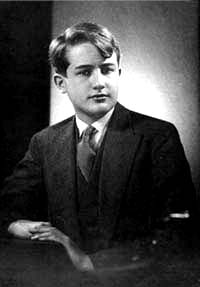
ลัทธิอนุรักษ์นิยมแบบปฏิกิริยา หรือที่รู้จักกันในชื่อลัทธิปฏิกิริยา ต่อต้านนโยบายสำหรับการเปลี่ยนแปลงทางสังคมของสังคม[ 101 ]ในการใช้งานทั่วไป ลัทธิปฏิกิริยาหมายถึง มุมมองทางการเมือง แบบอนุรักษ์นิยม ดั้งเดิมที่แน่วแน่ ของบุคคลที่สนับสนุนสถานะที่เป็นอยู่และต่อต้านการเปลี่ยนแปลงทางสังคม การเมือง และเศรษฐกิจ[ 102 ]ผู้ที่ยึดมั่นในลัทธิอนุรักษ์นิยมบางคน แทนที่จะต่อต้านการเปลี่ยนแปลง กลับพยายามที่จะกลับไปสู่สถานะเดิมก่อนการเปลี่ยนแปลงและมีแนวโน้มที่จะมองโลกสมัยใหม่ในแง่ลบ โดยเฉพาะอย่างยิ่งเกี่ยวกับวัฒนธรรมมวลชนและฆราวาสนิยมแม้ว่ากลุ่มปฏิกิริยาที่แตกต่างกันอาจเลือกค่านิยมดั้งเดิมที่แตกต่างกันเพื่อฟื้นฟู[ 24 ] [ 103 ]
นักรัฐศาสตร์บางคน เช่นCorey Robinถือว่าคำว่าปฏิกิริยาและอนุรักษ์นิยมเป็นคำพ้องความหมาย[ 104 ]ในขณะที่คนอื่นๆ เช่นMark Lillaโต้แย้งว่าปฏิกิริยาและอนุรักษ์นิยมเป็นโลกทัศน์ที่แตกต่างกัน[ 105 ] Francis Wilsonนิยามอนุรักษ์นิยมว่า "ปรัชญาแห่งวิวัฒนาการทางสังคม ซึ่งค่านิยมที่ยั่งยืนบางประการได้รับการปกป้องภายในกรอบของความตึงเครียดของความขัดแย้งทางการเมือง" [ 106 ]
พวกอนุรักษ์นิยมบางคนสนับสนุนการกลับคืนสู่สถานะเดิมก่อนเกิดเหตุการณ์ทางการเมือง ซึ่งบุคคลเหล่านั้นเชื่อว่ามีคุณลักษณะเชิงบวกที่ไม่มีอยู่ในสังคมปัจจุบัน ตัวอย่างแรกๆ ของขบวนการอนุรักษ์นิยมที่ทรงพลังคือลัทธิโรแมนติกของเยอรมันซึ่งมีศูนย์กลางอยู่ที่แนวคิดเรื่องความเป็นอินทรีย์ความเป็นยุคกลาง และความเป็นประเพณีนิยม เพื่อต่อต้านพลังของลัทธิ เหตุผล นิยม ฆราวาส นิยม และปัจเจกนิยมที่ปลดปล่อยออกมาในระหว่างการปฏิวัติฝรั่งเศส [ 107 ]
ในวาทกรรมทางการเมือง การเป็นพวกอนุรักษ์นิยมมักถูกมองว่าเป็นสิ่งที่ไม่ดี ปีเตอร์ คิง สังเกตว่ามันเป็น "ฉลากที่ไม่พึงประสงค์ ถูกใช้เป็นเครื่องมือทรมานมากกว่าเป็นเครื่องหมายแห่งเกียรติยศ" [ 108 ]ถึงกระนั้น คำอธิบายนี้ก็ได้รับการยอมรับจากปัญญาชน เช่นจูเลียส เอโวลา นักอนุรักษ์นิยมลัทธิลึกลับชาวอิตาลี [ 109 ]เอริก ฟอน คูห์เนลต์-เลดดินนักนิยมระบอบกษัตริย์ชาวออสเตรีย[ 110 ]นิโคลัส โกเมซ ดาวิลานักเทววิทยาการเมืองชาวโคลอมเบียและจอห์น ลูคัคส์นัก ประวัติศาสตร์ชาวอเมริกัน [ 111 ]
ลัทธิอนุรักษ์นิยมทางศาสนา
ลัทธิอนุรักษ์นิยมทางศาสนาโดยหลักแล้วจะนำคำสอนของศาสนาบางศาสนามาประยุกต์ใช้ในการเมือง—บางครั้งโดยการประกาศคุณค่าของคำสอนเหล่านั้น ในบางครั้งโดยการให้คำสอนเหล่านั้นมีอิทธิพลต่อกฎหมาย[ 112 ]ในระบอบประชาธิปไตยส่วนใหญ่ ลัทธิอนุรักษ์นิยมทางการเมืองมุ่งที่จะรักษาโครงสร้างครอบครัวและค่านิยมทางสังคมแบบดั้งเดิมไว้ ผู้ที่ยึดมั่นในลัทธิอนุรักษ์นิยมทางศาสนามักจะต่อต้านการทำแท้ง พฤติกรรมของ กลุ่ม LGBT (หรือในบางกรณี อัตลักษณ์) การใช้ยาเสพติด[ 113 ]และกิจกรรมทางเพศนอกสมรส ในบางกรณี ค่านิยมแบบอนุรักษ์นิยมมีพื้นฐานมาจากความเชื่อทางศาสนา และผู้ที่ยึดมั่นในลัทธิอนุรักษ์นิยมพยายามที่จะเพิ่มบทบาทของศาสนาในชีวิตสาธารณะ[ 114 ]
ประชาธิปไตยแบบคริสเตียนเป็นอุดมการณ์ที่ได้รับแรงบันดาลใจจากคำสอนทางสังคมของศาสนาคริสต์ [ 115 ] ในยุโรป พรรคประชาธิปไตยแบบคริสเตียนโดยทั่วไปมักมีแนวคิดอนุรักษ์นิยมปานกลาง โดยบางพรรคเป็นพรรคอนุรักษ์นิยมหลักในประเทศของตน[ 116 ] แนวคิดนี้เกิดขึ้นจากการต่อต้านการพัฒนาอุตสาหกรรมและการขยายตัวของเมืองที่เกี่ยวข้องกับระบบทุนนิยมแบบเสรีนิยม [ 117 ] ในยุโรปหลังสงครามพรรคประชาธิปไตยแบบคริสเตียนมีบทบาทสำคัญในทางการเมืองในหลายประเทศ ได้แก่พรรคประชาชนคริสเตียนในเบลเยียม พรรค CDUและCSUในเยอรมนี พรรคFine GaelและFianna Fáilในไอร์แลนด์ และพรรคประชาธิปไตยแบบคริสเตียนในอิตาลี[ 118 ]ชาวยุโรปหลังสงครามจำนวนมากมองว่าประชาธิปไตยแบบคริสเตียนเป็นทางเลือกสายกลางที่ตรงข้ามกับลัทธิชาตินิยมฝ่ายขวาและลัทธิคอมมิวนิสต์ฝ่ายซ้ายสุดโต่ง[ 119 ]พรรคประชาธิปไตยแบบคริสเตียนได้รับความนิยมเป็นพิเศษในหมู่สตรีชาวยุโรป ซึ่งมักลงคะแนนเสียงให้พรรคเหล่านี้เป็นจำนวนมากเนื่องจากนโยบายสนับสนุนครอบครัว[ 120 ]
อนุรักษ์นิยมทางสังคม

นักอนุรักษ์นิยมทางสังคมเชื่อว่าสังคมสร้างขึ้นบนเครือข่ายความสัมพันธ์ที่เปราะบางซึ่งจำเป็นต้องได้รับการค้ำจุนผ่านหน้าที่ ค่านิยมดั้งเดิม และสถาบันที่จัดตั้งขึ้น และรัฐบาลมีบทบาทในการส่งเสริมหรือบังคับใช้ค่านิยมหรือแนวปฏิบัติดั้งเดิม นักอนุรักษ์นิยมทางสังคมต้องการรักษาศีลธรรมและขนบธรรมเนียม ทางสังคมดั้งเดิม โดยมักจะต่อต้านสิ่งที่พวกเขาพิจารณาว่าเป็นนโยบายหัวรุนแรงหรือวิศวกรรมทางสังคม [ 121 ] จุดยืนของนักอนุรักษ์นิยมทางสังคมบางประการมีดังต่อไปนี้:
- สนับสนุนวัฒนธรรมแห่งชีวิตและต่อต้านการทำลายชีวิตมนุษย์ในทุกช่วงวัย รวมถึง การทำแท้ง การวิจัย เซลล์ต้นกำเนิดจากตัวอ่อนและการการุณยฆาต
- สนับสนุนการอนุรักษ์ชีวภาพและต่อต้านทั้งการคัดเลือกพันธุ์มนุษย์และการเปลี่ยนแปลงมนุษย์[ 122 ]
- สนับสนุนค่านิยมครอบครัว แบบดั้งเดิม โดยมองว่าครอบครัวเดี่ยวเป็นหน่วยพื้นฐานของสังคม
- สนับสนุนนิยามดั้งเดิมของการแต่งงานที่ว่าคือระหว่างชายหนึ่งคนและหญิงหนึ่งคน และคัดค้านการขยายขอบเขตการแต่งงานตามกฎหมายแพ่งและการรับบุตรบุญธรรมให้แก่คู่รักเพศเดียวกัน
- สนับสนุนศีลธรรมอันดีของสังคมด้วยการห้ามยาเสพ ติด และการค้าประเวณีและเซ็นเซอร์สื่อลามกอนาจาร
- การสนับสนุนศาสนาที่เป็นระบบและการต่อต้านลัทธิอเทวนิยมและฆราวาสนิยมโดยเฉพาะอย่างยิ่งเมื่อเป็นการต่อสู้[ 123 ] [ 124 ] [ 125 ]
อนุรักษ์นิยมแบบดั้งเดิม
ลัทธิอนุรักษ์นิยม แบบ ดั้งเดิม หรือที่รู้จัก กันในชื่อลัทธิอนุรักษ์นิยมแบบคลาสสิก เน้นย้ำถึงความจำเป็นของหลักการของกฎธรรมชาติระเบียบศีลธรรมอันสูงส่ง ประเพณีลำดับชั้น ความเป็นอินทรีย์ลัทธิเกษตรกรรมลัทธิคลาสสิกและวัฒนธรรมชั้นสูงรวมถึงขอบเขตความภักดีที่ ตัดกัน [ 126 ]นักอนุรักษ์นิยมแบบดั้งเดิมบางคนยอมรับฉลากของพวกปฏิกิริยาและพวกต่อต้านการปฏิวัติโดยท้าทายตราบาปที่ติดอยู่กับคำเหล่านี้มาตั้งแต่ยุคเรืองปัญญาด้วยมุมมองแบบลำดับชั้นของสังคม นักอนุรักษ์นิยมแบบดั้งเดิมหลายคน รวมถึงชาวอเมริกันที่มีชื่อเสียงบางคน เช่นราล์ฟ อดัมส์ แครม[ 127 ]วิลเลียม เอส. ลินด์ [ 128 ] และชาร์ลส์ เอ. คูลอมบ์ [ 129 ] ปกป้อง โครงสร้างทางการเมืองแบบราชาธิปไตยว่าเป็นโครงสร้างทางสังคม ที่เป็นธรรมชาติและเป็นประโยชน์ที่สุด
สายพันธุ์ระดับชาติ
พรรคอนุรักษ์นิยมมีความแตกต่างกันอย่างมากในแต่ละประเทศในเป้าหมายที่พวกเขาต้องการบรรลุ[ 4 ]ทั้งพรรคอนุรักษ์นิยมและ พรรค เสรีนิยมคลาสสิกมักจะสนับสนุนการเป็นเจ้าของทรัพย์สินส่วนตัว ซึ่งตรงข้ามกับพรรคคอมมิวนิสต์พรรคสังคมนิยมและ พรรค สีเขียวซึ่งสนับสนุนการเป็นเจ้าของร่วมกันหรือกฎหมายที่ควบคุมความรับผิดชอบของเจ้าของทรัพย์สิน ความแตกต่างระหว่างพรรคอนุรักษ์นิยมและพรรคเสรีนิยมส่วนใหญ่อยู่ที่ประเด็นทางสังคม โดยที่พรรคอนุรักษ์นิยมมักจะปฏิเสธพฤติกรรมที่ไม่สอดคล้องกับบรรทัดฐานทางสังคม บางประการ พรรคอนุรักษ์นิยมสมัยใหม่มักจะกำหนดตัวเองโดยการต่อต้านพรรคเสรีนิยมหรือพรรคสังคมนิยม การใช้คำว่าอนุรักษ์นิยมในสหรัฐอเมริกาเป็นเอกลักษณ์เฉพาะของประเทศนั้น โดยการใช้คำนี้ในยุคสมัยใหม่ครั้งแรกนั้นใช้กับฝ่ายสนับสนุนการค้าเสรีที่ต่อต้านนโยบายNew Deal [ 130 ]
เอเชีย
| ส่วนหนึ่งของชุดบทความเกี่ยวกับ |
| ลัทธิอนุรักษ์นิยมในเอเชีย |
|---|
|
|

แนวคิดอนุรักษ์นิยมในเอเชียแตกต่างกันไปตามภูมิภาคเอเชียตะวันออกและบาง ภูมิภาคใน เอเชียตะวันออกเฉียงใต้มีความเชื่อมโยงอย่างลึกซึ้งกับประเพณี ขงจื๊อ
ค่านิยมแบบเอเชียเป็นอุดมการณ์ทางการเมืองที่พยายามกำหนดองค์ประกอบของสังคม วัฒนธรรม และประวัติศาสตร์ที่พบได้ทั่วไปในประเทศต่างๆ ในเอเชียตะวันออกเฉียงใต้และเอเชียตะวันออก โดยเฉพาะอย่างยิ่งค่านิยมด้านความเหมือนและความเป็นพวกพ้องเพื่อความสามัคคีทางสังคมและความเจริญรุ่งเรืองทางเศรษฐกิจ ซึ่งแตกต่างจากอุดมคติของยุโรป ที่เชื่อกันว่า ทุกคน มีสิทธิขั้นพื้นฐาน
ในเอเชียตะวันตกลัทธิอนุรักษ์นิยมมักเกี่ยวพันกับลัทธิอิสลามและกฎหมายศาสนาทำหน้าที่เป็นกรอบสำหรับระเบียบทางสังคมและการปกครอง ลัทธิอนุรักษ์นิยมรูปแบบนี้เน้นการรักษากฎหมายอิสลาม ( ชะรีอะฮ์ ) และโครงสร้างครอบครัวแบบดั้งเดิมเพื่อต่อต้านลัทธิฆราวาสนิยมและการรุกรานของอิทธิพลทางวัฒนธรรมตะวันตกในขณะที่บางประเทศใช้แนวทางระบอบกษัตริย์แบบดั้งเดิมมากกว่า บางประเทศก็ผสมผสานค่านิยมอนุรักษ์นิยมเหล่านี้เข้ากับระบบสาธารณรัฐ แต่โดยทั่วไปแล้วจะให้ความสำคัญกับอัตลักษณ์ทางศาสนาและศีลธรรมของชุมชนเป็นเสาหลักของความมั่นคงของชาติ[ 131 ]
จีน
| ส่วนหนึ่งของชุดบทความเกี่ยวกับ |
| ลัทธิอนุรักษ์นิยมในประเทศจีน |
|---|
|


แนวคิดอนุรักษ์นิยมของจีนสามารถสืบย้อนไปถึงขงจื๊อได้ ซึ่ง ปรัชญาของเขาตั้งอยู่บนคุณค่าของความจงรักภักดี หน้าที่ และความเคารพ เขาเชื่อในสังคมที่มีการจัดระเบียบตามลำดับชั้น โดยมีแบบอย่างมาจากครอบครัวแบบปิตาธิปไตยและมีผู้ปกครองสูงสุดที่มีอำนาจเบ็ดเสร็จอย่างไรก็ตาม ขงจื๊อยังเชื่อว่ารัฐควรจ้างผู้บริหารและที่ปรึกษาที่มีความสามารถ โดย คัดเลือกผ่าน การสอบราชการแนวคิดทางเลือกอีกสำนักหนึ่งที่เรียกว่านิติธรรมนิยมโต้แย้งว่าวินัยในการบริหาร ไม่ใช่คุณธรรมของขงจื๊อ เป็นสิ่งสำคัญสำหรับการปกครองรัฐ[ 132 ]
เป็นเวลาหลายพันปีที่จีนถูกปกครองโดยกษัตริย์จากราชวงศ์ต่างๆ ทฤษฎีอาณัติ แห่งสวรรค์ถูกนำมาใช้เพื่อสร้างความชอบธรรมให้กับอำนาจเบ็ดเสร็จของจักรพรรดิ[ 133 ]การปฏิวัติซินไห่ในปี 1911 ได้โค่นล้มปูยีจักรพรรดิองค์สุดท้ายของจีน และนำมาซึ่งรัฐบาลเป่ยหยางระหว่างปี 1927 ถึง 1949 จีนถูกปกครองโดยพรรคชาตินิยมกั๋วหมิงตังซึ่งกลายเป็นฝ่ายขวาหลังจากที่นายพลเจียงไคเช็กกวาดล้างคอมมิวนิสต์ออกจากพรรคของเขา หลังจากการพ่ายแพ้ในสงครามกลางเมืองจีนโดยพรรคคอมมิวนิสต์จีน (CCP) เจียงไคเช็กยังคงปกครองเกาะไต้หวัน ต่อไป จนกระทั่งเสียชีวิตในปี 1975 [ 134 ]
บนแผ่นดินใหญ่ ลัทธิอนุรักษ์นิยมของจีนถูกต่อต้านและปราบปรามอย่างรุนแรงโดยพรรคคอมมิวนิสต์จีน โดยเฉพาะอย่างยิ่งในช่วงการปฏิวัติวัฒนธรรมสมาชิกของ " ห้าประเภทสีดำ " ได้แก่ เจ้าของที่ดิน ชาวนาผู้มั่งคั่ง ผู้ต่อต้านการปฏิวัติ ผู้มีอิทธิพลในทางไม่ดี และพวกฝ่ายขวา ถูกข่มเหงอย่างรุนแรง คนหนุ่มสาวได้ก่อตั้งกองกำลังพิทักษ์แดงทั่วประเทศและพยายามทำลายสี่สิ่งเก่า ได้แก่ ความคิดเก่า วัฒนธรรมเก่า ขนบธรรมเนียมเก่า และนิสัยเก่า ซึ่งนำไปสู่การทำลาย มรดกทางวัฒนธรรมของจีนเป็นจำนวนมากรวมถึงโบราณวัตถุและสถานที่ทางศาสนา[ 135 ]ในหมู่พวกเขา พิทักษ์แดงบางคนที่โอบกอดเจ้าหน้าที่ท้องถิ่นถูกเรียกว่า " พวกอนุรักษ์นิยม " อย่างดูถูก [ 136 ]
ในช่วงไม่กี่ทศวรรษที่ผ่านมา ลัทธิอนุรักษ์นิยมของจีนได้ประสบกับการฟื้นตัวในระดับชาติ[ 137 ]สำนักคิดโบราณอย่างลัทธิขงจื๊อและลัทธิกฎหมายได้กลับคืนสู่กระแสความคิดหลักของจีน[ 138 ] [ 139 ] [ 140 ]หวัง หูหนิงซึ่งได้รับการยกย่องอย่างกว้างขวางว่าเป็นผู้ทรงอิทธิพลและนักคิดหลักของพรรคคอมมิวนิสต์จีน ได้วิพากษ์วิจารณ์บางแง่มุมของลัทธิมาร์กซ์และแนะนำให้จีนผสมผสานคุณค่าทางประวัติศาสตร์และคุณค่าสมัยใหม่เข้า ด้วยกัน [ 141 ]เลขาธิการใหญ่สี จิ้นผิงได้เรียกวัฒนธรรมจีน ดั้งเดิม ว่าเป็น "จิตวิญญาณ" ของชาติและ "รากฐาน" ของพรรคคอมมิวนิสต์จีน[ 142 ] [ 143 ] ในช่วงไม่กี่ปีที่ผ่านมา จีนยังได้พัฒนารูปแบบของทุนนิยมแบบเผด็จการซึ่งเป็นการแตกหักกับลัทธิคอมมิวนิสต์ดั้งเดิมในอดีต[ 144 ]ลัทธิเผด็จการใหม่เป็นกระแสความคิดทางการเมืองที่สนับสนุนรัฐที่มีอำนาจเพื่ออำนวยความสะดวกในการปฏิรูปตลาด[ 145 ]ความกังวลหลักของลัทธิอนุรักษ์นิยมจีนสมัยใหม่คือการอนุรักษ์วัฒนธรรมดั้งเดิม[ 146 ]
อินเดีย
| ส่วนหนึ่งของชุดบทความเกี่ยวกับ |
| ลัทธิอนุรักษ์นิยมในอินเดีย |
|---|
 |
|

การเมืองอินเดียถูกครอบงำโดยชนชั้นสูงและผู้นำทางศาสนามาเป็นเวลานานในประเทศที่มีการแบ่งชั้นทางสังคมสูงที่สุดแห่งหนึ่งของโลก[ 147 ] [ 148 ]ในยุคปัจจุบันพรรคภารติยะชนาตา (BJP) ซึ่งนำโดยนเรนทรา โมดีเป็นตัวแทนของการเมืองแบบอนุรักษ์นิยม ด้วยสมาชิกกว่า 170 ล้านคน ณ เดือนตุลาคม 2022 พรรค BJP จึงเป็นพรรคการเมืองที่ใหญ่ที่สุดใน โลก [ 149 ] [ 150 ] [ 151 ]พรรคนี้ส่งเสริมลัทธิชาตินิยมฮินดูลัทธิฮินดูตวาแบบกึ่งฟาสซิสต์นโยบายต่างประเทศที่เป็นปรปักษ์ต่อปากีสถานนโยบายภายในประเทศที่เป็นปรปักษ์ต่อชาวมุสลิมในอินเดียและนโยบายทางสังคมและการคลังแบบอนุรักษ์นิยม[ 152 ] [ 153 ] [ 154 ] [ 155 ]ขบวนการ BJP เป็นทั้งชนชั้นนำและประชานิยม ดึงดูดกลุ่มผู้มีอภิสิทธิ์ที่กลัวการรุกรานตำแหน่งที่โดดเด่นของตน รวมถึงกลุ่ม "สามัญชน" ที่แสวงหาการยอมรับรอบวาทศิลป์ของเสียงข้างมากเกี่ยวกับความภาคภูมิใจทางวัฒนธรรม ระเบียบทางสังคม และความแข็งแกร่งของชาติ[ 156 ]
อิหร่าน
| ส่วนหนึ่งของชุดบทความเกี่ยวกับ |
| ลัทธิอนุรักษ์นิยมในอิหร่าน |
|---|
  |
|

ราชวงศ์ปาห์ลาวีเข้ามาแทนที่ราชวงศ์กาจาร์ในปี 1925 หลังจากการรัฐประหารปกครองอิหร่านในฐานะระบอบ ราชาธิปไตยภาย ใต้รัฐธรรมนูญ ตั้งแต่ปี 1925 จนถึงปี 1953 และจากนั้นในฐานะระบอบราชา ธิปไตยแบบเผด็จการตั้งแต่การรัฐประหารในปี 1953ที่สหรัฐฯ ยุยงจนถึงปี 1979 [ 157 ]ในความพยายามที่จะนำการปฏิรูปจากเบื้องบนเข้ามาในขณะที่ยังคงรักษาความสัมพันธ์แบบลำดับชั้นดั้งเดิมไว้ ชาห์โมฮัมหมัดเรซา ปาห์ลาวีได้ริเริ่มการปฏิวัติขาวในปี 1963 ซึ่งเป็นการปฏิรูปเพื่อการพัฒนาที่ทันสมัยอย่างก้าวร้าว ส่งผลให้มีการกระจายความมั่งคั่ง ครั้งใหญ่ จากชนชั้นเจ้าที่ดินผู้สูงศักดิ์ไปยังชนชั้นแรงงานของอิหร่าน และการเติบโตทางเศรษฐกิจอย่างรวดเร็วในทศวรรษต่อมา[ 158 ]การปฏิวัติอิหร่านในปี 1979 ซึ่งได้รับการสนับสนุนจากนักบวชและชนชั้นสูง ได้โค่นล้มระบอบกษัตริย์และเปลี่ยนรัฐจักรวรรดิอิหร่านให้เป็นสาธารณรัฐอิสลามอิหร่านจึงแทนที่ลัทธิอนุรักษ์นิยมก้าวหน้าของระบอบกษัตริย์ชาห์ด้วยลัทธิอนุรักษ์นิยมปฏิกิริยาของระบอบเทวธิปไตยอิสลาม[ 159 ]ค่ายการเมืองหลักสองค่ายในอิหร่านปัจจุบันคือ ฝ่ายอนุรักษ์นิยมสายแข็ง[ 160 ] " พวกยึดมั่นในหลักการ " และฝ่ายเสรีนิยมอิสลาม " พวกปฏิรูป " [ 161 ]
อิสราเอล
| ส่วนหนึ่งของชุดบทความเกี่ยวกับ |
| ลัทธิอนุรักษ์นิยมในอิสราเอล |
|---|
 |
|

หลังจากการประกาศจัดตั้งรัฐอิสราเอลการเมืองในช่วงแรกถูกครอบงำโดยพรรคฝ่ายซ้าย แต่เมื่อเวลาผ่านไป พรรคฝ่ายขวากลับมีอำนาจมากขึ้นเรื่อยๆ โดยปัจจุบันลัทธิอนุรักษ์นิยมกลายเป็นอุดมการณ์ที่โดดเด่น[ 162 ] [ 163 ]ในการเลือกตั้งปี 2022พรรคฝ่ายขวาได้รับคะแนนเสียง 75 เปอร์เซ็นต์ พรรคสายกลาง 17 เปอร์เซ็นต์ และพรรคฝ่ายซ้าย 7 เปอร์เซ็นต์ และรัฐบาลที่ตามมาได้รับการอธิบายว่าเป็นรัฐบาลฝ่ายขวาที่สุด รวมถึงรัฐบาลที่เคร่งศาสนาที่สุดในประวัติศาสตร์อิสราเอล[ 164 ] [ 165 ]
ลัทธิอนุรักษ์นิยมของอิสราเอลตั้งอยู่บนพื้นฐานการรักษาวัฒนธรรมยิวประเพณีทางศาสนายิว การส่งเสริมรูปแบบของลัทธิไซออนิส ต์ ที่มีแนวโน้มที่จะเน้นการเรียกร้องดินแดน (เช่น ลัทธิไซออนิสต์ แบบแก้ไขและลัทธิไซออนิสต์ ใหม่ ซึ่งส่งเสริมแนวคิดเรื่องอิสราเอลที่ยิ่งใหญ่กว่าเมื่อเทียบกับ ลัทธิไซออนิสต์ เสรีนิยมหรือลัทธิไซออนิสต์แรงงานซึ่งสนับสนุนแนวทางแก้ปัญหาแบบสองรัฐ ) การส่งเสริมความมั่นคงแห่งชาติ ของอิสราเอล การรักษาบทบาทของศาสนาและคณะรับบีในพื้นที่สาธารณะการสนับสนุนตลาดเสรีและความสัมพันธ์ที่ใกล้ชิดกับสหรัฐอเมริกา [ 12 ]
ญี่ปุ่น
| ส่วนหนึ่งของชุดบทความเกี่ยวกับ |
| ลัทธิอนุรักษ์นิยมในญี่ปุ่น |
|---|
 |
|

ลัทธิอนุรักษ์นิยมเป็นอุดมการณ์ทางการเมืองที่โดดเด่นตลอดประวัติศาสตร์ญี่ปุ่นสมัยใหม่[ 166 ] [ 167 ]พรรคเสรีประชาธิปไตยฝ่ายขวาอนุรักษ์นิยมเป็นพรรคการเมืองที่ครองอำนาจมาตั้งแต่ปี 1955 ซึ่งมักเรียกกันว่า ระบบ ปี1955 [ 168 ]ดังนั้น ผู้เชี่ยวชาญบางคนจึงถือว่าญี่ปุ่นเป็นรัฐพรรคเดียว ที่มาจากการเลือกตั้งตามระบอบประชาธิปไตย เนื่องจากประชาชนมักลงคะแนนเสียงให้พรรคอนุรักษ์นิยมเดียวกันเสมอ[ 169 ]
จนกระทั่งถึงปี 1868 ญี่ปุ่นส่วนใหญ่เป็น รัฐ ศักดินาที่ปกครองโดยสมาชิกของชนชั้นสูงซามูไรที่มีหลักเกียรติยศบูชิโด ใน ยุคเมจิกระบวนการพัฒนาให้ทันสมัย อุตสาหกรรม และการรวมชาติได้เริ่มต้นขึ้น[ 170 ]การต่อสู้แย่งชิงอำนาจระหว่างชนชั้นสูงซามูไรแบบกระจายอำนาจเดิมกับระบอบกษัตริย์แบบรวมศูนย์ใหม่ได้สิ้นสุดลง ด้วย การกบฏซัตสึมะในปี 1877 ซึ่งฝ่ายจักรพรรดิได้รับชัยชนะ[ 171 ]ในช่วงสงครามโลกครั้งที่สองญี่ปุ่นได้เปลี่ยนไปเป็นรัฐชาตินิยมสุดโต่งและจักรวรรดินิยมที่พิชิตดินแดนส่วนใหญ่ของเอเชียตะวันออกและเอเชียตะวันออกเฉียงใต้[ 172 ]นักอนุรักษ์นิยมร่วมสมัย โดยเฉพาะอย่างยิ่งในช่วงการดำรงตำแหน่งนายกรัฐมนตรีครั้งที่สองของชินโซ อาเบะตั้งแต่ปี 2012 ถึง 2020 สนับสนุนการแก้ไขรัฐธรรมนูญของประเทศ โดยเฉพาะมาตรา 9ซึ่งปฏิเสธสงครามและห้ามญี่ปุ่นจากการมีกองทัพ[ 173 ]
ญี่ปุ่นเป็นประเทศที่มีระบอบกษัตริย์ต่อเนื่องยาวนานที่สุดในประวัติศาสตร์ของมนุษยชาติ โดยปัจจุบันนารุฮิโตะ ทรงดำรงตำแหน่ง จักรพรรดิแห่งญี่ปุ่น[ 174 ] ตามหลักการของระบอบกษัตริย์ สังคมญี่ปุ่นมีโครงสร้างครอบครัวแบบเผด็จการ โดยมีอำนาจของบิดาแบบดั้งเดิมที่ถ่ายทอดไปยังบุตรชายคนโตเป็นหลัก[ 175 ]
ความรู้สึก ต่อต้านคอมมิวนิสต์และต่อต้านจีนแพร่หลายในญี่ปุ่น[ 176 ]ในปี พ.ศ. 2468 ได้มีการตรา กฎหมายรักษาสันติภาพขึ้นโดยมีเป้าหมายเพื่อให้ตำรวจพิเศษสามารถปราบปรามพวกสังคมนิยมและคอมมิวนิสต์ได้อย่างมีประสิทธิภาพมากขึ้น[ 177 ]ในปี พ.ศ. 2479 จักรวรรดิญี่ปุ่นและนาซีเยอรมนีได้ต่อต้านองค์การคอมมิวนิสต์สากลโดยการลงนามในสนธิสัญญาต่อต้านคอมมิวนิสต์สากล ซึ่งต่อมาราชอาณาจักรอิตาลี สเปนภายใต้การปกครองของฟรังโกและราชอาณาจักรฮังการี ได้เข้าร่วม ด้วย[ 178 ] คำว่า tenkō ใน ภาษาญี่ปุ่นหมายถึงการเปลี่ยนอุดมการณ์โดยถูกบังคับของนักสังคมนิยมชาวญี่ปุ่นที่ถูกชักจูงให้ละทิ้งอุดมการณ์ฝ่ายซ้ายและยอมรับอุดมการณ์กษัตริย์นิยม ทุนนิยม และจักรวรรดินิยมอย่างกระตือรือร้น ซึ่งเป็นอุดมการณ์ที่รัฐสนับสนุน[ 179 ]ในช่วงปลายทศวรรษ 1940 และต้นทศวรรษ 1950 ระหว่างการกวาดล้างคอมมิวนิสต์ผู้สนับสนุนกลุ่มฝ่ายซ้ายหลายหมื่นคน โดยเฉพาะผู้ที่เกี่ยวข้องกับพรรคคอมมิวนิสต์ญี่ปุ่นถูกปลดออกจากงานในหน่วยงานราชการ โรงเรียน และมหาวิทยาลัย[ 180 ]
นิปปอน ไคกิเป็นองค์กรอนุรักษ์นิยมสุดโต่งและชาตินิยมสุดโต่งที่มีอิทธิพลอย่างมากต่อการเมืองญี่ปุ่นในปัจจุบัน ในปี 2557 สมาชิกส่วนใหญ่ของรัฐสภาเป็นสมาชิกของกลุ่มนี้ รัฐมนตรีหลายคนและนายกรัฐมนตรีบางคน รวมถึงฟูมิโอะ คิชิดะ ,ทาโร่ อาโซะ ,ชินโซะ อาเบะและโยชิฮิเดะ ซูกะต่างก็เคยเป็นสมาชิก [ 181 ]
ญี่ปุ่นเป็นประเทศที่มีการพัฒนาและอุตสาหกรรมสูง มีลักษณะเป็นทุนนิยมและมุ่งเน้นไปทางตะวันตกมากกว่าประเทศอื่นๆ ในเอเชีย ดังนั้น ผู้เชี่ยวชาญบางคนจึงถือว่าญี่ปุ่นเป็นส่วนหนึ่งของโลกตะวันตก [ 182 ] ในปี พ.ศ. 2503 ได้มีการลงนามใน สนธิสัญญาที่จัดตั้งพันธมิตรทางทหารระหว่างสหรัฐอเมริกาและญี่ปุ่นอย่างไรก็ตามยูกิโอะ มิชิมะ ผู้ยึดมั่นในประเพณีและอนุรักษ์นิยมสุดโต่ง เกรงว่าชาวญี่ปุ่นด้วยกันจะหลงใหลในความทันสมัยและทุนนิยมแบบตะวันตกมากเกินไปจนไม่สามารถปกป้องวัฒนธรรมญี่ปุ่น ดั้งเดิม ได้[ 183 ]
สิงคโปร์
Singapore's conservative party is the People's Action Party (PAP), which promotes conservative values in the form of Asian democracy and Asian values.[184] These values include: nation before community and society above self; family as the basic unit of society; regard and community support for the individual; consensus instead of contention, and racial and religious harmony. They are a contrast against the "more Westernised, individualistic, and self-centred outlook on life" and uphold the "traditional Asian ideas of morality, duty and society".[185]
The PAP is currently in government and has been since independence in 1965. Having governed for over six decades, the PAP is the longest uninterrupted governing party among modern multiparty parliamentary democracies.[186]Singapore is a city state and has a reputation as a nanny state, owing to the considerable number of government regulations and restrictions on its citizens' lives.[187] Former Prime MinisterLee Kuan Yew, the architect of the modern Singapore, observed: "If Singapore is a nanny state, then I am proud to have fostered one".[188] In an interview in the Straits Times in 1987, Lee said:
I am often accused of interfering in the private lives of citizens. Yes, if I did not, had I not done that, we wouldn't be here today. And I say without the slightest remorse, that we wouldn't be here, we would not have made economic progress, if we had not intervened on very personal matters–who your neighbour is, how you live, the noise you make, how you spit, or what language you use. We decide what is right. Never mind what the people think.[189]
South Korea
| Part of a series on |
| Conservatismin South Korea |
|---|
 |
|

Conservatism has been the dominant political ideology throughout Korean history. Syngman Rhee was a staunch anti-communist and became the first President of South Korea upon the nation founding in 1948.[190] South Korean army general Park Chung Hee seized power in the May 16 coup of 1961, after which he was elected as the third President. He introduced the highly authoritarian Yushin Constitution, ushering in the Fourth Republic. He ruled the country as a dictator until his assassination in 1979.[191]
Right-wing conservative parties have dominated South Korean politics for most of its modern history, while the main opposition parties have been moderate centrist and not left-wing. South Korea's major conservative party, the People Power Party, has changed its form over the years. Its predecessor, the Democratic-Liberal Party was led by Roh Tae-woo, who was the first democratically elected president. The party was founded by the merging of Roh Tae-woo's Democratic Justice Party, Kim Young Sam's Reunification Democratic Party and Kim Jong-pil's New Democratic Republican Party. Kim Young-sam later became the seventh President of Korea.
When the conservative party was beaten by the opposition party in the general election of 1996, it became the New Korea Party, but it changed again to the Grand National Party (GNP) a year later. Since the late Kim Dae-jung assumed the presidency in 1998, GNP had been the opposition party until Lee Myung-bak won the presidential election of 2007.
Park Geun-hye succeeded Lee in the presidential election of 2012 till her impeachment in 2017. Yoon Suk Yeol won the presidential election of 2022 by the narrowest margin since democratization till his impeachment in 2025.
Europe
| Part of a series on |
| Conservatism in Europe |
|---|
 |
|

European conservatism has taken many different expressions. Early forms were often reactionary and romantic, idealizing the Middle Ages and its feudal social order with aristocratic rule and an established church.[192][193] In the late 19th century, conservatism became increasingly progressive, adopting capitalism and espousing nationalism—which up until now had been anti-traditionalist and anti-imperialist forces.[194] During the first half of the 20th century, as socialist movements were becoming more powerful and the Tsarist regime was overthrown in the Russian Revolution, conservatism in Austria, Germany, Greece, Hungary, Italy, Portugal, Spain, and Romania transformed into the far-right, becoming more authoritarian and extreme.[195] In the post-war era, conservatism assumed a more moderate form with center-right Christian-democratic parties dominating politics across Western Europe throughout the rest of the century,[118] although the authoritarian regimes of Francoist Spain and Salazarian Portugal survived for a few more decades.[196] Towards the end of the century, after the collapse of the Soviet Union, conservatism took on a more liberal form. In recent decades, nationalist parties have been on the rise across Europe in opposition to globalism.[197]
European countries, with the exception of Switzerland, have had a long monarchical tradition throughout history. Today, existing monarchies are Andorra, Belgium, Denmark, Liechtenstein, Luxembourg, Monaco, the Netherlands, Norway, Spain, Sweden, and the United Kingdom. Some reactionary movements in republican nations, such as Action Française in France, the Monarchist National Party in Italy, and the Black-Yellow Alliance in Austria, have advocated a restoration of the monarchy.
Austria
| Part of a series on |
| Conservatism in Austria |
|---|
 |
|

Austrian conservatism originated with Prince Klemens von Metternich, who was the architect behind the monarchist and imperialist Conservative Order that was enacted at the Congress of Vienna in the aftermath of the French Revolution and the Napoleonic Wars.[24] The goal was to establish a European balance of power that could guarantee peace and suppress republican and nationalist movements.[198] During its existence, the Austrian Empire was the third most populous monarchy in Europe after the Russian Empire and the United Kingdom. Following its defeat in the Austro-Prussian War, it transformed into the Austro-Hungarian Empire, which was the most diverse state in Europe with twelve nationalities living under a unifying monarch.[199] The Empire was fragmented in the aftermath of World War I, ushering in the democratic First Austrian Republic.
The Austrian Civil War in 1934 saw a series of skirmishes between the right-wing government and socialist forces. When the insurgents were defeated, the government declared martial law and held mass trials, forcing leading socialist politicians, such as Otto Bauer, into exile.[200] The conservatives banned the Social Democratic Party and replaced parliamentary democracy with a corporatist and clerical constitution. The Fatherland Front, into which the paramilitary Heimwehr and the Christian Social Party were merged, became the only legal political party in the resulting authoritarian regime, the Federal State of Austria.[201]
While having close ties to Fascist Italy, which was still a monarchy as well as a fellow Catholic nation, Austrian conservatives harbored strong anti-Prussian and anti-Nazi sentiment. Austria's most prominent conservative intellectual, the Catholic aristocrat Erik von Kuehnelt-Leddihn, published several books in which he interpreted Nazism as a leftist, ochlocratic, and demagogic ideology opposed to the traditional rightist ideals of aristocracy, monarchy, and Christianity.[202] Austria's dictator Engelbert Dollfuss saw Nazism as another form of totalitarian communism, and he saw Adolf Hitler as the German version of Joseph Stalin. The conservatives banned the Austrian Nazi Party and arrested many of its activists, causing tens of thousands of Nazi sympathisers to flee to Nazi Germany in order to avoid persecution.[203] A few months later, Nazi forces initiated the July Putsch and managed to assassinate Chancellor Dollfuss in an attempt to overthrow the conservative government.[204] In response, Benito Mussolini mobilized a part of the Italian army on the Austrian border and threatened Hitler with war in the event of a German invasion of Austria. In 1938, when Nazi Germany annexed Austria in the Anschluss, conservative groups were suppressed: members of the Austrian nobility and the Catholic clergy were arrested and their properties were confiscated.[205][206]Otto von Hapsburg, the last Crown Prince of Austria-Hungary, was a fervent anti-Nazi, for which reason the Nazi regime ordered that he was to be executed immediately if caught.[207]
Following World War II and the return to democracy, Austrian conservatives and socialists alike abandoned their extremism, believing in political compromise and seeking consensus in the middle.[208] The conservatives formed the Austrian People's Party, which has been the major conservative party in Austria ever since. In contemporary politics, the party was led by Sebastian Kurz, whom the Frankfurter Allgemeine Zeitung nicknamed the "young Metternich".[209]
Belgium
Having its roots in the conservative Catholic Party, the Christian People's Party retained a conservative edge through the 20th century, supporting the King in the Royal Question, supporting nuclear family as the cornerstone of society, defending Christian education, and opposing euthanasia. The Christian People's Party dominated politics in post-war Belgium. In 1999, the party's support collapsed, and it became the country's fifth-largest party.[210][211][212] Since 2014, the Flemish nationalist and conservative New Flemish Alliance is the largest party in Belgium.[213]
Denmark
| Part of a series on |
| Conservatism in Denmark |
|---|
 |
|

Danish conservatism emerged with the political grouping Højre (lit.'Right'), which due to its alliance with King Christian IX of Denmark dominated Danish politics and formed all governments from 1865 to 1901. When a constitutional reform in 1915 stripped the landed gentry of political power, Højre was succeeded by the Conservative People's Party of Denmark, which has since then been the main Danish conservative party.[214] Another Danish conservative party was the Free Conservatives, who were active between 1902 and 1920. Traditionally and historically, conservatism in Denmark has been more populist and agrarian than in Sweden and Norway, where conservatism has been more elitist and urban.[215]
The Conservative People's Party led the government coalition from 1982 to 1993. The party had previously been member of various governments from 1916 to 1917, 1940 to 1945, 1950 to 1953, and 1968 to 1971. The party was a junior partner in governments led by the Liberals from 2001 to 2011[216] and again from 2016 to 2019. The party is preceded by 11 years by the Young Conservatives (KU), today the youth movement of the party.
The Conservative People's Party had a stable electoral support close to 15 to 20% at almost all general elections from 1918 to 1971. In the 1970s it declined to around 5%, but then under the leadership of Poul Schlüter reached its highest popularity level ever in 1984, receiving 23% of the votes. Since the late 1990s the party has obtained around 5 to 10% of the vote. In the 2026 Danish general election, the party received 7.6% of the vote.[217]
Conservative thinking has also influenced other Danish political parties. In 1995, the Danish People's Party was founded, based on a mixture of conservative, nationalist, and social-democratic ideas.[214] In 2007, the party Liberal Alliance was established, combining liberal and conservative political ideas.[218] In 2022, the party Danmarksdemokraterne was founded, describing itself as a party rooted in national, liberal, and conservative values.[219]
At the 2026 general election, parties commonly described as influenced by conservative ideas—including the Conservative People's Party, the Danish People's Party, Liberal Alliance, and Danmarksdemokraterne—together received approximately 31.9% of the vote.[220]
The conservative parties in Denmark have always considered the monarchy a central institution in Denmark.[221][222]
Finland
The conservative party in Finland is the National Coalition Party. The party was founded in 1918, when several monarchist parties united. Although right-wing in the past, today it is a moderate liberal-conservative party. While advocating economic liberalism, it is committed to the social market economy.[223]
There has been strong anti-Russian and anti-communist sentiment in Finland due to its long history of being invaded and conquered by Russia and the Soviet Union.[224][225] In the Finnish Civil War of 1918, White Finland defeated the leftist Red Finland.[226] The Finnish Defence Forces and the paramilitary White Guard, led by Baron Carl Gustaf Emil Mannerheim, were assisted by the German Imperial Army at the request of the Finnish civil government. The far-right Lapua movement continued to terrorize communists in post-war Finland, but it was banned after a failed coup d'état attempt in 1932.[227]
France
| Part of a series on |
| Conservatism in France |
|---|
 |
|

Early conservatism in France focused on the rejection of the secularism of the French Revolution, support for the role of the Catholic Church, and the restoration of the monarchy.[228] After the first fall of Napoleon in 1814, the House of Bourbon returned to power in the Bourbon Restoration. Louis XVIII and Charles X, brothers of the executed King Louis XVI, successively mounted the throne and instituted a conservative government intended to restore the proprieties, if not all the institutions, of the Ancien Régime.[229]
After the July Revolution of 1830, Louis Philippe I, a member of the more liberal Orléans branch of the House of Bourbon, proclaimed himself as King of the French. The Second French Empire saw an Imperial Bonapartist regime of Napoleon III from 1852 to 1870.[230] The Bourbon monarchist cause was on the verge of victory in the 1870s, but then collapsed because the proposed king, Henri, Count of Chambord, refused to fly the tri-colored flag.[231] The turn of the century saw the rise of Action Française—an ultraconservative, reactionary, nationalist, and royalist movement that advocated a restoration of the monarchy.[232]
Tensions between Christian rightists and secular leftists heightened in the 1890–1910 era, but moderated after the spirit of unity in fighting World War I.[233] An authoritarian form of conservatism characterized the Vichy regime of 1940–1944 under Marshal Philippe Pétain with heightened antisemitism, opposition to individualism, emphasis on family life, and national direction of the economy.[60]
Conservatism has been the major political force in France since World War II,[234] although the number of conservative groups and their lack of stability defy simple categorization.[170] Following the war, conservatives supported Gaullist groups and parties, espoused nationalism, and emphasised tradition, social order, and the regeneration of France.[235] Unusually, post-war conservatism in France was formed around the personality of a leader—army general and aristocrat Charles de Gaulle who led the Free French Forces against Nazi Germany—and it did not draw on traditional French conservatism, but on the Bonapartist tradition.[236] Gaullism in France continues under The Republicans (formerly Union for a Popular Movement), a party previously led by Nicolas Sarkozy, who served as President of France from 2007 to 2012 and whose ideology is known as Sarkozysm.[237]
In 2021, the French intellectual Éric Zemmour founded the nationalist party Reconquête, which has been described as a more rightist version of Marine Le Pen's National Rally.[238]
Germany
| Part of a series on |
| Conservatism in Germany |
|---|
 |
|

Germany was the heart of the reactionary Romantic movement that swept Europe in the aftermath of the progressive Age of Enlightenment and its culmination in the anti-conservative French Revolution.[107]German Romanticism was deeply organicist and medievalist, finding expression philosophically among the Old Hegelians and judicially in the German historical school.[239] Prominent conservative exponents were Friedrich Schlegel, Novalis, Wilhelm Heinrich Wackenroder, Friedrich Carl von Savigny, and Adam Müller.[240]
During the second half of the 19th century, German conservatism developed alongside nationalism, culminating in Germany's victory over France in the Franco-Prussian War, the creation of the unified German Empire in 1871, and the simultaneous rise of ”Iron Chancellor” Otto von Bismarck on the European political stage. Bismarck's balance of power model maintained peace in Europe for decades at the end of the 19th century.[241] His "revolutionary conservatism" was a conservative state-building strategy, based on class collaboration and designed to make ordinary Germans—not just the Junker aristocracy—more loyal to state and Emperor.[24] He created the modern welfare state in Germany in the 1880s.[242] According to scholars, his strategy was:
granting social rights to enhance the integration of a hierarchical society, to forge a bond between workers and the state so as to strengthen the latter, to maintain traditional relations of authority between social and status groups, and to provide a countervailing power against the modernist forces of liberalism and socialism.[243]
Bismarck also enacted universal manhood suffrage in the new German Empire in 1871.[244] He became a great hero to German conservatives, who erected many monuments to his memory after he left office in 1890.[245]
During the interwar period—after Germany's defeat in World War I, the abdication of Emperor Wilhelm II, and the introduction of parliamentary democracy—German conservatives experienced a cultural crisis and felt uprooted by a progressively modernist world.[246] This angst was expressed philosophically in the Conservative Revolution movement with prominent exponents such as historian Oswald Spengler, jurist Carl Schmitt, and author Ernst Jünger.[247] The major conservative party of this era was the reactionary German National People's Party, who advocated a restored monarchy.[248]
With the rise of Nazism in 1933, traditional agrarian movements faded and were supplanted by a more command-based economy and forced social integration. Adolf Hitler succeeded in garnering the support of many German industrialists; but prominent traditionalists, including military officers Claus von Stauffenberg and Henning von Tresckow, pastor Dietrich Bonhoeffer, Bishop Clemens August Graf von Galen, and monarchist Carl Friedrich Goerdeler, openly and secretly opposed his policies of euthanasia, genocide, and attacks on organized religion.[249] The former German Emperor Wilhelm II was highly critical of Hitler, writing in 1938:
There's a man alone, without family, without children, without God ... He builds legions, but he doesn't build a nation. A nation is created by families, a religion, traditions: it is made up out of the hearts of mothers, the wisdom of fathers, the joy and the exuberance of children ... This man could bring home victories to our people each year, without bringing them either glory or danger. But of our Germany, which was a nation of poets and musicians, of artists and soldiers, he has made a nation of hysterics and hermits, engulfed in a mob and led by a thousand liars or fanatics.[72]
Post-World War II Germany developed a special form of conservatism called ordoliberalism, which is centred around the concept of ordered liberty.[250] Neither socialist nor capitalist, it promotes a compromise between state and market, and argues that the national culture of a country must be taken into account when implementing economic policies.[251]Alexander Rüstow and Wilhelm Röpke were two prominent exponents of this economic theory, and its implementation is largely credited as a reason behind the German miracle—the rapid reconstruction and development of the war-wrecked economies of West Germany and Austria after World War II.[252]
More recently, the work of conservative Christian Democratic Union leader and Chancellor Helmut Kohl helped bring about German reunification, along with the closer European integration in the form of the Maastricht Treaty. Today, German conservatism is often associated with politicians such as Chancellor Angela Merkel, whose tenure was marked by attempts to save the common European currency (Euro) from demise. The German conservatives were divided under Merkel due to the refugee crisis in Germany, and many conservatives in the CDU/CSU opposed the immigration policies developed under Merkel.[253] The 2020s also saw the rise of the right-wing populist Alternative for Germany.[254]
Greece
| Part of a series on |
| Conservatism in Greece |
|---|
 |
|

The main inter-war conservative party was called the People's Party (PP), which supported constitutional monarchy and opposed the republicanLiberal Party. Both parties were suppressed by the authoritarian, arch-conservative, and royalist 4th of August Regime of General Ioannis Metaxas in 1936–1941. The PP was able to re-group after World War II as part of a United Nationalist Front which achieved power campaigning on a simple anti-communist, nationalist platform during the Greek Civil War in 1946–1949. However, the vote received by the PP declined during the so-called "Centrist Interlude" in 1950–1952.
In 1952, Marshal Alexandros Papagos created the Greek Rally as an umbrella for the right-wing forces. The Greek Rally came to power in 1952 and remained the leading party in Greece until 1963. After Papagos' death in 1955, it was reformed as the National Radical Union under Konstantinos Karamanlis. Right-wing governments backed by the palace and the army overthrew the Centre Union government in 1965 and governed the country until the establishment of the far-right Greek junta (1967–1974). After the regime's collapse in August 1974, Karamanlis returned from exile to lead the government and founded the New Democracy party. The new conservative party had four objectives: to confront Turkish expansionism in Cyprus, to reestablish and solidify democratic rule, to give the country a strong government, and to make a powerful moderate party a force in Greek politics.[255]
The Independent Greeks, a newly formed political party in Greece, has also supported conservatism, particularly national and religious conservatism. The Founding Declaration of the Independent Greeks strongly emphasises the preservation of the Greek state and its sovereignty, the Greek people, and the Greek Orthodox Church.
Hungary
| Part of a series on |
| Conservatism in Hungary |
|---|
 |
|

Contemporary conservatism and liberalism in Hungary have their origins in the long debates during the Hungarian Reform Era, primarily between the conservative but reformist István Széchenyi and the liberal and revolutionary Lajos Kossuth. Széchenyi favored policies such as concern for the aristocracy in Hungary, preserving Hungary's autonomy within the Habsburg Realm, limited suffrage for wealthy and educated men, promoting a more isolationist foreign policy, and supporting British-stylelaissez-faire economics.[256][257][258] All of this contrasts Kossuth's demands for a republican form of government, full Hungarian independence, universal suffrage, a liberal-internationalist foreign policy, and protectionist economics to develop industry.[256] The Conservative Party was founded in 1846, initially as a rival to the Opposition Party of Kossuth and Lajos Batthyány, founded in 1847, but became allies during the Hungarian Revolution of 1848 and eventually merged into the Opposition Party after Hungarian independence and the founding of the brief Hungarian State in 1849.[257]
The dominance of the political right of inter-war Hungary, after the collapse of a short-lived communist regime, was described by historian István Deák:
Between 1919 and 1944 Hungary was a rightist country. Forged out of a counter-revolutionary heritage, its governments advocated a "nationalist Christian" policy; they extolled heroism, faith, and unity; they despised the French Revolution, and they spurned the liberal and socialist ideologies of the 19th century. The governments saw Hungary as a bulwark against bolshevism and bolshevism's instruments: socialism, cosmopolitanism, and Freemasonry. They perpetrated the rule of a small clique of aristocrats, civil servants, and army officers, and surrounded with adulation the head of the state, the counterrevolutionary Admiral Horthy.[259]
Horthy's authoritarian conservative regime suppressed communists and fascists alike, banning the Hungarian Communist Party as well as the fascist Arrow Cross Party. The fascist leader Ferenc Szálasi was repeatedly imprisoned at Horthy's command.[61]
Since 2010, Viktor Orbán of the Fidesz party has been Prime Minister of Hungary. Orbán's positions are a blend of soft Euroscepticism, right-wing populism, and national conservatism.[260][261][262]Zsolt Enyedi has argued that illiberal conservatism plays a major role in Fidesz's ideology.[263] Multiple expressions of conservative ideology has also been found within the 2011 Constitution of Hungary.[264]
CPAC Hungary is an annual political conference, The first CPAC Hungary took place in 2022.
Iceland
| Part of a series on |
| Conservatism in Iceland |
|---|
 |
|

Founded in 1924 as the Conservative Party, Iceland's Independence Party adopted its current name in 1929 after the merger with the Liberal Party. From the beginning, they have been the largest vote-winning party, averaging around 40%. They combined liberalism and conservatism, supported nationalization of infrastructure, and advocated class collaboration. While mostly in opposition during the 1930s, they embraced economic liberalism, but accepted the welfare state after the war and participated in governments supportive of state intervention and protectionism. Unlike other Scandanivian conservative (and liberal) parties, it has always had a large working-class following.[265] After the financial crisis in 2008, the support level has dropped to 20–25%.
Ireland
Conservatism in Ireland historically revolved around social policies relating to the Catholic Church as well as a commitment to Irish republicanism, Irish neutrality, anti-abortion, anti-communism, pro-Europeanism, and, more recently, anti-immigration.
During the presidency of Éamon de Valera, a broad array of Catholic social policies were enacted, mostly with the goals of winning devout, rural, conservative voters, most of whom welcomed these policies.[266][267] Such policies included writing into the Constitution of Ireland that a woman's place was in the home, prohibiting the importation or sale of contraceptives, and enactment of strict censorship laws.[268]
Fianna Fáil and its historic rival, Fine Gael, are both considered historically to be conservative parties. However, there are some differences: mainly, Fianna Fáil is usually considered more republican,[269][270] while Fine Gael tends to be more classically liberal.[271][272]
Starting in 2022, a series of protests calling for a reduction in illegal immigration have become more commonplace in Ireland, mostly over the status of temporary asylum seeker shelters were unable to accommodate the more than 65,000 refugees.[273]
Italy
| Part of a series on |
| Conservatism in Italy |
|---|
 |
|

After the unification of Italy, the country was governed successively by the Historical Right, which represented conservative, liberal-conservative, and conservative-liberal positions, and the Historical Left. After World War I, the country saw the emergence of its first mass parties, notably including the Italian People's Party (PPI), a Christian-democratic party that sought to represent the Catholic majority, which had long refrained from politics. The PPI and the Italian Socialist Party decisively contributed to the loss of strength and authority of the old liberal ruling class, which had not been able to structure itself into a proper party: the Liberal Union was not coherent and the Italian Liberal Party came too late.
In 1921, Benito Mussolini founded the National Fascist Party (PNF), and the next year, through the March on Rome, he was appointed Prime Minister by King Victor Emmanuel III. Fascism originated as a populist, revolutionary, anti-royalist, anti-clerical, anti-capitalist, and anti-conservative ideology,[274] viewed by many socialists as a leftist heresy rather than a rightist opponent, but it transformed and became distinctly right-wing when it made compromises with the conservative establishment in order to consolidate authority and suppress communist movements.[275][276] Mussolini commented on the dynamic pragmatism of fascism:
We do not believe in dogmatic programs. ... We permit ourselves the luxury of being aristocratic and democratic, conservative and progressive, reactionary and revolutionary, legalists and illegalists, according to the circumstances of the moment, the place and the environment.[277]
In 1926, all parties were dissolved except the PNF, which remained the only legal party in the Kingdom of Italy until the fall of the regime in July 1943. By 1945, fascists were discredited, disbanded, and outlawed, while Mussolini was executed in April that year.[278] The 1946 Italian institutional referendum concerned the fate of the monarchy. While southern Italy and parts of northern Italy were royalist, other parts, especially in central Italy, were predominantly republican. The outcome was 54–46% in favor of a republic, leading to a collapse of the monarchy.[279]
After World War II, the center-right was dominated by the centrist party Christian Democracy (DC), which included both conservative and center-left elements.[280] With its landslide victory over the Italian Socialist Party and the Italian Communist Party in 1948, the political center was in power. In Denis Mack Smith's words, it was "moderately conservative, reasonably tolerant of everything which did not touch religion or property, but above all Catholic and sometimes clerical".[281] DC dominated politics until its dissolution in 1994, having governed for 47 out of 52 years.[118]
In 1994, entrepreneur and media tycoon Silvio Berlusconi founded the liberal-conservative party Forza Italia (FI). He won three elections in 1994, 2001, and 2008, governing the country for almost ten years as prime minister. FI formed a coalitions with several parties, including the national-conservative National Alliance (AN), heir of the MSI, and the regionalist Lega Nord (LN). FI was briefly incorporated, along with AN, in The People of Freedom party and later revived in the new Forza Italia.[282] After the 2018 general election, the LN and the Five Star Movement formed a populist government, which lasted about a year.[283] In the 2022 general election, a center-right coalition came to power, this time dominated by Brothers of Italy (FdI), a new national-conservative party born on the ashes of AN. Consequently, FdI, the re-branded Lega, and FI formed a government under FdI leader Giorgia Meloni.
Luxembourg
Luxembourg's major conservative party, the Christian Social People's Party, was formed as the Party of the Right in 1914 and adopted its present name in 1945. It was consistently the largest political party in Luxembourg and dominated politics throughout the 20th century.[284]
Netherlands
Liberalism has been strong in the Netherlands. Therefore, rightist parties are often liberal-conservative or conservative-liberal. One example is the People's Party for Freedom and Democracy. Even the right-wing populist and far-right Party for Freedom, which dominated the 2023 election, supports liberal positions such as gay rights, abortion, and euthanasia.[285]
Norway
The Conservative Party of Norway (Norwegian: Høyre, literally "Right") was formed by the old upper-class of state officials and wealthy merchants to fight the populist democracy of the Liberal Party, but it lost power in 1884, when parliamentarian government was first practiced. It formed its first government under parliamentarism in 1889 and continued to alternate in power with the Liberals until the 1930s, when Labour became the dominant party. It has elements both of paternalism, stressing the responsibilities of the state, and of economic liberalism. It first returned to power in the 1960s.[286] During Kåre Willoch's premiership in the 1980s, much emphasis was laid on liberalizing the credit and housing market and abolishing the NRK TV and radio monopoly, while supporting law and order in criminal justice and traditional norms in education.[287]
Poland
| Part of a series on |
| Conservatism in Poland |
|---|
 |
|

The dominant conservative party in Poland is Law and Justice (PiS). Polish conservatism is characterized by social and cultural conservatism, patriotism, adherence to Catholic social teaching, and cooperation with the Catholic Church.[288] Contemporary Polish conservatives believe in Atlanticism and strong relations with the United States, meanwhile taking a stand against Russia.[289]
PiS has taken a populist and statist approach to economics, expanding state control over industries and media, greatly expanding social welfare and applying Keynesian-esque "anti-crisis shields",[288] differentiating itself from previous conservative political parties and movements like AWS or Endecja[290] which believed in economic liberalism. The party would "regulate the market strongly via the active role of the state",[291] pursuing greater regulations against banks, large enterprises and the stock market;[292] at the same time, it also attempted to implement deregulation for small businesses and enterprises.[293] Another difference to AWS is PiS' euroscepticism.[288] Though not opposing European Union membership, PiS pursues an assertive policy of conflict with the European Commission,[289] which, in reaction, took a hostile stance against PiS. In the European Parliament, PiS belongs to the European Conservatives and Reformists group. Liberal media in Poland is vehemently biased against PiS and opposed to its rule, often calling it authoritarian.[288] Liberal scholar Antoni Dudek rejects giving PiS the authoritarian label, suggesting that PiS rejects the ideals of liberal democracy and instead embraces a "national democratic" or illiberal democratic form of governance.[288]
In the preceding interwar period, Poland's conservative movement was split between the "Old" Galician and Kresy conservatives, usually landowners, which formed minor parties like the State Unity in the Kresy, and the "New Conservative" movement of National Democracy (Endecja) under Roman Dmowski, which was oriented around the urban intelligentsia and petite bourgeoise. The latter sometimes cooperated with the right-wing factions of the Polish peasant movement, affiliated under the PSL "Piast" that cooperated with Endecja, creating a common government under the Lanckorona Pact, although the peasant movement was still not a part of the conservative movement. Endecja espoused Russophilia and believed in cooperation with the Russian Empire and later the White Army. They also advocated maintenance of democracy, civic nationalism, and parliamentarism, opposing Józef Piłsudski's BBWR's attempts at empowering the presidency and later its absolute seizure of power.[290] In contrast, many Old Conservatives, such as Stanisław Cat-Mackiewicz, found themselves as allies of Marshal Piłsudski.[290] Endecja rejected Romanticism and Messianism, concepts which were important to the Old Conservatives.[294]
Russia
| Part of a series on |
| Conservatism in Russia |
|---|
 |
|

Russian conservatism has experienced a revival in recent decades.[295] Under Vladimir Putin, the dominant leader since 1999, Russia has promoted explicitly conservative policies in social, cultural, and political matters, both at home and abroad.[296] Putin has criticized globalism and economic liberalism, claiming that "liberalism has become obsolete" and that the vast majority of people in the world oppose multiculturalism, free immigration, and rights for LGBT people.[297] Russian conservatism is special in some respects as it supports a mixed economy with economic intervention, combined with a strong nationalist sentiment and social conservatism which is largely populist. As a result, Russian conservatism opposes right-libertarian ideals such as the aforementioned concept of economic liberalism found in other conservative movements around the world.
Putin has also promoted new think tanks that bring together like-minded intellectuals and writers. For example, the Izborsky Club, founded in 2012 by Alexander Prokhanov, stresses Russian nationalism, the restoration of Russia's historical greatness, and systematic opposition to liberal ideas and policies.[298]Vladislav Surkov, a senior government official, has been one of the key ideologues during Putin's presidency.[299]
In cultural and social affairs, Putin has collaborated closely with the Russian Orthodox Church.[300][301] Under Patriarch Kirill of Moscow, the Church has backed the expansion of Russian power into Crimea and eastern Ukraine.[302] More broadly, The New York Times reports in September 2016 how the Church's policy prescriptions support the Kremlin's appeal to social conservatives:
A fervent foe of homosexuality and any attempt to put individual rights above those of family, community, or nation, the Russian Orthodox Church helps project Russia as the natural ally of all those who pine for a more secure, illiberal world free from the tradition-crushing rush of globalization, multiculturalism, and women's and gay rights.[303]
Spain
| Part of a series on |
| Conservatism in Spain |
|---|
 |
|

Conservatism in Spain is represented by the center-right People's Party and ultra-right Vox party. The People's Party has its roots in the People's Alliance founded on 9 October 1976 by former Francoist minister Manuel Fraga. Although Fraga was a member of the reformist faction of the Franco regime, he supported an extremely gradual transition to democracy. However, he badly underestimated the public's distaste for Francoism. Additionally, while he attempted to convey a reformist image, the large number of former Francoists in the party led the public to perceive it as both reactionary and authoritarian. In the June 1977 general election, the AP garnered only 8.3 percent of the vote, putting it in fourth place.
The PP joined the European People's Party in 1991.[304]
The PP became the largest party for the first time in 1996, and José María Aznar became Prime Minister with the support of the Basque Nationalist Party, the CatalanConvergence and Union and the Canarian Coalition. In the 2000 elections, the PP gained an absolute majority.
In August 2003, Mariano Rajoy was appointed Secretary General by Aznar. Thus, Rajoy became the party's candidate for Prime Minister in the 2004 general election, held three days after the 11 March 2004 Madrid train bombings, and which Rajoy lost by a big margin to Spanish Socialist Workers' Party (PSOE) leader José Luis Rodríguez Zapatero.
The PP under Mariano Rajoy opposed the PSOE government after the PP lost the general election in 2004, arguing that this victory was influenced by the Madrid bombings of 11 March 2004. At a national level, its political strategy has followed two main axes, both linked to Spain's delicate regional politics: first, opposing further administrative devolution to Catalonia by means of the newly approved "Estatut" or Statute of Catalonia that lays out the powers of the Catalan regional government. Second, it remains opposed to political negotiations with the Basque separatist organisation ETA.
The prospect of increased demands for autonomy in the programs of Catalan and Basque parties, and Zapatero's alleged favouring of them, became a focus for the party's campaign for the March 2008 general election. Basque PresidentJuan José Ibarretxe's proposal for a unilateral referendum for the solution of the Basque Conflict was another important issue.
The People's Party under Rajoy has an increasingly patriotic, or nationalist, element to it, appealing to the sense of "Spanishness" and making strong use of national symbols such as the Spanish flag. Prior to the national celebrations of Spanish Heritage Day, Rajoy made a speech asking Spaniards to "privately or publicly" display their pride in their nation and to honor their flag, an action which received some criticism from many political groups of the Congress.
Vox was founded in December 2013, splitting from the People's Party (PP).[305] The party platform called for the rewriting of the Spanish constitution so as to curb regional autonomy and abolish regional parliaments.[305] Several founding members of the party (for example, Alejo Vidal-Quadras, José Antonio Ortega Lara, and Santiago Abascal) had been members of the platform "reconversion.es", which had issued a manifesto in 2012 calling for a recentralization of the State.[306] Vidal-Quadras was proclaimed as the first chairman in March 2014.[307]
Sweden
| Part of a series on |
| Conservatism in Sweden |
|---|
 |
|

In the early 19th century, Swedish conservatism developed alongside Swedish Romanticism. The historian Erik Gustaf Geijer, an exponent of Gothicism, glorified the Viking Age and the Swedish Empire,[308] and the idealist philosopher Christopher Jacob Boström became the chief ideologue of the official state doctrine, which dominated Swedish politics for almost a century.[309] Other influential Swedish conservative Romantics were Esaias Tegnér and Per Daniel Amadeus Atterbom.
Early parliamentary conservatism in Sweden was explicitly elitist. The Conservative Party was formed in 1904 with one major goal in mind: to stop the advent of universal suffrage, which they feared would result in socialism. Yet, it was a Swedish admiral, the conservative politician Arvid Lindman, who first extended democracy by enacting male suffrage, despite the protests of more traditionalist voices, such as the later prime minister, the arch-conservative and authoritarian statesman Ernst Trygger, who railed at progressive policies such as the abolition of the death penalty.[310]
Once a democratic system was in place, Swedish conservatives sought to combine traditional elitism with modern populism. Sweden's most renowned political scientist, the conservative politician Rudolf Kjellén, coined the terms geopolitics and biopolitics in relation to his organic theory of the state.[311] He also developed the corporatist-nationalist concept of Folkhemmet ('the people's home'), which became the single most powerful political concept in Sweden throughout the 20th century, although it was adopted by the Social Democratic Party who gave it a more socialist interpretation.[312]
After a brief grand coalition between Left and Right during World War II, the center-right parties struggled to cooperate due to their ideological differences: the agrarian populism of the Centre Party, the urban liberalism of the Liberal People's Party, and the liberal-conservative elitism of the Moderate Party (the old Conservative Party). However, in 1976 and in 1979, the three parties managed to form a government under Thorbjörn Fälldin—and again in 1991 under aristocrat Carl Bildt and with support from the newly founded Christian Democrats, the most conservative party in contemporary Sweden.[313]
In modern times, mass immigration from distant cultures caused a large populist dissatisfaction, which was not channeled through any of the established parties, who generally espoused multiculturalism.[314] Instead, the 2010s saw the rise of the right-wing populist Sweden Democrats, who were surging as the largest party in the polls on several occasions.[315][316] Due to its fascist roots, the party was ostracized by the other parties until 2019 when Christian Democrat leader Ebba Busch reached out for collaboration, after which the Moderate Party followed suit.[317] In 2022, the center-right parties formed a government with support from the Sweden Democrats as the largest party.[318] The subsequent Tidö Agreement, negotiated in Tidö Castle, incorporated authoritarian policies such as a stricter stance on immigration and a harsher stance on law and order.[319]
Switzerland
| This article is part of a series on |
| Conservatism in Switzerland |
|---|
 |
|

In some aspects, Swiss conservatism is unique, as Switzerland is an old federal republic born from historically sovereign cantons, comprising three major nationalities and adhering to the principle of Swiss neutrality.
There are a number of conservative parties in Switzerland's parliament, the Federal Assembly. These include the largest ones: the Swiss People's Party (SVP),[320] the Christian Democratic People's Party (CVP),[321] and the Conservative Democratic Party of Switzerland (BDP),[322] which is a splinter of the SVP created in the aftermath to the election of Eveline Widmer-Schlumpf as Federal Council.[322]
The SVP was formed from the 1971 merger of the Party of Farmers, Traders and Citizens, formed in 1917, and the smaller Democratic Party, formed in 1942. The SVP emphasised agricultural policy and was strong among farmers in German-speaking Protestant areas. As Switzerland considered closer relations with the European Union in the 1990s, the SVP adopted a more militant protectionist and isolationist stance. This stance has allowed it to expand into German-speaking Catholic mountainous areas.[323] The Anti-Defamation League, a non-Swiss lobby group based in the United States has accused them of manipulating issues such as immigration, Swiss neutrality, and welfare benefits, awakening antisemitism and racism.[324] The Council of Europe has called the SVP "extreme right", although some scholars dispute this classification. For instance, Hans-Georg Betz describes it as "populist radical right".[325] The SVP has been the largest party since 2003.
Ukraine
The authoritarian Ukrainian State was headed by Cossack aristocrat Pavlo Skoropadskyi and represented the conservative movement. The 1918 Hetman government, which appealed to the tradition of the 17th–18th century Cossack Hetman state, represented the conservative strand in Ukraine's struggle for independence. It had the support of the proprietary classes and of conservative and moderate political groups. Vyacheslav Lypynsky was a main ideologue of Ukrainian conservatism.[326]
United Kingdom
| Part of a series on |
| Conservatism inthe United Kingdom |
|---|
|
|
| Part of a series on |
| Toryism |
|---|
 |
|
Modern English conservatives celebrate Anglo-Irish statesman Edmund Burke as their intellectual father. Burke was affiliated with the Whig Party, which eventually split among the Liberal Party and the Conservative Party, but the modern Conservative Party is generally thought to derive primarily from the Tories, and the MPs of the modern conservative party are still frequently referred to as Tories.[327]
Shortly after Burke's death in 1797, conservatism was revived as a mainstream political force as the Whigs suffered a series of internal divisions. This new generation of conservatives derived their politics not from Burke, but from his predecessor, the Viscount Bolingbroke, who was a Jacobite and traditional Tory, lacking Burke's sympathies for Whiggish policies such as Catholic emancipation and American independence (famously attacked by Samuel Johnson in "Taxation No Tyranny").[327]
In the first half of the 19th century, many newspapers, magazines, and journals promoted loyalist or right-wing attitudes in religion, politics, and international affairs. Burke was seldom mentioned, but William Pitt the Younger became a conspicuous hero. The most prominent journals included the Quarterly Review, founded in 1809 as a counterweight to the Whigs' Edinburgh Review, and the even more conservative Blackwood's Magazine. The Quarterly Review promoted a balanced Canningite Toryism, as it was neutral on Catholic emancipation and only mildly critical of Nonconformist dissent; it opposed slavery and supported the current poor laws; and it was "aggressively imperialist". The high-church clergy of the Church of England read the Orthodox Churchman's Magazine, which was equally hostile to Jewish, Catholic, Jacobin, Methodist and Unitarian spokesmen. Anchoring the ultra-Tories, Blackwood's Edinburgh Magazine stood firmly against Catholic emancipation and favored slavery, cheap money, mercantilism, the Navigation Acts, and the Holy Alliance.[327]
Conservatism evolved after 1820, embracing free trade in 1846 and a commitment to democracy, especially under Benjamin Disraeli. The effect was to significantly strengthen conservatism as a grassroots political force. Conservatism no longer was the philosophical defense of the landed aristocracy, but had been refreshed into redefining its commitment to the ideals of order, both secular and religious, expanding imperialism, strengthened monarchy, and a more generous vision of the welfare state as opposed to the punitive vision of the Whigs and liberals.[328] As early as 1835, Disraeli attacked the Whigs and utilitarians as slavishly devoted to an industrial oligarchy, while he described his fellow Tories as the only "really democratic party of England", devoted to the interests of the whole people.[329] Nevertheless, inside the party there was a tension between the growing numbers of wealthy businessmen on the one side and the aristocracy and rural gentry on the other.[330] The aristocracy gained strength as businessmen discovered they could use their wealth to buy a peerage and a country estate.
Some conservatives lamented the passing of a pastoral world where the ethos of noblesse oblige had promoted respect from the lower classes. They saw the Anglican Church and the aristocracy as balances against commercial wealth.[331] They worked toward legislation for improved working conditions and urban housing.[332] This viewpoint would later be called Tory democracy.[333] However, since Burke, there has always been tension between traditional aristocratic conservatism and the wealthy liberal business class.[334]
In 1834, Tory Prime MinisterRobert Peel issued the "Tamworth Manifesto", in which he pledged to endorse moderate political reform. This marked the beginning of the transformation from High Tory reactionism towards a more modern form of conservatism. As a result, the party became known as the Conservative Party—a name it has retained to this day. However, Peel would also be the root of a split in the party between the traditional Tories (by the Earl of Derby and Benjamin Disraeli) and the "Peelites" (led first by Peel himself, then by the Earl of Aberdeen). The split occurred in 1846 over the issue of free trade, which Peel supported, versus protectionism, supported by Derby. The majority of the party sided with Derby while about a third split away, eventually merging with the Whigs and the radicals to form the Liberal Party. Despite the split, the mainstream Conservative Party accepted the doctrine of free trade in 1852.
In the second half of the 19th century, the Liberal Party faced political schisms, especially over IrishHome Rule. Leader William Gladstone (himself a former Peelite) sought to give Ireland a degree of autonomy, a move that elements in both the left and right-wings of his party opposed. These split off to become the Liberal Unionists (led by Joseph Chamberlain), forming a coalition with the Conservatives before merging with them in 1912. The Liberal Unionist influence dragged the Conservative Party towards the left as Conservative governments passed a number of progressive reforms at the turn of the 20th century. By the late 19th century, the traditional business supporters of the Liberal Party had joined the Conservatives, making them the party of business and commerce as well.
After a period of Liberal dominance before World War I, the Conservatives gradually became more influential in government, regaining full control of the cabinet in 1922. In the inter-war period, conservatism was the major ideology in Britain[335][336][337] as the Liberal Party vied with the Labour Party for control of the left. After World War II, the first Labour government (1945–1951) under Clement Attlee embarked on a program of nationalization of industry and the promotion of social welfare. The Conservatives generally accepted those policies until the 1980s.
In the 1980s, the Conservative government of Margaret Thatcher, guided by neoliberal economics, reversed many of Labour's social programmes, privatized large parts of the UK economy, and sold state-owned assets.[338] The Conservative Party also adopted soft eurosceptic politics and opposed Federal Europe. Other conservative political parties, such as the Democratic Unionist Party (DUP, founded in 1971), and the United Kingdom Independence Party (UKIP, founded in 1993), began to appear, although they have yet to make any significant impact at Westminster. As of 2014, the DUP is the largest political party in the ruling coalition in the Northern Ireland Assembly, and from 2017 to 2019 the DUP provided support for the Conservative minority government under a confidence-and-supply arrangement.
Latin America
Conservative elites have long dominated Latin American nations. Mostly, this has been achieved through control of civil institutions, the Catholic Church, and the military, rather than through party politics. Typically, the Church was exempt from taxes and its employees immune from civil prosecution. Where conservative parties were weak or non-existent, conservatives were more likely to rely on military dictatorship as a preferred form of government.[339]
However, in some nations where the elites were able to mobilize popular support for conservative parties, longer periods of political stability were achieved. Chile, Colombia, and Venezuela are examples of nations that developed strong conservative parties. Argentina, Brazil, El Salvador, and Peru are examples of nations where this did not occur.[340]
Political scientist Louis Hartz explained conservatism in Latin American nations as a result of their settlement as feudal societies.[341]
Brazil
| Part of a series on |
| Conservatism in Brazil |
|---|
 |
|

Conservatism in Brazil originates from the cultural and historical tradition of Brazil, whose cultural roots are Luso-Iberian and Roman Catholic.[342] More traditional conservative historical views and features include belief in political federalism and monarchism. Brazil is the only Latin American nation with a relatively strong royalist sentiment, and throughout modern history a significant minority of the population has always supported a monarchical restoration.[78][343]
The military dictatorship in Brazil was established on April 1, 1964, after a coup d'état by the Brazilian Army with support from the United States government, and it lasted for 21 years, until March 15, 1985. The coup received support from almost all high-ranking members of the military along with conservative sectors in society, such as the Catholic Church and anti-communist civilian movements among the Brazilian middle and upper classes. The dictatorship reached the height of its popularity in the 1970s with the so-called Brazilian Miracle. Brazil's military government provided a model for other military regimes throughout Latin America, being systematized by the "National Security Doctrine", which was used to justify the military's actions as operating in the interest of national security in a time of crisis.[344]
In contemporary politics, a conservative wave began roughly around the 2014 Brazilian presidential election.[345] According to commentators, the National Congress of Brazil elected in 2014 may be considered the most conservative since the re-democratisation movement, citing an increase in the number of parliamentarians linked to more conservative segments, such as ruralists, the military, the police, and religious conservatives. The subsequent economic crisis of 2015 and investigations of corruption scandals led to a right-wing movement that sought to rescue ideas from capitalism in opposition to socialism. At the same time, fiscal conservatives such as those that make up the Free Brazil Movement emerged among many others. Military officer Jair Bolsonaro of the Social Liberal Party was the winner of the 2018 Brazilian presidential election.[346]
Chile
| Part of a series on |
| Conservatism in Chile |
|---|
 |
|

The Chilean Civil War of 1829-1830 was a civil war in Chile between conservative Pelucones and liberal Pipiolos forces over the constitutional system. Pelucones won the civil war, leading to the Conservative Republic from 1829 to 1861.
Chile's conservative party, the National Party, disbanded in 1973 following a military coup and did not re-emerge as a political force after the return to democracy.[347] During the military dictatorship of Chile, the country was ruled by a military junta headed by General Augusto Pinochet. His ideology, known as Pinochetism, was anti-communist, militaristic, nationalistic, and laissez-faire capitalistic.[348] Under Pinochet, Chile's economy was placed under the control of a group of economists known collectively as the Chicago Boys, whose liberalizing policies have been described as neoliberal.[349]
Colombia
| Part of a series on |
| Conservatism in Colombia |
|---|
 |
|

The Colombian Conservative Party, founded in 1849, traces its origins to opponents of General Francisco de Paula Santander's 1833–1837 administration. While the term "liberal" had been used to describe all political forces in Colombia, the conservatives began describing themselves as "conservative liberals" and their opponents as "red liberals". From the 1860s until the present, the party has supported strong central government and the Catholic Church, especially its role as protector of the sanctity of the family, and opposed separation of church and state. Its policies include the legal equality of all men, the citizen's right to own property, and opposition to dictatorship. It has usually been Colombia's second largest party, with the Colombian Liberal Party being the largest.[350]
North America
North American conservatism, combining traditionalist conservatism, economic liberalism, and right-wing populism, is different from European conservatism and can be traced back to the classical liberalism of the 18th and 19th centuries,[351] although Canada developed an American-style conservatism that competed with the older Tory conservatism.[352] According to political scientist Louis Hartz, French Canada is a fragment of feudal Europe, whereas the United States and English Canada are liberal fragments.[353] Sociologist Reginald Bibby asserts that conservatism has been strong and enduring throughout North America because of the propagation of religious values from generation to generation.[354]
Canada
Canada's conservatives had their roots in the Tory loyalists who left America after the American Revolution.[355] They developed in the socio-economic and political cleavages that existed during the first three decades of the 19th century and had the support of the mercantile, professional, and religious elites in Ontario and to a lesser extent in Quebec. Holding a monopoly over administrative and judicial offices, they were called the Family Compact in Ontario and the Chateau Clique in Quebec. John A. Macdonald's successful leadership of the movement to confederate the provinces, and his subsequent tenure as prime minister for most of the late 19th century, rested on his ability to bring together the English-speaking Protestant aristocracy and the ultramontane Catholic hierarchy of Quebec and to keep them united in a conservative coalition.[356]
The conservatives combined Toryism and pro-market liberalism. They generally supported an activist government and state intervention in the marketplace, and their policies were marked by noblesse oblige—a paternalistic responsibility of the elites for the less well-off.[357] The party was known as the Progressive Conservatives from 1942 until 2003, when the party merged with the Canadian Alliance to form the Conservative Party of Canada.[358]
The conservative and autonomistUnion Nationale, led by Maurice Duplessis, governed the province of Quebec in periods from 1936 to 1960 and in a close alliance with the Catholic Church, small rural elites, farmers, and business elites. This period, known by liberals as the Great Darkness, ended with the Quiet Revolution and the party went into terminal decline.[359]
By the end of the 1960s, the political debate in Quebec centred around the question of independence, opposing the social democratic and sovereignistParti Québécois and the centrist and federalistQuebec Liberal Party, therefore marginalizing the conservative movement. Most French Canadian conservatives rallied either the Quebec Liberal Party or the Parti Québécois, while some of them still tried to offer an autonomist third-way with what was left of the Union Nationale or the more populists Ralliement créditiste du Québec and Parti national populaire, but by the 1981 provincial election politically organized conservatism had been obliterated in Quebec. It slowly started to revive at the 1994 provincial election with the Action démocratique du Québec, who served as Official opposition in the National Assembly from 2007 to 2008, before merging in 2012 with François Legault's Coalition Avenir Québec, which took power in 2018. The modern Conservative Party of Canada has rebranded conservatism and, under the leadership of Stephen Harper, added more conservative policies.
Yoram Hazony, a scholar on the history and ideology of conservatism, identified Canadian psychologist Jordan Peterson as the most significant conservative thinker to appear in the English-speaking world in a generation.[360]
United States
| Part of a series on |
| Conservatismin the United States |
|---|
 |
|

The meaning of conservatism in the United States is different from the way the word is used elsewhere. Following the American Revolution, Americans rejected the core ideals of European conservatism, which were based on landed nobility, hereditary monarchy, established churches, and powerful armies. However, the prominent American conservative historian Russell Kirk argued, in his influential work The Conservative Mind (1953), that conservatism had been brought to the United States and he interpreted the American Revolution as a "conservative revolution" against royal innovation.[361] The revolution was also supported by Anglo-Irish statesman Edmund Burke, widely known as the father of conservatism, although Burke and a few Founding Fathers, most notably John Adams, were highly critical of the French Revolution.[362]
American conservatism is a broad system of political beliefs in the United States, which is characterized by respect for American traditions, support for Judeo-Christian values, economic liberalism, anti-communism, and a defense of Western culture. Liberty within the bounds of conformity to conservatism is a core value, with a particular emphasis on strengthening the free market, limiting the size and scope of government, and opposing high taxes as well as government or labor union encroachment on the entrepreneur.
The 1830s Democratic Party became divided between Southern Democrats, who supported slavery, secession, and later segregation, and the Northern Democrats, who tended to support the abolition of slavery, union, and equality.[363] Many Democrats were conservative in the sense that they wanted things to be like they were in the past, especially as far as race was concerned. They generally favored poorer farmers and urban workers, and were hostile to banks, industrialization, and high tariffs.[364]
The post-Civil War Republican Party had conservative factions, but was not uniformly conservative. The Southern Democrats united with pro-segregation Northern Republicans to form the Conservative Coalition, which successfully put an end to Blacks being elected to national political office until 1967, when Edward Brooke was elected Senator from Massachusetts.[365][366]Conservative Democrats influenced US politics until 1994's Republican Revolution, as the American South shifted from solid Democrat to solid Republican, while maintaining its conservative values.
In late 19th century, the Democratic Party split into two factions; the more conservative Eastern business faction (led by Grover Cleveland) favored gold, while the South and West (led by William Jennings Bryan) wanted more silver in order to raise prices for their crops. In 1892, Cleveland won the election on a conservative platform, which supported maintaining the gold standard, reducing tariffs, and taking a laissez-faire approach to government intervention. A severe nationwide depression ruined his plans. Many of his supporters in 1896 supported the Gold Democrats when liberal William Jennings Bryan won the nomination and campaigned for bimetallism, money backed by both gold and silver. The conservative wing nominated Alton B. Parker in 1904, but he got very few votes.[367][368]
The major conservative party in the United States today is the Republican Party, also known as the GOP (Grand Old Party). Modern American conservatives often consider individual liberty as the fundamental trait of democracy, as long as it conforms to conservative values, small government, deregulation of the government, and economic liberalism—which contrasts with modern American liberals, who generally place a greater value on social equality and social justice.[369][370] Other major priorities within American conservatism include support for the nuclear family, law and order, the right to bear arms, Christian values, anti-communism, and a defense of "Western civilization from the challenges of modernist culture and totalitarian governments".[371] Economic conservatives and libertarians favor small government, low taxes, limited regulation, and free enterprise. Some social conservatives see traditional social values threatened by secularism; so, they support school prayer, and oppose abortion.[372]Neoconservatives want to expand American ideals throughout the world, and show a strong support for Israel.[373]Paleoconservatives oppose multiculturalism and press for restrictions on immigration.[374]
The conservative movement of the 1950s attempted to bring together the divergent conservative strands, stressing the need for unity to prevent the spread of "godless communism", which Reagan later labeled an "evil empire".[375][376] During the Reagan administration, conservatives also supported the so-called Reagan Doctrine, under which the US as part of a Cold War strategy provided military and other support to guerrilla insurgencies that were fighting governments identified as socialist or communist. The Reagan administration also adopted neoliberalism and Reaganomics (pejoratively referred to as trickle-down economics), resulting in the 1980s economic growth and trillion-dollar deficits. Other modern conservative positions include anti-environmentalism.[377] On average, American conservatives desire tougher foreign policies than liberals do.[378]
The Tea Party movement, founded in 2009, proved a large outlet for populist American conservative ideas. Their stated goals included rigorous adherence to the US constitution, lower taxes, and opposition to a growing role for the federal government in health care. Electorally, it was considered a key force in Republicans reclaiming control of the US House of Representatives in 2010.[379][380]
Long-term shifts in conservative thinking following the election of Donald Trump have been described as a "new fusionism" of traditional conservative ideology and right-wing populist themes.[381] These have resulted in shifts towards greater support for national conservatism,[382]protectionism,[383]cultural conservatism, a more realist foreign policy, a repudiation of neoconservatism, reduced efforts to roll back entitlement programs, and a disdain for traditional checks and balances.[381]
Oceania
Australia
| Part of a series on |
| Conservatism in Australia |
|---|
 |
|

The Liberal Party of Australia adheres to the principles of social conservatism and liberal conservatism.[384] It is liberal in the sense of economics. Commentators explain: "In America, 'liberal' means left-of-center, and it is a pejorative term when used by conservatives in adversarial political debate. In Australia, of course, the conservatives are in the Liberal Party."[385] The National Right is the most organized and reactionary of the three factions within the party.[386]
Political scientist James Jupp writes that "[the] decline in English influences on Australian reformism and radicalism, and appropriation of the symbols of Empire by conservatives continued under the Liberal Party leadership of Sir Robert Menzies, which lasted until 1966".[387]
Other conservative parties are the National Party of Australia (a sister party of the Liberals), Family First Party, Democratic Labor Party, Shooters, Fishers and Farmers Party, Australian Conservatives, and the Katter's Australian Party.
The largest party in the country is the Australian Labor Party, and its dominant faction is Labor Right, a socially conservative element. Australia undertook significant economic reform under the Labor Party in the mid-1980s. Consequently, issues like protectionism, welfare reform, privatization, and deregulation are no longer debated in the political space as they are in Europe or North America.
New Zealand
| This article is part of a series on |
| Conservatismin New Zealand |
|---|
 |
|

Historic conservatism in New Zealand traces its roots to the unorganized conservative opposition to the New Zealand Liberal Party in the late 19th century. In 1909 this ideological strand found a more organized expression in the Reform Party, a forerunner to the contemporary New Zealand National Party, which absorbed historic conservative elements.[388] The National Party, established in 1936, embodies a spectrum of tendencies, including conservative and liberal. Throughout its history, the party has oscillated between periods of conservative emphasis and liberal reform. Its stated values include "individual freedom and choice" and "limited government".[389]
In the 1980s and 1990s both the National Party and its main opposing party, the traditionally left-wing Labour Party, implemented free-market reforms.[390]
The New Zealand First party, which split from the National Party in 1993, espouses nationalist and conservative principles.[391]
Psychology
Conscientiousness
The Big Five personality model has applications in the study of political psychology. It has been found by several studies that individuals who score high in Conscientiousness (the quality of working hard and being careful) are more likely to possess a right-wing political identification.[392][393][394] Since conscientiousness is positively related to job performance,[395][396] a 2021 study found that conservative service workers earn higher ratings, evaluations, and tips than social liberal ones.[397]
Disgust sensitivity
A number of studies have found that disgust is tightly linked to political orientation. People who are highly sensitive to disgusting images are more likely to align with the political right and value traditional ideals of bodily and spiritual purity, tending to oppose, for example, abortion and gay marriage.[398][399][400][401]
Research in the field of evolutionary psychology has also found that people who are more disgust sensitive tend to favor their own in-group over out-groups.[402] A proposed reason for this phenomenon is that people begin to associate outsiders with disease while associating health with people similar to themselves.[403]
The higher one's disgust sensitivity is, the greater the tendency to make more conservative moral judgments. Disgust sensitivity is associated with moral hypervigilance, which means that people who have higher disgust sensitivity are more likely to think that suspects of a crime are guilty. They also tend to view them as evil, if found guilty, and endorse harsher punishment in the setting of a court.[404]
Authoritarianism
Right-wing authoritarianism (RWA) is a set of attitudes that describe somebody who is highly submissive to their authority figures, acts aggressively in the name of said authorities, and is conformist in thought and behavior.[405] According to psychologist Bob Altemeyer, individuals who are politically conservative tend to score high on RWA.[406]
A study done on Israeli and Palestinian students in Israel found that RWA scores of right-wing party supporters were significantly higher than those of left-wing party supporters.[407] However, a 2005 study by psychologist H. Michael Crowson and colleagues suggested a moderate gap between RWA and other conservative positions, stating that their "results indicated that conservatism is not synonymous with RWA".[408]
According to political scientist Karen Stenner, who specializes in authoritarianism, conservatives will embrace diversity and civil liberties to the extent that they are institutionalized traditions in the social order, but they tend to be drawn to authoritarianism when public opinion is fractious and there is a loss of confidence in public institutions.[409]
Ambiguity intolerance
In 1973, psychologist Glenn Wilson published an influential book providing evidence that a general factor underlying conservative beliefs is "fear of uncertainty".[410] A meta-analysis of research literature found that many factors, such as intolerance of ambiguity and need for cognitive closure, contribute to the degree of one's political conservatism and its manifestations in decision-making.[411][412] A study by Kathleen Maclay stated that these traits "might be associated with such generally valued characteristics as personal commitment and unwavering loyalty". The research also suggested that while most people are resistant to change, social liberals are more tolerant of it.[413]
Social dominance orientation
Social dominance orientation (SDO) is a personality trait measuring an individual's support for social hierarchy and the extent to which they desire their in-group be superior to out-groups. Psychologist Felicia Pratto and her colleagues have found evidence to support the claim that a high SDO is strongly correlated with conservative views and opposition to social engineering to promote equality. Pratto and her colleagues also found that high SDO scores were highly correlated with measures of prejudice.[414]
However, psychologist David J. Schneider argued for a more complex relationships between the three factors, writing that "correlations between prejudice and political conservatism are reduced virtually to zero when controls for SDO are instituted, suggesting that the conservatism–prejudice link is caused by SDO".[415]British conservative political theorist Kenneth Minogue criticized Pratto's work, saying:
It is characteristic of the conservative temperament to value established identities, to praise habit and to respect prejudice, not because it is irrational, but because such things anchor the darting impulses of human beings in solidities of custom which we do not often begin to value until we are already losing them. Radicalism often generates youth movements, while conservatism is a condition found among the mature, who have discovered what it is in life they most value.[416]
A 1996 study by Pratto and her colleagues examined the topic of racism. Contrary to what these theorists predicted, correlations between conservatism and racism were strongest among the most educated individuals, and weakest among the least educated. They also found that the correlation between racism and conservatism could be accounted for by their mutual relationship with SDO.[417]
Happiness
In his book Gross National Happiness (2008), Arthur C. Brooks presents the finding that conservatives are roughly twice as happy as social liberals.[418] A 2008 study suggested that conservatives tend to be happier than social liberals because of their tendency to justify the current state of affairs and to remain unbothered by inequalities in society.[419] A 2012 study disputed this hypothesis, demonstrating that conservatives expressed greater personal agency (e.g., personal control, responsibility), more positive outlook (e.g., optimism, self-worth), and more transcendent moral beliefs (e.g., greater religiosity, greater moral clarity).[420]
Prominent figures
Statesmen
![President John Adams of the United States[421]](//upload.wikimedia.org/wikipedia/commons/thumb/c/c8/John_Adams_1800_to_1815_Portrait_%284x5_cropped%29.jpg/120px-John_Adams_1800_to_1815_Portrait_%284x5_cropped%29.jpg) President John Adams of the United States[421]
President John Adams of the United States[421]![Prince Klemens von Metternich of the Austrian Empire[422]](//upload.wikimedia.org/wikipedia/commons/thumb/4/49/Prince_Metternich_by_Lawrence.jpeg/120px-Prince_Metternich_by_Lawrence.jpeg) Prince Klemens von Metternich of the Austrian Empire[422]
Prince Klemens von Metternich of the Austrian Empire[422]![Prime Minister Benjamin Disraeli of the United Kingdom[423]](//upload.wikimedia.org/wikipedia/commons/thumb/6/60/Downey_portrait_of_Disraeli_%28crop%29.jpg/120px-Downey_portrait_of_Disraeli_%28crop%29.jpg) Prime Minister Benjamin Disraeli of the United Kingdom[423]
Prime Minister Benjamin Disraeli of the United Kingdom[423]![Chancellor Otto von Bismarck of the German Empire[424]](//upload.wikimedia.org/wikipedia/commons/thumb/9/92/Bundesarchiv_Bild_146-2005-0057%2C_Otto_von_Bismarck_%28cropped%29.jpg/120px-Bundesarchiv_Bild_146-2005-0057%2C_Otto_von_Bismarck_%28cropped%29.jpg) Chancellor Otto von Bismarck of the German Empire[424]
Chancellor Otto von Bismarck of the German Empire[424]![Marshal Carl Gustaf Emil Mannerheim of Finland[425]](//upload.wikimedia.org/wikipedia/commons/thumb/6/65/Mannerheim1940.jpg/120px-Mannerheim1940.jpg) Marshal Carl Gustaf Emil Mannerheim of Finland[425]
Marshal Carl Gustaf Emil Mannerheim of Finland[425]![Regent Miklós Horthy of the Kingdom of Hungary[426]](//upload.wikimedia.org/wikipedia/commons/thumb/0/05/Vit%C3%A9z_nagyb%C3%A1nyai_Horthy_Mikl%C3%B3s_korm%C3%A1nyz%C3%B3_%28cropped%29.jpg/120px-Vit%C3%A9z_nagyb%C3%A1nyai_Horthy_Mikl%C3%B3s_korm%C3%A1nyz%C3%B3_%28cropped%29.jpg) Regent Miklós Horthy of the Kingdom of Hungary[426]
Regent Miklós Horthy of the Kingdom of Hungary[426]![Prime Minister Winston Churchill of the United Kingdom[427]](//upload.wikimedia.org/wikipedia/commons/thumb/b/b1/Sir_Winston_Churchill_-_19086236948_%28cropped2%29.jpg/120px-Sir_Winston_Churchill_-_19086236948_%28cropped2%29.jpg) Prime Minister Winston Churchill of the United Kingdom[427]
Prime Minister Winston Churchill of the United Kingdom[427]![Chancellor Konrad Adenauer of Germany[428]](//upload.wikimedia.org/wikipedia/commons/thumb/8/86/Bundesarchiv_B_145_Bild-F078072-0004%2C_Konrad_Adenauer.jpg/120px-Bundesarchiv_B_145_Bild-F078072-0004%2C_Konrad_Adenauer.jpg) Chancellor Konrad Adenauer of Germany[428]
Chancellor Konrad Adenauer of Germany[428]![Generalissimo Chiang Kai-shek of Republic of China[429]](//upload.wikimedia.org/wikipedia/commons/thumb/0/09/Chiang_Kai-shek%2C_1955_official_portrait_%28cropped%29.png/120px-Chiang_Kai-shek%2C_1955_official_portrait_%28cropped%29.png) GeneralissimoChiang Kai-shek of Republic of China[429]
GeneralissimoChiang Kai-shek of Republic of China[429]![Prime Minister António de Oliveira Salazar of Portugal[430]](//upload.wikimedia.org/wikipedia/commons/thumb/8/86/Ant%C3%B3nio_de_Oliveira_Salazar_portrait_%28by_Manuel_Alves_San_Payo%29_%E2%80%93_Lisboa.jpg/120px-Ant%C3%B3nio_de_Oliveira_Salazar_portrait_%28by_Manuel_Alves_San_Payo%29_%E2%80%93_Lisboa.jpg) Prime Minister António de Oliveira Salazar of Portugal[430]
Prime Minister António de Oliveira Salazar of Portugal[430]![General Charles de Gaulle of France[431]](//upload.wikimedia.org/wikipedia/commons/thumb/3/3e/De_Gaulle-OWI_%28cropped_7-9%29.jpg/120px-De_Gaulle-OWI_%28cropped_7-9%29.jpg) General Charles de Gaulle of France[431]
General Charles de Gaulle of France[431]![Generalissimo Francisco Franco of Spain[432]](//upload.wikimedia.org/wikipedia/commons/thumb/c/cf/RETRATO_DEL_GRAL._FRANCISCO_FRANCO_BAHAMONDE_%28adjusted_levels%29.jpg/120px-RETRATO_DEL_GRAL._FRANCISCO_FRANCO_BAHAMONDE_%28adjusted_levels%29.jpg) GeneralissimoFrancisco Franco of Spain[432]
GeneralissimoFrancisco Franco of Spain[432]![President Ronald Reagan of the United States[433]](//upload.wikimedia.org/wikipedia/commons/thumb/1/16/Official_Portrait_of_President_Reagan_1981.jpg/120px-Official_Portrait_of_President_Reagan_1981.jpg) President Ronald Reagan of the United States[433]
President Ronald Reagan of the United States[433]![President Park Chung Hee of South Korea[434]](//upload.wikimedia.org/wikipedia/commons/thumb/b/b1/Park_Chung_Hee_%28%EB%B0%95%EC%A0%95%ED%9D%AC%29_Presidential_Portrait.jpg/120px-Park_Chung_Hee_%28%EB%B0%95%EC%A0%95%ED%9D%AC%29_Presidential_Portrait.jpg) President Park Chung Hee of South Korea[434]
President Park Chung Hee of South Korea[434]![Prime Minister Lee Kuan Yew of Singapore[435]](//upload.wikimedia.org/wikipedia/commons/thumb/2/2f/Prime_Minister_Lee_Kuan_Yew_of_Singapore_Making_a_Toast_at_a_State_Dinner_Held_in_His_Honor%2C_1975.jpg/120px-Prime_Minister_Lee_Kuan_Yew_of_Singapore_Making_a_Toast_at_a_State_Dinner_Held_in_His_Honor%2C_1975.jpg) Prime Minister Lee Kuan Yew of Singapore[435]
Prime Minister Lee Kuan Yew of Singapore[435]![General Augusto Pinochet of Chile[436]](//upload.wikimedia.org/wikipedia/commons/thumb/e/ef/Augusto_Pinochet_foto_oficial_%28cropped%29%283%29.jpg/120px-Augusto_Pinochet_foto_oficial_%28cropped%29%283%29.jpg) General Augusto Pinochet of Chile[436]
General Augusto Pinochet of Chile[436]![Prime Minister Atal Bihari Vajpayee of India[437]](//upload.wikimedia.org/wikipedia/commons/thumb/b/b2/Atal_Bihari_Vajpayee_tribute_image_%28cropped%29.jpg/120px-Atal_Bihari_Vajpayee_tribute_image_%28cropped%29.jpg) Prime Minister Atal Bihari Vajpayee of India[437]
Prime Minister Atal Bihari Vajpayee of India[437]![Prime Minister Margaret Thatcher of the United Kingdom[438]](//upload.wikimedia.org/wikipedia/commons/thumb/3/3d/Margaret_Thatcher_stock_portrait_%28cropped%29.jpg/120px-Margaret_Thatcher_stock_portrait_%28cropped%29.jpg) Prime Minister Margaret Thatcher of the United Kingdom[438]
Prime Minister Margaret Thatcher of the United Kingdom[438]![Prime Minister Shinzo Abe of Japan[439]](//upload.wikimedia.org/wikipedia/commons/thumb/0/0e/Shinz%C5%8D_Abe_20120501.jpg/120px-Shinz%C5%8D_Abe_20120501.jpg) Prime Minister Shinzo Abe of Japan[439]
Prime Minister Shinzo Abe of Japan[439]![Supreme Leader Ali Khamenei of Iran[440]](//upload.wikimedia.org/wikipedia/commons/thumb/8/8e/Ali_Khamenei_delivers_Nowruz_message_021%29.jpg/120px-Ali_Khamenei_delivers_Nowruz_message_021%29.jpg) Supreme Leader Ali Khamenei of Iran[440]
Supreme Leader Ali Khamenei of Iran[440]
![President John Adams of the United States[421]](https://upload.wikimedia.org/wikipedia/commons/thumb/c/c8/John_Adams_1800_to_1815_Portrait_%284x5_cropped%29.jpg/120px-John_Adams_1800_to_1815_Portrait_%284x5_cropped%29.jpg)
![Prince Klemens von Metternich of the Austrian Empire[422]](https://upload.wikimedia.org/wikipedia/commons/thumb/4/49/Prince_Metternich_by_Lawrence.jpeg/120px-Prince_Metternich_by_Lawrence.jpeg)
![Prime Minister Benjamin Disraeli of the United Kingdom[423]](https://upload.wikimedia.org/wikipedia/commons/thumb/6/60/Downey_portrait_of_Disraeli_%28crop%29.jpg/120px-Downey_portrait_of_Disraeli_%28crop%29.jpg)
![Chancellor Otto von Bismarck of the German Empire[424]](https://upload.wikimedia.org/wikipedia/commons/thumb/9/92/Bundesarchiv_Bild_146-2005-0057%2C_Otto_von_Bismarck_%28cropped%29.jpg/120px-Bundesarchiv_Bild_146-2005-0057%2C_Otto_von_Bismarck_%28cropped%29.jpg)
![Marshal Carl Gustaf Emil Mannerheim of Finland[425]](https://upload.wikimedia.org/wikipedia/commons/thumb/6/65/Mannerheim1940.jpg/120px-Mannerheim1940.jpg)
![Regent Miklós Horthy of the Kingdom of Hungary[426]](https://upload.wikimedia.org/wikipedia/commons/thumb/0/05/Vit%C3%A9z_nagyb%C3%A1nyai_Horthy_Mikl%C3%B3s_korm%C3%A1nyz%C3%B3_%28cropped%29.jpg/120px-Vit%C3%A9z_nagyb%C3%A1nyai_Horthy_Mikl%C3%B3s_korm%C3%A1nyz%C3%B3_%28cropped%29.jpg)
![Prime Minister Winston Churchill of the United Kingdom[427]](https://upload.wikimedia.org/wikipedia/commons/thumb/b/b1/Sir_Winston_Churchill_-_19086236948_%28cropped2%29.jpg/120px-Sir_Winston_Churchill_-_19086236948_%28cropped2%29.jpg)
![Chancellor Konrad Adenauer of Germany[428]](https://upload.wikimedia.org/wikipedia/commons/thumb/8/86/Bundesarchiv_B_145_Bild-F078072-0004%2C_Konrad_Adenauer.jpg/120px-Bundesarchiv_B_145_Bild-F078072-0004%2C_Konrad_Adenauer.jpg)
![Generalissimo Chiang Kai-shek of Republic of China[429]](https://upload.wikimedia.org/wikipedia/commons/thumb/0/09/Chiang_Kai-shek%2C_1955_official_portrait_%28cropped%29.png/120px-Chiang_Kai-shek%2C_1955_official_portrait_%28cropped%29.png)
![Prime Minister António de Oliveira Salazar of Portugal[430]](https://upload.wikimedia.org/wikipedia/commons/thumb/8/86/Ant%C3%B3nio_de_Oliveira_Salazar_portrait_%28by_Manuel_Alves_San_Payo%29_%E2%80%93_Lisboa.jpg/120px-Ant%C3%B3nio_de_Oliveira_Salazar_portrait_%28by_Manuel_Alves_San_Payo%29_%E2%80%93_Lisboa.jpg)
![General Charles de Gaulle of France[431]](https://upload.wikimedia.org/wikipedia/commons/thumb/3/3e/De_Gaulle-OWI_%28cropped_7-9%29.jpg/120px-De_Gaulle-OWI_%28cropped_7-9%29.jpg)
![Generalissimo Francisco Franco of Spain[432]](https://upload.wikimedia.org/wikipedia/commons/thumb/c/cf/RETRATO_DEL_GRAL._FRANCISCO_FRANCO_BAHAMONDE_%28adjusted_levels%29.jpg/120px-RETRATO_DEL_GRAL._FRANCISCO_FRANCO_BAHAMONDE_%28adjusted_levels%29.jpg)
![President Ronald Reagan of the United States[433]](https://upload.wikimedia.org/wikipedia/commons/thumb/1/16/Official_Portrait_of_President_Reagan_1981.jpg/120px-Official_Portrait_of_President_Reagan_1981.jpg)
![President Park Chung Hee of South Korea[434]](https://upload.wikimedia.org/wikipedia/commons/thumb/b/b1/Park_Chung_Hee_%28%EB%B0%95%EC%A0%95%ED%9D%AC%29_Presidential_Portrait.jpg/120px-Park_Chung_Hee_%28%EB%B0%95%EC%A0%95%ED%9D%AC%29_Presidential_Portrait.jpg)
![Prime Minister Lee Kuan Yew of Singapore[435]](https://upload.wikimedia.org/wikipedia/commons/thumb/2/2f/Prime_Minister_Lee_Kuan_Yew_of_Singapore_Making_a_Toast_at_a_State_Dinner_Held_in_His_Honor%2C_1975.jpg/120px-Prime_Minister_Lee_Kuan_Yew_of_Singapore_Making_a_Toast_at_a_State_Dinner_Held_in_His_Honor%2C_1975.jpg)
![General Augusto Pinochet of Chile[436]](https://upload.wikimedia.org/wikipedia/commons/thumb/e/ef/Augusto_Pinochet_foto_oficial_%28cropped%29%283%29.jpg/120px-Augusto_Pinochet_foto_oficial_%28cropped%29%283%29.jpg)
![Prime Minister Atal Bihari Vajpayee of India[437]](https://upload.wikimedia.org/wikipedia/commons/thumb/b/b2/Atal_Bihari_Vajpayee_tribute_image_%28cropped%29.jpg/120px-Atal_Bihari_Vajpayee_tribute_image_%28cropped%29.jpg)
![Prime Minister Margaret Thatcher of the United Kingdom[438]](https://upload.wikimedia.org/wikipedia/commons/thumb/3/3d/Margaret_Thatcher_stock_portrait_%28cropped%29.jpg/120px-Margaret_Thatcher_stock_portrait_%28cropped%29.jpg)
![Prime Minister Shinzo Abe of Japan[439]](https://upload.wikimedia.org/wikipedia/commons/thumb/0/0e/Shinz%C5%8D_Abe_20120501.jpg/120px-Shinz%C5%8D_Abe_20120501.jpg)
![Supreme Leader Ali Khamenei of Iran[440]](https://upload.wikimedia.org/wikipedia/commons/thumb/8/8e/Ali_Khamenei_delivers_Nowruz_message_021%29.jpg/120px-Ali_Khamenei_delivers_Nowruz_message_021%29.jpg)
Intellectuals
![Edmund Burke[441]](https://upload.wikimedia.org/wikipedia/commons/thumb/5/5e/Edmund_Burke_by_James_Northcote.JPG/120px-Edmund_Burke_by_James_Northcote.JPG)
![Hannah More[442]](https://upload.wikimedia.org/wikipedia/commons/thumb/1/15/HannahMore.jpg/120px-HannahMore.jpg)
![Joseph de Maistre[443]](https://upload.wikimedia.org/wikipedia/commons/thumb/b/b1/Cogordan_-_Joseph_de_Maistre%2C_1894_%28page_12_crop%29.jpg/120px-Cogordan_-_Joseph_de_Maistre%2C_1894_%28page_12_crop%29.jpg)
![François-René de Chateaubriand[444]](https://upload.wikimedia.org/wikipedia/commons/thumb/f/fc/Anne-Louis_Girodet-Trioson_006_140x190.jpg/120px-Anne-Louis_Girodet-Trioson_006_140x190.jpg)
![Samuel Taylor Coleridge[445]](https://upload.wikimedia.org/wikipedia/commons/thumb/9/91/SamuelTaylorColeridge.jpg/120px-SamuelTaylorColeridge.jpg)
![Thomas Carlyle[446]](https://upload.wikimedia.org/wikipedia/commons/thumb/0/00/Thomas_Carlyle_lm.jpg/120px-Thomas_Carlyle_lm.jpg)
![Alexis de Tocqueville[447]](https://upload.wikimedia.org/wikipedia/commons/thumb/5/5e/Alexis_de_tocqueville_cropped.jpg/120px-Alexis_de_tocqueville_cropped.jpg)
![Vilfredo Pareto[448]](https://upload.wikimedia.org/wikipedia/commons/thumb/f/fd/Vilfredo_Pareto_1870s2.jpg/120px-Vilfredo_Pareto_1870s2.jpg)
![George Santayana[449]](https://upload.wikimedia.org/wikipedia/commons/thumb/2/2a/George_Santayana.jpg/120px-George_Santayana.jpg)
![Hu Hanmin[450]](https://upload.wikimedia.org/wikipedia/commons/thumb/c/cd/%E8%83%A1%E6%B1%89%E6%B0%91%E8%82%96%E5%83%8F.jpg/120px-%E8%83%A1%E6%B1%89%E6%B0%91%E8%82%96%E5%83%8F.jpg)
![Ze'ev Jabotinsky[451]](https://upload.wikimedia.org/wikipedia/commons/thumb/6/6a/PORTRAIT_OF_VLADIMIR_JABOTINSKY_TAKEN_BY_BRITT_IN_PARIS._%D7%A4%D7%95%D7%A8%D7%98%D7%A8%D7%98%2C_%D7%96%D7%90%D7%91_%D7%96%27%D7%91%D7%95%D7%98%D7%99%D7%A0%D7%A1%D7%A7%D7%99.D850-062_%28cropped%29.jpg/120px-PORTRAIT_OF_VLADIMIR_JABOTINSKY_TAKEN_BY_BRITT_IN_PARIS._%D7%A4%D7%95%D7%A8%D7%98%D7%A8%D7%98%2C_%D7%96%D7%90%D7%91_%D7%96%27%D7%91%D7%95%D7%98%D7%99%D7%A0%D7%A1%D7%A7%D7%99.D850-062_%28cropped%29.jpg)
![Ernst Jünger[452]](https://upload.wikimedia.org/wikipedia/commons/thumb/e/e0/Ernst_Juenger_inSG_%28cropped%29.jpg/120px-Ernst_Juenger_inSG_%28cropped%29.jpg)
![Leo Strauss[453]](https://upload.wikimedia.org/wikipedia/commons/thumb/7/73/Leo_Strauss_USA_1939.jpg/120px-Leo_Strauss_USA_1939.jpg)
![Michael Oakeshott[454]](https://upload.wikimedia.org/wikipedia/commons/thumb/d/d7/Michael_Oakeshott.jpg/120px-Michael_Oakeshott.jpg)
![Russell Kirk[455]](https://upload.wikimedia.org/wikipedia/commons/thumb/0/05/Kirk_1962.jpg/120px-Kirk_1962.jpg)
![Aleksandr Solzhenitsyn[456]](https://upload.wikimedia.org/wikipedia/commons/thumb/8/8d/Aleksandr_Solzhenitsyn_1974crop.jpg/120px-Aleksandr_Solzhenitsyn_1974crop.jpg)
![Morteza Motahhari[457]](https://upload.wikimedia.org/wikipedia/commons/thumb/7/72/Morteza_Motahhari_%289279%29.jpg/120px-Morteza_Motahhari_%289279%29.jpg)
![William F. Buckley, Jr.[458]](https://upload.wikimedia.org/wikipedia/commons/thumb/0/0a/William_F._Buckley%2C_Jr._1985.jpg/120px-William_F._Buckley%2C_Jr._1985.jpg)
![Thomas Sowell[459]](https://upload.wikimedia.org/wikipedia/commons/thumb/4/44/Thomas_Sowell_cropped.jpg/120px-Thomas_Sowell_cropped.jpg)
![Roger Scruton[460]](https://upload.wikimedia.org/wikipedia/commons/thumb/1/1c/Roger_Scruton_by_Pete_Helme.jpg/120px-Roger_Scruton_by_Pete_Helme.jpg)
Artists
![John Constable[461]](https://upload.wikimedia.org/wikipedia/commons/thumb/4/46/John_Constable_by_Daniel_Gardner%2C_1796.JPG/120px-John_Constable_by_Daniel_Gardner%2C_1796.JPG)
![Fyodor Dostoevsky[462]](https://upload.wikimedia.org/wikipedia/commons/thumb/7/78/Vasily_Perov_-_%D0%9F%D0%BE%D1%80%D1%82%D1%80%D0%B5%D1%82_%D0%A4.%D0%9C.%D0%94%D0%BE%D1%81%D1%82%D0%BE%D0%B5%D0%B2%D1%81%D0%BA%D0%BE%D0%B3%D0%BE_-_Google_Art_Project.jpg/120px-Vasily_Perov_-_%D0%9F%D0%BE%D1%80%D1%82%D1%80%D0%B5%D1%82_%D0%A4.%D0%9C.%D0%94%D0%BE%D1%81%D1%82%D0%BE%D0%B5%D0%B2%D1%81%D0%BA%D0%BE%D0%B3%D0%BE_-_Google_Art_Project.jpg)
![Paul Cézanne[463]](https://upload.wikimedia.org/wikipedia/commons/thumb/c/c4/Paul-Cezanne.jpg/120px-Paul-Cezanne.jpg)
![Edith Wharton[464]](https://upload.wikimedia.org/wikipedia/commons/thumb/b/bc/Edith_Newbold_Jones_Wharton_%28cropped%29.jpg/120px-Edith_Newbold_Jones_Wharton_%28cropped%29.jpg)
![W. B. Yeats[465]](https://upload.wikimedia.org/wikipedia/commons/thumb/6/62/Yeats_Boughton.jpg/120px-Yeats_Boughton.jpg)
![Igor Stravinsky[466]](https://upload.wikimedia.org/wikipedia/commons/thumb/3/33/Igor_Stravinsky_LOC_32392u.jpg/120px-Igor_Stravinsky_LOC_32392u.jpg)
![T. S. Eliot[467]](https://upload.wikimedia.org/wikipedia/commons/thumb/2/26/Thomas_Stearns_Eliot_by_Lady_Ottoline_Morrell_%281934%29.jpg/120px-Thomas_Stearns_Eliot_by_Lady_Ottoline_Morrell_%281934%29.jpg)
![Carl Theodor Dreyer[468]](https://upload.wikimedia.org/wikipedia/commons/thumb/7/7e/Carl_Theodor_Dreyer_%281965%29_by_Erling_Mandelmann.jpg/120px-Carl_Theodor_Dreyer_%281965%29_by_Erling_Mandelmann.jpg)
![H. P. Lovecraft[469]](https://upload.wikimedia.org/wikipedia/commons/thumb/1/10/H._P._Lovecraft%2C_June_1934.jpg/120px-H._P._Lovecraft%2C_June_1934.jpg)
![John Ford[470]](https://upload.wikimedia.org/wikipedia/commons/thumb/0/04/John_Ford_1946.jpg/120px-John_Ford_1946.jpg)
![Frank Capra[471][472]](https://upload.wikimedia.org/wikipedia/commons/thumb/7/77/Frank_Capra.jpg/120px-Frank_Capra.jpg)
![Jorge Luis Borges[473]](https://upload.wikimedia.org/wikipedia/commons/thumb/7/78/Jorge_Luis_Borges_1951%2C_by_Grete_Stern_%28zoomed_in%29.jpg/120px-Jorge_Luis_Borges_1951%2C_by_Grete_Stern_%28zoomed_in%29.jpg)
![Walt Disney[474]](https://upload.wikimedia.org/wikipedia/commons/thumb/d/df/Walt_Disney_1946.JPG/120px-Walt_Disney_1946.JPG)
![Salvador Dalí[475]](https://upload.wikimedia.org/wikipedia/commons/thumb/2/24/Salvador_Dal%C3%AD_1939.jpg/120px-Salvador_Dal%C3%AD_1939.jpg)
![Francis Bacon[476][477]](https://upload.wikimedia.org/wikipedia/commons/thumb/7/7d/Bacon_by_Gray_257.jpg/120px-Bacon_by_Gray_257.jpg)
![Saul Bellow[478][479][480]](https://upload.wikimedia.org/wikipedia/commons/thumb/5/59/Saul_Bellow_%28Herzog_portrait%29_%28cropped%29.jpg/120px-Saul_Bellow_%28Herzog_portrait%29_%28cropped%29.jpg)
![Ingmar Bergman[481][482][483]](https://upload.wikimedia.org/wikipedia/commons/thumb/f/f2/Ingmar_Bergman_%281966%29.jpg/120px-Ingmar_Bergman_%281966%29.jpg)
![Jack Kerouac[484][485]](https://upload.wikimedia.org/wikipedia/commons/thumb/0/00/Jack_Kerouac.jpg/120px-Jack_Kerouac.jpg)
![Yukio Mishima[486][487]](https://upload.wikimedia.org/wikipedia/commons/thumb/a/ab/Yukio_Mishima%2C_1955_%28cropped%29.jpg/120px-Yukio_Mishima%2C_1955_%28cropped%29.jpg)
![Karlheinz Stockhausen[488][489]](https://upload.wikimedia.org/wikipedia/commons/thumb/d/d7/Componist_Karlheinz_Stockhausen_tijdens_repetitie_Michaels_Heimkehr_%28in_opdracht%2C_Bestanddeelnr_930-8765.jpg/120px-Componist_Karlheinz_Stockhausen_tijdens_repetitie_Michaels_Heimkehr_%28in_opdracht%2C_Bestanddeelnr_930-8765.jpg)
See also
National variants
- Conservatism in Australia
- Conservatism in Bangladesh
- Conservatism in Brazil
- Conservatism in Canada
- Conservatism in China
- Conservatism in Colombia
- Conservatism in Germany
- Conservatism in Hong Kong
- Conservatism in India
- Conservatism in Iran
- Conservatism in Israel
- Conservatism in Japan
- Conservatism in Malaysia
- Conservatism in New Zealand
- Conservatism in Pakistan
- Conservatism in Peru
- Conservatism in Russia
- Conservatism in Serbia
- Conservatism in South Korea
- Conservatism in Taiwan
- Conservatism in Turkey
- Conservatism in the United Kingdom
- Conservatism in the United States
Ideological variants
- Authoritarian conservatism
- Black conservatism
- Corporatist conservatism
- Cultural conservatism
- Feminist conservatism
- Fiscal conservatism
- Green conservatism
- LGBTQ conservatism
- Liberal conservatism
- Libertarian conservatism
- Moderate conservatism
- National conservatism
- Neoconservatism
- Paternalistic conservatism
- Pragmatic conservatism
- Progressive conservatism
- Populist conservatism
- Social conservatism
- Traditionalist conservatism
- Ultraconservatism
Related topics
Bibliography
- Adams, Ian (2001). Political Ideology Today. Manchester University Press. ISBN 978-0-7190-6020-5.
- Annesley, Claire (2005). A Political and Economic Dictionary of Western Europe. Routledge. ISBN 978-1-85743-214-5.
- Auerbach, M. Morton (1959). The Conservative Illusion. Columbia University Press. ISBN 978-0-598-37476-9.
{{cite book}}: ISBN / Date incompatibility (help) - Bischof, Günter J., ed. (2003). The Dollfuss/Schuschnigg Era in Austria: A Reassessment. Transaction Publishers. ISBN 9781412821896.
- Blinkhorn, Martin (1990). Fascists and Conservatives: The Radical Right and the Establishment in Twentieth-Century Europe. Psychology Press. ISBN 978-0-04-940087-0.
- Eccleshall, Robert (1990). English Conservatism since the Restoration: An Introduction and Anthology. Unwin Hyman. ISBN 978-0-04-445346-8.
- "Conservatism". Encyclopædia Britannica. Retrieved May 1, 2022.
- Fawcett, Edmund (2020). Conservatism: The Fight for a Tradition. Princeton University Press. ISBN 978-0-691-17410-5.
- Freeden, Michael; Sargent, Lyman Tower; Stears, Marc; et al. (2013). Oxford Handbook of Political Ideologies. OUP Oxford. ISBN 978-0199585977.
- Frohnen, Bruce; et al. (2006). American Conservatism: An Encyclopedia. ISI Books. ISBN 978-1-932236-43-9.
- Giubilei, Francesco (2019). The History of European Conservative Thought. Simon and Schuster. ISBN 9781621579090.
- Heywood, Andrew (2004). Political Theory: An Introduction (3 ed.). Palgrave Macmillan. ISBN 9780333961803.
- Heywood, Andrew (2017). Political Ideologies: An Introduction. Palgrave Macmillan. ISBN 978-1-137-60604-4.
- Huntington, Samuel P. "Conservatism as an Ideology." American Political Science Review 51, no. 2 (1957): 454-473. doi:10.2307/1952202
- Kojève, Alexandre (2020) [1942]. The Notion of Authority: A Brief Presentation. Verso Books. ISBN 9781788739610.
- von Kuehnelt-Leddihn, Erik (1943). The Menace of the Herd; or, Procrustes at Large. Ludwig von Mises Institute. OCLC 733805752.
- McLean, Iain; McMillan, Alistair (2009). Concise Oxford Dictionary of Politics. Oxford University Press. ISBN 9780199207800.
- Muller, Jerry Z. (1997). Conservatism: An Anthology of Social and Political Thought from David Hume to the Present. Princeton University Press. ISBN 9780691037110.
- Neill, Edmund (2021). Conservatism. Polity. ISBN 978-1-5095-2705-2.
- Nisbet, Robert (2002). Conservatism: Dream and Reality. Transaction Publishers. ISBN 9780765808622.
- Remmer, Karen L. (1989). Military Rule in Latin America. Westview. p. 10. ISBN 978-0-8133-8450-4.
- Schneider, Gregory (2009). The Conservative Century: From Reaction to Revolution. Rowman & Littlefield. ISBN 9780742542846.
- Siaroff, Alan (2000). Comparative European Party Systems. Garland. ISBN 0-8153-2930-X.
- Ware, Alan (1996). Political Parties and Party Systems. Oxford University Press. ISBN 978-0-19-878076-2.
Further reading
General
- Green, E.H.H. (2002). Ideologies of Conservatism: Conservative Political Ideas in the Twentieth Century. Oxford University Press. ISBN 9780191069031.
- Hazony, Yoram (2022). Conservatism: A Rediscovery. Forum. ISBN 9781800752344.
- Kirk, Russell (2001). The Conservative Mind: From Burke to Eliot (7 ed.). Regnery Publishing. ISBN 9780895261717.
- Kirk, Russell (2019). Russell Kirk's Concise Guide to Conservatism. Simon and Schuster. ISBN 9781621578789.
- Scruton, Roger (2002). The Meaning of Conservatism (3 ed.). St. Augustine's Press. ISBN 9781890318406.
- Viereck, Peter (1949). Conservatism Revisited: The Revolt Against Ideology. Transaction Publishers. ISBN 9781412820233.
{{cite book}}: ISBN / Date incompatibility (help) - Witonski, Peter, ed. (1971). The Wisdom of Conservatism (4 ed.). Arlington House. ISBN 9780870001185. [2396 pages; worldwide sources]
Conservatism and fascism
- Crowson, N. J. (1997). Facing Fascism: The Conservative Party and the European Dictators, 1935–1940. Psychology Press. ISBN 9780415153157.
- Evola, Julius (2013). Fascism Viewed from the Right. Arktos. ISBN 9781907166921.
Conservatism and liberalism
- Carey, George (2008). "Conservatism". In Hamowy, Ronald (ed.). The Encyclopedia of Libertarianism. Thousand Oaks, CA: SAGE Publishing; Cato Institute. pp. 93–95. ISBN 978-1-4129-6580-4.
- Dyson, K. (2021). Conservative Liberalism, Ordo-Liberalism, and the State: Disciplining Democracy and the Market. Oxford University Press. ISBN 9780198854289.
- Schlueter, N.; Wenzel, N. (2016). Selfish Libertarians and Socialist Conservatives?: The Foundations of the Libertarian-Conservative Debate. Stanford University Press. ISBN 9780804792912.
Conservatism and women
- Bacchetta, Paola; Power, Margaret (2002). Right-Wing Women: From Conservatives to Extremists Around the World. Psychology Press. ISBN 9780415927772.
- Blee, Kathleen M.; McGee Deutsch, Sandra, eds. (2012). Women of the Right: Comparisons and Interplay Across Borders. Penn State University Press. ISBN 9780271052151.
- Critchlow, Donald T. (2008). Phyllis Schlafly and Grassroots Conservatism: A Woman's Crusade. Princeton University Press. ISBN 9780691136240.
- Nickerson, Michelle M. (2014). Mothers of Conservatism: Women and the Postwar Right. Princeton University Press. ISBN 9780691163918.
Conservatism in Germany
- Epstein, K. (2015). The Genesis of German Conservatism. Princeton University Press. ISBN 9781400868230.
- von Klemperer, K. (2015). Germany's New Conservatism: Its History and Dilemma in the Twentieth Century. Princeton University Press. ISBN 9781400876372.
- Lebovics, H. (1969). Social Conservatism and the Middle Class in Germany, 1914–1933. Princeton University Press. ISBN 9781400879038.
- Mohler, Armin (2018) [1949]. The Conservative Revolution in Germany, 1918–1932. Washington Summit Publishers. ISBN 9781593680596.
Conservatism in Latin America
- Luna, J.P.; Kaltwasser, C.R. (2014). The Resilience of the Latin American Right. Johns Hopkins University Press. ISBN 9781421413914.
- Middlebrook, Kevin J. (2000). Conservative Parties, the Right, and Democracy in Latin America. Johns Hopkins University Press. ISBN 9780801863851.
Conservatism in Russia
- Laqueur, Walter (2015). Putinism: Russia and Its Future with the West. Macmillan. ISBN 9781466871069.
- Pipes, Richard (2007). Russian Conservatism and Its Critics: A Study in Political Culture. Yale University Press. ISBN 9780300122695.
- Robinson, Paul (2019). Russian Conservatism. Cornell University Press. ISBN 9781501747342.
Conservatism in the United Kingdom
- Jones, Emily (2017). Edmund Burke and the Invention of Modern Conservatism, 1830–1914. Oxford University Press. ISBN 9780198799429.
- Gilmartin, Kevin (2010). Writing against Revolution: Literary Conservatism in Britain, 1790–1832. Cambridge University Press. ISBN 9780521142199.
- Nugent, Neill (1977). The British Right: Conservative and Right Wing Politics in Britain. Saxon House. ISBN 9780566001567.
- Soffer, R. (2008). History, Historians, and Conservatism in Britain and America: From the Great War to Thatcher and Reagan. Oxford University Press. ISBN 9780191548956.
Conservatism in the United States
- Allitt, Patrick N. (2009). The Conservatives: Ideas and Personalities Throughout American History. Yale University Press. ISBN 9780300155297.
- Continetti, Matthew (2022). The Right: The Hundred-Year War for American Conservatism. Basic Books. ISBN 9781541600508.
- Goldwater, Barry (2007) [1960]. The Conscience of a Conservative. Princeton University Press. ISBN 9780691131177.
- Nash, George H. (2006) [1976]. The Conservative Intellectual Movement in America Since 1945. Regnery Publishing. ISBN 9781933859125.
- Nelson, Jeffrey O.; et al. (2014). American Conservatism: An Encyclopedia. Open Road Media. ISBN 9781497651579.
- Schneider, Gregory L., ed. (2003). Conservatism in America Since 1930: A Reader. NYU Press. ISBN 9780814797990.
- Schulman, B.J. (2008). Rightward Bound: Making America Conservative in the 1970s. Harvard University Press. ISBN 9780674267138.
- Will, George (2019). The Conservative Sensibility. Hachette Books. ISBN 9780316480932.
Psychology
- Haidt, Jonathan (2012). The Righteous Mind: Why Good People are Divided By Politics and Religion. New York: Pantheon Books. ISBN 9780307377906.
- Hibbing, John R.; Smith, Kevin B.; Alford, John R. (2013). Predisposed: Liberals, Conservatives, and the Biology of Political Differences. Routledge. ISBN 978-1136281211.
- Lakoff, George (2008). The Political Mind : A Cognitive Scientist's Guide to your Brain and its Politics. Penguin. ISBN 978-1440637834.
- Lakoff, George (2016). Moral Politics: How Liberals and Conservatives Think. University of Chicago Press. ISBN 9780226411323.
- Wailoo, Keith (2014). Pain: A Political History. Johns Hopkins University Press. ISBN 9781421413662.
External links


- Conservatism an article by Encyclopædia Britannica.
- Zalta, Edward N. (ed.). "Conservatism". Stanford Encyclopedia of Philosophy. ISSN 1095-5054. OCLC 429049174.
สรุปเนื้อหา
ข้อมูลสำคัญจากบทความ
ข้อมูลสำคัญเกี่ยวกับ Conservatism
ลัทธิอนุรักษ์นิยม เป็น ปรัชญา และ อุดมการณ์ ทาง วัฒนธรรม สังคมและ การเมือง ที่มุ่งส่งเสริมและรักษาไว้ซึ่ง สถาบัน ขนบธรรมเนียมและ ค่านิยม แบบ ดั้งเดิม [ 1 ] [ 2 ] [ 3 ] หลักการ...
ความเชื่อและหลักการ
นักวิชาการได้พยายามกำหนดนิยามของลัทธิอนุรักษ์นิยมว่าเป็นชุดของความเชื่อหรือหลักการ นักรัฐศาสตร์ แอนดรูว์ เฮย์วูด โต้แย้งว่าความเชื่อหลักห้าประการของลัทธิอนุรักษ์นิยม ได้แก่ ประเพณี ความไม่สมบูรณ์ของมนุษย์ สังคมอินทรีย์ อำนาจ/ลำดับชั้น และทรัพย์สิน [ 17 ]...
ธรรมเนียม
แม้จะไม่มีคำจำกัดความที่เป็นสากล แต่ก็มีแนวคิดบางอย่างที่พบได้ทั่วไปในความคิดแบบอนุรักษ์นิยม ดังที่นักปรัชญา ไมเคิล โอคีชอตต์ กล่าวไว้ว่า :
ลำดับชั้น
ตรงกันข้ามกับนิยามอนุรักษ์นิยมตามประเพณี นักทฤษฎีการเมืองฝ่ายซ้ายบางคน เช่น Corey Robin นิยามอนุรักษ์นิยมโดยหลักแล้วในแง่ของการปกป้อง ความไม่เท่าเทียมกัน ทางสังคม และ เศรษฐกิจ โดย ทั่วไป [ 27 ] จากมุมมองนี้ อนุรักษ์นิยมจึงไม่ใช่ความพยายามที่จะรักษาสถาบันเก่าๆ...