
อ่าน 135 นาที
เรื่องเพศวิถีในกรุงโรมโบราณ
ทัศนคติและพฤติกรรมทางเพศใน กรุงโรมโบราณ ปรากฏให้เห็นได้จาก งานศิลปะ วรรณกรรม และ จารึก รวม ถึง หลักฐานทางโบราณคดี เช่น วัตถุมงคลและ สถาปัตยกรรม ที่เกี่ยวข้องกับเรื่องเพศ...
เรื่องเพศวิถีในกรุงโรมโบราณ
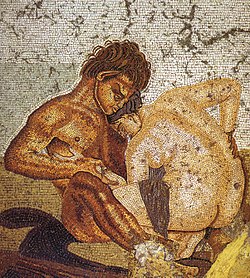
ทัศนคติและพฤติกรรมทางเพศในกรุงโรมโบราณปรากฏให้เห็นได้จากงานศิลปะวรรณกรรมและจารึกรวมถึงหลักฐานทางโบราณคดีเช่น วัตถุมงคลและสถาปัตยกรรม ที่เกี่ยวข้องกับเรื่องเพศ บางครั้งมีการสันนิษฐานว่า "เสรีภาพทางเพศอย่างไม่จำกัด" เป็นลักษณะเฉพาะของกรุงโรมโบราณ[ 1 ] [ 2 ]แต่เรื่องเพศไม่ได้ถูกมองข้ามไปจากประเด็นของmos maiorum ซึ่งเป็นบรรทัดฐานทางสังคมดั้งเดิมที่มีผลต่อชีวิตสาธารณะ ชีวิตส่วนตัว และชีวิตทหาร[ 3 ] Pudorหรือ "ความละอาย ความสุภาพ" เป็นปัจจัยควบคุมพฤติกรรม[ 4 ]เช่นเดียวกับข้อจำกัดทางกฎหมายเกี่ยวกับการละเมิดทางเพศบางประการทั้งใน สมัย สาธารณรัฐและสมัยจักรวรรดิ[ 5 ]ผู้ตรวจการซึ่งเป็นเจ้าหน้าที่ของรัฐที่กำหนดลำดับชั้นทางสังคมของบุคคล มีอำนาจในการถอดถอนพลเมือง ออก จากตำแหน่งวุฒิสมาชิกหรืออัศวินเนื่องจากการประพฤติผิดทางเพศ และในบางครั้งก็ได้กระทำเช่นนั้น[ 6 ] [ 7 ]มิเชล ฟูโกต์ นักทฤษฎีเพศวิถีในช่วงกลางศตวรรษที่ 20 มองว่าเรื่องเพศในโลกกรีก-โรมันนั้นถูกควบคุมด้วยการควบคุมตนเองและศิลปะในการจัดการความสุขทางเพศ[ 8 ]
สังคมโรมันเป็นสังคมแบบปิตาธิปไตย (ดูpaterfamilias ) และความเป็นชายนั้นตั้งอยู่บนพื้นฐานความสามารถในการปกครองตนเองและผู้อื่นที่มีสถานะต่ำกว่า ไม่เพียงแต่ในสงครามและการเมืองเท่านั้น แต่ยังรวมถึงความสัมพันธ์ทางเพศด้วย[ 9 ] Virtusหรือ "คุณธรรม" เป็นอุดมคติของความเป็นชายที่กระตือรือร้นในการควบคุมตนเอง ซึ่งเกี่ยวข้องกับ คำ ภาษาละตินสำหรับ "ผู้ชาย" virอุดมคติที่สอดคล้องกันสำหรับผู้หญิงคือpudicitiaซึ่งมักแปลว่าความบริสุทธิ์หรือความสุภาพ แต่เป็นคุณลักษณะส่วนบุคคลในเชิงบวกและแข่งขันได้มากกว่า ซึ่งแสดงให้เห็นทั้งความน่าดึงดูดใจและการควบคุมตนเองของเธอ[ 10 ]ผู้หญิงโรมันชนชั้นสูงถูกคาดหวังว่าจะได้รับการศึกษาที่ดี มีบุคลิกที่แข็งแกร่ง และกระตือรือร้นในการรักษาฐานะของครอบครัวในสังคม[ 11 ]ด้วยข้อยกเว้นเพียงเล็กน้อย วรรณกรรมละตินที่หลงเหลืออยู่ได้เก็บรักษาเสียงของผู้ชายโรมันที่มีการศึกษาเกี่ยวกับเรื่องเพศไว้ งานศิลปะถูกสร้างขึ้นโดยผู้ที่มีสถานะทางสังคมต่ำกว่าและมีเชื้อชาติหลากหลายกว่า แต่ได้รับการปรับแต่งให้เข้ากับรสนิยมและความชอบของผู้ที่ร่ำรวยพอที่จะซื้อหาได้ รวมถึงอดีตทาส ใน ยุคจักรวรรดิ ด้วย [ 12 ]
ทัศนคติและพฤติกรรมทางเพศบางอย่างในวัฒนธรรมโรมันโบราณแตกต่างอย่างเห็นได้ชัดจากสังคมตะวันตก ใน ยุค หลัง [ 13 ] [ 14 ]ศาสนาโรมันส่งเสริมเรื่องเพศเป็นแง่มุมหนึ่งของความเจริญรุ่งเรืองของรัฐ และบุคคลอาจหันไปสู่การปฏิบัติทางศาสนาส่วนตัวหรือ " เวทมนตร์ " เพื่อปรับปรุงชีวิตทางเพศหรือสุขภาพการเจริญพันธุ์ของตนการค้าประเวณีถูกกฎหมาย เป็นที่เปิดเผย และแพร่หลาย[ 15 ]ภาพวาด "ลามก" เป็นส่วนหนึ่งของคอลเลกชันศิลปะในบ้านของชนชั้นสูงที่น่านับถือ[ 16 ] " รักร่วมเพศ " และ " รักต่างเพศ " ไม่ได้เป็นขั้วตรงข้ามหลักในความคิดของชาวโรมันเกี่ยวกับเรื่องเพศ และไม่มี คำ ภาษาละตินสำหรับแนวคิดเหล่านี้[ 17 ]ความสัมพันธ์ทางเพศของชายกับหญิงหรือชายที่มีสถานะต่ำกว่าดูเหมือนจะได้รับการยอมรับโดยทั่วไป ตราบใดที่พฤติกรรมของเขาไม่ได้แสดงให้เห็นถึงจุดอ่อนหรือความเกินเลย หรือละเมิดสิทธิและสิทธิพิเศษของเพื่อนร่วมเพศชายของเขา ในขณะที่การแสดงออกถึงความอ่อนแอทางเพศถูกประณาม โดยเฉพาะอย่างยิ่งในวาทกรรมทางการเมือง แต่การมีเพศสัมพันธ์อย่างพอประมาณกับโสเภณีชายหรือทาสชาย ซึ่งมักถูกบันทึกไว้ในรูปแบบของการรักร่วมเพศระหว่างชายกับชาย กลับได้รับการยอมรับ แม้ว่าจะไม่ได้ถูกมองว่าเป็นสิ่งที่ดีเสมอไป ตราบใดที่พลเมืองชายเป็นฝ่ายกระทำ และทาสหรือโสเภณีเป็นฝ่ายรับ
แนวคิดในช่วงปลายศตวรรษที่ 20 วิเคราะห์เรื่องเพศของชาวโรมันโดยสัมพันธ์กับแบบจำลองทวิภาค "ผู้สอดใส่-ผู้ถูกสอดใส่" อย่างไรก็ตาม แบบจำลองนี้มีข้อจำกัด โดยเฉพาะอย่างยิ่งในเรื่องการแสดงออกทางเพศในหมู่ชาวโรมันแต่ละคน[ 18 ]แม้แต่ความเกี่ยวข้องของคำว่า " เพศวิถี " กับวัฒนธรรมโรมันโบราณก็ยังเป็นที่ถกเถียงกัน[ 19 ] [ 20 ] [ 21 ]แต่เนื่องจากไม่มีป้ายกำกับอื่นใดสำหรับ "การตีความทางวัฒนธรรมของประสบการณ์ทางเพศ" คำนี้จึงยังคงถูกใช้ต่อไป[ 22 ]
วรรณกรรมและศิลปะแนวอีโรติก
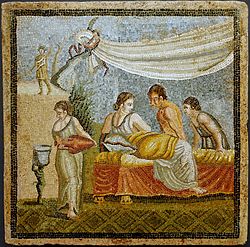
วรรณกรรมโบราณที่เกี่ยวข้องกับเรื่องเพศของชาวโรมันส่วนใหญ่แบ่งออกเป็นสี่ประเภท ได้แก่ ตำรากฎหมาย ตำราทางการแพทย์ บทกวี และวาทกรรมทางการเมือง[ 23 ] รูปแบบการแสดงออกที่มีคุณค่า ทางวัฒนธรรมต่ำกว่า ในสมัยโบราณ เช่นละครตลกเสียดสี บท ด่าทอบทกวีรักภาพเขียน บนผนัง คาถาจารึกและการตกแต่งภายใน มีเนื้อหาเกี่ยวกับเรื่องเพศมากกว่า วรรณกรรม ชั้นสูงเช่นมหากาพย์และโศกนาฏกรรมข้อมูลเกี่ยวกับชีวิตทางเพศของชาวโรมันกระจัดกระจายอยู่ใน งาน เขียนประวัติศาสตร์วาทศิลป์ปรัชญา และงานเขียนเกี่ยวกับการแพทย์เกษตรกรรมและหัวข้อทางเทคนิคอื่นๆ[ 24 ]ตำรากฎหมายชี้ให้เห็นถึงพฤติกรรมที่ชาวโรมันต้องการควบคุมหรือห้าม โดยไม่ได้สะท้อนถึงสิ่งที่ผู้คนทำหรือละเว้นจากการทำจริงๆ[ 25 ]
นักเขียนชาวละตินคนสำคัญที่มีผลงานซึ่งมีส่วนช่วยอย่างมากต่อความเข้าใจเรื่องเพศวิถีของชาวโรมัน ได้แก่:
- พลอตุส (เสียชีวิต ค.ศ. 184 ก่อนคริสต์ศักราช) นักเขียนบทละครตลกซึ่งพล็อตเรื่องมักเกี่ยวกับเรื่องตลกเกี่ยวกับเพศและคู่รักหนุ่มสาวที่ถูกพรากจากกันด้วยสถานการณ์ต่างๆ
- คาโตผู้เฒ่า (เสียชีวิต ค.ศ. 149 ก่อนคริสต์ศักราช) รัฐบุรุษและนักศีลธรรมผู้ให้มุมมองเกี่ยวกับเรื่องเพศในยุคที่ชาวโรมันในยุคหลังมองว่ามีมาตรฐานทางศีลธรรมสูงกว่า
- กวีลูเครติอุส (เสียชีวิตประมาณ 55 ปีก่อนคริสตกาล) ผู้ซึ่งนำเสนอเรื่องเพศสัมพันธ์ตามหลักปรัชญาเอพิคิว เรียนอย่างละเอียด ในงานเขียนเชิงปรัชญาเรื่องDe rerum natura ของเขา
- คาตุลลัส ( มีชีวิตอยู่ในช่วงทศวรรษที่ 50 ก่อนคริสต์ศักราช) ผู้ซึ่งบทกวีของเขาสำรวจประสบการณ์ทางเพศที่หลากหลายในช่วงปลายยุคสาธารณรัฐตั้งแต่ความโรแมนติกที่อ่อนช้อยไปจนถึงการประณามที่หยาบคายอย่างโหดร้าย
- ซิเซโร (เสียชีวิต ค.ศ. 43 ก่อนคริสต์ศักราช) มีสุนทรพจน์ในศาลที่มักโจมตีพฤติกรรมทางเพศของฝ่ายตรงข้าม และจดหมายที่เต็มไปด้วยเรื่องซุบซิบเกี่ยวกับชนชั้นสูงของกรุงโรม
- กวีสมัยออกัสตัสอย่าง โพรเพอร์ติอุสและทิบุลลัสผู้ซึ่งเปิดเผยทัศนคติทางสังคมในการบรรยายเรื่องความรักกับนางสนม
- ผลงานของ โอวิด (เสียชีวิต ค.ศ. 17) โดยเฉพาะอย่างยิ่งAmores ("เรื่องรัก ๆ ใคร่ ๆ") และArs Amatoria ("ศิลปะแห่งความรัก") ซึ่งตามธรรมเนียมเล่าว่ามีส่วนทำให้ จักรพรรดิ ออกัสตัสตัดสินใจเนรเทศกวีผู้นี้ และมหากาพย์Metamorphoses ของเขา ซึ่งนำเสนอเรื่องเพศหลากหลายรูปแบบ โดยเน้นที่การข่มขืน ผ่านมุมมองของเทพนิยาย
- มาร์เชียล (เสียชีวิตประมาณ ค.ศ. 102/4) นักเขียนบทกวีเสียดสีผู้ซึ่งข้อสังเกตเกี่ยวกับสังคมของเขาได้รับการเสริมด้วยถ้อยคำประชดประชันที่โจ่งแจ้งทางเพศ
- จูเวนัล (เสียชีวิตช่วงต้นศตวรรษที่ 2 หลังคริสต์ศักราช) นักเสียดสี ผู้ประณาม ขนบธรรมเนียมทางเพศในยุคสมัยของเขา


โอวิดระบุรายชื่อนักเขียนจำนวนหนึ่งที่ขึ้นชื่อเรื่องเนื้อหาลามกอนาจารซึ่งผลงานของพวกเขาสูญหายไปแล้ว[ 26 ]คู่มือเรื่องเพศของกรีกและ "สื่อลามกแบบตรงไปตรงมา" [ 27 ]ได้รับการตีพิมพ์ภายใต้ชื่อของเฮเทอไร (โสเภณี) ที่มีชื่อเสียง และเผยแพร่ในกรุงโรม หนังสือ Milesiacaของอริสติเดส ที่มีเนื้อหาทางเพศอย่างเข้มข้นได้ รับการแปลโดยซิเซนนาหนึ่งในผู้พิพากษาในปี 78 ก่อนคริสต์ศักราช โอวิดเรียกหนังสือเล่มนี้ว่าเป็นการรวบรวมความผิด(crimina)และกล่าวว่าเรื่องราวเต็มไปด้วยเรื่องตลกสกปรก[ 28 ]หลังจากการรบที่ คาร์เร ชาว พาร์เธียต่างตกใจที่พบหนังสือMilesiacaในสัมภาระของเจ้าหน้าที่ของมาร์คัส ครัสซัส[ 29 ]
ศิลปะอีโรติก โดยเฉพาะอย่างยิ่งที่ได้รับการอนุรักษ์ไว้ในปอมเปอีและเฮอร์คิวเลเนียมเป็นแหล่งข้อมูลที่อุดมสมบูรณ์แม้จะไม่ชัดเจนนัก ภาพบางภาพขัดแย้งกับความชอบทางเพศที่เน้นในแหล่งข้อมูลทางวรรณกรรม และอาจมีจุดประสงค์เพื่อกระตุ้นให้เกิดเสียงหัวเราะหรือท้าทายทัศนคติแบบดั้งเดิม[ 30 ]วัตถุในชีวิตประจำวัน เช่น กระจกและภาชนะเสิร์ฟ อาจตกแต่งด้วยฉากอีโรติก บนเครื่องปั้นดินเผาอาร์เรตินฉากเหล่านี้มีตั้งแต่ "การเล่นรักที่สง่างาม" ไปจนถึงภาพอวัยวะเพศชายสอดใส่ช่องคลอดอย่างชัดเจน[ 31 ]ภาพวาดอีโรติกพบได้ในบ้านที่น่านับถือที่สุดของขุนนางโรมันดังที่โอวิดบันทึกไว้:
เช่นเดียวกับรูปปั้นบุคคลผู้ทรงเกียรติที่วาดโดยฝีมือของศิลปินซึ่งประดับประดาอยู่ในบ้านของเรา ก็เช่นเดียวกันที่มีภาพวาดขนาดเล็ก(tabella) [ n 1 ]ในบางจุดซึ่งแสดงภาพการร่วมเพศและท่าทางทางเพศต่างๆเช่นเดียวกับเทลาโมเนียน เอแจ็กซ์ที่นั่งด้วยสีหน้าที่แสดงออกถึงความโกรธ และมารดาผู้ป่าเถื่อน ( เมเดีย ) ที่มีความผิดอยู่ในดวงตา เช่นเดียวกับวีนัสที่เปียกปอนเช็ดผมที่เปียกโชกด้วยนิ้วมือและมองเห็นร่างกายที่แทบจะไม่ถูกปกคลุมด้วยน้ำแห่งมารดา[ 32 ]
ภาพลามก อนาจาร และภาพวีนัสที่เร้าอารมณ์ปรากฏอยู่ท่ามกลางภาพต่างๆ ที่นักสะสมงานศิลปะอาจชื่นชอบ[ 33 ]ชุดภาพวาดจากโรงอาบน้ำชานเมืองที่ปอมเปอีซึ่งค้นพบในปี 1986 และตีพิมพ์ในปี 1995 นำเสนอฉากเร้าอารมณ์ที่ดูเหมือนจะตั้งใจ "เพื่อสร้างความบันเทิงให้ผู้ชมด้วยภาพทางเพศที่เกินขอบเขต" รวมถึงท่าทางต่างๆ การมีเพศสัมพันธ์ทางปากและการมีเพศสัมพันธ์แบบกลุ่มที่มีความสัมพันธ์ระหว่างชาย-หญิง ชาย-ชาย และหญิง-หญิง[ 34 ]
การตกแต่งห้องนอนของชาวโรมันอาจสะท้อนถึงการใช้งานทางเพศได้อย่างแท้จริง: กวีสมัยออกั ส ตัสอย่างฮอเรซเชื่อกันว่ามีห้องกระจกสำหรับใช้ในการมีเพศสัมพันธ์ เพื่อที่เขาจะได้มองดูจากทุกมุมเมื่อจ้างโสเภณี[ 35 ]จักรพรรดิไทเบเรียสทรงตกแต่งห้องนอนของพระองค์ด้วยภาพวาดและประติมากรรมที่ "ลามกที่สุด" และทรงจัดเตรียมคู่มือเรื่องเพศของกรีกโดยเอเลแฟนติสไว้เผื่อกรณีที่ผู้ที่ทำงานด้านเพศสัมพันธ์ต้องการคำแนะนำ[ 36 ]
ในศตวรรษที่ 2 หลังคริสต์ศักราช “มีการเฟื่องฟูของข้อความเกี่ยวกับเรื่องเพศในภาษากรีกและละติน” พร้อมกับนวนิยายรัก [ 37 ] แต่ความตรงไปตรงมาเกี่ยวกับเรื่องเพศแทบจะหายไปจากวรรณกรรมหลังจากนั้น และหัวข้อเกี่ยวกับเรื่องเพศถูกสงวนไว้สำหรับการเขียนทางการแพทย์หรือเทววิทยาคริสเตียน ในศตวรรษที่ 3 การถือพรหมจรรย์กลายเป็นอุดมคติในหมู่คริสเตียนจำนวนมากขึ้น และบรรดาบิดาแห่งคริสตจักรเช่นเทอร์ทูลเลียนและเคลเมนต์แห่งอเล็กซานเดรียได้ถกเถียงกันว่าแม้แต่การมีเพศสัมพันธ์ในชีวิตสมรสก็ควรได้รับอนุญาตเพื่อการสืบพันธุ์หรือไม่ เรื่องเพศในบันทึกการพลีชีพมุ่งเน้นไปที่การทดสอบความบริสุทธิ์ของคริสเตียน[ 37 ]และการทรมานทางเพศ ผู้หญิงคริสเตียนมักถูกทำร้ายทางเพศมากกว่าผู้ชาย โดยเฉพาะอย่างยิ่งที่เต้านม[ n 2 ]อารมณ์ขันที่หยาบคายของมาร์เชียลได้รับการฟื้นฟูขึ้นมาในช่วงสั้นๆ ในเมืองบอร์โดซ์ในศตวรรษที่ 4โดยนักวิชาการและกวีชาวกัลโล-โรมันออโซนิอุสแม้ว่าเขาจะหลีกเลี่ยงความชอบของมาร์เชียลในการรักร่วมเพศกับเด็กชาย และอย่างน้อยก็เป็นคริสเตียนในนาม[ 38 ]
เพศ ศาสนา และรัฐ

เช่นเดียวกับแง่มุมอื่นๆ ของชีวิตชาวโรมัน เรื่องเพศได้รับการสนับสนุนและควบคุมโดยประเพณีทางศาสนาทั้งการบูชาสาธารณะของรัฐและการปฏิบัติทางศาสนาส่วนตัวและเวทมนตร์ เรื่องเพศเป็นหมวดหมู่ที่สำคัญของความคิดทางศาสนาของชาวโรมัน[ 40 ]ความสมบูรณ์ของชายและหญิงมีความสำคัญต่อแนวคิดเรื่องเทพเจ้าของชาวโรมัน Dii Consentesเป็นสภาของเทพเจ้าในรูปแบบคู่ชายหญิง ซึ่งในระดับหนึ่งเทียบเท่ากับเทพโอลิมปัสทั้งสิบสองของชาวกรีก[ 41 ]อย่างน้อยสองตำแหน่งนักบวชของรัฐถูกถือครองร่วมกันโดยคู่สมรส[ n 3 ]นักบวชหญิงเวสตัลซึ่งเป็นตำแหน่งนักบวชของรัฐที่สงวนไว้สำหรับผู้หญิง ได้ปฏิญาณตนว่าจะรักษาพรหมจรรย์ ซึ่งทำให้พวกเธอมีความเป็นอิสระจากการควบคุมของผู้ชาย ในบรรดาวัตถุทางศาสนาที่พวกเธอเก็บรักษาไว้นั้นมีอวัยวะ เพศชายศักดิ์สิทธิ์ อยู่ ด้วย [ 42 ] " ไฟของ เวสต้า ... กระตุ้นความคิดเรื่องความบริสุทธิ์ทางเพศในเพศหญิง" และ "แสดงถึงพลังในการสืบพันธุ์ของเพศชาย" [ 43 ]ผู้ชายที่รับใช้ในวิทยาลัยนักบวช ต่างๆ คาดว่าจะแต่งงานและมีครอบครัวซิเซโรเชื่อว่าความปรารถนา( ลิบิโด )ที่จะสืบพันธุ์เป็น "แหล่งเพาะพันธุ์ของสาธารณรัฐ" เนื่องจากเป็นสาเหตุของสถาบันทางสังคมรูปแบบแรกคือการแต่งงาน การแต่งงาน ก่อให้เกิดบุตรและในทางกลับกันก็ก่อให้เกิด "บ้าน" ( โดมุส )สำหรับความสามัคคีของครอบครัวซึ่งเป็นรากฐานของชีวิตในเมือง[ 44 ]
เทศกาลทางศาสนาของโรมันหลายแห่งมีองค์ประกอบเกี่ยวกับเรื่องเพศเทศกาลลูเปอร์คาเลีย ในเดือนกุมภาพันธ์ ซึ่งเฉลิมฉลองกันจนถึงศตวรรษที่ 5 ของคริสต์ศักราชมีพิธีกรรมเกี่ยวกับความอุดมสมบูรณ์แบบโบราณ เทศกาลฟลอราเลียมีการเต้นรำเปลือย ในเทศกาลทางศาสนาบางแห่งตลอดเดือนเมษายนโสเภณีมีส่วนร่วมหรือได้รับการยอมรับอย่างเป็นทางการ คิวปิดเป็นแรงบันดาลใจให้เกิดความปรารถนา เทพเจ้าพรีอาปัส ที่นำเข้ามา เป็นตัวแทนของตัณหาที่หยาบกระด้างหรือขบขันมูตูนัส ตูตูนัสส่งเสริม เรื่อง เพศสัมพันธ์ในชีวิต สมรส เทพเจ้าลิเบอร์ (เข้าใจว่าเป็น "ผู้เป็นอิสระ") ดูแลการตอบสนองทางสรีรวิทยาในระหว่างการมีเพศสัมพันธ์ เมื่อชายสวมโทกา วิริลิส "โทกาแห่งความเป็นชาย" ลิเบอร์ก็กลายเป็นผู้อุปถัมภ์ ของเขา ตามที่กวีแห่งความรักกล่าวไว้ เขาละทิ้งความสุภาพเรียบร้อย(pudor) ที่ไร้เดียงสา ในวัยเด็กและได้รับอิสรภาพทางเพศ(libertas)เพื่อเริ่มต้นเส้นทางแห่งความรักของเขา[ 45 ]เทพเจ้ามากมายดูแลทุกแง่มุมของการมีเพศสัมพันธ์ การตั้งครรภ์ และการคลอดบุตร[ 46 ]
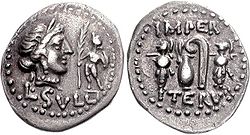
ความเชื่อมโยงระหว่างการสืบพันธุ์ของมนุษย์ ความเจริญรุ่งเรืองโดยทั่วไป และความเป็นอยู่ที่ดีของรัฐนั้นปรากฏให้เห็นในลัทธิบูชาเทพีวีนัสของ ชาวโรมัน ซึ่งแตกต่างจากเทพีอโฟ รไดท์ของชาวกรีกตรงที่บทบาทของเทพีวีนัสคือการเป็นมารดาของชาวโรมันผ่านทาง เอนีอัสบุตรชายครึ่งมนุษย์ของเธอ[ 47 ]เครื่องรางรูปอวัยวะเพศชาย (fascinum) เป็นสิ่งที่พบเห็นได้ทั่วไปในวัฒนธรรมโรมัน ปรากฏอยู่บนทุกสิ่งทุกอย่างตั้งแต่เครื่องประดับไปจนถึงระฆังและกระดิ่งลมไปจนถึงโคมไฟ[ 48 ]รวมถึงใช้เป็นเครื่องรางเพื่อปกป้องเด็ก[ 49 ]และแม่ทัพผู้มีชัย[ 50 ]
ตำนานคลาสสิกมักเกี่ยวข้องกับเรื่องเพศ เช่นอัตลักษณ์ทางเพศการนอกใจ การร่วมประเวณี ระหว่าง ญาติ และการข่มขืน ศิลปะ และวรรณกรรมโรมันยังคง สืบทอดแนวคิด แบบเฮลเลนิสติก เกี่ยว กับการนำเสนอตัวละครในตำนานที่มีเพศสัมพันธ์ในลักษณะที่เร้าอารมณ์และบางครั้งก็ตลกขบขัน โดยมักจะแยกออกจากมิติทางศาสนา[ 51 ]
แนวคิดทางศีลธรรมและกฎหมาย
คาสติตัส

คำภาษาละตินcastitasซึ่งเป็นที่มาของคำว่า " chastity " ในภาษาอังกฤษ เป็นคำนามนามธรรมที่หมายถึง "ความบริสุทธิ์ทางศีลธรรมและทางกายภาพ โดยปกติในบริบททางศาสนาโดยเฉพาะ" บางครั้งแต่ไม่เสมอไปหมายถึงความบริสุทธิ์ทางเพศ[ 52 ]คำคุณศัพท์ที่เกี่ยวข้องcastus ( เพศหญิงcastaเพศกลางcastum ) ซึ่งหมายถึง "บริสุทธิ์" สามารถใช้กับสถานที่และวัตถุได้เช่นเดียวกับบุคคล คำคุณศัพท์pudicus ("บริสุทธิ์, สุภาพ") อธิบายถึงบุคคลที่มีศีลธรรมทางเพศโดยเฉพาะ[ 52 ]เทพีเซเรสมีความเกี่ยวข้องกับcastitas ทั้งทางพิธีกรรมและทางเพศ และคบเพลิงที่ถือเพื่อเป็นเกียรติแก่เธอในขบวนแห่แต่งงานของชาวโรมันนั้นเกี่ยวข้องกับความบริสุทธิ์ของเจ้าสาว เซเรสยังเป็นตัวแทนของความเป็นแม่ด้วย[ 53 ]เทพีเวสตาเป็นเทพเจ้าหลักของเทพปกรณัมโรมันที่เกี่ยวข้องกับcastitasและเป็นเทพีพรหมจรรย์ด้วย นักบวชหญิงของเธอ เวสทัล เป็นหญิงพรหมจรรย์ที่ปฏิญาณว่าจะถือพรหมจรรย์
การร่วมเพศในครอบครัว

Incestum (สิ่งที่ "ไม่ใช่castum ") คือการกระทำที่ละเมิดความบริสุทธิ์ทางศาสนา[ 52 ]อาจมีความหมายเหมือนกับสิ่งที่nefas ซึ่งไม่ ได้รับอนุญาตทางศาสนา[ 54 ]การละเมิดคำปฏิญาณพรหมจรรย์ของเวสตัลถือเป็นincestumซึ่งเป็นข้อกล่าวหาทางกฎหมายที่ยื่นฟ้องต่อเธอและชายผู้ทำให้เธอแปดเปื้อนผ่านความสัมพันธ์ทางเพศ ไม่ว่าจะโดยความยินยอมหรือโดยการบังคับ การสูญเสียcastitas ของเวสตัล ทำให้สนธิสัญญาระหว่างโรมกับเทพเจ้า( pax deorum ) แตกหัก [ 55 ]และมักจะมาพร้อมกับการสังเกตเห็นลางร้าย( prodigia )การดำเนินคดีในข้อหาincestumที่เกี่ยวข้องกับเวสตัลมักเกิดขึ้นพร้อมกับความไม่สงบทางการเมือง และข้อกล่าวหาincestum บางข้อ ดูเหมือนจะมีแรงจูงใจทางการเมือง[ 56 ]ตัวอย่างเช่นมาร์คัส ครัสซัสได้รับการยกฟ้องในข้อหาincestumกับเวสตัลที่มีนามสกุลเดียวกันกับเขา[ n 4 ]ในปี ค.ศ. 114 ก่อนคริสต์ศักราชนักบวชหญิงเวสตัลสามคนถูกตัดสินว่ามีความผิดฐานมีเพศสัมพันธ์กับชายหลายคนในชนชั้นปกครอง หลังจากนั้นจึงมีการสร้าง วิหารบูชาเทพี วีนัส เวอร์ติคอร์เดีย ขึ้น
แม้ว่าคำภาษาอังกฤษ " incest " จะมาจากภาษาละติน แต่ความสัมพันธ์แบบร่วมประเวณีระหว่างญาติเป็นเพียงรูปแบบหนึ่งของincestum ของโรมัน [ 52 ]ซึ่งบางครั้งแปลว่า " การลบหลู่ " เมื่อClodius Pulcherแต่งตัวเป็นผู้หญิงและบุกรุกพิธีกรรมของBona Dea ซึ่งมี แต่ ผู้หญิง เขาจึงถูกกล่าวหาว่ากระทำincestum [ 57 ]
สตูปรัม
ในวาทกรรมทางกฎหมายและศีลธรรมของละตินstuprumหมายถึงการมีเพศสัมพันธ์ที่ผิดกฎหมาย แปลได้ว่า "การล่วงละเมิดทางเพศที่เป็นอาชญากรรม" [ 58 ]หรือ " อาชญากรรมทางเพศ " [ 59 ] Stuprumครอบคลุมความผิดทางเพศที่หลากหลาย รวมถึงการร่วมประเวณีกับญาติ การข่มขืน ("การมีเพศสัมพันธ์โดยมิชอบด้วยกฎหมาย") [ 60 ]และการนอกใจในสมัยโรมันยุคแรกstuprumหมายถึงการกระทำที่น่าอับอายโดยทั่วไป หรือความอับอายต่อสาธารณะใดๆ รวมถึงแต่ไม่จำกัดเพียงการมีเพศสัมพันธ์ที่ผิดกฎหมาย[ n 5 ]ในสมัยของนักเขียนบทละครตลกPlautus ( ประมาณ 254–184 ปีก่อนคริสตกาล) คำนี้ได้มีความหมายทางเพศที่จำกัดมากขึ้น[ 61 ] Stuprumสามารถเกิดขึ้นได้เฉพาะในหมู่พลเมืองเท่านั้น การคุ้มครองจากการประพฤติผิดทางเพศเป็นหนึ่งในสิทธิทางกฎหมายที่แยกแยะพลเมืองออกจากผู้ที่ไม่ใช่พลเมือง[ 61 ]แม้ว่าคำนามstuprumอาจแปลเป็นภาษาอังกฤษได้ว่าfornicationแต่กริยาไม่ต้องการกรรม "to fornicate" เป็นการแปลที่ไม่เหมาะสมของคำภาษาละตินstuprareซึ่งเป็นกริยาต้องการกรรมตรง (บุคคลที่เป็นเป้าหมายของการประพฤติผิด) และผู้กระทำที่เป็นเพศชาย (ผู้ทำให้มึนงง ) [ 61 ]
แรปตัส
คำภาษาอังกฤษ " rape " มาจากคำกริยาภาษาละตินrapio, rapere, raptus ซึ่ง หมายถึง "ฉกฉวย, พาตัวไป, ลักพาตัว" (เทียบกับคำภาษาอังกฤษrapt , raptureและraptor ) ในกฎหมายโรมันraptusหรือraptioหมายถึงการลักพาตัวเป็นหลัก[ 62 ]การข่มขืนหญิงชาวซาบีนในตำนานเป็นรูปแบบหนึ่งของการลักพาตัวเจ้าสาวซึ่งการละเมิดทางเพศเป็นประเด็นรอง การ "ลักพาตัว" หญิงสาวที่ยังไม่แต่งงานจากบ้านของบิดาของเธอในบางครั้งอาจเป็นเรื่องที่คู่รักหนีตามกันไปโดยไม่ได้รับอนุญาตจากบิดาของเธอให้แต่งงาน การข่มขืนในความหมายของภาษาอังกฤษมักจะแสดงออกเป็นstuprumที่กระทำโดยใช้ความรุนแรงหรือการบังคับขู่เข็ญ ( cum viหรือper vim ) เมื่อมีการบัญญัติกฎหมายที่เกี่ยวข้องกับความรุนแรงในช่วงปลายสาธารณรัฐraptus ad stuprumซึ่งหมายถึง "การลักพาตัวเพื่อจุดประสงค์ในการก่ออาชญากรรมทางเพศ" จึงเกิดขึ้นเป็นการแบ่งแยกทางกฎหมาย[ 63 ] (ดูรายละเอียดเพิ่มเติมเกี่ยวกับการข่มขืนได้ในหัวข้อ"การข่มขืนผู้ชาย"และ"การข่มขืนและกฎหมาย"ด้านล่าง)
การรักษาและเวทมนตร์

อาจมีการแสวงหาความช่วยเหลือจากสิ่งศักดิ์สิทธิ์ผ่านพิธีกรรมทางศาสนาส่วนตัวควบคู่ไปกับการรักษาทางการแพทย์ เพื่อเพิ่มหรือยับยั้งภาวะเจริญพันธุ์ หรือเพื่อรักษาโรคของอวัยวะสืบพันธุ์ มีการพบ ของถวาย( vota ; เปรียบเทียบกับex-voto ) ในรูปทรงของเต้านมและอวัยวะเพศชายในสถานที่ศักดิ์สิทธิ์เพื่อการรักษาโรค
พิธีกรรมส่วนตัวภายใต้สถานการณ์บางอย่างอาจถือได้ว่าเป็น "เวทมนตร์" ซึ่งเป็นหมวดหมู่ที่ไม่ชัดเจนในสมัยโบราณ[ 64 ]อมาโทเรียม (ภาษากรีกฟิลตรอน ) คือเครื่องรางหรือยาเสน่ห์[ 65 ]คาถาผูกมัด(เดฟิกซิโอเนส)เชื่อกันว่าสามารถ "ตรึง" ความรักทางเพศของบุคคลได้[ 66 ]ปาปิรัสเวทมนตร์กรีกซึ่งเป็นชุดรวม ตำรา เวทมนตร์แบบผสมผสานมีคาถารักมากมายที่บ่งชี้ว่า "มีตลาดเวทมนตร์อีโรติกที่คึกคักมากในสมัยโรมัน" ซึ่งให้บริการโดยนักบวชอิสระที่บางครั้งอ้างว่าได้รับอำนาจมาจากประเพณีทางศาสนาของอียิปต์ [ 67 ] คานิเดีย แม่มดที่ฮอเรซบรรยายไว้ ร่ายคาถาโดยใช้หุ่นจำลองผู้หญิงเพื่อครอบงำตุ๊กตาผู้ชายตัวเล็กกว่า[ 68 ]
ยาปลุกอารมณ์ทางเพศ ยาระงับอารมณ์ ทางเพศ ยาคุมกำเนิดและยาทำแท้งได้รับการบันทึกไว้ทั้งในตำราแพทย์และตำราเวทมนตร์ การแยกแยะยาปรุงจากเภสัชวิทยาอาจทำได้ยาก ในหนังสือDe medicamentis เล่มที่ 33 ของมา ร์เซลลัสแห่งบอร์โดซ์ซึ่งเป็นคนร่วมสมัยกับออโซเนียส[ 69 ]ได้รวบรวมวิธีการรักษาที่เกี่ยวข้องกับเรื่องเพศมากกว่า 70 วิธี ได้แก่ การรักษาเนื้องอกและรอยโรคที่อัณฑะและองคชาตอัณฑะไม่ลงถุง ภาวะหย่อนสมรรถภาพทางเพศถุงน้ำในอัณฑะ " การสร้างขันทีโดยไม่ต้องผ่าตัด" [ 70 ]การรับประกันความซื่อสัตย์ของสตรี และการกระตุ้นหรือลดความปรารถนาของชาย ซึ่งบางวิธีเกี่ยวข้องกับพิธีกรรม
ถ้าคุณเคยมีสัมพันธ์กับผู้หญิงคนหนึ่ง และคุณไม่ต้องการให้ผู้ชายคนอื่นเข้ามาเกี่ยวข้องกับเธออีก ให้ทำดังนี้: ตัดหางของจิ้งจกเขียวที่ยังมีชีวิตอยู่ด้วยมือซ้ายของคุณ แล้วปล่อยมันไปในขณะที่มันยังมีชีวิตอยู่ เก็บหางไว้ในฝ่ามือข้างเดียวกันจนกว่ามันจะตาย แล้วใช้มือซ้ายนั้นสัมผัสผู้หญิงและอวัยวะเพศของเธอเมื่อคุณมีเพศสัมพันธ์กับเธอ[ 71 ]
มีสมุนไพรชนิดหนึ่งที่เรียกว่านิมเฟียในภาษากรีก 'กระบองของเฮอร์คิวลีส' ในภาษาละติน และบาดีติสในภาษากอลรากของมัน เมื่อนำมาบดเป็นเนื้อละเอียดและดื่มกับน้ำส้มสายชูติดต่อกันสิบวัน จะทำให้เด็กชายกลายเป็นขันที[ 72 ]
หากเส้นเลือดในอัณฑะของเด็กชายที่ยังไม่เจริญพันธุ์เกิดบวม( varicocele )ให้ผ่าต้นเชอร์รี่อ่อนลงครึ่งหนึ่งจนถึงราก โดยให้ต้นไม้ยังคงตั้งอยู่ เพื่อให้เด็กชายสามารถลอดผ่านรอยผ่าได้ จากนั้นนำต้นอ่อนมาต่อกันอีกครั้งและปิดรอยผ่าด้วยปุ๋ยคอกและวัสดุอื่นๆ เพื่อให้ส่วนที่ผ่าสามารถเชื่อมต่อกันได้ง่ายขึ้น ความเร็วในการที่ต้นอ่อนเจริญเติบโตและรอยแผลเป็นที่เกิดขึ้นจะเป็นตัวกำหนดว่าเส้นเลือดที่บวมของเด็กชายจะกลับคืนสู่สภาพปกติได้เร็วเพียงใด[ 73 ]
นอกจากนี้ Marcellus ยังบันทึกสมุนไพร[ 74 ]ที่สามารถใช้เพื่อกระตุ้นให้มีประจำเดือนหรือเพื่อชำระล้างมดลูกหลังคลอดบุตรหรือทำแท้ง สมุนไพรเหล่านี้รวมถึงสารที่อาจทำให้แท้งบุตรได้ และอาจถูกนำมาใช้ในลักษณะดังกล่าว[ 75 ]แหล่งข้อมูลอื่นๆ แนะนำวิธีการรักษา เช่น การทาอวัยวะเพศชายด้วยส่วนผสมของน้ำผึ้งและพริกไทยเพื่อให้เกิดการแข็งตัว[ 76 ]หรือการต้มอวัยวะเพศของลาในน้ำมันเพื่อใช้เป็นยาขี้ผึ้ง[ 77 ]
ทฤษฎีเกี่ยวกับเพศวิถี
ทฤษฎีเกี่ยวกับเพศวิถีในสมัยโบราณนั้นถูกสร้างขึ้นโดยและเพื่อชนชั้นสูงที่มีการศึกษา ขอบเขตที่ทฤษฎีเกี่ยวกับเพศส่งผลต่อพฤติกรรมนั้นเป็นเรื่องที่ถกเถียงกันได้ แม้แต่ในหมู่ผู้ที่ให้ความสนใจกับงานเขียนทางปรัชญาและการแพทย์ที่นำเสนอทัศนะดังกล่าว วาทกรรมของชนชั้นสูงนี้ แม้จะวิพากษ์วิจารณ์พฤติกรรมทั่วไปหรือพฤติกรรมปกติอย่างจงใจ แต่ในขณะเดียวกันก็ไม่สามารถสรุปได้ว่าเป็นการละเว้นค่านิยมที่แพร่หลายในสังคม
เพศสัมพันธ์แบบเอพิคิวเรียน
“ผู้ที่หลีกเลี่ยงความรักไม่ได้ขาดผลของวีนัส แต่กลับเลือกสิ่งที่ดีที่ไม่มีโทษ เพราะแน่นอนว่าความสุขจากสิ่งนี้บริสุทธิ์กว่าสำหรับผู้ที่มีสุขภาพดีมากกว่าสำหรับผู้ที่ทุกข์ยาก เพราะแท้จริงแล้ว ในช่วงเวลาแห่งการครอบครอง ความปรารถนาอันร้อนแรงของคนรักผันผวนด้วยความไม่แน่นอน และพวกเขายังไม่แน่ใจว่าจะเพลิดเพลินกับสิ่งใดก่อนด้วยสายตาและมือ พวกเขากดสิ่งที่ตนแสวงหาอย่างแน่นหนาจนทำให้เกิดความเจ็บปวดทางร่างกาย และมักจะกัดฟันลงบนริมฝีปากเล็กๆ และจูบอย่างรุนแรง เพราะความสุขนั้นไม่บริสุทธิ์ และมีสิ่งกระตุ้นอยู่ข้างใต้ที่ผลักดันให้พวกเขาทำร้ายสิ่งนั้น ไม่ว่ามันจะเป็นอะไรก็ตาม ซึ่งเป็นที่มาของความทรมานแห่งความบ้าคลั่ง” [ 78 ]
หนังสือเล่มที่สี่ของLucretiusเรื่องDe rerum naturaมีเนื้อหาเกี่ยวกับเพศสัมพันธ์ของมนุษย์ที่ยาวที่สุดบทหนึ่งในวรรณกรรมละตินYeatsกล่าวถึงการแปลของDrydenว่าเป็น "คำอธิบายเกี่ยวกับการมีเพศสัมพันธ์ที่ดีที่สุดเท่าที่เคยเขียนมา" [ 79 ] Lucretius เป็นบุคคลร่วมสมัยกับCatullusและCiceroในช่วงกลางศตวรรษที่ 1 ก่อนคริสต์ศักราชบทกวีเชิงสั่งสอน ของเขาเรื่อง De rerum naturaเป็นการนำเสนอปรัชญา Epicureanภายใน ประเพณี มหากาพย์ Ennianของบทกวีละติน ลัทธิ Epicureanism เป็นทั้งลัทธิวัตถุนิยมและลัทธิสุขนิยมความดีสูงสุดคือความสุข ซึ่งนิยามว่าเป็นการปราศจากความเจ็บปวดทางกายและความทุกข์ทางอารมณ์[ 80 ]ชาว Epicurean แสวงหาการสนองความปรารถนาของตนด้วยการใช้ความปรารถนาและความพยายามน้อยที่สุด ความปรารถนาถูกจัดลำดับเป็นสิ่งที่ทั้งเป็นธรรมชาติและจำเป็น เช่น ความหิวและความกระหาย สิ่งที่เป็นธรรมชาติแต่ไม่จำเป็น เช่น เพศสัมพันธ์ และสิ่งที่ไม่เป็นธรรมชาติและไม่จำเป็น รวมถึงความปรารถนาที่จะปกครองผู้อื่นและยกย่องตนเอง[ 81 ]ในบริบทนี้เองที่ลูเครติอุสได้นำเสนอการวิเคราะห์เรื่องความรักและความปรารถนาทางเพศ ซึ่งขัดแย้งกับจริยธรรมทางเพศของคาตุลลัส และมีอิทธิพลต่อกวีรักในยุคออกัสตัส[ 82 ]
ลูเครติอุสถือว่าความปรารถนาของชาย ความสุขทางเพศของหญิง กรรมพันธุ์ และภาวะมีบุตรยากเป็นแง่มุมของสรีรวิทยาทางเพศ ในมุมมองของเอพิคิวเรียน เพศวิถีเกิดขึ้นจากสาเหตุทางกายภาพที่ไม่เกี่ยวข้องกับบุคคลโดยปราศจากอิทธิพลจากเทพเจ้าหรือสิ่งเหนือธรรมชาติ การเริ่มต้นของวุฒิภาวะทางร่างกายก่อให้เกิดน้ำอสุจิ และฝันเปียกเกิดขึ้นเมื่อสัญชาตญาณทางเพศพัฒนาขึ้น[ 83 ] [ 84 ]การรับรู้ทางประสาทสัมผัส โดยเฉพาะอย่างยิ่งการมองเห็นร่างกายที่สวยงาม กระตุ้นการเคลื่อนที่ของน้ำอสุจิไปยังอวัยวะเพศและไปยังวัตถุแห่งความปรารถนา การบวมของอวัยวะเพศสร้างแรงกระตุ้นในการหลั่งน้ำอสุจิ ควบคู่ไปกับการคาดหวังถึงความสุข การตอบสนองของร่างกายต่อความดึงดูดทางกายภาพเป็นไปโดยอัตโนมัติ และทั้งลักษณะนิสัยของบุคคลที่ปรารถนาหรือทางเลือกของตนเองก็ไม่ใช่ปัจจัย ด้วยการผสมผสานระหว่างความเป็นกลางทางวิทยาศาสตร์และอารมณ์ขันแบบเสียดสี ลูเครติอุสถือว่าแรงขับทางเพศของมนุษย์เป็นmuta cupidoหรือ "ความปรารถนาที่ไร้สติ" โดยเปรียบเทียบการตอบสนองทางสรีรวิทยาของการหลั่งน้ำอสุจิกับเลือดที่พุ่งออกมาจากบาดแผล[ 85 ]ความรัก(amor)เป็นเพียงการแสดงออกทางวัฒนธรรมที่ซับซ้อนซึ่งบดบังสภาวะของต่อม[ 86 ]ความรักทำให้ความสุขทางเพศแปดเปื้อน เช่นเดียวกับชีวิตที่แปดเปื้อนด้วยความกลัวความตาย[ 87 ]ลูเครติอุสเขียนขึ้นโดยมีเป้าหมายหลักคือกลุ่มผู้อ่านที่เป็นผู้ชาย และสันนิษฐานว่าความรักเป็นความปรารถนาของผู้ชาย ซึ่งมุ่งเป้าไปที่เด็กผู้ชายหรือผู้หญิง[ 88 ] [ 89 ]ความปรารถนาของผู้ชายถูกมองว่าเป็นพยาธิสภาพ น่าหงุดหงิด และรุนแรง[ 90 ]
ดังนั้น ลูเครติอุสจึงแสดงออกถึงความรู้สึกสองแง่สองมุมแบบเอพิคิวเรียนต่อเรื่องเพศ ซึ่งคุกคามความสงบสุขทางจิตใจด้วยความวุ่นวายหากความปรารถนากลายเป็นรูปแบบของการถูกพันธนาการและการทรมาน[ 91 ]แต่ทัศนะของเขาเกี่ยวกับเรื่องเพศของผู้หญิงนั้นไม่ค่อยเป็นลบนัก[ 90 ]ในขณะที่ผู้ชายถูกผลักดันด้วยความคาดหวังที่ไม่เป็นธรรมชาติให้มีเพศสัมพันธ์แบบฝ่ายเดียวและสิ้นหวัง ผู้หญิงกลับกระทำตามสัญชาตญาณของสัตว์อย่างแท้จริงเพื่อความรักใคร่ ซึ่งนำไปสู่ความพึงพอใจร่วมกัน[ 92 ]การเปรียบเทียบกับสัตว์เพศเมียในช่วงติดสัดนั้นไม่ได้หมายความว่าเป็นการดูถูก แม้ว่าจะมีร่องรอยของการเกลียดชังผู้หญิงตามแบบแผนอยู่บ้างในงานเขียน แต่เพื่อแสดงให้เห็นว่าความปรารถนาเป็นเรื่องธรรมชาติและไม่ควรถูกมองว่าเป็นการทรมาน[ 92 ]

หลังจากวิเคราะห์การมีเพศสัมพันธ์แล้ว ลูเครติอุสก็พิจารณาถึงการปฏิสนธิและสิ่งที่ในศัพท์สมัยใหม่เรียกว่าพันธุศาสตร์ เขาบอกว่าทั้งชายและหญิงต่างผลิตของเหลวจากอวัยวะเพศที่ผสมกันในการสืบพันธุ์ที่ประสบความสำเร็จ ลักษณะของเด็กนั้นเกิดจากสัดส่วนของ "เชื้ออสุจิ" ของแม่เทียบกับของพ่อ เด็กที่เหมือนแม่มากที่สุดจะเกิดมาเมื่อเชื้ออสุจิของหญิงมีมากกว่าของชาย และในทางกลับกัน เมื่อไม่มีเชื้ออสุจิของชายหรือหญิงใดมีมากกว่ากัน เด็กจะมีลักษณะของทั้งแม่และพ่ออย่างเท่าเทียมกัน อย่างไรก็ตาม เพศของเด็กไม่ได้ถูกกำหนดโดยเพศของพ่อแม่ที่มีลักษณะเด่นกว่า ภาวะมีบุตรยากเกิดขึ้นเมื่อคู่รักทั้งสองไม่สามารถผสมเชื้ออสุจิกันได้อย่างลงตัวหลังจากพยายามหลายครั้งแล้ว คำอธิบายของภาวะมีบุตรยากนั้นเป็นไปตามหลักสรีรวิทยาและเหตุผล และไม่เกี่ยวข้องกับเทพเจ้าแต่อย่างใด[ 91 ] [ 93 ]การถ่ายโอน "เมล็ดพันธุ์" (semina) ของอวัยวะเพศ นั้นสอดคล้องกับฟิสิกส์ ของเอพิคิวเรียน และธีมของงานโดยรวม: semina rerum ที่มองไม่เห็น "เมล็ดพันธุ์ของสิ่งต่างๆ" ละลายและรวมตัวกันใหม่อย่างต่อเนื่องในกระแสแห่งจักรวาล[ 94 ]ดังนั้นคำศัพท์เกี่ยวกับการสืบพันธุ์ทางชีววิทยาจึงเป็นพื้นฐานของการนำเสนอของลูเครติอุสเกี่ยวกับการก่อตัวของสสารจากอะตอม[ 95 ]
จุดประสงค์ของลูเครติอุสคือการแก้ไขความไม่รู้และให้ความรู้ที่จำเป็นสำหรับการจัดการชีวิตทางเพศอย่างมีเหตุผล[ 96 ]เขาแยกแยะระหว่างความสุขและการตั้งครรภ์เป็นเป้าหมายของการร่วมเพศ ทั้งสองอย่างถูกต้อง แต่ต้องใช้วิธีการที่แตกต่างกัน[ 96 ]เขาแนะนำการมีเพศสัมพันธ์แบบไม่ผูกมัดเพื่อระบายความตึงเครียดทางเพศโดยไม่ต้องหมกมุ่นกับความปรารถนาเพียงอย่างเดียว[ 97 ] [ 98 ]ควรใช้ "วีนัสเดินถนน" ซึ่งก็คือโสเภณีทั่วไป เป็นตัวแทน[ 99 ]การมีเพศสัมพันธ์โดยปราศจากความผูกพันอันเร่าร้อนก่อให้เกิดความสุขในรูปแบบที่เหนือกว่า ปราศจากความไม่แน่นอน ความบ้าคลั่ง และความวุ่นวายทางจิตใจ[ 100 ] [ 101 ]ลูเครติอุสเรียกความสุขทางเพศรูปแบบนี้ ว่า วีนัสตรงกันข้ามกับอามอร์ความรักอันเร่าร้อน[ 102 ] [ 103 ]เพศสัมพันธ์ที่ดีที่สุดคือเพศสัมพันธ์ของสัตว์ที่มีความสุข หรือของเทพเจ้า[ 104 ]ลูเครติอุสผสมผสานความระมัดระวังแบบเอพิคิวเรียนเกี่ยวกับเรื่องเพศในฐานะที่เป็นภัยคุกคามต่อความสงบสุขทางจิตใจ เข้ากับคุณค่าทางวัฒนธรรมของชาวโรมันที่ให้ความสำคัญกับเรื่องเพศในฐานะที่เป็นแง่มุมหนึ่งของการแต่งงานและชีวิตครอบครัว[ 105 ]โดยแสดงภาพชายชาวเอพิคิวเรียนในชีวิตสมรสที่สงบสุขและเป็นมิตรกับหญิงที่ดีแต่เรียบง่าย ความงามเป็นสิ่งกระตุ้นที่น่ากังวลซึ่งนำไปสู่ความปรารถนาที่มากเกินไป[ 106 ]ลูเครติอุสต่อต้านแนวโน้มของชาวโรมันที่จะแสดงเรื่องเพศอย่างโจ่งแจ้ง เช่นในศิลปะอีโรติก และปฏิเสธแบบจำลองเรื่องเพศแบบก้าวร้าว " Priapic " ที่ถูกกระตุ้นด้วยสิ่งเร้าทางสายตา[ 107 ]
ศีลธรรมทางเพศแบบสโตอิก
ในลัทธิสโตอิก ยุคแรก ในหมู่ชาวกรีกเพศสัมพันธ์ถือเป็นสิ่งที่ดีหากเกิดขึ้นระหว่างผู้คนที่ยึดมั่นในหลักการของความเคารพและมิตรภาพ ในสังคมอุดมคติ เพศสัมพันธ์ควรเกิดขึ้นอย่างอิสระ ปราศจากพันธะการแต่งงานที่ปฏิบัติต่อคู่ครองเสมือนเป็นทรัพย์สิน นักปรัชญาสโตอิกชาวกรีกบางคนให้ความสำคัญกับความสัมพันธ์ระหว่างเพศเดียวกันระหว่างชายกับชายที่อายุน้อยกว่า[ 108 ] [ 109 ] (ดู " การรักร่วมเพศในกรีกโบราณ ") อย่างไรก็ตาม นักปรัชญาสโตอิกในยุคจักรวรรดิโรมันได้ละทิ้งมุมมองที่ว่ามนุษย์เป็น "สัตว์ที่มีเพศสัมพันธ์ร่วมกัน" [ 110 ]และเน้นย้ำถึงเพศสัมพันธ์ภายในการแต่งงาน[ 108 ]ซึ่งเป็นสถาบันที่ช่วยรักษาระเบียบทางสังคม[ 111 ]แม้ว่าพวกเขาจะไม่ไว้วางใจอารมณ์ที่รุนแรง รวมถึงความปรารถนาทางเพศ[ 112 ]แต่พลังทางเพศก็เป็นสิ่งจำเป็นสำหรับการสืบพันธุ์
นักปรัชญาสโตอิกในยุคโรมัน เช่นเซเนกาและมูโซนิอุส รูฟัสซึ่งทั้งคู่มีบทบาทประมาณ 100 ปีหลังจากลูเครติอุส เน้นย้ำถึง "ความเป็นเอกภาพทางเพศ" มากกว่าความแตกต่างระหว่างเพศ[ 113 ]แม้ว่ามูโซนิอุสจะเป็นนักปรัชญาสโตอิกเป็นหลัก แต่ปรัชญาของเขาก็มีส่วนร่วมในลัทธิเพลโตและลัทธิพีทาโกเรียนด้วย[ 114 ]เขาปฏิเสธประเพณีของอริสโตเติลซึ่งพรรณนาถึงความแตกต่างทางเพศว่าเป็นความสัมพันธ์ที่เหมาะสมระหว่างผู้ปกครอง (ชาย) และผู้ถูกปกครอง (หญิง) และแยกแยะผู้ชายออกจากผู้หญิงโดยทางชีววิทยาความแตกต่างทางเพศนั้น ตามที่มูโซนิอุสกล่าว มีอยู่เพื่อสร้างความแตกต่าง และความแตกต่างนั้นเองก็สร้างความปรารถนาในความสัมพันธ์ที่เติมเต็มซึ่งกันและกัน นั่นคือ คู่รักที่จะผูกพันกันไปตลอดชีวิตเพื่อประโยชน์ของกันและกันและเพื่อลูกๆ ของพวกเขา[ 115 ]อุดมคติของการแต่งงานแบบโรมันคือการเป็นหุ้นส่วนของคู่ชีวิตที่ทำงานร่วมกันเพื่อผลิตและเลี้ยงดูบุตร จัดการกิจการในชีวิตประจำวัน ดำเนินชีวิตที่เป็นแบบอย่าง และมีความรักใคร่กัน มูโซเนียสได้นำอุดมคตินี้มาใช้เพื่อส่งเสริมมุมมองของสโตอิกที่ว่าความสามารถในการมีคุณธรรมและการควบคุมตนเองไม่ได้จำกัดเฉพาะเพศ[ 116 ]

ทั้งมูโซนิอุสและเซเนกาต่างวิพากษ์วิจารณ์มาตรฐานสองด้านทั้งทางวัฒนธรรมและทางกฎหมาย ที่ให้เสรีภาพทางเพศแก่ผู้ชายโรมันมากกว่าผู้หญิง[ 115 ] [ 117 ]มูโซนิอุสโต้แย้งว่า สังคมยกเว้นให้ผู้ชายไปใช้บริการโสเภณีและทาสเพื่อสนองความต้องการทางเพศ ในขณะที่พฤติกรรมเช่นนั้นจากผู้หญิงจะไม่ได้รับการยอมรับ ดังนั้น หากผู้ชายคิดว่าตนเองมีอำนาจเหนือผู้หญิงเพราะเชื่อว่าตนเองควบคุมตนเองได้มากกว่า พวกเขาก็ควรจะสามารถจัดการกับแรงขับทางเพศของตนเองได้ ข้อโต้แย้งจึงไม่ใช่ว่าเสรีภาพทางเพศเป็นสิ่งที่ดีของมนุษย์ แต่ผู้ชายและผู้หญิงควรควบคุมตนเองทางเพศ[ 115 ] [ 118 ]ผู้ชายที่ไปหาโสเภณีทำร้ายตัวเองด้วยการขาดวินัยในตนเอง การไม่เคารพภรรยาและความคาดหวังในความซื่อสัตย์ของเธอจะไม่ใช่ปัญหา[ 119 ]ในทำนองเดียวกัน ผู้ชายไม่ควรปล่อยตัวตามใจตัวเองจนถึงขั้นเอาเปรียบทาสหญิงทางเพศ อย่างไรก็ตาม สิทธิของเธอที่จะไม่ถูกใช้ประโยชน์นั้นไม่ใช่เหตุผลในการยับยั้งของเขา[ 120 ]มูโซนิอุสยืนยันว่าแม้แต่ในชีวิตสมรส การมีเพศสัมพันธ์ควรเป็นการแสดงออกถึงความรักและเพื่อการสืบพันธุ์ ไม่ใช่เพื่อ "ความสุขเปล่าๆ" [ 121 ]
มูโซนิอุสไม่เห็นด้วยกับความสัมพันธ์ระหว่างเพศเดียวกันเพราะขาดจุดประสงค์ในการสืบพันธุ์[ 115 ] [ 122 ]เซเนกาและเอปิกเตตัสก็คิดว่าการสืบพันธุ์ควรให้ความสำคัญกับการจับคู่ทางเพศระหว่างชายและหญิงภายในชีวิตสมรส[ 123 ]
แม้ว่าเซเนกาจะเป็นที่รู้จักในฐานะนักปรัชญาสโตอิกเป็นหลัก แต่เขาก็ได้รับ อิทธิพลจาก ลัทธินีโอพีทาโกเรียนสำหรับมุมมองของเขาเกี่ยวกับการควบคุมทางเพศ[ 124 ]นีโอพีทาโกเรียนมองว่าเพศสัมพันธ์นอกการแต่งงานเป็นสิ่งที่ผิดปกติและไม่พึงประสงค์ การถือพรหมจรรย์ไม่ใช่สิ่งที่เป็นอุดมคติ แต่ความบริสุทธิ์ภายในชีวิต สมรสต่างหากที่เป็นอุดมคติ [ 125 ]สำหรับเซเนกา ความปรารถนาทางเพศเพื่อความสุข(ลิบิโด)เป็น "พลังทำลายล้าง(เอ็กซิเทียม)ที่ฝังลึกอยู่ในจิตใจ" หากไม่ได้รับการควบคุม มันจะกลาย เป็น คิวพิไดตัสหรือตัณหา เหตุผลเดียวที่สมควรสำหรับการมีเพศสัมพันธ์คือการสืบพันธุ์ภายในชีวิตสมรส[ 126 ]แม้ว่านักปรัชญาสโตอิกคนอื่นๆ จะมองเห็นศักยภาพในความงามที่จะเป็นแรงกระตุ้นทางจริยธรรม เป็นวิธีดึงดูดและพัฒนาความรักและมิตรภาพภายในความสัมพันธ์ทางเพศ แต่เซเนกาไม่ไว้วางใจความรักในความงามทางกายภาพว่าเป็นสิ่งที่ทำลายเหตุผลจนถึงขั้นวิกลจริต[ 127 ]ผู้ชายไม่ควรมีคู่ครองทางเพศอื่นใดนอกจากภรรยาของเขา[ 124 ]เซเนกาคัดค้านการนอกใจอย่างรุนแรง โดยมองว่าเป็นการกระทำที่น่ารังเกียจโดยเฉพาะอย่างยิ่งสำหรับผู้หญิง[ 128 ]คนฉลาด ( sapiens , ภาษากรีกsophos ) จะร่วมรักกับภรรยาของตนโดยใช้วิจารณญาณที่ดี(iudicium)ไม่ใช่อารมณ์(affectus) [ 129 ] นี่เป็นทัศนะที่เข้มงวดกว่าของนักปรัชญาสโตอิกคนอื่นๆ ที่สนับสนุนให้มีเพศสัมพันธ์เป็นวิธีการส่งเสริมความรักความผูกพันในชีวิตสมรส[ 129 ]
มุมมองทางปรัชญาเกี่ยวกับร่างกายในฐานะศพที่แบกวิญญาณไว้[ 130 ]อาจส่งผลให้เกิดการดูหมิ่นเรื่องเพศอย่างโจ่งแจ้ง: จักรพรรดิและนักปรัชญาสโตอิกมาร์คัส ออเรลิอุสเขียนว่า "สำหรับการมีเพศสัมพันธ์นั้น มันคือแรงเสียดทานของลำไส้ และตามด้วยการชักกระตุกบางอย่าง ก็คือการขับเมือกออกมา" [ 131 ]เซเนกาตำหนิ "อย่างยาวนาน" ต่อความวิปริตของโฮสติอุส ควอดราผู้ซึ่งล้อมรอบตัวเองด้วยกระจกบิดเบี้ยวราวกับกระจกในบ้านสนุกเพื่อที่เขาจะได้มองงานปาร์ตี้ทางเพศจากมุมที่บิดเบี้ยว และอวัยวะเพศชายจะดูใหญ่ขึ้น[ 132 ]
ความเข้มงวดทางเพศทำให้พวกสโตอิกโรมันถูกกล่าวหาว่าเสแสร้ง: จูเวนัลเสียดสีผู้ที่แสดงออกว่าตนเองเป็นสโตอิกที่แข็งกร้าวและแข็งแกร่ง แต่กลับแอบเสพสุขทางกาย[ 133 ]มีการล้อเล่นกันเป็นประจำว่าไม่เพียงแต่พวกสโตอิกจะโน้มเอียงไปทางรักร่วมเพศเท่านั้น แต่พวกเขายังชอบชายหนุ่มที่กำลังไว้หนวดเครา ซึ่งขัดกับธรรมเนียมทางเพศของชาวโรมัน [ 108 ] มาร์เชียลกล่าวเป็นนัยซ้ำแล้วซ้ำเล่าเกี่ยวกับผู้ที่แสดงออกภายนอกว่าเป็นสโตอิก แต่แอบชอบบทบาทรักร่วมเพศแบบรับ[ 134 ]

จริยธรรมทางเพศของสโตอิกมีพื้นฐานมาจากฟิสิกส์และจักรวาลวิทยา [ 135 ] นักเขียนในศตวรรษที่ 5 อย่างมาโครบิอุสได้บันทึกการตีความแบบสโตอิกเกี่ยวกับตำนานการกำเนิดของวีนัสซึ่งเป็นผลมาจากการตอนอวัยวะเพศของเทพเจ้าแห่งสวรรค์ (ภาษาละตินCaelus ) [ n 6 ]มาโครบิอุสระบุว่า ตำนานนี้สามารถเข้าใจได้ว่าเป็นอุปมาอุปไมยของหลักคำสอนเรื่องเหตุผลเชิงสารีณะองค์ประกอบต่างๆ มาจากสารีณะหรือ "เมล็ดพันธุ์" ที่ถูกสร้างขึ้นโดยสวรรค์ "ความรัก" นำองค์ประกอบต่างๆ มารวมกันในการกระทำแห่งการสร้างสรรค์ เช่นเดียวกับการร่วมเพศของชายและหญิง[ 136 ]ซิเซโรเสนอว่า ในอุปมาอุปไมยของสโตอิก การตัดอวัยวะสืบพันธุ์หมายถึง "อีเธอร์แห่งสวรรค์สูงสุด ไฟเมล็ดพันธุ์ที่ก่อกำเนิดสรรพสิ่ง ไม่จำเป็นต้องมีอวัยวะเพศของมนุษย์เพื่อดำเนินการสร้างสรรค์" [ 137 ]
เพศชาย

ในสมัยสาธารณรัฐ เสรีภาพทางการเมือง(libertas) ของพลเมืองโรมัน ถูกกำหนดไว้ส่วนหนึ่งโดยสิทธิในการรักษาร่างกายของตนจากการถูกบังคับทางร่างกาย ซึ่งรวมถึงการลงโทษทางร่างกายและการล่วงละเมิดทางเพศ[ 138 ] Virtusหรือ "ความกล้าหาญ" ในฐานะสิ่งที่ทำให้ผู้ชายเป็นผู้ชายอย่างสมบูรณ์ที่สุด(vir)เป็นหนึ่งในคุณธรรมเชิงรุก[ 139 ] [ 140 ] [ 141 ]อุดมคติของความเป็นชายของชาวโรมันจึงตั้งอยู่บนพื้นฐานของการมีบทบาทเชิงรุก ซึ่งวิลเลียมส์ได้กล่าวไว้ว่าเป็น "คำสั่งหลักของพฤติกรรมทางเพศของผู้ชายสำหรับชาวโรมัน" แรงผลักดันไปสู่การกระทำอาจแสดงออกอย่างเข้มข้นที่สุดในอุดมคติของการครอบงำที่สะท้อนถึงลำดับชั้นของสังคมปิตาธิปไตยของโรมัน[ 142 ] "ความคิดแบบพิชิต" เป็นส่วนหนึ่งของ "ลัทธิแห่งความแข็งแกร่ง" ที่หล่อหลอมการปฏิบัติรักร่วมเพศของชาวโรมันโดยเฉพาะ[ 143 ] [ 144 ]ในช่วงปลายศตวรรษที่ 20 และต้นศตวรรษที่ 21 การเน้นย้ำเรื่องการครอบงำทำให้เหล่านักวิชาการมองการแสดงออกทางเพศของชายชาว โรมัน ในแง่ของแบบจำลองทวิภาค "ผู้สอดใส่-ผู้ถูกสอดใส่" กล่าวคือ วิธีที่เหมาะสมสำหรับชายชาวโรมันในการแสวงหาความพึงพอใจทางเพศคือการสอดใส่อวัยวะเพศของตนเข้าไปในคู่ของตน[ 145 ]การยอมให้ตนเองถูกสอดใส่คุกคามเสรีภาพในฐานะพลเมืองอิสระ รวมทั้งความสมบูรณ์ทางเพศของเขาด้วย[ n 7 ]
เป็นที่ยอมรับทางสังคมสำหรับชายชาวโรมันที่เกิดมาเป็นอิสระที่จะปรารถนาเพศสัมพันธ์กับเพศใดก็ได้ ตราบใดที่เขาเป็นฝ่ายสอดใส่และมุ่งเป้าไปที่ทาสและโสเภณี[ 146 ]แม้ว่าการนอกใจจะถูกมองว่าเป็นเรื่องไม่ดีโดยทั่วไป แต่ความสัมพันธ์เช่นนั้นก็ได้รับการให้อภัยตราบใดที่จำกัดอยู่เฉพาะทาสและโสเภณี หรือในบางครั้งอาจเป็นนางสนมหรือ "หญิงเลี้ยง" การขาดการควบคุมตนเอง รวมถึงการจัดการชีวิตทางเพศ ของตนเอง บ่งชี้ว่าชายคนนั้นไม่สามารถปกครองผู้อื่นได้[ 147 ]การเพลิดเพลินกับ "ความสุขทางประสาทสัมผัสต่ำ" คุกคามที่จะกัดกร่อนอัตลักษณ์ของชายชนชั้นสูงในฐานะบุคคลที่มีวัฒนธรรม[ 148 ]เป็นความภาคภูมิใจของไกอัส กรัคคัสที่จะอ้างว่าในระหว่างดำรงตำแหน่งผู้ว่าการมณฑลเขาไม่ได้เลี้ยงเด็กชายทาสที่เลือกเพราะหน้าตาดี ไม่มีโสเภณีหญิงมาเยี่ยมบ้านของเขา และเขาไม่เคยล่วงละเมิดเด็กชายทาสของชายอื่น[ 149 ] [ 150 ]
ในยุคจักรวรรดิ ความวิตกกังวลเกี่ยวกับการสูญเสียเสรีภาพทางการเมืองและการที่พลเมืองต้องอยู่ภายใต้อำนาจของจักรพรรดินั้นแสดงออกโดยการรับรู้ถึงการเพิ่มขึ้นของพฤติกรรมรักร่วมเพศแบบยอมจำนนในหมู่ชายอิสระ ควบคู่ไปกับการเพิ่มขึ้นของการประหารชีวิตและการลงโทษทางร่างกายของพลเมืองที่สามารถบันทึกได้[ 151 ]การเสื่อมถอยของอุดมคติของสาธารณรัฐในเรื่องความสมบูรณ์ทางร่างกาย ที่เกี่ยวข้องกับ เสรีภาพมีส่วนทำให้เกิดและสะท้อนให้เห็นถึงการปล่อยปละละเลยทางเพศและความเสื่อมโทรมที่เกี่ยวข้องกับจักรวรรดิ[ 152 ]
การเปลือยกายของผู้ชาย

กวีเอ็นนิอุสประกาศว่า "การเปิดเผยร่างกายเปลือยเปล่าท่ามกลางพลเมืองเป็นจุดเริ่มต้นของความอัปยศอดสูในที่สาธารณะ(flagitium) " ซึ่งเป็นความรู้สึกที่ซิเซโรกล่าวซ้ำอีกครั้ง โดยเชื่อมโยงการควบคุมร่างกายเข้ากับความเป็นพลเมือง[ 153 ] [ 154 ] [ 155 ] [ 156 ]ทัศนคติของชาวโรมันต่อการเปลือยเปล่าแตกต่างจากของชาวกรีก ซึ่งอุดมคติของความเป็นชายที่ยอดเยี่ยมแสดงออกโดยร่างกายเปลือยเปล่าของผู้ชายในงานศิลปะและในสถานที่จริง เช่น การแข่งขันกีฬา ในทางตรงกันข้าม เสื้อคลุมโทกาแสดงถึงร่างกายของผู้ชายโรมันที่เป็นผู้ใหญ่ที่มีสิทธิพิเศษทางเพศ[ 157 ]แม้แต่เมื่อถอดเสื้อผ้าเพื่อออกกำลังกาย ผู้ชายโรมันก็ยังคงปกปิดอวัยวะเพศและบั้นท้าย ซึ่งเป็นธรรมเนียมของชาวอิตาลิกที่ชาวเอตรัสกันก็มีเช่นกัน โดยงานศิลปะของพวกเขาส่วนใหญ่แสดงให้เห็นว่าพวกเขาสวมผ้าคาดเอวซึ่งเป็นเสื้อผ้าคล้ายกระโปรง หรือ "กางเกงขาสั้น" ในรูปแบบแรกสุดสำหรับการเล่นกีฬา ชาวโรมันที่เข้าร่วมการแข่งขันกีฬาโอลิมปิกน่าจะปฏิบัติตามธรรมเนียมการเปลือยกายของชาวกรีก แต่การเปลือยกายในการแข่งขันกีฬาในกรุงโรมมีการระบุช่วงเวลาที่แตกต่างกันออกไป อาจจะเริ่มตั้งแต่การนำเกมแบบกรีกเข้ามาในศตวรรษที่ 2 ก่อนคริสต์ศักราช แต่อาจจะไม่เกิดขึ้นเป็นประจำจนกระทั่งถึงสมัยของเนโรราวปี ค.ศ. 60 [ 158 ]
การเปลือยกายในที่สาธารณะอาจเป็นสิ่งที่น่ารังเกียจหรือน่าขยะแขยงแม้ในสถานที่แบบดั้งเดิม ซิเซโรเย้ยมาร์ค แอนโทนีว่าไร้ศักดิ์ศรีที่ปรากฏตัวเกือบเปลือยกายในฐานะผู้เข้าร่วมในเทศกาลลูเปอร์คาเลียแม้ว่าจะเป็นพิธีกรรมที่กำหนดไว้ก็ตาม[ 159 ] [ 160 ]การเปลือยกายเป็นหนึ่งในหัวข้อของเทศกาลทางศาสนานี้ที่โอวิดให้ความสนใจมากที่สุดในFastiซึ่งเป็นบทกวีขนาวยาวเกี่ยวกับปฏิทินโรมัน [ 161 ] ออกัสตัสในระหว่างโครงการฟื้นฟูศาสนาของเขา พยายามปฏิรูปเทศกาลลูเปอร์คาเลีย ส่วนหนึ่งโดยการระงับการใช้การเปลือยกายแม้ว่าจะมีแง่มุมเกี่ยวกับความอุดมสมบูรณ์ก็ตาม[ 162 ]
ความหมายเชิงลบของการเปลือยกาย ได้แก่ ความพ่ายแพ้ในสงคราม เนื่องจากเชลยถูกเปลื้องผ้า และการเป็นทาส เนื่องจากทาสที่ขายมักถูกนำมาแสดงโดยเปลือยกาย การไม่เห็นด้วยต่อการเปลือยกายจึงไม่ใช่เรื่องของการพยายามระงับความปรารถนาทางเพศที่ไม่เหมาะสม แต่เป็นเรื่องของการให้เกียรติและแสดงให้เห็นว่าร่างกายของพลเมืองเป็นอิสระ[ 163 ]

อย่างไรก็ตาม อิทธิพลของศิลปะกรีกนำไปสู่การวาดภาพเปลือยแบบ "วีรบุรุษ"ของชายและเทพเจ้าโรมัน ซึ่งเป็นแนวปฏิบัติที่เริ่มต้นในศตวรรษที่ 2 ก่อนคริสต์ศักราช เมื่อรูปปั้นของแม่ทัพโรมันเปลือยกายในแบบของกษัตริย์เฮลเลนิสติกเริ่มถูกนำมาแสดงเป็นครั้งแรก รูปปั้นเหล่านั้นสร้างความตกใจไม่เพียงเพราะเผยให้เห็นรูปร่างของผู้ชายเท่านั้น แต่ยังเพราะมันสื่อถึงแนวคิดเรื่องราชวงศ์และเทพเจ้าที่ขัดแย้งกับอุดมคติของความเป็นพลเมืองแบบสาธารณรัฐที่แสดงออกโดยเสื้อคลุมโทกา[ 164 ]ในงานศิลปะที่ผลิตขึ้นภายใต้จักรพรรดิออกัสตัส การนำรูป แบบ เฮลเลนิสติกและนีโอ-แอตติก มาใช้ ในเชิงโปรแกรมนำไปสู่ความหมายที่ซับซ้อนมากขึ้นของร่างกายผู้ชายที่แสดงออกมา ไม่ว่าจะเป็นเปลือยกาย เปลือยกายบางส่วน หรือสวมเกราะกล้ามเนื้อ[ 165 ]
ข้อยกเว้นประการหนึ่งของการเปลือยกายในที่สาธารณะคือห้องอาบน้ำแม้ว่าทัศนคติเกี่ยวกับการอาบน้ำเปลือยกายจะเปลี่ยนแปลงไปตามกาลเวลา ในศตวรรษที่ 2 ก่อนคริสต์ศักราชคาโตเลือกที่จะไม่อาบน้ำต่อหน้าลูกชายของเขา และพลูตาร์คบอกเป็นนัยว่าสำหรับชาวโรมันในยุคแรกๆ นั้น ถือเป็นเรื่องน่าอับอายสำหรับผู้ชายที่บรรลุนิติภาวะแล้วที่จะเปิดเผยร่างกายของตนต่อหน้าผู้ชายที่อายุน้อยกว่า[ 166 ] [ 163 ] [ 167 ]อย่างไรก็ตาม ในเวลาต่อมา ชายและหญิงอาจอาบน้ำด้วยกันได้[ n 8 ]
เพศวิถีแบบอวัยวะเพศชาย

เรื่องเพศของชาวโรมันตามที่ปรากฏในวรรณกรรมละตินได้รับการอธิบายว่าเป็นแบบเน้นอวัยวะเพศชาย[ 168 ] [ 169 ]เชื่อกันว่าอวัยวะเพศชายมีพลังในการป้องกันดวงตาชั่วร้ายและพลังเหนือธรรมชาติที่เป็นอันตรายอื่นๆ มันถูกใช้เป็นเครื่องราง(fascinum) ซึ่งยัง มีตัวอย่างเหลืออยู่มากมาย โดยเฉพาะอย่างยิ่งในรูปแบบของระฆังลม( tintinnabula ) [ 170 ]นักวิชาการบางคนถึงกับตีความแผนผังของForum Augustumว่าเป็นสถาปัตยกรรมรูปทรงอวัยวะเพศชาย[ 171 ] [ 172 ]
อวัยวะเพศชายขนาดใหญ่ในศิลปะโรมันนั้นเกี่ยวข้องกับเทพเจ้าพรีอาปัสเป็นต้น มันอาจก่อให้เกิดเสียงหัวเราะ น่าขยะแขยง หรือใช้เพื่อจุดประสงค์ทางเวทมนตร์[ 173 ] พรีอาปัสมี ต้นกำเนิดในเมืองแลมป์ซาคัส ของกรีก เป็นเทพเจ้าแห่งความอุดมสมบูรณ์ รูปปั้นของเขาถูกวางไว้ในสวนเพื่อป้องกันโจร บทกวีชุดที่เรียกว่าพรีอาเปียกล่าวถึงเรื่องเพศที่เกี่ยวข้องกับอวัยวะเพศชาย รวมถึงบทกวีที่พูดในนามของพรีอาปัส ตัวอย่างเช่น ในบทกวีหนึ่ง พรีอาปัสขู่ว่าจะข่มขืนทางทวารหนักต่อโจรที่คิดจะขโมย ความโกรธของพรีอาปัสอาจทำให้เกิดความอ่อนแอทางเพศ หรือสภาวะตื่นตัวอย่างต่อเนื่องโดยไม่มีทางระบาย คำสาปหนึ่งของพรีอาปัสที่มีต่อโจรคือ เขาอาจไม่มีผู้หญิงหรือเด็กผู้ชายมาช่วยระบายอารมณ์ทางเพศของเขา และระเบิดออกมา[ 142 ]

มีการบันทึกคำศัพท์และคำอุปมาภาษาละตินเกี่ยวกับอวัยวะเพศชายประมาณ 120 คำ โดยหมวดหมู่ที่ใหญ่ที่สุดถือว่าอวัยวะเพศชายเป็นเครื่องมือแห่งการรุกราน เป็นอาวุธ[ 174 ]แนวโน้มเชิงอุปมานี้แสดงให้เห็นได้จากกระสุนหนังสติ๊กตะกั่ว จริง ๆ ซึ่งบางครั้งมีการสลักรูปอวัยวะเพศชาย หรือข้อความที่เปรียบเทียบเป้าหมายกับการพิชิตทางเพศ เช่น "ฉันต้องการรูทวารของอ็อกตาเวียน " [ 175 ]คำหยาบคายที่ใช้กับอวัยวะเพศชายบ่อยที่สุดคือmentulaซึ่ง Martial สนับสนุนให้ใช้แทนคำสุภาพ: การที่เขายกย่องคำนี้ในฐานะภาษาละตินที่สืบทอดมาจากยุคของNumaอาจเปรียบได้กับความซื่อสัตย์สุจริตของ " คำแองโกล-แซกซอนสี่ตัวอักษร " [ 176 ] [ 177 ] Mentulaปรากฏบ่อยครั้งในกราฟฟิตีและPriapea [ 178 ]แต่ถึงแม้จะเป็นคำหยาบคาย คำนี้ก็ไม่ได้มีความหมายในเชิงดูหมิ่นหรือด่าทอโดย เนื้อแท้ ในทางตรงกันข้าม Verpaเป็น "คำที่แสดงอารมณ์และหยาบคายอย่างมาก" สำหรับอวัยวะเพศชายที่มีหนังหุ้มปลายถูกดึงกลับ อันเป็นผลมาจากการแข็งตัวของอวัยวะเพศ กิจกรรมทางเพศที่มากเกินไป หรือการขลิบ [ 179 ] [ 180 ] Virgaเช่นเดียวกับคำอื่นๆ สำหรับ "กิ่งไม้ ไม้เท้า เสา คาน" เป็นคำอุปมาทั่วไป[ 181 ]เช่นเดียวกับvomer ซึ่งหมายถึง "ไถ" [ 182 ]

อวัยวะเพศชายอาจถูกเรียกว่า "เส้นเลือด" (vena) "หาง" ( penisหรือcauda ) หรือ "เอ็น" (nervus)ก็ได้[ 183 ]คำภาษาอังกฤษ "penis" มาจากpenisซึ่งเดิมหมายถึง "หาง" แต่ในภาษาละตินคลาสสิกถูกใช้เป็นประจำในฐานะคำพูดที่ไม่สุภาพสำหรับอวัยวะเพศชาย ต่อมาpenisกลายเป็นคำมาตรฐานในภาษาละตินที่สุภาพ ดังที่ใช้โดยนักอรรถาธิบายของ Juvenal และArnobius เป็นต้น แต่ไม่ได้แพร่หลายในกลุ่มภาษาโรมานซ์[ 184 ]มันไม่ใช่คำที่นักเขียนทางการแพทย์ใช้ ยกเว้นMarcellus แห่งบอร์โดซ์[ 185 ] [ 186 ]ในภาษาละตินยุคกลางความนิยมในความลามกอนาจารทางวิชาการนำไปสู่การรับรู้ถึงดักทิลซึ่งเป็นหน่วยฉันทลักษณ์ของบทกวีที่แสดง— ‿ ‿ว่าเป็นภาพของอวัยวะเพศชาย โดยพยางค์ยาว(longum)แทนลำตัว และพยางค์สั้นสองพยางค์(breves)แทนอัณฑะ[ 187 ]
ความเชื่อมโยงที่ชัดเจนระหว่างคำภาษาละตินtestesซึ่งหมายถึง "ลูกอัณฑะ" และtestisซึ่งเป็นพหูพจน์ของ testes ที่หมาย ถึง "พยาน" (ที่มาของคำภาษาอังกฤษ "testify" และ "testimony") [ 188 ]อาจมาจากพิธีกรรมโบราณ วัฒนธรรมโบราณบางแห่งในแถบเมดิเตอร์เรเนียนสาบานตนผูกมัดด้วยอวัยวะเพศชาย ซึ่งเป็นสัญลักษณ์ว่า "การเป็นพยานเท็จนำมาซึ่งคำสาปแช่งไม่เพียงแต่ต่อตนเองเท่านั้น แต่ยังรวมถึงตระกูลและวงศ์ตระกูลในอนาคตด้วย" [ 189 ]นักเขียนชาวละตินมักเล่นคำและล้อเลียนความหมายสองอย่างของtestis บ่อยครั้ง : [ 190 ]ต้องใช้ความกล้าจึงจะกลายเป็นพลเมืองชายที่ทำหน้าที่ตามกฎหมายได้[ 191 ]คำภาษาอังกฤษ "testicle" มาจากคำย่อtesticulum [ 190 ] คำหยาบคายสำหรับ "ลูกอัณฑะ" คือcoleus [ 192 ]ซึ่งเป็นที่มาของคำ ว่า couille ใน ภาษา ฝรั่งเศส
การตอนและการขลิบ
สำหรับชาวโรมันและชาวกรีกการตอนและการขลิบถือเป็นการตัดอวัยวะเพศชายอย่างป่าเถื่อน[ 180 ] [ 193 ] [ 194 ] [ 195 ] [ 196 ] [ 197 ] [ 198 ]เมื่อลัทธิบูชาไซเบลถูกนำเข้ามาในกรุงโรมในช่วงปลายศตวรรษที่ 3 ก่อนคริสต์ศักราช การขันทีตามประเพณีของลัทธินี้จำกัดอยู่เฉพาะนักบวชต่างชาติ (กัลลี )ในขณะที่พลเมืองโรมันได้จัดตั้งสมาคมเพื่อประกอบพิธีกรรมตามประเพณีของตนเอง[ 199 ]มีการโต้แย้งว่าคำตักเตือนของอัครทูตเปาโล ที่เตือน ชาวกาลาเทียไม่ให้ทำการขลิบ[ 200 ] [ 201 ] [ 202 ]ควรเข้าใจไม่เพียงแต่ในบริบทของการขลิบของชาวยิว เท่านั้น แต่ยังรวมถึงการตอนตามพิธีกรรมที่เกี่ยวข้องกับไซเบล ซึ่งลัทธิบูชาของเธอมีศูนย์กลางอยู่ที่กาลาเทีย[ 203 ] [ 204 ] [ 205 ]ในหมู่ชาวยิว การขลิบหนังหุ้มปลายอวัยวะเพศเป็นสัญลักษณ์ของพันธสัญญาของอับราฮัมชาวยิวพลัดถิ่นจะขลิบหนังหุ้มปลายอวัยวะเพศให้กับทาสชายและผู้ชายที่เปลี่ยนมานับถือศาสนายิวที่เป็นผู้ใหญ่รวมถึงทารกชายชาวยิวด้วย[ 206 ] แม้ว่านักเขียนชาวกรีก-โรมันจะมองว่าการขลิบหนังหุ้ม ปลายอวัยวะเพศเป็นลักษณะเฉพาะของชาวยิว แต่พวกเขาก็เชื่อว่าการปฏิบัตินี้มีต้นกำเนิดมาจากอียิปต์ [ 180 ] [ 207 ]และบันทึกไว้ในหมู่ชนชาติที่พวกเขาระบุว่าเป็นชาวอาหรับ ชาวซีเรียชาวฟีนิเชีย ชาวโคลเคียและชาวเอธิโอเปีย[ 208 ] [ 209 ] นักปรัชญานีโอเพลโตนิค ซัลลัสติอุสเชื่อมโยงการขลิบหนังหุ้มปลายอวัยวะเพศกับประเพณีทางเพศในครอบครัวที่แปลกประหลาดของชาวมาสซาเกตาที่ "กินพ่อของตน" และของชาวเปอร์เซียที่ "รักษาความเป็นขุนนางของตนโดยการให้กำเนิดบุตรกับแม่ของตน" [ 210 ]

ในช่วงยุคสาธารณรัฐกฎหมาย Lex Corneliaห้ามการตัดอวัยวะหลายประเภท รวมถึงการตอน (สองพันปีต่อมา ในปี 1640 กวีSalvatore Rosaจะเขียนไว้ในLa Musicaว่า "กฎหมาย Cornelia อันแสนดี เจ้าหายไปไหนแล้ว / ในเมื่อ Norcia ทั้งหมดดูเหมือนจะไม่เพียงพอ / สำหรับการตอนเด็กชาย?") [ 213 ]แม้จะมีข้อห้ามเหล่านี้ ชาวโรมันบางคนก็ยังคงมีทาสชายรูปงามไว้เป็นdeliciaeหรือdelicati ("ของเล่น ความสุข") ซึ่งบางครั้งก็ถูกตอนเพื่อพยายามรักษารูปลักษณ์แบบกึ่งชายกึ่งหญิงในวัยหนุ่มของพวกเขา จักรพรรดินีโร ทรงให้ทาส ที่ได้รับการปลดปล่อย ของพระองค์ชื่อ Sporusถูกตอน และแต่งงานกับเขาในพิธีสาธารณะ[ 214 ]
เมื่อถึงปลายศตวรรษที่ 1 จักรพรรดิโดมิเทียนและเนอร์วา ได้ออกกฎหมายห้ามการตอนอวัยวะ เพศ เนื่องจากมีการค้าทาสขันทีเพิ่มมากขึ้น ในช่วงระหว่างปี ค.ศ. 128 ถึง 132 ดูเหมือนว่า ฮาเดรียนจะสั่งห้ามการขลิบอวัยวะเพศเป็นการชั่วคราว โดยมีโทษถึงตาย[ 215 ]อันโตนินัส ปิอุสยกเว้นชาวยิวจากข้อห้ามนี้[ 216 ] [ 217 ]รวมถึงนักบวชชาวอียิปต์[ 218 ]และโอริเจนกล่าวว่าในสมัยของเขา มีเพียงชาวยิวเท่านั้นที่ได้รับอนุญาตให้ทำการขลิบอวัยวะเพศ[ 219 ] [ 220 ]กฎหมายภายใต้จักรพรรดิคอนสแตนตินจักรพรรดิคริสเตียนองค์แรก ได้ปลดปล่อยทาสที่ถูกขลิบอวัยวะเพศ ในปี ค.ศ. 339 การขลิบอวัยวะเพศทาสกลายเป็นความผิดที่ต้องโทษถึงตาย[ 221 ]
วิธีการทางการแพทย์ที่เรียกว่าepispasmซึ่งประกอบด้วยวิธีการผ่าตัดและไม่ผ่าตัด[ 180 ] [ 193 ] [ 222 ]มีอยู่ในสมัยโรมันและกรีกโบราณเพื่อฟื้นฟูหนังหุ้มปลายอวัยวะเพศและคลุมหัวอวัยวะเพศ "เพื่อความเหมาะสม" [ 158 ] [ 180 ] [ 193 ] [ 194 ] [ 223 ]ทั้งสองวิธีได้รับการอธิบายอย่างละเอียดโดยแพทย์ชาวกรีกAulus Cornelius Celsusในงานสารานุกรมที่ครอบคลุมของเขาDe Medicina [ 193 ] [ 222 ] วิธีการผ่าตัดเกี่ยวข้องกับการแยกผิวหนังที่คลุมอวัยวะเพศโดยการผ่าตัด แล้วดึงไปข้างหน้าคลุมหัวอวัยวะเพศ นอกจากนี้เขายังอธิบายเทคนิคการผ่าตัดที่ง่ายกว่าที่ใช้กับผู้ชายที่มีหนังหุ้มปลายอวัยวะเพศไม่เพียงพอที่จะคลุมหัวอวัยวะเพศ ตามธรรมชาติ [ 193 ] [ 194 ] [ 222 ]วิธีที่สองคือวิธีที่ไม่ต้องผ่าตัด: อุปกรณ์ฟื้นฟูซึ่งประกอบด้วยตุ้มน้ำหนักพิเศษที่ทำจากทองสัมฤทธิ์ ทองแดง หรือหนัง จะถูกติดเข้ากับอวัยวะเพศชายเพื่อดึงหนังหุ้มปลายลง[ 193 ] [ 222 ]เมื่อเวลาผ่านไป หนังหุ้มปลายใหม่จะถูกสร้างขึ้น หรือหนังหุ้มปลายที่สั้นจะยาวขึ้นโดยการขยายเนื้อเยื่อ [ 193 ] [ 222 ]มาร์เชียลยังกล่าวถึงอุปกรณ์ฟื้นฟูในบทกวีของเขาด้วย (7:35) [ 222 ] ชาวยิวที่ได้รับอิทธิพลจาก วัฒนธรรมกรีกหรือโรมันหันมาใช้การขลิบหนังหุ้มปลายเพื่อบูรณาการเข้ากับสังคมกรีก-โรมันได้ดียิ่งขึ้น และเพื่อทำให้ตนเองดูไม่เด่นชัดในห้องอาบน้ำหรือระหว่างการแข่งขันกีฬา[ 180 ] [ 193 ] [ 195 ]ในจำนวนนี้ บางคนก็ขลิบหนังหุ้มปลายอีกครั้งในภายหลัง[ 224 ]
การควบคุมน้ำอสุจิ
เชื่อกันว่า การหลั่งน้ำอสุจิบ่อยเกินไปจะทำให้ผู้ชายอ่อนแอลงทฤษฎีทางการแพทย์ของกรีกที่อิงตามธาตุและของเหลว ในร่างกายแบบคลาสสิก แนะนำให้จำกัดการผลิตน้ำอสุจิโดยวิธีการทำให้เย็น แห้ง และสมานแผล รวมถึงการอาบน้ำเย็นและการหลีกเลี่ยงอาหารที่ทำให้เกิดแก๊สในกระเพาะ[ 225 ] ในศตวรรษที่ 2 หลังคริสต์ศักราช กาเลนนักเขียนทางการแพทย์อธิบายว่าน้ำอสุจิเป็นส่วนผสมของเลือด (ซึ่งถือว่าเป็นของเหลวในร่างกาย) และพนูมา ( อากาศสำคัญ ที่อวัยวะต่างๆ ต้องการในการทำงาน) ที่เกิดขึ้นภายใน หลอดเลือดอสุจิที่ขดตัวของผู้ชายโดยของเหลวในร่างกายจะเปลี่ยนเป็นสีขาวเนื่องจากความร้อนเมื่อเข้าสู่ลูกอัณฑะ[ 226 ]ในตำราเรื่องน้ำอสุจิ ของเขา กาเลนเตือนว่ากิจกรรมทางเพศที่มากเกินไปจะส่งผลให้สูญเสียพนูมาและพลังชีวิต
ไม่น่าแปลกใจเลยที่ผู้ที่ไม่รู้จักควบคุมตนเองในเรื่องเพศจะอ่อนแอลง เนื่องจากร่างกายทั้งหมดสูญเสียส่วนที่บริสุทธิ์ที่สุดของทั้งสองสาร และนอกจากนี้ยังมีความสุขที่เพิ่มมากขึ้น ซึ่งเพียงพอที่จะทำลายพลังชีวิตได้ ดังนั้นก่อนหน้านี้บางคนจึงเสียชีวิตจากความสุขที่มากเกินไป[ 227 ]
การกระจายตัวของpneumaในน้ำอสุจิอย่างไม่สามารถควบคุมได้อาจนำไปสู่การสูญเสียความแข็งแรงทางกายภาพ ความเฉียบแหลมทางจิตใจ ความเป็นชาย และเสียงที่ทรงพลังแบบผู้ชาย[ 228 ] ซึ่ง เป็นข้อร้องเรียนที่บันทึกไว้ในPriapea เช่นกัน [ 229 ]เชื่อกันว่ากิจกรรมทางเพศส่งผลกระทบต่อเสียงเป็นพิเศษ นักร้องและนักแสดงอาจต้องเย็บ ปิดช่องคลอด เพื่อรักษาเสียงของตน[ 230 ] [ 231 ] [ 232 ]ควินทิเลียนแนะนำว่านักพูดที่ต้องการฝึกฝนเสียงทุ้มลึกแบบผู้ชายสำหรับราชสำนักควรละเว้นจากความสัมพันธ์ทางเพศ[ 233 ]ความกังวลนี้รู้สึกอย่างรุนแรงโดยคาลวุสเพื่อนของคาตุลลั ส กวีและนักพูด แนวหน้าในศตวรรษที่ 1 ก่อนคริสต์ศักราชผู้ซึ่งนอนโดยวางแผ่นตะกั่วไว้บนไตเพื่อควบคุมฝันเปียกพลินีรายงานว่า:
เมื่อแผ่นตะกั่วถูกผูกไว้บริเวณเอวและไต มันจะถูกใช้เนื่องจากมีคุณสมบัติเย็นเพื่อระงับความต้องการทางเพศและความฝันทางเพศในขณะนอนหลับ ซึ่งทำให้เกิดการปะทุขึ้นเองจนถึงขั้นกลายเป็นโรคชนิดหนึ่ง มีรายงานว่านักพูดอย่างคาลวุสได้ใช้แผ่นตะกั่วเหล่านี้เพื่อระงับตนเองและรักษากำลังกายไว้สำหรับการศึกษาของเขา[ 234 ]
แผ่นตะกั่วการบำบัดด้วยการครอบแก้วและการกำจัดขนถูกกำหนดให้ใช้รักษาความผิดปกติทางเพศ 3 อย่างที่คิดว่าเกี่ยวข้องกับการหลั่งน้ำอสุจิในเวลากลางคืน ได้แก่ อาการซาติเรียซิส หรือภาวะความ ต้องการทางเพศสูง อาการ องคชาตแข็งตัวนานโดยไม่มีความต้องการทางเพศ และการหลั่งน้ำอสุจิโดยไม่ตั้งใจ[ 235 ]
ความอ่อนแอแบบผู้หญิงและการแต่งกายข้ามเพศ

ความอ่อนแอเหมือนผู้หญิงเป็นข้อกล่าวหาที่นิยมใช้ในการประณามทางการเมืองของโรมัน โดยเฉพาะอย่างยิ่งมุ่งเป้าไปที่ กลุ่ม popularesซึ่งเป็นนักการเมืองของกลุ่มที่แสดงตนว่าเป็นผู้พิทักษ์ประชาชน บางครั้งเรียกว่าพรรค "ประชาธิปไตย" ของโรม ตรงข้ามกับoptimates ซึ่ง เป็นชนชั้นสูงอนุรักษ์นิยมของขุนนาง[ 236 ]ในช่วงปีสุดท้ายของสาธารณรัฐ กลุ่ม popularists อย่างจูเลียส ซีซาร์มาร์คัส อันโตนิอุส ( มาร์ค แอนโทนี ) และคลอเดียส พุลเชอร์รวมถึงผู้สมรู้ร่วมคิดของคาติลินาเรียนต่างก็ถูกเยาะเย้ยว่าอ่อนแอเหมือนผู้หญิง แต่งตัวดีเกินไป หน้าตาดีเกินไป ซึ่งอาจเป็นฝ่ายรับการมีเพศสัมพันธ์จากผู้ชายด้วยกัน ในขณะเดียวกัน พวกเขาก็ถูกกล่าวหาว่าเป็นคนเจ้าชู้หรือมีเสน่ห์ทางเพศอย่างมาก[ 237 ]
บางทีเหตุการณ์การแต่งกายข้ามเพศ ที่โด่งดังที่สุด ในกรุงโรมโบราณเกิดขึ้นในปี 62 ก่อนคริสต์ศักราช เมื่อคลอเดียส พุลเชอร์ บุกรุกเข้าไปในพิธีกรรมประจำปีของโบนา เดียซึ่งสงวนไว้สำหรับผู้หญิงเท่านั้น พิธีกรรมดังกล่าวจัดขึ้นที่ บ้านของ ผู้พิพากษาอาวุโสในปีนั้นเป็นบ้านของจูเลียส ซีซาร์ ซึ่งใกล้จะสิ้นสุดวาระการดำรงตำแหน่งเป็นพรีเตอร์และเพิ่งได้รับการแต่งตั้งเป็นปอนติเฟ็กซ์ แม็กซิมัสคลอเดียสปลอมตัวเป็นนักดนตรีหญิงเพื่อเข้าไปข้างใน ดังที่ซิเซโรบรรยายไว้ใน "การเปลื้องผ้าด้วยวาจา" ซึ่งซิเซโรได้ฟ้องร้องเขาในข้อหาลบหลู่ศาสนา( อินเซสตัม ) : [ 238 ]
เอาชุดสีเหลืองอมส้ม มงกุฎ รองเท้าผู้หญิงและเชือกผูกรองเท้าสีม่วง เสื้อชั้นในพิณกรีกพฤติกรรมไร้ยางอาย และอาชญากรรมทางเพศของเขาออกไป แล้วจู่ๆ คลอเดียสก็ปรากฏว่าเป็นนักประชาธิปไตย[ 239 ]
การกระทำของคลอเดียส ผู้ซึ่งเพิ่งได้รับเลือกเป็นเควสเตอร์และน่าจะอายุใกล้สามสิบปี มักถูกมองว่าเป็นการเล่นตลกครั้งสุดท้ายในวัยเยาว์ ลักษณะพิธีกรรมยามค่ำคืนที่มีแต่ผู้หญิงดึงดูดความสนใจจากผู้ชายให้คาดเดาไปในทางลามก พวกเขาจินตนาการว่าเป็นการร่วมเพศหมู่ของเลสเบี้ยนที่เมามายซึ่งอาจสนุกที่จะดู[ 240 ]เชื่อกันว่าคลอเดียสตั้งใจจะล่อลวงภรรยาของซีซาร์ แต่น้ำเสียงที่เป็นผู้ชายของเขาทำให้ความลับถูกเปิดเผยก่อนที่เขาจะมีโอกาส เรื่องอื้อฉาวนี้กระตุ้นให้ซีซาร์ต้องขอหย่าร้างทันทีเพื่อควบคุมความเสียหายต่อชื่อเสียงของตนเอง ทำให้เกิดวลีที่มีชื่อเสียงว่า "ภรรยาของซีซาร์ต้องอยู่เหนือความสงสัย" เหตุการณ์นี้ "สรุปความวุ่นวายในช่วงปีสุดท้ายของสาธารณรัฐ" [ 241 ] [ 242 ]
นอกจากคำประณามทางการเมืองแล้ว การแต่งกายข้ามเพศยังปรากฏในวรรณกรรมและศิลปะโรมันในฐานะอุปมาอุปไมยในตำนาน (เช่นในเรื่องราวของเฮอร์คิวลีสและออมฟาเลที่สลับบทบาทและเครื่องแต่งกายกัน) [ 243 ]การแต่งตั้งทางศาสนาและในบางครั้งหรืออย่างคลุมเครือในฐานะลัทธิบูชาการแต่งกายข้ามเพศส่วนหนึ่งของDigestโดยUlpian [ 244 ]จัดประเภทเสื้อผ้าโรมันตามผู้ที่สามารถสวมใส่ได้อย่างเหมาะสม Ulpian ตั้งข้อสังเกตว่าชายที่สวมเสื้อผ้าของผู้หญิงจะเสี่ยงต่อการทำให้ตนเองเป็นที่เยาะเย้ย บทละครชิ้นหนึ่งจากนักเขียนบทละครAccius (170–86 ปีก่อนคริสตกาล) ดูเหมือนจะกล่าวถึงบิดาที่แอบสวม "เครื่องแต่งกายของหญิงพรหมจรรย์" [ 245 ]กรณีของการแต่งกายข้ามเพศถูกบันทึกไว้ในคดีทางกฎหมาย ซึ่ง "วุฒิสมาชิกคนหนึ่งที่เคยสวมชุดราตรีของผู้หญิง" กำลังจัดการเสื้อผ้าเหล่านั้นในพินัยกรรมของเขา[ 246 ]ในแบบฝึกหัด " การพิจารณาคดีจำลอง " ที่นำเสนอโดยเซเนกาผู้สูงอายุชายหนุ่ม(adulescens)ถูกข่มขืนหมู่ขณะสวมเสื้อผ้าผู้หญิงในที่สาธารณะ แต่การแต่งกายของเขาถูกอธิบายว่าเป็นการกระทำตามคำท้าของเพื่อน ไม่ใช่การเลือกตามอัตลักษณ์ทางเพศหรือการแสวงหาความสุขทางเพศ[ 247 ] [ 248 ]
ความกำกวมทางเพศเป็นลักษณะเฉพาะของนักบวชของเทพีไซเบลที่รู้จักกันในชื่อกัลลีซึ่งเครื่องแต่งกายในพิธีกรรมของพวกเขารวมถึงเสื้อผ้าของผู้หญิง บางครั้งพวกเขาถูกมองว่าเป็น นักบวช ข้ามเพศเนื่องจากพวกเขาต้องถูกตอนเพื่อเลียนแบบแอตติส ความซับซ้อนของอัตลักษณ์ทางเพศในศาสนาของไซเบลและตำนานแอตติสได้รับการสำรวจโดยคาตุลลัสในบทกวีที่ยาวที่สุดบทหนึ่งของเขาคาร์เมน63 [ 249 ]
การมีเพศสัมพันธ์ระหว่างชายกับชาย

ชายชาวโรมันมีอิสระที่จะมีเพศสัมพันธ์กับชายที่มีสถานะต่ำกว่าโดยไม่ทำให้ศักดิ์ศรีความเป็นชายลดลง และที่จริงแล้ว การควบคุมและครอบงำทางเพศผู้อื่น—โดยไม่คำนึงถึงเพศ—อาจช่วยเสริมสร้างความเป็นชายของพวกเขาได้ อย่างไรก็ตาม ผู้ที่รับบทบาทเป็นฝ่ายรับในการมีเพศสัมพันธ์ ซึ่งบางครั้งเรียกว่าบทบาท "ฝ่ายรับ" หรือ "ฝ่ายยอมจำนน" จะถูกดูหมิ่นว่าเป็นคนอ่อนแอและเหมือนผู้หญิง (ดูส่วนด้านล่างเกี่ยวกับคันนิลุงกัสและเฟลลาทิโอ ) [ 250 ]ในขณะที่การมีเพศสัมพันธ์กับชายในบทบาทฝ่ายรุกถือเป็นการพิสูจน์ความเป็นชายของตน[ 250 ] การควบคุมทางกายภาพเหนือผู้อื่นเป็นแง่มุมหนึ่งของ ลิเบอร์ตัสเสรีภาพทางการเมืองของพลเมือง[ 251 ]และแน่นอนว่ารวมถึงเพื่อความพึงพอใจทางเพศ ไม่ว่าจะเป็นกับผู้หญิงหรือผู้ชาย ในทางกลับกัน การยอมให้ร่างกายของตนถูกควบคุมเพื่อความพึงพอใจของผู้อื่น โดยเฉพาะอย่างยิ่งเพื่อจุดประสงค์ทางเพศ ถือเป็นการลดศักดิ์ศรีและเป็นเครื่องหมายของความอ่อนแอและการเป็นทาส กฎหมายต่างๆ เช่นLex Scantinia ที่คนเข้าใจกันน้อย และ กฎหมายศีลธรรมต่างๆ ใน สมัยออกัสตัส มีจุดประสงค์เพื่อจำกัดความสัมพันธ์ทางเพศระหว่างชายรักชายที่เกิดมาเป็นอิสระ ซึ่งถูกมองว่าเป็นการคุกคามสถานะและความเป็นอิสระของชายในฐานะพลเมือง
ภาษาละตินมีคำศัพท์มากมายสำหรับผู้ชายที่อยู่นอกเหนือบรรทัดฐานความเป็นชาย นักวิชาการบางคน[ 252 ]โต้แย้งถึงการมีอยู่ของวัฒนธรรม ย่อยรักร่วมเพศ ในกรุงโรม กล่าวคือ แม้ว่าคำนาม "รักร่วมเพศ" จะไม่มีคำเทียบเท่าโดยตรงในภาษาละตินและเป็นคำที่ไม่เข้ากับยุคสมัยเมื่อนำมาใช้กับวัฒนธรรมโรมัน แต่แหล่งข้อมูลทางวรรณกรรมก็เผยให้เห็นรูปแบบพฤติกรรมในหมู่ชายอิสระส่วนน้อยที่บ่งชี้ถึงความชอบหรือรสนิยมทางเพศแบบเดียวกัน คำบางคำ เช่นexoletusหมายถึงผู้ใหญ่โดยเฉพาะ ชาวโรมันที่ถูกมองว่าเป็น "ผู้ชาย" ในสังคมไม่ได้จำกัดการมีเพศสัมพันธ์กับโสเภณีชายamasiusหรือทาสชายไว้เฉพาะกับ "เด็กชาย" ที่อายุต่ำกว่า 20 ปี[ 253 ]ตัวอย่างเช่น Satyriconมีคำอธิบายมากมายเกี่ยวกับชายอิสระที่เป็นผู้ใหญ่ที่แสดงความสนใจทางเพศต่อกัน บางครั้งผู้ชายสูงอายุอาจชอบบทบาทที่ยอมจำนนกับคู่ครองที่มีอายุเท่ากันหรืออายุน้อยกว่า แต่สิ่งนี้ถูกมองว่าไม่เหมาะสมในสังคม

วรรณกรรมละตินเกี่ยวกับ ความรักร่วมเพศ ได้แก่ บทกวี "Juventius" ของCatullus [ 254 ] บทกวีไว้อาลัยของTibullus [ 255 ]และPropertius [ 256 ] Eclogueที่สองของVergilและบทกวีหลายบทของHorace Lucretius กล่าวถึงความรักของเด็กผู้ชายในDe rerum natura (4.1052–1056) กวีMartialแม้จะแต่งงานกับผู้หญิง แต่ก็มักจะเยาะเย้ยผู้หญิงในฐานะคู่รักทางเพศ และยกย่องเสน่ห์ของpueri (เด็กผู้ชาย) [ 257 ] Satyricon ของPetronius เต็มไปด้วยวัฒนธรรมทางเพศระหว่างชายกับชายมากเสียจนในแวดวงวรรณกรรมยุโรป ในศตวรรษที่ 18 ชื่อของเขากลายเป็น "คำพ้องความหมายของความรักร่วมเพศ" [ 258 ]แม้ว่าโอวิดจะรวมการกล่าวถึงความรักร่วมเพศในเชิงเทพนิยายไว้ในMetamorphoses [ 259 ] แต่เขาก็แตกต่างจากกวีรักชาวละตินคนอื่น ๆและในหมู่ชาวโรมันโดยทั่วไป เนื่องจากมีจุดยืนรักต่างเพศอย่างชัดเจน แม้ว่าตัวเขาเองก็ไม่ได้อ้างว่ารักต่างเพศอย่างเดียว[ 250 ]
แม้ว่ากฎหมายโรมันจะไม่ยอมรับการแต่งงานระหว่างชายกับชาย แต่ในช่วงต้นยุคจักรวรรดิ คู่รักชายบางคู่ก็ยังคงจัดพิธีแต่งงานตามประเพณีอยู่การแต่งงานของเพศเดียวกันมีรายงานจากแหล่งข้อมูลที่เยาะเย้ยถากถาง โดยไม่ได้บันทึกความรู้สึกของผู้เข้าร่วม[ 260 ] [ 261 ]
นอกเหนือจากมาตรการเพื่อปกป้องเสรีภาพของพลเมืองแล้ว การดำเนินคดีกับพฤติกรรมรักร่วมเพศในฐานะอาชญากรรมทั่วไปเริ่มขึ้นในศตวรรษที่ 3 เมื่อฟิลิปแห่งอาหรับผู้เห็นอกเห็นใจ ศาสนา คริสต์ได้สั่งห้ามการค้าประเวณีชายในช่วงปลายศตวรรษที่ 4 การรักร่วมเพศแบบรับในจักรวรรดิคริสเตียนมีโทษถึงขั้นเผา [ 262 ] "ประหารชีวิตด้วยดาบ" เป็นโทษสำหรับ "ชายที่ร่วมเพศเหมือนหญิง" ภายใต้ประมวลกฎหมายธีโอโดเซียน [ 263 ] ภายใต้จักรพรรดิจัสติเนียนการกระทำทางเพศระหว่างเพศเดียวกันทั้งหมด ไม่ว่าจะเป็นแบบรับหรือแบบรุก ไม่ว่าคู่รักจะเป็นใครก็ตาม ถูกประกาศว่าขัดต่อธรรมชาติและมีโทษถึงประหารชีวิต[ 264 ]พฤติกรรมรักร่วมเพศถูกชี้ว่าเป็นสาเหตุของพระพิโรธของพระเจ้าหลังจากเกิดภัยพิบัติหลายครั้งในช่วงปี 542 และ 559 [ 265 ]จัสติเนียนยังเรียกร้องให้ลงโทษประหารชีวิตผู้ใดก็ตามที่จับชาวโรมันที่ถูกตอนเป็นทาส แม้ว่าเขาจะอนุญาตให้ซื้อขายขันทีที่เกิดในต่างประเทศได้ตราบใดที่พวกเขาถูกตอนนอกเขตแดนของจักรวรรดิโรมัน ( Codex Justinianus, 4.42.2) [ 266 ]
การข่มขืนผู้ชาย
ผู้ชายที่ถูกข่มขืนได้รับการยกเว้นจากการสูญเสียสถานะทางกฎหมายหรือทางสังคม( infamia )ที่ผู้ชายที่ขายตัวหรือเต็มใจรับบทบาทเป็นฝ่ายรับในการมีเพศสัมพันธ์ ต้องเผชิญ [ 267 ]ตามที่นักกฎหมายปอมโปนิอุสกล่าวไว้ว่า "ไม่ว่าชายใดที่ถูกข่มขืนโดยกำลังของโจรหรือศัตรูในช่วงสงคราม(vi praedonum vel hostium) " ไม่ควรมีตราบาปใดๆ[ 268 ]ความกลัวการข่มขืนหมู่ที่เกิดขึ้นหลังความพ่ายแพ้ทางทหารขยายไปถึงเหยื่อทั้งชายและหญิงอย่างเท่าเทียมกัน[ 269 ]

กฎหมายโรมันกล่าวถึงการข่มขืนพลเมืองชายตั้งแต่ศตวรรษที่ 2 ก่อนคริสต์ศักราช เมื่อมีการออกคำตัดสินในกรณีที่อาจเกี่ยวข้องกับชายที่มีรสนิยมทางเพศแบบเดียวกัน แม้ว่าชายที่ทำงานเป็นโสเภณีจะไม่สามารถถูกข่มขืนได้ตามกฎหมาย แต่ก็มีการตัดสินว่าแม้แต่ชายที่ "เสื่อมเสียชื่อเสียง(famosus)และน่าสงสัย(suspiciosus) " ก็มีสิทธิเช่นเดียวกับชายอิสระคนอื่นๆ ที่จะไม่ถูกบังคับข่มขืน[ 270 ]ในหนังสือเกี่ยวกับวาทศิลป์จากต้นศตวรรษที่ 1 ก่อนคริสต์ศักราช การข่มขืนชายที่เกิดมาเป็นอิสระ( ingenuus )ถูกเทียบเท่ากับการข่มขืนmaterfamiliasซึ่งเป็นอาชญากรรมร้ายแรง[ 271 ] [ 272 ] Lex Julia de vi publica [ 273 ] ซึ่งบันทึกไว้ในช่วงต้นศตวรรษที่ 3 แต่ "น่าจะมาจากยุคเผด็จการของจูเลียส ซีซาร์" ได้นิยามการข่มขืนว่าเป็นการมีเพศสัมพันธ์โดยบังคับกับ "เด็กชาย ผู้หญิง หรือใครก็ตาม" ผู้ข่มขืนต้องโทษประหารชีวิต ซึ่งเป็นโทษที่พบได้น้อยในกฎหมายโรมัน[ 274 ]การลักพาตัวเด็กชายที่เกิดมาเป็นอิสระเพื่อจุดประสงค์ทางเพศ หรือการติดสินบนผู้ดูแลเด็กชาย(comes)เพื่อโอกาสนั้น ถือเป็นอาชญากรรมร้ายแรงถึงตาย [ 275 ]ผู้ดูแลที่ประมาทเลินเล่ออาจถูกดำเนินคดีภายใต้กฎหมายต่างๆ โดยวางความผิดไว้ที่ผู้ที่ละเลยหน้าที่ในฐานะผู้ปกครองมากกว่าเหยื่อ[ 276 ]แม้ว่ากฎหมายจะยอมรับความบริสุทธิ์ของเหยื่อ แต่คำพูดที่ฝ่ายจำเลยใช้แสดงให้เห็นว่าทัศนคติของการตำหนิในหมู่ลูกขุนอาจถูกนำมาใช้ประโยชน์ได้[ 248 ]
ในการรวบรวมเรื่องเล่า 12 เรื่องที่เกี่ยวกับการล่วงละเมิดทางเพศ นักประวัติศาสตร์Valerius Maximusได้นำเสนอเหยื่อที่เป็นชายในจำนวนที่เท่ากับหญิง[ 277 ] [ 248 ]ในกรณี " การพิจารณาคดีจำลอง " ที่ Seneca ผู้เฒ่าบรรยายไว้ชายหนุ่ม (ชายหนุ่มที่ยังไม่เริ่มต้นอาชีพอย่างเป็นทางการ) ถูกข่มขืนหมู่โดยเพื่อนร่วมรุ่น 10 คน แม้ว่ากรณีนี้จะเป็นเรื่องสมมติ แต่ Seneca สันนิษฐานว่ากฎหมายอนุญาตให้ดำเนินคดีกับผู้ข่มขืนได้สำเร็จ[ 247 ]กรณีสมมติอีกกรณีหนึ่งจินตนาการถึงความสุดขั้วที่เหยื่อการข่มขืนอาจถูกผลักดันไปถึง: ชายที่เกิดมาเป็นอิสระที่ถูกข่มขืนฆ่าตัวตาย[ 278 ] [ 279 ]การข่มขืนหญิงสาวเป็นหนึ่งในอาชญากรรมที่เลวร้ายที่สุดที่อาจเกิดขึ้นในกรุงโรม เช่นเดียวกับการฆ่าบิดาการข่มขืนหญิงพรหมจรรย์ และการปล้นวิหาร[ 280 ]อย่างไรก็ตาม การข่มขืนเป็นหนึ่งในการลงโทษแบบดั้งเดิมที่สามีผู้ถูกกระทำผิดใช้ลงโทษผู้ชายที่นอกใจ[ 281 ]แม้ว่าอาจจะเป็นเพียงจินตนาการแก้แค้นมากกว่าการปฏิบัติจริง[ 282 ]การข่มขู่ของชายคนหนึ่งที่จะข่มขืนทางทวารหนักหรือทางปาก( irrumatio ) อีกคนหนึ่ง เป็นธีมของบทกวีประณาม โดยเฉพาะอย่างยิ่งในCarmen 16 อันโด่งดังของ Catullus [ 283 ] และเป็นรูปแบบหนึ่งของการโอ้อวดของผู้ชาย[ 284 ] [ 285 ] [ 286 ]
เรื่องเพศในกองทัพ
ทหารโรมัน เช่นเดียวกับชายชาวโรมันผู้มีฐานะดีและเป็นที่นับถือทั่วไป คาดว่าจะต้องควบคุมตนเองในเรื่องเพศ ทหารที่ถูกตัดสินว่ามีความผิดฐานล่วงประเวณีจะถูกปลด ประจำ การอย่างไม่เป็นเกียรติผู้ที่ล่วงประเวณีจะถูกห้ามไม่ให้เข้ารับราชการทหาร ผู้บัญชาการที่เข้มงวดอาจห้ามโสเภณีและแมงดาเข้าค่าย[ 287 ]แม้ว่าโดยทั่วไปแล้วกองทัพโรมันไม่ว่าจะกำลังเดินทัพหรืออยู่ที่ป้อมปราการถาวร( castrum )ก็จะมีผู้ติดตามค่ายจำนวนหนึ่ง ซึ่งอาจรวมถึงโสเภณีด้วย ดูเหมือนว่าการมีอยู่ของพวกเธอจะเป็นเรื่องปกติ และจะกล่าวถึงก็ต่อเมื่อกลายเป็นปัญหาเท่านั้น[ 287 ]
สิ่งที่แปลกประหลาดที่สุดอาจเป็นการห้ามการแต่งงานในกองทัพจักรวรรดิ ในยุคแรก โรมมีกองทัพที่ประกอบด้วยพลเมืองที่ละทิ้งครอบครัวและเข้าร่วมกองทัพเมื่อจำเป็น ในช่วงการขยายอำนาจของสาธารณรัฐตอนกลางโรมเริ่มได้ดินแดนอันกว้างใหญ่มาเพื่อปกป้องในฐานะมณฑล และในสมัยของไกอุส มาริอุส (เสียชีวิต 86 ปีก่อนคริสต์ศักราช) กองทัพก็ได้รับการพัฒนาให้เป็นกองทัพมืออาชีพ การห้ามการแต่งงานเริ่มขึ้นในสมัย ของ ออกัสตัส (ครองราชย์ 27 ปีก่อนคริสต์ศักราช – 14 ปีหลังคริสต์ศักราช) อาจเพื่อยับยั้งไม่ให้ครอบครัวติดตามกองทัพและลดความคล่องตัวของกองทัพ การห้ามการแต่งงานนี้ใช้กับทุกยศตั้งแต่ระดับล่างขึ้นไปจนถึงระดับร้อยโทยกเว้นชายในชนชั้นปกครอง ในศตวรรษที่ 2 หลังคริสต์ศักราชความมั่นคงของจักรวรรดิทำให้หน่วยทหารส่วนใหญ่ประจำอยู่ในป้อมปราการถาวร ซึ่งความสัมพันธ์กับสตรีท้องถิ่นมักพัฒนาขึ้น แม้ว่าในทางกฎหมายแล้วความสัมพันธ์เหล่านี้ไม่สามารถทำให้เป็นทางการในฐานะการแต่งงานได้ แต่คุณค่าของการให้การสนับสนุนทางอารมณ์แก่ทหารก็ได้รับการยอมรับ หลังจากทหารปลดประจำการแล้ว คู่รักจะได้รับสิทธิ์ในการแต่งงานตามกฎหมายในฐานะพลเมือง( conubium )และบุตรที่พวกเขามีอยู่แล้วจะถือว่าเกิดจากพลเมือง[ 288 ]เซปติมิอุส เซเวรัสยกเลิกข้อห้ามนี้ในปี ค.ศ. 197 [ 289 ]
รูปแบบอื่นๆ ของการสนองความต้องการทางเพศที่มีให้แก่ทหาร ได้แก่ การใช้ทาสชายการข่มขืนในสงครามและความสัมพันธ์ทางเพศเดียวกัน[ 290 ]พฤติกรรมรักร่วมเพศในหมู่ทหารถือเป็นความผิดร้ายแรง รวมถึงการประหารชีวิต[ 287 ]ซึ่งถือเป็นการละเมิดวินัยทางทหารโพลิบิอุส (ศตวรรษที่ 2 ก่อนคริสต์ศักราช) รายงานว่ากิจกรรมทางเพศเดียวกันในกองทัพมีโทษถึงตายด้วยการฟาด ด้วยไม้กระบอง [ 291 ]การมีเพศสัมพันธ์ระหว่างทหารด้วยกันถือเป็นการละเมิดมารยาทของชาวโรมันที่ห้ามการมีเพศสัมพันธ์กับชายอิสระ ทหารรักษาความเป็นชายของตนโดยไม่ยอมให้ร่างกายของตนถูกใช้เพื่อจุดประสงค์ทางเพศ ความสมบูรณ์ทางร่างกายนี้แตกต่างอย่างสิ้นเชิงกับข้อจำกัดที่วางไว้ต่อการกระทำของเขาในฐานะชายอิสระภายในลำดับชั้นทางทหาร ที่น่าสังเกตที่สุดคือ ทหารโรมันเป็นพลเมืองเพียงกลุ่มเดียวที่ถูกลงโทษทางร่างกายเป็นประจำ ซึ่งในโลกพลเรือนส่วนใหญ่สงวนไว้สำหรับทาส ความสมบูรณ์ทางเพศช่วยแยกแยะสถานะของทหาร ซึ่งมิเช่นนั้นจะต้องเสียสละความเป็นอิสระของพลเรือนไปมาก จากสถานะของทาส[ 292 ]ในสงคราม การข่มขืนหมายถึงความพ่ายแพ้ ซึ่งเป็นอีกเหตุผลหนึ่งที่ทำให้ทหารไม่ยอมให้ร่างกายของตนเองเสื่อมเสียทางเพศ[ 293 ]
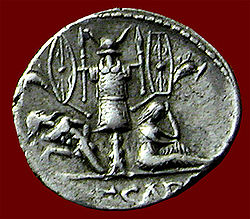
เหตุการณ์หนึ่งที่พลูตาร์ค เล่าไว้ ในชีวประวัติของมาริอุสแสดงให้เห็นถึงสิทธิของทหารในการรักษาความบริสุทธิ์ทางเพศของตน ทหารเกณฑ์หนุ่มรูปงามชื่อเทรโบเนียส[ 294 ]ถูก ผู้บังคับบัญชาซึ่งบังเอิญเป็นหลานชายของมาริอุสชื่อไกอุส ลุสเซียส ล่วงละเมิดทางเพศมาเป็นเวลานาน คืนหนึ่ง หลังจากที่เทรโบเนียสป้องกันการล่วงละเมิดที่ไม่พึงประสงค์มาหลายครั้ง เขาก็ถูกเรียกตัวไปยังเต็นท์ของลุสเซียส ด้วยความที่ไม่สามารถขัดคำสั่งของผู้บังคับบัญชาได้ เขาจึงพบว่าตนเองตกเป็นเป้าหมายของการล่วงละเมิดทางเพศและชักดาบออกมาฆ่าลุสเซียส การถูกตัดสินว่ามีความผิดฐานฆ่าเจ้าหน้าที่มักจะนำไปสู่การประหารชีวิต เมื่อถูกนำตัวขึ้นศาล เขาสามารถนำพยานมาแสดงให้เห็นว่าเขาต้องป้องกันตัวเองจากลุสเซียสหลายครั้ง และ "ไม่เคยขายตัวให้กับใครเลย แม้จะมีข้อเสนอของขวัญราคาแพงก็ตาม" มาริอุสไม่เพียงแต่ยกฟ้องเทรโบเนียสในคดีฆ่าญาติของเขาเท่านั้น แต่ยังมอบมงกุฎให้เขาเพื่อเป็นเกียรติแก่ความกล้าหาญอีกด้วย[ 295 ] [ 296 ] [ 297 ] [ 298 ]นักประวัติศาสตร์โรมันบันทึกเรื่องราวเตือนใจอื่นๆ เกี่ยวกับนายทหารที่ใช้อำนาจในทางที่ผิดเพื่อบังคับให้ทหารมีเพศสัมพันธ์ด้วย แล้วจึงประสบกับผลที่ตามมาอย่างร้ายแรง[ 299 ]นายทหารหนุ่มที่ยังคงมีเสน่ห์แบบวัยรุ่นที่ชาวโรมันชื่นชอบในความสัมพันธ์ระหว่างชายกับชาย ได้รับคำแนะนำให้เสริมสร้างคุณสมบัติความเป็นชาย เช่น ไม่ฉีดน้ำหอม และไม่ตัดขนจมูกและขนรักแร้[ 300 ]
ในช่วงสงคราม การใช้เชลยศึกอย่างรุนแรงเพื่อการมีเพศสัมพันธ์ไม่ได้ถูกมองว่าเป็นการข่มขืนทางอาญา[ 301 ]การข่มขืนหมู่เป็นหนึ่งในการกระทำรุนแรงเพื่อลงโทษระหว่างการปล้นสะดมเมือง[ 302 ]แต่หากการปิดล้อมสิ้นสุดลงด้วยการเจรจาทางการทูตแทนที่จะบุกโจมตีกำแพงตามธรรมเนียมแล้วผู้อยู่อาศัยจะไม่ถูกจับเป็นทาสหรือถูกทำร้ายร่างกาย การข่มขืนหมู่เกิดขึ้นในบางสถานการณ์ และมีแนวโน้มที่จะมีการรายงานต่ำกว่าความเป็นจริงในแหล่งข้อมูลที่เหลืออยู่ แต่ไม่ใช่กลยุทธ์ที่ตั้งใจหรือแพร่หลายในการควบคุมประชากร[ 303 ]อุดมคติทางจริยธรรมของการควบคุมตนเองทางเพศในหมู่ทหารเกณฑ์มีความสำคัญต่อการรักษาสันติภาพเมื่อการสู้รบยุติลง ในดินแดนและจังหวัดที่อยู่ภายใต้สนธิสัญญากับโรม ทหารที่ข่มขืนประชาชนในท้องถิ่นอาจได้รับโทษที่รุนแรงกว่าพลเรือน[ 304 ]เซอร์โทเรียส ผู้ว่าการโรมันสเปนมายาวนานซึ่งมีนโยบายเน้นความเคารพและความร่วมมือกับชาวต่างจังหวัด ได้ประหารชีวิตทหารทั้งกองร้อยเมื่อทหารเพียงคนเดียวพยายามข่มขืนหญิงท้องถิ่น[ 305 ] [ 306 ]ดูเหมือนว่าการข่มขืนหมู่จะเป็นมาตรการลงโทษที่พบได้บ่อยกว่าในช่วงสงครามกลางเมืองของโรมันมากกว่าในต่างประเทศ[ 307 ]
เรื่องเพศหญิง

เนื่องจากการให้ความสำคัญกับครอบครัวของชาวโรมันเพศวิถีของสตรีจึงถือเป็นหนึ่งในรากฐานของระเบียบทางสังคมและความเจริญรุ่งเรือง พลเมืองหญิงถูกคาดหวังว่าจะต้องใช้สิทธิทางเพศภายในชีวิตสมรส และได้รับการยกย่องในเรื่องความบริสุทธิ์ทางเพศ( pudicitia )และความอุดมสมบูรณ์: ออกัสตัสได้พระราชทานเกียรติและสิทธิพิเศษแก่สตรีที่ให้กำเนิดบุตรสามคน (ดูjus trium liberorum ) การควบคุมเพศวิถีของสตรีถือเป็นสิ่งจำเป็นสำหรับความมั่นคงของรัฐ ดังที่เห็นได้ชัดเจนที่สุดในพรหมจรรย์อย่างสมบูรณ์ของเหล่าเวสตัล[ 308 ]เวสตัลที่ละเมิดคำปฏิญาณจะถูกฝังทั้งเป็นในพิธีกรรมที่เลียนแบบบางส่วนของพิธีศพแบบโรมันคนรักของเธอจะถูกประหารชีวิต[ 309 ]เพศวิถีของสตรี ไม่ว่าจะอยู่ในภาวะที่ไม่เป็นระเบียบหรือเป็นแบบอย่าง มักส่งผลกระทบต่อศาสนาของรัฐในช่วงเวลาวิกฤตของสาธารณรัฐ[ 310 ]
เช่นเดียวกับกรณีของผู้ชาย ผู้หญิงอิสระที่แสดงตัวทางเพศ เช่น โสเภณีและนักแสดง หรือผู้ที่เสนอตัวให้บริการโดยไม่เลือกปฏิบัติ จะถูกกีดกันจากการคุ้มครองทางกฎหมายและความเคารพนับถือทางสังคม[ 311 ]
แหล่งข้อมูลทางวรรณกรรมโรมันจำนวนมากเห็นชอบกับการที่ผู้หญิงที่น่านับถือสามารถแสดงความปรารถนาทางเพศภายในชีวิตสมรสได้[ 312 ]ในขณะที่วรรณกรรมโบราณส่วนใหญ่มีมุมมองเรื่องเพศที่เน้นผู้ชายเป็นศูนย์กลาง กวีสมัยออกัสตัสอย่างโอวิดกลับแสดงความสนใจอย่างชัดเจนและแทบจะไม่มีใครเหมือนในเรื่องที่ว่าผู้หญิงมีประสบการณ์การมีเพศสัมพันธ์อย่างไร[ 313 ]
ร่างกายผู้หญิง
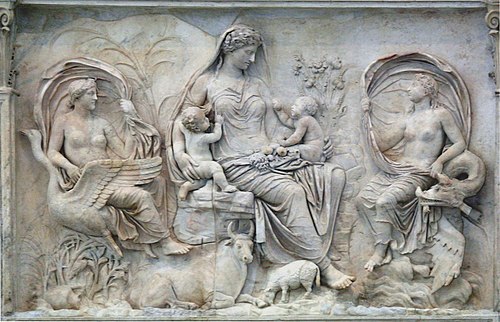
ทัศนคติของชาวโรมันต่อความเปลือยเปล่าของผู้หญิงนั้นแตกต่างจากแต่ได้รับอิทธิพลมาจากชาวกรีก ซึ่งยกย่องร่างกายของผู้ชายที่เปลือยเปล่าในขณะที่วาดภาพผู้หญิงที่น่านับถือโดยสวมเสื้อผ้า อย่างไรก็ตาม การเปลือยเปล่าบางส่วนของเทพธิดาในศิลปะจักรวรรดิโรมันสามารถเน้นหน้าอกให้เป็นภาพลักษณ์ที่สง่างามแต่น่าพึงพอใจของการเลี้ยงดู ความอุดมสมบูรณ์ และความสงบสุข[ 160 ] [ 314 ]ศิลปะอีโรติกบ่งชี้ว่าผู้หญิงที่มีหน้าอกเล็กและสะโพกกว้างมีรูปร่าง ใน อุดมคติ[ 315 ] [ 316 ]ในศตวรรษที่ 1 หลังคริสต์ศักราช ศิลปะโรมันแสดงให้เห็นถึงความสนใจอย่างกว้างขวางในภาพเปลือยของผู้หญิงที่เกี่ยวข้องกับกิจกรรมต่างๆ รวมถึงการมีเพศสัมพันธ์[ 317 ]ศิลปะลามกที่แสดงภาพผู้หญิงที่สันนิษฐานว่าเป็นโสเภณีที่กำลังมีเพศสัมพันธ์อาจแสดงหน้าอกที่ปกคลุมด้วยผ้า ปิดหน้าอก แม้ว่าส่วนที่เหลือของร่างกายจะเปลือยเปล่าก็ตาม
ในโลกแห่งความเป็นจริง ดังที่บรรยายไว้ในวรรณกรรม โสเภณีบางครั้งแสดงตนเปลือยเปล่าที่ทางเข้าห้องโสเภณี หรือสวมเสื้อผ้าไหมโปร่งแสง ทาสที่ขายมักถูกแสดงตัวเปลือยเปล่าเพื่อให้ผู้ซื้อตรวจสอบข้อบกพร่อง และเพื่อเป็นสัญลักษณ์ว่าพวกเขาไม่มีสิทธิ์ควบคุมร่างกายของตนเอง[ 318 ] [ 319 ]ดังที่เซเนกาผู้เฒ่าได้บรรยายถึงผู้หญิงที่ขายไว้ว่า:
เธอเปลือยกายยืนอยู่บนชายฝั่ง ตามความต้องการของผู้ซื้อ ทุกส่วนของร่างกายเธอถูกตรวจสอบและสัมผัส คุณอยากฟังผลของการขายไหม? โจรสลัดขาย ส่วนแมงดาซื้อไป เพื่อที่เขาจะได้จ้างเธอเป็นโสเภณี[ 320 ]


อวัยวะเพศหญิง
คำหยาบคายพื้นฐานสำหรับอวัยวะเพศหญิงคือcunnus (' cunt ') แม้ว่าอาจจะไม่รุนแรงเท่าคำภาษาอังกฤษก็ตาม[ 321 ]มาร์เชียลใช้คำนี้มากกว่าสามสิบครั้ง คาตุลลัสใช้หนึ่งครั้ง และฮอเรซใช้เพียงสามครั้งในงานเขียนช่วงแรกของเขา นอกจากนี้ยังปรากฏในPriapeaและกราฟฟิตี[ 322 ]หนึ่งในคำแสลงที่ผู้หญิงใช้เรียกอวัยวะเพศของตนคือporcus ('pig') โดยเฉพาะอย่างยิ่งเมื่อผู้หญิงวัยผู้ใหญ่พูดถึงเด็กผู้หญิง วาร์โรเชื่อมโยงการใช้คำนี้กับการบูชายัญหมูแด่เทพีเซเรสในพิธีแต่งงานเบื้องต้น[ 323 ]การเปรียบเทียบทุ่งนา สวน และทุ่งหญ้าเป็นเรื่องปกติ เช่นเดียวกับภาพของ "ไถ" ที่เป็นเพศชายใน " ร่อง " ที่เป็นเพศหญิง [ 324 ]การเปรียบเทียบอื่นๆ ได้แก่ ถ้ำ คูน้ำ หลุม ถุง ภาชนะ ประตู เตาไฟ เตาอบ และแท่นบูชา[ 325 ]
แม้ว่าอวัยวะเพศหญิงมักปรากฏในบทกวีเสียดสีและล้อเลียนในฐานะสิ่งที่น่ารังเกียจ แต่ก็ไม่ค่อยมีการกล่าวถึงในบทกวีรักภาษาละติน[ 326 ]โอวิด กวีรักคลาสสิกที่รักเพศตรงข้ามมากที่สุด เป็นเพียงคนเดียวที่กล่าวถึงการให้ความสุขแก่ผู้หญิงผ่านการกระตุ้นอวัยวะเพศ[ 327 ]มาร์เชียลเขียนถึงอวัยวะเพศหญิงในเชิงดูหมิ่นเท่านั้น โดยบรรยายช่องคลอดของผู้หญิงคนหนึ่งว่า "หลวม...เหมือนลำคอที่สกปรกของนกกระทุง" [ 328 ] [ 329 ]ช่องคลอดมักถูกเปรียบเทียบกับทวารหนักของเด็กผู้ชายในฐานะภาชนะสำหรับอวัยวะเพศชาย[ 330 ] [ 331 ]

หน้าที่ของคลิตอริส ( landica ) นั้น "เป็นที่เข้าใจกันดี" [ 332 ]ในภาษาละตินคลาสสิก landica เป็นคำหยาบคายที่ไม่สุภาพอย่างยิ่งที่พบในกราฟฟิตีและPriapea ; โดยปกติแล้วคลิตอริสจะถูกกล่าวถึงด้วยคำอุปมา เช่นcrista ('ยอด') ของ Juvenal [ 333 ] [ 334 ]ซิเซโรบันทึกไว้ว่าผู้พูดที่โชคร้ายซึ่งมีตำแหน่งระดับกงสุล ได้ทำให้ วุฒิสภาแตกแยกเพียงแค่พูดบางอย่างที่ฟังดูเหมือนlandica : hanc culpam maiorem an il- lam dicam? ( ('ฉันควรเรียกความผิดนี้ว่าร้ายแรงกว่าหรือความผิดนั้น?' ได้ยินเป็น 'ความผิดที่ร้ายแรงกว่านี้หรือคลิตอริส?') "เขาจะหยาบคายไปกว่านี้ได้อีกไหม?" ซิเซโรอุทาน พร้อมกับสังเกตว่าcum nos ('เมื่อเรา') ออกเสียงคล้ายกับcunnus [ 335 ] [ 332 ] [ 336 ] กระสุนหนังสติ๊กตะกั่วที่ค้นพบจากโบราณคดีมีจารึกว่า "ฉันเล็งไปที่คลิตอริสของฟุลเวีย" ( Fulviae landicam peto ) โดยฟุลเวียเป็นภรรยาของมาร์ค แอนโทนี ผู้บัญชาการทหารในช่วงสงครามกลางเมืองในช่วงทศวรรษที่ 40 และ 30 [ 337 ]
ภาษาละตินไม่มีคำมาตรฐานสำหรับlabia [ 338 ] คำศัพท์สองคำที่พบในงาน เขียนทางการแพทย์คือorae ('ขอบ' หรือ 'ชายฝั่ง') [ 339 ]และpinnacula ('ปีกเล็กๆ') [ 338 ]คำว่าvulva ที่บันทึกไว้ครั้งแรก ปรากฏในงานของ Varro เกี่ยวกับการเกษตร (ศตวรรษที่ 1 ก่อนคริสต์ศักราช) ซึ่งหมายถึงเยื่อหุ้มที่ล้อมรอบทารกในครรภ์[ 340 ] [ 341 ]ในช่วงต้นของจักรวรรดิ คำว่า vulvaถูกนำมาใช้สำหรับ 'มดลูก' ซึ่งคำที่ใช้กันทั่วไปในสาธารณรัฐคือuterus หรือบางครั้งก็ใช้ venterหรือalvusซึ่งทั้งสองคำนี้หมายถึง 'ท้อง' ดูเหมือนว่าเดิมที vulvaจะหมายถึงมดลูกของสัตว์ แต่ "พบได้บ่อยมาก" ในNatural History ของ Pliny สำหรับมดลูกของมนุษย์[ 342 ]ในยุคจักรวรรดิ คำว่า vulvaอาจหมายถึง 'อวัยวะสืบพันธุ์เพศหญิง' โดยรวมหรือโดยนัย หรือบางครั้งอาจหมายถึงช่องคลอดเพียงอย่างเดียว[ 343 ]ผู้แปลพระคัมภีร์ภาษาละตินในยุคแรกใช้ คำว่า vulvaเป็นคำที่ถูกต้องและเหมาะสมสำหรับมดลูก[ 344 ]ในช่วงเวลาหนึ่งของยุคจักรวรรดิ คำว่า matrixกลายเป็นคำที่ใช้กันทั่วไปสำหรับ 'มดลูก' โดยเฉพาะอย่างยิ่งในนักเขียนด้านนรีเวชวิทยาในสมัยโบราณตอนปลายซึ่งใช้คำศัพท์เฉพาะสำหรับส่วนต่างๆ ของอวัยวะสืบพันธุ์ด้วย[ 345 ]
ทั้งผู้หญิงและผู้ชายมักจะกำจัดขนบริเวณอวัยวะเพศ[ 346 ]แต่การดูแลอาจแตกต่างกันไปตามกาลเวลาและความชอบส่วนบุคคล ข้อความบางส่วนจากนักเสียดสีในยุคแรกอย่างลูซิเลียสกล่าวถึงการสอดใส่ "ถุงที่มีขน" [ 347 ]และภาพเขียนบนผนังจากปอมเปอีประกาศว่า "ช่องคลอดที่มีขนนั้นถูกสอดใส่ได้ดีกว่าช่องคลอดที่เรียบเนียน มันร้อนระอุและต้องการอวัยวะเพศชาย" [ 348 ]
ที่ทางเข้าห้องอาบน้ำร้อนในโรงอาบน้ำของบ้านเมนันเดอร์ที่ปอมเปอี มีภาพกราฟิกที่แปลกประหลาดปรากฏบนโมเสก: กระป๋องน้ำมันรูปทรงคล้ายอวัยวะเพศชายล้อมรอบด้วยแถบตกแต่งรูปทรงอวัยวะเพศหญิง วางคู่กับคนแบกน้ำชาว "เอธิโอเปีย" ที่มีอวัยวะเพศชาย "ขนาดใหญ่ผิดปกติและมีรายละเอียดที่ดูตลก" [ 349 ]
หน้าอก

คำภาษาละตินสำหรับ "เต้านม" ได้แก่mammae (เทียบกับภาษาอังกฤษ "mammary"), papillae (โดยเฉพาะอย่างยิ่งสำหรับ "หัวนม") และubera ซึ่งหมายถึง เต้านมในแง่ของความสามารถในการให้สารอาหาร รวมถึงหัวนมหรือเต้านมของสัตว์[ n 10 ] คำ ว่า papillaeเป็นคำที่นิยมใช้เมื่อ Catullus และกวีสมัย Augustanกล่าวถึงเต้านมในบริบททางเพศ[ 350 ]
หน้าอกของผู้หญิงสวยควรจะ "ไม่โดดเด่น" หน้าอกในอุดมคติในประเพณีบทกวีเฮลเลนิสติกถูกเปรียบเทียบกับแอปเปิล[ 351 ] [ 352 ]มาร์เชียลล้อเลียนหน้าอกใหญ่[ 353 ] [ 354 ] [ 355 ]หญิงชราที่มีลักษณะน่าเกลียดและไม่น่าปรารถนาในทุกด้านตามแบบแผนจะมีหน้าอกที่ "หย่อนคล้อย" [ 356 ]บนเวทีโรมันหน้าอกที่เกินจริงเป็นส่วนหนึ่งของเครื่องแต่งกายสำหรับตัวละครหญิงที่ไม่น่าดึงดูดอย่างตลกขบขัน เนื่องจากในละครตลกโรมันคลาสสิกบทบาทของผู้หญิงมักแสดงโดยนักแสดงชายที่แต่งกายเป็นหญิง[ 357 ]
ในขณะที่บทกวีสั้นของกรีกบรรยายถึงหน้าอกในอุดมคติ[ 358 ]กวีชาวละตินกลับให้ความสนใจกับหน้าอกเพียงเล็กน้อย อย่างน้อยก็เมื่อเทียบกับความสนใจในยุคปัจจุบันที่ชื่นชมและลูบคลำหน้าอกของผู้หญิง[ 359 ]โดยส่วนใหญ่แล้วหน้าอกจะถูกมองว่าเป็นเพียงแง่มุมหนึ่งของความงามหรือความสมบูรณ์แบบของรูปร่างของผู้หญิง แม้ว่าโอวิดจะมองว่าหน้าอกนั้นน่าสัมผัสก็ตาม[ 360 ] ในบทกวีบทหนึ่งที่เฉลิมฉลองงานแต่งงาน คาตุลลัสกล่าวถึง "หัวนมที่อ่อนนุ่ม" (teneris ... papillis)ของเจ้าสาวซึ่งจะทำให้สามีที่ดีนอนกับเธอต่อไป ความเย้ายวนทางเพศช่วยส่งเสริมความซื่อสัตย์ในชีวิตสมรส นำไปสู่การมีบุตรและชีวิตคู่ที่ยืนยาว[ 361 ]

เนื่องจากในสมัยโบราณทารกทุกคนได้รับการเลี้ยงดูด้วยนมแม่ เต้านมจึงถูกมองว่าเป็นสัญลักษณ์ของการเลี้ยงดูและการเป็นแม่เป็นหลัก[ 362 ] ถ้วยดื่มรูปทรงเต้านม ( Mastoi ) และรูปจำลองของเต้านมเป็นหนึ่งในเครื่องบูชา( vota )ที่พบในวิหารของเทพเจ้า เช่นไดอาน่าและเฮอร์คิวลีสซึ่งบางครั้งถูกถวายโดยแม่นม[ 363 ] [ 364 ] ถ้วยรูปทรงเต้านมอาจมีความสำคัญทางศาสนา การดื่มนมแม่โดยผู้ใหญ่ที่แก่ชราหรือใกล้ตายเป็นสัญลักษณ์ของการเกิดใหม่ในโลกหลังความตาย[ 365 ] [ 366 ] [ 367 ]ในประเพณีของชาวเอตรัสกันเทพีจูโน( Uni )มอบเต้านมของเธอให้กับเฮอร์คิวลีสเป็นสัญญาณว่าเขาอาจได้เข้าสู่กลุ่มอมตะ[ 368 ] [ 369 ]ความหมายทางศาสนาอาจเป็นพื้นฐานของเรื่องราวที่เปโรให้นมบุตรแก่บิดาผู้สูงอายุของเธอเมื่อเขาถูกจำคุกและถูกตัดสินประหารชีวิตด้วยการอดอาหาร (ดูการกุศลของชาวโรมัน ) [ 370 ]พลินีบันทึกการใช้นมบุตรในทางการแพทย์ และจัดให้เป็นหนึ่งในยารักษาที่มีประโยชน์มากที่สุด โดยเฉพาะอย่างยิ่งสำหรับโรคเกี่ยวกับดวงตาและหู การพันศีรษะด้วยเสื้อชั้นในกล่าวกันว่าสามารถรักษาอาการปวดหัวได้[ 371 ] [ 372 ]

การเปิดเผยหน้าอกเป็นหนึ่งในท่าทางที่ผู้หญิง โดยเฉพาะอย่างยิ่งแม่หรือพยาบาล ใช้เพื่อแสดงความโศกเศร้าหรือเพื่อขอความเมตตา[ 373 ]เซอร์วิอุสตีความการเปิดเผยและตีหน้าอกตามพิธีกรรมในความโศกเศร้าว่าเป็นการผลิตน้ำนมเพื่อเลี้ยงคนตาย[ 374 ]ในวรรณกรรมกรีกและละติน แม่ในตำนานบางครั้งเปิดเผยหน้าอกของตนในช่วงเวลาที่ทุกข์ทรมานทางอารมณ์อย่างรุนแรงเพื่อเรียกร้องให้เคารพบทบาทการเลี้ยงดูของพวกเธอ[ 375 ]หน้าอกที่เปิดเผยด้วยความเข้มข้นเช่นนี้มีพลังในการป้องกันภัย[ 376 ] [ 160 ]จูเลียส ซีซาร์ระบุว่าท่าทางนี้มีความหมายคล้ายกันในวัฒนธรรมเซลติก : ในระหว่างการล้อมเมืองอวาริคัมหัวหน้าครอบครัวหญิง(matres familiae)เปิดเผยหน้าอกและยื่นมือออกไปเพื่อขอให้ผู้หญิงและเด็กได้รับการละเว้น[ 377 ]ทาซิตัสกล่าวถึง สตรี ชาวเยอรมันที่กระตุ้นให้ชายผู้ไม่เต็มใจเข้าร่วมการต่อสู้อย่างกล้าหาญโดยการเปิดเผยหน้าอกอย่างโจ่งแจ้ง[ 378 ]แม้ว่าโดยทั่วไปแล้ว "ท่าทางดังกล่าวมีจุดประสงค์เพื่อกระตุ้นความสงสารมากกว่าความปรารถนาทางเพศ" แต่ความงามของหน้าอกที่เปิดเผยออกมานั้นบางครั้งก็ปรากฏให้เห็นและถูกกล่าวถึง[ 379 ]
เนื่องจากโดยปกติแล้วผู้หญิงมักถูกวาดภาพโดยสวมเสื้อผ้าในงานศิลปะ การเปิดเผยหน้าอกจึงอาจสื่อถึงความเปราะบางหรือความพร้อมทางเพศโดยเจตนา อุบัติเหตุ หรือการถูกบังคับ การเปิดเผยหน้าอกข้างเดียวเป็นลวดลายทางภาพของประติมากรรมกรีกคลาสสิกซึ่งในสถานการณ์ต่างๆ รวมถึงการล่อลวง[ 380 ]มักแสดงถึงความรุนแรงทางกายหรือการข่มขืนที่กำลังจะเกิดขึ้น[ 381 ]นักวิชาการบางคนพยายามค้นหา "รหัส" ที่การเปิดเผยหน้าอกข้างขวามีความหมายทางเพศ ในขณะที่หน้าอกข้างซ้ายหมายถึงการเลี้ยงดู[ 382 ]แม้ว่างานศิลปะที่ผลิตโดยชาวโรมันอาจเลียนแบบหรือดึงเอาแบบแผนของกรีกมาใช้โดยตรง แต่ในช่วงยุคคลาสสิกของศิลปะกรีก ภาพของผู้หญิงที่ให้นมบุตรถูกมองว่าเป็นลักษณะของสัตว์หรือป่าเถื่อน ในทางตรงกันข้าม ประเพณี อิตาลิก ที่อยู่ร่วมกัน เน้นย้ำถึงหน้าอกในฐานะจุดศูนย์กลางของความสัมพันธ์ระหว่างแม่กับลูก และเป็นแหล่งพลังอำนาจของผู้หญิง[ 383 ]
พลัง แห่ง ความเร้าอารมณ์ของหน้าอกไม่ได้ถูกละเลยไปโดยสิ้นเชิง: ในการเปรียบเทียบการมีเพศสัมพันธ์กับผู้หญิงกับการมีเพศสัมพันธ์กับเด็กผู้ชายนวนิยายกรีกในยุคจักรวรรดิโรมันระบุว่า "หน้าอกของเธอเมื่อถูกลูบไล้จะให้ความสุขเฉพาะตัว" [ 384 ] Propertiusเชื่อมโยงการพัฒนาของหน้าอกกับการที่เด็กผู้หญิงถึงวัย " เล่น " [ 385 ] [ 386 ] Tibullusสังเกตว่าผู้หญิงอาจสวมเสื้อผ้าหลวมๆ เพื่อให้หน้าอกของเธอ " โผล่ " ออกมาเมื่อเธอนอนเอนกายรับประทานอาหาร[ 387 ]ประเพณีทางโหราศาสตร์เชื่อว่าการมีเพศสัมพันธ์ทางหน้าอกเป็นสิ่งที่ผู้ชายที่เกิดภายใต้การรวมตัวกันของดาวศุกร์ ดาวพุธ และดาวเสาร์ ชื่นชอบ [ 388 ]แม้แต่ในภาพวาดโรมันที่แสดงออกถึงเรื่องเพศอย่างโจ่งแจ้งที่สุด หน้าอกบางครั้งก็ถูกปกคลุมด้วยstrophium (ผ้าคาดหน้าอก) [ 389 ] [ 368 ]ผู้หญิงที่ปรากฏในภาพอาจเป็นโสเภณี แต่เป็นการยากที่จะระบุได้ว่าทำไมศิลปินจึงตัดสินใจแสดงภาพหน้าอกที่ถูกปกปิดหรือเปิดเผยในสถานการณ์ที่กำหนด[ 390 ]
เพศหญิง-เพศหญิง
คำภาษากรีกสำหรับผู้หญิงที่ชอบมีเพศสัมพันธ์กับผู้หญิงด้วยกัน ได้แก่hetairistria (เปรียบเทียบกับhetairaซึ่งแปลว่า "หญิงโสเภณี" หรือ "เพื่อน"), tribas (พหูพจน์tribades ) และLesbia ; คำภาษาละติน ได้แก่ คำยืมtribas , fricatrix ("ผู้ที่ถู") และvirago [ 391 ] การอ้างอิงถึงเพศสัมพันธ์ระหว่างผู้หญิงด้วยกัน นั้นพบได้ไม่บ่อยนักในวรรณกรรมโรมันสมัยสาธารณรัฐและสมัย ต้นของจักรวรรดิ โอวิด ผู้ซึ่งโดยทั่วไปสนับสนุนวิถีชีวิตแบบรักต่างเพศ พบว่ามันเป็น "ความปรารถนาที่ไม่มีใครรู้จัก แปลกประหลาด แปลกใหม่ ... ในบรรดาสัตว์ทั้งหมด ไม่มีตัวเมียใดที่ถูกครอบงำด้วยความปรารถนาต่อตัวเมีย" [ 392 ] —และกระนั้น เรื่องราวของอิฟิสและไอแอนธีในMetamorphoses ของโอวิด (9.666–797) ก็เป็น "เรื่องราวที่ยาวที่สุดที่ยังหลงเหลืออยู่ในวรรณกรรมโบราณเกี่ยวกับความปรารถนาระหว่างผู้หญิงกับผู้หญิง" [ 393 ]เรื่องเล่าของโอวิดเกี่ยวกับคาลิสโตผู้ติดตามไดอานาเทพธิดาผู้หลีกเลี่ยงการคบหาสมาคมกับผู้ชายอย่างแข็งขัน เต็มไปด้วยนัยยะของความรักร่วมเพศ เนื่องจากคาลิสโตถูกจูปิเตอร์ล่อลวงเพียงเพราะเขาปลอมตัวเป็นไดอานา[ 394 ]
ในช่วงยุคจักรวรรดิโรมัน แหล่งข้อมูลเกี่ยวกับความสัมพันธ์ระหว่างผู้หญิงด้วยกันมีมากมาย รวมถึงในรูปแบบของคาถารัก งานเขียนทางการแพทย์ และตำราเกี่ยวกับโหราศาสตร์และการตีความความฝัน[ 395 ]ภาพเขียนบนผนังจากปอมเปอี ( CIL 4.5296 ) แสดงถึงความปรารถนาของผู้หญิงคนหนึ่งที่มีต่อผู้หญิงอีกคนหนึ่ง:
ฉันอยากจะโอบกอดคอและแขนเล็กๆ และจูบที่ริมฝีปากอันอ่อนโยน ไปเลยที่รัก ปล่อยความสุขของเธอไปกับสายลม เชื่อฉันเถอะ แสงสว่างคือธรรมชาติของมนุษย์[ 396 ]

การอ้างอิงถึงความสัมพันธ์ทางเพศระหว่างผู้หญิงด้วยกันในชื่อ "เลสเบี้ยน" ในยุคแรก ซึ่งมาจากซัปโฟแห่งเลสบอสพบได้ในลูเซียน (คริสต์ศตวรรษที่ 2): "พวกเขากล่าวว่ามีผู้หญิงแบบนั้นในเลสบอส มีลักษณะเหมือนผู้ชาย แต่พวกเธอไม่ต้องการสละความเป็นชายเพื่อผู้ชาย แต่พวกเธอกลับคบหากับผู้หญิงด้วยกันเหมือนผู้ชาย" [ 399 ]
เนื่องจากชาวโรมันคิดว่าการมีเพศสัมพันธ์ต้องอาศัยคู่ครองที่กระตือรือร้นหรือมีอำนาจเหนือกว่าซึ่งมี"อวัยวะเพศชาย"นักเขียนชายจึงจินตนาการว่าในการมีเพศสัมพันธ์แบบเลสเบี้ยน ผู้หญิงคนหนึ่งจะใช้ดิลโดหรือมีคลิตอริสขนาดใหญ่เป็นพิเศษสำหรับการสอดใส่ และเธอจะเป็นฝ่ายที่ได้รับความสุข[ 400 ]ดิลโดไม่ค่อยถูกกล่าวถึงในแหล่งข้อมูลของโรมัน แต่เป็นสิ่งของตลกยอดนิยมในวรรณกรรมและศิลปะกรีกคลาสสิก[ 401 ]มาร์เชียลอธิบายว่าเลสเบี้ยนมีความต้องการทางเพศที่มากเกินไปและมีเพศสัมพันธ์แบบสอดใส่กับทั้งผู้หญิงและเด็กผู้ชาย[ 402 ]ภาพลักษณ์ของผู้หญิงในยุคจักรวรรดิที่ร่วมเพศทางทวารหนักกับเด็กผู้ชาย ดื่มและกินเหมือนผู้ชาย และมีส่วนร่วมในระบอบการออกกำลังกายที่เข้มข้น อาจสะท้อนถึงความวิตกกังวลทางวัฒนธรรมเกี่ยวกับการเป็นอิสระที่เพิ่มขึ้นของผู้หญิงโรมัน[ 403 ]
ข่มขืน
ตำนานเกี่ยวกับการข่มขืน
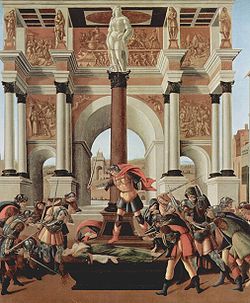
การข่มขืนผู้หญิงเป็นธีมที่แพร่หลายในตำนานและนิทานปรัมปราของโรมยุคแรกผู้ก่อตั้งในตำนานอย่างโรมูลัสและเรมัสเกิดจากการข่มขืนนางไม้เวสตัลรีอาซิลเวียโดยเทพมาร์ส [ 404 ] โรมูลัสและ "กลุ่มโจร" ของเขาสามารถเปลี่ยนถิ่นฐานที่มีแต่ผู้ชายให้กลายเป็นเมืองได้ก็ต่อเมื่อ"ข่มขืน" ผู้หญิงชาวซาบีนนั่นคือโดยการลักพาตัวลูกสาวของ เพื่อนบ้านชาว ซาบีนมาเป็นภรรยา การล้มล้างระบอบกษัตริย์โรมันและการสถาปนาสาธารณรัฐเกิดขึ้นจากการข่มขืนลูเครเทีย ผู้เป็นที่ชื่นชมอย่างมาก โดยเซ็กซ์ตุส ทาร์ควินิ อุส บุตร ชายของกษัตริย์ ตำนานนี้ทำให้เห็นภาพชัดเจนถึงมุมมองของชาวโรมันเกี่ยวกับกิเลสตัณหา ที่ไร้การควบคุม ว่าเป็นรูปแบบหนึ่งของเผด็จการ[ 405 ]
ลิวีนักประวัติศาสตร์ สมัย ออกัสตัสดูเหมือนจะ "อับอาย" กับเรื่องราวการข่มขืนในประวัติศาสตร์โรมันยุคต้น และเน้นย้ำถึงมิติทางการเมืองที่ช่วยกอบกู้เหตุการณ์เหล่านี้[ 406 ]ลูเครติอุสประณามการข่มขืนว่าเป็นพฤติกรรมดั้งเดิมที่อยู่นอกเหนือขอบเขตของอารยธรรมที่ก้าวหน้า[ 407 ]โดยอธิบายว่าเป็น "การใช้กำลังรุนแรงและการบังคับทางเพศของผู้ชาย" [ 408 ]
การข่มขืนและกฎหมาย
Roman law recognized rape as a crime: the rape victim was not guilty of anything.[409] Intercourse by force or compulsion (vis), even if it took place under circumstances that were otherwise unlawful for a woman (see "Moral and legal concepts" above), left the woman legally without blame.[410][411] The official position under Diocletian (reigned 284–305 AD) held that:[412]
The laws punish the foul wickedness of those who prostitute their modesty to the lusts of others, but they do not attach blame to those who are compelled to stuprum by force, since it has, moreover, been quite properly decided that their reputations are unharmed and that they are not prohibited from marriage to others.[413]

Although literary sources from the Republican era make it clear that rape was wrong and severely penalized, the statutes under which it might be charged as a crime are unknown until passage of the Lex Iulia de vi publica, dating probably to the dictatorship of Julius Caesar in the 40s BC.[414] Rome had no state prosecutors; cases could be prosecuted by any citizen with the legal expertise and speaking ability to do so. Since emancipated women were allowed to bring criminal prosecutions in the Republic,[415] it is conceivable that a rape victim could have brought charges against her rapist herself. Otherwise, the case could be prosecuted by her father or husband, or by anyone who saw fit to do so. There was no statute of limitations for rape; by contrast adultery, which was criminalized under Augustus, had to be prosecuted within five years.[414] Rape was a capital crime.[414]
As a matter of law, rape could be committed only against a citizen in good standing. A woman who worked as a prostitute or entertainer lost her social standing and became infamis; by making her body publicly available, she had in effect surrendered her right to be protected from sexual abuse or physical violence.[416][417] Cicero defended a client whose misdeeds included the gang rape of an actress on the grounds that young men took customary license with entertainers.[418][417][419] The rape of a slave could be prosecuted only as damage to her owner's property, under the Lex Aquilia.[420][416] Consent would have been an issue in rape cases only rarely; if the accused argued that the woman had consented, he could still be charged with committing the more general sex crime of stuprum against a citizen, since male sexual freedom was limited to prostitutes or slaves. If rape against a married woman could not be proven, the Augustan legislation criminalizing adultery would make the man liable to a charge of adulterium, criminal adultery, though a charge of either adultery or stuprum without force would implicate the woman as well.[421] An acquittal for rape, as with any other crime, would open the prosecutor to a retaliatory charge of calumnia, malicious prosecution.[422] The prosecution of rape might also be hindered by psychological and social pressures, such as embarrassment or a reluctance to expose one's private life.[421]
Attitudes toward rape changed when the Empire became Christianized. St. Augustine interpreted Lucretia's suicide as a possible admission that she had secretly encouraged the rapist,[n 11] and Christian apologists regarded her as having committed the sin of involuntary sexual pleasure.[423] The first Christian emperor Constantine redefined rape as a public offense rather than as a private wrong.[424] Earlier Roman law had blurred the line between abduction and elopement, since in either case it was the right of the paterfamilias to give or withhold his consent to his daughter's marriage that had been violated. The word raptus thus could refer to a successful seduction as well as abduction or rape. If the girl consented, Constantine ordered that she be punished along with the male "abductor" by being burnt alive. If she had not consented, she was still considered an accomplice, "on the grounds that she could have saved herself by screaming for help".[412] As a participant to the rape, she was punished under law by being disinherited, regardless of the wishes of her family.[425] Even if she and her family consented to a marriage as the result of an elopement, the marriage was legally void. In the Republic and the pre-Christian Empire, the consequences of an abduction or an elopement had been up to the couple and their families.[426]
Sexuality and children
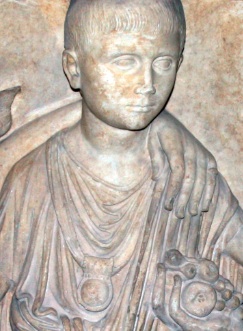
Both male and female freeborn children wore the toga praetexta, a purple-bordered garment that marked its wearer as having "inviolable" status.[427] An oath could be sworn upon the "sacred praetexta", a marker of how "we make sacred and venerable the weakness of childhood".[428] It was religiously impermissible (nefas) to use obscene language in front of those wearing the praetexta,[429] and Cato claimed that in front of his son he tried to speak as though Vestal Virgins were present.[166][430]
Freeborn Roman boys also wore an apotropaic amulet called the bulla which incorporated a phallic talisman(fascinum) inside a locket of gold, silver, or bronze, or in a leather pouch.[431][432][433] In addition to its magical function, the bulla would have been a visible warning that the boy was sexually off-limits.[434][157][435] The equivalent for the girl was the lunula, a crescent moon amulet.[436]
There were laws protecting freeborn children from sexual predators,[276][437] and the rape of a freeborn boy was a capital crime; this severity was directed at protecting the integrity of the young citizen.[438] Fictional license was not a defense; Valerius Maximus reports that a poetic boast of seducing a puer praetextatus ("praetextate boy") and a freeborn virgin (ingenua virgo) was used in court to impugn a prosecutor's moral authority.[439] In denouncing the debaucheries of Quintus Apronius, Cicero builds to the worst offence: Apronius danced naked at a banquet in front of a boy still of an age to wear the praetexta.[440] Although children were taken to dinner parties (convivia) to accustom them to proper adult social behavior, Quintilian scolds parents of his day for being poor role models: they parade their mistresses and male concubines and behave indiscreetly even when their children are present, and think it is cute when their children say things that are age-inappropriate. Quintilian regards this misbehavior as a sign of general moral decline.[441] At weddings, however, boys were by ancient custom given license to speak obscenely, peppering the new couple with dirty jokes, as humor and laughter were thought to promote fertility.[442]
Protections applied only to freeborn children, not those born to slaves, sold into slavery, or taken captive in war. The social acceptance of pederasty among the Romans was focused on the exploitation of young male slaves or prostitutes by men of the upper classes.[240][443]
Rites of passage
Adolescents in ritual preparation to transition to adult status wore the tunica recta, the "upright tunic", so called because it was woven ritually on the type of upright loom that was the earliest used by Romans.[444] The tunic, worn by both youths and maidens, may have had the purple band of inviolability, though this is unclear from the evidence.[444] Girls wove their own tunica recta.[445]
The puberty ritual for the young male involved shaving his first beard and taking off his bulla, which he dedicated to the household gods, the Lares.[446] He assumed the toga virilis ("toga of manhood"), was enrolled as a citizen on the census, and soon began his military service.[447] Traditionally, the ceremony was held on the Liberalia, the festival in honor of the god Liber, who embodied both political and sexual liberty.[448] Following his rite of passage, the young male citizen was permitted the avenues of sexual activity that were generally acceptable for Roman men of his social rank.[445] Often a young man would be introduced to heterosexual intercourse by an experienced female prostitute.[449]

Roman women were expected to remain virgins until marriage; the higher a girl's social rank, the earlier she was likely to become betrothed and married.[451] The usual age of betrothal for upper classes girls was 14, but for patricians as early as 12. Weddings were often postponed until the girl was considered mature enough. The wedding ceremony was in part a rite of passage for the bride, as Rome lacked the elaborate female puberty rituals of ancient Greece.[452] On the night before the wedding, the bride bound up her hair with a yellow hairnet she had woven. The confining of her hair signified the harnessing of her sexuality within marriage. Her weaving of the tunica recta and the hairnet demonstrated her skill and her capacity for acting in the traditional matron's role as custos domi, "guardian of the house".[453] On her wedding day, she belted her tunic with the cingulum, made of ewe wool to symbolize fertility, and tied with the "knot of Hercules", which was supposed to be difficult to untie.[454] The knot symbolized wifely chastity, in that it was to be untied only by her husband, but the cingulum also symbolized that the groom was bound to his wife.[455] The bride's hair was ritually styled in "six tresses" (seni crines), and she was veiled until uncovered by her husband at the end of the ceremony, a ritual of surrendering her virginity to him.[456]
Sex, marriage, and society
Marital sex

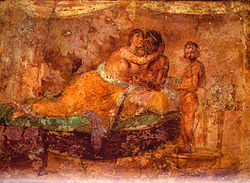
Because men could enjoy sexual relations outside marriage with relative impunity, it has sometimes been assumed that satisfying sex was not an expectation of Roman marriage.[458] The jurist Ulpian noted that "it is not sexual intercourse that makes a marriage but rather marital affection",[459] but the warnings by moralists and philosophers against a preoccupation with sex within marriage recognize the potential for marital passion.[460] While having children was a primary goal of marriage, other social and familial bonds were enhanced, not excluding personal companionship and sexual pleasure between husband and wife, as indicated by marriages involving women past their childbearing years.[461]
Sexual intimacy between a married couple was a private matter, and not usually the subject of literature.[462][463] An exception was the epithalamium, a genre of poetry that celebrated a wedding. A wedding hymn by Catullus, for instance, praises the love goddess Venus because "nothing is possible without you".[464] Ovid, whose love poetry early in his career was directed at fictional mistresses, wrote elegies during his exile in which he longed for his wife.[465] Among the collected letters of Pliny Minor is one he writes about his feelings for his wife:
I am seized by an unbelievable longing for you. The reason is above all my love, but secondarily the fact that we are not used to being apart. This is why I spend the greater part of the night haunted by your image; this is why from time to time my feet lead me (the right expression!) of their own accord to your room at the times I was accustomed to frequent you; this is why, in short, I retreat, morbid and disconsolate, like an excluded lover from an unwelcoming doorway.
Pliny adopts the rhetoric of love poetry, conventionally directed at an illicit or hard-to-attain lover, as appropriate for expressing his wedded desire.[465]

The Trojan royal couple Hector and Andromache became a mythological trope of wedded sex. Latin love elegy focuses on their sex life rather than the tragic end of their marriage with Hector's death at the hands of Achilles.[466] They were known for the "woman on top" position, with a verb suggesting that the woman "rides" the man like a horse.[467] In general, Hector was portrayed as markedly heterosexual[468] and an exemplary husband.[469]
Wedding night
An epithalamium by Catullus[470] paints the wedding night as a time of ripe eroticism, spiced with humorous and bawdy songs from the guests. "Look inside," the poet advises the bride, who burns with an "intimate flame", "where your man lies on the richly arrayed bed, completely available to you". The husband is reminded that "good Venus" has blessed him, since he can now desire openly what he desires, and need not conceal a "good love". The couple is encouraged to enjoy themselves as they please (ludite ut lubet); the goal is to produce children soon.
A pair of paintings in a bedroom of the Casa della Farnesina has been interpreted as "a narrative of the modest bride becoming the immodest lover—perhaps fulfilling a ribald male fantasy".[471]
Fidelity and adultery

Some literary passages suggest that a newlywed might break off his outside sexual relations for a time and focus on bonding with his wife in the hope of starting a family.[472] Some Stoics maintained that marital fidelity was as much a virtue for men as for women (see "Stoic sexual morality" above). Legally, however, a Roman husband did not commit adultery when he had sex outside marriage as long as his partner was considered sexually available; sexual misconduct (stuprum) was adultery depending on the status of a female partner. A character in a play by Plautus expresses a man's sexual freedom in comic terms:
No one prohibits anyone from going down the public way (publica via); as long as you do not make a path through posted land, as long as you hold off from brides, single women, maidens, the youth and free boys, love whatever you want.[473]
A married or marriageable woman and young male citizens are off-limits, just as if they were the property of someone else,[272] and in fact adultery as a crime was committed contrary to the rights of the paterfamilias to control his household.[474] For a man, adultery was a sexual offense committed with a woman who was neither his wife nor a permissible partner such as a prostitute or slave,[475] in effect when his female partner was another man's wife or his unmarried daughter.[476] The later jurists emphasize that adulterium in the strict sense was committed with a married woman.[477]
For a married woman, no infidelity was acceptable, and first-time brides were expected to be virgins.[478] According to Cato (2nd century BC), a husband had an ancient right (ius) to kill his wife if he caught her in the act of adultery, but if this "right" existed, it was a matter of custom and not statute law.[479] In the Republic, adultery was normally considered a private matter for families to deal with, not a serious criminal offense requiring the attention of the courts.[480][481][482] No source records the justified killing of a woman for adultery by either a father or husband during the Republican era, though adultery was grounds for divorce.[483]

Following the collapse of the Republic, moral legislation became part of the new political order under Rome's first emperor, Augustus. Laws pertaining to adultery passed in 18 BC were part of his program to restore the mos maiorum, traditional social norms, while consolidating his political authority and codifying a more rigid social hierarchy in the wake of the recent civil wars. The appeal to old-fashioned values cloaked the radical overthrow of the Republic's participatory political institutions by top-down, one-man rule.[484] The Lex Iulia de adulteriis ("Julian Law concerning acts of adultery") was directed at punishing married women who engaged in extra-marital affairs. Scholars have often assumed that the Lex Iulia was meant to address a virulent outbreak of adultery in the Late Republic. An androcentric perspective in the early 20th century held that the Lex Iulia had been "a very necessary check upon the growing independence and recklessness of women".[485] A more sympathetic view in the late 20th to early 21st century saw love affairs as a way for the intelligent, independent women of the elite to form emotionally meaningful relationships outside marriages arranged for political purposes.[486] It is possible, however, that no such epidemic of adultery even existed; the law should perhaps be understood not as addressing a real problem that threatened society, but as one of the instruments of social control exercised by Augustus that cast the state, and by extension himself, in the role of paterfamilias to all Rome.[487]
Personal anxieties about infidelity, within marriage or not, are reflected in magic spells intended to "fix" (defixiones) or bind the other person's erotic attachment.[488] Spells were also available for interrogating the beloved about fidelity. One magical papyrus from Roman Egypt recommends placing the heart of a hoopoe on a sleeping woman's genitals to induce truthful answers; another says that the tongue of a hen placed on her lips or breast will cause her to reveal the name of the man she loves.[489]
Literature of the Late Republic and Principate, particularly the satires of Horace and Juvenal, offer various depictions, or perhaps fantasies, of how a wronged husband might subject his wife's lover to humiliation and punishment. In these literary treatments, the adulterer is castrated, beaten, raped by the husband himself or his slaves, or penetrated anally with a mullet, a type of prized fish cultivated by elite Romans as a leisure activity (otium). References to such acts do not appear in the letters of Cicero nor the histories of Tacitus, and may be fictional exaggerations.[490]Ovid makes fun of the jealous husband as lacking in sophistication: "The man who's excessively wounded by his wife's adulterous affairs is a hick."[491] Ovid's predecessor Catullus wrote poetry celebrating his adulterous affair with "Lesbia", his social superior, traditionally identified as Clodia. The cultivation of a laissez-faire attitude as a sign of urbanity may have prompted the provision of Augustus' adultery law that required a husband to divorce his wife and bring formal legal charges against her, or face charges himself for pimping(lenocinium).[492]
Master-slave relations
Sexuality was a "core feature" of ancient Roman slavery.[493] Because slaves were regarded as property under Roman law, an owner could use them for sex or hire them out to service other people.[494] Some scholars interpret "intimate and affectionate" references Cicero's letters[495] as indicating that he had a long-term homosexual relationship with his slave Tiro.[496] As Eva Cantarella stated bluntly, "the Roman paterfamilias was an absolute master, ... he exercised a power outside any control of society and the state. In this situation why on earth should he refrain from sodomising his houseboys?"[497][n 12] In describing the ideal partner in pederasty, Martial prefers a slave boy who "acts more like a free man than his master", that is, one who can frame the affair as a stimulating game of courtship.[498][499] But this form of sexual release thus held little erotic cachet: to use one's own slaves was "one step up from masturbation".[500] When figures identifiable as slaves appear in erotic art, they are performing routine tasks in the background, not taking part in sex acts.[501] In his work on the interpretation of dreams (c. 170 AD), Artemidorus takes a symbolic view of the sexual value of slaves: to dream of having sex with one's own female slave was a good thing, "for slaves are the dreamer's possession; therefore taking pleasure in them signifies the dreamer's being pleased with his own possessions".[502][503]
A Roman could exploit his own slaves for sex, but was not entitled to compel any enslaved person he chose to have sex, since the owner had the right to control his own property.[496] In the pursuit of sex with a slave who belonged to someone else, persuasion or threats might be employed.[499] A charge of rape could not be brought against a free man who forced a slave to have sex, since a slave lacked the legal standing that protected a citizen's body, but the owner could prosecute the rapist under the Lex Aquilia, a law pertaining to property damage.[420]
A slave's sexuality was closely controlled. Slaves had no right to legal marriage (conubium), though they could live together as husband and wife (contubernales). An owner usually restricted the heterosexual activities of his male slaves to females he also owned; any children born from these unions added to his wealth.[496]Cato, at a time when Rome's large-scale slave economy was still in early development, thought it good practice to monitor his slaves' sex lives, and required male slaves to pay a fee for access to their female fellow slaves.[504]

If an owner found that his male slave was having a sexual relationship with a free woman, the law required that he warn the couple three times to break it off. If the affair continued, he had the right to take ownership of the woman.[496] References to women from respectable families having sex with a male slave are infrequent, indicating that male writers were not preoccupied with the risk of it.[505] Cicero offers no examples in either the gossipy parts of his letters or in court cases where he attacks the reputation of a woman: he accuses Clodia of incest and of running her house like a brothel, but not of sleeping with slaves. Not even Messalina or Sallust's Sempronia is accused in the hostile sources of having sex with a slave.[506] Sex with a slave was among the trumped-up charges against Claudia Octavia, the wife of Nero, when Poppaea Sabina campaigned to take her place,[507] but mostly it was a matter for innuendo or insult against a husband who failed to prevent it.[508]
Despite the external controls and restrictions placed on a slave's sexuality, Roman art and literature perversely often portray slaves as lascivious, voyeuristic, and even sexually knowing.[509] One of the themes of Roman comedy that distinguishes it from its Greek models is the depiction of master-slave relations.[510]
Freeborn Romans who fell into slavery were supposed to be protected from sexual exploitation, as indicated by two different stories recorded by ancient historians.[511] Before the abolition of debt bondage in the 4th century BC,[512] free Romans were sometimes driven to sell themselves or their children into slavery when they were overwhelmed by debt. According to Livy, debt slavery (nexum) was abolished as a direct result of the attempted sexual abuse of a freeborn youth who served as surety for his father's debt[513] with the usurer Lucius Papirius. The boy, Gaius Publilius, was notably beautiful, and Papirius insisted that as a bond slave he was required to provide sexual services. When Publilius refused, Papirius had him stripped and whipped. The youth then took to the streets to display his injuries, and an outcry among the people led the consuls to convene the senate. The political process eventually led to the Lex Poetelia Papiria, which prohibited holding debtors in bondage for their debt and required instead that the debtor's property be used as collateral. The law thus established that the integrity of a Roman citizen's body was fundamental to the concept of libertas, political liberty, in contrast to the uses to which a slave's body was subject.[n 13] In this and a similar incident reported by Valerius Maximus, corporal punishment and sexual abuse are seen as similar violations of the citizen's freedom from physical compulsion, in contrast to the slave's physical vulnerability.[n 14][514]
Some sexual protections could be extended to slaves. The conduct of slaves reflected generally on the respectability of the household, and the materfamilias in particular was judged by her female slaves' sexual behavior, which was expected to be moral or at least discreet. This decorum may have limited the exploitation of female slaves that were part of the familia.[515]Seneca expressed Stoic indignation that a male slave should be groomed effeminately and used sexually, because a slave's human dignity should not be debased.[516] The burgeoning trade in eunuch slaves during the early Empire prompted legislation under the emperor Hadrian that prohibited the castration of a slave against his will "for lust or gain".[517] Legal agreements on the sale of a slave might include a ne serva prostituaturcovenant that prohibited the employment of the slave as a prostitute. Although concern for the slave's welfare may have been a factor in individual cases, this legal restriction seems also to have been intended to shield the male citizen owner from the shame or infamia associated with pimping and prostitution. The ne serva covenant remained in force for subsequent sales, even if the buyer was initially unaware of it, and if it was violated, the illegally prostituted slave was granted freedom.[518]
Prostitution

Prostitution was legal throughout the Roman Empire in all periods.[463] Most prostitutes were slaves or freedwomen.[15] Prostitutes in Rome had to register with the aediles. Despite what might seem to be a clear distinction as a matter of law, the jurist Ulpian opined that an openly promiscuous woman brought the status of prostitute upon herself, even if she accepted no money.[519] The Augustan moral legislation that criminalized adultery exempted prostitutes, who could legally have sex with a married man. Encouraged to think of adultery as a matter of law rather than morality, a few socially prominent women even chose to avoid prosecution for adultery by registering themselves as prostitutes.[520]
Confused status frequently results in plot complications in the comedies of Plautus and Terence. Obstacles to love arise when a young man falls in love with, and wishes to marry, a non-citizen prostitute, and are overcome when the young woman's true status as a freeborn virgin is revealed. The well-brought-up freeborn virgin is marriageable, and the non-citizen prostitute is not.[521] The relation of these comic situations to real life is problematic: Plautus and Terence drew on Greek models which are often little known, and so the extent to which they incorporated Roman social behaviors and attitudes is hard to determine. Elaine Fantham has observed that prolonged military campaigning in Greece and Asia Minor had introduced Roman men to a more sophisticated standard of luxury and pleasure, perhaps reflected by comedy: the young man acts out his infatuation with an expensive courtesan instead of a family slave or common prostitute.[522]

Prostitutes appear in erotic art in Pompeii and Herculaneum, including wall paintings from buildings identified as brothels, in which they are often nude except for a strapless bra (strophium). The paintings illustrate various sexual positions that contradict some scholarly claims about the preferences of Roman men in heterosexual acts.[523] Literary sources record that prostitutes wore distinctive clothing, often gaudy dresses of see-through silk. They were the only Roman women who wore the toga, the distinctive dress of a free Roman male. This crossing of gender boundaries has been interpreted variously.[524]
Pleasure and infamy
Prostitutes and pimps were among those professions in Rome categorized as infames, enjoying few legal protections even if they were technically not slaves.[525]Infamia as a legal status once entered into could not be escaped: a prostitute was "not only a woman who practices prostitution, but also one who has formerly done so, even though she has ceased to act in this manner; for the disgrace is not removed even if the practice is subsequently discontinued".[526]
In the Roman moral tradition, pleasure (voluptas) was a dubious pursuit. The Stoic moralist Seneca contrasts pleasure with virtue (virtus):
Virtue you will find in the temple, in the forum, in the senate house, standing before the city walls, dusty and sunburnt, her hands rough; pleasure you will most often find lurking around the baths and sweating rooms, and places that fear the police, in search of darkness, soft, effete, reeking of wine and perfume, pallid or else painted and made up with cosmetics like a corpse.[527][528]

Roman ambivalence toward physical pleasure is expressed by the infamia of those whose bodies provided it publicly.[530] In a technical sense, infamia was an official loss of legal standing for a freeborn person as a result of misconduct, including sexual misconduct, but the word could be used for ill repute in general.[531]Infamia was an "inescapable consequence" of certain professions, including not only prostitutes and pimps but performers such as actors, dancers, and gladiators:[532] "These figures were the objects of other people's desires. They served the pleasure of others. They were tarnished by exposure to the public gaze."[148]
Those labeled infames (singular infamis) were liable to corporal punishment, usually reserved for slaves.[533] Under the Republic and early Empire, one of the ways in which the citizen's liberty was defined was through the freedom of his body from physical coercion or punishment such as flogging by authorities.[534] However, citizens who chose to become public performers and use their bodies to offer public pleasure[535] were excluded from these physical protections, and could be beaten or otherwise subjected to violence.[536] Any free man who became a gladiator took an oath to suffer branding, bondage, beating, and potential death by the sword.[537] Both glamorized and despised, the gladiator was supposed to exert a compelling sexual allure over women.[538][539]
Actors were sexually ambiguous, in part because they could imitate women,[540][541] and were attractive to both men and women. The dictatorSulla had a long-term affair with an actor;[542]Maecenas, the arts patron and advisor to Augustus, was in love with the actor Bathyllus;[543] and women of the Imperial family are alleged to have had affairs with actors.[544] Actresses were assumed to be prostitutes.[524]
A man who enjoyed receiving anal sex or providing oral sex, often characterized as a cinaedus, might also be stigmatized as infamis, though if he was a citizen he could retain his legal standing.[148][545]
Private sex clubs
Archaeological evidence, primarily from Pompeii and Herculaneum, and literary sources seem to indicate the existence of private "sex clubs" in some Roman homes (domūs).[546] Most Romans lived in apartments (insulae); the domus was a large, independent dwelling owned by a family of considerable means, and in Rome was central to the family's social identity. A few of these residences have rooms decorated with pornographic art not differing from that found in identified brothels; in some cases, an erotically decorated room has its own exterior door to admit visitors[547] who would normally enter the home through the main doors leading to the atrium, where the family displayed ancestral images and other trophies of respectability.
It has been suggested[548] that these rooms were meant to evoke the ambiance of a brothel for the hosting of exclusive sex parties, such as the one described by the historian Valerius Maximus as occurring in 52 BC with a consul and the tribunes of the plebs in attendance:
Just as notorious was that party arranged for Metellus Scipio when he was consul and for the people's tribunes—by Gemellus, their tribunicial errand boy. He was a free man by birth, but twisted by his business to play the servant's role. Society gave a collective blush: he established a whorehouse in his own house, and pimped out Mucia and Flavia, each of them notable for her father and husband, along with the aristocratic boy Saturninus.[549] Bodies in shameless submission, ready to come for a game of drunken sex! A banquet not for honoring consul and tribunes, but indicting them![550]
The existence of sex clubs may provide background for Late Republican political smears about public figures whose party guests included prostitutes,[551] and for the notorious Imperial whorehouse Caligula established on the Palatine, where he prostituted married women and freeborn youths.[552]
Sex acts and positions

Around 90 positions for intercourse are recorded in the ancient world.[553] Both Roman erotic art and Latin literature, most famously a passage from Ovid's Art of Love,[554] depict various forms of copulation (concubitus varii) and sexual positions (figurae veneris). The Latin terms are Ovid's, from his description of how the most aristocratic households displayed erotic paintings among their art collections.[555][556] Sexual variety fascinated Romans. Astrology was thought to influence one's preferences and pursuits: people born when the sun, moon, and planets were in certain astrological signs[n 15] were supposed to be inclined toward secret vice or "unnatural" forms of intercourse, or to becoming pathici.[557]
According to Suetonius, Tiberius had a vast collection of sex manuals and erotic art, including a painting of the mythological huntress Atalanta performing oral sex on Meleager, a work that the emperor regarded as worth more than a million sesterces.[36]
Lucretius observes that sex acts may have different purposes. Prostitutes employ certain movements to give their customers pleasure and avoid pregnancy. Wives wishing to conceive are advised against moving vigorously during intercourse, since such movements "knock the ploughshare from the furrow and misdirect the sowing of the seed".[558][96] Lucretius recommends "doggy style" (a tergo) for couples trying to conceive, because it mimics the natural procreative sex of animals.[559][560]

Male–female sex

The basic obscene verb for a man having sex with a woman is futuo, "I fuck." Although not found in polite literature,[561]futuo was not necessarily insulting or aggressive; it was used transactionally for sex between a prostitute and her client. In a passionate or loving setting, it may have been spoken as an arousing intimacy.[562] A fragment from a play by Plautus suggests that acquiring an erotic vocabulary was part of a woman's introduction to sexuality within marriage: a virgin explains that she has not yet learned the words suitable for the wedding night (nupta verba).[563][564] A woman's easy use of the word in other settings indicates her independence of social norms. "Either fuck me or let's fight it out," the formidable Fulvia is quoted as challenging the future Augustus.[565] In graffiti at Pompeii written by both men and women, forms of futuo are used to announce prowess, satisfaction, or availability.
Thomas Habinek has claimed that "Ovid invents the category of the heterosexual male", since, he says, it was considered normal for a Roman man to have same-sex relations.[566] Ovid radically rejects the Roman tradition of pederasty, and says he takes more pleasure (voluptas) in making love with a woman as his equal. Sexual pleasure between man and woman, he emphasizes, should be mutual;[567][568][569] Ovid instructs his male pupils to make love to a woman slowly,[568] as he advises men not to conclude the sex act without enabling their female partners to achieve orgasm.[568] In one passage, he seems to be recommending simultaneous orgasm:[568]
But don't you fail your lady, hoisting bigger sails, and don't let her get ahead of you on the track either; race to the finish together: that's when pleasure is full, when man and woman lie there, equally vanquished.[570]
Mulier equitans

"Riding" is a common metaphor for the sex act, particularly used of the woman-on-top position.[572] The mulier equitans ("woman riding") does not appear in Greek vase painting[573] but is popular in Roman art. Ovid recommends it for the petite woman, as a tall woman may not wish to seem too towering in relation to the man.[574] Supposedly favored by the mythological couple Hector and Andromache, even though she was of legendary height, it was jokingly called "the Hector horse".[575] One relief from Roman Gaul showing the mulier equitans plays on the metaphor by picturing a galloping horse within a frame in the background.[576]
In art, the mulier equitans convention has the woman posed frontally to expose her body in full to the viewer, often emphasizing her depilated pubic area. The significance of this position in Roman culture has been interpreted variously. Kenneth Dover thought it might represent the relative sexual emancipation of Roman women.[577] From a woman's perspective, the position would grant independence of movement for her own pleasure.[578]Paul Veyne, however, thought it emphasized that the woman had to do the work of servicing the man, who lies there and receives pleasure without effort.[579] The position may have been favored for art because it pleased both male and female viewers: for men, it offered an unobstructed view of the woman's body, as recommended by Ovid, and of the penis entering the vagina; women saw the visually dominant female figure playing the active role.[580]

The position is also called Venus pendula conversa, "perpendicular Venus with the woman facing toward (the man)"; for its reverse (Venus pendula aversa, "perpendicular Venus with the woman facing away"), the man lies down with the woman on top, but she turns her back and faces his feet. This version is rarely mentioned or depicted, but is found in Roman art set in Nilotic Egypt.[581]
An equestrian metaphor is also found for the cinaedus "riding" on top in anal sex,[582][583] and at least once of lesbians who "take turns riding and move with the Moon as witness".[584][585]
Anal sex

The Latin verb for "to penetrate anally, bugger" is pedicare. The object was usually but not always male. Pedicare was a blunt and non-euphemistic word, and can be used in a threatening manner, as notoriously by Catullus in Carmen 16, or in general to mean "fuck you".[586][286] The etymology of pedicare is unclear, but some have thought it derived from Greek paidika, having to do with pederasty.[587] The basic word for "anus" was culus. Common metaphors are ficus, "fig", and anus, "ring," which was considered a decorous term and was standard in medical texts.[588]
Men were said to "take it like a woman" (muliebria pati, "to undergo womanly things") when they were anally penetrated, but when a man performed anal sex on a woman, she was thought of as playing the boy's role.[589] Martial, for instance, is emphatic that anal sex is better with boys than with women; when his wife objects that she provides him with anal sex in an effort to preserve his fidelity, he taunts her with the inferiority of her anus compared with a boy's.[590][591]
The figura veneris in which the woman crouches to lift her buttocks, called "the lioness", may be intended for anal penetration, since boys in Greek art can be portrayed in the same position; with a female partner, it may be difficult to distinguish in art from a tergo (rear entry).[592]Culibonia ("good anal") was a humorous term for a prostitute with this speciality.[593] Avoiding pregnancy may have been one motive for female prostitutes to offer anal intercourse.[594]
Os impurum

Os impurum, "filthy mouth" or "impure mouth", was a term of abuse especially for those who provided oral sex.[595] "Oral turpitude"[596] was a favorite form of invective for Catullus,[597] Horace, and Martial.[596] An accusation of having an os impurum is an "extreme obscenity",[598] so vile that Cicero reserved it for men of lower standing than himself,[599] only implying that their debasement tainted their more powerful patrons who were his real targets.[600]
It was a convention of obscenely comic verse that oral sex caused bad breath that was nearly toxic.[601][602] "Whores of the alleyways" are contaminated from giving oral sex; Catullus refers to "the foul saliva of a pissed-over whore".[603][601] The urinary function of the penis makes oral sex particularly repulsive to Catullus, who elsewhere reviles a Celtiberian for brushing his teeth in urine.[604] Martial jokes that a fine perfume turned to garum, fish sauce, when it was sniffed by a man whose breath was putrid from oral sex.[605] In another of Martial's epigrams, a fellator breathes on a hot cake to cool it down and turns it to excrement.[606] The bad breath and rotten teeth that are attributed to performing oral sex represent moral decay and a general corruption of the mouth's positive functions as the organ of a citizen's persuasive speech.[607][608][609]
Cunnilingus and fellatio

Because of the stigma attached to providing physical pleasure, a man who performed oral sex on a woman was subject to mockery. Cunnilingus typically appears in Roman art only as part of a reciprocal act, with the woman fellating her male partner in some variation of the "69" position.[610] However, a wall painting from Pompeii (shown here) represents a virtually unique role reversal in giving oral sex. The woman who receives cunnilingus is tall and shapely, well-groomed, and brazenly nude except for jewelry. The male figure is relatively small, crouching subserviently, and fully clothed; he looks anxious or furtive.[611] The situation is so extreme that it was probably meant to be humorous as well as titillating; other paintings in this group show a series of sex acts, at least some of which could be seen as transgressive or parodic.[612]
There is some evidence that women could hire male prostitutes to provide cunnilingus. Graffiti at Pompeii advertise the prices male prostitutes charged for cunnilingus, in the same price range as females performing fellatio; however, the graffiti could be intended as insults to the men named, and not as actual advertisements.[613] One graffito is perhaps intended as political invective: "Vote Isidore for aedile; he's the best at licking cunt!"[614]
The Latin verb fellare is usually used for a woman performing oral sex on a man.[286] Accusing a man of fellating another man was possibly the worst insult in all Roman invective.[615] It was an act that might be requested from women who were infames,[286][616] and not something a husband in a respectable household would have expected from his wife.[617] Fellatio was seen as a "somewhat laughable" preference for older men who have trouble maintaining an erection,[286] but graffiti show that the skills of a good fellatrix were enthusiastically utilized.[618] Fellatio was a fairly uncommon subject in Roman art.[617]
Irrumatio
Irrumatio is a forced form of fellatio. Forcing someone to be a receptacle for oral sex was proof of virility, something to boast about, as indicated by the Priapeia and the poems of Catullus and Martial. It was also threatened as a punishment,[619] particularly for adulterers.[286] Martial urges a wronged husband who has already cut off the adulterous man's ears and nose to complete the humiliation by befouling his mouth with oral rape.[620][286]
Group sex

Group sex appears in literary sources, graffiti, and art.[621]Suetonius says that the emperor Tiberius enjoyed watching group sex, and described "chains" arranged of girls and boys:
In his retreat at Capri, he put together a bedroom that was the theater of his secret debauches. There he assembled from all over companies of male and female prostitutes, and inventors of monstrous couplings (which he called spintriae), so that, intertwining themselves and forming a triple chain (triplici serie connexi), they mutually prostituted themselves in front of him to fire up his flagging desires.[622]
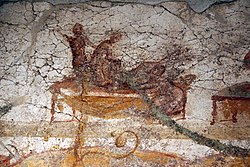
Most threesomes depict two men penetrating a woman. A medallion from Roman Gaul shows two men reclining on a bed, one on the right and one on the left, with their legs extended under a woman between them. Another shows a woman "riding" a man who reclines, while a man standing behind her parts her legs to enter. A far less common variation has one man entering a woman from the rear while he in turn receives anal sex from a man standing behind him, a scenario found in Catullus, Carmen 56 as well as art. Catullus makes it clear that this concatenation was considered humorous,[623] possibly because the man in the center could be a cinaedus, a male who liked to receive anal sex but who was also considered seductive to women.[624]
Foursomes also appear in Roman art, typically with two women and two men, sometimes in same-sex pairings. One example of a foursome from the Suburban Baths at Pompeii demonstrates what Romans saw as the superior role. A woman on the far right kneels beside a bed to perform cunnilingus on a woman lying on it; this woman in turn fellates a man who kneels above her. The man is himself receiving anal sex from a fourth figure, who is represented as the "victor": he acts only to fulfill his own sexual gratification without providing it to others, and looks directly at the viewer with a triumphant wave of the hand.[625]
A Latin epigram by the Gallo-Roman poet Ausonius (4th century AD) is a riddle that depends on familiarity with the configurations of group sex:
"Three men in bed together: two are committing debauchery (stuprum), two are being debauched.""Doesn't that make four men?""You're mistaken: the man on either end each counts as a single offense, but the one in the middle both acts and is acted on."[626]
Masturbation
Masturbation is little noted in the sources for Roman sexuality.[627] The Romans evidently preferred the left hand for masturbation.[628]Martial has a few mentions in his poems, but considers it an inferior form of sexual release resorted to by slaves, though he admits to masturbating when a beautiful slave-boy is too expensive to obtain: "my hand relieved me as a substitute for Ganymede".[629][630][631] It was a longstanding if infrequent theme in Latin satire; one of the few surviving fragments of Lucilius, Rome's earliest satirist, jokes about a personified penis (Mutto) whose girlfriend Laeva ("Lefty") wipes away his "tears".[632] A graffito from Pompeii reads "when my worries oppress my body, with my left hand I release my pent-up fluids".[633]
The etymology of the Latin verb masturbari is unclear. It has been argued that it is a compound of turbare 'agitate' and mas 'male', in an otherwise unattested usage for 'penis'.[634] One traditional view sees man(u)- 'hand' with an altered form of stuprare 'to defile, commit a sexual wrong against'.[635]Calvert Watkins proposed that it derives from a Proto-Indo-European root meaning 'marrow, brain', since ancient medical writers believed that semen descended from the brain through the bones;[636] if this is correct, the word turbare may still have influenced the formation in Latin.[637]
Bestiality

The mythological tradition is full of sexual encounters between humans and other animals, especially mortal women and gods in the guise of animals. Bestiality is a particular characteristic of intercourse with Jupiter (Greek Zeus), who visits Leda as a swan and Europa as a bull. The Minotaur is born when Pasiphaë feels such sexual attraction for a bull that she has herself disguised as a cow to mate with him. Satyrs, known for their sexual voracity, are often pictured with bestial features.[638]
Mock bestiality is recorded as a form of sexual roleplay in Imperial Rome. The actor Bathyllus was known for an erotic dance in which he dressed as Leda having sex with the swan; the women watching were variously aroused.[639] Bestiality is also a theme of Apuleius' novel Metamorphoses (or The Golden Ass), in which the protagonist, transformed into a donkey, is desired by a wealthy noble matron, just as Pasiphaë desired the bull.[640]
Nero is supposed to have enjoyed a form of bondage with either male or female partners in which he dressed in animal skins to attack their genitals, just as condemned prisoners were bound and attacked by wild animals in the arena.[641] The historian Dio tells of how a prostitute pretended to be a leopard for the gratification of a senator.[642]

There is some indication that violent sexual encounters, like other mythological scenarios, were acted out as punitive entertainment in the arena. The poet Martial praises a scenario for its fidelity to the Pasiphaë myth.[643][644][645] The logistics of staging a sex act between a woman and a bull is a matter of speculation; if "Pasiphaë" were a condemned criminal to be tortured and killed, the animal may have been induced by the application of "vaginal secretion from a cow in season".[646] In Apuleius' novel, a female poisonercondemned ad bestias is scheduled to appear in the arena for intercourse with the protagonist in his bestial form.[647]
Hermaphroditism and androgyny

In the mythological tradition, Hermaphroditus was a beautiful youth who was the son of Hermes (Roman Mercury) and Aphrodite (Venus).[648] Like many other divinities and heroes, he had been nursed by nymphs,[649] but the evidence that he himself received cult devotion among the Greeks is sparse.[650] Ovid wrote the most influential narrative[651][652] of how Hermaphroditus became androgynous, emphasizing that although the handsome youth was on the cusp of sexual adulthood, he rejected love as Narcissus had and likewise at the site of a reflective pool. There the water nymph Salmacis saw and desired him. He spurned her, and she pretended to withdraw until, thinking himself alone, he undressed to bathe in her waters. She then flung herself upon him, and prayed that they might never be parted. The gods granted this request, and thereafter the body of Hermaphroditus contained both male and female.[653] As a result, men who drank from the waters of the spring Salmacis supposedly "grew soft with the vice of impudicitia", according to the lexicographerFestus.[654][655] The myth of Hylas, the young companion of Hercules who was abducted by water nymphs, shares with Hermaphroditus and Narcissus the theme of the dangers that face the beautiful adolescent male as he transitions to adult masculinity, with varying outcomes for each.[656]
In contemporary English, "hermaphrodite" has acquired pejorative connotations in referring to people born with physical characteristics of both sexes (see intersex); in antiquity, however, the figure of the so-called hermaphrodite was a primary focus of questions pertaining to gender identity.[652][650] The hermaphrodite represented a "violation of social boundaries, especially those as fundamental to daily life as male and female".[657]

Depictions of Hermaphroditus were very popular among the Romans. The dramatic situation in paintings often elicits a "double take" on the part of the viewer, or expresses the theme of sexual frustration.[658] Hermaphroditus is often in the company of a satyr, a figure of bestial sexuality known for subjecting an unsuspecting or often sleeping victim to non-consensual sex; the satyr in scenes with Hermaphroditus is usually shown to be surprised or repulsed, to humorous effect. In a few works, Hermaphroditus is strong enough to ward off his would-be attacker, but in others he shows his willingness to engage in sex, even if the satyr seems no longer inclined:[659]
Artistic representations of Hermaphroditus bring to the fore the ambiguities in sexual differences between women and men as well as the ambiguities in all sexual acts. ... Hermaphroditus gives an eternally ambiguous answer to a man's curiosity about a woman's sexual experience—and vice versa. ... (A)rtists always treat Hermaphroditus in terms of the viewer finding out his/her actual sexual identity. ... Hermaphroditus stands for both the physical and, more important, the psychological impossibility of ever understanding the feelings of the beloved. Hermaphroditus is a highly sophisticated representation, invading the boundaries between the sexes that seem so clear in classical thought and representation.[660]

Macrobius describes a masculine form of "Venus" (Aphrodite) who received cult on Cyprus; she had a beard and male genitals, but wore women's clothing. The deity's worshippers cross-dressed, men wearing women's clothes, and women men's.[661] The Latin poet Laevius wrote of worshipping "nurturing Venus" whether female or male (sive femina sive mas).[662] The figure was sometimes called Aphroditos. In several surviving examples of Greek and Roman sculpture, she is found in the attitudeanasyrmene, from the Greek verb anasyromai, "to pull up one's clothes".[663] The love goddess lifts her garments to reveal her masculine attribute, male genitalia, a gesture that traditionally held apotropaic or magical power.[664]
In his chapter on anthropology and human physiology in the encyclopedic Natural History, Pliny notes that "there are even those who are born of both sexes, whom we call hermaphrodites, at one time androgyni" (andr-, "man", and gyn-, "woman", from the Greek).[665][666] The Sicilian historian Diodorus (1st century BC) wrote that "there are some who declare that the coming into being of creatures of a kind such as these are marvels (terata), and being born rarely, they announce the future, sometimes for evil and sometimes for good".[667]Isidore of Seville (c. 560–636) described a hermaphrodite fancifully as those who "have the right breast of a man and the left of a woman, and after coitus in turn can both sire and bear children".[668]
In traditional Roman religion, a hermaphroditic birth was a kind of prodigium, an occurrence that signalled a disturbance of the pax deorum, Rome's treaty with the gods, as Diodorus indicated.[669]Livy records an incident during the Second Punic War when the discovery of a four-year-old hermaphrodite prompted an elaborate series of expiations: on the advice of the haruspices, the child was enclosed in a chest, carried out to sea, and allowed to drown.[670] Other rituals followed. A hermaphrodite found in 133 BC was drowned in the local river; executing the hermaphroditic person by drowning seems to have been the prescribed way to repair the perceived violation of the natural order.[671]
Pliny observed that while hermaphrodites were once considered portents(prodigia), in his day they had become objects of delight (deliciae); they were among the human curiosities of the sort that the wealthy might acquire at the "monsters' market" at Rome described by Plutarch.[672] Under Roman law, a hermaphrodite had to be classed as either male or female; no third gender existed as a legal category.[673]
Sexual conquest and imperialism

In 55 BC, Pompeius Magnus ("Pompey the Great") opened his theater complex dedicated to Venus Victrix, "Venus the Conqueror".[674] The Theater of Pompey was in many ways the permanent monument of his military triumph six years earlier. Among the displays were portrait galleries of female writers and of courtesans; a series of images illustrated freakish births that had served as war omens. In general, intellectuality and culture are represented as feminine and Hellenized, while war and politics are Roman and masculine.[675] Statues personified fourteen conquered nationes ("nations, peoples") as women in ethnic or "barbarian" dress.[676][677]
Other monuments throughout the Empire, including the Sebasteion at Aphrodisias and the altar of the Sanctuary of the Three Gauls at Lugdunum (modern Lyon, France), as well as various coins, embody conquered territories and peoples as women: Roman military power defeats a "feminized" nation.[678][679][680] Although the figures from Pompey's theater have not survived, relief panels from Aphrodisias include scenes such as a heroically nudeClaudius forcing the submission of Britannia, whose right breast is bare, and Nero dragging away a dead Armenia, a composition that recalls the defeat of the AmazonPenthesilea by Achilles.[681] A particularly well-documented series of coins depicts Iudaea Capta, a female personification of the Jewish nation as captive, issued after the destruction of the Temple of Jerusalem in 70 AD.[682]
Sexual conquest is a metaphor widely used by the Romans for imperialism,[681] but not always straightforwardly for Roman domination. Horace famously described the Romans as taken captive by captive Greece: the image of Roman culture colonized from within by a civilization they had defeated but perceived as intellectually and aesthetically superior might be expressed by myths in which a man raped, abducted, or enslaved a woman but fell in love with her, as embodied for instance by Achilles and Briseis.[683]
See also
Notes
- ^The tabella was a small, portable painting, as distinguished from an architecturally permanent wall painting.
- ^For example, Agatha of Sicily and Febronia of Nisibis; Sebastian P. Brock and Susan Ashbrook Harvey, introduction to Holy Women of the Syrian Orient (University of California Press, 1987), pp. 24–25; Harvey, "Women in Early Byzantine Hagiography: Reversing the Story," in That Gentle Strength: Historical Perspectives on Women in Christianity (University Press of Virginia, 1990), pp. 48–50. The accounts of breast mutilation occur in Christian sources and iconography, not in Roman art and literature.
- ^See Flamen Dialis and rex sacrorum.
- ^Crassus's nomen was Licinius; the Vestal's name was Licinia (see Roman naming conventions). His reputation for greed and sharp business dealings helped save him; he objected that he had spent time with Licinia to obtain some real estate she owned. For sources, see Michael C. Alexander, Trials in the Late Roman Republic, 149 BC to 50 BC (University of Toronto Press, 1990), p. 84. The most likely year was 73 BC; Plutarch, Life of Crassus1.2Archived 2020-04-10 at the Wayback Machine, implies that the prosecution was motivated by political utility. One or more Vestals were also brought before the College of Pontiffs for incestum in connection with the Catiline Conspiracy (Alexander, Trials, p. 83).
- ^For instance, in the mid-3rd century BC, Naevius uses the word stuprum in his Bellum Punicum for the military disgrace of desertion or cowardice; Fantham, p. 117.
- ^"Kronos is the same as Khronos: for as much as the mythographers offer different versions of Saturn [= Kronos] in their tales, the physical scientists restore him to a certain likeness to the truth. They say that he cut off the genitals of his father, Heaven, and that when these were cast into the sea Venus was engendered, taking the name Aphrodite from the foam [Greek aphros] from which she formed. They interpret this to mean that when chaos existed, time did not, since time is a fixed measurement computed from the rotation of the heavens. Hence Kronos, who as I said is Khronos, is thought to have been born from heaven itself. Because the seeds for engendering all things (semina rerum omnium) after heaven flowed down from heaven, and because all the elements that fill the world took their start from those seeds, when the world was complete in all its parts and members, the process of bringing forth seeds from heaven for the creation of the elements came to an end at a fixed moment in time, since a full complement of elements had by then been created. The capacity for engendering living things in an unbroken sequence of reproduction was transferred from water to Venus, so that all things would thenceforth come into being through the intercourse of male and female": Macrobius, Saturnalia 1.8.6–8, Loeb Classical Library translation by Robert A. Kaster.
- ^See further discussion of how sexual activity defines the free, respectable citizen from the slave or "un-free" person below under Master-slave relations and Pleasure and infamy.
- ^Until the late Republic, a bath house probably offered women a separate wing or facility, or had a schedule that allowed women and men to bathe at different times. From the late Republic until the rise of Christian dominance in the later Empire, there is clear evidence of mixed bathing. Some scholars have thought that only lower-class women bathed with men, or those such as entertainers or prostitutes who were infames, but Clement of Alexandria observed that women of the highest social classes could be seen naked at the baths. Hadrian prohibited mixed bathing, but the ban seems not to have endured. In short, customs varied not only by time and place but by the facility; see Garrett G. Fagan, Bathing in Public in the Roman World (University of Michigan Press, 1999, 2002), pp. 26–27.
- ^In Roman Gaul, the Celtic god identified with the Roman Mercury is sometimes represented triphallically; see for instance Miranda Green, Symbol and Image in Celtic Religious Art (Routledge, 1989), p. 184. In The Sorrows of the Ancient Romans: The Gladiator and the Monster (Princeton University Press, 1993), p. 168, Carlin A. Barton associates polyphallic tintinnabula with the Medusa's head and other grotesques.
- ^Breasts are never ubera in Ovid's Amores, but are ubera throughout the Metamorphoses: at 3.31 (metaphorically); 4.324; 10.392; 9.358 (materna ... ubera, "motherly breasts"); 7.321 and 6.342 (lactantia ubera, "milk-producing breasts"); 15.117 and 472. Uber (singular) or ubera is used for animals by Ovid, Ars Amatoria 1.350 (the udder of a cow) and 2.375 (the teats of lactating dogs); by Horace, Sermones 1.1.110, Odes 2.19.10, 4.4.14 and 4.15.5, and elsewhere; by Tibullus, for sheep in 1.3.45; by Propertius, 2.34b.
- ^Staples, p. 164, citing Norman Bryson, "Two Narratives of Rape in the Visual Arts: Lucretia and the Sabine Women," in Rape (Blackwell, 1986), p. 199. Augustine's interpretation of the rape of Lucretia (in City of God 1.19) has generated a substantial body of criticism, starting with Machiavelli's satire. In Augustine of Hippo: A Biography (Faber, 1967), Peter Brown characterized this section of Augustine's work as his most vituperative attack on Roman ideals of virtue. See also Carol J. Adams and Marie M. Fortune, Violence against Women and Children: A Christian Theological Sourcebook (Continuum, 1995), p. 219ff.; Melissa M. Matthes, The Rape of Lucretia and the Founding of Republics (Pennsylvania State University Press, 2000), p. 68ff. (also on Machiavelli); Virginia Burrus, Saving Shame: Martyrs, Saints, and Other Abject Subjects (University of Pennsylvania Press, 2008), p. 125ff.; Amy Greenstadt, Rape and the Rise of the Author: Gendering Intention in Early Modern England (Ashgate, 2009), p. 71; Melissa E. Sanchez, Erotic Subjects: The Sexuality of Politics in Early Modern English Literature (Oxford University Press, 2011), p. 93ff. Augustine defines sexual integrity (pudicitia) as a purely spiritual quality that physical defilement cannot taint; as indicated throughout this article, the Romans viewed rape and other forms of stuprum within a political context as crimes against the citizen's liberty.
- ^Martial (6.39) observed that the power of the paterfamilias was so absolute that having sex with his own son was technically not a transgression (nefas), as noted by John Boswell, Christianity, Social Tolerance, and Homosexuality: Gay People in Western Europe from the Beginning of the Christian Era to the Fourteenth Century (University of Chicago Press, 1980), p. 67.
- ^The abolition of debt bondage was facilitated by the spread of chattel slavery for agricultural labor; thus during the period of Roman conquest and expansionism on the Italian peninsula, the distinction arises between a Roman citizen with rights and an "Italian" who might be enslaved; see John W. Rich, "Tiberius Gracchus, Land and Manpower," in Crises and the Roman Empire. Proceedings of the Seventh Workshop of the International Network Impact of Empire (Nijmegen, June 20–24, 2006) (Brill, 2007), p. 160.
- ^In the similar story from Valerius Maximus, a young man named Titus Veturius, whose father was a bankrupt Roman magistrate, had placed himself in slavery with Publius Plotius, who had attempted to seduce him (stuprare). When Veturius refused, Plotius whipped him. Veturius then complained to the consuls, who took the complaint to the senate. Plotius was jailed. See Cantarella, pp. 104–105
- ^Capricorn, Aquarius, Taurus or Cancer.
Cited sources
- Adams, J.N. (1982). The Latin Sexual Vocabulary. Johns Hopkins University Press. ISBN 978-0-8018-4106-4.
- Brown, Robert D. (1987). Lucretius on Love and Sex. Brill.
- Cantarella, Eva (1992). Bisexuality in the Ancient World. Yale University Press. ISBN 978-0-300-04844-5.
- Clarke, John R. (April 2001). Looking at Lovemaking: Constructions of Sexuality in Roman Art 100 B.C.–A.D. 250. University of California Press. ISBN 9780520229044. Retrieved 13 April 2022.
{{cite book}}: CS1 maint: deprecated archival service (link) - Colish, Marcia l. (1985). The Stoic Tradition from Antiquity to the Early Middle Ages. BRILL. ISBN 90-04-07267-5.
- Dugan, John (2001). "Preventing Ciceronianism: C. Licinius Calvus' Regimens for Sexual and Oratorical Self-Mastery". Classical Philology. 96 (4): 400–428. doi:10.1086/449558. JSTOR 1215514.
- Edwards, Catharine (1993). The Politics of Immorality in Ancient Rome. Cambridge University Press.
- Fantham, Elaine (2011). "Stuprum: Public Attitudes and Penalties for Sexual Offences in Republican Rome". Roman Readings: Roman Response to Greek Literature from Plautus to Statius and Quintilian. Walter de Gruyter.
- Fredrick, David, ed. (3 October 2002). The Roman Gaze: Vision, Power, and the Body. JHU Press. ISBN 978-0-8018-6961-7.
- Gaca, Kathy L. (2003). The Making of Fornication: Eros, Ethics and Political Reform in Greek Philosophy and Early Christianity. University of California Press.
- Gardner, Jane F. (1991). Women in Roman Law and Society. Indiana University Press.
- Habinek, Thomas; Schiesaro, Alessandro (1997). The Roman Cultural Revolution. Cambridge University Press. ISBN 978-0-521-58092-2.
- Hallett, Judith P.; Skinner, Marilyn, eds. (1997). Roman Sexualities. Princeton University Press.
- Kuttner, Ann L. (1999). "Culture and History at Pompey's Museum". Transactions of the American Philological Association. 129: 343–373. doi:10.2307/284436. JSTOR 284436.
- Langlands, Rebecca (2006). Sexual Morality in Ancient Rome. Cambridge University Press.
- McGinn, Thomas A.J. (1998). Prostitution, Sexuality and the Law in Ancient Rome. Oxford University Press.
- McGinn, Thomas A. (2004). The Economy of Prostitution in the Roman World. University of Michigan Press.
- The Economy of Prostitution in the Roman World. University of Michigan Press. 2004.
- Nussbaum, Martha C. (2002). "The Incomplete Feminism of Musonius Rufus, Platonist, Stoic, and Roman". The Sleep of Reason: Erotic Experience and Sexual Ethics in Ancient Greece and Rome. University of Chicago Press.
- Parker, H. (2007). Free Women and Male Slaves, or Mandingo meets the Roman Empire. Presses universitaires de Franche-Comté. ISBN 2848671696.
- Penner, Todd C. Penner; Stichele, Caroline Van der, eds. (2007). Mapping Gender in Ancient Religious Discourses. BRILL. ISBN 90-04-15447-7.
- Phang, Sara Elise (2001). The Marriage of Roman Soldiers (13 B.C.–A.D. 235): Law and Family in the Imperial Army. Brill.
- Phang (2008). Roman Military Service: Ideologies of Discipline in the Late Republic and Early Principate. Cambridge University Press.
- Potter, David S., ed. (2009). A Companion to the Roman Empire. John Wiley & Sons. ISBN 978-1-4051-9918-6.
- Richlin, Amy (1983). The Garden of Priapus: Sexuality and Aggression in Roman Humor. Oxford University Press.
- Richlin, Amy (1993). "Not before Homosexuality: The Materiality of the cinaedus and the Roman Law against Love between Men". Journal of the History of Sexuality. 3 (4): 523–573. JSTOR 3704392.
- Schäfer, Peter (1997). Judeophobia: Attitudes Toward the Jews in the Ancient World. Harvard University Press. ISBN 978-0-674-48778-9.
- Peter Schäfer (2003). The History of the Jews in the Greco-Roman World: The Jews of Palestine from Alexander the Great to the Arab Conquest. Routledge. ISBN 1-134-40316-X.
- Smallwood, E. Mary (1976). The Jews Under Roman Rule: From Pompey to Diocletian. Brill Archive. ISBN 90-04-04491-4.
- Staples, Ariadne (1998). From Good Goddess to Vestal Virgins: Sex and Category in Roman Religion. Psychology Press. ISBN 978-0-415-13233-6.
- Taylor, Rabun M. (2008). The Moral Mirror of Roman Art. Cambridge University Press. ISBN 978-0-521-86612-5.
- Williams, Craig A. (1999). Roman Homosexuality: Ideologies of Masculinity in Classical Antiquity. Oxford University Press.
- Younger, John G. (2005). Sex in the Ancient World from A to Z. Routledge.
Further reading
- Ancona, Ronnie, and Greene, Ellen eds. Gender Dynamics in Latin Love Poetry. Johns Hopkins University Press, 2005.
- Hug, Angela (2023). Fertility, ideology, and the cultural politics of reproduction at Rome. Leiden; Boston: Brill. ISBN 9789004540774.
- Skinner, Marilyn. Sexuality in Greek And Roman Culture. Blackwell Publishing. ISBN 978-0-631-23234-6.
External links
 Media related to Sexuality in ancient Rome at Wikimedia Commons


สรุปเนื้อหา
ข้อมูลสำคัญจากบทความ
ข้อมูลสำคัญเกี่ยวกับ เรื่องเพศวิถีในกรุงโรมโบราณ
ทัศนคติและพฤติกรรมทางเพศใน กรุงโรมโบราณ ปรากฏให้เห็นได้จาก งานศิลปะ วรรณกรรม และ จารึก รวม ถึง หลักฐานทางโบราณคดี เช่น วัตถุมงคลและ สถาปัตยกรรม ที่เกี่ยวข้องกับเรื่องเพศ...
วรรณกรรมและศิลปะแนวอีโรติก
วรรณกรรมโบราณที่เกี่ยวข้องกับเรื่องเพศของชาวโรมันส่วนใหญ่แบ่งออกเป็นสี่ประเภท ได้แก่ ตำรากฎหมาย ตำราทางการแพทย์ บทกวี และวาทกรรมทางการเมือง[ 23 ] รูป แบบการแสดงออกที่มีคุณค่า ทางวัฒนธรรมต่ำกว่า ในสมัยโบราณ เช่น ละคร ตลก เสียดสี บท ด่าทอ บทกวีรัก ภาพเขียน...
เพศ ศาสนา และรัฐ
เช่นเดียวกับแง่มุมอื่นๆ ของชีวิตชาวโรมัน เรื่องเพศได้รับการสนับสนุนและควบคุมโดย ประเพณีทางศาสนา ทั้งการบูชาสาธารณะของรัฐและการปฏิบัติทางศาสนาส่วนตัวและเวทมนตร์ เรื่องเพศเป็นหมวดหมู่ที่สำคัญของความคิดทางศาสนาของชาวโรมัน [ 40 ]...
แนวคิดทางศีลธรรมและกฎหมาย
คำภาษาละติน castitas ซึ่งเป็นที่มาของคำว่า " chastity " ในภาษาอังกฤษ เป็น คำนามนามธรรม ที่หมายถึง "ความบริสุทธิ์ทางศีลธรรมและทางกายภาพ โดยปกติในบริบททางศาสนาโดยเฉพาะ" บางครั้งแต่ไม่เสมอไปหมายถึงความบริสุทธิ์ทางเพศ [ 52 ] คำคุณศัพท์ที่เกี่ยวข้อง castus (...