
อ่าน 116 นาที
ประวัติศาสตร์อินเดีย
คาดว่า มนุษย์ยุคใหม่ที่มีกายวิภาคศาสตร์สมบูรณ์ ได้เดินทางมาถึง อนุทวีปอินเดีย เป็นครั้งแรก เมื่อประมาณ 73,000 ถึง 55,000 ปีก่อน [ 1 ] ซากมนุษย์ที่เก่าแก่ที่สุดที่รู้จักใน...
ประวัติศาสตร์อินเดีย

| ประวัติศาสตร์อินเดีย |
|---|
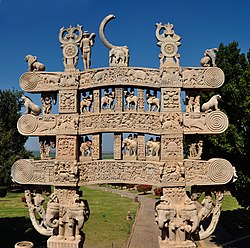 |
| ไทม์ไลน์ |
| ประวัติศาสตร์ของเอเชียใต้ |
|---|
 |

คาดว่ามนุษย์ยุคใหม่ที่มีกายวิภาคศาสตร์สมบูรณ์ ได้เดินทางมาถึง อนุทวีปอินเดีย เป็นครั้งแรก เมื่อประมาณ 73,000 ถึง 55,000 ปีก่อน[ 1 ]ซากมนุษย์ที่เก่าแก่ที่สุดที่รู้จักในเอเชียใต้มีอายุย้อนไปถึง 30,000 ปีก่อน คริสตกาล การตั้งถิ่นฐานถาวรเริ่มขึ้นในเอเชียใต้ราว 7000 ปีก่อนคริสตกาล และภายใน 4500 ปีก่อนคริสตกาล วิถีชีวิตแบบตั้งถิ่นฐานได้แพร่กระจายออกไป[ 2 ]และค่อยๆ พัฒนาไปสู่อารยธรรมลุ่มแม่น้ำสินธุซึ่งเป็นหนึ่งในสามแหล่งกำเนิดอารยธรรม ยุคแรก ใน โลก ยุคโบราณ[ 3 ] ซึ่งเจริญรุ่งเรืองระหว่าง 2500 ปีก่อนคริสตกาลถึง 1900 ปีก่อนคริสตกาลใน ปากีสถานและอินเดียตะวันตกเฉียงเหนือในปัจจุบัน ในช่วงต้นสหัสวรรษที่สองก่อนคริสตกาล ภัยแล้งที่เกิดขึ้นอย่างต่อเนื่องทำให้ประชากรในลุ่มแม่น้ำสินธุต้องกระจัดกระจายจากศูนย์กลางเมืองใหญ่ไปยังหมู่บ้านต่างๆ ประมาณ 1800 - 1500 ปีก่อนคริสตกาลชนเผ่าอินโด-อารยันได้อพยพเข้ามาในภูมิภาคตะวันตกเฉียงเหนือของอินเดีย ซึ่งปัจจุบันคือแคว้นปัญจาบจากเอเชียกลางในหลายระลอกของการอพยพยุคพระเวทของชาวพระเวทในอินเดียตอนเหนือ (1500–500 ปีก่อนคริสตกาล) โดดเด่นด้วยการประพันธ์บทสวด ( พระเวท ) จำนวนมาก โครงสร้างทางสังคมมีการแบ่งชั้นอย่างหลวมๆ ผ่านระบบวรรณะ ซึ่งรวมเข้ากับระบบชาติ (Jāti ) ที่พัฒนาแล้วในปัจจุบันชาวอินโด-อารยันที่เลี้ยงสัตว์และเร่ร่อนได้แพร่กระจายจากปัญจาบไปยังที่ราบอินโด-คงคาประมาณ 600 ปีก่อนคริสตกาล เกิดการขยายตัวของเมืองครั้งที่สอง ส่งผลให้เกิดวัฒนธรรมระหว่างภูมิภาคใหม่ จากนั้นชนปท (อาณาจักร) ขนาดเล็กก็รวมตัวกันเป็นมหาชนปท (รัฐใหญ่) ช่วงเวลานี้ได้เห็นการเกิดขึ้นของขบวนการ นักพรตและแนวคิดทางศาสนาใหม่ๆ[ 4 ]รวมถึงการเกิดขึ้นของศาสนาเชนและพุทธศาสนา วัฒนธรรมทาง ศาสนาดังกล่าวได้ผสมผสานกับวัฒนธรรมทางศาสนาที่มีอยู่เดิมในเอเชียใต้ ก่อให้เกิดศาสนาฮินดูขึ้น
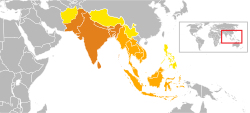

พระเจ้าจันทรคุปตะเมารยะทรงโค่นล้มจักรวรรดินันทะและสถาปนาจักรวรรดิที่ยิ่งใหญ่แห่งแรกในอินเดียโบราณ คือจักรวรรดิ เมารยะ พระเจ้า อโศกมหาราช แห่งราชวงศ์ เมารยะของอินเดีย เป็นที่รู้จักกันอย่างกว้างขวางจาก สงครามกาลิงคะอันรุนแรงและการยอมรับพระพุทธศาสนา ในประวัติศาสตร์ รวมถึงความพยายามที่จะเผยแพร่ความไม่รุนแรงและสันติภาพไปทั่วจักรวรรดิของพระองค์ ช่วงเวลานี้เป็นช่วงเวลาที่ศาสนาศรามณะแพร่กระจายอย่างรวดเร็ว
จักรวรรดิเมารยะล่มสลายในปี 185 ก่อนคริสต์ศักราช จากการลอบสังหารจักรพรรดิบริหัทราถโดยแม่ทัพปุษยามิตร ชุงคะจักรวรรดิชุงคะทางเหนือและตะวันออกเฉียงเหนือของอนุทวีปแตกออกเป็นรัฐเล็กๆ หลายแห่ง ในขณะที่ทางตะวันตกเฉียงเหนือ ชาวกรีก-แบคเทรียได้ก่อตั้งอาณาจักรอินโด-กรีกซึ่งต่อมาถูกรุกรานโดยชาวอินโด-สคิเธียชาวอินโด-พาร์เธียและจักรวรรดิ กุชาน จักรวรรดิกุ ปตะจากมหาแคว้นมคธในช่วงศตวรรษที่ 4 ถึง 6 หลังคริสต์ศักราช ได้รวมดินแดนเหล่านี้เข้าด้วยกันอีกครั้ง ดังที่กล่าวไว้ในเสาเหล็กแห่งเดลีช่วงเวลานี้เป็นช่วงเวลาที่เกิด การฟื้นฟูทางศาสนาและปัญญาของศาสนา ฮินดูและเป็นที่รู้จักกันในชื่อ ยุค คลาสสิกหรือยุคทองของอินเดียแง่มุมต่างๆ ของอารยธรรม การปกครอง วัฒนธรรม และศาสนาของอินเดียได้แพร่กระจายไปยังเอเชียส่วนใหญ่ ซึ่งนำไปสู่การก่อตั้งอาณาจักรที่ได้รับอิทธิพลจากอินเดียในภูมิภาคนี้ ก่อให้เกิดมหาอินเดียขึ้น[ 5 ] [ 4 ]
จักรวรรดิกุปตะค่อยๆ เสื่อมถอยลงเนื่องจากการรุกรานหลายครั้งจากชาวหุนและการสูญเสียดินแดนหลัก การรุกรานของชาวหุนถูกยับยั้งโดยผู้ปกครองระดับภูมิภาค รวมถึงยโศธรมันที่ได้รับการสนับสนุนจากราชวงศ์กุปตะตอนปลายและอีกครั้งโดยหรรษาการรุกรานครั้งใหญ่ของชาวหุนและการผสมผสานทางวัฒนธรรมนำไปสู่ราชวงศ์ประติหาระที่มีการผสมผสานทาง วัฒนธรรม เหตุการณ์ที่สำคัญที่สุดระหว่างศตวรรษที่ 7 ถึง 11 คือการต่อสู้สามฝ่ายที่เมืองกันนาอุจ ซึ่งส่งผลให้ ราชวงศ์ประติหาระได้รับชัยชนะ
อินเดียตอนใต้ได้เห็นการเกิดขึ้นของมหาอำนาจจักรวรรดิหลายแห่งตั้งแต่กลางศตวรรษที่ 5 ราชวงศ์โชลาพิชิตอินเดียตอนใต้ในศตวรรษที่ 11 ในช่วงต้นยุคกลางคณิตศาสตร์ของอินเดียรวมถึงตัวเลขฮินดูมีอิทธิพลต่อการพัฒนาคณิตศาสตร์และดาราศาสตร์ในโลกอาหรับรวมถึงการสร้างระบบตัวเลขฮินดู-อาหรับ[ 6 ]
การพิชิตของอิสลามได้รุกคืบเข้าไปในอัฟกานิสถานและสินธ์ ในปัจจุบันอย่างจำกัด ตั้งแต่ศตวรรษที่ 8 [ 7 ]ตามมาด้วยการรุกรานของมาห์มุด กาซนี [ 8 ] รัฐ สุลต่านเดลีซึ่งก่อตั้งขึ้นในปี 1206 โดยชาวเติร์กจากเอเชียกลาง ปกครองอินเดียตอนเหนือส่วนใหญ่ในศตวรรษที่ 14 ปกครองโดยราชวงศ์เติร์กและอัฟกันต่างๆ รวมถึงราชวงศ์ตุกลักอินโด-เติร์ก [ 9 ] [ 10 ] จักรวรรดิเสื่อมถอยลงในช่วงปลายศตวรรษที่ 14 หลังจากการรุกรานของติมูร์[ 11 ]และได้เห็นการเกิดขึ้นของ รัฐสุลต่าน มัลวากุจาราตและบาห์มานีซึ่งรัฐสุดท้ายแตกออกเป็นห้ารัฐสุลต่านเดคคาน ในปี 1518 รัฐสุลต่านเบงกอลที่ร่ำรวยก็ผงาดขึ้นมาเป็นมหาอำนาจเช่นกัน โดยดำรงอยู่นานกว่าสามศตวรรษ[ 12 ]ในช่วงเวลานี้ อาณาจักรฮินดูที่แข็งแกร่งหลายแห่ง โดยเฉพาะจักรวรรดิวิชัยนครและรัฐราชปุตภายใต้อาณาจักรเมวาร์ได้เกิดขึ้นและมีบทบาทสำคัญในการกำหนดภูมิทัศน์ทางวัฒนธรรมและการเมืองของอินเดีย[ 13 ] [ 14 ]
ยุคสมัยใหม่ตอนต้นเริ่มต้นในศตวรรษที่ 16 เมื่อจักรวรรดิมุกลพิชิตดินแดนส่วนใหญ่ของอนุทวีปอินเดีย[ 15 ]ซึ่งเป็นสัญญาณของการเริ่มต้นอุตสาหกรรมกลายเป็นเศรษฐกิจโลกที่ใหญ่ที่สุดและมีอำนาจการผลิต[ 16 ] [ 17 ] [ 18 ]จักรวรรดิมุกลประสบกับความเสื่อมถอยอย่างค่อยเป็นค่อยไปในช่วงต้นศตวรรษที่ 18 ส่วนใหญ่เนื่องมาจากอำนาจที่เพิ่มขึ้นของชาวมาราฐาซึ่งเข้าควบคุมพื้นที่กว้างขวางของอนุทวีปอินเดีย และการรุกรานของชาวอัฟกันหลาย ครั้ง [ 19 ] [ 20 ] [ 21 ]บริษัทอีสต์อินเดียซึ่งทำหน้าที่เป็นอำนาจอธิปไตยในนามของรัฐบาลอังกฤษค่อยๆ เข้าควบคุมพื้นที่ขนาดใหญ่ของอินเดียระหว่างกลางศตวรรษที่ 18 ถึงกลางศตวรรษที่ 19 นโยบายการปกครองของบริษัทในอินเดียนำไปสู่การกบฏอินเดียในปี 1857หลังจากนั้นอินเดียก็อยู่ภายใต้การปกครองโดยตรงของราชวงศ์อังกฤษในยุคบริติชราชหลังสงครามโลกครั้งที่หนึ่งพรรคคองเกรสแห่งชาติอินเดียนำโดยมหาตมา คานธีได้เริ่มการต่อสู้เพื่อเอกราชทั่วประเทศ ต่อมาสันนิบาตมุสลิมแห่งอินเดีย ได้เรียกร้องให้มีการจัดตั้ง รัฐชาติที่มีประชากรส่วนใหญ่เป็นมุสลิมแยกต่างหากจักรวรรดิบริติชอินเดียถูกแบ่งแยกในเดือนสิงหาคม ค.ศ. 1947 ออกเป็นประเทศอินเดียและประเทศปากีสถานซึ่งแต่ละประเทศได้รับเอกราช
ยุคก่อนประวัติศาสตร์ (ก่อนประมาณ 3300 ปีก่อนคริสตกาล)

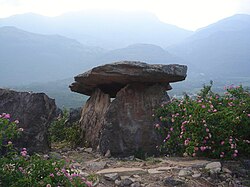

ยุคหินเก่า
คาดว่าการขยายตัวของโฮมินินจา กแอฟริกาไปถึง อนุทวีปอินเดียเมื่อประมาณ 2 ล้านปีก่อน และอาจเร็วที่สุดคือ 2.2 ล้านปีก่อน[ 25 ] [ 26 ] [ 27 ]การกำหนดอายุนี้อิงจากการปรากฏตัวของHomo erectusในอินโดนีเซียเมื่อ 1.8 ล้านปีก่อน และในเอเชียตะวันออกเมื่อ 1.36 ล้านปีก่อน รวมถึงการค้นพบเครื่องมือหินที่Riwatในปากีสถาน[ 26 ] [ 28 ]แม้ว่าจะมีการอ้างว่ามีการค้นพบที่เก่ากว่านั้น แต่การกำหนดอายุโดยอิงจากการกำหนดอายุของตะกอนแม่น้ำยังไม่ได้รับการตรวจสอบอย่างอิสระ[ 27 ] [ 29 ]
ซากฟอสซิลโฮมินินที่เก่าแก่ที่สุดในอนุทวีปอินเดียคือฟอสซิลของHomo erectusหรือHomo heidelbergensisจากหุบเขานาร์มาดาในภาคกลางของอินเดีย และมีอายุประมาณครึ่งล้านปี[ 26 ] [ 29 ]มีการอ้างว่าพบฟอสซิลที่เก่ากว่า แต่ถือว่าไม่น่าเชื่อถือ[ 29 ]การทบทวนหลักฐานทางโบราณคดีชี้ให้เห็นว่าการอาศัยอยู่ในอนุทวีปอินเดียโดยโฮมินินนั้นกระจัดกระจายจนกระทั่งประมาณ 700,000 ปีที่แล้ว และแพร่กระจายไปทั่วทางภูมิศาสตร์เมื่อประมาณ 250,000 ปีที่แล้ว[ 29 ] [ 27 ]
ตามคำกล่าวของทิม ไดสัน นักประชากรศาสตร์เชิงประวัติศาสตร์ของเอเชียใต้:
มนุษย์ยุคใหม่— โฮโมเซเปียนส์ —มีต้นกำเนิดในแอฟริกา จากนั้นในช่วงระหว่าง 60,000 ถึง 80,000 ปีที่แล้ว กลุ่มเล็กๆ ของพวกเขาก็เริ่มเข้ามาทางตะวันตกเฉียงเหนือของอนุทวีปอินเดียเป็นระยะๆ ดูเหมือนว่าในตอนแรกพวกเขาเข้ามาทางชายฝั่ง เป็นที่แน่นอนว่าเคยมีโฮโมเซเปียนส์อยู่ในอนุทวีปเมื่อ 55,000 ปีที่แล้ว แม้ว่าฟอสซิลที่เก่าแก่ที่สุดที่พบจะมีอายุเพียงประมาณ 30,000 ปีก่อนปัจจุบันก็ตาม[ 30 ]
ตามข้อมูลของ Michael D. Petraglia และBridget Allchin :
ข้อมูลโครโมโซม Y และ Mt-DNA สนับสนุนการตั้งถิ่นฐานในเอเชียใต้โดยมนุษย์ยุคใหม่ที่มีต้นกำเนิดจากแอฟริกา ... วันที่เกิดการรวมตัวกันของประชากรที่ไม่ใช่ชาวยุโรปส่วนใหญ่มีค่าเฉลี่ยอยู่ระหว่าง 73–55 พันปี[ 31 ]
ไมเคิล เอช. ฟิชเชอ ร์ นักประวัติศาสตร์เอเชียใต้กล่าวว่า:
นักวิชาการประเมินว่าการขยายตัวที่ประสบความสำเร็จครั้งแรกของเผ่าพันธุ์โฮโมเซเปียนส์ออกไปนอกทวีปแอฟริกาและข้ามคาบสมุทรอาหรับเกิดขึ้นตั้งแต่ช่วง 80,000 ปีก่อนจนถึง 40,000 ปีก่อน แม้ว่าอาจมีการอพยพที่ไม่ประสบความสำเร็จมาก่อนหน้านี้ก็ตาม ลูกหลานของพวกเขาได้ขยายอาณาเขตของมนุษย์ออกไปไกลยิ่งขึ้นในแต่ละรุ่น โดยแพร่กระจายไปยังดินแดนที่อยู่อาศัยได้ทุกแห่งที่พวกเขาพบเจอ เส้นทางการอพยพของมนุษย์เส้นหนึ่งอยู่ตามแนวชายฝั่งที่อบอุ่นและอุดมสมบูรณ์ของอ่าวเปอร์เซียและมหาสมุทรอินเดียตอนเหนือ ในที่สุด กลุ่มต่างๆ ก็เข้ามาในอินเดียระหว่างช่วง 75,000 ปีก่อนถึง 35,000 ปีก่อน[ 32 ]
หลักฐานทางโบราณคดีได้รับการตีความว่าบ่งชี้ถึงการปรากฏตัวของมนุษย์ยุคใหม่ทางกายวิภาคในอนุทวีปอินเดียเมื่อ 78,000–74,000 ปีก่อน[ 33 ]แม้ว่าการตีความนี้จะเป็นที่ถกเถียงกันก็ตาม[ 34 ] [ 35 ]การเข้ามาอาศัยในเอเชียใต้ของมนุษย์ยุคใหม่ ซึ่งในตอนแรกอยู่ในรูปแบบการแยกตัวที่แตกต่างกันในฐานะนักล่าและผู้เก็บเกี่ยว ได้เปลี่ยนเอเชียใต้ให้กลายเป็นภูมิภาคที่มีความหลากหลายสูง รองจากแอฟริกาเท่านั้นในด้านความหลากหลายทางพันธุกรรมของมนุษย์[ 36 ]
ตามคำกล่าวของทิม ไดสัน:
การวิจัยทางพันธุกรรมมีส่วนช่วยให้เกิดความรู้เกี่ยวกับยุคก่อนประวัติศาสตร์ของผู้คนในอนุทวีปในด้านอื่นๆ โดยเฉพาะอย่างยิ่ง ระดับความหลากหลายทางพันธุกรรมในภูมิภาคนี้สูงมาก อันที่จริง มีเพียงประชากรของแอฟริกาเท่านั้นที่มีความหลากหลายทางพันธุกรรมมากกว่า นอกจากนี้ ยังมีหลักฐานที่ชัดเจนเกี่ยวกับเหตุการณ์ 'ผู้ก่อตั้ง' ในอนุทวีป ซึ่งหมายถึงสถานการณ์ที่กลุ่มย่อย เช่น เผ่า สืบเชื้อสายมาจากบุคคล 'ดั้งเดิม' จำนวนน้อยมาก ยิ่งไปกว่านั้น เมื่อเทียบกับภูมิภาคส่วนใหญ่ของโลก ผู้คนในอนุทวีปมีความโดดเด่นค่อนข้างมากในการปฏิบัติการแต่งงานภายในกลุ่มในระดับที่ค่อนข้างสูง[ 36 ]
ยุคหินใหม่

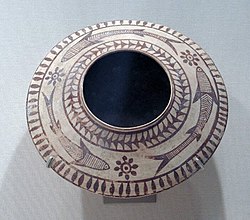
การตั้งถิ่นฐานอย่างถาวรเกิดขึ้นบนอนุทวีปในบริเวณขอบตะวันตกของที่ราบ ลุ่ม แม่น้ำสินธุเมื่อประมาณ 9,000 ปีก่อน และค่อยๆ พัฒนาไปสู่อารยธรรมลุ่มแม่น้ำสินธุในช่วงสหัสวรรษที่สามก่อนคริสต์ศักราช[ 2 ] [ 38 ]ตามที่ Tim Dyson กล่าวไว้ว่า: "เมื่อ 7,000 ปีก่อน การเกษตรได้ก่อตั้งขึ้นอย่างมั่นคงใน Baluchistan... [และ] ค่อยๆ แพร่กระจายไปทางตะวันออกสู่ลุ่มแม่น้ำสินธุ" Michael Fisher กล่าวเสริมว่า: [ 39 ]
ตัวอย่างที่เก่าแก่ที่สุดที่ค้นพบ...ของสังคมเกษตรกรรมที่ตั้งมั่นและมั่นคงคือที่เมห์การ์ห์ในเนินเขาระหว่างช่องเขาโบแลนและที่ราบอินดัส (ปัจจุบันอยู่ในปากีสถาน) (ดูแผนที่ 3.1) ตั้งแต่ช่วง 7000 ปีก่อนคริสตกาล ชุมชนที่นั่นเริ่มลงทุนแรงงานมากขึ้นในการเตรียมที่ดินและคัดเลือก ปลูก ดูแล และเก็บเกี่ยวพืชที่ให้ผลผลิตธัญพืชบางชนิด พวกเขายังเลี้ยงสัตว์ เช่น แกะ แพะ หมู และวัว (ทั้งวัวซีบูหลังโหนก [ Bos indicus ] และวัวซีบูหลังไม่มีโหนก [ Bos taurus ]) ตัวอย่างเช่น การตอนวัวทำให้พวกมันเปลี่ยนจากแหล่งเนื้อเป็นหลักไปเป็นสัตว์ใช้งานที่เลี้ยงไว้ได้เช่นกัน[ 39 ]
ยุคสำริด (ประมาณ 3300 – 1800 ปีก่อนคริสตกาล)
อารยธรรมลุ่มแม่น้ำสินธุ
ยุค สำริดในอนุทวีปอินเดียเริ่มต้นขึ้นราว 3300 ปีก่อนคริสตกาล ภูมิภาคลุ่มแม่น้ำสินธุเป็นหนึ่งในสามแหล่งกำเนิดอารยธรรม ยุคแรก ในโลกเก่าอารยธรรมลุ่มแม่น้ำสินธุเป็นอารยธรรมที่กว้างขวางที่สุด[ 3 ]และในช่วงรุ่งเรืองที่สุดอาจมีประชากรมากถึงห้าล้านคน[ 40 ]
อารยธรรมอินดัสมีศูนย์กลางหลักอยู่ในประเทศปากีสถานในปัจจุบัน บริเวณลุ่มแม่น้ำสินธุ และรองลงมาคือบริเวณ ลุ่ม แม่น้ำฆาการ์-ฮักราอารยธรรมอินดัสเจริญรุ่งเรืองที่สุดในช่วงประมาณ 2600 ถึง 1900 ปีก่อนคริสตกาล ซึ่งถือเป็นจุดเริ่มต้นของอารยธรรมเมืองในอนุทวีปอินเดีย เมืองสำคัญในอารยธรรมนี้ได้แก่ฮารัปปากันเวริวาลและโมเฮนโจดาโรในประเทศปากีสถานปัจจุบัน และโดลาวีรากาลิ บัง กัน ราคิ การ์ฮีและโลธัลในประเทศอินเดียปัจจุบัน

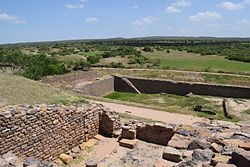

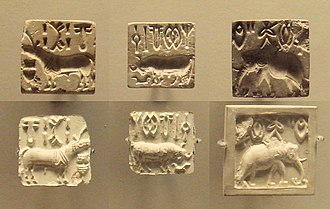
ชาวฮารัปปันซึ่งอาศัยอยู่ในหุบเขาแม่น้ำสินธุโบราณ ได้พัฒนาเทคนิคใหม่ๆ ในด้านโลหะวิทยาและหัตถกรรม และผลิตทองแดง สัมฤทธิ์ ตะกั่ว และดีบุก[ 42 ]อารยธรรมนี้มีชื่อเสียงในด้านเมืองที่สร้างด้วยอิฐ และระบบระบายน้ำริมถนน และเชื่อกันว่ามีระบบเทศบาลบางประเภท อารยธรรมนี้ยังได้พัฒนาอักษรสินธุ ซึ่ง เป็นอักษรโบราณของอินเดียที่เก่าแก่ที่สุดซึ่งปัจจุบันยังถอดรหัสไม่ได้[ 43 ]นี่คือเหตุผลที่ภาษาฮารัปปันไม่มีหลักฐานโดยตรง และความเกี่ยวข้องของมันจึงไม่แน่นอน[ 44 ]
หลังจากอารยธรรมลุ่มแม่น้ำสินธุล่มสลาย ผู้คนได้อพยพจากหุบเขาแม่น้ำสินธุและแม่น้ำ Ghaggar-Hakra ไปยังเชิงเขาหิมาลัยของลุ่มแม่น้ำคงคา-ยมุนา[ 45 ]
วัฒนธรรมเครื่องปั้นดินเผาสีเหลืองอมน้ำตาล

ในช่วงสหัสวรรษที่ 2 ก่อนคริสต์ศักราชวัฒนธรรมเครื่องปั้นดินเผาสีเหลืองอมส้มอยู่ในบริเวณที่ราบลุ่มแม่น้ำคงคาและแม่น้ำยมุนา ซึ่งเป็นชุมชนชนบทที่มีการทำเกษตรกรรมและการล่าสัตว์ พวกเขาใช้เครื่องมือทองแดง เช่น ขวาน หอก ลูกศร และดาบ และเลี้ยงสัตว์[ 47 ]
ยุคเหล็ก (ประมาณ ค.ศ. 1800 – 200 ก่อนคริสตกาล)
ยุคพระเวท (ประมาณ 1500 – 600 ปีก่อนคริสตกาล)
เริ่มตั้งแต่ราว 1900 ปีก่อนคริสตกาล ชนเผ่าอินโด-อารยันได้อพยพเข้ามาทางตะวันตกเฉียงเหนือของอินเดียจากเอเชียกลางเป็นระลอกๆ[ 48 ] [ 49 ] [ 50 ]ยุคพระเวทเป็นช่วงเวลาที่พระเวทประกอบด้วยบทสวดทางศาสนาจากชาวอินโด-อารยัน วัฒนธรรมพระเวทตั้งอยู่ในส่วนหนึ่งของอินเดียตะวันตกเฉียงเหนือ ในขณะที่ส่วนอื่นๆ ของอินเดียมีเอกลักษณ์ทางวัฒนธรรมที่แตกต่างกัน หลายภูมิภาคของอนุทวีปอินเดียเปลี่ยนผ่านจากยุคทองแดงไปสู่ยุคเหล็กในยุคนี้[ 51 ]
วัฒนธรรมเวทได้รับการอธิบายไว้ในคัมภีร์เวทซึ่งยังคงศักดิ์สิทธิ์สำหรับชาวฮินดู โดยคัมภีร์เวทได้รับการแต่งและถ่ายทอดด้วยวาจาในภาษาสันสกฤตเวทคัมภีร์เวทเป็นหนึ่งในคัมภีร์ที่เก่าแก่ที่สุดที่ยังคงหลงเหลืออยู่ในอินเดีย[ 52 ]ยุคเวทซึ่งกินเวลาราว 1500 ถึง 500 ปีก่อนคริสตกาล[ 53 ] [ 54 ]มีส่วนช่วยในการวางรากฐานของแง่มุมทางวัฒนธรรมหลายประการของอนุทวีปอินเดีย
สังคมเวท

นักประวัติศาสตร์ได้วิเคราะห์พระเวทเพื่อตั้งสมมติฐานว่ามีวัฒนธรรมเวทอยู่ในปัญจาบและที่ราบลุ่มแม่น้ำคงคาตอน บน [ 51 ] ต้น ปีปาลและวัวได้รับการยกย่องให้เป็นสัตว์ศักดิ์สิทธิ์ตั้งแต่สมัยพระเวทอถรรพเวท[ 56 ]แนวคิดหลายอย่างของปรัชญาอินเดียที่กล่าวถึงในภายหลัง เช่นธรรมะสืบรากมาจากต้นกำเนิดของพระเวท[ 57 ]
สังคมเวทยุคต้นได้รับการอธิบายไว้ในฤคเวทซึ่งเป็นคัมภีร์เวทที่เก่าแก่ที่สุด เชื่อกันว่ารวบรวมขึ้นในช่วงสหัสวรรษที่ 2 ก่อนคริสต์ศักราช[ 58 ] [ 59 ]ในภูมิภาคตะวันตกเฉียงเหนือของอนุทวีปอินเดีย[ 60 ]ในเวลานั้น สังคมอารยันประกอบด้วยกลุ่มชนเผ่าและกลุ่มเลี้ยงสัตว์เป็นส่วนใหญ่ ซึ่งแตกต่างจากการพัฒนาเมืองฮารัปปันที่ถูกทิ้งร้างไปแล้ว[ 61 ] การปรากฏตัวของชาวอินโด-อารยันในยุคแรกน่าจะสอดคล้องกับ วัฒนธรรมเครื่องปั้นดินเผาสีเหลืองอมน้ำตาลในบริบททางโบราณคดีบางส่วน[ 62 ] [ 63 ]
ในช่วงปลายยุคฤคเวท สังคมอารยันขยายตัวจากภูมิภาคตะวันตกเฉียงเหนือของอนุทวีปอินเดียไปยัง ที่ราบแม่น้ำ คงคา ตะวันตก สังคมนี้กลายเป็นสังคมเกษตรกรรมมากขึ้น และมีการจัดระเบียบทางสังคมโดยยึดหลักลำดับชั้นของวรรณะทั้งสี่หรือชนชั้นทางสังคม[ 64 ]โครงสร้างทางสังคมนี้มีลักษณะเด่นคือการกีดกันชนพื้นเมืองบางกลุ่มโดยมองว่าอาชีพของพวกเขาไม่บริสุทธิ์[ 65 ]ในช่วงเวลานี้ หน่วยชนเผ่าและหัวหน้าเผ่าขนาดเล็กจำนวนมากเริ่มรวมตัวกันเป็นชนปทา (รัฐที่มีระบอบกษัตริย์) [ 66 ]
มหากาพย์ภาษาสันสกฤต
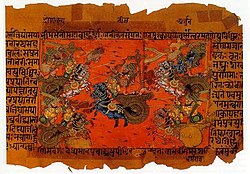
มหากาพย์ภาษาสันสกฤตรามายณะและมหาภารตะถูกประพันธ์ขึ้นในช่วงเวลานี้[ 67 ]มหาภารตะยังคงเป็นบทกวีเดี่ยวที่ยาวที่สุดในโลก[ 68 ]เดิมทีนักประวัติศาสตร์ตั้งสมมติฐานว่า "ยุคมหากาพย์" เป็นยุคที่มหากาพย์ทั้งสองเรื่องนี้เกิดขึ้น แต่ปัจจุบันยอมรับว่าข้อความเหล่านี้ผ่านขั้นตอนการพัฒนาหลายขั้นตอนตลอดหลายศตวรรษ[ 69 ]เชื่อกันว่าข้อความที่มีอยู่ของมหากาพย์เหล่านี้เป็นของยุคหลังพระเวท ระหว่างประมาณ 400 ปีก่อน คริสตกาลถึง 400 ปีหลังคริสตกาล[ 69 ] [ 70 ]
จานาปาดาส

ยุคเหล็ก ในอนุทวีปอินเดียตั้งแต่ประมาณ 1200 ปีก่อนคริสตกาลจนถึงศตวรรษที่ 6 ก่อนคริสตกาล นั้นถูกกำหนดโดยการเกิดขึ้นของชนปทา ซึ่งเป็นอาณาจักรสาธารณรัฐและราชอาณาจักรโดยเฉพาะอย่างยิ่งราชอาณาจักรยุคเหล็กของกุรุปัญจาละโกศลและวิเทหะ[ 71 ] [ 72 ]
อาณาจักรกุรุ ( ประมาณ 1200–450 ปีก่อนคริสตกาล) เป็นสังคมระดับรัฐแห่งแรกในยุคพระเวท ซึ่งตรงกับช่วงเริ่มต้นของยุคเหล็กในอินเดียตะวันตกเฉียงเหนือ ประมาณ 1200–800 ปีก่อนคริสตกาล[ 73 ] เช่นเดียวกับการประพันธ์อถรรพเวท[ 74 ] รัฐกุรุได้จัดระเบียบบทสวดพระเวทเป็นชุดๆ และพัฒนา พิธีกรรม สเราตะเพื่อรักษาระเบียบทางสังคม[ 74 ]บุคคลสำคัญสองคนของรัฐกุรุคือกษัตริย์ปาริกษิตและผู้สืบทอดตำแหน่งของพระองค์ คือ ชนเมชัยซึ่งได้เปลี่ยนอาณาจักรนี้ให้กลายเป็นอำนาจทางการเมือง สังคม และวัฒนธรรมที่โดดเด่นของอินเดียตอนเหนือ[ 74 ]เมื่ออาณาจักรกุรุเสื่อมลง ศูนย์กลางของวัฒนธรรมพระเวทก็ย้ายไปยังเพื่อนบ้านทางตะวันออกคืออาณาจักรปัญจาละ[ 74 ] วัฒนธรรม เครื่องปั้นดินเผา สีเทา (Painted Grey Ware) ทางโบราณคดี ซึ่งเจริญรุ่งเรืองในภูมิภาค หรยาณาทางตะวันออกเฉียงเหนือของอินเดียและอุตตร ประเทศตะวันตก ตั้งแต่ราว 1100 ถึง 600 ปีก่อนคริสตกาล[ 62 ]เชื่อกันว่าสอดคล้องกับอาณาจักรกุรุและปัญจาละ[ 74 ] [ 75 ]
ในช่วงปลายยุคพระเวท อาณาจักรวิเทหะได้ถือกำเนิดขึ้นเป็นศูนย์กลางแห่งใหม่ของวัฒนธรรมพระเวท ตั้งอยู่ทางตะวันออกไกลออกไป (ในปัจจุบันคือประเทศเนปาลและ รัฐ พิหาร ) [ 63 ]เจริญรุ่งเรืองขึ้นภายใต้การปกครองของพระเจ้าชนกซึ่งราชสำนักของพระองค์ได้ให้การอุปถัมภ์แก่นักปราชญ์และนักปรัชญาพราหมณ์เช่นยัชนวัลยะอรุณีและการ์กี วาจักณวี [ 76 ] ช่วงหลังของยุคนี้สอดคล้องกับการรวมตัวของรัฐและอาณาจักรขนาดใหญ่ขึ้นเรื่อยๆ ที่เรียกว่ามหาชนบท ทั่วอินเดียตอนเหนือ
การขยายตัวของเมืองครั้งที่สอง (ประมาณ 600 – 200 ปีก่อนคริสตกาล)

ช่วงเวลาระหว่าง 800 ถึง 200 ปีก่อนคริสตกาล เป็นช่วงที่เกิดการเคลื่อนไหวของศรามณะซึ่งเป็นต้นกำเนิดของศาสนาเชนและพุทธศาสนาอุปนิษัทเล่ม แรกๆ ถูกเขียนขึ้นในช่วงเวลานี้ หลังจาก 500 ปีก่อนคริสตกาล การพัฒนาเมืองครั้งที่สอง[หมายเหตุ 1 ]ก็เริ่มต้นขึ้น โดยมีการตั้งถิ่นฐานในเมืองใหม่ๆ เกิดขึ้นที่ที่ราบแม่น้ำคงคา[ 78 ]รากฐานของการพัฒนาเมืองครั้งที่สองนี้ถูกวางไว้ก่อน 600 ปีก่อนคริสตกาล ในวัฒนธรรมเครื่องปั้นดินเผาสีเทา (Painted Grey Ware)ของGhaggar-Hakraและที่ราบแม่น้ำคงคาตอนบน แม้ว่าแหล่งโบราณคดี PGW ส่วนใหญ่จะเป็นหมู่บ้านเกษตรกรรมขนาดเล็ก แต่แหล่งโบราณคดี PGW จำนวน "หลายสิบแห่ง" ก็ได้กลายเป็นชุมชนขนาดใหญ่ที่สามารถเรียกได้ว่าเป็นเมือง โดยเมืองที่ใหญ่ที่สุดนั้นมีการป้องกันด้วยคูน้ำหรือคูเมืองและคันดินที่ก่อด้วยดินและรั้วไม้[ 79 ]
ที่ราบลุ่มแม่น้ำคงคาตอนกลาง ซึ่งเป็นที่ตั้งของอาณาจักรมคธและฐานที่มั่นของจักรวรรดิเมารยะเป็นพื้นที่ทางวัฒนธรรมที่แตกต่าง[ 80 ]โดยมีรัฐใหม่เกิดขึ้นหลัง 500 ปีก่อนคริสตกาล[ 81 ] [ 82 ]ได้รับอิทธิพลจากวัฒนธรรมเวท[ 83 ]แต่แตกต่างอย่างเห็นได้ชัดจากภูมิภาคกุรุ-ปัญจาละ[ 84 ] "เป็นพื้นที่ที่มีการปลูกข้าวที่เก่าแก่ที่สุดในเอเชียใต้และเมื่อถึง 1800 ปีก่อนคริสตกาล เป็นที่ตั้งของประชากรยุคหินใหม่ที่ก้าวหน้าซึ่งเกี่ยวข้องกับแหล่งโบราณคดีจิรันด์และเชชาร์" [ 85 ]ในภูมิภาคนี้ ขบวนการศรามณะเจริญรุ่งเรือง และศาสนาเชนและพุทธศาสนาถือกำเนิดขึ้น[ 75 ]
พุทธศาสนาและศาสนาเชน


ช่วงเวลาระหว่าง 800 ปีก่อนคริสตกาลถึง 400 ปีก่อนคริสตกาล เป็นช่วงเวลาที่อุปนิษัทเล่ม แรกๆ ถูกเขียนขึ้น [ 86 ] [ 87 ] [ 88 ]ซึ่งเป็นพื้นฐานทางทฤษฎีของศาสนาฮินดูแบบคลาสสิกและยังเป็นที่รู้จักกันในชื่อเวทันตะ (บทสรุปของพระเวท ) [ 89 ]
การขยายตัวของเมืองในอินเดียในช่วงศตวรรษที่ 7 และ 6 ก่อนคริสตกาล นำไปสู่การเกิดขึ้นของขบวนการนักพรตหรือ "ศรามณะ" ใหม่ๆ ซึ่งท้าทายความเคร่งครัดในพิธีกรรม[ 86 ]มหาวีระ ( ประมาณ 599–527 ก่อนคริสตกาล) ผู้เผยแพร่ศาสนาเชนและพระพุทธเจ้า ( ประมาณ 563–483 ก่อนคริสตกาล) ผู้ก่อตั้งพุทธศาสนา เป็นบุคคลสำคัญที่สุดของขบวนการนี้ ศรามณะก่อให้เกิดแนวคิดเรื่องวัฏสงสาร แนวคิดเรื่องสังสารวัฏและแนวคิดเรื่องการหลุดพ้น[ 90 ]พระพุทธเจ้าทรงพบทางสายกลางที่บรรเทาความเคร่งครัด สุดขั้ว ที่พบในศาสนาศรามณะ[ 91 ]
ในเวลาเดียวกันนั้นมหาวีระ (ติ รถังการะองค์ที่ 24 ในศาสนาเชน) ได้เผยแพร่หลักธรรมคำสอนซึ่งต่อมาได้กลายเป็นศาสนาเชน[ 92 ]อย่างไรก็ตาม หลักคำสอนดั้งเดิมของศาสนาเชนเชื่อว่าคำสอนของติรถังการะมีมาก่อนกาลเวลาที่รู้จักทั้งหมด และนักวิชาการเชื่อว่าปาร์ศวนาถ (ประมาณ 872 – ประมาณ 772 ปีก่อนคริสตกาล) ซึ่งได้รับการยกย่องให้เป็นติรถังการะ องค์ที่ 23 เป็นบุคคลในประวัติศาสตร์ เชื่อกันว่าพระเวทได้บันทึกเรื่องราว ของติรถังการะบางองค์และคณะฤๅษีที่คล้ายกับขบวนการศรามณะ[ 93 ]
มหาชนบท
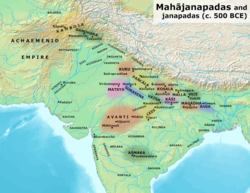
ช่วงเวลาตั้งแต่ประมาณ600 ปีก่อนคริสตกาลถึง ประมาณ 300 ปีก่อนคริสตกาลเป็นช่วงเวลาที่อาณาจักรมหาชน บท ทั้งสิบหกแห่งและสาธารณรัฐคณาธิปไตยที่ ทรงอำนาจเจริญรุ่งเรือง ในแถบที่ทอดยาวจากคันธาราทางตะวันตกเฉียงเหนือไปจนถึงเบงกอลทางตะวันออกของอนุทวีปอินเดีย ซึ่งรวมถึงบางส่วนของภูมิภาค ทรานส์ วินธยาด้วย[ 94 ]คัมภีร์พุทธศาสนาโบราณเช่นอังคุตตรนิกาย [ 95 ]กล่าวถึงอาณาจักรและสาธารณรัฐที่ยิ่งใหญ่ทั้งสิบหกแห่งนี้บ่อยครั้ง ได้แก่อังคะอัสสกะอวันตีเจดีคันธารา กาชีกัมโบชา โกศล กุรุมคธมัลละมัตสยะ (หรือมัช ฌะ ) ปัญจละสุรเสนาวฤษีและวัตสะ ช่วงเวลานี้เป็นช่วง เวลาที่การพัฒนาเมืองในอินเดียเฟื่องฟูเป็นครั้งที่สองรองจากอารยธรรมลุ่มแม่น้ำสินธุ[ 96 ]

สาธารณรัฐหรือ gaṇasaṅgha ในยุคแรก[ 97 ]เช่นศากยะโกลิยะมัลลากะและลิจฉวีมีรัฐบาลแบบสาธารณรัฐgaṇasaṅgha [ 97 ]เช่น มัลลากะ ซึ่งมีศูนย์กลางอยู่ที่เมืองกุสินาราและสันนิบาตวัชชิกะซึ่งมีศูนย์กลางอยู่ที่เมืองไวศาลีมีอยู่ตั้งแต่ศตวรรษที่ 6 ก่อนคริสต์ศักราช และยังคงมีอยู่ในบางพื้นที่จนถึงศตวรรษที่ 4 หลังคริสต์ศักราช[ 98 ]ตระกูลที่มีชื่อเสียงที่สุดในบรรดาตระกูลผู้ปกครองร่วมของมหาชนปทาวัชชิคือลิจฉวี[ 99 ]
ช่วงเวลานี้สอดคล้องกับบริบททางโบราณคดีของ วัฒนธรรม เครื่องปั้นดินเผาสีดำขัดเงาทางเหนือโดยเฉพาะอย่างยิ่งในที่ราบลุ่มแม่น้ำคงคาตอนกลาง แต่ยังแผ่ขยายไปทั่วพื้นที่กว้างใหญ่ของอนุทวีปอินเดียตอนเหนือและตอนกลาง วัฒนธรรมนี้มีลักษณะเด่นคือการเกิดขึ้นของเมืองใหญ่ที่มีป้อมปราการขนาดใหญ่ การเติบโตของประชากรอย่างมีนัยสำคัญ การแบ่งชั้นทางสังคมที่เพิ่มขึ้น เครือข่ายการค้าที่กว้างขวาง การก่อสร้างสถาปัตยกรรมสาธารณะและคลองน้ำ อุตสาหกรรมหัตถกรรมเฉพาะทาง ระบบน้ำหนักเหรียญที่มีเครื่องหมายตอกและการนำการเขียนมาใช้ในรูปแบบของ อักษร พราห์มีและอักษรคารอสถี[ 100 ] [ 101 ]ภาษาของชนชั้นสูงในเวลานั้นคือภาษาสันสกฤตในขณะที่ภาษาของประชากรทั่วไปในอินเดียตอนเหนือเรียกว่าภาษา ปรากฤต
อาณาจักรทั้งสิบหกแห่งได้รวมตัวกันเป็นสี่อาณาจักรใหญ่ในสมัยของพระพุทธเจ้าโคตมะ อาณาจักรทั้งสี่นี้ได้แก่ วัตสะ อวันตี โกศล และมคธ[ 96 ]
ราชวงศ์มคธยุคต้น
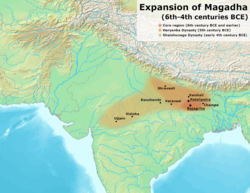
มคธะเป็นหนึ่งในสิบหกมหาชนบท ( สันสกฤต : "อาณาจักรใหญ่") หรืออาณาจักรในอินเดียโบราณ ศูนย์กลางของอาณาจักรคือพื้นที่ของรัฐพิหารทางใต้ของแม่น้ำ คงคา เมืองหลวงแห่งแรกคือราชคฤห์ (ปัจจุบันคือราชคีร์) จากนั้นคือปาฏลีปุตระ ( ปัจจุบันคือปัตนา ) มคธะขยายอาณาเขตครอบคลุมพื้นที่ส่วนใหญ่ของพิหารและเบงกอลด้วยการพิชิตลิจฉวีและอังคะตามลำดับ[ 102 ]ตามมาด้วยพื้นที่ส่วนใหญ่ทางตะวันออกของอุตตรประเทศและโอริสสา อาณาจักรมคธะโบราณได้รับการกล่าวถึงอย่างมากในคัมภีร์เชนและพุทธศาสนา นอกจากนี้ยังมีการกล่าวถึงในรามายณะมหาภารตะและปุราณะ[ 103 ]การอ้างอิงถึงชาวมคธะที่เก่าแก่ที่สุดปรากฏในอถรรพเวทซึ่งพวกเขาถูกระบุไว้พร้อมกับอังคะคันธารีและมุชวัต มคธะมีบทบาทสำคัญในการพัฒนาศาสนาเชนและพุทธศาสนาชุมชนแบบสาธารณรัฐ (เช่น ชุมชนราชกุมาร) ถูกผนวกเข้ากับอาณาจักรมาคธ หมู่บ้านต่างๆ มีสภาของตนเองภายใต้หัวหน้าท้องถิ่นที่เรียกว่า กรามากา การบริหารราชการแบ่งออกเป็นฝ่ายบริหาร ฝ่ายตุลาการ และฝ่ายทหาร
แหล่งข้อมูลยุคแรกๆ จากคัมภีร์บาลี ของพุทธศาสนา คัมภีร์อากามะของศาสนาเชนและคัมภีร์ปุราณะ ของศาสนาฮินดู กล่าวถึงอาณาจักรมาคธที่ปกครองโดยราชวงศ์ปรัทโยตะและราชวงศ์หริยังกะ ( ประมาณ 544–413 ปีก่อนคริสตกาล) เป็นเวลาประมาณ 200 ปีตั้งแต่ประมาณ 600–413 ปีก่อนคริสตกาล พระเจ้าบิมบิสาราแห่งราชวงศ์หริยังกะทรงดำเนินนโยบายขยายอาณาเขตอย่างแข็งขัน โดยพิชิตอาณาจักรอังคะในพื้นที่ซึ่งปัจจุบันคือทางตะวันออกของรัฐพิหารและรัฐเบงกอลตะวันตกพระเจ้าบิมบิสาราถูกโค่นล้มและสังหารโดยพระโอรสของพระองค์ คือเจ้าชายอชาตศัตรูผู้ซึ่งดำเนินนโยบายขยายอาณาเขตของมาคธต่อไป ในช่วงเวลานี้พระพุทธเจ้าโคตมะผู้ก่อตั้งพุทธศาสนา ทรงใช้ชีวิตส่วนใหญ่ในอาณาจักรมาคธ พระองค์ทรงตรัสรู้ที่พุทธคยาทรงแสดงปฐมเทศนาที่สารนาถและ มีการจัด ประชุมพุทธศาสนาครั้งแรกที่ราชคฤห์[ 104 ]ราชวงศ์หริยังกะถูกโค่นล้มโดยราชวงศ์ไศชุนาคะ ( ประมาณ 413–345 ปีก่อนคริสตกาล) กษัตริย์ไศชุนาคะองค์สุดท้าย กาลาโศก ถูกลอบสังหารโดยมหาปัทมานันทะในปี 345 ก่อนคริสตกาล ซึ่งเป็นหนึ่งในบรรดานันทะทั้งเก้าที่เรียกว่า (มหาปัทมานันทะและบุตรชายทั้งแปดของเขา)
จักรวรรดินันดาและการรุกรานของอเล็กซานเดอร์
จักรวรรดินันดาสร้างขึ้นบนรากฐานที่วางไว้โดยบรรพบุรุษ ของพวกเขา คือฮาริยันกาและชิชุนางะ[ 105 ]จักรวรรดินี้มีกองทัพขนาดใหญ่ ประกอบด้วยทหารราบ 200,000 นาย ทหารม้า 20,000 นาย รถศึก 2,000 คันและช้างศึก 3,000 ลำ (จากการประมาณการที่ต่ำที่สุด) [ 106 ] [ 107 ]
จักรวรรดิเมารยะ
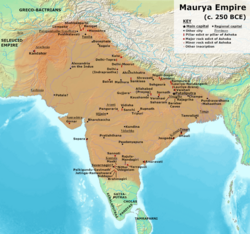
จักรวรรดิเมารยะ (322–185 ปีก่อนคริสตกาล) ได้รวมดินแดนส่วนใหญ่ของอนุทวีปอินเดียเข้าเป็นรัฐเดียว และเป็นจักรวรรดิที่ใหญ่ที่สุดในเอเชียใต้[ 108 ]ในช่วงที่รุ่งเรืองที่สุด จักรวรรดิเมารยะแผ่ขยายไปทางเหนือจนถึงพรมแดนธรรมชาติของเทือกเขาหิมาลัยและไปทางตะวันออกจนถึงบริเวณที่เป็นรัฐอัสสัม ในปัจจุบัน ทางตะวันตกแผ่ขยายไปไกลกว่าประเทศปากีสถานในปัจจุบัน ไปจนถึง เทือกเขา ฮินดูกุชในบริเวณที่เป็นประเทศอัฟกานิสถานในปัจจุบัน จักรวรรดินี้ก่อตั้งขึ้นโดยจันทรคุปตะเมารยะ โดย ได้รับความช่วยเหลือจากจานักยะ ( เกาติลยะ ) ในมคธ (ในรัฐพิหาร ในปัจจุบัน ) เมื่อเขาโค่นล้มจักรวรรดินันทะ[ 109 ]
จันทรคุปตะขยายอำนาจไปทางทิศตะวันตกอย่างรวดเร็วทั่วอินเดียตอนกลางและตะวันตก และภายในปี 317 ก่อนคริสต์ศักราช จักรวรรดิได้ครอบครองอินเดียตะวันตกเฉียงเหนือทั้งหมด จักรวรรดิเมารยะเอาชนะเซเลอุสที่ 1ผู้ก่อตั้งจักรวรรดิเซเลอุสในสงครามเซเลอุส-เมารยะจึงได้ดินแดนเพิ่มเติมทางตะวันตกของแม่น้ำสินธุ บินทุสาระโอรสของจันทรคุปตะขึ้นครองราชย์ราวปี 297 ก่อนคริสต์ศักราช เมื่อพระองค์สิ้นพระชนม์ราว ปี 272 ก่อน คริสต์ศักราชดินแดนส่วนใหญ่ของอนุทวีปอินเดียอยู่ภายใต้การปกครองของเมารยะ อย่างไรก็ตาม ภูมิภาคกาลลิงคะ (บริเวณโอริสสา ในปัจจุบัน ) ยังคงอยู่นอกเหนือการควบคุมของเมารยะ ซึ่งอาจขัดขวางการค้ากับทางใต้[ 110 ]

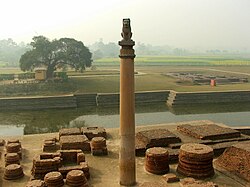
พระเจ้าอโศกมหาราชทรงขึ้นครองราชย์ต่อจากพระเจ้าบินทุ สาระ จนกระทั่งสิ้นพระชนม์ราวปี 232 ก่อนคริสต์ศักราช[ 111 ]แม้ว่าการรุกรานกาลิงคะของพระองค์ในราวปี 260 ก่อนคริสต์ศักราชจะประสบความสำเร็จ แต่ก็ทำให้มีผู้เสียชีวิตและทุกข์ทรมานอย่างมากมาย ส่งผลให้พระเจ้าอโศกทรงละเว้นความรุนแรง และต่อมาทรงหันมานับถือพุทธศาสนา[ 110 ]จักรวรรดิเริ่มเสื่อมถอยลงหลังจากสิ้นพระชนม์ และพระเจ้าบริหัทราถ ผู้ปกครองราชวงศ์เมารยะองค์สุดท้าย ถูก พระเจ้าปุษยมิตรชุงคะลอบสังหารเพื่อสถาปนาจักรวรรดิชุงคะ[ 111 ]
ภายใต้การปกครองของพระเจ้าจันทรคุปตะเมารยะและผู้สืบทอดตำแหน่งของพระองค์ การค้าภายในและภายนอกประเทศ การเกษตร และกิจกรรมทางเศรษฐกิจต่างเจริญรุ่งเรืองและขยายตัวไปทั่วอินเดีย เนื่องจากการสร้างระบบการเงิน การบริหาร และความมั่นคงที่มีประสิทธิภาพเพียงระบบเดียว ราชวงศ์เมารยะได้สร้างถนนแกรนด์ทรังก์ โรด ซึ่งเป็นหนึ่งในถนนสายหลักที่เก่าแก่และยาวที่สุดในเอเชียที่เชื่อมต่ออนุทวีปอินเดียกับเอเชียกลาง[ 112 ]หลังสงครามกาลิงคะจักรวรรดิได้ประสบกับสันติภาพและความมั่นคงเกือบครึ่งศตวรรษภายใต้การปกครองของพระเจ้าอโศก อินเดียในยุคเมารยะยังได้เพลิดเพลินกับยุคแห่งความปรองดองทางสังคม การเปลี่ยนแปลงทางศาสนา และการขยายตัวของความรู้ทางวิทยาศาสตร์ การที่พระเจ้าจันทรคุปตะเมารยะทรงยอมรับศาสนาเชนได้เพิ่มการฟื้นฟูและการปฏิรูปทางสังคมและศาสนาไปทั่วสังคมของพระองค์ ในขณะที่การที่พระเจ้าอโศกทรงยอมรับพุทธศาสนานั้นกล่าวกันว่าเป็นรากฐานของการปกครองที่สงบสุขทางสังคมและการเมือง และปราศจากความรุนแรงทั่วอินเดีย พระเจ้าอโศกทรงสนับสนุนคณะเผยแพร่พุทธศาสนาไปทั่วอินโด-เมดิเตอร์เรเนียนศรีลังกาเอเชียตะวันออกเฉียงใต้ เอเชียตะวันตก แอฟริกาเหนือ และยุโรปเมดิเตอร์เรเนียน[ 113 ]
อรรถศาสตร์ที่เขียนโดยจานักยะและพระราชโองการของอโศกเป็นบันทึกลายลักษณ์อักษรหลักของยุคราชวงศ์เมารยะ ในทางโบราณคดี ช่วงเวลานี้อยู่ในยุคเครื่องปั้นดินเผาขัดเงาสีดำทางเหนือจักรวรรดิเมารยะตั้งอยู่บนระบบเศรษฐกิจและสังคมที่ทันสมัยและมีประสิทธิภาพ ซึ่งการขายสินค้าได้รับการควบคุมอย่างเข้มงวดโดยรัฐบาล[ 114 ]แม้ว่าจะไม่มีระบบธนาคารในสังคมเมารยะ แต่การกู้ยืมเงิน โดยคิดดอกเบี้ย เป็นเรื่องปกติ มีบันทึกเป็นลายลักษณ์อักษรจำนวนมากเกี่ยวกับการค้าทาส ซึ่งบ่งชี้ถึงความแพร่หลายของการค้าทาส[ 115 ]ในช่วงเวลานี้ เหล็กคุณภาพสูงที่เรียกว่าเหล็กวูตซ์ได้รับการพัฒนาขึ้นในอินเดียตอนใต้ และต่อมาได้ส่งออกไปยังจีนและอาระเบีย[ 116 ]
สมัยสังคัม


ในสมัยสังคัม วรรณกรรม ทมิฬเฟื่องฟูตั้งแต่ศตวรรษที่ 3 ก่อนคริสต์ศักราชจนถึงศตวรรษที่ 4 หลังคริสต์ศักราช ราชวงศ์ทมิฬ 3 ราชวงศ์ ซึ่งรวมกันเรียกว่ากษัตริย์ 3 พระองค์แห่งทมิฬากัมได้แก่ราชวงศ์เชระราชวงศ์โชลาและราชวงศ์ปันดยาปกครองบางส่วนของอินเดียตอนใต้[ 118 ]
วรรณกรรมสังคัมกล่าวถึงประวัติศาสตร์ การเมือง สงคราม และวัฒนธรรมของชาวทมิฬในยุคนี้[ 119 ]ต่างจากนักเขียนภาษาสันสกฤตซึ่งส่วนใหญ่เป็นพราหมณ์ นักเขียนสังคัมมาจากชนชั้นและภูมิหลังทางสังคมที่หลากหลาย และส่วนใหญ่ไม่ใช่พราหมณ์[ 120 ]
ในช่วงราว 300 ปีก่อนคริสตกาล – ประมาณ 200 ปีหลังคริสตกาลมี การประพันธ์ Pathupattuซึ่งเป็นหนังสือรวมบทกวีขนาดกลางจำนวน 10 เล่ม ซึ่งถือเป็นส่วนหนึ่งของวรรณกรรมสังคัม นอกจากนี้ ยังมีการประพันธ์ Ettuthogai ซึ่งเป็นหนังสือ รวมบทกวี 8 เล่มรวมถึงPatiṉeṇkīḻkaṇakku ซึ่งเป็นหนังสือรวมบทกวีขนาดเล็กอีก 18 เล่ม ในขณะเดียวกันTolkāppiyamซึ่งเป็นตำราไวยากรณ์ที่เก่าแก่ที่สุดในภาษาทมิฬก็ได้รับการพัฒนาขึ้น[ 121 ]นอกจากนี้ ในช่วงยุคสังคัมยังมีการประพันธ์มหา กาพย์ 2 ใน 5 เรื่องที่ยิ่งใหญ่ของวรรณกรรมทมิฬ อีกด้วย Ilango Adigalแต่งSilappatikaramซึ่งเป็นงานที่ไม่เกี่ยวกับศาสนา โดยมีเนื้อหาเกี่ยวกับKannagi [ 122 ]และManimekalai ซึ่งแต่งโดย Chithalai Chathanarเป็นภาคต่อของSilappatikaramและเล่าเรื่องราวของลูกสาวของKovalanและMadhaviผู้ซึ่งได้บวชเป็นภิกษุณีในพุทธ ศาสนา[ 123 ] [ 124 ]
ยุคคลาสสิก (ประมาณ 200 ปีก่อนคริสตกาล – 650 ปีคริสตกาล)
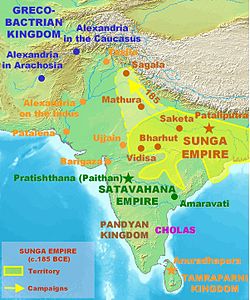 อินเดียโบราณในช่วงที่จักรวรรดิชุงคะรุ่งเรืองจากทางเหนือราชวงศ์สาตวาหนาจากเดคคานและราชวงศ์ปันเดียนและราชวงศ์โชลาจากทางใต้ของอินเดีย
 เจดีย์ใหญ่ในถ้ำคาร์ลาศาลเจ้าเหล่านี้สร้างขึ้นในช่วงตั้งแต่ศตวรรษที่ 2 ก่อนคริสต์ศักราช จนถึงศตวรรษที่ 5 หลังคริสต์ศักราช
 ถ้ำ Udayagiri และ Khandagiriเป็นที่ตั้งของจารึก Hathigumphaซึ่งจารึกไว้ภายใต้Kharavela ซึ่งในขณะนั้น คือจักรพรรดิแห่งKalingaแห่งราชวงศ์ Mahameghavahana



ช่วงเวลาระหว่างจักรวรรดิเมารยะในศตวรรษที่ 3 ก่อนคริสต์ศักราชจนถึงสิ้นสุดจักรวรรดิกุปตะในศตวรรษที่ 6 หลังคริสต์ศักราช เรียกว่ายุค "คลาสสิก" ของอินเดีย[ 127 ]จักรวรรดิกุปตะ (ศตวรรษที่ 4-6) ถือเป็นยุคทองของอินเดียแม้ว่าจะมีอาณาจักรมากมายปกครองอินเดียในช่วงศตวรรษเหล่านี้ก็ตาม นอกจากนี้วรรณกรรมสังคัมยังเฟื่องฟูตั้งแต่ศตวรรษที่ 3 ก่อนคริสต์ศักราชจนถึงศตวรรษที่ 3 หลังคริสต์ศักราชในอินเดียตอนใต้[ 128 ]ในช่วงเวลานี้เศรษฐกิจของอินเดียได้รับการประเมินว่าใหญ่ที่สุดในโลก โดยมีทรัพย์สินระหว่างหนึ่งในสามถึงหนึ่งในสี่ของโลก ตั้งแต่ปี ค.ศ. 1 ถึงปี ค.ศ. 1000 [ 129 ] [ 130 ]
ยุคคลาสสิกตอนต้น (ประมาณ 200 ปีก่อนคริสต์ศักราช – 320 ปีหลังคริสต์ศักราช)
จักรวรรดิชุงกะ


ราชวงศ์ชุงคะมีต้นกำเนิดมาจากมคธและปกครองพื้นที่ขนาดใหญ่ของอนุทวีปอินเดียตอนกลางและตะวันออกตั้งแต่ราวปี 187 ถึง 78 ก่อนคริสต์ศักราช ราชวงศ์นี้ก่อตั้งโดยปุษยามิตรชุงคะ ผู้โค่นล้ม จักรพรรดิเมารยะองค์สุดท้ายเมืองหลวงของราชวงศ์คือปาฏลีปุตระแต่จักรพรรดิองค์ต่อมา เช่นภคภัทระก็ทรงมีราชสำนักอยู่ที่วิทิศะซึ่งปัจจุบันคือเบสนคร[ 131 ]
ปุษยามิตร ชุงคะ ปกครองเป็นเวลา 36 ปี และได้รับการสืบทอดตำแหน่งโดยอัคนิมิตร บุตรชายของเขา มีผู้ปกครองชุงคะทั้งหมดสิบพระองค์ อย่างไรก็ตาม หลังจากอัคนิมิตรสิ้นพระชนม์ จักรวรรดิก็แตกสลายอย่างรวดเร็ว[ 132 ]จารึกและเหรียญกษาปณ์บ่งชี้ว่าอินเดียตอนเหนือและตอนกลางส่วนใหญ่ประกอบด้วยอาณาจักรเล็กๆ และนครรัฐที่เป็นอิสระจากอำนาจของชุงคะ[ 133 ]จักรวรรดินี้มีชื่อเสียงในด้านสงครามมากมายกับทั้งอำนาจต่างชาติและอำนาจพื้นเมือง พวกเขาต่อสู้กับราชวงศ์มหาเมฆาหนะแห่งกาลิงคะราชวงศ์สัตวาหนะแห่งเดคคานชาวอินโด-กรีกและอาจรวมถึงปัญจาละและมิตราแห่งมถุราด้วย
ศิลปะ การศึกษา ปรัชญา และการเรียนรู้แขนงอื่นๆ เจริญรุ่งเรืองในช่วงเวลานี้ รวมถึงอนุสรณ์สถานทางสถาปัตยกรรม เช่น เจดีย์ที่ภารหุตและเจดีย์ใหญ่ที่มีชื่อเสียงที่ สัญจี ผู้ปกครองราชวงศ์ ชุงคะมีส่วนช่วยสถาปนาประเพณีการอุปถัมภ์การเรียนรู้และศิลปะจากราชวงศ์ อักษรที่ใช้โดยจักรวรรดิเป็นรูปแบบหนึ่งของ อักษร พราห์มีและใช้เขียนภาษาสันสกฤตจักรวรรดิชุงคะมีบทบาทสำคัญในการอุปถัมภ์วัฒนธรรมอินเดียในช่วงเวลาที่การพัฒนาที่สำคัญที่สุดบางอย่างในความคิดของศาสนาฮินดูเกิดขึ้น
จักรวรรดิสาตวาหนะ

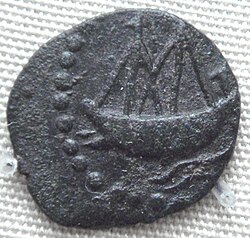
ราชวงศ์ศาตวาหนะมีศูนย์กลางอยู่ที่อมราวตีในรัฐอานธราประเทศ รวมถึงจุนนาร์ ( ปูเน ) และประติสถาน ( ไพทัน ) ในรัฐมหาราษฏระ อาณาเขตของจักรวรรดิครอบคลุมพื้นที่ส่วนใหญ่ของอินเดียตั้งแต่ศตวรรษที่ 1 ก่อนคริสต์ศักราชเป็นต้นมา ราชวงศ์ศาตวาหนะเริ่มต้นจากการเป็นขุนนางศักดินาของราชวงศ์เมารยะแต่ประกาศเอกราชเมื่อราชวงศ์เมารยะเสื่อมอำนาจลง
ราชวงศ์สาตวาหนะเป็นที่รู้จักในด้านการอุปถัมภ์ศาสนาฮินดูและพุทธศาสนา ซึ่งส่งผลให้มีอนุสรณ์สถานทางพุทธศาสนามากมาย ตั้งแต่เอลโลรา ( แหล่งมรดกโลกของยูเนสโก ) ไปจนถึงอมราวตีพวกเขาเป็นหนึ่งในรัฐแรกๆ ของอินเดียที่ออกเหรียญกษาปณ์โดยมีรูปผู้ปกครองประทับอยู่ พวกเขาสร้างสะพานทางวัฒนธรรมและมีบทบาทสำคัญในการค้าขาย ตลอดจนการถ่ายทอดความคิดและวัฒนธรรมจากที่ราบลุ่มแม่น้ำคงคาตอน ในไป จนถึงปลายสุดทางใต้ของอินเดีย
พวกเขาต้องแข่งขันกับจักรวรรดิชุงคะและราชวงศ์กันวะแห่งมคธเพื่อสถาปนาการปกครองของตน ต่อมาพวกเขามีบทบาทสำคัญในการปกป้องอินเดียส่วนใหญ่จากการรุกรานของต่างชาติ เช่นชาวศากะชาวยะวะและชาวปหลวะโดยเฉพาะอย่างยิ่ง การต่อสู้กับกษัตริย์ฝ่ายตะวันตกดำเนินไปเป็นเวลานาน ผู้ปกครองที่โดดเด่นของราชวงศ์สัตวาหนา เช่นเกาตมิปุตระสัตกรณีและศรียัชนะสัตกรณีสามารถเอาชนะผู้รุกรานจากต่างชาติ เช่น กษัตริย์ฝ่ายตะวันตก และหยุดยั้งการขยายอำนาจของพวกเขาได้ ในศตวรรษที่ 3 จักรวรรดิถูกแบ่งออกเป็นรัฐเล็กๆ[ 134 ]
การค้าและการเดินทางไปอินเดีย

การค้าเครื่องเทศในเกรละดึงดูดพ่อค้าจากทั่วทุกมุมโลกมายังอินเดีย ท่าเรือมูซิริส ทางชายฝั่งตะวันตกเฉียงใต้ของอินเดีย ได้ก่อตั้งตัวเองเป็นศูนย์กลางการค้าเครื่องเทศที่สำคัญมาตั้งแต่ 3,000 ปีก่อนคริสตกาล ตามบันทึกของชาวสุเมเรียนพ่อค้าชาวยิวเดินทางมาถึงโคจิเกรละ อินเดียตั้งแต่ 562 ปีก่อนคริสตกาล[ 135 ]โลกกรีก-โรมันตามมาด้วยการค้าขายตามเส้นทางเครื่องหอมและเส้นทางอินโด-โรมัน [ 136 ] ในช่วงศตวรรษที่ 2 ก่อนคริสตกาล เรือกรีกและอินเดียได้พบปะกันเพื่อค้าขายที่ ท่าเรือ อาหรับเช่นเอเดน[ 137 ]ในช่วงสหัสวรรษแรก เส้นทางเดินเรือไปยังอินเดียถูกควบคุมโดยชาวอินเดียและชาวเอธิโอเปีย ซึ่งกลาย เป็นมหาอำนาจทางการค้าทางทะเลของ ทะเลแดง
พ่อค้าชาวอินเดียที่เกี่ยวข้องกับการค้าเครื่องเทศนำอาหารอินเดียไปยังเอเชียตะวันออกเฉียงใต้ ซึ่งเครื่องเทศผสมและแกงกะหรี่ได้รับความนิยมในหมู่ชาวพื้นเมือง[ 138 ]พุทธศาสนาเข้าสู่จีนผ่านเส้นทางสายไหมในศตวรรษที่ 1 หรือ 2 [ 139 ]สถานประกอบการทางศาสนาฮินดูและพุทธในเอเชียใต้และเอเชียตะวันออกเฉียงใต้กลายเป็นศูนย์กลางการผลิตและการค้า เนื่องจากพวกเขาสะสมทุนที่ได้รับบริจาคจากผู้อุปถัมภ์ พวกเขามีส่วนร่วมในการจัดการที่ดิน งานฝีมือ และการค้า โดยเฉพาะอย่างยิ่งพุทธศาสนาเดินทางไปพร้อมกับการค้าทางทะเล ส่งเสริมการรู้หนังสือ ศิลปะ และการใช้เหรียญกษาปณ์[ 140 ]
จักรวรรดิกุชาน


จักรวรรดิคุชานขยายอาณาเขตจากดินแดนที่ปัจจุบันคืออัฟกานิสถานไปยังทางตะวันตกเฉียงเหนือของอนุทวีปอินเดียภายใต้การนำของจักรพรรดิองค์แรกคุจูลา คัดฟิเสสประมาณกลางศตวรรษที่ 1 คริสต์ศักราช ชาวคุชานอาจเป็นชนเผ่าที่พูดภาษาโทชาเรียน[ 141 ]ซึ่งเป็นหนึ่งในห้าสาขาของสมาพันธ์เย่ว์จือ[ 142 ] [ 143 ]ในสมัยของหลานชายของเขากนิษกะมหาราชจักรวรรดิได้แผ่ขยายครอบคลุมพื้นที่ส่วนใหญ่ของอัฟกานิสถาน [ 144 ] และจากนั้นก็ ครอบคลุมพื้นที่ทางตอนเหนือของอนุทวีปอินเดีย[ 145 ]
จักรพรรดิกนิษกะทรงเป็นผู้อุปถัมภ์พุทธศาสนาอย่างมาก อย่างไรก็ตาม เมื่ออาณาจักรกุชานขยายอำนาจไปทางใต้ เทพเจ้าบนเหรียญกษาปณ์ในยุคหลังของพวกเขาก็สะท้อนให้เห็นถึงประชากรส่วนใหญ่ที่ เป็น ชาวฮินดู[ 146 ] [ 147 ]นักประวัติศาสตร์วินเซนต์ สมิธกล่าวเกี่ยวกับกนิษกะว่า:
เขาทำหน้าที่เป็นอโศกองค์ที่สองในประวัติศาสตร์พุทธศาสนา[ 148 ]
จักรวรรดิเชื่อมโยงการค้าทางทะเลในมหาสมุทรอินเดียกับการค้าทางสายไหมผ่านหุบเขาสินธุ ส่งเสริมการค้าทางไกล โดยเฉพาะอย่างยิ่งระหว่างจีนและโรม ชาว กุชานนำแนวโน้มใหม่มาสู่ ศิลปะคันธาราและศิลปะมถุราที่กำลังเฟื่องฟูซึ่งถึงจุดสูงสุดในสมัยการปกครองของกุชาน[ 149 ]ช่วงเวลาแห่งสันติภาพภายใต้การปกครองของกุชานเรียกว่าPax Kushanaในศตวรรษที่ 3 จักรวรรดิของพวกเขาในอินเดียกำลังแตกสลาย และจักรพรรดิผู้ยิ่งใหญ่องค์สุดท้ายที่เป็นที่รู้จักคือวาสุเทวะที่ 1 [ 150 ] [ 151 ]
ยุคคลาสสิก (ประมาณ ค.ศ. 320 – 650)
จักรวรรดิกุปตะ

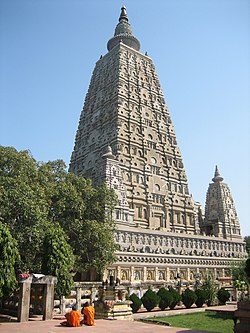
สมัยราชวงศ์คุปตะโดดเด่นในด้านความคิดสร้างสรรค์ทางวัฒนธรรม โดยเฉพาะอย่างยิ่งในด้านวรรณกรรม สถาปัตยกรรม ประติมากรรม และจิตรกรรม[ 152 ]สมัยราชวงศ์คุปตะได้ผลิตนักปราชญ์มากมาย เช่นกาลิทาสอารยภัตตาวรหมิหิระวิษณุชา ร์ มา และวัตสยานะ สมัยราชวงศ์คุปตะถือเป็นจุดเปลี่ยนสำคัญของวัฒนธรรมอินเดีย ราชวงศ์คุปตะได้ประกอบพิธีกรรมบูชายัญตามคัมภีร์เวทเพื่อสร้างความชอบธรรมให้แก่การปกครองของตน แต่พวกเขายังอุปถัมภ์พระพุทธศาสนา ซึ่งเป็นทางเลือกหนึ่งนอกเหนือจากหลักคำสอนดั้งเดิมของพราหมณ์ วีรกรรมทางการทหารของกษัตริย์สามพระองค์แรก ได้แก่ จันทรคุป ตะที่ 1 สมุทรคุปตะและจันทรคุปตะที่ 2ทำให้ดินแดนส่วนใหญ่ของอินเดียอยู่ภายใต้การปกครองของพวกเขา วิทยาศาสตร์และการบริหารการเมืองก้าวหน้าไปถึงระดับใหม่ในยุคราชวงศ์คุปตะ ความสัมพันธ์ทางการค้าที่แข็งแกร่งยังทำให้ภูมิภาคนี้เป็นศูนย์กลางทางวัฒนธรรมที่สำคัญและเป็นฐานที่มั่นที่จะมีอิทธิพลต่ออาณาจักรและภูมิภาคใกล้เคียง[ 153 ] [ 154 ]ช่วงเวลาแห่งสันติภาพภายใต้การปกครองของราชวงศ์คุปตะเรียกว่าปักษ์คุปตะ
ราชวงศ์กุปตะในยุคหลังสามารถต้านทานอาณาจักรทางตะวันตกเฉียงเหนือได้สำเร็จจนกระทั่งการมาถึงของชาวฮันอัลคอนซึ่งได้ตั้งรกรากในอัฟกานิสถานในช่วงครึ่งแรกของศตวรรษที่ 5 โดยมีเมืองหลวงอยู่ที่บามิยัน [ 155 ] อย่างไรก็ตามพื้นที่ส่วนใหญ่ของอินเดียตอนใต้รวมถึงเดคคานนั้นไม่ได้รับผลกระทบจากเหตุการณ์เหล่านี้มากนัก[ 156 ] [ 157 ]
จักรวรรดิวากาตากา
จักรวรรดิวากาฏกะถือกำเนิดขึ้นในแถบเดคคานในช่วงกลางศตวรรษที่ 3 เชื่อกันว่าอาณาเขตของพวกเขาทอดยาวจากขอบทางใต้ของมัลวาและคุชราตทางเหนือไปจนถึงแม่น้ำตุงกาภัทราทางใต้ และจากทะเลอาหรับทางตะวันตกไปจนถึงชายแดนของฉัตติสการ์ทางตะวันออก พวกเขาเป็นผู้สืบทอดที่สำคัญที่สุดของราชวงศ์สาตวาหนะในเดคคาน ร่วมสมัยกับราชวงศ์คุปตะในอินเดียตอนเหนือ และสืบทอดต่อมาโดยราชวงศ์วิษณุกุนทินะ
ราชวงศ์วากาตากะมีชื่อเสียงในฐานะผู้อุปถัมภ์ศิลปะ สถาปัตยกรรม และวรรณกรรม วิหารและเจดีย์พุทธที่แกะสลักจากหินในถ้ำอชันตา ( แหล่งมรดกโลกของยูเนสโก ) สร้างขึ้นภายใต้การอุปถัมภ์ของจักรพรรดิหริเสนาแห่ง ราชวงศ์วากา ตากะ[ 158 ] [ 159 ]

 พระภิกษุสงฆ์กำลังสวดมนต์อยู่หน้าเจดีย์ถ้ำหมายเลข 26 แห่งถ้ำอชันตา
 "ไชยคฤหะ" หรือหอภาวนาของพุทธศาสนา ที่มีพระพุทธรูปปางนั่ง ภายในถ้ำหมายเลข 26 ของถ้ำอชันตา
 ภาพวาดจากถ้ำหมายเลข 17 แห่งถ้ำอชันตา แสดงให้เห็นทูต ผู้แทน และนักเดินทางจากต่างประเทศจำนวนมากที่เข้าร่วมชมการเสด็จลงจากสวรรค์ชั้นไตรยสถ์ของพระพุทธเจ้า


อาณาจักรกามรูปา

จารึกเสาอัลลา ฮาบาด ในศตวรรษที่ 4 ของ สมุทรคุปตะ กล่าวถึงกามรูปะ ( อัสสัมตะวันตก ) [ 160 ]และดาวากา (อัสสัมตอนกลาง) [ 161 ]ว่าเป็นอาณาจักรชายแดนของจักรวรรดิกุปตะ ต่อมาดาวากาถูกผนวกเข้ากับกามรูปะ ซึ่งเติบโตเป็นอาณาจักรขนาดใหญ่ที่ทอดยาวจากแม่น้ำคาราโตยาไปจนถึงบริเวณใกล้เมืองสาดิยา ในปัจจุบัน และครอบคลุมหุบเขาพรหมบุตรทั้งหมด เบงกอล เหนือบางส่วนของบังกลาเทศและบางครั้งก็รวมถึงปุรเนียและบางส่วนของเบงกอลตะวันตกด้วย[ 162 ]
ปกครองโดยสามราชวงศ์ ได้แก่ราชวงศ์วาร์มานัส (ประมาณ ค.ศ. 350–650), ราชวงศ์มเลศฉา (ประมาณ ค.ศ. 655–900) และราชวงศ์กามรูปา-ปาละ (ประมาณ ค.ศ. 900–1100) โดยมีเมืองหลวงอยู่ที่ เมืองกูวาฮาตีในปัจจุบัน( ปรักจโยติศปุระ ), เตซปุระ ( หรุปเปศวร ) และกูวาฮาตีเหนือ ( ทุรจายา ) ตามลำดับ ทั้งสามราชวงศ์อ้างว่าสืบเชื้อสายมาจากนารากาสุระในรัชสมัยของพระเจ้าภัสการวาร์มัน (ประมาณ ค.ศ. 600–650) นักเดินทางชาวจีนนามว่าเสวียนจางได้มาเยือนภูมิภาค นี้ และบันทึกการเดินทางของเขา ต่อมาหลังจากความอ่อนแอและการแตกสลาย (หลังจากราชวงศ์กามรูปา-ปาละ) ประเพณีกามรูปาได้สืบทอดต่อมาจนถึงประมาณ ค.ศ. 650 ค.ศ. 1255 โดยราชวงศ์จันทรคติที่ 1 (ค.ศ. 1120–1185) และราชวงศ์จันทรคติที่ 2 (ค.ศ. 1155–1255) [ 163 ]อาณาจักรกามรูปาสิ้นสุดลงในช่วงกลางศตวรรษที่ 13 เมื่อราชวงศ์เขนภายใต้การปกครอง ของสันธยา แห่งกามรูปนาการา (ทางเหนือของกูวาฮาตี) ย้ายเมืองหลวงไปยังกามตาปุระ (ทางเหนือของเบงกอล) หลังจากการรุกรานของชาวเติร์กมุสลิม และสถาปนาอาณาจักรกามตาขึ้น[ 164 ]
จักรวรรดิปัลลาวา
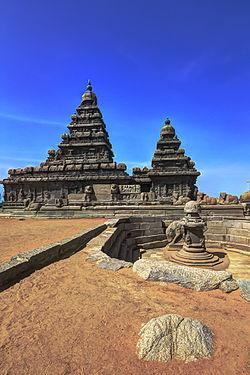
ราชวงศ์ปัลลาวะในช่วงศตวรรษที่ 4 ถึง 9 ร่วมกับราชวงศ์คุปตะทางเหนือ เป็น ผู้อุปถัมภ์การพัฒนาภาษาสันสกฤตในภาคใต้ของอนุทวีปอินเดียอย่างมาก ในรัชสมัยของราชวงศ์ปัลลาวะมีการจารึกภาษาสันสกฤตครั้งแรกด้วยอักษรที่เรียกว่ากรันถะ [ 165 ] ราชวงศ์ปัลลาวะในยุคแรกมีความเชื่อมโยงกับประเทศต่างๆ ในเอเชียตะวันออกเฉียงใต้ ราชวงศ์ปัลลาวะใช้สถาปัตยกรรมแบบดราวิเดียนในการสร้างวัดและสถาบันการศึกษาฮินดูที่สำคัญหลายแห่งในมามัลลาปุรัมกันจิปุรัมและสถานที่อื่นๆ การปกครองของพวกเขานำไปสู่การกำเนิดของกวีผู้ยิ่งใหญ่ การสร้างวัดเพื่ออุทิศให้กับเทพเจ้าต่างๆ เป็นที่นิยมตามมาด้วยสถาปัตยกรรมวัดและประติมากรรมอันงดงามตามแบบวาสตุศาสตร์[ 166 ]
ราชวงศ์ปัลลาวาเจริญรุ่งเรืองถึงขีดสุดในช่วงรัชสมัยของพระเจ้ามเหณทรวรมันที่ 1 (ค.ศ. 571–630) และพระเจ้านรสิงหาวรมันที่ 1 (ค.ศ. 630–668) และครอบครองดิน แดน เตลูกูและตอนเหนือของ ภูมิภาค ทมิฬจนถึงปลายศตวรรษที่ 9 [ 167 ]
จักรวรรดิกาดัมบา

ราชวงศ์กา ดัมบา มีต้นกำเนิดจากรัฐ กรณาฏกะ ก่อตั้งโดยพระเจ้ามายุรสาร์มาในปี ค.ศ. 345 ซึ่งต่อมาแสดงให้เห็นถึงศักยภาพในการพัฒนาไปสู่ระดับจักรวรรดิ พระเจ้ามายุรสาร์มาทรงเอาชนะกองทัพของราชวงศ์ปัลลาวะแห่งกันจิ โดยอาจได้รับความช่วยเหลือจากชนเผ่าพื้นเมืองบางกลุ่ม ชื่อเสียงของ ราชวงศ์ กาดัมบารุ่งเรือง ถึงขีดสุดใน รัชสมัย ของพระเจ้ากากุษฐวรมา ผู้ปกครองที่โดดเด่นซึ่งกษัตริย์แห่ง ราชวงศ์คุปตะ ทางตอนเหนือของอินเดียได้สร้างพันธมิตรทางการสมรส ด้วย ราชวงศ์กา ดัมบา เป็นราชวงศ์ร่วมสมัยกับราชวงศ์ คงคาตะวันตกและร่วมกันก่อตั้งอาณาจักรพื้นเมืองกลุ่มแรกที่ปกครองดินแดนด้วยเอกราชโดยสมบูรณ์ ต่อมาราชวงศ์นี้ได้ปกครองในฐานะขุนนางศักดินาของจักรวรรดิกันนาดาที่ใหญ่กว่า ได้แก่ จักรวรรดิจาลุกยะและ จักรวรรดิ รัชตรากุตะเป็นเวลากว่าห้าร้อยปี ในช่วงเวลานั้นพวกเขาได้แตกแขนงออกเป็นราชวงศ์ย่อยๆ ( กาดัมบาแห่งกัว กาดัมบาแห่งหลาสีและกาดัมบาแห่งฮังคาล )
จักรวรรดิของหรรษา
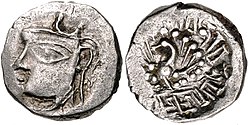
พระเจ้าหรรษาทรงปกครองอินเดียตอนเหนือระหว่างปี ค.ศ. 606 ถึง 647 พระองค์เป็นโอรสของพระเจ้าประภากรวรธนะและเป็นพระอนุชาของพระเจ้าราชยวรธนะซึ่งเป็นสมาชิกของราชวงศ์วรธนะและปกครองเมืองธาเนสาร ในรัฐ หร ยาณาในปัจจุบัน
หลังจากการล่มสลายของจักรวรรดิกุปตะในกลางศตวรรษที่ 6 อินเดียเหนือก็กลับกลายเป็นสาธารณรัฐและรัฐกษัตริย์ขนาดเล็กอีกครั้ง สุญญากาศทางอำนาจส่งผลให้ราชวงศ์วรธนะแห่งธาเนสาร์ขึ้นมามีอำนาจ ซึ่งเริ่มรวมสาธารณรัฐและรัฐกษัตริย์จากปัญจาบไปจนถึงอินเดียตอนกลาง หลังจากที่บิดาและพี่ชายของหรรษาสิ้นพระชนม์ ตัวแทนของจักรวรรดิได้สวมมงกุฎให้หรรษาเป็นจักรพรรดิในเดือนเมษายน ค.ศ. 606 และพระราชทานพระยศเป็นมหาราชา[ 169 ]ในช่วงรุ่งเรืองที่สุด จักรวรรดิของพระองค์ครอบคลุมพื้นที่ส่วนใหญ่ของอินเดียเหนือและตะวันตกเฉียงเหนือ ขยายไปทางตะวันออกจนถึงกามรูปาและทางใต้จนถึงแม่น้ำนาร์มาดาและในที่สุดก็ตั้ง เมืองกัน นาอุจ (ปัจจุบันอยู่ในรัฐอุตตรประเทศ ) เป็นเมืองหลวง และปกครองจนถึง ค.ศ. 647 [ 170 ]
ความสงบสุขและความเจริญรุ่งเรืองที่เกิดขึ้นทำให้ราชสำนักของพระองค์เป็นศูนย์กลางของความเป็นสากล ดึงดูดนักวิชาการ ศิลปิน และผู้มาเยือนทางศาสนา[ 170 ]ในช่วงเวลานี้ หรรษาทรงเปลี่ยนจากศาสนาฮินดูมานับถือพุทธศาสนา[ 171 ]นักเดินทางชาวจีนชื่อเสวียนจางได้มาเยือนราชสำนักของหรรษาและเขียนบันทึกที่ยกย่องพระองค์เป็นอย่างมาก โดยสรรเสริญความยุติธรรมและความเอื้อเฟื้อเผื่อแผ่ของพระองค์[ 170 ]ชีวประวัติของพระองค์ชื่อหรรษาจริตะ ("วีรกรรมของหรรษา") ซึ่งเขียนโดยกวีสันสกฤตชื่อบานาภัตตา บรรยายถึงความสัมพันธ์ของพระองค์กับธาเนสารและพระราชวังที่มี ธวาลกริหะ (คฤหาสน์สีขาว) สองชั้น[ 172 ] [ 173 ]
ยุคกลางตอนต้น (ประมาณ ค.ศ. 650 – 1200)
อินเดียสมัยกลางตอนต้นเริ่มต้นขึ้นหลังจากการสิ้นสุดของจักรวรรดิกุปตะในศตวรรษที่ 6 [ 127 ]ช่วงเวลานี้ยังครอบคลุมถึง "ยุคคลาสสิกตอนปลาย" ของศาสนาฮินดู ซึ่งเริ่มต้นหลังจากการล่มสลายของจักรวรรดิหรรษาในศตวรรษที่ 7 [ 174 ]และสิ้นสุดลงในศตวรรษที่ 13 ด้วยการขึ้นมามีอำนาจของรัฐสุลต่านเดลีในอินเดียตอนเหนือ[ 175 ]การเริ่มต้นของจักรวรรดิกันนาอุจซึ่งนำไปสู่การต่อสู้สามฝ่ายและการสิ้นสุดของราชวงศ์โชลาตอนปลายด้วยการสิ้นพระชนม์ของพระเจ้าราเชนทราโชลาที่ 3ในปี 1279 ในอินเดียตอนใต้ อย่างไรก็ตาม บางแง่มุมของยุคคลาสสิกยังคงดำเนินต่อไปจนกระทั่งการล่มสลายของจักรวรรดิวิชัยนครในภาคใต้ราวศตวรรษที่ 17
ตั้งแต่ศตวรรษที่ 5 ถึงศตวรรษที่ 13 การบูชายัญศ ราอุตะลดลง และการสนับสนุนศาสนาไศวะศาสนาไวษณวะและศาสนาศักติขยายตัวในราชสำนัก ในขณะที่การสนับสนุนพุทธศาสนาลดลง[ 176 ]การขาดความน่าสนใจในหมู่ประชาชนในชนบท ซึ่งหันไปนับถือศาสนาฮินดู แบบพราหมณ์ ที่ก่อตัวขึ้นในการผสมผสานของศาสนาฮินดูและการสนับสนุนทางการเงินที่ลดลงจากชุมชนการค้าและชนชั้นสูงในราชสำนัก เป็นปัจจัยสำคัญที่ทำให้พุทธศาสนาเสื่อมถอย[ 177 ]
ในศตวรรษที่ 7 กุมาริลภฏะได้วางรากฐานปรัชญาสำนักมีมัมสะและปกป้องจุดยืนเกี่ยวกับพิธีกรรมเวท[ 178 ]
ตั้งแต่ศตวรรษที่ 8 ถึงศตวรรษที่ 10 ราชวงศ์สามราชวงศ์ได้แย่งชิงอำนาจควบคุมอินเดียตอนเหนือ ได้แก่ ราชวงศ์คุรจาราประติหาราแห่งมัลวาราชวงศ์ปาละแห่งเบงกอล และราชวงศ์รัชตรากุตะแห่งเดคคานราชวงศ์เสนาจะเข้าควบคุมจักรวรรดิปาละในภายหลัง ราชวงศ์คุรจาราประติหาราแตกแยกออกเป็นรัฐต่างๆ มากมาย โดยเฉพาะอาณาจักรมัลวาอาณาจักรบุนเดลขันธ์อาณาจักรดาฮาลา ราชวงศ์โทมาราแห่งหรยาณาและอาณาจักรสัมภาร์รัฐเหล่านี้เป็นอาณาจักรราชปุตยุค แรกๆ [ 179 ]ในขณะที่ราชวงศ์รัชตรากุตะถูกผนวกเข้ากับ ราชวงศ์ชาลุก ยะตะวันตก[ 180 ]ในช่วงเวลานี้ราชวงศ์ชาลุกยะได้ถือกำเนิดขึ้น ราชวงศ์ Chaulukyas ได้สร้างวัด Dilwara , วัดสุริยะ Modhera , Rani ki vav [ 181 ]ในรูปแบบสถาปัตยกรรม Māru-Gurjaraและเมืองหลวง Anhilwara (ปัจจุบันคือPatan, Gujarat ) เป็นหนึ่งในเมืองที่ใหญ่ที่สุดในอนุทวีปอินเดีย โดยมีประชากรประมาณ 100,000 คนในราวปี ค.ศ. 1000 การเจริญรุ่งเรืองของ Patan ยังเป็นจุดเริ่มต้นของการฟื้นฟูศาสนาเชนใน Gujarat ในสมัยของHemchandracharya เมือง นี้มีชื่อเสียงในด้านการรวบรวมต้นฉบับเชนโบราณและเป็นศูนย์กลางการเรียนรู้เชนที่สำคัญ[ 182 ]ซึ่งได้รับความชื่นชมจากนักวิชาการหลายคน Peter Peterson นักอินเดียศึกษาและนักสันสกฤต ชาวอังกฤษ ได้อธิบายการรวบรวมไว้ดังนี้:
ฉันไม่รู้จักเมืองใดในอินเดีย และมีเพียงไม่กี่เมืองในโลกที่สามารถอวดอ้างได้ว่ามีคลังเอกสารเก่าแก่มากมายขนาดนี้ เอกสารเหล่านั้นจะเป็นความภาคภูมิใจและสมบัติล้ำค่าที่ห้องสมุดมหาวิทยาลัยใดๆ ในยุโรปต้องหวงแหน[ 183 ]
จักรวรรดิโชลาได้ผงาดขึ้นเป็นมหาอำนาจในช่วงรัชสมัยของพระเจ้าราชา ราชา โชลาที่ 1และพระเจ้าราเชนทรา โชลาที่ 1ซึ่งได้รุกรานบางส่วนของเอเชียตะวันออกเฉียงใต้และศรีลังกา ได้สำเร็จ ในศตวรรษที่ 11 [ 184 ]ลลิตาทิตยะ มุกตาพิทยะ (ครองราชย์ ค.ศ. 724–760) เป็นจักรพรรดิแห่งราชวงศ์กฤษณะแห่ง แคชเมียร์ ซึ่งมีอิทธิพลในอินเดียตะวันตกเฉียงเหนือตั้งแต่ปี ค.ศ. 625 จนถึง ค.ศ. 1003 และต่อมาเป็นราชวงศ์โลหระ กัลหานะในราชตารังคินี ของเขา ยกย่องพระเจ้าลลิตาทิตยะว่าทรงนำทัพทำสงครามอย่างดุดันในอินเดียตอนเหนือและเอเชียกลาง[ 185 ] [ 186 ] [ 187 ]
ราชวงศ์ฮินดูชาฮีปกครองบางส่วนของอัฟกานิสถานตะวันออก ปากีสถานเหนือ และแคชเมียร์ ตั้งแต่กลางศตวรรษที่ 7 ถึงต้นศตวรรษที่ 11 ในขณะที่ในโอริสสาจักรวรรดิกังกาตะวันออก ก็รุ่งเรืองขึ้น โดดเด่นในด้านความก้าวหน้าของสถาปัตยกรรมฮินดูโดยเฉพาะอย่างยิ่งวัดจาแกนนาถและวัดสุริยะโคนาร์กรวมทั้งยังเป็นผู้อุปถัมภ์ศิลปะและวรรณกรรมอีกด้วย
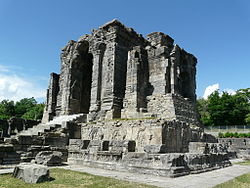 วิหาร สุริยะมาร์ตันด์ เป็นวิหารหลักที่อุทิศแด่เทพเจ้าสุริยะสร้างโดยลลิตาทิตยะ มุกตาพิ ฑา ผู้ปกครององค์ที่สาม แห่งราชวงศ์การ์โกฏในศตวรรษที่ 8
 วิหารสุริยะโคนาร์กณ เมืองโคนาร์กรัฐ โอริ สสาสร้างโดยนรสิงหเทวะที่ 1 (ค.ศ. 1238–1264) แห่งราชวงศ์คงคาตะวันออก




ราชวงศ์คุปตะตอนปลาย

ราชวงศ์คุปตะตอนปลายปกครอง แคว้น มคธในอินเดียตะวันออกระหว่างศตวรรษที่ 6 ถึง 7 ราชวงศ์คุปตะตอนปลายสืบทอด อำนาจต่อจาก ราชวงศ์คุปตะในฐานะผู้ปกครองแคว้นมคธ แต่ไม่มีหลักฐานเชื่อมโยงราชวงศ์ทั้งสองเข้าด้วยกัน ดูเหมือนว่าจะเป็นสองตระกูลที่แตกต่างกัน[ 188 ]ราชวงศ์คุปตะตอนปลายถูกเรียกเช่นนั้นเพราะชื่อของผู้ปกครองลงท้ายด้วยคำต่อท้าย "-คุปตะ" ซึ่งพวกเขาอาจนำมาใช้เพื่อแสดงให้เห็นว่าตนเองเป็นผู้สืบทอดที่ถูกต้องตามกฎหมายของราชวงศ์คุปตะ[ 189 ]
จักรวรรดิชาลุกยะ
จักรวรรดิชาลุกยะปกครองพื้นที่ส่วนใหญ่ของอินเดียตอนใต้และตอนกลางระหว่างศตวรรษที่ 6 ถึง 12 โดยแบ่งออกเป็นสามราชวงศ์ที่เกี่ยวข้องกันแต่ก็เป็นอิสระต่อกัน ราชวงศ์แรกสุดที่รู้จักกันในชื่อ "ราชวงศ์บาดามิชาลุกยะ" ปกครองจากเมืองวาตาปี (ปัจจุบันคือเมืองบาดามิ ) ตั้งแต่กลางศตวรรษที่ 6 ราชวงศ์บาดามิชาลุกยะเริ่มประกาศเอกราชเมื่อ อาณาจักรกาดั มบาแห่งบานาวา สีเสื่อมอำนาจลง และเจริญรุ่งเรืองอย่างรวดเร็วในรัชสมัยของพระเจ้าปุลาเกชินที่ 2การปกครองของชาลุกยะถือเป็นเหตุการณ์สำคัญในประวัติศาสตร์ของอินเดียตอนใต้และเป็นยุคทองในประวัติศาสตร์ของรัฐกรณาฏกะบรรยากาศทางการเมืองในอินเดียตอนใต้เปลี่ยนจากอาณาจักรเล็กๆ ไปสู่จักรวรรดิขนาดใหญ่ด้วยการขึ้นมามีอำนาจของราชวงศ์บาดามิชาลุกยะ อาณาจักรที่ตั้งอยู่ในอินเดียตอนใต้เข้าควบคุมและรวมอำนาจเหนือพื้นที่ทั้งหมดระหว่างแม่น้ำกาเวรีและแม่น้ำนาร์มาดา การขึ้นมาของจักรวรรดินี้ได้นำมาซึ่งการบริหารที่มีประสิทธิภาพ การค้าและการพาณิชย์ระหว่างประเทศ และการพัฒนาสถาปัตยกรรมรูปแบบใหม่ที่เรียกว่า "สถาปัตยกรรมจาลุกยะ" ราชวงศ์จาลุกยะปกครองบางส่วนของอินเดียตอนใต้และตอนกลาง โดยมีเมืองบาดามิในรัฐกรณาฏกะเป็นศูนย์กลางระหว่างปี 550 ถึง 750 และอีกครั้งจากเมืองกัลยานีระหว่างปี 970 ถึง 1190


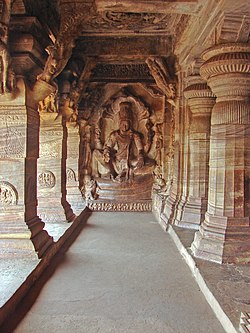
 ภาพภายนอกของวิหารพระแม่ทุรคาในศตวรรษที่ 8 ณกลุ่มโบราณสถานไอโฮลซึ่งประกอบด้วยวัดและอนุสรณ์สถานของศาสนาฮินดู พุทธ และเชน




จักรวรรดิรัชตรากุตะ
จักรวรรดิรัชตรากุตะ ก่อตั้งโดยทันทิทุรคาราวปี ค.ศ. 753 [ 190 ]ปกครองจากเมืองหลวงที่มันยาเกตาเป็นเวลาเกือบสองศตวรรษ[ 191 ]ในช่วงรุ่งเรืองที่สุด รัชตรากุตะปกครองตั้งแต่ที่ราบลุ่มแม่น้ำคงคา-ยมุนาทางเหนือไปจนถึงแหลมโคโมรินทางใต้ ซึ่งเป็นช่วงเวลาที่อุดมสมบูรณ์ไปด้วยความสำเร็จทางสถาปัตยกรรมและวรรณกรรม[ 192 ] [ 193 ]
ผู้ปกครองยุคแรกของราชวงศ์นี้เป็นชาวฮินดู แต่ผู้ปกครองในยุคหลังได้รับอิทธิพลอย่างมากจากศาสนาเชน[ 194 ]โกวินทาที่ 3และอมโฆวรษาเป็นผู้บริหารที่มีชื่อเสียงที่สุดในบรรดาผู้บริหารที่มีความสามารถมากมายที่ราชวงศ์นี้ได้ผลิตออกมา อมโฆวรษายังเป็นนักเขียนและเขียนกวีราชมาร์กาซึ่งเป็นงานเขียนภาษากันนาดาที่เก่าแก่ที่สุดเกี่ยวกับกวีนิพนธ์[ 191 ] [ 195 ]สถาปัตยกรรมได้ก้าวไปสู่จุดสำคัญในรูปแบบดราวิเดียน ซึ่งตัวอย่างที่ดีที่สุดสามารถเห็นได้ในวัดไกลาสนาถที่เอลลอรา ผลงานสำคัญอื่นๆ ได้แก่ วัดกาศิวิศวนาถและวัดเชนนารายณะที่ปัตตาดากัลในรัฐกรณาฏกะ
นักเดินทางชาวอาหรับสุไลมานได้บรรยายถึงจักรวรรดิรัชตรากุฏว่าเป็นหนึ่งในสี่จักรวรรดิที่ยิ่งใหญ่ของโลก[ 196 ]ยุครัชตรากุฏถือเป็นจุดเริ่มต้นของยุคทองของคณิตศาสตร์อินเดียตอนใต้ นักคณิตศาสตร์ผู้ยิ่งใหญ่แห่งอินเดียตอนใต้มหาวีระมีอิทธิพลอย่างมากต่อนักคณิตศาสตร์อินเดียตอนใต้ในยุคกลาง[ 197 ]ผู้ปกครองรัชตรากุฏยังอุปถัมภ์นักปราชญ์ในหลากหลายภาษาอีกด้วย[ 191 ]

 ศิขระของอินทราสภา ณ ถ้ำเอลโลรา
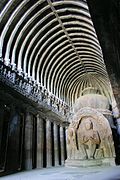 รูปปั้นพระพุทธเจ้าประทับนั่ง ส่วนหนึ่งของถ้ำช่างไม้ (ถ้ำพุทธหมายเลข 10)




จักรวรรดิกุรจารา-ประติหารา
ราชวงศ์คุรจารา-ประติหารามีบทบาทสำคัญในการสกัดกั้นกองทัพอาหรับที่เคลื่อนทัพไป ทางตะวันออกของแม่น้ำสินธุนากาภัตตาที่ 1 เอาชนะกองทัพอาหรับภายใต้การนำของจูไนดและทามินระหว่างการรบของราชวงศ์อุมัยยะฮ์ในอินเดีย [ 198 ] ภายใต้ การปกครอง ของนากาภัตตาที่ 2ราชวงศ์คุรจารา-ประติหารากลายเป็นราชวงศ์ที่มีอำนาจมากที่สุดในอินเดียตอนเหนือ พระองค์ได้รับการสืบทอดตำแหน่งโดยพระโอรสของพระองค์คือรามภัทระซึ่งปกครองได้ไม่นานก่อนที่จะได้รับการสืบทอดตำแหน่งโดยพระโอรสของพระองค์คือมิหิระโภชา ภายใต้การปกครองของโภชาและผู้สืบทอดตำแหน่งของเขา คือมเหณท ราปาละที่ 1จักรวรรดิประติหาราเจริญรุ่งเรืองและมีอำนาจถึงขีดสุด ในสมัยของมเหณทราปาละ อาณาเขตของจักรวรรดิแผ่ขยายจากชายแดนสินธุทางตะวันตกไปจนถึงพิหารทางตะวันออก และจากเทือกเขาหิมาลัยทางเหนือไปจนถึงบริเวณแม่น้ำนาร์มาดาทางใต้[ 199 ]การขยายตัวนี้ก่อให้เกิดการต่อสู้แย่งชิงอำนาจสามฝ่ายกับ จักรวรรดิ รัชตรากุฏะและปาละเพื่อควบคุมอนุทวีปอินเดีย
เมื่อถึงปลายศตวรรษที่ 10 ขุนนางหลายคนของจักรวรรดิได้ใช้ประโยชน์จากความอ่อนแอชั่วคราวของราชวงศ์กุรจารา-ประติหาราเพื่อประกาศเอกราช โดยเฉพาะอย่างยิ่งอาณาจักรมัลวา อาณาจักรบุนเดลขันธ์ ราชวงศ์โทมาราแห่งหรยาณาและอาณาจักรสัมภาร์[ 200 ]และอาณาจักรดาฮาลา

 ประติมากรรมใกล้กับเทลี กา มันดีร์ ป้อมกวาลิออร์
 อนุสรณ์สถานและรูปปั้นที่เกี่ยวข้องกับศาสนาเชนซึ่งแกะสลักบนหน้าผาภายในถ้ำสิทธจัล ป้อมกวาลิออร์
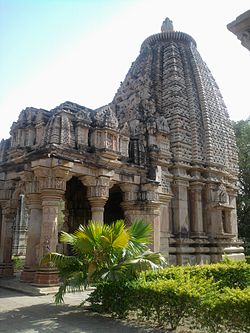 วัดฆาเตศวร มหาเทวะ ในกลุ่มวัดบารอลีกลุ่มวัดแปดแห่งที่สร้างโดยราชวงศ์คุรจารา-ประติหารา ภายในกำแพงเมือง



ราชวงศ์กาหะดาวาลา
ราชวงศ์กาหะดาวาลาปกครองบางส่วนของ รัฐ อุตตรประเทศและรัฐพิหาร ในปัจจุบัน ของอินเดีย ในช่วงศตวรรษที่ 11 และ 12 เมืองหลวงของพวกเขาตั้งอยู่ที่เมืองวาราณสี[ 202 ]
ราชวงศ์การ์นัต

ในปี ค.ศ. 1097 ราชวงศ์การ์นัตแห่งมิถิลาได้ถือกำเนิดขึ้นในบริเวณชายแดนรัฐพิหาร/เนปาล และมีเมืองหลวงอยู่ที่ดาร์บังกาและซิมราองกาธราชวงศ์นี้ก่อตั้งโดยนันยาเทวะผู้บัญชาการทหารที่มีต้นกำเนิดจากรัฐกรณาฏกะ ภายใต้ราชวงศ์นี้ ภาษา ไมถิลีเริ่มพัฒนาขึ้น โดยมีวรรณกรรมไมถิลีชิ้นแรกคือวรรณรัตนการะซึ่งเขียนขึ้นในศตวรรษที่ 14 โดยโชติฤษณะฐากูร ราชวงศ์การ์นัตยังได้ทำการโจมตีเนปาลด้วย พวกเขาพ่ายแพ้ในปี ค.ศ. 1324 หลังจากการรุกรานของกียาสุดดิน ตุกห์ลัก[ 203 ] [ 204 ]
อาณาจักรพาลา
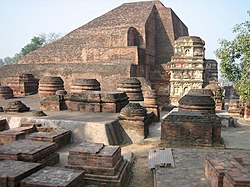
อาณาจักรปาละก่อตั้งโดย โกปาละ ที่1 [ 205 ] [ 206 ] [ 207 ]ปกครองโดยราชวงศ์พุทธจากเบงกอล ราชวงศ์ปาละได้รวมเบงกอลเป็นหนึ่งเดียวอีกครั้งหลังจากการล่มสลายของอาณาจักรเกาฑะของศศังกะ[ 208 ]
ราชวงศ์ปาละเป็นผู้ติดตามพุทธศาสนานิกายมหายานและตันตระ[ 209 ]พวกเขายังอุปถัมภ์ศาสนาไศวะและไวษณวะอีก ด้วย [ 210 ]จักรวรรดิเจริญรุ่งเรืองถึงขีดสุดภายใต้การปกครองของธรรมปาละและเทวปาละเชื่อกันว่าธรรมปาละได้พิชิตเมืองคานาอุจและขยายอำนาจปกครองไปจนถึงดินแดนที่ไกลที่สุดของอินเดียทางทิศตะวันตกเฉียงเหนือ[ 210 ]
อาณาจักรปาละถือได้ว่าเป็นยุคทองของเบงกอล[ 211 ]ธรรมปาละทรงก่อตั้งวิกรมศิลาและฟื้นฟูนาลันทา[ 210 ]ซึ่งถือเป็นหนึ่งในมหาวิทยาลัยที่ยิ่งใหญ่แห่งแรกในประวัติศาสตร์ที่บันทึกไว้ นาลันทาเจริญรุ่งเรืองถึงขีดสุดภายใต้การอุปถัมภ์ของอาณาจักรปาละ[ 211 ] [ 212 ]ราชวงศ์ปาละยังทรงสร้างวิหาร จำนวนมาก พวกเขารักษาความสัมพันธ์ทางวัฒนธรรมและการค้าอย่างใกล้ชิดกับประเทศต่างๆ ในเอเชียตะวันออกเฉียงใต้และทิเบตการค้าทางทะเลช่วยเพิ่มความเจริญรุ่งเรืองให้กับอาณาจักรปาละอย่างมาก
โชลา
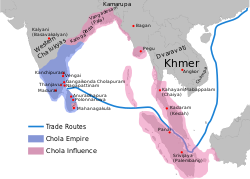
ราชวงศ์โชลาในยุคกลางรุ่งเรืองขึ้นในช่วงกลางศตวรรษที่ 9 และสถาปนาจักรวรรดิที่ยิ่งใหญ่ที่สุดเท่าที่อินเดียใต้เคยมีมา[ 213 ]พวกเขารวมอินเดียใต้ไว้ภายใต้การปกครองของตนได้สำเร็จ และด้วยกำลังทางเรือ พวกเขาได้ขยายอิทธิพลไปยังประเทศต่างๆ ในเอเชียตะวันออกเฉียงใต้ เช่นศรีวิชัย[ 184 ]ภายใต้ การปกครอง ของพระเจ้าราชาราชาโชลาที่ 1และผู้สืบทอดตำแหน่งต่อมา ได้แก่ พระเจ้าราชา เชนทราโชลาที่ 1 , พระเจ้า ราชาธิราชาโชลา , พระเจ้าวิราเชนทราโชลาและพระเจ้ากุโลทุงกาโชลาที่ 1ราชวงศ์นี้ได้กลายเป็นมหาอำนาจทางทหาร เศรษฐกิจ และวัฒนธรรมในเอเชียใต้และเอเชียตะวันออกเฉียงใต้[ 214 ] [ 215 ]กองทัพเรือของพระเจ้าราชาเชนทราโชลาที่ 1 ยึดครองชายฝั่งทะเลตั้งแต่พม่าถึงเวียดนาม[ 216 ]หมู่เกาะอันดามันและนิโคบาร์ หมู่เกาะ ลักษทวีป (ลักคาดีฟ) สุมาตราและคาบสมุทรมลายู อำนาจของจักรวรรดิใหม่ได้รับการประกาศให้โลกตะวันออกรู้โดยการเดินทางสำรวจแม่น้ำคงคาซึ่งพระเจ้าราเชนทราโชลาที่ 1 ทรงดำเนินการ และโดยการยึดครองเมืองต่างๆ ของจักรวรรดิทางทะเลศรีวิชัยในเอเชียตะวันออกเฉียงใต้ รวมถึงการส่งทูตไปยังจีนหลายครั้ง[ 217 ]
พวกเขาครอบงำกิจการทางการเมืองของศรีลังกาเป็นเวลากว่าสองศตวรรษผ่านการรุกรานและการยึดครองซ้ำแล้วซ้ำเล่า พวกเขายังมีการติดต่อค้าขายอย่างต่อเนื่องกับชาวอาหรับและจักรวรรดิจีน[ 218 ]ราชาราชาโชลาที่ 1 และพระโอรสของพระองค์ ราเชนทรา โชลาที่ 1 ได้รวมอำนาจทางการเมืองให้กับอินเดียตอนใต้ทั้งหมด และสถาปนาจักรวรรดิโชลาให้เป็นมหาอำนาจทางทะเลที่น่านับถือ[ 219 ]ภายใต้การปกครองของโชลา อินเดียตอนใต้ได้ก้าวไปสู่ความเป็นเลิศในด้านศิลปะ ศาสนา และวรรณกรรม ในทุกด้านเหล่านี้ ยุคโชลาถือเป็นจุดสูงสุดของการเคลื่อนไหวที่เริ่มต้นในยุคก่อนหน้าภายใต้ราชวงศ์ปัลลาวะ สถาปัตยกรรมอันยิ่งใหญ่ในรูปแบบของวัดอันสง่างามและประติมากรรมหินและทองสัมฤทธิ์ได้บรรลุถึงความประณีตที่ไม่เคยมีมาก่อนในอินเดีย[ 220 ]

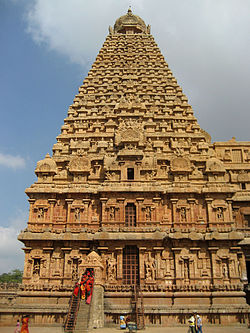 หินแกรนิตโกปุรัม (หอคอย)ของวัด Brihadeeswararปี 1010
 รายละเอียดรถม้าศึกที่วัดไอราวเทศวรสร้างขึ้นโดยราชราชาชลที่ 2ในศตวรรษที่ 12
 โครงสร้างรูปทรงพีระมิดเหนือห้องศักดิ์สิทธิ์ในวัดบริหทิศวร
 Brihadeeswara Temple Entrance Gopurams at Thanjavur



Western Chalukya Empire
The Western Chalukya Empire ruled most of the western Deccan, South India, between the 10th and 12th centuries.[222] Vast areas between the Narmada River in the north and Kaveri River in the south came under Chalukya control.[222] During this period the other major ruling families of the Deccan, the Hoysalas, the Seuna Yadavas of Devagiri, the Kakatiya dynasty and the Southern Kalachuris, were subordinates of the Western Chalukyas and gained their independence only when the power of the Chalukya waned during the latter half of the 12th century.[223]
The Western Chalukyas developed an architectural style known today as a transitional style, an architectural link between the style of the early Chalukya dynasty and that of the later Hoysala empire. Most of its monuments are in the districts bordering the Tungabhadra River in central Karnataka. Well known examples are the Kasivisvesvara Temple at Lakkundi, the Mallikarjuna Temple at Kuruvatti, the Kallesvara Temple at Bagali, Siddhesvara Temple at Haveri, and the Mahadeva Temple at Itagi.[224] This was an important period in the development of fine arts in Southern India, especially in literature as the Western Chalukya kings encouraged writers in the native language of Kannada, and Sanskrit like the philosopher and statesman Basava and the great mathematician Bhāskara II.[225][226]

 Ornate entrance to the closed hall from the south at Kalleshvara Temple at Bagali
 Shrine wall relief, molding frieze and miniature decorative tower in Mallikarjuna Temple at Kuruvatti
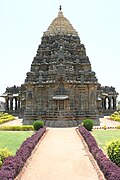 Rear view showing lateral entrances of the Mahadeva Temple at Itagi



Late medieval period (c. 1200 – 1526)
The late medieval period is marked by repeated invasions by Muslim Central Asian nomadic clans,[227][228] the rule of the Delhi Sultanate, and by the growth of other states, built upon military technology of the sultanate.[229]
Delhi Sultanate
The Delhi Sultanate was a series of successive Islamic states based in Delhi, ruled by several dynasties of varying origins. The polity ruled over large parts of the Indian subcontinent from the 13th to early 16th centuries.[230] The sultanate was founded in the 12th and 13th centuries by Central Asian Turks, who invaded parts of northern India and established the state atop former Hindu holdings.[231] The subsequent Mamluk dynasty of Delhi managed to conquer large areas of northern India. The Khalji dynasty conquered much of central India while forcing the principal Hindu kingdoms of South India to become vassal states.[230]
The sultanate ushered in a period of Indian cultural renaissance. The resulting "Indo-Muslim" fusion of cultures left lasting syncretic monuments in architecture, music, literature, religion, and clothing. It is surmised that the language of Urdu was born during the period of the Delhi Sultanate. The sultanate was the only Indo-Islamic state to enthrone one of the few female rulers in India, Razia Sultana (r. 1236–1240).
While initially disruptive due to the passing of power from native Indian elites to Turkic Muslim elites, the Delhi Sultanate was responsible for integrating the Indian subcontinent into a growing world system, drawing India into a wider international network, which had a significant impact on Indian culture and society.[232] However, the Delhi Sultanate also caused large-scale destruction and desecration of temples in the Indian subcontinent.[233]
The Mongol invasions of India were successfully repelled by the Delhi Sultanate during the rule of Alauddin Khalji. A major factor in their success was their Turkic Mamluk slave army, who were highly skilled in the same style of nomadic cavalry warfare as the Mongols. It is possible that the Mongol Empire may have expanded into India were it not for the Delhi Sultanate's role in repelling them.[234] By repeatedly repulsing the Mongol raiders,[235] the sultanate saved India from the devastation waged on West and Central Asia. Soldiers from that region and learned men and administrators fleeing Mongol invasions of Iran migrated into the subcontinent, thereby creating a syncretic Indo-Islamic culture in the north.[234]
A Turco-Mongol conqueror from Central Asia, Timur (Tamerlane), attacked the reigning sultan Nasir-u Din Mehmud of the Tughlaq dynasty in Delhi.[236] The sultan's army was defeated on 17 December 1398. Timur entered Delhi and the city was sacked, destroyed, and left in ruins after Timur's army had killed and plundered for three days and nights. He ordered the whole city to be sacked except for the sayyids, scholars, and the "other Muslims" (artists); 100,000 war prisoners were said to have been put to death in one day.[237] The sultanate suffered significantly from the sacking of Delhi. Though revived briefly under the Sayyid and Lodi dynasties, it was but a shadow of the former. Lodi rule lasted in Delhi until the defeat of the last sultan, Ibrahim Khan Lodi, in 1526 to the forces of Babur.[238]
 Qutb Minar, a UNESCO World Heritage Site, whose construction was begun by Qutb ud-Din Aibak, the first Sultan of Delhi.


Vijayanagara Empire

The Vijayanagara Empire was established in 1336 by Harihara I and his brother Bukka Raya I of Sangama Dynasty,[239] which originated as a political heir of the Hoysala Empire, Kakatiya Empire,[240] and the Pandyan Empire.[241] The empire rose to prominence as a culmination of attempts by the south Indian powers to ward off Islamic invasions by the end of the 13th century. It lasted until 1646, although its power declined after a major military defeat in 1565 by the combined armies of the Deccan sultanates. The empire is named after its capital city of Vijayanagara, whose ruins surround present day Hampi, now a World Heritage Site in Karnataka, India.[242]
In the first two decades after the founding of the empire, Harihara I gained control over most of the area south of the Tungabhadra river and earned the title of Purvapaschima Samudradhishavara ("master of the eastern and western seas"). By 1374 Bukka Raya I, successor to Harihara I, had defeated the chiefdom of Arcot, the Reddys of Kondavidu, and the Sultan of Madurai and had gained control over Goa in the west and the Tungabhadra-Krishna doab in the north.[243][244]
Harihara II, the second son of Bukka Raya I, further consolidated the kingdom beyond the Krishna River and brought the whole of South India under the Vijayanagara umbrella.[245] The next ruler, Deva Raya I, emerged successful against the Gajapatis of Odisha and undertook important works of fortification and irrigation.[246] Italian traveller Niccolo de Conti wrote of him as the most powerful ruler of India.[247]Deva Raya II succeeded to the throne in 1424 and was possibly the most capable of the Sangama Dynasty rulers.[248] He quelled rebelling feudal lords as well as the Zamorin of Calicut and Quilon in the south. He invaded the island of Sri Lanka and became overlord of the kings of Burma at Pegu and Tanasserim.[249][250][251]
The Vijayanagara Emperors were tolerant of all religions and sects, as writings by foreign visitors show.[252] The kings used titles such as Gobrahamana Pratipalanacharya (literally, "protector of cows and Brahmins") and Hindurayasuratrana (lit, "upholder of Hindu faith") that testified to their intention of protecting Hinduism and yet were at the same time staunchly Islamicate in their court ceremonials and dress.[253] The empire's founders, Harihara I and Bukka Raya I, were devout Shaivas (worshippers of Shiva), but made grants to the Vaishnava order of Sringeri with Vidyaranya as their patron saint, and designated Varaha (an avatar of Vishnu) as their emblem.[254] Nobles from Central Asia's Timurid kingdoms also came to Vijayanagara.[255] The later Saluva and Tuluva kings were Vaishnava by faith, but worshipped at the feet of Lord Virupaksha (Shiva) at Hampi as well as Lord Venkateshwara (Vishnu) at Tirupati.[256] A Sanskrit work, Jambavati Kalyanam by King Krishnadevaraya, called Lord Virupaksha Karnata Rajya Raksha Mani ("protective jewel of Karnata Empire").[257] The kings patronised the saints of the dvaita order (philosophy of dualism) of Madhvacharya at Udupi.[258]
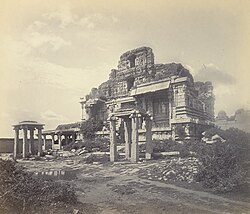 Photograph of the ruins of the Vijayanagara Empire at Hampi, now a UNESCO World Heritage Site in 1868[259]
 Gajashaala, or elephant's stable, was built by the Vijayanagar rulers for their war elephants.[260]
 Vijayanagara marketplace at Hampi, along with the sacred tank located on the side of Krishna temple.
 Stone temple car in Vitthala Temple at Hampi



The empire's legacy includes many monuments spread over South India, the best known of which is the group at Hampi. The previous temple building traditions in South India came together in the Vijayanagara architecture style. The mingling of all faiths and vernaculars inspired architectural innovation of Hindu temple construction. South Indian mathematics flourished under the protection of the Vijayanagara Empire in Kerala. The south Indian mathematician Madhava of Sangamagrama founded the famous Kerala School of Astronomy and Mathematics in the 14th century which produced a lot of great south Indian mathematicians like Parameshvara, Nilakantha Somayaji and Jyeṣṭhadeva.[261] Efficient administration and vigorous overseas trade brought new technologies such as water management systems for irrigation.[262] The empire's patronage enabled fine arts and literature to reach new heights in Kannada, Telugu, Tamil, and Sanskrit, while Carnatic music evolved into its current form.[263]
Vijayanagara went into decline after the defeat in the Battle of Talikota (1565). After the death of Aliya Rama Raya in the Battle of Talikota, Tirumala Deva Raya started the Aravidu dynasty, moved and founded a new capital of Penukonda to replace the destroyed Hampi, and attempted to reconstitute the remains of Vijayanagara Empire.[264] Tirumala abdicated in 1572, dividing the remains of his kingdom to his three sons, and pursued a religious life until his death in 1578. The Aravidu dynasty successors ruled the region but the empire collapsed in 1614, and the final remains ended in 1646, from continued wars with the Bijapur sultanate and others.[265][266][267] During this period, more kingdoms in South India became independent and separate from Vijayanagara. These include the Mysore Kingdom, Keladi Nayaka, Nayaks of Madurai, Nayaks of Tanjore, Nayakas of Chitradurga and Nayak Kingdom of Gingee – all of which declared independence and went on to have a significant impact on the history of South India in the coming centuries.[265]
Other kingdoms
 Vijaya Stambha (Tower of Victory).
 Temple inside Chittorgarh fort
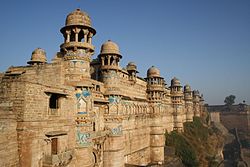 Man Singh (Manasimha) palace at the Gwalior fort
 Chinese manuscript Tribute Giraffe with Attendant, depicting a giraffe presented by Bengali envoys in the name of Sultan Saifuddin Hamza Shah of Bengal to the Yongle Emperor of Ming China
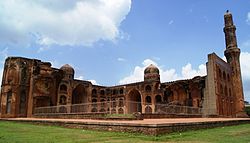 Mahmud Gawan Madrasa was built by Mahmud Gawan, the Wazir of the Bahmani Sultanate as the centre of religious as well as secular education





For two and a half centuries from the mid-13th century, politics in Northern India was dominated by the Delhi Sultanate, and in Southern India by the Vijayanagar Empire. However, there were other regional powers present as well. After fall of Pala Empire, the Chero dynasty ruled much of Eastern Uttar Pradesh, Bihar and Jharkhand from the 12th to the 18th centuries.[268][269][270] The Reddy dynasty successfully defeated the Delhi Sultanate and extended their rule from Cuttack in the north to Kanchi in the south, eventually being absorbed into the expanding Vijayanagara Empire.[271]
In the north, the Rajput kingdoms remained the dominant force in Western and Central India. The Mewar dynasty under Maharana Hammir defeated and captured Muhammad Tughlaq with the Bargujars as his main allies. Tughlaq had to pay a huge ransom and relinquish all of Mewar's lands. After this event, the Delhi Sultanate did not attack Chittor for a few hundred years. The Rajputs re-established their independence, and Rajput states were established as far east as Bengal and north into the Punjab. The Tomaras established themselves at Gwalior, and Man Singh Tomar reconstructed the Gwalior Fort.[272] During this period, Mewar emerged as the leading Rajput state; and Rana Kumbha expanded his kingdom at the expense of the Sultanates of Malwa and Gujarat.[272][273] The next great Rajput ruler, Rana Sanga of Mewar, became the principal player in Northern India. His objectives grew in scope – he planned to conquer Delhi. But, his defeat in the Battle of Khanwa consolidated the new Mughal dynasty in India.[272] The Mewar dynasty under Maharana Udai Singh II faced further defeat by Mughal emperor Akbar, with their capital Chittor being captured. Due to this event, Udai Singh II founded Udaipur, which became the new capital of the Mewar kingdom. His son, Maharana Pratap of Mewar, firmly resisted the Mughals. Akbar sent many missions against him. He survived to ultimately gain control of all of Mewar, excluding the Chittor Fort.[274]
In the south, the Bahmani Sultanate in the Deccan, born from a rebellion in 1347 against the Tughlaq dynasty,[275] was the chief rival of Vijayanagara, and frequently created difficulties for them.[276] Starting in 1490, the Bahmani Sultanate's governors revolted, their independent states composing the five Deccan sultanates; Ahmadnagar declared independence, followed by Bijapur and Berar in the same year; Golkonda became independent in 1518 and Bidar in 1528.[277] Although generally rivals, they allied against the Vijayanagara Empire in 1565, permanently weakening Vijayanagar in the Battle of Talikota.[278][279]
In the east, the Gajapati Kingdom remained a strong regional power to reckon with, associated with a high point in the growth of regional culture and architecture. Under Kapilendradeva, Gajapatis became an empire stretching from the lower Ganga in the north to the Kaveri in the south.[280] In Northeast India, the Ahom Kingdom was a major power for six centuries;[281][282] led by Lachit Borphukan, the Ahoms decisively defeated the Mughal army at the Battle of Saraighat during the Ahom-Mughal conflicts.[283] Further east in Northeastern India was the Kingdom of Manipur, which ruled from their seat of power at Kangla Fort and developed a sophisticated Hindu Gaudiya Vaishnavite culture.[284][285][286]
The Sultanate of Bengal was the dominant power of the Ganges–Brahmaputra Delta, with a network of mint towns spread across the region. It was a Sunni Muslim monarchy with Indo-Turkic, Arab, Abyssinian and Bengali Muslim elites. The sultanate was known for its religious pluralism where non-Muslim communities co-existed peacefully. The Bengal Sultanate had a circle of vassal states, including Odisha in the southwest, Arakan in the southeast, and Tripura in the east. In the early 16th century, the Bengal Sultanate reached the peak of its territorial growth with control over Kamrup and Kamata in the northeast and Jaunpur and Bihar in the west. It was reputed as a thriving trading nation and one of Asia's strongest states. The Bengal Sultanate was described by contemporary European and Chinese visitors as a relatively prosperous kingdom and the "richest country to trade with". The Bengal Sultanate left a strong architectural legacy. Buildings from the period show foreign influences merged into a distinct Bengali style. The Bengal Sultanate was also the largest and most prestigious authority among the independent medieval Muslim-ruled states in the history of Bengal. Its decline began with an interregnum by the Suri Empire, followed by Mughalconquest and disintegration into petty kingdoms.
Bhakti movement and Sikhism
The Bhakti movement refers to the theistic devotional trend that emerged in medieval Hinduism[287] and later revolutionised in Sikhism.[288] It originated in the seventh-century south India (now parts of Tamil Nadu and Kerala), and spread northwards.[287] It swept over east and north India from the 15th century onwards, reaching its zenith between the 15th and 17th century.[289]
- The Bhakti movement regionally developed around different gods and goddesses, such as Vaishnavism (Vishnu), Shaivism (Shiva), Shaktism (Shakti goddesses), and Smartism.[290][291][292] The movement was inspired by many poet-saints, who championed a wide range of philosophical positions ranging from theistic dualism of Dvaita to absolute monism of Advaita Vedanta.[293][294]
- Sikhism is a monotheistic and panentheistic religion based on the spiritual teachings of Guru Nanak, the first Guru,[295] and the ten successive Sikh gurus. After the death of the tenth Guru, Guru Gobind Singh, the Sikh scripture, Guru Granth Sahib, became the literal embodiment of the eternal, impersonal Guru, where the scripture's word serves as the spiritual guide for Sikhs.[296][297][298]
- Buddhism in India flourished in the Himalayan kingdoms of Namgyal Kingdom in Ladakh, Sikkim Kingdom in Sikkim, and Chutia Kingdom in Arunachal Pradesh of the Late medieval period.
 Rang Ghar, built by Pramatta Singha in Ahom kingdom's capital Rangpur, is one of the earliest pavilions of outdoor stadia in the Indian subcontinent
 Chittor Fort is the largest fort on the Indian subcontinent; it is one of the six Hill Forts of Rajasthan
 Ranakpur Jain temple was built in the 15th century with the support of the Rajput state of Mewar
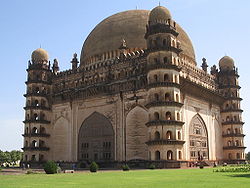 Gol Gumbaz built by the Bijapur Sultanate, has the second largest pre-modern dome in the world after the Byzantine Hagia Sophia



Early modern period (1526–1858)
The early modern period of Indian history is dated from 1526 to 1858, corresponding to the rise and fall of the Mughal Empire, which inherited from the Timurid Renaissance. During this age India's economy expanded, relative peace was maintained and arts were patronised. This period witnessed the further development of Indo-Islamic architecture;[299][300] the growth of Marathas and Sikhs enabled them to rule significant regions of India in the waning days of the Mughal empire.[15] With the discovery of the Cape Route in the 1500s, the first Europeans to arrive by sea and establish themselves, were the Portuguese in Goa and Bombay.[301]
Mughal Empire
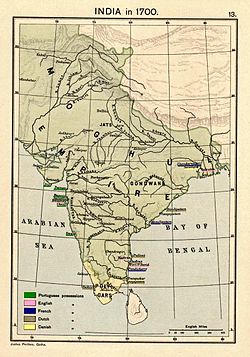

In 1526, Babur swept across the Khyber Pass and established the Mughal Empire, which at its zenith covered much of South Asia.[303] However, his son Humayun was defeated by the Afghan warrior Sher Shah Suri in 1540, and Humayun was forced to retreat to Kabul. After Sher Shah's death, his son Islam Shah Suri and his Hindu general Hemu Vikramaditya established secular rule in North India from Delhi until 1556, when Akbar (r. 1556–1605), grandson of Babur, defeated Hemu in the Second Battle of Panipat on 6 November 1556 after winning Battle of Delhi. Akbar tried to establish a good relationship with the Hindus. Akbar declared "Amari" or non-killing of animals in the holy days of Jainism. He rolled back the jizya tax for non-Muslims. The Mughal emperors married local royalty, allied themselves with local maharajas, and attempted to fuse their Turko-Persian culture with ancient Indian styles, creating a unique Indo-Persian culture and Indo-Saracenic architecture.
Akbar married a Rajput princess, Mariam-uz-Zamani, and they had a son, Jahangir (r. 1605–1627).[304] Jahangir followed his father's policy. The Mughal dynasty ruled most of the Indian subcontinent by 1600. The reign of Shah Jahan (r. 1628–1658) was the golden age of Mughal architecture. He erected several large monuments, the most famous of which is the Taj Mahal at Agra.
It was one of the largest empires to have existed in the Indian subcontinent,[305] and surpassed China to become the world's largest economic power, controlling 24.4% of the world economy,[306] and the world leader in manufacturing,[307] producing 25% of global industrial output.[308] The economic and demographic upsurge was stimulated by Mughal agrarian reforms that intensified agricultural production,[309] and a relatively high degree of urbanisation.[310]

 Fatehpur Sikri, near Agra, showing Buland Darwaza, the complex built by Akbar, the third Mughal emperor
 Red Fort, Delhi, constructed in the year 1648


The Mughal Empire reached the zenith of its territorial expanse during the reign of Aurangzeb (r. 1658–1707), under whose reign India surpassed Qing China as the world's largest economy.[311][312] Aurangzeb was less tolerant than his predecessors, reintroducing the jizya tax and destroying several historical temples, while at the same time building more Hindu temples than he destroyed,[313] employing significantly more Hindus in his imperial bureaucracy than his predecessors, and advancing administrators based on ability rather than religion.[314] However, he is often blamed for the erosion of the tolerant syncretic tradition of his predecessors, as well as increasing religious controversy and centralisation. The English East India Company suffered a defeat in the Anglo-Mughal War.[315][316]

The Mughals suffered several blows due to invasions from Marathas, Rajputs, Jats and Afghans. In 1737, the Maratha general Bajirao of the Maratha Empire invaded and plundered Delhi. Under the general Amir Khan Umrao Al Udat, the Mughal Emperor sent 8,000 troops to drive away the 5,000 Maratha cavalry soldiers. Baji Rao easily routed the novice Mughal general. In 1737, in the final defeat of Mughal Empire, the commander-in-chief of the Mughal Army, Nizam-ul-mulk, was routed at Bhopal by the Maratha army. This essentially brought an end to the Mughal Empire. While Bharatpur State under Jat ruler Suraj Mal, overran the Mughal garrison at Agra and plundered the city.[317] In 1739, Nader Shah, emperor of Iran, defeated the Mughal army at the Battle of Karnal.[318] After this victory, Nader captured and sacked Delhi, carrying away treasures including the Peacock Throne.[319]Ahmad Shah Durrani commenced his own invasions as ruler of the Durrani Empire, eventually sacking Delhi in 1757.[320] Mughal rule was further weakened by constant native Indian resistance; Banda Singh Bahadur led the SikhKhalsa against Mughal religious oppression; Hindu Rajas of Bengal, Pratapaditya and Raja Sitaram Ray revolted; and MaharajaChhatrasal, of Bundela Rajputs, fought the Mughals and established the Panna State.[321] The Mughal dynasty was reduced to puppet rulers by 1757. Vadda Ghalughara took place under the Muslim provincial government based at Lahore to wipe out the Sikhs, with 30,000 Sikhs being killed, an offensive that had begun with the Mughals, with the Chhota Ghallughara,[322] and lasted several decades under its Muslim successor states.[323]
Maratha Empire


The Maratha kingdom was founded and consolidated by Chatrapati Shivaji.[324] However, the credit for making the Marathas formidable power nationally goes to Peshwa (chief minister) Bajirao I. Historian K.K. Datta wrote that Bajirao I "may very well be regarded as the second founder of the Maratha Empire".[325]
In the early 18th century, under the Peshwas, the Marathas consolidated and ruled over much of South Asia. The Marathas are credited to a large extent for ending Mughal rule in India.[326][327][328] In 1737, the Marathas defeated a Mughal army in their capital, in the Battle of Delhi. The Marathas continued their military campaigns against the Mughals, Nizam, Nawab of Bengal and the Durrani Empire to further extend their boundaries. At its peak, the domain of the Marathas encompassed most of the Indian subcontinent.[329] The Marathas even attempted to capture Delhi and discussed putting Vishwasrao Peshwa on the throne there in place of the Mughal emperor.[330]
The Maratha empire at its peak stretched from Tamil Nadu in the south,[331] to Peshawar (modern-day Khyber Pakhtunkhwa, Pakistan[332][note 2]) in the north, and Bengal in the east. The Northwestern expansion of the Marathas was stopped after the Third Battle of Panipat (1761). However, the Maratha authority in the north was re-established within a decade under Peshwa Madhavrao I.[334]
Under Madhavrao I, the strongest knights were granted semi-autonomy, creating a confederacy of United Maratha states under the Gaekwads of Baroda, the Holkars of Indore and Malwa, the Scindias of Gwalior and Ujjain, the Bhonsales of Nagpur and the Puars of Dhar and Dewas. In 1775, the East India Company intervened in a Peshwa family succession struggle in Pune, which led to the First Anglo-Maratha War, resulting in a Maratha victory.[335] The Marathas remained a major power in India until their defeat in the Second and Third Anglo-Maratha Wars (1805–1818).
Sikh Empire
The Sikh Empire was a political entity that governed the northwestern regions of the Indian subcontinent, based around the Punjab, from 1799 to 1849. It was forged, on the foundations of the Khalsa, under the leadership of Maharaja Ranjit Singh (1780–1839).
Maharaja Ranjit Singh consolidated much of northern India into an empire using his Sikh Khalsa Army, trained in European military techniques and equipped with modern military technologies. Ranjit Singh proved himself to be a master strategist and selected well-qualified generals for his army. He successfully ended the Afghan-Sikh Wars. In stages, he added central Punjab, the provinces of Multan and Kashmir, and the Peshawar Valley to his empire.[336][337]
At its peak in the 19th century, the empire extended from the Khyber Pass in the west, to Kashmir in the north, to Sindh in the south, running along Sutlej river to Himachal in the east. After the death of Ranjit Singh, the empire weakened, leading to conflict with the British East India Company. The First Anglo-Sikh War and Second Anglo-Sikh War marked the downfall of the Sikh Empire, making it among the last areas of the Indian subcontinent to be conquered by the British.
Other kingdoms
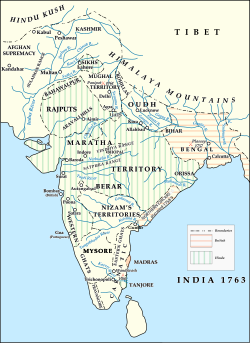
The Kingdom of Mysore in southern India expanded to its greatest extent under Hyder Ali and his son Tipu Sultan in the later half of the 18th century. Under their rule, Mysore fought series of wars against the Marathas and British or their combined forces. The Maratha–Mysore War ended in April 1787, following the finalising of treaty of Gajendragad, in which Tipu Sultan was obligated to pay tribute to the Marathas. Concurrently, the Anglo-Mysore Wars took place, where the Mysoreans used the Mysorean rockets. The Fourth Anglo-Mysore War (1798–1799) saw the death of Tipu. Mysore's alliance with the French was seen as a threat to the British East India Company, and Mysore was attacked from all four sides. The Nizam of Hyderabad and the Marathas launched an invasion from the north. The British won a decisive victory at the Siege of Seringapatam (1799).
Hyderabad was founded by the Qutb Shahi dynasty of Golconda in 1591. Following a brief Mughal rule, Asif Jah, a Mughal official, seized control of Hyderabad and declared himself Nizam-al-Mulk of Hyderabad in 1724. The Nizams lost considerable territory and paid tribute to the Maratha Empire after being routed in multiple battles, such as the Battle of Palkhed.[338] However, the Nizams maintained their sovereignty from 1724 until 1948 through paying tributes to the Marathas, and later, being vassals of the British. Hyderabad State became a princely state in British India in 1798.
The Nawabs of Bengal had become the de facto rulers of Bengal following the decline of Mughal Empire. However, their rule was interrupted by Marathas who carried out six expeditions in Bengal from 1741 to 1748, as a result of which Bengal became a tributary state of Marathas. On 23 June 1757, Siraj ud-Daulah, the last independent Nawab of Bengal was betrayed in the Battle of Plassey by Mir Jafar. He lost to the British, who took over the charge of Bengal in 1757, installed Mir Jafar on the Masnad (throne) and established itself to a political power in Bengal.[339] In 1765 the system of Dual Government was established, in which the Nawabs ruled on behalf of the British and were mere puppets to the British. In 1772 the system was abolished and Bengal was brought under the direct control of the British. In 1793, when the Nizamat (governorship) of the Nawab was also taken away, they remained as mere pensioners of the British East India Company.[340][341]
In the 18th century, the whole of Rajputana was virtually subdued by the Marathas. The Second Anglo-Maratha War distracted the Marathas from 1807 to 1809, but afterward Maratha domination of Rajputana resumed. In 1817, the British went to war with the Pindaris, raiders who were fled in Maratha territory, which quickly became the Third Anglo-Maratha War, and the British government offered its protection to the Rajput rulers from the Pindaris and the Marathas. By the end of 1818 similar treaties had been executed between the other Rajput states and Britain. The Maratha Sindhia ruler of Gwalior gave up the district of Ajmer-Merwara to the British, and Maratha influence in Rajasthan came to an end.[342] Most of the Rajput princes remained loyal to Britain in the Revolt of 1857, and few political changes were made in Rajputana until Indian independence in 1947. The Rajputana Agency contained more than 20 princely states, most notable being Udaipur State, Jaipur State, Bikaner State and Jodhpur State.
After the fall of the Maratha Empire, many Maratha dynasties and states became vassals in a subsidiary alliance with the British. With the decline of the Sikh Empire, after the First Anglo-Sikh War in 1846, under the terms of the Treaty of Amritsar, the British government sold Kashmir to Maharaja Gulab Singh and the princely state of Jammu and Kashmir, the second-largest princely state in British India, was created by the Dogra dynasty.[343][344] While in eastern and north-eastern India, the Hindu and Buddhist states of Cooch Behar Kingdom, Twipra Kingdom and Kingdom of Sikkim were annexed by the British and made vassal princely state.
After the fall of the Vijayanagara Empire, Polygar states emerged in Southern India; and managed to weather invasions and flourished until the Polygar Wars, where they were defeated by the British East India Company forces.[345] Around the 18th century, the Kingdom of Nepal was formed by Rajput rulers.[346]
Portuguese exploration
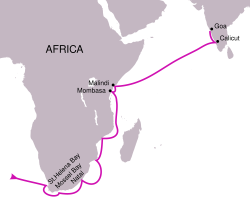
In 1498, a Portuguese fleet under Vasco da Gama discovered a new sea route from Europe to India, which paved the way for direct Indo-European commerce. The Portuguese soon set up trading posts in Velha Goa, Damaon, Dio island, and Bombay. The Portuguese instituted the Goa Inquisition, where new Indian converts were punished for suspected heresy against Christianity and non-Christians were condemned.[347] Goa remained the main Portuguese territory until it was annexed by India in 1961.[348]
Other Europeans
The next to arrive were the Dutch, with their main base in Ceylon. They established ports in Malabar. However, their expansion into India was halted after their defeat in the Battle of Colachel by the Kingdom of Travancore during the Travancore-Dutch War. The Dutch never recovered from the defeat and no longer posed a large colonial threat to India.[349][350]
The internal conflicts among Indian kingdoms gave opportunities to the European traders to gradually establish political influence and appropriate lands. Following the Dutch, the British — who set up in the west coast port of Surat in 1619 — and the French both established trading outposts in India. Although continental European powers controlled various coastal regions of southern and eastern India during the ensuing century, they eventually lost all their territories in India to the British, with the exception of the French outposts of Pondichéry and Chandernagore, and the Portuguese colonies of Goa, Daman and Diu.[351][352]
East India Company rule in India
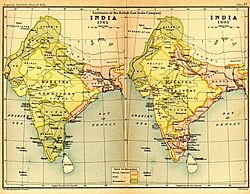

The English East India Company was founded in 1600. It gained a foothold in India with the establishment of a factory in Masulipatnam on the Eastern coast of India in 1611 and a grant of rights by the Mughal emperor Jahangir to establish a factory in Surat in 1612. In 1640, after receiving similar permission from the Vijayanagara ruler farther south, a second factory was established in Madras on the southeastern coast. The islet of Bom Bahia in present-day Mumbai (Bombay) was a Portuguese outpost not far from Surat. It was presented to Charles II of England as dowry in his marriage to Catherine of Braganza. Charles in turn leased Bombay to the Company in 1668. Two decades later, the company established a trade post in the River Ganges delta. During this time other companies established by the Portuguese, Dutch, French, and Danish were similarly expanding in the subcontinent.
The company's victory under Robert Clive in the 1757 Battle of Plassey and another victory in the 1764 Battle of Buxar (in Bihar), consolidated the company's power, and forced emperor Shah Alam II to appoint it the diwan, or revenue collector, of Bengal, Bihar, and Orissa. The company thus became the de facto ruler of large areas of the lower Gangetic plain by 1773. It also proceeded by degrees to expand its dominions around Bombay and Madras. The Anglo-Mysore Wars (1766–1799) and the Anglo-Maratha Wars (1772–1818) left it in control of large areas of India south of the Sutlej River. With the defeat of the Marathas, no native power represented a threat for the company any longer.[353]
The expansion of the company's power chiefly took two forms. The first of these was the outright annexation of Indian states and subsequent direct governance of the underlying regions that collectively came to comprise British India. The annexed regions included the North-Western Provinces (comprising Rohilkhand, Gorakhpur, and the Doab) (1801), Delhi (1803), Assam (Ahom Kingdom 1828), and Sindh (1843). Punjab, North-West Frontier Province, and Kashmir were annexed after the Anglo-Sikh Wars in 1849–1856 (period of tenure of Marquess of Dalhousie Governor General). However, Kashmir was immediately sold under the Treaty of Amritsar (1850) to the Dogra dynasty of Jammu and thereby became a princely state. In 1854, Berar was annexed along with the state of Oudh two years later.
 Warren Hastings, the first governor-general of Fort William (Bengal) who oversaw the company's territories in India
 Gold coin, minted 1835, with obverse showing the bust of William IV, king of United Kingdom from 26 June 1830 to 20 June 1837, and reverse marked "Two mohurs" in English (do ashrafi in Urdu) issued during Company rule in India
 Photograph (1855) showing the construction of the Bhor Ghaut incline bridge, Bombay; the incline was conceived by George Clark, the Chief Engineer in the East India Company's Government of Bombay


The second form of asserting power involved treaties in which Indian rulers acknowledged the company's hegemony in return for limited internal autonomy. Since the company operated under financial constraints, it had to set up political underpinnings for its rule.[354] The most important such support came from the subsidiary alliances with Indian princes.[354] In the early 19th century, the territories of these princes accounted for two-thirds of India.[354] When an Indian ruler who was able to secure his territory wanted to enter such an alliance, the company welcomed it as an economical method of indirect rule that did not involve the economic costs of direct administration or the political costs of gaining the support of alien subjects.[355]
In return, the company undertook the "defense of these subordinate allies and treated them with traditional respect and marks of honor."[355] Subsidiary alliances created the princely states of the Hindu maharajas and the Muslim nawabs. Prominent among the princely states were Cochin (1791), Jaipur (1794), Travancore (1795), Hyderabad (1798), Mysore (1799), Cis-Sutlej Hill States (1815), Rajputana (1818),[356]Central India Agency (1819), Cutch and Gujarat Gaikwad territories (1819), and Bahawalpur (1833).
Indian indenture system
The Indian indenture system was an ongoing system of indenture, a form of debt bondage, by which 3.5 million Indians were transported to colonies of European powers to provide labour for the (mainly sugar) plantations. It started from the end of slavery in 1833 and continued until 1920. This resulted in the development of a large Indian diaspora that spread from the Caribbean to the Pacific Ocean and the growth of large Indo-Caribbean and Indo-African populations.
Late modern period and contemporary history (1857–1947)
Rebellion of 1857 and its consequences
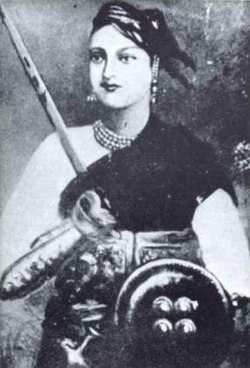 Lakshmibai, the Rani of Jhansi, one of the principal leaders of the rebellion who earlier had lost her kingdom as a result of the Doctrine of lapse.
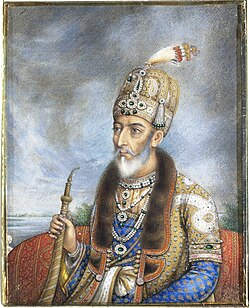 Bahadur Shah Zafar, the last Mughal Emperor. Crowned Emperor of India by the rebels, he was deposed by the British and died in exile in Burma.
 Charles Canning, the Governor-General of India during the rebellion.
 Lord Dalhousie, the Governor-General of India from 1848 to 1856, who devised the Doctrine of Lapse.




The Indian rebellion of 1857 was a large-scale rebellion by soldiers employed by the British East India Company in northern and central India against the company's rule. The spark that led to the mutiny was the issue of new gunpowder cartridges for the Enfield rifle, which was insensitive to local religious prohibition. The key mutineer was Mangal Pandey.[357] In addition, the underlying grievances over British taxation, the ethnic gulf between the British officers and their Indian troops and land annexations played a significant role in the rebellion. Within weeks after Pandey's mutiny, dozens of units of the Indian army joined peasant armies in widespread rebellion. The rebel soldiers were later joined by Indian nobility, many of whom had lost titles and domains under the Doctrine of Lapse and felt that the company had interfered with a traditional system of inheritance. Rebel leaders such as Nana Sahib and the Rani of Jhansi belonged to this group.[358]
After the outbreak of the mutiny in Meerut, the rebels very quickly reached Delhi. The rebels had also captured large tracts of the North-Western Provinces and Awadh (Oudh). Most notably, in Awadh, the rebellion took on the attributes of a patriotic revolt against British presence.[359] However, the British East India Company mobilised rapidly with the assistance of friendly Princely states, but it took the British the better part of 1858 to suppress the rebellion. Due to the rebels being poorly equipped and having no outside support or funding, they were brutally subdued.[360]
In the aftermath, all power was transferred from the British East India Company to the British Crown, which began to administer most of India as provinces. The Crown controlled the company's lands directly and had considerable indirect influence over the rest of India, which consisted of the Princely states ruled by local royal families. There were officially 565 princely states in 1947, but only 21 had actual state governments, and only three were large (Mysore, Hyderabad, and Kashmir). They were absorbed into the independent nation in 1947–1948.[361]
British Raj (1858–1947)


After 1857, the colonial government strengthened and expanded its infrastructure via the court system, legal procedures, and statutes. The Indian Penal Code came into being.[362] In education, Thomas Babington Macaulay had made schooling a priority for the Raj in 1835 and succeeded in implementing the use of English for instruction. By 1890, some 60,000 Indians had matriculated.[363] The Indian economy grew at about 1% per year from 1880 to 1920, and the population also grew at 1%. However, from the 1910s, Indian private industry began to grow significantly. India built a modern railway system in the late 19th century which was the fourth largest in the world.[364] Historians have been divided on issues of economic history, with the Nationalist school arguing that India was poorer due to British rule.[365]
In 1905, Lord Curzonsplit the large province of Bengal into a largely Hindu western half and "Eastern Bengal and Assam", a largely Muslim eastern half. The British goal was said to be efficient administration but the people of Bengal were outraged at the apparent "divide and rule" strategy. It also marked the beginning of the organised anti-colonial movement. When the Liberal Party in Britain came to power in 1906, he was removed. Bengal was reunified in 1911. The new Viceroy Gilbert Minto and the new Secretary of State for India John Morley consulted with Congress leaders on political reforms. The Morley-Minto reforms of 1909 provided for Indian membership of the provincial executive councils as well as the Viceroy's executive council. The Imperial Legislative Council was enlarged from 25 to 60 members and separate communal representation for Muslims was established in a dramatic step towards representative and responsible government.[366] Several socio-religious organisations came into being at that time. Muslims set up the All India Muslim League in 1906 to protect the interests of the aristocratic Muslims. The Hindu Mahasabha sought to represent Hindu interests. The Hindu nationalist Rashtriya Swayamsevak Sangh (RSS) was formed in 1925–1926.[367] Sikhs founded the Shiromani Akali Dal in 1920.[368] However, the largest and oldest political party Indian National Congress, founded in 1885, attempted to keep a distance from the socio-religious movements and identity politics.[369]
 Two silver rupee coins issued by the British Raj in 1862 and 1886 respectively, the first in obverse showing a bust of Victoria, Queen, the second of Victoria, Empress. Victoria became Empress of India in 1876.
 Ronald Ross, left, at Cunningham's laboratory of Presidency Hospital in Calcutta, where the transmission of malaria by mosquitoes was discovered, winning Ross the second Nobel Prize for Physiology or Medicine in 1902.
 A Darjeeling Himalayan Railway train shown in 1870. The railway became a UNESCO World Heritage Site in 1999.
 A second-day cancellation of the stamps issued in February 1931 to commemorate the inauguration of New Delhi as the capital of the British Indian Empire. Between 1858 and 1911, Calcutta had been the capital of the Raj.



Indian Renaissance
 Sir Syed Ahmad Khan (1817–1898), the author of Causes of the Indian Mutiny, was the founder of Muhammadan Anglo-Oriental College, later the Aligarh Muslim University
 Pandita Ramabai (1858–1922) was a social reformer, and a pioneer in the education and emancipation of women in India
 Rabindranath Tagore (1861–1941) was a Bengali language poet, short-story writer, and playwright, and in addition a music composer and painter, who won the Nobel prize for Literature in 1913
 Srinivasa Ramanujan (1887–1920) was an Indian mathematician who made seminal contributions to number theory


The Bengali Renaissance refers to a social reform movement, dominated by Bengali Hindus, in the Bengal region of the Indian subcontinent during the nineteenth and early twentieth centuries, a period of British rule. Historian Nitish Sengupta describes the renaissance as having started with reformer and humanitarian Raja Ram Mohan Roy (1775–1833), and ended with Asia's first Nobel laureate Rabindranath Tagore (1861–1941).[370] This flowering of religious and social reformers, scholars, and writers is described by historian David Kopf as "one of the most creative periods in Indian history."[371]
During this period, Bengal witnessed an intellectual awakening that is in some way similar to the Renaissance. This movement questioned existing orthodoxies, particularly with respect to women, marriage, the dowry system, the caste system, and religion. One of the earliest social movements that emerged during this time was the Young Bengal movement, which espoused rationalism and atheism as the common denominators of civil conduct among upper caste educated Hindus.[372] It played an important role in reawakening Indian minds and intellect across the Indian subcontinent.
Famines
 Map of famines in India during British Empire in year 1800–1885.
 Engraving from The Graphic, October 1877, showing the plight of animals as well as humans in Bellary district, Madras Presidency, British India during the Great Famine of 1876–1878
 Government famine relief, Ahmedabad, India, during the Indian famine of 1899–1900
 A picture of orphans who survived the Bengal famine of 1943, a man-made disaster by the British government


During British East India Company and British Crown rule, India experienced some of deadliest ever recorded famines. These famines, usually resulting from crop failures and often exacerbated by policies of the colonial government,[373] included the Great Famine of 1876–1878 in which 6.1 million to 10.3 million people died,[374] the Great Bengal famine of 1770 where between 1 and 10 million people died,[375][376] the Indian famine of 1899–1900 in which 1.25 to 10 million people died,[373] and the Bengal famine of 1943 where between 2.1 and 3.8 million people died.[377] The third plague pandemic in the mid-19th century killed 10 million people in India.[378] Despite persistent diseases and famines, the population of the Indian subcontinent, which stood at up to 200 million in 1750,[379] had reached 389 million by 1941.[380]
World War I
 Indian cavalry on the Western front 1914
 Indian cavalry from the Deccan Horse during the Battle of Bazentin Ridge in 1916.
 Indian Army gunners (probably 39th Battery) with 3.7-inch mountain howitzers, Jerusalem 1917
 India Gate is a memorial to 70,000 soldiers of the British Indian Army who died in the period 1914–21 in the First World War


During World War I, over 800,000 volunteered for the army, and more than 400,000 volunteered for non-combat roles, compared with the pre-war annual recruitment of about 15,000 men.[381] The Army saw early action on the Western Front at the First Battle of Ypres. After a year of front-line duty, sickness and casualties had reduced the Indian Corps to the point where it had to be withdrawn. Nearly 700,000 Indians fought the Turks in the Mesopotamian campaign. Indian formations were also sent to East Africa, Egypt, and Gallipoli.[382]
The Indian Army and the Imperial Service Troops fought during the Sinai and Palestine Campaign's defence of the Suez Canal in 1915, at Romani in 1916 and to Jerusalem in 1917. Indian units occupied the Jordan Valley and after the German spring offensive they became the major force in the Egyptian Expeditionary Force during the Battle of Megiddo and in the Desert Mounted Corps' advance to Damascus and on to Aleppo. Other divisions remained in India guarding the North-West Frontier and fulfilling internal security obligations.
One million Indian troops served abroad during the war. In total, 74,187 died,[383] and another 67,000 were wounded.[384] The roughly 90,000 soldiers who died fighting in World War I and the Afghan Wars are commemorated by the India Gate.
World War II
 General Claude Auchinleck (right), Commander-in-Chief of the Indian Army, with the then ViceroyWavell (centre) and General Montgomery (left)
 Indian women training for Air Raid Precautions (ARP) duties in Bombay in 1942
 Indian infantrymen of the 7th Rajput Regiment about to go on patrol on the Arakan front in Burma, 1944
 The stamp series "Victory" issued by the Government of British India to commemorate allied victory in World War II


British India officially declared war on Nazi Germany in September 1939.[385] The British Raj, as part of the Allied Nations, sent over two and a half million volunteer soldiers to fight under British command against the Axis powers. Additionally, several princely states provided large donations to support the Allied campaign. India also provided the base for American operations in support of China in the China Burma India Theatre.
Indians fought throughout the world, including in the European theatre against Germany, in North Africa against Germany and Italy, against the Italians in East Africa, in the Middle East against the Vichy French, in the South Asian region defending India against the Japanese and fighting the Japanese in Burma. Indians also aided in liberating British colonies such as Singapore and Hong Kong after the Japanese surrender in August 1945. Over 87,000 soldiers from the subcontinent died in World War II.
The Indian National Congress denounced Nazi Germany but would not fight it or anyone else until India was independent. Congress launched the Quit India Movement in August 1942, refusing to co-operate in any way with the government until independence was granted. The government immediately arrested over 60,000 national and local Congress leaders. The Muslim League rejected the Quit India movement and worked closely with the Raj authorities.
Subhas Chandra Bose (also called Netaji) broke with Congress and tried to form a military alliance with Germany or Japan to gain independence. The Germans assisted Bose in the formation of the Indian Legion;[386] however, it was Japan that helped him revamp the Indian National Army (INA), after the First Indian National Army under Mohan Singh was dissolved. The INA fought under Japanese direction, mostly in Burma.[387] Bose also headed the Provisional Government of Free India (or Azad Hind), a government-in-exile based in Singapore.[388][389]
By 1942, neighbouring Burma was invaded by Japan, which by then had already captured the Indian territory of Andaman and Nicobar Islands. Japan gave nominal control of the islands to the Provisional Government of Free India on 21 October 1943, and in the following March, the Indian National Army with the help of Japan crossed into India and advanced as far as Kohima in Nagaland. This advance on the mainland of the Indian subcontinent reached its farthest point on Indian territory, retreating from the Battle of Kohima in June and from that of Imphal on 3 July 1944.
The region of Bengal in British India suffered a devastating famine during 1940–1943. An estimated 2.1–3 million died from the famine, frequently characterised as "man-made,"[390] with most sources asserting that wartime colonial policies exacerbated the crisis.[391]
Indian independence movement (1885–1947)
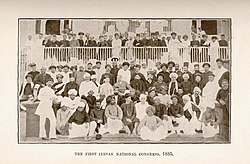 The first session of the Indian National Congress in 1885. A. O. Hume, the founder, is shown in the middle (third row from the front). The Congress was the first modern nationalist movement to emerge in the British Empire in Asia and Africa.[392]
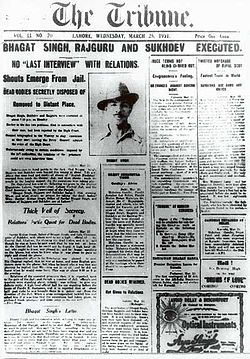 Front page of the Tribune (25 March 1931), reporting the execution of Bhagat Singh, Rajguru and Sukhdev by the British for the murder of 21-year-old police officer J. P. Saunders. Bhagat Singh quickly became a folk hero of the Indian independence movement.
 From the late 19th century, and especially after 1920, under the leadership of Mahatma Gandhi (right), the Congress became the principal leader of the Indian independence movement.[393] Gandhi is shown here with Jawaharlal Nehru, later the first prime minister of India.



The numbers of British in India were small,[394] yet they were able to rule 52% of the Indian subcontinent directly and exercise considerable leverage over the princely states that accounted for 48% of the area.[395]
One of the most important events of the 19th century was the rise of Indian nationalism,[396] leading Indians to seek first "self-rule" and later "complete independence". However, historians are divided over the causes of its rise. Probable reasons include a "clash of interests of the Indian people with British interests",[396] "racial discriminations",[397] and "the revelation of India's past".[398]
The first step toward Indian self-rule was the appointment of councillors to advise the British viceroy in 1861 and the first Indian was appointed in 1909. Provincial Councils with Indian members were also set up. The councillors' participation was subsequently widened into legislative councils. The British built a large British Indian Army, with the senior officers all British and many of the troops from small minority groups such as Gurkhas from Nepal and Sikhs.[399] The civil service was increasingly filled with natives at the lower levels, with the British holding the more senior positions.[400]
Bal Gangadhar Tilak, an Indian nationalist leader, declared Swaraj (home rule) as the destiny of the nation. His popular sentence "Swaraj is my birthright, and I shall have it"[401] became the source of inspiration. Tilak was backed by rising public leaders like Bipin Chandra Pal and Lala Lajpat Rai, who held the same point of view, notably they advocated the Swadeshi movement involving the boycott of imported items and the use of Indian-made goods;[402] the triumvirate were popularly known as Lal Bal Pal. In 1907, the Congress was split into two factions: The radicals, led by Tilak, advocated civil agitation and direct revolution to overthrow the British Empire and the abandonment of all things British. The moderates, led by leaders like Dadabhai Naoroji and Gopal Krishna Gokhale, on the other hand, wanted reform within the framework of British rule.[402]
The partition of Bengal in 1905 further increased the revolutionary movement for Indian independence. The disenfranchisement lead some to take violent action.
The British themselves adopted a "carrot and stick" approach in response to renewed nationalist demands. The means of achieving the proposed measure were later enshrined in the Government of India Act 1919, which introduced the principle of a dual mode of administration, or diarchy, in which elected Indian legislators and appointed British officials shared power.[403] In 1919, Colonel Reginald Dyer ordered his troops to fire their weapons on peaceful protestors, including unarmed women and children, resulting in the Jallianwala Bagh massacre; which led to the non-cooperation movement of 1920–1922. The massacre was a decisive episode towards the end of British rule in India.[404]
From 1920 leaders such as Mahatma Gandhi began highly popular mass movements to campaign against the British Raj using largely peaceful methods. The Gandhi-led independence movement opposed the British rule using non-violent methods like non-co-operation, civil disobedience and economic resistance. However, revolutionary activities against the British rule took place throughout the Indian subcontinent and some others adopted a militant approach like the Hindustan Republican Association, that sought to overthrow British rule by armed struggle.
The All India Azad Muslim Conference gathered in Delhi in April 1940 to voice its support for an independent and united India.[405] Its members included several Islamic organisations in India, as well as 1,400 nationalist Muslim delegates.[406][407][408] The pro-separatist All-India Muslim League worked to try to silence those nationalist Muslims who stood against the partition of India, often using "intimidation and coercion".[407][408] The murder of the All India Azad Muslim Conference leader Allah Bakhsh Soomro also made it easier for the pro-separatist All-India Muslim League to demand the creation of a Pakistan.[408]
After World War II (c. 1946–1947)
In January 1946, several mutinies broke out in the armed services, starting with that of RAF servicemen frustrated with their slow repatriation. The mutinies came to a head with mutiny of the Royal Indian Navy in Bombay in February 1946, followed by others in Calcutta, Madras, and Karachi. The mutinies were rapidly suppressed. In early 1946, new elections were called and Congress candidates won in eight of the eleven provinces.
Late in 1946, the Labour government decided to end British rule of India, and in early 1947 it announced its intention of transferring power no later than June 1948 and participating in the formation of an interim government.


Along with the desire for independence, tensions between Hindus and Muslims had also been developing over the years. Muslim League leader Muhammad Ali Jinnah proclaimed 16 August 1946 as Direct Action Day, with the stated goal of highlighting, peacefully, the demand for a Muslim homeland in British India, which resulted in the outbreak of the cycle of violence that would be later called the "Great Calcutta Killing of August 1946". The communal violence spread to Bihar, Noakhali in Bengal, Garhmukteshwar in the United Provinces, and on to Rawalpindi in March 1947 in which Sikhs and Hindus were attacked or driven out by Muslims.[409]Louis Mountbatten became the Viceroy of India in February 1947, arriving in India in March, and oversaw the decolonisation and partition of British India.
Independence and partition (1947–present)
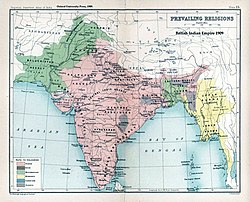 A map of the prevailing religions of the British Indian empire based on district-wise majorities based on the Indian census of 1909, and published in the Imperial Gazetteer of India. The partition of the Punjab and Bengal was based on such majorities.
 Gandhi touring Bela, Bihar, a village struck by religious rioting in March 1947. On the right is Khan Abdul Gaffar Khan.
 Jawaharlal Nehru being sworn in as the first prime minister of independent India by viceroy Lord Louis Mountbatten at 8:30 AM 15 August 1947.
 Literacy in India grew very slowly until independence in 1947. An acceleration in the rate of literacy growth occurred in the 1991–2001 period.



"A moment comes, which comes but rarely in history, when we step out from the old to the new; when an age ends; and when the soul of a nation long suppressed finds utterance."
In August 1947, the British Indian Empire was partitioned into the Union of India and Dominion of Pakistan. In particular, the partition of the Punjab and Bengal led to rioting between Hindus, Muslims, and Sikhs in these provinces and spread to other nearby regions, leaving some 500,000 dead. The police and army units were largely ineffective. The British officers were gone, and the units were beginning to tolerate if not actually indulge in violence against their religious enemies.[411][412][413] Also, this period saw one of the largest mass migrations anywhere in modern history, with a total of 12 million Hindus, Sikhs and Muslims moving between the newly created nations of India and Pakistan (which gained independence on 15 and 14 August 1947 respectively).[412] In 1971, Bangladesh, formerly East Pakistan and East Bengal, seceded from Pakistan.[414]
See also
- Adivasi
- Early Indians
- India (Herodotus)
- List of Indian periods
- The Cambridge History of India
- Outline of ancient India
- Timeline of Indian history
By topic
Further reading
General
- Basham, A.L., ed. The Illustrated Cultural History of India (Oxford University Press, 2007)
- Buckland, C.E. Dictionary of Indian Biography (1906) 495pp full text
- Chakrabarti D.K. 2009. India, an archaeological history : palaeolithic beginnings to early historic foundations.
- Chattopadhyaya, D. P. (ed.). History of Science, Philosophy and Culture in Indian Civilization. Vol. 15-volum + parts Set. Delhi: Centre for Studies in Civilizations.
- Dharma Kumar and Meghnad Desai, eds. The Cambridge Economic History of India: Volume 2, c. 1751–1970 (2nd ed. 2010), 1114pp of scholarly articles
- Guha, Ramachandra. India After Gandhi: The History of the World's Largest Democracy (2007), 890pp; since 1947
- James, Lawrence. Raj: The Making and Unmaking of British India (2000) online
- Khan, Yasmin. The Raj At War: A People's History Of India's Second World War (2015); also published as India At War: The Subcontinent and the Second World WarIndia At War: The Subcontinent and the Second World War.
- Khan, Yasmin. The Great Partition: The Making of India and Pakistan (2n d ed. Yale UP 2017) excerpt
- Mcleod, John. The History of India (2002) excerpt and text search
- Majumdar, R.C. : An Advanced History of India. London, 1960. ISBN 0-333-90298-X
- Majumdar, R.C. (ed.) : The History and Culture of the Indian People, Bombay, 1977 (in eleven volumes).
- Mansingh, Surjit The A to Z of India (2010), a concise historical encyclopedia
- Markovits, Claude, ed. A History of Modern India, 1480–1950 (2002) by a team of French scholars
- Metcalf, Barbara D. and Thomas R. Metcalf. A Concise History of Modern India (2006)
- Peers, Douglas M. India under Colonial Rule: 1700–1885 (2006), 192pp
- Riddick, John F. The History of British India: A Chronology (2006) excerpt
- Riddick, John F. Who Was Who in British India (1998); 5000 entries excerpt
- Rothermund, Dietmar. An Economic History of India: From Pre-Colonial Times to 1991 (1993)
- Sharma, R.S., India's Ancient Past, (Oxford University Press, 2005)
- Sarkar, Sumit. Modern India, 1885–1947 (2002)
- Senior, R.C. (2006). Indo-Scythian coins and history. Volume IV. Classical Numismatic Group, Inc. ISBN 978-0-9709268-6-9.
- Singhal, D. P. (1983). A History of the Indian People. London: Methuen. ISBN 0-413-48730-X.
- Smith, Vincent. The Oxford History of India (3rd ed. 1958), old-fashioned
- Spear, Percival. A History of India. Volume 2. Penguin Books. (1990) [First published 1965]
- Stein, Burton. A History of India (1998)
- Thapar, Romila. Early India: From the Origins to AD 1300 (2004) excerpt and text search
- Thompson, Edward, and G.T. Garratt. Rise and Fulfilment of British Rule in India (1934) 690 pages; scholarly survey, 1599–1933 excerpt and text search
- Tomlinson, B.R. The Economy of Modern India, 1860–1970 (The New Cambridge History of India) (1996)
- Tomlinson, B.R. The political economy of the Raj, 1914–1947 (1979) online
- Wolpert, Stanley. A New History of India (8th ed. 2008) online 7th edition
Historiography
- Bannerjee, Gauranganath (1921). India as known to the ancient world. London: Humphrey Milford, Oxford University Press.
- Bayly, C.A. (November 1985). "State and Economy in India over Seven Hundred Years". The Economic History Review. 38 (4): 583–596. doi:10.1111/j.1468-0289.1985.tb00391.x. JSTOR 2597191.
- Bose, Mihir. "India's Missing Historians: Mihir Bose Discusses the Paradox That India, a Land of History, Has a Surprisingly Weak Tradition of Historiography", History Today 57#9 (2007) pp. 34–. onlineArchived 15 September 2011 at the Wayback Machine
- Elliot, Henry Miers; Dowson, John (1867). The History of India, as told by its own historians. The Muhammadan Period. London: Trübner and Co. Archived from the original on 25 August 2009.
- Kahn, Yasmin (2011). "Remembering and Forgetting: South Asia and the Second World War". In Martin Gegner; Bart Ziino (eds.). The Heritage of War. Routledge. pp. 177–193.
- Jain, M. (2011). "4". The India They Saw: Foreign Accounts. Delhi: Ocean Books.
- Lal, Vinay (2003). The History of History: Politics and Scholarship in Modern India.
- Palit, Chittabrata (2008). Indian Historiography.
- Sharma, Arvind (2003). Hinduism and Its Sense of History. Oxford University Press. ISBN 978-0-19-566531-4.
- Sreedharan, E. (2004). A Textbook of Historiography, 500 B.C. to A.D. 2000.
- Warder, A.K. (1972). An introduction to Indian historiography.
Primary
- The Imperial Gazetteer of India. 1908–1931. Highly detailed description of all of India in 1901.
สรุปเนื้อหา
ข้อมูลสำคัญจากบทความ
ข้อมูลสำคัญเกี่ยวกับ ประวัติศาสตร์อินเดีย
คาดว่า มนุษย์ยุคใหม่ที่มีกายวิภาคศาสตร์สมบูรณ์ ได้เดินทางมาถึง อนุทวีปอินเดีย เป็นครั้งแรก เมื่อประมาณ 73,000 ถึง 55,000 ปีก่อน [ 1 ] ซากมนุษย์ที่เก่าแก่ที่สุดที่รู้จักใน...
ยุคก่อนประวัติศาสตร์ (ก่อนประมาณ 3300 ปีก่อนคริสตกาล)
ภาพเขียนบนหิน สมัยเมโซลิธิก ที่ ถ้ำหินภิมเบตก้า ในรัฐมัธยประเทศ แสดงให้เห็นสัตว์ป่า ซึ่งอาจเป็นสัตว์ในตำนาน กำลังโจมตีนักล่ามนุษย์ แม้ว่าภาพเขียนบนหินจะยังไม่ได้รับการกำหนดอายุโดยตรง [ 22 ]...
ยุคหินเก่า
คาดว่าการขยายตัวของ โฮมินินจา กแอฟริกาไปถึง อนุทวีปอินเดีย เมื่อประมาณ 2 ล้านปีก่อน และอาจเร็วที่สุดคือ 2.2 ล้านปีก่อน [ 25 ] [ 26 ] [ 27 ] การกำหนดอายุนี้อิงจากการปรากฏตัวของ Homo erectus ใน อินโดนีเซีย เมื่อ 1.8 ล้านปีก่อน และในเอเชียตะวันออกเมื่อ 1.
ยุคหินใหม่
การตั้งถิ่นฐานอย่างถาวร เกิดขึ้นบนอนุทวีปในบริเวณขอบตะวันตกของที่ราบ ลุ่ม แม่น้ำสินธุ เมื่อประมาณ 9,000 ปีก่อน และค่อยๆ พัฒนาไปสู่ อารยธรรมลุ่มแม่น้ำสินธุ ในช่วงสหัสวรรษที่สามก่อนคริสต์ศักราช [ 2 ] [ 38 ] ตามที่ Tim Dyson กล่าวไว้ว่า: "เมื่อ 7,000 ปีก่อน...