
คำศัพท์ทางชีววิทยาของเซลล์และโมเลกุล (0–L)
อภิธานศัพท์ชีววิทยาเซลล์และโมเลกุล นี้เป็นรายการคำจำกัดความของคำศัพท์และแนวคิดที่ใช้กันทั่วไปในการศึกษาชีววิทยาเซลล์ชีววิทยาโมเลกุลและสาขาวิชาที่เกี่ยวข้อง รวมถึงพันธุศาสตร์ชีวเคมีและจุลชีววิทยา [ 1 ] แบ่งออกเป็นสองบทความ:
- หน้านี้ซึ่งเป็นคำศัพท์ทางชีววิทยาของเซลล์และโมเลกุล (0–L)แสดงรายการคำศัพท์ที่ขึ้นต้นด้วยตัวเลขและตัวอักษร A ถึง L
- อภิธานศัพท์ชีววิทยาเซลล์และโมเลกุล (M–Z)แสดงรายการคำศัพท์ที่ขึ้นต้นด้วยตัวอักษร M ถึง Z
คำศัพท์ในพจนานุกรมนี้จัดทำขึ้นเพื่อเป็นข้อมูลเบื้องต้นสำหรับผู้เริ่มต้น (สำหรับรายละเอียดที่เฉพาะเจาะจงและทางเทคนิคมากขึ้น โปรดดูบทความที่เกี่ยวข้องกับแต่ละคำ) พจนานุกรมนี้ได้รับการออกแบบมาเพื่อใช้ควบคู่กับพจนานุกรมพันธุศาสตร์และชีววิทยาวิวัฒนาการซึ่งมีคำศัพท์ที่ซ้ำซ้อนและเกี่ยวข้องอยู่หลายคำ พจนานุกรมอื่นๆ ที่เกี่ยวข้อง ได้แก่พจนานุกรมไวรัสวิทยาและพจนานุกรมเคมี
0–9
- บริเวณที่ไม่ถูกถอดรหัส 3' (3'-UTR)
- 3'-end
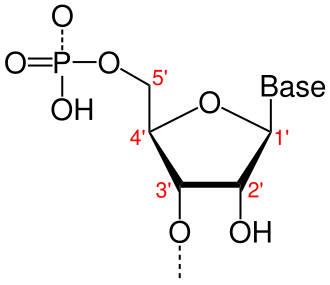
- ปลายด้านใดด้านหนึ่งของสายดีเอ็นเอหรืออาร์เอ็นเอ เดี่ยวๆ โดยเฉพาะปลายที่สายของนิวคลี โอไทด์ สิ้นสุดที่อะตอมคาร์บอนที่สามใน วงแหวน ฟูราโนสของ ดีออก ซีไรโบสหรือไรโบส (กล่าวคือ ปลายที่คาร์บอน 3' ไม่ได้เชื่อมต่อกับนิวคลีโอไทด์อื่นผ่านพันธะฟอสโฟไดเอสเทอร์ในสิ่งมีชีวิตคาร์บอน 3' มักจะยังคงเชื่อมต่อกับ หมู่ ไฮดรอก ซิล อยู่) ตามธรรมเนียมแล้ว ลำดับและโครงสร้างที่อยู่ใกล้ปลาย 3' มากกว่าเมื่อเทียบกับลำดับและโครงสร้างอื่นๆ จะเรียกว่า " ปลายน้ำ"ตรงกันข้ามกับ"ปลาย 5' "
- หมวกขนาด 5 ฟุต
- นิวคลีโอไทด์ที่ถูกดัดแปลงเป็นพิเศษจะถูกติดไว้ที่ปลาย 5'ของRNA ต้นฉบับ บางส่วน ซึ่งเป็นส่วนหนึ่งของกระบวนการดัดแปลงหลังการถอดรหัสที่เปลี่ยน RNA ดิบให้กลายเป็น RNA ที่สมบูรณ์ โครงสร้างที่แน่นอนของ 5' cap นั้นแตกต่างกันอย่างมากในสิ่งมีชีวิต ในยูคาริโอต cap ที่พื้นฐานที่สุดประกอบด้วย นิวคลี โอไซด์กัวนีนที่มี หมู่ เมทิล เชื่อมต่อกับหมู่ไตรฟอสเฟตที่สิ้นสุดปลาย 5' ของลำดับ RNA หน้าที่อื่นๆ ของ capping คือช่วยควบคุมการส่งออก RNA ที่สมบูรณ์จากนิวเคลียสป้องกันการย่อยสลายโดยเอ็กโซนิวคลีเอสและส่งเสริมการแปลในไซโตพลาสซึมmRNA ที่สมบูรณ์แล้ว สามารถถูกกำจัด cappingได้ เช่นกัน
- บริเวณที่ไม่ถูกถอดรหัส 5' (5'-UTR)
- 5-โบรโมดีออกซีอูริดีน
- ดูโบรโมดีออกซีอูริดีน
- 5'-end
- ปลายด้านใดด้านหนึ่งของสายดีเอ็นเอหรืออาร์เอ็นเอ เดี่ยวๆ โดยเฉพาะปลายที่สายของนิวคลี โอไทด์ สิ้นสุดที่อะตอมคาร์บอนที่ห้าใน วงแหวน ฟูราโนสของ ดีออก ซีไรโบสหรือไรโบส (กล่าวคือ ปลายที่คาร์บอน 5' ไม่ได้เชื่อมต่อกับนิวคลีโอไทด์อื่นผ่านพันธะฟอสโฟไดเอสเทอร์ในสิ่งมีชีวิตคาร์บอน 5' มักจะยังคงเชื่อมต่อกับ หมู่ ฟอสเฟตอยู่) ตามธรรมเนียมแล้ว ลำดับและโครงสร้างที่อยู่ใกล้ปลาย 5' มากกว่าเมื่อเทียบกับลำดับและโครงสร้างอื่นๆ จะเรียกว่าต้นน้ำ (upstream ) ตรงกันข้ามกับปลาย 3' (3'-end )
- 5-เมทิลยูราซิล
- ดูไทมีน
เอ
- ไร้ศูนย์กลาง
- (ของโครโมโซม เชิงเส้น หรือชิ้นส่วนโครโมโซม) ไม่มีเซนโทรเมียร์[ 2 ]
- อะเซทิลโคเอนไซม์เอ (อะเซทิล-CoA)
- สารประกอบทางชีวเคมีที่ประกอบด้วย โมเลกุล โคเอนไซม์เอซึ่งมีหมู่แอซิทิล ( –COCH) ต่ออยู่ ) ยึดติดผ่านพันธะไทโอเอสเทอร์พลังงานสูงการอะเซทิเลชันของโคเอนไซม์เอเกิดขึ้นเป็นส่วนหนึ่งของการเผาผลาญโปรตีนคาร์โบไฮเดรต(ไกลโคไลซิส)และกรดไขมัน(เบตาออกซิเดชัน) หลังจากนั้นมันจะเข้าร่วมเป็นตัวนำพลังงานในวิถีทางชีวเคมีโดยเฉพาะอย่างยิ่งวัฏจักรกรดซิตริกซึ่งการไฮโดรไลซิสATP11และGTPโมเลกุล
- อะเซทิเลชัน
- การเชื่อมต่อแบบโควาเลนต์ของหมู่แอเซทิล ( –COCH ) ) ไปยังสารประกอบทางเคมี โปรตีน หรือโมเลกุลชีวภาพอื่นๆ ผ่านเอสเทอริฟิเคชันกับกรดอะซิติกไม่ว่าจะเกิดขึ้นเองตามธรรมชาติหรือโดยของเอนไซม์ซิทิเลชันมีบทบาทสำคัญในกระบวนการเผาผลาญและในการปรับเปลี่ยนฮิสโตนตรงกันข้ามกับการดีอะซิทิเลชัน
- อะเซทิลทรานสเฟอเรส
- เอนไซม์ทรานสเฟอเรส ชนิดหนึ่งซึ่งทำหน้าที่เร่งปฏิกิริยาการสร้างพันธะโควาเลนต์ของหมู่แอเซทิล ( –COCH₃) ) ไปยังสารประกอบ โปรตีน หรือโมเลกุลชีวภาพอื่น ซึ่งเป็นกระบวนการที่เรียกว่าอะเซทิเลชัน
- อะโครเซนทริก
- (ของโครโมโซม เชิงเส้น หรือชิ้นส่วนโครโมโซม) มีเซนโทรเมียร์อยู่ใกล้กับปลายด้านหนึ่งของโครโมโซมมาก ตรงข้ามกับตำแหน่งที่ปลายหรือตรงกลาง[ 2 ]
- ศักยภาพการกระทำ
- การเปลี่ยนแปลงแรงดันไฟฟ้า เฉพาะ ที่เกิดขึ้นเมื่อศักย์เยื่อหุ้มเซลล์ณตำแหน่งใดตำแหน่งหนึ่งตามแนวเยื่อหุ้มเซลล์เกิดการลดศักย์อย่างรวดเร็ว เช่น เมื่อ มีการส่งผ่าน กระแสประสาทระหว่างเซลล์ประสาท
- การเปิดใช้งาน
- ดูupregulation
- ตัวกระตุ้น
- ตัวกระตุ้นการถอดรหัส (Transcription Factor)ชนิดหนึ่งที่เพิ่มการถอดรหัสของยีนหรือกลุ่มยีน ตัวกระตุ้นส่วนใหญ่ทำงานโดยการจับกับลำดับ เฉพาะ ที่อยู่ภายในหรือใกล้กับตัวเสริมการถอดรหัส (Enhancer)หรือ ตัวส่งเสริมการถอดรหัส (Promoter)และอำนวยความสะดวกในการจับของ เอนไซม์ RNA polymeraseและกลไกการถอดรหัสอื่นๆ ในบริเวณเดียวกัน ดูเพิ่มเติมที่ตัวร่วมกระตุ้น (Coactivator) ; เปรียบเทียบกับตัวยับยั้ง การถอดรหัส (Repressor )
- ไซต์ที่ใช้งานอยู่
- บริเวณของเอนไซม์ที่โมเลกุลของสารตั้งต้น ตั้งแต่หนึ่งโมเลกุลขึ้นไป เข้าจับ ทำให้สารตั้งต้นหรือโมเลกุลอื่นเกิดปฏิกิริยาเคมี บริเวณนี้มักประกอบด้วย กรด อะมิโน ตั้งแต่หนึ่งหน่วยขึ้นไป (โดยทั่วไปสามหรือสี่หน่วย) ซึ่งเมื่อเอนไซม์พับตัวอย่างถูกต้อง จะสามารถสร้างพันธะเคมีชั่วคราวกับอะตอมของโมเลกุลสารตั้งต้นได้ นอกจากนี้ อาจมีกรดอะมิโนเพิ่มเติมตั้งแต่หนึ่งหน่วยขึ้นไปซึ่งเมื่อทำปฏิกิริยากับสารตั้งต้นแล้ว สามารถเร่งปฏิกิริยาเฉพาะที่เกี่ยวข้องกับสารตั้งต้นได้ แม้ว่าบริเวณเร่งปฏิกิริยาจะประกอบด้วยกรดอะมิโนเพียงส่วนน้อยของกรดอะมิโนทั้งหมดที่ประกอบเป็นเอนไซม์ แต่ความจำเพาะต่อสารตั้งต้นและปฏิกิริยาเฉพาะนั้นเป็นปัจจัยสำคัญที่ทำให้เอนไซม์มีหน้าที่ทางชีวภาพ
- การขนส่งแบบใช้พลังงาน
- การขนส่งสาร (เช่นโปรตีนหรือยา ) ผ่านเยื่อหุ้มเซลล์โดยต้านกับความเข้มข้น แตกต่างจากการขนส่งแบบพาสซีฟการขนส่งแบบแอคทีฟต้องใช้พลังงาน
- อะซิเลชัน
- การยึดติดแบบโควาเลนต์ของกลุ่มอะซิล ใดๆ (เช่นอะเซทิลหรือเบนโซอิล ) กับสารประกอบทางเคมี โปรตีน หรือโมเลกุลชีวภาพอื่นๆ ผ่านการแทนที่อะตอมไฮโดรเจนด้วยกลุ่มอะซิล ไม่ว่าจะเกิดขึ้นเองหรือโดยการเร่งปฏิกิริยาของเอนไซม์[ 3 ]อะเซทิเลชันเป็นอะซิเลชันประเภทหนึ่ง
- อะดีนีน ( A )
- อะ ดีนีน เป็นนิวคลีโอเบส ในกลุ่มพิ วรีน ซึ่งเป็นหนึ่งในสี่นิวคลีโอเบสมาตรฐานใน โมเลกุล ของดีเอ็นเอและ อาร์เอ็น เอ โดย อะดีนีนจะจับคู่กับไทมีนในดีเอ็นเอ และจับคู่กับยูราซิลในอาร์เอ็นเอ
- อะดีโนซีน ( A )
- หนึ่งในสี่นิวคลีโอไซด์มาตรฐานที่ใช้ใน โมเลกุล RNAประกอบด้วยเบสอะดีนีน โดย ไนโตรเจนของอะดีนีนจะเชื่อมต่อกับคาร์บอน C1 น้ำตาล ไรโบส อะ ดีนีนที่เชื่อมต่อกับดีออกซีไรโบสเรียกว่าดีออกซีอะดีโนซีนซึ่งเป็นรูปแบบที่ใช้ในDNA
- อะดีโนซีนไดฟอสเฟต (ADP)
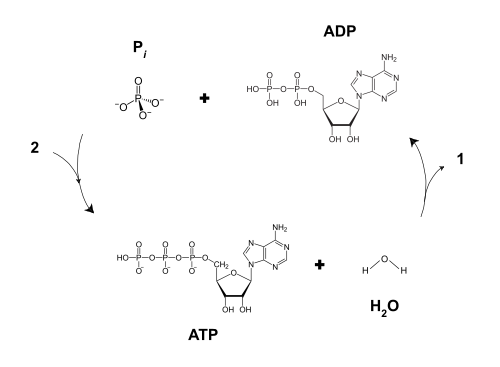
- ADP เป็น นิวคลีโอไซด์ไดฟอสเฟตที่ประกอบด้วยอะดีโนซีน ที่เชื่อมต่อกับหมู่ ฟอสเฟตสองหมู่ที่อยู่ติดกันผ่านพันธะเอสเทอร์ที่มีพลังงานสูง ADP สามารถถูกฟอสฟอริเลตเพื่อสร้างATP ได้ ดังนั้นจึงเป็นสารตั้งต้นสำหรับการสังเคราะห์ ATP นอกจากนี้ยังสามารถถูกดีฟอสฟอริเลตเพื่อสร้าง AMPได้อีกด้วย
- อะดีโนซีนโมโนฟอสเฟต (AMP)
- นิ วคลี โอไซด์ที่ประกอบด้วยอะดีโนซีนที่เชื่อมต่อกับ หมู่ ฟอสเฟต เดี่ยว ผ่านพันธะเอสเทอร์ที่มีพลังงานสูง สามารถเพิ่มหมู่ฟอสเฟตเพิ่มเติมลงใน AMP เพื่อสร้างADPและATPได้ โดยเอสเทอร์แบบวงแหวนของ AMPทำหน้าที่เป็นตัวส่งสัญญาณรองในบางเส้นทางการส่งสัญญาณ
- อะดีโนซีนไตรฟอสเฟต (ATP)
- ATP คือ นิวคลีโอไซด์ไตรฟอสเฟตที่ประกอบด้วยอะดีโนซีน ที่เชื่อมต่อกับหมู่ ฟอสเฟตสามหมู่ที่อยู่ ติดกัน ผ่านพันธะเอสเทอร์ที่มีพลังงานสูง การเปลี่ยน ATP เป็นADPหรือAMPผ่านการไฮโดรไลซิสของฟอสเฟตเหล่านี้จะปลดปล่อยพลังงานซึ่งใช้ในการขับเคลื่อนปฏิกิริยาเคมีที่ใช้พลังงานส่วนใหญ่ในเซลล์สิ่งมีชีวิตทั้งหมด ดังนั้น ATP จึงทำหน้าที่เป็นตัวนำพลังงานสากลและพบได้ทั่วไป ซึ่งมักถูกเรียกว่า "สกุลเงินโมเลกุล" ของการเผาผลาญ ภายในเซลล์ มันถูกสร้างขึ้นใหม่อย่างต่อเนื่องผ่านการฟอสโฟรีเลชันของ ADP และ AMP โดยเอนไซม์เช่นATP ซินเทสเช่นเดียวกับนิวคลีโอไซด์ไตรฟอสเฟตอื่นๆ มันยังทำหน้าที่เป็นสารตั้งต้นสำหรับการสังเคราะห์กรดนิวคลีอิก ด้วย
- เซลล์ไขมัน
- เซลล์ เมเซนไคมอลชนิดหนึ่งที่พบในเนื้อเยื่อไขมันซึ่ง มี ถุงขนาดใหญ่ที่เต็มไปด้วยไขมัน[ 4 ]
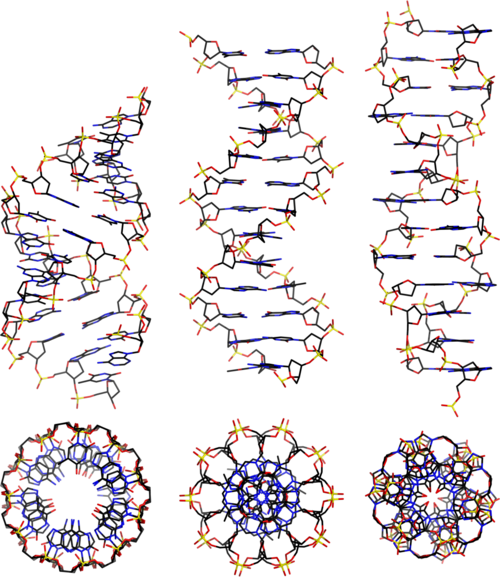
- เอ-ดีเอ็นเอ
- หนึ่งในสามโครงสร้าง ทางชีวภาพหลัก ของเกลียวคู่DNA ที่มีกิจกรรมทางชีวภาพ ร่วมกับB-DNAและZ-DNAเกลียว A มีการบิดแบบมือขวาโดยมีเบสคู่ 11 คู่ต่อการหมุนครบหนึ่งรอบ มีขนาดกะทัดรัดกว่า B-DNA เพียงเล็กน้อย แต่เบสของมันเอียงอย่างมากเมื่อเทียบกับแกนเกลียว มักพบได้ในสภาวะที่ขาดน้ำและในลำดับของนิ วคลีโอไทด์ พิวรี นที่ต่อเนื่องกัน (เช่นGAAGGGGA ) นอกจากนี้ยังเป็นโครงสร้างหลักที่RNA สองสายและไฮบริด RNA-DNA นำมา ใช้[ 5 ]
- แอโรบิก
- 1. อธิบายสภาวะที่ มี ออกซิเจนไดอะตอมิก ในรูปก๊าซหรือละลาย อยู่ สภาพแวดล้อมแบบแอโรบิกเรียกว่ามีออกซิเจน[ 3 ]
- 2. อธิบายสิ่งมีชีวิต เส้นทาง หรือกระบวนการที่ต้องการหรือใช้ประโยชน์จากออกซิเจนไดอะตอมิก เช่นการหายใจแบบใช้ออกซิเจน [ 3 ] เปรียบเทียบกับการ หายใจ แบบไม่ใช้ออกซิเจน
- คู่ญาติที่ได้รับผลกระทบ
- สิ่งมีชีวิตสองชนิดใดๆ ที่มีความสัมพันธ์ทางพันธุกรรมและได้รับผลกระทบจากลักษณะ เดียวกัน ตัวอย่างเช่น ลูกพี่ลูกน้องสองคนที่ต่างก็มีดวงตาสีฟ้า ถือเป็นคู่ญาติที่ได้รับผลกระทบ เนื่องจากทั้งคู่ได้รับผลกระทบจากอัลลีลที่ควบคุมลักษณะดวงตาสีฟ้า
- การสลายตัวด้วยด่าง
- วิธีการทางห้องปฏิบัติการที่ใช้ในชีววิทยาระดับโมเลกุลเพื่อสกัดและแยกดีเอ็นเอที่อยู่นอกโครโมโซมเช่น ดีเอ็นเอของพลาสมิด (ตรงข้ามกับดีเอ็นเอในจีโนมหรือโครโมโซม ) จากเซลล์บางชนิด โดยทั่วไปคือเซลล์แบคทีเรียที่เพาะเลี้ยง
- อัลลีล
- หนึ่งในหลายเวอร์ชันทางเลือกของยีน แต่ละตัว ซึ่งแต่ละเวอร์ชันเป็น ลำดับ ดีเอ็นเอ ที่สามารถ ดำรงอยู่ได้ในตำแหน่งหรือโลคัส ที่กำหนด บนโครโมโซมตัวอย่างเช่น ในมนุษย์ อัลลีลหนึ่งของยีนสีตาทำให้มีดวงตาสีฟ้า และอัลลีลอีกอัลลีลหนึ่งของยีนเดียวกันทำให้มีดวงตาสีน้ำตาล
- อัลโลโซม
- โครโมโซมใดๆที่แตกต่างจากออโตโซม ทั่วไป ในด้านขนาด รูปร่าง หรือพฤติกรรม และมีหน้าที่กำหนดเพศของสิ่งมีชีวิต ในมนุษย์โครโมโซม Xและโครโมโซม Yเป็นโครโมโซมเพศ
- เกลียวอัลฟา (α-helix)
- รูปแบบโครงสร้างพื้นฐานที่พบได้ทั่วไปในโครงสร้างทุติยภูมิของโปรตีนซึ่งประกอบด้วยโครงสร้างเกลียวขวาที่เกิดจากพันธะไฮโดรเจนระหว่าง หมู่ กรดอะมิโนที่ไม่ได้อยู่ติดกันโดยตรง
- การตัดต่อทางเลือก
- การตัดต่อทางเลือก (Alternative Splicing) เป็น ปรากฏการณ์ที่มีการควบคุมในการแสดงออกของยีน ในเซลล์ยูคาริโอต โดยที่เอ็กซอน เฉพาะหรือบางส่วนของเอ็กซอนจากทราน สคริปต์หลักเดียวกันจะถูกรวมหรือตัดออกไปจากทรานสคริปต์mRNA ที่สมบูรณ์แล้ว การตัดต่อทางเลือกเป็นรูปแบบหนึ่งของ การดัดแปลงหลังการถอดรหัส ซึ่งช่วยให้ ยีนเดียวสามารถสร้างโปรตีนได้หลายไอโซฟอร์ม และเพิ่มความหลากหลายของโปรตีนที่สามารถผลิตได้จาก จีโนมแต่ละตัวอย่างมากดูเพิ่มเติมที่การตัดต่อ RNA (RNA splicing )
- อำพัน
- หนึ่งในสามรหัสหยุดที่ใช้ในรหัสพันธุกรรมมาตรฐานในอาร์เอ็นเอ รหัสหยุด นี้ถูกกำหนดโดยไตรนิวคลีโอไทด์UAGรหัสหยุดอีกสองรหัสมีชื่อว่าโอเคอร์และโอปอล
- กรดอะมิโน
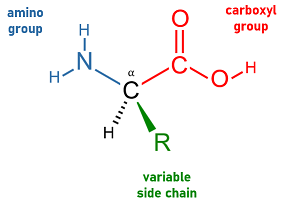
- สารประกอบอินทรีย์ประเภทหนึ่งที่มีสูตรโครงสร้างพื้นฐานประกอบด้วยอะตอมคาร์บอนกลางที่เชื่อมต่อกับหมู่ฟังก์ชันอะมีนและคาร์บอกซิล และโซ่ข้าง ที่แปรผันได้ จากกรดอะมิโนที่รู้จักกันเกือบ 500 ชนิด มีกรดอะมิโน 20 ชนิดที่ถูกกำหนดรหัสโดยรหัสพันธุกรรมมาตรฐานและถูกนำไปรวมเข้ากับสายโซ่พอลิเมอร์ยาวเป็นหน่วยพื้นฐานของเปปไทด์และด้วยเหตุนี้จึงเป็น หน่วยพื้นฐานของ พอลิเปปไทด์และโปรตีนลำดับเฉพาะของกรดอะมิโนในสายโซ่พอลิเปปไทด์ที่ประกอบเป็นโปรตีนนั้นเป็นตัวกำหนดโครงสร้างและหน้าที่ของโปรตีนในที่สุด
- ปลายอะมิโน
- ดูที่ปลาย N- terminus
- อะมิโนเอซิล-ทีอาร์เอ็นเอ ซินเทส
- เอนไซม์กลุ่มหนึ่งที่เร่งปฏิกิริยา การ ถ่ายโอนเอสเท อร์ ซึ่งส่งผลให้ กรดอะมิโน จำเพาะ (หรือสารตั้งต้น) เชื่อมต่อเข้า กับ โมเลกุลtRNA ที่จำเพาะ ก่อให้เกิดเป็น อะมิโนเอซิล-tRNAกรดอะมิโนทั้ง 20 ชนิดที่ใช้ในรหัสพันธุกรรมจะถูกจดจำและเชื่อมต่อโดยเอนไซม์ซินเทสจำเพาะของมันเอง และซินเทสส่วนใหญ่จะจำเพาะกับ tRNA หลายชนิดตามแอนติโคดอน จำเพาะของ มัน
- อะมิโนเอซิล-ทีอาร์เอ็นเอ (aa-tRNA)
- โมเลกุลtRNAที่มีกรดอะมิโน ที่เข้ากันได้ ทางเคมีเชื่อมต่ออยู่ กล่าวคือ เป็นผลผลิตจากปฏิกิริยาการถ่ายโอนเอสเทอร์ที่เร่งปฏิกิริยาโดยเอนไซม์อะมิโนเอซิล-tRNA ซินเทสอะมิโนเอซิล-tRNA จะจับกับตำแหน่งอะมิโนเอซิลของไรโบโซมในระหว่างกระบวนการแปลรหัส
- แอมพลิคอน
- ลำดับหรือชิ้นส่วนของ DNA หรือ RNA ใดๆ ที่เป็นแหล่งที่มาและ/หรือผลผลิตของ ปฏิกิริยา การเพิ่มจำนวนคำนี้มักใช้เพื่ออธิบายชิ้นส่วนที่ถูกคัดลอกจำนวนมากซึ่งเป็นผลผลิตของปฏิกิริยาลูกโซ่พอลิเมอเรสหรือปฏิกิริยาลูกโซ่ไลเกสแม้ว่าอาจหมายถึงลำดับที่เพิ่มจำนวนขึ้นตามธรรมชาติภายในจีโนม เช่น โดยการจำลองยีนก็ได้
- การขยาย
- การจำลองโมเลกุลชีวภาพ โดยเฉพาะอย่างยิ่งการสร้างสำเนาของลำดับกรดนิวคลีอิก หนึ่งชุดหรือมากกว่านั้น ซึ่งเรียกว่า แอมพลิคอน ไม่ว่า จะเกิดขึ้นเองตามธรรมชาติ (เช่น โดยการเพิ่มจำนวน โดยธรรมชาติ ) หรือโดยวิธีการประดิษฐ์ (เช่น โดยPCR ) และโดยเฉพาะอย่างยิ่งหมายถึงการจำลองซ้ำหลายครั้งซึ่งส่งผลให้เกิดสำเนาของลำดับเป้าหมายหลายพัน หลายล้าน หรือหลายพันล้านชุด ซึ่งเรียกว่ามีการเพิ่มจำนวน (amplified )
- อนาโบลิซึม
- ปฏิกิริยาหรือกระบวนการ เผาผลาญใดๆที่ใช้พลังงานในการสร้างสารที่ซับซ้อน เช่น โมเลกุลขนาดใหญ่ จากสารประกอบที่เรียบง่ายกว่า รวมถึงแง่มุมของการเจริญเติบโตและการสังเคราะห์ทางชีวภาพ กระบวนการและเส้นทาง การสร้าง มักเกี่ยวข้องกับ ขั้นตอน การลดที่สร้างสารประกอบที่มีเอนทาลปีสูงและเอนโทรปีต่ำ เช่น โปรตีนและพอลิเมอร์กรดนิวคลีอิก[ 3 ]เปรียบเทียบกับการสลายตัว
- แอนแอโรบิก
- 1. อธิบายสภาวะที่ไม่มีออกซิเจนไดอะตอมิก โดยสิ้นเชิง ตรงข้ามกับ สภาวะแอโรบิก[ 3 ]
- 2. อธิบายสิ่งมีชีวิตที่สามารถอยู่รอดและเติบโตได้โดยปราศจากออกซิเจนไดอะตอม หรือเส้นทางหรือกระบวนการที่มีลักษณะเฉพาะคือปราศจากออกซิเจนไดอะตอม เช่นการหายใจแบบไม่ใช้ออกซิเจน[ 3 ]
- ระยะแอนาเฟส
- ระยะของไมโทซิสและไมโอซิสที่เกิดขึ้นหลังระยะเมตาเฟสและก่อนระยะเทโลเฟสเมื่อโครโมโซมที่จำลองแบบแล้วถูกแยกออกจากกัน และโครมาทิดคู่ แต่ละอันถูกเคลื่อนไปยังด้านตรง ข้ามของเซลล์
- ระยะล่าช้าของแอนาเฟส
- ภาวะแอนยูพลอยด์ คือ ความล้มเหลวของคู่โครมาทิด คู่หนึ่งหรือมากกว่า หรือโครโมโซมคู่เหมือนในการเคลื่อนที่ไปยังด้านตรงข้ามของเซลล์อย่างถูกต้องในระหว่างระยะแอนาเฟสของ การแบ่ง เซลล์แบบไมโทซิสหรือไมโอซิสเนื่องจากกลไกของแกนแบ่งเซลล์ บกพร่อง ส่งผลให้เซลล์ลูกทั้งสองเซลล์มี ภาวะแอนยู พลอยด์ กล่าวคือ เซลล์หนึ่งขาดโครโมโซมหนึ่งคู่หรือมากกว่า (เกิดภาวะโมโนโซมี ) ในขณะที่อีกเซลล์หนึ่งมีโครโมโซมคู่เดียวกันเพิ่มขึ้นหนึ่งคู่หรือมากกว่า (เกิดภาวะโพลีโซมี )
- ศูนย์กลางผิดปกติ
- (ของโครโมโซม เชิงเส้น หรือชิ้นส่วนโครโมโซม) มีจำนวนเซนโทรเมียร์ ที่ผิดปกติ กล่าวคือมีมากกว่าหนึ่ง[ 6 ]
- แอนยูพลอยดี
- ภาวะที่เซลล์หรือสิ่งมีชีวิตมีจำนวน โครโมโซมบางชนิดผิดปกติ(แต่ไม่รวมถึงจำนวนโครโมโซมชุดสมบูรณ์ที่ผิดปกติ ซึ่งเรียกว่าภาวะยูพลอยดี )
- การอบอ่อน
- การรวมตัวกัน ของโมเลกุล กรดนิวคลีอิกสายเดี่ยว สองโมเลกุลที่มี ลำดับเบส ที่เสริมกันทำให้เกิด โมเลกุล สายคู่ที่มีนิวคลีโอเบสจับคู่กันคำนี้ใช้โดยเฉพาะอย่างยิ่งเพื่ออธิบายขั้นตอนในเทคนิคทางห้องปฏิบัติการ เช่นปฏิกิริยาลูกโซ่พอลิเมอเรส (PCR ) ซึ่งโมเลกุล DNA สายคู่จะถูกทำให้เสียสภาพซ้ำๆกลายเป็นสายเดี่ยวโดยการให้ความร้อน แล้วจึงนำไปสัมผัสกับอุณหภูมิที่เย็นลง ทำให้สายต่างๆ กลับมารวมตัวกันอีกครั้ง หรือรวมตัวกับไพรเมอร์ที่ เสริมกัน อุณหภูมิที่เกิดการรวมตัวกันนั้นได้รับอิทธิพลอย่างมากจากความยาวและลำดับเบสเฉพาะของแต่ละสาย
- ยีนต้านทานยาปฏิชีวนะ
- ยีนที่ให้ความต้านทานต่อ สารประกอบ ยาปฏิชีวนะ อย่างน้อยหนึ่งชนิด ในการโคลนนิ่งระดับโมเลกุลเวกเตอร์พลา สมิด มักถูกออกแบบมาเพื่อบรรจุยีนต้านทานยาปฏิชีวนะเป็นเครื่องหมายคัดเลือกควบคู่ไปกับยีนอื่นๆ ที่สนใจ เนื่องจากช่วยให้สามารถคัดเลือก ประชากรเซลล์ ที่ได้รับการเปลี่ยนแปลงทางพันธุกรรม สำเร็จได้ โดยการเพาะเลี้ยงเซลล์ในสภาวะที่มียาปฏิชีวนะอยู่
- แอนติบอดี
- อิม มูโนโกลบูลินเป็น โปรตีนไกลโค โปรตีนหลากหลายชนิดที่สามารถจับกับแอนติเจนหรืออิมมูโนเจน ที่เฉพาะเจาะจงได้อย่างจำเพาะเจาะจงแต่สามารถย้อนกลับได้ผ่านปฏิกิริยาที่ไม่ใช่พันธะโควาเลน ต์ แอนติบอดีถูกสร้างขึ้นเป็นส่วนหนึ่งของการตอบสนองทางภูมิคุ้มกันของสิ่งมีชีวิตต่อการนำแอนติเจนที่เฉพาะเจาะจงเข้าสู่สิ่งมีชีวิตเจ้าบ้าน และการจับกับแอนติเจนของแอนติบอดีมักจะ (แม้จะไม่เสมอไป) ต่อต้านหรือยับยั้งกิจกรรมทางชีวภาพใดๆ ที่แอนติเจนอาจมี[ 3 ]แอนติบอดีมีโครงสร้างรูปตัว Y ที่เป็นลักษณะเฉพาะ ประกอบด้วยโซ่หนักและโซ่เบาที่ยึดเข้าด้วยกันด้วยพันธะไดซัลไฟด์
- แอนติโคดอน
- ลำดับนิวคลีโอไทด์สามตัวที่เรียงต่อกันภายในtRNAซึ่ง เข้าคู่กับนิวคลีโอ ไทด์สามตัวของโคดอนในmRNAในระหว่างการแปล รหัส tRNA แต่ละตัวที่ถูกดึงไปยังไรโบโซม จะมีแอนติโคดอนสามตัวเพียงชุดเดียว ซึ่งจะจับคู่กับโคดอนที่เข้าคู่กันจากลำดับ mRNA ทำให้แต่ละโคดอนสามารถระบุ กรดอะมิโนเฉพาะที่จะถูกเพิ่มเข้าไปในสายเปปไทด์ที่กำลังเติบโตได้ แอนติโคดอนที่มีอิโนซีนในตำแหน่งแรกสามารถจับคู่กับโคดอนได้มากกว่าหนึ่งโคดอนเนื่องจากปรากฏการณ์ที่เรียกว่าการจับคู่เบสแบบวอบเบิล
- แอนติเจน
- สาร ภายนอกใดๆที่เมื่อนำเข้าสู่สิ่งมีชีวิตที่มีระบบภูมิคุ้มกัน จะกระตุ้นการตอบสนองจากระบบภูมิคุ้มกันของสิ่งมีชีวิตนั้น ส่งผลให้เกิดการผลิตแอนติบอดี อย่างน้อยหนึ่งชนิด ที่สามารถจับกับสารนั้นได้อย่างจำเพาะเจาะจง ในความหมายนี้ คำนี้จึงมีความหมายเหมือนกับ สาร ก่อภูมิคุ้มกันแอนติเจนอาจเป็นสารบริสุทธิ์ สารผสม หรืออนุภาค เช่น เซลล์หรือชิ้นส่วนของเซลล์ คำจำกัดความที่กว้างขึ้นอาจรวมถึงสารที่สามารถจับกับแอนติบอดีจำเพาะได้ แต่ตัวมันเองไม่ก่อให้เกิดภูมิคุ้มกัน กล่าวคือ สารที่สามารถกระตุ้นการผลิตแอนติบอดีได้ก็ต่อเมื่อรวมกับตัวพาเท่านั้น[ 3 ]
- แอนติเมตาโบไลต์
- โมเลกุลใดๆ ที่ทำหน้าที่เป็นตัวต่อต้าน กระบวนการ เผาผลาญจำกัดหรือยับยั้งการเผาผลาญของเซลล์ตามปกติ เช่น สารพิษต่อการเผาผลาญ[ 6 ]
- แอนติไมโทติก
- สารประกอบใดๆ ที่ยับยั้งการแบ่งเซลล์ ตามปกติ ในเซลล์หรือกลุ่มเซลล์[ 6 ]
- แอนติโคยีน
- ยีนที่ช่วยควบคุมการเจริญเติบโตของเซลล์และยับยั้งเนื้องอกเมื่อทำงานอย่างถูกต้อง การขาดหายไปหรือการทำงานผิดปกติของยีนนี้อาจส่งผลให้เซลล์เจริญเติบโตอย่างควบคุมไม่ได้และอาจก่อให้เกิดมะเร็งได้[ 7 ] เปรียบเทียบกับยีนก่อมะเร็ง
- ตรงข้ามขนาน
- การวางตัวที่แตกต่างกันของสาย ทั้งสอง ของกรดนิวคลีอิกแบบสองสาย (และโดยทั่วไปแล้ว คู่ของพอลิเมอร์ชีวภาพ ใดๆ ) ซึ่งขนานกันแต่มีทิศทาง ตรงกันข้าม ตัวอย่างเช่น สาย เสริม สอง สายของ โมเลกุล DNAวิ่งเคียงข้างกันแต่ในทิศทางตรงกันข้ามตามหลักการกำหนดหมายเลขทางเคมี โดยสายหนึ่งมีทิศทาง5'ไป3'และอีกสายหนึ่งมีทิศทาง 3' ไป 5'
- แอนติพอร์เตอร์
- โปรตีนขนส่งซึ่งทำงานโดยการแลกเปลี่ยนไอออนหรือโมเลกุลขนาดเล็กสองชนิดที่แตกต่างกันข้ามเยื่อหุ้มเซลล์ในทิศทางตรงกันข้าม ไม่ว่าจะในเวลาเดียวกันหรือต่อเนื่องกัน[ 8 ]
- แอนติเซนส์
- ดู แม่ แบบเส้นใย
- อาร์เอ็นเอแอนติเซนส์ (asRNA)
- โมเลกุล RNA สายเดี่ยว ที่ไม่เข้ารหัส ซึ่งมีลำดับ แอนติเซนส์ที่เสริมกับสายเซนส์ เช่นmRNAซึ่งจะเกิดการไฮบริด ไดเซชันได้ง่าย ทำให้ยับยั้งการทำงานต่อไปของสายเซนส์ (เช่นการแปลเป็นโปรตีน) RNA ที่เกิดขึ้นตามธรรมชาติหลายประเภท เช่นsiRNAทำงานโดยหลักการนี้ ทำให้พวกมันเป็นตัวยับยั้ง ยีนที่มีประสิทธิภาพ ใน กลไก การควบคุมยีน ต่างๆ RNA แอนติเซนส์สังเคราะห์ยังถูกนำมาใช้กันอย่างแพร่หลายในการศึกษา การลดการแสดงออกของยีนและในการประยุกต์ใช้ในทางปฏิบัติ เช่นการบำบัดด้วยแอนติเซนส์
- อะนิวเคลียส
- (ของเซลล์หรือสิ่งมีชีวิต) ขาดนิวเคลียส กล่าว คือ ออร์แกเนลล์ที่มีเยื่อหุ้มล้อมรอบซึ่งบรรจุดีเอ็นเอจีโนม ของเซลล์ โดยเฉพาะอย่างยิ่งใช้กับเซลล์ที่ปกติมีนิวเคลียสแต่ ถูกกำจัดนิวเคลียส ออกไปแล้ว (เช่น ในการถ่ายโอนนิวเคลียส เทียม ) และยังใช้กับเซลล์ชนิดพิเศษที่พัฒนาขึ้นโดยไม่มีนิวเคลียส แม้ว่าเซลล์ของเนื้อเยื่ออื่นๆ ในสิ่งมีชีวิตเดียวกันโดยปกติจะมีนิวเคลียส (เช่นเม็ดเลือดแดง ของสัตว์เลี้ยงลูกด้วยนม )
- การหดตัวที่ปลายยอด
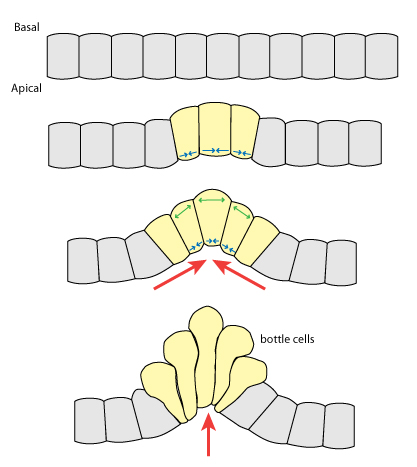
- กระบวนการที่ด้านปลายของเซลล์หดตัว (และมักจะมีการขยายตัวของด้านฐานที่อยู่ตรงข้ามกัน) ทำให้เซลล์มีรูปร่างคล้ายลิ่ม กระบวนการนี้พบได้ทั่วไปในช่วงเริ่มต้นของการพัฒนา ซึ่งมักเกิดขึ้นพร้อมกันในเซลล์ที่อยู่ติดกันหลายเซลล์ใน ชั้น เยื่อบุผิวเพื่อสร้างส่วนโค้งหรือรอยพับในเนื้อเยื่อ ที่กำลัง พัฒนา
- อะพอพโทซิส
- เป็นรูปแบบการตายของเซลล์แบบมีโปรแกรม ที่ถูกควบคุมอย่างเข้มงวด ซึ่งเกิดขึ้นในสิ่งมีชีวิตหลายเซลล์
- แอพทาเมอร์
- แอพทา เมอร์ คือโมเลกุล โอลิโกนิวคลีโอ ไทด์DNA , RNAหรือXNA สังเคราะห์ใดๆ ไม่ว่า จะเป็นสายเดี่ยวหรือสายคู่ซึ่งทำหน้าที่เป็นลิแกนด์โดยการจับกับโมเลกุลเป้าหมายที่เฉพาะเจาะจงอย่างน้อยหนึ่งโมเลกุล โดยปกติจะเป็นกรดนิวคลีอิกหรือโปรตีน อื่นๆ และมักจะเป็นกลุ่มของโมเลกุลดังกล่าว คำนี้ใช้โดยเฉพาะอย่างยิ่งเพื่ออธิบายชิ้นส่วนกรดนิวคลีอิกสั้นๆ ที่ถูกสร้างขึ้นแบบสุ่มแล้วคัดเลือกโดยเทียมในหลอดทดลองด้วยกระบวนการต่างๆ เช่นSELEXแอพทาเมอร์มีประโยชน์ในห้องปฏิบัติการในฐานะสารเลียนแบบแอนติบอดีโดยเฉพาะอย่างยิ่งในการใช้งานที่แอนติบอดี โปรตีนแบบดั้งเดิม ไม่เหมาะสม
- การสังเคราะห์ยีนเทียม
- ชุดของวิธีการทางห้องปฏิบัติการที่ใช้ในการสังเคราะห์ยีน (หรือ ลำดับกรดนิวคลีอิกอื่นๆ ) ขึ้นใหม่จาก นิวคลีโอ ไทด์อิสระกล่าวคือ โดยไม่ต้องอาศัยสายแม่แบบ ที่มีอยู่ แล้ว
- กระบวนการดูดซึม
- กระบวนการใด ๆ ที่สารประกอบทางเคมีที่มีธาตุสำคัญทางชีววิทยา (เช่น คาร์บอน ไฮโดรเจน ออกซิเจน ไนโตรเจน ฟอสฟอรัส กำมะถัน ซีลีเนียม เหล็ก โคบอลต์ นิกเกล ทองแดง สังกะสี โมลิบเดนัม ฯลฯ) ถูกดูดซึมโดยจุลินทรีย์และนำไปรวมเข้ากับโมเลกุลชีวภาพ ที่ซับซ้อน เพื่อสังเคราะห์ส่วนประกอบต่าง ๆ ของเซลล์ ในทางตรงกันข้ามกระบวนการสลายพลังงาน จะใช้พลังงานที่ปล่อยออกมาจากการสลายโมเลกุลภายนอกเพื่อขับเคลื่อน กระบวนการเผาผลาญของเซลล์และขับสารประกอบที่เหลือหรือเป็นพิษออกจากเซลล์ แทนที่จะนำกลับมาใช้ใหม่เพื่อสร้างโมเลกุลใหม่
- แอสเตอร์
- ในเซลล์สัตว์ ระบบไมโครทูบูล ที่ไม่ใช่ ไคเนโตคอร์ รูปดาว ที่แผ่ออกมาจากเซนโทรโซมหรือจากขั้วใดขั้วหนึ่งของแกนไมโทติกในช่วงเริ่มต้นของการแบ่งเซลล์[ 8 ]
- อะไซแนปซิส
- ความล้มเหลวของโครโมโซมคู่เหมือนในการจับคู่กันอย่างถูกต้องระหว่างไมโอซิส [ 6 ] เปรียบเทียบไซแนปซิสและดีไซแนปซิส
- แนบ X
- โครโมโซมโมโนเซนทริก เดี่ยว คือโครโมโซมที่มีสำเนาของ โครโมโซม Xปกติสองชุดขึ้นไปที่เชื่อมต่อกันทางกายภาพอันเป็นผลมาจากการเพิ่มจำนวน ภายในตามธรรมชาติ หรือ วิธี การทางพันธุวิศวกรรมต่างๆ โครโมโซมผสมที่ได้นี้จะมีชุดยีนและลำดับทั้งหมดที่อยู่บนโครโมโซม X สองชุดขึ้นไป แต่ยังคงทำหน้าที่อื่นๆ เหมือนโครโมโซมเดี่ยว นั่นหมายความว่าเซลล์สืบพันธุ์แฮพลอยด์ 'XX' (แทนที่จะเป็นเซลล์สืบพันธุ์ 'X' ปกติ) จะถูกสร้างขึ้นโดย กระบวนการ ไมโอซิสและถ่ายทอดไปยังลูกหลาน ในกลไกต่างๆ เช่นสมดุลของยีน ซึ่งเพศของสิ่งมีชีวิตถูกกำหนดโดยปริมาณรวมของยีนที่เชื่อมโยงกับ โครโมโซม X ไซโกต 'XXY' ที่ผิดปกติ ซึ่งได้รับการปฏิสนธิโดยเซลล์สืบพันธุ์ XX หนึ่งเซลล์และเซลล์สืบพันธุ์ Y หนึ่งเซลล์ จะพัฒนาเป็นเพศหญิง
- การสลายตัวเอง
- การสลายหรือการย่อยสลายเซลล์ โดย เอนไซม์ ของเซลล์ นั้นเองหรือการย่อยสลายเอนไซม์ชนิดหนึ่งโดยเอนไซม์ชนิดเดียวกันอีกตัวหนึ่ง ดูเพิ่มเติมที่ออโตฟาจี (Autophagy )
- ออโตฟาจี
- กระบวนการย่อยสลายและนำส่วนประกอบของเซลล์ที่ทำงานผิดปกติหรือไม่จำเป็นกลับมาใช้ใหม่โดยเอนไซม์ของเซลล์เองอย่างเป็นระเบียบ ซึ่งเป็นส่วนหนึ่งของกระบวนการที่ถูกควบคุมอย่างระมัดระวังและ อาศัย ไลโซโซม เป็นตัวกลาง กระบวนการ ออโตฟาจีมีบทบาทสำคัญในเซลล์ที่ขาดสารอาหารและเซลล์ที่เสื่อมสภาพแต่ยังช่วยรักษาสภาวะสมดุลในเซลล์ที่แข็งแรง อีกด้วย
- ออโตโซม
- โครโมโซมใดๆที่ไม่ใช่แอลโลโซมดังนั้นจึงไม่มีส่วนเกี่ยวข้องในการกำหนดเพศของสิ่งมีชีวิต แตกต่างจากโครโมโซมเพศ ออโตโซมใน เซลล์ ดิพลอยด์ มีอยู่เป็นคู่ โดยสมาชิกแต่ละคู่มีโครงสร้าง รูปร่าง และ ตำแหน่งทางพันธุกรรมเหมือนกัน
- ออโตไซโกต
- เซลล์หรือสิ่งมีชีวิตที่เป็นโฮโมไซกัสสำหรับตำแหน่งที่อัลลีลโฮโมล็อกทั้งสองเหมือนกันโดยสืบทอดมาจากยีนเดียวในบรรพบุรุษร่วมกัน[ 6 ]เปรียบเทียบกับอัลโลไซโกต
- อ็อกซีซิส
- การเจริญเติบโตของสิ่งมีชีวิตหลายเซลล์เกิดจากการเพิ่มขนาดของเซลล์มากกว่าการเพิ่มจำนวนเซลล์
- ปลอดเชื้อ
- อธิบายถึงการเพาะเลี้ยงเซลล์ที่มีเพียงสายพันธุ์ ชนิด หรือพันธุ์เดียวเท่านั้น และปราศจากสิ่งมีชีวิตปนเปื้อนโดยสิ้นเชิง รวมถึงสิ่งมีชีวิตที่อยู่ร่วมกันแบบพึ่งพาอาศัยกันและปรสิต

บี
- โครโมโซมบี
- โมเลกุล DNA นิวเคลียร์ส่วนเกินใดๆที่ไม่ใช่สำเนาหรือโฮโมล็อกกับโครโมโซม "A" มาตรฐานใดๆ ที่ประกอบเป็นจีโนม โดยทั่วไปแล้ว โครโมโซม B มีขนาดเล็กมากและไม่มีจีนโครงสร้าง ตามคำจำกัดความแล้ว โครโมโซม B ไม่จำเป็นต่อการดำรงชีวิต แม้ว่าจะพบได้ตามธรรมชาติในสิ่งมีชีวิตยูคาริโอตหลายชนิด แต่ก็ไม่สามารถถ่ายทอดได้อย่างเสถียรดังนั้นจำนวนสำเนาจึงแตกต่างกันอย่างมากแม้ในบุคคลที่มีความสัมพันธ์ใกล้ชิดกัน[ 6 ]
- การกลายพันธุ์ย้อนกลับ
- การกลายพันธุ์ที่ย้อนกลับผลของการกลายพันธุ์ไปข้างหน้า ก่อนหน้านี้ ซึ่งทำให้ยีนไม่ทำงาน จึงทำให้ฟังก์ชันแบบปกติ กลับคืนมา [ 9 ]ดูเพิ่มเติมที่ การกลายพันธุ์ ย้อนกลับ
- โครโมโซมเทียมของแบคทีเรีย (BAC)
- ฐาน
- คำย่อของคำว่าnitrogenous baseและnucleobase
- คู่เบส (bp)
- คู่เบส สองตัว บน สาย ดีเอ็นเอหรืออาร์เอ็นเอที่เสริม กัน ซึ่งดึงดูดกันอย่างหลวมๆ ผ่านพันธะไฮโดรเจนซึ่งเป็นปฏิกิริยาไฟฟ้าสถิตแบบไม่ใช้พันธะโควาเลนต์ระหว่างอะตอมแต่ละตัวในวงแหวนพิวรีนหรือไพริมิดีนของเบสที่เสริมกัน ปรากฏการณ์นี้เรียกว่าการจับคู่เบสเป็นกลไกพื้นฐาน ของการเกิดไฮบริดได เซชันที่มักเกิดขึ้นระหว่างพอลิเมอร์กรดนิวคลีอิก ทำให้โมเลกุลสายเดี่ยว สองโมเลกุลรวมกันเป็นโมเลกุล สายคู่ที่มีเสถียรภาพทางพลังงานมากกว่าและยังทำให้สายแต่ละสายสามารถ เสริม กันได้ความสามารถของคู่เบสที่อยู่ติดกันในการเรียงซ้อนกันนั้นมีส่วนทำให้เกิด โครงสร้าง เกลียวคู่ สายยาว ที่พบในโมเลกุลดีเอ็นเอสายคู่และอาร์เอ็นเอสายคู่
- ฐาน
- ค่าที่วัด ระดับ การแสดงออกของยีนก่อนการเปลี่ยนแปลงในระหว่างการทดลอง เช่น ในกลุ่มควบคุมเชิงลบค่าการแสดงออกพื้นฐานอาจหมายถึงค่าการแสดงออกที่คาดการณ์ไว้หรือค่าการแสดงออกในอดีตของยีนนั้น ๆ ด้วย
- เครื่องมือค้นหาการจัดเรียงลำดับท้องถิ่นขั้นพื้นฐาน (BLAST)
- BLAST เป็นอัลกอริธึมคอมพิวเตอร์ที่ใช้กันอย่างแพร่หลายในชีวสารสนเทศศาสตร์สำหรับการจัดเรียงและเปรียบเทียบข้อมูลลำดับทางชีวภาพขั้นต้น เช่นลำดับนิวคลีโอไทด์ของ DNA หรือ RNA หรือลำดับกรดอะมิโนของโปรตีน โปรแกรม BLAST ช่วยให้นักวิทยาศาสตร์สามารถตรวจสอบความเหมือนกันระหว่างลำดับสองลำดับขึ้นไปได้อย่างรวดเร็วโดยการเปรียบเทียบโดยตรงระหว่างนิวคลีโอไทด์หรือกรดอะมิโนที่อยู่ในแต่ละตำแหน่งภายในแต่ละลำดับ การใช้งานทั่วไปคือการค้นหาการจับคู่ระหว่างลำดับคำถามเฉพาะกับฐานข้อมูลลำดับดิจิทัล เช่นคลังจีโนมโดยโปรแกรมจะส่งคืนรายการลำดับจากฐานข้อมูลที่คล้ายกับลำดับคำถามเกินเกณฑ์ความคล้ายคลึงที่กำหนด การเปรียบเทียบดังกล่าวสามารถช่วยในการระบุสิ่งมีชีวิตจากตัวอย่างที่ไม่รู้จัก หรืออนุมานความสัมพันธ์เชิงวิวัฒนาการระหว่างยีน โปรตีน หรือสายพันธุ์ได้
- บี-ดีเอ็นเอ
- โครงสร้าง "มาตรฐาน" หรือโครงสร้าง แบบคลาสสิก ของเกลียวคู่DNA ในสิ่งมีชีวิตเชื่อกันว่าเป็นค่าเฉลี่ยของโครงสร้างที่แตกต่างกันต่างๆ ที่โมเลกุล DNA ที่ยาวมากมีภายใต้สภาวะทางสรีรวิทยา[ 5 ]เกลียวคู่แบบ B มีการบิดขวาโดยมีเส้นผ่านศูนย์กลาง 23.7 อังสตรอมและระยะห่าง 35.7 อังสตรอม หรือประมาณ 10.5 คู่เบสต่อการหมุนครบหนึ่งรอบ โดยที่นิวคลีโอไทด์แต่ละคู่จะหมุน 36° รอบแกนเกลียวเมื่อเทียบกับคู่ที่อยู่ใกล้เคียง ดูเพิ่มเติมที่A-DNAและZ- DNA
- เบต้าออกซิเดชัน
- กระบวนการเผาผลาญที่โมเลกุลกรดไขมัน ถูก ย่อยสลายเป็นโมเลกุลที่เรียบง่ายกว่า โดยสร้างอะเซทิล-โคเอ (acetyl-CoA)ในกระบวนการนี้ เกิดขึ้นผ่านปฏิกิริยาที่เร่งด้วยเอนไซม์หลายขั้นตอน ซึ่งจะออกซิ ไดซ์ คาร์บอนเบต้าของสายกรดไขมันและเปลี่ยนเป็นหมู่คาร์บอนิล ในที่สุด จากนั้นหมู่คาร์บอนิลนี้จะไวต่อการโจมตีแบบนิวคลีโอฟิลิกโดยโมเลกุลโคเอนไซม์เอ อีกโมเลกุลหนึ่ง ทำให้เกิดการสลายพันธะระหว่างคาร์บอนอัลฟาและเบต้าด้วยหมู่ไทโอล กระบวนการนี้สามารถทำซ้ำได้เพื่อย่อยสลายสายไฮโดรคาร์บอนยาวๆ ให้เป็นสายสั้นๆ อย่างต่อเนื่อง โดยสร้างอะเซทิล-โคเอเพิ่มขึ้นอีกหนึ่งโมเลกุลในแต่ละรอบ ในโปรคาริโอต การออกซิเดชันเบต้าเกิดขึ้นในไซโตซอล ในขณะที่ในยูคาริโอตส่วนใหญ่เกิดขึ้นในเยื่อหุ้มไมโทคอนเดรียชั้นในหรือในเพอร์ออกซิโซม
- การจำลองแบบสองทิศทาง
- กลไกการจำลองดีเอ็นเอ ทั่วไป ซึ่งส้อมการจำลอง สองอันเคลื่อนที่ไปในทิศทางตรงกันข้ามออกจาก จุดกำเนิดเดียวกันส่งผลให้เกิดบริเวณคล้ายฟองซึ่ง โมเลกุล คู่จะถูกแยกออกเป็นสายเดี่ยว สองสาย ใน บริเวณนั้น [ 6 ]
- การแยกตัวแบบไบนารี
- การแบ่งตัวแบบไบนารีฟิชชัน คือการแยกหน่วยเดียว (เช่นเซลล์ ) ออกเป็นสองหน่วยที่แยกจากกันอย่างชัดเจน แต่ยังคงคล้ายคลึงกับหน่วยเดิม คำนี้หมายถึงการแบ่งเซลล์ ชนิดหนึ่ง ที่เกิดขึ้นในโปรคาริโอตเช่น แบคทีเรีย โดยเซลล์แม่ หนึ่งเซลล์ จะแบ่งตัวอย่างเท่าๆ กันเป็นสองเซลล์ลูกซึ่งมีลักษณะทางพันธุกรรมเหมือนกันทั้งกับเซลล์แม่และเซลล์ลูก การแบ่งตัวแบบไบนารีฟิชชันเกิดขึ้นหลังจากมีการจำลองดีเอ็นเอของเซลล์แม่ การเจริญเติบโตอย่างรวดเร็วของผนังเซลล์และกระบวนการอื่นๆ ที่ช่วยให้การกระจายตัวของสารภายในเซลล์ไปยังเซลล์ลูกทั้งสองเป็นไปอย่างเท่าเทียมกัน แต่โดยทั่วไปแล้วจะเป็นกระบวนการที่รวดเร็วและง่ายกว่าการแบ่งตัวแบบไมโทซิสและไซโทคิเนซิสที่เกิดขึ้นในยูคาริโอต
- ตำแหน่งการจับยึด
- บริเวณของโมเลกุลขนาดใหญ่ เช่น กรดนิวคลีอิกหรือโปรตีน ที่มีส่วนร่วมโดยตรงในปฏิกิริยาทางเคมีกับโมเลกุลอื่น ปฏิกิริยาทางเคมีที่หลากหลายซึ่งมีความแข็งแรงและความจำเพาะแตกต่างกันสามารถอธิบายได้ว่าเป็น "การจับกัน" อาจเป็นการจับกันระยะยาวหรือชั่วคราว ย้อนกลับได้หรือย้อนกลับไม่ได้ และอาจอาศัยแรงระหว่างโมเลกุลที่ ค่อนข้างอ่อน หรือพันธะโควาเลนต์ ที่แข็งแรงกว่ามาก ตำแหน่งการจับกันถูกกำหนดโดยความใกล้ชิดทางกายภาพของ สาร ตกค้าง หนึ่งตัวหรือมากกว่า ที่มีหมู่ฟังก์ชันที่มีคุณสมบัติทางเคมีเฉพาะ ตัวอย่างเช่นการพับตัวของพอลิเปปไทด์ในลักษณะที่กรดอะมิโนบางชนิดอยู่ใกล้กันในโครงสร้างควอเทอร์นารี ของโปรตีน อาจทำให้เกิดคุณสมบัติทางเคมีที่อนุญาตให้สารตกค้างเหล่านั้นมีปฏิสัมพันธ์กับลิแกนด์ เฉพาะ ในทำนอง เดียวกัน ลำดับเฉพาะของนิวคลีโอเบสในโมเลกุล DNA อาจทำหน้าที่เป็นตำแหน่งการจดจำสำหรับโปรตีนที่จับกับ DNAการทำงานของตำแหน่งการจับกันนั้นขึ้นอยู่กับการจัดเรียงทางกายภาพที่แม่นยำของสารตกค้างที่มีปฏิสัมพันธ์และการเข้าถึงทางกายภาพของสารตกค้างเหล่านั้นต่อคู่พันธะที่เป็นไปได้ ดังนั้น การกลายพันธุ์หรือการเปลี่ยนแปลงในสภาพแวดล้อมทางเคมี เช่นการเปลี่ยนแปลงโครงสร้างสามารถเปลี่ยนแปลงการทำงานได้อย่างมาก ดูเพิ่มเติมที่บริเวณออกฤทธิ์ (active site )
- การทดสอบทางชีวภาพ
- วิธีการวิเคราะห์ใดๆ ที่วัดหรือระบุการมีอยู่ ผลกระทบ หรือศักยภาพของสารภายในหรือบนระบบชีวภาพ ไม่ว่าโดยตรงหรือโดยอ้อม เช่น โดยการหาปริมาณความเข้มข้นของสารประกอบทางเคมีเฉพาะในตัวอย่างที่ได้จากสิ่งมีชีวิต เซลล์ หรือเนื้อเยื่อ และโดยอุดมคติแล้วอยู่ภายใต้สภาวะควบคุมที่เปรียบเทียบตัวอย่างที่ได้รับการทดลองกับตัวอย่างที่ไม่ได้รับการจัดการ เพื่อให้สามารถอนุมานเกี่ยวกับผลของการทดลองที่มีต่อตัวแปรที่วัดได้[ 10 ]
- ชีวเคมี
- ชีววิทยาเชิงเคมีเป็นสาขาย่อยของทั้งชีววิทยาและเคมี ซึ่งศึกษาพื้นฐานทางเคมีของปรากฏการณ์ทางชีววิทยา โดยมุ่งเน้นที่การทำความเข้าใจปฏิกิริยาเคมีและการปฏิสัมพันธ์ที่เกิดขึ้นระหว่างโมเลกุลชีวภาพและก่อให้เกิดกระบวนการที่กำหนดและบ่งบอกลักษณะของสิ่งมีชีวิต สาขานี้มีความเกี่ยวข้องอย่างใกล้ชิดและทับซ้อนกันอย่างมากกับชีววิทยาระดับโมเลกุล
- พลังงานชีวภาพ
- สาขาหนึ่งของชีวเคมีและชีววิทยาของเซลล์ที่ศึกษาการไหลของพลังงานผ่านระบบสิ่งมีชีวิต โดยเฉพาะอย่างยิ่งวิธีการที่สิ่งมีชีวิตได้รับ ผลิต เปลี่ยนแปลง และใช้พลังงานเพื่อดำเนินการทาง ชีวเคมี เช่นปฏิกิริยาเมตาบอลิซึม
- ไบโอฟิล์ม
- ชุมชนของจุลินทรีย์ที่อยู่ร่วมกันแบบพึ่งพาอาศัยกัน โดยเฉพาะแบคทีเรีย ซึ่งเซลล์จะสร้างและฝังตัวอยู่ภายในเมทริกซ์นอกเซลล์ ที่เหนียวและเป็นเมือก ซึ่งประกอบด้วยไบโอพอลิเมอร์ที่มีน้ำหนักโมเลกุลสูงหลายชนิดยึดเกาะกันเอง และบางครั้งก็ยึดเกาะกับพื้นผิวซึ่งอาจเป็นพื้นผิวทางชีวภาพหรือพื้นผิวที่ไม่ใช่ชีวภาพก็ได้[ 11 ]แบคทีเรียหลายชนิดสามารถดำรงอยู่ได้ทั้งในรูปของเซลล์เดี่ยวที่เป็นอิสระ หรือเปลี่ยนไปเป็นฟีโนไทป์ไบโอฟิล์มที่แตกต่างกันทางสรีรวิทยา แบคทีเรียที่สร้างไบโอฟิล์มมักทำเช่นนั้นเพื่อปกป้องตัวเองจากสภาพแวดล้อมที่เป็นอันตราย เซลล์ที่อาศัยอยู่ในไบโอฟิล์มสามารถแบ่งปันสารอาหารและสื่อสาร กันได้ง่าย และประชากรย่อยของเซลล์อาจเปลี่ยนแปลงไปทำหน้าที่เฉพาะเพื่อสนับสนุนไบโอฟิล์มทั้งหมด[ 12 ]
- ไบโอมาร์กเกอร์
- ตัวบ่งชี้ที่วัดได้ของสถานะทางชีวภาพบางอย่าง โดยเฉพาะสารประกอบหรือโมเลกุลชีวภาพซึ่งการมีอยู่หรือไม่มีอยู่ของระบบชีวภาพเป็นสัญญาณที่เชื่อถือได้ของกระบวนการ สภาวะ หรือโรคที่เป็นปกติหรือผิดปกติ[ 13 ] สิ่งที่อาจทำหน้าที่เป็นไบโอมาร์กเกอร์ ได้แก่ การวัดความเข้มข้นของสารประกอบหรือโมเลกุลเฉพาะในตัวอย่างเนื้อเยื่อหรือของเหลวโดยตรง หรือสัญญาณทางสรีรวิทยา ทางเนื้อเยื่อวิทยา หรือทางรังสีวิทยาที่มีลักษณะเฉพาะอื่นๆ (เช่น การเปลี่ยนแปลงของอัตราการเต้นของหัวใจ หรือ สัณฐานวิทยาที่แตกต่างกันภายใต้กล้องจุลทรรศน์) ไบโอมาร์กเกอร์มักใช้เป็นเครื่องมือในการทำนายหรือวินิจฉัยในทางการแพทย์ทางคลินิกและการวิจัยในห้องปฏิบัติการ
- โลหะชีวภาพ
- ธาตุโลหะใดๆ ที่พบได้ตามธรรมชาติในปริมาณเล็กน้อยแต่สามารถวัดได้ในบริบททางชีวภาพ ไอออนของโลหะมีบทบาทสำคัญในกระบวนการทางชีวเคมีหลายอย่าง และบางชนิดมีความจำเป็นต่อการทำงานปกติของสิ่งมีชีวิต โดยเฉพาะอย่างยิ่งเหล็ก (Fe), สังกะสี ( Zn), ทองแดง ( Cu) , แมงกานีส (Mn), แมกนีเซียม (Mg), โพแทสเซียม( K), โซเดียม (Na) และแคลเซียม (Ca)
- การไล่ระดับชีวโมเลกุล
- ความแตกต่างของความเข้มข้นของโมเลกุลชีวภาพระหว่างสองพื้นที่ภายในระบบชีวภาพ ไม่ว่าจะเป็นภายในเซลล์ภายนอกเซลล์ข้ามเยื่อ หุ้มเซลล์ หรือระหว่างเซลล์ต่าง ๆ หรือส่วนต่าง ๆ ของเนื้อเยื่อหรือระบบอวัยวะ ความแตกต่างของความเข้มข้นในรูปแบบต่าง ๆ ขับเคลื่อนกระบวนการทางชีวเคมีเกือบทั้งหมดที่เกิดขึ้นภายในและระหว่างเซลล์ เนื่องจากระบบธรรมชาติมีแนวโน้มที่จะเคลื่อนไปสู่สมดุลทางอุณหพลศาสตร์ซึ่งความเข้มข้นจะกระจายตัวอย่างสม่ำเสมอในทุกพื้นที่และไม่มีความแตกต่างของความเข้มข้น ดังนั้น ความแตกต่างของความเข้มข้นจึงทำให้เกิดปฏิกิริยาเคมีในทิศทางเฉพาะ ซึ่งเซลล์สามารถนำไปใช้ในการทำหน้าที่ทางชีวภาพที่สำคัญ รวมถึงการถ่ายโอนพลังงานเมตาบอลิซึมการส่งสัญญาณและการเคลื่อนที่ของไอออนและสารละลายเข้าและออกจากเซลล์และออร์แกเนลล์ บ่อยครั้งที่เซลล์จำเป็นต้องสร้างความแตกต่างของความเข้มข้น เช่นศักย์ไฟฟ้าของเยื่อหุ้มเซลล์ ขึ้นใหม่ตลอดเวลา เพื่อให้กระบวนการเหล่านี้ดำเนินต่อไปได้
- โมเลกุลชีวภาพ
- โมเลกุลหรือสารประกอบทางเคมีใด ๆที่เกี่ยวข้องหรือจำเป็นต่อกระบวนการทางชีวภาพอย่างน้อยหนึ่งกระบวนการภายในระบบชีวภาพ โดยเฉพาะอย่างยิ่งโมเลกุลขนาดใหญ่เช่นโปรตีนกรดนิวคลีอิกไขมันและคาร์โบไฮเดรตแต่ยังรวมถึงโมเลกุลขนาดเล็ก เช่นวิตามินฮอร์โมนและ โลหะ ชีวภาพซึ่งถูกใช้หรือผลิตขึ้นโดยปฏิกิริยาชีวเคมี มักเป็นส่วนหนึ่งของวิถีชีวเคมีโมเลกุลชีวภาพส่วนใหญ่เป็นสารประกอบอินทรีย์บางชนิดผลิตขึ้นเองตามธรรมชาติภายในเซลล์หรือเนื้อเยื่อ ( สารประกอบ ภายใน ) ในขณะที่บางชนิดต้องได้รับจากสิ่งแวดล้อมของสิ่งมีชีวิต ( สารประกอบ ภายนอก )
- ไบวาเลนต์
- เซลล์ระเบิด
- ดูเซลล์ต้นกำเนิด
- บล็อต
- วิธีการทางชีววิทยาโมเลกุลหลากหลายวิธีที่ใช้ในการถ่ายโอนตัวอย่างDNA , RNAหรือโปรตีนที่แยก ด้วยวิธีอิเล็กโทรโฟเรซิสหรือโครมาโทกราฟีจากตัวกลางรองรับ เช่น เจลโพลีอะคริลาไมด์หรืออะกาโรสไปยังตัวพาที่ตรึงอยู่กับที่ เช่น เมมเบรนไนโตรเซลลูโลสหรือPVDFบางวิธีเกี่ยวข้องกับการถ่ายโอนโมเลกุลโดยอาศัยแรงดึงดูดของเส้นเลือดฝอย (เช่นSouthern blotting และnorthern blotting ) ในขณะที่วิธีอื่นอาศัยการขนส่งโมเลกุลที่มีประจุโดยอิเล็กโทรโฟเรซิส (เช่นwestern blotting ) จากนั้นโมเลกุลที่ถ่ายโอนจะถูกทำให้มองเห็นได้โดยการย้อมสีการถ่ายภาพรังสีอัตโนมัติหรือโดยการตรวจสอบ ลำดับหรือ เอพิโทปเฉพาะด้วยโพรบไฮบ ริดไดเซชัน หรือแอนติบอดีที่เชื่อมต่อกับตัวรายงานเคมีเรืองแสง[ 6 ]
- ปลายทู่
- คำว่า "ปลายทู่" (Blunt end) ใช้เพื่ออธิบายปลายของโมเลกุลDNA สองสาย ที่นิวคลีโอเบสปลายสุดของแต่ละ สายจับคู่กันแล้ว ทำให้ไม่มีสายใดมีส่วนที่ยื่นออกมาเป็นสายเดี่ยวที่ไม่มีเบสจับคู่กัน ซึ่งแตกต่างจาก " ปลายเหนียว" (Sticky end ) ที่มีส่วนยื่นออกมาเนื่องจากสายหนึ่งยาวกว่าอีกสายหนึ่งหนึ่งเบสหรือมากกว่านั้น ปลายทู่และปลายเหนียวมีความสำคัญเมื่อทำการเชื่อมต่อโมเลกุล DNA หลายโมเลกุลเข้าด้วยกัน เช่น ใน การโคลนนิ่งโดยใช้ เอนไซม์ตัดจำเพาะ (Restriction cloning ) เพราะโมเลกุลที่มีปลายเหนียวจะไม่เชื่อมต่อกันได้ง่ายๆ เว้นแต่จะมีส่วนที่ยื่นออกมาที่ตรงกัน ส่วนโมเลกุลที่มีปลายทู่จะไม่เชื่อมต่อกันในลักษณะนี้ ดังนั้นจึงต้องใช้ขั้นตอนพิเศษเพื่อให้แน่ใจว่าชิ้นส่วนที่มีปลายทู่เชื่อมต่อกันในตำแหน่งที่ถูกต้อง
- โบรโมออกซียูริดีน (BUDR, BrdU)
- สารอนาล็อกของนิวคลีโอไซด์สังเคราะห์ที่มีโครงสร้างทางเคมีคล้ายกับไทมิดีนโดยมีข้อแตกต่างเพียงอย่างเดียวคือการแทนที่หมู่เมทิลของนิวคลีโอเบสด้วย อะตอมของ โบรมีน
ซี
- ยีนที่ดิน
- ยีนควบคุม ที่จำกัดการแสดงออกของยีนอื่น ๆ เฉพาะในเนื้อเยื่อหรือส่วนต่าง ๆ ของร่างกายในสิ่งมีชีวิต โดยทั่วไปจะสร้างผลิตภัณฑ์ยีนที่ยับยั้งหรืออนุญาตการถอดรหัสของยีนอื่น ๆ ในเซลล์ประเภท ต่าง ๆ ที่แตกต่างกัน [ 6 ]คำนี้มักใช้กันมากที่สุดใน พันธุ ศาสตร์ของพืช
- แคดเฮริน
- โปรตีนในกลุ่ม ทรานส์เมมเบรน ซึ่งขึ้นอยู่กับไอออนแคลเซียม (Ca 2+ ) และโดเมน ภายนอกเซลล์ ทำหน้าที่เป็นตัวกลางในการยึดเกาะระหว่างเซลล์ที่จุดเชื่อมต่อแบบแอดเฮเรนส์ในเนื้อเยื่อยูคาริโอต
- แคลลัส
- กลุ่ม เซลล์ พาเรนไค มัลที่ไม่เป็นระเบียบ ซึ่งก่อตัวขึ้นตามธรรมชาติ ณ บริเวณบาดแผลในเนื้อเยื่อพืช และโดยทั่วไปจะถูกกระตุ้นให้ก่อตัวขึ้นในวัฒนธรรมเนื้อเยื่อ พืช โดยวิธีการเริ่มต้น การเกิด เอ็มบริโอแบบโซมาติก[ 10 ]
- ยีนเป้าหมาย
- ยีนที่มีตำแหน่งบนโครโมโซมสัมพันธ์ กับ ลักษณะเฉพาะ(มักเป็นลักษณะที่เกี่ยวข้องกับโรค) และจึงถูกสงสัยว่าเป็นสาเหตุหรือมีส่วนทำให้เกิดลักษณะดังกล่าว ยีนเป้าหมายมักถูกเลือกมาศึกษาโดยอาศัยความรู้หรือการคาดเดาเกี่ยวกับความสำคัญเชิงหน้าที่ของยีนนั้นต่อลักษณะหรือโรคที่กำลังวิจัยอยู่
- ลำดับแคนอนิก
- ดูลำดับฉันทามติ
- คาร์โบไฮเดรต
- สารประกอบอินทรีย์ประเภทใดประเภทหนึ่งที่มีสูตรเคมีทั่วไปคือ (CH) O)และเป็นหนึ่งในกลุ่มโมเลกุลชีวภาพที่พบได้ทั่วไปในระบบชีวภาพ คาร์โบไฮเดรตประกอบด้วยโมโนแซ็กคาไรด์รวมถึงโอลิโกแซ็กคาไรด์และด์ที่เป็นพอลิเมอร์ขนาดใหญ่ ซึ่งโมโนแซ็กคาไรด์หลายตัวเชื่อมต่อกันด้วยพันธะไกลโคไซด์[ 10 ] สารประกอบเหล่านี้มีอยู่มากมายและแพร่หลาย มีส่วนเกี่ยวข้องในกระบวนการและวิถีพวกมันถูกใช้กันอย่างแพร่หลายในฐานะแหล่งพลังงานสำหรับการเผาผลาญในฐานะรูปแบบของการเก็บพลังงาน ในฐานะส่งสัญญาณและในฐานะตัวบ่งชี้ทางชีวภาพเพื่อติดฉลากหรือปรับเปลี่ยนกิจกรรมของโมเลกุลอื่นๆ คาร์โบไฮเดรตมักถูกเรียกกันทั่วไปว่า "น้ำตาล" คำนำหน้าglyco-ชี้ถึงสารประกอบหรือกระบวนการที่มีหรือเกี่ยวข้องกับคาร์โบไฮเดรต และคำต่อท้าย-oseมักหมายความว่าสารประกอบนั้นเป็นคาร์โบไฮเดรตหรืออนุพันธ์
- ปลายคาร์บอกซิล
- ดูที่ปลายซี (C-terminus )
- โปรตีนพาหะ
- 1. โปรตีนเยื่อหุ้มเซลล์ที่ทำหน้าที่เป็นตัวขนส่งโดยจับกับสารละลายและอำนวยความสะดวกในการเคลื่อนที่ผ่านเยื่อหุ้มเซลล์โดยการเปลี่ยนแปลงโครงสร้างหลายขั้นตอน[ 8 ]
- 2. โปรตีนที่มีลิแกนด์หรือแฮปเทน เฉพาะ เจาะจงเชื่อมต่ออยู่ และด้วยเหตุนี้จึงมีแอนติเจนที่สามารถกระตุ้นการตอบสนองของแอนติบอดี ได้ [ 4 ]
- 3. โปรตีนที่รวมอยู่ในชุดทดสอบที่มีความเข้มข้นสูงเพื่อป้องกันปฏิกิริยาที่ไม่จำเพาะเจาะจงของสารรีเอเจนต์ในชุดทดสอบกับพื้นผิวของภาชนะ ส่วนประกอบของตัวอย่าง หรือสารรีเอเจนต์อื่นๆ[ 4 ]ตัวอย่างเช่น ในเทคนิคการบล็อต หลายๆ วิธี อัลบูมินจะถูกปล่อยให้จับกับเมมเบรนที่ถูกบล็อตอย่างไม่จำเพาะเจาะจงก่อนการติดฉลากด้วยฟลูออเรสเซนต์เพื่อ "ปิดกั้น" การจับเป้าหมายที่ไม่ตรงจุดของฟลูออโรฟอร์กับเมมเบรน ซึ่งอาจทำให้เกิดฟลูออเรสเซนต์พื้นหลังที่บดบังสัญญาณที่แท้จริงจากเป้าหมาย
- แคสเปส
- เทปคาสเซ็ต
- ลำดับหรือโครงสร้างกรดนิวคลีอิกที่มีอยู่แล้ว โดยเฉพาะอย่างยิ่งเวกเตอร์ ดีเอ็นเอ ที่มีลำดับที่ระบุไว้และองค์ประกอบควบคุม ที่จัดวางอย่างแม่นยำ ซึ่งสามารถแทรกหรือรวมชิ้นส่วน หนึ่งชิ้นหรือมากกว่านั้นได้อย่างง่ายดายโดยวิธี การทางวิศวกรรมพันธุกรรม ต่างๆ เวกเตอร์พลาสมิดลูกผสม ที่มี โปรโมเตอร์ ที่เชื่อถือ ได้จุดเริ่มต้นของการจำลองแบบ และยีนต้านทานยาปฏิชีวนะ ถูกผลิตในเชิงพาณิชย์ในรูปแบบของคาสเซ็ตต์ เพื่อให้นักวิทยาศาสตร์สามารถสลับ ยีนที่สนใจเข้าและออกจาก "ช่อง" หรือตำแหน่งที่ใช้งานอยู่ภายในพลาสมิดได้อย่างง่ายดาย ดูเพิ่มเติมที่ ตำแหน่งการ โคลนหลายตำแหน่ง
- การสลายตัว
- ปฏิกิริยาหรือกระบวนการ เผาผลาญใดๆที่เกี่ยวข้องกับการสลายตัวของสารขนาดใหญ่หรือซับซ้อนให้เป็นสารประกอบที่เล็กกว่าและเรียบง่ายกว่า โดยเฉพาะอย่างยิ่งการสลายตัวของสารประกอบอินทรีย์เพื่อปลดปล่อยพลังงาน[ 3 ]กระบวนการและเส้นทาง แคตาโบลิก มักจะคายพลังงานและมักเกี่ยวข้องกับขั้นตอนออกซิเดชันที่ทำลายพันธะเคมี ทำให้เกิดผลิตภัณฑ์ที่มีเอนทาลปีต่ำและเอนโทรปีสูง[ 4 ]ตรงกันข้ามกับอะนาโบลิซึม
- แคตาโบไลต์
- ผลิตภัณฑ์ใดๆ ของการสลายตัวหรือของวิถีการสลายตัว[ 3 ]ดูเพิ่มเติมที่เมตาโบไลต์
- การเร่งปฏิกิริยา
- อัตราการเกิด ปฏิกิริยาเคมี เพิ่มขึ้นเนื่องจากการมีอยู่ของตัวเร่งปฏิกิริยา[ 3 ]ปฏิกิริยาที่มีอัตราเพิ่มขึ้นในลักษณะนี้เรียกว่าปฏิกิริยา เร่ง ปฏิกิริยา การเร่งปฏิกิริยา โดยเอนไซม์เป็นวิธีการหลักที่ทำให้ปฏิกิริยาชีวเคมีหลายอย่างที่ไม่เอื้อต่อพลังงานเกิดขึ้นได้
- ตัวเร่งปฏิกิริยา
- สารเคมีหรือสารใดๆ ที่การมีอยู่ของมันช่วยเพิ่มอัตราการเกิดปฏิกิริยาของปฏิกิริยาเคมีเฉพาะอย่างใดอย่างหนึ่งหรือมากกว่านั้น แต่ตัวมันเองไม่เปลี่ยนแปลงไปจากปฏิกิริยานั้น โดยไม่เป็นทั้งสารตั้งต้นหรือผลิตภัณฑ์ของปฏิกิริยา ตัวเร่งปฏิกิริยามักจะต้องมีอยู่ในความเข้มข้นต่ำมากเมื่อเทียบกับสารตั้งต้นเพื่อให้เกิดการเร่งปฏิกิริยา[ 3 ] พวกมันอาจเป็นโมเลกุลอย่างง่ายที่เร่งปฏิกิริยาได้เองโดยธรรมชาติ แม้ว่าปฏิกิริยาทางชีวเคมีส่วนใหญ่จะถูกเร่งโดย เอนไซม์ที่วิวัฒนาการมาโดยเฉพาะซึ่งทำให้ปฏิกิริยาดำเนินไปได้เร็วกว่าปกติหลายล้านหรือหลายพันล้านเท่า
- กล่อง CCAAT
- ลำดับดีเอ็นเอ ควบคุมที่มีการอนุรักษ์ สูง ซึ่งอยู่ ห่างจากจุดเริ่มต้นการถอดรหัสประมาณ 75 คู่เบส(เช่น -75) สำหรับยีนยูคาริโอตจำนวนมาก[ 2 ]
- ซีดีเอ็นเอ
- ดูดีเอ็นเอเสริม (complementary DNA )
- เซลล์
- หน่วยโครงสร้างและหน้าที่พื้นฐานที่สิ่งมีชีวิตทั้งหมดประกอบขึ้นนั้น โดยพื้นฐานแล้วคือกลุ่มเซลล์โปรโตพลาสซึม ที่สามารถจำลองตัวเอง ได้ ล้อมรอบด้วยเยื่อหุ้มเซลล์ที่แยกส่วนภายในออกจากสภาพแวดล้อมภายนอก ทำให้เกิดพื้นที่ที่ได้รับการปกป้องซึ่งปฏิกิริยาเคมีที่ควบคุมอย่างระมัดระวังซึ่งจำเป็นต่อการดำรงอยู่ของกระบวนการทางชีวภาพสามารถดำเนินไปได้โดยไม่ถูกรบกวนสิ่งมีชีวิตเซลล์เดียวประกอบด้วยเซลล์อิสระเพียงเซลล์เดียว ในขณะที่สิ่ง มีชีวิต หลายเซลล์ประกอบด้วยเซลล์จำนวนมากที่ทำงานร่วมกัน โดยแต่ละเซลล์มีความเชี่ยวชาญหรือแตกต่างกัน มากน้อยเพียงใด เพื่อทำหน้าที่เฉพาะ[ 4 ]เซลล์มีความหลากหลายอย่างมากในขนาด รูปร่าง และโครงสร้างย่อย โดยเฉพาะอย่างยิ่งระหว่างโปรคาริโอตและยูคาริโอต เซลล์ทั่วไปมีขนาดเล็กมาก โดยเฉลี่ยมีเส้นผ่านศูนย์กลาง 1 ถึง 20 ไมโครเมตร (μm) แม้ว่าอาจมีขนาดตั้งแต่ 0.1 μm ถึงมากกว่า 20 เซนติเมตรในเส้นผ่านศูนย์กลางสำหรับไข่ที่วางโดยนกและสัตว์เลื้อยคลานบางชนิด ซึ่งเป็นไข่ เซลล์เดียว ที่ มีความเชี่ยวชาญสูง [ 10 ]
- ชีววิทยาของเซลล์
- สาขาชีววิทยาที่ศึกษาโครงสร้าง หน้าที่ กระบวนการ และคุณสมบัติของเซลล์ ทางชีววิทยา ซึ่งเป็นหน่วยพื้นฐานของสิ่งมีชีวิตที่พบได้ในสิ่งมีชีวิตทุกชนิด
- การแบ่งส่วนเซลล์
- การแบ่งส่วนภายในของเซลล์ออกเป็นส่วนต่างๆ ที่มัก มี เยื่อหุ้มล้อมรอบซึ่ง รวมถึง นิวเคลียสและออร์แกเนลล์ ( เอนโดพลาสมิกเรติคู ลั มไมโตคอนเด รี ยคลอโรพลาสต์ถุงภายในเซลล์ ฯลฯ) ซึ่งเป็นลักษณะเด่นของยูคาริโอต[ 10 ]
- คอร์เทกซ์ของเซลล์
- ชั้น โปรตีน ไซโตพลาสมิก ชนิดพิเศษ ที่เรียงตัวอยู่ด้านในของเยื่อหุ้มเซลล์ในเซลล์ยูคาริโอติกส่วนใหญ่ ประกอบด้วยไมโครฟิลาเมนต์ ของแอคติ น และโปรตีนมอเตอร์ไมโอซิน เป็นหลัก และโดยทั่วไปมีความหนา 100–1000 นาโนเมตร ทำหน้าที่เป็นตัวปรับพฤติกรรมของเยื่อหุ้มเซลล์และคุณสมบัติของพื้นผิวเซลล์
- การนับเซลล์
- กระบวนการหาจำนวนเซลล์ภายในตัวอย่างทางชีวภาพหรือการเพาะเลี้ยงโดยใช้วิธีการต่างๆ การนับเซลล์เป็นส่วนสำคัญของไซโตเมตรีที่ใช้กันอย่างแพร่หลายในการวิจัยและการแพทย์ทางคลินิก โดยทั่วไปจะทำได้โดยการใช้ไซโตมิเตอร์ แบบแมนนวลหรือแบบดิจิทัล เพื่อนับจำนวนเซลล์ที่มีอยู่ในส่วนเล็กๆ ของตัวอย่าง แล้วจึงประมาณจำนวนเซลล์ทั้งหมดที่มีอยู่ในตัวอย่างทั้งหมด การหาปริมาณที่ได้มักจะแสดงในรูปของความหนาแน่นหรือความเข้มข้น กล่าวคือ จำนวนเซลล์ต่อหน่วยพื้นที่หรือปริมาตร
- การเพาะเลี้ยงเซลล์
- กระบวนการเพาะเลี้ยงและบำรุงรักษาเซลล์สิ่งมีชีวิต หรือ "การเพาะเลี้ยง" ภายใต้สภาวะที่ควบคุมอย่างระมัดระวัง โดยทั่วไปจะอยู่นอกสภาพแวดล้อมตามธรรมชาติของเซลล์นั้นๆ สภาวะการเจริญเติบโตที่เหมาะสมจะแตกต่างกันไปสำหรับเซลล์แต่ละชนิด แต่โดยปกติแล้วจะประกอบด้วยภาชนะที่เหมาะสม (เช่นหลอดเพาะเลี้ยงหรือจานเพาะเชื้อ ) ที่บรรจุ สาร ตั้งต้นหรืออาหารเลี้ยงเชื้อ ที่กำหนดสูตรเฉพาะ ซึ่งให้สารอาหารที่จำเป็นต่อชีวิตทั้งหมด ( กรดอะมิโนคาร์โบไฮเดรตวิตามินแร่ธาตุฯลฯ) รวมทั้งปัจจัยการเจริญเติบโตและฮอร์โมน ที่ต้องการ อนุญาตให้มีการแลกเปลี่ยนก๊าซ (ถ้าจำเป็น) และควบคุมสภาพแวดล้อมโดยการรักษาสมบัติทางกายภาพและเคมีให้คงที่ (อุณหภูมิpHความดันออสโมติก ฯลฯ) เซลล์บางชนิดต้องการพื้นผิวแข็งเพื่อยึดเกาะในการขยายพันธุ์ ในขณะที่เซลล์บางชนิดสามารถเจริญเติบโตได้โดยลอยอยู่ในของเหลวหรือสารแขวนลอย ที่เป็นเจลาติน เซลล์ส่วนใหญ่มีขีดจำกัดการขยายพันธุ์ที่กำหนดโดยพันธุกรรม แต่ เซลล์ อมตะจะแบ่งตัวอย่างไม่จำกัดหากได้รับสภาวะที่เหมาะสม
- วงจรเซลล์
- การแบ่งเซลล์
- การแยก เซลล์แม่หนึ่ง เซลล์ ออกเป็นสองเซลล์ลูกโดยกระบวนการใดๆ การแบ่งเซลล์โดยทั่วไปเกิดขึ้นตามลำดับเหตุการณ์ที่ซับซ้อนและมีโครงสร้างอย่างระมัดระวัง ซึ่งเกี่ยวข้องกับการจัดระเบียบเนื้อหาภายในของเซลล์แม่การแยก ตัว ของไซโต พลาซึม และเยื่อหุ้ม เซลล์ และการกระจายเนื้อหาอย่างเท่าเทียมกันระหว่างสองเซลล์ที่เกิดขึ้น เพื่อให้แต่ละเซลล์มีเนื้อหาเริ่มต้นประมาณครึ่งหนึ่งของเซลล์เดิม โดยปกติแล้วหมายถึงการสืบพันธุ์ผ่านการจำลองสารพันธุกรรมของเซลล์แม่ก่อนการแบ่งเซลล์ แม้ว่าเซลล์อาจแบ่งตัวได้โดยไม่ต้องจำลอง DNA ก็ตาม ในเซลล์โปรคาริโอตการแบ่งตัวแบบไบนารีฟิชชันเป็นรูปแบบหลักของการแบ่งเซลล์ ในเซลล์ยูคาริโอต การแบ่งตัวแบบไม่อาศัยเพศเกิดขึ้นโดยไมโทซิสและไซโทคิเนซิสในขณะที่เซลล์บางประเภทที่สงวนไว้สำหรับการสืบพันธุ์แบบอาศัยเพศสามารถแบ่งตัวเพิ่มเติมได้โดยไมโอซิส[ 8 ]
- การหลอมรวมเซลล์
- การรวมตัวหรือการหลอมรวมของเซลล์สองเซลล์ขึ้นไปเข้าเป็นเซลล์เดียว เช่นที่เกิดขึ้นในการหลอมรวมของเซลล์สืบพันธุ์เพื่อสร้างไซโกตโดยทั่วไปแล้วกระบวนการนี้เกิดขึ้นจากการทำให้เยื่อหุ้ม เซลล์แต่ละเซลล์ไม่เสถียร และการก่อตัวของ สะพาน ไซโตพลาสมิก เชื่อม ระหว่างเซลล์เหล่านั้น ซึ่งจะขยายตัวจนกระทั่งไซโตพลาสมิกทั้งสองผสมกันอย่างสมบูรณ์ โครงสร้างหรือออร์แกเนลล์ ระหว่างเซลล์ เช่นนิวเคลียสอาจจะหลอมรวมหรือไม่หลอมรวมก็ได้ เซลล์บางเซลล์สามารถถูกกระตุ้นให้หลอมรวมกันได้โดยการใช้สารหลอมรวม เช่นโพลีเอทิลีนไกลคอลหรือโดยการส่งกระแสไฟฟ้าผ่านเซลล์เหล่านั้น[ 10 ]
- สายเซลล์
- กลุ่มเซลล์ที่เพาะเลี้ยงในหลอดทดลองซึ่งสืบเชื้อสายมาจากเซลล์เพาะเลี้ยงหลักเพียงเซลล์เดียวผ่านรุ่นหรือเซลล์เพาะเลี้ยงย่อยหนึ่งรุ่นขึ้นไป เซลล์ทั้งหมดของสายเซลล์ที่จัดตั้งขึ้น (ตามสมมติฐาน) จะเหมือนกันทางพันธุกรรมทั้งภายในและระหว่างรุ่น และมีแนวโน้มที่จะมีรูปแบบการแสดงออกของยีนเหมือนกันเมื่อเพาะเลี้ยงในสภาวะที่คล้ายคลึงกัน สายเซลล์ที่จัดตั้งขึ้นซึ่งเป็นอมตะ ยังสามารถขยายพันธุ์ได้อย่างไม่มีกำหนดโดยมี การเสื่อมสภาพของเซลล์น้อยมากหรือไม่มีเลย[ 3 ]
- เยื่อหุ้มเซลล์
- เยื่อหุ้ม เซลล์ ซึ่งยอมให้สารผ่านได้แบบเลือกสรร ล้อมรอบเซลล์โปรคาริโอติกและยูคาริโอติกทั้งหมด กำหนดขอบเขตด้านนอกสุดของเซลล์และแยกไซโตพลาซึม ออก จากสภาพแวดล้อมภายนอก เซลล์ [ 14 ]เช่นเดียวกับเยื่อหุ้มเซลล์ทั้งหมด เยื่อหุ้มเซลล์เป็นชั้นฟอสโฟลิปิด สองชั้นที่มีความยืดหยุ่นและไหลได้คล้ายแผ่น โดยมีโปรตีนเยื่อหุ้มเซลล์คาร์โบไฮเดรตและโมเลกุลอื่นๆ อีกมากมายฝังอยู่ภายในหรือมีปฏิสัมพันธ์กับมันจากทั้งสองด้าน โมเลกุลที่ฝังอยู่มักมีอิสระในการเคลื่อนที่ไปด้านข้างตามแนวลิปิดของเยื่อหุ้มเซลล์ แม้ว่าไอออน โมเลกุลอินทรีย์ขนาดเล็ก และน้ำจำนวนมากจะสามารถผ่านเยื่อหุ้มเซลล์ได้อย่างอิสระ แต่สารอื่นๆ ส่วนใหญ่ต้องอาศัยการขนส่งแบบแอค ทีฟ ผ่านรูพรุนหรือช่อง ทางพิเศษ หรือโดยเอนโดไซโทซิสหรือเอ็กโซไซโทซิสเพื่อเข้าหรือออกจากเซลล์ โดยเฉพาะอย่างยิ่งโมเลกุลขนาดใหญ่มากหรือมีประจุไฟฟ้า เช่น โปรตีนและกรดนิวคลีอิก นอกจากจะควบคุมการลำเลียงสารเข้าและออกจากเซลล์แล้ว เยื่อหุ้มเซลล์ยังสร้างพื้นที่ภายในที่เป็นระเบียบเพื่อใช้ในการดำเนินกิจกรรมที่จำเป็นต่อการดำรงชีวิต และมีบทบาทพื้นฐานในการปฏิสัมพันธ์ทั้งหมดของเซลล์กับสิ่งแวดล้อม ทำให้มีความสำคัญใน กระบวนการส่งสัญญาณ ของเซลล์การเคลื่อนที่การป้องกัน และการแบ่งเซลล์รวมถึงกระบวนการอื่นๆ อีกมากมาย
- สรีรวิทยาของเซลล์
- การศึกษาเกี่ยวกับกิจกรรมทางชีวภาพและกระบวนการทางชีวเคมีต่างๆ ที่จำเป็นต่อการดำรงชีวิตภายในเซลล์โดยเฉพาะอย่างยิ่ง (แต่ไม่จำกัดเฉพาะ) กระบวนการที่เกี่ยวข้องกับการเผาผลาญและการถ่ายโอนพลังงาน การเจริญเติบโต และ การสืบพันธุ์และกระบวนการปกติของวัฏจักรเซลล์
- ขั้วเซลล์
- ความแปรผันเชิงพื้นที่ภายในเซลล์กล่าวคือ การมีอยู่ของความแตกต่างในรูปร่าง โครงสร้าง หรือหน้าที่ระหว่างส่วนต่างๆ ของเซลล์เดียวกันเซลล์เกือบทุกชนิดแสดงให้เห็นถึงขั้วบางรูปแบบ มักจะอยู่ตามแกนที่มองไม่เห็นซึ่งกำหนดด้านตรงข้ามหรือขั้วที่ความแปรผันรุนแรงที่สุด การมีขั้วภายในช่วยให้เซลล์สามารถทำหน้าที่เฉพาะ เช่นการส่งสัญญาณหรือทำหน้าที่เป็น เซลล์ เยื่อบุผิวที่ต้องทำงานที่แตกต่างกันในด้านต่างๆ หรืออำนวยความสะดวก ในการเคลื่อนย้าย หรือการแบ่งเซลล์
- การส่งสัญญาณของเซลล์
- การส่งสัญญาณ คือกระบวนการที่หลากหลายซึ่งเซลล์ใช้ในการส่งและรับข้อมูลจากตัวมันเอง จากเซลล์อื่น หรือจากสิ่งแวดล้อมโดยรอบการส่งสัญญาณเกิดขึ้นในเซลล์ทุกประเภท ทั้งโปรคาริโอตและยูคาริโอต และมีความสำคัญอย่างยิ่งต่อความสามารถของเซลล์ในการนำทางและเอาชีวิตรอดในสภาพแวดล้อมทางกายภาพ กลไกการส่งสัญญาณนับไม่ถ้วนได้วิวัฒนาการขึ้นในสิ่งมีชีวิตต่างๆ และมักถูกจัดประเภทตามความใกล้ชิดระหว่างผู้ส่งและผู้รับ ( ออโตครีน อินทราครีน จุกซ์ ตา ครีนพาราครีนหรือเอนโดครีน )
- ตัวรับบนพื้นผิวเซลล์
- โปรตีน ตัวรับชนิดใดชนิดหนึ่งที่ฝังอยู่ภายในหรือติดอยู่กับพื้นผิวภายนอกของเยื่อหุ้มเซลล์ โดยมี ตำแหน่งการจับอย่างน้อยหนึ่ง ตำแหน่งที่ หันเข้าหา สภาพแวดล้อม ภายนอกเซลล์ และ ตำแหน่งตัวกระตุ้นอย่างน้อยหนึ่ง ตำแหน่งที่เชื่อมโยงการจับของ ลิแกนด์เฉพาะกับ เหตุการณ์หรือกระบวนการ ภายใน เซลล์ ตัว รับบนพื้นผิวเซลล์เป็นวิธีการหลักที่เซลล์รับสัญญาณจากสิ่งแวดล้อมและส่งผ่านเยื่อหุ้มเซลล์เข้าไปภายในเซลล์ บางชนิดอาจจับกับลิแกนด์ภายนอกและขนส่งลิแกนด์เหล่านั้นเข้าไปในเซลล์ในกระบวนการที่เรียกว่า เอนโดไซโทซิ สที่อาศัยตัวรับ[ 15 ]
- ผนังเซลล์
- ผนัง เซลล์ เป็นชั้นของพอลิแซ็กคาไรด์หรือไกลโคโปรตีนที่มีความแข็งแรง ยืดหยุ่น หรือแข็งตัวได้หลากหลายรูปแบบ ล้อมรอบเซลล์บางชนิดอยู่ด้านนอกเยื่อหุ้มเซลล์โดยตรงเช่น เซลล์พืชและจุลินทรีย์ ส่วนใหญ่ ซึ่งทำหน้าที่เป็นเกราะป้องกันและคัดเลือกเพิ่มเติม และให้รูปร่างและโครงสร้างที่แน่นอนแก่เซลล์ องค์ประกอบทางเคมีของผนังเซลล์แตกต่างกันอย่างมากระหว่างกลุ่มอนุกรมวิธาน และแม้กระทั่งระหว่างระยะต่างๆ ของวงจรชีวิต ของเซลล์ ในพืชบก ผนังเซลล์ประกอบด้วย เซลลูโลสเฮมิเซลลูโลสและเพคตินเป็นหลักในขณะที่สาหร่ายใช้คาราจีแนนและอะการ์เชื้อราใช้ไคตินและผนังเซลล์ของแบคทีเรียมีเพปติโดไกลแคน
- ดีเอ็นเออิสระในเซลล์ (cfDNA)
- โมเลกุล DNAใดๆที่อยู่นอกเซลล์หรือนิวเคลียสลอยอยู่ได้อย่างอิสระในของเหลวนอกเซลล์เช่นพลาสมาในเลือด
- เซลล์
- เกี่ยวกับ, ประกอบด้วย, ผลิตโดย หรือคล้ายคลึงกับเซลล์
- การแบ่งเซลล์
- ดูความแตกต่าง
- ภูมิคุ้มกันระดับเซลล์
- การตอบสนองทางภูมิคุ้มกันประเภทหนึ่งที่ไม่พึ่งพาการสร้างแอนติบอดีแต่พึ่งพาการกระตุ้นเซลล์เฉพาะประเภทเช่นเซลล์ฟาโกไซต์หรือเซลล์ทีลิมโฟไซต์ที่ทำลายเซลล์เป้าหมายหรือการหลั่งสารไซโตไคน์ ต่างๆ จากเซลล์ เพื่อตอบสนองต่อแอนติเจน
- สัญญาณรบกวนในโทรศัพท์มือถือ
- ความแปรปรวนแบบสุ่มที่สังเกตได้ในปริมาณที่วัดในชีววิทยาของเซลล์ โดยเฉพาะอย่างยิ่งที่เกี่ยวข้องกับระดับการแสดงออกของยีน[ 16 ]
- การปรับเปลี่ยนโปรแกรมเซลล์
- การเปลี่ยนเซลล์ที่แยกความแตกต่าง ขั้นสุดท้าย จากเซลล์เฉพาะเนื้อเยื่อ ชนิดหนึ่งไปเป็นอีกชนิดหนึ่ง ซึ่งเกี่ยวข้องกับ การลดความแตกต่างไปสู่ สถานะ พหุศักยภาพตัวอย่างเช่น การเปลี่ยนเซลล์ร่างกาย ของหนูไปเป็นสถานะตัวอ่อนที่ไม่แยกความแตกต่าง ซึ่งอาศัยปัจจัยการถอดรหัสOct4 , Sox2 , MycและKlf4 [ 17 ]
- ความชราของเซลล์
- เซนติมอร์แกน (cM)
- หน่วยวัดความเชื่อมโยงทางพันธุกรรมที่กำหนดโดยระยะห่างระหว่างตำแหน่ง โครโมโซม ซึ่งจำนวนการไขว้กันของโครโมโซม โดยเฉลี่ยที่คาดว่าจะเกิดขึ้น ในรุ่นเดียวคือ 0.01 แม้จะไม่ใช่การวัดระยะทางทางกายภาพที่แท้จริง แต่ก็ใช้เพื่ออนุมานระยะทางที่แท้จริงระหว่างสองตำแหน่งโดยอาศัยความน่าจะเป็นที่ปรากฏของการไขว้กันที่เกิดขึ้นระหว่างตำแหน่งเหล่านั้นในการแบ่งเซลล์แบบไมโอซิส ใดๆ
- หลักการพื้นฐานของชีววิทยาโมเลกุล
- กรอบแนวคิดทั่วไปสำหรับการทำความเข้าใจการไหลของข้อมูลทางพันธุกรรมระหว่างโมเลกุลขนาดใหญ่ภายในระบบชีวภาพ หลักการพื้นฐานนี้ระบุว่า ข้อมูลลำดับที่เข้ารหัสอยู่ในพอลิเมอร์ชีวภาพ หลักสามประเภท ได้แก่DNA , RNAและโปรตีนสามารถถ่ายทอดระหว่างสามประเภทนี้ได้ในบางวิธีเท่านั้น และไม่ใช่ในทุกวิธี กล่าวคือ การถ่ายทอดข้อมูลระหว่างกรดนิวคลีอิกและจากกรดนิวคลีอิกไปยังโปรตีนนั้นเป็นไปได้ แต่การถ่ายทอดจากโปรตีนไปยังโปรตีน หรือจากโปรตีนกลับไปยังกรดนิวคลีอิกประเภทใดประเภทหนึ่งนั้นเป็นไปไม่ได้และไม่เกิดขึ้นตามธรรมชาติ
- เซนทริโอล
- ออร์แกเนลล์ทรงกระบอกที่ประกอบด้วยไมโครทิวบูลพบเฉพาะในยูคาริโอตบางชนิดเท่านั้น เซนทริโอลคู่หนึ่งจะเคลื่อนที่ไปยังและกำหนดขั้วตรงข้ามสองขั้วของเซลล์ที่กำลังแบ่งตัวซึ่งเป็นส่วนหนึ่งของเซนโทรโซมและเป็นตัวเริ่มต้นการเจริญเติบโตของอุปกรณ์สปินเดิล
- เซนโทรเมียร์
- เซนโทรเมียร์ คือลำดับดีเอ็นเอเฉพาะภายในโครโมโซมที่เชื่อมต่อโครมาทิด คู่หนึ่ง เข้าด้วยกัน หน้าที่หลักของเซนโทรเมียร์คือการเป็นจุดรวมตัวของไคเนโตคอร์ซึ่งเป็นโปรตีนเชิงซ้อนที่ควบคุมการยึดเกาะของเส้นใยสปินเดิลกับเซนโทรเมียร์ และช่วยให้ โครมา ทิดแยกตัวออกจาก กัน ในระหว่างการแบ่งเซลล์แบบไมโทซิสหรือไมโอซิส
- ดัชนีเซนโทรเมียร์
- สัดส่วนของความยาวทั้งหมดของโครโมโซมที่ประกอบด้วยแขนสั้นโดยทั่วไปจะแสดงเป็นเปอร์เซ็นต์ เช่น โครโมโซมที่มีดัชนีเซนโทรเมียร์ 15 เป็นแบบอะโครเซนทริกโดยมีแขนสั้นประกอบเป็น 15% ของความยาวทั้งหมด[ 6 ]
- เซนโทรโซม
- ซีเอฟดีเอ็นเอ
- ดู ดีเอ็นเออิสระ ในเซลล์
- โปรตีนช่องสัญญาณ
- โปรตีนทรานส์เมมเบรนชนิดหนึ่งที่มีรูปร่างเป็นรูพรุนน้ำในเยื่อหุ้มเซลล์ทำให้สารละลายเฉพาะ ซึ่งมักเป็นไอออนขนาดเล็ก สามารถผ่านเยื่อหุ้มเซลล์ได้ทั้งสองทิศทาง[ 8 ]
- ผู้ดูแล
- กฎของชาร์กาฟฟ์
- ชุดของสัจพจน์ที่ระบุว่า ในดีเอ็นเอของโครโมโซม สปีชีส์ หรือสิ่งมีชีวิตใดๆ จำนวนรวมของอะดีนีน( A )จะเท่ากับจำนวนรวมของไทมีน ( T ) โดยประมาณ และจำนวน รวมของ กัวนีน ( G ) จะเท่ากับจำนวนรวม ของ ไซโตซีน ( C ) ดังนั้น จำนวนรวมของพิวรีน (A + G) จะเท่ากับจำนวนรวมของไพริมิดีน (T + C) ข้อสังเกตเหล่านี้แสดงให้เห็นถึงลักษณะเฉพาะเจาะจงสูงของการจับคู่เบสที่เสริมกันซึ่งเกิดขึ้นในโมเลกุลดีเอ็นเอแบบสองสายทั้งหมด แม้ว่าการจับคู่ที่ไม่เป็นไปตามมาตรฐานจะเป็นไปได้ในทางเทคนิคแต่ก็เกิดขึ้นได้ยากมาก เนื่องจากการจับคู่แบบมาตรฐานได้รับความนิยมมากกว่าในสภาวะส่วนใหญ่ อย่างไรก็ตาม ความสมดุลแบบ 1:1 นั้นแทบจะไม่เกิดขึ้นอย่างแม่นยำเสมอไป เนื่องจากในเวลาใดๆ อัตราส่วนของนิวคลีโอเบสจะถูกบิดเบือนไปบ้างเล็กน้อยอย่างหลีกเลี่ยงไม่ได้โดยการจับคู่ที่ไม่ตรงกันที่ไม่ได้รับ การซ่อมแซม เบสที่หายไป และเบสที่ไม่เป็นไปตามแบบแผน การมีอยู่ของ พอลิเมอร์ DNA สายเดี่ยวก็ทำให้สัดส่วนเปลี่ยนแปลงไปเช่นกัน เนื่องจากสาย แต่ละสาย อาจประกอบด้วยเบสใดๆ ก็ได้จำนวนเท่าใดก็ได้
- tRNA ที่มีประจุ
- ทรานสเฟอร์อาร์เอ็นเอที่ มี กรดอะมิโนติดอยู่ กล่าวคือทรานสเฟอร์อาร์เอ็นเอที่มีกรดอะมิโนติดอยู่ทรานสเฟอร์อาร์เอ็นเอที่ไม่มีกรด อะมิโนติดอยู่ จะไม่มีกรดอะมิโน[ 6 ]
- chDNA
- ดูดีเอ็นเอของคลอโรพลาสต์
- ด่าน
- เคมิออสโมซิส
- เคโมคิเนซิส
- การเปลี่ยนแปลงการเคลื่อนที่แบบสุ่มและไม่มีทิศทางของโมเลกุล เซลล์ หรือสิ่งมีชีวิต เพื่อตอบสนองต่อสิ่งเร้าทางเคมี เช่น การเปลี่ยนแปลงความเร็วที่เกิดจากการสัมผัสกับสารประกอบทางเคมีชนิดใดชนิดหนึ่ง
- เคโมแท็กซิส
- การเปลี่ยนแปลงทิศทางที่ไม่สุ่มในการเคลื่อนที่ของโมเลกุล เซลล์ หรือสิ่งมีชีวิตเพื่อตอบสนองต่อสิ่งเร้าทางเคมี เช่น การเคลื่อนที่เข้าหรือออกจากบริเวณที่มีความเข้มข้นสูงของสารประกอบทางเคมีชนิดใดชนิดหนึ่ง[ 8 ]
- ไคแอสมา
- จุดเชื่อมต่อรูปกากบาทที่เกิดขึ้นระหว่างโครมาทิด ที่ไม่ใช่พี่น้องกันสองอัน ที่อยู่ในโครโมโซมคู่ เหมือน ในระหว่างกระบวนการไซแนปซิสนอกจากจะช่วยให้ โครโมโซม แยกตัวออกจาก กันอย่างถูกต้องแล้ว จุดเชื่อมต่อเหล่านี้ยังเป็นจุดแตกหักที่อาจเกิดการไขว้กันของโครโมโซม ในระหว่างการแบ่งเซลล์ แบบไมโทซิสหรือ ไม โอซิสซึ่งส่งผลให้เกิดการแลกเปลี่ยนดีเอ็นเอระหว่างโครมาทิดที่เชื่อมต่อกัน
- ภาวะคิเมริสซึม
- การมีเซลล์สองกลุ่มขึ้นไปที่มีจีโนไทป์ แตกต่างกัน ในสิ่งมีชีวิตตัวเดียว เรียกว่าไคเมราซึ่งเกิดจากการรวมตัวของเซลล์ที่มาจากไซโกต ที่แยกจากกัน แต่ละกลุ่มเซลล์ยังคงมีจีโนมของตนเอง ทำให้สิ่งมีชีวิตโดยรวมเป็นส่วนผสมของเนื้อเยื่อที่มีพันธุกรรมไม่เหมือนกัน ภาวะไคเมราทางพันธุกรรมอาจถ่ายทอดทางพันธุกรรม (เช่น จากการรวมตัวของตัวอ่อนหลายตัวในระหว่างตั้งครรภ์) หรือเกิดขึ้นหลังคลอด (เช่น จากการปลูกถ่ายเซลล์ เนื้อเยื่อ หรืออวัยวะจากผู้บริจาคที่มีพันธุกรรมไม่เหมือนกัน) ในพืช อาจเกิดจากการต่อกิ่งหรือความผิดพลาดในการแบ่งเซลล์ ภาวะนี้คล้ายคลึงแต่แตกต่างจากภาวะโมเสก
- คลอโรพลาสต์
- คลอโรพลา สต์เป็นออร์แกเนลล์พลา ส ติดขนาดเล็กรูปทรงเลนส์ที่พบในเซลล์ของสาหร่ายสีเขียวและพืช ซึ่งมีรงควัตถุสังเคราะห์ แสงที่ไวต่อแสง และเป็นที่ที่เกิดปฏิกิริยาทางชีวเคมีหลายขั้นตอนที่ประกอบกันเป็นกระบวนการสังเคราะห์แสงเช่นเดียวกับไมโตคอนเดรีย คลอโรพลาสต์มีเยื่อหุ้มสองชั้น มีโมเลกุล DNA วงกลมภายใน ของตัวเอง ซึ่งควบคุมการถอดรหัสของชุดยีนเฉพาะ และจำลองตัวเองอย่างอิสระจากจีโนมนิวเคลียร์[ 10 ] [ 4 ]
- ดีเอ็นเอของคลอโรพลาสต์ (cpDNA, chDNA, ctDNA)
- ดีเอ็นเอในคลอโรพลาสต์ (cpDNA ) คือ ชุดโมเลกุลดีเอ็นเอ ที่บรรจุอยู่ในคลอโรพลาสต์ ซึ่งเป็นออร์แกเนลล์พลาสติดชนิดหนึ่งที่เกี่ยวข้องกับ การสังเคราะห์แสงพบในเซลล์ของยูคาริโอตบางชนิด เช่น พืชและสาหร่าย โดยเป็นจีโนม กึ่งอิสระ ที่แยกจากจีโนมในนิวเคลียสของเซลล์ เช่นเดียวกับดีเอ็นเอพลาสติดชนิดอื่นๆ cpDNA มักอยู่ในรูปของพลาสมิด วงกลมขนาด เล็ก
- คอเลสเตอรอล
- สารประกอบทางเคมีที่เป็นส เตอรอลหลักที่สังเคราะห์โดยเซลล์สัตว์และเป็นส่วนประกอบสำคัญของเยื่อหุ้มเซลล์ซึ่งทำหน้าที่บัฟเฟอร์ความลื่นไหล ของเยื่อหุ้มเซลล์ และมีบทบาทในการส่งสัญญาณมันถูกผลิตขึ้นเป็นหลักในเนื้อเยื่อของตับและระบบประสาท และถูกขนส่งในรูปแบบเอสเทอร์โดยไลโปโปรตีนในพลาสมาในเลือด[ 4 ]
- คอนดริโอม
- ชุดไมโทคอนเดรีย ทั้งหมด หรือดีเอ็นเอของไมโทคอนเดรีย ทั้งหมด ภายในเซลล์ เนื้อเยื่อ สิ่งมีชีวิต หรือสายพันธุ์ใดสายพันธุ์หนึ่ง
- โครมาทิด
- โครโมโซมหนึ่งชุดที่ถูกคัดลอกขึ้นใหม่จะเชื่อมต่อกับโครโมโซมเดิมโดยเซนโทรเมียร์โครโมโซมคู่หนึ่งที่เหมือนกันเรียกว่าซิสเตอร์โครมาทิด
- โครมาติน
- โครมาติน เป็นสารประกอบเชิงซ้อนของDNA , RNAและโปรตีนที่พบใน เซลล์ ยูคาริโอติกซึ่งเป็นสารหลักที่ประกอบเป็นโครโมโซมโครมาตินทำหน้าที่บรรจุโมเลกุล DNA ที่ยาวมากให้มีโครงสร้างที่เป็นระเบียบและหนาแน่น ซึ่งช่วยป้องกันไม่ให้สาย DNA พันกัน เสริมความแข็งแรงให้กับ DNA ในระหว่างการแบ่งเซลล์ช่วยป้องกันความเสียหายของ DNA และมีบทบาทสำคัญในการควบคุมการแสดงออกของยีนและ การ จำลองแบบ DNA
- การตกตะกอนภูมิคุ้มกันของโครมาติน (ChIP)
- โครโมเซ็นเตอร์
- มวลอสัณฐานส่วนกลางของโครโมโซมโพลีทีนที่พบในนิวเคลียสของเซลล์ต่อมน้ำลายในตัวอ่อนของแมลง หวี่ Drosophilaซึ่งเป็นผลมาจากการรวมตัวของบริเวณเฮเทอโรโครมาตินที่ล้อม รอบ เซนโทรเมอร์ของโครโมโซมที่จับคู่กันในโซมาติก โดยมี แขน ยูโครมาติน ส่วนปลาย แผ่ออกไปด้านนอก[ 6 ]
- โครโมเมียร์
- บริเวณหนึ่งของโครโมโซมที่ถูกอัดแน่นหรือม้วนตัวเป็นโครมาติน ในบริเวณนั้น ซึ่งสังเกตได้ชัดเจนภายใต้กล้องจุลทรรศน์ในลักษณะเป็น "เม็ด" ปม หรือแถบสีเข้ม โดยเฉพาะอย่างยิ่งเมื่อเปรียบเทียบกับสายดีเอ็นเอที่อยู่ใกล้เคียงซึ่งไม่ได้ถูกอัดแน่น
- การไขว้กันของโครโมโซม
- ดีเอ็นเอโครโมโซม
- ดีเอ็นเอที่บรรจุอยู่ในโครโมโซมต่างจากดีเอ็นเอที่อยู่นอกโครโมโซม โดยทั่วไปแล้วคำนี้มักใช้ในความหมายเดียวกับดีเอ็นเอจีโนม
- การจำลองโครโมโซม
- การจำลองโครโมโซมทั้งชุดซึ่งแตกต่างจากการจำลองเฉพาะส่วนของโครโมโซมหรือยีนแต่ละตัว
- ความไม่เสถียรของโครโมโซม
- โครโมโซม
- โครโมโซม คือโมเลกุล DNA ในนิวเคลียส ที่บรรจุส่วนหนึ่งหรือทั้งหมดของสารพันธุกรรมของสิ่งมีชีวิต อาจกล่าวได้ว่าโครโมโซมเป็นเหมือน "บรรจุภัณฑ์" ระดับโมเลกุลสำหรับขนส่ง DNA ภายในนิวเคลียสของเซลล์ และในสิ่งมีชีวิตยูคาริโอต ส่วนใหญ่ โครโมโซม ประกอบด้วยสาย DNA ยาวๆ ที่ขดตัวอยู่กับโปรตีนบรรจุภัณฑ์ซึ่งจะจับกับและบีบอัดสาย DNA เพื่อป้องกันไม่ให้เกิดการพันกันยุ่งเหยิง โครโมโซมสามารถแยกแยะและศึกษาได้ง่ายที่สุดในรูปที่บีบอัดอย่างสมบูรณ์ ซึ่งเกิดขึ้นเฉพาะในระหว่างการแบ่งเซลล์ เท่านั้น สิ่งมีชีวิตที่ง่ายบางชนิดมีโครโมโซมเพียงหนึ่งเดียวที่ทำจาก DNA วงกลม ในขณะที่สิ่งมีชีวิตยูคาริโอตส่วนใหญ่มีโครโมโซมหลายอันที่ทำจาก DNA เส้นตรง
- การควบแน่นของโครโมโซม
- กระบวนการที่โครโมโซมของยูคาริโอตสั้นลง หนาขึ้น หนาแน่นขึ้น และมองเห็นได้ชัดเจนขึ้นภายใต้กล้องจุลทรรศน์ในช่วงระยะโปรเฟสเนื่องจากการขดตัวและการขดตัวซ้อนของ สาย ดีเอ็นเอในโครมาตินเพื่อเตรียมพร้อมสำหรับการแบ่งเซลล์
- การแยกโครโมโซม
- กระบวนการที่โครมาทิดคู่หรือโครโมโซมคู่ เหมือนแยกออกจากกันและเคลื่อนที่ไปยังด้านตรงข้ามของเซลล์ที่กำลังแบ่งตัวในระหว่างการแบ่งเซลล์แบบไมโทซิสหรือไมโอซิส
- การเดินโครโมโซม
- ดูคำแนะนำเบื้องต้นเกี่ยวกับการเดิน
- ซีเลียม
- ซิ เลียมเป็นส่วนยื่นที่เรียวยาวคล้ายเส้นด้าย มีเยื่อ หุ้มล้อมรอบยื่นออกมาจากพื้นผิวของเซลล์ยูคาริโอติก ยาวกว่าไมโครวิลลัสแต่สั้นกว่า แฟลเจลลัม เซลล์ยูคา ริโอติก ส่วนใหญ่มี ซิเลียมหลักอย่างน้อยหนึ่ง อัน ทำหน้าที่รับรู้หรือส่งสัญญาณ บางเซลล์ใช้ ซิเลียมที่เคลื่อนไหวได้หลายพันอันปกคลุมทั่วทั้งพื้นผิวเพื่อการเคลื่อนที่หรือเคลื่อนย้ายสารภายนอกเซลล์ผ่านเซลล์
- ดีเอ็นเอวงกลม
- โมเลกุลDNAใดๆ ไม่ว่า จะเป็นสายเดี่ยวหรือสายคู่ที่ก่อตัวเป็นวงปิดต่อเนื่องโดยไม่มีปลาย เช่นโครโมโซมของแบคทีเรีย DNA ของไมโทคอนเดรียและพลาสติดรวมถึงDNA นอกโครโมโซม ชนิดอื่นๆ อีกมากมาย เช่นพลาสมิดและ DNA ของไวรัสบางชนิด ตรงกันข้ามกับDNA แบบเส้นตรง
- ดีเอ็นเอของเซลล์มะเร็งที่ไหลเวียนอยู่ในกระแสเลือด (ctDNA)
- ชิ้นส่วน ดีเอ็นเอภายนอก เซลล์ ใดๆที่ได้มาจากเซลล์มะเร็งซึ่งไหลเวียนอยู่ในกระแสเลือดอย่างอิสระ
- ซิส
- อยู่ด้านเดียวกัน; ติดกัน; ออกฤทธิ์จากโมเลกุลเดียวกัน ตรงข้ามกับคำว่าtrans
- ซิสแอคติ้ง
- ส่งผลต่อยีนหรือลำดับบนโมเลกุลกรดนิวคลีอิกเดียวกันตำแหน่งหรือลำดับภายในโมเลกุล DNA เฉพาะ เช่นโครโมโซมเรียกว่าเป็นcis -acting หากมันมีอิทธิพลหรือส่งผลต่อลำดับอื่นๆ ที่อยู่ไม่ไกลนัก (เช่น อยู่ใกล้กันทางกายภาพ โดยปกติแต่ไม่จำเป็นคืออยู่ทางด้านล่าง ) บนโมเลกุลหรือโครโมโซมเดียวกัน หรือในความหมายที่กว้างที่สุด หากมันมีอิทธิพลหรือส่งผลต่อลำดับอื่นๆ ที่อยู่ตรงไหนก็ได้ (ไม่จำเป็นต้องอยู่ในระยะใกล้) บนโครโมโซมเดียวกันของคู่โครโมโซมที่เป็นโฮโมล็อกกันปัจจัยcis -acting มักเกี่ยวข้องกับการควบคุม การแสดงออก ของยีนโดยการยับยั้งหรือกระตุ้นการถอดรหัสตรงกันข้ามกับtrans- acting
- การกลายพันธุ์แบบซิส โดมิแนนท์
- การกลายพันธุ์ที่เกิดขึ้นภายในองค์ประกอบควบคุมแบบซิส (เช่น โอเปอเรเตอร์ ) ซึ่งเปลี่ยนแปลงการทำงานของยีน หรือกลุ่มยีนที่อยู่ใกล้เคียงบน โครโมโซมเดียวกัน การกลายพันธุ์ แบบซิสเด่นส่งผลต่อการแสดงออกของยีนเนื่องจากเกิดขึ้นในตำแหน่งที่ควบคุมการถอดรหัส ไม่ใช่ภายในตัวยีนเอง
- ซิสเจเนซิส
- องค์ประกอบควบคุมซิส (CRE)
- ลำดับหรือบริเวณใดๆ ของดีเอ็นเอที่ไม่เข้ารหัสซึ่งควบคุมการถอดรหัสของยีน ที่อยู่ใกล้เคียง (เช่นโปรโมเตอร์ , โอเปอเรเตอร์ , ไซเลนเซอร์หรือเอนแฮนเซอร์ ) โดยทั่วไปแล้วจะทำหน้าที่เป็นตำแหน่งการจับของ ปัจจัยการถอดรหัสหนึ่งตัวหรือมากกว่านั้นตรงข้ามกับทรานส์-เรกูเลเตอร์
- ซิสเทอร์นา
- ถุงหรือ เวสิเคิ ลแบนที่มีเยื่อหุ้มของเอนโดพลาสมิกเรติคูลัมเรียบและหยาบ และเครื่องมือกอลจิ โปรตีนและพอลิแซ็กคาไรด์ที่สร้างขึ้นใหม่จะผ่านการเปลี่ยนแปลงทางเคมี เช่น การฟอสโฟรีเลชันและการไกลโคซิเลชัน โดยเดินทางผ่านซิสเทอร์นาหนึ่งหรือมากกว่าหนึ่ง ซึ่งแต่ละซิสเทอร์นาจะมีเอนไซม์ชุดที่แตกต่างกันซึ่งใช้เป็นสัญญาณการบรรจุเพื่อนำทางการขนส่งไปยังปลายทางที่เฉพาะเจาะจงภายในเซลล์[ 18 ]
- วัฏจักรกรดซิตริก
- พันธุศาสตร์แบบดั้งเดิม
- สาขาพันธุศาสตร์ที่อาศัยการสังเกตผลลัพธ์ที่มองเห็นได้จากการสืบพันธุ์เพียงอย่างเดียว ซึ่งแตกต่างจากพันธุศาสตร์ที่ใช้เทคนิคและวิธีการทางชีววิทยาระดับโมเลกุล ที่ทันสมัย เปรียบเทียบกับพันธุศาสตร์ระดับโมเลกุล
- รอยแยก
- 1. การแยกตัวทางกายภาพของเซลล์แม่ที่กำลังแบ่งตัวออก เป็นเซลล์ลูก แต่ละเซลล์จำนวนมาก
- 2. ในวิทยาเอ็มบริโอ การแบ่งตัวแบบ ไมโทซิสหลายครั้งซึ่งไข่ที่ได้รับการปฏิสนธิจะถูกแบ่งออกโดยไม่มีการเปลี่ยนแปลงขนาดโดยรวม กลายเป็นกลุ่มเซลล์ขนาดเล็กที่ประกอบเป็นเอ็มบริโอ ใน ระยะ เริ่มต้น [ 3 ]
- ร่องอก
- รอยบุ๋มคล้ายรางบนพื้นผิวของเซลล์แม่ซึ่งมักสังเกตเห็นได้ชัดเจนเมื่อมองผ่านกล้องจุลทรรศน์ เป็นจุดเริ่มต้น ของการ แบ่งไซโทพลาซึม ( ไซโทคิเนซิส ) เมื่อวงแหวนหดตัวเริ่มแคบลงในระหว่างการแบ่งเซลล์
- การคัดเลือกโคลน
- การโคลนนิ่ง
- กระบวนการผลิตสิ่งมีชีวิตหรือเซลล์แต่ละตัวที่มีลักษณะทางพันธุกรรมเหมือนกันทุกประการ ไม่ว่าจะโดยธรรมชาติหรือโดยวิธีการประดิษฐ์ โคลนเป็นผลมาจากการสืบพันธุ์แบบไม่อาศัยเพศ ทุกรูปแบบ และเซลล์ที่ผ่านกระบวนการไมโทซิสจะสร้างเซลล์ลูกที่เป็นโคลนของเซลล์แม่และโคลนของกันและกัน การโคลนอาจหมายถึงวิธีการทางเทคโนโลยีชีวภาพที่สร้างสำเนาของสิ่งมีชีวิตหรือเซลล์ขึ้นมาโดยวิธีการประดิษฐ์ หรือในกรณีของการโคลนระดับโมเลกุล หมายถึงการสร้างสำเนา ของชิ้นส่วนดีเอ็นเอหรือโมเลกุลอื่นๆ
- โครมาตินปิด
- ดูเฮเทอโรโครมาติน
- ตัวกระตุ้นร่วม
- โคเรกูเลเตอร์ชนิดหนึ่งที่เพิ่มการแสดงออกของยีนหนึ่งตัวหรือมากกว่านั้นโดยการจับกับแอคติเวเตอร์
- สายการเข้ารหัส
- สายดีเอ็นเอแบบเกลียวคู่ที่มีลำดับนิวคลีโอไทด์ตรงกับลำดับนิวคลีโอไทด์ของอาร์เอ็นเอที่เกิดขึ้นระหว่างการถอดรหัส (ยกเว้นว่า เบส ไทมีนถูกแทนที่ด้วย เบส ยูราซิลในโมเลกุลอาร์เอ็นเอ) แม้ว่าสายดีเอ็นเอแบบเกลียวคู่จะไม่ถูกถอดรหัส แต่ตามธรรมเนียมแล้ว สายดีเอ็นเอแบบเกลียวคู่จะถูกใช้ในการแสดงลำดับดีเอ็นเอเนื่องจากมีความคล้ายคลึงกันโดยตรงระหว่างลำดับของมันกับโคดอนของผลิตภัณฑ์อาร์เอ็นเอ แตกต่างจากสายดีเอ็นเอแบบแม่แบบดูความหมาย เพิ่มเติมได้ที่ นี่
- โคดอน
- โคดอน คือลำดับของ นิวคลีโอไทด์สามตัวที่เรียงติดกันในบริเวณรหัสของลำดับกรดนิวคลีอิก แต่ละกลุ่มของนิวคลีโอไทด์เหล่านี้จะเข้ารหัสกรดอะมิโนหรือสัญญาณหยุดเฉพาะตัวหนึ่งๆในระหว่างการสังเคราะห์โปรตีนโมเลกุล DNA และ RNA แต่ละโมเลกุลเขียนด้วยภาษาที่ใช้ "ตัวอักษร" สี่ตัว ( นิวคลีโอเบส ที่แตกต่างกันสี่ ชนิด) แต่ภาษาที่ใช้ในการสร้างโปรตีนนั้นประกอบด้วย "ตัวอักษร" 20 ตัว (กรดอะมิโนที่แตกต่างกัน 20 ชนิด) โคดอนเป็นกุญแจสำคัญที่ช่วยให้ภาษาทั้งสองนี้สามารถแปลความหมายซึ่งกันและกันได้ โดยทั่วไปแล้ว โคดอนแต่ละตัวจะสอดคล้องกับกรดอะมิโนหนึ่งตัว (หรือสัญญาณหยุด) ชุดโคดอนทั้งหมดเรียกว่ารหัสพันธุกรรม
- ความลำเอียงในการใช้โคดอน
- การเลือกใช้โคดอน เฉพาะเจาะจง เพื่อเข้ารหัสกรดอะมิโน เฉพาะ เจาะจง มากกว่าโคดอนทางเลือกอื่นๆ ที่มีความหมายเหมือนกันสำหรับกรดอะมิโนชนิดเดียวกันนั้น เห็นได้จากความแตกต่างระหว่างสิ่งมีชีวิตในความถี่ของโคดอนที่มีความหมายเหมือนกันที่ปรากฏในดีเอ็นเอที่เข้ารหัส เนื่องจากรหัสพันธุกรรมมีความผันแปร กรดอะมิโนส่วนใหญ่จึงสามารถกำหนดได้ด้วยโคดอนหลายตัว อย่างไรก็ตาม โคดอนบางตัวมีแนวโน้มที่จะมีความถี่สูงกว่า (และบางตัวมีความถี่ต่ำกว่า) ในสิ่งมีชีวิตต่างชนิดกัน
- โคเอโนไซต์
- มวลไซโตพลาซึม ที่มีนิวเคลียส หลายอันซึ่งล้อมรอบด้วยผนังเซลล์และเกิดจากการเจริญเติบโตของไซโตพลาซึมอย่างต่อเนื่องและการแบ่งนิวเคลียสซ้ำๆ โดยไม่มีไซโตไคนีซิสพบในสาหร่ายและเชื้อราบางชนิดเช่นVaucheriaและPhysarum [ 10 ]
- โคเอนไซม์
- โคแฟคเตอร์อิสระขนาดเล็ก ที่เชื่อมโยงกับ เอนไซม์เฉพาะและมีส่วนร่วมในปฏิกิริยาที่เร่งโดยเอนไซม์ โดยมักจะสร้างพันธะโควาเลนต์กับสารตั้งต้นตัวอย่างเช่นไบโอติน NAD + และโคเอนไซม์ A [ 8 ]
- โคเอนไซม์เอ (CoA)
- โคเอนไซม์ที่ได้จากกรดแพนโทเทนิก ซึ่งทำหน้าที่เป็นสารตั้งต้นสำหรับ เอนไซม์หลากหลายชนิดในสิ่งมีชีวิตทั้งหมด และโดดเด่นในบทบาทของการเป็นตัวนำ กลุ่ม อะซิล (เช่นอะเซทิล ) ซึ่งยึดติดกับกลุ่ม ซัลฟ์ไฮดริล (SH) ปลายสุด ผ่าน พันธะไทโอเอส เทอร์ [ 10 ] รูปแบบ อะเซทิลเลตของมัน ซึ่ง รู้จักกันในชื่ออะเซทิล-CoAมีความสำคัญอย่างยิ่งต่อวิถีเมตาบอลิซึมจำนวนมาก ทั้งอะนาโบลิกและแคตาโบลิกรวมถึงการสังเคราะห์และการออกซิเดชันของกรดไขมันและการออกซิเดชันของไพรูเวตซึ่งเป็นส่วนหนึ่งของวัฏจักรกรดซิตริก
- โคแฟคเตอร์
- สารประกอบอินทรีย์ที่ไม่ใช่โปรตีนใดๆ ที่สามารถจับหรือมีปฏิสัมพันธ์กับเอนไซม์ได้ โคแฟคเตอร์มีความจำเป็นสำหรับการเริ่มต้น กระบวนการ เร่งปฏิกิริยา
- การผสมพันธุ์จีโนมเชิงเปรียบเทียบ (CGH)
- ความสามารถ
- ความสมบูรณ์
- คุณสมบัติหนึ่งของพอลิเมอร์กรดนิวคลีอิก คือ เมื่อสายพอลิเมอร์สองสายหรือ " สาย " เรียง ตัวแบบขนานกัน ในทิศทางตรงกันข้ามพวกเขามักจะจับคู่เบสกันด้วยพันธะไฮโดรเจนระหว่างนิวคลีโอเบส แต่ละตัว ที่ประกอบกันเป็นแต่ละสาย โดยนิวคลีโอเบสแต่ละชนิดจะจับคู่กับนิวคลีโอเบสอีกชนิดหนึ่งเพียงชนิดเดียวเท่านั้น เช่น ในโมเลกุลดีเอ็นเอแบบสองสายAจะจับคู่กับT เท่านั้น และCจะจับคู่กับG เท่านั้น สายที่จับคู่กันในลักษณะนี้และเบสเหล่านั้นเองเรียกว่าเป็นคู่สม (complementary ) ระดับของความเป็นคู่สมระหว่างสองสายมีอิทธิพลอย่างมากต่อความเสถียรของ โมเลกุล แบบคู่บางลำดับอาจเป็นคู่สมภายในกันเองได้ ซึ่งอาจส่งผลให้สายเดี่ยวจับกับตัวเองได้ความเป็นคู่สมเป็นพื้นฐานสำคัญของกลไกที่ควบคุมการจำลองดีเอ็นเอการถอดรหัสและการซ่อมแซมดีเอ็นเอ
- ดีเอ็นเอเสริม (cDNA)
- ดีเอ็นเอสายเดี่ยว (cDNA) คือ สาร ที่สังเคราะห์ขึ้นจากแม่แบบ อาร์เอ็นเอสายเดี่ยว(โดยทั่วไปคือ mRNAหรือ miRNA ) ในปฏิกิริยาที่เร่งปฏิกิริยาโดยเอนไซม์รีเวอร์สทรานสคริปเทส cDNA เกิดขึ้นได้ทั้งตามธรรมชาติโดยไวรัสเรโทรและโดยวิธีการสังเคราะห์ในห้องปฏิบัติการบางอย่าง โดยเฉพาะอย่างยิ่งการโคลนนิ่งระดับโมเลกุลในทางชีวสารสนเทศศาสตร์คำนี้อาจใช้เพื่ออ้างถึงลำดับของ mRNA ที่แสดงออกมาในรูปของสายดีเอ็นเอที่เป็นรหัส (เช่นไทมีนแทนที่ยูราซิล )
- สารประกอบ X
- ดูเอกสารแนบ X .
- นิพจน์เงื่อนไข
- การแสดงออกของยีนดัดแปลงที่สามารถควบคุมและเหนี่ยวนำได้ทั้งในหลอดทดลองหรือในสิ่งมีชีวิต
- การบรรจบกัน
- ในการเพาะเลี้ยงเซลล์การวัดสัดส่วนของพื้นที่ผิวของภาชนะเพาะเลี้ยงที่ถูกปกคลุมด้วยเซลล์ที่ยึดเกาะมักแสดงเป็นเปอร์เซ็นต์ การเพาะเลี้ยงที่พื้นผิวทั้งหมดถูกปกคลุมด้วยชั้นโมโนเลเยอร์ ต่อเนื่องอย่างสมบูรณ์ โดยที่เซลล์ทั้งหมดอยู่ติดกันและสัมผัสโดยตรงกับเซลล์อื่น ๆ โดยไม่มีช่องว่างหรือโพรง เรียกว่ามีความหนาแน่น 100 เปอร์เซ็นต์ เซลล์ สายพันธุ์ ต่าง ๆ อาจแสดงความแตกต่างในด้านรูปร่าง อัตราการเจริญเติบโต หรือการแสดงออกของยีนขึ้นอยู่กับระดับความหนาแน่น เนื่องจากมีการยับยั้งการสัมผัส เซลล์ส่วน ใหญ่จึงแสดงการลดลงอย่างมีนัยสำคัญในอัตราการแบ่งเซลล์เมื่อเข้าใกล้ความหนาแน่นสมบูรณ์ แม้ว่าเซลล์อมตะ บางเซลล์ อาจยังคงแบ่งตัวต่อไป ขยายตัวในแนวตั้งมากกว่าแนวนอนโดยการซ้อนตัวเองอยู่บนเซลล์แม่จนกว่าสารอาหารที่มีอยู่ทั้งหมดจะหมดไป[ 10 ] [ 4 ]
- คอนฟอร์เมชัน
- การจัดเรียงเชิงพื้นที่สามมิติของอะตอมที่ประกอบเป็นโมเลกุลหรือโครงสร้างโมเลกุลขนาดใหญ่[ 10 ]คอนฟอร์เมชันของโปรตีนคือรูปร่างทางกายภาพที่โซ่โพลีเปปไทด์จัดเรียงตัวเองในระหว่างการพับโปรตีนซึ่งไม่จำเป็นต้องแข็งตัวและอาจเปลี่ยนแปลงไปตามสภาพแวดล้อมทางเคมีเฉพาะของโปรตีน
- การเปลี่ยนแปลงโครงสร้าง
- การเปลี่ยนแปลงในโครงสร้าง เชิงพื้นที่ หรือรูปร่างทางกายภาพของโมเลกุลหรือโมเลกุลขนาดใหญ่ เช่น โปรตีนหรือกรดนิวคลีอิก เกิดขึ้นได้ยากโดยธรรมชาติ แต่ส่วนใหญ่มักเป็นผลมาจากการเปลี่ยนแปลงบางอย่างในสภาพแวดล้อมทางเคมีของโมเลกุล (เช่น อุณหภูมิ ค่า pH ความเข้มข้นของเกลือ ฯลฯ) หรือการมีปฏิสัมพันธ์กับโมเลกุลอื่น การเปลี่ยนแปลงในโครงสร้างตติยภูมิของโปรตีนสามารถส่งผลต่อการจับกับลิแกนด์หรือสารตั้งต้น ได้หรือไม่ หรือจับได้แน่นแค่ไหน การชักนำให้เกิดการเปลี่ยนแปลงเหล่านี้เป็นวิธีการทั่วไป (ทั้งโดยธรรมชาติและโดยเทียม) ในการกระตุ้น ยับยั้ง หรือควบคุมการทำงานของเอนไซม์และโปรตีนตัวรับหลายชนิด[ 4 ]
- รัฐสภา
- การเคลื่อนที่ของโครโมโซมไปยังเส้นศูนย์สูตรของแกนหมุนในช่วง ระยะ โปรเมตาเฟสและเมตาเฟสของการแบ่งเซลล์แบบไมโทซิส[ 6 ]
- ลำดับฉันทามติ
- ลำดับที่คำนวณได้ของ สารตกค้าง (ทั้งนิวคลีโอไทด์หรือกรดอะมิโน ) ที่พบ มากที่สุดในแต่ละตำแหน่งในการจัดเรียงลำดับ ทั่วไป ซึ่งได้มาจากการเปรียบเทียบการจัดเรียงลำดับที่ใกล้เคียงกันหลายๆ ลำดับ
- การจำลองแบบอนุรักษ์นิยม
- รูปแบบการจำลองดีเอ็นเอ สมมุติฐาน ที่สาย ดีเอ็นเอสองสาย ดั้งเดิมของ โมเลกุล ดีเอ็นเอสองสายยังคงจับคู่กันอยู่เมื่อสิ้นสุดกระบวนการจำลอง โดยสายดีเอ็นเอลูกสองสายจะก่อตัวเป็นโมเลกุลแยกกัน ดังนั้นโมเลกุลหนึ่งจึงประกอบด้วยสายดีเอ็นเอเริ่มต้นทั้งสองสาย ในขณะที่อีกโมเลกุลหนึ่งประกอบด้วยสายดีเอ็นเอที่สังเคราะห์ขึ้นใหม่สองสาย ซึ่งแตกต่างจากการจำลองแบบกึ่งอนุรักษ์ (semiconservative replication ) ที่แต่ละโมเลกุลเป็นลูกผสมของสายดีเอ็นเอเก่าหนึ่งสายและสายดีเอ็นเอใหม่หนึ่งสาย ดูเพิ่มเติมที่การจำลองแบบกระจาย (dispersive replication )
- ลำดับอนุรักษ์
- ลำดับกรดนิวคลีอิกหรือโปรตีนที่มีความคล้ายคลึงกันสูงหรือเหมือนกันทุกประการในหลายสปีชีส์หรือภายในจีโนมเดียวกันซึ่งบ่งชี้ว่าลำดับนั้นยังคงไม่เปลี่ยนแปลงมากนักตลอดช่วงเวลาวิวัฒนาการอันยาวนาน
- การแสดงออกเชิงโครงสร้าง
- 1. การถอดรหัสยีนอย่างต่อเนื่องตรงข้ามกับการแสดงออกตามความจำเป็นซึ่งยีนจะถูกถอดรหัสเฉพาะเมื่อต้องการเท่านั้น ยีนที่ถูกถอดรหัสอย่างต่อเนื่องเรียกว่ายีนคงที่ (constitutive gene )
- 2. ยีนที่มีการแสดงออกขึ้นอยู่กับประสิทธิภาพของโปรโมเตอร์ในการจับกับRNA polymeraseเท่านั้น[ 6 ]และไม่ขึ้นอยู่กับปัจจัยการถอดรหัสหรือองค์ประกอบควบคุม อื่นๆ ที่อาจส่งเสริมหรือยับยั้งการถอดรหัส
- การยับยั้งการสัมผัส
- ในการเพาะเลี้ยงเซลล์ปรากฏการณ์ที่เซลล์ยูคาริโอติกปกติส่วนใหญ่ที่ยึดเกาะกับพื้นผิวเรียบจะหยุดการเจริญเติบโตและการแบ่งตัวเมื่อถึงความหนาแน่นของเซลล์ที่สำคัญ ซึ่งโดยปกติแล้วจะเกิดขึ้นเมื่อเซลล์เข้าใกล้ความหนาแน่นเต็มที่หรือสัมผัสกับเซลล์อื่น ๆ ส่งผลให้เซลล์หลายชนิดที่เพาะเลี้ยงบนจานหรือจานเพาะเชื้อจะยังคงเพิ่มจำนวนต่อไปจนกว่าจะปกคลุมพื้นผิวทั้งหมดของภาชนะเพาะเลี้ยง ณ จุดนั้น อัตราการแบ่งตัวของเซลล์จะลดลงอย่างฉับพลันหรือหยุดลงโดยสิ้นเชิง ทำให้เกิดชั้นเซลล์ ที่หนาแน่น โดยมีการทับซ้อนกันน้อยที่สุดระหว่างเซลล์ข้างเคียง แม้ว่าจะมีสารอาหารเพียงพอ แทนที่จะเรียงซ้อนกันเป็นชั้น ๆ[ 15 ] เซลล์ ที่เปลี่ยนแปลงหรือเซลล์มะเร็งมักจะไม่ตอบสนองต่อความหนาแน่นของเซลล์ในลักษณะเดียวกันและอาจยังคงเพิ่มจำนวนต่อไปที่ความหนาแน่นสูง[ 10 ]การยับยั้งการเจริญเติบโตที่ขึ้นอยู่กับความหนาแน่นประเภทนี้คล้ายคลึงกับและอาจเกิดขึ้นพร้อมกันกับปรากฏการณ์ที่เกี่ยวข้องของการยับยั้งการเคลื่อนไหวจากการสัมผัส[ 4 ]ซึ่งเซลล์ที่กำลังเคลื่อนที่ตอบสนองต่อการสัมผัสทางกายภาพโดยการหยุดชั่วคราวแล้วเปลี่ยนทิศทางการเคลื่อนที่ออกไปจากจุดที่สัมผัส
- ต่อเนื่อง
- ลำดับต่อเนื่องของดีเอ็นเอจีโนมที่สร้างขึ้นโดยการประกอบชิ้นส่วนโคลนโดยใช้ลำดับที่ทับซ้อนกัน[ 9 ]
- ความร่วมมือ
- ปรากฏการณ์ที่สังเกตได้ในเอนไซม์โปรตีนตัวรับและโปรตีนเชิงซ้อน บางชนิด ที่มีไซต์การจับ หลายไซต์ โดยการจับของลิแกนด์กับไซต์หนึ่งไซต์หรือมากกว่านั้น จะเพิ่มหรือลดความสัมพันธ์ของไซต์การจับอื่นๆ หนึ่งไซต์หรือมากกว่านั้นกับลิแกนด์อื่นๆ อย่างเห็นได้ชัด แนวคิดนี้เน้นถึงลักษณะที่ละเอียดอ่อนของเคมีที่ควบคุมปฏิสัมพันธ์ระหว่างโมเลกุลชีวภาพ: ความแข็งแรงและความจำเพาะของปฏิสัมพันธ์ระหว่างโปรตีนและลิแกนด์ได้รับอิทธิพล บางครั้งอย่างมาก จากปฏิสัมพันธ์ใกล้เคียง (มักเป็นการเปลี่ยนแปลงโครงสร้าง ) และจากสภาพแวดล้อมทางเคมีในท้องถิ่นโดยทั่วไป ความร่วมมือมักถูกนำมาใช้เพื่ออธิบายความไม่เป็นเชิงเส้นของข้อมูลที่ได้จากการพยายามวัดค่า คงที่ การเชื่อมโยง / การแยกตัวของปฏิสัมพันธ์ระหว่างโปรตีนกับโปรตีนโดยเฉพาะ[ 4 ]
- คัดลอก DNA (cDNA)
- ดูดีเอ็นเอเสริม (complementary DNA )
- ข้อผิดพลาดในการคัดลอก
- การกลายพันธุ์ที่เกิดจากความผิดพลาดที่เกิดขึ้นระหว่าง การ จำลองดีเอ็นเอ[ 6 ]
- การเปลี่ยนแปลงจำนวนสำเนา (CNV)
- ปรากฏการณ์ที่ส่วนต่างๆ ของจีโนมมีการซ้ำกัน และจำนวนการซ้ำกันนั้นแตกต่างกันไปในแต่ละบุคคลในประชากร โดยปกติแล้วเป็นผลมาจากการเพิ่มจำนวนหรือการลดจำนวนที่ส่งผลกระทบต่อยีนทั้งหมดหรือส่วนต่างๆ ของโครโมโซม ความแปรผันของจำนวนสำเนา (Copy-number variations) มีบทบาทสำคัญในการสร้างความแปรผันทางพันธุกรรมภายในประชากร
- ตัวควบคุมร่วม
- โปรตีนที่ทำงานร่วมกับปัจจัยการถอดรหัส อย่างน้อยหนึ่งตัว เพื่อควบคุมการแสดงออกของยีน
- ตัวบีบอัดร่วม
- โคเรกูเลเตอร์ชนิดหนึ่งที่ลด (ยับยั้ง) การแสดงออกของยีนหนึ่งตัวหรือมากกว่านั้น โดยการจับกับและกระตุ้นรีเพรสเซอร์
- คอสมิด
- cpDNA
- ดูดีเอ็นเอของคลอโรพลาสต์
- เกาะซีพีจี
- บริเวณหนึ่งของจีโนมที่มีไซต์ CpGปรากฏซ้ำๆหรือมีความถี่สูง
- เว็บไซต์ CpG
- ลำดับดีเอ็นเอที่ประกอบด้วยนิว คลีโอไทด์ ไซโตซีนและ นิ วคลีโอ ไทด์กัวนีน อยู่ติดกัน บน สายเดียวกัน ใน ทิศทาง 5'-to-3' โดย "p" ใน CpG หมายถึง หมู่ ฟอสเฟตที่เชื่อมระหว่างนิวคลีโอไทด์สองตัวที่อยู่ติด กัน
- การแก้ไขยีนด้วยระบบ CRISPR
- คริสต้า
- คริสเต้ คือ รอยพับหรือรอยเว้า จำนวนมาก ใน เยื่อหุ้ม ไมโทคอนเดรีย ชั้นใน ซึ่งทำให้เยื่อหุ้มนี้มีรูปร่างเป็นรอยย่นที่เป็นเอกลักษณ์ และเพิ่มพื้นที่ผิวสำหรับการแลกเปลี่ยนก๊าซแบบใช้ออกซิเจนและการสนับสนุน ปฏิกิริยา การขนส่งอิเล็กตรอนคริสเต้มีโปรตีนต่างๆ เช่นเอทีพี ซินเทสและไซโตโครมหลาย ชนิด กระจายอยู่ทั่ว
- ข้ามไป
- ดู การไขว้กัน ของโครโมโซม
- การเชื่อมโยงข้าม
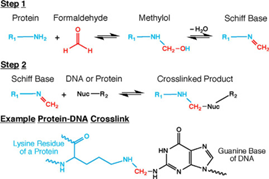
- พันธะเคมีหรือชุดของพันธะใดๆ ไม่ว่าจะเป็นพันธะปกติหรือผิดปกติ เกิดขึ้นเองตามธรรมชาติหรือเกิดจากการกระทำของมนุษย์ ที่เชื่อมต่อ โมเลกุล พอลิเมอ ร์สอง โมเลกุลขึ้นไปเข้าด้วยกัน ก่อให้เกิดโครงสร้างมหภาค ขนาดใหญ่ขึ้น ซึ่งมักมีความแข็งแรงและทนทานต่อแรงทางกล พันธะเชื่อมโยงอาจประกอบด้วยพันธะโควาเลนต์ พันธะไอออนิกหรือ ปฏิกิริยา ระหว่างโมเลกุล หรือแม้แต่การพันกันทางกายภาพอย่างกว้างขวางของโมเลกุล และอาจย้อนกลับได้หรือย้อนกลับไม่ได้ ในเคมีพอลิเมอร์คำนี้มักใช้เพื่ออธิบายโครงสร้างมหภาคที่เกิดขึ้นอย่างคาดการณ์ได้ในที่ที่มีตัวเร่งปฏิกิริยาเฉพาะ ในชีววิทยาโมเลกุลการใช้งานโดยทั่วไปหมายถึงพันธะที่ผิดปกติ (ไม่ว่าจะเกิดขึ้นเองตามธรรมชาติหรือเกิดจากการทดลอง) ระหว่างโมเลกุลชีวภาพ ที่แตกต่างกัน (หรือส่วนต่างๆ ของโมเลกุลชีวภาพเดียวกัน) ซึ่งโดยปกติจะแยกจากกัน โดยเฉพาะอย่างยิ่งกรดนิวคลีอิกและโปรตีนการเชื่อมโยงข้ามสายดีเอ็นเออาจเกิดขึ้นระหว่างนิวคลีโอเบสบนสาย ตรงข้าม ของ โมเลกุล ดีเอ็นเอสองสาย ( การเชื่อมโยงข้ามสาย ) หรือระหว่างเบสบนสายเดียวกัน ( การเชื่อมโยงภายในสาย ) ผ่านการสร้างพันธะโควาเลนต์ที่แข็งแรงกว่าพันธะไฮโดรเจนของการจับคู่เบส ปกติ ซึ่งเป็นเป้าหมายทั่วไปของ กลไก การซ่อมแซมดีเอ็นเอโปรตีนก็มีความเสี่ยงที่จะเกิดการเชื่อมโยงข้ามสายกับดีเอ็นเอหรือโปรตีนอื่น ๆ ผ่านพันธะกับสารตกค้างบนพื้นผิวจำเพาะ ซึ่งเป็นกระบวนการที่ถูกกระตุ้นโดยเจตนาในวิธีการทางห้องปฏิบัติการหลายวิธี เช่นการตรึงและมีประโยชน์สำหรับการศึกษาปฏิสัมพันธ์ระหว่างโปรตีนในสภาวะดั้งเดิม การเชื่อมโยงข้ามสายเกิดขึ้นจากสาร ภายนอกและภายในหลายชนิดรวมถึงสารประกอบทางเคมีและรังสีพลังงานสูง และมักจะรบกวนกระบวนการของเซลล์ตามปกติ เช่นการจำลองแบบดีเอ็นเอและการถอดรหัสซึ่งหมายความว่าการคงอยู่ของการเชื่อมโยงข้ามสายมักจะส่งผลเสียต่อสุขภาพของเซลล์
- ctDNA
- 1. คำย่อของcirculating tumor DNA (ดีเอ็นเอของเซลล์มะเร็งที่หมุนเวียนอยู่ในกระแสเลือด )
- 2. คำย่อของDNA ในคลอโรพลาสต์
- ปลายซี
- ปลายสุดของสายโซ่กรดอะมิโน เชิงเส้น (เช่นเพปไทด์ ) ที่สิ้นสุดด้วยหมู่คาร์บอกซิล อิสระ ( -COOH ) ของกรดอะมิโนตัวสุดท้ายที่ถูกเพิ่มเข้าไปในสายโซ่ระหว่างการแปลรหัสกรดอะมิโนนี้เรียกว่าปลายซี (C-terminal ) ตามธรรมเนียมแล้ว ลำดับ โดเมน ตำแหน่งออกฤทธิ์ หรือโครงสร้างอื่นใดที่อยู่ใกล้กับปลายซีของพอลิเพปไทด์หรือโปรตีน ที่พับตัวแล้ว เมื่อเทียบกับโครงสร้างอื่น ๆ จะถูกเรียกว่าปลายน้ำ (downstream ) ตรงกันข้ามกับ ปลายเอ็น (N-terminus )
- ตัด
- ค่าซี
- ปริมาณดีเอ็นเอ ทั้งหมด ที่อยู่ในนิวเคลียสแฮพลอยด์ (เช่นเซลล์สืบพันธุ์ ) ของสิ่งมีชีวิตหรือสายพันธุ์ใดสายพันธุ์หนึ่ง แสดงเป็นจำนวนคู่เบสหรือหน่วยมวล (โดยทั่วไปคือพิโคกรัม ) หรือเทียบเท่ากับครึ่งหนึ่งของปริมาณในเซลล์ร่างกายดิพลอยด์สำหรับยูคาริ โอตดิพลอยด์อย่างง่าย คำนี้มักใช้แทนกันได้กับขนาดจีโนมแต่ในบางกรณี เช่น ในโพลีพลอยด์ ลูกผสมที่สืบเชื้อสาย มาจากพ่อแม่ต่างสายพันธุ์ ค่า C อาจแสดงถึงจีโนมที่แตกต่างกันสองจีโนม ขึ้นไป ที่อยู่ในนิวเคลียสเดียวกัน ค่า C ใช้ได้เฉพาะกับดีเอ็นเอจีโนม เท่านั้น และไม่รวมดีเอ็นเอภายนอกนิวเคลียส
- ปริศนาค่า C
- คำที่ใช้เพื่ออธิบายคำถามที่หลากหลายเกี่ยวกับความแปรผันอย่างมหาศาลของค่า C ในนิวเคลียส หรือขนาดจีโนมในสิ่งมีชีวิตยูคาริโอต โดยเฉพาะอย่างยิ่งข้อสังเกตที่ว่าขนาดจีโนมไม่สัมพันธ์กับความซับซ้อนที่รับรู้ได้ของสิ่งมีชีวิต หรือไม่จำเป็นต้องสัมพันธ์กับจำนวนยีนที่พวกมันมี ตัวอย่างเช่นโปรติสต์ เซลล์เดียวหลายชนิด มีจีโนมที่มีดีเอ็นเอมากกว่าจีโนมของมนุษย์ หลายพันเท่า สิ่งนี้ถูกมองว่าเป็นเรื่องที่ขัดแย้งกันจนกระทั่งมีการค้นพบว่าจีโนมของสิ่งมีชีวิตยูคาริโอตส่วนใหญ่ประกอบด้วยดีเอ็นเอที่ไม่เข้ารหัสซึ่งโดยนิยามแล้วไม่มีจำนวนยีน นับตั้งแต่นั้นมา จุดสนใจของปริศนานี้จึงเปลี่ยนไปเป็นการทำความเข้าใจว่าทำไมและอย่างไรจีโนมของสิ่งมีชีวิตยูคาริโอตจึงเต็มไปด้วยดีเอ็นเอที่ไม่เข้ารหัสจำนวนมาก และทำไมบางจีโนมจึงมีจำนวนยีนมากกว่าจีโนมอื่น
- ไซคลิกอะดีโนซีนโมโนฟอสเฟต (cAMP)
- ไซโคลซิส
- ดูการไหลเวียนของไซโตพลาสซึม
- ไซทิดีน ( C , Cyd)
- ดีออกซีไซทิดีน เป็น หนึ่งในนิว คลีโอไซด์มาตรฐานสี่ชนิดที่ใช้ใน โมเลกุล อาร์เอ็นเอประกอบด้วย เบส ไซโตซีนที่มีไนโตรเจนเชื่อมต่อกับคาร์บอน C1 น้ำตาลไรโบส ไซโตซีน ที่เชื่อมต่อกับดีออกซีไรโบสเรียกว่าดีออกซีไซทิดีนซึ่งเป็นรูปแบบที่ใช้ในดีเอ็นเอ
- เคมีเซลล์
- สาขาหนึ่งของชีววิทยาของเซลล์ที่เกี่ยวข้องกับการตรวจจับและระบุโครงสร้างและส่วนประกอบต่างๆ ของเซลล์ โดยเฉพาะอย่างยิ่งตำแหน่งที่ตั้งของโครงสร้างและส่วนประกอบเหล่านั้นภายในเซลล์โดยใช้เทคนิคการวิเคราะห์ทางชีวเคมีและการมองเห็น เช่นการย้อมสี ทางเคมี และ การย้อม ภูมิคุ้มกันการวัดสเปกตรัมและสเปกโทรสโกปีการถ่ายภาพรังสีและกล้องจุลทรรศน์อิเล็กตรอน
- พันธุศาสตร์เซลล์
- สาขาหนึ่งของพันธุศาสตร์ที่ศึกษาว่าโครโมโซมมีอิทธิพลและเกี่ยวข้องกับพฤติกรรมและหน้าที่ของเซลล์อย่างไร โดยเฉพาะอย่างยิ่งในระหว่าง การแบ่งเซลล์ แบบไมโทซิสและไมโอซิส
- ไซโตไคน์
- โปรตีนและเปปไทด์ขนาดเล็กกลุ่มกว้างๆ ที่มีนิยามไม่ชัดเจนซึ่งมีหน้าที่ในการส่งสัญญาณระหว่างเซลล์ (โดยหลักคือ เส้นทาง ออโตครีนพาราครีนและเอนโดครีน ) โดยทั่วไปจะทำปฏิกิริยากับตัวรับเฉพาะบนพื้นผิวภายนอกของเซลล์[ 8 ]
- ไซโตคิเนซิส
- ขั้นตอนสุดท้ายของการแบ่งเซลล์ทั้งไมโทซิสและไมโอซิสมักเกิดขึ้นทันทีหลังจากการแบ่งนิวเคลียสซึ่งไซโทพลาซึมของเซลล์แม่จะถูกแยกออกและแบ่งอย่างเท่าๆ กันระหว่างเซลล์ลูก สองเซลล์ ในเซลล์สัตว์ กระบวนการนี้เกิดขึ้นโดยการปิดวงแหวนหดตัวของไมโครฟิลา เมนต์ ในบริเวณเส้นศูนย์สูตรของเซลล์ที่กำลังแบ่งตัว ตรงกันข้ามกับคาริโอคิเนซิส
- เซลล์วิทยา
- การศึกษาเกี่ยวกับสัณฐานวิทยา กระบวนการ และประวัติชีวิตของเซลล์ ที่มีชีวิต โดยเฉพาะอย่างยิ่งโดยใช้กล้องจุลทรรศน์แสงและอิเล็กตรอน[ 10 ]บางครั้งคำนี้ยังใช้เป็นคำพ้องความหมายสำหรับสาขาชีววิทยาของเซลล์ ที่กว้างกว่า ด้วย
- ไซโทไลซิส
- ดูคำว่าlysis
- ไซโตมิเตอร์
- ไซโตมิกส์
- สาขาวิชาสหวิทยาการที่ศึกษาชีววิทยาของเซลล์เซลล์วิทยาและชีวเคมีในระดับเซลล์แต่ละเซลล์โดยใช้เทคนิคโมเลกุลของเซลล์เดี่ยวและกล้องจุลทรรศน์ขั้นสูงเพื่อแสดงภาพปฏิสัมพันธ์ของส่วนประกอบของเซลล์ในร่างกาย[ 19 ]
- ไซโตพลาซึม
- เนื้อหาทั้งหมดที่อยู่ในเซลล์ยกเว้น (ในยูคาริโอต) นิวเคลียส[ 8 ] [ 4 ] กล่าวคือ ส่วนของโปรโตพลาสซึมที่ถูกล้อมรอบด้วยเยื่อหุ้มเซลล์แต่แยกจาก นิวคลีโอพลาสซึม โดยเยื่อหุ้มนิวเคลียสประกอบด้วยไซโตซอล ที่เป็นของเหลวและเนื้อหาทั้งหมด รวม ถึงช่องภายในเซลล์ ออร์แกเนลล์ และโครงสร้างย่อยทั้งหมดเช่นไมโตคอนเดรีย ไลโซโซมเอนโดพลาสมิกเรติคูลัมเวสิเคิลและอินคลูชันและเครือข่ายของไมโครทิวบูล ที่เป็นเส้นใย ที่เรียกว่าโครงร่างเซลล์[ 10 ] คำจำกัดความบางอย่างของไซโตพลา สซึมไม่รวมออร์แกเนลล์บางชนิด เช่นแวคิวโอลและพลาสติด ไซโตพลา ซึมประกอบด้วยน้ำประมาณ 80 เปอร์เซ็นต์ โมเลกุลขนาดเล็กจำนวนมากและสารประกอบโมเลกุลขนาดใหญ่ที่ละลายหรือแขวนลอยอยู่ภายในไซโตพลาซึมทำให้มีคุณสมบัติหนืดและหนืดแบบทิกโซโทรปิก ซึ่งทำให้ไซโตพลาซึมมีพฤติกรรมที่หลากหลาย เช่น เป็นเจลหรือสารละลายเหลว[ 15 ]แม้ว่าไซโตพลาซึมจะต่อเนื่องกันตลอดพื้นที่ภายในเซลล์ แต่ก็มักจะสามารถแยกออกเป็นเฟสที่แตกต่างกันตามความหนาแน่นและองค์ประกอบ เช่น เอนโดพลาซึมและเอ็กโตพลาซึม [ 15 ] กิจกรรมเมตาบอลิซึมและการสังเคราะห์ทางชีวภาพส่วนใหญ่ของเซลล์เกิดขึ้นในไซโตพลาซึม รวมถึงการสังเคราะห์โปรตีนโดยไรโบโซมแม้ว่าจะแยกจากกันทางกายภาพ แต่ไซโตพลาซึมและนิวเคลียสก็พึ่งพาซึ่งกันและกัน เช่น นิวเคลียสที่แยกออกมาโดยปราศจากไซโตพลาซึมจะไม่สามารถอยู่รอดได้นาน เช่นเดียวกับไซ โตพลา ซึมที่ปราศจากนิวเคลียส[ 15 ]
- การไหลเวียนของไซโตพลาสซึม
- การไหลเวียนของไซโตพลาซึมภายในเซลล์ เกิดขึ้นจากแรงที่โครงสร้างไซโตสเกเลตันกระทำต่อของเหลวในไซโตพลาซึม การไหลเวียนนี้มีหน้าที่ส่วนหนึ่งในการเร่งการขนส่งโมเลกุลและออร์แกเนลล์ที่แขวนลอยอยู่ในไซโตพลาซึมไปยังส่วนต่างๆ ของเซลล์ ซึ่งหากไม่มีการไหลเวียนนี้ การเคลื่อนที่จะต้องอาศัยการแพร่ แบบพาสซี ฟ การไหลเวียนนี้มักพบเห็นได้ในเซลล์ยูคาริโอตขนาดใหญ่มาก ซึ่งมีความต้องการประสิทธิภาพการขนส่งสูงกว่า
- ไซโตพลาสต์
- เซลล์ ยู คาริโอต ที่ไม่มีนิวเคลียสหรือส่วนประกอบของเซลล์อื่นๆ ทั้งหมดนอกเหนือจากนิวเคลียส (เช่น เยื่อหุ้มเซลล์ ไซโตพลาซึม ออร์แกเนลล์ ฯลฯ) โดยรวม คำนี้มักใช้ในบริบทของ การทดลอง ถ่ายโอนนิวเคลียสซึ่งไซโตพลาสต์บางครั้งอาจยังคงมีชีวิตอยู่ได้แม้ไม่มีนิวเคลียสเป็นเวลาถึง 48 ชั่วโมง[ 15 ]
- ไซโตซีน ( C )
- ไซ โตซีน เป็นนิวคลีโอเบสชนิดไพริมิดีน ซึ่งเป็นหนึ่งในสี่นิวคลีโอเบสมาตรฐานใน โมเลกุล DNAและRNAโดยไซโตซีนจะจับคู่กับกัวนีน
- ไซโตซอล
- เฟสของเหลวที่ละลายได้ในไซโตพลาซึมซึ่งมีอนุภาคขนาดเล็ก เช่นไรโบโซมโปรตีนกรดนิวคลีอิกและโมเลกุลอื่นๆ อีกมากมายแขวนลอยหรือละลายอยู่ ยกเว้นโครงสร้างและออร์แกเนลล์ ขนาดใหญ่ เช่นไมโตคอนเดรีย คลอ โรพลาสต์ ไล โซโซมและเอนโดพลาสมิกเรติคูลัม[ 10 ]


ดี
- เซลล์ลูกสาว
- เซลล์ที่เกิดจากการแบ่งตัวของเซลล์ต้นกำเนิดเริ่มต้น ซึ่งเรียกว่าเซลล์แม่ โดยทั่วไปแล้วการแบ่งตัวแต่ละครั้งจะสร้างเซลล์ลูก ได้ 2 เซลล์[ 10 ]
- อัลกอริทึมลดสัญญาณรบกวนโดยอิงตามโครงสร้างเครือข่ายความเกี่ยวข้อง
- อัลกอริทึมที่ไม่ต้องมีการกำกับดูแลซึ่งประเมินคะแนนกิจกรรมสำหรับเส้นทางในเมทริกซ์การแสดงออกของยีน หลังจากขั้นตอนการลดสัญญาณรบกวน[ 20 ]
- การกลายพันธุ์แบบ de novo
- การกลายพันธุ์ที่เกิดขึ้นเองในจีโนมของสิ่งมีชีวิตแต่ละตัวซึ่งเป็นสิ่งใหม่สำหรับสายพันธุ์ของสิ่งมีชีวิตนั้น โดยปรากฏขึ้นครั้งแรกในเซลล์สืบพันธุ์ของพ่อแม่ของสิ่งมีชีวิตนั้นหรือในไข่ที่ได้รับการปฏิสนธิซึ่งพัฒนาเป็นสิ่งมีชีวิตนั้น กล่าวคือ การกลายพันธุ์ที่ไม่มีอยู่ในจีโนมของพ่อแม่ทั้งสอง[ 6 ]
- การสังเคราะห์ใหม่
- การสร้างลำดับกรดนิวคลีอิก สังเคราะห์ จาก นิว คลีโอไทด์ อิสระ โดยไม่พึ่งพาแม่แบบสาย ที่มีอยู่แล้ว หรือที่เรียกว่าการสังเคราะห์แบบ เดอโนโว ( de novo synthesis ) โดยใช้วิธีการทางห้องปฏิบัติการที่หลากหลาย การสังเคราะห์แบบ เดอโนโวทำให้ในทางทฤษฎีแล้วสามารถสร้างโมเลกุลเทียม ได้อย่างสมบูรณ์โดยไม่มีโมเลกุลที่เทียบเท่าในธรรมชาติ และไม่มีข้อจำกัดด้านขนาดหรือลำดับ กระบวนการนี้ดำเนินการเป็นประจำในการผลิตเชิงพาณิชย์ของลำดับ โอลิโกนิวคลีโอไท ด์ ที่ปรับแต่งตามสั่งเช่นไพรเมอร์
- การดีอะเซทิเลชัน
- การกำจัดหมู่แอเซทิล ( –COCH ) ) จากสารประกอบทางเคมี โปรตีน หรือโมเลกุลชีวภาพอื่นๆ ผ่านการไฮโดรไลซิสของพันธะเอสเทอร์ที่ยึดติดอยู่ ไม่ว่าจะเกิดขึ้นเองตามธรรมชาติหรือโดยของเอนไซม์การดีอะซิทิเลชันเป็นกระบวนการตรงข้ามกับการอะซิทิเลชัน
- การกำจัดเซลล์
- การลดความแตกต่าง
- ความเสื่อมโทรม
- ความซ้ำซ้อนของรหัสพันธุกรรม แสดงให้เห็นได้จากการที่มี โคดอนหลายตัว ที่กำหนด กรดอะมิโนชนิดเดียวกันตัวอย่างเช่น ในรหัสพันธุกรรมมาตรฐานกรดอะมิโนซีรีนถูกกำหนดโดยโคดอนที่ไม่ซ้ำกันหกตัว ( UCA , UCG , UCC , UCU , AGUและAGC ) ความเสื่อมของโคดอนเป็นสาเหตุของการเกิดการกลายพันธุ์ที่ไม่ส่งผลต่อกรดอะมิ โน
- การสลายเม็ด
- การปล่อยสารภายในเม็ดสารคัดหลั่ง (โดยปกติจะเป็นโมเลกุลต้านจุลชีพหรือเป็นพิษต่อเซลล์) เข้าสู่ ช่องว่าง ภายนอกเซลล์โดยการหลอมรวมแบบเอ็กโซไซโทซิสของเม็ดสารกับเยื่อหุ้มพลาสมาของเซลล์[ 4 ]
- การลบ
- การกลายพันธุ์ชนิดหนึ่งซึ่งเกิดจาก การที่ นิวคลีโอไทด์ หนึ่งตัวหรือมากกว่า นั้นถูกกำจัดออกจากลำดับกรดนิวคลีอิก
- การกำจัดหมู่เมทิล
- การกำจัดหมู่เมทิล ( –CH ) ) จากสารประกอบทางเคมี โปรตีน หรือโมเลกุลชีวภาพอื่นๆ ไม่ว่าจะเกิดขึ้นเองตามธรรมชาติหรือโดยเอนไซม์การกำจัดหมู่เมทิลเป็นปฏิกิริยาตรงข้ามกับหมู่เมทิลทั้งสองปฏิกิริยามีบทบาทสำคัญในกระบวนการทางชีวเคมีมากมาย รวมถึงการควบคุมการแสดงออกของยีนเนื่องจากสถานะการเพิ่มหมู่เมทิลของสารตกค้างเฉพาะในโปรตีนหรือกรดนิวคลีอิกบางชนิดสามารถส่งผลต่อโครงสร้างของพวกมันในลักษณะที่เปลี่ยนแปลงความสัมพันธ์กับโมเลกุลอื่นๆ ทำให้การถอดรหัสที่ตำแหน่งทางพันธุกรรมใกล้เคียงมีโอกาสเกิดขึ้นมากหรือน้อยลง
- การเปลี่ยนแปลงโครงสร้าง
- กระบวนการที่กรดนิวคลีอิกหรือโปรตีนสูญเสียโครงสร้างระดับควอเทอร์นารีเทอร์เทียรีและ/หรือ เซคันดารี ไม่ว่าจะย้อนกลับได้หรือไม่ได้ย้อนกลับ ผ่านการใช้แรงกดดันทางเคมีหรือทางกลจากภายนอก เช่น การให้ความร้อน การกวน หรือการสัมผัสกับกรดหรือเบสเข้มข้น ซึ่งทั้งหมดนี้สามารถรบกวนแรงระหว่างโมเลกุล เช่นพันธะไฮโดรเจนและทำให้กิจกรรมทางเคมีเปลี่ยนแปลงหรือถูกทำลายได้ โปรตีนที่เสียสภาพอาจเป็นทั้งสาเหตุและผลที่ตามมาของการตายของเซลล์ การเสียสภาพอาจเป็นกระบวนการปกติได้เช่นกันตัวอย่างเช่น การเสียสภาพของโมเลกุลDNA สองสาย ซึ่งทำลายพันธะไฮโดรเจนระหว่าง คู่เบสและทำให้โมเลกุลคู่แยกออกเป็นสองสายเดี่ยวเป็นขั้นตอนที่จำเป็นใน การจำลองแบบ และการถอดรหัสDNAดังนั้นจึงดำเนินการโดยเอนไซม์เช่นเฮลิเคส เป็นประจำ กลไกเดียวกันนี้ยังเป็นพื้นฐานของวิธีการทางห้องปฏิบัติการ เช่นPCRด้วย
- เดนไดรต์
- กระบวนการโปรโตพลาสมิกที่แตกแขนงอย่างอิสระจำนวนมาก ที่ยื่นออกมาจาก เซลล์ประสาทของ สัตว์มีกระดูกสันหลัง ซึ่งรับสัญญาณไฟฟ้าจากเซลล์ประสาทอื่นหรือตัวรับความรู้สึกและรวมเข้าด้วยกันเพื่อสร้างแรงกระตุ้นไฟฟ้าที่เรียกว่าศักย์การกระทำ การเปลี่ยนแปลงขั้วไฟฟ้าแบบพัลส์เหล่านี้จะถูกส่งต่อไปตามแอกซอนและส่งไปยังเซลล์อื่น[ 3 ]
- ดีออกซีอะดีโนซีน
- อะดีโนซีน เป็นหนึ่งในสี่ดีออกซีไรโบนิวคลีโอไซด์ มาตรฐาน ที่ใช้ในโมเลกุล ดีเอ็นเอ ประกอบด้วยเบสอะดีนีน ที่มีไนโตรเจนเชื่อมต่อกับคาร์บอน C1 น้ำตาลดีออกซีไรโบส อะ ดี นีนที่เชื่อมต่อกับไรโบสจะก่อให้เกิดสารประกอบอีกชนิดหนึ่งที่เรียกง่ายๆ ว่าอะดีโนซีนซึ่งใช้ในอาร์ เอ็น เอ
- ดีออกซีไซทิดีน
- ไซโตซีน เป็นหนึ่งในสี่ดีออกซีไรโบนิวคลีโอไซด์ มาตรฐาน ที่ใช้ใน โมเลกุล DNAประกอบด้วยเบสไซโตซีน ที่มีไนโตรเจนเชื่อมต่อกับคาร์บอน C1 น้ำตาล ดีออกซีไร โบสไซโตซีนที่เชื่อมต่อกับไรโบสจะเกิดเป็นสารประกอบอีกชนิดหนึ่งที่เรียกง่ายๆ ว่าไซทิดีนซึ่งใช้ในRNA
- ดีออกซีไกวโนซีน
- กัวนีน เป็นหนึ่งในสี่ดีออก ซีไรโบนิ วคลีโอไซด์ มาตรฐาน ที่ใช้ในโมเลกุล ดีเอ็นเอ ประกอบด้วยเบสกัวนีน ที่มี ไนโตรเจนN9 เชื่อมต่อกับคาร์บอน C1 น้ำตาล ดีออกซี โบส กัวนีนที่เชื่อมต่อกับไรโบสจะเกิดเป็นสารประกอบอีกชนิดหนึ่งที่เรียกง่ายๆ ว่ากัวโนซีนซึ่งใช้ในอาร์เอ็นเอ
- ดีออกซีไรโบนิวคลีเอส (ดีเอ็นเอส)
- เอนไซม์ นิวคลีเอสชนิดหนึ่งซึ่งทำหน้าที่เร่ง ปฏิกิริยาการแตกตัว ด้วยไฮโดรไลซิสของพันธะฟอสโฟไดเอ สเทอร์ ในโมเลกุลดีเอ็นเอ ทำให้ สาย ดีออกซีไรโบนิ ว คลีโอไทด์ ขาดออกจากกันและทำให้พอลิเมอร์ดีเอ็นเอแตกตัวเป็นส่วนประกอบที่เล็กลง เปรียบเทียบกับไรโบนิวคลีเอส
- กรดดีออกซีไรโบนิวคลีอิก (DNA)
- ดีเอ็นเอ เป็น โมเลกุล กรดนิวคลีอิกแบบพอลิ เมอ ร์ที่ประกอบด้วยดีออกซีไรโบนิวคลี โอไทด์ที่เชื่อมต่อกันด้วยพันธะโควา เลนต์ โดยแต่ละดีออกซีไร โบนิวคลีโอ ไทด์จะ มีนิวคลีโอเบสหนึ่งในสี่ชนิดได้แก่อะดีนีน ( A ) , กั วนีน (G), ไซโตซีน ( C ) และไทมีน ( T ) ดีเอ็นเอมักพบใน รูป สายคู่ซึ่งประกอบด้วยสายนิวคลีโอไทด์สองสายที่เสริมกันและ ขนานกัน โดย นิวคลีโอ เบสในแต่ละสายจะจับคู่กัน ด้วย พันธะไฮโดรเจนกับนิวคลีโอเบสในสายตรงข้าม โครงสร้างนี้มักมีรูปร่างเป็นเกลียวคู่ดีเอ็นเอยังสามารถอยู่ใน รูป สายเดี่ยวได้ ด้วย โดยการจัดเก็บและเข้ารหัสข้อมูลทางพันธุกรรมในลำดับของนิวคลีโอเบสเหล่านี้ ดีเอ็นเอจึงทำหน้าที่เป็นพื้นฐานโมเลกุลสากลของการถ่ายทอดทางพันธุกรรมและเป็นแม่แบบพื้นฐานที่ใช้ในการสร้างโปรตีน เซลล์ และสิ่งมีชีวิตทั้งหมด
- ดีออกซีไรโบนิวคลีโอไทด์
- นิ วคลีโอ ไทด์ที่มีดีออกซีไรโบสเป็นส่วนประกอบของ น้ำตาล เพนโทสและเป็นโมโนเมอร์หรือหน่วยย่อยที่ใช้ในการสร้าง โมเลกุล ของกรดดีออกซีไรโบนิวคลี อิก (DNA) ดีออกซีไรโบนิวคลีโอไทด์โดยทั่วไปจะประกอบด้วย เบสไนโตรเจน 4 ชนิดได้แก่อะ ดีนีน ( A ), กัวนีน ( G ), ไซโตซีน ( C ) และไทมีน ( T ) เปรียบเทียบกับไรโบนิวคลีโอ ไท ด์
- ดีออกซีไรโบส
- ดีออกซีไรโบสเป็นน้ำตาล โมโนแซ็กคาไรด์ เพ นโทสที่ได้จากไรโบสโดยการแทนที่หมู่ไฮดรอกซิลที่ติดอยู่กับ คาร์บอนตำแหน่ง 2 ด้วยอะตอมไฮโดรเจนหนึ่งอะตอม ดีออกซีไรโบสในรูปวงแหวนเป็นหนึ่งในสามหมู่ฟังก์ชันหลักของ ดีออกซีไรโบนิวคลีโอไทด์ และด้วยเหตุนี้จึงเป็น หมู่ฟังก์ชันหลักของ โมเลกุลกรดดีออกซีไรโบนิวคลีอิก (DNA) ด้วย
- ดีออกซีไทมิดีน
- ดูไทมิดีน
- การกำจัดฟอสเฟต
- การกำจัดหมู่ฟอสเฟต( PO₃⁻⁴ ออกจากสารประกอบทางเคมี โปรตีน หรือโมเลกุลชีวภาพอื่นๆ อาจเกิดขึ้นเองตามธรรมชาติหรือโดย การเร่งปฏิกิริยา ของเอนไซม์การดีฟอสฟอริเลชันเป็นปฏิกิริยาตรงข้ามกับการฟอสฟอริเลชันปฏิกิริยาทั้งสองเป็นกระบวนการดัดแปลงโมเลกุลที่พบได้ทั่วไปและเกี่ยวข้องกับวิถีและกระบวนการทางชีวเคมีมากมาย รวมถึงในกระบวนการเมตาบอลิซึม ซึ่งพันธะพลังงานสูงกับหมู่ฟอสเฟตถูกใช้ในการถ่ายโอนพลังงานระหว่างโมเลกุล และในการดัดแปลงโปรตีนหลังการสังเคราะห์ซึ่งสถานะฟอสฟอริเลชันของกรดอะมิโนบางชนิดสามารถส่งผลต่อความสัมพันธ์ของโปรตีนกับโมเลกุลอื่นๆ หรือทำหน้าที่เป็นสัญญาณโมเลกุลได้
- การกำจัดสารบริสุทธิ์
- การสูญเสีย เบสพิวรีน อย่างน้อยหนึ่งตัว(ไม่ว่าจะเป็นอะดีนีนหรือกัวนีน ) จากโมเลกุลนิว คลีโอไทด์ หรือ กรด นิวคลีอิกไม่ว่าจะเป็นDNAหรือRNA เกิดขึ้นเองโดยธรรมชาติ ผ่าน การแตกตัว ด้วยไฮโดรไล ซิส ของพันธะไกลโคไซด์ที่เชื่อมระหว่างเบสและน้ำตาล ทำให้ได้เบสพิวรีนอิสระและนิวคลีโอไซด์ออกมา ดีออกซี ไร โบนิวคลีโอไทด์มีแนวโน้มที่จะเกิดการสูญเสียพิวรีนได้ง่ายเป็นพิเศษ การสูญเสีย เบส ไพริมิดีนก็สามารถเกิดขึ้นเองได้เช่นกัน แต่พบได้น้อยกว่ามาก
- การอนุพันธ์
- การดัดแปลงโมเลกุลหรือโปรตีนโดยเจตนาเพื่อเปลี่ยนแปลงความสามารถในการละลายหรือคุณสมบัติทางเคมีอื่นๆ เพื่อให้สามารถวิเคราะห์ได้ (เช่น โดยสเปกโทรสโกปีมวลสารหรือโครมาโทกราฟี ) หรือเพื่อติดฉลากโดยการติดโมเลกุลทางเคมีที่ตรวจจับได้ (เช่น แท็กเรืองแสง) เพื่อให้ง่ายต่อการระบุและติดตามในร่างกายโมเลกุลที่ได้รับการดัดแปลงในลักษณะนี้เรียกว่าอนุพันธ์ของโมเลกุลที่เกิดขึ้นตามธรรมชาติและกล่าวได้ว่าได้รับการดัดแปลงแล้ว[ 4 ]
- เดสโมโซม
- จุดเชื่อมต่อเซลล์เฉพาะระหว่าง เซลล์ เยื่อบุผิว ที่อยู่ติดกัน ซึ่งประกอบด้วยเครือข่ายของ เส้นใย เคราตินและโปรตีนโครงสร้างที่เชื่อมช่องว่างระหว่างเยื่อหุ้มพลาสมา[ 4 ]
- เวกเตอร์ปลายทาง
- การแยกไซแนปส์
- ความล้มเหลวของโครโมโซมคู่เหมือนที่จับคู่ กัน ตามปกติในระหว่างระยะพาคีนีมาที่จะยังคงเป็นคู่กันในระหว่างระยะดิโพลนีมาการแยกตัวของโครโมโซมมักเกิดจากการก่อตัวของไคแอสมาที่ ไม่เหมาะสม [ 6 ]เปรียบเทียบกับภาวะ ไม่มีการจับคู่ ของ โครโมโซม
- ชีววิทยาการพัฒนา
- ชีววิทยาสาขาหนึ่งที่ศึกษาเกี่ยวกับกระบวนการและปรากฏการณ์ต่างๆ ที่สิ่งมีชีวิต (โดยเฉพาะยูคาริโอต หลายเซลล์ แต่ไม่จำเป็นต้องไม่รวมโปรคาริโอต ) เจริญเติบโตและพัฒนาไปสู่รูปแบบที่สมบูรณ์และสามารถสืบพันธุ์ได้ ในความหมายที่กว้างที่สุด สาขานี้อาจครอบคลุมหัวข้อต่างๆ เช่นการสืบพันธุ์แบบอาศัยเพศและ ไม่ อาศัยเพศการสร้างเซลล์สืบพันธุ์และการสร้างสปอร์ การปฏิสนธิการเกิดตัวอ่อน การสร้างใหม่และการเปลี่ยนแปลงของเซลล์ต้น กำเนิด ไปเป็นเซลล์ชนิดต่างๆการเกิดหรือการฟักไข่การเปลี่ยนแปลงรูปร่างและการสร้างเนื้อเยื่อที่เจริญเต็มที่ ขึ้นใหม่
- ไดอะคิเนซิส
- ในไมโอซิสระยะย่อยที่ห้าและสุดท้ายของโปรเฟส Iตามมาหลังจากดิโพลนีมาและก่อนเมตาเฟส Iในระหว่างไดอะคิเนซิส โครโมโซมจะควบแน่นมากขึ้นเซนโทรโซม ทั้งสอง จะไปถึงขั้วตรงข้ามของเซลล์ และอุปกรณ์สปินเดิลจะเริ่มขยายจากขั้วไปยังเส้นศูนย์สูตร[ 6 ]
- ไดเซนทริก
- (ของโครโมโซม เชิงเส้น หรือชิ้นส่วนโครโมโซม) มีเซนโทรเมียร์ สองอัน แทนที่จะเป็นอันเดียวตามปกติ[ 2 ]
- การเหวี่ยงแยกส่วนต่าง
- ความแตกต่าง
- กระบวนการที่เซลล์ยูคาริโอติกเปลี่ยนจากเซลล์ชนิด หนึ่งไปเป็นเซลล์อีกชนิดหนึ่ง โดยเฉพาะอย่างยิ่งจาก เซลล์ต้นกำเนิดที่ไม่เฉพาะเจาะจงไปเป็นเซลล์ชนิดที่เฉพาะเจาะจงมากขึ้น ซึ่งเรียกว่าการแบ่งเซลล์ (differentiation ) โดยปกติแล้วกระบวนการนี้เกิดขึ้นจากการ เปลี่ยนแปลง ทางพันธุกรรม (epigenetic modifications) ที่ได้รับการควบคุมอย่างระมัดระวัง ซึ่งจะเปลี่ยนชุดยีนที่แสดงออกโดยเซลล์ ทำให้ยีนบางตัว "ปิด" และยีนบางตัว "เปิด" การเปลี่ยนแปลงเหล่านี้ส่งผลให้เกิดการเปลี่ยนแปลงทางฟีโนไทป์ (phenotypic changes) อย่างต่อเนื่อง ซึ่งสามารถเปลี่ยนแปลงขนาด รูปร่างการเผาผลาญ คุณสมบัติของเยื่อหุ้ม เซลล์และอัตราการแบ่งตัวของเซลล์ ได้อย่าง มาก ดังนั้นจึงส่งผลต่อหน้าที่ พฤติกรรม และการตอบสนองต่อสัญญาณต่างๆ ทำให้สิ่งมีชีวิตหลายเซลล์สามารถสร้างเซลล์ที่มีหน้าที่แตกต่างกันมากมายจากจีโนม เดียว การแบ่งเซลล์เกิดขึ้นซ้ำๆ ในระหว่างการพัฒนาของสิ่งมีชีวิตจากไซโกต เซลล์เดียว ไปเป็นระบบหลายเซลล์ที่ซับซ้อนของเนื้อเยื่อและเซลล์ชนิดต่างๆ และยังคงดำเนินต่อไปในระดับหนึ่งหลังจากที่สิ่งมีชีวิตเจริญเติบโตเต็มที่แล้ว เพื่อซ่อมแซมและทดแทนเซลล์ที่เสียหายและกำลังจะตาย โดยส่วนใหญ่แล้ว กระบวนการเปลี่ยนแปลงสภาพเซลล์นั้นไม่สามารถย้อนกลับได้ แต่ในบางสถานการณ์ เซลล์บางเซลล์อาจเกิดการเปลี่ยนแปลงสภาพกลับไปเป็นเซลล์เดิม ได้
- ไดเมอร์
- กลุ่มโมเลกุลที่ประกอบด้วยหน่วยย่อย สองหน่วย คำนี้มักใช้เพื่ออธิบายโปรตีนเชิงซ้อนที่ประกอบด้วยโปรตีนสองชนิด ไม่ว่าจะเป็นโปรตีนชนิดเดียวกัน ( โฮโมไดเมอร์ ) หรือโปรตีนต่างชนิดกัน (เฮเทโรไดเมอร์ ) หรือใช้กับโปรตีนเดี่ยวที่ประกอบด้วยโพลีเปปไทด์ สองสาย เปรียบเทียบกับโมโนเมอร์ไตรเมอร์และเตตระเมอร์
- ไดนิวคลีโอไทด์
- ไดเมอร์ระดับโมเลกุลที่ประกอบด้วยนิวคลีโอไทด์ สองตัวที่เชื่อมต่อกันด้วยพันธะโควาเลนต์ หรือนิวคลีโอไทด์สองตัวใดๆ ที่อยู่ติดกันบนสาย เดียวกัน ของ พอลิ เมอร์กรดนิวคลีอิก ที่ยาวกว่า
- ดิพลอยด์
- (ของเซลล์หรือสิ่งมีชีวิต) มีโครโมโซมคู่เหมือน สอง ชุดแตกต่างจากแฮพลอยด์และโพลีพลอยด์
- ดิโพลนีมา
- ในกระบวนการไมโอซิสซึ่งเป็นขั้นตอนที่สี่จากห้าขั้นตอนย่อยของระยะโพรเฟส Iต่อจากระยะแพคีนีมาและก่อนระยะไดอะคิเนซิสในระหว่างระยะดิโพลนีมา คอมเพล็กซ์ไซแนปโทนีมาจะสลายตัว และโครโมโซม คู่ เหมือนจะเริ่มแยกออกจากกัน แม้ว่าพวกมันจะยังคงยึดติดกันแน่นที่ไคแอสมาซึ่งเป็นจุดที่เกิดการไขว้กัน
- ทำซ้ำโดยตรง
- การซ้ำกันของลำดับนิวคลีโอไทด์เฉพาะอย่างน้อยสองครั้งขึ้นไปเกิดขึ้นในทิศทางเดียวกัน (กล่าวคือ อยู่ในลำดับเดียวกันอย่างแม่นยำและไม่กลับด้าน ) และอยู่บน สายเดียวกันโดยอาจมีนิวคลีโอไทด์คั่นอยู่หรือไม่ก็ได้ ตัวอย่างเช่น ลำดับTACCG nnnnnn TACCGซึ่งTACCGปรากฏสองครั้ง แต่คั่นด้วยนิวคลีโอไทด์หกตัวที่ไม่ใช่ส่วนหนึ่งของลำดับที่ซ้ำกัน การซ้ำกันโดยตรงที่ลำดับที่ซ้ำกันนั้นอยู่ติดกันทันที เรียกว่าการซ้ำแบบเรียงต่อกัน (tandem repeat )
- ทิศทาง
- การเรียงตัวแบบปลายต่อปลายของสายหรือลำดับเชิงเส้นของ พอลิเมอร์ กรดนิวคลีอิกหรือพอลิเปปไทด์ระบบการตั้งชื่อที่ใช้ระบุทิศทางของกรดนิวคลีอิกนั้นอิงตามหลักการทางเคมีในการระบุอะตอมคาร์บอนแต่ละตัวในน้ำตาลไรโบสหรือดีออกซีไรโบสของนิวคลีโอไทด์ โดยเฉพาะอย่างยิ่งคาร์บอน 5'และคาร์บอน 3'ของ วงแหวน เพนโทส ลำดับของนิวคลีโอไทด์ในสายพอลิเมอร์อาจอ่านหรือตีความได้ในทิศทาง 5' ไป 3' (เช่น เริ่มจากนิวคลีโอไทด์ปลายสุดที่คาร์บอน 5' ไม่ได้เชื่อมต่อกับนิวคลีโอไทด์อื่น และดำเนินต่อไปยังนิวคลีโอไทด์ปลายสุดอีกตัวที่คาร์บอน 3' ไม่ได้เชื่อมต่อกับนิวคลีโอไทด์อื่น) หรือในทิศทางตรงกันข้าม 3' ไป 5' กระบวนการสังเคราะห์กรดนิวคลีอิกส่วนใหญ่ รวมถึงการจำลองแบบดีเอ็นเอและการถอดรหัสจะสร้างสายของนิวคลีโอไทด์ในทิศทาง 5'-ไป-3' เท่านั้น เนื่องจากเอนไซม์พอลิเมอเรสที่เกี่ยวข้องสามารถเร่งปฏิกิริยาการเพิ่มนิวคลีโอไทด์อิสระไปยังปลาย 3' ที่เปิดอยู่ของนิวคลีโอไทด์ก่อนหน้าในสายเท่านั้น ด้วยเหตุนี้ ข้อกำหนดในการเขียนลำดับกรดนิวคลีอิกใดๆ จึงกำหนดให้แสดงในทิศทาง 5'-ไป-3' จากซ้ายไปขวา ใน กรดนิวคลีอิก แบบสองสาย สายทั้งสองที่จับคู่กันจะต้องมีทิศทางตรงกันข้ามกันเพื่อให้สามารถจับคู่เบสกันได้ การกำหนดทิศทางของพอลิเปปไทด์ก็คล้ายกัน โดยพิจารณาจากหมู่ฟังก์ชันของกรดอะมิโนโดยเฉพาะหมู่เอมีนซึ่งเป็นปลาย Nและหมู่คาร์บอกซิลซึ่งเป็นปลาย Cลำดับกรดอะมิโนจะถูกประกอบในทิศทาง N-ไป-C ในระหว่างการแปลและตามธรรมเนียมแล้วจะเขียนในทิศทางเดียวกัน
- ไดแซ็กคาไรด์
- คาร์โบไฮเดรตที่ประกอบด้วยโมโนแซ็กคาไรด์ สองชนิด (ชนิดเดียวกันหรือต่างกันก็ได้) ที่เชื่อมต่อกันด้วยพันธะไกลโคไซด์ แบบโควาเลน ต์[ 4 ]ดูเพิ่มเติมที่โอลิโก แซ็กคาไร ด์และพอลิแซ็กคาไรด์
- การจำลองแบบกระจาย
- รูปแบบการจำลองดีเอ็นเอ สมมุติฐาน ที่การจับคู่ระหว่างสายแม่แบบและสายที่สังเคราะห์ขึ้นใหม่ไม่สม่ำเสมอภายในโมเลกุลลูกเดียวกัน กล่าวคือ โมเลกุลลูกที่จำลองขึ้นแต่ละโมเลกุลเป็นส่วนผสมที่ไม่เป็นเนื้อเดียวกัน โดยบางส่วนประกอบด้วยสายแม่แบบดั้งเดิมและบางส่วนประกอบด้วยสายที่สังเคราะห์ขึ้นใหม่ กระบวนการนี้บ่งชี้ว่าการจับคู่ของสายไม่ได้เกิดขึ้นอย่างสม่ำเสมอที่จุดแยกการจำลอง ทั้งหมด มีเพียง รูปแบบการจำลอง แบบกึ่งอนุรักษ์ เท่านั้น ที่เกิดขึ้นตามธรรมชาติ ดูเพิ่มเติมที่ การ จำลองแบบอนุรักษ์
- กระบวนการแยกส่วน
- กระบวนการคายพลังงานใดๆของการสลายตัว ของจุลินทรีย์ ซึ่งสารเคมีที่มีฤทธิ์รีดอก ซ์มีส่วนร่วมในปฏิกิริยา ออกซิเดชัน-รีดักชัน (การแลกเปลี่ยนอิเล็กตรอน) เพื่อให้พลังงานแก่เซลล์ที่จำเป็นสำหรับการดำรงกิจกรรมทางเมตาบอ ลิซึม สาร ภายนอกจะถูกดูดซึมเข้าสู่เซลล์จากสิ่งแวดล้อมแล้วสลายตัวเพื่อปลดปล่อยพลังงาน โดยผลพลอยได้จะถูกขับ ออกจากเซลล์ ในภายหลังซึ่งแตกต่างจากกระบวนการดูดซึมที่อะตอมของสารภายนอกถูกนำกลับมาใช้ใหม่ในการสังเคราะห์โมเลกุลชีวภาพหรือการสร้างส่วนประกอบของเซลล์
- การวัดระยะทาง
- ปริมาณใดๆ ที่ใช้ในการวัดความแตกต่างระหว่าง ระดับ การแสดงออกของยีนของยีนต่างๆ[ 21 ]
- ดีเอ็นเอ
- ดูกรดดีออกซีไรโบ nucléique (DNA )
- การระบุรหัสดีเอ็นเอ
- วิธีการจำแนกทางอนุกรมวิธานโดยใช้ดีเอ็นเอบาร์โค้ด คือการแยกส่วนลำดับดีเอ็นเอสั้นๆ จากยีนเฉพาะหนึ่งยีนหรือมากกว่านั้นจากตัวอย่างที่ไม่ทราบชนิด แล้วนำไปเปรียบเทียบกับฐานข้อมูลอ้างอิง ทางพันธุกรรม เพื่อระบุชนิดหรือกลุ่มอนุกรมวิธานที่ตัวอย่างนั้นมาจากได้อย่างเฉพาะเจาะจง ลำดับที่ใช้ในการเปรียบเทียบจะถูกเลือกอย่างระมัดระวังจากยีนที่มีการอนุรักษ์ อย่างกว้างขวาง และแสดงความแปรผันระหว่างชนิดมากกว่าภายในชนิดเดียวกัน เช่น ยีน ไซโตโครมซีออกซิเดสสำหรับยูคาริโอต หรือ ยีน ไรโบโซมัลอาร์เอ็นเอ บางชนิด สำหรับโปรคาริโอต ยีนเหล่านี้มีอยู่ในสิ่งมีชีวิตเกือบทั้งหมด แต่มีแนวโน้มที่จะเกิดการกลายพันธุ์ที่แตกต่างกันในแต่ละชนิด ทำให้ลำดับที่แตกต่างกันสามารถเชื่อมโยงกับชนิดใดชนิดหนึ่งได้อย่างมีประสิทธิภาพ สร้างตัวระบุเฉพาะที่คล้ายกับบาร์โค้ดสินค้าดีเอ็นเอ บาร์โค้ดช่วยให้สามารถระบุตัวอย่างที่ไม่ทราบที่มาได้จากเนื้อเยื่อหรือส่วนต่างๆ ของร่างกายที่ไม่ชัดเจน ซึ่งการระบุด้วยลักษณะทางกายภาพจะทำได้ยากหรือเป็นไปไม่ได้ และปัจจุบันฐานข้อมูลบาร์โค้ดของสิ่งมีชีวิตมีความครอบคลุมมากพอที่จะ จำแนกสิ่งมีชีวิตที่ไม่เคยรู้จักมาก่อนได้อย่างมั่นใจ การระบุชนิดพันธุ์ที่แตกต่างกันหลายชนิดพร้อมกันจากตัวอย่างผสมเรียกว่าเมตาบาร์โค้ดดิ้ง (metabarcoding )
- การควบแน่นของ DNA
- กระบวนการบีบอัด โมเลกุล DNA ที่ยาวมากให้กลาย เป็นโครงสร้างที่เป็นระเบียบและหนาแน่น เช่นโครโมโซมทั้งในสิ่งมีชีวิตหรือในหลอดทดลอง
- ความเสียหายของดีเอ็นเอ
- การตรวจสอบลายนิ้วมือดีเอ็นเอ
- การเมทิลเลชั่นของดีเอ็นเอ
- ไมโครอาร์เรย์ดีเอ็นเอ
- เทคโนโลยีความเร็วสูงที่ใช้ในการวัดระดับการแสดงออก ของ mRNAหรือตรวจจับการเปลี่ยนแปลงบางอย่างในลำดับนิวคลีโอไท ด์ ประกอบด้วยอาร์เรย์ของจุดเล็กๆ นับพันจุดของโอลิโกนิวคลีโอไทด์DNA เรียกว่า"ฟีเจอร์ " แต่ละฟีเจอร์ประกอบด้วยพิโคโมลของลำดับ DNA เฉพาะ ซึ่งอาจเป็นส่วนสั้นๆ ของยีนหรือองค์ประกอบ DNA อื่นๆ และใช้เป็นโพรบเพื่อไฮบริดกับ ตัวอย่าง cDNA , cRNA หรือDNA จีโนม (เรียกว่า " เป้าหมาย ") ภายใต้สภาวะความเข้มงวดสูงการไฮบริด ระหว่างโพรบและเป้าหมาย มักถูกตรวจจับและวัดปริมาณโดยการตรวจจับด้วยฟลูออเรสเซนซ์ของเป้าหมายที่ติดฉลากด้วยฟลูออโรฟ อร์
- ดีเอ็นเอพอลิเมอเรส
- เอนไซม์กลุ่มหนึ่งที่สังเคราะห์ โมเลกุล DNAจากดีออกซีไรโบนิวคลีโอไทด์ แต่ละตัว เอนไซม์ DNA โพลีเมอเรสมีความสำคัญต่อการจำลอง DNAและมักทำงานเป็นคู่เพื่อสร้างสำเนาที่เหมือนกันของสาย ทั้งสอง ของโมเลกุลสองสายดั้งเดิม พวกมันสร้างสาย DNA ยาวโดยการเพิ่มนิวคลีโอไทด์ทีละตัวที่ปลาย 3'ของสาย DNA โดยปกติจะอาศัยแม่แบบที่ได้จาก สาย เสริมเพื่อคัดลอกลำดับนิวคลีโอไทด์อย่างถูกต้อง
- การซ่อมแซมดีเอ็นเอ
- กระบวนการต่างๆ ที่เซลล์ใช้ในการระบุและแก้ไขความเสียหายทางโครงสร้างหรือการกลายพันธุ์ใน โมเลกุล ดีเอ็นเอที่เข้ารหัสจีโนม ของ เซลล์ ความสามารถของเซลล์ในการซ่อมแซมดีเอ็นเอมีความสำคัญอย่างยิ่งต่อความสมบูรณ์ของจีโนมและการทำงานตามปกติของสิ่งมีชีวิต
- การจำลองดีเอ็นเอ
- กระบวนการที่ โมเลกุล DNAคัดลอกตัวเอง โดยสร้างสำเนาที่เหมือนกันสองชุดของโมเลกุล DNA ดั้งเดิมหนึ่งโมเลกุล กระบวนการนี้เกิดขึ้นโดยกลไกแบบกึ่งอนุรักษ์ซึ่งเกี่ยวข้องกับการแยกโมเลกุลแบบสองสายออกเป็นสองสายเดี่ยวๆ แต่ละสายจะทำหน้าที่เป็นแม่แบบสำหรับการสังเคราะห์สายใหม่ของนิวคลีโอไทด์ที่เสริมกัน การจำลองโครโมโซมเกิดขึ้นในช่วงระยะ Sของระยะอินเตอร์เฟสแม้ว่า โมเลกุล DNA นอกโครโมโซมเช่นDNA ไมโทคอนเดรียและพลาสมิดอาจจำลองตัวเองได้อย่างอิสระในเวลาอื่นๆ การจำลอง DNA เป็นกระบวนการหลักในการส่งต่อข้อมูลทางพันธุกรรมในสิ่งมีชีวิตทั้งหมด และเป็นกลไกสำคัญที่อยู่เบื้องหลังการถ่ายทอดทางชีววิทยา
- การจัดลำดับดีเอ็นเอ
- กระบวนการกำหนดลำดับของ เบสในสายโซ่ยาวของนิวคลีโอไทด์ซึ่งประกอบเป็นลำดับของดีเอ็นเอโดยใช้วิธีการและเทคโนโลยีที่หลากหลาย
- การหมุนเวียนของ DNA
- กลไกใดๆ ที่ลำดับDNA ถูกแลกเปลี่ยนแบบไม่สมมาตร (เช่น ผ่านการแปลงยีนการย้ายตำแหน่งหรือการไขว้กันแบบไม่เท่ากัน ) ซึ่งทำให้เกิดความผันผวนอย่างต่อเนื่องในจำนวนสำเนา ของ โมทีฟ DNA ในช่วงชีวิตของสิ่งมีชีวิต กลไกดังกล่าว มักเป็นตัวขับเคลื่อนหลักของการเกิดสปีชีส์ใหม่ระหว่างประชากร[ 15 ]
- โดเมนจับกับดีเอ็นเอ (DBD)
- โดเมนโปรตีนที่มีอย่างน้อยหนึ่งโครงสร้างโมทีฟที่สามารถจดจำและมีปฏิสัมพันธ์กับนิวคลี โอไทด์ ของ โมเลกุล ดีเอ็นเอแบบสองสายหรือสายเดียวได้ โดเมนที่จับกับดีเอ็นเออาจจับกับลำดับจำเพาะหรือมีความสัมพันธ์แบบไม่จำเพาะเจาะจงกับดีเอ็นเอ พวกมันเป็นส่วนประกอบหลักในการทำงานของโปรตีนที่จับกับดีเอ็นเอ ซึ่งรวมถึง ปัจจัยการถอดรหัสและโปรตีนควบคุมหลายชนิด
- โปรตีนจับกับดีเอ็นเอ (DBP)
- โพลีเปปไทด์หรือโปรตีนใดๆ ที่มี โดเมนตั้งแต่หนึ่งโดเมนขึ้นไปซึ่งสามารถทำปฏิกิริยาทางเคมีกับส่วนใดส่วนหนึ่งหรือมากกว่าหนึ่งส่วนของ โมเลกุล DNAและด้วยเหตุนี้จึงมีความสัมพันธ์จำเพาะหรือทั่วไปกับ DNA สาย เดี่ยวและ/หรือสายคู่กิจกรรมการจับกับ DNA มักขึ้นอยู่กับการมีอยู่และการเข้าถึงทางกายภาพของลำดับนิวคลีโอเบสที่เฉพาะเจาะจง และส่วนใหญ่เกิดขึ้นที่ร่องหลัก (major groove ) เนื่องจากบริเวณนี้มีหมู่ฟังก์ชันที่ระบุเบสได้อย่างเฉพาะเจาะจงมากกว่า การจับยังได้รับอิทธิพลจากโครงสร้างเชิงพื้นที่ของสาย DNA และการครอบครองของโปรตีนอื่นๆ ใกล้กับบริเวณที่จับ โปรตีนหลายชนิดไม่สามารถจับกับ DNA ได้หากไม่ผ่านการเปลี่ยนแปลงโครงสร้างที่เกิดจากการโต้ตอบกับโมเลกุลอื่นๆ ก่อน
- ดีเอ็นเอส
- ดูดีออกซีไรโบนิวคลีเอส
- โดเมน
- บริเวณที่แยกจากกัน โดยปกติจะเป็นบริเวณที่ต่อเนื่องกันของโปรตีน (หรือลำดับกรดอะมิโน ที่สอดคล้องกันของ พอลิเปปไทด์ ) ซึ่งทำหน้าที่เฉพาะหรือถูกกำหนดโดยคุณสมบัติทางกายภาพและเคมีเฉพาะ (เช่นไฮโดรโฟบิก โพลาร์ ไม่มีขั้วทรงกลมฯลฯ) [ 4 ]และโดยเฉพาะอย่างยิ่งบริเวณที่พับตัวอย่างอิสระจากส่วนที่เหลือของพอลิเปปไทด์เป็นโครงสร้าง เชิงพื้นที่ที่มีลักษณะเฉพาะและมีเสถียรภาพในตัวเอง ซึ่งเป็นส่วนหนึ่งของ โครงสร้างซูเปอร์เซคันดารีของโปรตีนและมีส่วนช่วยหรือกำหนดกิจกรรมทางชีวภาพของโปรตีนนั้น โปรตีนขนาดใหญ่โดยทั่วไปประกอบด้วยโดเมนหลายโดเมนที่เชื่อมโยงกันด้วยลำดับที่ไม่ใช่โดเมนสั้นๆ ที่คั่นอยู่[ 8 ]โดเมนมักถูกจัดกลุ่มเป็นคลาสที่มีคุณสมบัติหรือหน้าที่คล้ายคลึงกัน เช่นโดเมนที่จับกับ DNA ในวงกว้างขึ้น คำนี้อาจใช้เพื่ออ้างถึงหน่วยโครงสร้างที่แยกจากกันภายในโมเลกุลชีวภาพใดๆ รวมถึงบริเวณย่อยของ ลำดับกรดนิวคลีอิกและโครโมโซมที่มีหน้าที่แตกต่างกันหรือแตกต่างกันในองค์ประกอบ[ 15 ]
- เวกเตอร์ผู้บริจาค
- การชดเชยปริมาณยา
- กลไกใดๆ ที่สิ่งมีชีวิตใช้ในการปรับสมดุลความแตกต่างอย่างมากในปริมาณยีนที่เกิดจากการมีจำนวนโครโมโซมเพศ ที่แตกต่างกัน ในเพศต่างๆ เพื่อ ทำให้ การแสดงออกของยีนที่เชื่อมโยงกับเพศนั้นเท่าเทียมกัน ส่งผลให้สมาชิกของแต่ละเพศได้รับผลผลิตจากยีนเหล่านั้นในปริมาณที่เท่ากันหรือใกล้เคียงกัน ตัวอย่างเช่นการปิดใช้งานโครโมโซม Xในสัตว์เลี้ยงลูกด้วยนมเพศเมีย
- เกลียวคู่
- โครงสร้างที่พบได้บ่อยที่สุดของ โมเลกุล กรดนิวคลีอิกแบบสองสาย มีลักษณะคล้ายบันไดที่บิดตัวตามแกนยาว โดยขั้นบันไดประกอบด้วยนิวคลีโอเบสที่จับคู่กันโครงสร้างทุติยภูมินี้เป็นโครงสร้างที่มีเสถียรภาพทางพลังงานมากที่สุดของโมเลกุลแบบสองสายทั้งDNAและRNAภายใต้สภาวะธรรมชาติส่วนใหญ่ เกิดขึ้นจากโครงสร้างปฐมภูมิของแกนฟอสโฟไดเอสเทอร์และการเรียงตัวของนิวคลีโอไทด์ที่เชื่อมต่ออยู่ ในB-DNAซึ่งเป็น DNA รูปแบบที่พบได้บ่อยที่สุดในธรรมชาติ เกลียวคู่จะบิดไปทางขวาโดยมีเบสประมาณ 10 คู่ต่อการหมุนหนึ่งรอบ และรูปทรงเรขาคณิตของโมเลกุลส่งผลให้เกิดรูปแบบสลับกันของ "ร่อง" ที่มีความกว้างต่างกัน ( ร่องหลักและร่องรอง ) ระหว่างแกนขนาน
- double-strand break (DSB)
- The loss of continuity of the phosphate-sugar backbone in both strands of a double-stranded DNA molecule, in particular when the two breaks occur at sites that are directly across from or very close to each other on the complementary strands.[15] Contrast single-strand break.
- double-stranded
- Composed of two antiparallel, complementarynucleic acid molecules or strands (either DNA–DNA, RNA–RNA, or a DNA–RNA hybrid) which are held together by hydrogen bonds between the complementary nucleobases of each strand, known as base pairing. Compare single-stranded.
- double-stranded DNA (dsDNA)
- Any DNA molecule that is composed of two antiparallel, complementarydeoxyribonucleotide polymers, known as strands, which are bonded together by hydrogen bonds between the complementary nucleobases. Though it is possible for DNA to exist as a single strand, it is generally more stable and more common in double-stranded form. In most cases, the complementary base pairing causes the twin strands to coil around each other in the shape of a double helix.
- double-stranded RNA (dsRNA)
- Any RNA molecule that is composed of two antiparallel, complementaryribonucleotide polymers, known as strands, which are bonded together by hydrogen bonds between the complementary nucleobases. Though RNA usually occurs in single-stranded form, it is also capable of forming duplexes in the same way as DNA; an example is an mRNA transcript pairing with an antisense version of the same transcript, which effectively silences the gene from which the mRNA was transcribed by preventing translation. As in dsDNA, the base pairing in dsRNA usually causes the twin strands to coil around each other in the shape of a double helix.
- downregulation
- Any process, natural or artificial, which decreases the level of gene expression of a certain gene. A gene which is observed to be expressed at relatively low levels (such as by detecting lower levels of its mRNA transcripts) in one sample compared to another sample is said to be downregulated. Contrast upregulation.
- downstream
- Towards or closer to the 3'-end of a chain of nucleotides, or to the C-terminus of a peptide chain. Contrast upstream.
- dsDNA
- See double-stranded DNA.
- dsRNA
- See double-stranded RNA.
- duplex
- See double-stranded.
- duplication
- The production of a second copy of part or all of a nucleotide sequence or amino acid sequence, either naturally or artificially, and the retention of both copies; especially when both the copy and the original sequence are retained in situ within the same molecule, often but not necessarily adjacent to each other. See also gene duplication, chromosomal duplication, and repeat.
- dyad
- See sister chromatids.
- dysplasia
- The abnormal growth or development of a tissue or organ; a change in the growth, behavior, or organization of cells within a tissue, or the presence of cells of an abnormal type, such that the tissue becomes disordered,[8] an event which often precedes the development of cancer.
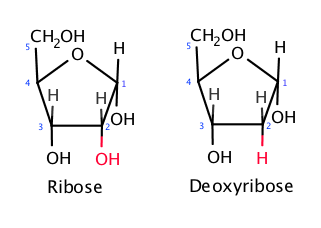
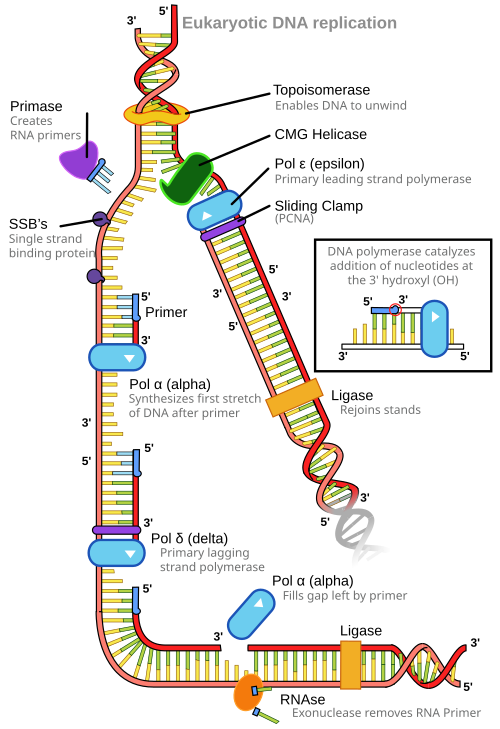

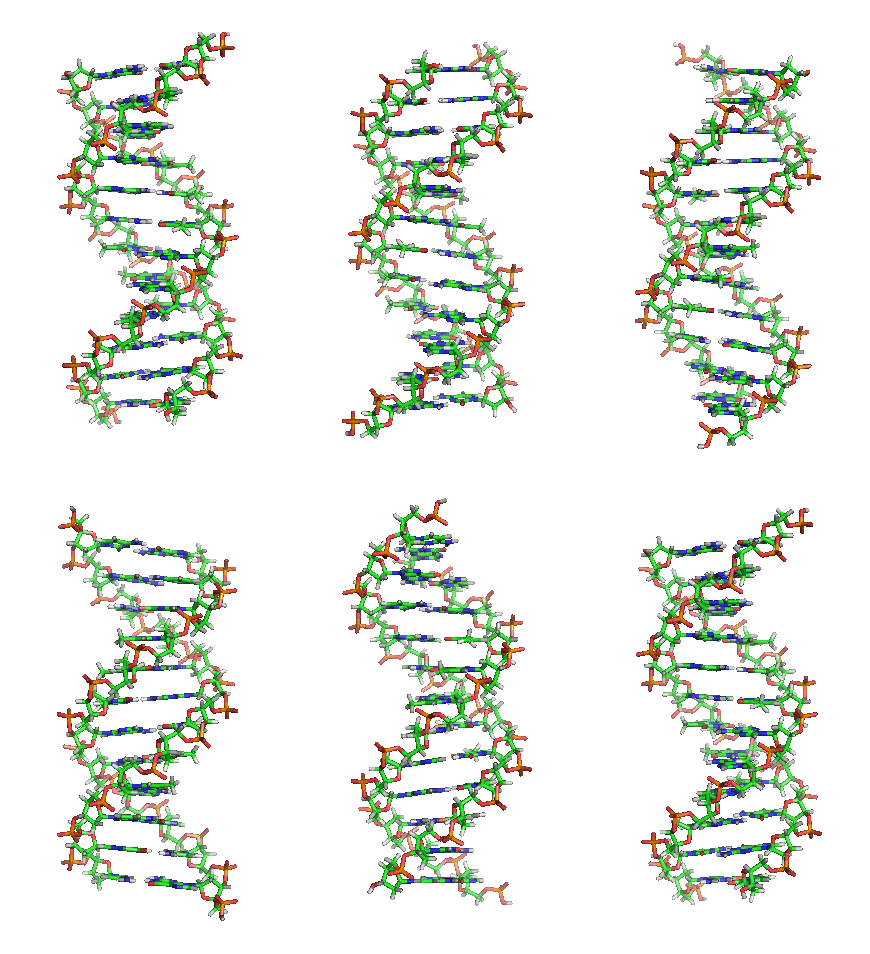
E
- eat-me signal
- A molecule exposed on the surface of a cell which effectively tags the cell for phagocytosis, inducing phagocytes to engulf or "eat" it. The presence of oxidized phospholipids or phosphatidylserine, or the absence of sialic acid from cell surface glycoproteins or glycolipids, are all commonly used as eat-me signals in certain cell types. See also find-me signal.
- ectopic
- Occurring or developing in an abnormal place or position or in an unusual form or manner; displaced, malpositioned, or produced in an unnatural context. For example, ectopic expression refers to the expression of a particular gene product in a cell or tissue where it is not normally expressed.[3] Contrast entopic.
- effector
- Any small molecule or ligand which by interacting with a particular enzyme changes its catalytic activity but is not itself changed. A positive effector enhances the enzyme's activity while a negative effector reduces it.[3]
- electron transport chain (ETC)
- The process by which electrons are transferred from electron donors to electron acceptors via a stepwise series of redox reactions carried out by dedicated enzymes and protein complexes, especially as a component of metabolic pathways which convert chemical energy from food into a form that is readily accessible by the cell. Most electron transport chains begin by oxidizing molecules derived from glycolysis such as NADH and FADH, converting them into a series of intermediate compounds via a specific sequence of independently catalyzed reactions, with the products of the previous reaction used as reactants in the next reaction until ultimately reaching a terminal electron acceptor. The particular compounds used as donors, intermediates, and acceptors vary widely between organisms and cell types; in aerobic respiration, the terminal acceptor is diatomic oxygen (O), whereas anaerobic respiration uses other acceptors. In all variants, the free energy released by these reactions is coupled to the chemiosmotic pumping of protons (H+) across a membrane in order to generate an electrochemical gradient which is then used to drive the production of ATP, a process known as oxidative phosphorylation. In eukaryotes, electron transport chains are conducted by proteins embedded within the membranes of mitochondria and chloroplasts, while in prokaryotes the relevant proteins are embedded within the cell membrane.
- electrophoresis
- The physical separation of molecules, e.g. nucleic acids or proteins, according to their movement through a fluid medium to which an electric field is applied, where the distance they travel is proportional to their size. Because of their negatively charged phosphate backbones, nucleic acids are repelled by the negative electrode at one end of the medium and attracted to the positive electrode at the other end, which causes them to be pulled toward the latter over time; denatured proteins and even whole cells may migrate through the medium in a similar manner. The speed at which the molecules migrate depends on their net electric charge and is inversely proportional to their overall size (i.e. the number of atoms they contain), such that very small molecules tend to move faster through the medium than very large molecules. Thus electrophoretic techniques, particularly gel electrophoresis with agarose or polyacrylamide-based gels as the supporting medium, are widely used in molecular biology laboratories to quickly and conveniently isolate molecules of interest from heterogeneous mixtures and/or identify them based on their expected molecular weight. Reference markers containing molecules of known weight are commonly run alongside unknown samples to aid size-based identification. Electrophoresis is often combined with other techniques such as immunolabelling and radiolabelling.[10]
- electroporation
- A molecular biology technique in which a strong electric field is applied to living cells in order to temporarily increase the permeability of their cell membranes, allowing exogenous nucleic acids, proteins, or chemical compounds to easily pass through the membrane and thereby enter the cells. It is a common method of achieving transformation and transfection.
- elongation
- The linear growth of a nucleic acid polymer by the sequential addition of individual nucleotide monomers to a nascentstrand, e.g. during transcription or replication, especially when it occurs by complementary pairing with a template strand. The term is often used to describe steps in certain laboratory techniques such as the polymerase chain reaction.
- elongation factor
- A protein which, by binding to a ribosome, promotes elongation of the polypeptide chain during translation.[10]
- embryo
- The developing organism that represents the earliest stages of development in all sexually reproducing multicellular organisms, traditionally encompassing the period after fertilization of an egg cell and formation of the zygote but prior to birth, hatching, or metamorphosis. During this period, known as embryonic development, the single-cell zygote is transformed by repeated cell divisions and rearrangements into a series of increasingly complex multicellular structures. For humans, the term "embryo" is only used until the ninth week after conception, after which time the embryo is known as a foetus; for most other organisms, including plants, "embryo" can be used more broadly to describe any early stage of the life cycle.
- emergenesis
- The quality of genetic traits that results from a specific configuration of interacting genes, rather than simply their combination.
- endocytosis
- Any process by which a substance is actively uptaken by or brought inside of a cell, crossing the plasma membrane from an extracellular space into an intracellular space, which includes the subclasses of pinocytosis, phagocytosis, and receptor-mediated processes. All of these involve surrounding an extracellular molecule, protein, or even another cell or organism with an extension or invagination of the cell membrane, which then "buds off" or separates from the rest of the membrane on the cytoplasmic side, forming a membrane-enclosed vesicle containing the ingested materials. By this mechanism the material can cross the lipid bilayer without being exposed to the hydrophobic space in between, instead remaining suspended in the fluid of the extracellular space. Many large, polar macromolecules which cannot simply diffuse across the membrane, such as metabolites and hormones, are transported into the cell by endocytosis. It is distinguished from alternative routes such as passing through protein channels or being chaperoned by transport proteins. The reverse process is called exocytosis.
- endogenous
- Originating or arising inside of an organism or cell; produced by the organism or cell itself, rather than sourced from the external environment; of or pertaining to native or internal factors or processes, to be distinguished from foreign or exogenous factors or processes.[3]
- endomembrane
- Any membrane surrounding an intracellularorganelle or vesicle, e.g. that of the endoplasmic reticulum, Golgi apparatus, lysosome, vacuole, nucleus (the nuclear envelope), etc.[10]
- endonuclease
- Any enzyme whose activity is to cleave phosphodiester bonds within a chain of nucleotides, including those that cleave relatively nonspecifically (without regard to sequence) and those that cleave only at very specific sequences (so-called restriction endonucleases). When recognition of a specific sequence is required, endonucleases make their cuts in the middle of the sequence. Contrast exonuclease.
- endoplasmic reticulum (ER)
- The irregular network of unit membranes, continuous with the outer nuclear membrane, that extends from the nucleus into the cytoplasm in most eukaryotic cells, where it serves important packaging and transport functions for newly synthesized macromolecules. The membranes interweave to form a mesh of tubular channels and flattened sacs called cisternae which house a variety of enzymes that perform post-translational modifications including tagging proteins for sorting. The outer surfaces of so-called rough endoplasmic reticulum are studded with attached ribosomes that serve as sites of protein synthesis, whereas smooth endoplasmic reticulum, lacking ribosomes, functions in the synthesis of lipids and steroid hormones and in the detoxification of metabolic wastes.[3] Generally both types of ER occur together, though some cell types are characterized by different proportions of rough and smooth ER, depending on the activities of the cell.
- endosome
- Any of a class of intracellular membrane-bound organelles which serve transportation and sorting functions in eukaryotic cells as part of the endocytic cycle. They are formed when proteins or other macromolecules enter the cytoplasm inside vesicles invaginated from the cell membrane or the trans-Golgi network by endocytosis, after which they are shuttled across the cell to various destinations; e.g. endosomes carrying foreign molecules often fuse with lysosomes, where the contents are then degraded.
- enhancer
- A region of DNA near a gene that can be bound by an activator to increase gene expression or by a repressor to decrease expression.
- enhancer RNA (eRNA)
- A subclass of long non-coding RNAs transcribed from regions of DNA containing enhancer sequences. The expression of a given eRNA generally correlates with the activity of the corresponding enhancer in enhancing transcription of its target genes, suggesting that eRNAs play an active role in gene regulation in cis or in trans.
- entopic
- Occurring or developing in the normal or natural place or position, as opposed to ectopic.[3]
- enucleate
- To artificially remove the nucleus from a cell, e.g. by micromanipulation in the laboratory or by destroying it through irradiation with ultraviolet light, rendering the cell anucleate.[10]
- envagination
- enzyme
- A protein which acts as a catalyst for a biological process by accelerating a specific chemical reaction, typically by binding one or more substrate molecules and decreasing the activation energy necessary for the initiation of a particular reaction involving the substrate(s). Enzymatic catalysis often results in the chemical conversion of the substrate(s) into one or more products, which then inhibit or permit subsequent reactions. All metabolic pathways consist of a series of individual reactions which each depend upon one or more specific enzymes to drive them forward at rates fast enough to sustain life.
- enzyme-linked immunosorbent assay (ELISA)
- A biochemical assay designed to detect the presence of a particular antigen or ligand in a liquid sample using enzymes conjugated to antibodies capable of specifically binding the antigen. The antigen of interest is usually first immobilized by adhering to a solid support (e.g. a polystyrene microtiter plate), then one or more antigen-specific antibodies covalently bonded to a particular enzyme are added and any unbound antibody is washed away; when the attached enzyme's substrate is subsequently added, the reaction between enzyme and substrate produces a detectable, quantifiable change in some measurable biomarker (often a color change), thus reporting the presence of the targeted antigen in the sample. ELISA techniques are widely used as diagnostic tools in clinical medicine and academic research, as well as a form of quality control in many biotechnology industries.
- epigenetics
- epigenome
- episome
- 1. Another name for a plasmid, especially one that is capable of integrating into a chromosome.
- 2. In eukaryotes, any non-integrated extrachromosomal circular DNA molecule that is stably maintained and replicated in the nucleus simultaneously with the rest of the host cell. Such molecules may include viral genomes, bacterial plasmids, and aberrant chromosomal fragments.
- epistasis
- The collective action of multiple genes interacting during gene expression. A form of gene action, epistasis can be either additive or multiplicative in its effects on specific phenotypic traits.
- epitope
- The specific site or region within an antigenicmacromolecule such as a protein or carbohydrate which is recognized by B or T cells of the immune system, against which a specific antibody is produced, and with which the antibody's paratope specifically interacts or binds. In proteins, epitopes are typically motifs of 4–5 amino acid residues, sequential or discontiguous, which by virtue of the distinct spatial conformation they adopt upon protein folding are able to uniquely interact with a particular paratope. In this sense they may be considered binding sites, though they do not necessarily overlap with ligand binding sites and need not be in any way relevant to the protein's normal function. Very large molecules may have multiple epitopes, each of which is recognized by a different antibody.
- ergosome
- See polysome.
- euchromatin
- A relatively open, lightly compacted form of chromatin in which DNA is only sporadically bound in nucleosomes and thus broadly accessible to binding and manipulation by proteins and other molecules. Euchromatic regions of a genome are often enriched in genes and actively undergoing transcription, in contrast to heterochromatin, which is relatively gene-poor, nucleosome-rich, and less accessible to transcription machinery.
- euploidy
- The condition of a cell or organism having an abnormal number of complete sets of chromosomes, possibly excluding the sex chromosomes. Euploidy differs from aneuploidy, in which a cell or organism has an abnormal number of one or more specific individual chromosomes.
- evolution
- The change in the heritable characteristics of biological populations over successive generations. In the most traditional sense, it occurs by changes in the frequencies of alleles in a population's gene pool.
- ex vivo
- Occurring outside of a cell or organism, as with observations made or experiments performed in or on cells or tissues which have been isolated or removed from their natural context to an external environment (usually a carefully controlled environment with minimal alteration of natural conditions, such as a cell culture being grown in a laboratory). This is in contrast to in vivo observations, which are made in an entirely natural context.
- excision
- The enzymatic removal of a polynucleotide sequence from one or more strands of a nucleic acid, or of a polypeptide sequence from a protein, typically implying both the breaking of the polymeric molecule in two locations and the subsequent rejoining of the two breakpoints after the sequence between them has been removed. The term may be used to describe a wide variety of processes performed by distinct enzymes, including most splicing and DNA repair pathways.[6]
- exocytosis
- Any active transport process by which a substance is secreted from or transported out of a cell, crossing the plasma membrane from the interior of the cell into the extracellular space, especially that which occurs by the fusion of the membrane surrounding a secretory vesicle with the larger cell membrane. This fusion causes the intra-vesicular space to merge with the extracellular fluid, releasing the vesicle's contents on the exterior side of the cell without exposing them to the hydrophobic space between the lipid bilayer. More narrowly the term may refer in particular to the bulk transport of a large amount of molecules out of the cell all at once, often metabolites or hormones which are too large and polar to passively diffuse across the membrane themselves. The reverse process, whereby materials are invaginated into the cell, is known as endocytosis.
- exogenous
- Originating outside of an organism or cell; of or pertaining to foreign or external factors or processes, to be distinguished from native or endogenous factors or processes.[3]
- exome
- The entire set of exons within a particular genome, including untranslated regions of mature mRNAs as well as coding regions.
- exon
- Any part of a gene that encodes a part of the final mature messenger RNA produced by that gene after introns have been removed by alternative splicing. The term refers to both the sequence as it exists within a DNA molecule and to the corresponding sequence in RNA transcripts.
- exon skipping
- exonuclease
- Any enzyme whose activity is to cleave phosphodiester bonds within a chain of nucleotides, including those that cleave only upon recognition of a specific sequence (so-called restriction exonucleases). Exonucleases make their cuts at either the 3' or 5'-end of the sequence (rather than in the middle, as with endonucleases).
- exosome
- 1. (protein complex) An intracellular multi-protein complex which serves the function of degrading various types of RNA molecules.
- 2. (vesicle) A type of membrane-bound extracellular vesicle produced in many eukaryotic cells by the inward budding of an endosome and the subsequent fusion of the endosome with the plasma membrane, causing the release of the vesicle into various extracellular spaces, including biological fluids such as blood and saliva, where they may serve any of a wide variety of physiological functions, from waste management to intercellular signaling.
- exosome complex
- An intracellular multi-protein complex which serves the function of degrading various types of RNA molecules.
- expression vector
- A type of vector, usually a plasmid or viral vector, designed specifically for the expression of a transgeneinsert in a target cell, rather than for some other purpose such as cloning.
- extein
- Any part of an amino acid sequence which is retained within a precursor polypeptide, i.e. not excised by post-translationalprotein splicing, and is therefore present in the mature protein, analogous to the exons of RNA transcripts. Contrast intein.
- extension
- See elongation.
- extracellular
- Outside the plasma membrane of a cell or cells; i.e. located or occurring externally to a cell. Contrast intracellular; see also intercellular.
- extracellular fluid
- extracellular matrix (ECM)
- The network of interacting macromolecules and minerals secreted by and existing outside of and between cells in multicellular structures such as tissues and biofilms, forming a hydrated, mesh-like, semi-solid suspension which not only holds the cells together in an organized fashion but also provides structural and biochemical support, acting as an elastic, compressible buffer against external stresses as well as both regulating and influencing numerous aspects of cell behavior, among them cell adhesion, motility, metabolism, division, and cell-to-cell communication. The composition and properties of the ECM vary enormously between organisms and tissue types, but generally it takes the form of a polysaccharide gel in which various fibrous proteins (especially collagen and elastin), enzymes, and glycoproteins are embedded. Cells themselves both produce the matrix components and respond constantly to local matrix composition, a source of environmental feedback which is critical for differentiation, tissue organization, and development.[10][22]
- extrachromosomal DNA
- Any DNA that is not found in chromosomes or in the nucleus of a cell and hence is not genomic DNA. This may include the DNA contained in plasmids or organelles such as mitochondria or chloroplasts, or, in the broadest sense, DNA introduced by viral infection. Extrachromosomal DNA usually shows significant structural differences from nuclear DNA in the same organism.


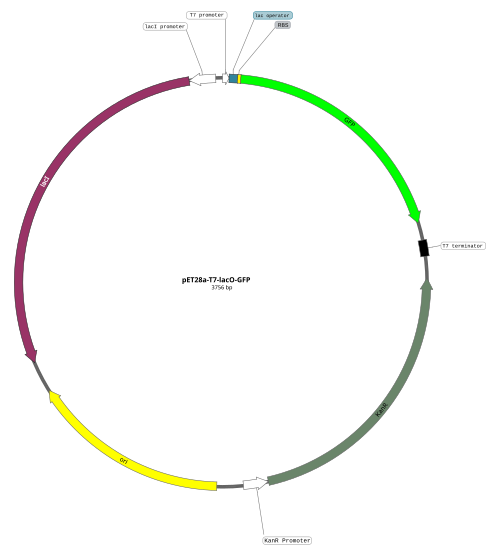
F
- facilitated diffusion
- A type of passive transport by which substances are conveyed across membranes more quickly than would be possible by ordinary passive diffusion alone, generally because proteins embedded within the membrane act as shuttles or pores, being arranged in such a way as to provide a hydrophilic environment that is favorable for the movement of small polar molecules, which would otherwise be repulsed by the hydrophobic interior of the lipid bilayer.[4]
- facultative expression
- The transcription of a gene only as needed, as opposed to constitutive expression, in which a gene is transcribed continuously. A gene that is transcribed as needed is called a facultative gene.
- fatty acid
- Any of a subclass of lipid compounds consisting of a carboxylic acid bonded to an aliphatic chain of hydrocarbons, usually 4 to 28 carbon atoms in length, which may be either saturated (containing only single bonds between the carbon atoms) or unsaturated (containing one or more double bonds). In biological systems, fatty acid chains are commonly linked to other compounds via ester bonds, primarily in triglycerides, phospholipids, and derivatives of cholesterol, all of which serve a wide variety of important cellular functions including as structural components of membranes and as energy sources in metabolic pathways.
- fermentation
- Any anaerobicmetabolic pathway in which organic molecules such as glucose or other carbohydrates are catabolized in the absence of oxygen in order to produce ATP; or, in the broadest sense, any catabolic process in which organic compounds serve as both electron donors and acceptors.[23] This definition distinguishes fermentation from aerobic respiration, where inorganic diatomic oxygen (O) is the terminal electron acceptor, and from some types of anaerobic respiration. Fermentation encompasses hundreds of different redox pathways which start and end with a huge variety of reactants and end-products, often branching from various steps in glycolysis, with the most common fermentation products being lactate, acetate, ethanol, succinate, propionate, butyrate, carbon dioxide (CO), and diatomic hydrogen (H). It occurs in both prokaryotes and eukaryotes in conditions where exogenously supplied electron acceptors are unavailable, especially in oxygen-poor environments. Fermentation yields the equivalent of just 2 to 5 ATP per molecule of glucose, making it much less efficient than aerobic respiration, which can yield as much as 32 ATP per molecule of glucose. In multicellular organisms that primarily rely on aerobic respiration, such as animals, it is often employed as a contingency pathway; the term anaerobic glycolysis refers to the diversion of glycolysis intermediates to fermentation pathways when tissues cannot keep up with the demand for ATP due to insufficient oxygen supply.
- filopodium
- find-me signal
- A molecule exposed on the surface of a cell destined for apoptosis which is used to attract phagocytes to engulf and eliminate the cell by phagocytosis. See also eat-me signal.
- five-prime cap
- See 5' cap.
- five-prime end
- See 5'-end.
- five-prime untranslated region
- See 5' untranslated region.
- fixation
- 1. (histology) The preservation of biological material by treating it with a chemical fixative that prevents or delays the natural postmortem processes of decay (e.g. autolysis and putrefaction) which would otherwise eventually cause cells, tissues, and biomolecules to lose their characteristic structures and properties. Biological specimens are usually fixed with the broad objective of arresting or slowing biochemical reactions for long enough to study them in detail, essentially 'freezing' cellular processes in their natural state at a specific point in time, while minimizing disruption to existing structures and arrangements, all of which can improve subsequent staining and microscopy of the fixed samples. Though fixation tends to irreversibly terminate any ongoing reactions, thus killing the fixed cells, it makes it possible to study molecular details that occur too rapidly or transiently to observe in living samples. Common fixatives such as formaldehyde work by disabling proteolytic enzymes, coagulating, insolubilizing, and/or denaturing macromolecules, creating crosslinks between them, and protecting specimens from decomposition by bacteria and fungi.
- 2. (population genetics) The process by which a single allele for a particular gene with multiple different alleles increases in frequency in a given population such that it becomes permanently established as the only allele at that locus within the population's gene pool.
- fixative
- Any chemical compound or solution that causes the fixation of cells, tissues, or other microscopic structures by any mechanism, thus preserving them for long-term, detailed study by methods such as embedding, staining, and microscopy. Common fixatives include dilute solutions of ethanol, acetic acid, formaldehyde, and osmium tetroxide, among others.[10]
- flagellate
- (of a cell) Having one or more flagella.
- flagellum
- A long, thin, hair-like appendage protruding from the surface of some cells, which serves locomotory functions by undulating in a way that propels the cell through its environment or by effecting the movement of extracellular fluids and solutes past the cell surface. Many unicellular organisms, including some bacteria, protozoa, and algae, bear one or more flagella, and certain cell types in multicellular organisms, namely sperm cells, also have flagella. Eukaryotic flagella are essentially just longer versions of cilia, often up to 150 micrometres (μm) in length, while bacterial flagella are typically smaller and completely different in structure and mechanism of action.[8][10]
- fluid mosaic model
- The prevailing scientific model of the structure and properties of cell membranes, according to which the typical membrane consists of back-to-back layers of amphipathic membrane lipids (generally phospholipids or glycolipids) interspersed with a dynamic variety of embedded proteins, carbohydrates, and (especially in animal cells) cholesterol, all of which behave as if suspended in a "two-dimensional liquid", constantly moving laterally between the lipids and interacting with each other and with the cytoplasm and the extracellular space. The membrane as a whole thus retains a fluidity and elasticity which allow it to change shape and adapt to the cell's environment.[24]
- fluorescence in situ hybridization (FISH)
- A type of in situ hybridizationassay where the oligonucleotide probes are labelled with a chemical compound that is naturally fluorescent when exposed to light at particular wavelengths, making it possible to detect the in situ locations of complementary sequences with fluorescence microscopy. FISH is commonly used to visualize the physical locations of specific genes on chromosomes.
- forward genetics
- An experimental approach in molecular genetics in which a researcher starts with a specific known phenotype and attempts to determine the genetic basis of that phenotype by any of a variety of laboratory techniques, commonly by inducing random mutations in the organism's genome and then screening for changes in the phenotype of interest. Observed phenotypic changes are assumed to have resulted from the mutation(s) present in the screened sample, which can then be mapped to specific genomic loci and ultimately to one or more specific candidate genes. This methodology contrasts with reverse genetics, in which a specific gene or its gene product is individually manipulated in order to identify the gene's function.
- forward mutation
- A mutation that changes a gene from wild-type to mutant; the initial mutation which a back mutation reverses.[3]
- frameshift mutation
- A type of mutation in a nucleic acid sequence caused by the insertion or deletion of a number of nucleotides that is not divisible by three. Because of the triplet nature by which nucleotides code for amino acids, a mutation of this sort causes a shift in the reading frame of the nucleotide sequence, resulting in the sequence of codons downstream of the mutation site being completely different from the original.
- freeze-drying
- See lyophilization.
- Functional Genomics Data (FGED) Society
- An organization that works with others "to develop standards for biological research data quality, annotation and exchange" as well as software tools that facilitate their use.[25]
G
- G banding
- A technique used in cytogenetics to produce a visible karyotype by staining the condensed chromosomes with Giemsa stain. The staining produces consistent and identifiable patterns of dark and light "bands" in regions of chromatin, which allows specific chromosomes to be easily distinguished.
- G1
- G2
- gamete
- A haploid cell that is the meiotic product of a progenitor germ cell and the final product of the germ line in sexually reproducing multicellular organisms. Gametes are the means by which an organism passes its genetic information to its offspring; during fertilization, two gametes (one from each parent) are fused into a single diploidzygote.
- gametogenesis
- The process by which eukaryotic precursorgerm cells divide and differentiate into haploidgametes. Depending on the organism, gametes may be generated from haploid germ cells by mitosis or diploid germ cells by meiosis.
- GC content
- See guanine-cytosine content.
- gDNA
- See genomic DNA.
- gene
- Any segment or set of segments of a nucleic acid molecule that contains the information necessary to produce a functional RNA transcript in a controlled manner. In living organisms, genes are often considered the fundamental units of heredity and are typically encoded in DNA. A particular gene can have multiple different versions, or alleles, and a single gene can result in a gene product that influences many different phenotypes.
- gene cassette
- See cassette.
- gene dosage
- The number of copies of a particular gene present in a genome. Gene dosage directly influences the amount of gene product a cell is able to express, though a variety of controls have evolved which tightly regulategene expression. Changes in gene dosage caused by mutations include copy-number variations.
- gene duplication
- A type of mutation defined as any duplication of a region of DNA that contains a gene. Compare chromosomal duplication.
- gene expression
- The set of processes by which the information encoded in a gene is used in the synthesis of a gene product, such as a protein or a non-coding RNA, or otherwise made available to influence one or more phenotypes; both the product and the gene encoding it are then said to be expressed. Canonically, the first step is transcription, which produces a messenger RNA molecule complementary to the DNA molecule in which the gene is encoded. For protein-coding genes, the second step is translation, in which the messenger RNA is read by a ribosome to produce a polypeptide and ultimately a protein. The information contained within a DNA sequence need not necessarily be transcribed and translated to exert an influence on molecular events, however: broader definitions encompass a huge variety of other ways in which genetic information can be expressed.
- Gene Expression Omnibus (GEO)
- A database of high-throughput functional genomics and gene expression data derived from experimental assays and next-generation sequencing and managed by the National Center for Biotechnology Information.[26][27]
- gene fusion
- The union, either by natural mutation or by recombinant laboratory techniques, of two or more previously independent genes that code for different gene products such that they become subject to control by the same regulatory systems. The resulting hybrid sequence is known as a fusion gene.[6]
- gene mapping
- Any of a variety of methods used to precisely identify the location of a particular gene within a DNA molecule (such as a chromosome) and/or the physical or linkage distances between it and other genes.
- gene of interest (GOI)
- A gene being studied in a scientific experiment, especially one that is the focus of a genetic engineering technique such as cloning.
- gene product
- Any of the biochemical material resulting from the expression of a gene, most commonly interpreted as the functional mRNA transcript produced by transcription of the gene or the fully constructed protein produced by translation of the transcript, though non-coding RNA molecules such as transfer RNAs may also be considered gene products. A measurement of the quantity of a given gene product that is detectable in a cell or tissue is sometimes used to infer how active the corresponding gene is.
- gene regulation
- The broad range of mechanisms used by cells to control the activity of their genes, especially to allow, prohibit, increase, or decrease the production or expression of specific gene products, such as RNA or proteins. Gene regulation increases an organism's versatility and adaptability by allowing its cells to express different gene products when required by changes in its environment. In multicellular organisms, the regulation of gene expression also drives cellular differentiation and morphogenesis in the embryo, enabling the creation of a diverse array of cell types from the same genome.
- gene silencing
- Any mechanism of gene regulation which drastically reduces or completely prevents the expression of a particular gene. Gene silencing may occur naturally during either transcription or translation. Laboratory techniques often exploit natural silencing mechanisms to achieve gene knockdown.
- gene therapy
- The insertion of a functional or wild-type gene or part of a gene into an organism (especially a patient) with the intention of correcting a genetic defect, either by direct substitution of the defective gene or by supplementation with a second, functional version.[15]
- gene trapping
- A high-throughput technology used to simultaneously inactivate, identify, and report the expression of a target gene in a mammalian genome by introducing an insertional mutation consisting of a promoterlessreporter gene and/or a selectable marker flanked by an upstream splice site and a downstream polyadenylated termination sequence.
- generation
- 1. In any given organism, a single reproductive cycle, or the phase between two consecutive reproductive events, i.e. between an individual organism's reproduction and that of the progeny of that reproduction; or the actual or average length of time required to complete a single reproductive cycle, either for a particular lineage or for a population or species as a whole.
- 2. In a given population, those individuals (often but not necessarily living contemporaneously) who are equally removed from a given common ancestor by virtue of the same number of reproductive events having occurred between them and the ancestor.[15]
- genetic background
- genetic code
- A set of rules by which information encoded within nucleic acids is translated into proteins by living cells. These rules define how sequences of nucleotide triplets called codons specify which amino acid will be added next during protein synthesis. The vast majority of living organisms use the same genetic code (sometimes referred to as the "standard" genetic code) but variant codes do exist.
- genetic disorder
- Any illness, disease, or other health problem directly caused by one or more abnormalities in an organism's genome which are congenital (present at birth) and not acquired later in life. Causes may include a mutation to one or more genes, or a chromosomal abnormality such as an aneuploidy of a particular chromosome. The mutation responsible may occur spontaneously during embryonic development or may be inherited from one or both parents, in which case the genetic disorder is also classified as a hereditary disorder. Though the abnormality itself is present before birth, the actual disease it causes may not develop until much later in life; some genetic disorders do not necessarily guarantee eventual disease but simply increase the risk of developing it.
- genetic distance
- A measure of the genetic divergence between species, populations within a species, or individuals, used especially in phylogenetics to express either the time elapsed since the existence of a common ancestor or the degree of differentiation in the DNA sequences comprising the genomes of each population or individual.
- genetic engineering
- The direct, deliberate manipulation of an organism's genetic material using any of a variety of biotechnology methods, including the insertion or removal of genes, the transfer of genes within and between species, the mutation of existing sequences, and the construction of novel sequences using artificial gene synthesis. Genetic engineering encompasses a broad set of technologies by which the genetic composition of individual cells, tissues, or entire organisms may be altered for various purposes, commonly in order to study the functions and expression of individual genes, to produce hormones, vaccines, and other drugs, and to create genetically modified organisms for use in research and agriculture.
- genetic marker
- A specific, easily identifiable, and usually highly polymorphicgene or other DNAsequence with a known location on a chromosome that can be used to identify the individual or species possessing it.
- genetic recombination
- Any reassortment or exchange of genetic material within an individual organism or between individuals of the same or different species, especially that which creates genetic variation. In the broadest sense, the term encompasses a diverse class of naturally occurring mechanisms by which nucleic acid sequences are copied or physically transferred into different genetic environments, including homologous recombination during meiosis or mitosis or as a normal part of DNA repair; horizontal gene transfer events such as bacterial conjugation, viral transduction, or transformation; or errors in DNA replication or cell division. Artificial recombination is central to many genetic engineering techniques which produce recombinant DNA.
- genetic redundancy
- The redundant encoding of two or more distinct gene products that ultimately perform the same biochemical function. Mutations in one of these genes may have a smaller effect on fitness than might be expected, since the redundant genes often compensate for any loss of function and obviate any gain of function.
- genetic regulatory network (GRN)
- A graph that represents the regulatory complexity of gene expression. The vertices (nodes) are represented by various regulatory elements and gene products while the edges (links) are represented by their interactions. These network structures also represent functional relationships by approximating the rate at which genes are transcribed.
- genetic testing
- A broad class of various procedures used to identify features of an individual's particular chromosomes, genes, or proteins in order to determine parentage or ancestry, diagnose vulnerabilities to heritable diseases, or detect mutant alleles associated with increased risks of developing genetic disorders. Genetic testing is widely used in human medicine, agriculture, and biological research.
- genetically modified organism (GMO)
- Any organism whose genetic material has been altered using genetic engineering techniques, particularly in a way that does not occur naturally by mating or by natural genetic recombination.
- genetics
- The field of biology that studies genes, genetic variation, and heredity in living organisms.
- genome
- 1. The entire complement of genetic material contained within the chromosomes of an organism, organelle, or virus.
- 2. The collective set of genes or genetic loci shared by every member of a population or species, regardless of the different alleles that may be present at these loci in different individuals.
- genome instability
- genome size
- The total amount of DNA contained within one copy of a genome, typically measured by mass (in picograms or daltons) or by the total number of base pairs (in kilobases or megabases). For diploid organisms, genome size is often used interchangeably with C-value.
- genome walking
- A method of whole-genome sequencing in which the sequences of genomic DNA fragments in a library sample are assembled into a longer sequence, such as that of a full chromosome or the entire genome, by placing fragments with overlapping ends, known as contigs, adjacent to each other. By repeating this procedure, one can hypothetically determine the correct arrangement of contigs for the entire sequence.[3]
- genome-wide association study (GWAS)
- genomic DNA (gDNA)
- The DNA contained in chromosomes, as opposed to the extrachromosomal DNA contained in separate structures such as plasmids or organelles such as mitochondria or chloroplasts.
- genomic imprinting
- An epigenetic phenomenon that causes genes to be expressed in a manner dependent upon the particular parent from which the gene was inherited. It occurs when epigenetic marks such as DNA or histone methylation are established or "imprinted" in the germ cells of a parent organism and subsequently maintained through cell divisions in the somatic cells of the organism's progeny; as a result, a gene in the progeny that was inherited from the father may be expressed differently than another copy of the same gene that was inherited from the mother.
- genomic island (GI)
- A region of a genome that shows evidence of horizontal transfer from another organism. The term is used especially in describing microbial genomes such as those of bacteria, where genomic islands having the same or similar sequences commonly occur in species or strains that are otherwise only distantly related, implying that they were not passed on through vertical descent from a common ancestor but through some form of lateral transfer such as conjugation. These islands often contain functional genes which confer adaptive traits such as antibiotic resistance.
- genomics
- An interdisciplinary field that studies the structure, function, evolution, mapping, and editing of entire genomes, as opposed to individual genes.
- genotoxicity
- The ability of certain chemical agents to cause damage to genetic material within a living cell (e.g. through single- or double-stranded breaks, crosslinking, or point mutations), which may or may not result in a permanent mutation. Though all mutagens are genotoxic, not all genotoxic compounds are mutagenic.
- genotype
- The entire complement of alleles present in a particular individual's genome, which gives rise to the individual's phenotype.
- genotyping
- The process of determining differences in the genotype of an individual by examining the DNA sequences in the individual's genome using bioassays and comparing them to another individual's sequences or a reference sequence.
- germ cell
- Any cell that gives rise to the gametes of a sexually reproducing organism. Germ cells are the vessels for the genetic material which will ultimately be passed on to the organism's descendants and are usually distinguished from somatic cells, which are entirely separate from the germ line.
- germ line
- 1. In multicellular organisms, the subpopulation of cells which are capable of passing on their genetic material to the organism's progeny and are therefore (at least theoretically) distinct from somatic cells, which cannot pass on their genetic material except to their own immediate mitotic daughter cells. Cells of the germ line are called germ cells.
- 2. The lineage of germ cells, spanning many generations, that contains the genetic material which has been passed on to an individual from its ancestors.
- gigabase (Gb)
- A unit of nucleic acid length equal to one billion (1×10⁹) bases in single-stranded molecules or one billion base pairs in duplex molecules such as double-stranded DNA.
- glucogenic amino acid
- Any amino acid that can be converted into glucose via gluconeogenesis, as opposed to the ketogenic amino acids, which can be converted into ketone bodies. In humans, 18 of the 20 amino acids are glucogenic; only leucine and lysine are not. Five amino acids (phenylalanine, isoleucine, threonine, tryptophan, and tyrosine) are both glucogenic and ketogenic.
- gluconeogenesis (GNG)
- The chain of metabolic reactions that results in the generation of glucose from some non-carbohydrate carbon substrates, including the glucogenic amino acids. It is one of two primary pathways used by most animals to maintain blood sugar levels (the other being glycogenolysis), especially during periods of fasting, starvation, and intense exercise.
- glucose
- A simple sugar with the molecular formula CHO and the most abundant monosaccharide in nature, being the primary product of photosynthesis, where it is made in a sunlight-powered reaction of water with carbon dioxide. All living organisms are capable of metabolizing glucose via glycolysis, an exergonic pathway which for most organisms is the primary means of obtaining chemical energy to power cellular activities.[10] Metabolic glucose is usually stored in the form of large polymeric aggregates such as amylose in plants and glycogen in animals, and is released by the breakdown of these polymers via glycogenolysis.
- glycocalyx
- A fine, hair-like coating covering the outer surface of virtually all cells, composed of a layer of various branching glycoproteins and glycolipids which are embedded within and protrude from the extracellular face of the cell membrane.[28] These molecules play critical roles in cell–cell recognition, cell signaling, and intercellular adhesion.[29]
- glycogen
- A branched polysaccharide composed of as many as 30,000 covalently bonded units of the monosaccharideglucose which functions as the primary form of short-term energy storage in most animal cells.[10][4] Glycogen reserves are especially abundant in muscle and liver cells,[8] where they can be metabolized at-need into their component glucoses as a means of buffering blood sugar levels, a process known as glycogenolysis.
- glycogenolysis
- A metabolic pathway in which polymeric glycogen molecules are broken down into individual glucose monomers by the sequential removal of glucose units via phosphorolysis, a reaction catalyzed by the enzyme glycogen phosphorylase. Glycogenolysis is one of two primary pathways used in animal tissues to generate free glucose for the maintenance of blood sugar levels, the other being gluconeogenesis.
- glycolipid
- Any of a subclass of lipids consisting of a central polar molecule (most commonly glycerol or sphingosine) which is covalently attached to one or more monosaccharides or oligosaccharides via glycosidic bonds, as well as to one or more long, non-polar fatty acid chains.[8] Glycolipids are one of three major types of membrane lipid comprising all biological membranes, along with phospholipids and cholesterol.
- glycolysis
- The metabolic pathway in which carbohydrate sugars such as glucose are broken down into simpler molecules, releasing chemical energy which can then be used for various cellular functions. In a series of ten enzyme-catalyzed reactions, each molecule of glucose is converted into two molecules of pyruvate, with the free energy liberated in this process simultaneously being used to form high-energy bonds in two molecules of reduced nicotinamide adenine dinucleotide (NADH) and two molecules of adenosine triphosphate (ATP). In aerobic conditions pyruvate and NADH are further oxidized in the mitochondria; in anaerobic conditions NADH itself subsequently reduces pyruvate to lactate.
- glycoprotein
- A protein with one or more carbohydrate molecules, typically short oligosaccharide chains, covalently attached to one or more of its amino acid side chains.[8] Proteins exposed on the outer surface of the plasma membrane or secreted into the extracellular space are commonly modified in this way, after which they are said to be glycosylated.
- glycosidase
- Any of a class of enzymes capable of breaking one or more glycosidic bonds in carbohydrate molecules, commonly found in lysosomes.[10]
- glycoside
- Any chemical compound consisting of a carbohydrate molecule covalently bonded to another molecule containing a hydroxyl group (including other carbohydrates) via one or more C–Oglycosidic bonds. When all of the compound's substituents are carbohydrates, the glycoside is a polysaccharide.[10]
- glycosidic bond
- A covalent ether bond that connects a carbon atom within a carbohydrate molecule (e.g. a monosaccharide) or a carbohydrate derivative to another substituent or functional group, which may or may not be another carbohydrate; such bonds form as the result of a dehydration reaction between hydroxyl groups on each molecule. A substance containing a glycosidic bond is known as a glycoside.
- glycosylation
- The attachment of a carbohydrate molecule (e.g. glucose) to an amino acid residue within a peptide or protein by covalent bonding, a process which takes place in or near the rough endoplasmic reticulum.[10]
- Goldberg-Hogness box
- See TATA box.
- Golgi apparatus
- gRNA
- See guide RNA.
- guanine (G)
- A purinenucleobase used as one of the four standard nucleobases in both DNA and RNA molecules. Guanine forms a base pair with cytosine.
- guanine-cytosine content
- The proportion of nitrogenous bases in a nucleic acid that are either guanine (G) or cytosine (C), typically expressed as a percentage. DNA and RNA molecules with higher GC-content are generally more thermostable than those with lower GC-content due to molecular interactions that occur during base stacking.[30]
- guanosine (G, Guo)
- One of the four standard nucleosides used in RNA molecules, consisting of a guaninebase with its N nitrogen bonded to the C carbon of a ribose sugar. Guanine bonded to deoxyribose is known as deoxyguanosine, which is the version used in DNA.
- guide RNA (gRNA)
- A short single-stranded RNAoligonucleotide which complexes with Cas endonucleases and, by annealing to a specific complementary sequence in a DNA molecule, serves to "guide" these proteins to viral DNA introduced by foreign pathogens, which can then be digested and degraded as part of an adaptive immune defense employed by bacteria and archaea. Custom-made guide RNAs are designed by scientists to target specific genomic loci in CRISPR-Cas gene editing.


H
- hairpin
- A characteristic secondary structure that commonly forms in self-complementary nucleic acid sequences by intramolecular base pairing between different parts of the same linear, single-stranded molecule. The resulting conformation resembles a hairpin, where non-adjacent lengths of nucleotides form hydrogen bonds with each other, creating a local double-stranded duplex (the "stem") which ends in a circle of unpaired nucleotides (the "loop"). Hairpin loops form readily in single-stranded DNA molecules containing inverted repeats[3] and are especially common in large RNA molecules, where they play various roles in promoting or inhibiting the formation of other secondary structures, stabilizing messenger RNAs, providing recognition sites for RNA-binding proteins, or serving as substrates for enzymes.[31]
- haploid
- (of a cell or organism) Having one copy of each chromosome, with each copy not being part of a pair. Contrast diploid and polyploid.
- Hayflick limit
- helicase
- Any of a class of ATP-dependent motor proteins that move directionally along the DNAbackbone and catalyze the separation of the two complementary strands of double-stranded molecules, permitting a wide variety of vital processes to take place, e.g. transcription, replication, and repair.[15]
- hemizygous
- In a diploid organism, having just one allele at a given genetic locus (where there would ordinarily be two). Hemizygosity may be observed when only one copy of a chromosome is present in a normally diploid cell or organism, or when a segment of a chromosome containing one copy of an allele is deleted, or when a gene is located on a sex chromosome in the heterogametic sex (in which the sex chromosomes do not exist in matching pairs); for example, in human males with normal chromosomes, almost all X-linked genes are said to be hemizygous because there is only one X chromosome and few of the same genes exist on the Y chromosome.
- heredity
- The storage, transfer, and expression of molecular information in biological organisms,[15] as manifested by the passing on of phenotypic traits from parents to their offspring, either through sexual or asexual reproduction. Offspring cells or organisms are said to inherit the genetic information of their parents.
- heterochromatin
- A compact, highly condensed form of chromatin characterized chiefly by the close spatial proximity of adjacent nucleosomes and the consequent inaccessibility of intervening DNA sequences to DNA-binding proteins, which contrasts with the more open and accessible form known as euchromatin. The transcription of genes located within heterochromatic regions of chromosomes is therefore relatively limited, and so the formation of heterochromatin at specific loci is an important means of regulating gene expression. Establishment of heterochromatin is associated with the modification of specific residues within specific histones, such as methylation of the ninth lysine residue of histone H3 (H3K9); the presence of these modifications at a specific locus signals the recruitment of other proteins which cause local DNA condensation. Many repetitive and structurally important regions of chromosomes are nearly always compacted in so-called constitutive heterochromatin, while the compaction of facultative heterochromatin is more temporary.
- heterochromosome
- See allosome.
- heterodimer
- A protein or protein domain composed of two different polypeptides which are paired with each other in the quaternary structure of a multimeric complex.[6] Contrast homodimer.
- heterogeneous nuclear RNA (hnRNA)
- Any of a set of RNA molecules of widely variable size occurring in the nucleus and united by their rapid turnover rate during protein synthesis. HnRNA represents all of the various transcriptional products of protein-coding genes, including both of exons and introns, from raw, unprocessed primary transcripts to spliced, capped, and polyadenylated mature messenger RNAs and all of the intermediate forms in between.[3]
- heterokaryon
- A multinucleate cell containing nuclei with different genotypes, resulting from the fusion of two or more genetically distinct cells, either naturally (e.g. in certain types of sexual reproduction) or artificially (e.g. in genetic engineering).[10]
- heterologous expression
- The expression of a foreign gene or any other foreign DNA sequence within a host organism which does not naturally contain the same gene. Insertion of foreign transgenes into heterologous hosts using recombinantvectors is a common biotechnology method for studying gene structure and function.
- high-throughput
- Describing a method or system capable of assaying very large numbers of samples or of processing very large quantities of data extremely rapidly, generally by utilizing automation and miniaturization to greatly increase speed and efficiency. For example, high-throughput sequencing refers to modern DNA sequencing technologies that can produce sequence reads for hundreds of millions of DNA fragments simultaneously, allowing scientists to sequence entire genomes quickly and inexpensively.[32]
- histology
- The study or analysis of the microscopic anatomy of biological tissues or of cells within tissues, particularly by making use of specialized techniques to distinguish structures and functions based on visual morphology and differential staining. In practice the term is sometimes used more broadly to include cytology.
- histone
- Any of a class of highly alkalineproteins responsible for packagingnuclear DNA into structural units called nucleosomes in eukaryotic cells. Histones are the chief protein components of chromatin, where they associate into eight-membered complexes which act as "spools" around which the linear DNA molecule winds. They play a major role in gene regulation and expression.
- histone core
- The complex of eight histone proteins around which double-stranded DNA wraps within a nucleosome. The canonical histone octamer consists of two each of histones H2A, H2B, H3, and H4, which pair with each other symmetrically to form a ball-shaped cluster around which DNA winds through interactions with the histones' surface domains, though variant histones may replace their analogues in certain contexts.
- histone modification
- The post-translational modification of histone proteins by the chemical attachment of various molecules or functional groups to specific amino acid residues. Because histones form the core of nucleosomes, the modification of exposed parts of their polypeptide chains is used to regulate gene expression by marking them with molecular labels that signal the recruitment of other proteins to induce conformational changes that variously widen or condense the spacing of nucleosomes along strands of DNA, thereby changing the accessibility of nearby DNA sequences to transcriptional machinery. Histones are modified by many different labels, most commonly methylation, acetylation, ubiquitination, phosphorylation, and citrullination.
- histone variant
- hnRNA
- See heterogeneous nuclear RNA.
- holocentric
- (of a linear chromosome or chromosome fragment) Having no single centromere but rather multiple kinetochore assembly sites dispersed along the entire length of the chromosome. During cell division, the chromatids of holocentric chromosomes move apart in parallel and do not form the classical V-shaped structures typical of monocentric chromosomes.
- homeobox
- Any of a class of DNA sequences approximately 180 base pairs in length occurring near the 3'‐end of certain eukaryotic genes and encoding a 60-amino acid domain, known as a homeodomain, which is capable of binding to DNA or RNA via a characteristic helix-turn-helix motif. Homeobox-containing genes are translated into homeodomain-containing proteins, which commonly regulate transcription or translation by binding to other genes or messenger RNAs containing homeobox responsive elements. The products of many homeotic genes, exemplified by the Hox genes, are of critical importance in developmental pathways.[6]
- homeobox responsive element (HRE)
- Any DNA or RNA sequence that is specifically recognized and bound by the homeodomain of a homeodomain-containing protein.
- homeodomain
- A nucleic acid-binding domain, typically 60 amino acids in length, found near the C-terminus of certain eukaryotic proteins, characterized by a highly conserved helix-turn-helix motif that binds with strong affinity to the backbone of specific recognition sequences in DNA or RNA molecules. A protein may have one or more homeodomains, each of which is specific to a different recognition sequence. Many homeodomain-containing proteins function as transcription factors by binding to sequences within promoters and blocking or recruiting other proteins, such as RNA polymerase or cofactors of the transcription initiation complex. Homeodomains are the translated versions of homeoboxes, though the terms are often used interchangeably.
- homodimer
- A protein or protein domain composed of two identical polypeptides which are paired with each other in the quaternary structure of a multimeric complex.[6] Contrast heterodimer.
- homologous chromosomes
- A set of two matching chromosomes, one maternal and one paternal, which pair up with each other inside the nucleus during meiosis. They have the same genes at the same loci, but may have different alleles.
- homologous recombination
- A type of genetic recombination in which nucleotide sequences are exchanged between two similar or identical ("homologous") molecules of DNA, especially that which occurs between homologous chromosomes. The term may refer to the recombination that occurs as a part of any of a number of distinct cellular processes, most commonly DNA repair or chromosomal crossover during meiosis in eukaryotes and horizontal gene transfer in prokaryotes. Contrast nonhomologous recombination.
- horizontal gene transfer (HGT)
- Any process by which genetic material is transferred between unicellular and/or multicellular organisms other than by vertical transmission from parent to offspring, e.g. bacterial conjugation.
- housekeeping gene
- Any constitutive gene that is transcribed at a relatively constant level across many or all known conditions and cell types. The products of housekeeping genes typically play critical roles in the maintenance of cellular integrity and basic metabolic function. It is generally assumed that their expression is unaffected by experimental or pathological conditions.
- Hox genes
- A subset of highly conservedhomeobox-containing genes whose protein products function as transcription factors essential for the proper organization of the body plan in developing animal embryos, ensuring that the correct structures are formed in the correct places. Hox genes are usually arranged on a chromosome in tandem arrays and are expressed sequentially during development, with the sequence of gene activation corresponding to their physical arrangement within the genome and/or the physical layout of the tissues in which they are expressed along the organism's anterior–posterior axis.[6]
- Human Genome Project (HGP)
- A collaborative international scientific research project with the goal of sequencing all of the chromosomal DNA and identifying and mapping all of the genes within human cells, and ultimately of assembling a complete reference genome for the human species. The project was launched in 1990 by a consortium of federal agencies, universities, and research institutions and was declared complete in 2003. Because each individual human being has a unique genome, the finished reference genome is a mosaic of sequences obtained by sampling DNA from thousands of individuals across the world and does not represent any one individual.
- hyaloplasm
- See cytosol.
- hybrid
- The offspring that results from combining the qualities of two organisms of different genera, species, breeds, or varieties through sexual reproduction. Hybrids may occur naturally or artificially, as during selective breeding of domesticated animals and plants. Reproductive barriers typically prevent hybridization between distantly related organisms, or at least ensure that hybrid offspring are sterile, but fertile hybrids may result in speciation.
- hybridization
- 1. The process by which a hybrid organism is produced from two organisms of different genera, species, breeds, or varieties.
- 2. The process by which two or more single-strandednucleic acid molecules with complementary nucleotide sequences pair with each other in solution, creating double-stranded or triple-stranded molecules via the formation of hydrogen bonds between the complementary nucleobases of each strand. In certain laboratory contexts, especially ones in which long strands hybridize with short oligonucleotideprimers, hybridization is often referred to as annealing.
- 3. A step in some experimental assays in which a single-stranded DNA or RNA preparation is added to an array surface and anneals to a complementaryhybridization probe.
- hybridization probe
- A single-strandedDNA or RNA fragment (or a nucleic acid analogue) which is artificially labelled with a radioactive or fluorescent compound or some other detectable marker and then allowed to hybridize with complementary DNA or RNA sequences in order to detect the presence of those complements in a heterogeneous sample or their specific in situlocalization; or an assay in which this procedure is performed. As with antibodies in immunostaining, nucleic acid probes bind with high specificity to their target sequences, permitting visualization of the targets, if present, against a non-specific background, whether in a membrane blot or microarray or even in vivo. A unique advantage of hybridization probes is that the stringency of the hybridization reaction is easily modifiable by changing the temperature and salt concentration, making it possible for the same probe to bind to sequences with differing degrees of complementarity. Hybridization probes are employed in Southern blotting and northern blotting and as part of many other laboratory methods. See also probe.
- hydrophilic
- Soluble in or having an affinity for water or other polar compounds; describing a polar molecule, or a moiety or functional group within a molecule, which participates in intermolecular interactions such as hydrogen bonding with other polar molecules and therefore readily dissolves in polar solvents such as water or aqueous solutions.[8] Unlike hydrophobic compounds, hydrophilic compounds can form energetically favorable contacts with the aqueous phase of biological fluids and so can often be suspended directly in the cytosol or exposed to extracellular spaces.[4] Together, the contrasting properties of hydrophilicity and hydrophobicity play major roles in determining the structural conformations and functions of most biomolecules.
- hydrophobic
- Having a low solubility in or affinity for water or other polar solvents; describing a non-polar molecule, or a moiety or functional group within a molecule, which cannot form energetically favorable interactions with polar compounds and which therefore tends to "avoid" or be repulsed by such compounds, instead clustering together with other hydrophobic molecules or arranging itself in a way that minimizes its exposure to its polar surroundings. This phenomenon is not so much due to the affinity of the hydrophobic molecules for each other as it is a consequence of the strong intermolecular forces that allow polar compounds such as water molecules to bond with each other; hydrophobic species are unable to form alternative bonds of equivalent strength with the polar compounds, hence they tend to be excluded from aqueous solutions by the tendency of the polar solvent to maximize interactions with itself. Hydrophobicity is a major determinant of countless chemical interactions in biological systems, including the spatial conformations assumed by macromolecules such as proteins and lipids, the binding of ligands and substrates to proteins, and the structure and properties of lipid membranes.[10][8] Contrast hydrophilic.
- hypertonic
- Describing a solution containing a high concentration of dissolved solutes relative to another solution, i.e. having positive osmotic pressure, such that solvent will tend to move by osmosis across a semipermeable membrane from the solution of lower solute concentration to the solution of higher concentration until both solutions have equal concentrations. In a cell where the intracellular cytosol is hypertonic relative to the surrounding extracellular fluid (which by definition is hypotonic relative to the cytosol), the solvent (water) will flow across the plasma membrane into the cytosol, filling the cell with extra water and diluting its contents until both sides of the membrane are isotonic. Cells placed in severely hypotonic environments may be at risk of bursting due to the sudden inflow.
- hypomorph
- A mutant allele that permits a subnormal expression of the gene's normal phenotype, e.g. by encoding an unstable enzyme which degrades too quickly to fully serve its function but which nevertheless is functional in some limited capacity, being generated in quantities sufficient for its reaction to proceed slowly or at low levels.[6]
- hypotonic
- Describing a solution containing a low concentration of dissolved solutes relative to another solution, i.e. having negative osmotic pressure, such that solvent will tend to move by osmosis across a semipermeable membrane from the solution of lower solute concentration to the solution of higher concentration until both solutions have equal concentrations. In a cell where the intracellular cytosol is hypotonic relative to the surrounding extracellular fluid (which by definition is hypertonic relative to the cytosol), the solvent (water) will flow across the plasma membrane out of the cytosol, causing the cell to lose water until both sides of the membrane are isotonic. Cells placed in severely hypertonic environments may be at risk of shriveling and desiccating due to the sudden outflow.
- hypoxanthine (I)
- A naturally occurring, non-canonical purinenucleobase that is used in some RNA molecules and pairs with standard nucleobases in a phenomenon known as wobble base pairing. Its nucleoside form is known as inosine, which is the reason it is commonly abbreviated with the letter I in sequence reads.
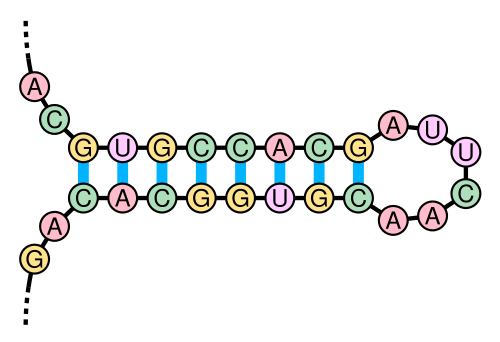
I
- idiochromosome
- See allosome.
- idiogram
- A diagrammatic or schematic karyotype of the entire set of chromosomes within a cell or genome, in which annotated illustrations depict each chromosome in its most idealized form (e.g. with straight lines and obvious centromeres) so as to facilitate the easy identification of sequences, structural features, and physical distances, which may be less apparent in photomicrographs of the actual chromosomes.
- idiomere
- See chromomere.
- immortalization
- The natural or artificial changing of a cell population with a normally finite lifespan into one with a hypothetically infinite lifespan, capable of dividing indefinitely without cellular senescence as long as essential nutrients are available and conditions are conducive for cell division. Cells that undergo such a change are said to be immortalized. Mutations that cause immortalization occur naturally in the neoplasms that cause cancer but can also be induced artificially, which makes it possible to culture certain cell lines in vitro for prolonged periods. Immortalized cell lines are thus broadly useful for experimental purposes and in many biotechnology applications. Immortalized eukaryotic cells are commonly obtained by isolating them from a naturally occurring neoplasm (as with the human HeLa cell line), or may be generated from normal cells by introducing viral genes (as with HEK 293 cells), by artificially overexpressing proteins required for immortality such as telomerase, or by fusing normal cells with cancer cells (as in the hybridoma technologies used in the commercial production of antibodies).[3] Though stem cells are also capable of continuous self-renewal and are thus technically 'immortal', their immortalization is not abnormal because they are an ordinary part of the development of multicellular organisms.
- immunofluorescence (IF)
- A family of laboratory techniques in which a particular antigen or antibody is conjugated to a fluorescent dye and then allowed to bind specifically to its complementary antibody or antigen, if any exists, in a culture vessel, tissue section or smear, hybridization probe, membrane blot, or any other context. The presence or absence of the complement and its specific location(s) can be visualized by illuminating the sample with ultraviolet light and observing the fluorescence from the conjugated fluorophore, often under a microscope.[3]
- immunogenic
- Capable of provoking or inducing an immune response, as with an antigen or a vaccine.
- immunohistochemistry (IHC)
- A branch of histochemistry which makes use of antibodiesconjugated to some kind of molecular label in order to detect the presence or localization of complementary antigenic structures in tissue samples.[3] See also immunostaining.
- immunoprecipitation (IP)
- immunostaining
- The use of an antibodyconjugated to a chromophore or fluorophore to bind a specific antigen within a target substance (e.g. a protein) and thereby make the substance visible amidst a background of non-specific substances, allowing for detection of the target in a biological sample. The term originally referred to antibody-based staining of tissue sections with strong dyes or colorants, known as immunohistochemistry, but in modern usage encompasses a much broader range of laboratory methods united by their use of antibodies to label specific biomolecules with visually conspicuous compounds.
- in silico
- (of a scientific experiment or research) Conducted, produced, or analyzed by means of computer modeling or simulation, as opposed to a real-world trial.
- in situ
- (of a scientific experiment or biological process) Occurring or made to occur in a natural, uncontrolled setting, or in the natural or original position or place, as opposed to in a foreign cell or tissue type or in an artificial environment.
- in situ hybridization (ISH)
- A hybridization probe assay in which a labeled, single-stranded DNA or RNA molecule or nucleic acid analogue containing a sequence that is complementary to a particular DNA or RNA sequence is allowed to hybridize with its complement in situ, i.e. in its natural context, such as within cells or tissue sections (as opposed to within homogeneous samples extracted from cells or tissues, where cellular or histological structure has been lost in the process of obtaining the sample), in order to reveal the precise location of the complementary sequence within this context. The label may be a radioactive compound, fluorescent molecule, or hapten, permitting detection by a variety of visualization techniques. In situ hybridization is commonly used to identify the physical locations of specific DNA sequences such as genes and regulatory elements on chromosomes, which can provide insight into chromosomal structure and integrity; to determine the subcellular locations where various types of RNA accumulate and interact with other molecules; and to visualize the tissues and organs within an organism where specific genes are expressed at various developmental stages (by probing for the genes' RNA transcripts).
- in vitro
- (of a scientific experiment or biological process) Occurring or made to occur in a laboratory vessel or other controlled artificial environment, e.g. in a test tube or a petri dish, as opposed to inside a living organism or in a natural setting.
- in vivo
- (of a scientific experiment or biological process) Occurring or made to occur inside the cells or tissues of a living organism; or, in the broadest sense, in any natural, unmanipulated setting. Contrast ex vivo and in vitro.
- indel
- A term referring to either an insertion or a deletion of one or more bases in a nucleic acid sequence.
- inducer
- A protein that binds to a repressor (to disable it) or to an activator (to enable it).
- inducible gene
- A gene whose expression is either responsive to environmental change or dependent on its host cell's position within the cell cycle.
- in-frame
- 1. (of a gene or sequence) Read or transcribed in the same reading frame as another gene or sequence; not requiring a shift in reading frame to be intelligible or to result in a functional peptide.
- 2. (of a mutation) Not causing a frameshift.[6]
- inheritance
- See heredity.
- initiation codon
- See start codon.
- initiation factor (IF)
- Any of various proteins which bind to the small or large subunit of ribosomes during the initiation of translation and thereby play roles in regulating when and how protein synthesis occurs. Initiation factors are essential for assembly of the initiation complex and for chargedtransfer RNAs to properly associate with the ribosome and the messenger RNA. They are frequent targets of activators and repressors which can respectively increase or decrease the rate of translation. Though their functions are largely conserved, they are distinguished by the taxonomic domain in which they occur: bacterial initiation factors (IFs), archaeal initiation factors (aIFs), and eukaryotic initiation factors (eIFs).
- inosine (I, Ino)
- A naturally occurring, non-canonical nucleoside consisting of a hypoxanthinebase with its N nitrogen bonded to the C carbon of a ribose sugar. Inosine may be incorporated into certain RNA molecules such as the anticodons of some transfer RNAs, and occurs as an intermediate in the breakdown of adenosine to uric acid and in the recycling of adenosine by salvage pathways.[3]
- insertion
- A type of mutation in which one or more bases are added to a nucleic acid sequence. Contrast deletion.
- insertion sequence (IS)
- Any nucleotide sequence that is inserted naturally or artificially into another sequence. The term is used in particular to refer to the part of a transposable element that codes for those proteins directly involved in the transposition process, e.g. the transposase enzyme. The coding region in a transposable insertion sequence is usually flanked by short inverted repeats, and the structure of larger transposable elements may include a pair of flanking insertion sequences which are themselves inverted.
- insertional mutagenesis
- The alteration of a DNA sequence by the insertion of one or more nucleotides into the sequence, either naturally or artificially. Depending on the precise location of the insertion within the target sequence, insertions may partially or totally inactivate or even upregulate a gene product or biochemical pathway, or they may be neutral, leading to no substantive changes at all. Many genetic engineering techniques rely on the insertion of exogenous genetic material into host cells in order to study gene function and expression.[6]
- insulator
- A specific DNA sequence that prevents a gene from being influenced by the activation or repression of nearby genes.
- integral membrane protein (IMP)
- Any of a class of membrane proteins which are permanently embedded within or attached to the cell membrane (as opposed to those which are attached only temporarily). Integral membrane proteins can be subclassified into integral polytopic proteins, which span the entirety of the membrane, and integral monotopic proteins, which adhere only to one side.
- integral monotopic protein
- Any of a class of integral membrane proteins which are permanently attached to one side of the cell membrane by any means but which do not completely span the membrane. Contrast integral polytopic protein.
- integral polytopic protein
- Any of a class of integral membrane proteins which span the entirety of the cell membrane, extending from the interior or cytosolic side of the membrane to the exterior or extracellular side. Transmembrane proteins typically have hydrophilic domains exposed to each side as well as one or more hydrophobic domains crossing the nonpolar space inside the lipid bilayer, by which they are further classified as single-pass or multipass membrane proteins. As such many transmembrane proteins function as gated channels or transporters to permit or prohibit the movement of specific molecules or ions across the membrane, often undergoing conformational changes in the process, or as receptors in cell signaling pathways. Contrast integral monotopic protein.
- integration
- integron
- A mobile genetic element consisting of a gene cassette containing the gene for a site-specific recombinase, integrase-specific recognition sites, and a promoter that governs the expression of one or more genes conferring adaptive traits on the host cell. Integrons usually exist in the form of circular episomal DNA fragments, through which they facilitate the rapid adaptation of bacteria by enabling horizontal gene transfer of antibiotic resistance genes between different bacterial species.[6]
- intein
- Any sequence of one or more amino acids within a precursor polypeptide that is excised by protein splicing during post-translational modification and is therefore absent from the mature protein, analogous to the introns spliced out of RNA transcripts.[6] Contrast extein.
- intercalating agent
- Any chemical compound (e.g. ethidium bromide) that disrupts the alignment and pairing of bases in the complementary strands of a DNA molecule by inserting itself between the bases.[2]
- intercalation
- The insertion, naturally or artificially, of chemical compounds between the planar bases of a DNA molecule, which generally disrupts the hydrogen bonding necessary for base pairing.
- intercellular
- Between two or more cells. Contrast intracellular; see also extracellular.
- intercistronic region
- Any DNA sequence that is located between the stop codon of one gene and the start codon of the following gene in a polycistronic transcription unit.[6] See also intergenic region.
- intercross
- A cross in which both the male and female parents are heterozygous at a particular locus.[6]
- intergenic region (IGR)
- Any sequence of non-coding DNA that is located between functional genes.
- intergenic spacer (IGS)
- See spacer.
- interkinesis
- The abbreviated pause in activities related to cell division that occurs during meiosis in some species, between the first and second meiotic divisions (i.e. meiosis I and meiosis II). No DNA replication occurs during interkinesis, unlike during the normal interphase that precedes meiosis I and mitosis.[6]
- internal ribosome entry site (IRES)
- A sequence present in some messenger RNAs that permits recognition by the ribosome and thus the initiation of translation even in the absence of a 5' cap, which in eukaryotes is otherwise required for assembly of the initiation complex. IRES elements are often located in the 5' untranslated region, but may also be found in other positions.
- International Union of Biochemistry and Molecular Biology (IUBMB)
- An international non-governmental organization devoted to promoting scientific research and education in the disciplines of biochemistry and molecular biology, primarily by standardizing biochemical nomenclature, developing and publishing laboratory methods, and awarding grants and fellowships to students and researchers.
- interphase
- All stages of the cell cycle excluding cell division. A typical cell spends most of its life in interphase, during which it conducts everyday metabolic activities as well as the complete replication of its genome in preparation for mitosis or meiosis.
- intracellular
- Within a cell or cells; i.e. inside the plasma membrane. Contrast intercellular and extracellular.
- intracrine
- intragenic region
- See intron.
- intragenic suppression
- intrinsic membrane protein
- See integral membrane protein.
- intrinsically disordered protein (IDP)
- A protein (or a region or domain within a protein) that lacks any distinct, fixed three-dimensional structure or organization under physiological conditions, instead changing continuously and randomly between multiple transient conformational states rather than folding into any one stable conformation, especially in the absence of specific macromolecular interaction partners. The majority of eukaryotic proteins contain domains with intrinsic structure alongside unstructured domains. Peptide sequences lacking intrinsic order are generally characterized by high proportions of charged and hydrophilic amino acids and low proportions of hydrophobic amino acids, making them inherently flexible, accessible, and modifiable, which allows the same peptide sequence to have distinct functions across a wide variety of biochemical circumstances. They are frequently enriched in binding motifs and are common targets of post-translational modifications, giving them important roles in cell signaling pathways and as hubs in protein complexes.[33]
- intron
- Any nucleotide sequence within a functional gene that is removed by RNA splicing during post-transcriptional modification of the mRNAprimary transcript and is therefore absent from the final mature mRNA. The term refers to both the sequence as it exists within a DNA molecule and to the corresponding sequence in RNA transcripts. Contrast exon.
- intron-mediated recombination
- See exon shuffling.
- intronic gene
- A gene whose DNA sequence is nested within an intron of another gene and hence surrounded by non-coding intronic sequences.[15]
- invagination
- The infolding of a membrane toward the interior of a cell or organelle, or of a sheet of cells toward the interior of a developing embryo, tissue, or organ, forming a distinct membrane-lined pocket. In the case of individual cells, the invaginated pocket may proceed to separate from the source membrane entirely, creating a membrane-bound vesicle within the cell, as in endocytosis.[10]
- inverted repeat
- A nucleotide sequence followed downstream on the same strand by its own reverse complement. The initial sequence and the reverse complement may be separated by any number of nucleotides, or may be immediately adjacent to each other; in the latter case, the composite sequence is also called a palindromic sequence. Inverted repeats are self-complementary by definition, a property which involves them in many biological functions and dysfunctions. Contrast direct repeat.
- ion channel
- A type of transmembrane protein complex which forms an aqueous pore or channel spanning the lipid bilayer of a membrane, through which specific inorganic, electrically charged ions can diffuse down their electrochemical gradients.[8]
- ionophore
- Any chemical compound or macromolecule that facilitates the movement of ions across biological membranes, or more specifically, any chemical species that reversibly binds electrically charged atoms or molecules. Many ionophores are lipid-soluble proteins that catalyze the transport of monovalent and divalent cations across the hydrophobic lipid bilayers surrounding cells and vesicles.[10]
- isochore
- A large region of genomic DNA with a relatively homogeneous composition of base pairs, distinguished from other regions by the proportion of pairs that are G-C or A-T. The genomes of most plants and vertebrates are composed of different classes of GC-rich and AT-rich isochores.[6]
- isochromosome
- A type of abnormalchromosome in which the arms of the chromosome are mirror images of each other. Isochromosome formation is equivalent to simultaneous duplication and deletion events such that two copies of either the long arm or the short arm comprise the resulting chromosome.
- isoelectric point (pH(I), pI)
- The pH at which a particular molecule, often a protein, carries no net electrical charge, i.e. at which it is electrically neutral in the statistical mean. The concentration of protons (H+) in the surrounding environment affects how readily molecules gain or lose protons and thus their electrical properties. When the environmental pH is greater than the molecule's pI, the molecule is negatively charged, and when the pH is less than the pI, it is positively charged. Isoelectric point is therefore important for determining the behavior of molecules exposed to electric fields, as in electrophoresis and ion chromatography. Proteins are least soluble at their isoelectric points because electrically neutral species do not repulse each other with electrostatic forces, such that they tend to aggregate and precipitate out of solution.[10]
- isomerase
- Any of a class of enzymes which catalyze the conversion of a molecule from one isomer to another, such that the product of the reaction has the same molecular formula as the original substrate but differs in the connectivity or spatial arrangement of its atoms.
- isomeric genes
- Two or more genes that are equivalent and redundant in the sense that, despite coding for distinct gene products, they each result in the same phenotype when set within the same genetic background. If several isomeric genes are present in a single genotype they may be either cumulative or non-cumulative in their contributions to the phenotype.[15]
- isotonic
- Describing a solution containing the same concentration of dissolved solutes as another solution, such that the two solutions have equal osmotic pressure. Isotonic solutions separated from each other by a semipermeable membrane (as with a cell, where the intracellular cytosol is separated from the extracellular fluid by the plasma membrane) have no concentration gradient and thus will not exchange solvent by osmosis. Contrast hypertonic and hypotonic.
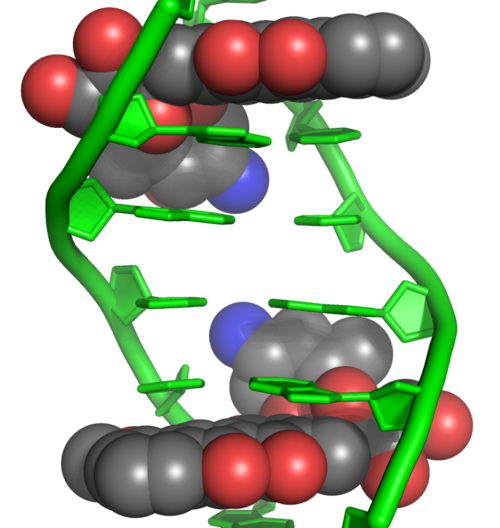
J
- jumping gene
- See transposable element.
- junctional diversity
- junk DNA
- Any DNA sequence that appears to have no known biological function, or which acts in a way that has no positive or a net negative effect on the fitness of the genome in which it is located. The term was once more broadly used to refer to all non-coding DNA, though much of this was later discovered to have a function; in modern usage it typically refers to broken or vestigial sequences and selfish genetic elements, including introns, pseudogenes, intergenic DNA, and fragments of transposons and retroviruses, which together constitute a large proportion of the genomes of most eukaryotes. Despite not contributing productively to the host organism, these sequences are able to persist indefinitely inside genomes because the disadvantages of continuing to copy them are too small to be acted upon by natural selection.
- junk RNA
- Any RNA-encoded sequence, especially a transcript, that appears to have no known biological function, or whose function has no positive or a net negative effect on the fitness of the genome from which it is transcribed. Despite remaining untranslated, many non-coding RNAs still serve important functions, whereas junk RNAs are truly useless: often they are the product of accidental transcription of a junk DNA sequence, or they may result from post-transcriptional processing of primary transcripts, as with spliced-outintrons. Junk RNA is usually quickly degraded by ribonucleases and other cytoplasmic enzymes.
K
- karyogram
- A karyotype which depicts the entire set of chromosomes in a cell or organism by using photomicrographs of the actual chromosomes as they appear in vivo (usually during metaphase, in their most condensed forms), as opposed to the idealized illustrations of chromosomes used in idiograms. The photomicrographs are often still arranged in pairs and by size for easier identification of particular chromosomes, whereas in the actual nucleus there is seldom any apparent organization.
- karyokinesis
- See mitosis.
- karyolymph
- See nucleosol.
- karyon
- See nucleus.
- karyoplasm
- See nucleoplasm.
- karyopyknosis
- See pyknosis.
- karyorrhexis
- The fragmentation and degeneration of the nucleus of a dying cell, during which the nuclear envelope is destroyed and the contents of the nucleus, including chromatin, are dispersed throughout the cytoplasm and degraded by enzymes. Karyorrhexis is usually preceded by pyknosis and may occur as a result of apoptosis, cellular senescence, or necrosis.
- karyosome
- A dense, organized bundle of chromatin which forms in the oocyte nucleus during oogenesis in some female eukaryotes.[34]
- karyotype
- The number and appearance of chromosomes within the nucleus of a eukaryotic cell, especially as depicted in an organized karyogram or idiogram (in pairs and arranged by size and by position of the centromere). The term is also used to refer to the complete set of chromosomes in a species or individual organism or to any test that detects this complement or measures the chromosome number.
- ketogenesis
- The production of ketone bodies via the metabolic decomposition of fatty acids or ketogenic amino acids, an exergonic process which is used to supply energy to certain tissues during periods of carbohydrate and protein insufficiency.
- ketogenic amino acid
- Any amino acid that can be converted directly into acetyl-CoA, which can then be oxidized for energy or used as a precursor for many compounds containing ketone groups. This is in contrast to the glucogenic amino acids, which can be converted into glucose. In humans, seven of the 20 amino acids are ketogenic, though only leucine and lysine are exclusively ketogenic; the other five (phenylalanine, isoleucine, threonine, tryptophan, and tyrosine) are both ketogenic and glucogenic.
- ketolysis
- The metabolic decomposition of ketone bodies, which releases energy that can be used to synthesize ATP.
- kilobase (kb)
- A unit of nucleic acid length equal to one thousand (1×10³) bases in single-stranded molecules or one thousand base pairs in duplex molecules such as double-stranded DNA.
- kinase
- Any of a class of enzymes which catalyze the transfer of phosphate groups from high-energy, phosphate-donating molecules such as ATP to one or more specific substrates, a process known as phosphorylation. The opposite process, known as dephosphorylation, is catalyzed by phosphatase enzymes.
- kinesis
- A non-specific, non-directional movement or change in activity by a cell or a population of cells in response to a stimulus, such that the rate of the movement or activity is dependent on the intensity of the stimulus but not on the direction from which the stimulus occurs. Kinesis refers particularly to cellular locomotion without directional bias, in contrast to taxis and tropism.
- kinetochore
- A disc-shaped protein complex which assembles around the centromere of a chromosome during prometaphase of mitosis and meiosis, where it functions as the attachment point for microtubules of the spindle apparatus.
- knob
- In cytogenetics, an enlarged, heavily staining chromomere that can be used as a visual marker, allowing specific chromosomes to be easily identified in the nucleus.[6]
- knockdown (KD)
- A genetic engineering method by which the normal rate of expression of one or more of an organism's genes is reduced or suppressed (though not necessarily completely turned off, as in knockout), either through direct modification of a DNA sequence or through treatment with a reagent such as a short DNA or RNA oligonucleotide with a sequence complementary to either an mRNA transcript or a gene.
- knockin (KI)
- A genetic engineering method in which one or more novel genes are inserted into an organism's genome, particularly when targeted to a specific locus, or in which one or more existing genes are replaced by or substituted with novel genes.[35] This is in contrast to a knockout, in which a gene is deleted or completely inactivated.
- knockout (KO)
- A genetic engineering method in which one or more specific genes are inactivated or entirely removed from an organism's genome, by any of a variety of mechanisms which disrupt their expression at some point in the pathway that produces their gene products, such that no functional gene products are produced. This allows researchers to study the function of a gene in vivo, by observing how the organism's phenotype changes when deprived of the gene's normal effects. A complete knockout permanently inactivates the gene; a conditional knockout allows the gene to be turned on or off at will, e.g. at specific times or in specific tissues, by linking the expression of the gene to some easily modifiable biochemical state or condition. In a heterozygous knockout, only one of a diploid organism's two alleles is knocked out; in a homozygous knockout, both copies are knocked out. Contrast knockin.
- Kozak consensus sequence
- A highly conservednucleic acid sequencemotif which functions as the recognition site for the initiation of translation in most eukaryotic messenger RNAs, generally a sequence of 10 bases immediately surrounding and inclusive of the start codon: GCCRCCAUGG. As the pre-initiation complex scans the transcript, recognition of this sequence (or a close variant) causes the complex to commit to full ribosome assembly and the start of translation. The Kozak sequence is distinct from other recognition sequences relevant to translation such as ribosome binding sites and internal ribosome entry sites.[36]
- Krebs cycle
- See citric acid cycle.

L
- labelling
- The chemical attachment of a highly selective substance, known as a label, tag, or probe, to a particular cell, protein, amino acid, or other molecule of interest, either naturally or artificially, in vivo or in vitro. Natural labelling is a primary mechanism by which biomolecules specifically identify and interact with other biomolecules; important examples include methylation, acetylation, phosphorylation, and glycosylation. Labelling is also a common laboratory technique, where the label is typically a reactive derivative of a naturally fluorescent compound (e.g. green fluorescent protein), dye, enzyme, antibody, radioactive molecule, or any other substance that makes its target distinguishable in some way. The labelled targets are thereby rendered distinct from their unlabelled surroundings, allowing them to be detected, identified, quantified, or isolated for further study.
- lagging strand
- In DNA replication, the nascent strand for which DNA polymerase's direction of synthesis is away from the replication fork, which necessitates a complex and discontinuous process in contrast to the streamlined, continuous synthesis of the other nascent strand, known as the leading strand, which occurs simultaneously. Because DNA polymerase works only in the 5' to 3' direction, but the lagging strand's overall direction of chain elongation must ultimately be the opposite (i.e. 3' to 5', toward the replication fork), elongation must occur by an indirect mechanism in which a primase enzyme synthesizes short RNAprimers complementary to the template DNA, and DNA polymerase then extends the primed segments into short chains of nucleotides known as Okazaki fragments. The RNA primers are then removed and replaced with DNA, and the Okazaki fragments are joined by DNA ligase.
- lamella
- 1. Any thin layer, membrane, or plate of tissue, occurring in a wide variety of structures of various scales and with various functions; e.g. a lamella made of a sheet of lipids forms a component of the extracellular matrix between the cells of some tissues.
- 2. The leading edge of a motile cell, of which the lamellipodia is the most forward portion.
- lampbrush chromosome
- A transcriptionally active, highly de-condensed morphology assumed by certain chromosomes during the diplotene stage of meioticprophase I in the progenitor cells of oocytes in female insects, amphibians, birds, and some other animals. Lampbrush chromosomes are conspicuous under the microscope because the post-synaptichomologs, still attached at chiasmata, are gigantically elongated into large loops of unpackaged euchromatin extending laterally from a series of chromomeres. Large numbers of messenger RNAs and non-coding RNAs are transcribed from the lateral loops, generating a rich pool of transcripts to be used in the immature oocyte and after fertilization, with functions in both oogenesis and embryogenesis. Because they allow individual transcription units to be directly visualized, lampbrush chromosomes are useful models for studying chromosome organization and genome structure and for constructing high-resolution chromosome maps.[37]
- lateral gene transfer (LGT)
- See horizontal gene transfer.
- leader sequence
- See 5' untranslated region.
- leading strand
- In DNA replication, the nascent strand for which both the direction of synthesis by DNA polymerase and the direction of overall chain elongation are toward the replication fork; i.e. both occur in the 5' to 3' direction, resulting in a single, continuous elongation process with few or no interruptions. By contrast, the other nascent strand, known as the lagging strand, is assembled in a discontinuous process involving the ligation of short DNA fragments synthesized in the opposite direction, away from the replication fork.[6]
- left splicing junction
- The boundary between the left end (by convention, the 5' end) of an intron and the right (3') end of an adjacent exon in a pre-mRNA transcript.
- leptonema
- In meiosis, the first of five substages of prophase I, following interphase and preceding zygonema. During leptonema, the replicated chromosomes condense from diffuse chromatin into long, thin strands that are much more visible within the nucleus.
- lethal mutation
- Any mutation that results in the premature death of the organism carrying it. Recessive lethal mutations are fatal only to homozygotes, whereas dominant lethals are fatal even in heterozygotes.[6]
- leucine zipper (ZIP)
- A common structural motif in DNA-bindingtranscription factors and some other types of proteins, approximately 35 amino acids in length, characterized chiefly by the recurrence of the amino acid leucine every seven residues. When modeled in an idealized alpha-helical conformation, the leucine residues are positioned in such a way that they can interdigitate with the same or similar motifs in an alpha helix belonging to another similar polypeptide, facilitating dimerization and the formation of a complex resembling a zipper.[4]
- ligand
- In biochemistry, any molecule that binds to or interacts with a specific site on a protein or other biomolecule, usually reversibly via intermolecular forces;[8] or any substance that forms a complex with a biomolecule as part of a biological process. The binding of specific ligands to DNA or proteins is important in many biochemical pathways; for example, protein–ligand binding may result in the protein undergoing a conformational change which alters its function or affinity for other molecules.
- ligase
- A class of enzymes which catalyze the synthesis of large molecules such as nucleic acids by forming one or more chemical bonds between them, typically C–C, C–O, C–S, or C–N bonds via condensation reactions. An example is DNA ligase, which catalyzes the formation of phosphodiester bonds between adjacent nucleotides on the same strand of a DNA molecule, a reaction known as ligation.
- ligation
- The joining of consecutive nucleotides in the same strand of a nucleic acid molecule via the formation of a phosphodiester bond between the 5'-phosphoryl terminus of one nucleotide and the 3'-hydroxyl terminus of an adjacent nucleotide, a condensation reaction catalyzed by enzymes known as ligases.[10] This reaction occurs in fundamentally the same way in all varieties of DNA and RNA anabolism, natural or artificial, whether the addition of individual nucleotides to a growing strand (as in DNA replication and transcription), or the repair of nicks and cuts in previously intact molecules, or the joining of separate nucleic acid fragments into a single molecule (as in chromosomal crossover, exon splicing, retroviral transposition, and all other forms of genetic recombination, as well as artificial molecular cloning techniques). Ligation is the opposite of the catabolic reaction wherein phosphodiester bonds are cleaved by nucleases. It also should not be confused with the non-covalent base pairing that can occur between complementary strands; ligation refers specifically to the synthesis of the phosphate backbone of a single strand.
- linkage
- The tendency of DNA sequences which are physically near to each other on the same chromosome to be inherited together during meiosis. Because the physical distance between them is relatively small, the chance that any two nearby parts of a DNA sequence (often loci or genetic markers) will be separated on to different chromatids during chromosomal crossover is statistically very low; such loci are then said to be more linked than loci that are farther apart. Loci that exist on entirely different chromosomes are said to be perfectly unlinked. The standard unit for measuring genetic linkage is the centimorgan (cM).
- linker DNA
- 1. A short, synthetic DNA duplex containing the recognition sequence for a particular restriction enzyme.[6] In molecular cloning, linkers are often deliberately included in recombinant molecules in order to make them easily modifiable by permitting cleavage and insertion of foreign sequences at precise locations. A segment of an engineered plasmid containing many such restriction sites is sometimes called a polylinker.
- 2. A section of chromosomal DNA connecting adjacent nucleosomes by binding to histoneH1.[6]
- linking number
- The number of times that the two strands of a circular double-helicalDNA molecule cross each other, equivalent to the twisting number (which measures the torsion of the double helix) plus the writhing number (which measures the degree of supercoiling). The linking number of a closed molecule cannot be changed without breaking and rejoining the strands. DNA molecules which are identical except for their linking numbers are known as topological isomers.[6]
- lipid
- Any of a heterogeneous class of organic compounds, including glycerides (fats), waxes, sterols, and some vitamins, united only by their amphipathic or hydrophobic nature and consequently their very low solubility in water.[4] Some lipids such as phospholipids tend to form lamellar structures or micelles in aqueous environments, where they serve as the primary constituents of biological membranes. Others such as fatty acids can be metabolized for energy, have important functions in energy storage, or serve as signaling molecules. Colloquially, the term "lipids" is sometimes used as a synonym for fats, though fats are more correctly considered a subclass of lipids.
- lipid bilayer
- A lamellar structure composed of numerous amphipathic lipid molecules packed together in two back-to-back sheets or layers, with their hydrophobicfatty acid "tails" directed inward and their hydrophilic "heads" exposed on the outer surface. This is the basic structural motif for all biological membranes, including the plasma membrane surrounding all cells as well as the membranes surrounding organelles and vesicles. Though bilayers are sometimes colloquially described as phospholipid bilayers, phospholipids are just one of several classes of membrane lipids which form bilayers; most membranes are actually a fluid, heterogeneous mixture of phospholipids, glycolipids, and cholesterols, interspersed and studded with various other molecules such as integral proteins.[4]
- lipolysis
- The metabolic pathway by which triglycerides are broken down via hydrolysis into a glycerol molecule and free fatty acid chains. This primarily takes place in adipocytes to mobilize stored energy when demand is high or supply is low.
- lipophilic
- See hydrophobic.
- lipoprotein
- Any water-soluble protein to which one or more lipid molecules are attached by covalent bonding to amino acid residues. Many classes of lipids can be conjugated to proteins, including triacylglycerols, cholesterols, and phospholipids.[3] Compare proteolipid.
- liposome
- 1. Any small, natural lipid globule, such as a micelle, occurring naturally in the cytoplasm;[3] they are commonly formed by budding off from larger membrane-bound vesicles.
- 2. A small, spherical, artificial vesicle having at least one continuous bilayer of lipid molecules enclosing some of the medium in which it is suspended.[38] Liposomes can be created in the laboratory by disrupting existing biological membranes and allowing complex lipids to form bilayer-bound vesicles in aqueous solution, usually with the aid of sonication. They are used experimentally as models of natural membranes and also therapeutically for the encapsulation and delivery of pharmaceutical compounds, enzymes, nutrients, nucleic acids, lipid-based nanoparticles (as in some vaccines), and many other agents between or inside of cells.[3]
- lncRNA
- See long non-coding RNA.
- locus
- A specific, fixed position on a chromosome where a particular gene or genetic marker resides.
- long arm
- In condensed chromosomes where the positioning of the centromere creates two segments or "arms" of unequal length, the longer of the two arms of a chromatid. Contrast short arm.
- long interspersed nuclear element (LINE)
- Any of a large family of non-LTRretrotransposons which together comprises one of the most widespread mobile genetic elements in eukaryotic genomes. Each LINE insertion is on average about 7,000 base pairs in length.
- long non-coding RNA (lncRNA)
- A class of non-coding RNA consisting of all transcripts of more than 200 nucleotides in length that are not translated. This limit distinguishes lncRNA from the numerous smaller non-coding RNAs such as microRNA. See also long intervening non-coding RNA.
- lyonization
- See X-inactivation.
- lysis
- The disruption and decomposition of the plasma membrane surrounding a cell, or more generally of any membrane-bound organelle or vesicle, especially by osmotic, enzymatic, or other chemical or mechanical processes which compromise the membrane's integrity and thereby cause the unobstructed interchange of the contents of intracellular and extracellular spaces. Lysis generally implies the complete and irreversible loss of intracellular organization as a result of the release of the cell's internal components and the dilution of the cytosol, and therefore the death of the cell. Such a cell is said to be lysed, and a fluid containing the contents of lysed cells (usually including nucleic acids, proteins, and many other organic molecules) is called a lysate. Lysis may occur both naturally and artificially, and is a normal part of the cellular life cycle.
- lysosome


See also
Further reading
External links
- National Human Genome Research Institute (NHGRI) Talking Glossary of Genomic and Genetic Terms
- Interactive, labeled diagram of an animal cell from SwissBioPics